
Is the Convertible Tiara the Most Versatile Piece of High Jewelry?
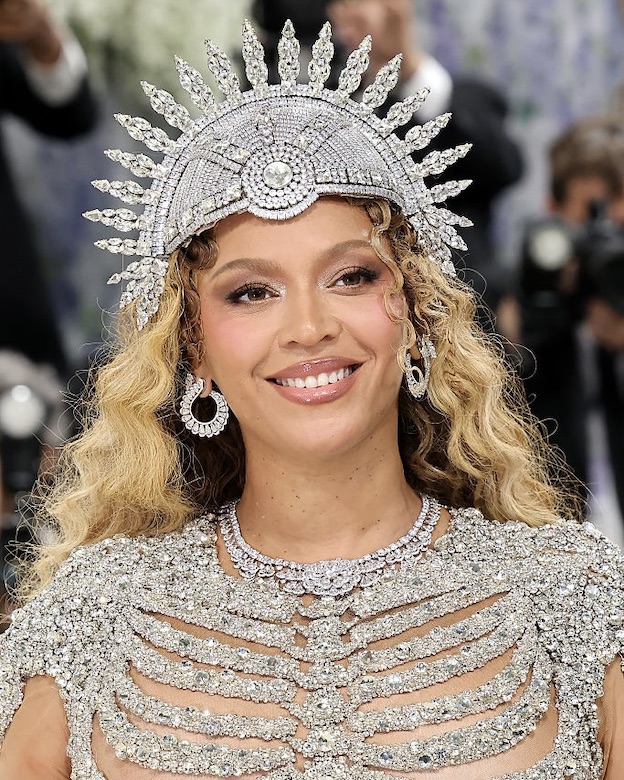
The historic obsession with the diamond tiara has been made all the more captivating with the option to convert the jewel into necklaces, brooches, bracelets, and more.
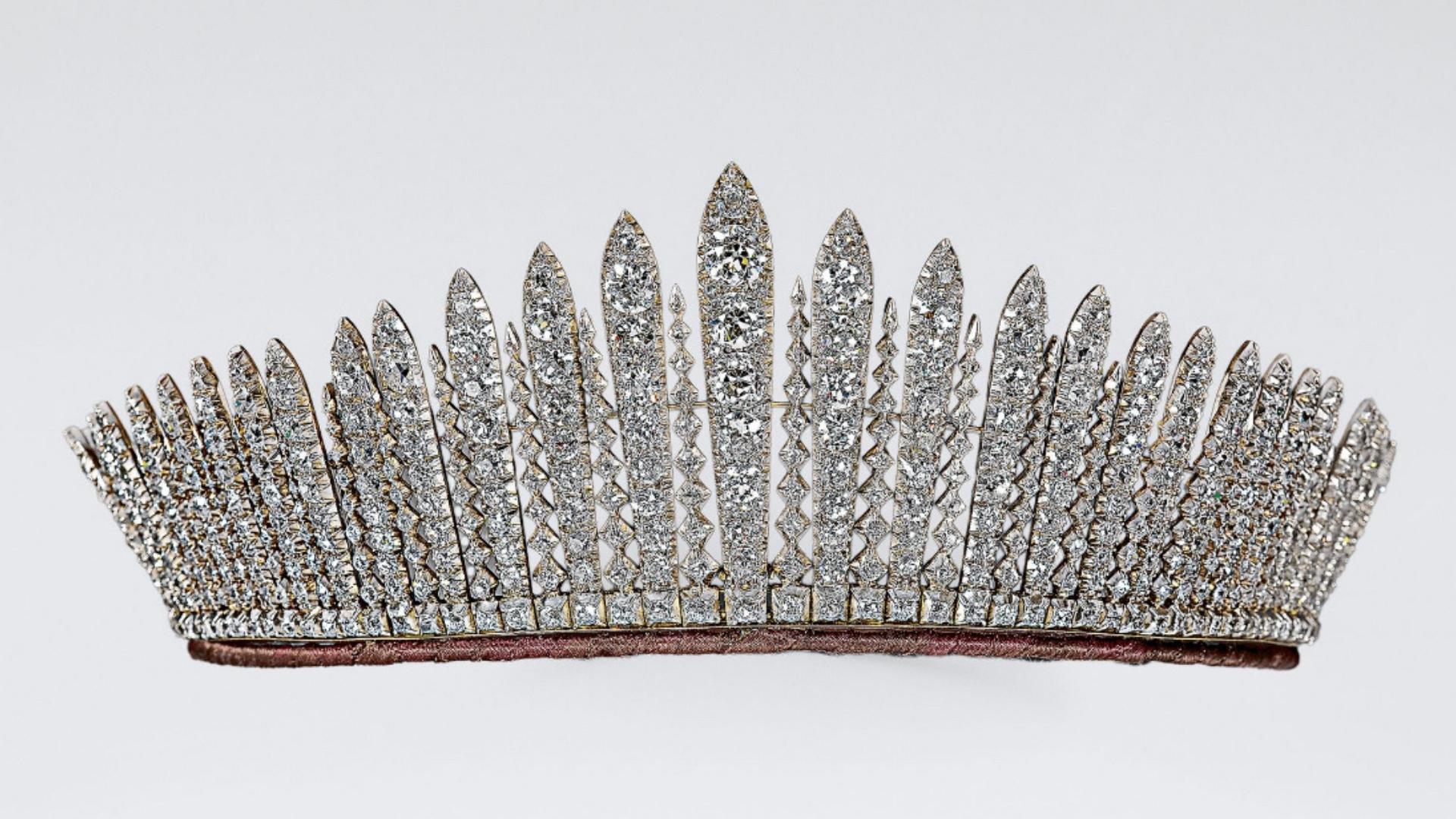
Queen Mary’s Fringe Tiara transforms into a diamond fringe necklace.
First introduced in the mid-19th century, the convertible tiara popped off during the Victorian era and has remained in the sartorial consciousness, with Emerald Fennell wearing the Devonshire Cartier opal convertible tiara as a necklace at the Wuthering Heights UK premiere. Even De Beers debuted the Echo Masterpiece Transformable Necklace that converts into six unique jewels, including a tiara, bracelet, and earrings, during Paris Haute Couture Week at the top of the year.
Royals have long loved a jewelry makeover. The dazzling diamond crowns and tiaras, transcendent sparkling parures, have always delineated royals from mere mortals. But more than evoking majesty, royal jewelry choices are always symbolic and strategic. Both Queen Elizabeth II and her younger sister, Princess Margaret, wore convertible tiaras on their wedding day.
Meet the Expert

- Claire Scott is the Design and Development Director at Garrard.
- Scott previously held positions like Senior Jewelry Designer and Head of Design at the first official Crown Jeweler.
- With over 20 years of experience in the luxury jewelry industry, Scott has developed iconic collections and custom commissions at some of the most prestigious jewelry houses in the world.
Here, explore the versatile history of the convertible tiara and how it maintains its enduring appeal to this day.
How the Tiara Became a Royal Icon
The timeless intrigue of the tiara is thanks, in part, to its rich and storied history. Worn for thousands of years, the tiara has been traced back to the ancient civilizations of Egypt, Greece, and Rome.
A symbol of divinity, power, and status, tiaras took the form of simple diadems or ornate headbands for rulers and even deities. Crafted from metals like gold, the earliest forms of tiaras were adorned with special and specific stones to illustrate rank and authority. The ancient Greeks were known to adorn statues of their gods and heroes with gold laurel wreaths, while Roman officials wore sacred headpieces as symbols of honor at banquets and wedding celebrations.
During the Middle Ages and the Renaissance, tiaras gained prominence in Europe as royalty began to adopt the jewel. By the 18th and 19th centuries, the tiara grew into the intricate and ornate natural diamond-embellished headpiece worn by aristocratic women, as we know and love today.
Leading jewelry houses quickly embraced the trend. During the late Victorian era and into the Belle Époque, Parisian maisons such as Chaumet became renowned for transformable tiaras that could be worn as necklaces, corsages, and other jewels. Boucheron also embraced the concept with masterpieces like the Fuchsia Tiara, which converts into an elegant diamond necklace, demonstrating how technical innovation had become just as important as dazzling design.
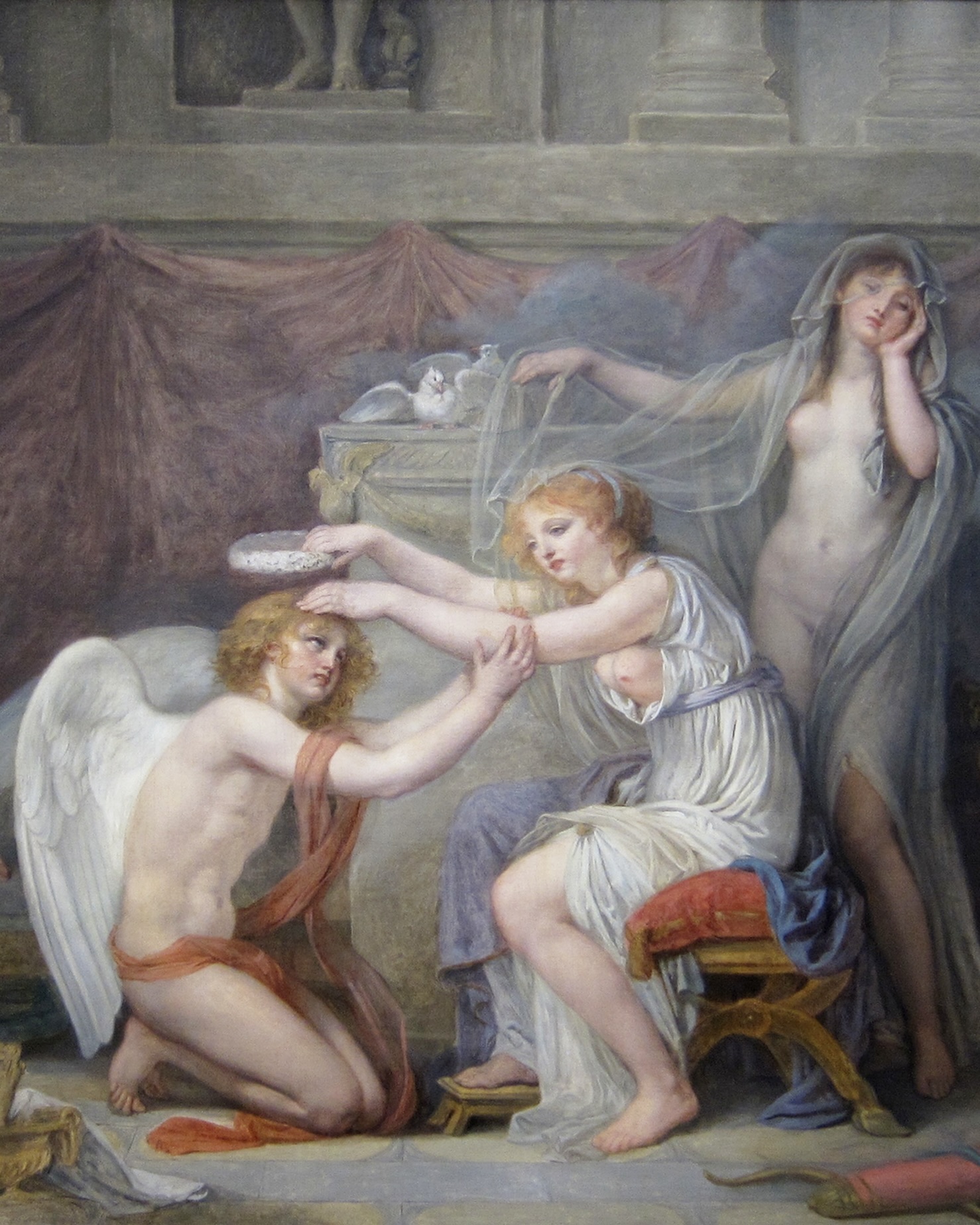
The 18th-century painting by Jean-Baptiste Greuze, Cupid Crowned by Psyche, features a seated Roman maiden placing a diadem on the head of Cupid, the god of desire and affection.
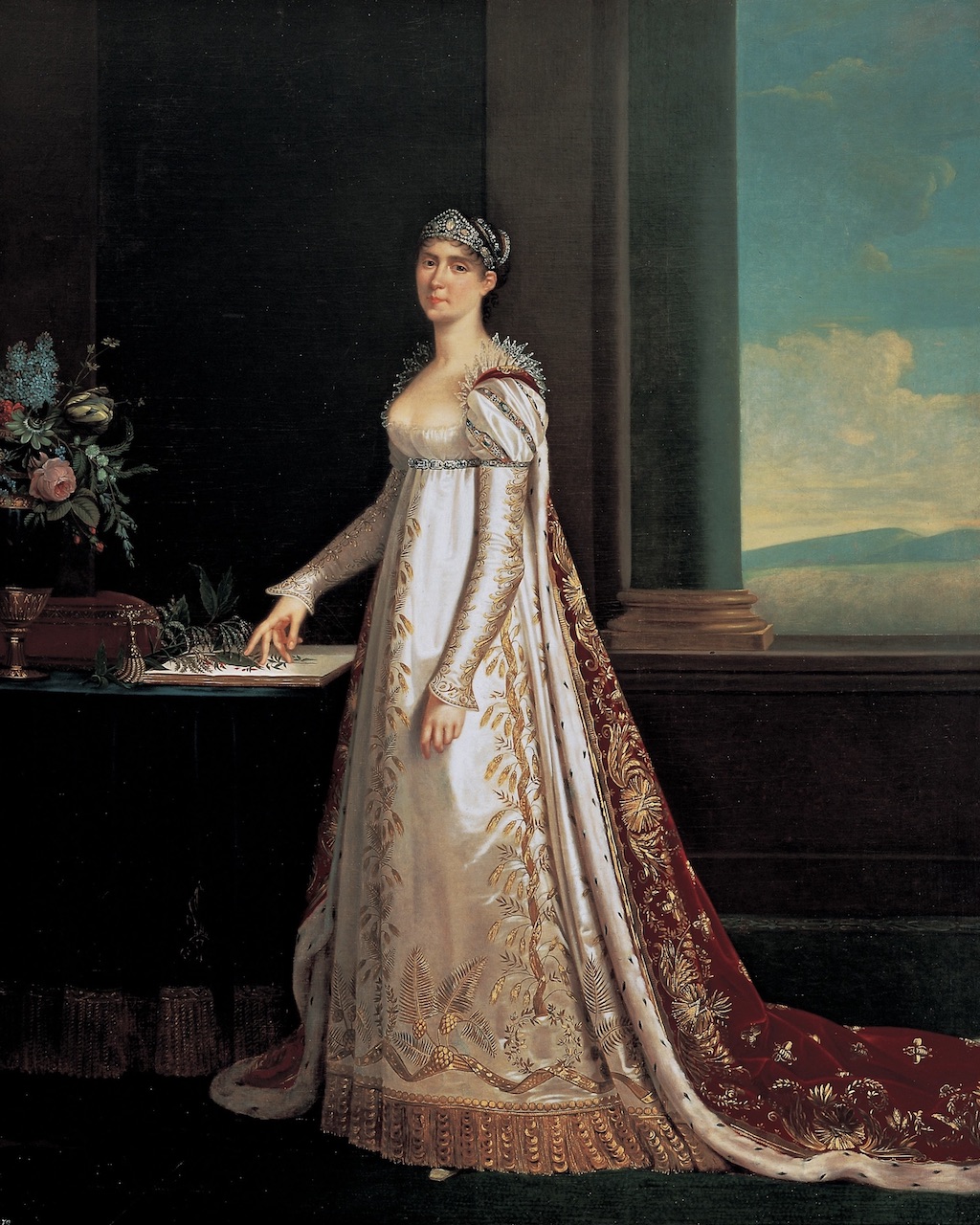
When Napoleon was crowned Emperor of France in 1804, his wife, Empress Joséphine, wore a diamond tiara as an emblem of sovereignty and imperial grandeur that cemented the accessory as an essential element of courtly dress. Together, Napoleon and his empress commissioned jewelers to look to the classical world for inspiration, reviving the laurel wreaths of Ancient Greece and Rome in sparkling form with natural diamonds and other precious gemstones.
Since the age of antiquity, head adornments have possessed special significance across different civilizations and cultures. From flower and vine wreaths made for loved ones to precious metals and gob-smacking gems worn by royalty, the universal allure of the diadem has lasted ages.
Why the Convertible Tiara Took Off in the Victorian Era
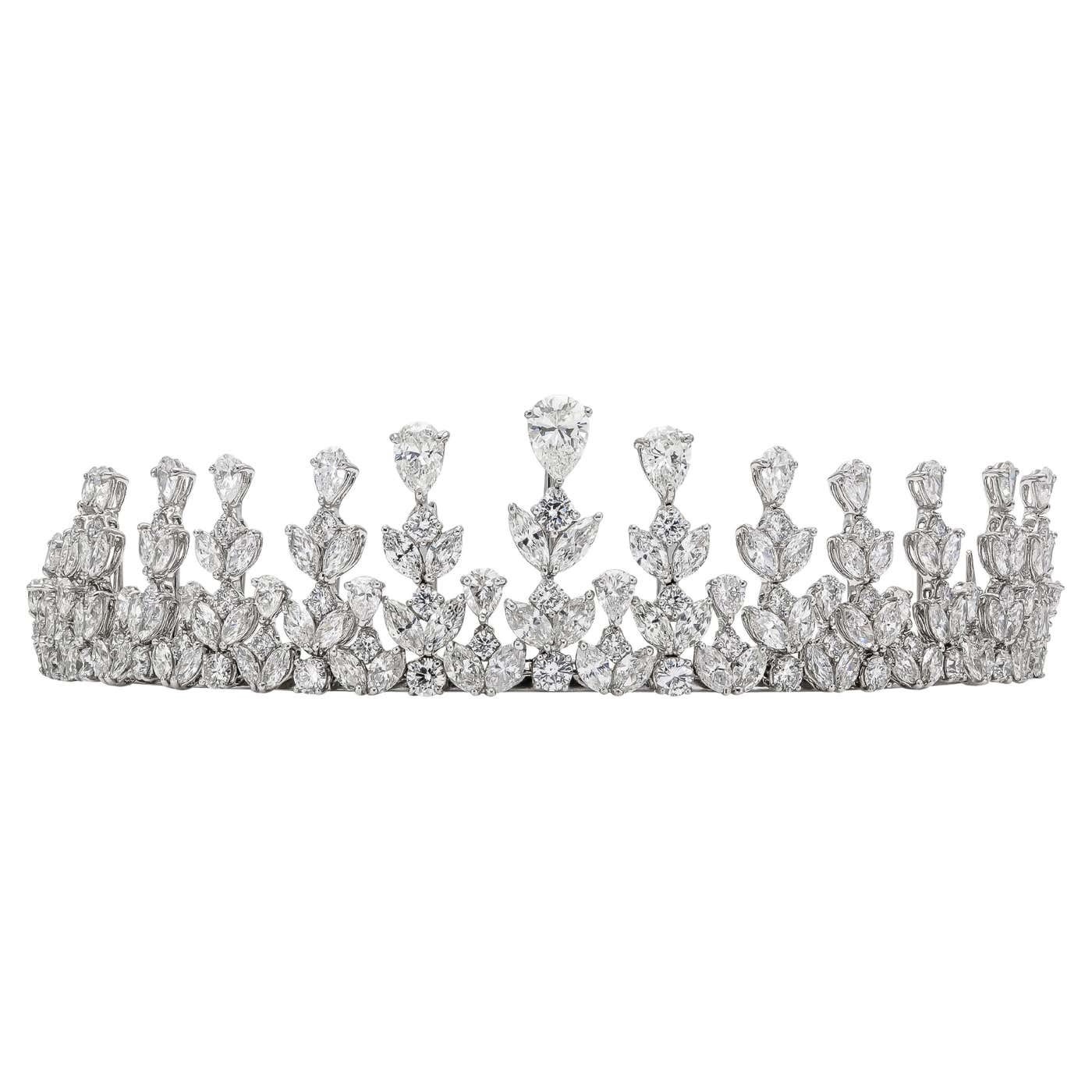
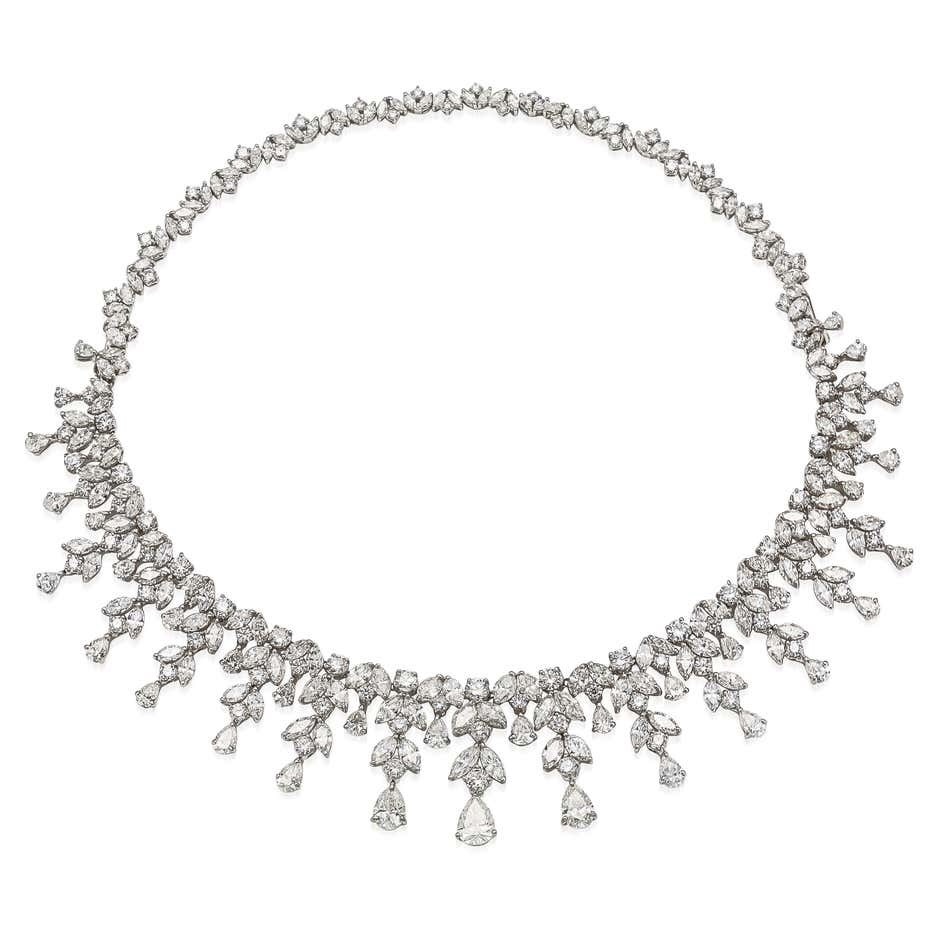
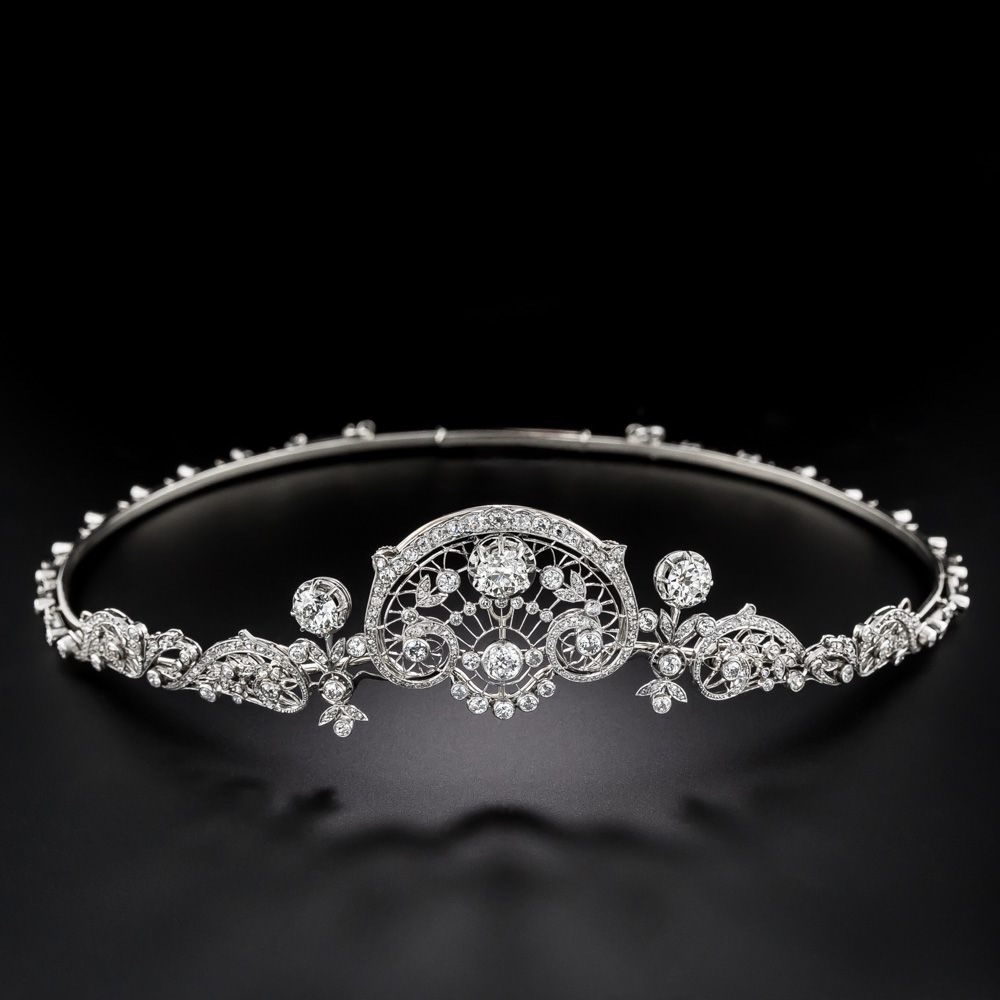
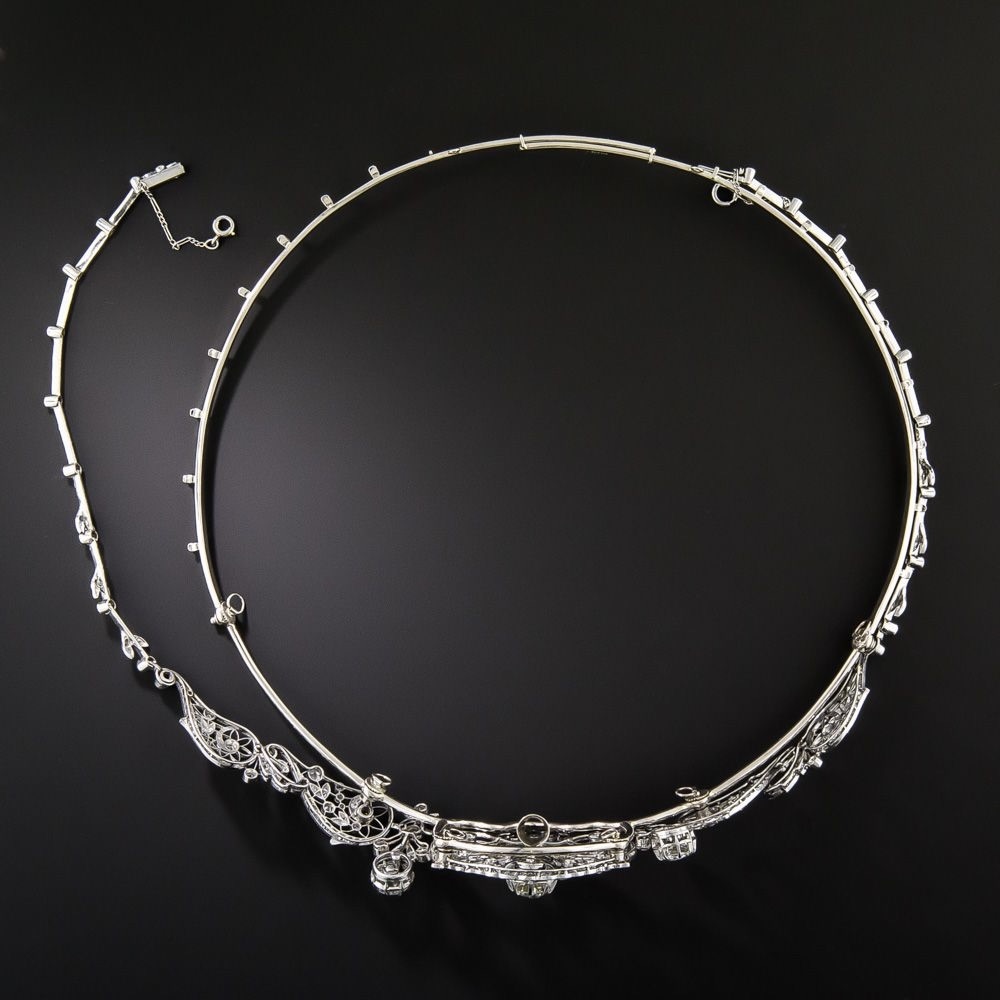
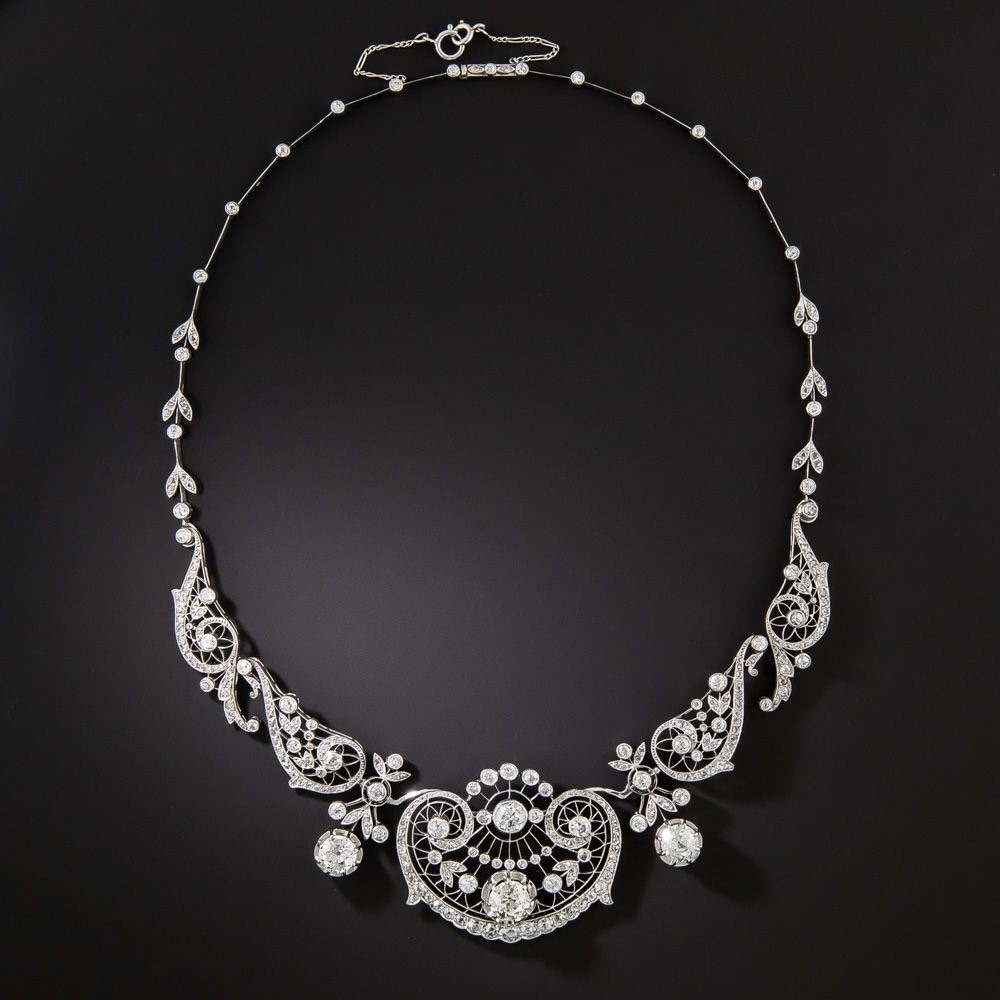
The popular wave of convertible jewelry began during the Victorian era, when a newfound emphasis on practicality transformed luxury jewelry design. As the ultimate trendsetter of her time, Queen Victoria’s influence as both a jewelry lover and fashion icon fueled demand for useful, transformable pieces. By the 1850s and 1860s, European aristocracy and royalty favored versatile convertible tiaras that could be dismantled into necklaces, brooches, bracelets, and other jewels, allowing a single piece to be worn in multiple ways for different occasions.
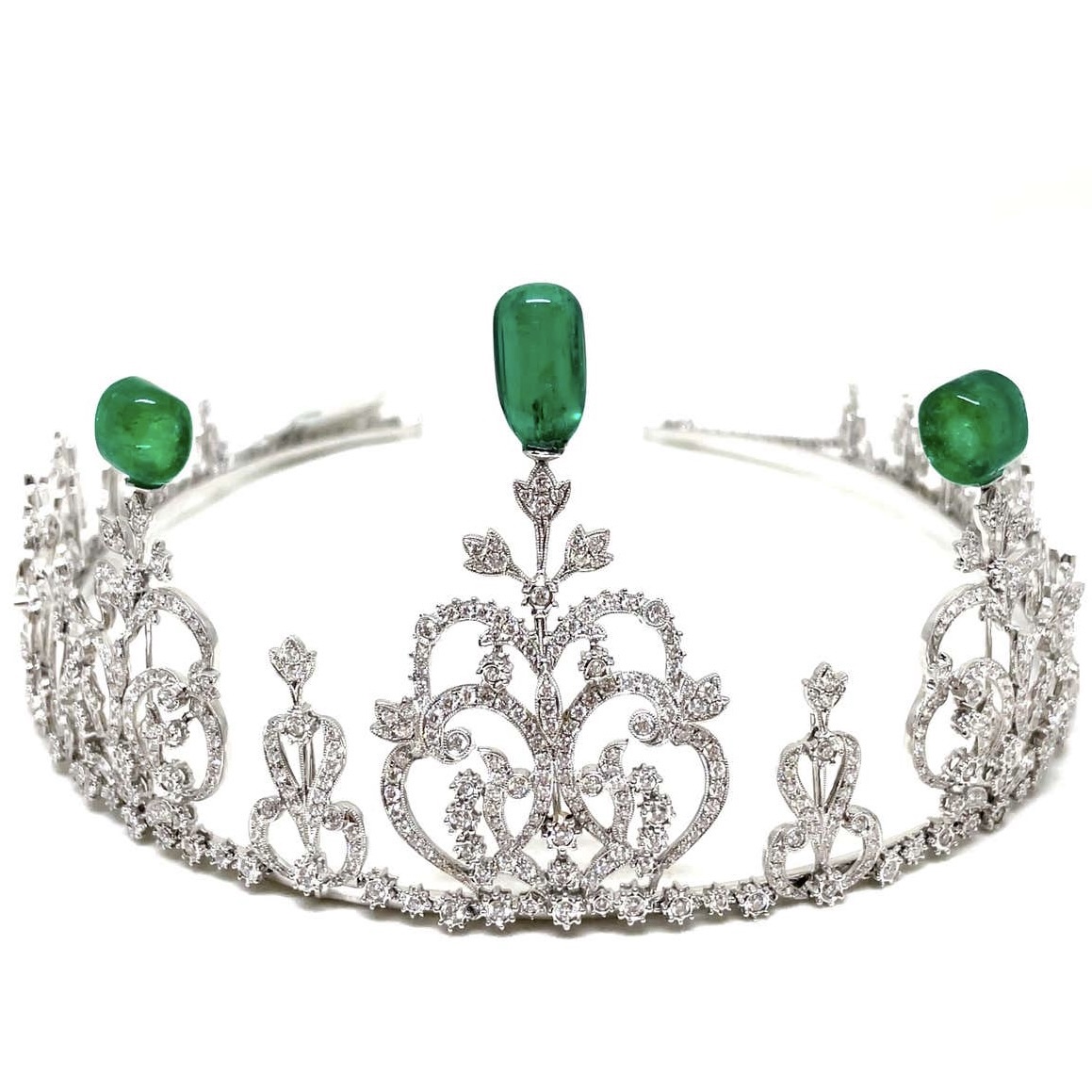
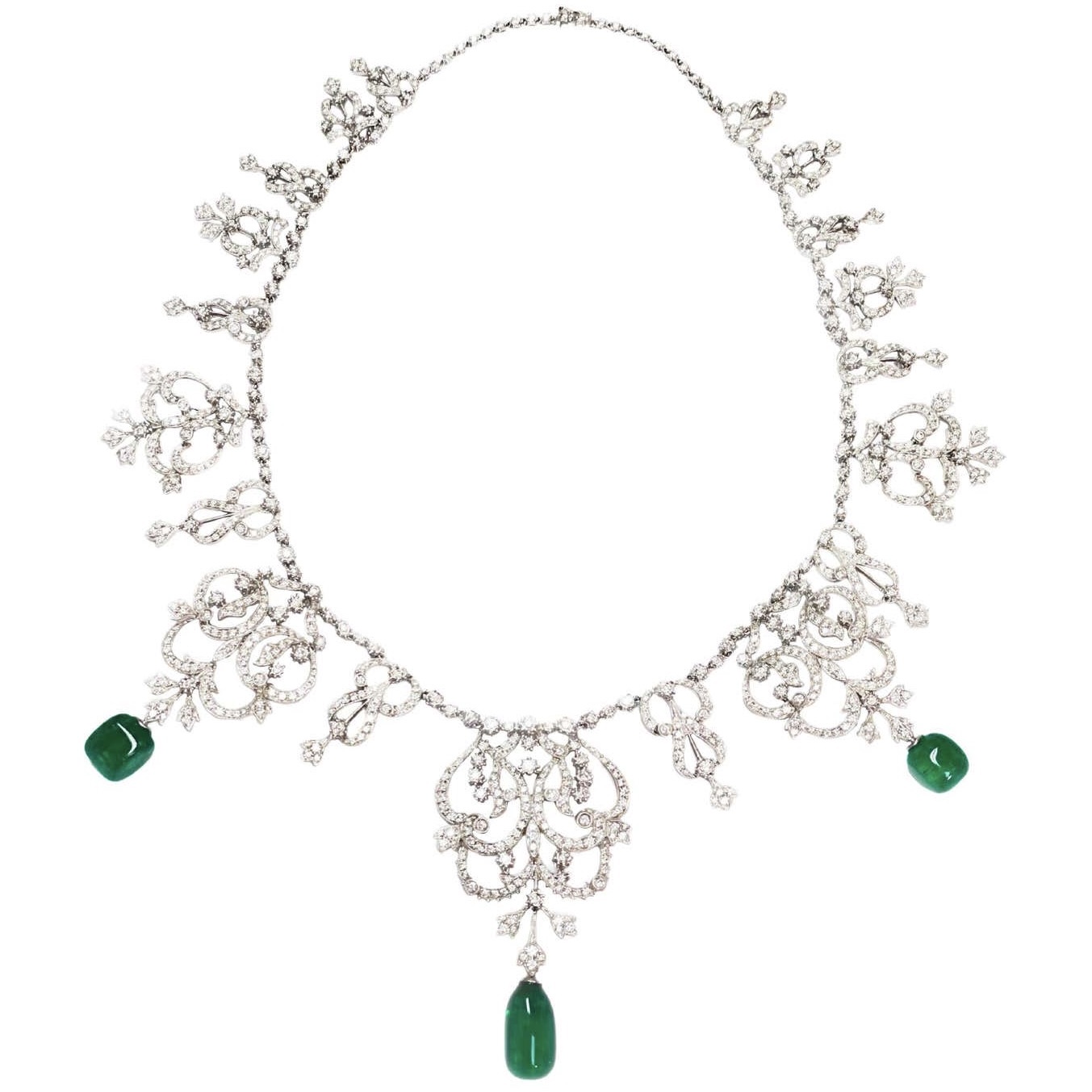
Where a diamond tiara might be too formal for any given event, a lady might wish to switch it into a more appropriate necklace or brooch. From links to nobility and royalty to one-of-a-kind custom creations, the convertible tiara continues to be one of the most desired pieces of high jewelry to this day.
Emerald Fennell Revived a Historic Convertible Tiara at the Wuthering Heights Premiere
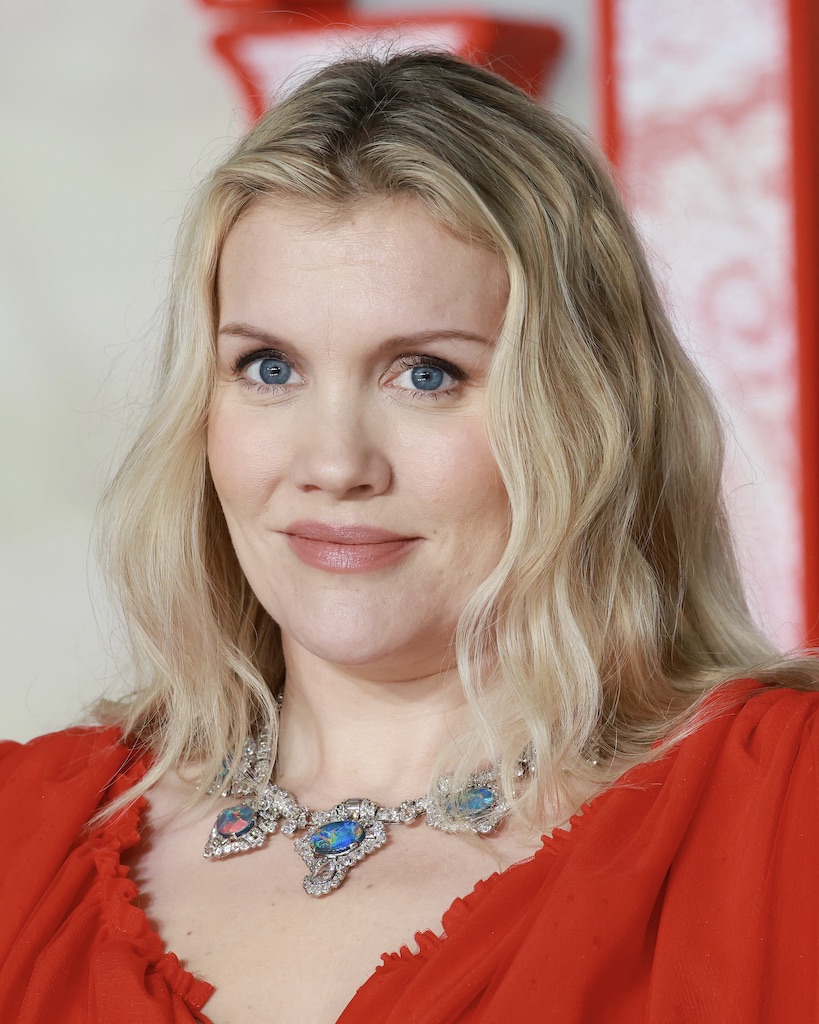
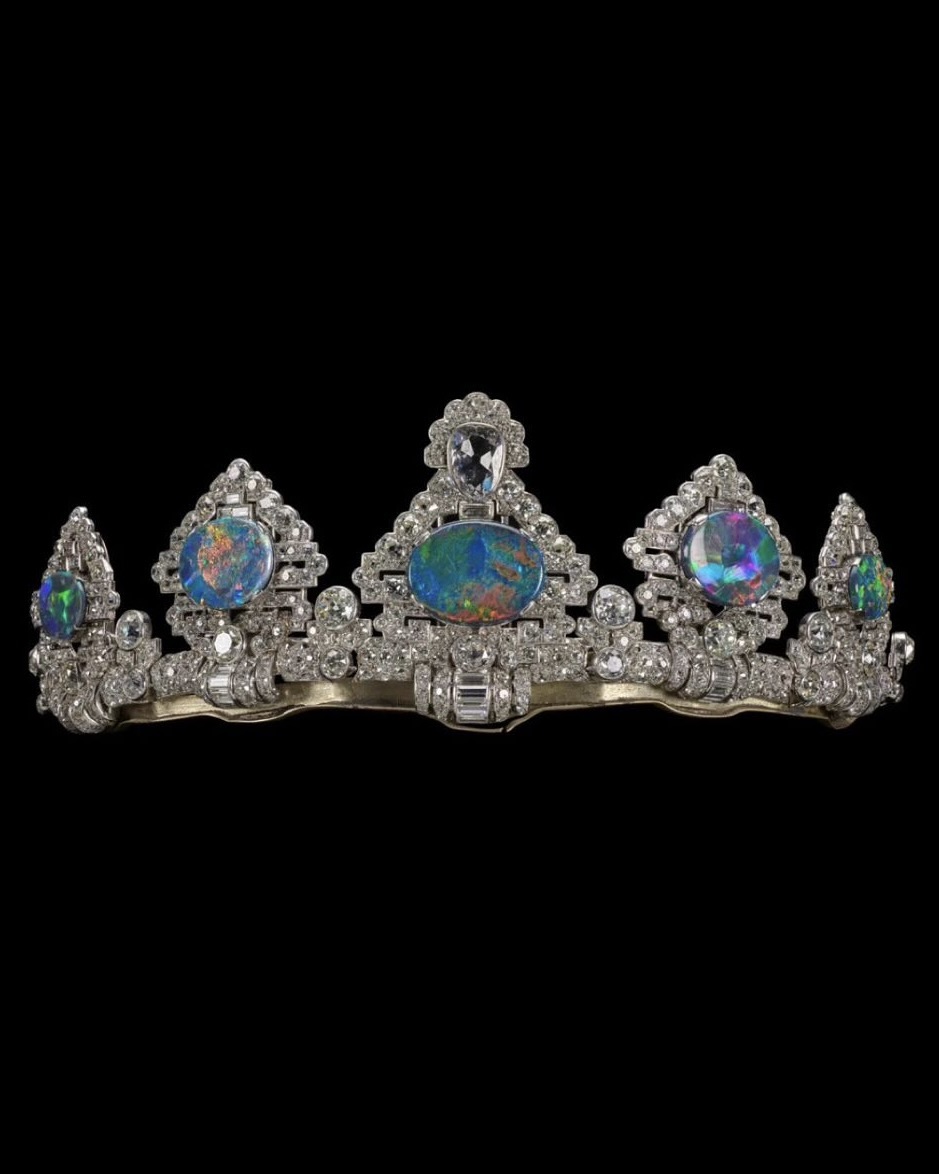
Wuthering Heights director Emerald Fennell looked resplendent at the film’s premiere at Odeon Luxe Leicester Square in London, wearing a vintage black opal, natural diamond necklace, set in platinum on loan from Sotheby’s, with her red gown by Andreas Kronthaler for Vivienne Westwood. Appearing as a necklace, the jewel is actually a historic convertible tiara.
The storied bespoke convertible tiara was made by Cartier in 1937 for private collector, Mary Alice Cavendish, the Marchioness of Hartington, who would go on to become the Duchess of Devonshire and wore the jewel as a necklace to the coronation of Queen Elizabeth II in 1952.
The large cabochon opals supplied by Mary Alice Cavendish were a gift from her husband, Edward, Marquess of Hartington. The vibrant gemstones are framed by ornate scrolls and garlands of brilliant-cut diamonds, creating a sparkling, ethereal effect. In addition to the tiara and necklace capabilities, individual sections of the convertible bauble can be removed and worn as brooches.
The tiara was featured as one of the star jewels in Cartier’s landmark exhibition last year at the Victoria & Albert Museum, South Kensington. Fennell’s turn in the bauble marks the first time it has been worn publicly since 2011, when Lady Louise Burrell, granddaughter of the 11th Duke of Devonshire, wore it to the Royal Caledonian Ball.
It wasn’t Cartier’s first exploration of transformable high jewelry. The house also created celebrated pieces like the Manchester Tiara, whose detachable elements allowed it to be worn in multiple configurations.
De Beers Reimagined the Convertible Tiara for Today
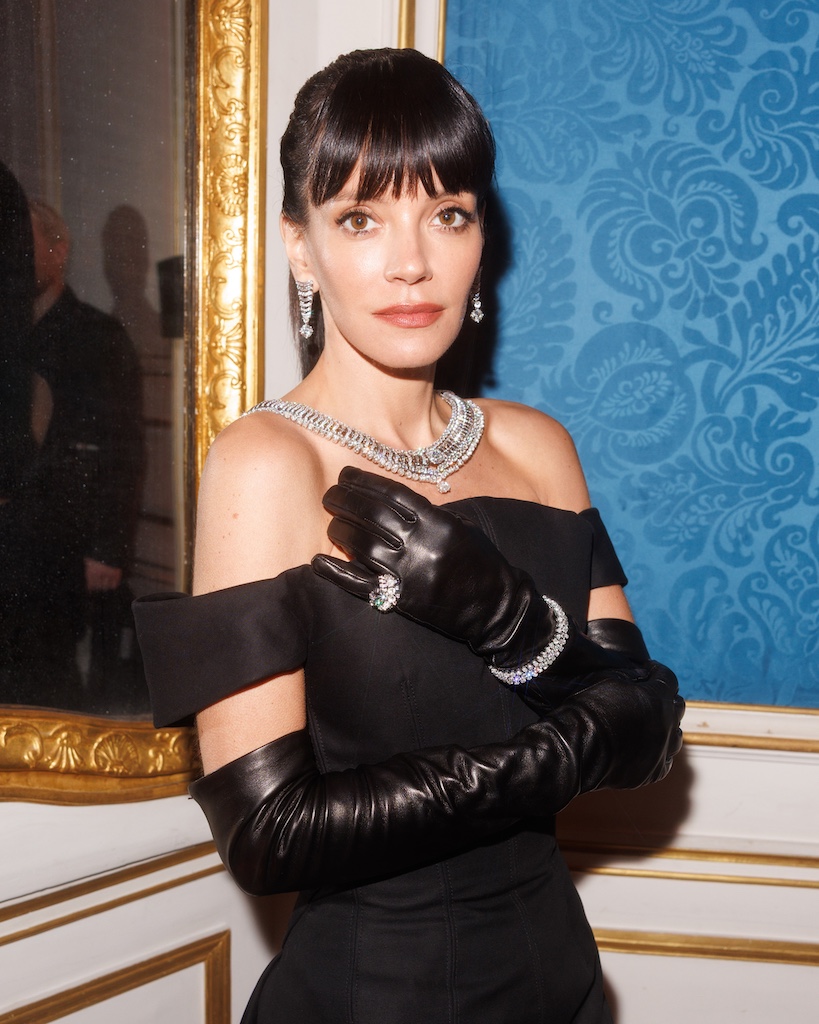

Inspired by Namibia’s Fish River Canyon, the De Beers Echo Masterpiece Transformable necklace from the Vibrations High Jewelry collection was presented during Paris Haute Couture Week. Showcasing an extraordinary 1.12-carat Fancy Intense Blue diamond, sourced directly from Namibia, the stone illustrates the Fish River’s waters, paying homage to the country as a source of exceptional natural diamonds.
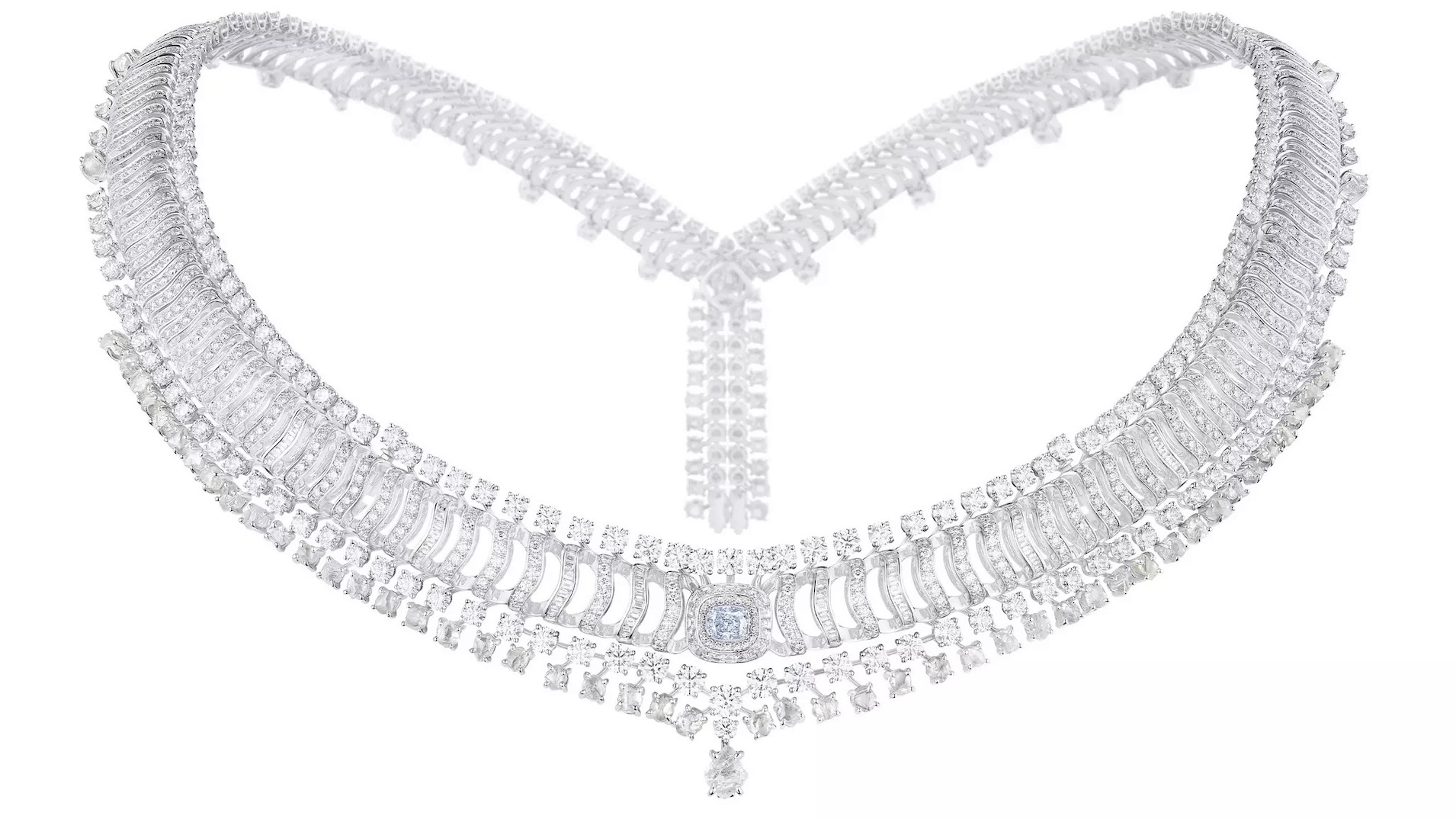
Over 193 carats of round and baguette-cut white diamonds support the blue diamond, elegantly winding around the wearer’s neck, much like a river traverses the famous canyons of Namibia. Unexpectedly, the modular necklace design remodels into a diamond tiara, a bracelet, and two removable tassels that become earrings. Lily Allen wore the set while performing hits from her latest album, West End Girl, at a high-energy after-party for the jewelry house on Place Vendôme.
Elle Fanning Wore Wallis Simpson’s Covertible Tiara as a Necklace at the 2025 Oscars
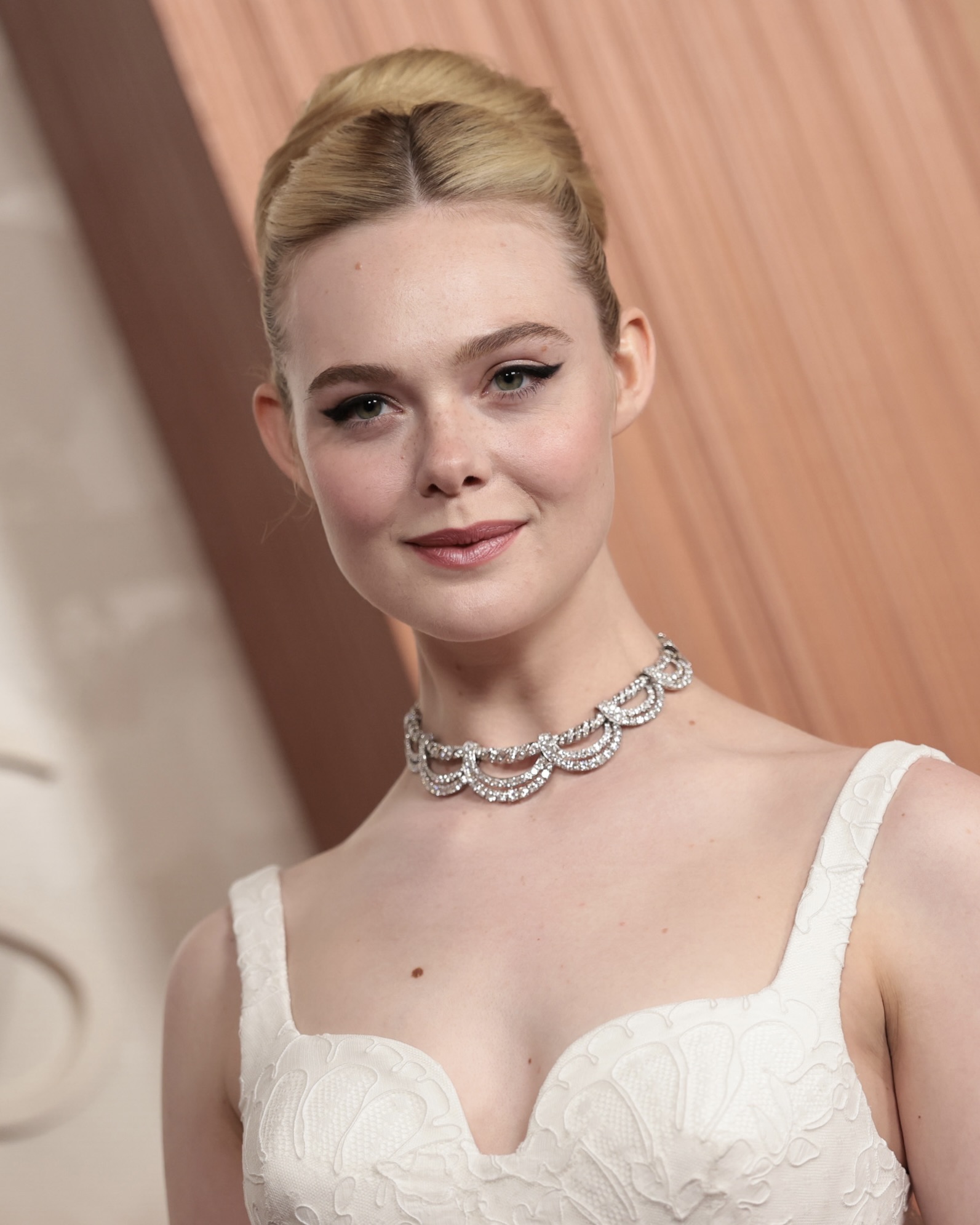
Styled by Samantha McMillen, actress Elle Fanning attended the 2025 Oscars, channeling her inner royal in a white lace custom Givenchy gown with a major vintage Cartier High Jewelry diamond choker, circa 1958. With over 700 diamonds, the necklace is approximately 49 carats.
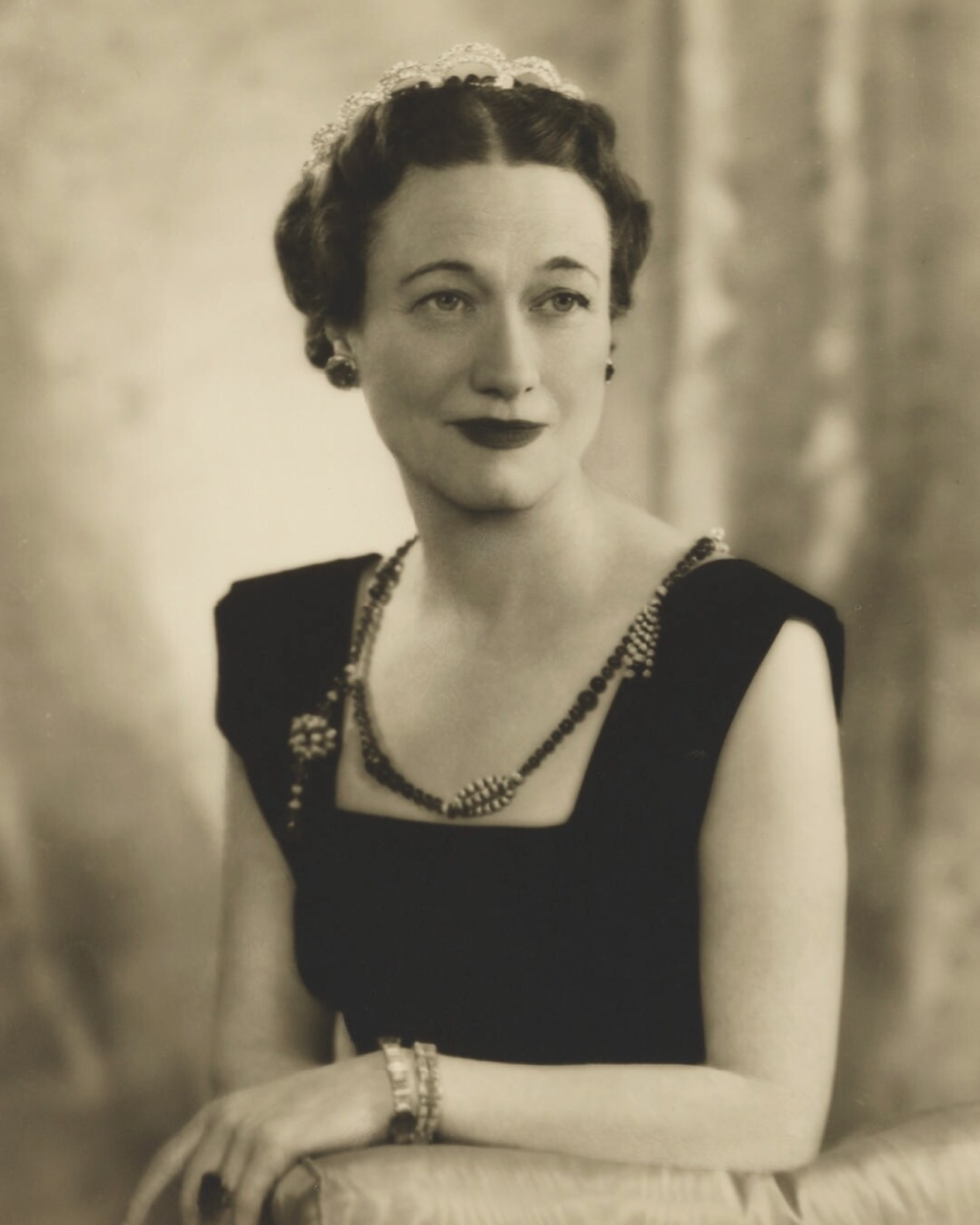
Royal watchers swiftly began to suspect that the necklace had been a Cartier diamond tiara once owned by Wallis Simpson, Duchess of Windsor. About ten years after she married Edward VIII, Duke of Windsor, the couple commissioned their most beloved jewelry house to create the convertible tiara that could transform into a necklace from a stock diamond necklace with a string of their personally owned emerald beads.
Simpson wore the Cartier natural diamond and emerald bead tiara to a gala in the mid-1950s after donning it for a legendary series of portraits taken by royal photographer Dorothy Wilding in 1950.
Queen Elizabeth II Wore a Convertible Tiara on Her Wedding Day
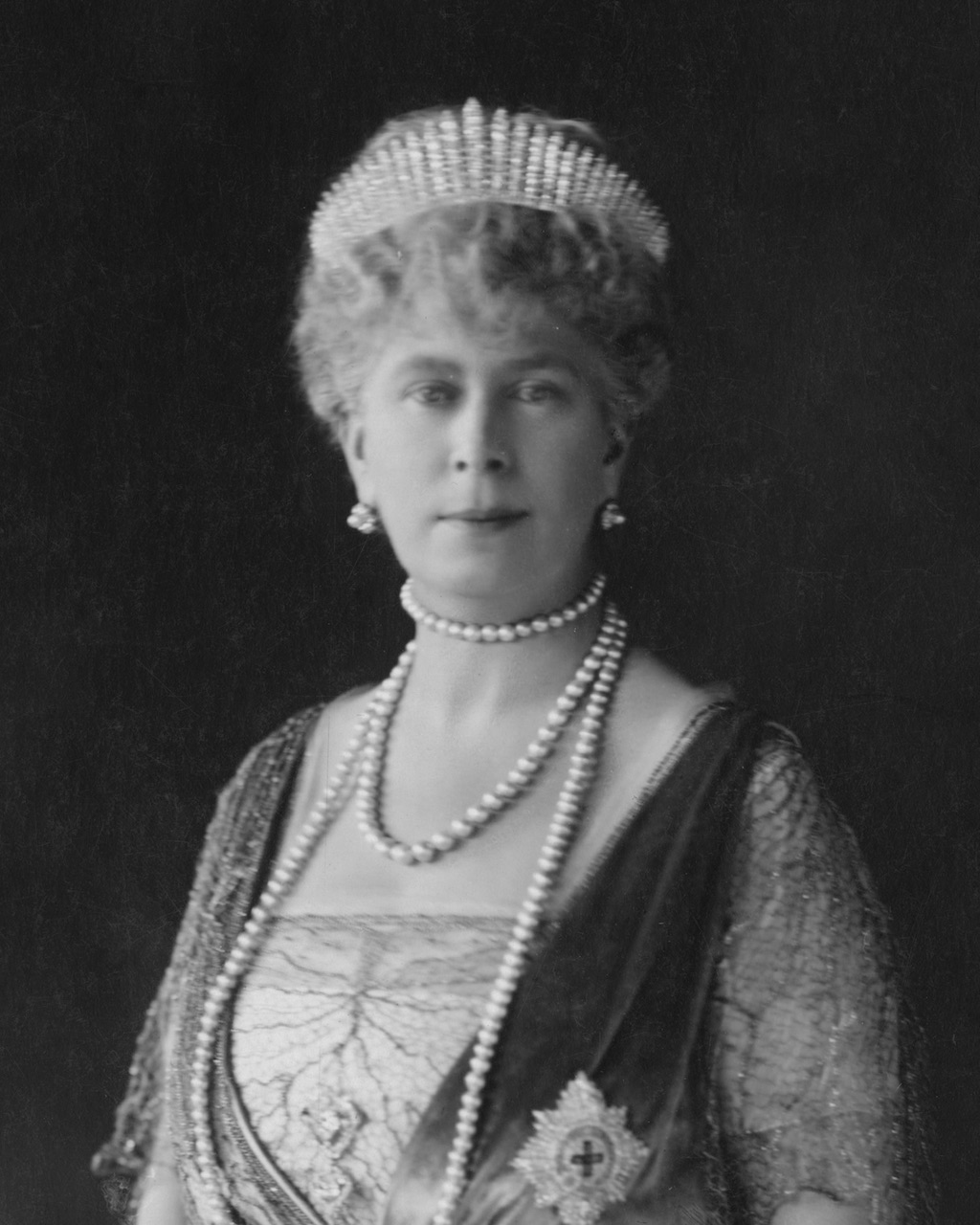
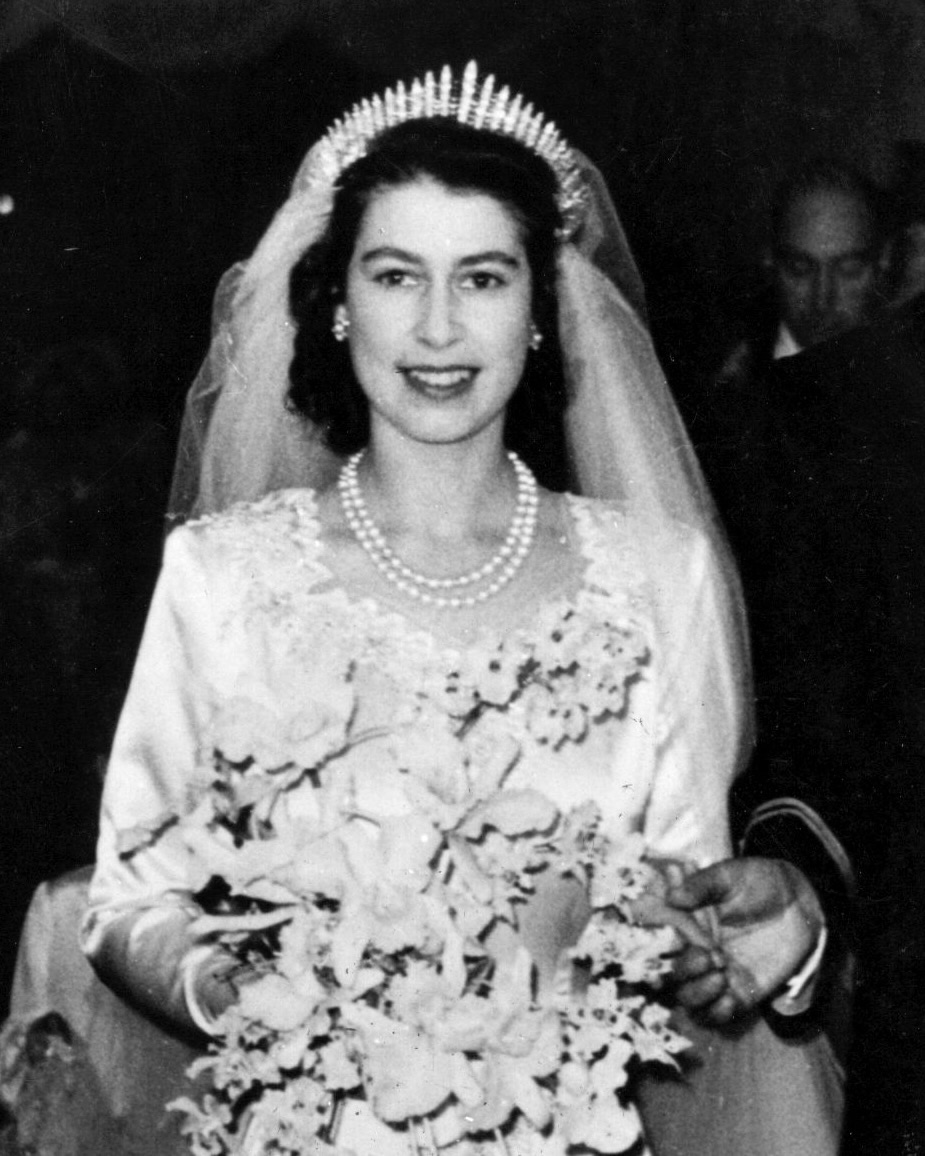
Queen Mary’s diamond Fringe Tiara has seen many royal weddings in its lifetime. Most notably, Queen Elizabeth II chose the headpiece for her nuptials to Prince Philip, Duke of Edinburgh, at Westminster Abbey in London on November 20, 1947. Queen Mary passed down the convertible tiara to her daughter-in-law, Queen Elizabeth, The Queen Mother, in 1937, who then lent the jewel to her daughter, Princess Elizabeth, for her wedding day as her “something borrowed.”
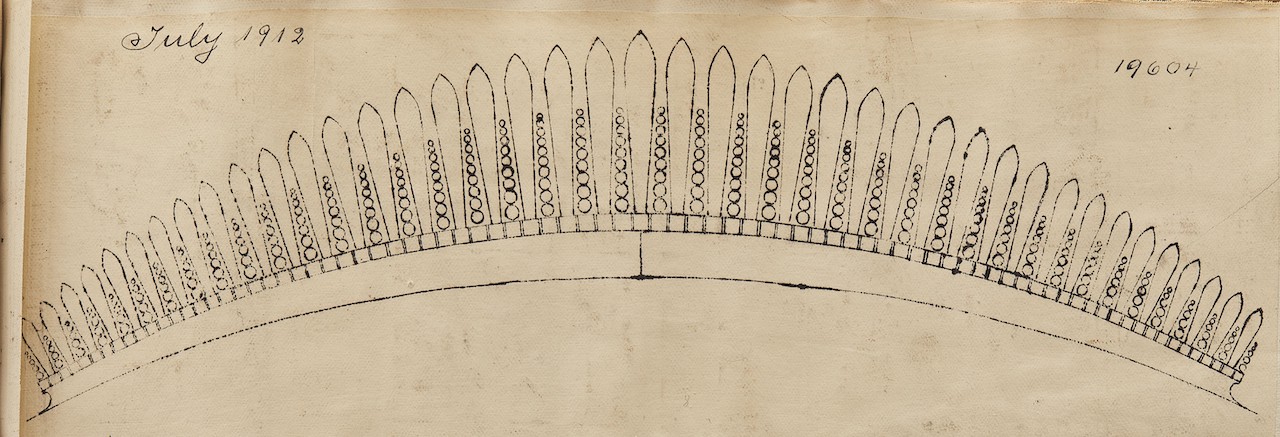
Garrard, the official crown jeweler at the time, has recently rediscovered two of their handwritten royal ledgers. On November 3, 1919, the ledger recounted the notes, “Mounting 633 brilliants and 271 rose diamonds from your Majesty’s own tiara, bracelet, and monogram in gold and silver settings in a Russian pattern tiara with adjustable head frame, allowing for old settings.”

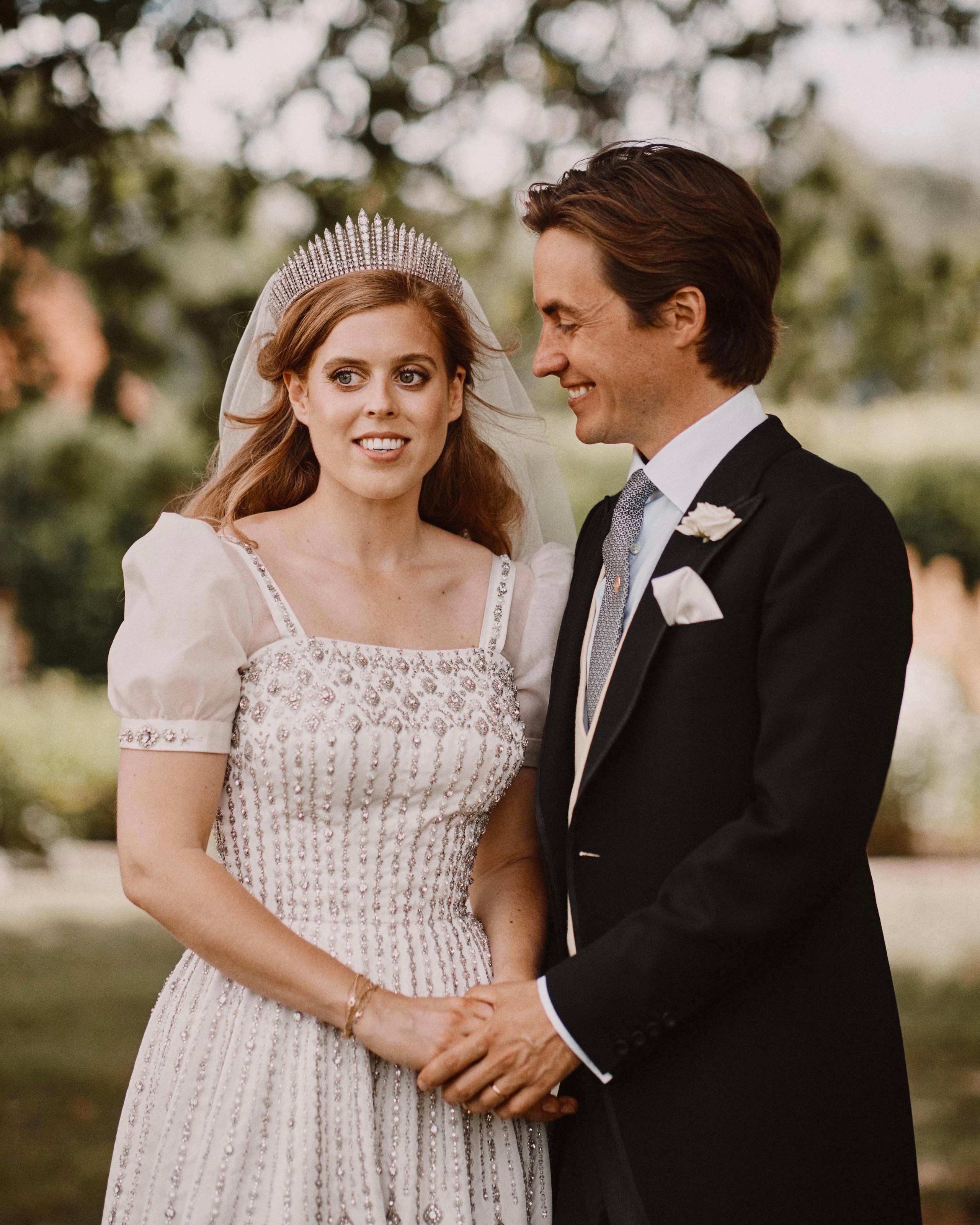
Most of the diamonds were taken from a necklace/tiara purchased by Queen Victoria in 1893 from Collingwood & Co. as a wedding gift for Queen Mary, who wore it on her wedding day. Fashioned after a Russian kokoshnik tiara, the jewel has 47 pointed bars of brilliant-cut and rose-cut diamonds set in an alternating pattern with smaller prongs of lozenge-set diamonds.
The tiara is mounted on a specific frame that allows the tiara to be transformed into a necklace, which leads us to one of the tiara’s most notorious tales. The piece famously almost caused the then-Princess Elizabeth to be late to her own wedding.
As she was getting ready with her dresser at Buckingham Palace, part of the convertible tiara snapped off. The court jeweler rushed to Garrard with the tiara in tow, escorted by police to ensure it was repaired in time.
In 2011, Queen Elizabeth II recalled the story to Kate Middleton when they toured a Buckingham Palace exhibition. “The catch, which I didn’t know existed, it suddenly went [gesturing her breaking the tiara with her hands].” Not often seen in public, Queen Elizabeth II inherited the tiara from her mother, who died in 2002.

The Fringe Tiara is a true testament to Garrard’s exquisite craftsmanship and technical mastery. The fact that it can be worn as a fully articulated necklace without any additional components is a feat of artistry and precision that defines our heritage.

According to the Design and Development Director at Garrard, Claire Scott, “The Fringe Tiara is a true testament to Garrard’s exquisite craftsmanship and technical mastery. The fact that it can be worn as a fully articulated necklace without any additional components is a feat of artistry and precision that defines our heritage.” She explains, “Stories and histories often enhance the allure of a piece of jewelry, but few can hold more romance than one worn by three royal brides on their wedding day.”
Princess Margaret’s Convertible Tiara Was a Royal Rebellion
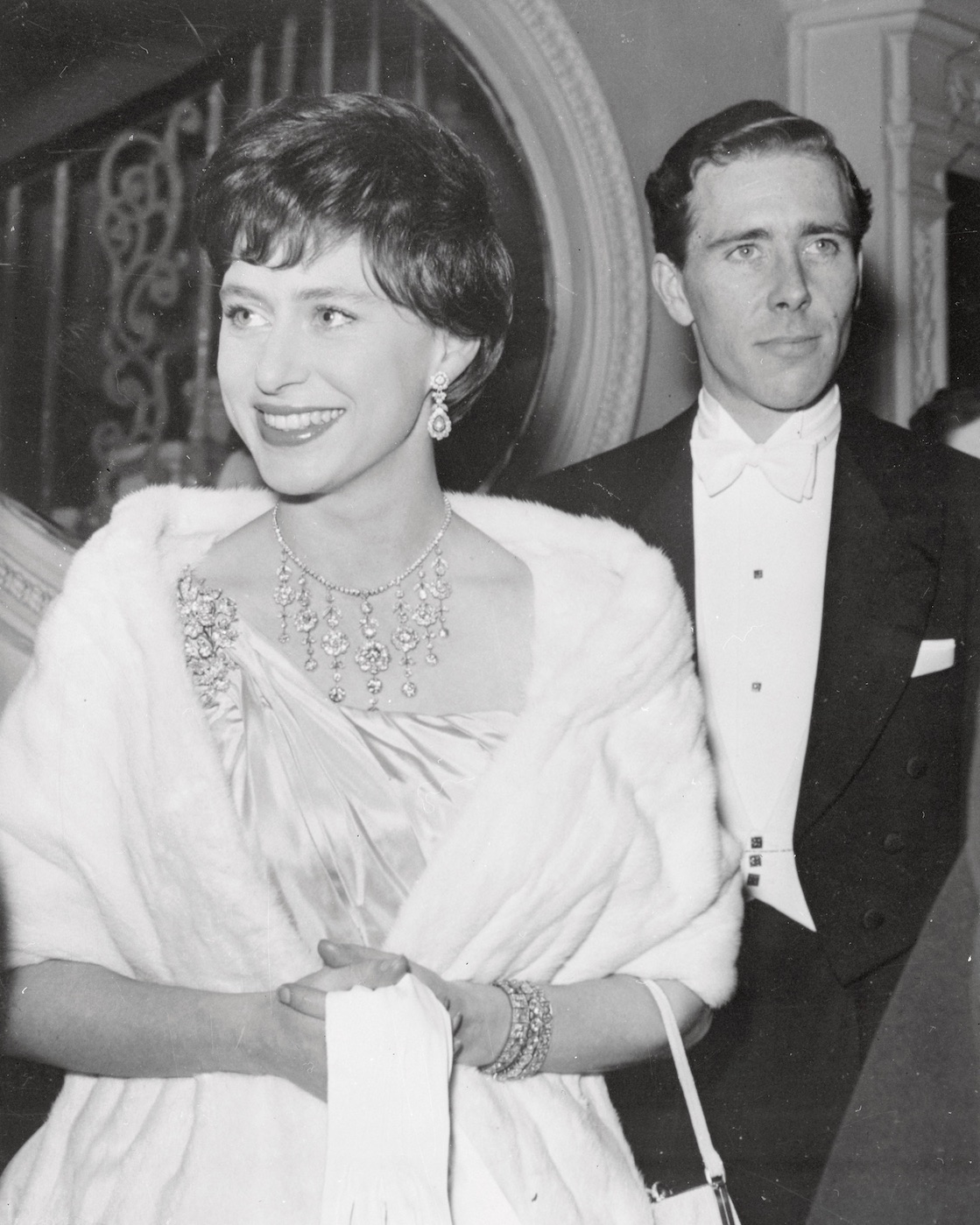
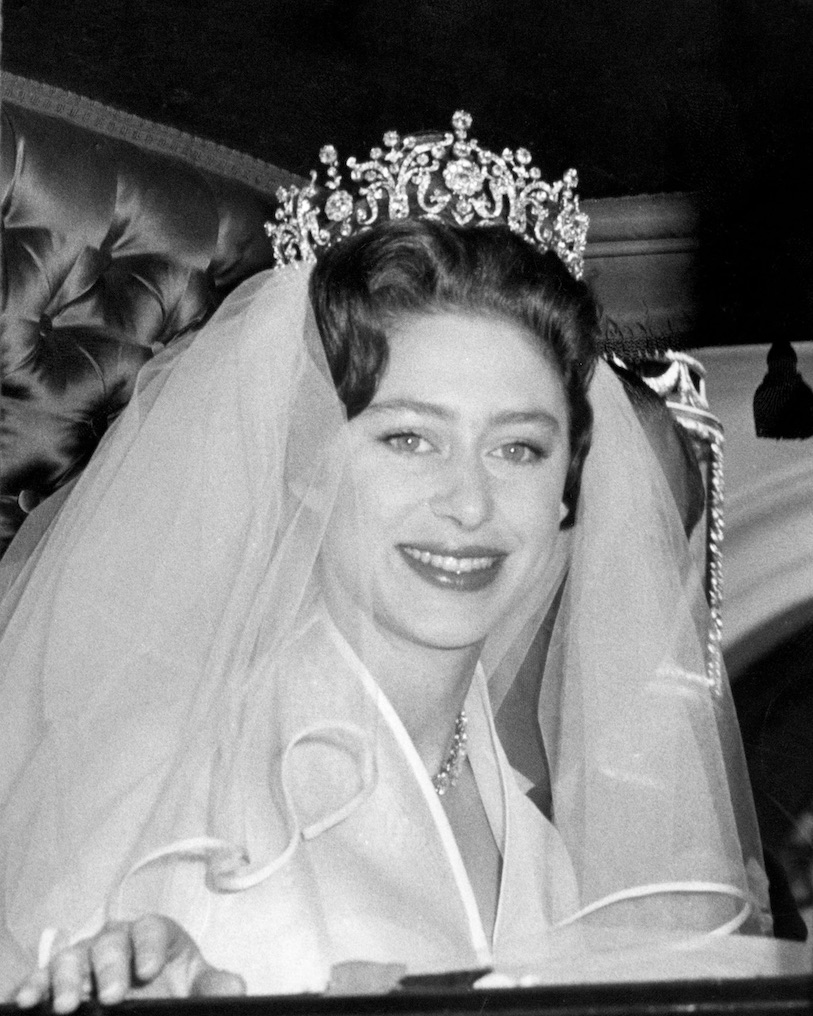
Princess Margaret’s Poltimore Tiara was designed by the House of Garrard in 1870 as a private commission for Florence, Lady Poltimore, who was the wife of the second Baron Poltimore and Treasurer to Queen Victoria’s household from 1872 to 1874. Lady Poltimore even wore the intricate headpiece to the coronation of King George V in 1911.
Comprised of both silver and gold metal, the tiara is sprinkled with cushion-cut and old-cut diamond clusters, which alternate between diamond-embellished scroll motifs, evoking the floral motifs that were in vogue during the Victorian era.
Known for marching to the beat of her own drum, Princess Margaret didn’t earn her reputation as the royal rebel for nothing. With a discerning eye for jewelry and a flair for the unconventional, she famously favored the grand Poltimore Tiara not just for its beauty, but because its towering silhouette gave her a boost in the height department. After all, Margaret stood just five feet one.
The convertible tiara transformed into a fringe necklace and could also be separated into 11 different brooches. A few months ahead of the royal wedding, Margaret wore the Poltimore Tiara in its necklace form at a gala ballet performance at the Royal Opera House in Covent Garden, London. She went on to wear it as a necklace again in October of that year for a film premiere in Charing Cross.
“Princess Margaret wore the Poltimore Tiara faithfully throughout her life, in its original form and also as a necklace and brooches,” says Scott. “The design demonstrates the full extent of the ingenuity and skill of Garrard’s designers and craftspeople of the time. To create a piece that can be worn in so many ways, but also converge seamlessly as a magnificent tiara, is no easy feat. The images of Princess Margaret wearing the tiara in the 1960s with a beehive hairdo illustrate its timeless appeal.”
The Greek Emerald Parure Includes a Stunning Diamond Convertible Tiara
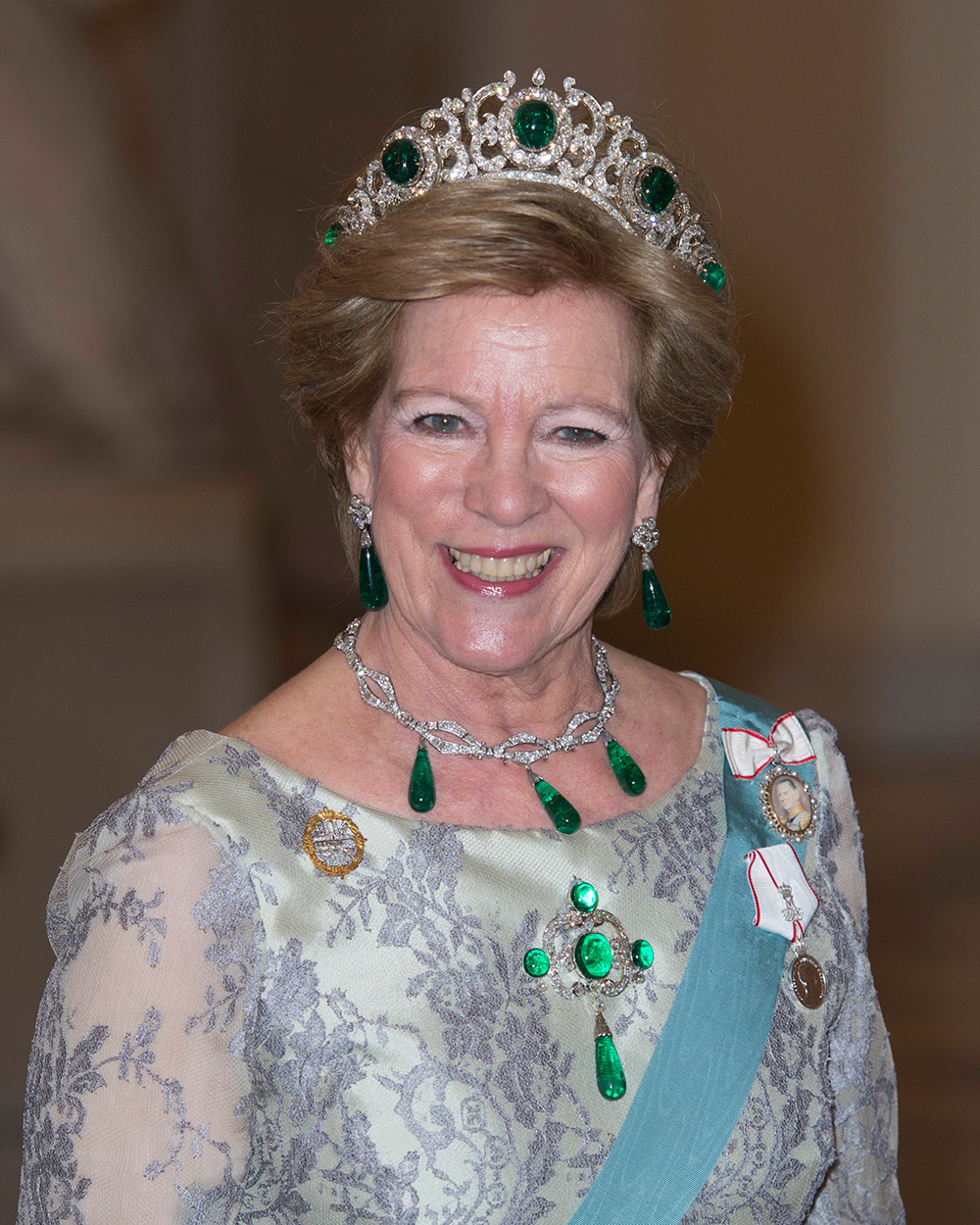
One extraordinary suite in the Greek royal collection can be traced back to Queen Olga, who arrived in Greece from Russia in 1867 to marry King George I as the 16-year-old Grand Duchess Olga Konstantinovna. With her, she brought a collection of loose cabochon emeralds, which would live on to be incorporated into one of the family’s most remarkable sets of jewelry.
In the 1920s, Olga Konstantinovna’s granddaughter-in-law, Queen Elisabeth of Greece, had many of the round cabochon emeralds mounted into a tiara, brooch, and pair of earrings.
The convertible tiara featured a diamond frame set with seven cabochon emeralds, with an interlocking diamond “E” motif, believed to represent Elisabeth’s initial. The emeralds could also be removed and transformed into a striking necklace.
The brooch incorporated three cabochon emeralds with pear-shaped pendant drops that could be suspended from a necklace, while the matching earrings featured pear-shaped emerald drops that could easily be paired with other pieces from the suite.
Queen Anne-Marie wore the tiara from the Greek Emerald Parure in her official wedding portrait, while Queen Frederica of Greece wore the brooch iteration of the jewel to the 1947 wedding of Queen Elizabeth II. With versatility at the forefront, nearly every piece can be worn in multiple ways, making it a masterclass in convertible jewelry.