
When It Comes to Jewelry, All Roads Lead Back to Ancient Egypt
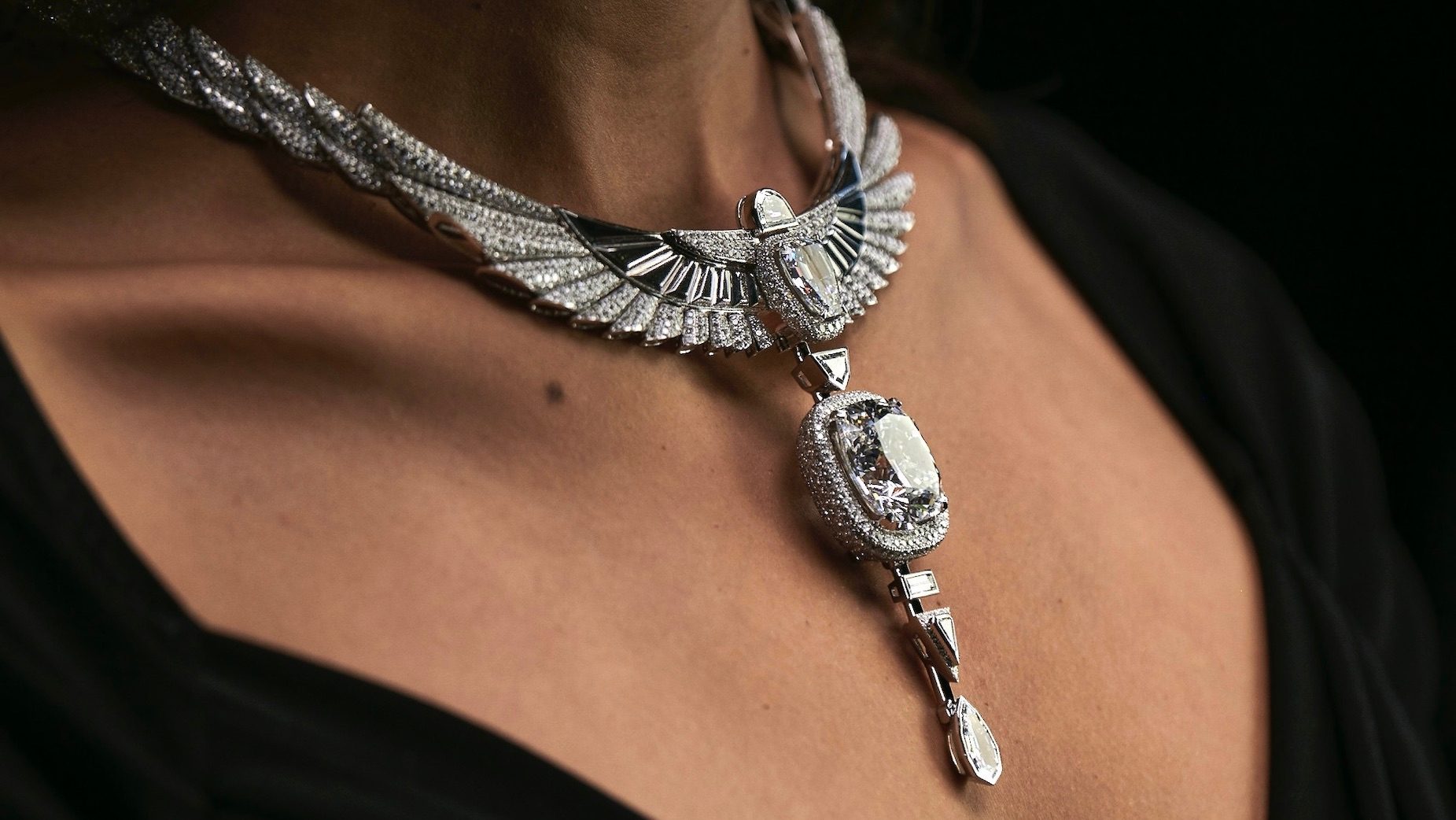
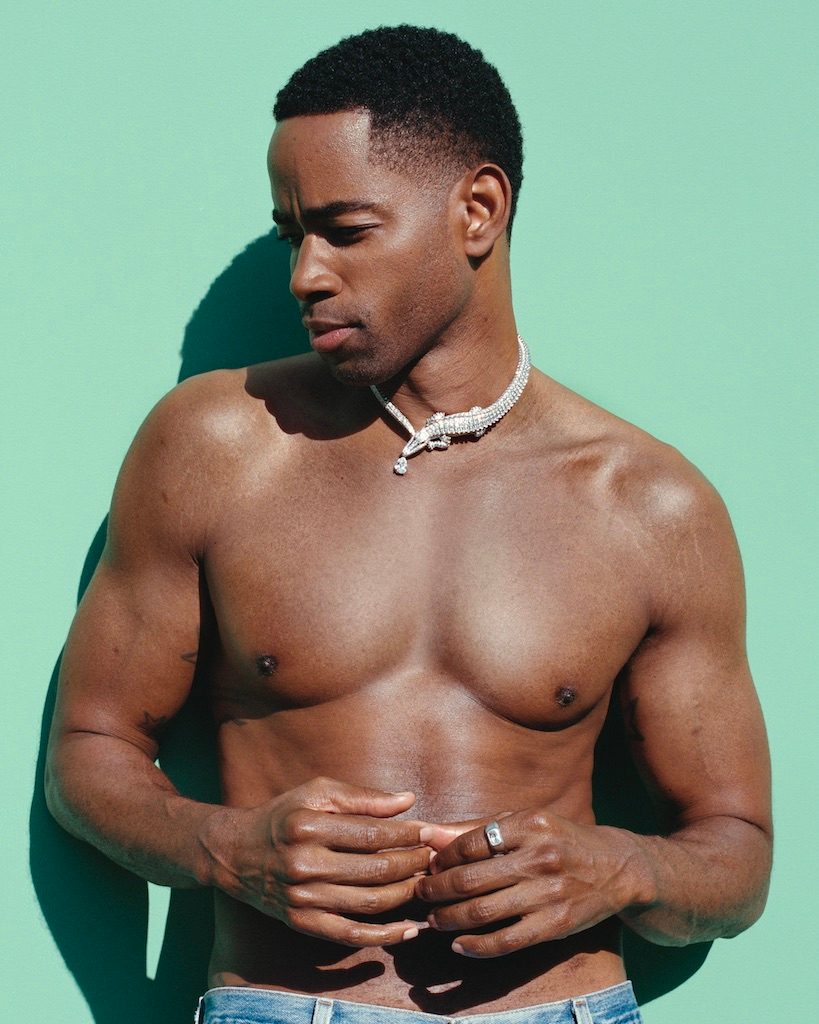
Messika Paris Akh Ba Ka Necklace from the Beyond The Light Collection
From childhood to the afterlife, what’s one thing every Egyptian had in common? Jewelry. Regardless of age, wealth, or status, Egyptian jewelry was a democratized and essential element of society. From the smallest of children and the poorest of farmers to the oldest of elders and the richest of pharaohs, many Egyptians saw jewelry as a fundamental component of their garb, taking it with them into the afterlife.
Deputy Director for Research and Programs at the American Research Center in Egypt, Dr. Yasmin El Shazly, tells Only Natural Diamonds, “Jewelry was worn by both men and women, from childhood through burial, and pieces accompanied the dead into the afterlife because they were believed to retain protective and regenerative powers.”
Meet the Experts

Dr. Yasmin El Shazly is Deputy Director for Research and Programs at the American Research Center in Egypt. She previously held positions at the Egyptian Ministry of Antiquities (now the Ministry of Tourism and Antiquities) and the Egyptian Museum, Cairo. Dr. El Shazly has taught courses at the American University in Cairo, Cairo University, and AMIDEAST, after earning her BA from the American University in Cairo, her MA, and Ph.D. from Johns Hopkins University. She has published several academic papers and has appeared in numerous documentaries.
Art history and rarities specialist, Joanna Gong, is the founder of Maison Gong, a creative consultancy advising heritage Maisons, artists, and institutions. Previously, she acted as the Private Sales Director and Jewelry Specialist at Sotheby’s Auction House before taking on the role of the Director of Global Partnerships and Development for Benin Pavilion during the 60th edition of the Venice Biennale in 2024.
Less ancient than the natural diamonds formed deep within the Earth, Egyptian jewelry was widely reinterpreted throughout the 19th and 20th centuries. Western fascination with Egyptian jewelry intensified after Napoleon Bonaparte invaded Egypt in 1798 and returned to France with artifacts that offered many Europeans their first glimpse into the civilization’s rich visual culture. Then, when the opening of the Suez Canal took place in 1869, Egyptian references saw another spike in popular interest. But Egyptian jewelry permeated collective consciousness like never before, when the discovery of King Tutankhamun’s tomb in 1922 ignited a global interest in Egyptian motifs, reimagined through a modern Art Deco lens with attention-grabbing natural diamonds.
“Egypt in particular became one of the most enduring visual shorthand languages for ‘ancient luxury,'” says art history and rarities specialist, Joanna Gong. “Largely because its imagery was so heavily circulated, romanticized, and reproduced throughout the 19th and 20th centuries.”
The Fascinating World of Ancient Egyptian Jewelry
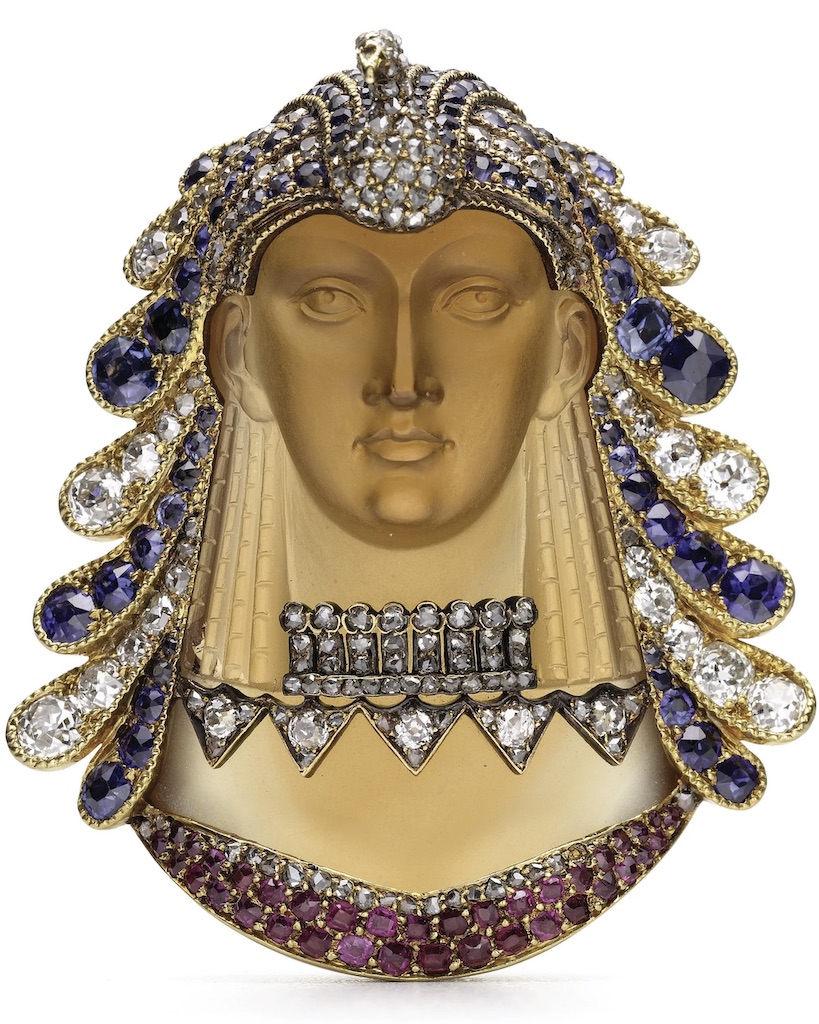
As the predominant civilization of the Mediterranean world, Ancient Egypt flourished from roughly 3100 BCE with the unification of Upper and Lower Egypt into a single kingdom, until its conquest by Alexander the Great in 332 BCE. Jewelry played such a central role in ancient Egyptian society that many people were buried with their adornments, and played such a prominent role in society that almost every Egyptian was put to rest with their baubles – an essential in ritual practices and burial customs.
While the art of adornment was a nearly universal concept, wealth and status only played a role when it came to the materials chosen and the quality of the craftsmanship. Egyptians shrouded themselves in a variety of embellishments, from protective amulets to rings, earrings, bracelets, pectorals, necklaces, crowns, girdles, and more. “The ancient Egyptians worked in gold, silver, faience, semi-precious stones such as carnelian, lapis lazuli, turquoise, garnet, and amethyst, as well as colored glass that imitated semi-precious stones,” says Dr. El Shazly. Some Egyptian jewelry workshops have been excavated, but most of what we now know about ancient techniques comes from explored tomb scenes.
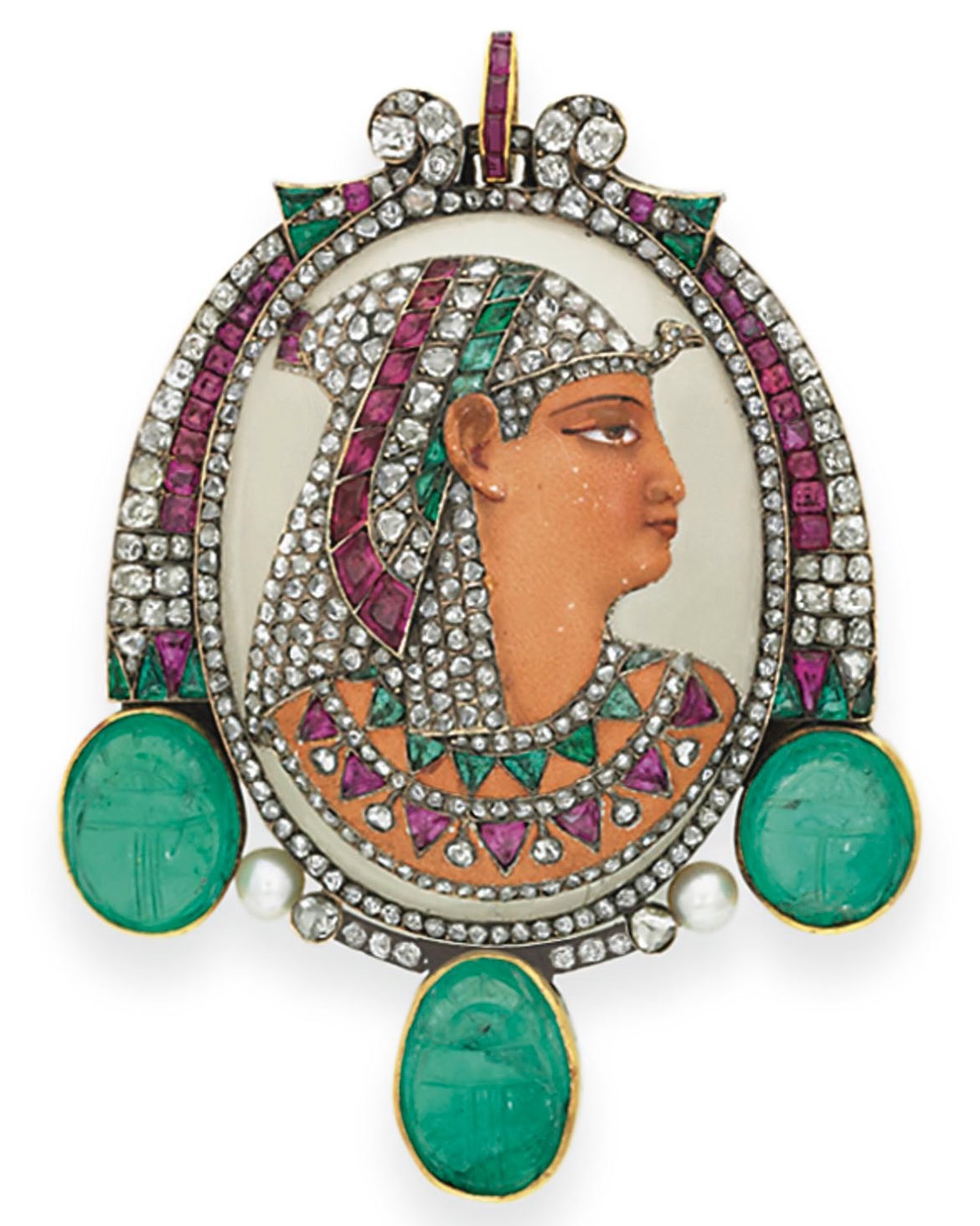
Many of today’s most enduring jewelry staples can trace their roots back to ancient Egypt. Dr. El Shazly explains, “Ancient Egypt helped establish many jewelry forms.”
Arm Cuffs:
Symbolizing power and social status, the arm cuff was worn by Egyptian rulers, Mayan kings, Greek and Indian brides, Assyrian gods, Roman soldiers, and people throughout Mesopotamia, the Indus Valley, South America, China, and the ancient Celts. “Arm cuffs were worn by royalty and the elites,” says Dr. El Shazly. “In Egyptian art, gods, kings, and queens frequently appear wearing cuffs on the wrists and upper arms. Famous examples can be seen in Tutankhamun’s collection.”
Eternity Bands:
First appearing thousands of years ago in ancient Egypt and Greece, the original version of the eternity band featured a motif known as the Ouroboros, a snake wrapping around the ring and biting its own tail as a representation of undying adoration. “The concept behind the eternity band can be associated with the symbolism of endless cyclical renewal.” Dr. El Shazly says. “Circular forms represented eternity because they had no beginning or end.”
Signet Rings:
According to Dr. El Shazly, “Egyptians loved bold rings, especially during the New Kingdom and later periods. Signet rings functioned administratively as seals carrying names or titles, making them both jewelry and instruments of identity and authority.” While still a staple of ancient Egyptian jewels, Gong clarifies that signet rings were already deeply established in Mesopotamian civilization through cylinder seals and administrative rings tied to authority and identity, and not exclusive to Egypt as a region.
The Sacred Meaning Behind Egyptian Jewelry Motifs
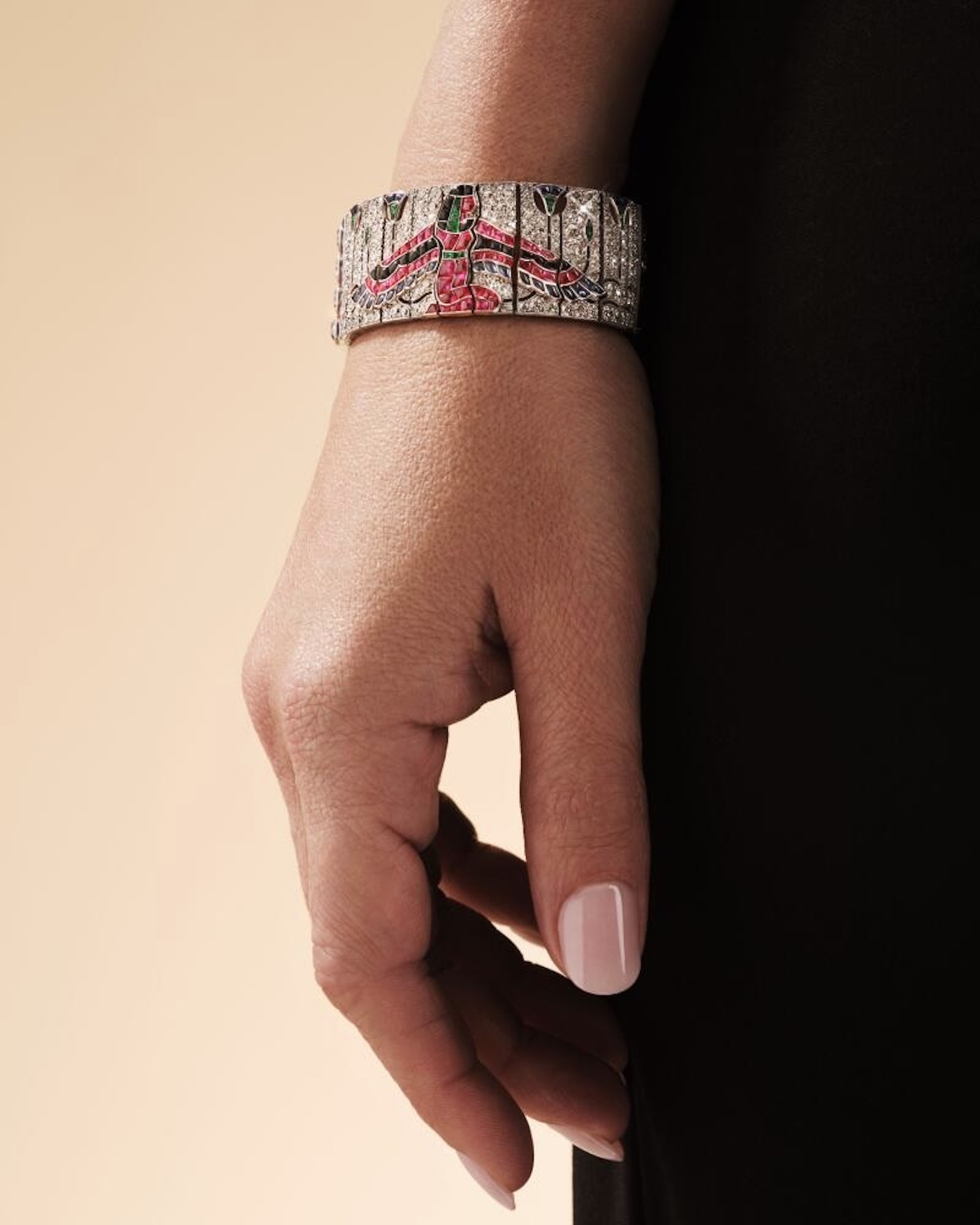
Egyptian jewelry embodied poignant cultural significance, symbolizing spiritual beliefs. “Ancient Egyptian jewelry was not merely decorative,” says Dr. El Shazly. “It had many functions, in addition to adornment. It was worn for magical/religious protection, and it could carry political imagery.”
For instance, the ancient Egyptians believed that gold conferred immortal power. Dr. El Shazly explains, “Gold in particular carried divine associations because it was considered the ‘flesh of the gods,’ especially linked to the sun god Ra. The bones of the gods were believed to be made of silver, and their hair of lapis lazuli.”
Valuing precious metals and gemstones for their beauty and symbolism, many were thought to possess mystical properties. Designs frequently featured resplendent colors, nature motifs, and symbols like the Ankh, the Eye of Horus, flies, and the scarab beetle, each with deep-rooted meanings linked to mythology.
- The Ankh: The ankh, often referred to as the “key of life” or “key of the Nile,” is an ancient Egyptian hieroglyphic symbol, representing life, vitality, and eternal existence. “Gods are often depicted holding ankh signs to the noses of kings as though granting the breath of life itself,” says El Shazly.
- The Eye of Horus: The Eye of Horus is an ancient Egyptian symbol representing protection, healing, and wholeness, often seen in amulets that were worn to ward off danger and illness.
- The Lotus Flower: The Egyptian lotus flower symbolized rebirth and creation because the flower closes at night and opens with the sunrise. Often seen throughout ancient Egyptian jewelry, the motif signified the daily cycle of rising and setting, like the sun.
- The Serpent: Designs featuring snakes and more specifically, serpents often simultaneously represented danger and divine protection. The rearing cobra, or uraeus, symbolized royal sovereignty and protective power.
- The Scarab Beetle: Also known as the dung beetle, the scarab honors Khepri, the ancient Egyptian scarab-faced god, representing the rising sun and coming into new beginnings. Scarab amulets were worn for protection and renewal.
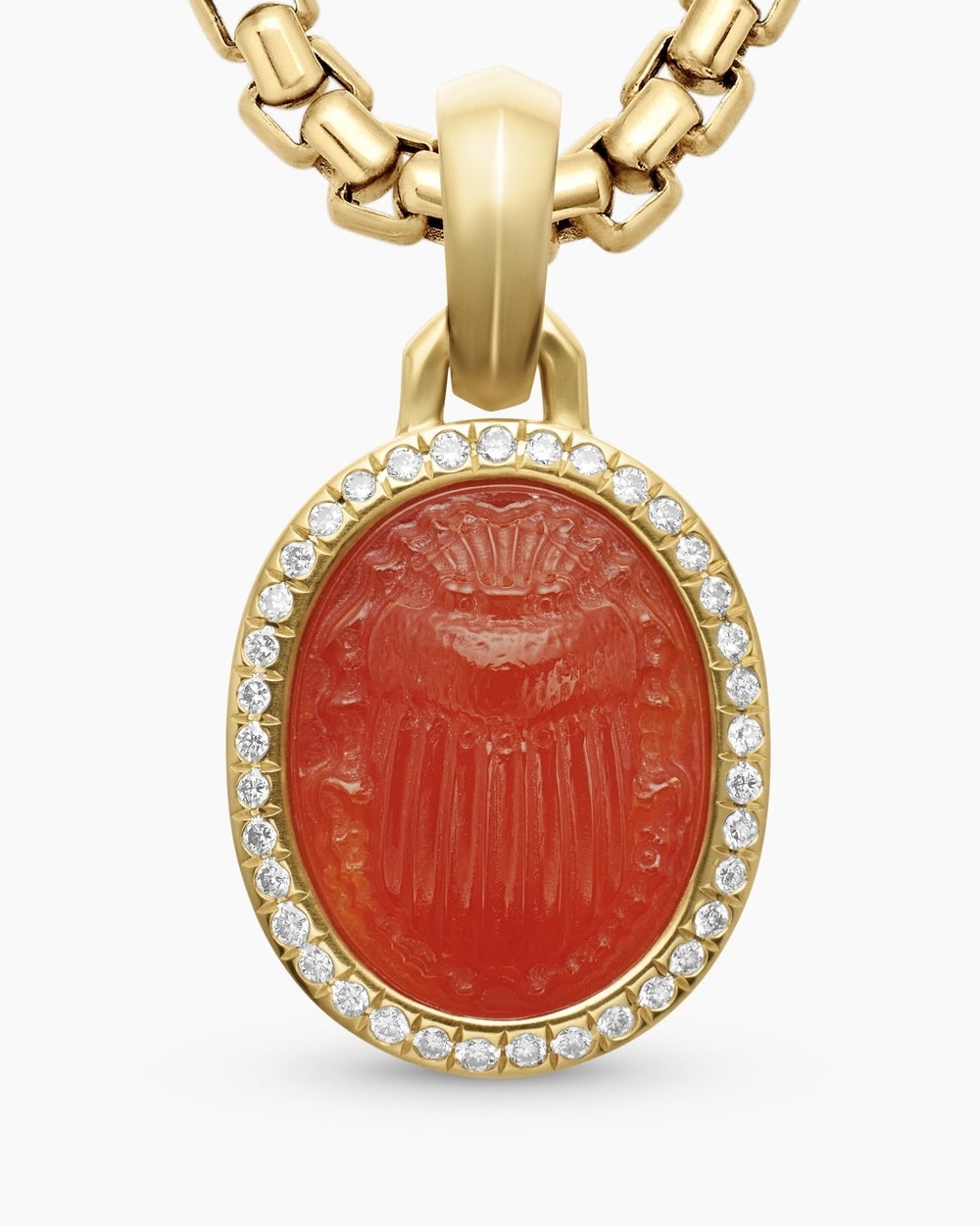
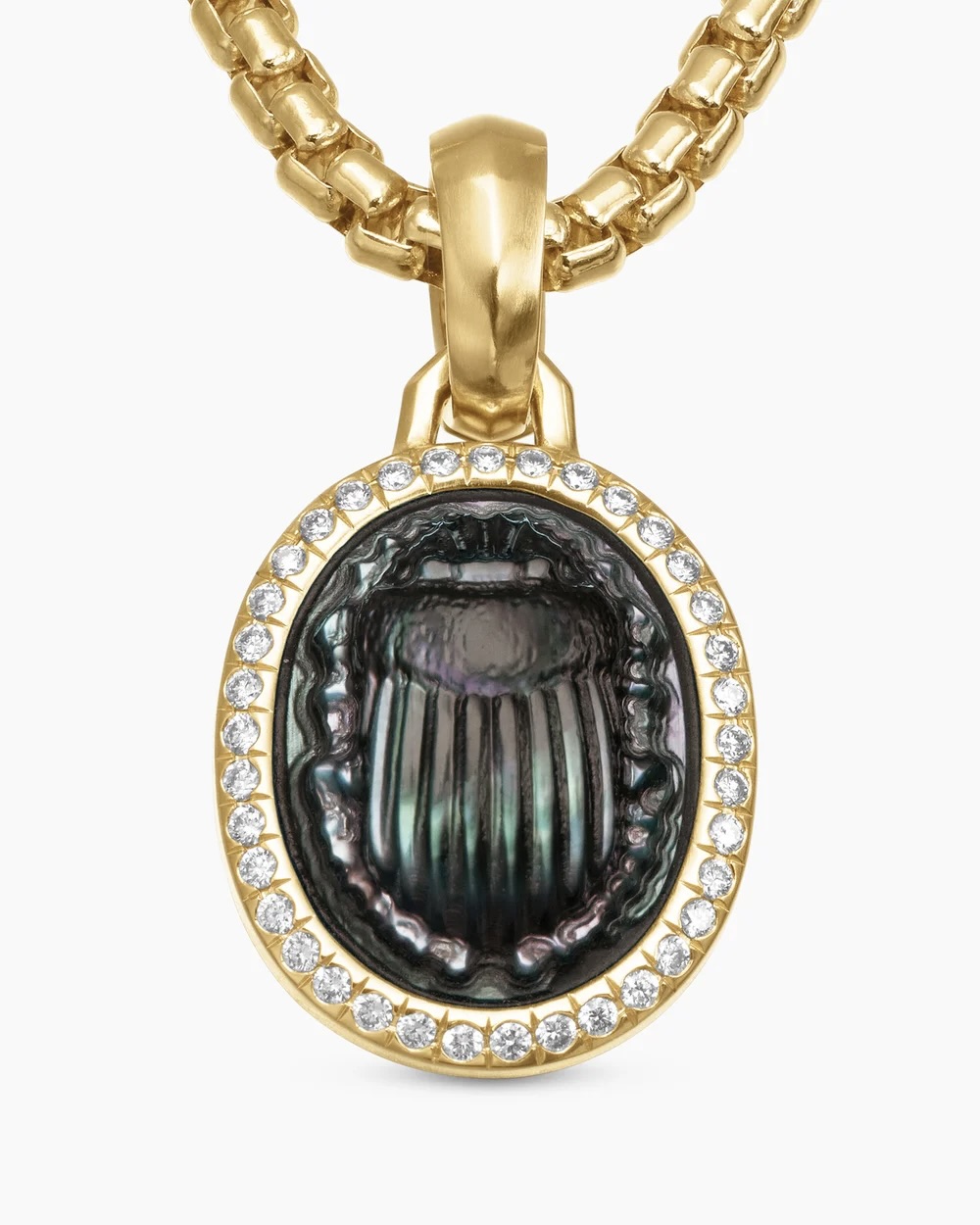
Still in high demand, jewelry designer Lauren Harwell Godfrey‘s scarab pendants sold out swiftly and were inspired by the designer’s travels to Egypt. “The scarab is an iconic symbol of rebirth and transformation, which makes it such a powerful talisman,” she explains. “The fly was a more unexpected inspiration. I noticed it appearing frequently in hieroglyphs and learned that in ancient Egypt, it was used in military medallions to represent bravery and persistence. I love that idea. It reframes something we might overlook into a symbol of strength.”
How Egyptian Jewelry Sparked a 19th-Century Obsession
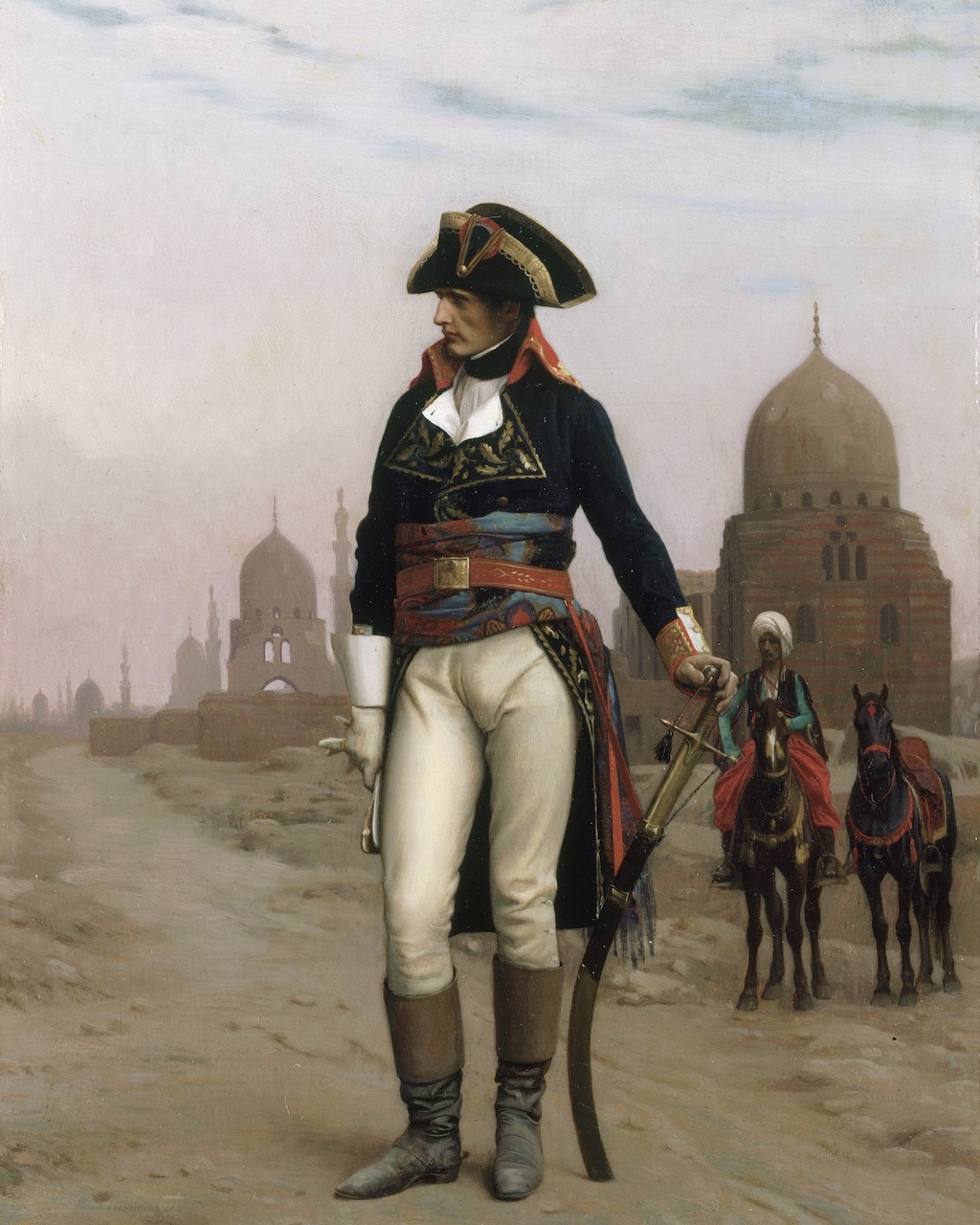
When Napoleon Bonaparte’s campaign took him to Egypt from 1798 to 1801, there was a remarkable attraction to the country’s mysterious culture. When he returned to Europe, he brought back the first glimpse of Egypt’s distinctive civilization. “Egyptian-inspired jewelry became fashionable in the 19th century due to archaeology, imperial travel, collecting culture, and romantic fascination with the ancient world,” Dr. El Shazly explains. “Napoleon’s campaign in Egypt and the publication of the Description de l’Égypte exposed Europe to ancient Egyptian monuments and imagery. The decipherment of hieroglyphs by Jean-François Champollion further intensified fascination with Egypt.”
During the Victorian era, interest was revived with Egyptian references infused in a range of designs after the opening of the Suez Canal in 1869. “Victorian jewelers produced Egyptian Revival pieces featuring lotus flowers, pyramids, scarabs, sphinxes, and ancient Egyptian imagery,” says El Shazly.
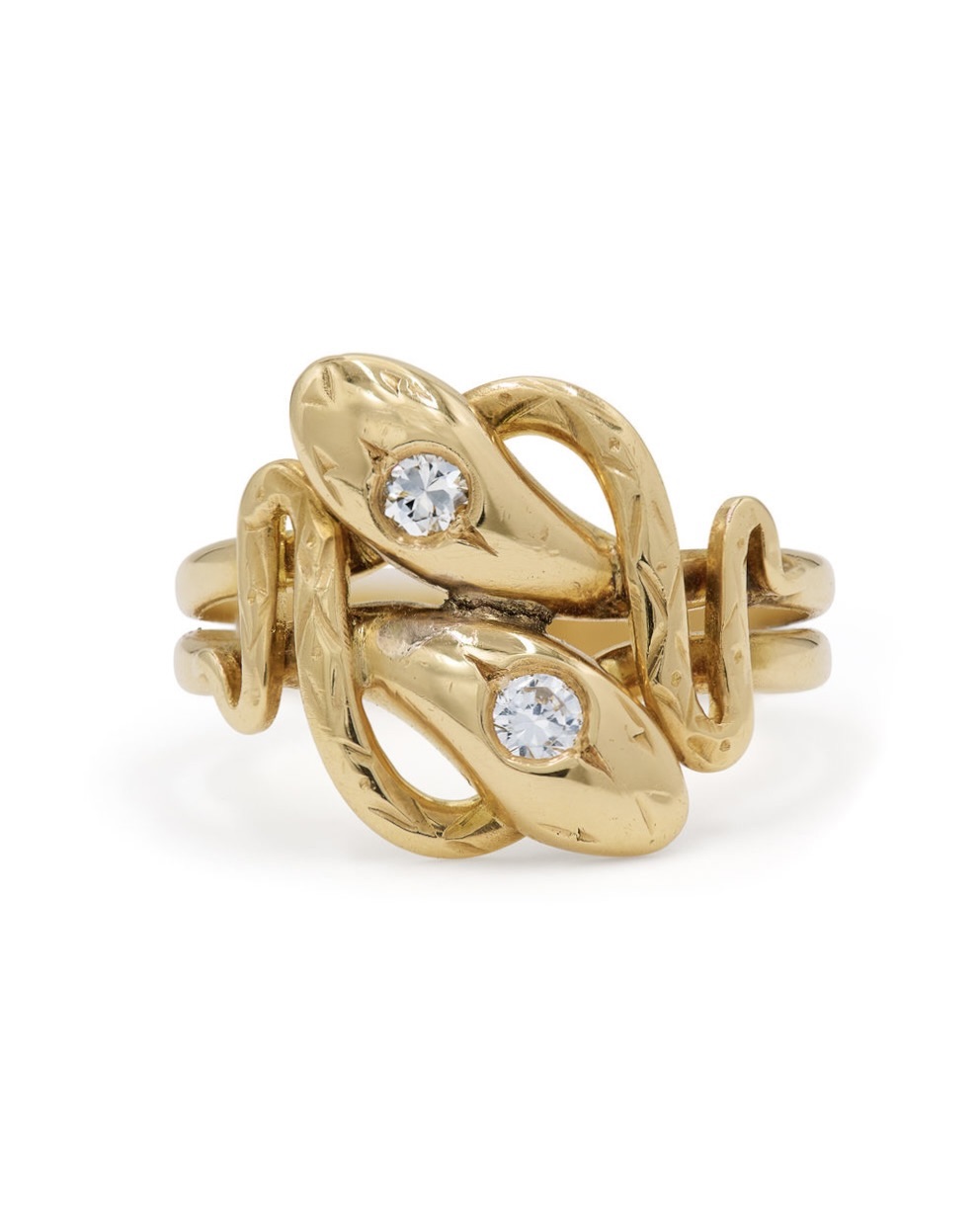
Defining cultural milestones painted the canvas in which Victorian era jewelry blossomed. Industrialization, the discovery of diamonds in South Africa, and archeological excavations that brought back a fascination with the ancient worlds of Greece, Rome, and Egypt, defined the style. Even Prince Albert gifted Queen Victoria a now-iconic gold gemstone-set snake ring with diamond accents on the snake’s head. The ring sparked the popularity of serpent motifs, and designs from that time generally featured diamonds arranged in nature-inspired themes. As it was in Egypt, yellow gold was the metal of choice to complement their sparkle.
The Art Deco Era’s Egyptomania Craze

In 1922, British archaeologist Howard Carter discovered King Tutankhamun’s tomb, reigniting a global interest in Egyptian motifs. Buried with thousands of gold statues, artifacts, and heaps of resplendent jewels, Pharaoh Tutankhamun’s resting place was considered the best-preserved tomb ever unearthed in the Valley of Kings and the mother lode of ancient treasures.
Coinciding with the Art Deco movement, those historic riches sparked an obsession, endlessly inspiring countless jewelers to reimagine Egyptian adornment with natural diamonds through a modern lens. “King Tutankhamun’s tomb excavation was unearthed to the world in 1922, and it caused a frenzy across the design world at large,” explains Gong. “There had been an existing fascination with Egyptian motifs in the 19th century, but the timing of this discovery perfectly coincided with the democratization of photography, mass printing, and modern rail distribution, allowing news and images to travel faster than ever before,” she says.
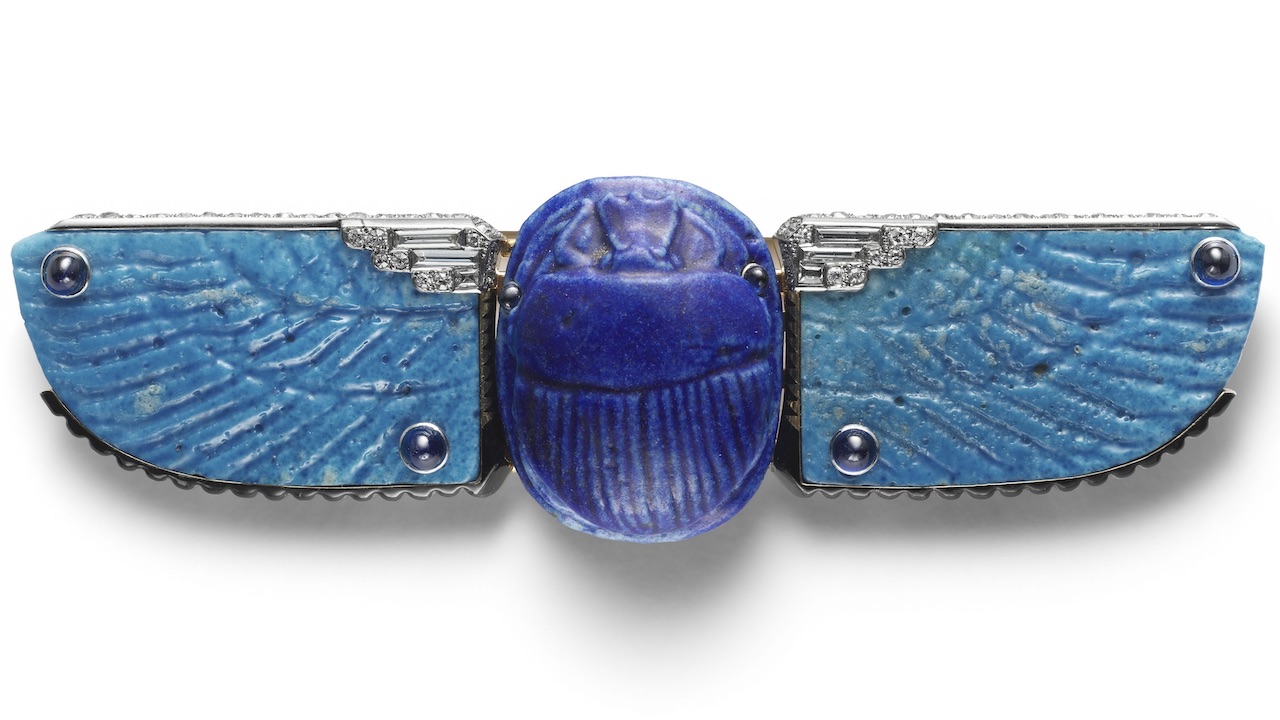
“It was one of the first truly global visual media sensations,” says Gong. “The existing geometry of Egyptian symbols and hieroglyphs fit naturally into the popular design sensibilities of the Art Deco era. This is where you see many of the major Maisons reinterpreting Egyptian motifs through platinum, diamonds, enamel, and precision-cut colored stones.”
Jewelry’s Egyptian Revival movement, also known as “Egyptomania,” was led by the great houses, from Cartier and Lacloche Frères, to Tiffany & Co. and Van Cleef & Arpels.

These jewels included depictions of offerings, hieroglyphics, sphinxes, amphorae, bulls, ostrich feathers, and lotus flowers with emeralds, sapphires, rubies, and natural diamonds telling the tale. “Lacloche Frères hands down produced some of the most refined Egyptomania jewels of the Art Deco period,” says Gong.
With the onset of World War II, the interest in the Egyptian Revival style began to wane. In the post-war era, fashions changed and called for a different jewelry style. Now, jewelers like Messika, Logan Hollowall, Azza Fahmi, David Yurman, Hemmerle, and more are keeping the Egyptian spirit alive in jewelry.


Dr. El Shazly says, “Egypt-inspired jewelry never truly disappeared. Contemporary designers continue to revisit broad collars, serpent bracelets, scarab and Horus eye pendants, earrings, and finger rings, hieroglyphic motifs, lapis-and-gold color palettes, and geometric forms inspired by ancient Egyptian art.”
Shop Egyptian-Inspired Jewelry
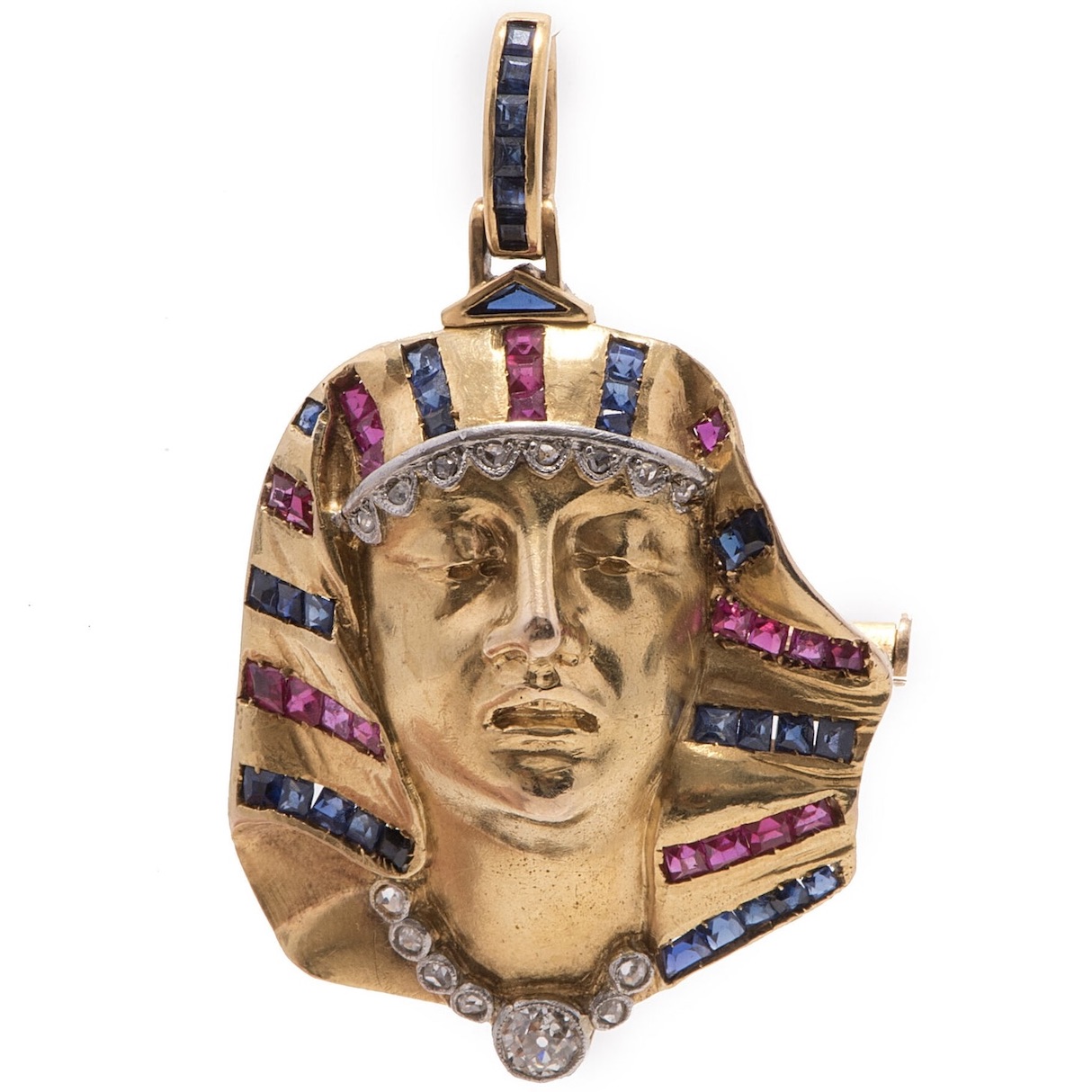
18k and Diamond French Egyptian Revival Pharaoh Pendant, $5,200, parkavenueantiques.com
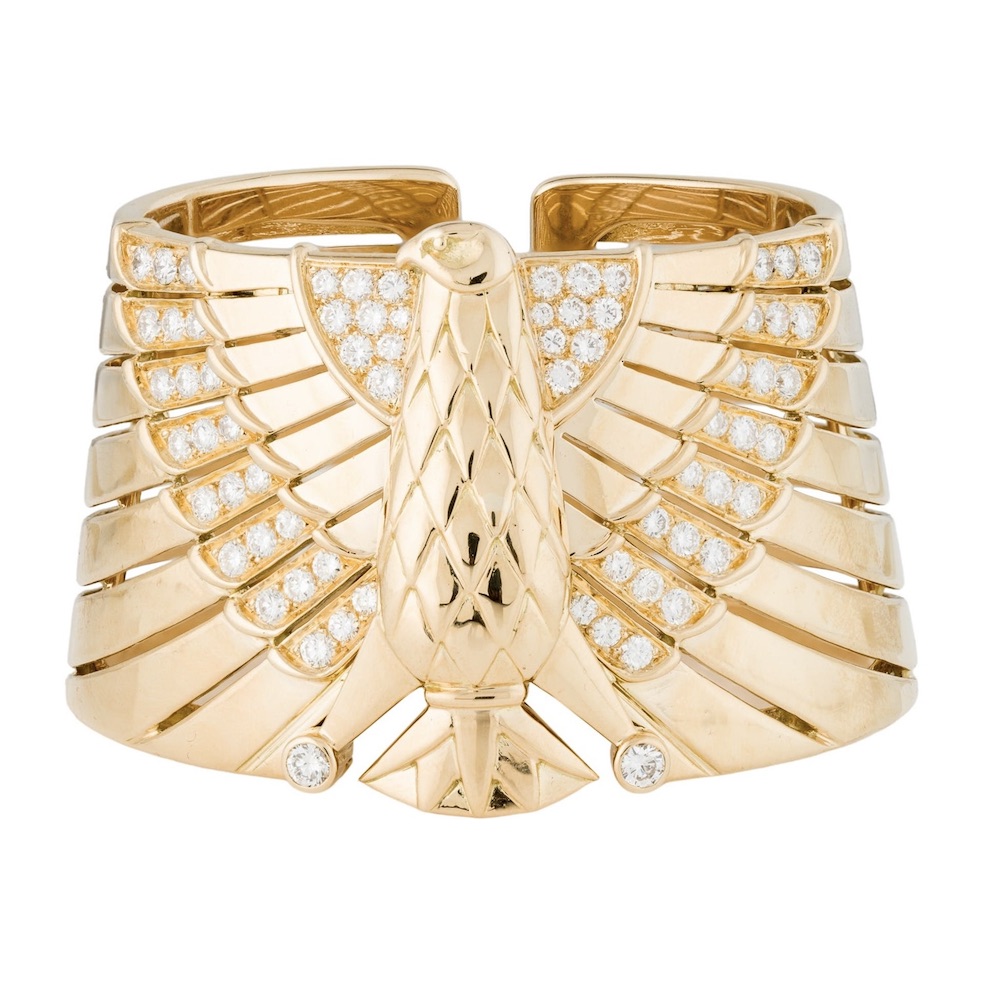
Cartier Egyptian Revival Horus Cuff Bracelet, $67,495.50, therealreal.com
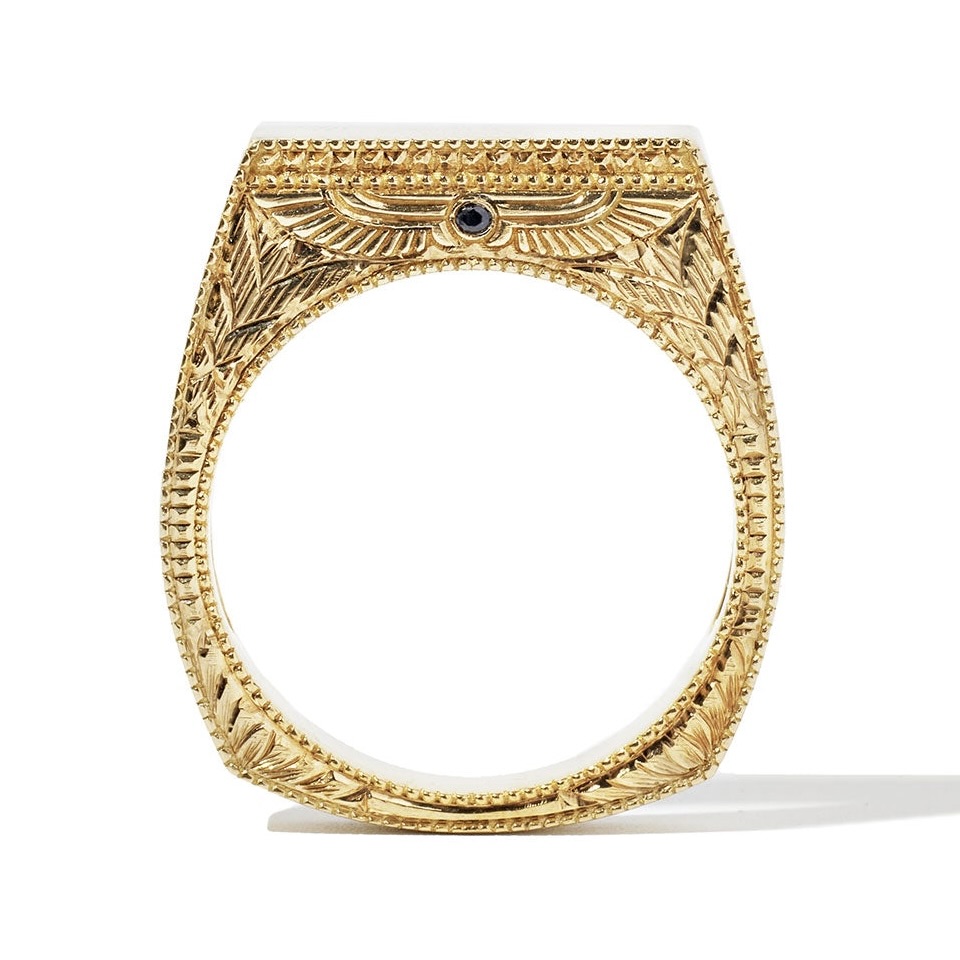
Berlinger Jewelry Willie’s Eagle Ring, $6,550, berlingerjewelry.com
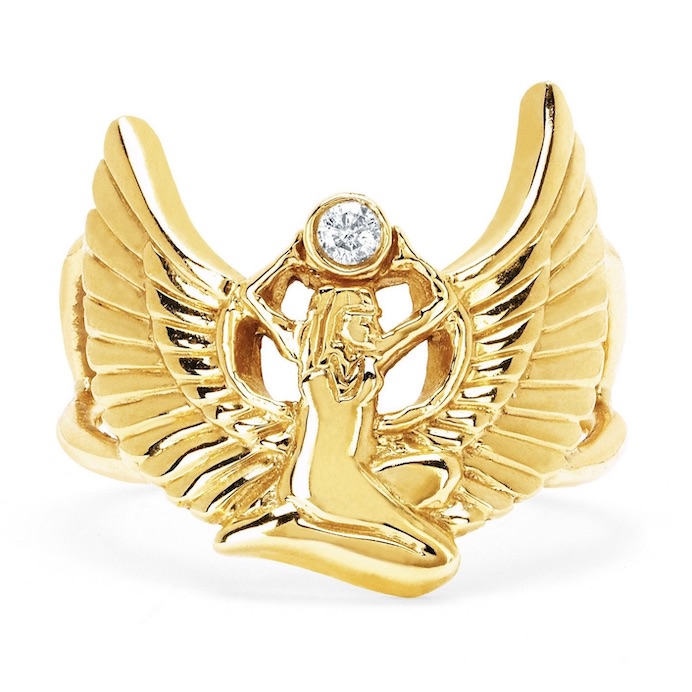
Logan Hollowell Sacred Egyptian Goddess of Magic Diamond Ring, $4,750, loganhollowell.com
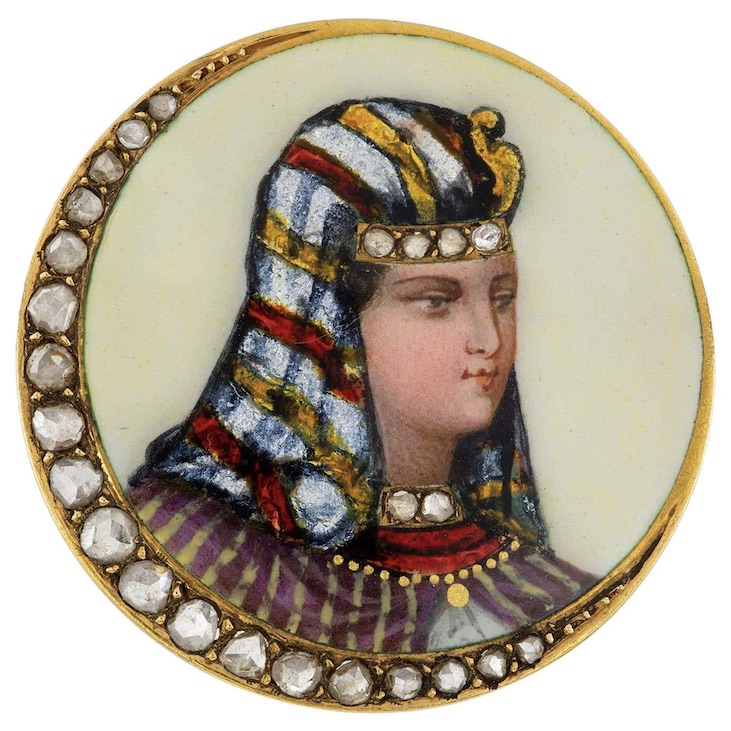
Late 19th Century French Enamel and Diamond Brooch, $6,778.89, 1stdibs.com
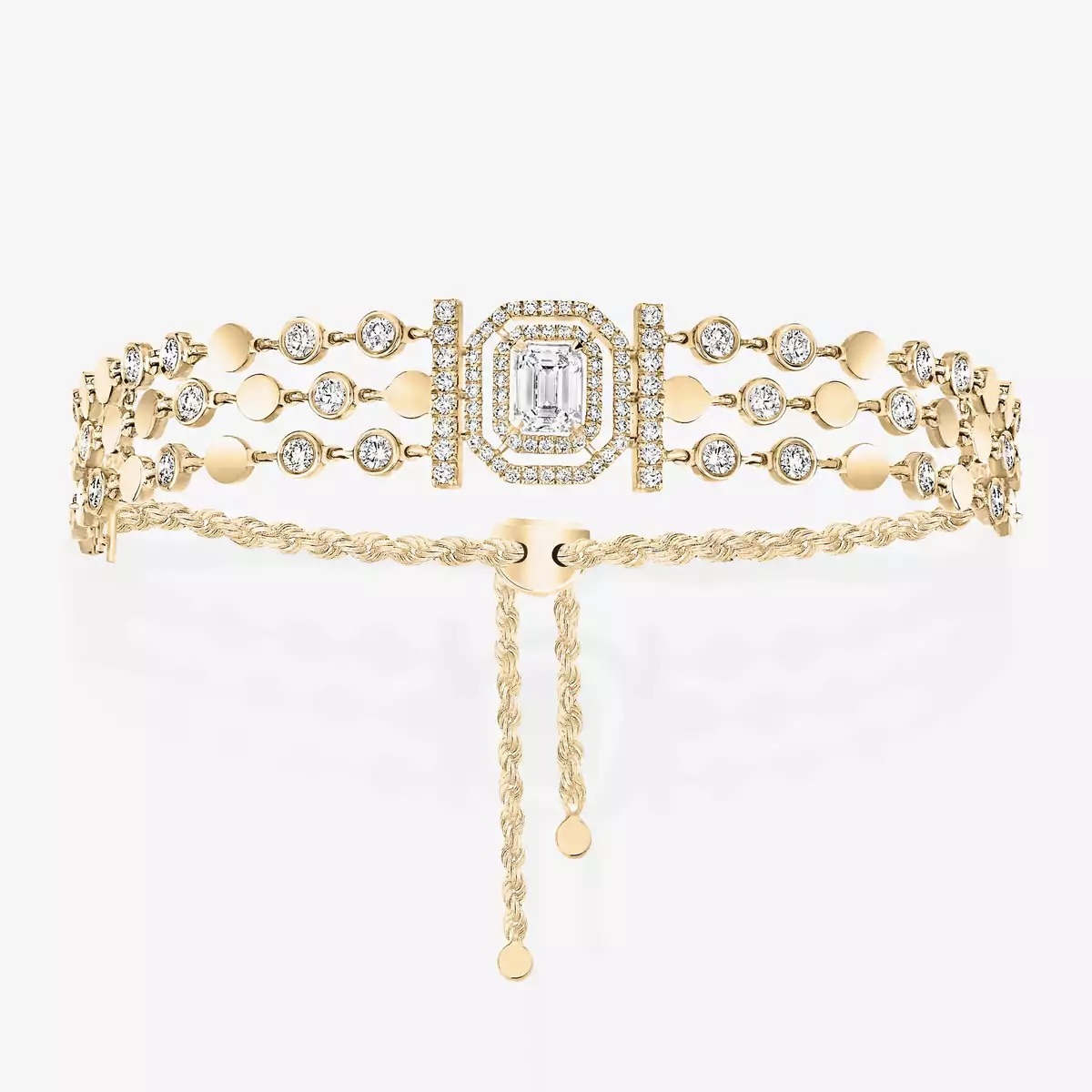
Messika D-Vibes Multi-Row Bracelet, $26,100, messika.com
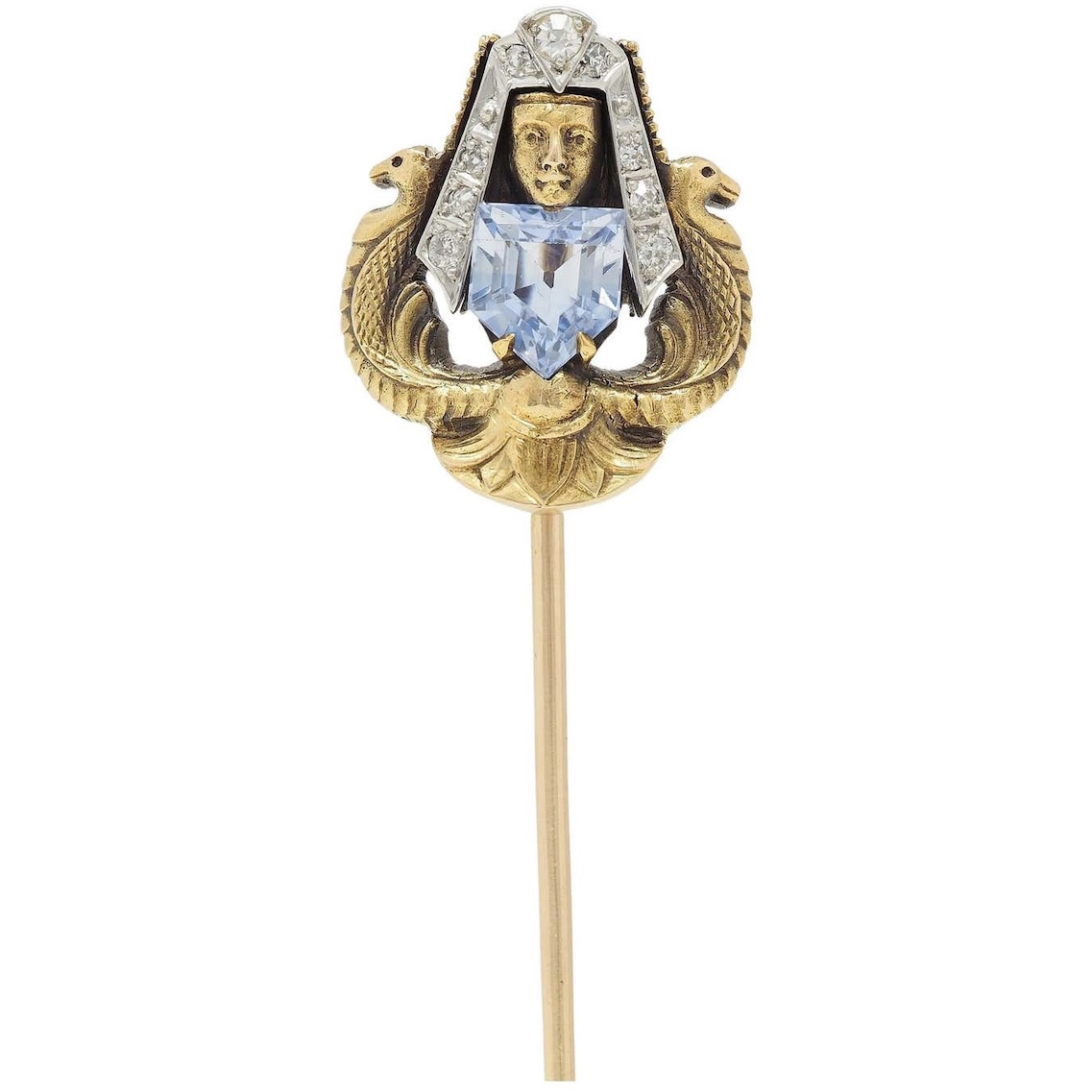
Art Deco Egyptian Revival Sapphire Diamond Platinum 18-Karat Gold Stickpin, $4,125, 1stdibs.com
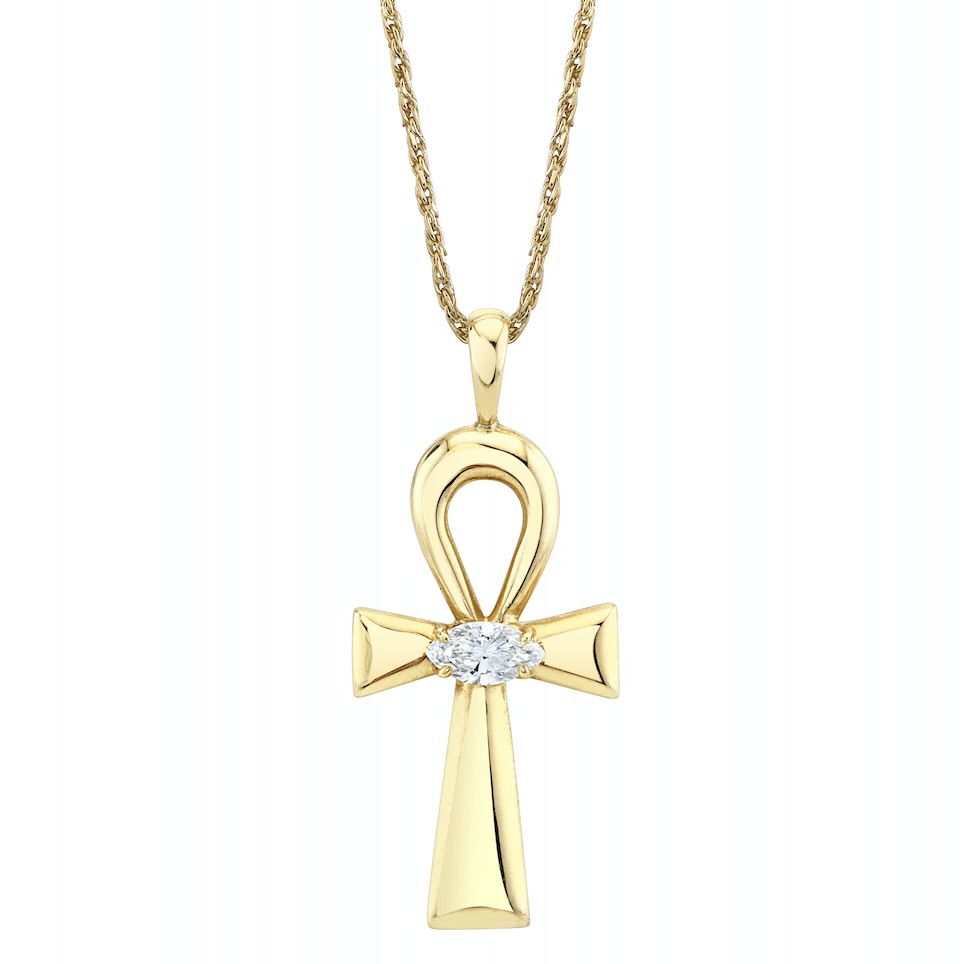
Logan Hollowell Angel Eye Ankh Necklace, $5,095, loganhollowell.com
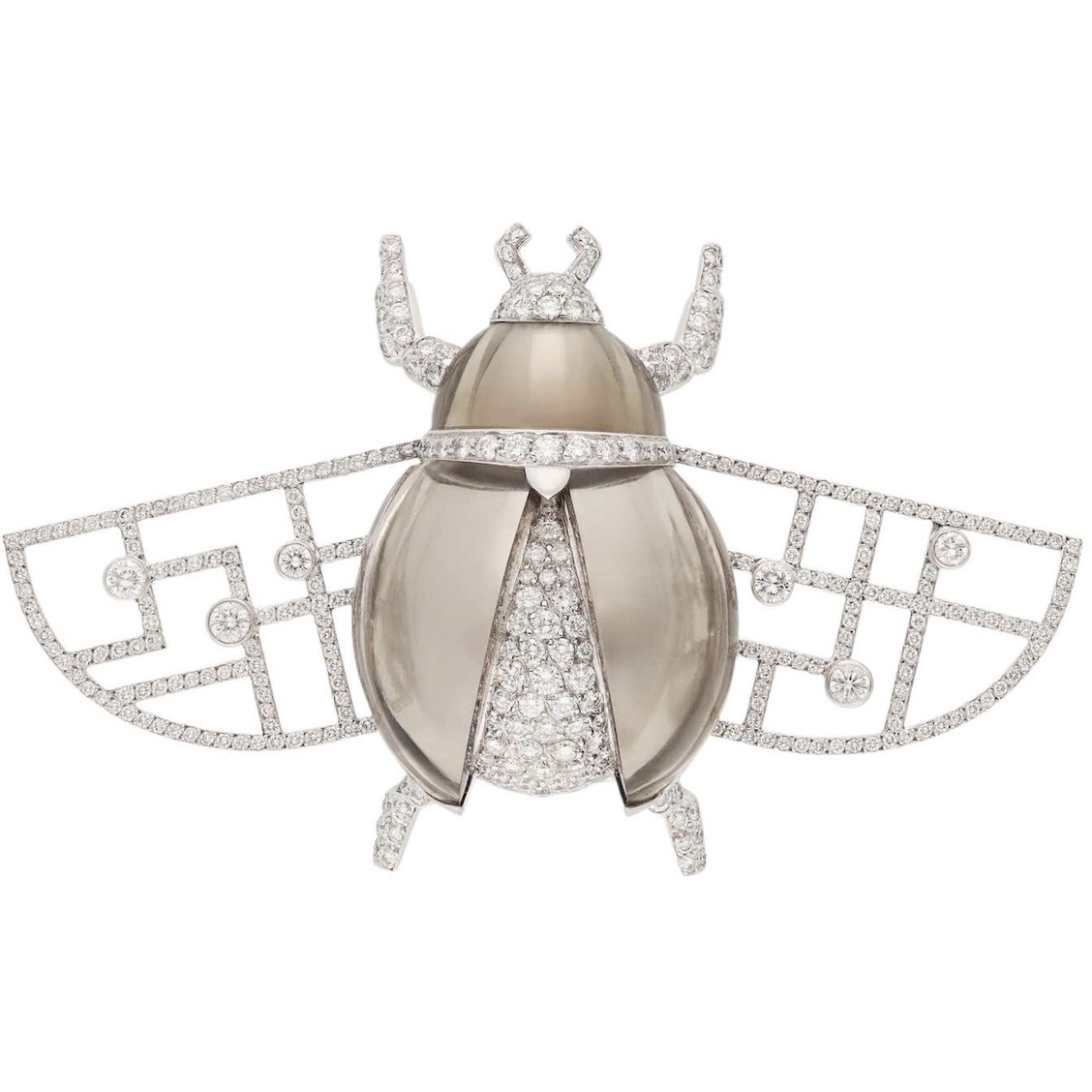
Cartier 18K White Gold, Smoky Quartz and Diamond “Scarab” Brooch, $75,000, 1stdibs.com
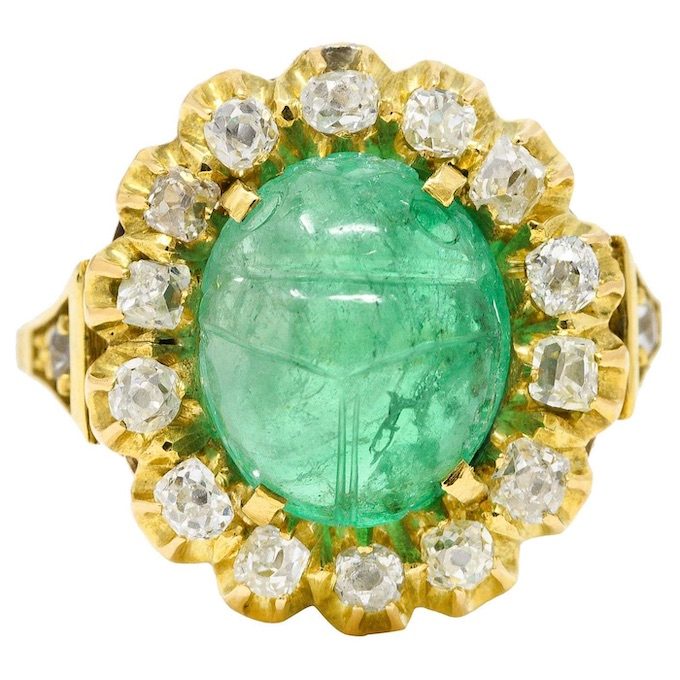
Vintage Egyptian Revival 7.80 Carats Carved Emerald Diamond 18 Karat Ring, $11,350, 1stdibs.com
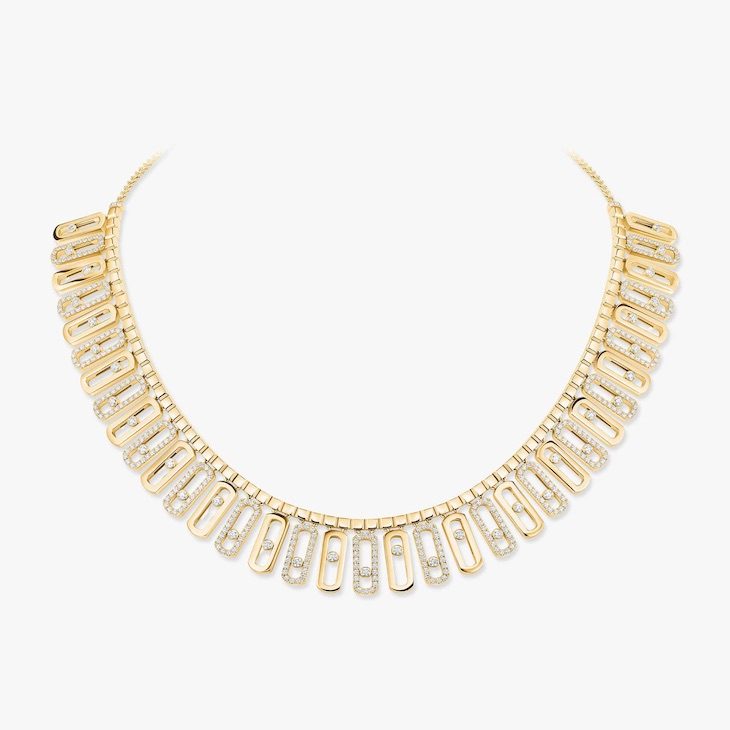
Messika Move Iconica Necklace, $59,500, messika.com
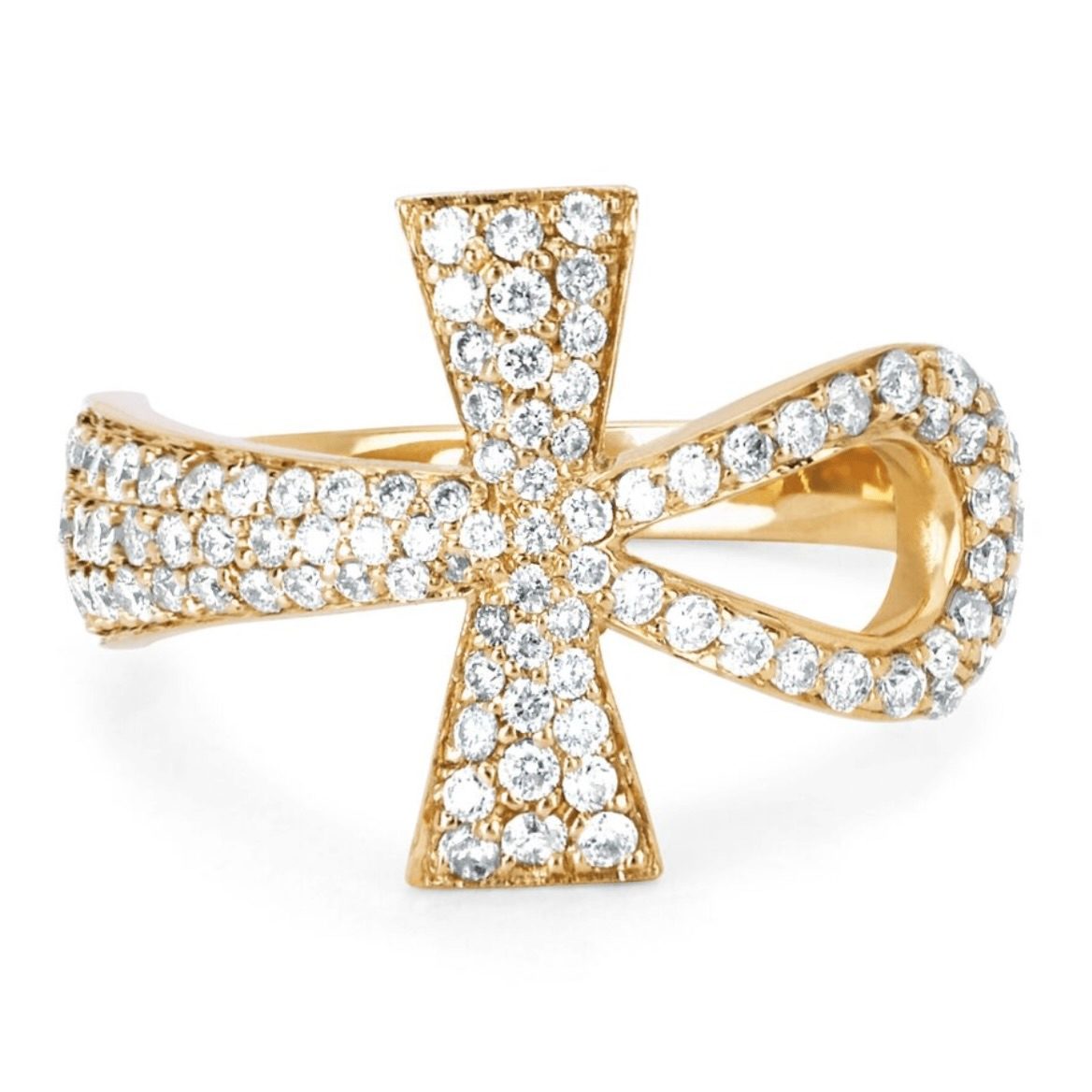
Logan Hollowell Eternal Ankh Full Pavé Ring, $6,195, loganhollowell.com