
Opposites Attract: The Unexpected Magic of Diamond and Turquoise Jewelry
Discover why diamond and turquoise jewelry has captivated everyone from ancient royalty to today’s designers, and why this unexpected pairing is trending again.
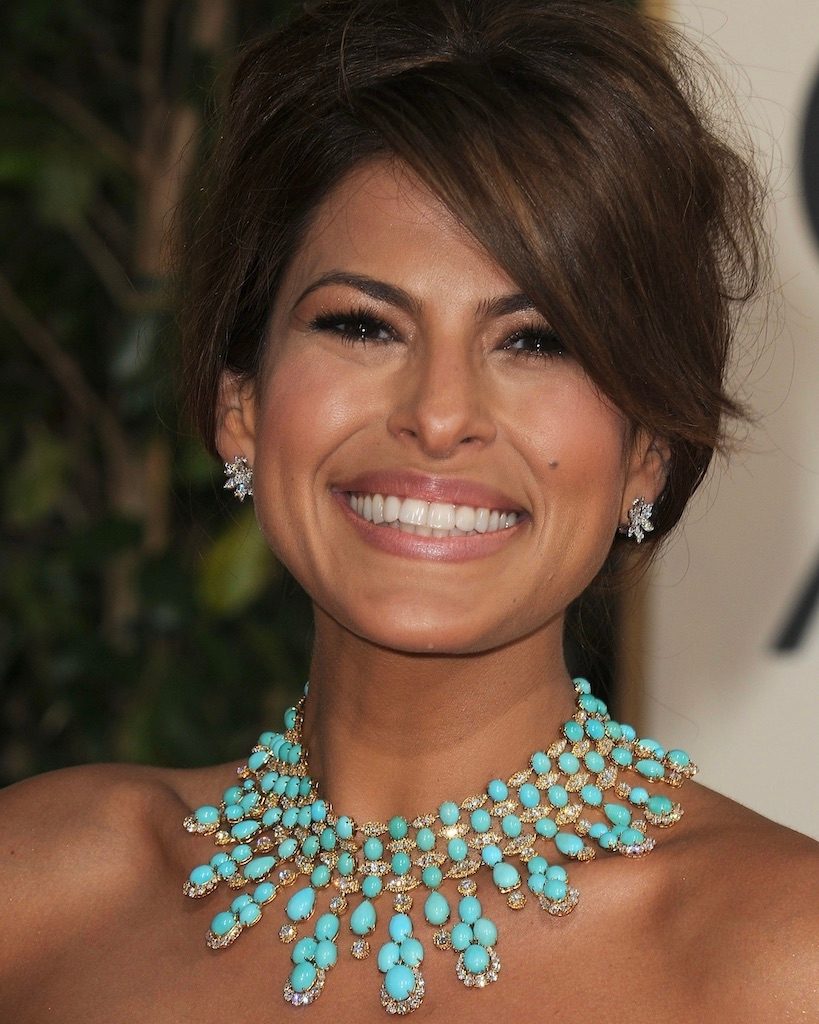
Eva Mendes arrives at the Golden Globe Awards on January 11, 2009. (Getty Images)
Sometimes unlikely couples make the best ones. When it comes to jewelry, there is no partnership quite as unexpected—and chic—as natural diamonds and turquoise jewelry.
According to Annika Thomas, designer of the jewelry brand The Finest Stack, the power of the pairing lies in how each gemstone enhances the other. “Diamonds sparkle, glimmer, and reflect all of the light, while turquoise does the exact opposite: turquoise is opaque, deep, and light-absorbing,” she says. “Even feeling the cool smoothness of the stone is calming compared to the light-reflecting facets of the diamond. That juxtaposition is just magic! The magic between the negative and positive!”
Meet the Experts

Founder and designer of jewelry brand The Finest Stack, Annika Thomas sought to create jewelry that speaks to people’s everyday lives through how they mix and layer pieces.

Corina Madilian is the Founder and Creative Director of Single Stone Fine Jewelry. She has over three decades of experience in antique diamonds and jewelry restoration, establishing her as a distinguished expert in vintage-inspired fine jewelry.

Jillian Sassone is the founder and creative director of fine jewelry brand Marrow Fine, known for transforming heirlooms into modern, meaningful designs. She is a self-taught designer with a fresh, rule-breaking approach to vintage-inspired fine jewelry.
Diamond and turquoise jewelry has been turning heads for thousands of years. Beloved by ancient rulers, high society icons, and today’s most influential designers, this unexpected pairing has evolved into a fine jewelry staple. Here’s how it got there—and why it’s having such a big moment again.
Why Diamond and Turquoise Jewelry Just Works
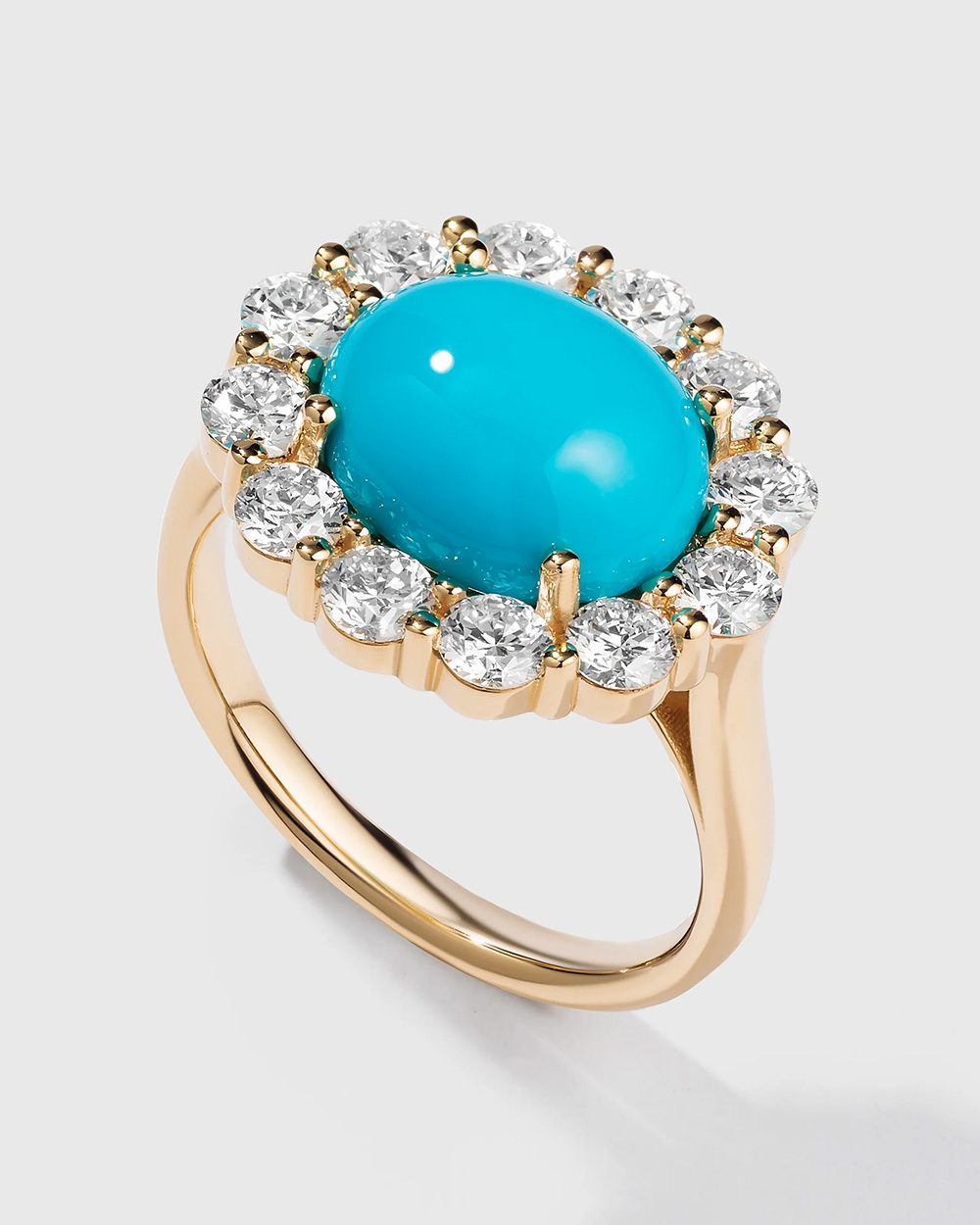
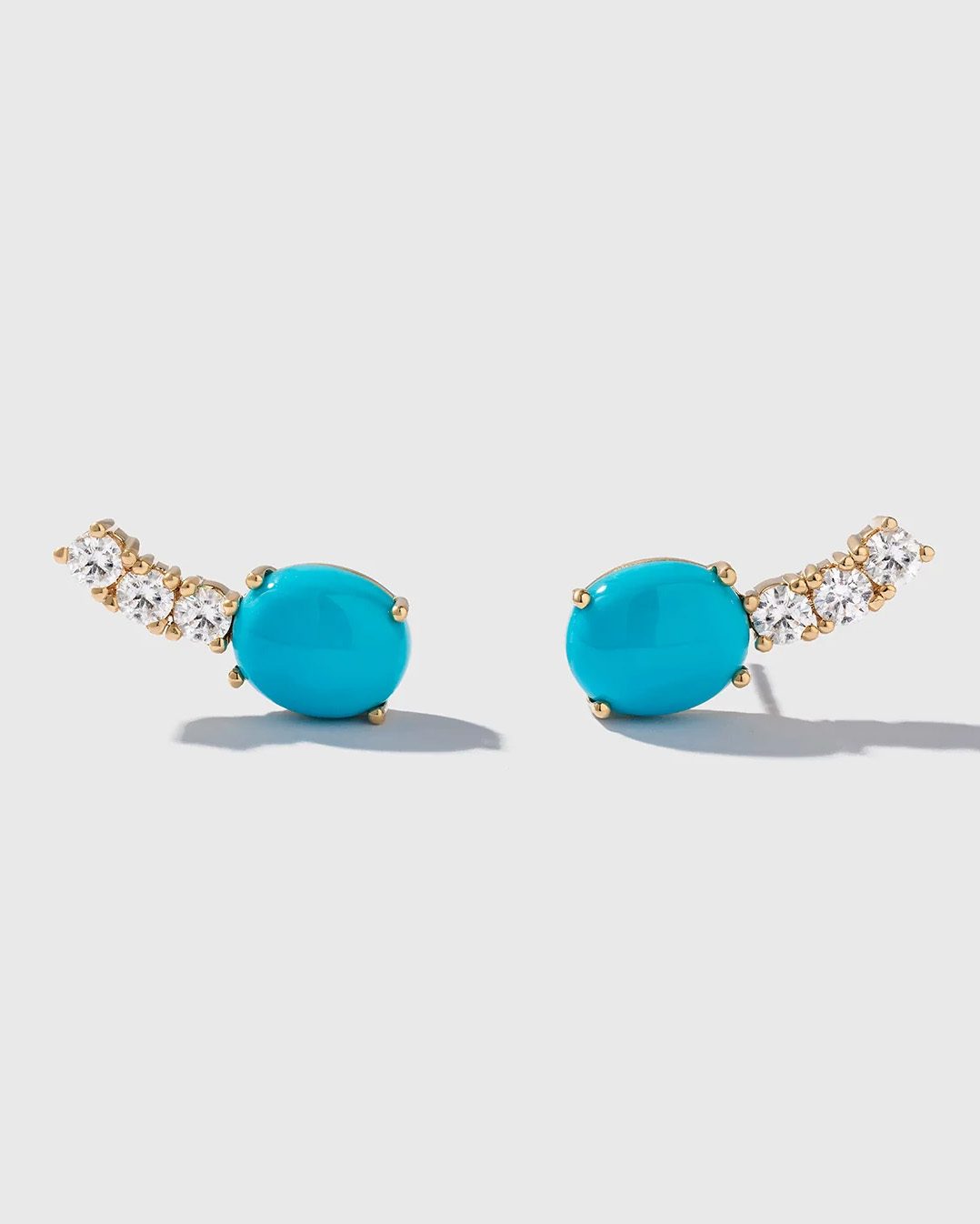
The icy brilliance of natural diamonds brings structure, light, and refinement, while turquoise introduces rich color, warmth, and an organic softness. Together, the two stones create a balance that feels both effortless and unexpected.
“When you put them together, they balance each other in a way that feels natural. Nothing is fighting for attention—it just clicks. Turquoise introduces color and character in a very direct way. It changes the entire reading of a piece. Where diamonds are about brilliance and reflection, turquoise is about tone—it feels more grounded, more expressive. Even in a small amount, it shifts the mood of a design immediately,” says Jillian Sassone, founder of Marrow Fine.
For Annika Thomas, designer of The Finest Stack, however, the connection goes beyond aesthetics. She believes the stones complement one another because they share the same natural origins (and of course, we agree). “Natural diamonds have tiny growth lines—little characteristics created during their geological formation—that make them perfectly imperfect: NATURAL! And then on the flip side, turquoise has veins, different color variations that make every single stone unique. The individuality of each stone, but then the similarity that they are siblings of Earth’s story, the perfect complement to one another!”
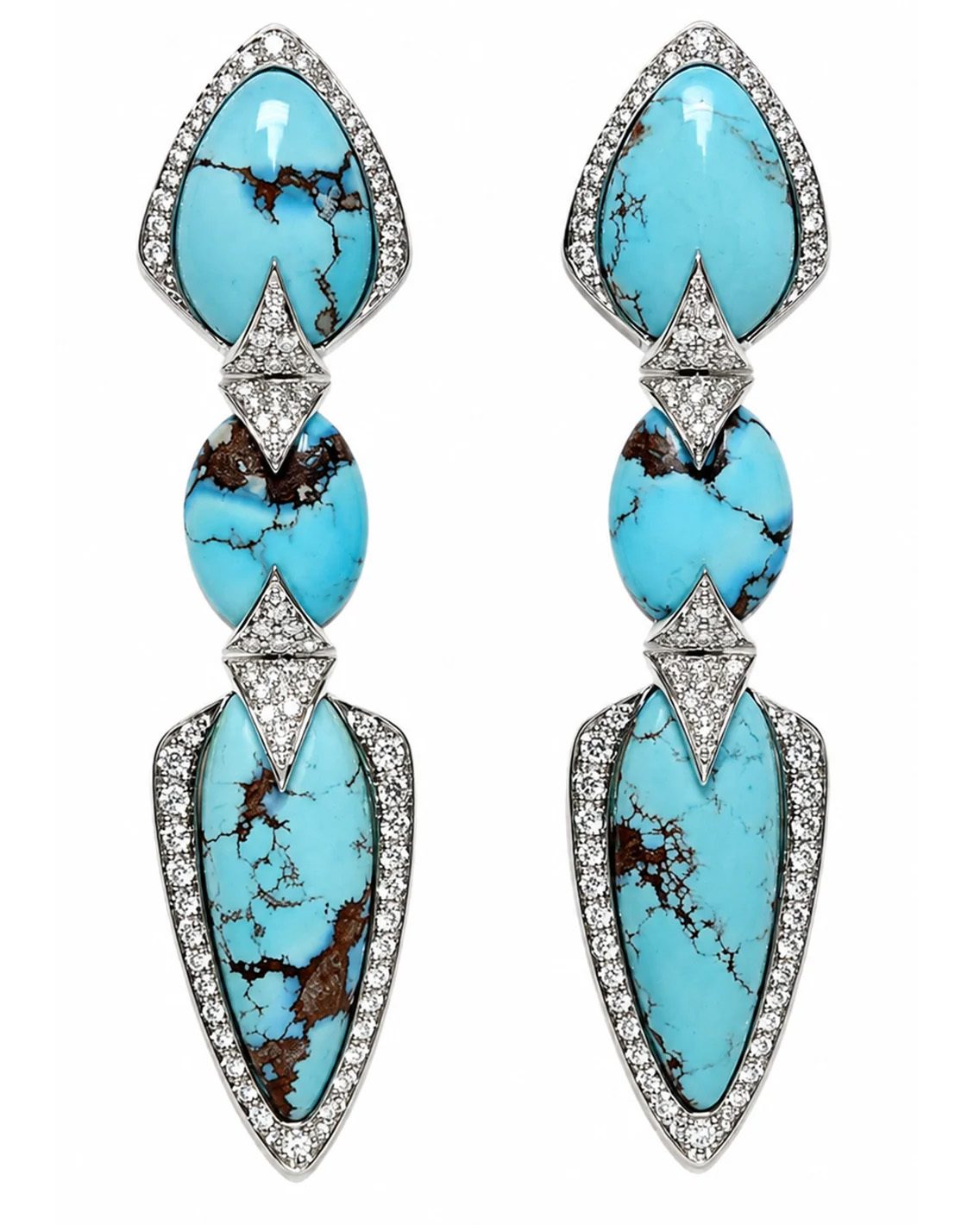
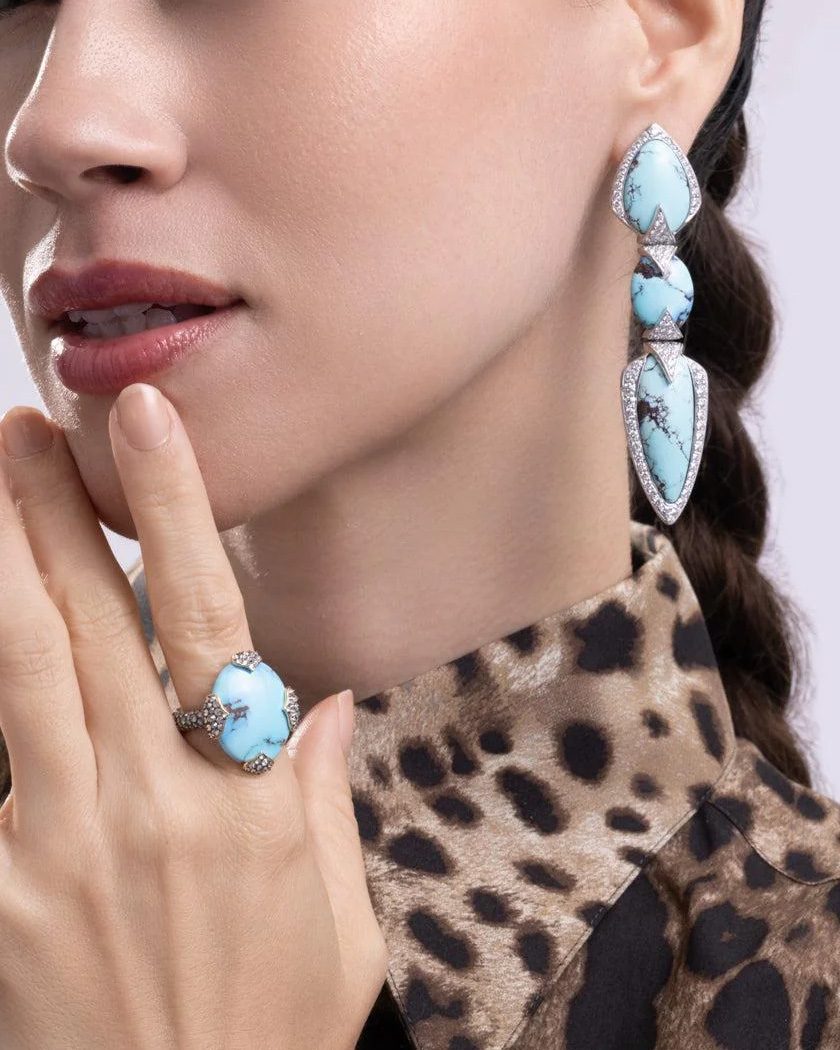
Luke Stafford, Head of Retail and Brand Experience at Charles Fish Jewellers, one of England’s oldest independent luxury jewelers, has a different perspective. Founded in 1830 and based in Nottingham, the family-owned retailer is known for its fine jewelry, luxury watches, and expertise in exceptional gemstones. Stafford believes the enduring appeal of diamonds and turquoise lies in the fact that they represent two very different kinds of rarity.
“Diamonds are valued for consistency, cut quality, clarity, light performance, and measurable grading standards. Turquoise is often valued for the opposite reason: individuality. No two stones display the same matrix pattern, veining, or color distribution. When paired together, the diamond acts as a visual constant while the turquoise becomes the signature element,” he says.
The Ancient Origins of Turquoise Jewelry
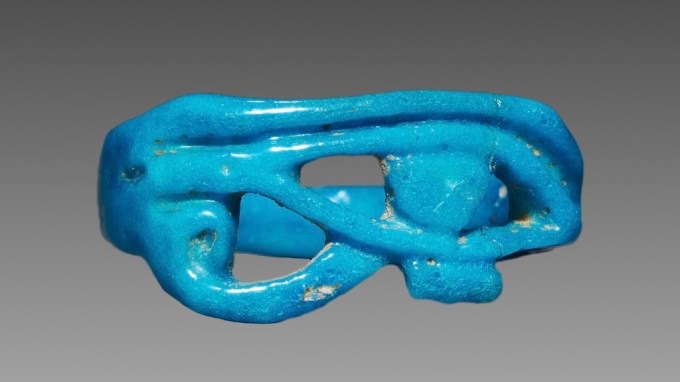
Though dramatically different in appearance, natural diamonds and turquoise share one remarkable trait: both have captivated civilizations for thousands of years. While many associate turquoise with Native American culture (and one pivotal and educational scene in the seminal film Troop Beverly Hills), turquoise can be traced back to ancient Egypt, where it was set in gold necklaces and rings and carved into scarabs placed in tombs.
Ancient Persians were also passionate about turquoise and used it to cover the ceilings of palaces, as its beautiful, rich blue color represented the heavens. They also believed turquoise had protective powers, which is why they would cover their daggers and horses’ bridles with it. The Persians called the blue stone firouzeh (also spelled pirouzeh), meaning “victory.” They also wore turquoise jewelry around their necks and adorned their turbans with it to further provide protection.
Turquoise Jewelry in Native American Culture
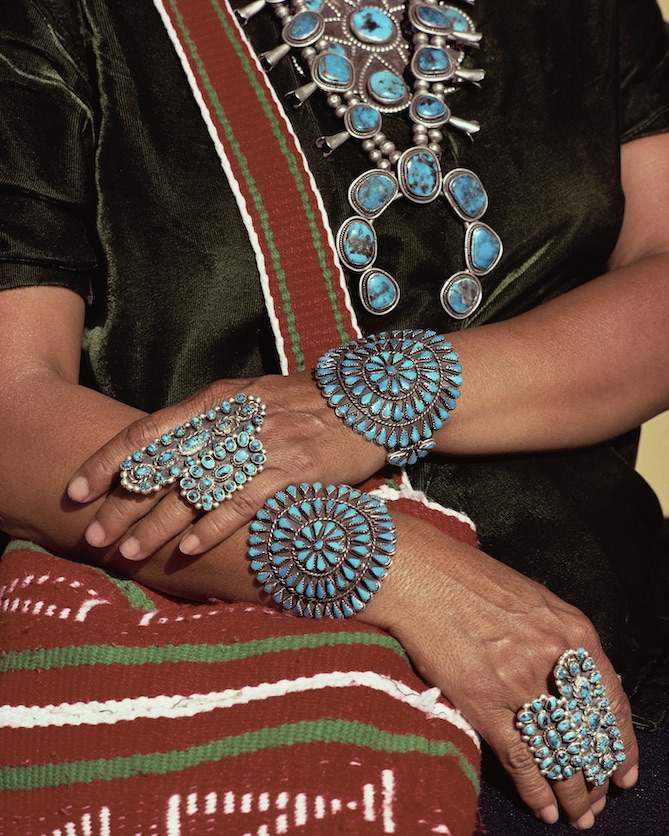
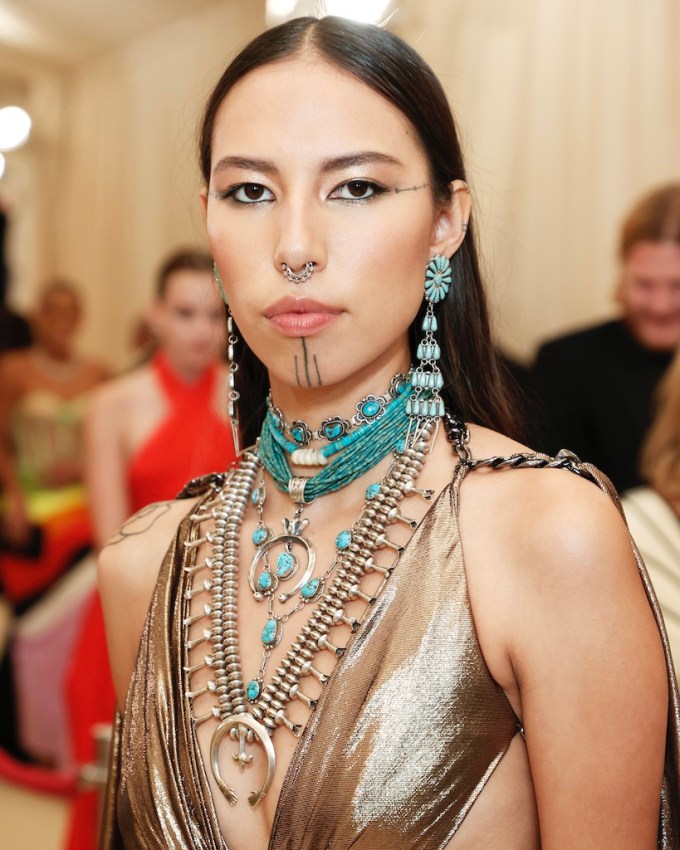
But long before turquoise jewelry was introduced to Europe, it had been used for centuries by Native American tribes, including the Navajo and Hopi people in the American Southwest. Similar to its Persian and Egyptian origins, turquoise jewelry among Native American tribes was believed to offer protection and spirituality. When silversmithing techniques came over from Spain to America, turquoise jewelry became popular across the American Southwest before gaining wider popularity across the United States in the 20th century.
Thomas explained that in Navajo tradition, turquoise is known as the sky stone. “A symbol of the vast, natural beauty of the sky, but also a reminder to those in the tribe that they (we) are all children of those before us, from those in the 2nd world, and that we are only keepers of such beauty and are only borrowers of such beauty as we live in this, the third world, before we pass on to the 4th world. In Navajo turquoise necklaces, oftentimes you’ll see two pieces of stone side by side, honoring the male and female.”
According to Corina Madilian, Founder and Creative Director of Single Stone Fine Jewelry, turquoise jewelry has always reflected the places where it was made, with each region developing its own distinctive style based on the colors and characteristics of its local stones. While artisans in the American Southwest favored hand-forged silver, ancient Egypt and Persia paired turquoise with yellow gold. Across cultures, however, the gemstone served the same purpose: “to decorate the wearer with a beautiful stone that served to provide protection and guidance.” Historically, she notes, turquoise was worn by “kings and queens to indicate power and wealth.” Today, Madilian says, “perhaps it serves as our own armor.”
When Turquoise and Diamonds Became Fine Jewelry Staples
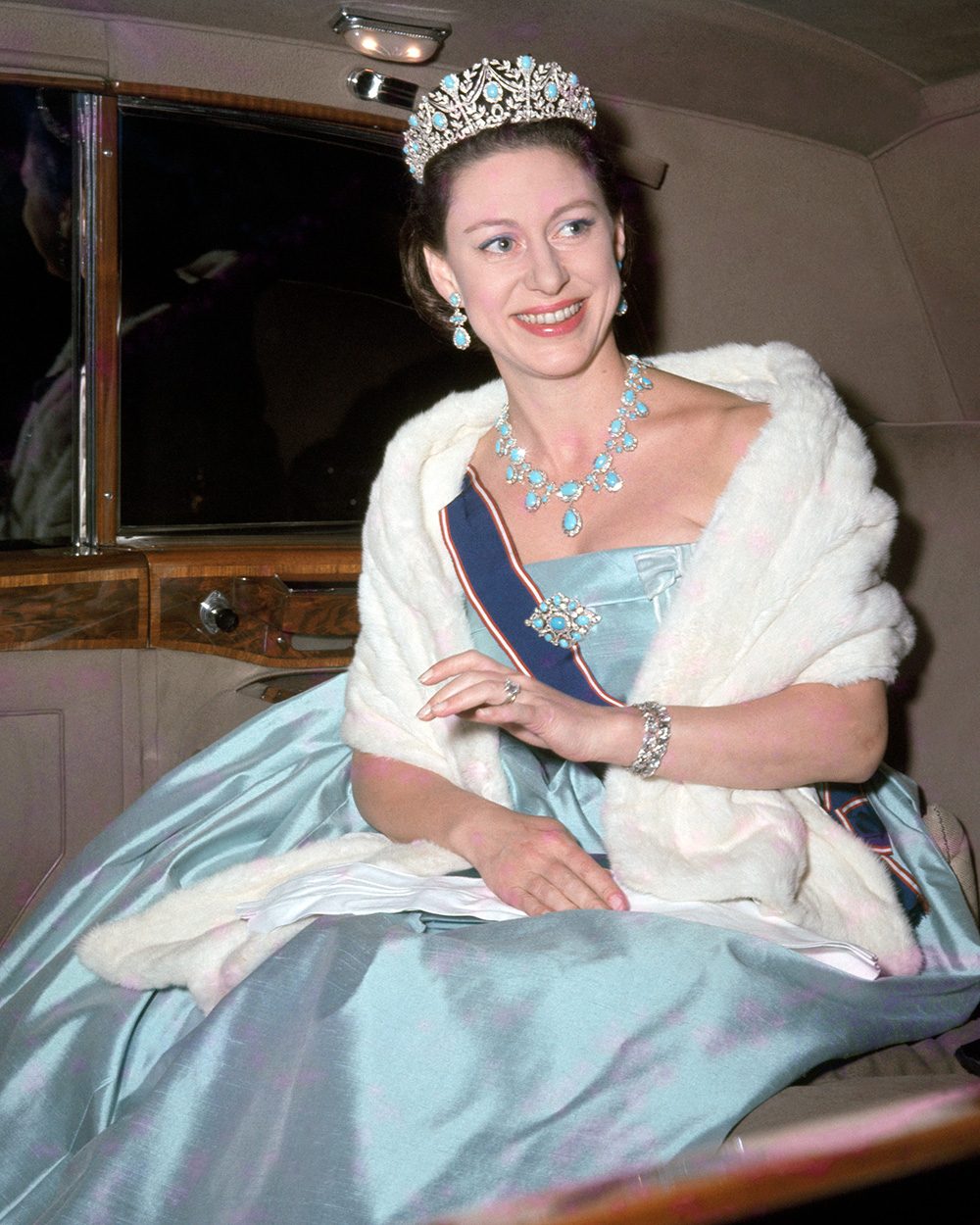
Turquoise came to Europe via Turkish traders who imported it from the mines of Persia in the 13th century. When it arrived in France, it was called pierre turquoise, or “Turkish stone,” before eventually being shortened to simply turquoise. Popular throughout the Middle Ages and into the 17th century, the gem experienced a major revival in the 19th century thanks to Queen Victoria, who adored turquoise and even gifted brooches to members of her bridal party. During the Romantic movement, turquoise also became a symbol of true love.
It was during the Georgian and Victorian eras that turquoise and diamond jewelry became increasingly popular, transforming turquoise from a more folk-inspired adornment into formal fine jewelry. Although the pairing appeared as early as ancient Persia in select turquoise, diamond, and gold jewels, it became far more widespread during this period and continued to flourish into the 20th century.
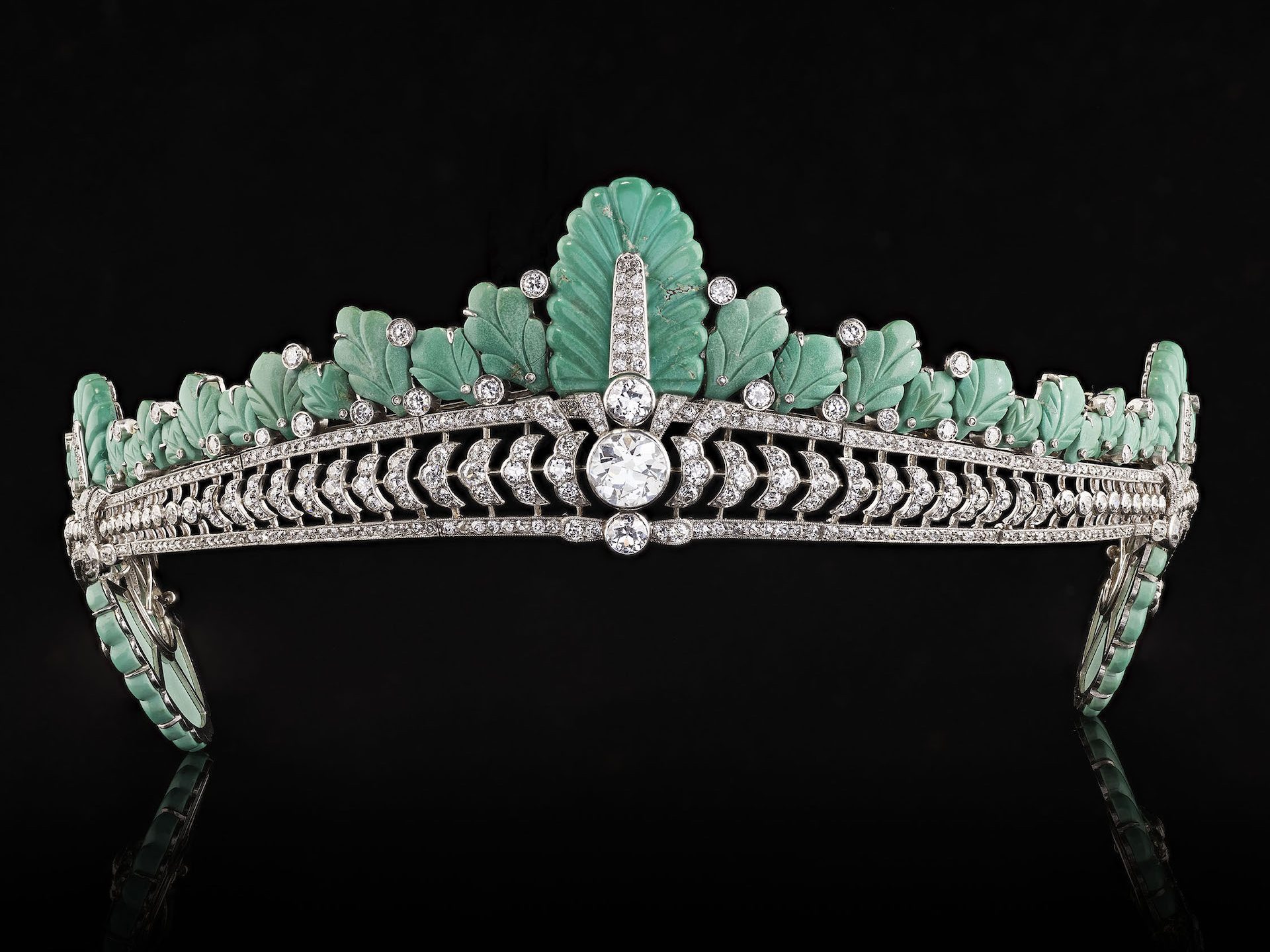
One of the most spectacular examples of turquoise and diamonds coming together in high jewelry is Lady Nancy Astor’s Cartier Turquoise Tiara. Considered one of the most celebrated aristocratic jewels in modern collecting circles, the piece began life as a Boucheron diamond bandeau before Cartier acquired it in the late 1920s and transformed it with carved turquoise leaves and palmettes. In 1930, Viscount Astor purchased the tiara for his wife, Lady Nancy Astor, who wore it throughout her life.
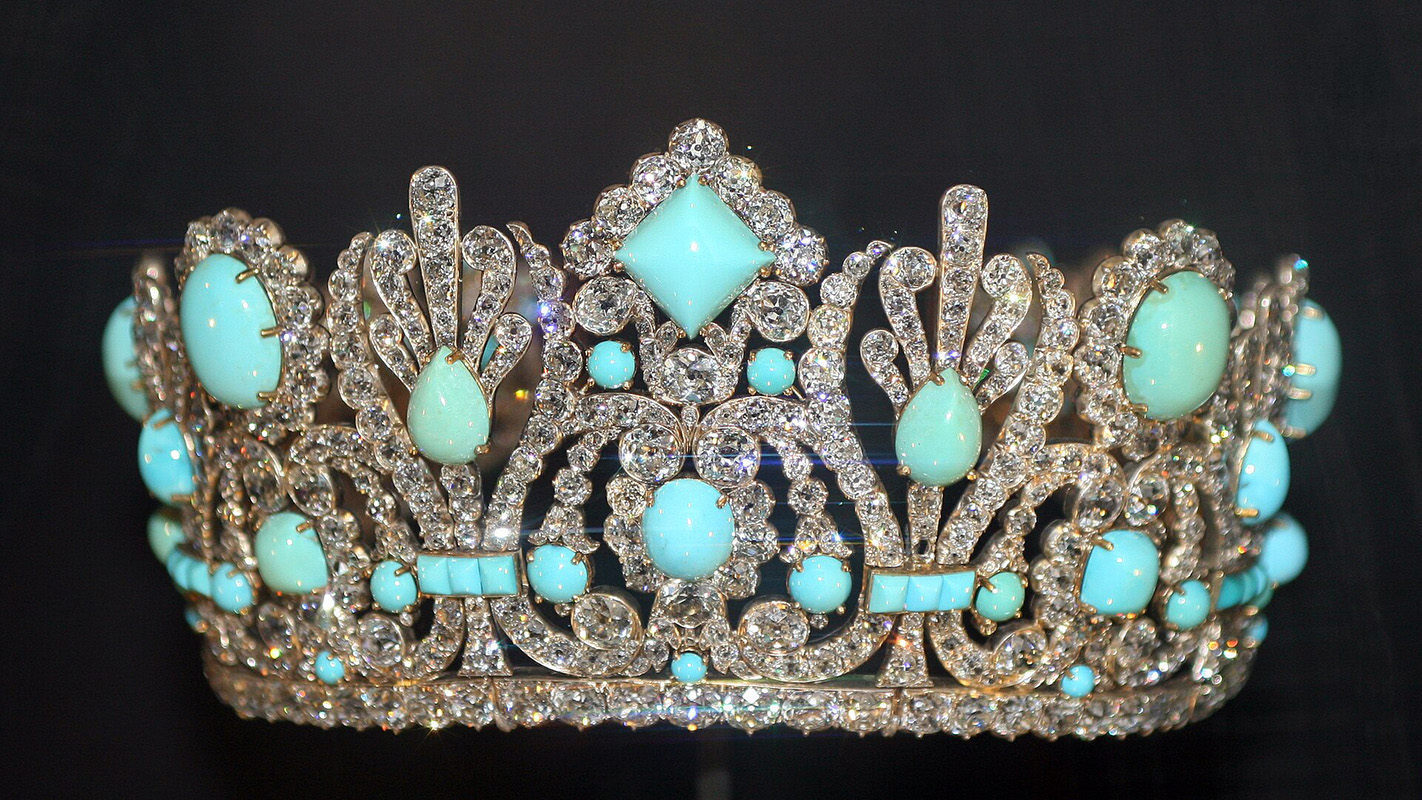
Another famous example is the emerald and diamond diadem originally owned by Empress Marie Louise, Napoleon‘s second wife. In the 1950s, the tiara was reset with 540 carats of Persian turquoise and later became part of socialite and philanthropist Marjorie Merriweather Post’s renowned jewelry collection. Today, it is on display at the Smithsonian’s National Museum of Natural History. Turquoise was selected not only for its striking beauty but also because it is softer and easier to shape than many other gemstones, allowing the replacement stones to fit seamlessly into the existing design.
How Style Icon Millicent Rogers Put Turquoise on the Fashion Map
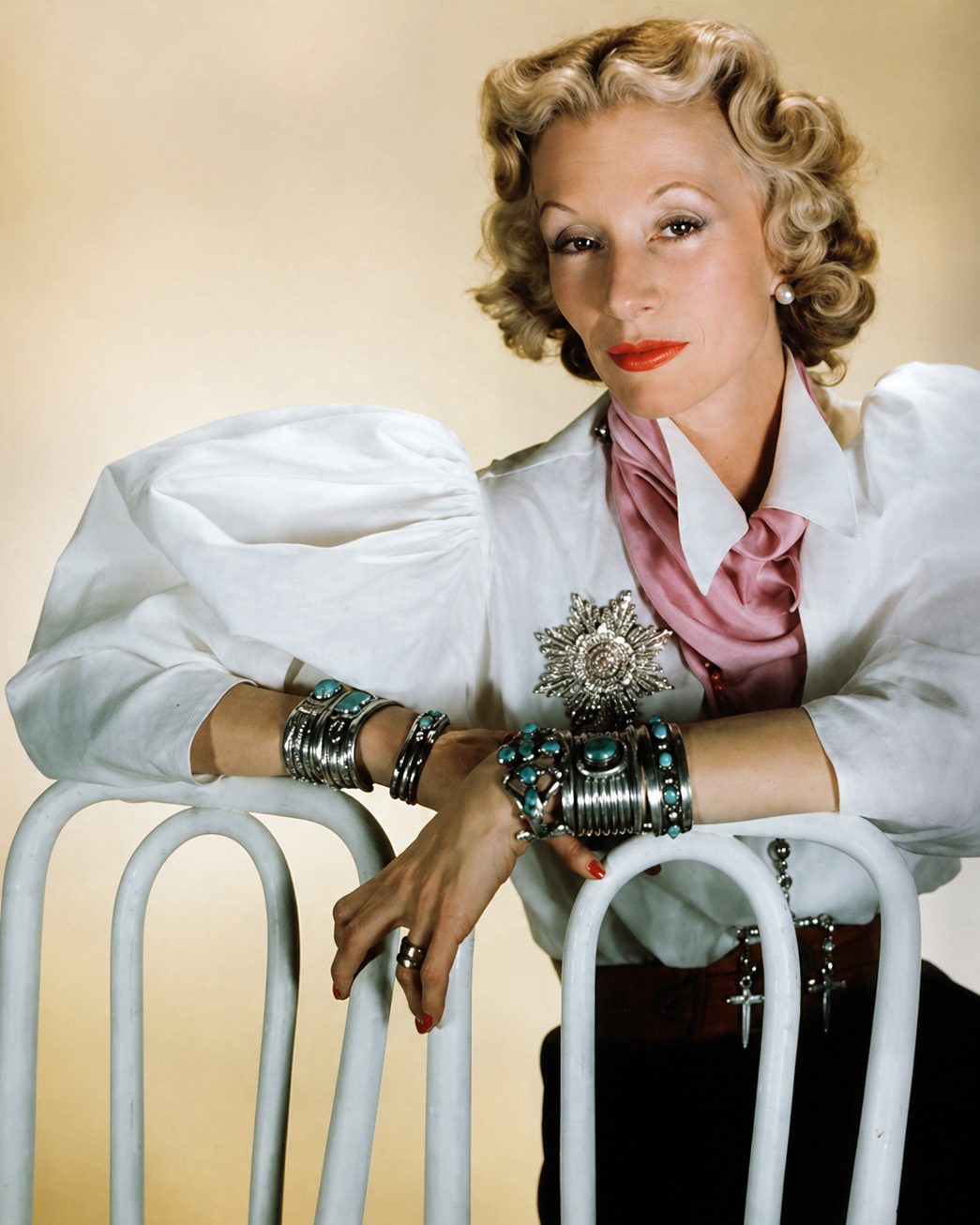
Though Millicent Rogers was a classic socialite and New York It girl, she made a radical move to Taos, New Mexico, toward the end of her tragically short life, where she fell in love with the culture, the landscape, and the jewelry. By the late 1940s, she had become a passionate collector of jewelry made by local New Mexican artisans, amassing more than 1,000 pieces, including necklaces, cuffs, squash blossom necklaces, rings, earrings, and ceremonial adornments. She often wore these pieces alongside European fine jewelry and natural diamonds, creating a look that was entirely her own.
Rogers also collaborated with artisans on original designs and is believed to have worked alongside Taos Pueblo jewelers, incorporating old mine-cut diamonds into turquoise cuffs, squash blossom necklaces, and other traditional designs. Her instinct to pair natural diamonds with turquoise and silver was quietly radical for its time, helping introduce Southwestern jewelry to fashionable East Coast society and elevating it within luxury fashion circles.
Sassone says Rogers was ahead of her time. “Diamonds give turquoise structure. They frame it, define it, and create contrast that makes the color feel more intentional. That framing effect is what moves turquoise into a fine jewelry context.”
Diamond and Turquoise Jewelry Is Back—and Cooler Than Ever
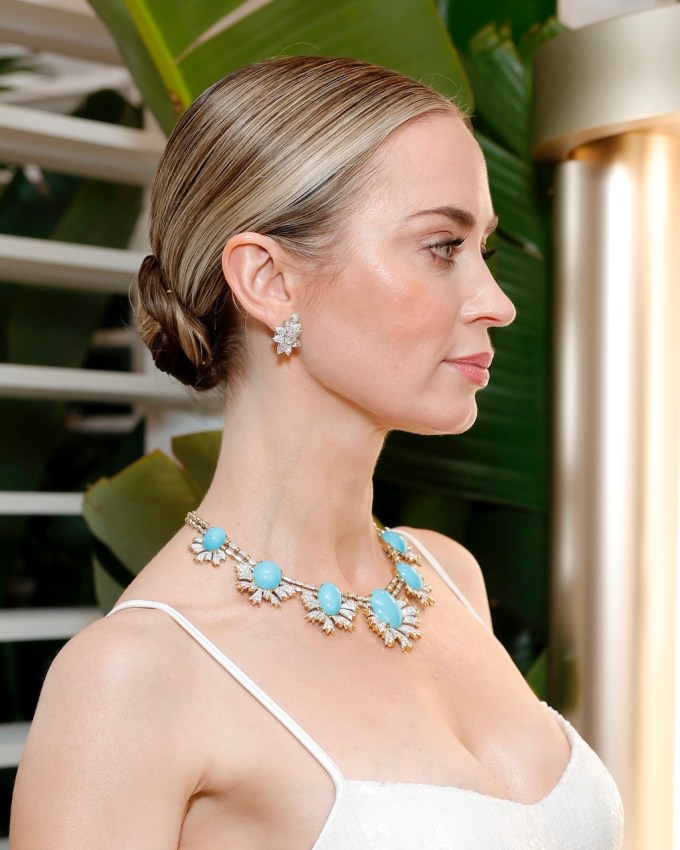
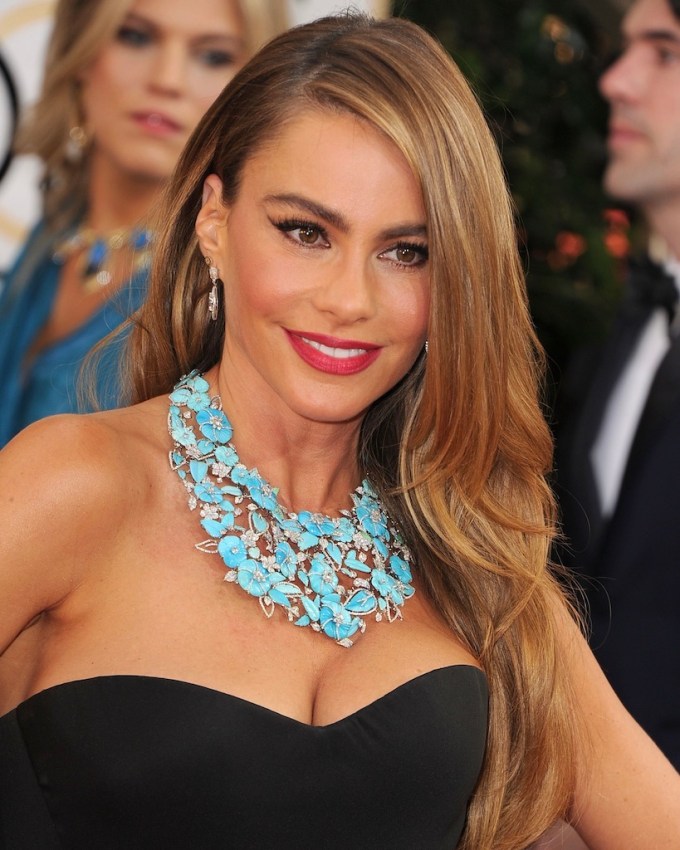
There is renewed interest in diamond and turquoise jewelry as fashion embraces expressive color, natural materials, and more personal styling. Rather than making bold statement pieces, today’s designers are using turquoise with greater restraint, allowing the gemstone to become the focal point while diamonds add light, structure, and contrast.
Sassone says modern interpretations are far more intentional than those of the past. “Earlier interpretations often leaned decorative or stylistically heavy, whereas modern design treats turquoise more as a focal point. There’s more space in the design, and diamonds are used in a more controlled way—often to define rather than decorate. The result feels more architectural and considered.”
She adds that the best combinations are often the simplest. “Smaller round diamonds and pavé work well because they add light without competing with color… The key is that the diamonds support the turquoise rather than overpower it.”
Stafford agrees, noting that balance—not size—is what makes the pairing successful. “The strongest pairings are not necessarily those with the largest diamonds, but those where the precision of the diamonds highlights the organic character of the turquoise.”
What to Look for in Diamond and Turquoise Jewelry

According to Sassone, today’s shoppers—especially Gen Z—aren’t looking for a traditional “turquoise look.” Instead, they’re styling turquoise alongside diamonds, sculptural gold, and other materials as part of a highly personal jewelry wardrobe.
“It’s become more of a color and texture moment than a category on its own, which makes it feel really current,” she says.
When choosing turquoise, color remains the biggest consideration. Sassone says most collectors gravitate toward a strong, even blue, though preferences vary between clean stones and those with visible natural matrix. Origin also matters, particularly turquoise from historic mines like Sleeping Beauty and Iran, while untreated or lightly treated stones are generally considered the most collectible because they retain their natural character.
Shop Turquoise and Diamond Jewelry
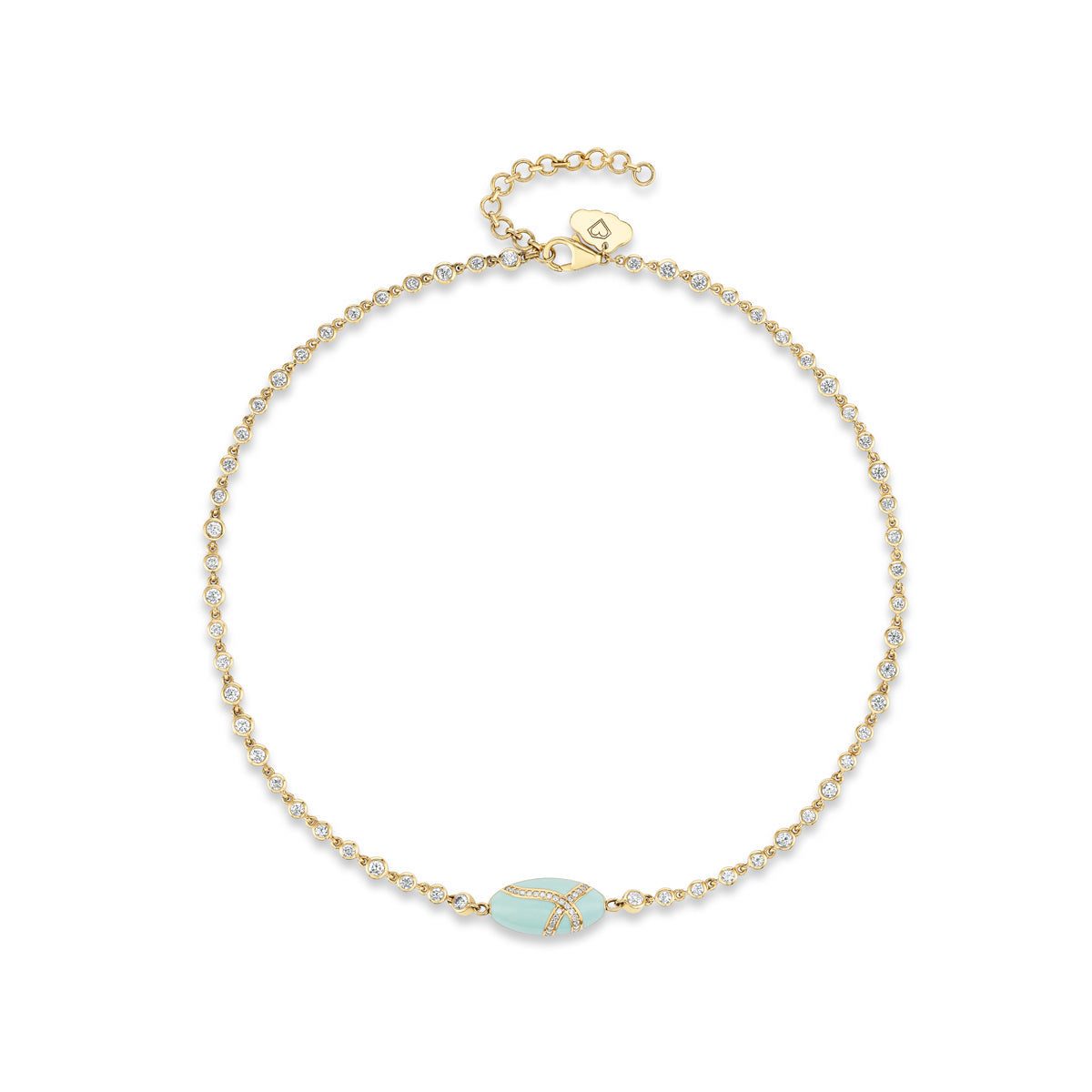
The Finest Stack Pale Turquoise Enamel Diamond-Encrusted Egg Necklace/Choker, $12,000, thefineststack.com
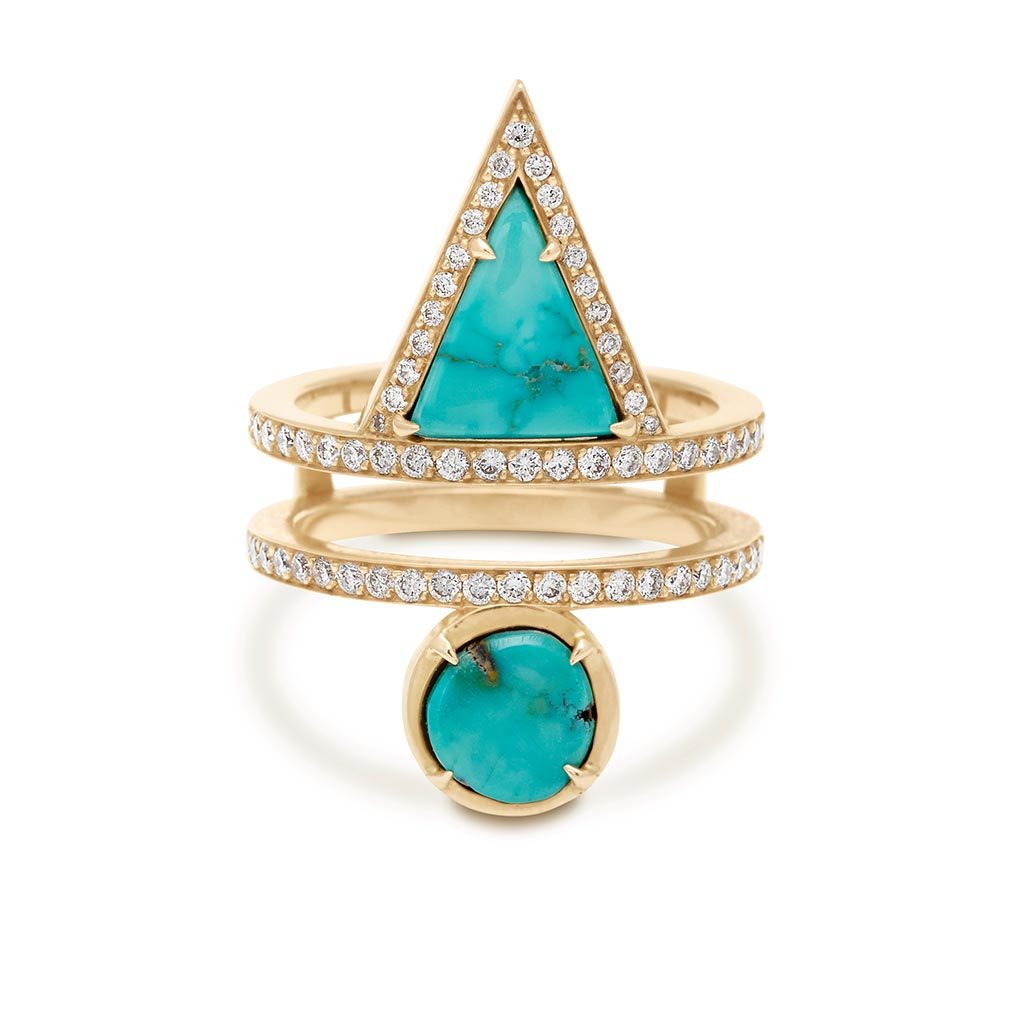
Anna Sheffield Turquoise and Diamond Reverse Attelage Ring, Price Upon Request, annasheffield.com
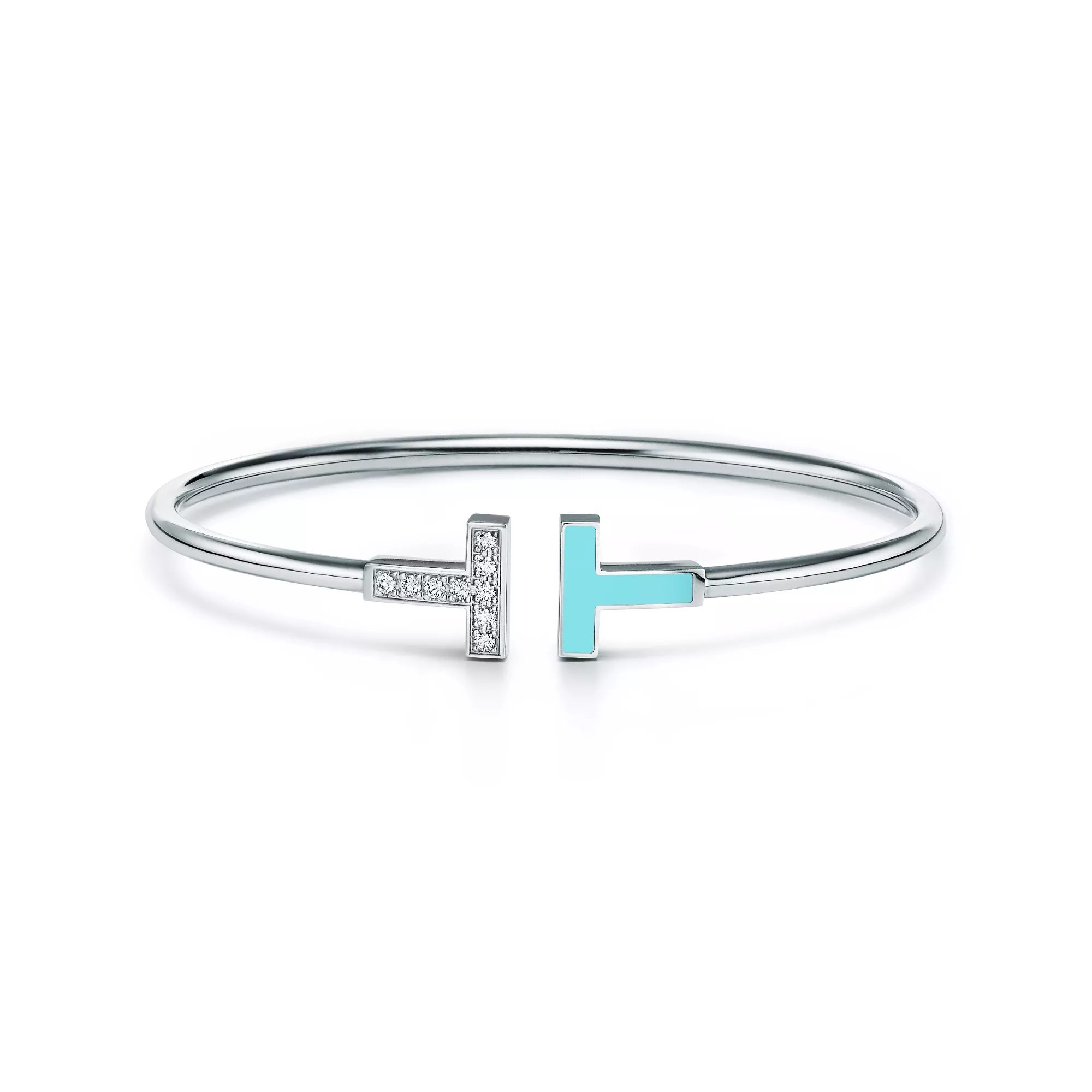
Tiffany & Co. T Wire Bracelet in Yellow Gold with Turquoise and Diamonds, $6,000, tiffany.com
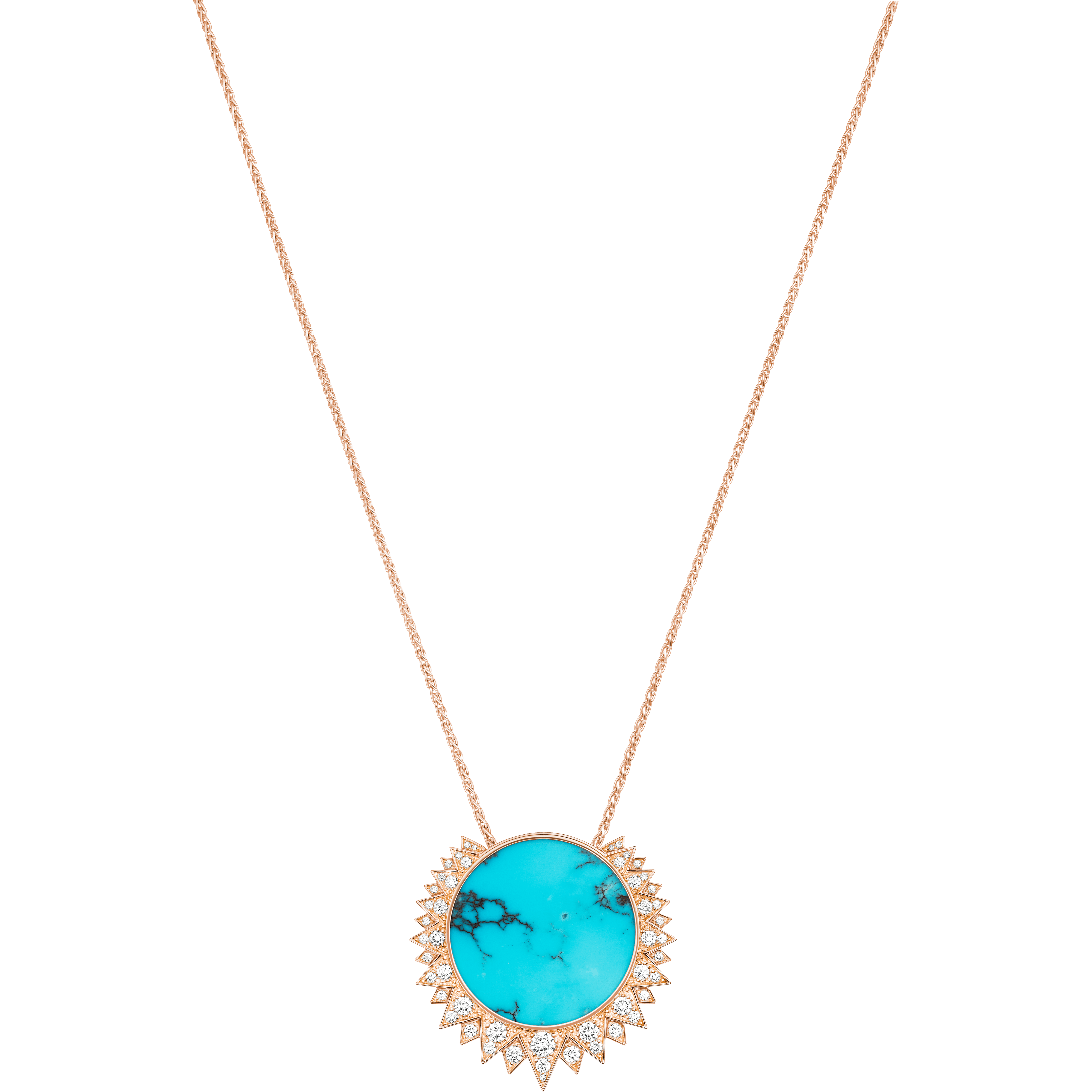
Piaget Sunlight Pendant with Turquoise and Brilliant-cut Diamonds, $30,200, piaget.com
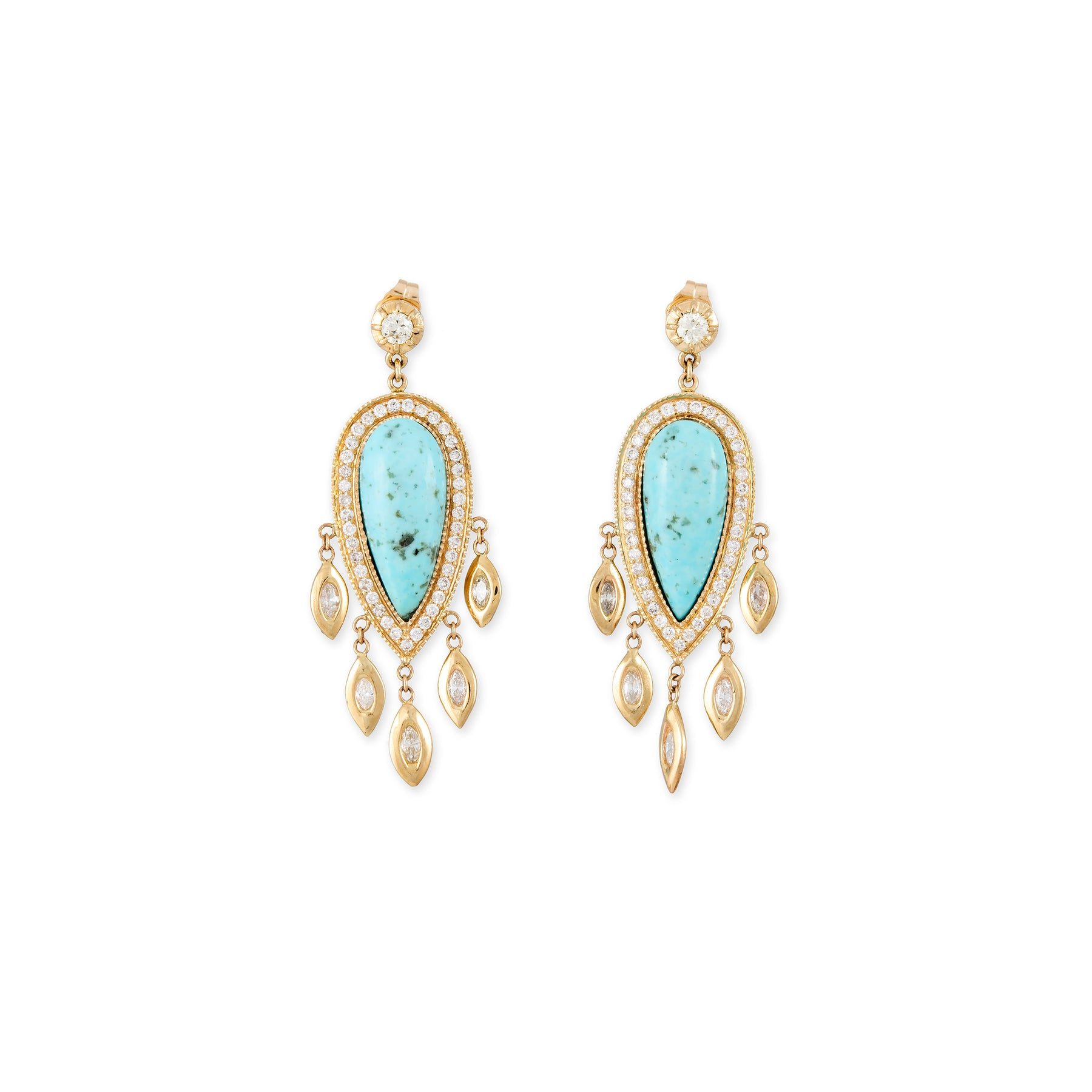
Jacquie Aiche PAVE TURQUOISE TEARDROP + MARQUISE DIAMOND SHAKERS DROP EARRINGS, $14,625, jacquieaiche.com
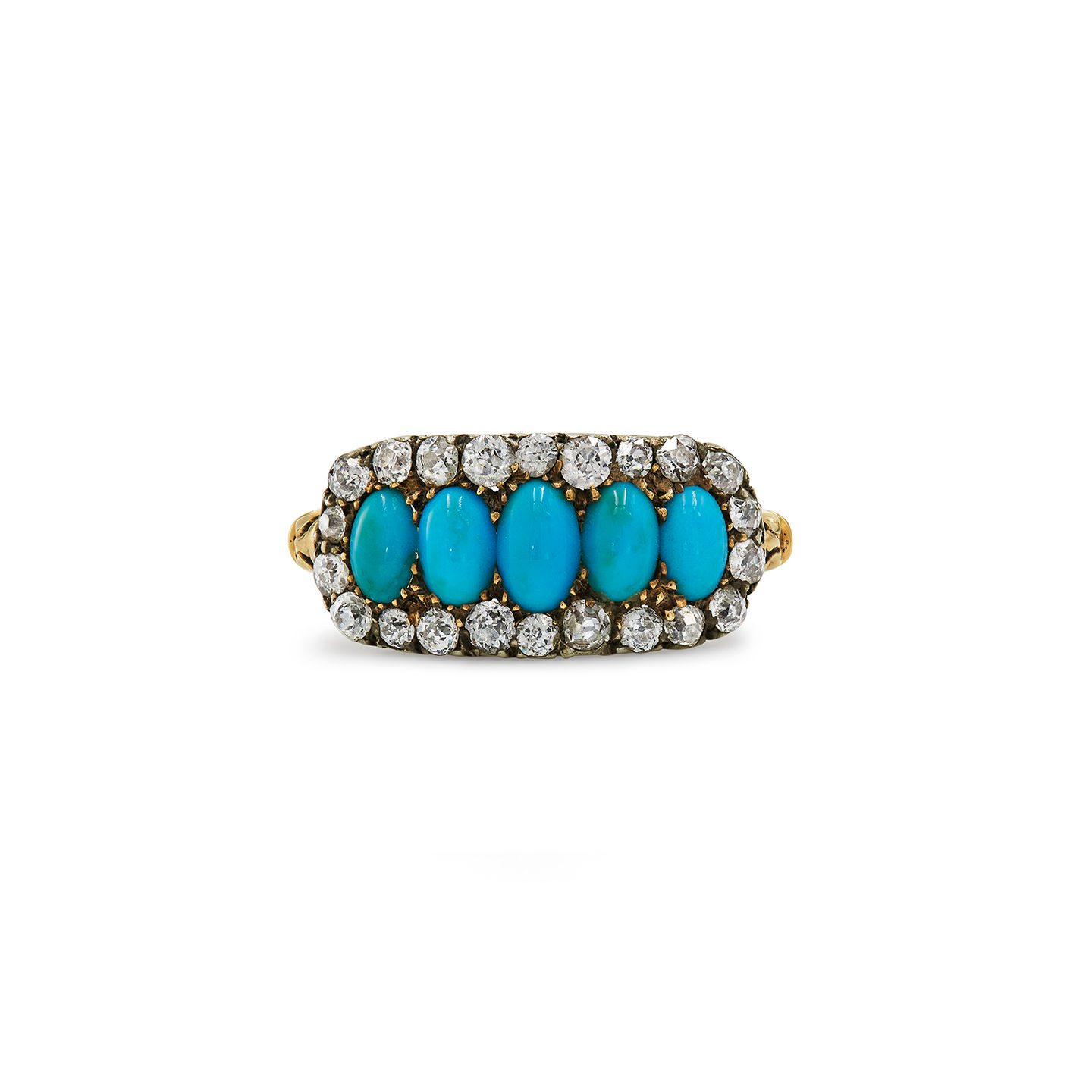
Fred Leighton Antique Turquoise and Diamond Ring, Price Upon Request, fredleighton.com
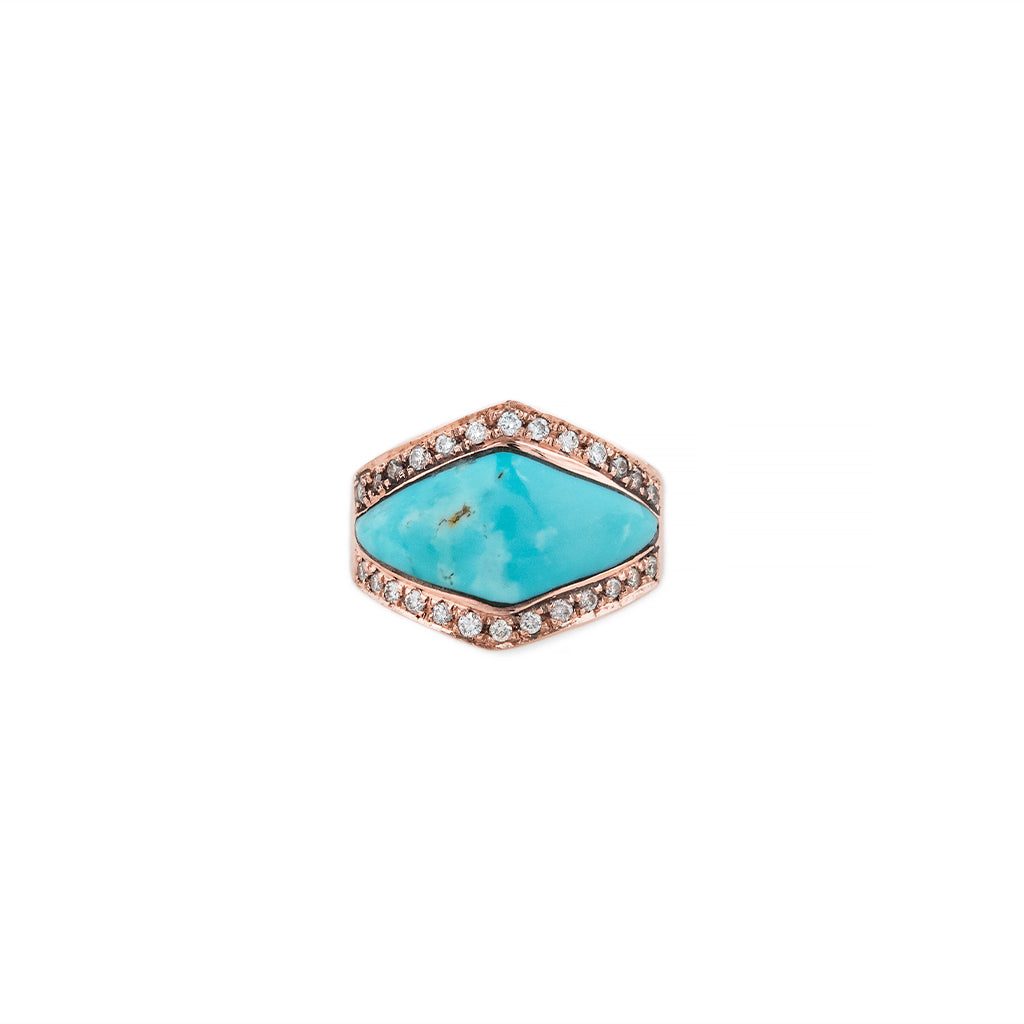
Jacquie Aiche Pave Diamond Turquoise Inlay V Ring, $4,023, jacquieaiche.com
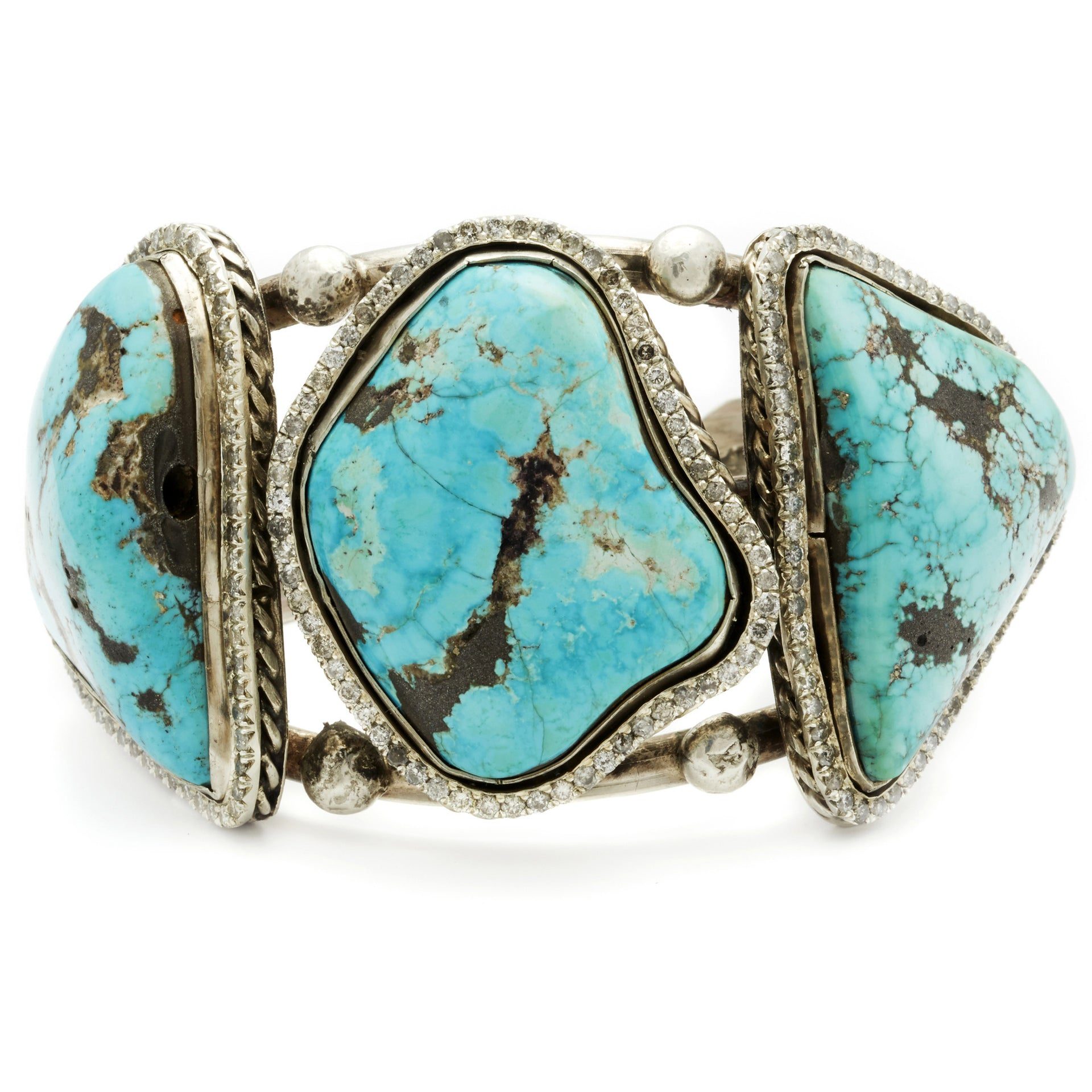
Anna Sheffield DIAMOND DUSTED THREE STONE TURQUOISE CUFF, Price Upon Request, annasheffield.com
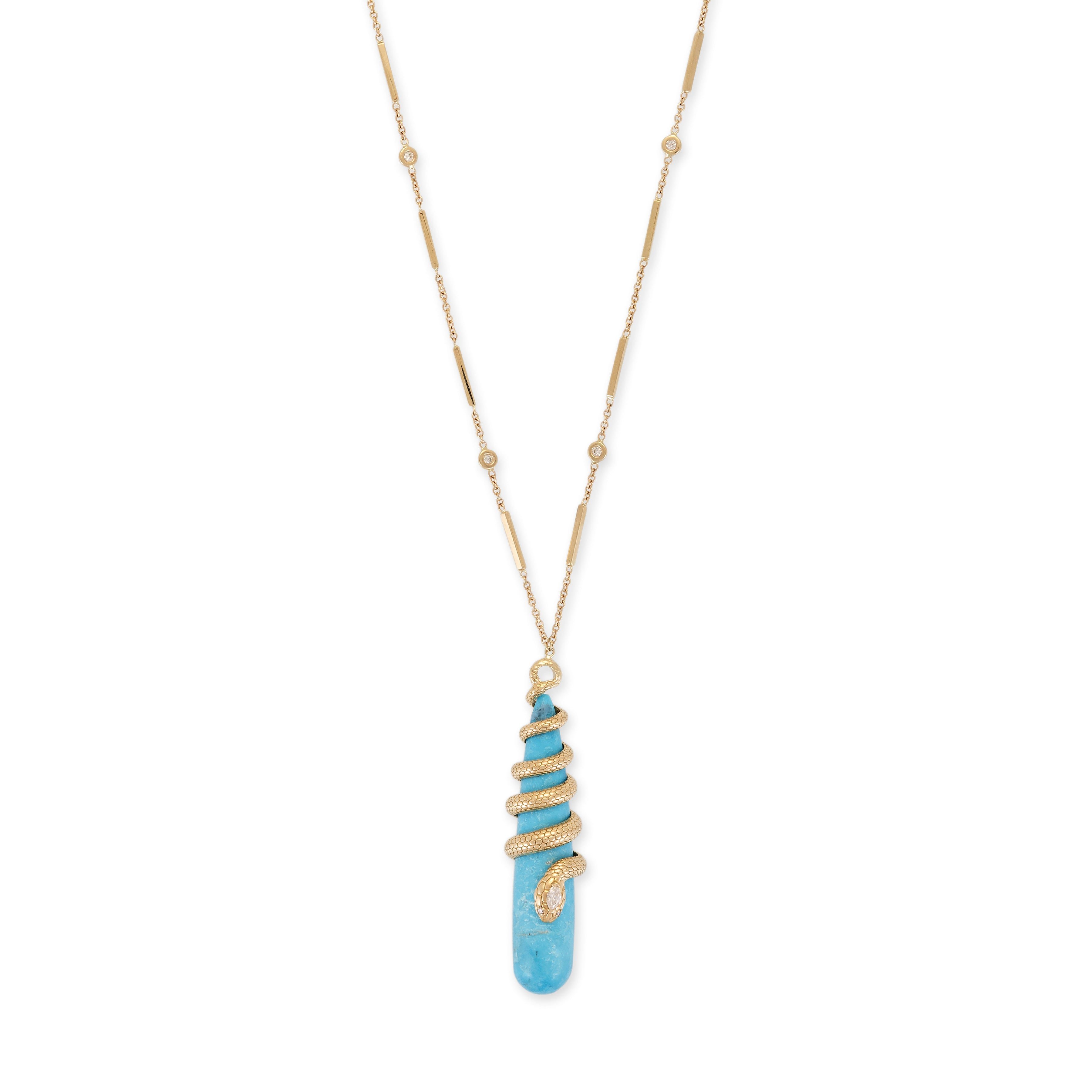
Jacquie Aiche DIAMOND SNAKE WRAPPED TURQUOISE DROPLET NECKLACE, $6,678, jacquieaiche.com
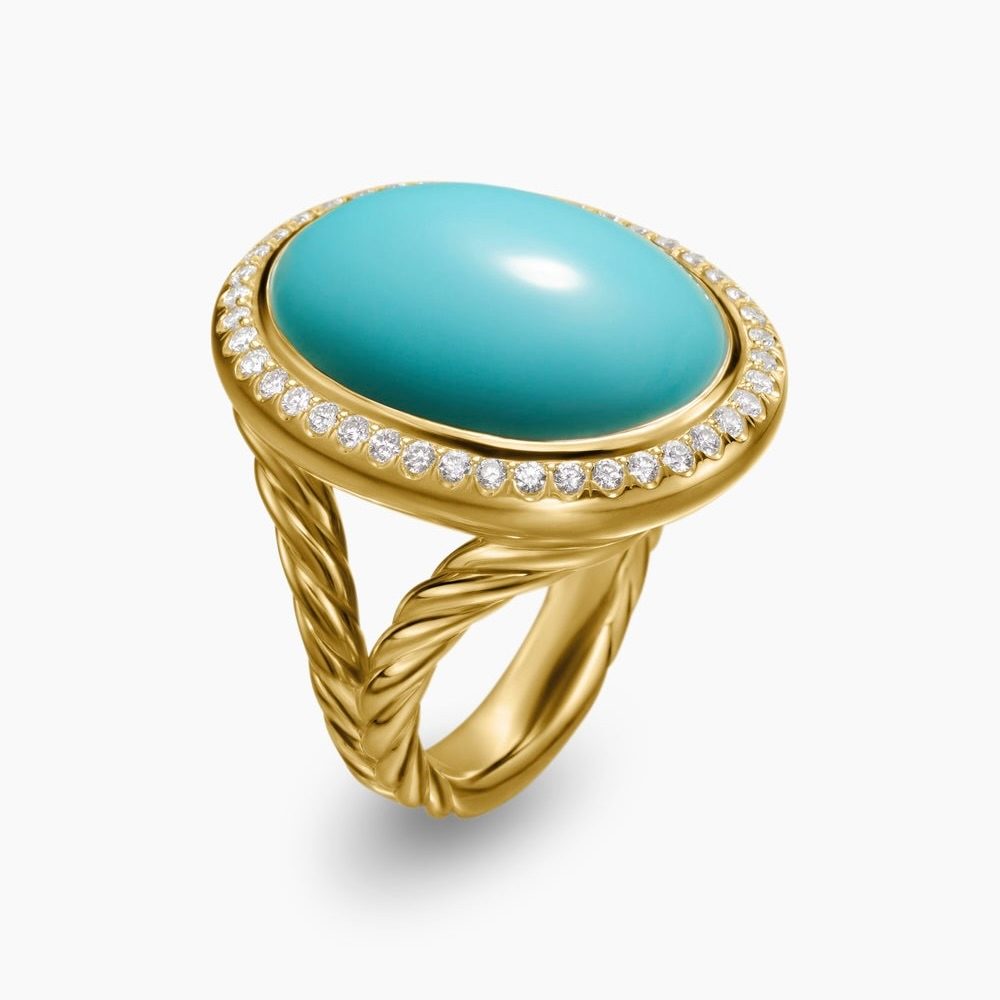
David Yurman ALBION® OVAL RING 18K Yellow Gold with Turquoise and Diamonds, $9,800, davidyurman.com
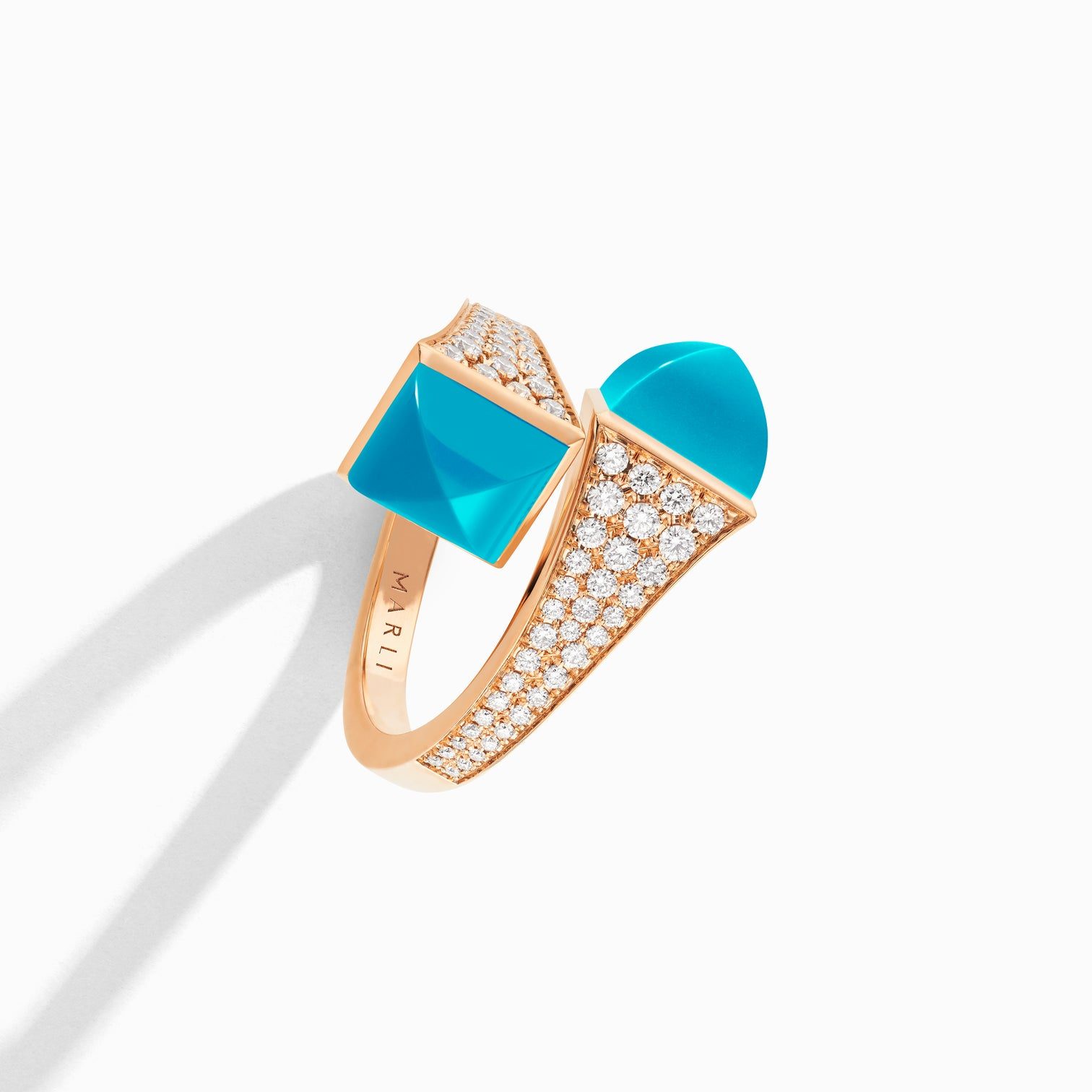
Marli New York Cleo Diamond Ring, $4,650, marlinewyork.com
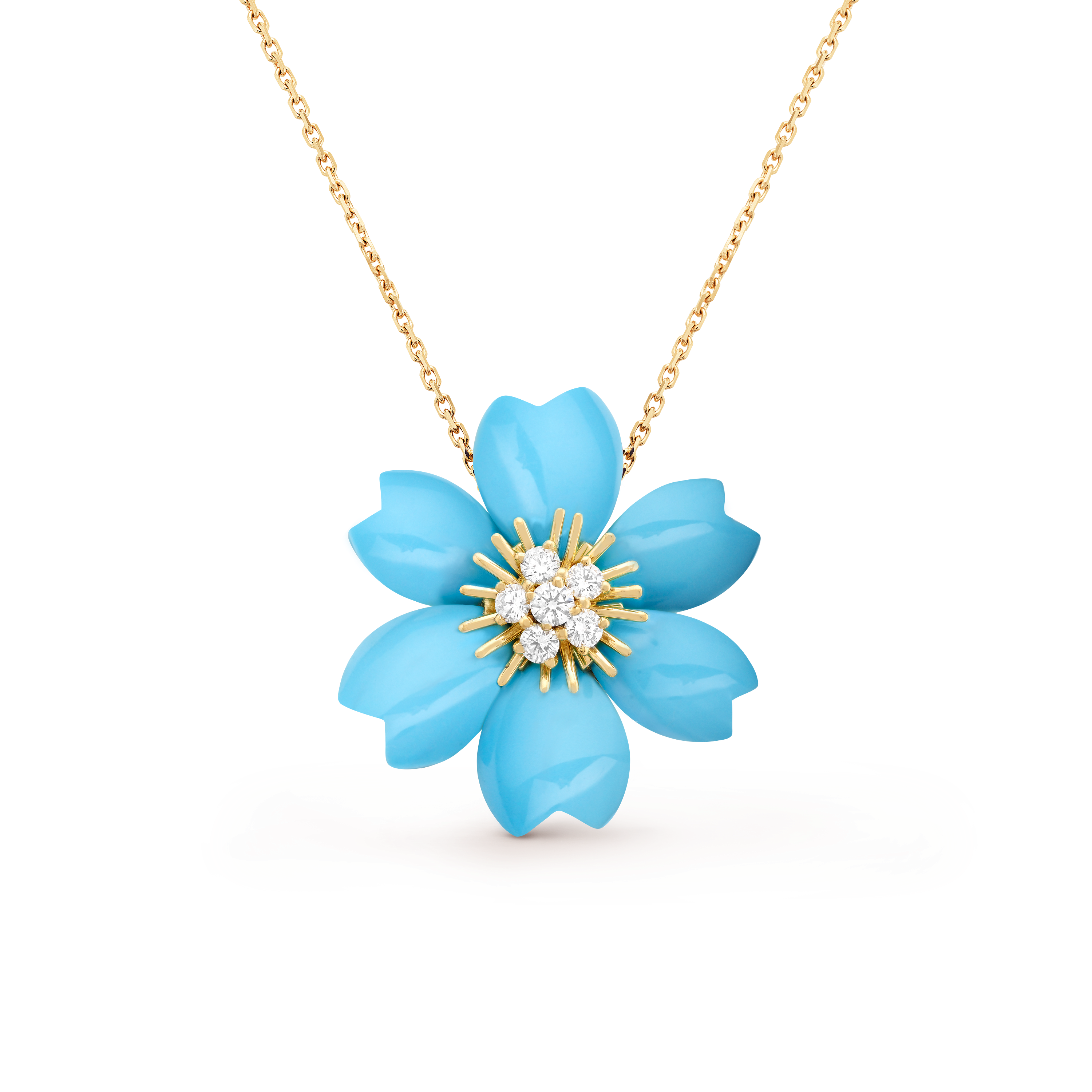
Van Cleef & Arpels Diamond and Turquoise Rose de Noël Clip Pendant, $26,100, vancleefarpels.com
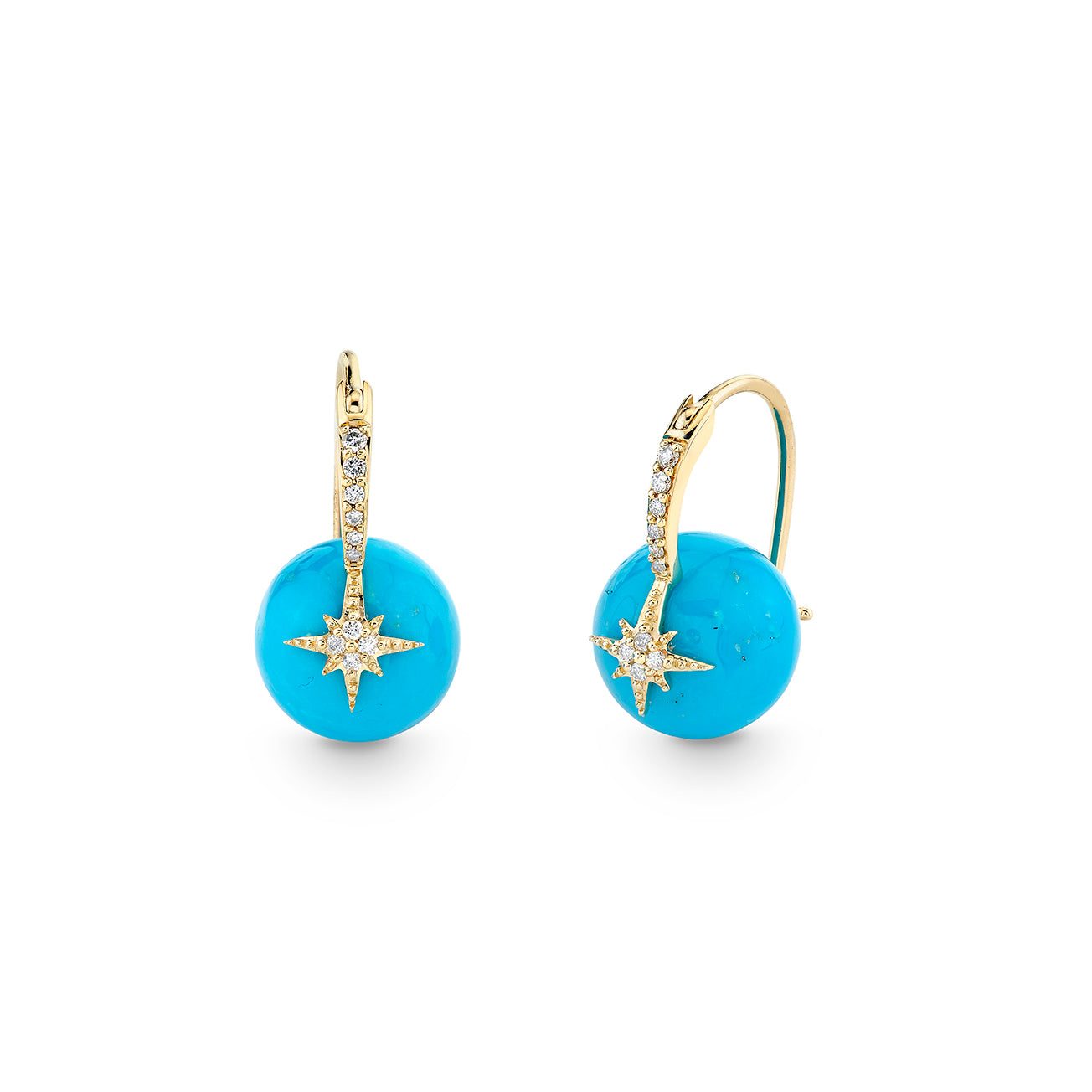
Sydney Evan GOLD & DIAMOND STARBURST TURQUOISE EARRINGS, $2,300, sydneyevan.com
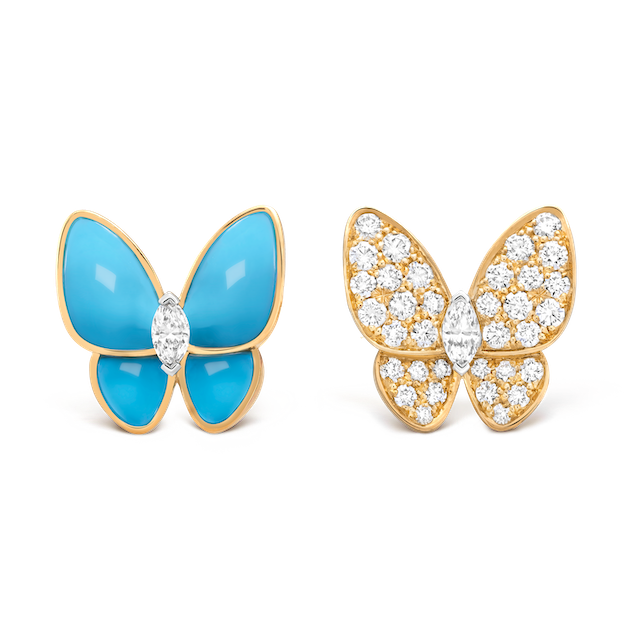
Van Cleef & Arpels Two Butterfly Diamond and Turquoise Earrings, $25,900, vancleefarpels.com