
The Greek Royal Jewelry Collection Traces the History of Europe In Diamonds
Greek royal jewelry is packed with legendary diamond tiaras, glamorous royal brides, and heirlooms that are still making headlines today.
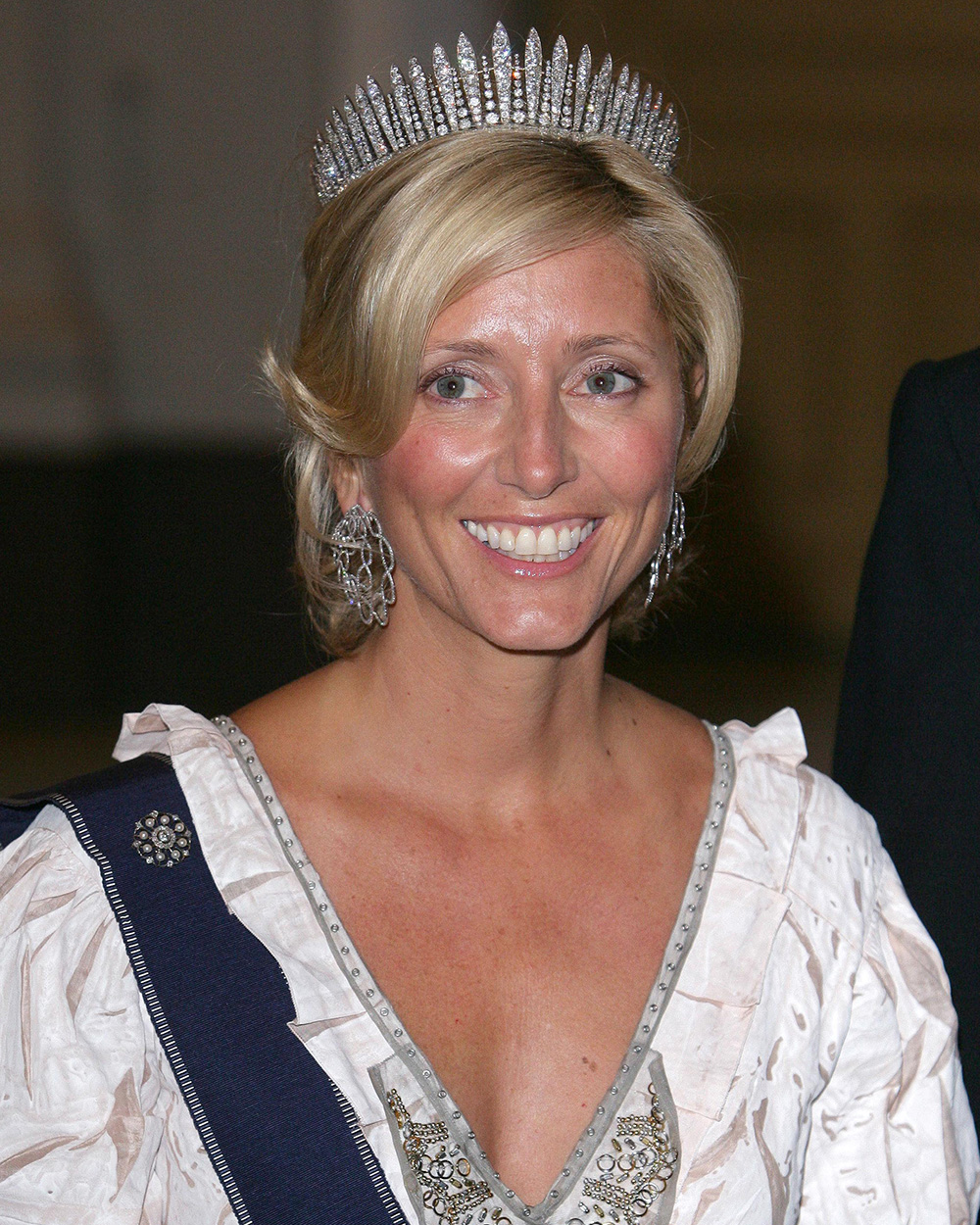
Crown Princess Marie-Chantal Of Greece Attends King Carl Gustaf Of Sweden’S 60Th Birthday Celebrations.Gala Dinner At The Royal Palace, Stockholm. (Photo by Mark Cuthbert/UK Press via Getty Images)
Greece may not have a reigning royal family anymore, but its jewelry collection is still serving royal-level glamour. Built through generations of marriages into the royal houses of Britain, Denmark, and Russia, the family’s private vault holds dazzling diamond tiaras, an extraordinary ruby parure, and heirlooms that descendants still wear today.
According to designer Jelena Kulic, the Greek Royal Collection is unique because it is not a single “state treasure” in the British or Danish sense. “The collection reads almost like a family map of Europe. Its beauty is not only in size, but in biography.” As a result, its most celebrated jewels—from the Greek Key Tiara and the Khedive of Egypt Tiara to the Greek Ruby Parure, the Antique Corsage Tiara, and Queen Frederica’s Diamond Tiara—trace the family’s history through royal marriages, inheritance, and reinvention.
Meet the Experts

Jelena Kulic is a fashion, jewelry, and accessory designer who made her international debut at Paris Fashion Week in October 2025. Her work is inspired by Baroque and Renaissance art, as well as the romantic opulence of the 18th and 19th centuries.

Patricia Curts is Managing Director of The Mexican Collection, a UK-based jewelry company specializing in handcrafted and vintage Mexican jewelry. She is an expert in jewelry craftsmanship, antique design, and collectible heirloom pieces.
Ahead, explore the extraordinary natural diamond tiaras, necklaces, earrings, and parures that chronicle the remarkable legacy of the Greek royal family. Long after the monarchy faded into history, Greek royal jewelry continues to tell its story.
The History of the Greek Royal Jewelry Collection
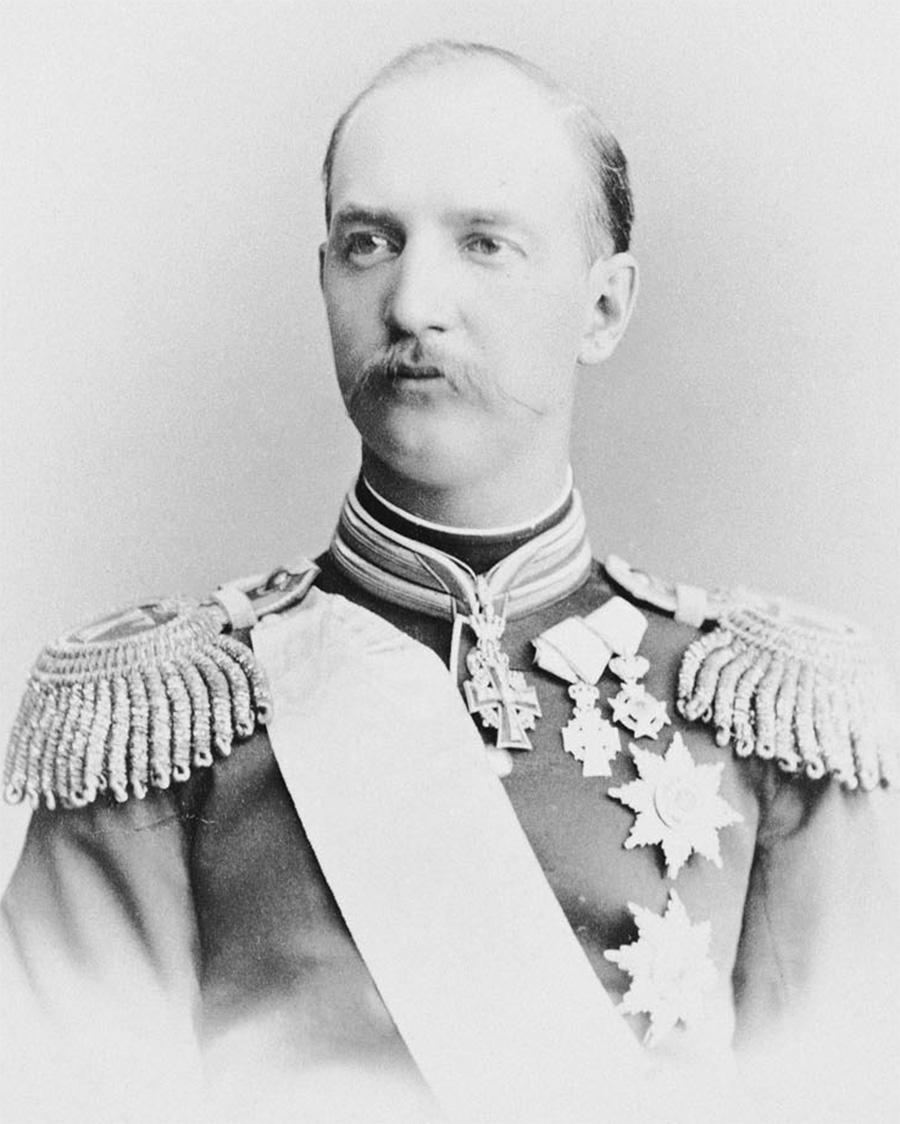
For some historical context, the Greek monarchy traces its roots to the establishment of the Kingdom of Greece in 1832, after the country won its independence from the Ottoman Empire. King Otto of Greece was selected by the Great Powers of Britain, France, and Russia to rule the newly formed nation. He was removed from the throne in 1862, and King George I of Greece, a Danish prince from the House of Glücksburg, succeeded him.
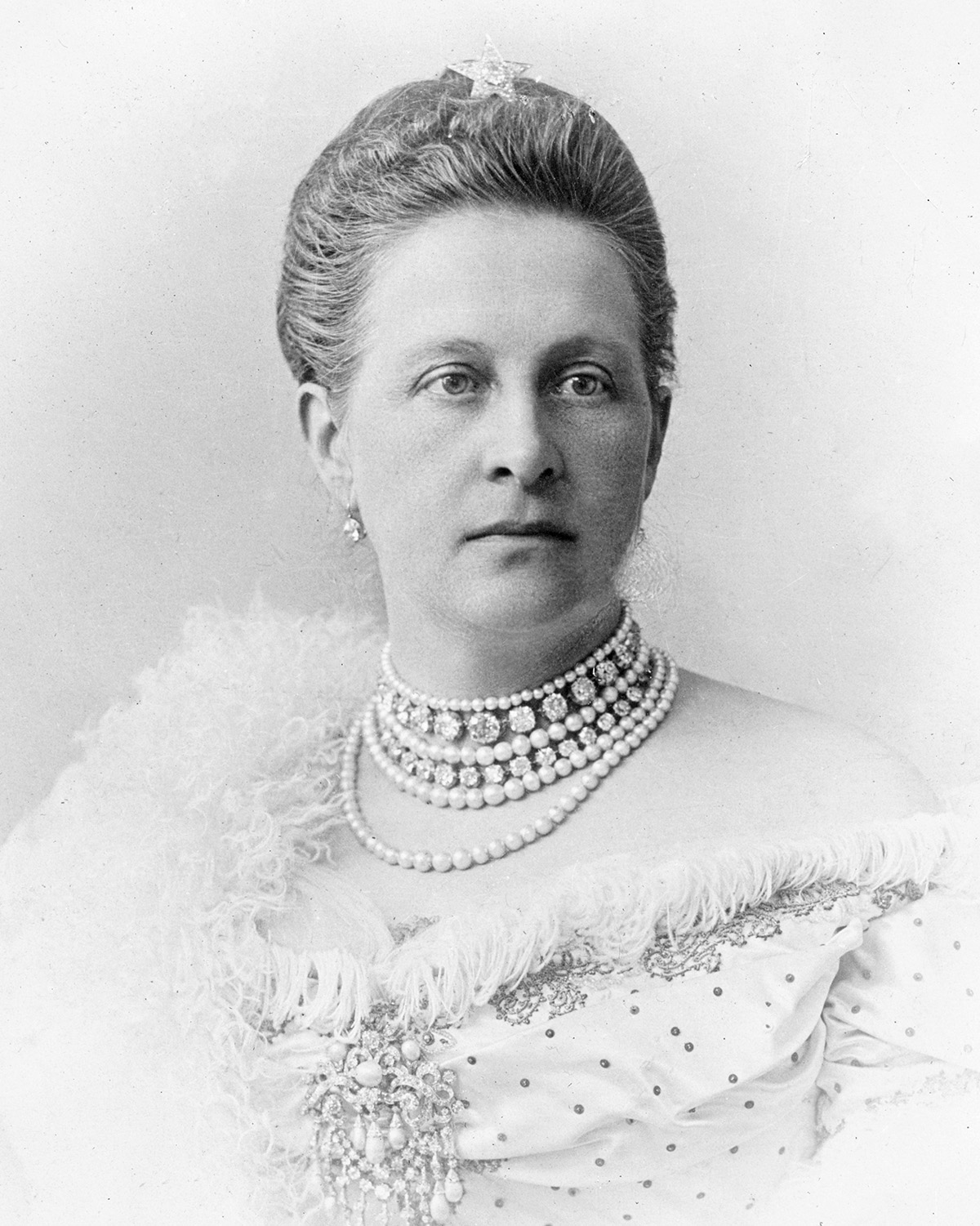
His reign marked a turning point, as his dynasty would rule Greece for more than a century, expanding both the country and its influence in Europe. Much of the royal jewelry collection was also established during this era, particularly through Queen Olga of Greece, whose Russian heritage and remarkable jewels became the foundation for many of the family’s most celebrated heirlooms.
However, under King Constantine I and later King George II, political upheaval and a series of conflicts—including World War I, the Greco-Turkish War, and World War II—weakened the monarchy. The last King of Greece was King Constantine II, who ascended the throne in 1964. Following a military coup in 1967, Constantine was forced into exile. In 1973, the military junta abolished the monarchy, and in 1974, the Greek people overwhelmingly voted in a national referendum to establish a republic, officially bringing the monarchy’s 140-year reign to an end.
Though the monarchy no longer exists, members of the former royal family—including Crown Prince Pavlos, Prince Nikolaos, Princess Theodora, Princess Tatiana of Greece and Denmark, and Prince Philippos—remain prominent public figures. They continue to attend major events, often wearing spectacular heirloom diamond jewels from the family’s historic collection.
While the family’s tiaras, necklaces, and other jewels remained in the hands of individual royals after the monarchy ended, the same was not true of Greece’s royal regalia, including the gold crown, sceptre, and ceremonial sword. Those pieces remained in state custody and were stored at Tatoi Palace, the former royal family’s summer estate. After 1981, they were rarely seen, and as the estate fell into disrepair, many feared the regalia had been lost. In 2023, however, the pieces were rediscovered at Tatoi. Fortunately, they were still in remarkably good condition and are now on public display at the Parliament building in Athens through 2027.
The Romanian Greek Key Tiara
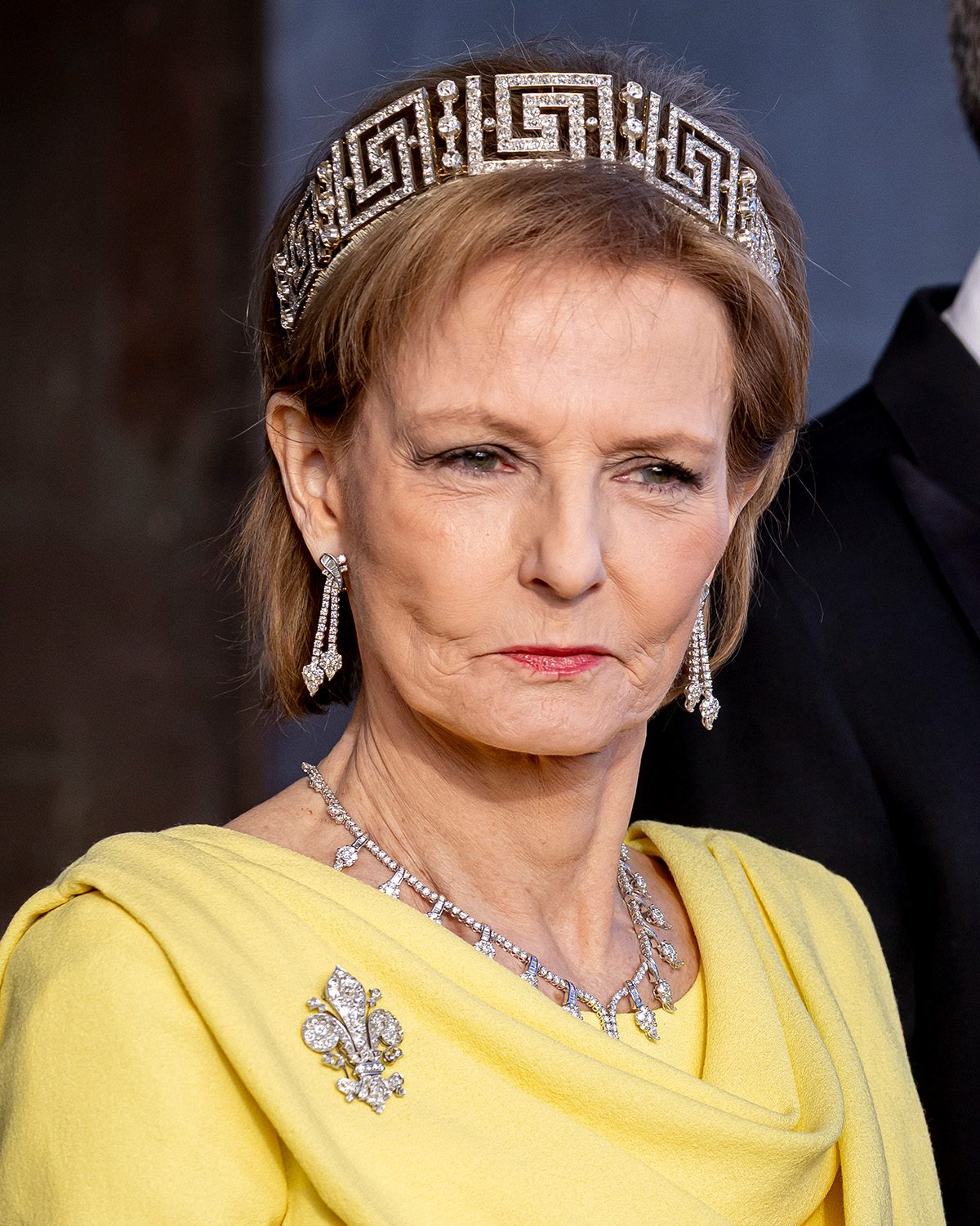
The Romanian Greek Key Tiara is one of the most recognizable pieces in the Greek Royal Jewelry Collection, if not its most famous. Designed in the kokoshnik style, the diamond tiara features bold Greek key motifs connected by diamond batons. Its story most likely begins around the 1905 wedding of Princess Victoria Melita of Saxe-Coburg and Gotha and Grand Duke Kyril Vladimirovich of Russia, for whom it is believed to have been created.
However, Princess Victoria later sold the tiara to her sister, Queen Marie of Romania, who eventually gave it to her daughter-in-law, Princess Helen of Greece and Denmark. That gift created a lasting link between the Greek and Romanian royal families. Though the tiara remains part of the Romanian royal family’s collection today, it will always hold an important place in Greece’s royal history.
Kulic says the tiara’s significance goes far beyond its diamonds. “What makes the Greek collection especially fascinating is its symbolism. The Greek Key Tiara became defining because the meander pattern is instantly connected to ancient Greek art and architecture. It is not just a diamond tiara; it visually says ‘Greece.’ The motif gives the royal family a jewel that feels national rather than merely decorative.”
The Khedive of Egypt Tiara
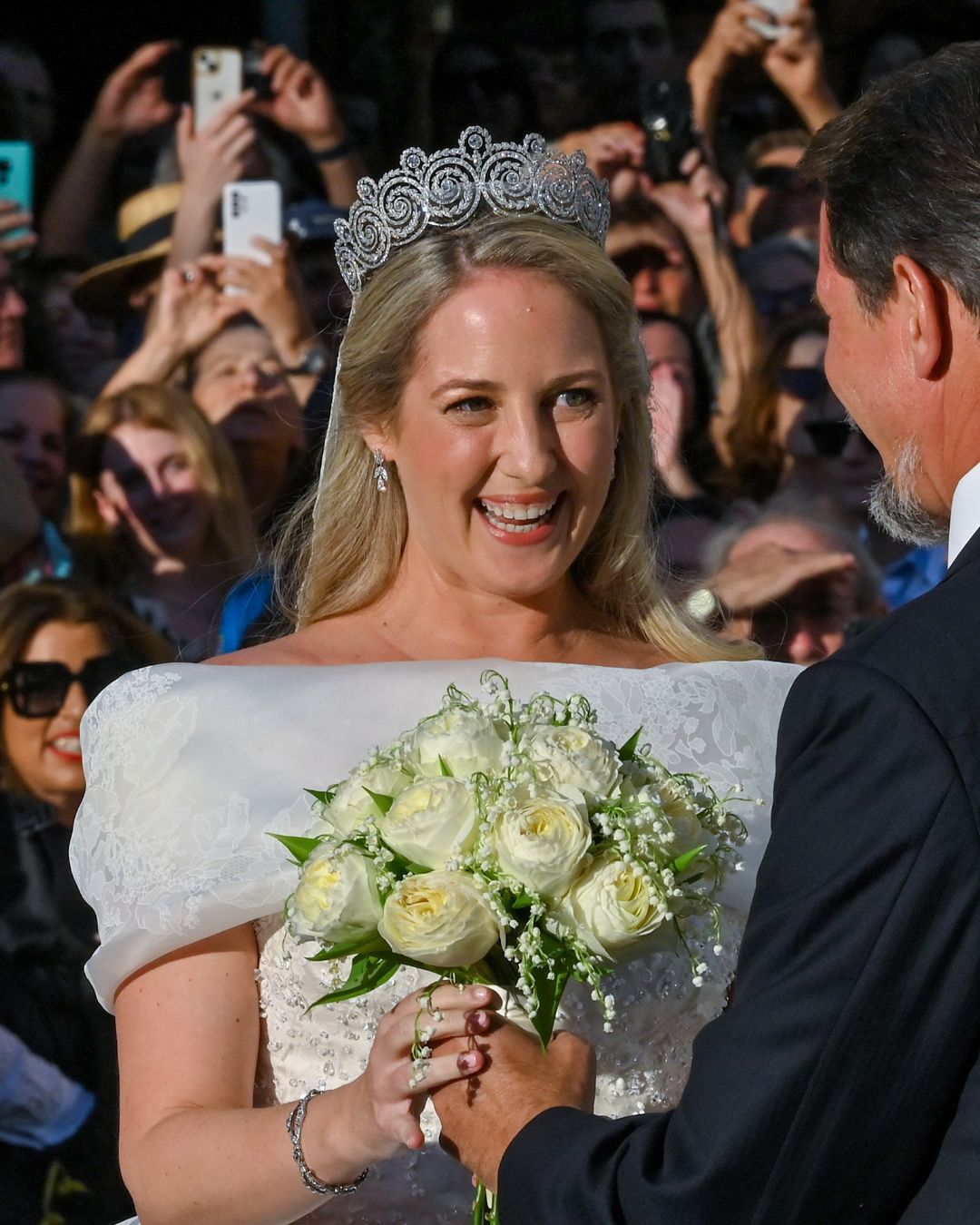
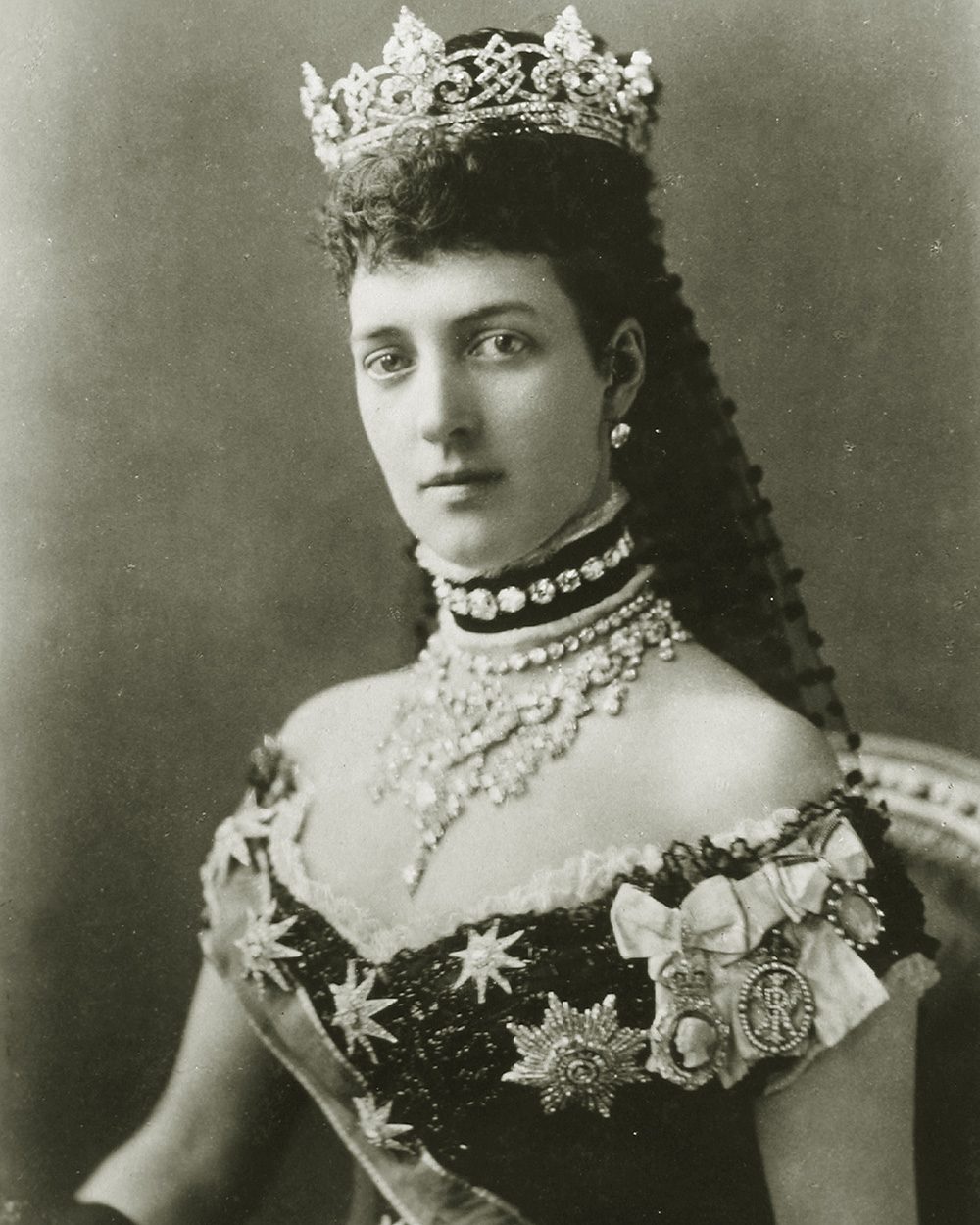
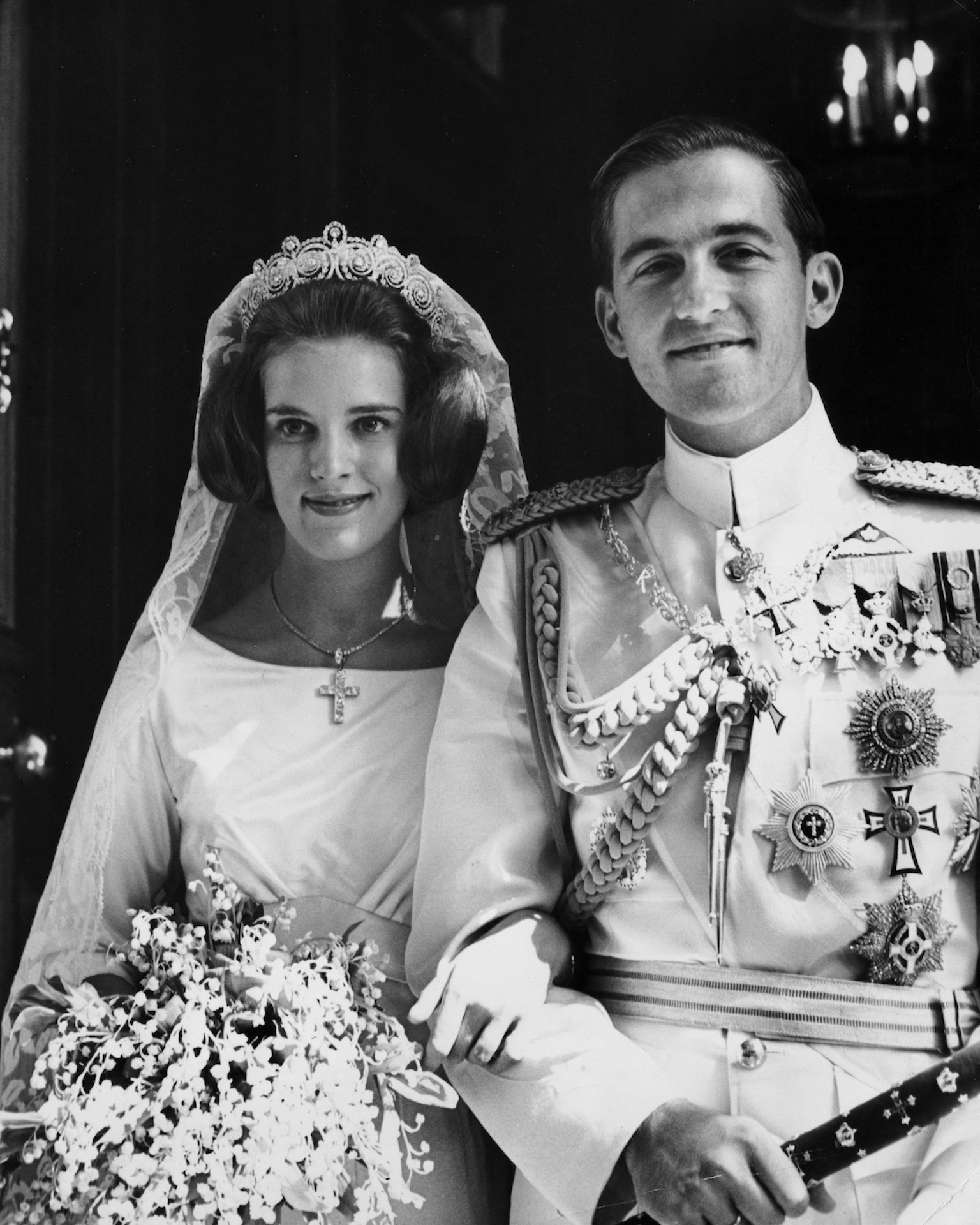
Though the Khedive of Egypt Tiara was originally a wedding gift to Princess Margaret of Connaught when she married the future King Gustaf VI Adolf of Sweden, today it is most closely associated with the Greek royal family, having been worn by several Greek royal brides. Created by Cartier in 1905, the tiara was a wedding gift from the Khedive of Egypt. Its design was inspired by Egypt, where Margaret and Gustaf Adolf first met. Renowned for its lightness, the tiara features a diamond wreath of scrolling laurel leaves and floral motifs arranged in seven graceful loops. The diamonds appear to float above the delicate framework, making it a true feat of Edwardian craftsmanship.
After Princess Margaret’s death in 1920, the tiara passed to her daughter, Queen Ingrid of Denmark, who wore it for many decades before passing it to her youngest daughter, Queen Anne-Marie of Greece. Anne-Marie wore it for her wedding to King Constantine II of Greece, and it has since become the family’s signature bridal tiara. Princess Alexia of Greece and Princess Theodora of Greece also chose it for their wedding days.
“The Khedive of Egypt Tiara remains so celebrated because it has everything collectors love: Cartier craftsmanship, Edwardian delicacy, a romantic wedding origin, and a long bridal tradition. Its diamond scrolls and laurel details make it soft but architectural,” says Kulic.
The Antique Corsage Tiara
Queen Ingrid of Denmark played an important role in shaping the Greek royal jewelry collection by passing down pieces to her daughter, Anne-Marie. Reflecting on her own experience with royal jewels, Ingrid once said, “It was a very great experience to be allowed to put those clothes and jewels on. I thought it was fantastic.” Queen Ingrid, who served as Queen of Denmark from 1947 to 1972, had three daughters—Margrethe, Benedikte, and Anne-Marie—each of whom received a tiara for her 18th birthday.
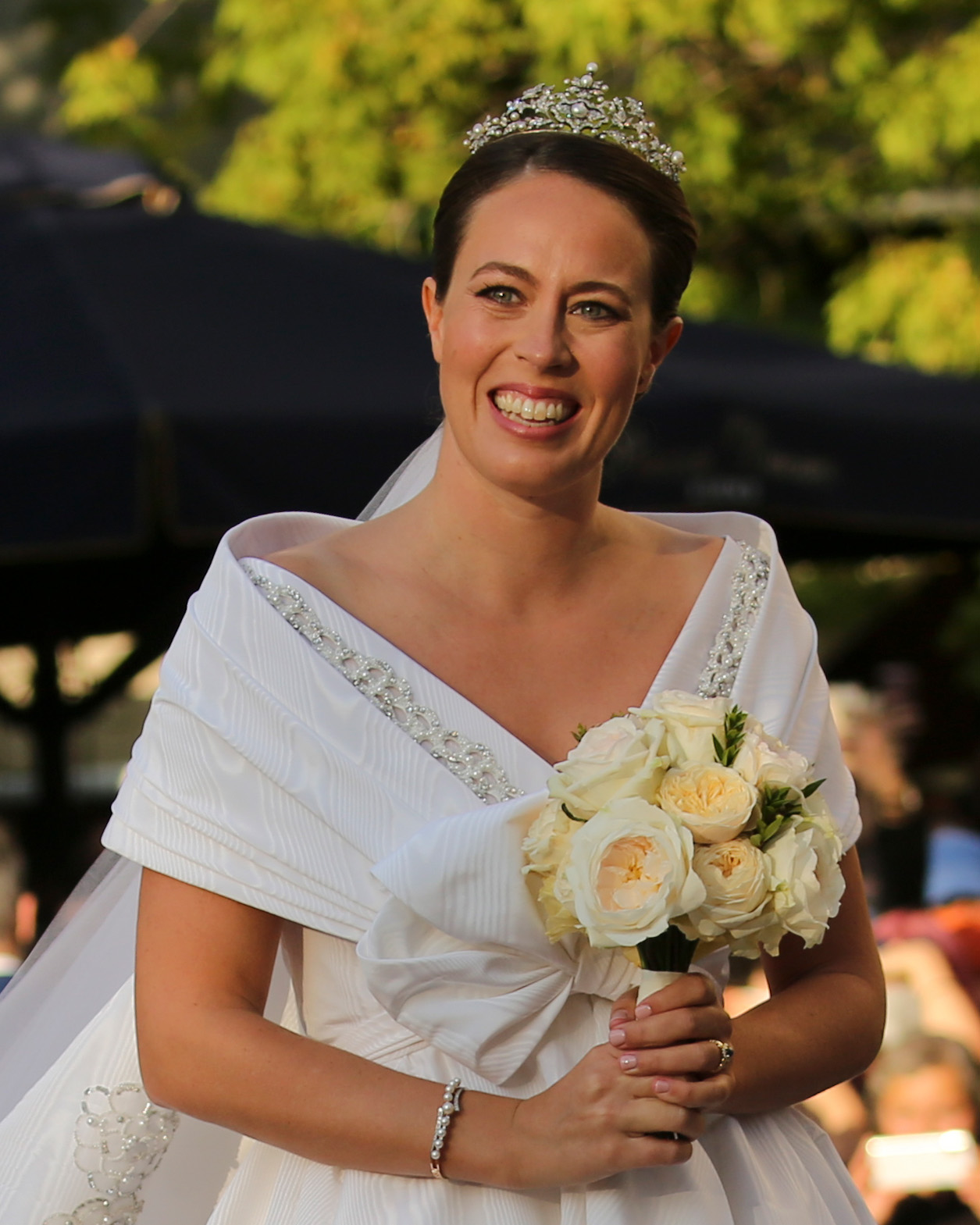
For Anne-Marie’s marriage to King Constantine II of Greece in 1964, Queen Ingrid turned to her own jewelry collection to create a deeply personal wedding gift. She transformed her pearl-and-diamond corsage ornament into what is now known as the Antique Corsage Tiara and also had a matching brooch and pair of earrings created from the jewels. Anne-Marie wore the suite throughout her wedding celebrations, including her farewell events before leaving Denmark.
“The Antique Corsage Tiara is romantic in a different way. It began as a corsage ornament before being transformed into a tiara, which is very typical of late 19th-century jewellery culture: sentimental, floral, adaptable, and designed to move with changing fashion. It later became a Greek royal bridal jewel, worn by Marie-Chantal, Princess Tatiana, Princess Nina, and others,” Kulic notes.
The Greek Ruby Parure
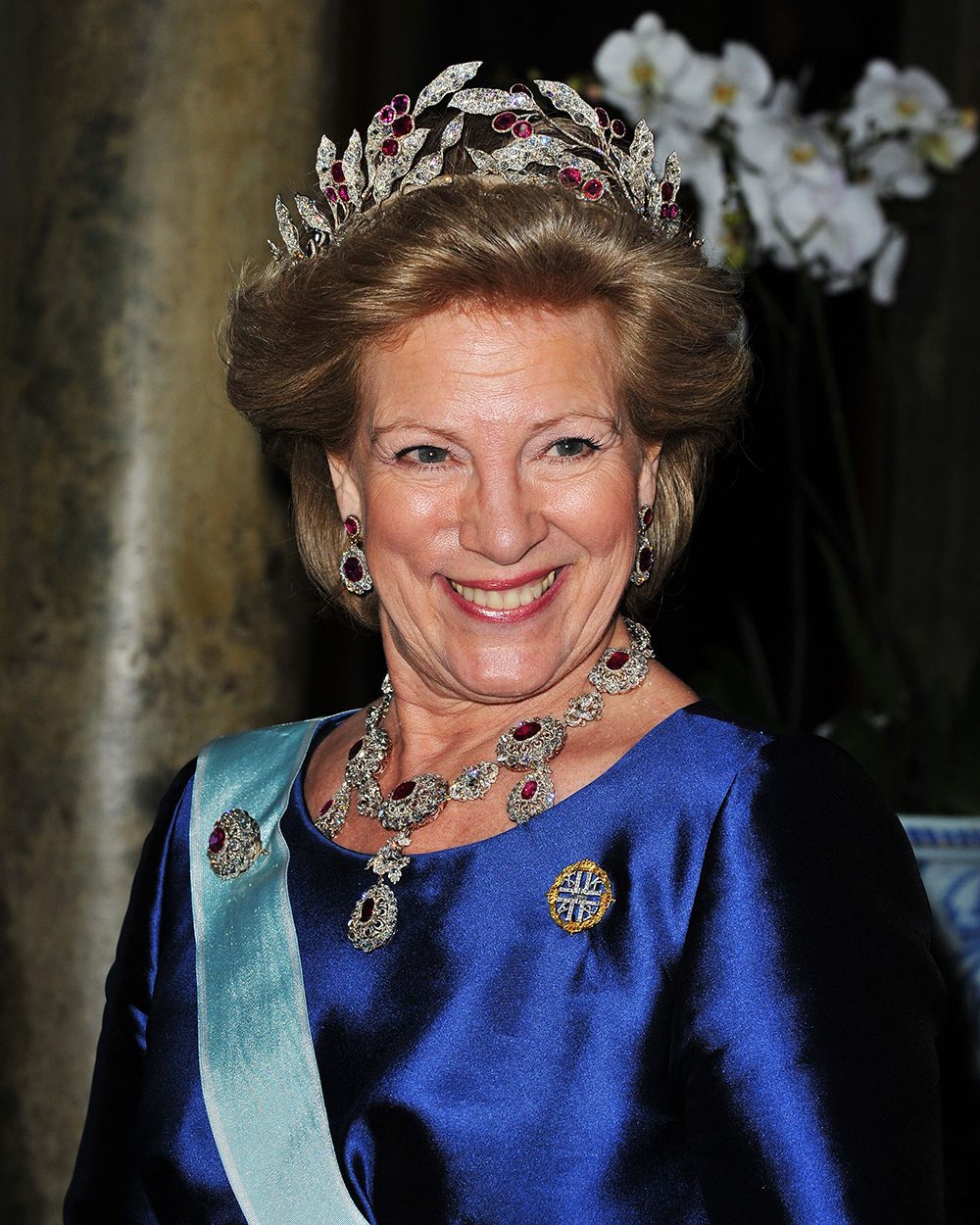
No royal jewelry collection is complete without an extraordinary parure, and this ruby-and-diamond suite is among the Greek royal family’s most spectacular. The Greek Ruby Parure, also known as the Ruby Olive Wreath Parure, was commissioned in the late 19th century by King George I of Greece for his wife, Queen Olga of the Hellenes. The suite includes an olive wreath tiara, a diamond necklace, earrings, and brooches set with natural white diamonds and vivid “pigeon’s blood” rubies—the most prized color in the gemstone.
According to family tradition, after their marriage in 1867, King George purchased a single pigeon’s blood ruby for Queen Olga each anniversary until he had assembled enough stones to create the suite. The tiara is an especially meaningful tribute to Greece, with its graceful olive branch motifs referencing one of the country’s most enduring ancient symbols. The Greek Ruby Parure has remained within the Greek royal family ever since and was passed down to Queen Anne-Marie of Greece for her marriage to King Constantine II in 1964. She has continued to wear the suite throughout her life.
Kulic says, “The Greek Ruby Parure is uniquely personal because it is linked with Queen Olga and the early Greek dynasty. Its olive-wreath design gives it a specifically Greek feeling, while the rubies add warmth and royal drama. It is not a cold ceremonial set; it feels emotional, almost family-owned in spirit.”
The Greek Emerald Parure
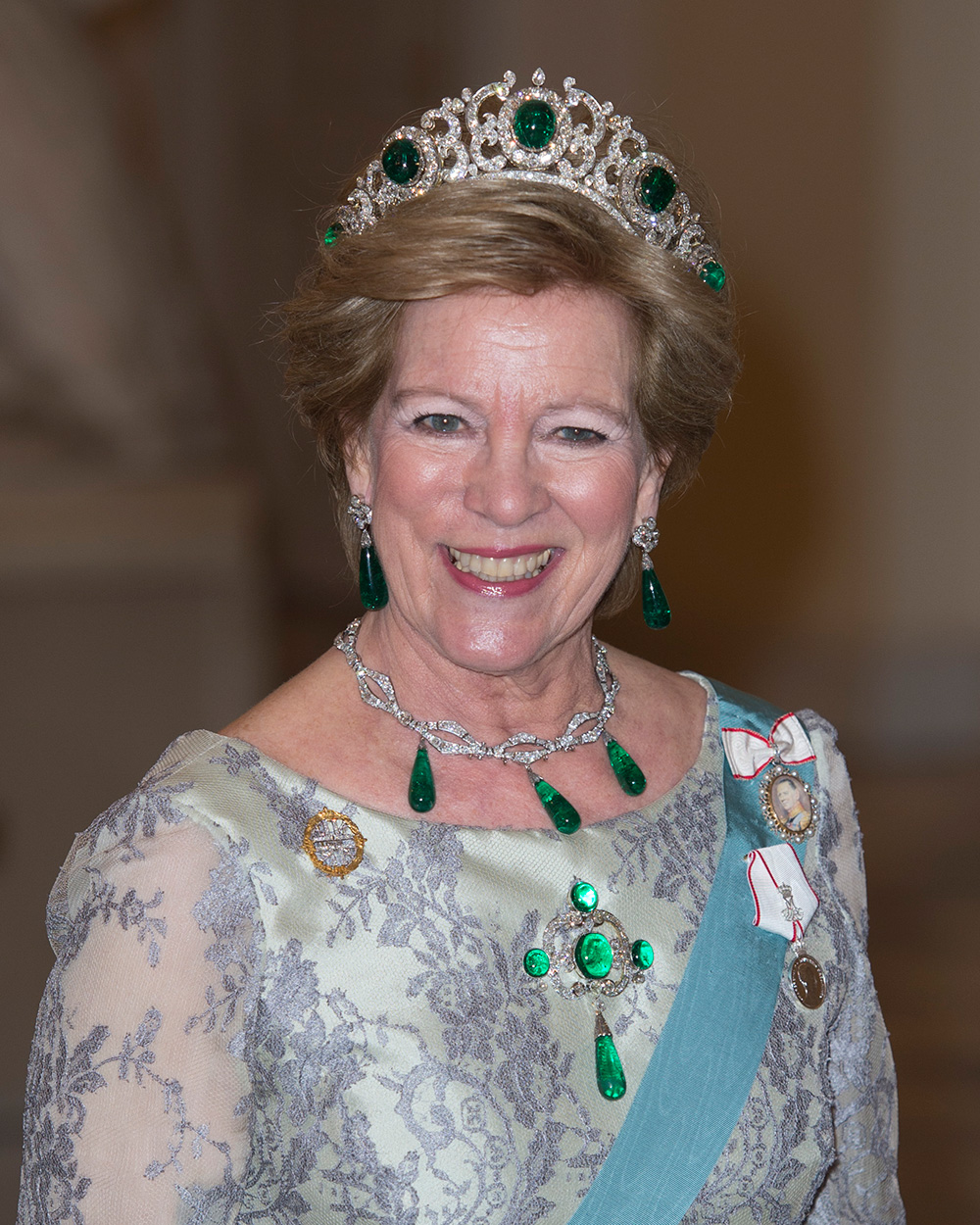
Another extraordinary suite in the Greek royal collection can be traced back to Queen Olga, who arrived in Greece from Russia in 1867 to marry King George I as the 16-year-old Grand Duchess Olga Konstantinovna. She brought with her a collection of loose emerald cabochons, which would later become one of the family’s most remarkable jewel suites.
In the 1920s, Olga’s granddaughter-in-law, Queen Elisabeth of Greece, had many of the round cabochon emeralds mounted into a tiara, brooch, and pair of earrings. The tiara featured a diamond framework set with seven cabochon emeralds, with an interlocking diamond “E” believed to represent Elisabeth—perhaps one of the most glamorous royal monograms ever created. The emeralds could also be removed and transformed into a striking statement necklace. The brooch incorporated three cabochon emeralds with pear-shaped pendant drops that could be suspended from a necklace, while the matching earrings featured pear-shaped emerald drops that could easily be paired with other pieces from the suite.
Princess Anne-Marie wore the tiara from the Greek Emerald Parure in her official wedding portrait, while Queen Frederica of Greece wore the brooch to the 1947 wedding of Princess Elizabeth (later Queen Elizabeth II).
The suite is especially remarkable for its versatility. Nearly every piece can be transformed or worn in multiple ways, making it a masterclass in convertible jewelry. Patricia Curts, jewelry expert and Managing Director of The Mexican Collection, says that transformable designs have always balanced beauty with practicality, allowing royal jewels to be worn across a variety of occasions rather than remaining tucked away in a vault. She believes this adaptability challenges the common perception that historic high jewelry prioritized aesthetics over function. As Curts puts it, “The convertible format is one of the most honest expressions of design intelligence,” requiring the stones, settings, and structure to work seamlessly together in multiple configurations.
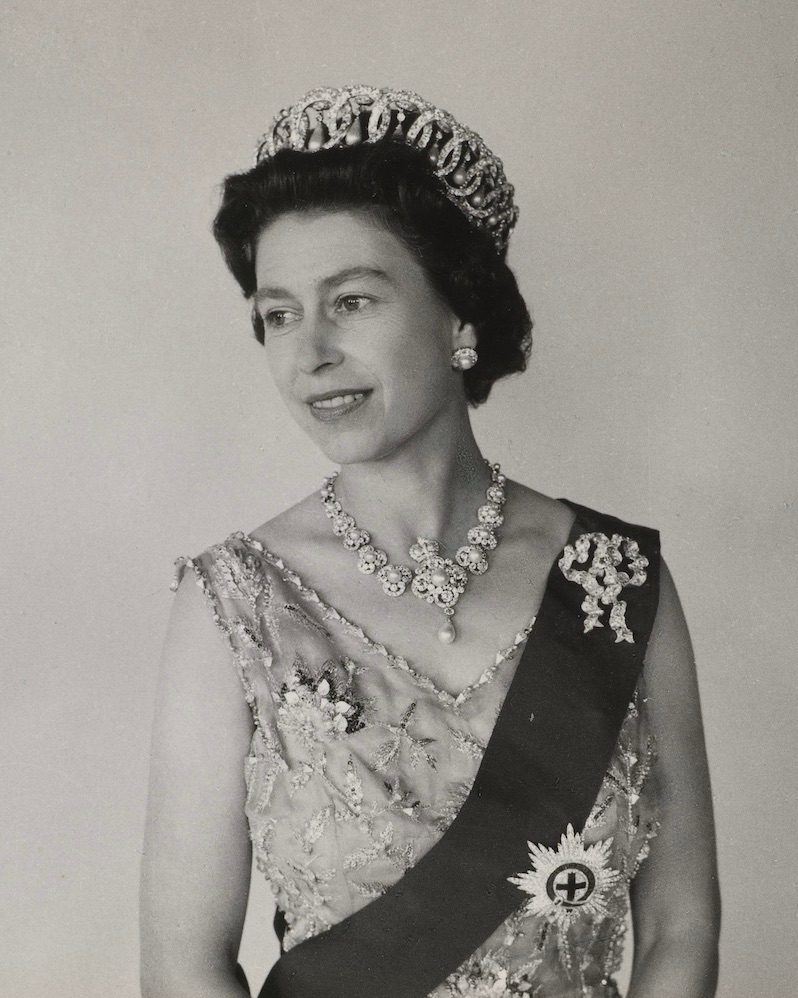
Queen Frederica’s Pearl and Diamond Tiara Necklace
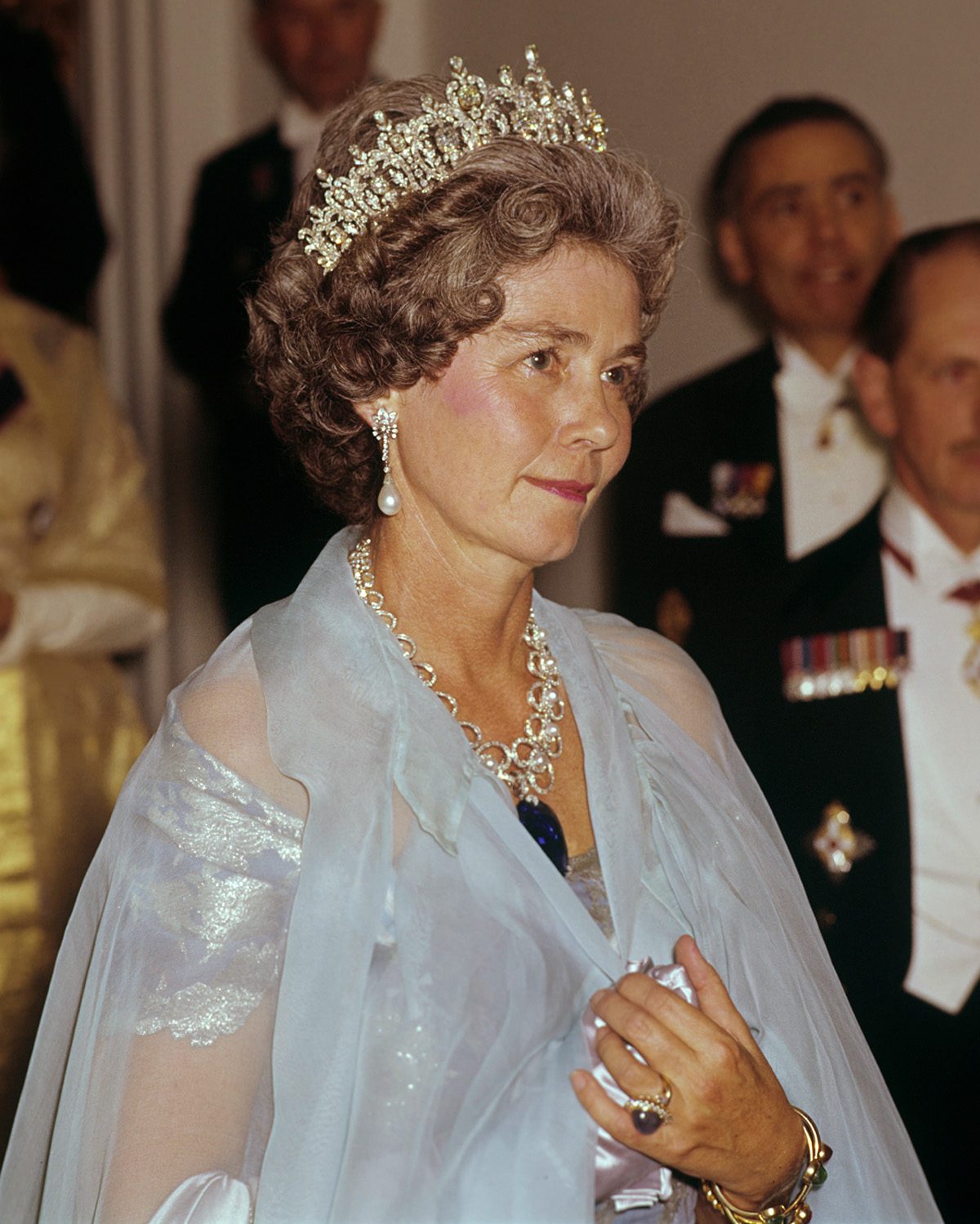
Queen Frederica of Greece was known for her impeccable style, and one of her signature jewels was her convertible pearl-and-diamond tiara necklace. Featuring luminous pearls nestled within elegant diamond scrollwork, the piece could be worn either as a necklace or mounted on a tiara frame, exemplifying the versatility that defines so many jewels in the Greek royal collection.
Believed to have been acquired around 1953, the jewel’s maker and exact provenance remain unknown. Its sleek scrolling lines and airy arrangement of pearls reflect the clean, modern aesthetic of 1950s high jewelry, offering a striking contrast to the more ornate Belle Époque and Edwardian tiaras elsewhere in the collection. Queen Frederica frequently wore it for state visits, gala dinners, and official portraits throughout the 1950s and 1960s, while the addition of pearls softened the more formal look of the family’s diamond tiaras. Princess Irene later continued its legacy by wearing it as a tiara at several major royal occasions.
The Miller Fringe Tiara
Unlike many of the Greek royal family’s historic heirlooms, the Miller Fringe Tiara is a more recent addition to the collection. Inspired by the traditional Russian kokoshnik, the all-diamond tiara features alternating tapering diamond rays that create the dramatic silhouette characteristic of classic fringe designs. Though its maker and exact provenance remain unknown, experts believe it dates to the late nineteenth or early twentieth century. The tiara was acquired by Marie-Chantal’s mother, Chantal Miller, and has become one of the family’s best-known modern jewels. Marie-Chantal wore it for royal gala events throughout the late 1990s and 2000s before passing it on to her daughter, Princess Maria-Olympia, continuing the family’s tradition of diamonds being handed down through generations.
What Greek Royal Diamonds Teach Us About Heirlooms
The Greek royal jewels embody what makes natural diamond heirlooms so enduring. Long after the monarchy came to an end, these diamonds continue to tell a story of love, legacy, family, and history.
The collection also traces the evolution of jewelry design itself, from ancient Greek key and olive wreath motifs to Edwardian diamond scrollwork, romantic Belle Époque florals, kokoshnik silhouettes, and sleek mid-century creations. “Greek royal jewels are not just about diamonds. They are about identity, memory, and the idea that one piece can carry a whole dynasty’s story,” Kulic says.