
Kate Middleton Stuns in the Oriental Circlet Tiara—Her Largest Diamond Tiara Yet
Queen Victoria’s Oriental Circlet Tiara remains one of the most historically significant jewels in the British Royal Collection, recently worn by the Princess of Wales.
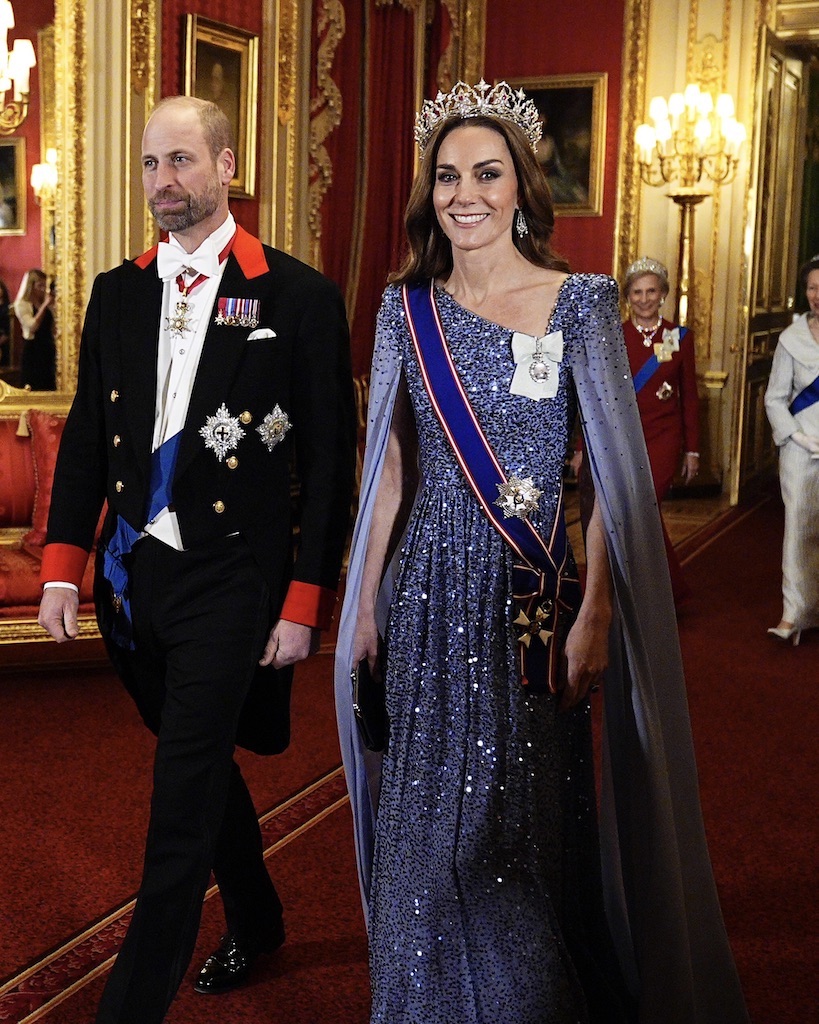
The Prince and Princess of Wales attend the state banquet for the German President Frank-Walter Steinmeier at Windsor Castle on December 3, 2025. (Getty Images)
Queen Victoria’s Oriental Circlet Tiara is one of the most important Victorian-era jewels in the British Royal Collection, celebrated for its intricate design, rich history, and enduring legacy. Recently worn by Kate Middleton, the Princess of Wales, the piece continues to symbolize royal continuity and exceptional craftsmanship.
The Princess of Wales debuted the historic tiara at a state banquet held in honor of German President Frank-Walter Steinmeier and his wife, Elke Budenbender, at Windsor Castle. The appearance marked her fifth tiara moment, introducing one of Queen Victoria’s most storied jewels into her evolving royal rotation.
The evening brought together senior members of the royal family, including Prince William, Queen Camilla, Princess Anne, and Prince Edward, alongside 150 distinguished guests. Held in Windsor Castle’s St George’s Hall, the formal banquet seated the German President between King Charles III and the Princess of Wales, underscoring the significance of the occasion.
Meet the Experts

Sara Prentice is the Chief Creative Officer of Garrard. She has previously worked with an array of luxury jewelry brands like Cartier, Faberge and Graff.

Claire Scott is the Design & Development Director at Garrard. Scott previously held positions like Senior Jewelry Designer and Head of Design at the first official Crown Jeweler. With over 20 years of experience in the luxury jewelry industry, Scott has developed iconic collections and custom commissions at some of the most prestigious jewelry houses in the world.
Kate Middleton Wears the Oriental Circlet Tiara for the First Time
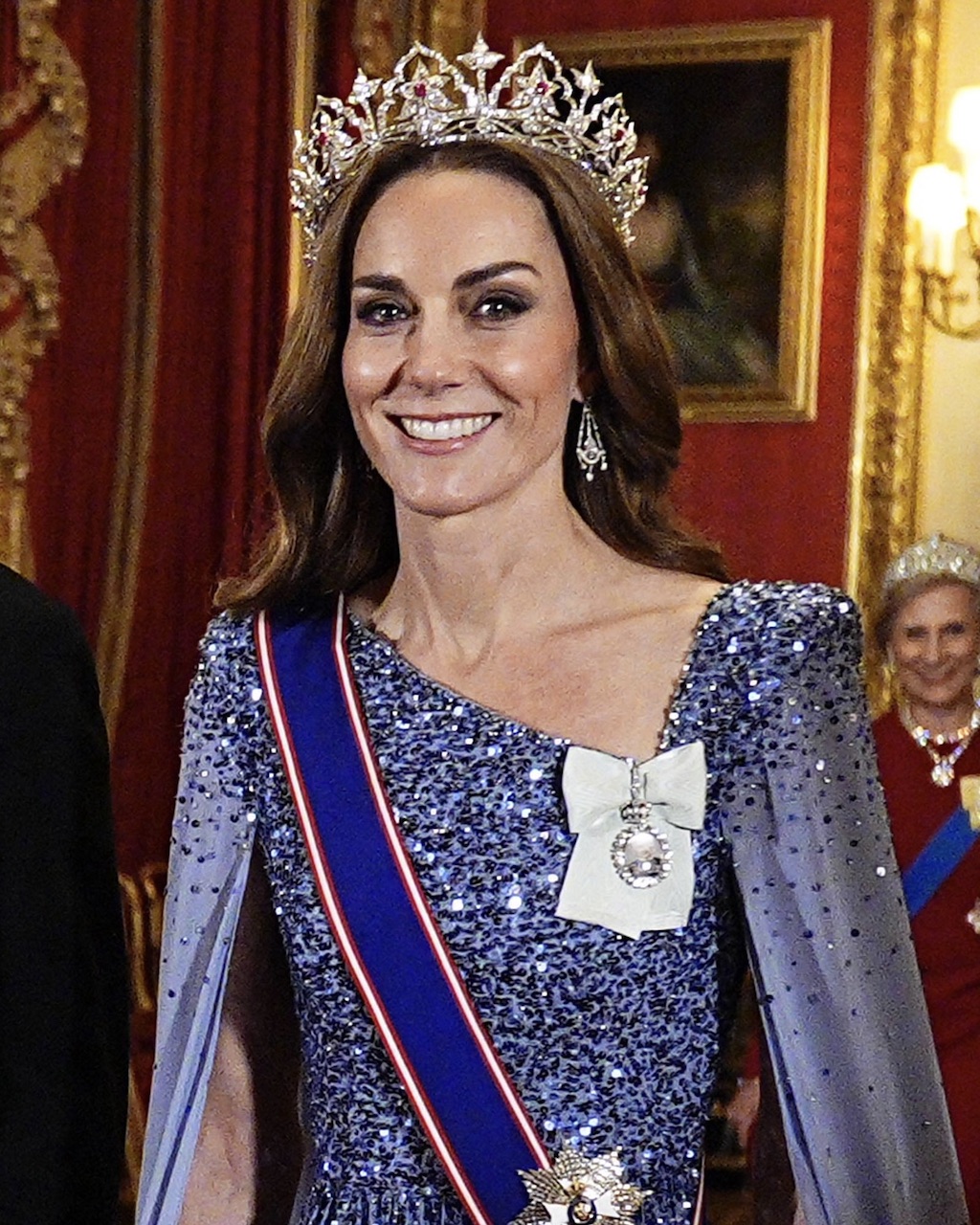
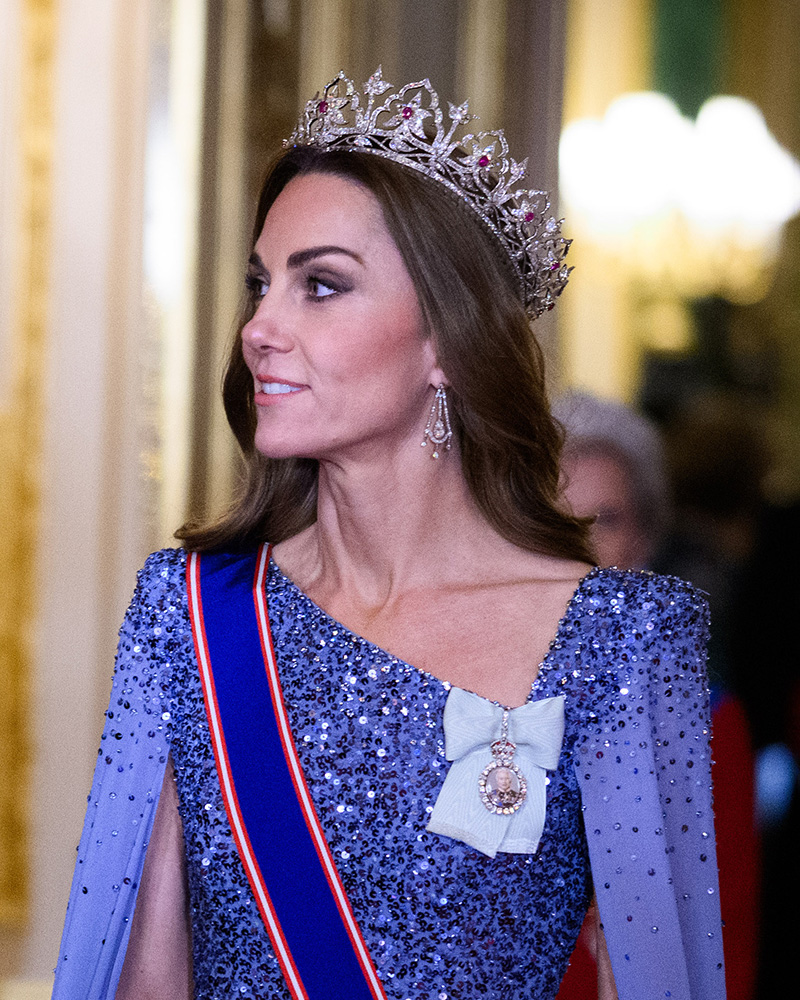
Princess Kate arrived in a shimmering periwinkle blue Jenny Packham gown, diamond chandelier earrings that once belonged to the late Queen Elizabeth II, the Royal Family Order, and the Royal Victorian Order sash and star. But the star of her ensemble came in the form of Queen Victoria’s Oriental Circlet Tiara. Middleton’s third tiara moment of 2025, the German state banquet marked the first time she has ever worn the historic headpiece.
Originally crafted under the direction of Prince Albert, royal experts believe Middleton’s decision to wear the Oriental Circlet Tiara might be a poignant homage to Prince Albert’s German heritage.
Since her 2011 wedding to Prince William, the Princess of Wales has worn a tightly curated selection of tiaras: the Cartier Halo Scroll Tiara, the Lotus Flower Tiara, the Cambridge Lover’s Knot Tiara, the rarely-seen Strathmore Rose Tiara, and now the historic Oriental Circlet. This latest choice expands her royal lineage even further—these storied pieces have been adored and worn by Queen Mary, the Queen Mother, Queen Elizabeth II, Princess Margaret, Princess Anne, Princess Diana, and, with the Oriental Circlet now in her repertoire, Queen Victoria as well.
Her choice to debut the Oriental Circlet Tiara signals a continued evolution in her royal jewelry wardrobe, introducing lesser-seen historic pieces to a modern audience.
The History of Queen Victoria’s Oriental Circlet Tiara
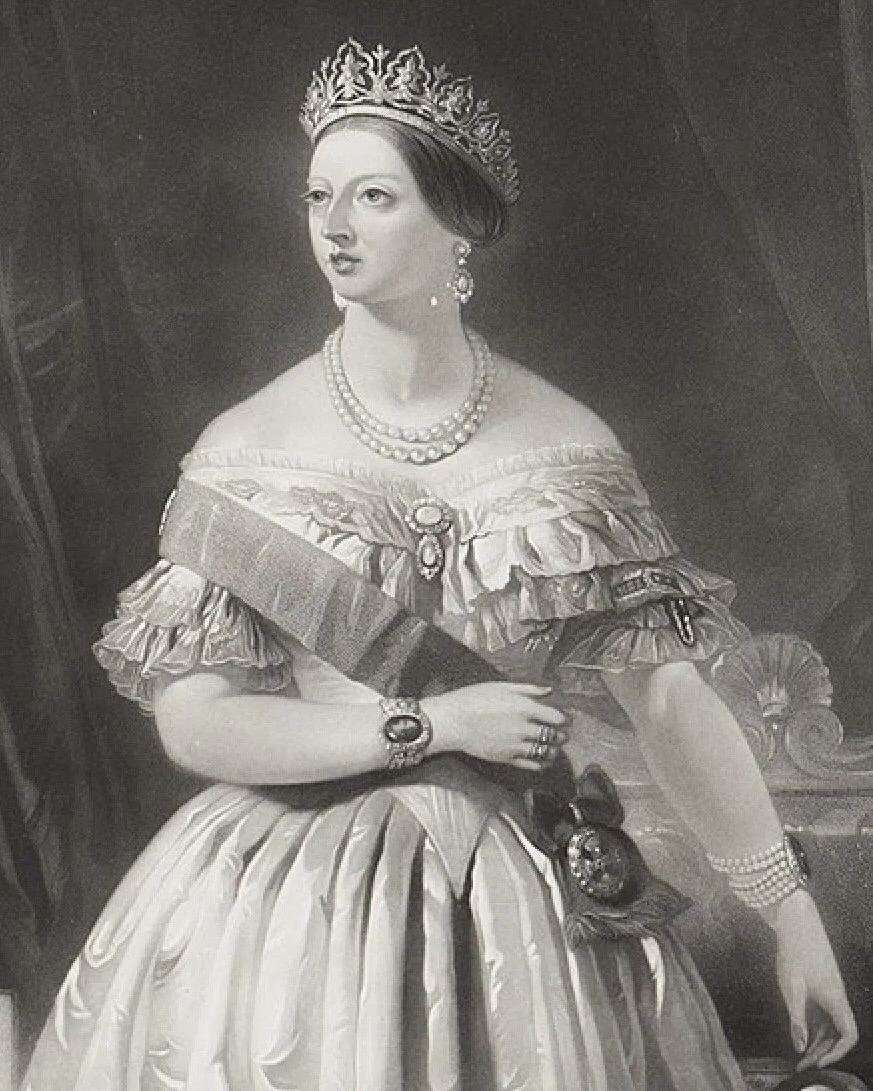
The first official Crown Jeweler, Garrard was commissioned to create Queen Victoria’s Oriental Circlet Tiara in 1853 by Queen Victoria, and was designed under the direction of her husband, Prince Albert. The royal jewel is said to embody the couple’s shared love of art, architecture, and design.
The tiara was originally set with 2,600 natural diamonds and a collection of opals, one of Prince Albert’s favorite gemstones. Said to have been inspired by the jewels presented to Queen Victoria by the East India Company, the tiara’s Mughal-inspired design includes lotus flower motifs and regal arches.
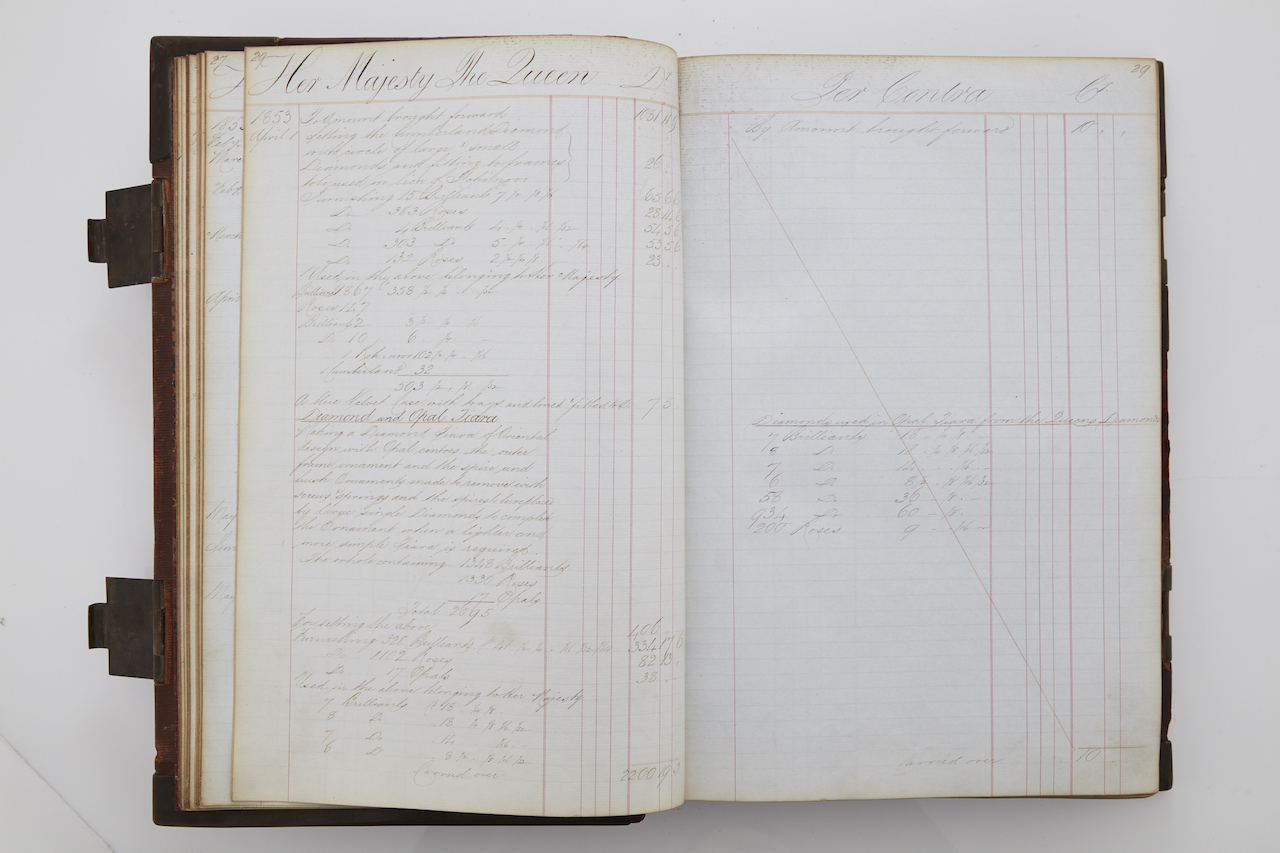
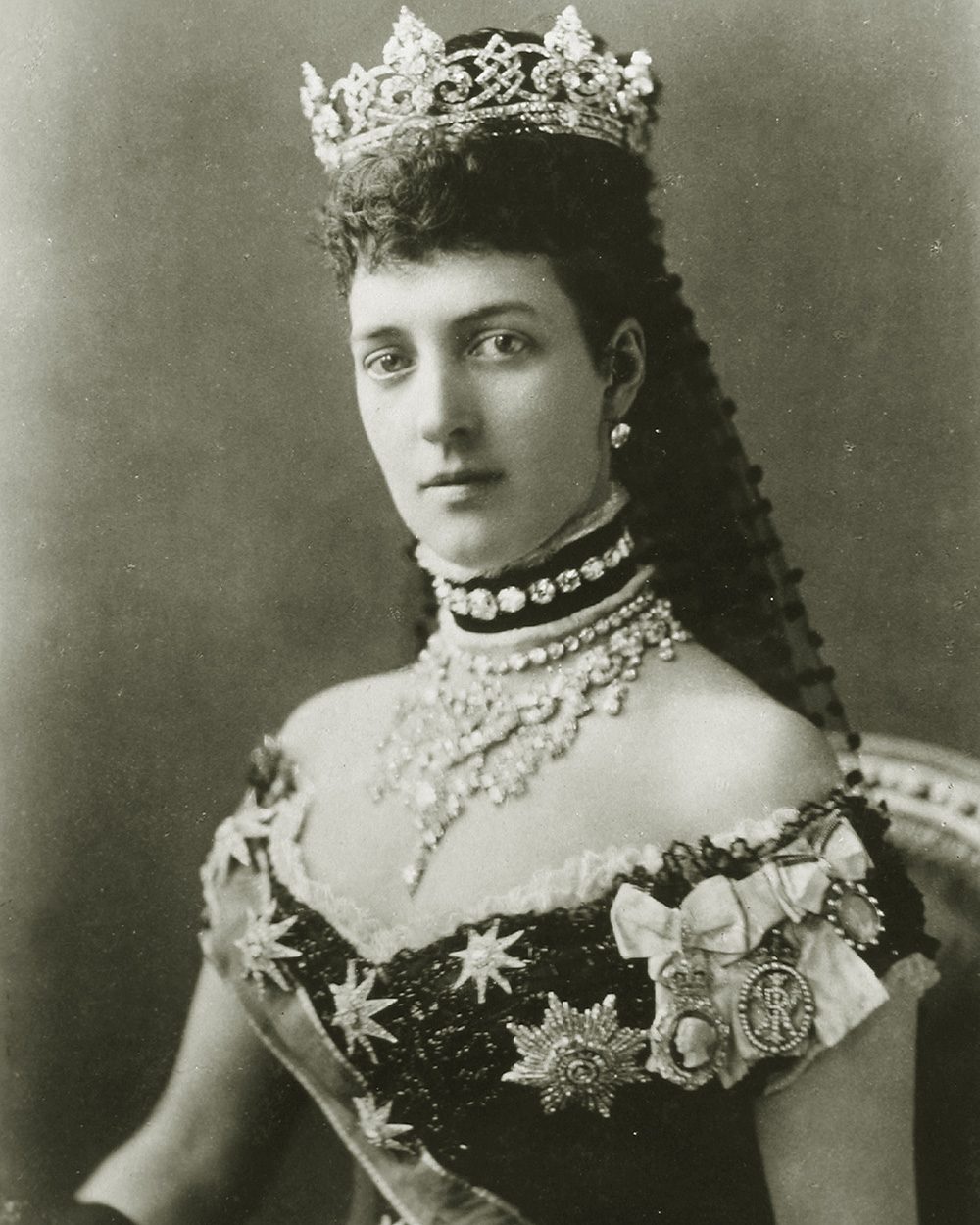
When the tiara was inherited by Queen Alexandra in 1901, she requested Garrard make a few alterations. Alexandra believed opals to be unlucky, so she had them replaced with a sprinkling of Burmese rubies from Victoria’s collection. She also reduced the number of arches from seventeen to eleven sections.
The Oriental Circlet Tiara’s Royal Lineage

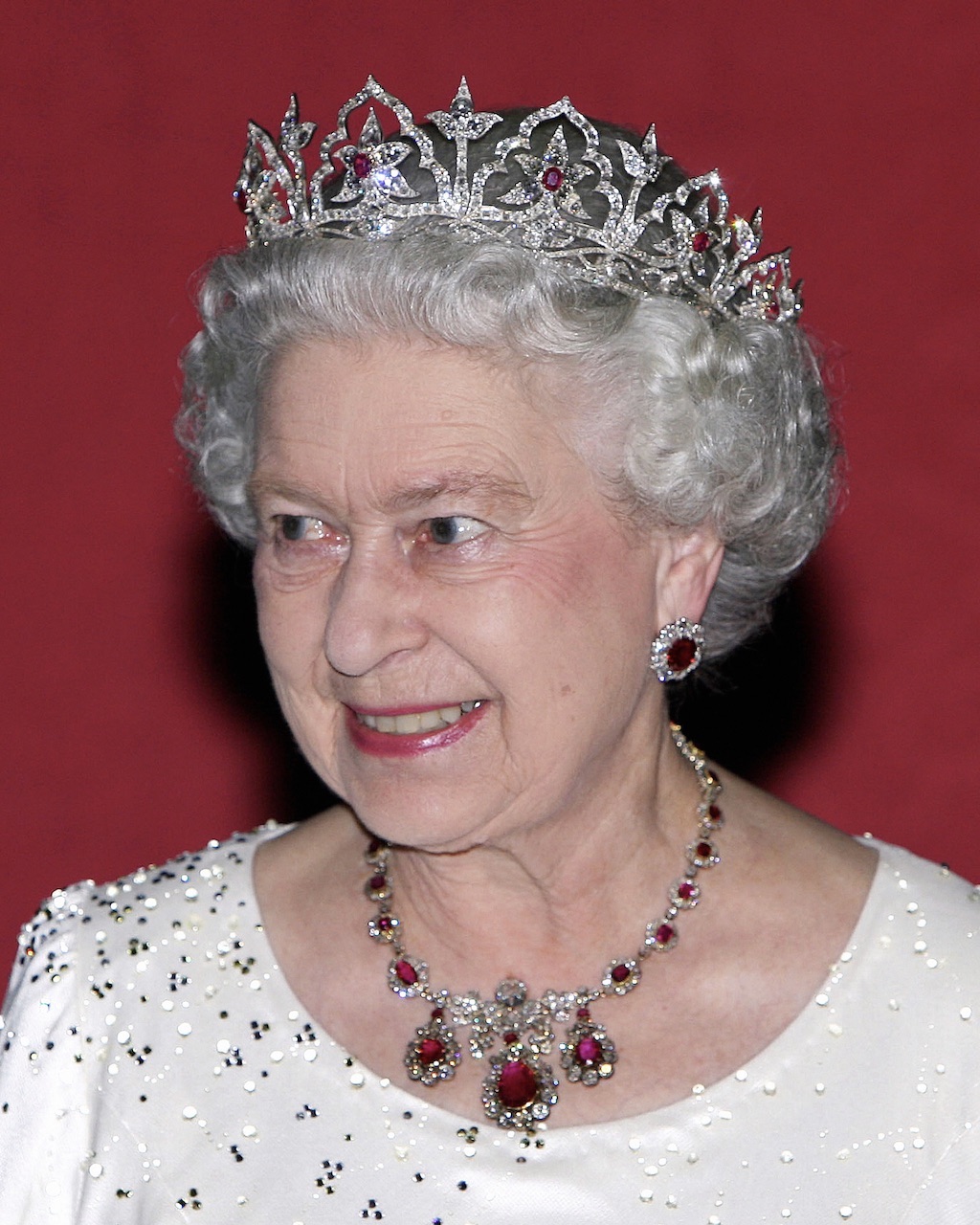
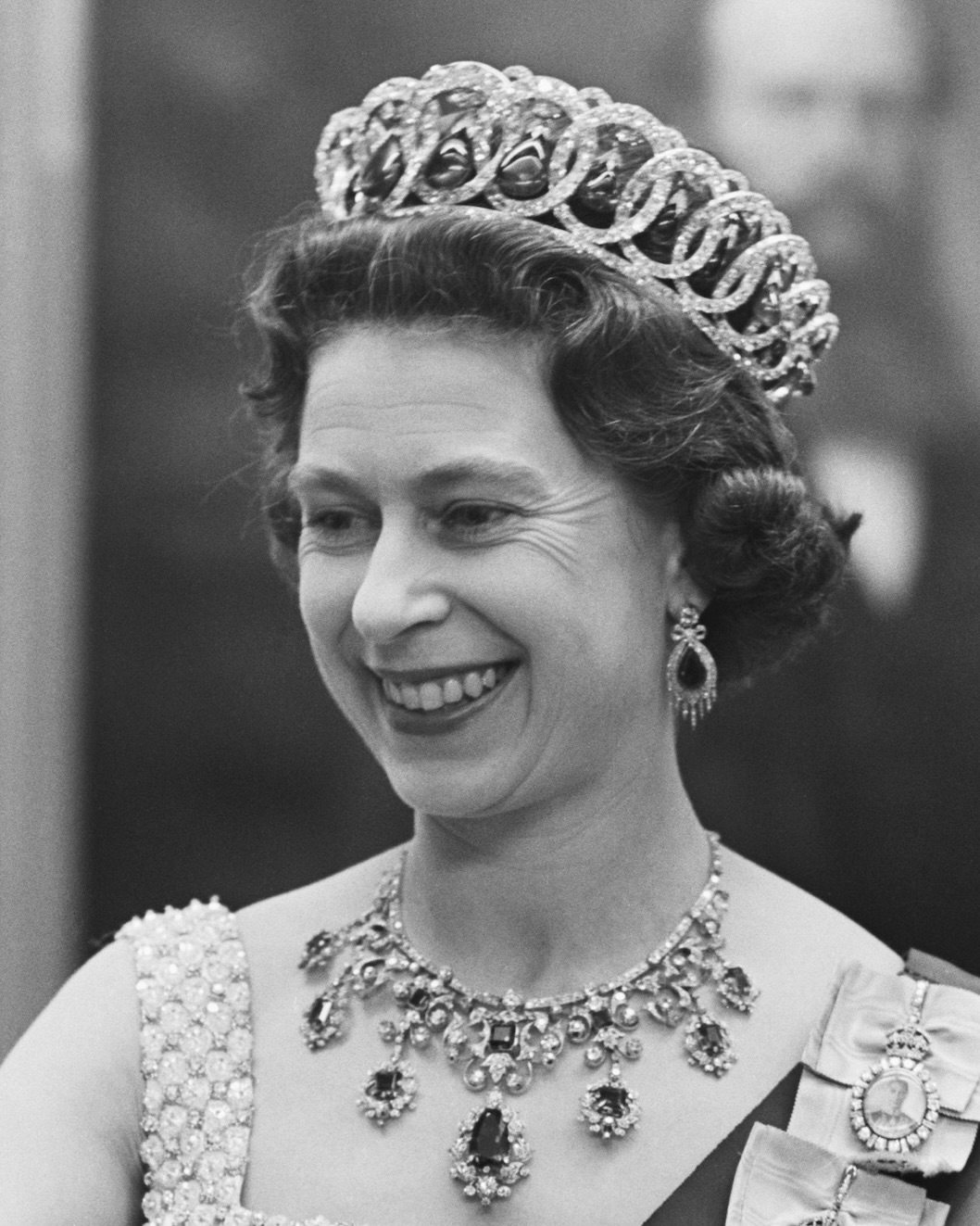
In 1936, the Oriental Circlet was passed down to Queen Elizabeth, later the Queen Mother, who revived the jewel’s prominence by wearing it frequently. She was photographed in the tiara countless times, including in iconic Cecil Beaton portraits, and her likeness in the piece even appeared on currency and stamps. The Queen Mother also chose the historic tiara for the eve of Queen Elizabeth II’s coronation in 1953, further cementing its royal significance.
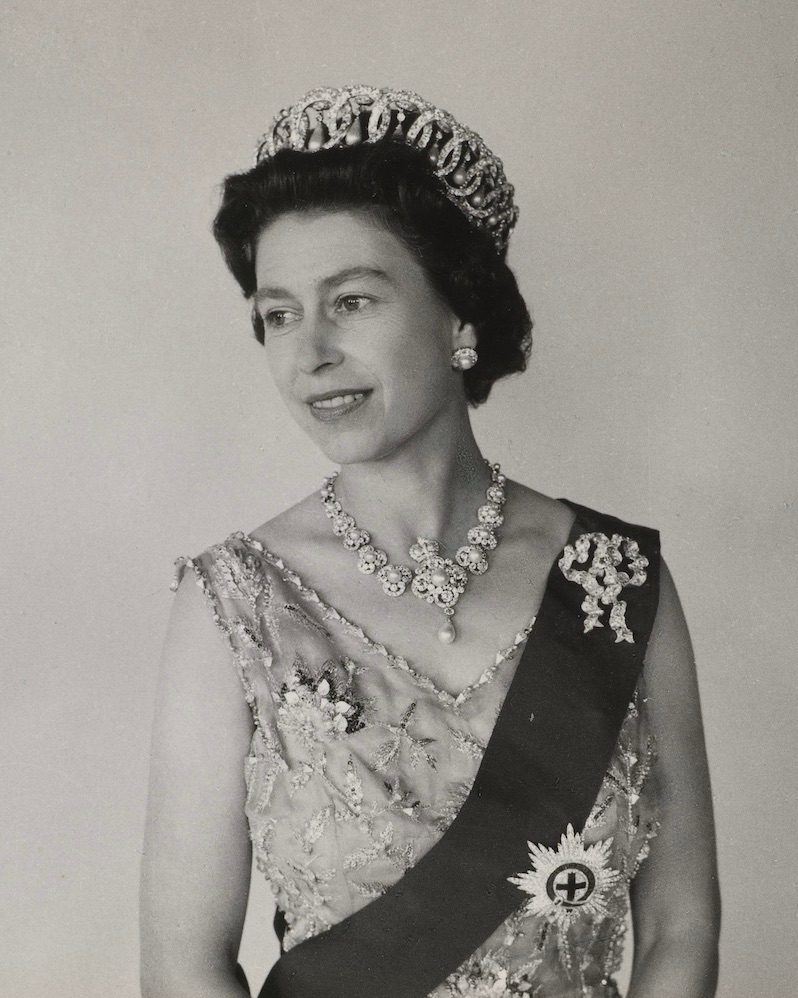
After her passing in 2002, the tiara was passed from the Queen Mother to Queen Elizabeth II, who wore it once during her reign on a state visit to Malta in 2005.
Why Kate Middleton’s Tiara Choices Matter

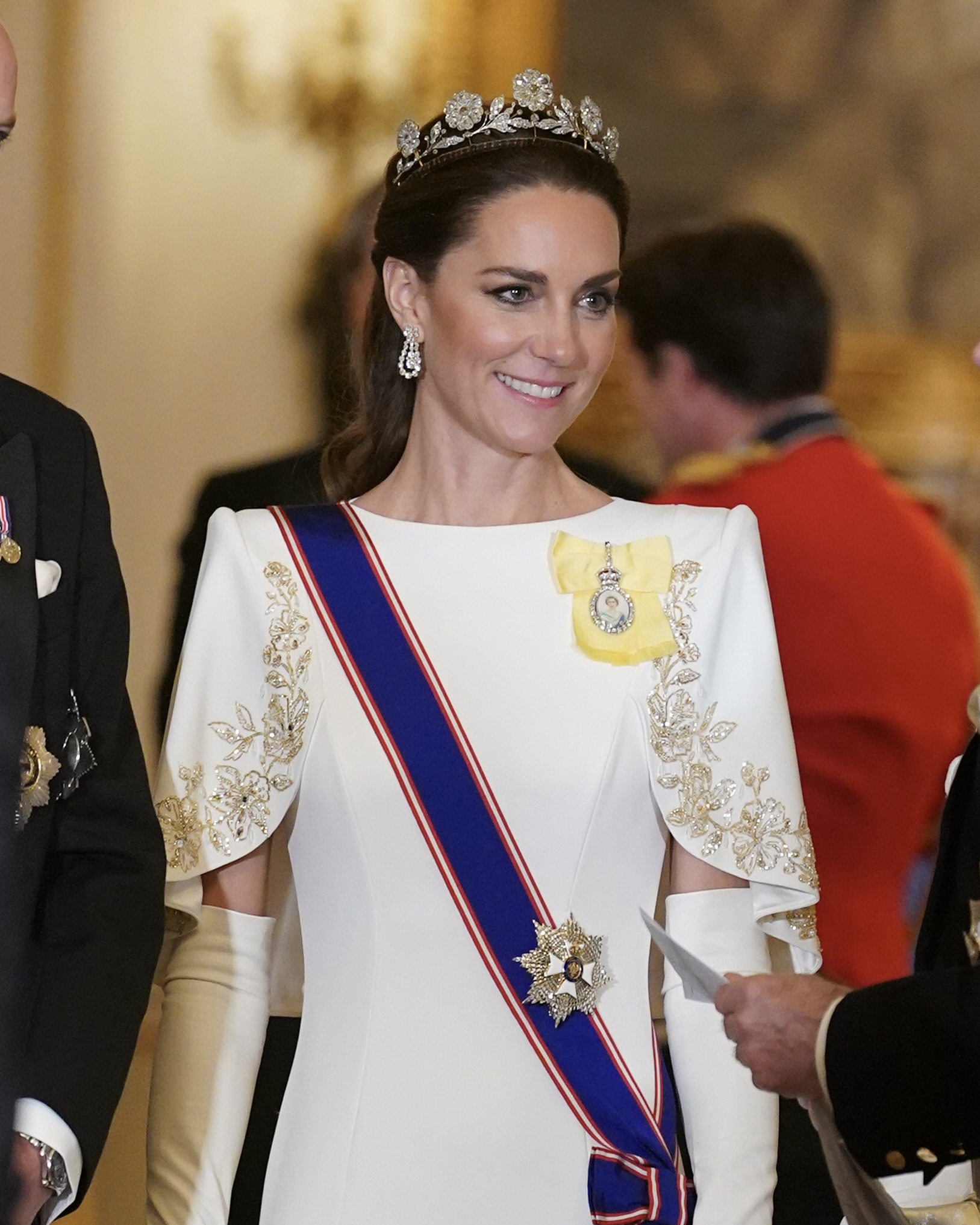
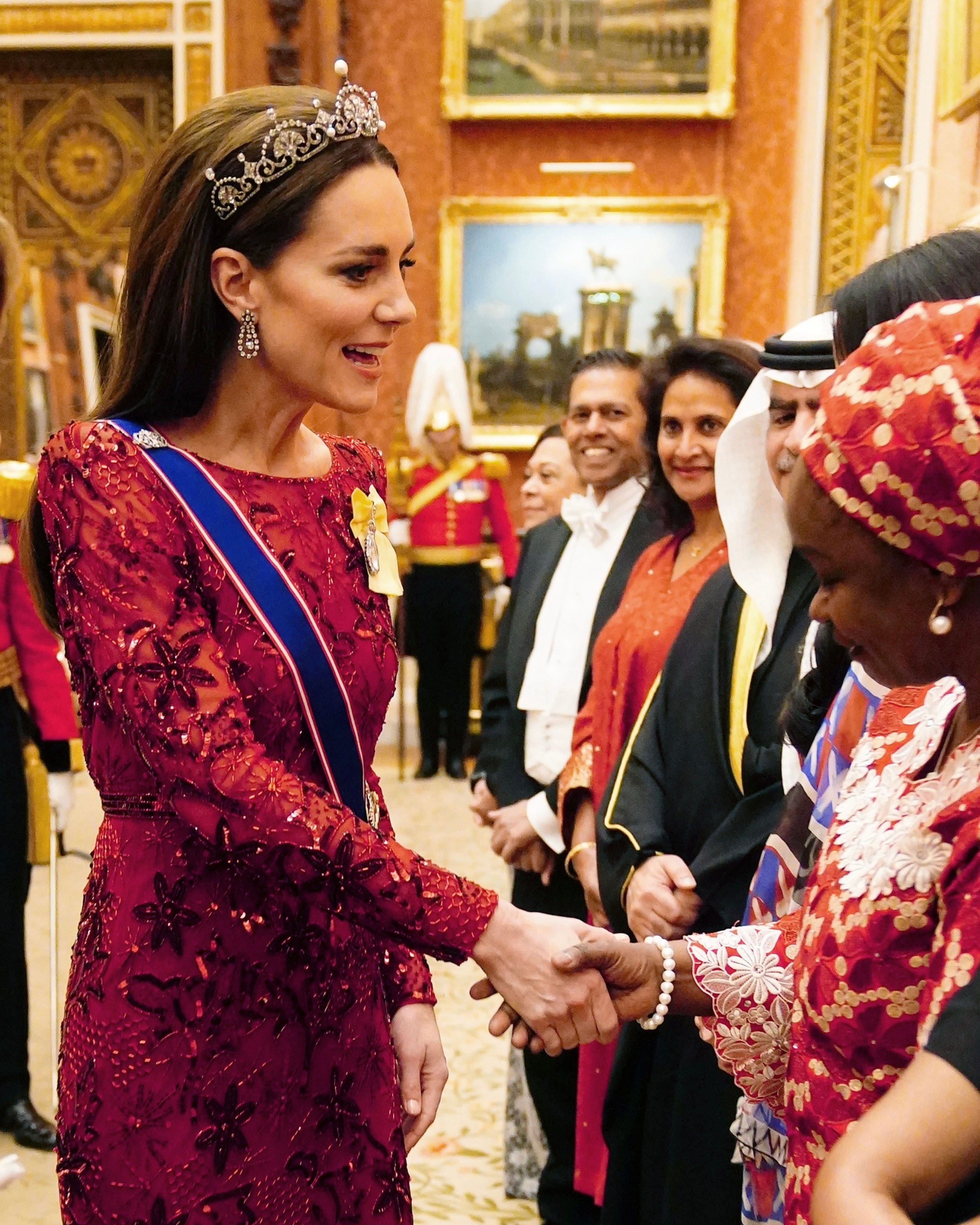
Kate Middleton’s tiara selections often reflect a balance between tradition and modernity, introducing historic royal jewels to new generations while reinforcing continuity within the monarchy. Her choices are rarely incidental, instead serving as subtle signals of heritage, diplomacy, and evolving royal identity.
By choosing the Oriental Circlet Tiara, she highlights a lesser-known but historically rich piece, aligning with a broader shift toward rediscovering archival royal jewelry. This approach extends beyond tiaras: she frequently rewears and reinterprets significant pieces such as the Greville Chandelier Earrings, Queen Elizabeth II’s diamond and pearl earrings, and historic brooches from the royal collection, each time placing them in a modern context.
In doing so, she not only expands her own royal jewelry narrative, but also brings renewed relevance to pieces that might otherwise remain largely unseen
What Makes Victorian Tiaras Unique
Victorian tiaras are distinguished by their intricate craftsmanship, symbolic motifs, and use of natural diamonds in ornate, often architectural designs. Floral elements, scrollwork, and celestial motifs were common, reflecting both romanticism and a fascination with nature, while advances in diamond cutting allowed for increasingly luminous, dimensional pieces.
Pieces like the Oriental Circlet reflect a period when jewelry design drew inspiration from global influences, particularly Mughal and Indian aesthetics, resulting in lotus motifs, repeating arches, and richly layered compositions. In contrast, later Art Deco tiaras such as the Fringe Tiara favored by Queen Mary and Queen Elizabeth II, and sleek bandeau styles by houses like Boucheron and Chaumet, embrace symmetry, geometric lines, and a more streamlined, modern sensibility.
The Legacy of the Oriental Circlet Tiara Today
Garrard considers Queen Victoria’s Oriental Circlet Tiara one of the most important Victorian-era jewels in the Royal Collection and among the earliest and most significant tiaras created by Garrard for the British Royal Family.
“The Oriental Circlet is an extraordinary example of both artistry and technical skills,” says Garrard Design and Development Director, Claire Scott. “Designed for opals and later adapted for rubies, its evolution reflects not only the changing tastes of its royal custodians but the craftsmanship and precision that define Garrard. Adjusting the arches and replacing the stones required exceptional finesse, a flexibility in design that remains central to our work today, whether creating bespoke jewels or reimagining heritage pieces for new generations.”
According to Sara Prentice, Chief Creative Officer of Garrard, “It’s wonderful to see the hugely positive response to this particular Garrard tiara. A new generation who value permanence are reshaping and rediscovering each iconic Garrard creation. It inspires us to shape brilliance for today’s great love stories.”