
The Swedish Crown Jewels Are a European Dynasty Told Through Diamonds
These jewels aren’t frozen in time. The Swedish Crown Jewels are a living archive of royal marriages, political alliances, and spectacular natural diamonds still worn by Sweden’s queens and princesses today.
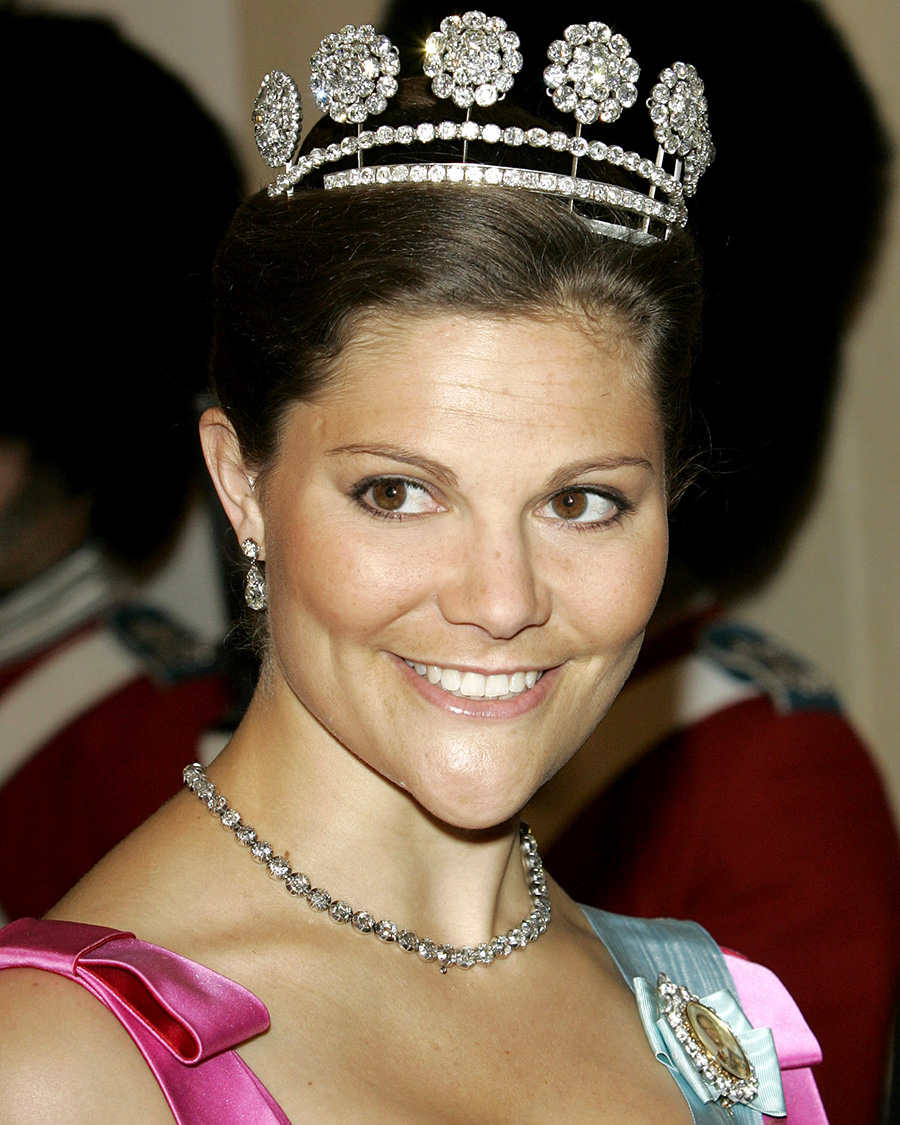
Victoria Of Sweden -Gala Dinner At Christiansborg In Copenhagen During The Swedish State Visit To Denmark. (Photo by Mark Cuthbert/UK Press via Getty Images)
Though the British Crown Jewels may be the most famous royal jewels in Europe, the Swedish Crown Jewels and Royal Collection can certainly hold their own. From towering diamond tiaras and Napoleonic cameos to sapphire parures and historic diamond stomachers, Sweden’s royal jewelry collection spans more than 250 years of European history. Unlike many royal collections, however, these jewels are not museum pieces. They remain active parts of royal life, regularly worn by Queen Silvia, Crown Princess Victoria, Princess Madeleine, and Princess Sofia.
Meet the Experts

Justin Daughters is the Director of Berganza, a UK-based antique and vintage jewelry dealer renowned for sourcing and presenting rare, museum-quality pieces. With a deep expertise in historic jewels, Daughters oversees a collection distinguished by exceptional provenance and authenticity.

Zuleika Gerrish is an antique, vintage, and fine jewelry expert as well as a gemmologist and co-founder of Parkin and Gerrish with her husband, Oliver. Alongside running Parkin & Gerrish, she lectures on historic jewelry, sharing her expertise with new audiences.
Ahead, discover the extraordinary natural diamonds of the Swedish Crown Jewels.
What Are the Swedish Crown Jewels?
The term “Swedish Crown Jewels” actually refers to two distinct collections. The first is the official Crown Regalia of Sweden—crowns, scepters, and ceremonial objects used for coronations and state occasions. The second, and perhaps more fascinating, is the Swedish Royal Jewelry Collection: an extraordinary assemblage of tiaras, necklaces, earrings, brooches, and parures belonging largely to the Bernadotte Family Foundation.
According to Justin Daughters, Director of Berganza, what distinguishes the Swedish royal jewels from their European counterparts is the way they are preserved and worn. Established through a 19th-century fideicommissum by King Oscar II, the Bernadotte Family Foundation ensures that many of the family’s historic jewels cannot be sold, divided, or inherited by individuals. Instead, Daughters says, they exist as “a collective, wearable archive,” allowing generations of Swedish royal women to share and reinterpret the same historic jewels.
The History of Sweden’s Royal Jewelry Collection
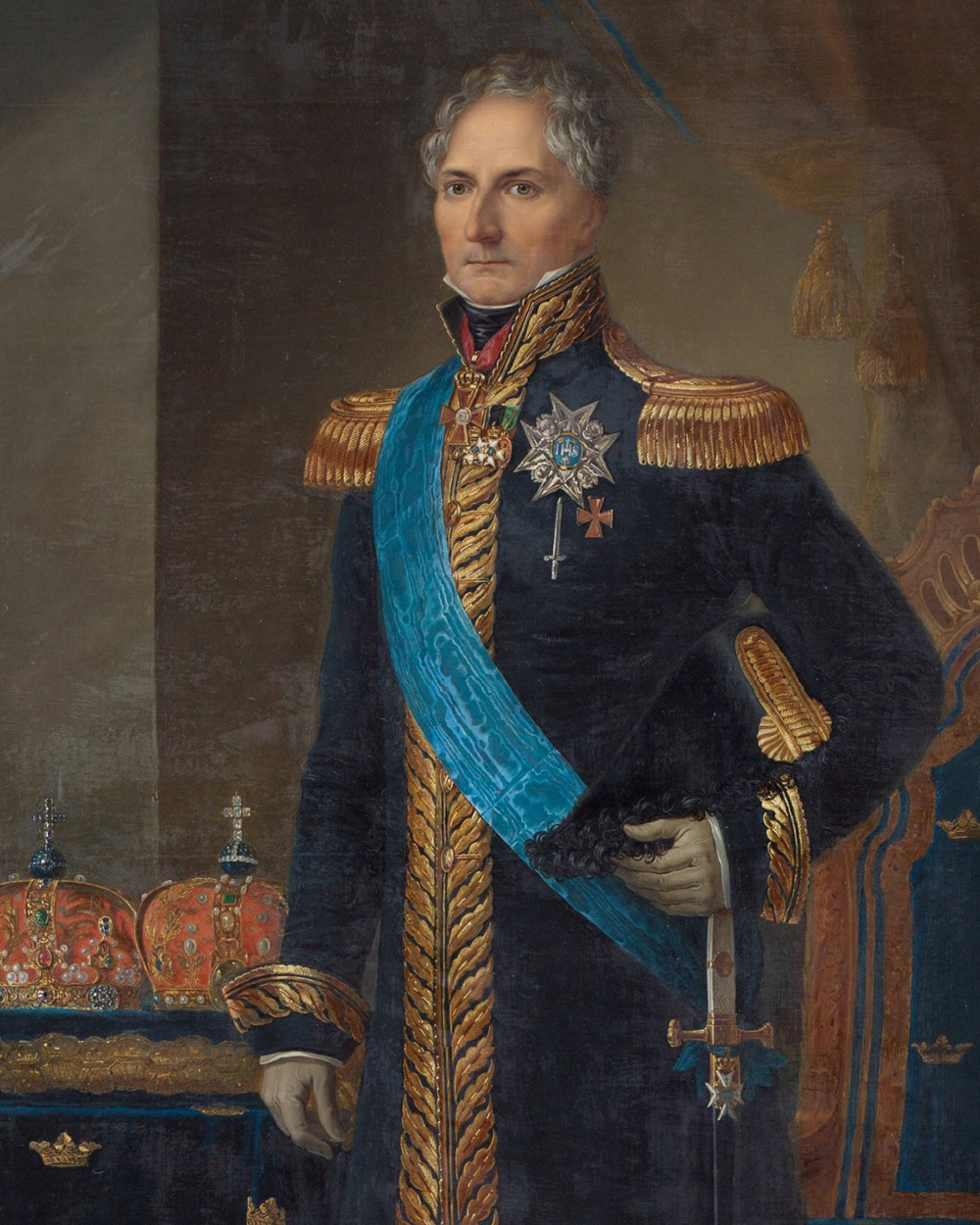

Unlike many royal jewelry collections built over centuries through inheritance and dynastic marriage alone, Sweden’s collection is closely tied to the House of Bernadotte. The dynasty began in 1818 when Jean-Baptiste Bernadotte, a French military commander and former marshal under Napoleon Bonaparte, became King Karl XIV Johan of Sweden and Norway.
Much of the collection’s Napoleonic glamour entered the Swedish royal family through Queen Josefina, granddaughter of Empress Joséphine, Napoleon’s first wife. Through these French imperial connections—as well as later royal marriages linking Sweden to Brazil, Russia, Britain, Baden, and Leuchtenberg—extraordinary jewels entered the collection and remain in royal use today.
Jewelry historian and Parkin & Gerrish co-founder Zulieka Gerrish describes the collection as “a European dynastic archive in gemstones.” She notes that, unlike many royal collections, Sweden’s jewels continue to evolve with each generation: “The collection is not sitting in a museum case; it is continually reinterpreted by each generation while still carrying centuries of royal history.”
The Extraordinary Jewels That Define Swedish Royalty
Queen Louisa Ulrika’s Diamond Crown: The Crown That Changed Royal Jewelry
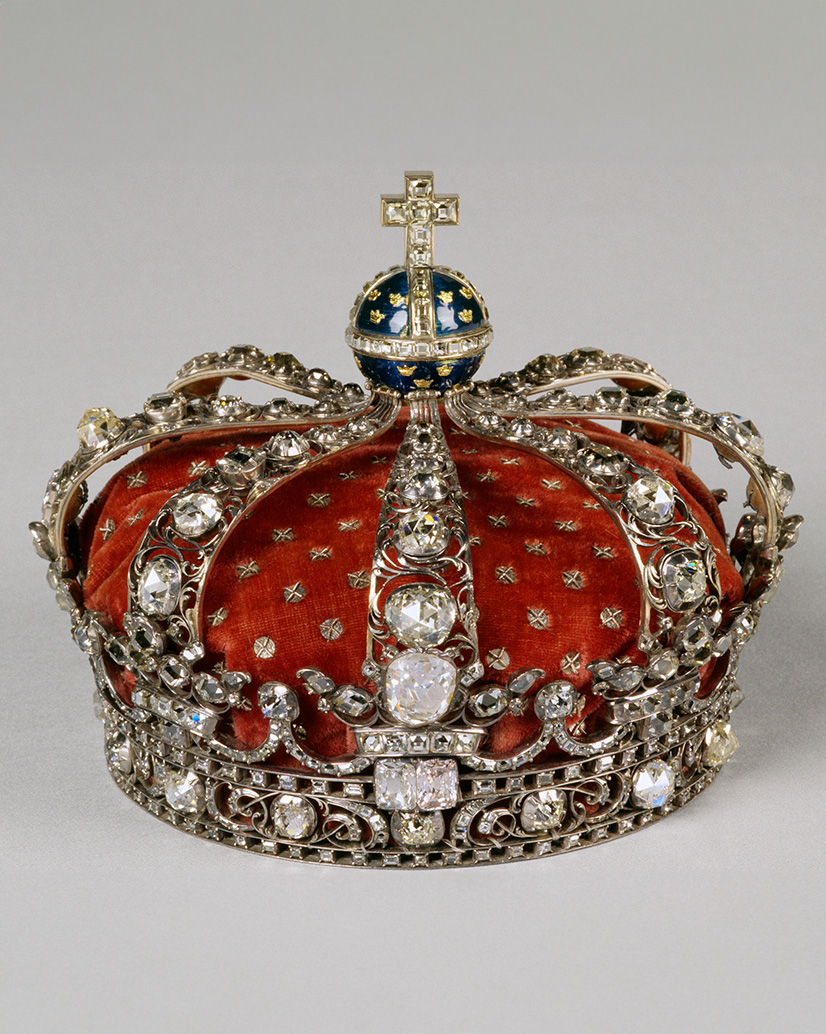
An all-diamond design was considered radical when it debuted at the 1751 coronation of Queen Louisa Ulrika, according to Daughters. Created by Stockholm court jeweler Jean Fredman, it marked a departure from traditional coronation crowns, which were typically heavy, closed gold structures adorned with colored gemstones and symbolic enamel.
Daughters explains that Louisa Ulrika’s crown rejected this heavy aesthetic in favor of an open framework set entirely with brilliant-cut diamonds set in silver. He notes that it represented both the Enlightenment and the growing appreciation for diamond brilliance, signaling that the Swedish court was at the forefront of luxury, gemstone cutting, and French-influenced taste in 18th-century Europe.
Queen Sofia’s Nine-Prong Tiara: Sweden’s Crown of Light
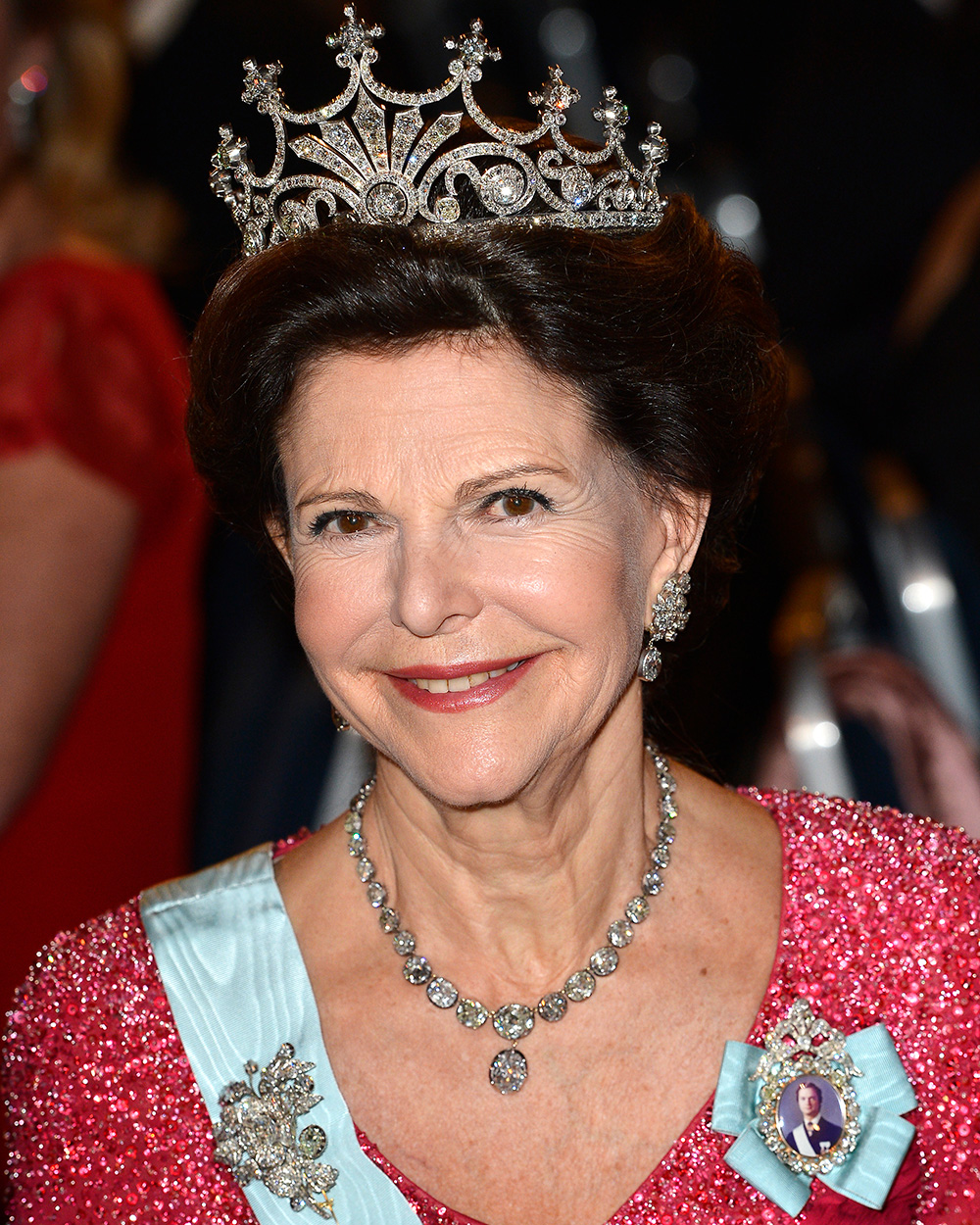
A defining jewel of the Swedish royal collection, Queen Sofia’s Nine-Prong Tiara was created around 1860 and remains one of the collection’s most recognizable pieces. Daughters calls it an enduring masterpiece because it is a “pure, unadulterated exploration of diamond fire.”
Rather than relying on colored gemstones, the tiara derives its impact entirely from an intricate arrangement of diamond scrolls, stars, and a dramatic central sunburst rising into nine towering diamond prongs. Daughters notes that all-diamond tiaras possess a unique versatility because they are not tied to any particular color palette. He adds that the rising sunburst motif creates “a literal crown of light,” helping the jewel remain a symbol of Swedish queenly majesty for more than 160 years.
The Braganza Tiara: Sweden’s Diamond Colossus
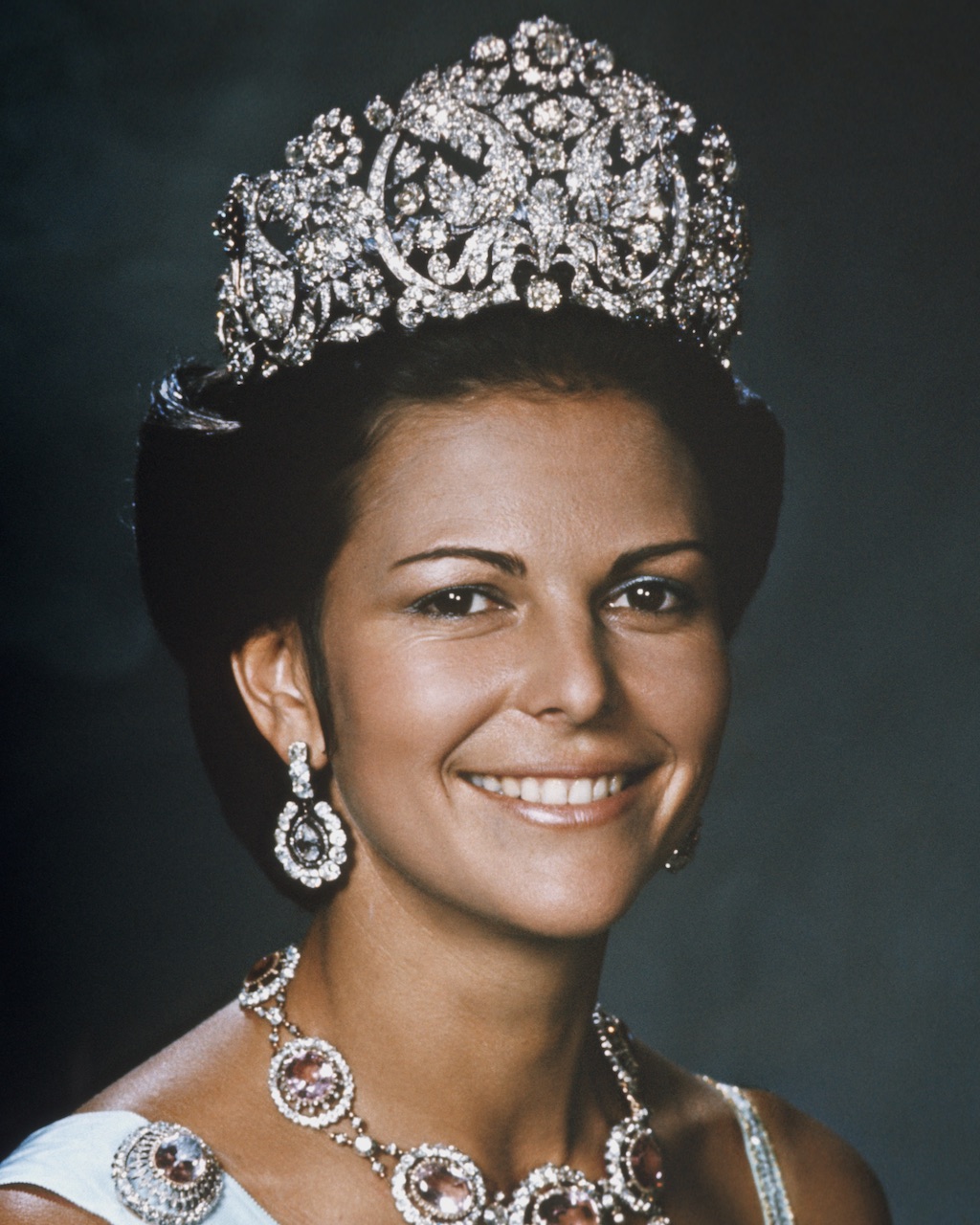
This famously heavy and tall tiara (nearly five inches) entered the family in the 19th century when it was commissioned around 1829 by Emperor Pedro I of Brazil as a wedding gift for his second wife, Empress Amélie of Leuchtenberg. Daughters refers to it as the ‘heavyweight champion’ of the tiara world, due to its imposing size and hundreds of carats of Brazilian natural diamonds. He calls it a masterpiece of multi-dimensional silver and gold openwork, featuring intricately tiered neoclassical arabesques, foliage, and French-style floral motifs. “It forms a solid wall of pure diamond fire that completely dominates the room, making it a jewel reserved strictly for Queens,” he says.
Gerrish adds that a tiara of that size has to be engineered as much as designed: the frame must support an extraordinary quantity of diamonds, create height and splendour, and still sit securely on the head. “That is why it remains a tiara reserved for only the grandest occasions, including Queen Silvia’s official portraits. It also has a very personal resonance for her: a Brazilian imperial tiara worn by a queen whose mother was Brazilian, making it not only one of the great European diamond tiaras, but one of the most meaningful jewels in the Swedish royal collection.”
The Connaught Diamond Tiara: The Most Modern Edwardian Tiara
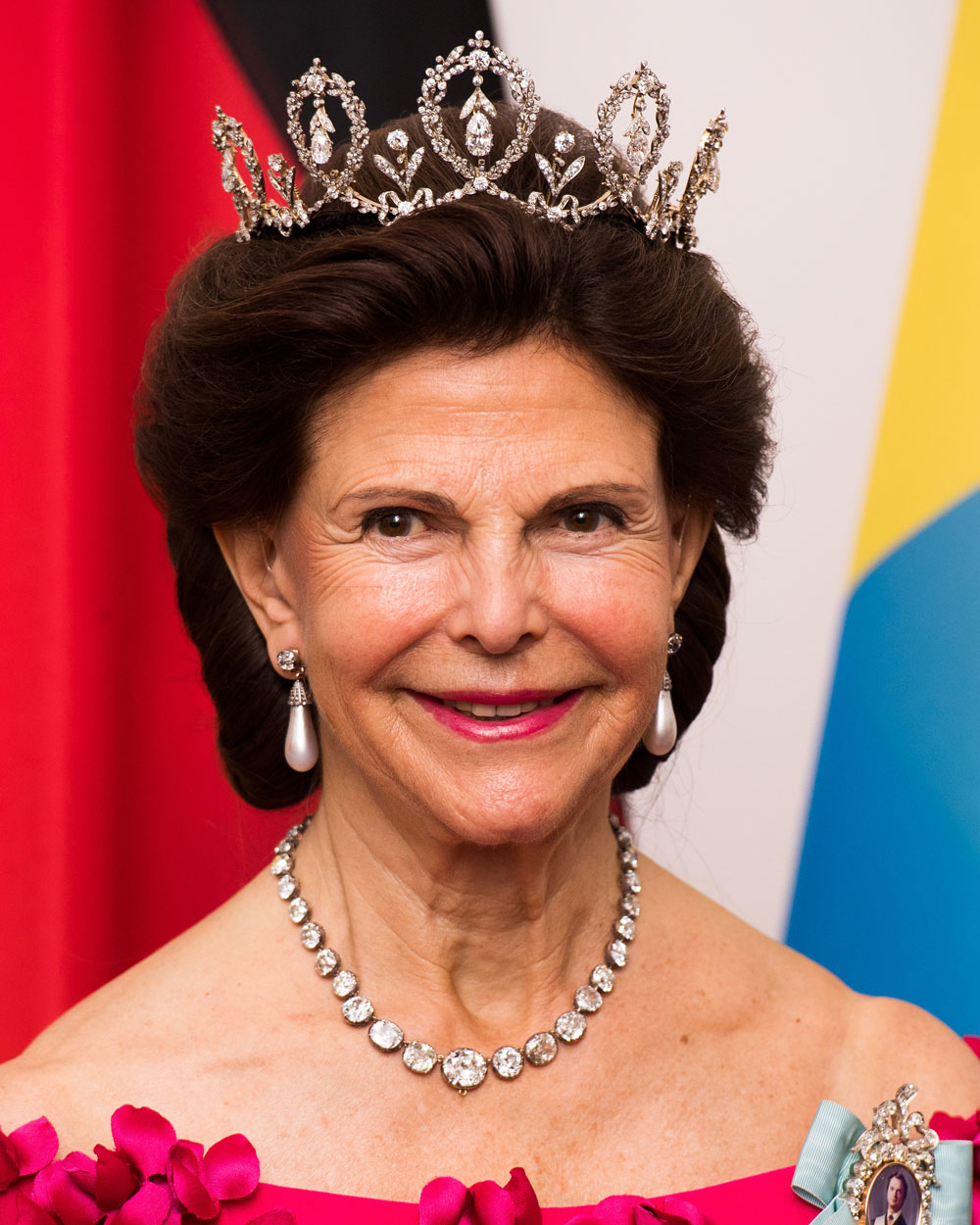
Commissioned from E. Wolff & Co. for Garrard in 1904, the Connaught Diamond Tiara was given to Princess Margaret of Connaught by her parents as a wedding gift upon her marriage to Prince Gustaf Adolf of Sweden in 1905. The tiara’s distinctive design features five upright loops of diamond-set forget-me-nots, accented by diamond bows and articulated diamond pendants.
Daughters describes the Connaught Tiara as a rare balance of Edwardian romance and striking modernity. “Its modern appeal lies in its suspension and negative space,” he explains. Rather than relying on a heavy metal framework, the tiara’s openwork construction allows light and the wearer’s hair to show through, while the articulated diamond drops create “a subtle, kinetic shimmer that perfectly anticipates contemporary high-jewelry trends.”
Gerrish agrees that the tiara’s enduring appeal lies in its graphic simplicity. While the forget-me-not motif carries romantic significance, the repeating loops and bows give the piece a surprisingly contemporary feel. She describes it as the perfect “starter tiara” for a young princess—formal enough for court life, yet not overwhelming. Its transformable design, which allows it to be worn as a necklace, adds to its enduring relevance. “It is exactly the sort of clever, transformable jewel that still appeals to collectors today,” she says.
The Baden Fringe Tiara: A Royal Favorite Across Generations
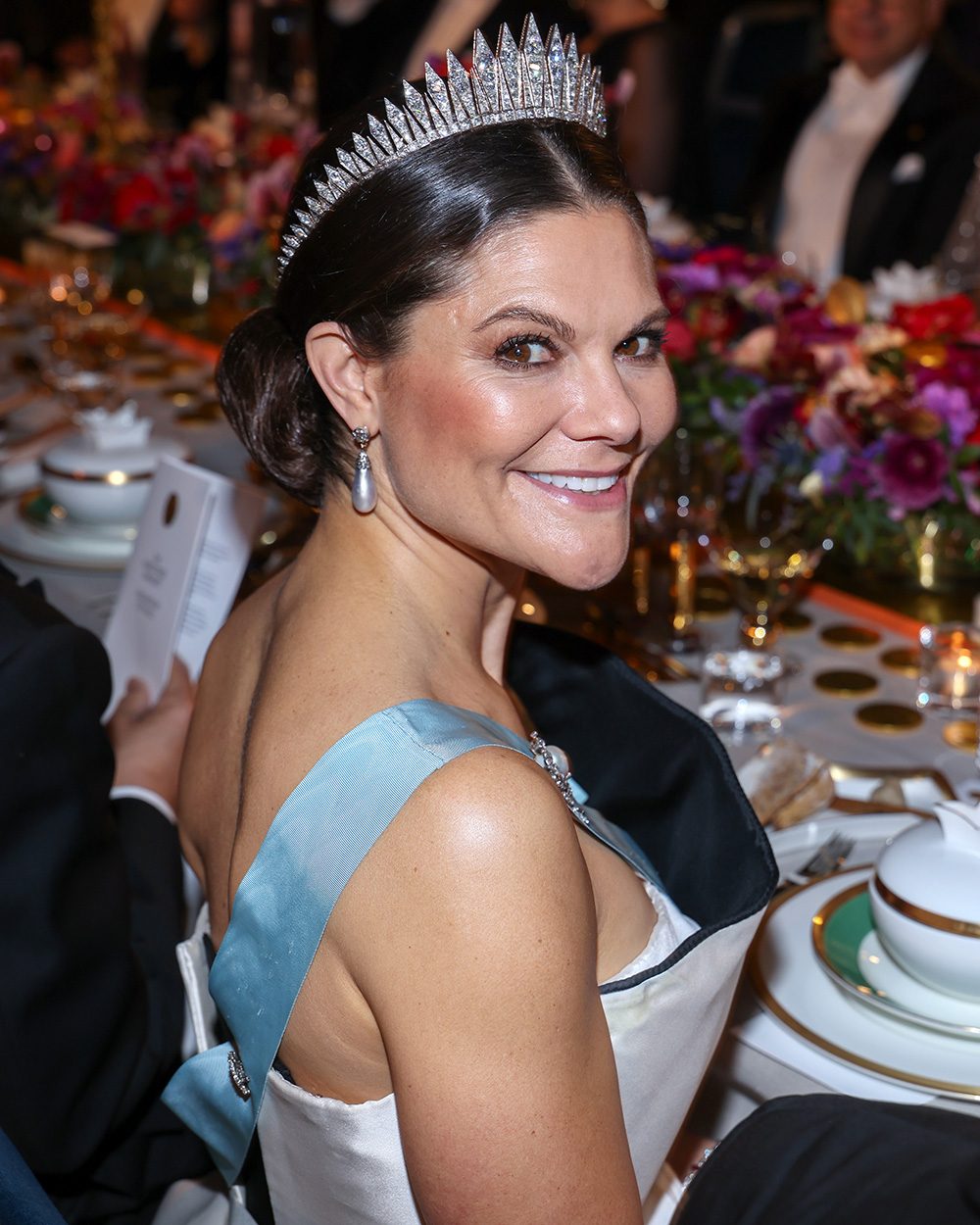
The Baden Fringe Tiara entered the Swedish royal collection in 1881 as a wedding gift to Princess Victoria of Baden upon her marriage to Crown Prince Gustaf of Sweden. Featuring graduated diamond rays in the classic fringe style, the tiara can also be transformed into a necklace—a versatility that has helped make it a favorite of generations of Swedish royals, including Crown Princess Victoria, who wore it on her wedding day.
Daughters describes the piece as a masterclass in geometric design. “Fringe tiaras are enduring classics because they mimic the ancient sun god Sol’s crown, a shape that is universally flattering as it draws light upward and outward to frame the face,” he says. He also points to the tiara’s ingenious construction, which allows the diamond fringe to be removed from its frame and worn as “a sleek, modern diamond collar necklace.”
Gerrish notes that the convertible nature of fringe tiaras is part of their enduring appeal. She also points to their connection with the Russian kokoshnik tradition, which influenced royal jewelry across Europe, from Britain’s Kokoshnik Tiara to Queen Mary’s Fringe Tiara. “What makes them truly timeless is their ability to be grand without feeling fussy, regal without relying on colored stones, and versatile enough to shine as beautifully as a tiara or as a stunning diamond necklace,” she says.
The Leuchtenberg Sapphire Tiara and the Art of Pairing Diamonds with Color
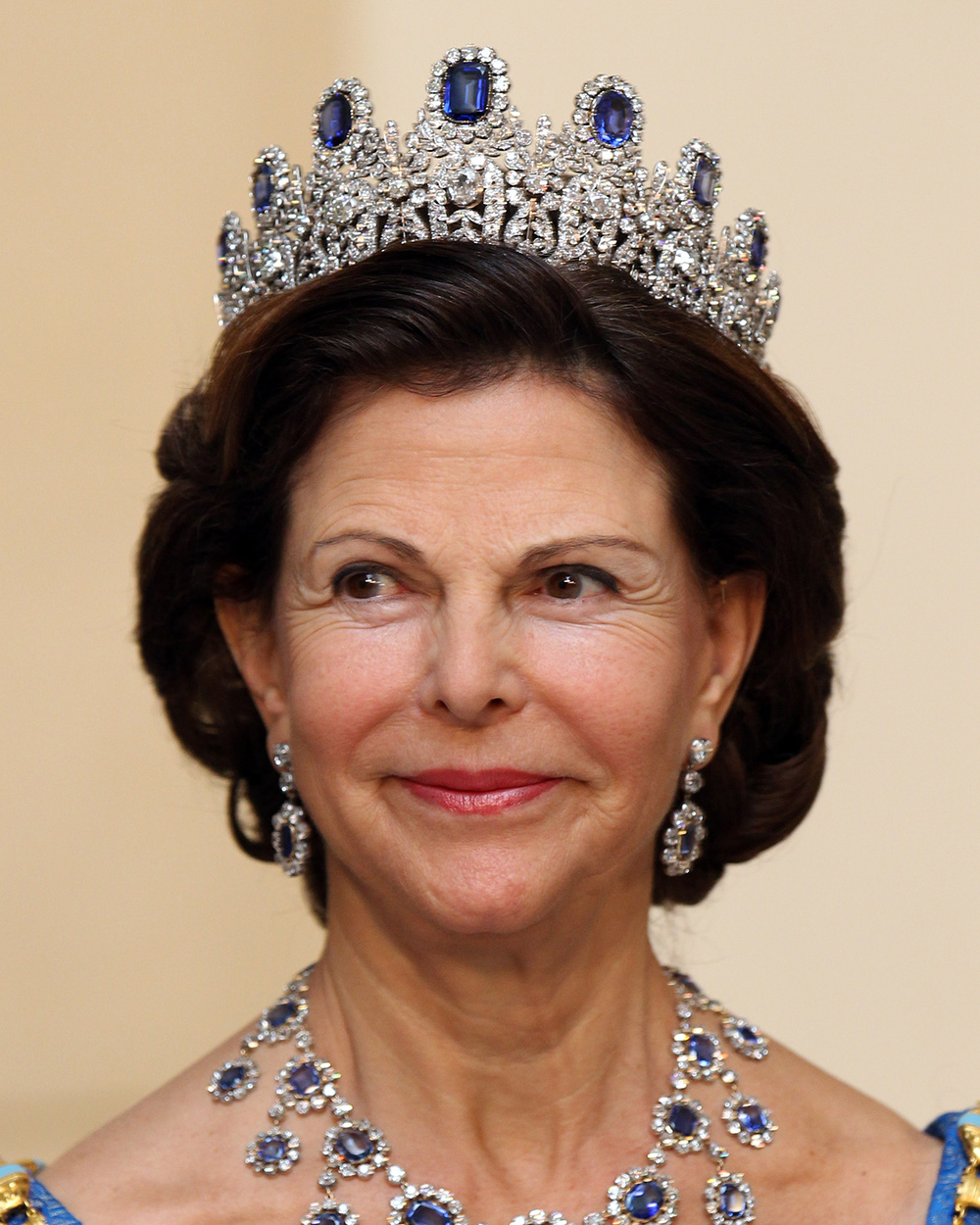
The Leuchtenberg Sapphire Tiara is one of the finest examples of how diamonds and colored gemstones work together in royal jewelry. Gerrish notes that while the sapphires provide the drama, “the diamonds provide the architecture.” Usually attributed to Marie-Étienne Nitot, Napoleon’s court jeweler and founder of the house that later became Chaumet, the tiara dates to the Napoleonic era and forms part of an extraordinary sapphire-and-diamond parure.
Daughters points to the tiara’s masterful construction, in which velvety blue sapphires are set within an intricate framework of diamond-set floral, laurel, and anthemion motifs. “The diamonds do not merely frame the sapphires,” he explains. “They are arranged in openwork structures that capture and funnel light through the coloured stones,” creating a striking contrast between the brilliance of the diamonds and the saturated blue of the sapphires.
The jewels entered the Swedish royal collection through Josephine of Leuchtenberg, daughter of Augusta of Bavaria and Eugène de Beauharnais, Napoleon’s stepson. Tradition holds that the sapphires themselves were a gift from Empress Joséphine. Gerrish notes that the sapphires can also be exchanged for large pear-shaped pearls, allowing the same jewel to transform depending on the occasion.
Queen Silvia, who has worn the tiara since joining the Swedish royal family in 1976, has demonstrated its remarkable versatility by wearing it both open as a tiara and closed like a small crown. Gerrish says this flexibility exemplifies the ingenuity of royal jewelry design: “Diamonds form the permanent framework, while the vibrant coloured gemstones bring in a playful touch of mood, symbolism, and personality.”
The Aquamarine Kokoshnik: Sweden’s Ice-Blue Masterpiece
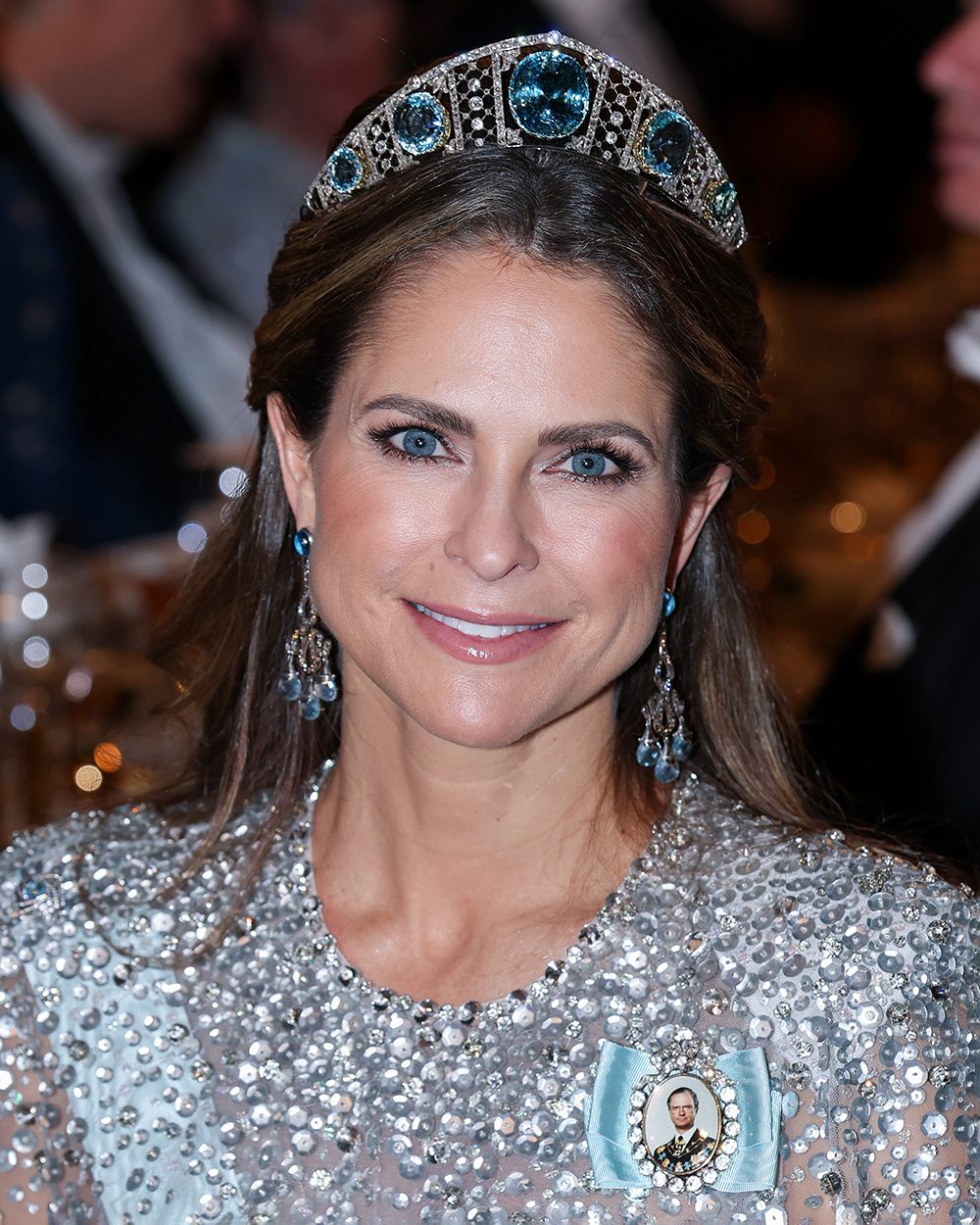
Originally owned by Princess Margaret of Connaught, the Aquamarine Kokoshnik Tiara is among the Swedish royal family’s most striking early 20th-century jewels. The tiara, which is accompanied by a matching aquamarine-and-diamond brooch, has remained a favorite within the family and was worn by Princess Madeleine as recently as 2017.
Daughters describes the piece as a fascinating example of the shift toward softer, more ethereal color palettes during the Edwardian era. “Moving away from the heavy, saturated rubies and emeralds of the mid-19th century, this piece embraces the icy, translucent beauty of large, step-cut aquamarines,” he explains. Set within a Russian-inspired kokoshnik framework of diamond-set platinum latticework, the diamonds act “as a brilliant frost or a hall of mirrors,” amplifying the aquamarines’ cool, watery glow.
Princess Margaret died unexpectedly in 1920, and her jewelry collection was divided among her five children. Although the precise path of inheritance is not fully documented, the Aquamarine Kokoshnik remained within the Swedish royal family and eventually came into the possession of Princess Margaretha. Today, it remains one of the collection’s most elegant examples of Edwardian design, showcasing how diamonds can enhance, rather than compete with, the beauty of colored gemstones.
The Cameo Tiara: Sweden’s Napoleonic Masterpiece

Unlike the diamond-heavy tiaras that dominate most royal collections, the Swedish Cameo Tiara owes its fame to artistry, history, and symbolism. Commissioned during the Napoleonic era, the parure—which includes a tiara, necklace, earrings, and bracelet—was originally owned by Empress Joséphine and entered the Swedish royal collection through her granddaughter, Josephine of Leuchtenberg, upon her marriage to the future King Oscar I of Sweden.
Crafted in gold, pearls, and carved cameos, the tiara features seven classical cameos, likely created by leading Italian artisans. Gerrish notes that cameos were among the most coveted luxury objects of the 18th and 19th centuries, prized not simply as jewelry but as symbols of education, taste, and knowledge of the ancient world. Several of the cameos in the Swedish tiara have since been attributed to renowned Napoleonic-era engravers, including Girometti and Catenaci, while the central cameo depicts Venus and Cupid—a fitting emblem of love, beauty, and marriage.
Daughters describes the tiara as a jewel that “stands entirely apart from traditional European royal headpieces” because its value lies in narrative artistry rather than the brilliance of diamonds. He calls it a neoclassical masterpiece, noting that “at a time when European courts were obsessed with white-diamond symmetry, this tiara celebrated the warmth of ancient relief carving.”
The tiara occupies a singular place in Swedish royal history as the family’s definitive bridal jewel, having been worn by Queen Silvia and later Crown Princess Victoria on their wedding days. In doing so, it continues to bridge the worlds of Napoleonic France and modern Scandinavian royalty.
The Four Button Tiara: A Masterclass in Royal Recycling
One of the most unusual jewels in the Swedish royal collection, the Four Button Tiara consists of four identical diamond rosette “buttons” mounted on a simple, modern frame and often paired with a classic diamond rivière necklace. The diamond clusters were not originally designed as a tiara at all; they began life as ornaments worn by King Karl XIV Johan in the early 19th century.
Daughters calls the jewel a remarkable example of royal reinvention. “By mounting these historic, multi-layered diamond clusters onto a tiara base in the 20th century, the Swedish court demonstrated incredible innovation,” he says, transforming historic dress ornaments into a lightweight and highly wearable tiara.
Gerrish notes that the decision to remount the diamonds during the postwar era reflected a broader shift in royal jewelry, away from grand court parures and toward pieces that younger royal women could actually wear. “The Four Button Tiara keeps that old idea alive,” she explains, referring to the centuries-old practice of adapting and remounting jewels. “It is history made wearable, which is why it feels so very Swedish.”
Though it lacks the scale of the Braganza Tiara or the romance of the Connaught, the Four Button Tiara offers something equally compelling: a lesson in how royal jewels survive by continually evolving.
The Ingenious Swedish Diamond Chain Necklace
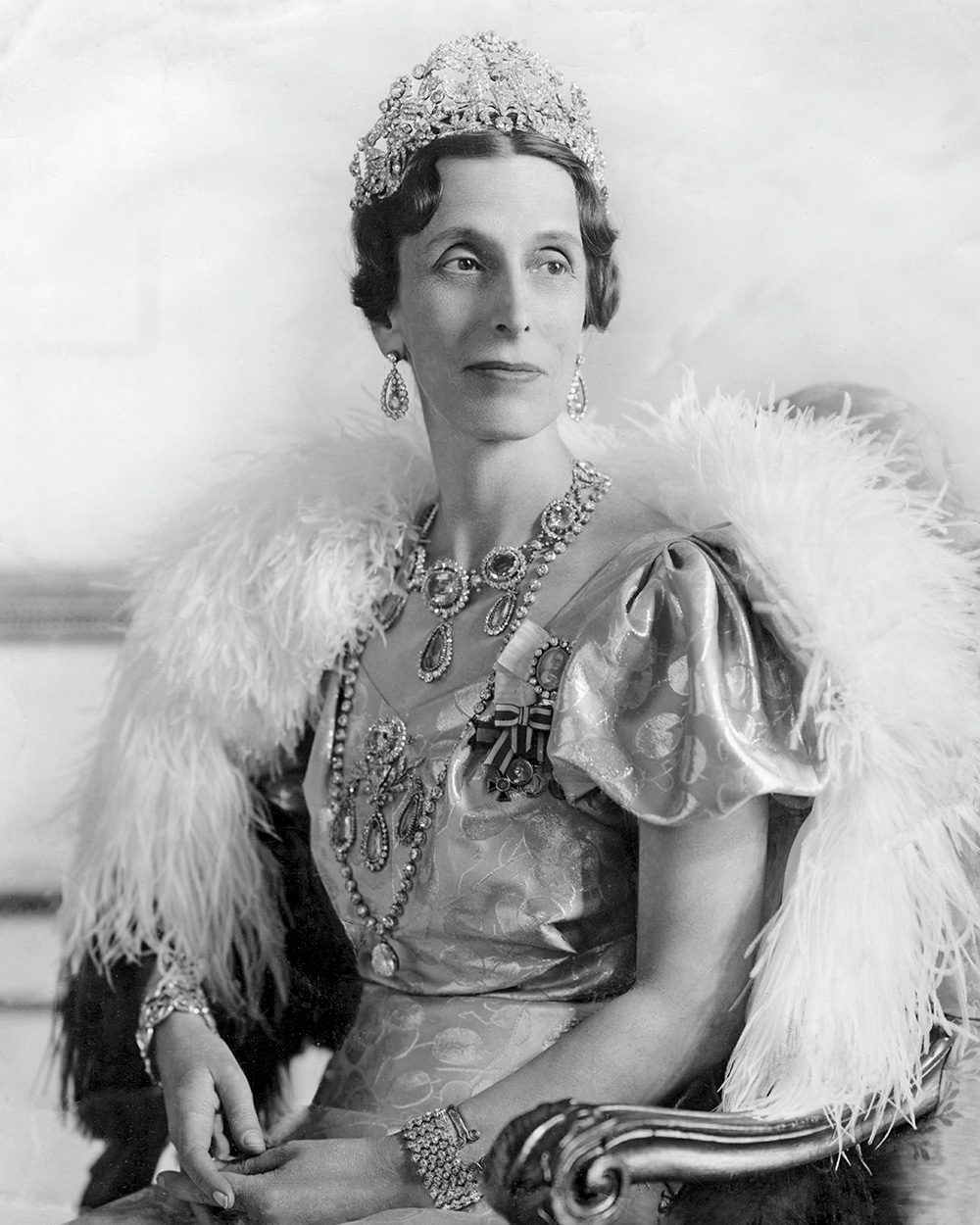
Competing with the Swedish royal family’s extraordinary tiaras is no easy feat, but the Diamond Chain Necklace stands out for a different reason: its remarkable versatility. At first glance, it appears to be a classic rivière of graduated diamonds, yet the jewel can be lengthened, shortened, and even transformed into a tiara.
Daughters says the piece demonstrates that historic royal jewelry was never intended to be static. He describes the necklace as “a long, spectacular line of matched diamond collets” that can be adapted to suit changing fashions and occasions. “In royal collections, adaptability is the key to survival,” he explains. By designing jewels to be modular, royal families ensured that their diamonds remained wearable across generations rather than disappearing into vaults.
Gerrish points out that this adaptability continues to appeal to modern royals. Crown Princess Victoria famously wore the Diamond Chain Necklace as a two-row tiara at the King’s Dinner for Nobel Laureates in 2008, while Princess Madeleine styled it the same way the following year. “That is exactly why adaptability has been so important to royal collections: fashion changes, but diamonds endure,” she says.
The Diamond Stomacher Necklace: Jewelry as Royal Power
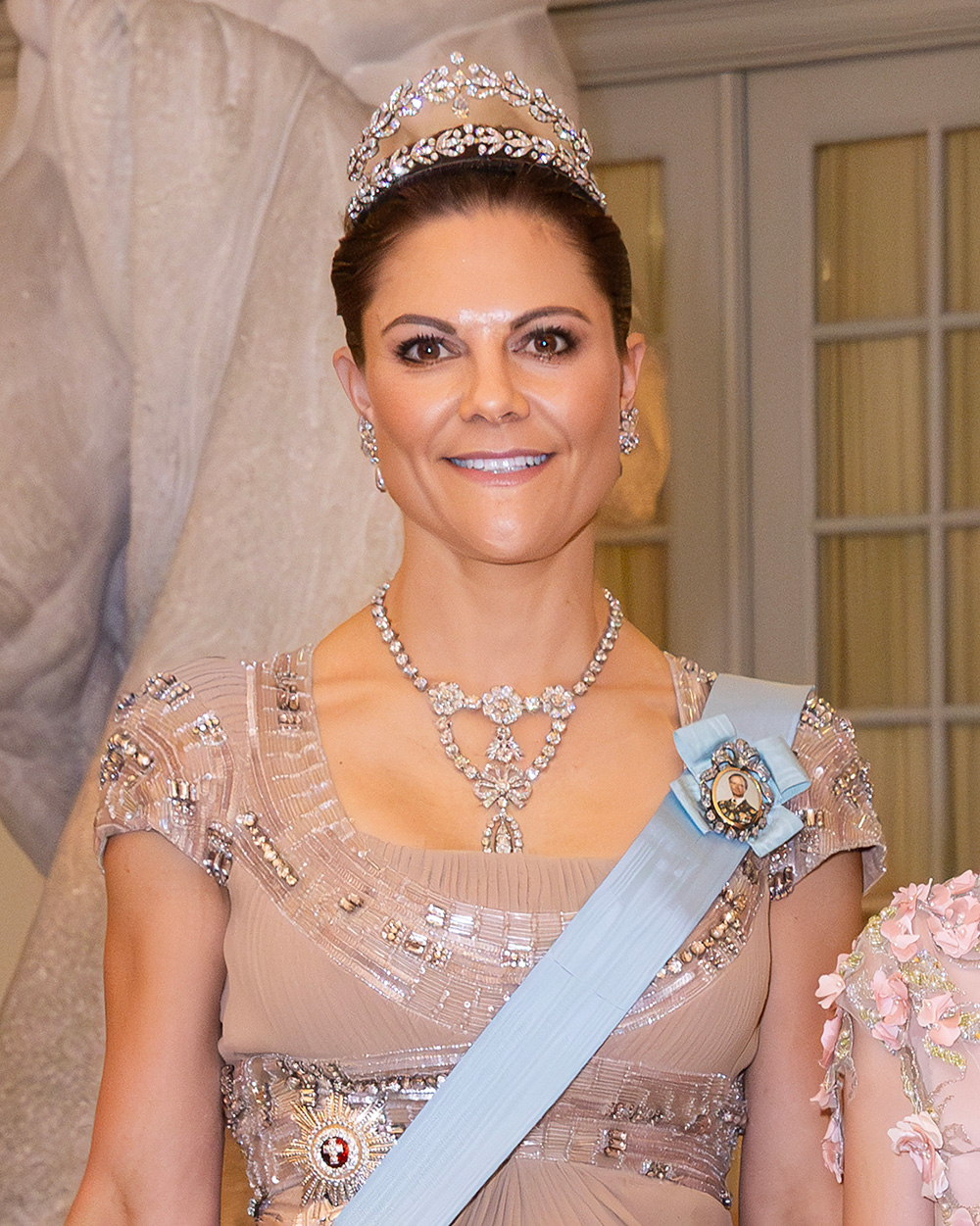
The Swedish royal collection’s extraordinary Diamond Stomacher offers a glimpse into an era when jewelry functioned as political theater. Frequently worn by Queen Josefina as part of grand court dress, the jewel originated as a large, jeweled ornament pinned to the center front of a formal bodice.
Daughters explains that stomachers were designed to create a dazzling display under candlelight. “Because court events were illuminated entirely by candlelight, a stomacher ensured that the Queen’s entire upper body flashed with blinding fire with every breath she took,” he says. For royal women, these jewels served as powerful visual manifestations of wealth, permanence, and the divine right of the reigning dynasty.
Gerrish notes that pieces like the Diamond Stomacher were once used almost as a form of royal armor. “Not just to decorate the body, but to proclaim rank, wealth, and dynastic authority,” she explains. Worn at the center of the bodice—the most visible part of court dress—the jewel transformed the wearer into a living display of power. “In candlelight, every movement would have made the stones flicker, so the jewel turned the body itself into a display of power.”
The Vasa and Karl Johan Diamond Earrings: The Ultimate Royal Essentials
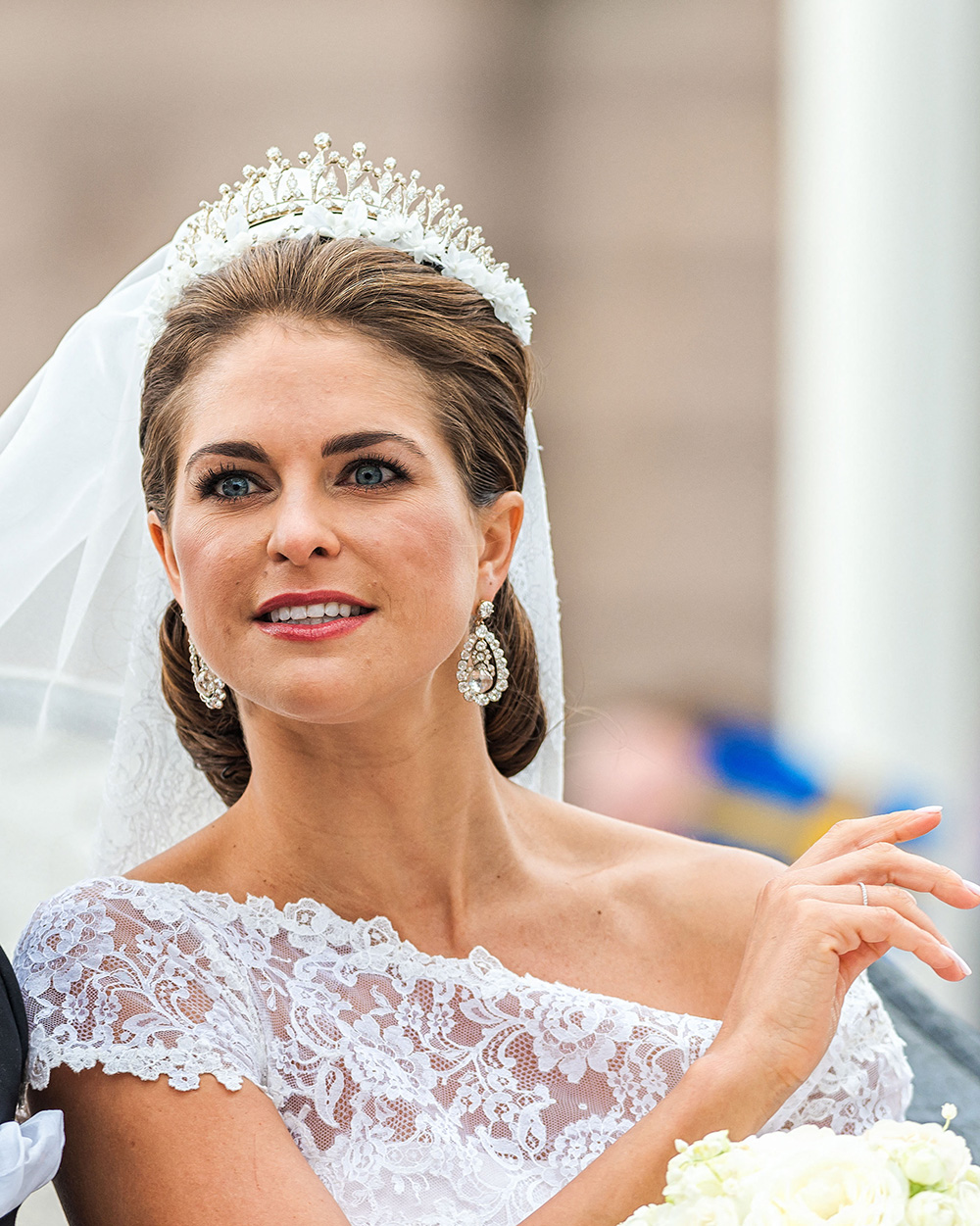
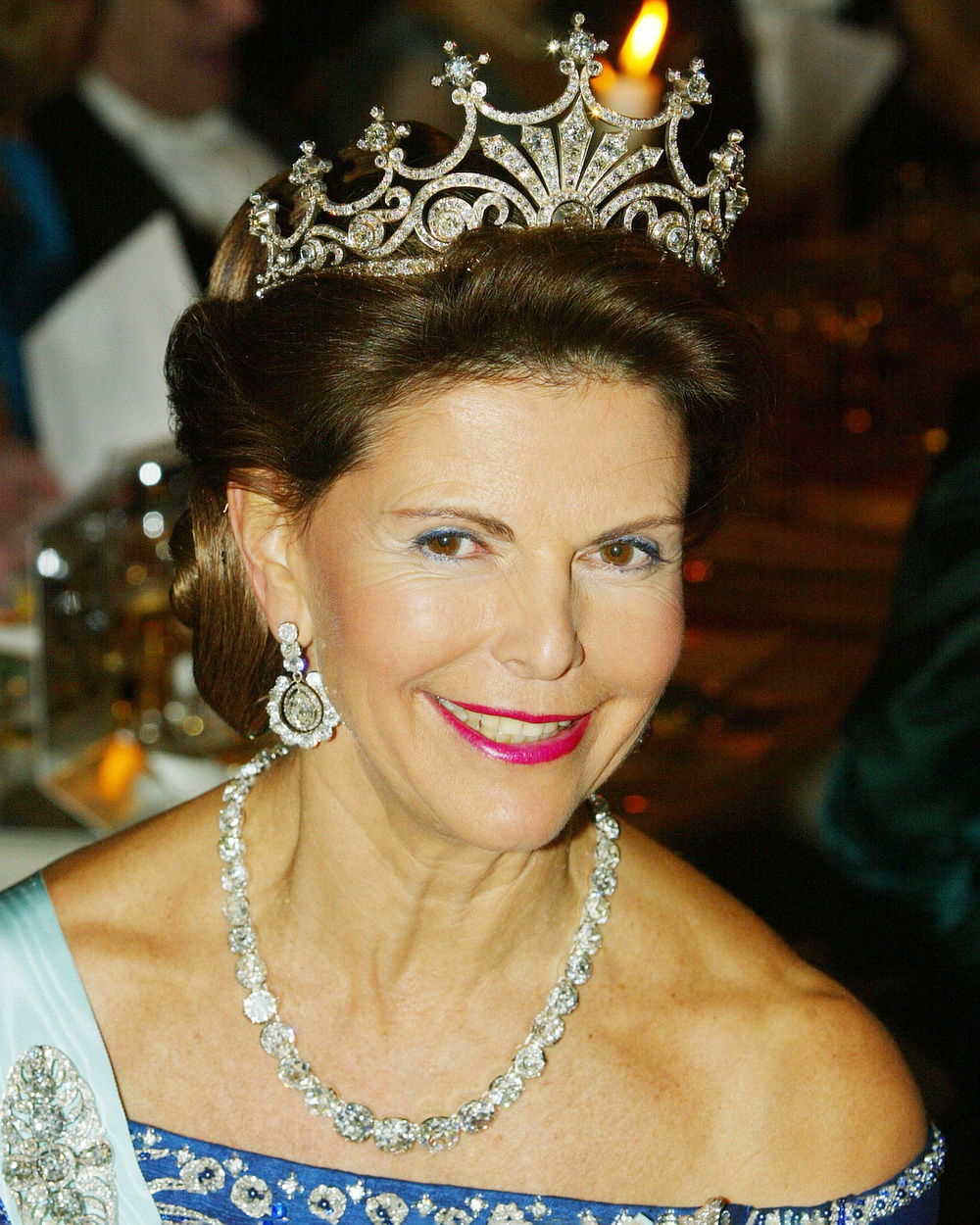
Not every royal jewel needs to be a towering tiara. Some of the most important pieces in the Swedish royal collection are diamond earrings that have endured for centuries. The Vasa Earrings, among the oldest jewels in the collection, feature magnificent pear-shaped diamonds dating to the Vasa dynasty and offer a rare glimpse into the evolution of diamond cutting. Meanwhile, the Karl Johan Diamond Earrings, which date to the reign of King Karl XIV Johan, demonstrate why simple diamond earrings remain among the most versatile and enduring jewels in any royal collection.
Daughters calls the Karl Johan Earrings “utterly timeless.” “While towering tiaras capture the headlines, it is classic, masterfully executed daily heirlooms like the Karl Johan Diamond Earrings that form the true backbone of a royal wardrobe,” he says. Their enduring appeal lies in their simplicity: they frame the face with extraordinary brilliance while never competing with the rest of a queen’s regalia.
The Vasa Earrings, by contrast, are important not only for their beauty but also for their history. Their large, hand-cut diamonds illustrate the earlier traditions of diamond cutting, when stones were fashioned to maximize fire and brilliance under candlelight rather than electricity. Together with later jewels such as Queen Sofia’s Nine-Prong Tiara, they help trace the evolution of diamond cutting across centuries.
Queen Louise of Sweden wore the Karl Johan Earrings frequently throughout her reign, including in official portraits taken in the 1960s. More recently, they have continued to appear on Queen Silvia and other members of the Swedish royal family, proving that some royal jewels truly transcend changing fashions.
How Natural Diamonds Help the Swedish Royal Collection Endure
The Swedish royal collection is a profound testament to the enduring power of natural diamonds. Across its tiaras, necklaces, and earrings, the collection offers a remarkable visual timeline of jewelry history and the evolution of diamond cutting techniques.
As Daughters explains, the collection demonstrates the extraordinary permanence of natural diamonds themselves. Over two centuries, empires have fallen, borders have shifted, and the Bernadotte dynasty has evolved from its French military origins into a modern Scandinavian monarchy, yet the diamonds remain unchanged. “The Swedish collection is living proof of the permanence of natural diamonds,” he says. By continuing to wear jewels that once belonged to figures like Empress Joséphine and Queen Louisa Ulrika, the Swedish royal family reinforces an unbroken connection to both its own history and the wider story of European royalty.
Daughters also notes that pieces such as the Braganza Parure and the Vasa Earrings provide an unparalleled record of gemological evolution. Their hand-cut old mine and cushion-cut diamonds, designed to glow by candlelight, stand in striking contrast to the early brilliant cuts seen in later royal jewels. “The collection shows how craftsmanship transitioned from deep, hand-faceted stones designed for warmth to the mathematically precise, fiery brilliant cuts engineered for the age of electricity.”