
The Splendor and Mystery of the Romanov Jewels
From coronation regalia to personal pieces, whether still existing or missing, the myth of Romanov jewels continues to intrigue.
When, in 1613, Michael Fyodorovich became the first Romanov Tsar, his household did not possess even an infinitesimal fraction of the riches associated with the imperial family that ruled over the Russian Empire until 1917.
But successive generations of Romanovs, with a keener interest in the trappings of power than the pious Tsar Michael I, collectively built one of the largest and most lavish jewelry collections that still fascinates for its grandeur and aura of mystery.
After the Bolsheviks seized power in 1917 some of the Romanov jewels miraculously survived in their original form, some were transformed for a second life, and some vanished entirely.
Here’s a selection of some of the most significant Romanov jewels.
Meet the Expert

- Milena Martins-Alexandre is a luxury strategy consultant and editor; she combines deep expertise in brand repositioning, international development, and cultural analysis with a passion for high jewelry, watches, and art.
- She is a contributor to leading global publications including The New York Times, Financial Times, The Business of Fashion, British Vogue, Vogue Business, Tatler, and Vanity Fair.
- She advises luxury businesses on defining purpose and long-term vision in a rapidly changing environment, helping brands adapt to shifting consumer values with strategic clarity and authority.
The Exquisite Romanov Crown Jewels and Imperial Regalia
The Great Imperial Crown Set the Extravagant Tone of the Romanov Jewels
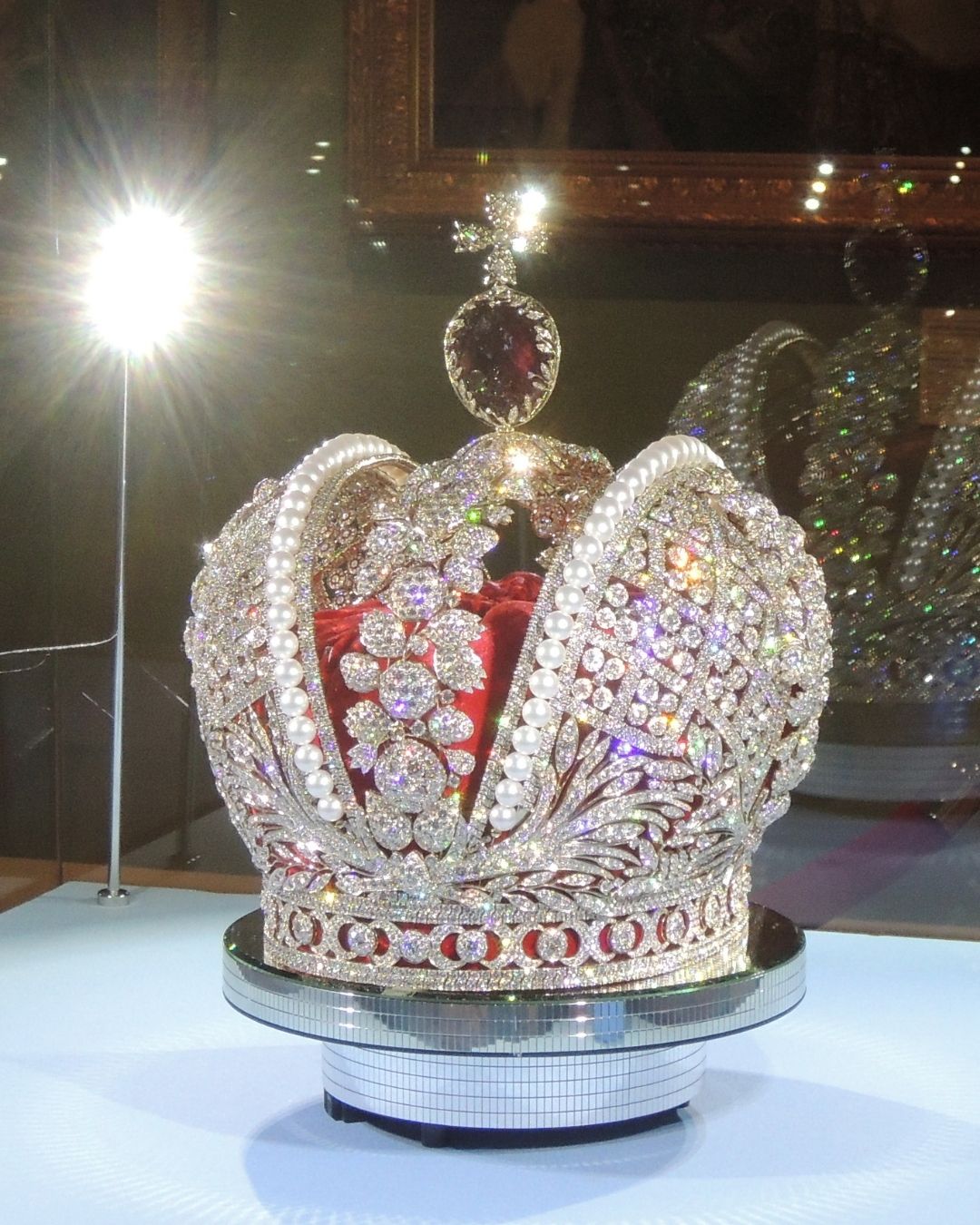
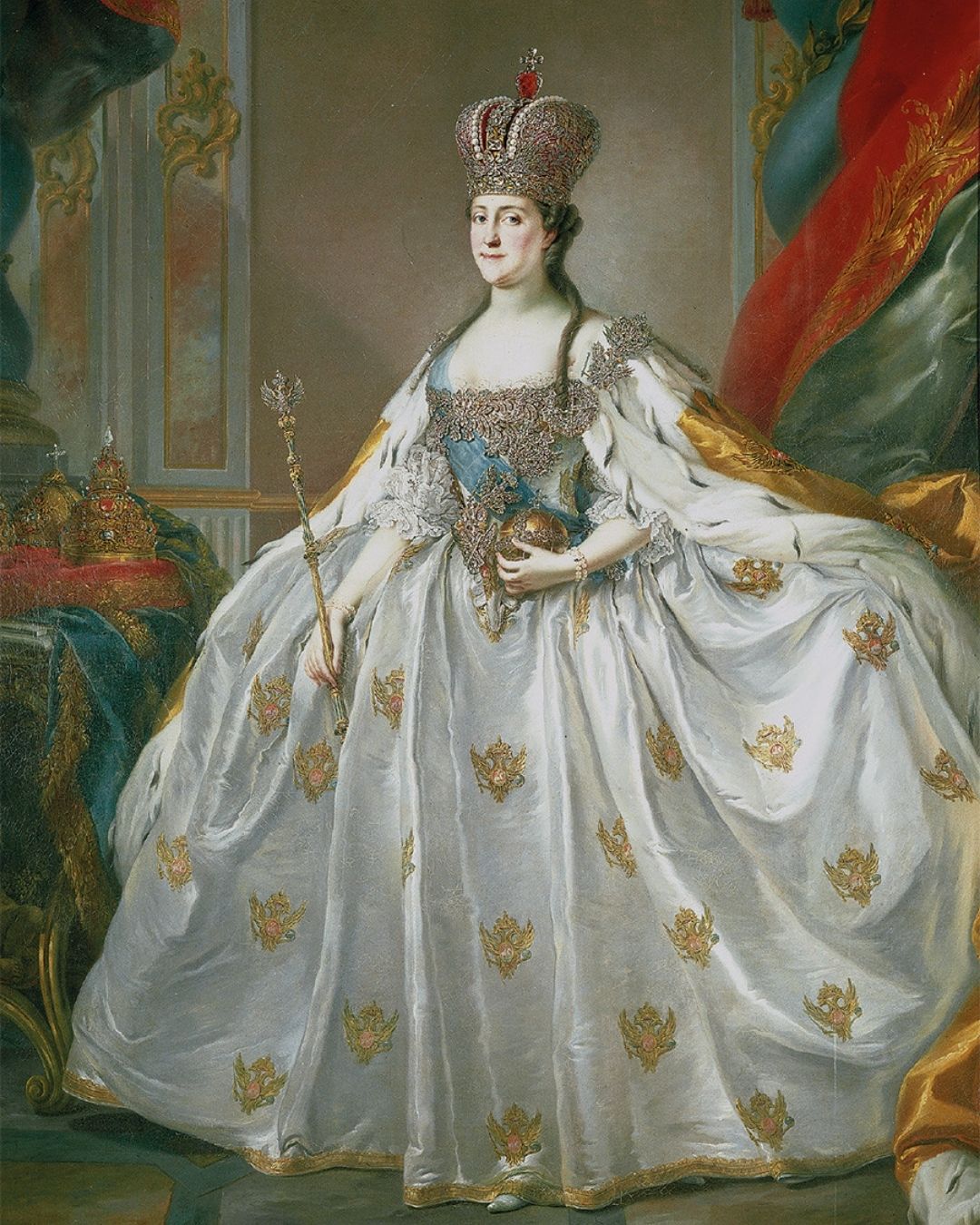
A coronation, a tantamount of divine anointment, calls for magnificence, and Catherine the Great knew this could be best achieved through opulent jewels. No sooner had she outmaneuvered her husband from power than she requested a new crown ready in just 60 days.
Throughout the summer of 1762, jewelers Georg Friedrich Ekart and Jérémie Pauzié worked tirelessly to craft the imposing Great Imperial Crown. It resembled a Bishop’s miter and packed 4,936 diamonds, over 70 natural pearls, and a colossal 398-carat red spinel — about 4 pounds of power.
The Great Romanov Imperial Orb Holds an Extraordinary Pear-Shaped Blue Diamond
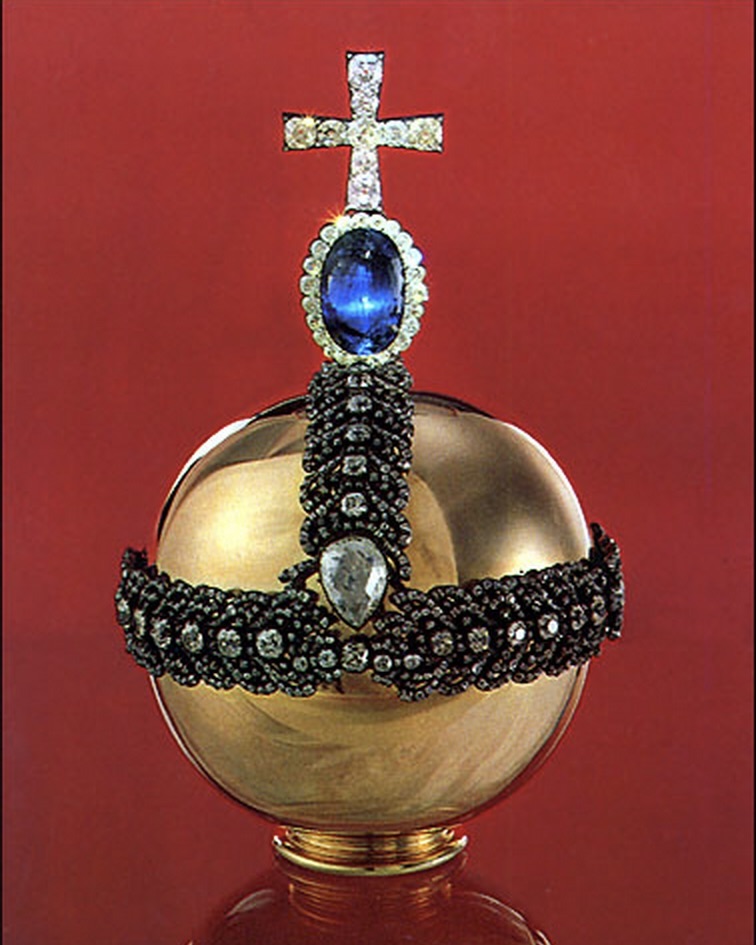
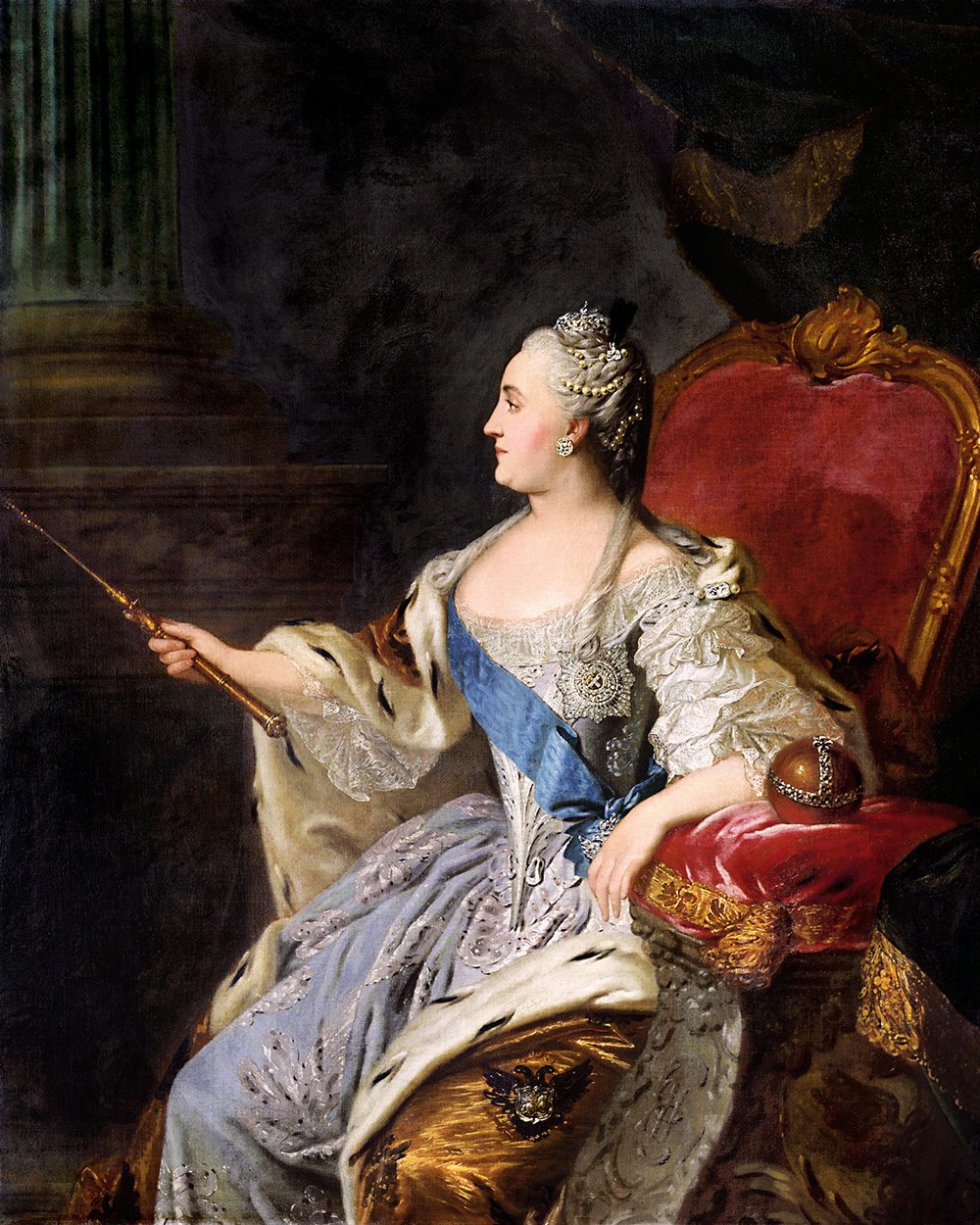
Later, in 1784, jeweler George Frederick Ekart created the Romanov imperial orb, which Catherine the Great showed in some portraits and which successive Tsars used during their coronation ceremony.
Crafted from pure, buttery-hued gold, the orb features an extraordinary 200-carat oval Ceylon sapphire, framed by diamonds. Its spherical body is crossed by two ornate diamond-studded bands with an Indian pear-shaped light-blue diamond weighing 46.92 carats at their intersection.
The Incredible Orlov Diamond Sits Within the Russian Imperial Sceptre
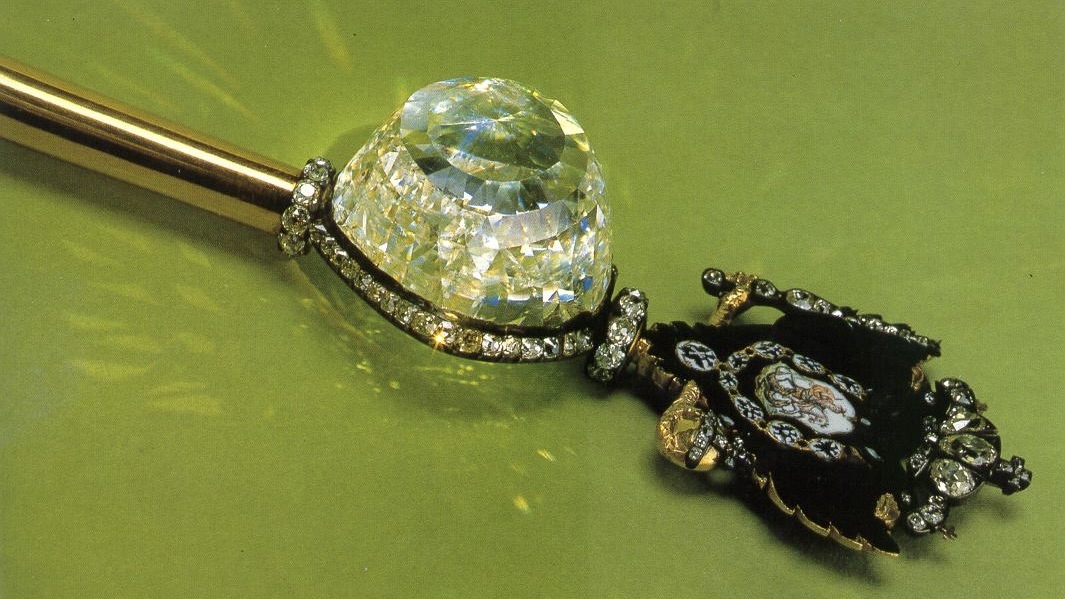
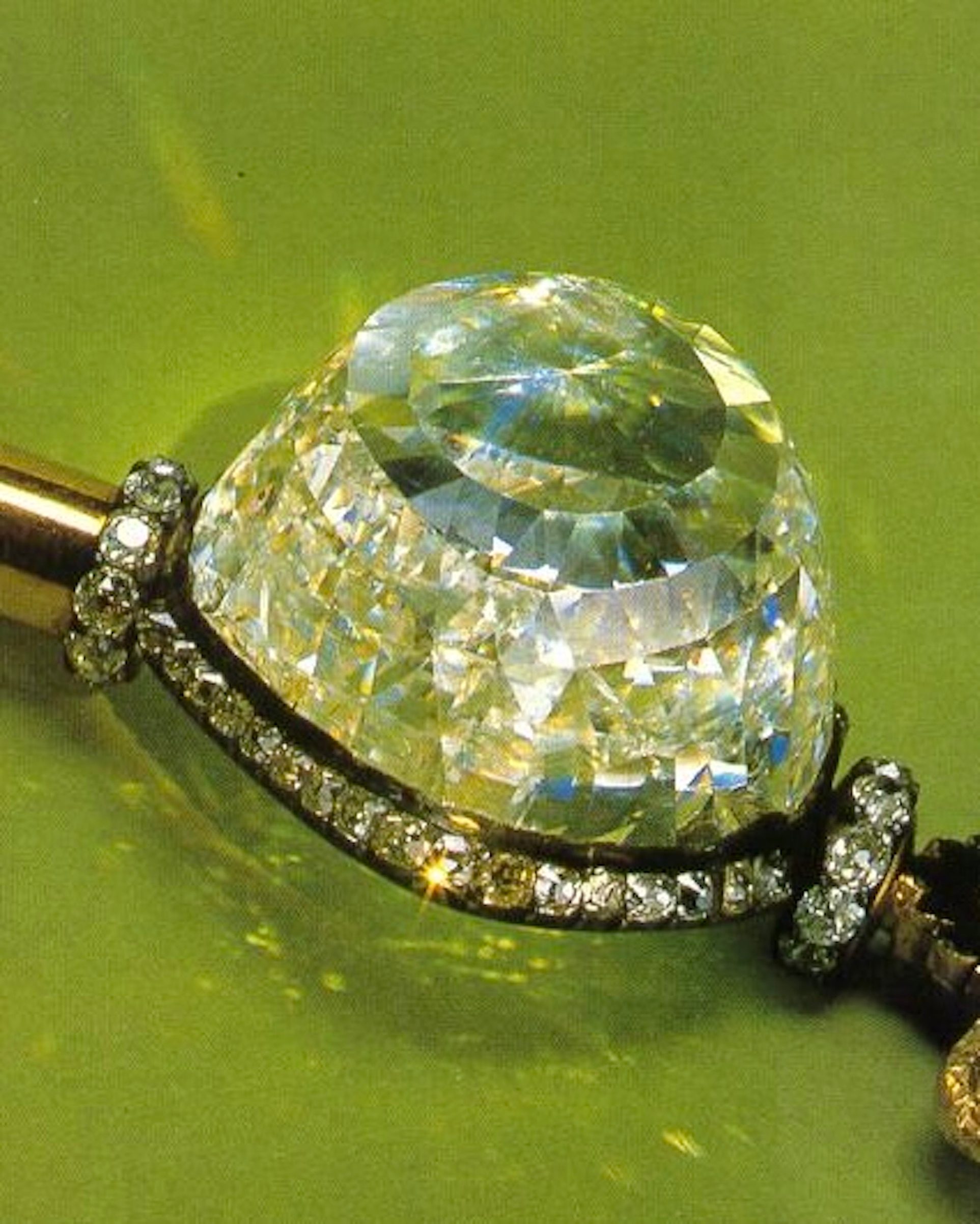
The third jewel of the coronation regalia is the scepter set with the larger-than-life Orlov Diamond, with its distinctive bluish-green hue. At 189.62 carats, the diamond’s astonishing size is only matched by its rocambolesque journey to the Romanov court.
Legend has it that the diamond once served as the eye of an idol in Southern India before it was stolen by a French soldier at the beginning of the 18th century. After travelling across Asia and Europe, the gem was eventually acquired by Count Grigory Orlov in 1774. On the scepter, the Orlov Diamond is mounted in silver and bordered by diamonds with a double-headed imperial eagle in black enamel perched upon it.
The Personal Jewelry Collection of the Romanov Royal Family
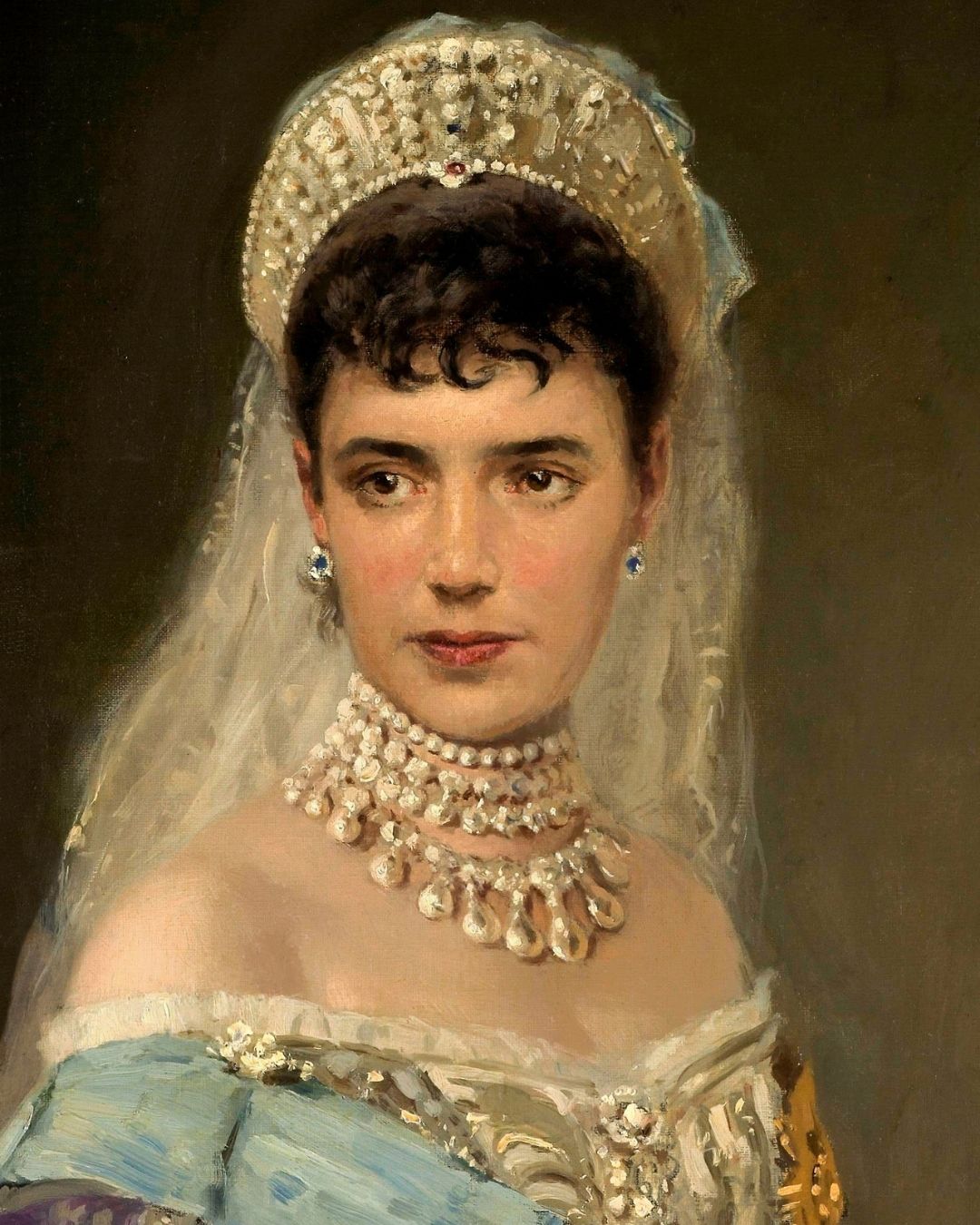
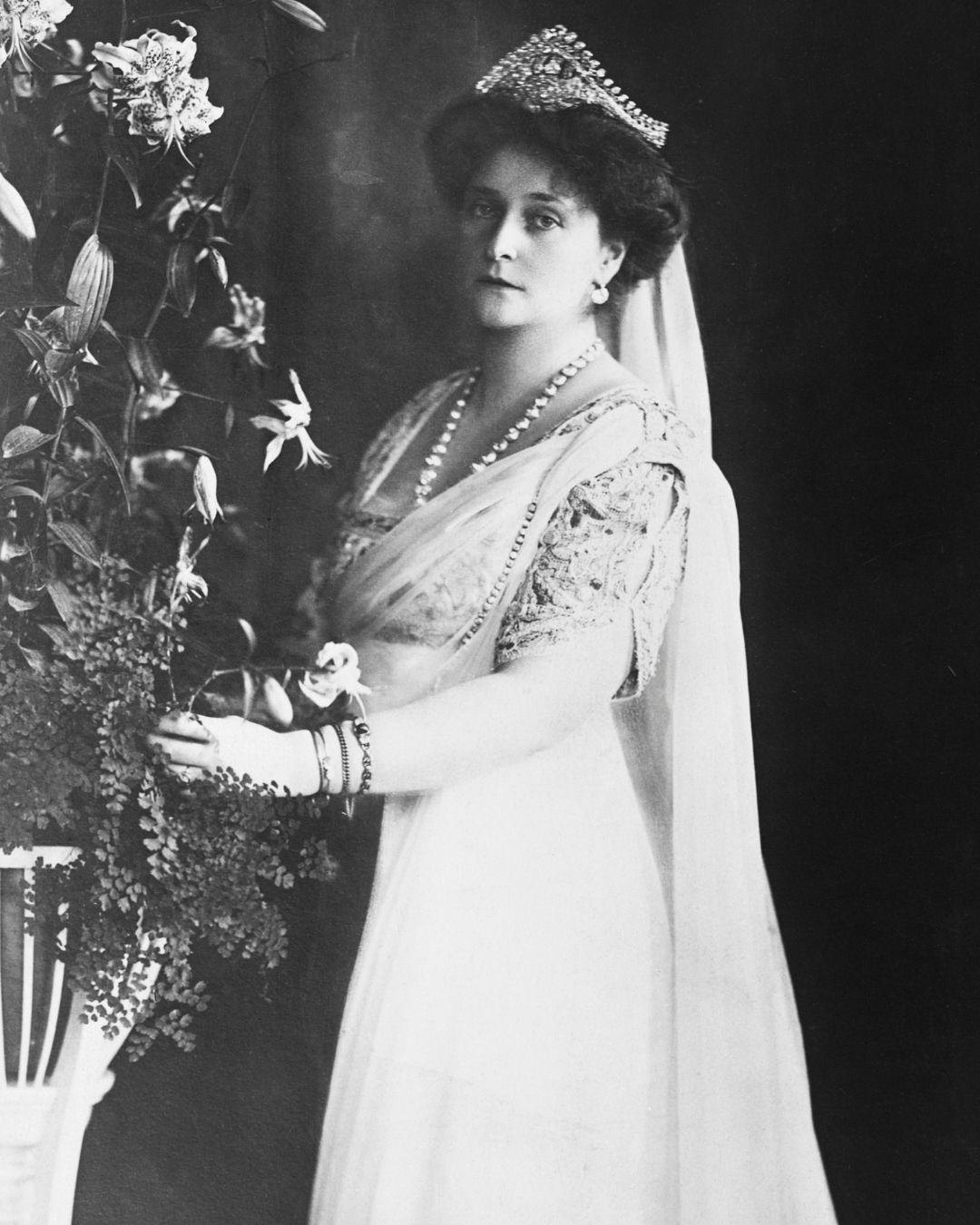
Alongside ceremonial regalia, the Romanov jewels comprised pieces reserved for personal use. Among these was the splendid tiara set with a mesmerizing 13.35 pale pink diamond at its heart. The design is inspired by the traditional Russian headdress, shaped like a rigid halo rising towards the central front part, known as kokoshnik. Resting on a circlet of round brilliant-cut diamonds and topped with pear-shaped diamonds, the tiara dazzles with a central section of briolette-cut diamonds set en tremblant to move and scatter the light in all directions.
The tiara was first spotted in an 1810 portrait painting of Tsarina Maria Feodorovna (born Duchess Sophie Dorothea of Württemberg, 1759–1828), the wife of Tsar Paul I, and last time at the wedding of Empress Alexandra Feodorovna to the future Tsar Nicholas II in 1894. Together with the coronation regalia, this tiara is kept in the State Diamond Fund at the Kremlin Armoury in Moscow, Russia.
Empress Maria Feodorovna (born Princess Dagmar of Denmark, 1847-1924), the wife of Tsar Alexander III, was particularly fond of a collier d’esclave which she wore in a 1905 portrait by Emil O. Visel. It is set with a row of 21 cushion-cut diamonds, with the central one weighing about 32 carats and the others ranging from 23 to 16 carats. From them dangle 15 pear-shaped diamonds, each weighing between 16 and 25 carats, with the central one weighing 26 carats.
Although more attracted to pearls, the last Tsarina Alexandra Feodorovna had a soft spot for a kokoshnik tiara made in the 19th century for the Tsarina Elizabeth Alexeievna, the consort of Tsar Alexander I. It was made of antique Brazilian diamonds weighing a total of 275 carats, mounted in gold and silver. Alongside Empress Maria Feodorovna’s collier d’esclave, this tiara vanished after appearing in a photograph among the Romanov jewels seized by the Bolsheviks in 1917.
The Jewels Of Grand Duchess Vladimir
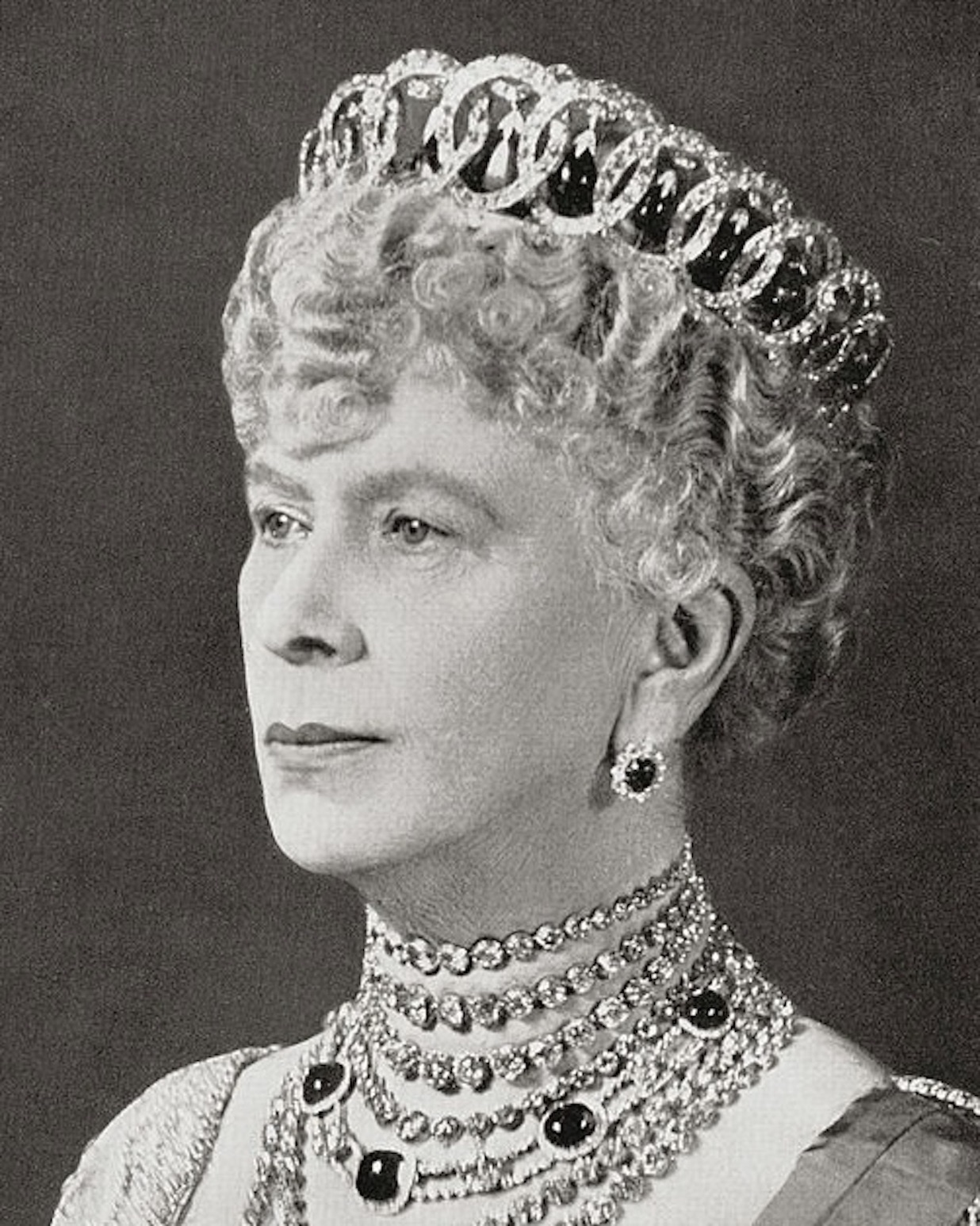
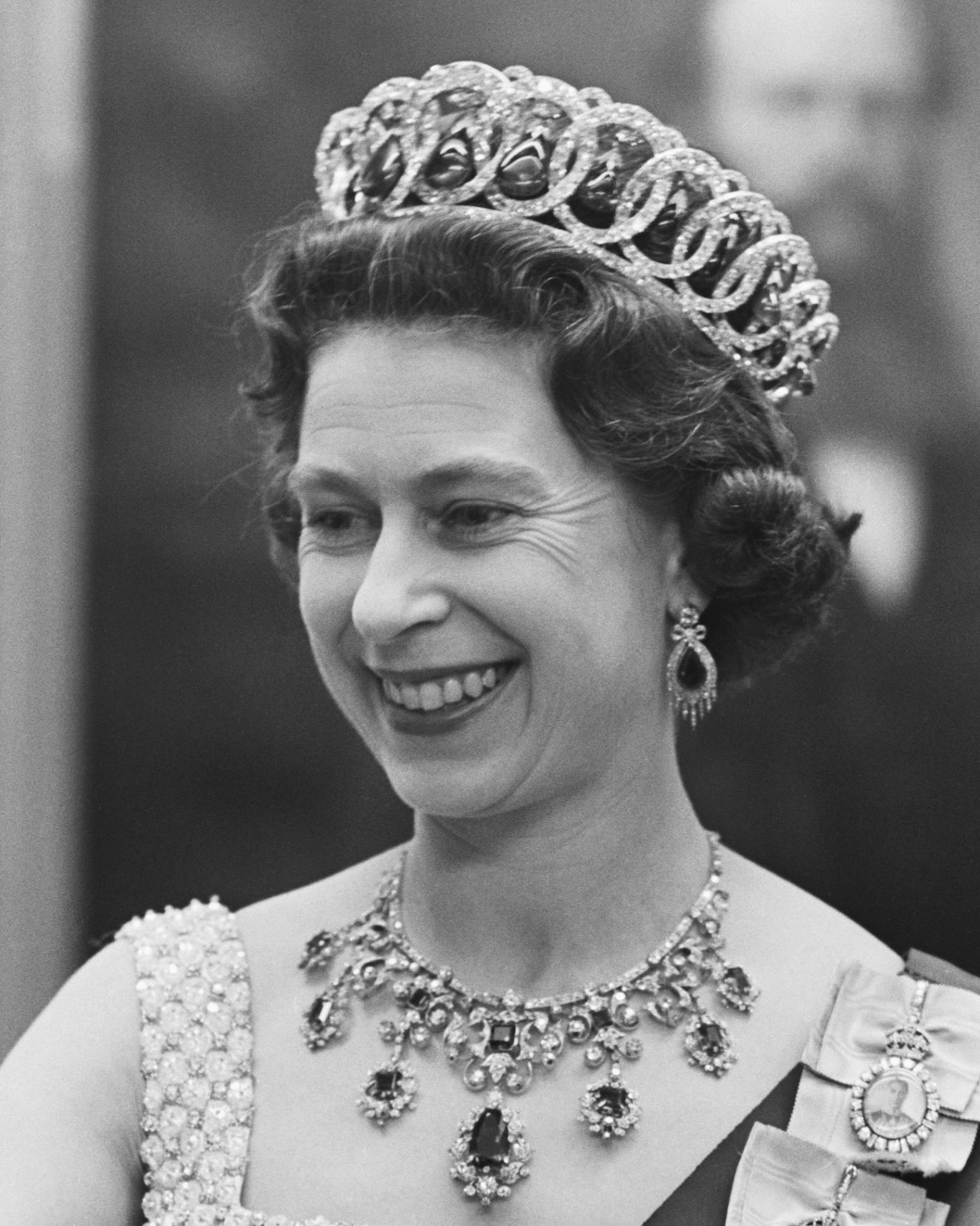
In a Florentine Renaissance Palace with rusticated stonework bricks, Grand Duchess Maria Pavlovna — born Princess Marie of Mecklenburg-Schwerin and the wife of Grand Duke Vladimir Alexandrovich — received artists, musicians, and intellectuals from all over the world and held concerts, charity events, and sumptuous balls.
It was a parallel court to that of the nearby Winter Palace, and Grand Duchess Vladimir —as she is known in the West— knew opulent jewels were de rigeur for the role. While the tiara with interlocking diamond circles framing pearls that later became a favorite of the late Queen Elizabeth II (known as the “Vladimir tiara”) or the monumental emeralds that ended up in the collection of Barbara Hutton survive in fame, other standout pieces are wrapped in mystery.
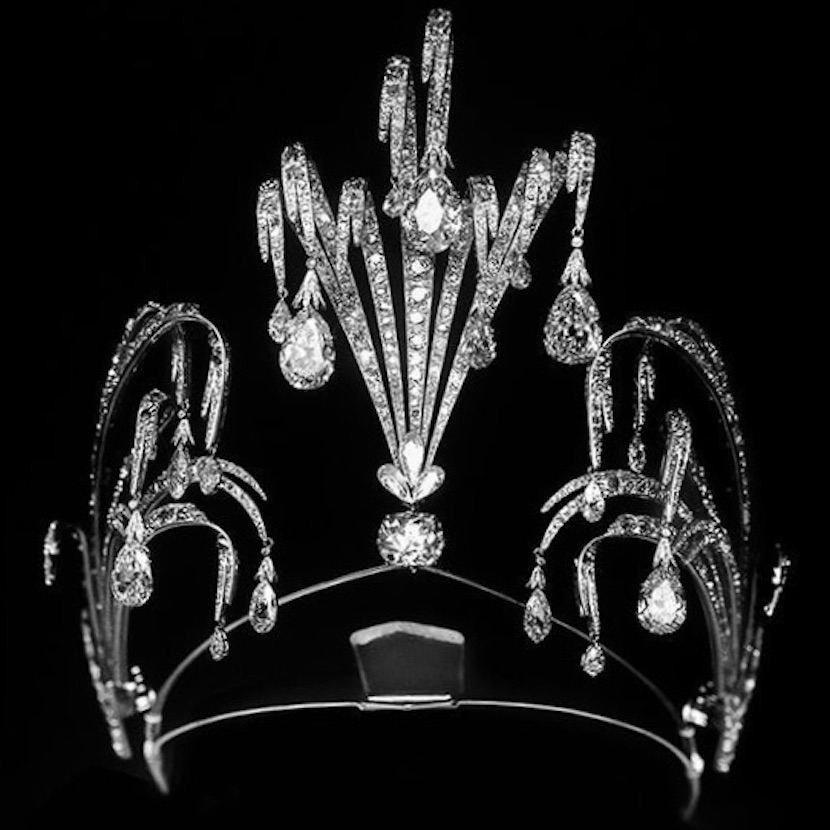
Among these is the ethereal waterfall tiara created by Chaumet in 1899 as a gift from the Grand Duke to the Grand Duchess on the occasion of their silver wedding anniversary. Fashioned to mimic a cascade, the tiara is made of diamond-studded sprays of water, holding pear-shaped diamonds that evoke large water drops, with a total weight of more than 75 carats.
The Yusupov Jewels


When Princess Irina Alexandrovna Romanova, the only niece of Tsar Nicholas II, married Prince Felix Felixovich Yusupov in 1914, she became part of a family whose fortunes were estimated to be greater than that of the Tsar himself. The Yusupovs’ legendary collection comprised world treasures such as the Pelegrina pearl associated with the Spanish Court, La Régente Pearl linked to Napoleon Bonaparte, the Azra black pearl, Marie Antoinette’s diamond earrings, the Sultan of Morocco’s greyish-blue diamond, as well as Rembrandt paintings.
Most were lost or sold after the family fled Revolutionary Russia in 1918, but one stone lingered longer among their possessions: the Polar Star. Weighing 41.28 carats and originating from the legendary Golconda mine in India, the Polar Star was acquired by Napoleon Bonaparte’s elder brother Joseph Bonaparte before joining the Yusupovs’ patrimony in the early 1800s.
In 1913, Felix asked Chaumet to set the storied diamond at the center of the sunburst tiara he commissioned as an engagement gift to Princess Irina. Before his exile, Felix hid most of his family’s valuables under a staircase in his Moscow palace, but removed the Polar Star from the tiara and took it with him. The stone was later sold to Cartier in 1928, and after being auctioned in the 1980s, it is now in private hands.