
Read More
Extraordinary Blue and Pink Diamonds Headline Sotheby’s New York High Jewelry Sale
From a once-in-a-generation blue diamond to rare pink stones and legendary signed jewels, Sotheby’s New York High Jewelry Sale brings together some of the season’s most coveted treasures.
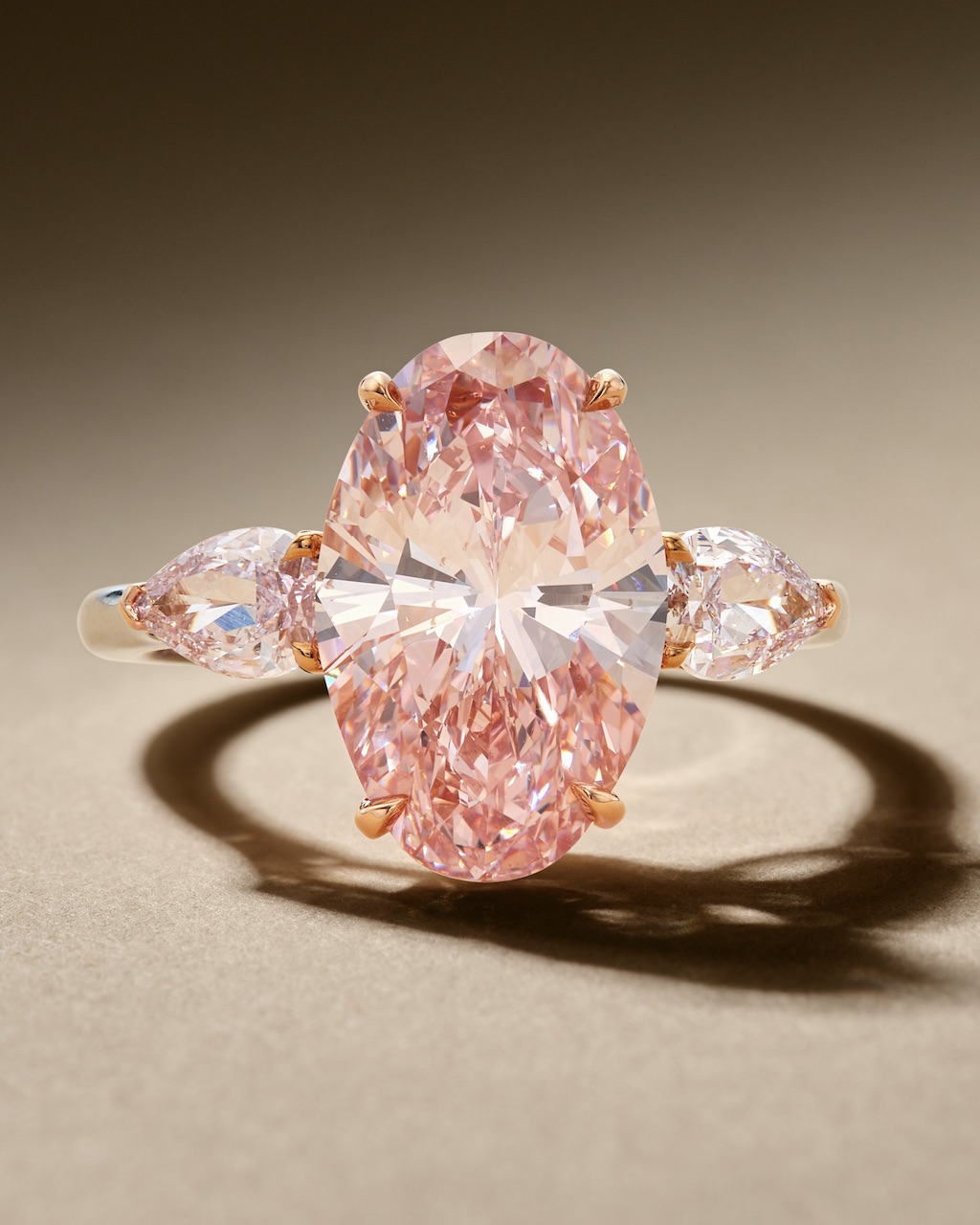
4.19-carat Fancy Purple-Pink Diamond and Diamond Ring, appearing in Sotheby’s New York High Jewelry Sale in June. (Courtesy of Sotheby’s)
Anyone who follows fine jewelry knows that June belongs to the auction houses. It’s the season when the rarest stones surface, when collectors clear their calendars, and when the kind of pieces that spend decades in private vaults finally step into the light. This June lives up to that reputation, and then some.
On June 16, Sotheby’s New York High Jewelry sale gathers a remarkable lineup of natural colored diamonds, white diamonds, and signed jewels from the houses that define the field. At the center of it all sits a group of fancy color diamonds so rare that most will never see their equal in person.
Meet the Expert
- Grant Mobley is the Jewelry & Watch Editor of Only Natural Diamonds.
- He is a GIA Diamonds Graduate.
- He has over 17 years of jewelry industry experience, starting with growing up in his family’s retail jewelry stores.
A Rare Fancy Intense Blue Diamond Takes Center Stage
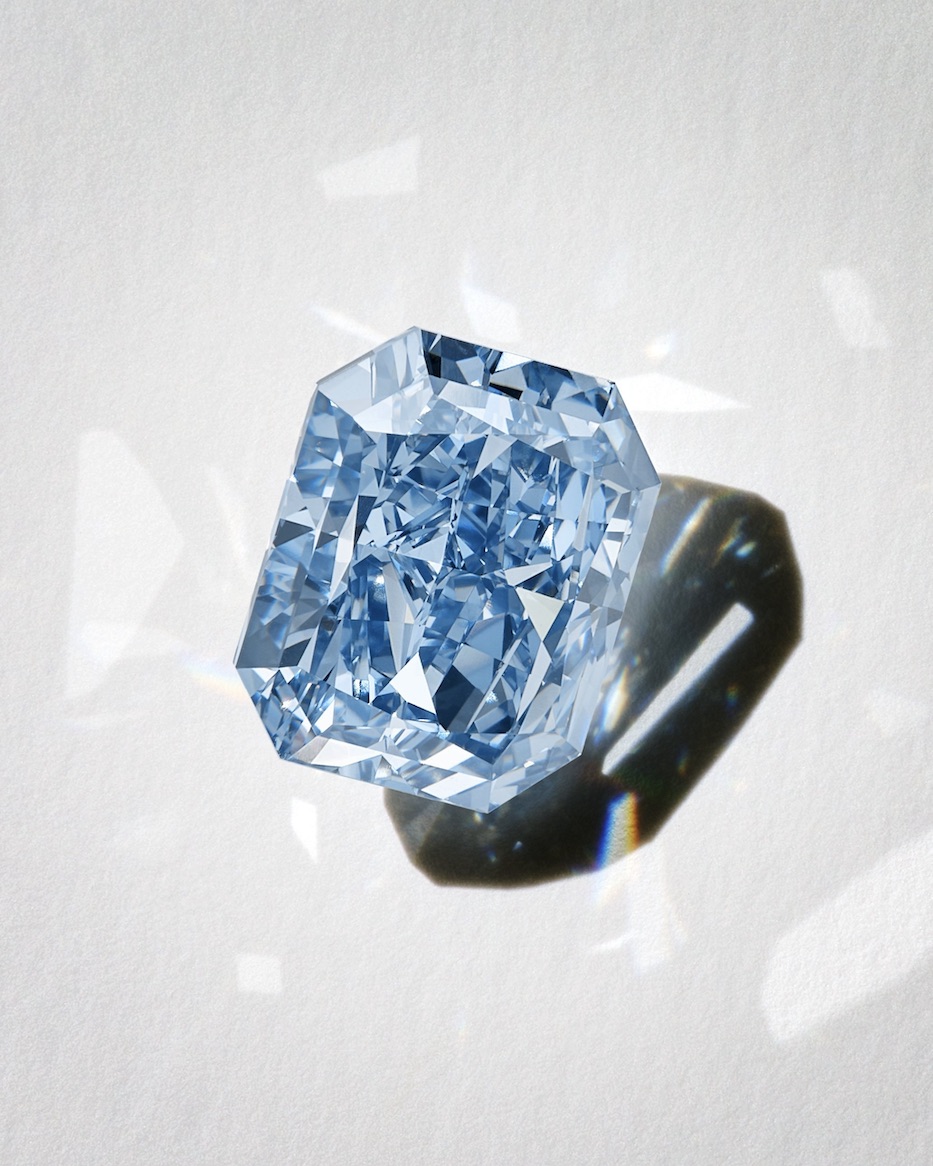
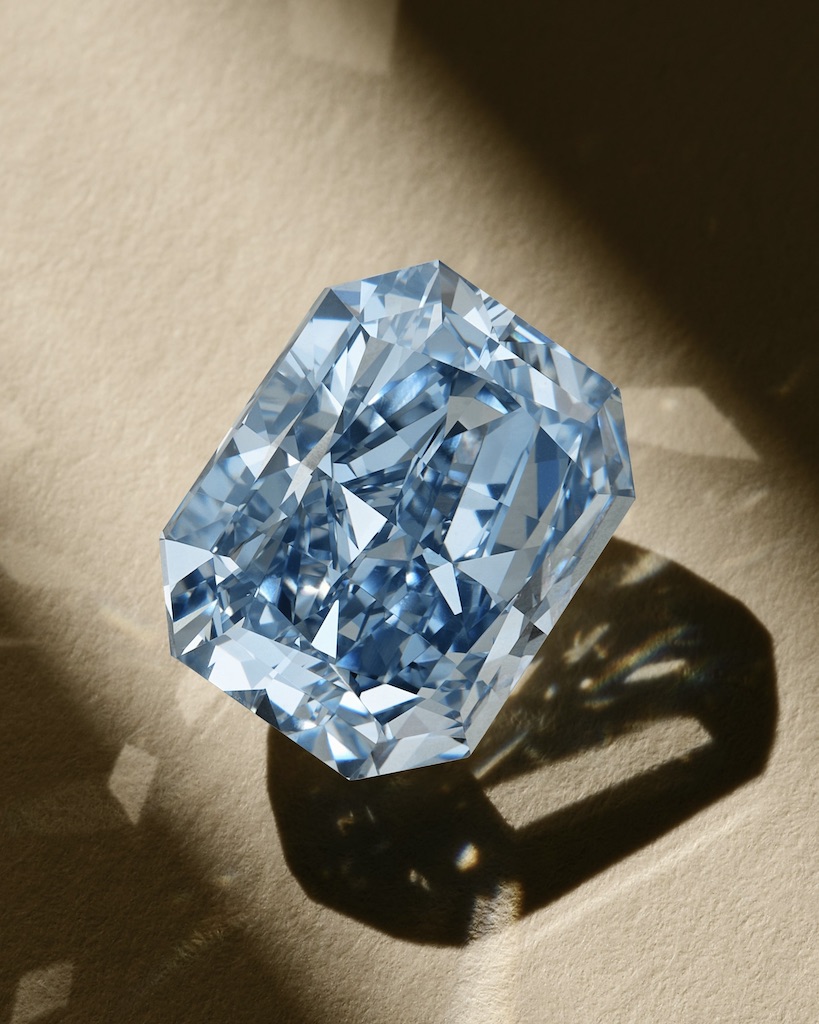
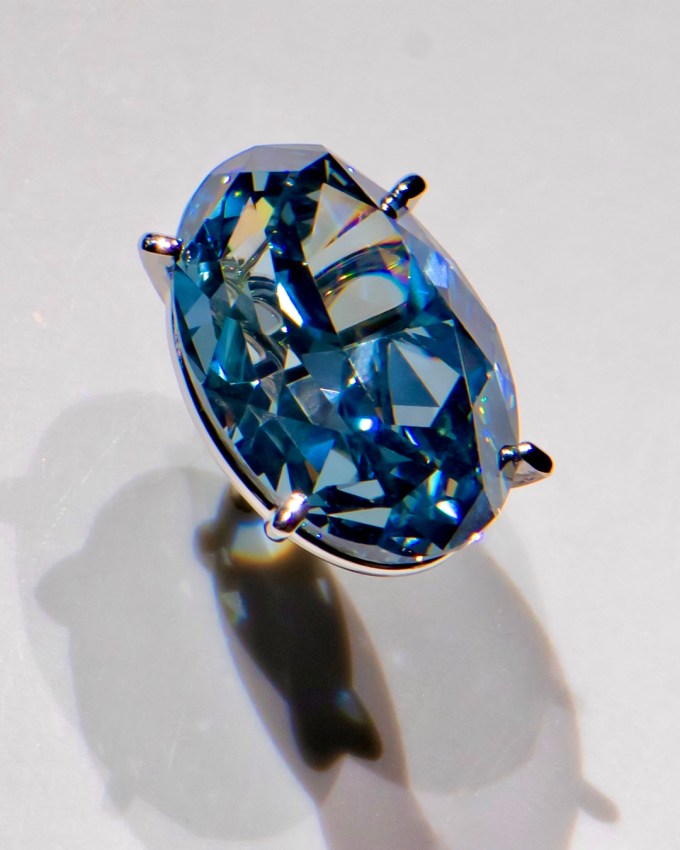
Let me start with the headliner: a cut-cornered rectangular modified brilliant Fancy Intense Blue diamond weighing 10.02 carats, carrying an estimate north of $6 million. To understand why that number makes sense, you need to understand just how scarce blue diamonds of this caliber are.
Blue diamonds occur when trace amounts of boron work their way into the crystal during formation, a geological accident so improbable that gem-quality blues make up a vanishingly small fraction of all diamonds discovered. Size compounds the rarity.
While only a handful of blue diamonds over 10 carats have crossed the auction block over the past 18 years, this stone marks only the third Fancy Intense Blue of such size offered since 2008. Pair that lush, saturated hue with a crystal nearly free of inclusions, and you have one of those once-in-a-generation opportunities that send serious collectors scrambling.
Also on offer is a cushion-cut Fancy Grayish Blue diamond weighing 6.76 carats, framed by pink diamonds and estimated at $1.2 to $1.8 million.
The Sale’s Pink Diamonds Are Just as Remarkable

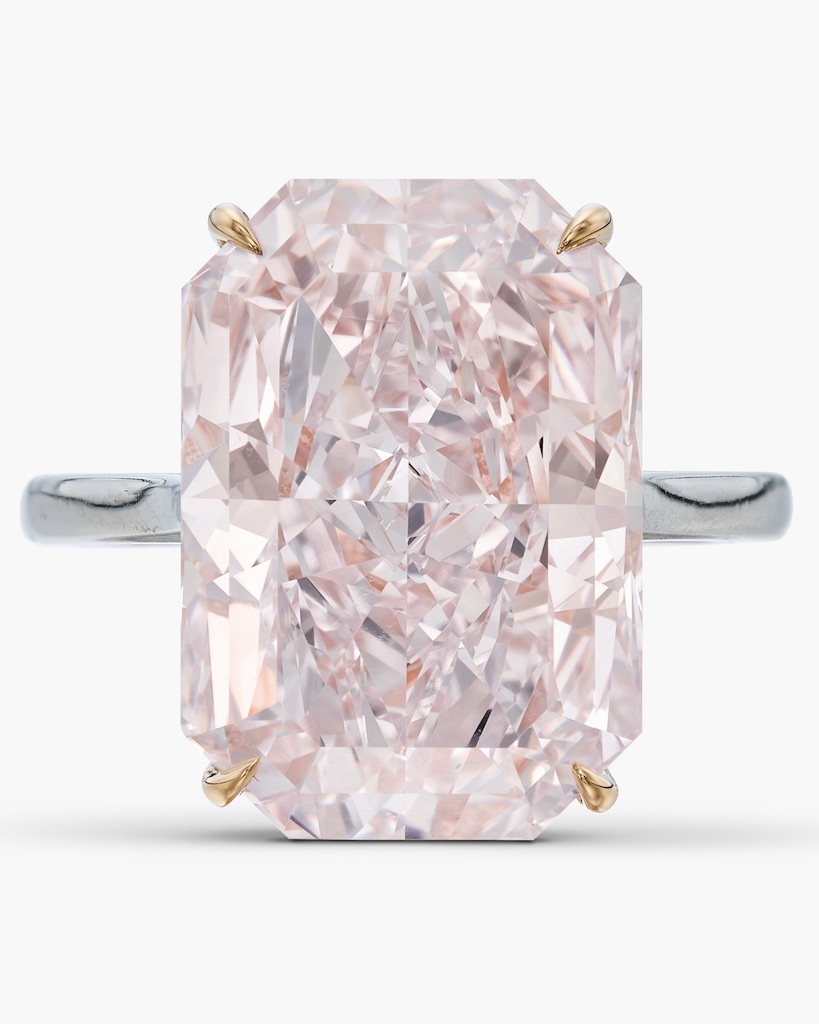
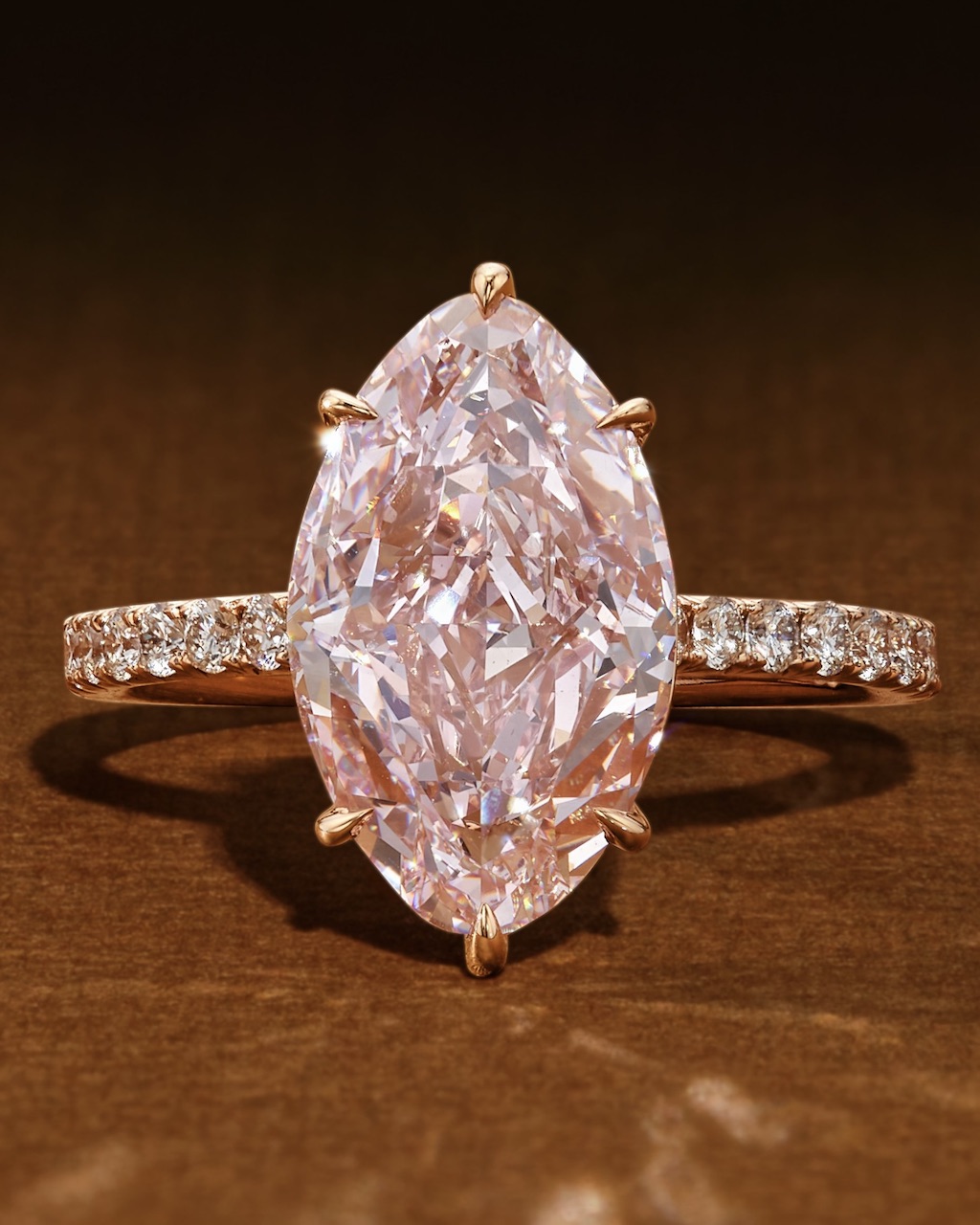
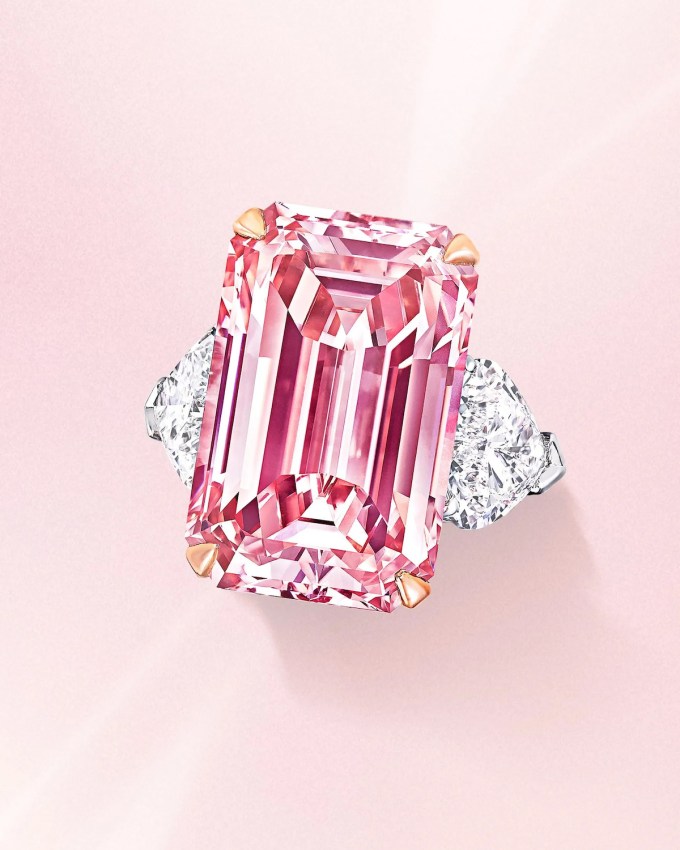
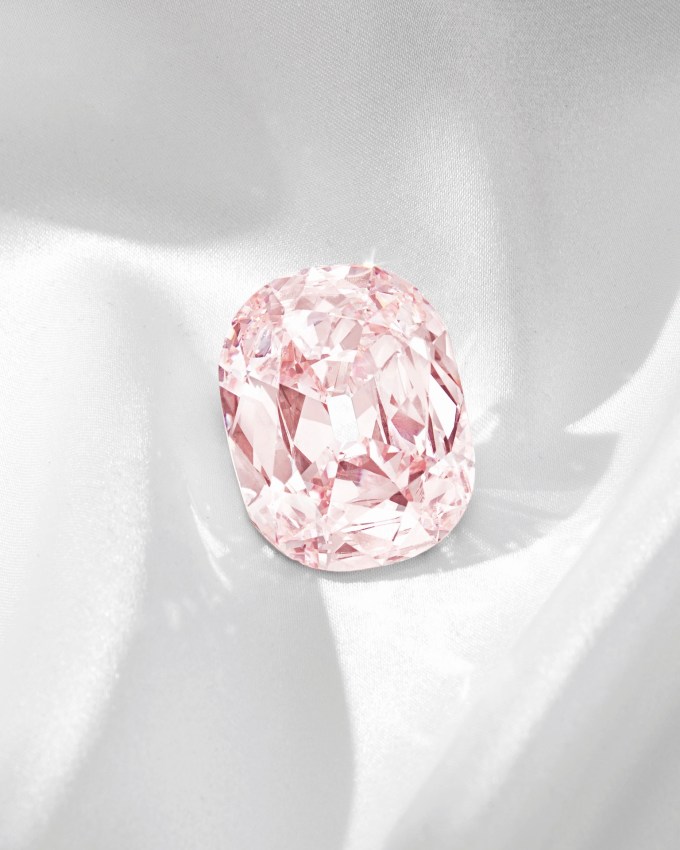
The pink diamonds in this sale tell an equally compelling story of scarcity. A ring with an oval 5.02 carat fancy intense pink flanked by light pink diamonds asks $2 to $3 million, while an oval Fancy Purple–Pink of 4.19 carats lands at $1 to $1.5 million. The showstopper among them, though, is a radiant-cut fancy light purplish–pink diamond weighing a substantial 13.77 carats, estimated at $1.5 to $2 million. Pink diamonds come from some of the most depleted sources on earth, and with the Argyle mine in Australia now closed, every fine pink that surfaces carries the weight of a shrinking supply behind it.
America’s Great Jewelry Houses Mark a Milestone Year
With the United States marking its 250th anniversary, Sotheby’s has assembled a fitting tribute: a selection of jewels from the American houses that shaped the country’s design language. David Webb, Oscar Heyman, Marcus & Co., Harry Winston, and Tiffany & Co. all appear, including an unmistakably patriotic Tiffany & Co. American flag brooch worked in diamonds, rubies, and sapphires.
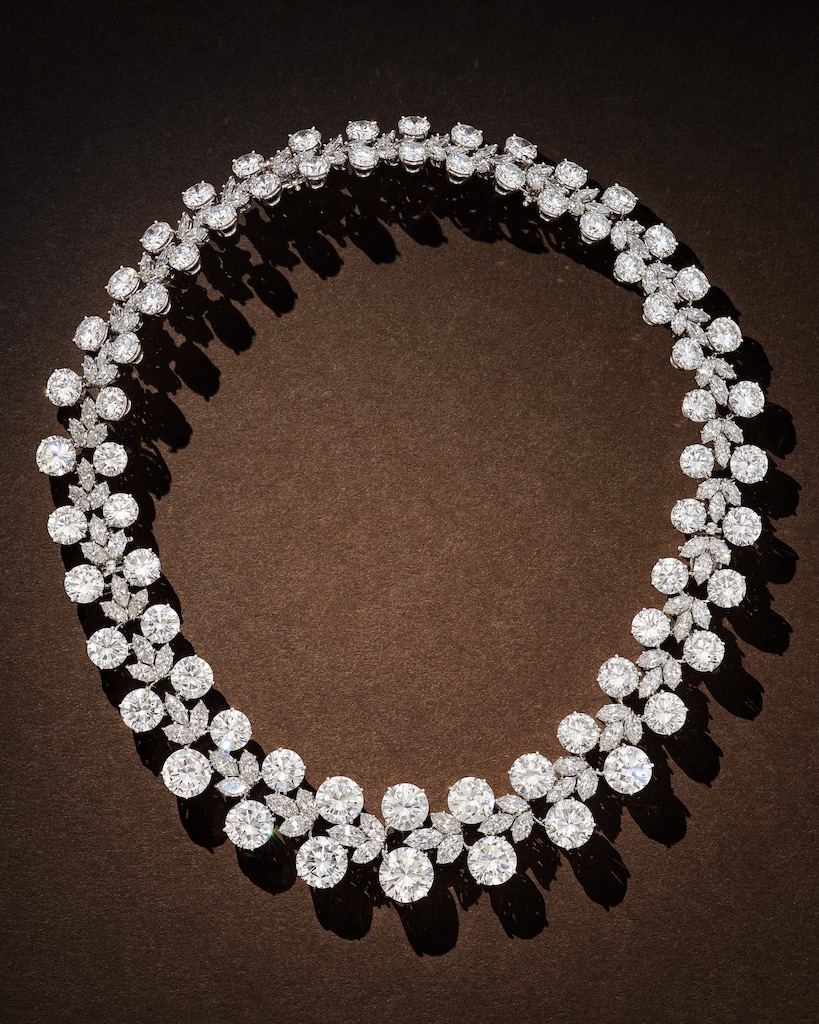
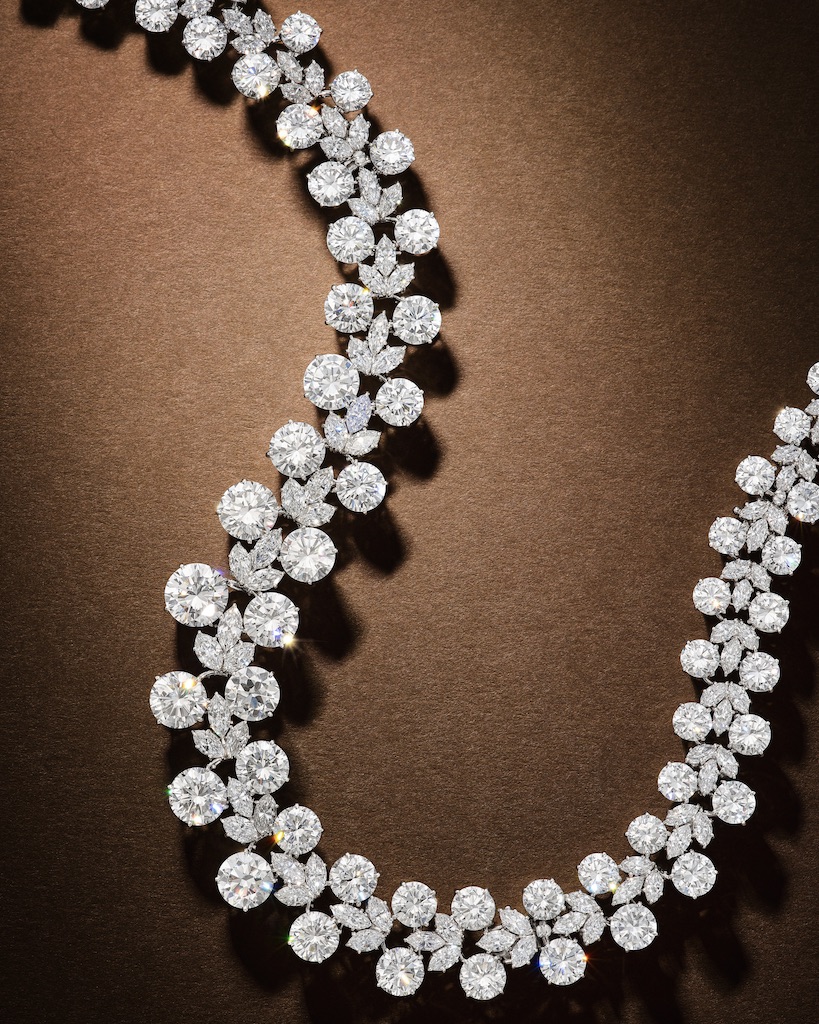
The sale’s cover lot comes from Harry Winston, a necklace from around the 1960s estimated at $800,000 to $1.2 million. Delicate trefoil clusters of marquise diamonds cradle substantial pairs of round diamonds, each link suspended with almost no visible support, so the stones seem to float against the skin. The illusion grows more impressive when you learn that the necklace contains more than 120 carats of diamonds. What makes it especially interesting to my eye is the emphasis on round stones. The signature Winston Cluster usually leans toward marquise and pear shapes, making this piece a distinctive expression of the House’s vocabulary.
A De Beers Diamond That Channels Golconda
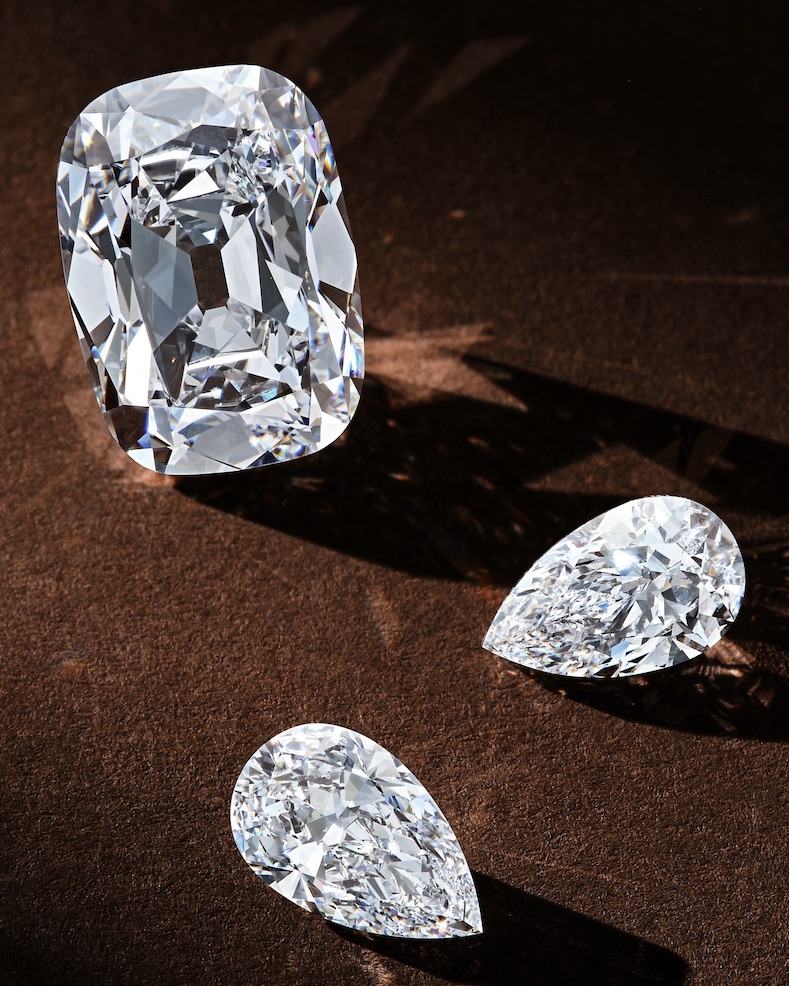
The sale continues Sotheby’s collaboration with De Beers, a partnership built around presenting diamonds as cultural icons and works of art. Lot 34 carries that idea forward beautifully: an elongated old mine-cut diamond of 11.33 carats, D color, Internally Flawless, and classified Type IIa, estimated at $600,000 to $800,000.
That Type IIa designation matters. It places this stone in the same chemically pure category as the legendary diamonds of Golconda, the historic Indian mines whose stones became famous for their almost otherworldly transparency. Add D color and VVS2 clarity, and you land in a tiny intersection where antique cutting style meets modern top-grade gemology. Rather than facet the stone to a rigid formula, the cutter took an intentionally non-formulaic approach, leaving the human touch visible in the finished gem and giving it a character all its own.
The De Beers partnership has already proven its strength at auction. In April, Sotheby’s Hong Kong sold the Jwaneng 28.88, a brilliant modern round, for $2.7 million, and in May, a pair of perfectly matched 18.38 carat rounds reached $3.3 million in Geneva.


Two pear-shaped diamond rings, each weighing 2.01 carats, accompany Lot 34, with proceeds going to the Peace Parks Foundation, the conservation charity co-founded by the late Nelson Mandela to protect Africa’s transboundary wilderness areas. It’s a fitting connection. Diamonds formed up to three billion years ago in some of the planet’s most remote and beautiful places, and De Beers has stewarded nature reserves across Southern Africa for more than 130 years, running biodiversity programs designed to limit and restore environmental impact.
Signed Necklaces With Remarkable Provenance
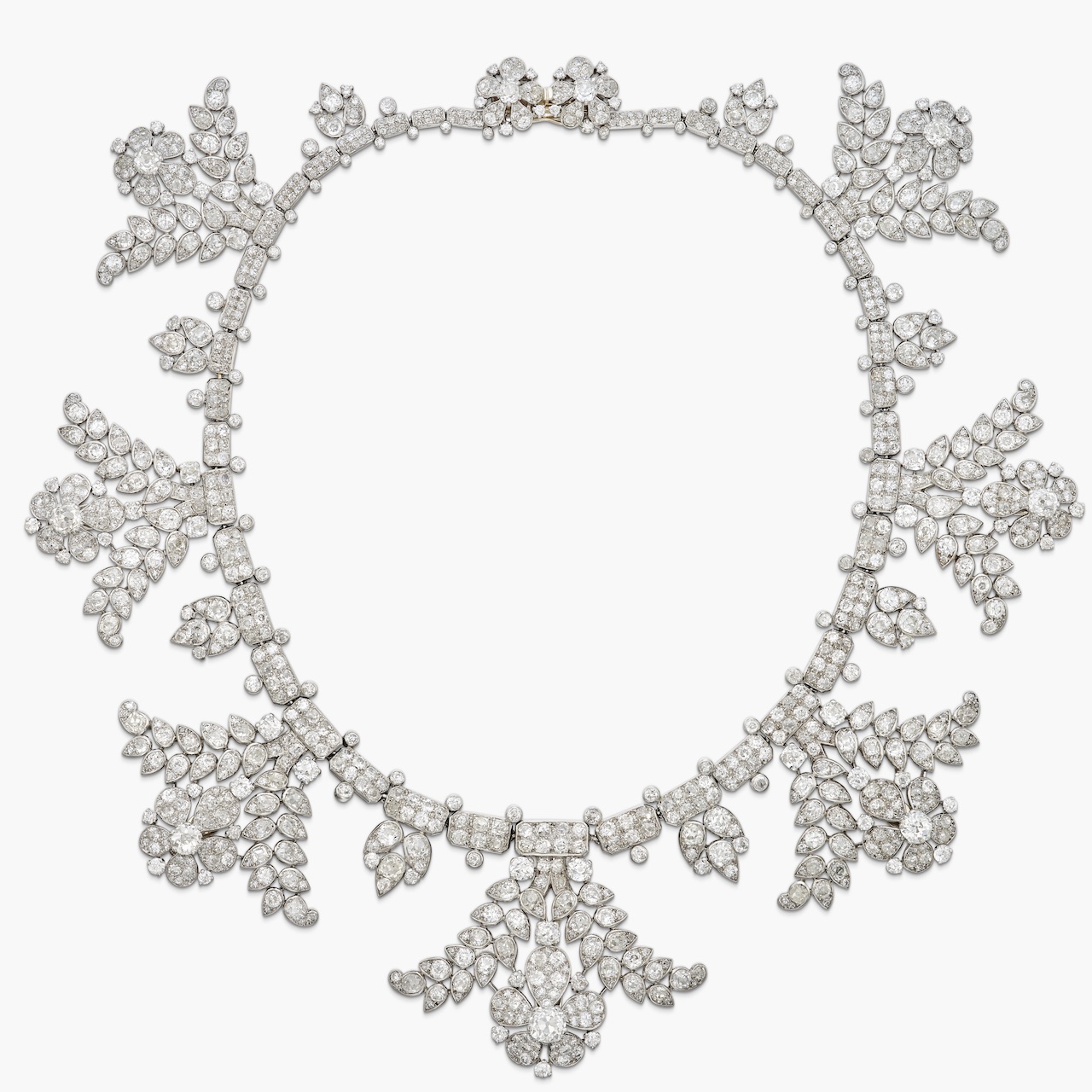
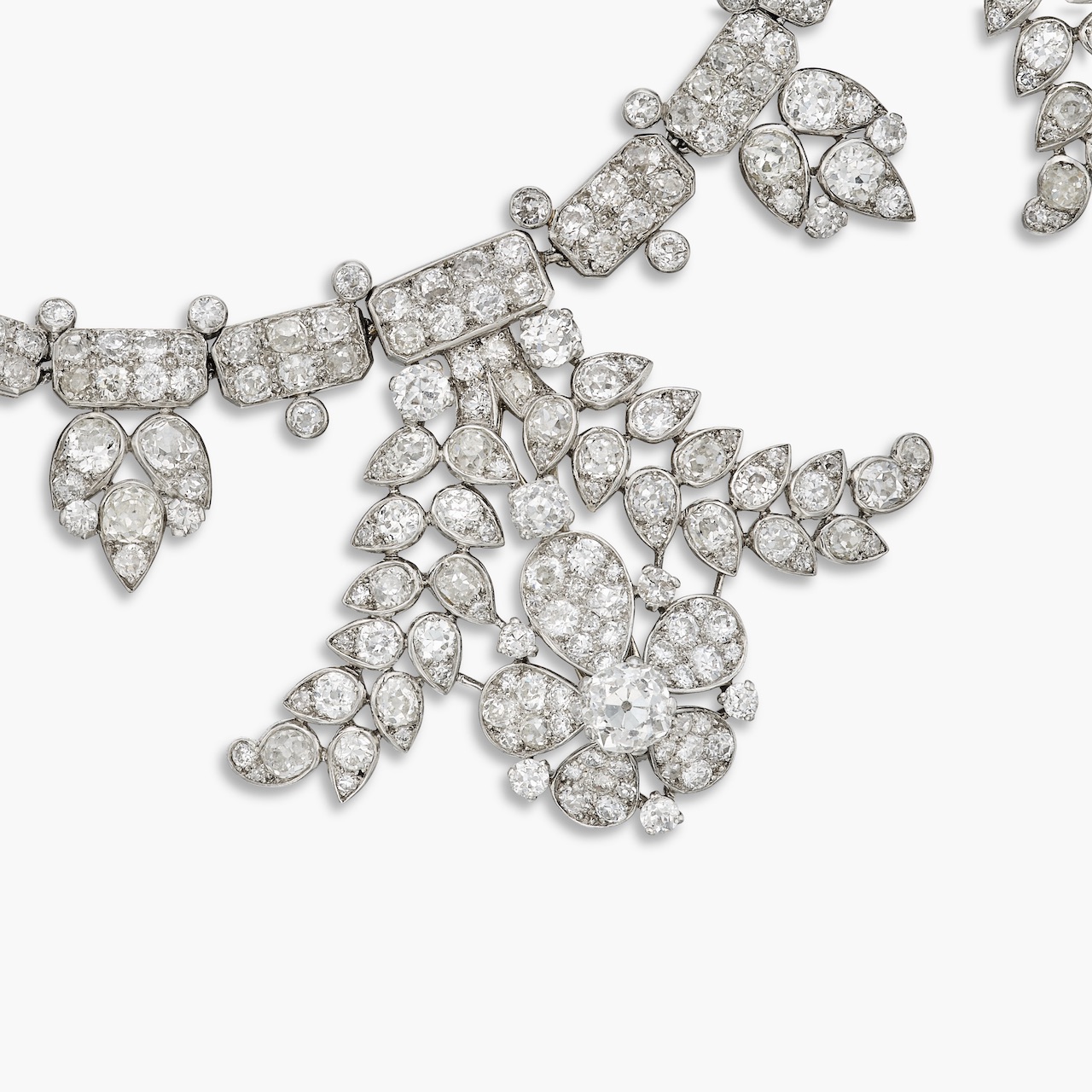
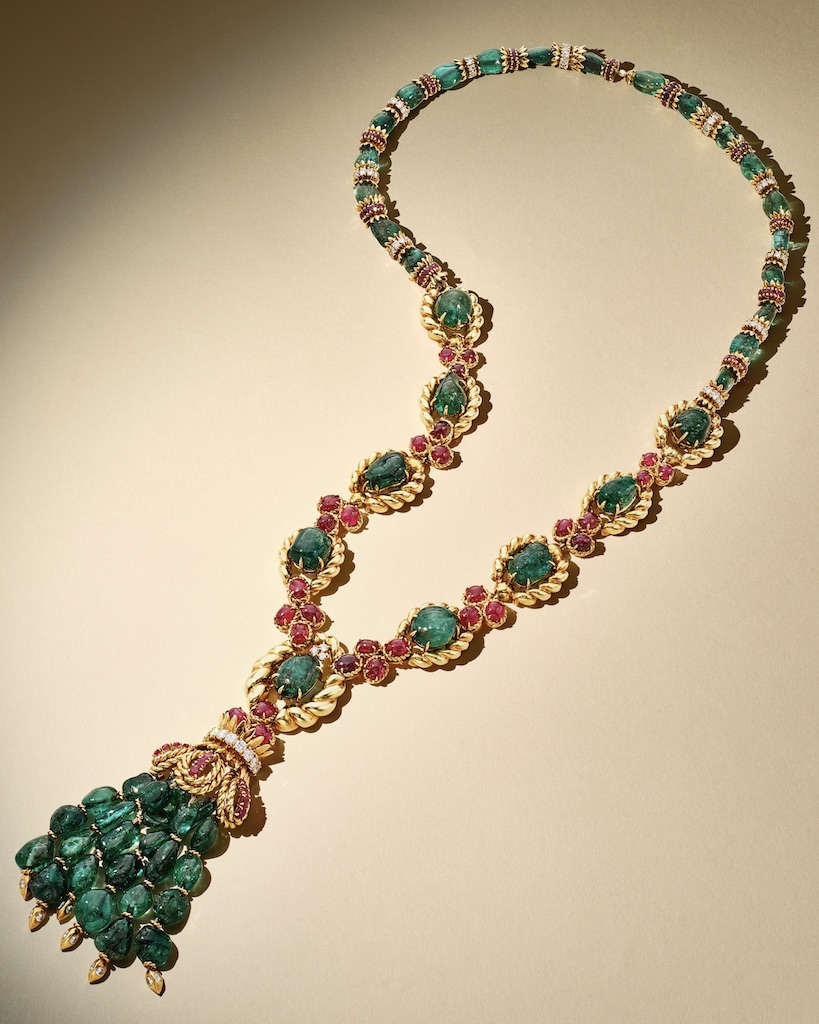
Beyond the diamonds, several signed necklaces deserve a close look. A 1930s Cartier necklace set with a mix of old European-, old mine-, rose-, single-, and round-cut diamonds carries an estimate of $80,000 to $120,000. A quintessential 1970s ruby, emerald, and diamond sautoir by Van Cleef & Arpels is estimated at $60,000 to $80,000.
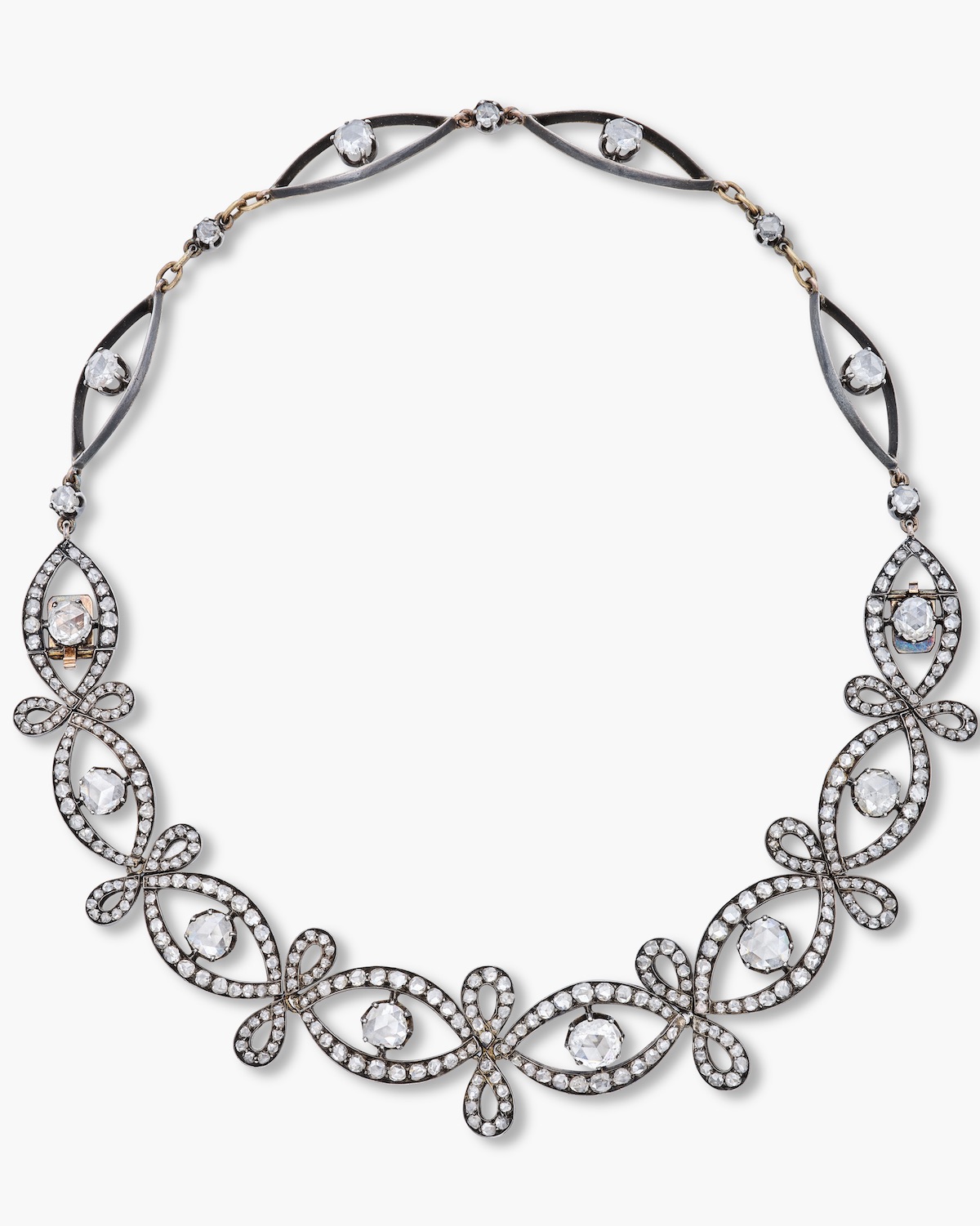
My favorite story, though, belongs to a Lalique necklace from the Morgan family, estimated at a relatively accessible $20,000 to $30,000. Elizabeth Sarah Jay, née Morgan (1889–1975), grew up at Wheatly, the Morgan family estate on Long Island. She was the great-granddaughter of Edwin Denison Morgan, the 21st Governor of New York, and she married Delancy Kane Jay, a direct descendant of John Jay, the first Chief Justice of the United States. Family lore holds that financier J.P. Morgan gave the necklace as a wedding gift for her 1910 marriage, though the piece itself dates to the late 19th century.
What makes it compelling, beyond its provenance, is the work itself. Composed of white diamonds set traditionally in silver-topped gold, it departs from the colorful, nature-driven motifs of René Lalique’s Art Nouveau period. It also converts from a necklace to two bracelets, showing the ingenuity of his work. The piece reveals the genius the master designer would soon be known for, making it a rare window into Lalique’s early career.
What Collectors Should Watch in This Sotheby’s New York High Jewelry Sale
This Sotheby’s New York High Jewelry sale in particular reminds you why June matters in the jewelry world. Between a blue diamond that surfaces maybe once every several years, a roster of pinks from sources that grow scarcer by the day, and a Golconda-class white diamond with real soul to it, the June 16 auction offers collectors a genuine shot at owning nature’s rarest work. Pieces like these don’t come around often, and when they do, they tend to disappear into private hands for another generation.
Get the Newsletter
Sign up for the latest diamond news, delivered directly to your inbox.