
Portrait Jewelry Has Illustrated the Sentimental Value of Diamonds For Centuries
Tiny treasures and tokens of love, diamond portrait jewelry has survived history as a beloved memento.
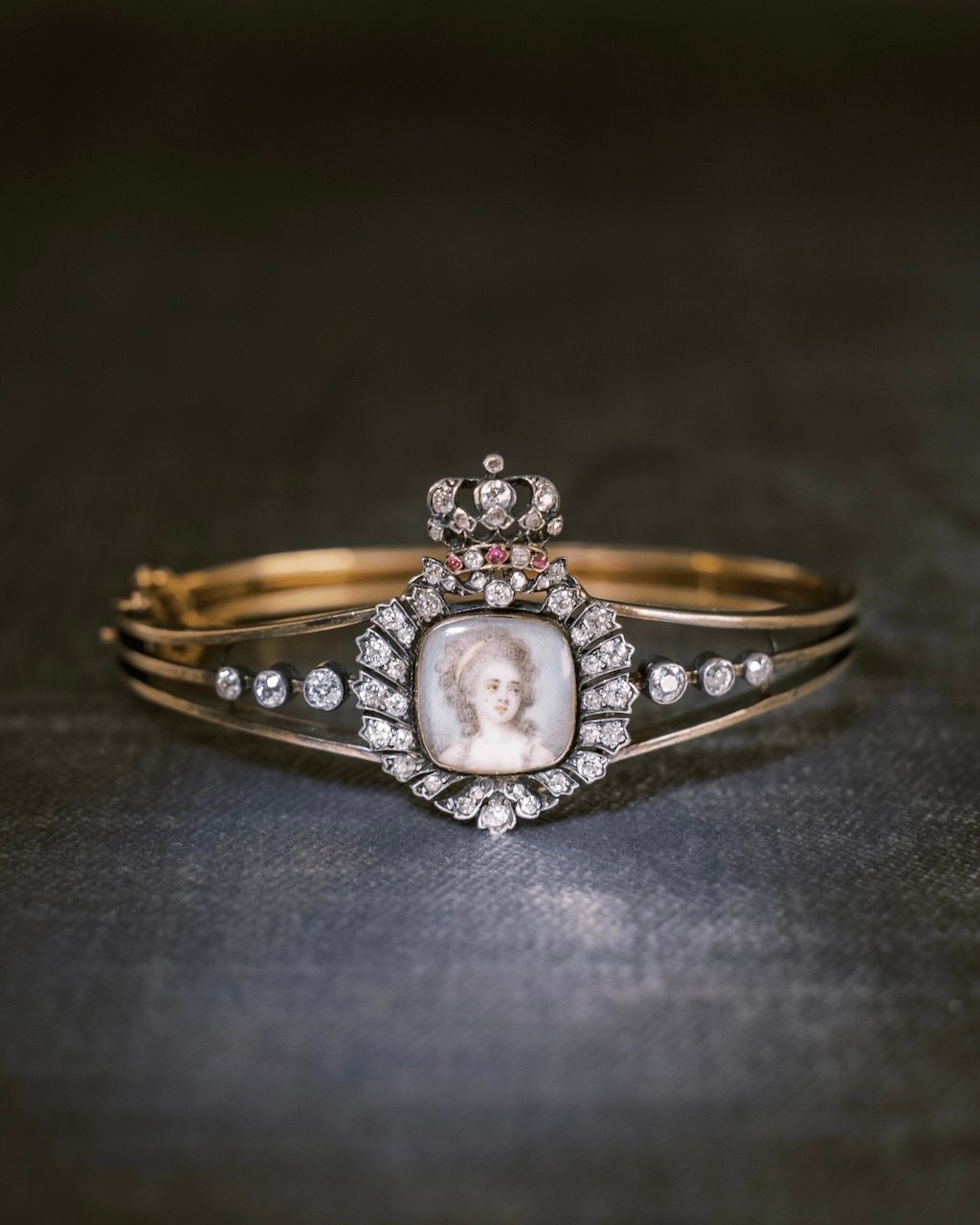
Vintage Hand-Painted Portrait Diamond and Ruby Leonardo Bangle from the Victorian Era, Circa 1850, $9,750, andriabarbone.com
Natural diamonds have represented love, romance and commitment since antiquity, but portrait jewelry adds another level of affection. For centuries, people have worn portraits of their loved ones as jewelry, keeping those closest to them quite literally near to heart.
Founder and designer of Cece Jewellery, Cece Fein-Hughes, tells Only Natural Diamonds, “Historically, portrait jewelry has always been one of the most romantic forms of adornment to me. From Georgian portrait miniatures to Victorian Lover’s Eye jewelry, these pieces were never simply decorative; they were deeply personal keepsakes, created to hold the memory of someone you loved close to you.”
Meet the Experts

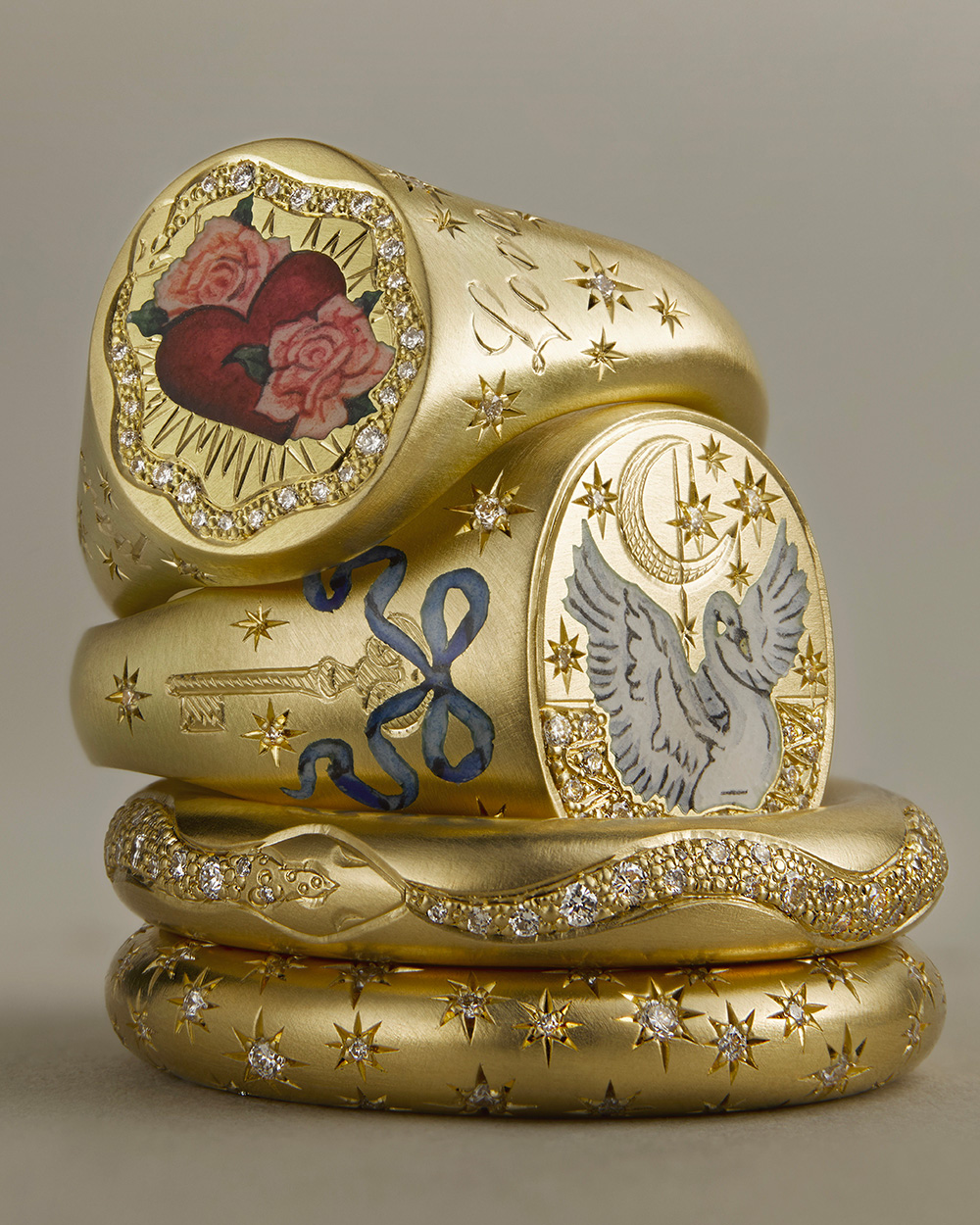
Cece Fein-Hughes is the founder and designer of Cece Jewellery, a London-based brand known for its whimsical, hand-painted champlevé enamel signet rings and necklaces.

Andria Barboné is the founder of her namesake jewelry brand. In addition to original designs, Andria Barboné offers a large collection of authentic antique and vintage jewelry ranging from the Georgian, Victorian, Edwardian, Art Deco, Mid-Century, and Retro eras.

Maggi Simpkins is a Los Angeles-based jewelry designer, best known for her narrative-driven engagement rings and future family heirlooms. She believes that when jewelry is passed down, it helps keep stories and memories alive.
According to jewelry designer and vintage jewelry connoisseur Andria Barboné, “Portrait jewelry was a very expensive, very intimate way of saying I want to carry your face with me everywhere.” She says, “I am in love with antique portrait jewelry personally — I actually wear one myself. I call them art within art — a tiny, intricately detailed painting, often framed by goldwork and diamonds that took just as long to construct. Two masterpieces in one object.”
Here, discover the rich history, sentimentality, and craftsmanship behind diamond portrait jewelry.
What Is a Portrait Miniature? The Origins of Diamond Portrait Jewelry

Portrait miniatures emerged during the Renaissance, first appearing in illuminated manuscripts in the 15th century. A small group of artists, including Lucas Horenbout and Hans Holbein the Younger, adapted these techniques to create small, independent portraits on vellum mounted to card.
Portrait miniatures then took the form of jewelry. Pendants, bracelets, rings, brooches, and more, featured tiny, painted portraits, encased in diamonds, pearls, and other gemstones. Portrait jewelry was first spotted in European royal courts in the 16th century before gaining popularity during the reign of Queen Elizabeth I. By the Georgian era in the 18th century, the trend completely exploded.
Among royals and high society, bejeweled portrait miniatures were frequently exchanged during marriage negotiations and used as diplomatic gifts, tokens of love, or mementoes to commemorate births or deaths. Portrait jewelry was also in high demand with soldiers and sailors who wanted to leave their loved ones with a likeness to cling to in their absence.

Commissioned by affluent individuals, portrait miniatures were typically ornately embellished. Made of gold and silver, finely adorned with enamel, and decorated with pearls and diamonds, the settings were sometimes considered even more important than the portrait itself.
According to Christie’s Auction House, miniatures in the 16th and 17th centuries were imprinted with emblems and impresa (heraldic devices), which symbolize “courtly love, melancholy, or pageantry.”
“Before photography, these tiny paintings were such intimate treasures, often hidden within lockets or rings and passed down through generations. I’ve always been fascinated by the emotion behind them,” says Fein-Hughes.
Queen Charlotte Used Portrait Jewelry to Display Her Love for King George III
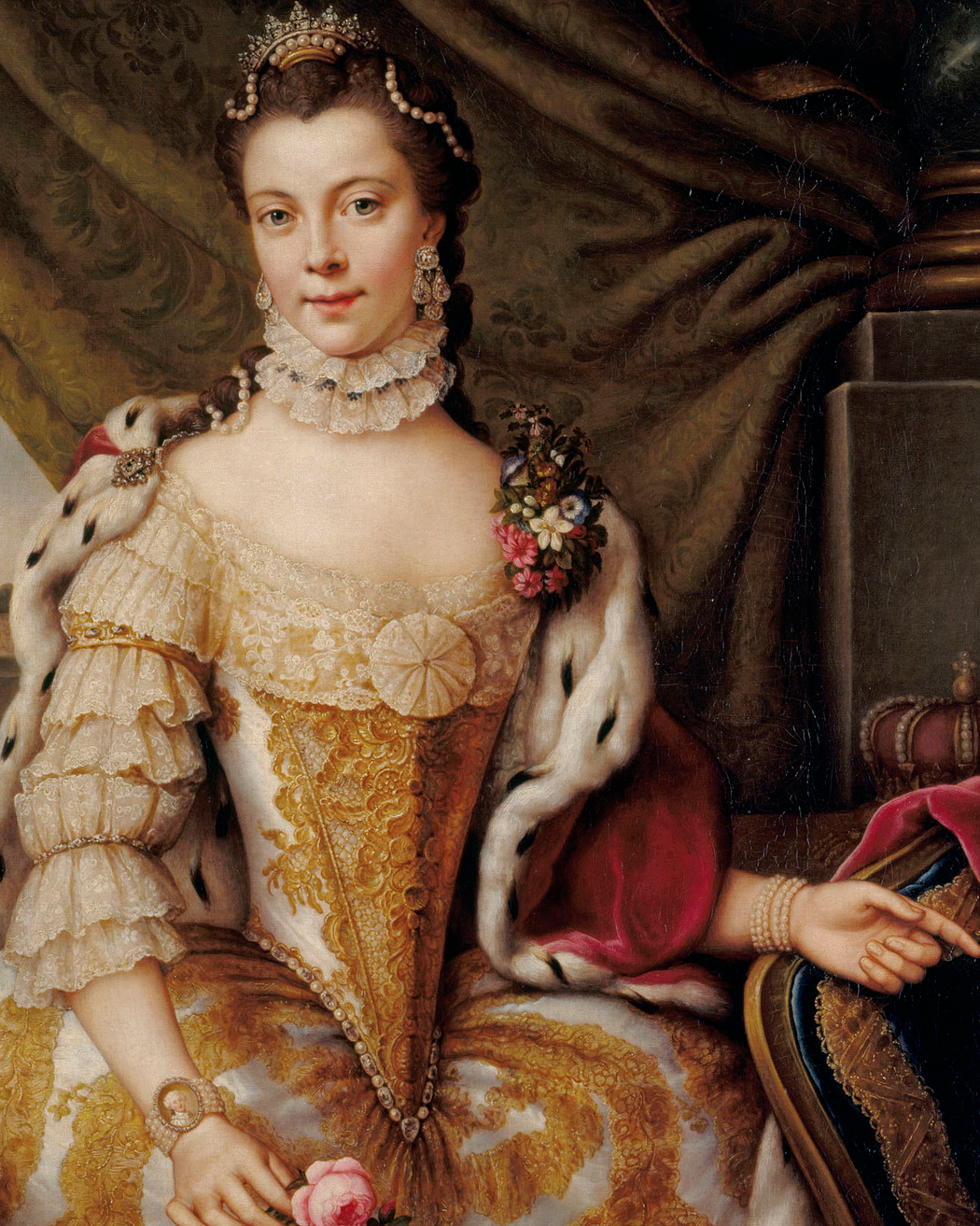

Talk about wearing your heart on your sleeve. Queen Charlotte wore a myriad of diamond portrait jewelry depicting her husband, King George III. The King gifted Charlotte an impressive suite of jewels on their wedding day on September 8, 1761, including one particularly important ring, set with a miniature portrait of the King beneath a large flat-cut diamond, surrounded by smaller antique diamonds.
According to the Royal Collection Trust, the Queen’s lady-in-waiting, Charlotte Papendiek, recorded that the ring was set with the “likeness of the King in miniature, done exquisitely beautiful for the coin, by our valued friend Jeremiah Meyer.” She wrote that the diamond ring was given to her Majesty to “wear on the little finger of the right hand on this auspicious day.”
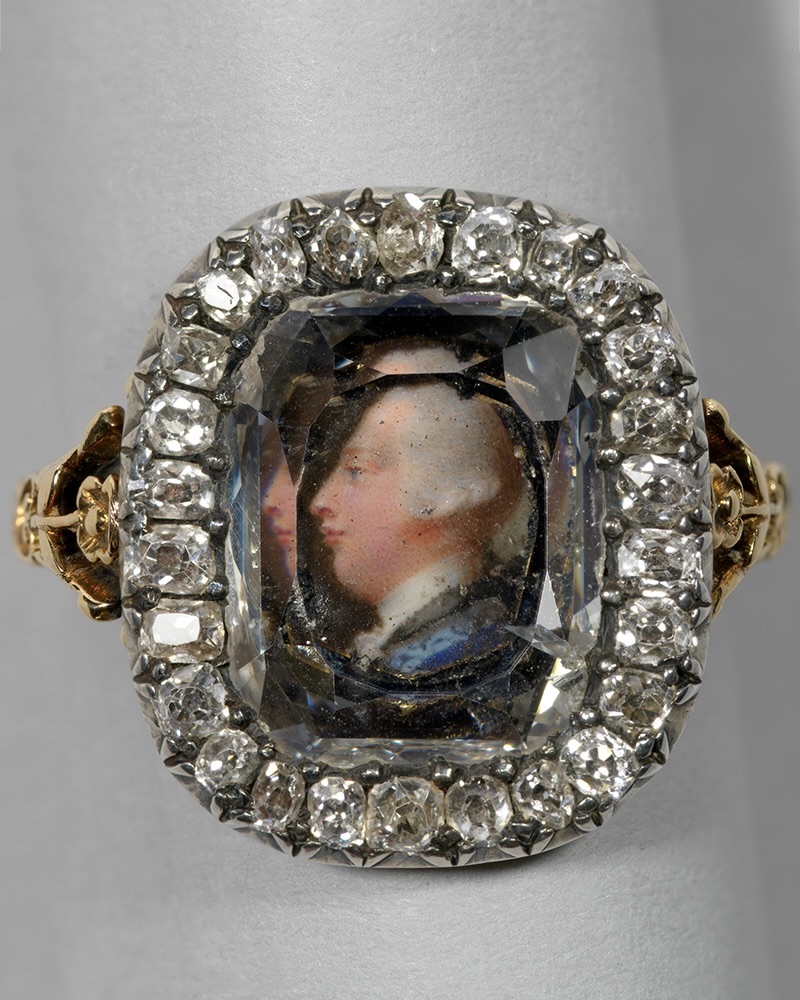
A sign of devotion and attachment while publicly expressing alliance, the jewel might be among the most historical portrait jewels and pinky rings of all time.
Not her only jewel featuring the King’s likeness, Queen Charlotte had her portrait painted by Johann Georg Ziesenis in 1761, the year of her wedding. In it, she is shown wearing a bracelet composed of five rows of pearls, centered on an oval portrait of the King and encircled by a frame of diamonds.
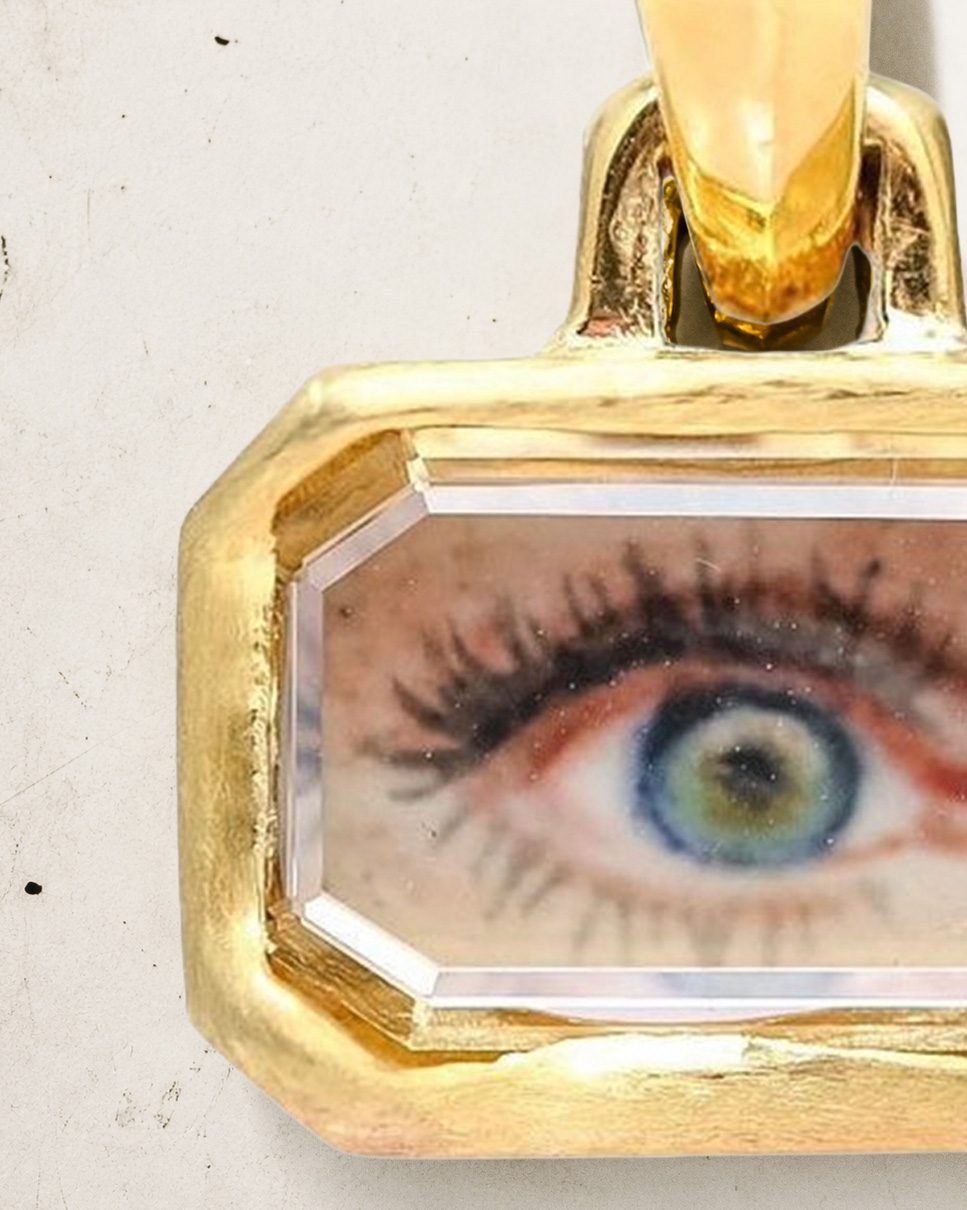
In the late 1700s, the son of King George III and Queen Charlotte, George IV—then Prince of Wales—followed in his parents’ love of portrait jewelry. He proposed to the love of his life, Maria Fitzherbert, with a miniature portrait of his eye, known as a “Lover’s Eye,” set in a locket. The two went on to marry in a secret and illegal ceremony.
The Duchess of Devonshire Portrait Diamond
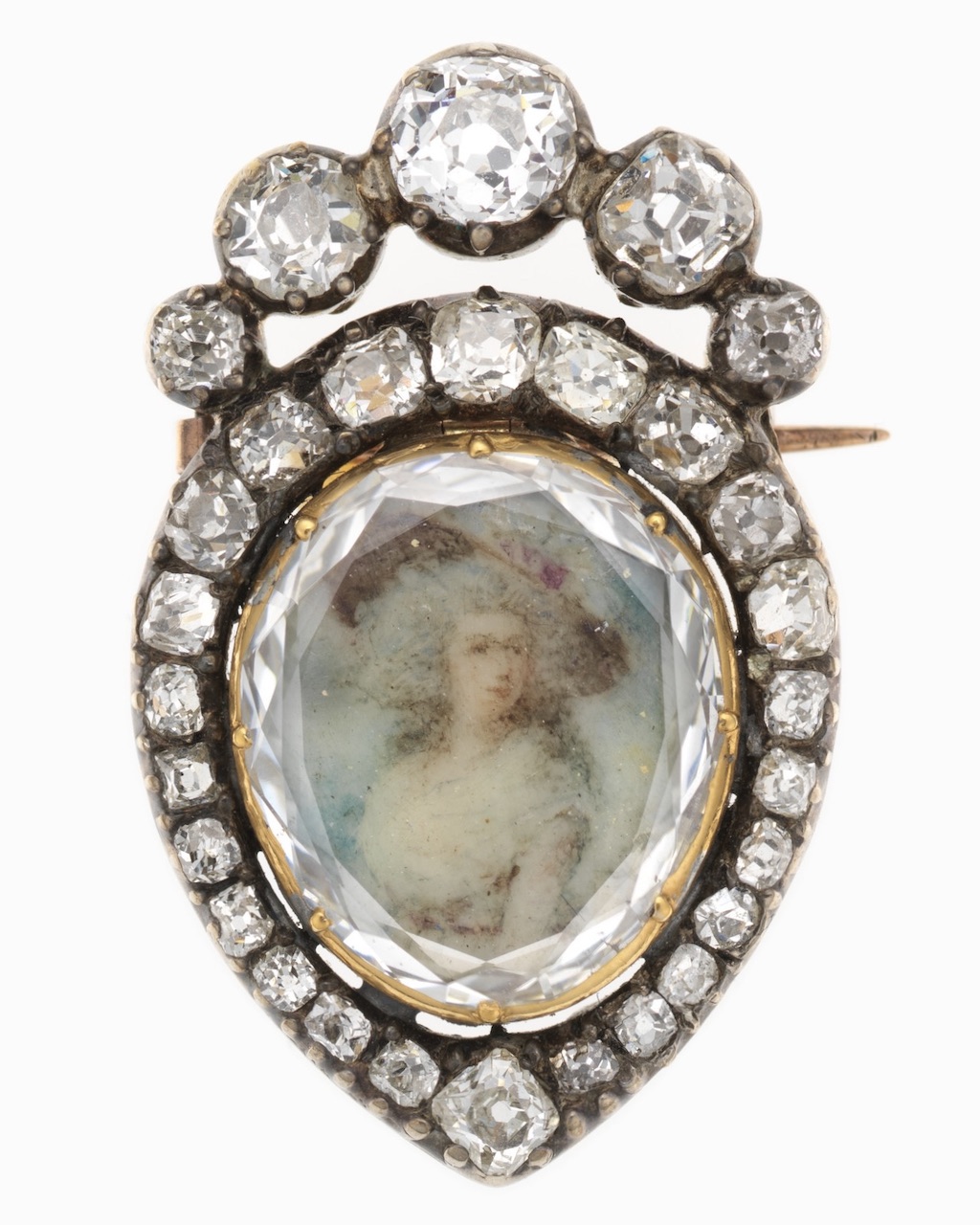


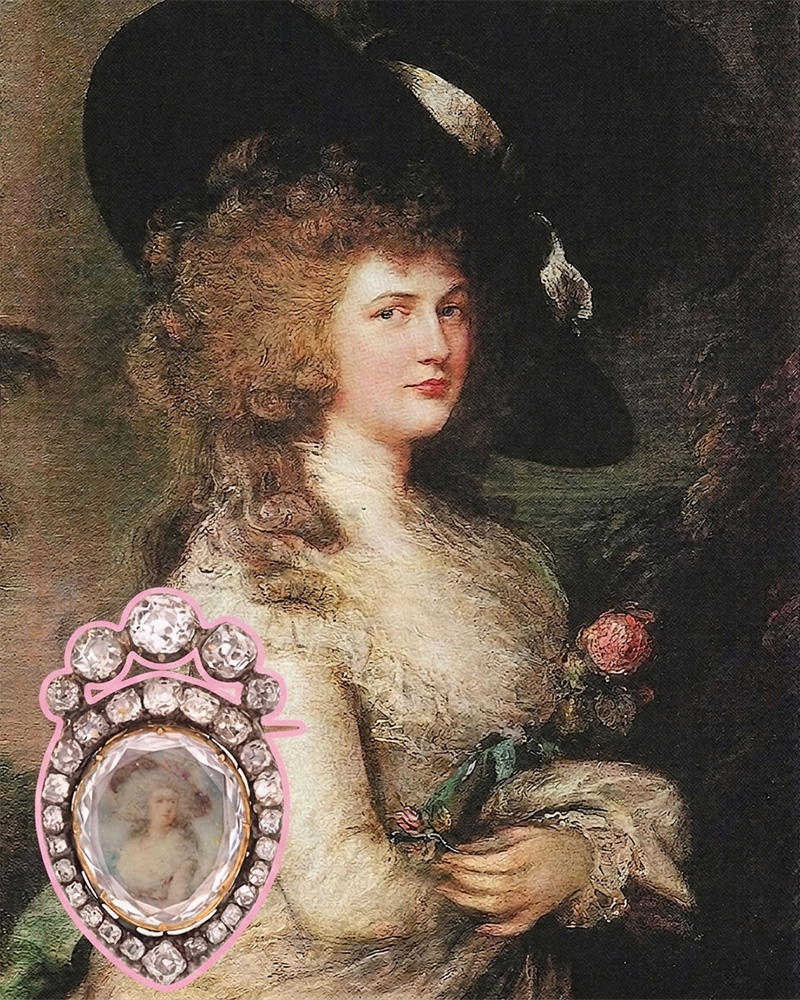
Georgina, Duchess of Devonshire (1775-1806), owned a historical piece of diamond portrait jewelry featuring her own likeness. An influential figure within the British aristocracy, she was the wife of William Cavendish, 5th Duke of Devonshire, and a defining style icon of her era. Known for her striking beauty and bold approach to fashion, Georgiana helped set trends across 18th-century society, from towering feathered hairstyles to extravagant jewels.
The miniature illustration is painted on ivory, the most commonly used medium for portrait miniatures at the time. Surrounded by a frame of brilliant-cut diamonds, the image is protected beneath a thin slice of a portrait diamond.
Portrait diamonds of this caliber are rare, requiring an incredibly limpid, thinly cleaved stone so that the portrait may be seen through the diamond. The lasque cut once achieved the subtle sparkle in the flat portrait diamond, which originated in India, the world’s primary source of diamonds before the 18th-century.
Crafted in England in the 19th-century, this portrait diamond brooch illustrates the significance of India and England’s trade relationship. Many of the largest and most transparent, limpid stones – just like the one that sits above the Duchess of Devonshire’s painting – were mined in alluvial deposits in Golconda from about 1500 to 1700.
A Natural Diamond Ode to Maharajas


Held by Christie’s in New York on June 19, 2019, the Maharajas & Mughal Magnificence auction lasted 12.5 hours and totaled $109.3 million, becoming the highest-grossing auction of Indian jewelry and art in history.Curated from The Al Thani Collection, the sale showcased nearly 400 lots spanning 500 years of Indian and Mughal craftsmanship. The collection spanned Golconda diamonds, rare-color gems, royal turban ornaments, as well as ceremonial swords and daggers.
Redefining how historic Indian jewelry commands the global stage, the auction included six pieces of innovative portrait jewelry. Antique Champlevé enamel, gold, and rose-cut diamond hunting case pocket watches depict His Highness Sawai Mahendra Sir Pratap Singh Bahadur, Maharaja Bhupinder Singh of Patiala, and Indian noblemen.
The image of Maharaja Vibhaji II Ranmalji, Jam Sahib of Nawanagar, is illustrated on an enamel plaque, encased in an oval-shaped frame crafted from old and baguette-cut diamonds on an antique portrait brooch from the early 20th century. His portrait is also featured on an oval-shaped gold pendant featuring old-cut diamonds, as well as a pair of pearl, enamel plaque, and old-cut diamond cufflinks.
Maharaja Vibhaji II Ranmalji ruled the Indian princely state of Nawanagar (now known as Jamnagar) from February 1852 until his death in April 1895. Nawanagar accumulated much of its wealth from a renowned pearl fishery. The Maharajas of Nawanagar were known for their impressive collections of jewels. According to Christie’s, even Jacques Cartier said the collection was “unequaled in the world, if not in quantity, then certainly in quality.”
Modern Lockets & Diamond Portrait Jewelry

You can’t discuss portrait jewelry without talking about lockets – the perfect talisman to keep a loved one with you always. Cece Jewellery recently made its foray into portrait jewelry with a custom locket, honoring a client’s father.
Fein-Hughes tells OND, “Completing our first-ever portrait piece felt incredibly special.” She says, “We had always been hesitant to do portraiture because the precision must be so exact, and that is especially difficult within Champlevé enamel, where every tiny carved recess has to be considered before painting even begins.” The jewelry designer explains that the ancient technique leaves little room for error, but when this commission came across her desk, Fein-Hughes was enticed by the sweet story behind it. “I felt we had to try.”
“We spent a huge amount of time studying the image and carefully translating the shadows, expressions, and tiny details into enamel whilst still retaining the softness and emotion of the original photograph and my sketch,” she explains. It became a balance between technical precision and artistry. I am so glad we took it on because it turned out incredibly beautiful and felt so full of soul.” The gold locket opens to illustrations of a white goat on one side, and the client’s father on the other – both alongside a diamond-encrusted crescent moon.
Exclusively working with natural diamonds, Fein-Hughes says, “our ancient craftsmanship deserves to be finished with the same level of rarity and excellence.” She explains, “Every piece we create takes months of hand craftsmanship by artisans who have spent decades mastering their skill, so it only feels right that the stones themselves carry that same sense of permanence, rarity, and magic.”
Fein-Hughes continues, “There is also an energy and individuality to natural diamonds that feels perfectly aligned with our jewelry. We are creating future heirlooms and deeply sentimental pieces, and I believe the materials should reflect that completely. We really wouldn’t have it any other way.”
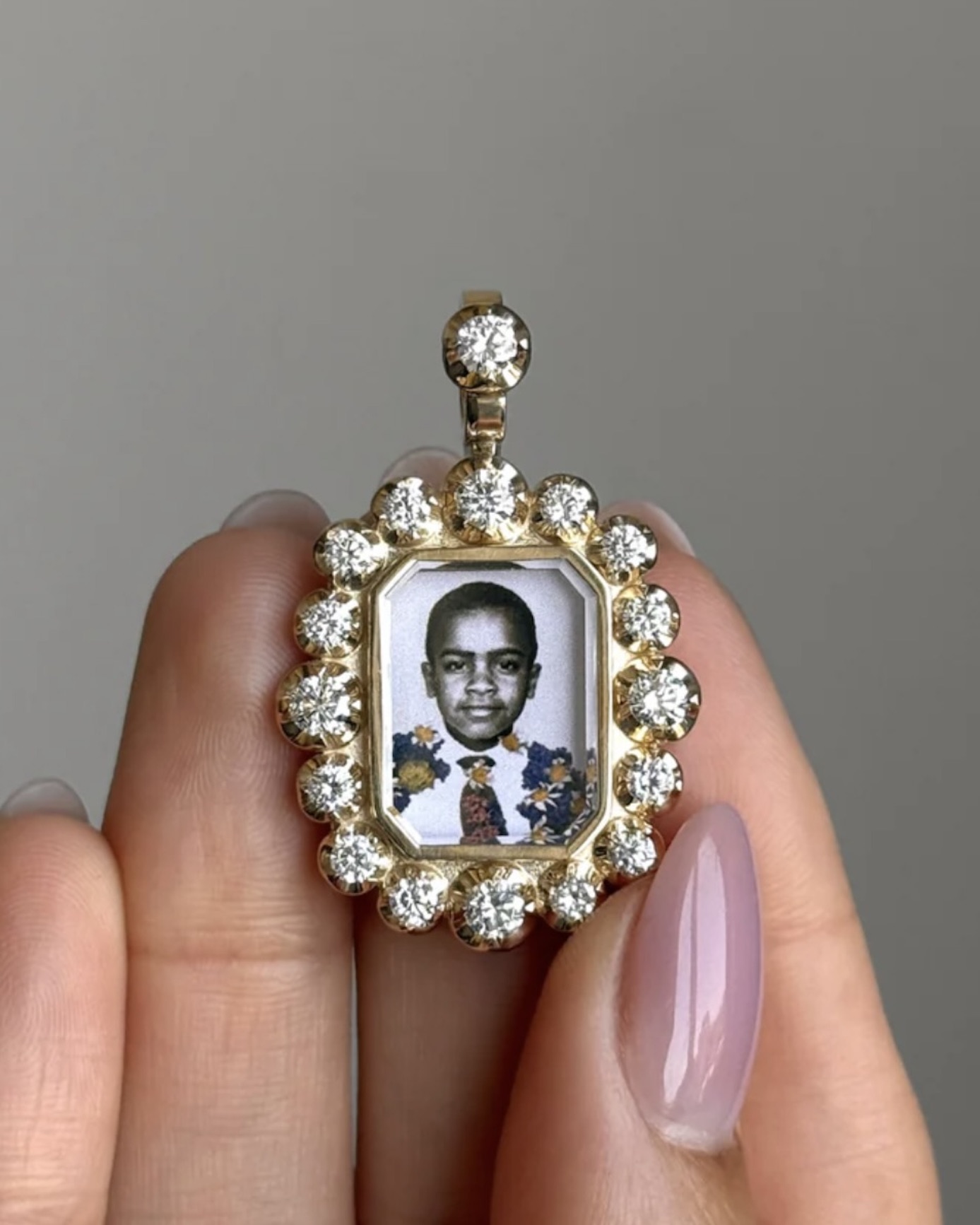
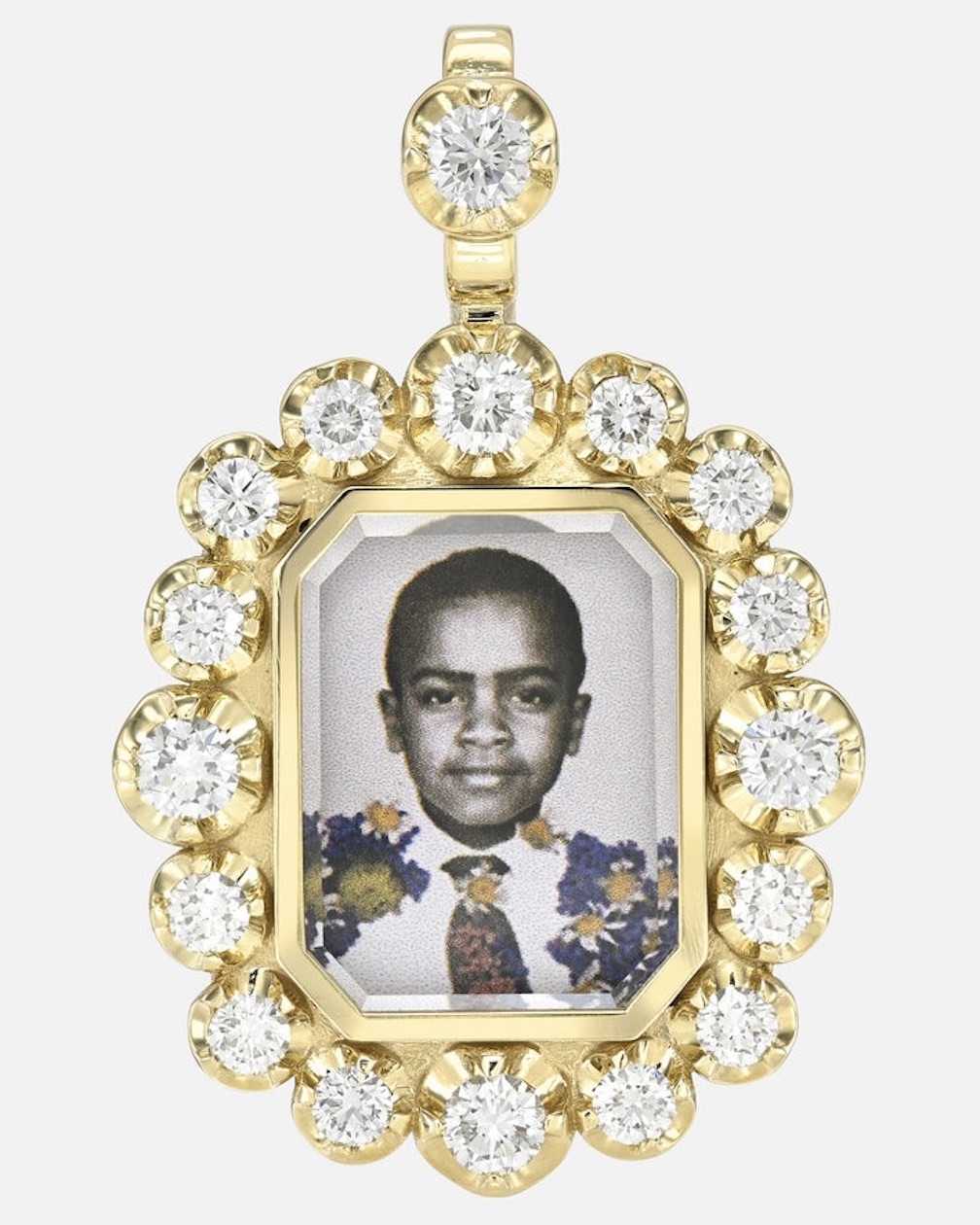
Jewelry designer Maggi Simpkins sees the locket as an “ode to your story.” Her Crown Frame Locket Pendant contains a custom portrait-cut sapphire crystal over a photograph of your choosing, with approximately 1.56-carats of round brilliant-cut diamonds, set in 14-karat gold.
“Growing up, I loved lockets, but it always felt bittersweet hiding the sweet photo inside,” says Simpkins. “I remember when I started seeing rapper-style chains with printed photos on them.” In the hip-hop culture, jewelry is king, and bespoke photo “memory pendants” have become customary to honor lost loved ones, shining in natural diamonds. According to Vikki Toback’s comprehensive book, Ice Cold: A Hip-Hop Jewelry History, rapper Meek Mill had a diamond-embellished memory pendant made by Philadelphia-based Joe the Jeweler of Shyne Jewelers, in tribute to his murdered protégé, Lil Snupe.
Simpkins continues, “I thought it would be really cool to be able to print out an actual photo and feature it on a necklace behind a gem, so that it was the main centerpiece, while also having the option to swap out the photos.” The designer wanted to ensure that the image was elevated in the center of the piece, to “serve as the gem itself, while also creating a unique detailed picture frame to accentuate the photo.”
“All of my most important jewelry is sentimental, and reminds me of loved ones, mostly who have passed on,” Simpkins explains. “I lost my father in 2012, and I wear a photo of him as a child in my locket on my neck daily. People ask about it all the time, and I get to be reminded of him and his memory all of the time.”