
Russian Imperial Jewels Linked to Catherine the Great Resurface After a Century in Hiding
Long-lost diamond dress trimmings from the Romanov crown jewels and a rare Fabergé aquamarine and diamond necklace anchor Sotheby’s first Artistic Luxury sale, surrounding Russian Imperial Jewels this June in New York.
Sothebys Artistic Luxury Auction Russian Imperial Jewels (Courtesy of Sotheby’s)
For nearly a hundred years, a small cache of diamond jewels that once graced the gowns and bodies of Russia’s most powerful empresses vanished into private hands. On June 17, these Russian Imperial jewels step back into the light.
Sotheby’s New York will headline its inaugural Artistic Luxury: Fabergé, Gold Boxes, Silver & Ceramics auction with a group of Imperial Russian treasures that traces a direct line to Catherine the Great and Emperor Nicholas II. Two centuries of court history converge in these lots, and the back stories are as interesting as the pieces themselves.
Meet the Expert

- Grant Mobley is the Jewelry & Watch Editor of Only Natural Diamonds.
- He is a GIA Diamonds Graduate.
- He has over 17 years of jewelry industry experience, starting with growing up in his family’s retail jewelry stores.
Russian Imperial Jewels and the Court That Rivaled Versailles
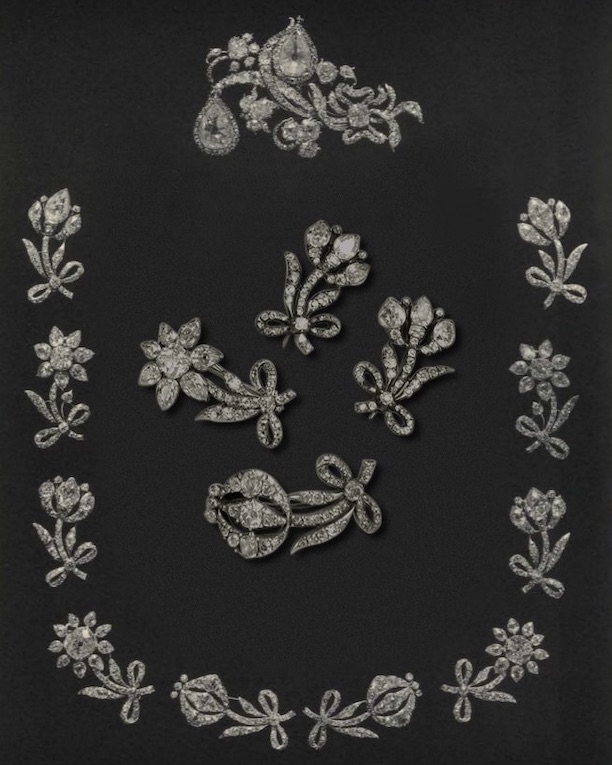
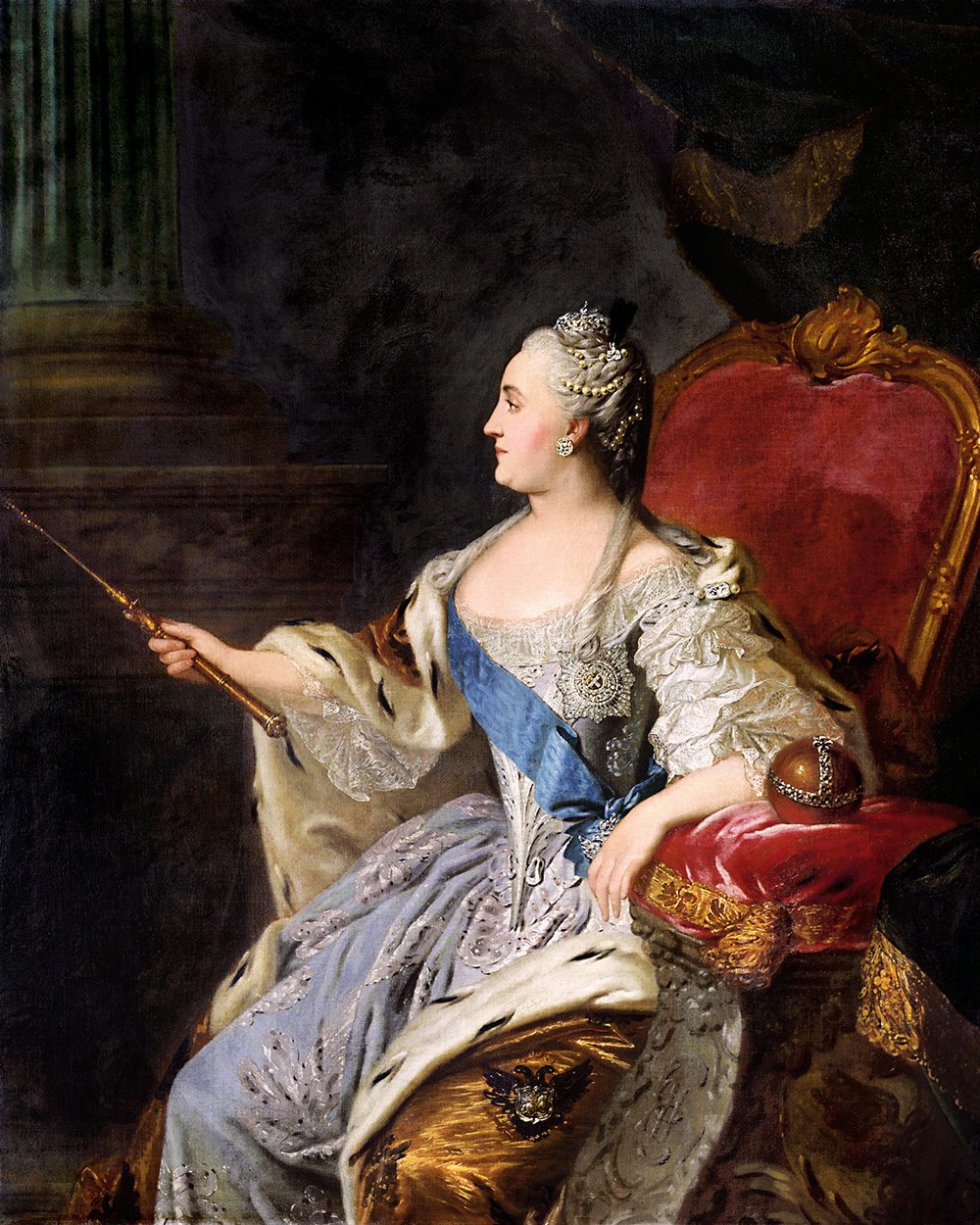
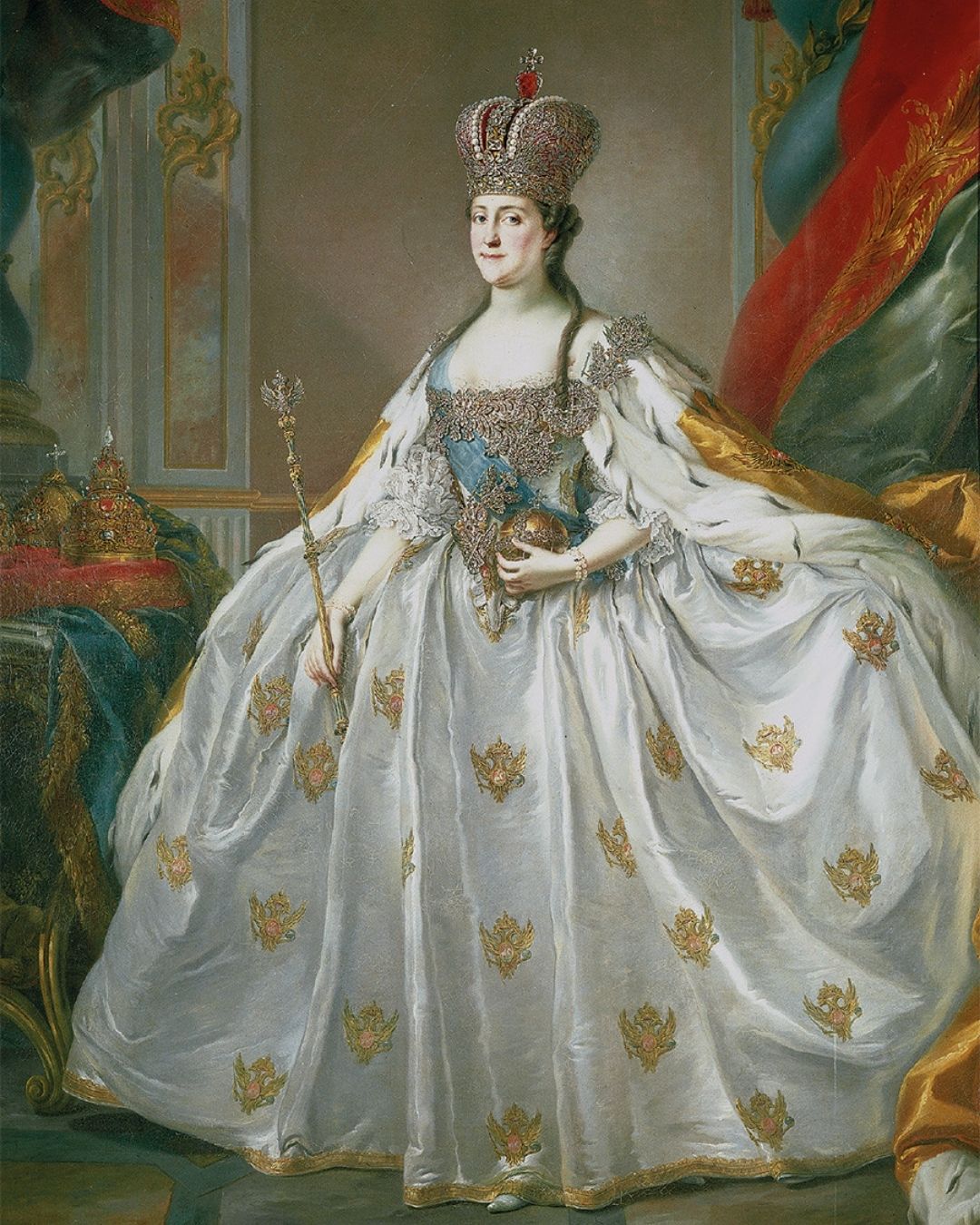
When Catherine the Great ruled from 1762 to 1796, she sought to establish a royal court that would eclipse even Versailles, and she understood that natural diamonds spoke the language of European monarchs. She expanded the Imperial jewelry collection by roughly 40 percent, single-handedly driving its largest growth in history.
Some of her most personal pieces never hung from her neck at all. Jewelers stitched tiny, brilliant-set diamond flower trimmings directly onto the fabric of her gowns, scattering points of fire across the silk as she moved. Observers at the time described the effect as mesmerizing.
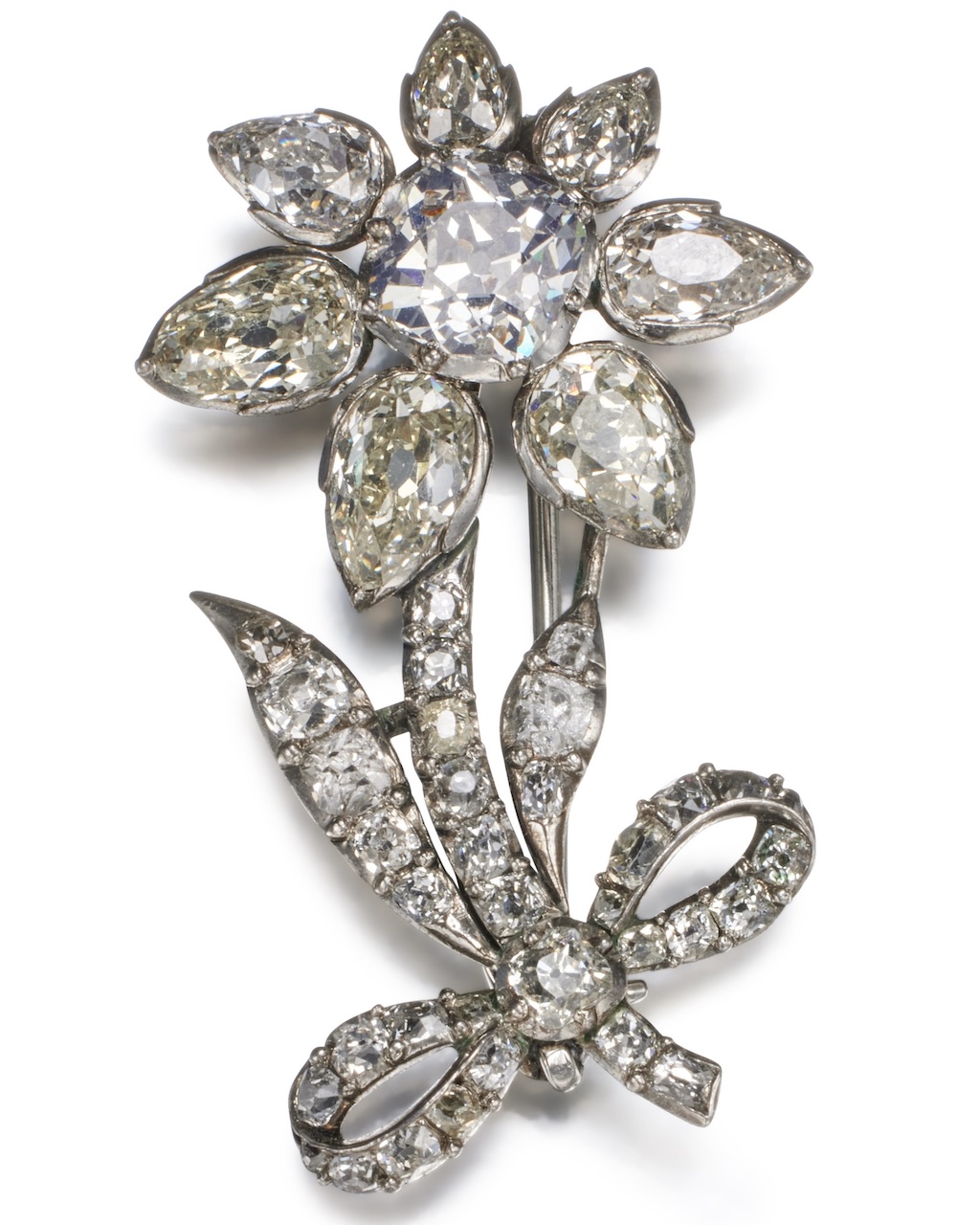
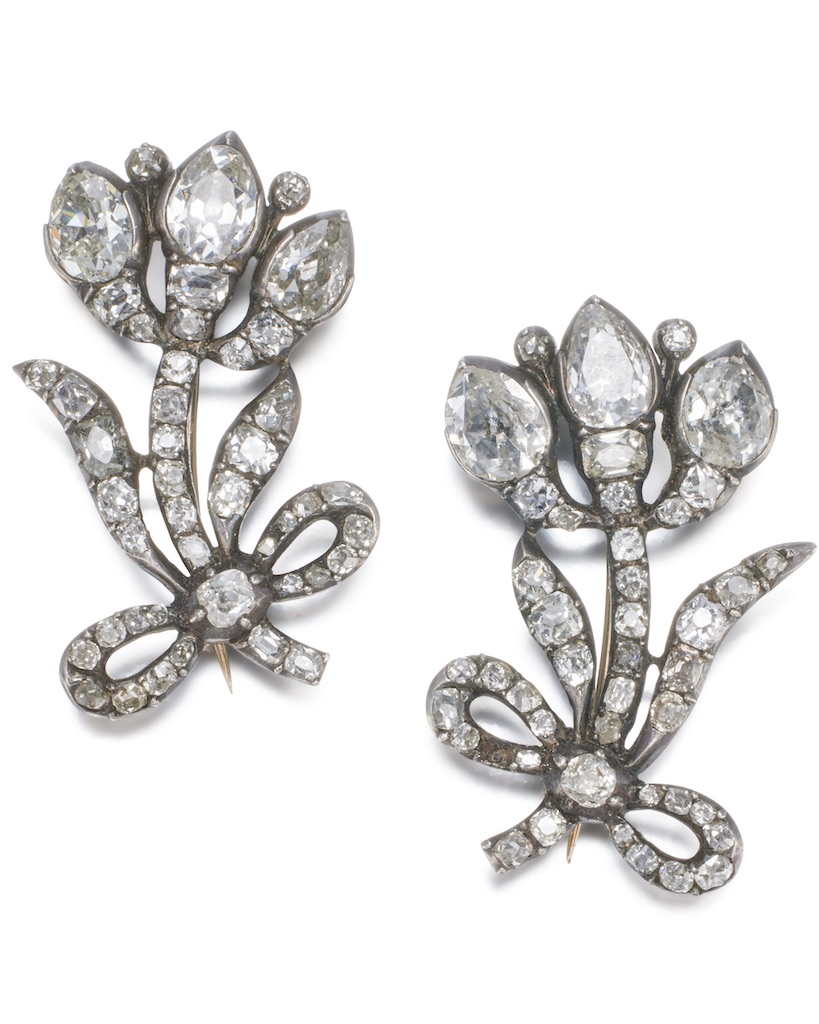
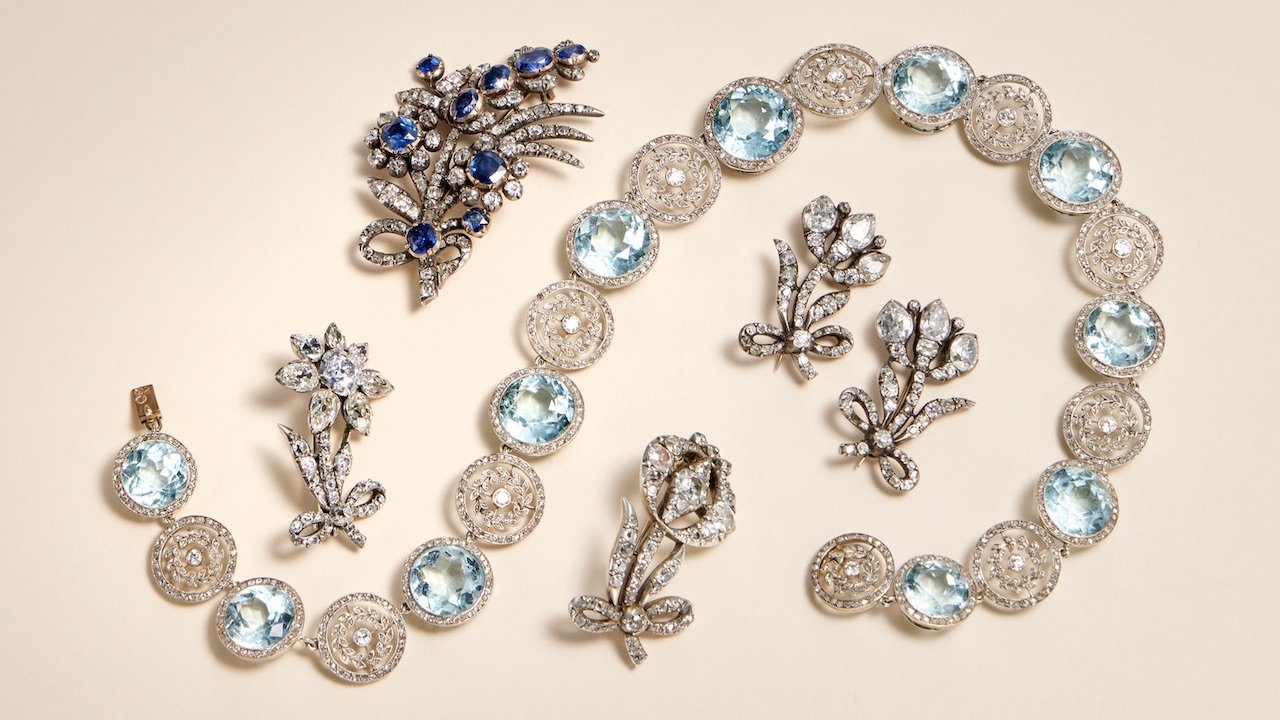
Three of these trimmings now come to auction, each attributed to Louis David Duval of Geneva, one of Catherine’s principal jewelry suppliers. Craftsmen shaped them as ribbon-tied flowers, setting old-cut diamonds in silver in the refined manner of late-18th-century court design. The lots carry estimates of $60,000 to $80,000 for a pair, $30,000 to $50,000 for a single example, and $40,000 to $60,000 for another.
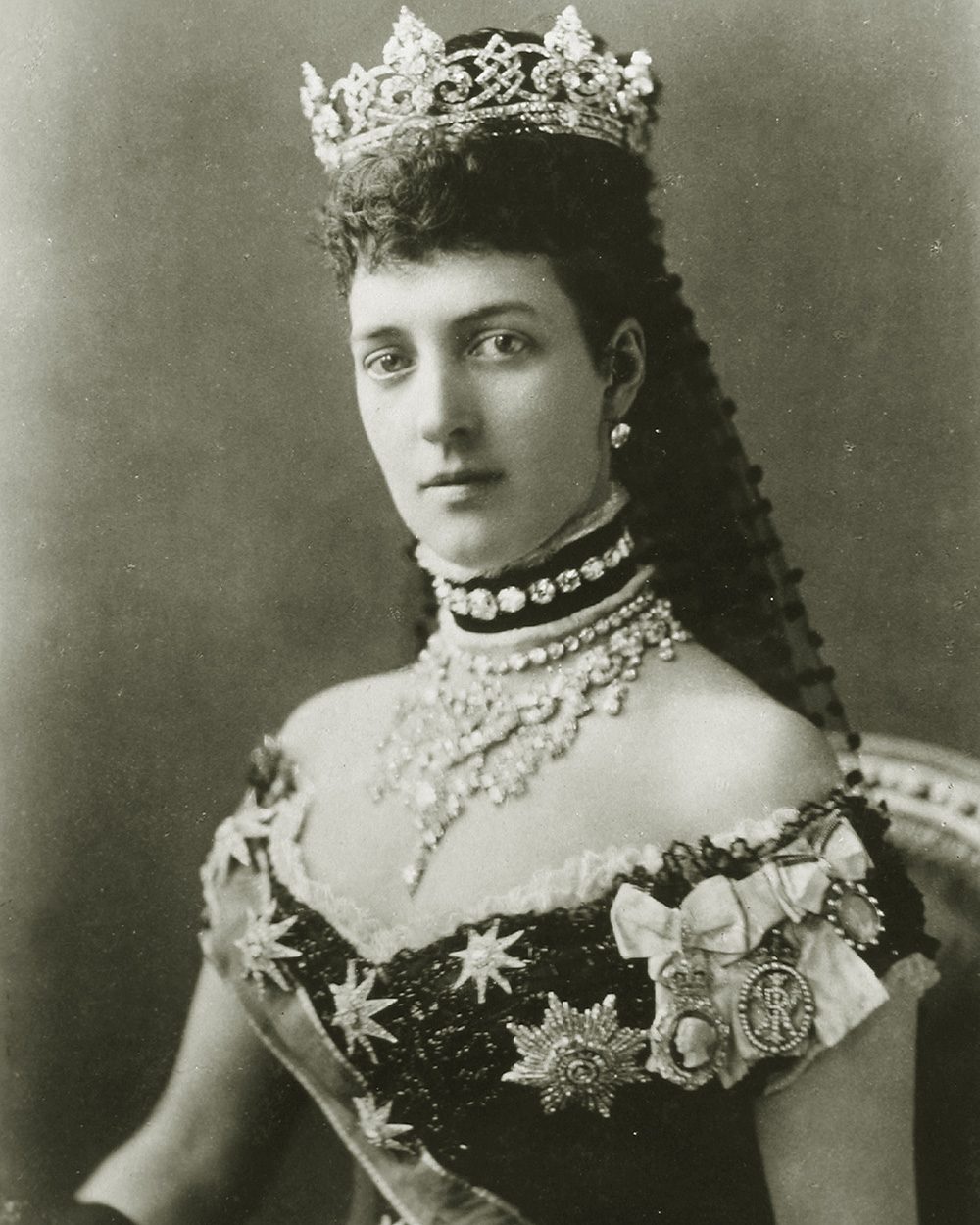
Catherine stored ornaments like these in her famous “Brilliant Room,” the former Imperial bedchamber inside the Winter Palace that she repurposed to hold her diamonds. The pieces didn’t simply sit in a vault, either. Later Romanov empresses reworked and wore them: surviving photographs capture both Empress Maria Feodorovna and Empress Alexandra Feodorovna adorned in these very trimmings.
Rare Russian Imperial Jewels From Before Catherine the Great
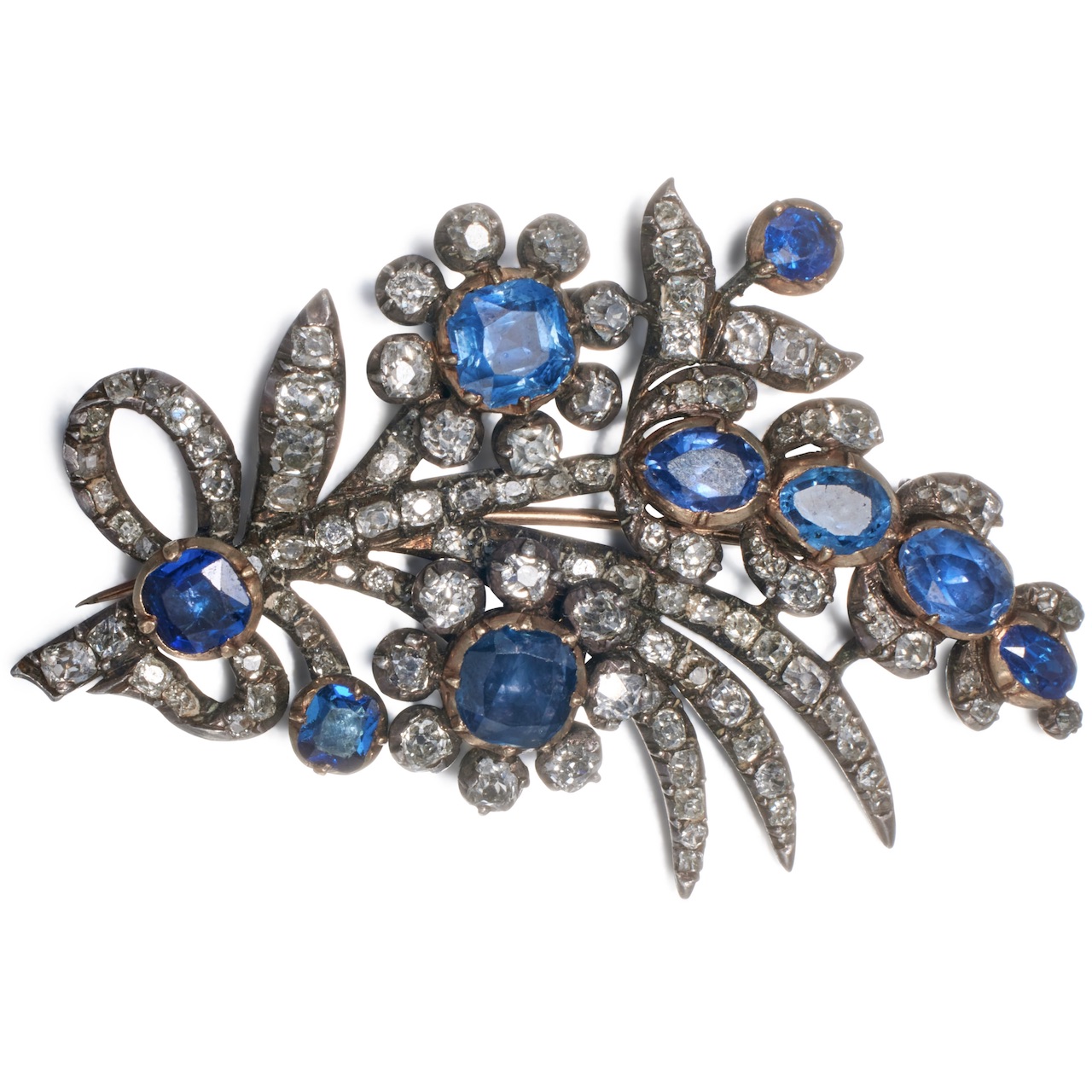
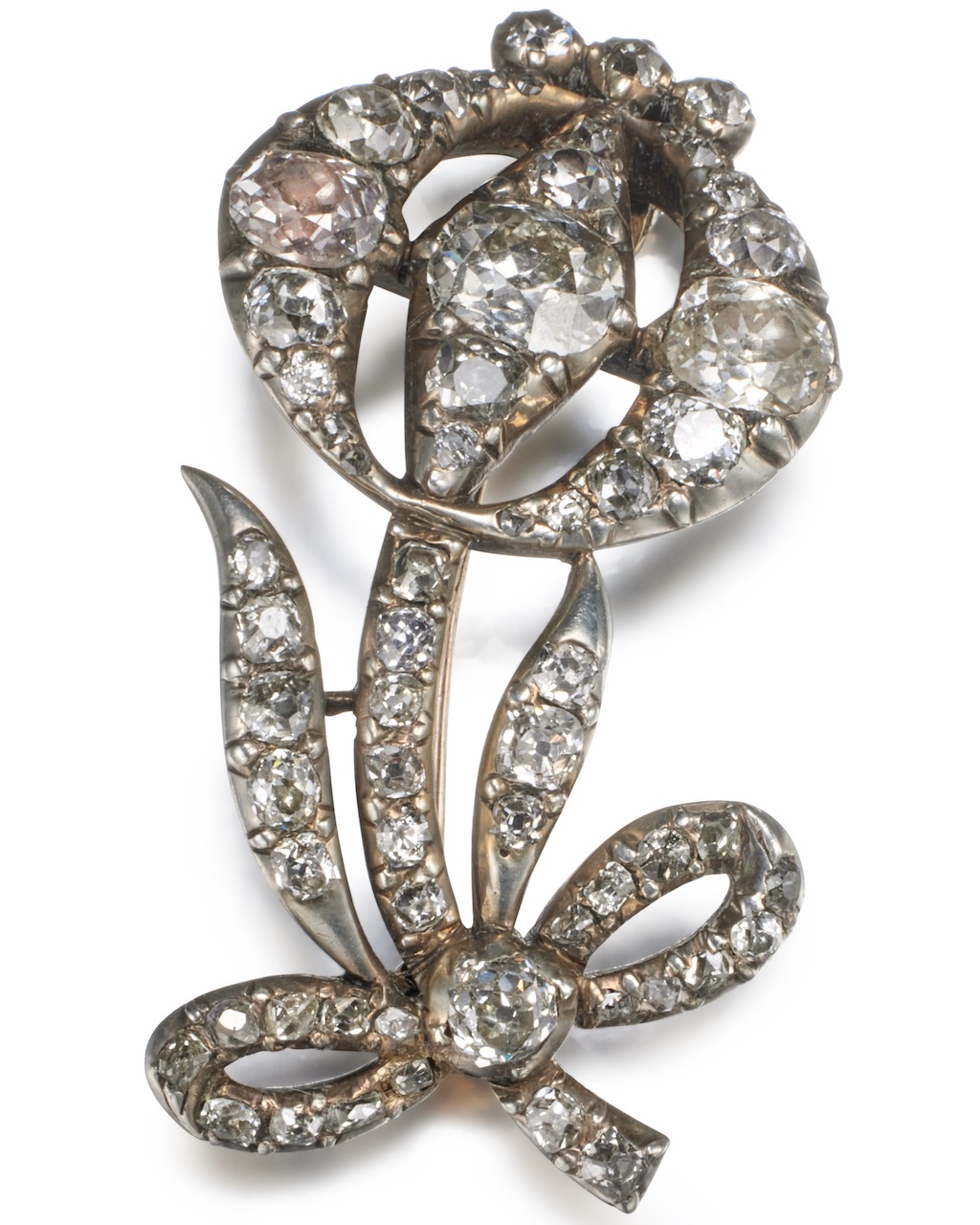
A fourth jewel reaches back even further, to Catherine’s predecessor, Empress Elizabeth Petrovna, who reigned from 1741 to 1762. Larger than the others, it combines diamonds and Ceylon sapphires set in gold foil, arranged as sprays of wheat and cornflowers (estimate $40,000 to $60,000).
Jewelers working in the Russian court during the mid-18th century earned a reputation for coaxing extraordinary beauty from comparatively modest materials, and this piece—arguably the most striking of the four—carries that tradition forward.
The Journey of the Russian Imperial Jewels from the Winter Palace to Sotheby’s
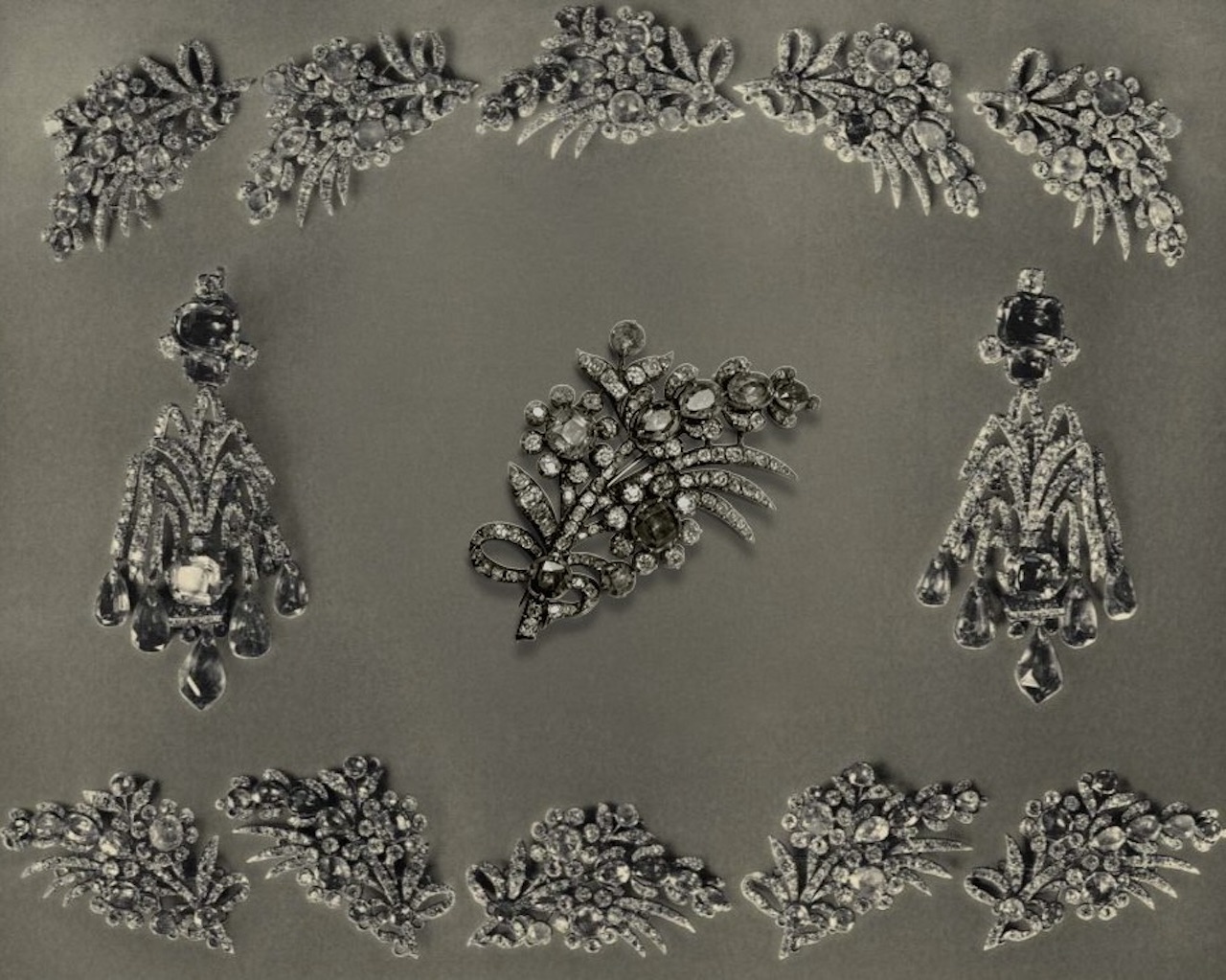
The path these Russian Imperial jewels traveled reads like a thriller. After the Bolshevik Revolution of 1917, revolutionaries seized the Russian Crown Jewels from the Winter Palace and moved them to the Moscow Armory Hall, where they sat in nine large boxes. The collection resurfaced in 1922, when the new government began cataloging and ultimately selling pieces to help rebuild an economy left in ruins by revolution.
Professor A. E. Fersman, a mineralogist with the Soviet Academy of Sciences, led a small team that spent nearly four months photographing and documenting the hoard. Their work produced Russia’s Treasure of Diamonds and Precious Stones (1925–26), still the definitive illustrated record of the Russian Imperial jewels. All four pieces in this sale appear in its pages.
In 1927, the Soviet state sent a selection to Christie’s in London, including these jewels. They later passed through S.J. Phillips in London, where the current owner’s family acquired them. They have stayed out of public view ever since.
A Fabergé Necklace That Survived the Russian Revolution
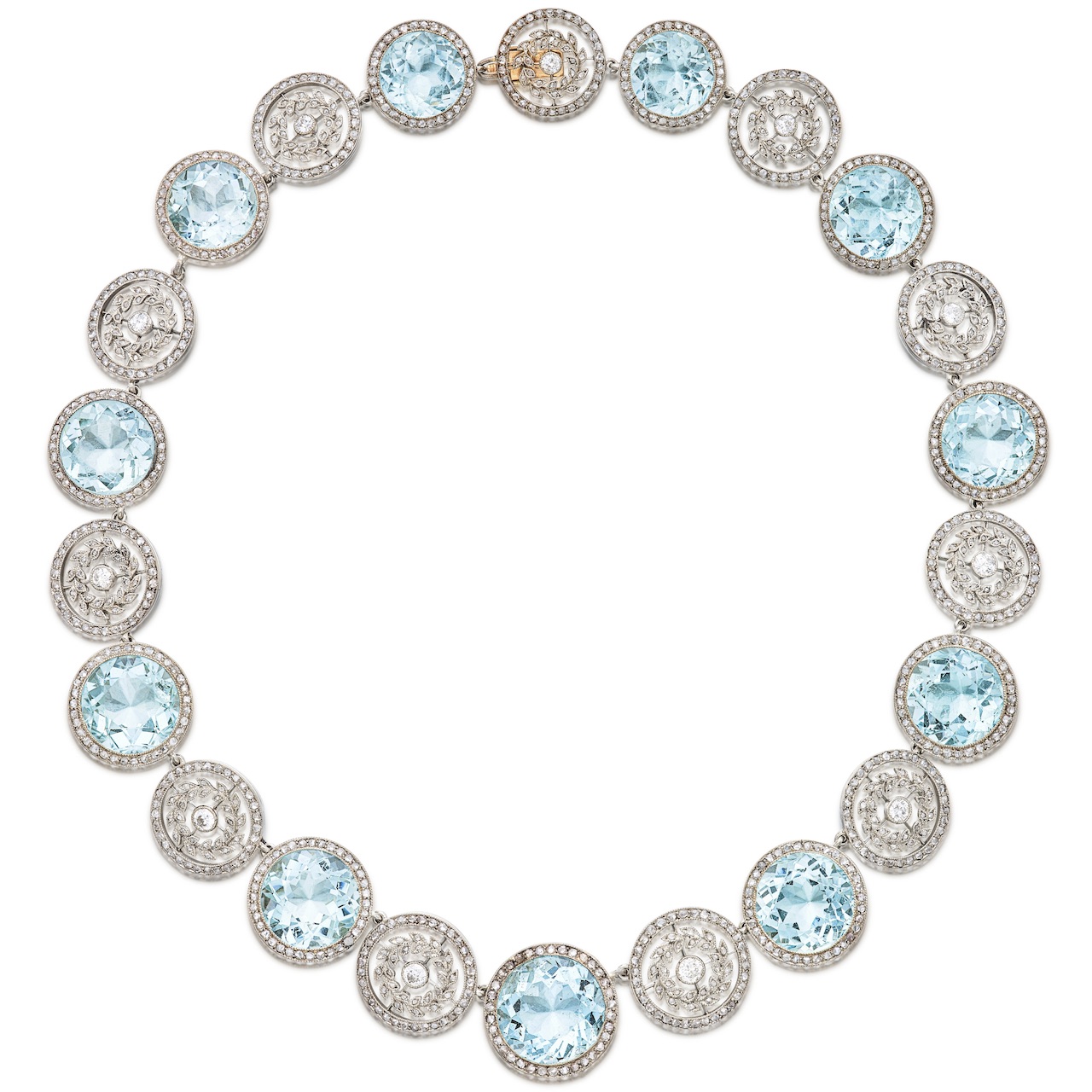
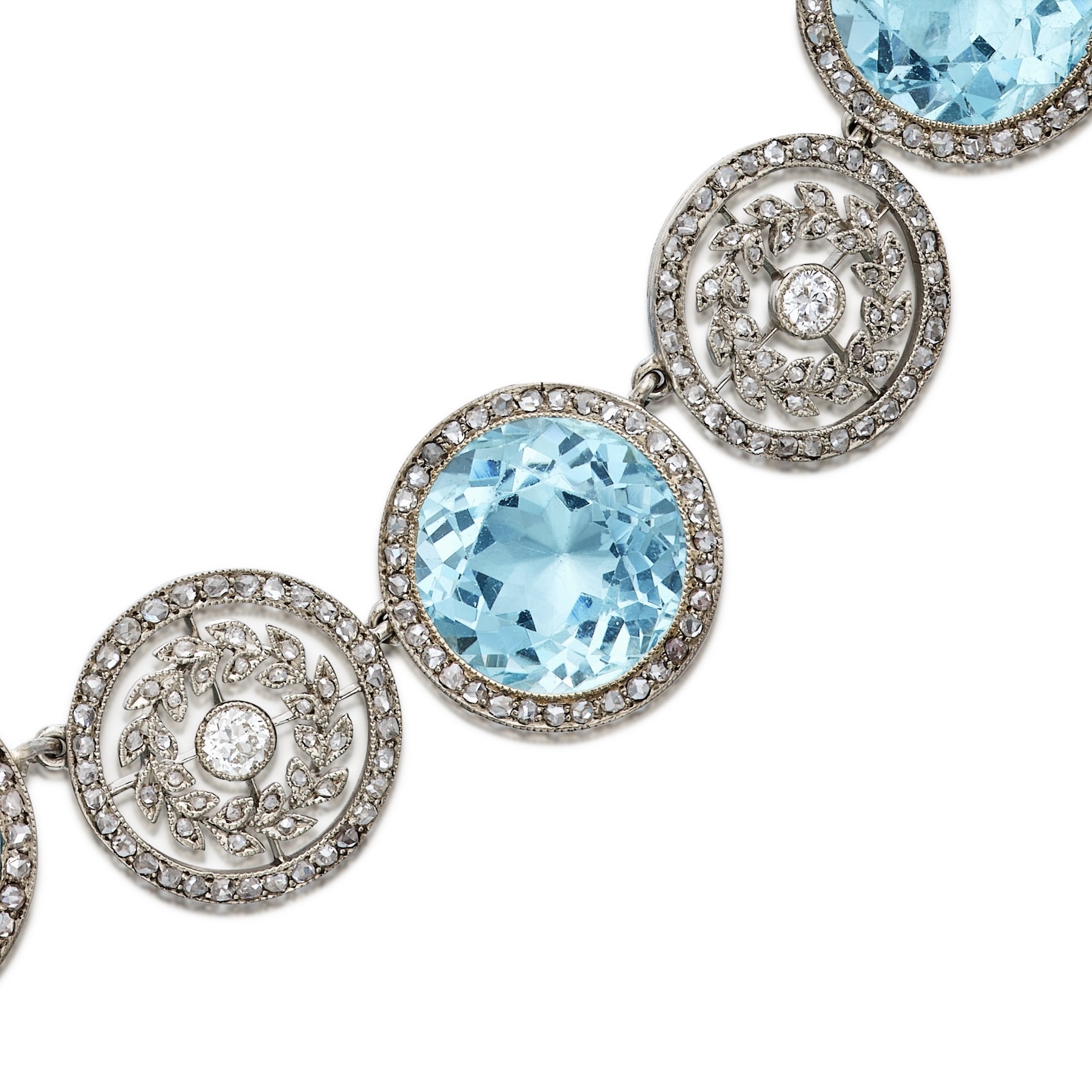
The sale’s other crown jewel (quite literally) is a rare Imperial Fabergé diamond and aquamarine necklace (estimate $400,000 to $600,000) from the reign of Nicholas II.
In May 1911, the Imperial Cabinet selected the necklace as a proposed gift for German Crown Princess Cecilie during her state visit to St. Petersburg. A second cousin of Nicholas II, Cecilie maintained close ties to the Russian court, and the visit carried significant diplomatic importance. The German royals attended state functions and celebrations marking the Emperor’s 43rd birthday before traveling to London to represent Germany at King George V’s coronation. The necklace was offered to Cecilie as part of a group of jewels valued at 2,650 roubles.
Albert Holmström crafted the piece. He had taken over as Fabergé’s head jeweler from his father, August, and steered some of the firm’s most ambitious commissions. For this necklace, he set luminous Siberian aquamarines within rose-cut diamond surrounds and diamond laurels, a motif Fabergé often returned to. The design rewards close attention: a deep gallery beneath each aquamarine lifts the stones away from the skin, letting them catch and throw light. That precision, more than any single element, marks the necklace as Fabergé court jewelry at its peak.
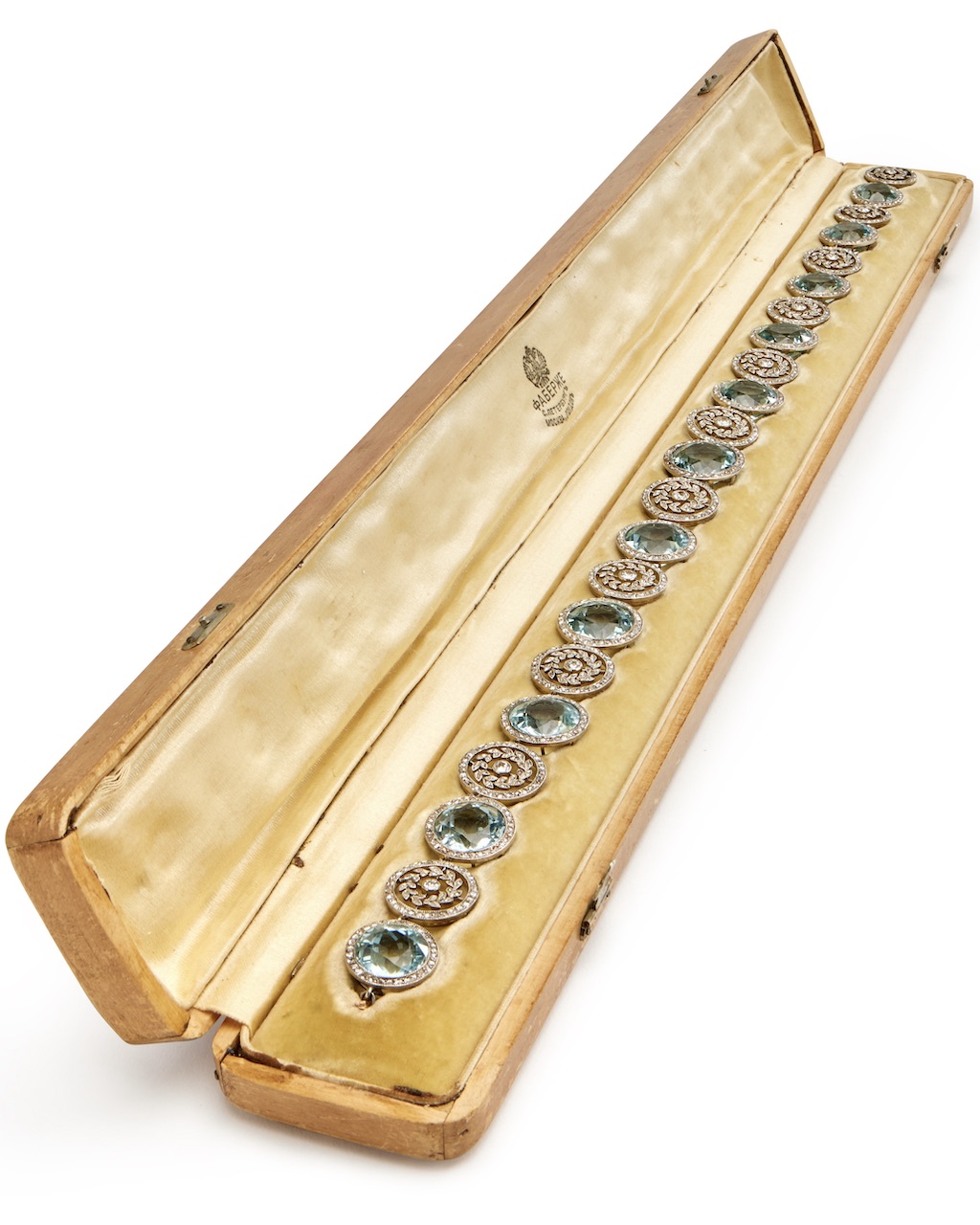
Necklaces of this rank rarely survive. The Revolution shuttered the workshops and sent much of the firm’s finest jewelry for confiscation and dismantling. This one even kept its original fitted Fabergé case, which stretches more than 16 inches and ranks among the largest the firm is known to have made.
The documentation runs deeper still. Two of Holmström’s original design books from the St. Petersburg workshops outlasted the Revolution, appearing to record every jewel made between March 6, 1909, and March 20, 1915, including this necklace.
Each entry pairs a delicate watercolor diagram with handwritten notes on materials, stone counts, and exact weights. For this design, radiating outward from a central aquamarine, the page calls for 11 round-cut aquamarines, 11 brilliants, and 958 rose-cut diamonds.
On June 17, the winning bids will acquire far more than fine jewelry. These are objects that survived a revolution meant to erase the world that made them. They slipped through war and exile and a century of silence to arrive intact on a New York auction floor.