
The Rainbow of Royal Colored Diamonds
Discover the stories behind the most extraordinary royal colored diamonds.
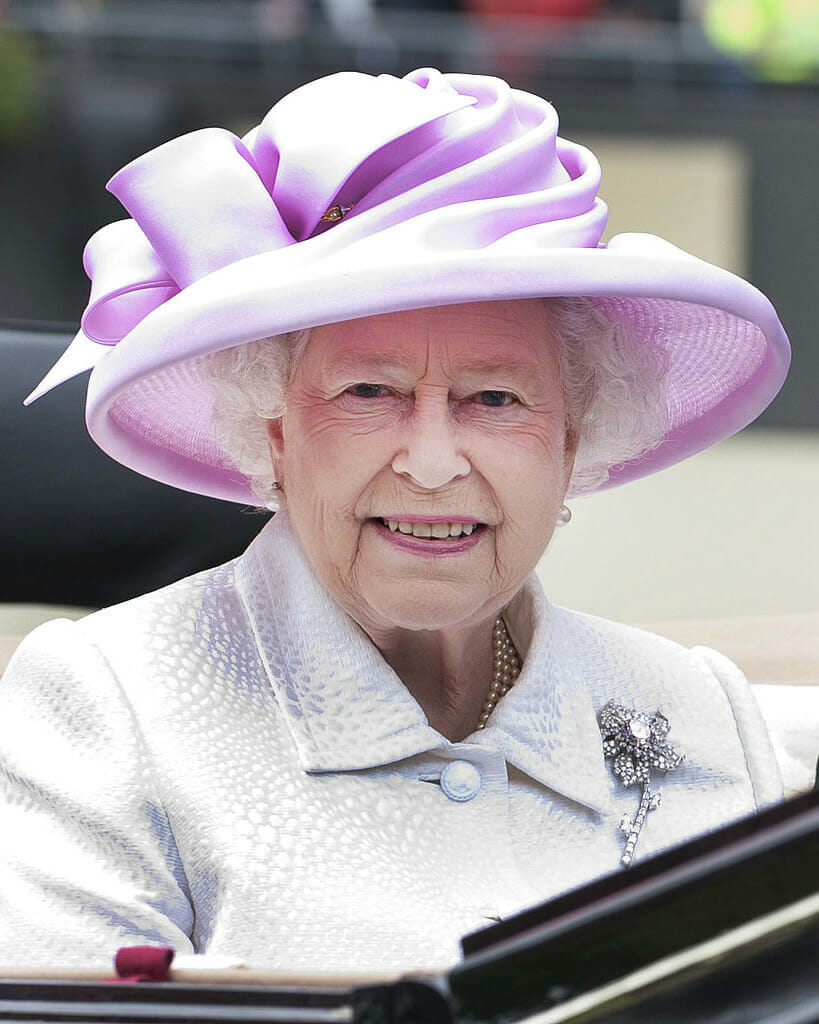
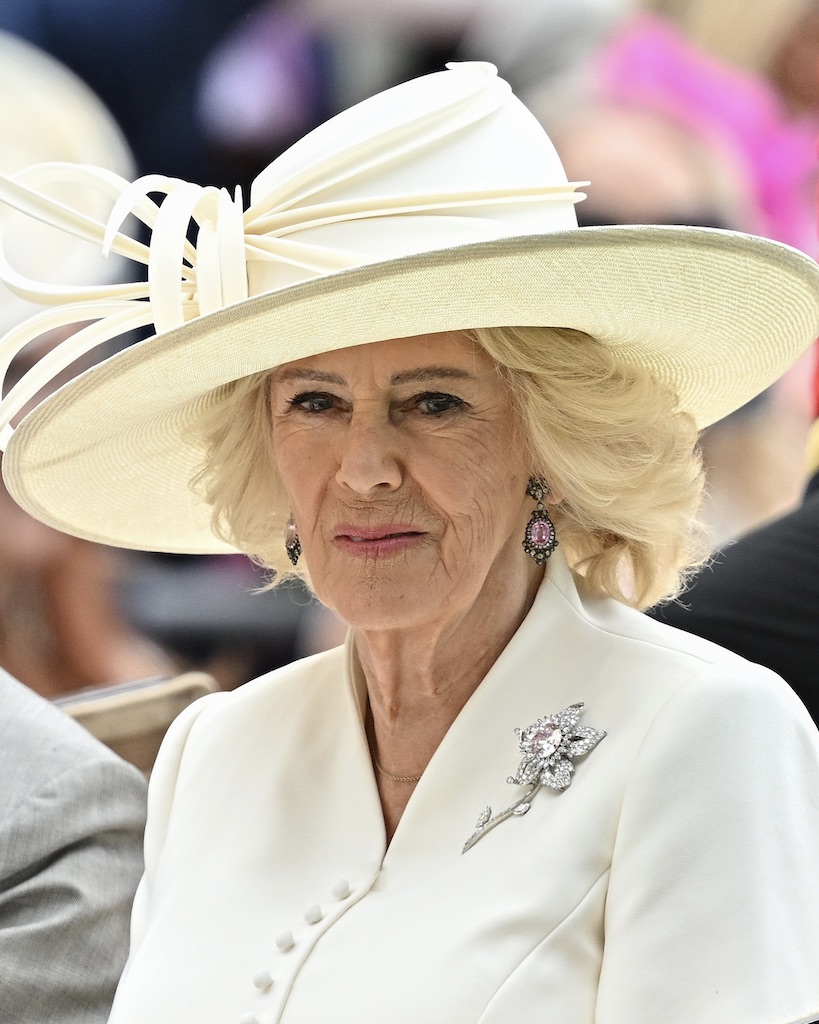
Queen Elizabeth II wore the Williamson Pink Diamond to the Second Day of Royal Ascot. (Getty Images)
Nothing signaled color quite like Her late Majesty’s wardrobe and her magnificent jewels, along with the equally vibrant treasures of her ancestors. Among the rainbow of white diamonds, rubies, sapphires, emeralds, aquamarines, and amethysts are several exceptionally rare and royal colored diamonds.
Meet the Expert
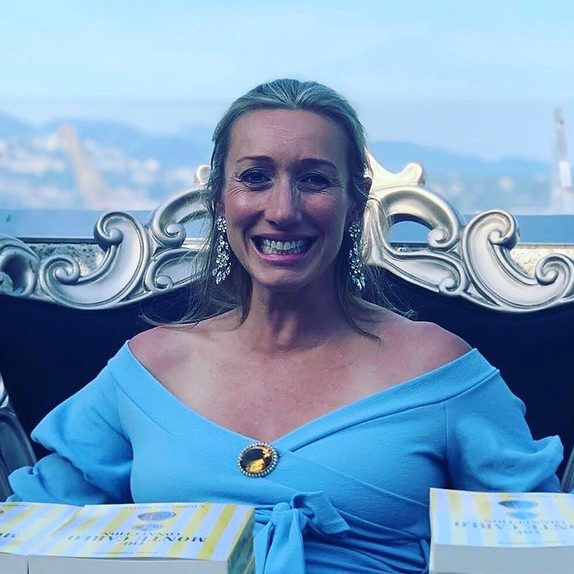
- Josie Goodbody is a jewelry historian, novelist, and communications specialist with a passion for storytelling and the world of high jewelry.
- Goodbody is the author of the Jemima Fox mystery series, blending intrigue with dazzling jewels, and her work has appeared in the Daily Mail and Rapaport.
The Williamson Pink Diamond Brooch
Set in a jonquil-designed brooch by Cartier, the Williamson Pink Diamond Brooch is undoubtedly one of the most beautiful among the many millions of diamonds that belong to the British Royal Family. The brooch was presented to Her late Majesty by the ardent monarchist Dr. John Williamson to celebrate her 1947 engagement to Lieutenant Philip Mountbatten, RN.
The Discovery of the Williamson Pink Diamond
In the mid 1930s, Canadian geologist John Thorburn Williamson traveled to Northern Rhodesia (now Zambia) to assess land for a De Beers subsidiary before transferring to the Mabuki diamond mine in Tanganyika (now Tanzania), about 100 miles south of Lake Victoria. Although diamonds had been discovered there before the First World War, production was modest compared to the vast South African operations.
By 1939, Williamson had sublet the Mabuki mine and began prospecting for additional deposits. He became convinced that a major diamond-bearing pipe lay about fifty miles south at Mwadui. After failing to secure sponsorship from De Beers—whose interests were focused in South Africa—he partnered with Mwanza-based Indian barrister Iqbal Chopra, who believed the dashing Clark Gable doppelgänger and agreed to help fund his “pipe dreams”.
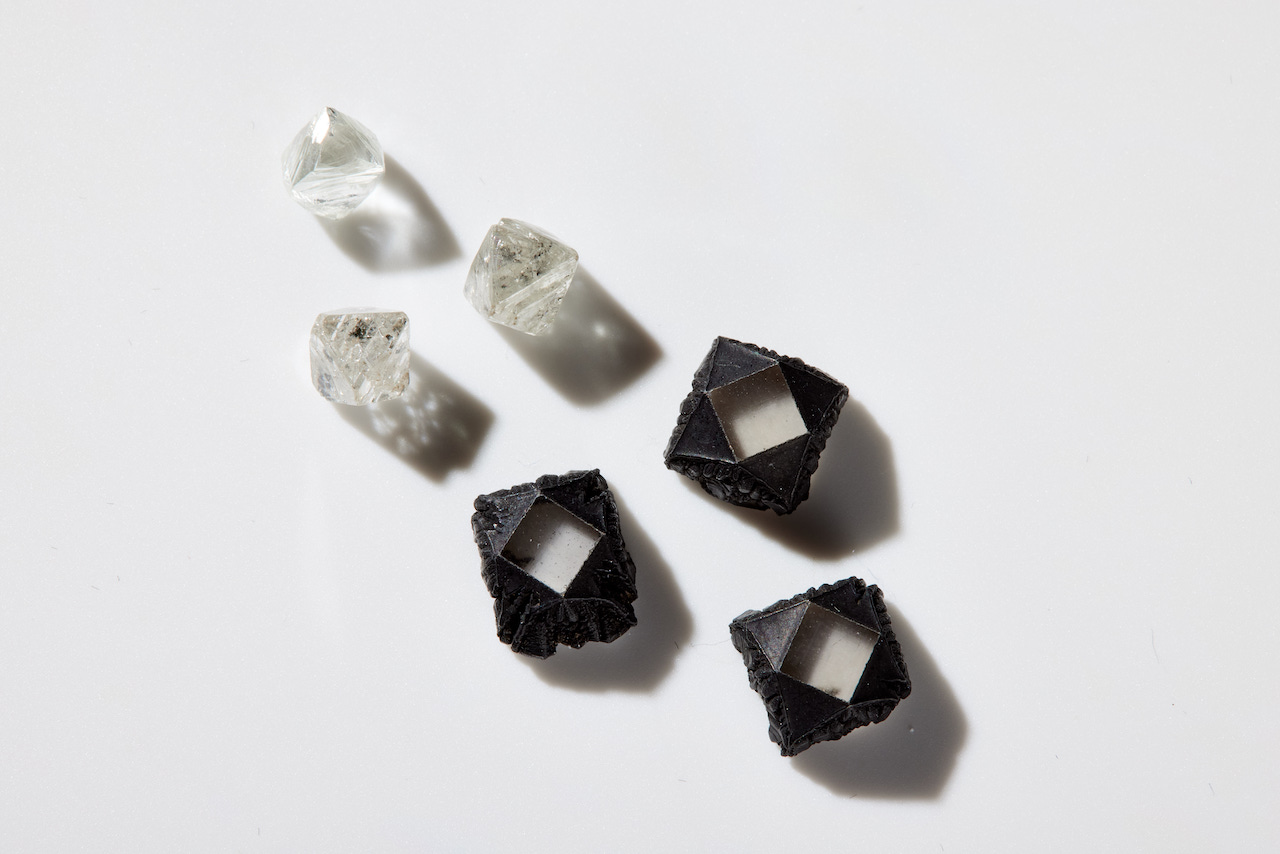
At first, prospecting efforts were unsuccessful. Before long, however, his dreams became reality when, on March 6, 1940, one of Williamson’s two young assistants reported seeing a diamond earlier that day and led him to the spot. Knowing he had struck gold—or rather diamonds—the geologist set up a field camp by a baobab tree while the boys set about panning gravel. Within days, he had discovered a huge diamondiferous pipe. He secretly staked his claim and established operations, with the ongoing Second World War inadvertently protecting the area from a rush of fortune seekers and allowing him to gradually expand the mine.
At the time, Tanganyika was a British colony, and despite the war, Williamson’s manpower grew from two to several hundred men. He invested in the welfare of his workforce, building a town complete with homes, a school, and a hospital, enabling his men to live with their families. By the end of the war, the mine and its surrounding settlement covered approximately five square miles and supported thousands of residents.
How the Williamson Became a Royal Colored Diamond
In October 1947, ten-year-old Jimmy Sudra, the son of a mine carpenter, found what he initially thought was a piece of glass while playing with his friends. He took it to Williamson, who immediately recognized it as a remarkable rough pink diamond, weighing 54.5 carats—one of the largest and finest ever discovered, even to this day. Extraordinarily, a 175-carat blue-white diamond was also said to be unearthed on the exact same day.
Shortly before, Princess Elizabeth’s engagement to Lieutenant Philip Mountbatten–formerly Prince Philip of Greece and Denmark–had been announced. A keen monarchist, Williamson decided to present one of the exceptional diamonds to the future bride. After consulting Iqbal Chopra and his wife Thelma at their home in Mwanza, it was agreed that the pink diamond would be the perfect choice for a princess and future queen. Williamson then arranged for the gem to be sent to London.
Before its royal presentation, the gemstone was to be cut and polished, as Williamson believed the princess should receive a finished diamond rather than a rough one. It was sent to Briefel and Lemer in Clerkenwell, where Sydney Briefel decided that a brilliant cut would best enhance the stone’s exceptional clarity and vibrant pink hue.
By early 1948, the diamond had reached the cross-work stage and was nearing its final polish. That March, the newly married Princess Elizabeth was invited to the firm’s offices, accompanied by her grandmother, Queen Mary, renowned for her love of jewels. Dressed in his finest suit, Chopra presented the pink diamond to Her Royal Highness, who examined it with a huge smile. However, it would be another four years until the diamond was set into the brooch we know today, with white diamonds sent by Williamson from his mine.
Why the Williamson Is One of the Most Important Royal Colored Diamonds
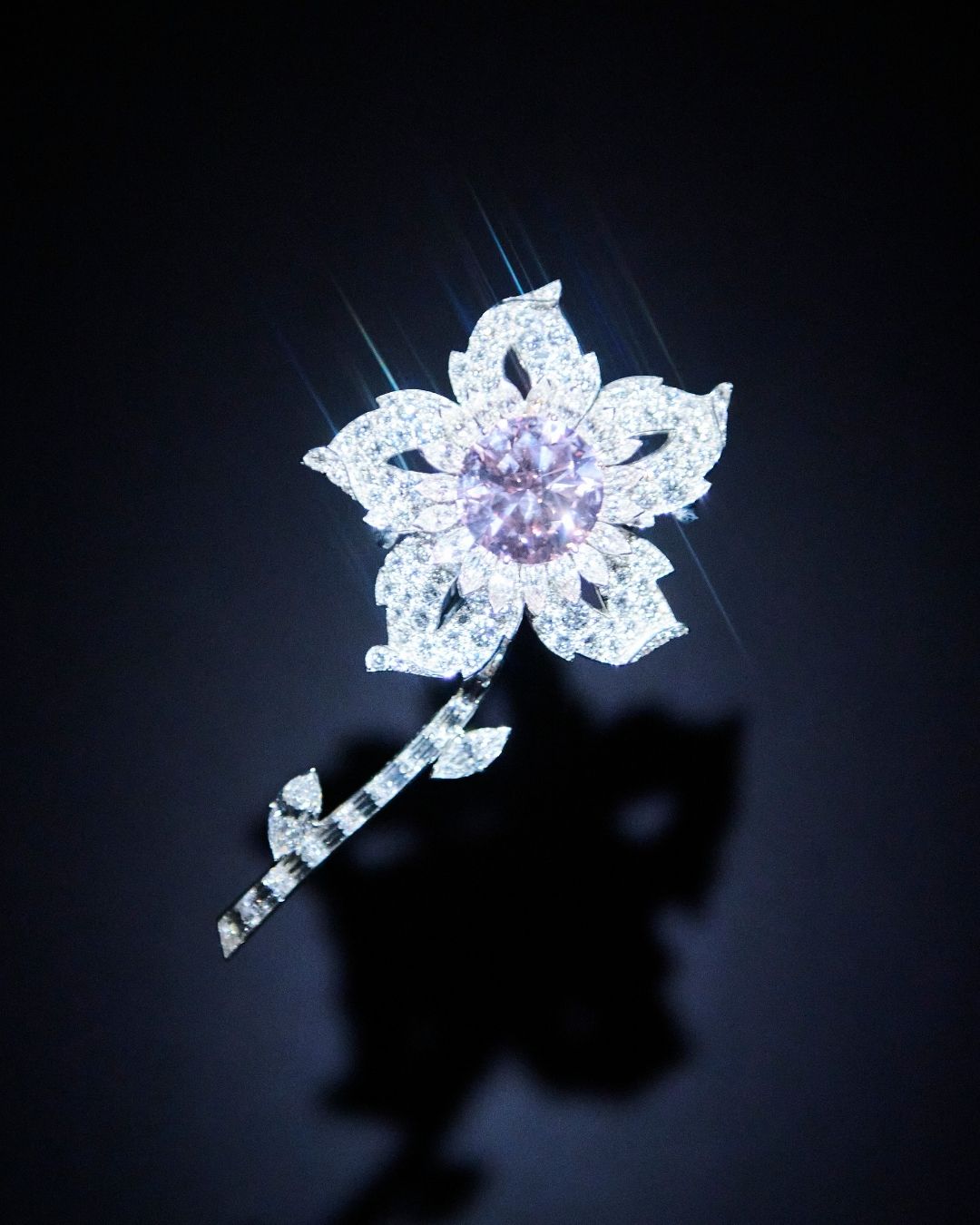
By then, the princess had succeeded her father as Her Majesty the Queen, and the royal favorite Cartier London was commissioned to design a jewel worthy of the stone. Frederick Mew, the house’s head designer, created several proposals before the final design was selected.
As Francesca Cartier writes in The Cartiers, her best-selling biography of the family firm: “As with all commissions, multiple pencil sketch options were narrowed down to three or four final designs that would be painted in gouache, to scale, and presented to the client [the Queen] in order that she might select her favorite.”
The Queen chose a brooch in the shape of a jonquil, reflecting her fondness for flowers. The central 23.6-carat pink diamond is surrounded by 170 brilliant-cut white diamonds, 12 baguette-cut diamonds, and 21 marquise-cut diamonds, including two set as buds on the stem.
The Williamson Brooch, about 4.5 inches in length, became one of her favorite pieces, worn on many important occasions, including family weddings, and seen in several famous portraits, including a 1954 photograph with Prince Charles and Princess Anne as small children.
John Thorburn Williamson died in 1958 at his mine from lung cancer. Yet his legacy endures. The Mwadui mine, often called the Williamson Mine, became one of the most significant diamond sources of the twentieth century, and he is remembered as one of the most successful prospectors of his era.
The path of the Williamson Pink—from a playground in East Africa to one of the most important jewelry collections in the world—is one of the most remarkable stories in natural diamond history.
Queen Elizabeth II’s Wattle Brooch
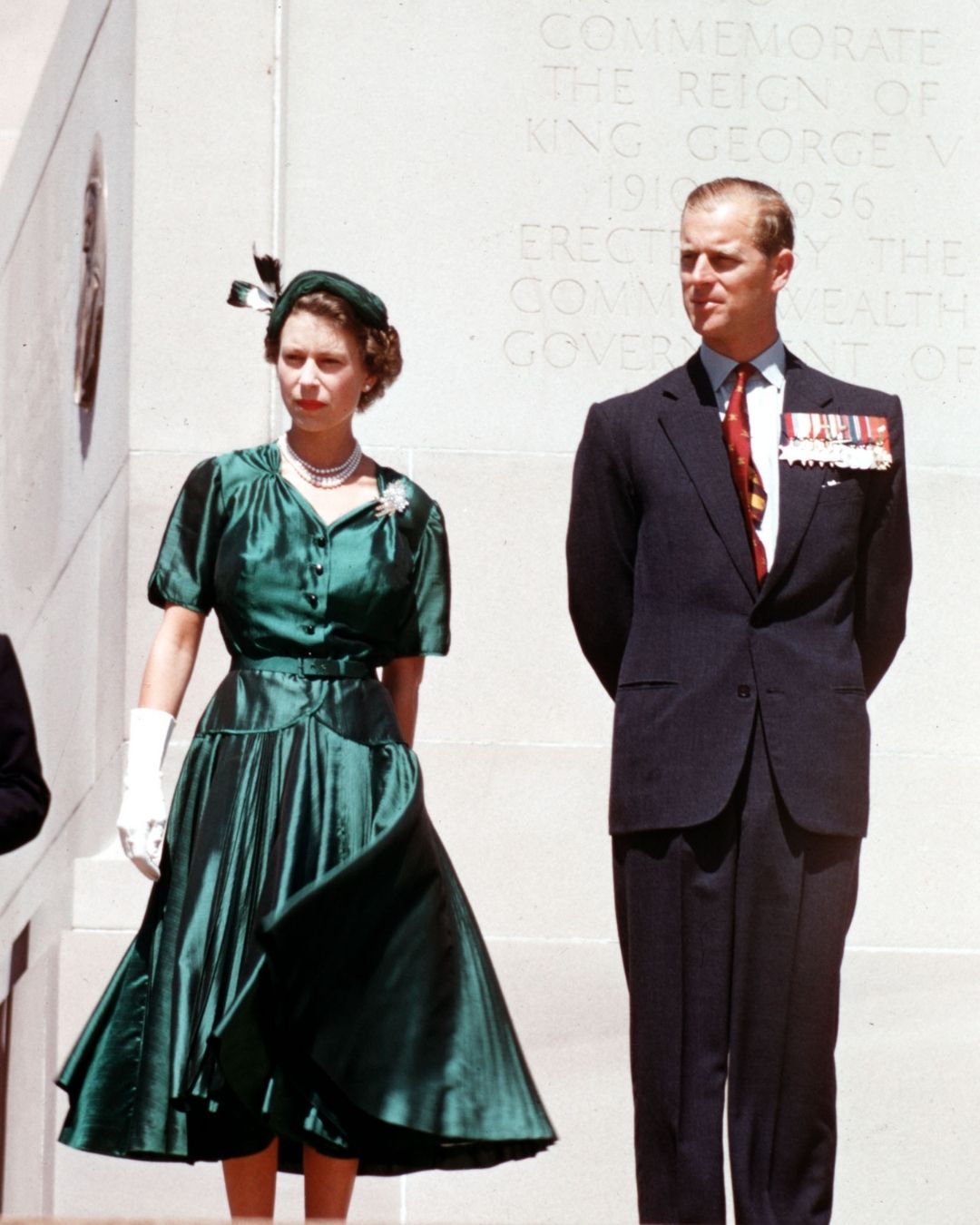
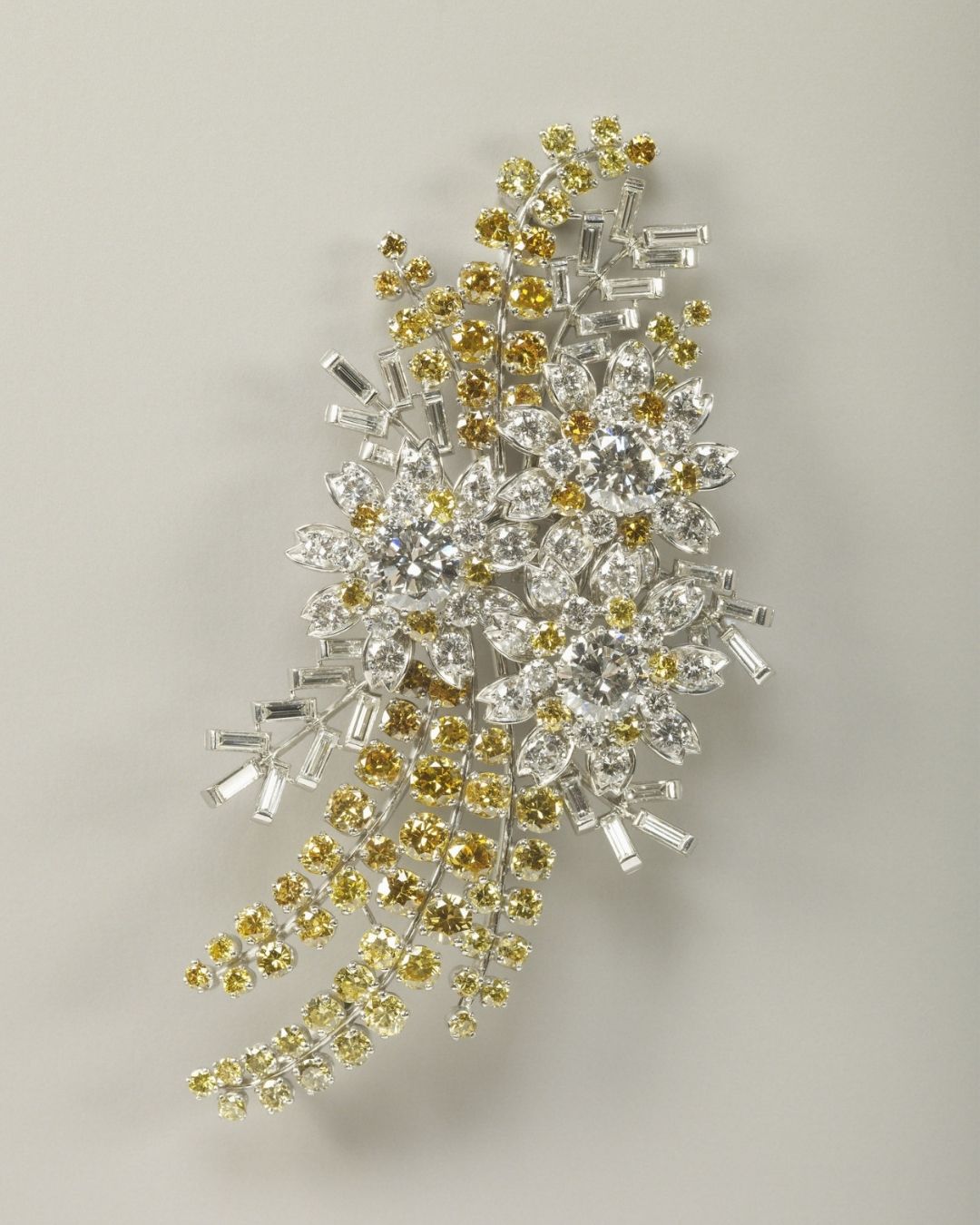
A year after Her late Majesty received the Williamson jewel, during her first tour to Australia in 1954, she was given another floral brooch; this time set with yellow and white diamonds, designed as a spray of Australia’s national flower, the golden wattle, together with tea tree blossoms.
Meticulously set in platinum, yellow brilliant diamonds epitomize the wattle’s golden blooms, while white brilliant diamonds symbolize the wattle’s leaves, and marquise- and round-brilliant white diamonds the tea tree flowers. This beautiful brooch was commissioned by the jewelers William Drummond & Co. of Melbourne.
It is another of the most distinctive pieces of jewelry associated with Elizabeth II and was presented by the Australian people to reflect the enduring relationship between Britain and Australia. The Queen wore the brooch on several visits to Australia and throughout her reign, showing a deep understanding of diplomatic gestures.
George IV’s Diamond Diadem
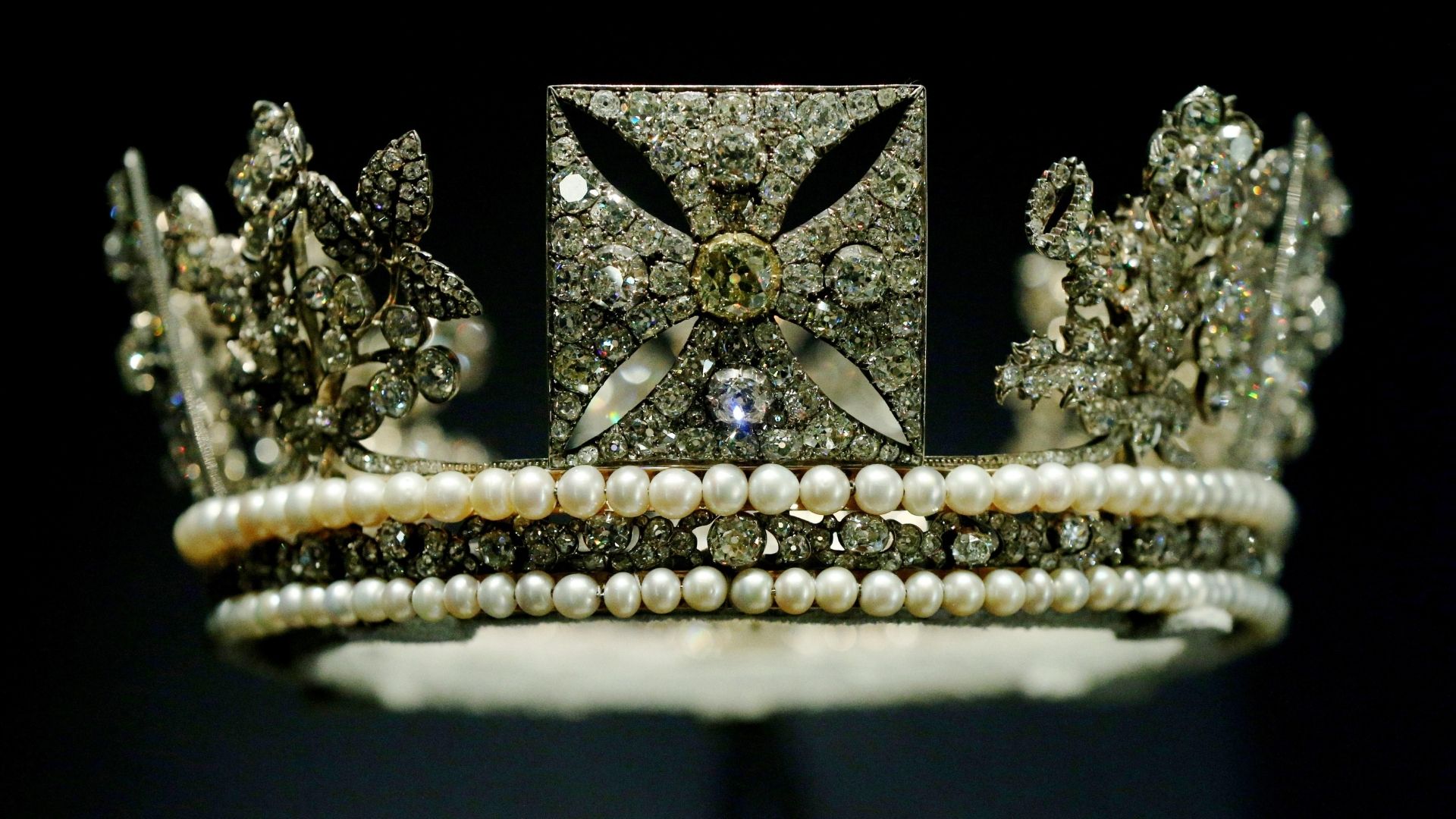
One of the most recognizable jewels in the world is the Diamond Diadem, famously worn by Her late Majesty. At the front of this splendid diadem sits a striking yellow diamond.
Upon the death of George III on January 29, 1820, his son–who had served as regent for nine years and liked to credit himself, rather than the Duke of Wellington, with Britain’s victory at the Battle of Waterloo–decided that his coronation would be a magnificent affair. In today’s terms, the ceremony would cost £23,500,000.
In 1820, Philip Liebart of Rundell, Bridge & Co. created what we now call the Diamond Diadem for the coronation of George IV. This highly recognizable and ornate ornament is set with 1,333 diamonds and 169 pearls. The narrow band is edged on both sides with pearls and surmounted by four crosses pattée; the front cross is set with a 4-carat pale yellow brilliant diamond, apparently from Brazil. Between each cross are the national emblems of England, Ireland, and Scotland—roses, shamrocks, and thistles—all created in diamonds.
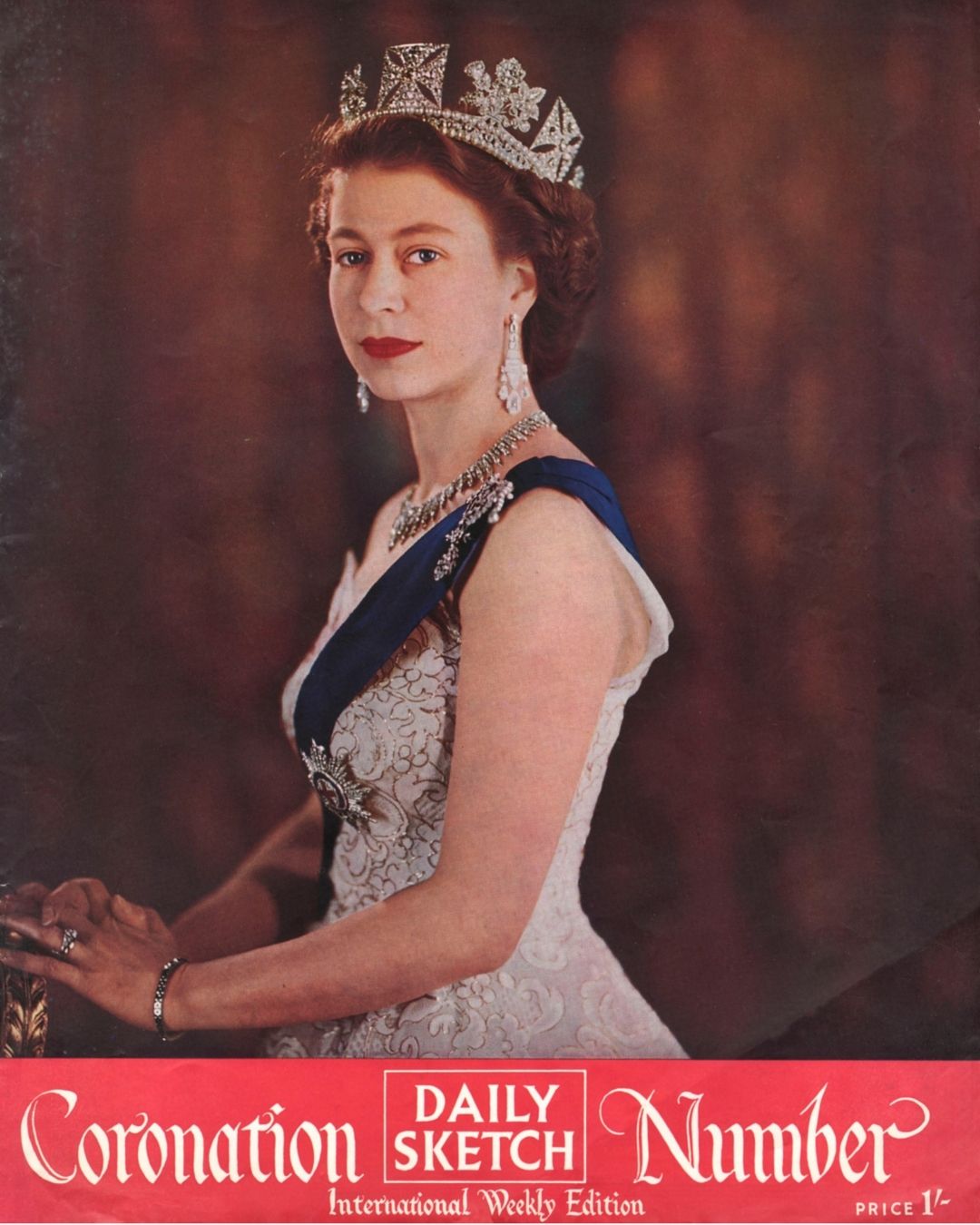
Although the bill for crafting the diadem and setting the gems came to £290, the cost for hiring them was £800. This was increased when the 1820 coronation had to be delayed by a year, due to the trial of Queen Caroline, at which the king sought to strip his estranged wife of her title of queen. This was refused, and when the coronation did take place in mid 1821, the Queen was locked out of Westminster Abbey, banging on the door to be allowed in. She fell ill later that day and died less than a month later.
Nevertheless, on July 19, 1821, George IV left the Houses of Parliament wearing his dazzling diadem, though it was impossible to see. He had also decided to have an enormous Cap of State extravagantly made in black velvet, with a diamond-encrusted hat loop from which copious ostrich plumes rose, completely camouflaging the diamonds and pearls of the diadem. After the coronation, the gemstones remained intact, and a bill for £8,216 was later settled.
The diadem was later worn by William IV’s consort, Queen Adelaide, and then Queen Victoria, who was depicted wearing it on the Penny Black stamps. It passed on to Queen Alexandra, Queen Mary, Queen Elizabeth the Queen Mother, and finally to Her Majesty Queen Elizabeth II, who wore it on the journey to her own coronation in 1953. She was also famously depicted wearing it on coinage, banknotes, and stamps, and wore it at each State Opening of Parliament.
Queen Victoria’s Order of the Bath Star
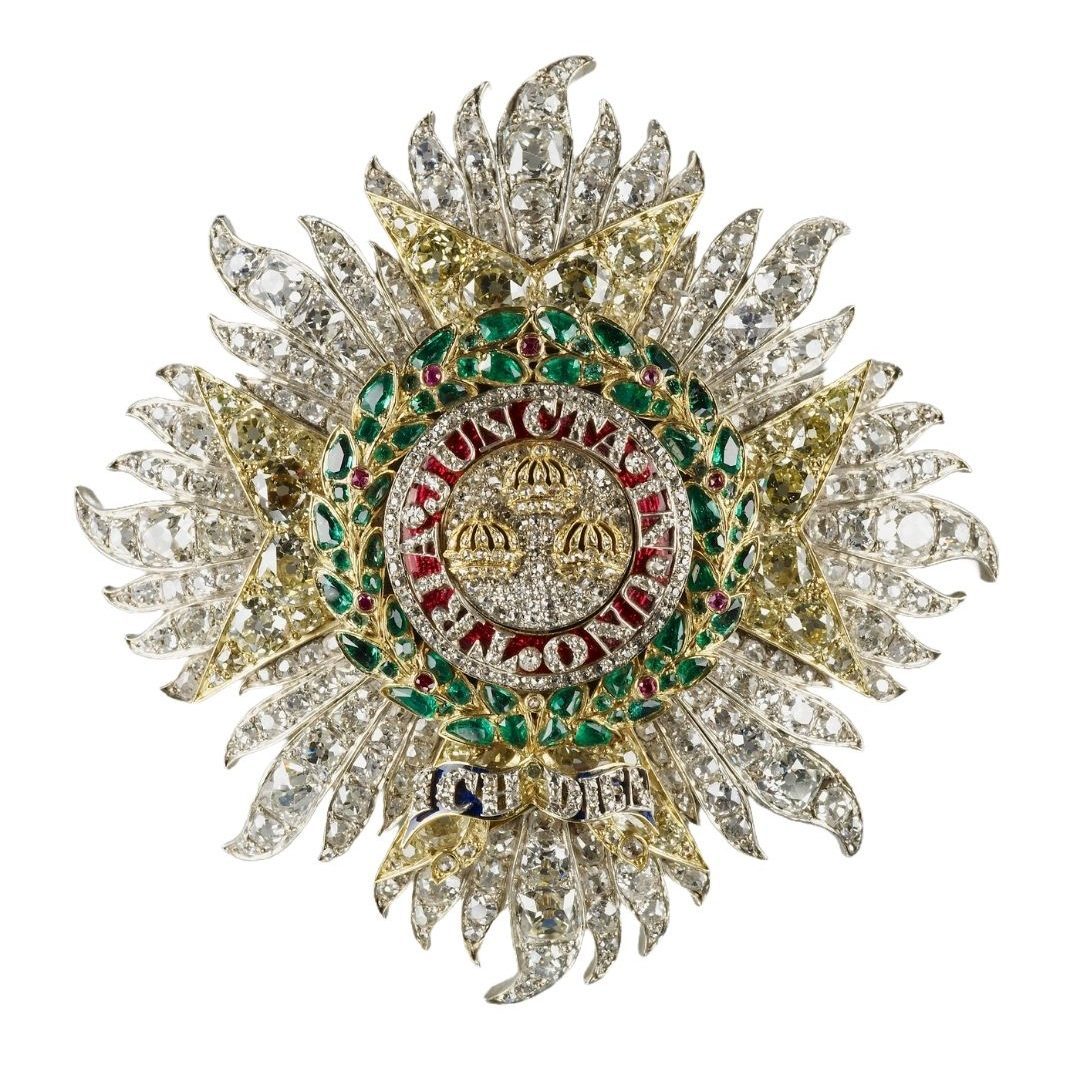
Yet more yellow brilliant diamonds are to be found in Queen Victoria’s Order of the Bath Star, a military star made for her by Rundell, Bridge & Co. in 1838. The insignia was set with gemstones from one of the Royal Guelphic Order, which had been founded during the reign of George III as King of Hanover—but as Queen Victoria could not inherit Hanover under Salic Law, its insignia became unnecessary.
This Bath Star is an extraordinary eight-pointed silver star set with 373 white brilliant-cut diamonds in flaming rays, overlaid with an eight-pointed cross of 31 yellow brilliant-cut diamonds set in gold. At the center are three gold crowns on a plaque of tiny rose-cut diamonds, encircled by the words TRIA JUNCTA IN UNO (the Order’s motto meaning “three joined in one”) in diamonds set on red enamel, and surrounded by an emerald, ruby, and gold laurel wreath. Not long after their marriage, Queen Victoria appointed her husband, Prince Albert, to the Order—he held the highest rank of Knight Grand Cross—and in 1841, Rundell made a similar, though slightly larger version to accompany his wife’s earlier one.
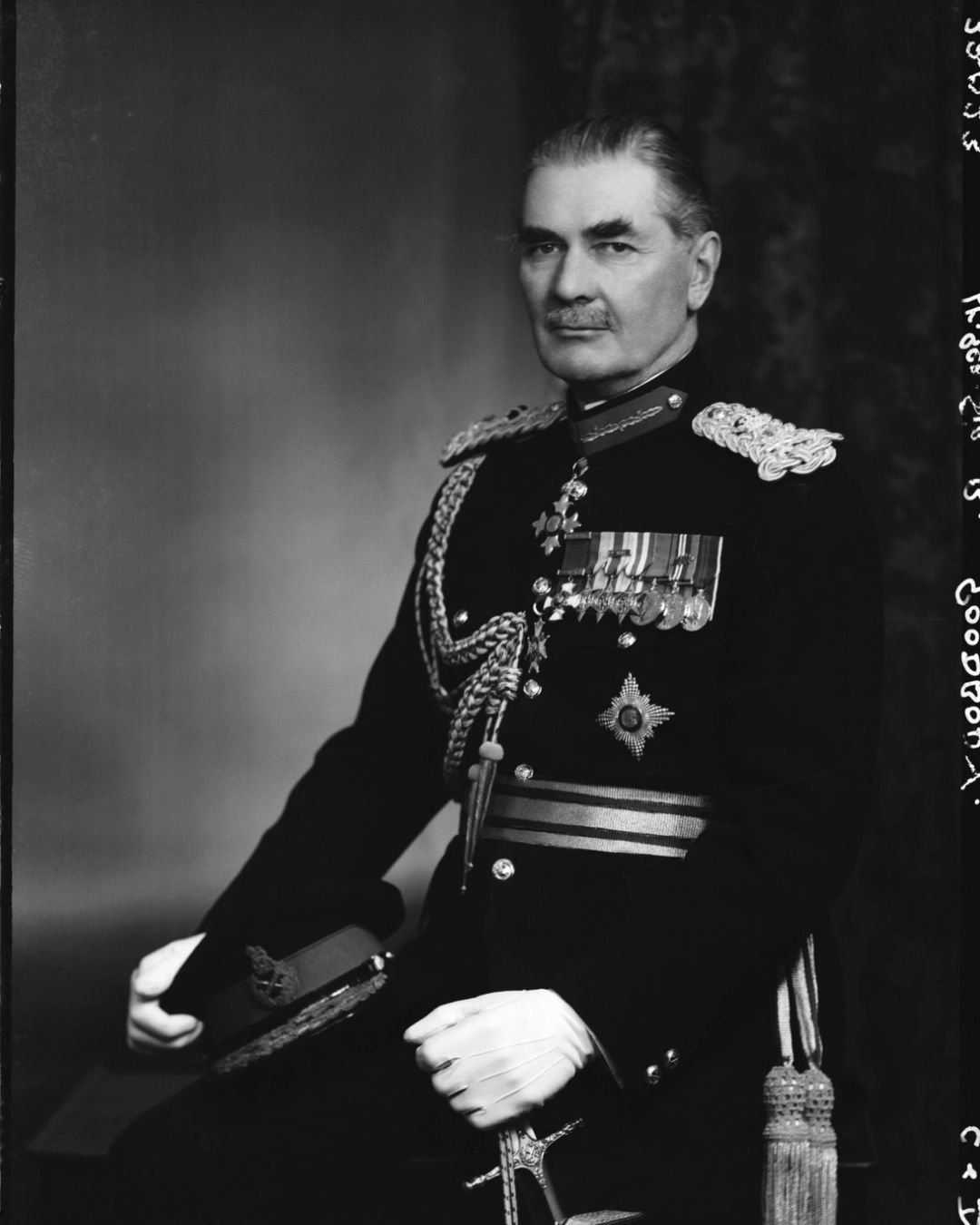
These extraordinary stars are especially poignant to me, as my grandfather, General Sir Richard Goodbody GCB, KBE, DSO (1903 – 1981), was also a Knight Grand Cross of the Order of the Bath, appointed by Her Late Majesty Queen Elizabeth II in 1963, having served as her ADC for the two previous years. He would occasionally sit just below Her Majesty in Westminster Abbey, which enabled my parents to be married in what is known as the Bath Chapel in the Abbey, and my brother and I to be baptized there.
Unfortunately, however, his Order of the Bath Star was not set with white and yellow diamonds; rather, the star’s rays and body are made of silver, with the cross in gold and the mottoes and emblem in gold and enameled in color, another thread in the rich and colorful tapestry of jewels associated with the British crown.