
How The Odyssey Is Bringing Neoclassical Jewelry Back
The leading ladies of The Odessey are taking method-dressing to a whole new level, championing ancient Greek-inspired and Neoclassical jewelry, embellished with equally ancient natural diamonds.
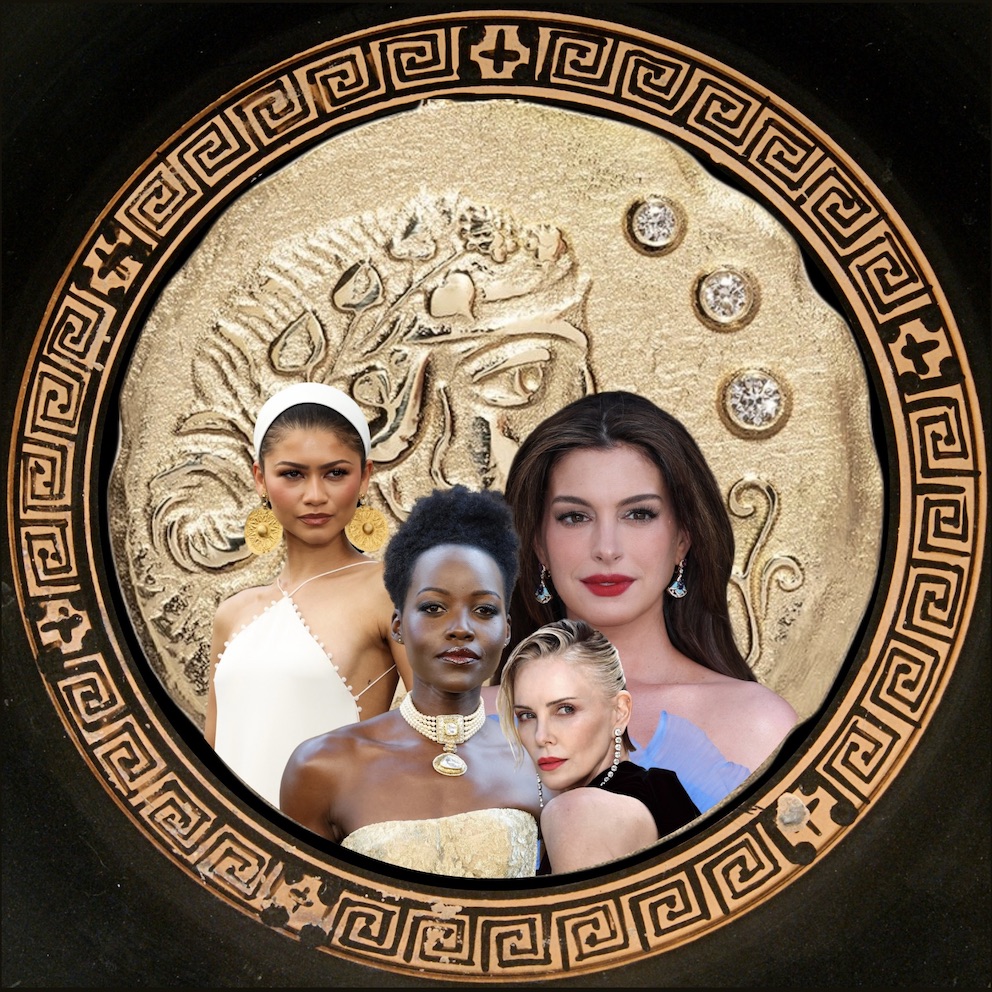
Based on Homer’s ancient Greek 7th-century BC epic, The Odyssey hit theaters with a star-studded cast on July 17, to resounding praise. The excitement surrounding the film has sparked a renewed interest in neoclassical jewelry worthy of ancient myths, embraced by the women of Christopher Nolan’s adaptation of the 2,700-year-old tale.
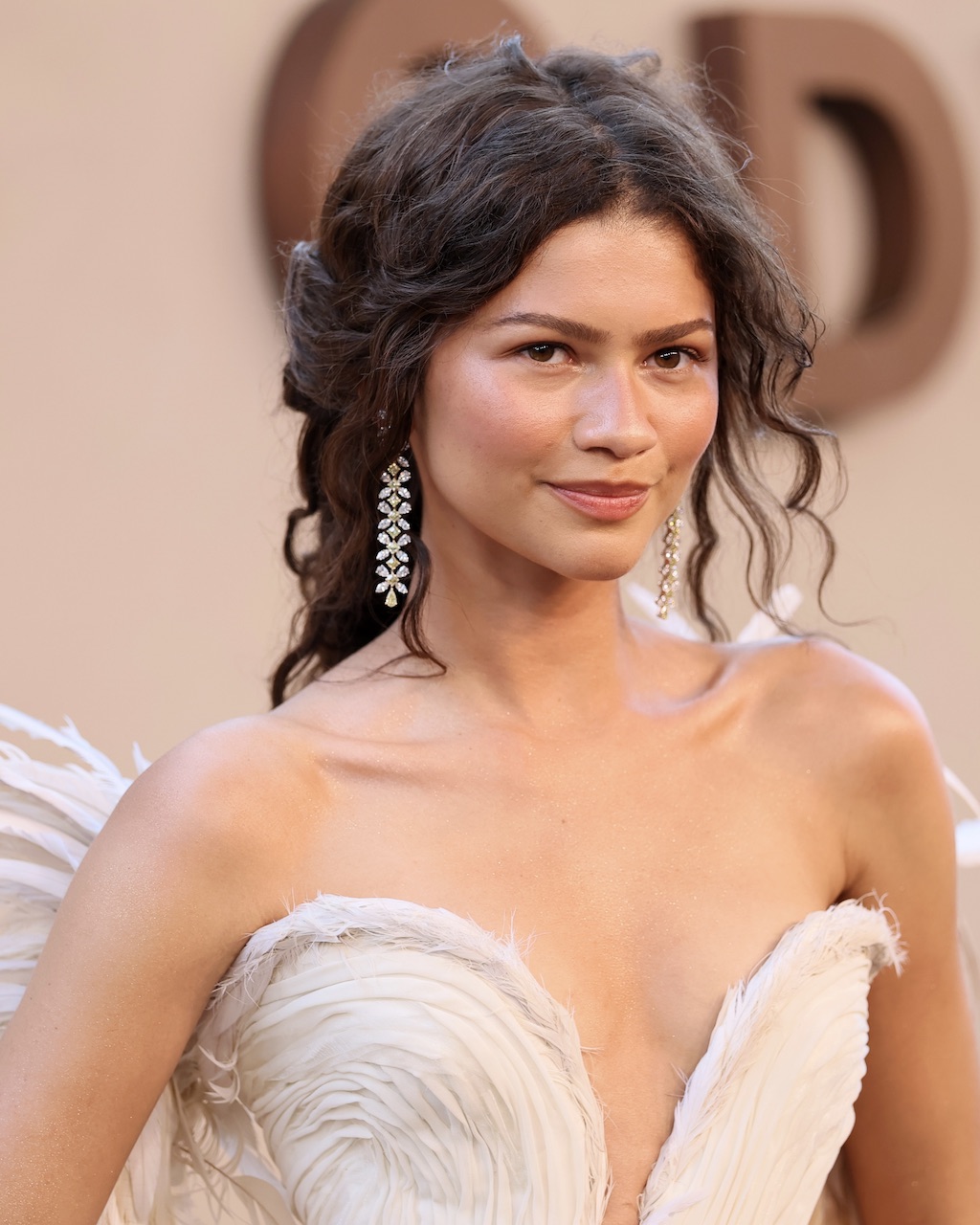
Specifically, Anne Hathaway and Zendaya have incorporated Greco-Roman jewelry motifs, such as medallion discs, warrior-worthy collars, serpents, and more, throughout their ancient coins, press tour. The only thing more ancient than these jewelry staples is the natural diamond that embellishes them. The Greeks named the gemstone “adamas” (meaning “unconquerable” or “invincible”), which is the root of the modern word “diamond.
Meet the Expert

Daniela Mascetti is one of the jewelry world’s most experienced scholars specializing in the history of jewelry. Mascetti joined Sotheby’s in 1980, opening the firm’s jewelry department in Milan shortly afterwards. Following a distinguished career of 40 years at Sotheby’s, she was appointed Jewelry Chairman of Europe, a position she retained until 2020. Highlights from Mascetti’s distinguished career include research for the sales of historic collections such as the Jewels of the Duchess of Windsor, Elton John, Maria Callas and Gina Lollobrigida.
Matt Damon stars as the titular Odysseus, while Tom Holland plays his son, Telemachus. Anne Hathaway portrays Penelope, the steadfast queen of Ithaca, whose unwavering loyalty to Odysseus is tested by more than a hundred suitors during his decades-long absence.
Lupita Nyong’o appears in a dual role as Helen of Troy—the face that launched a thousand ships, whose abduction by the Trojan prince Paris ignited the decade-long Trojan War—and her sister, Clytemnestra. As Odysseus’s divine guide, Zendaya portrays Athena, the Greek goddess of wisdom and strategic warfare, while Charlize Theron stars as the sea nymph Calypso.
The Odyssey is sure to influence an uptick in ancient Greek-inspired fashion and jewelry, from vintage creations, Neoclassical artistry, and contemporary interpretations of these age-old motifs.
How Ancient Greece Inspired Neoclassical Jewelry
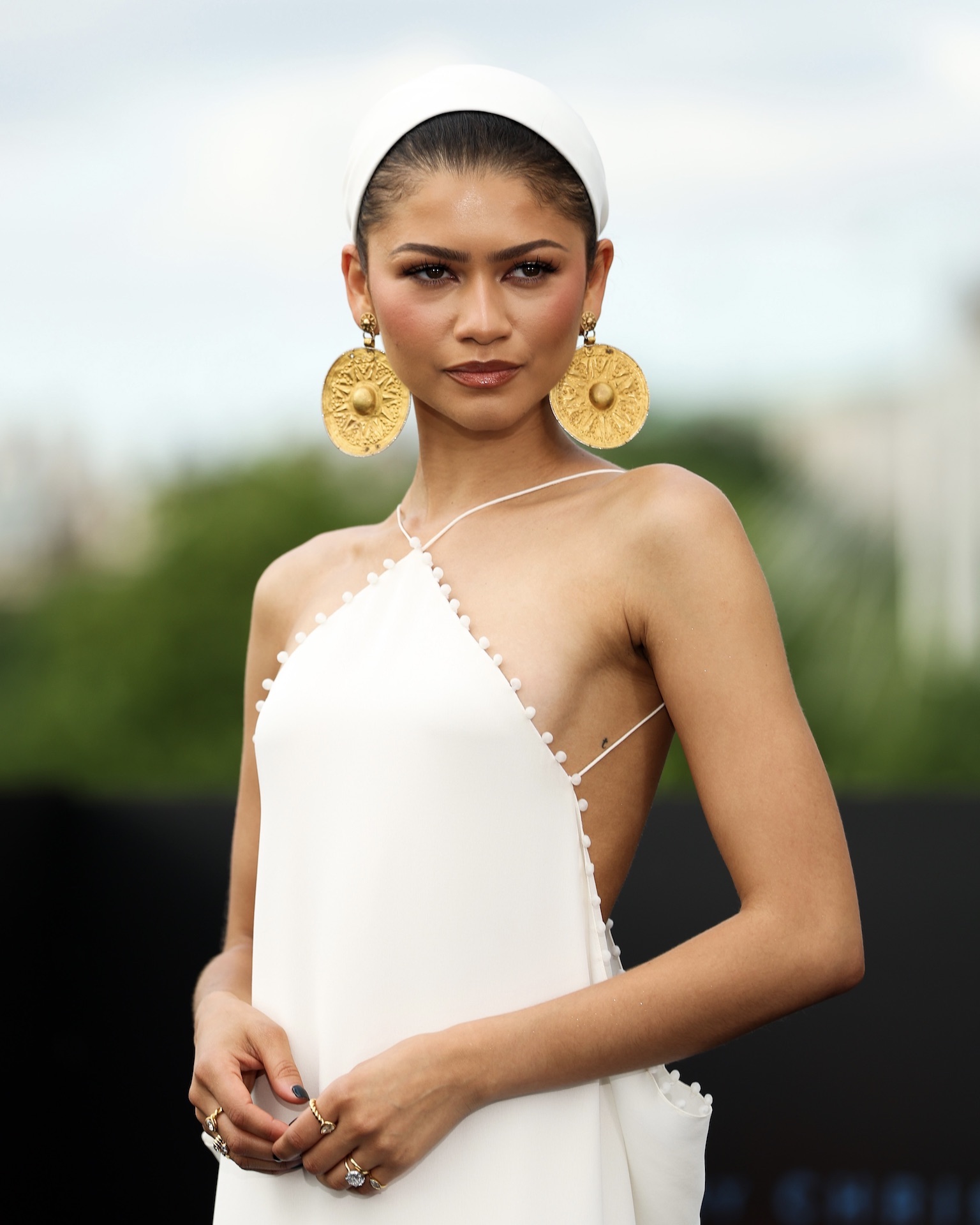

Meaning “new classical,” Neoclassical refers to the adaptation or revival of ancient Greek and Roman classical ideals like order, balance, and restraint, across disciplines such as the arts, architecture, and economics. The cultural trend seems to always make its way back to the forefront of the zeitgeist, especially as it pertains to artistic expressions like fashion and jewelry.
Beginning in the 7th century B.C., ancient Greek and Roman artists created the blueprint. By the latter half of the 18th century, a return to form was an instinct in opposition to the brash extravagance of the late Baroque and Rococo periods.
During the Age of Enlightenment, many began to become disillusioned with the opulent lifestyles of the royal courts, specifically in France, à la the French Revolution in 1789. Fashion and jewelry began to be characterized by ornamentation inspired by the classical themes of ancient Greece and ancient Rome to better reflect their new morals and philosophies.
It became en vogue for aristocratic young men to complete their classical education through what was dubbed the “Grand Tour” to be introduced to ancient examples of the Greco-Roman world, the Hellenistic period, and the time of the twelve Caesars, bringing their knowledge home with them and helping to foster Neoclassical ideals.
From powdered wigs and over-the-top ruffled cupcake gowns to a more stripped-back, ideal look, the courts went through a sartorial transformation around 1760. Dresses became less tight-fitting with lighter materials, femininely clinging to the female form, resembling the ancient statues of Greece and Italy.
With a new mindset towards fashion and a turbulent era of wars and political upheaval, the jewelry of the age needed a metamorphosis of its own. Many of the old jewels were either sold or simply refitted for simpler styles, given the political climate.
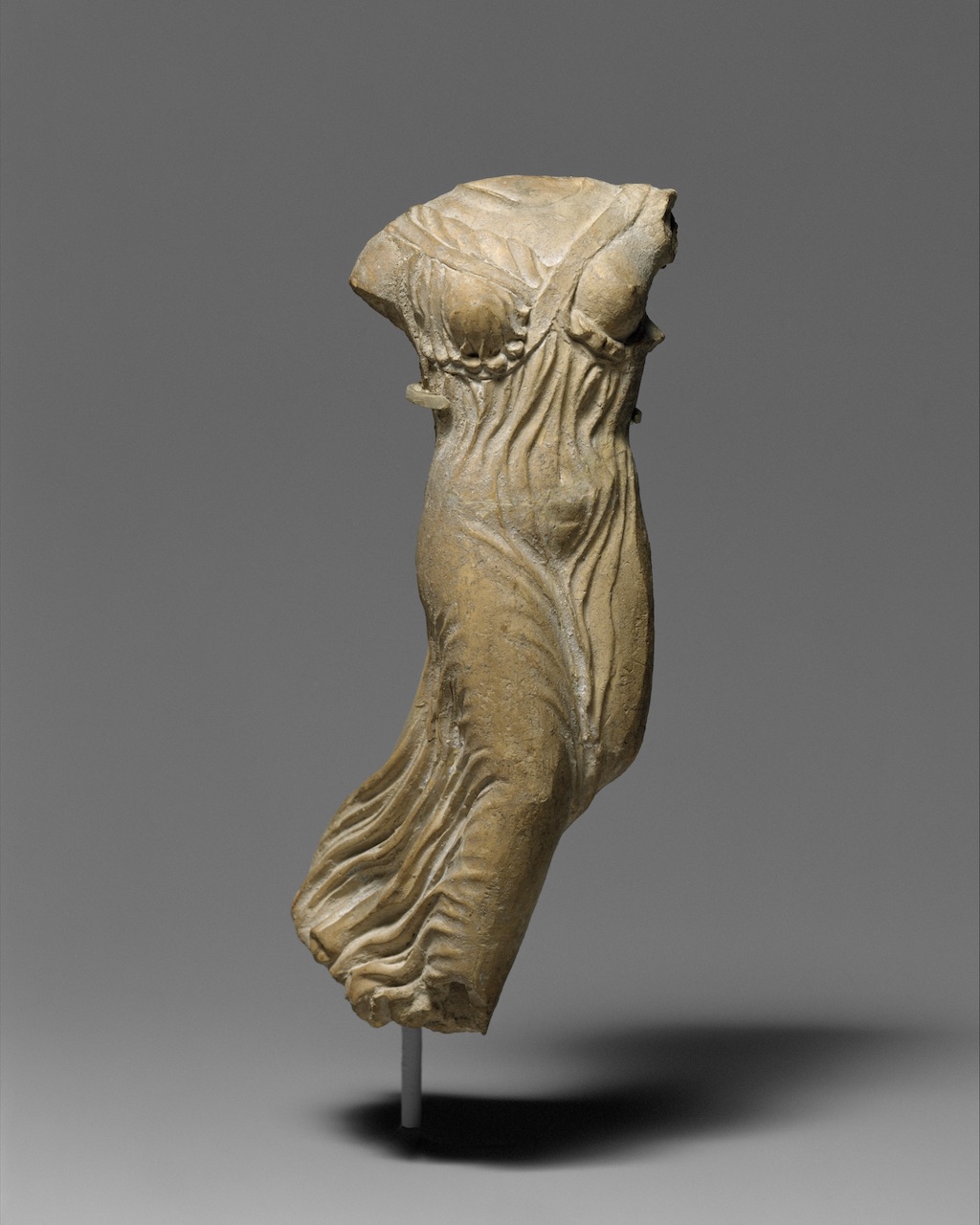
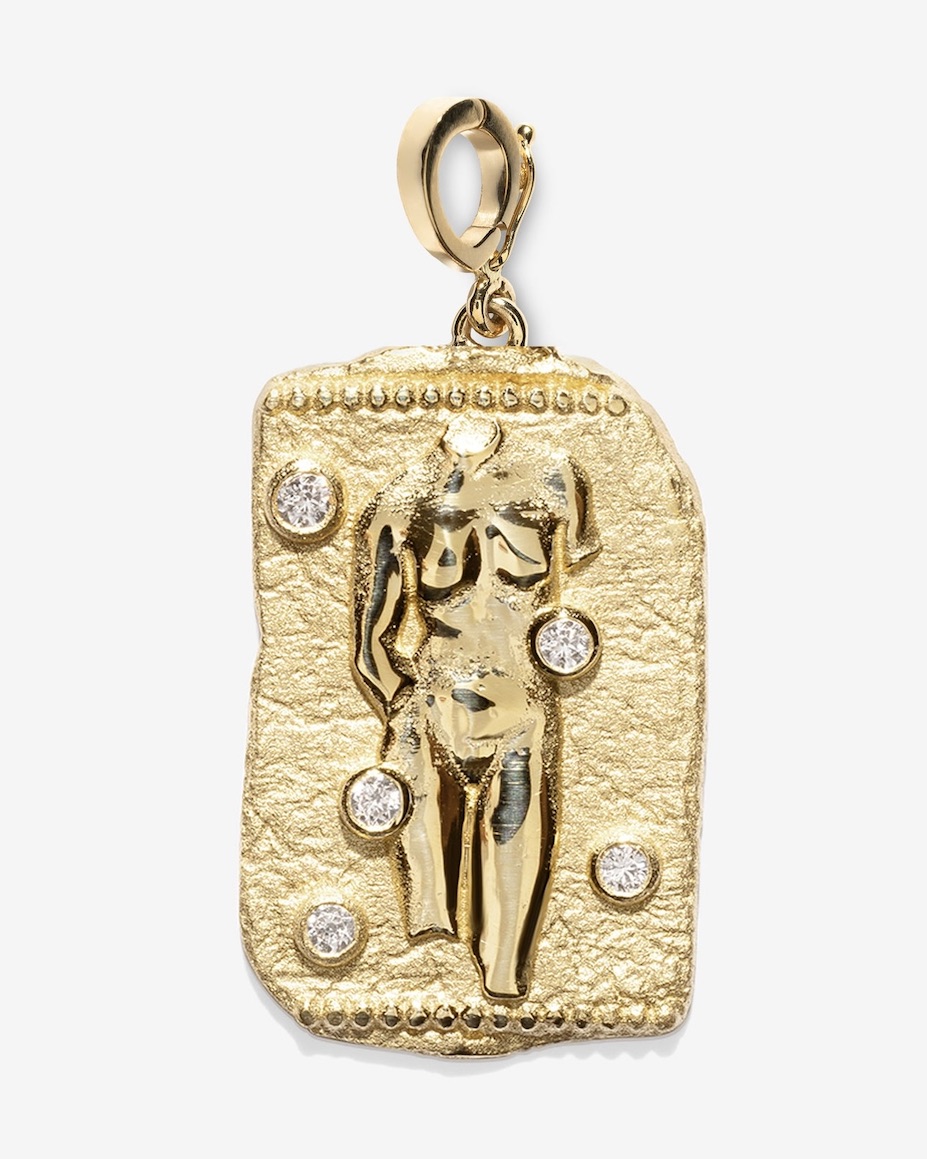
Before they had any true references to the types of accessories worn by the women of ancient Greece and Rome, jewelers loosely based their designs on architecture like Greek temples and Roman ruins. After wonders from the excavations of Pompeii and Herculaneum came to light, themes of the discoveries were swiftly incorporated into jewelry. Priam’s Treasure of Troy, unearthed in the 1870s by German archaeologist Heinrich Schliemann, provided even more context for jewelers to work with regarding their Neoclassical creations.
Though many tend to compare Neoclassical jewels with those of the Renaissance, the core difference was that the exclusive Renaissance style was considered for the wealthy, while Neoclassicism was attainable and inclusive, no matter your class.
Diamond Armlets Defined Neoclassical Jewelry
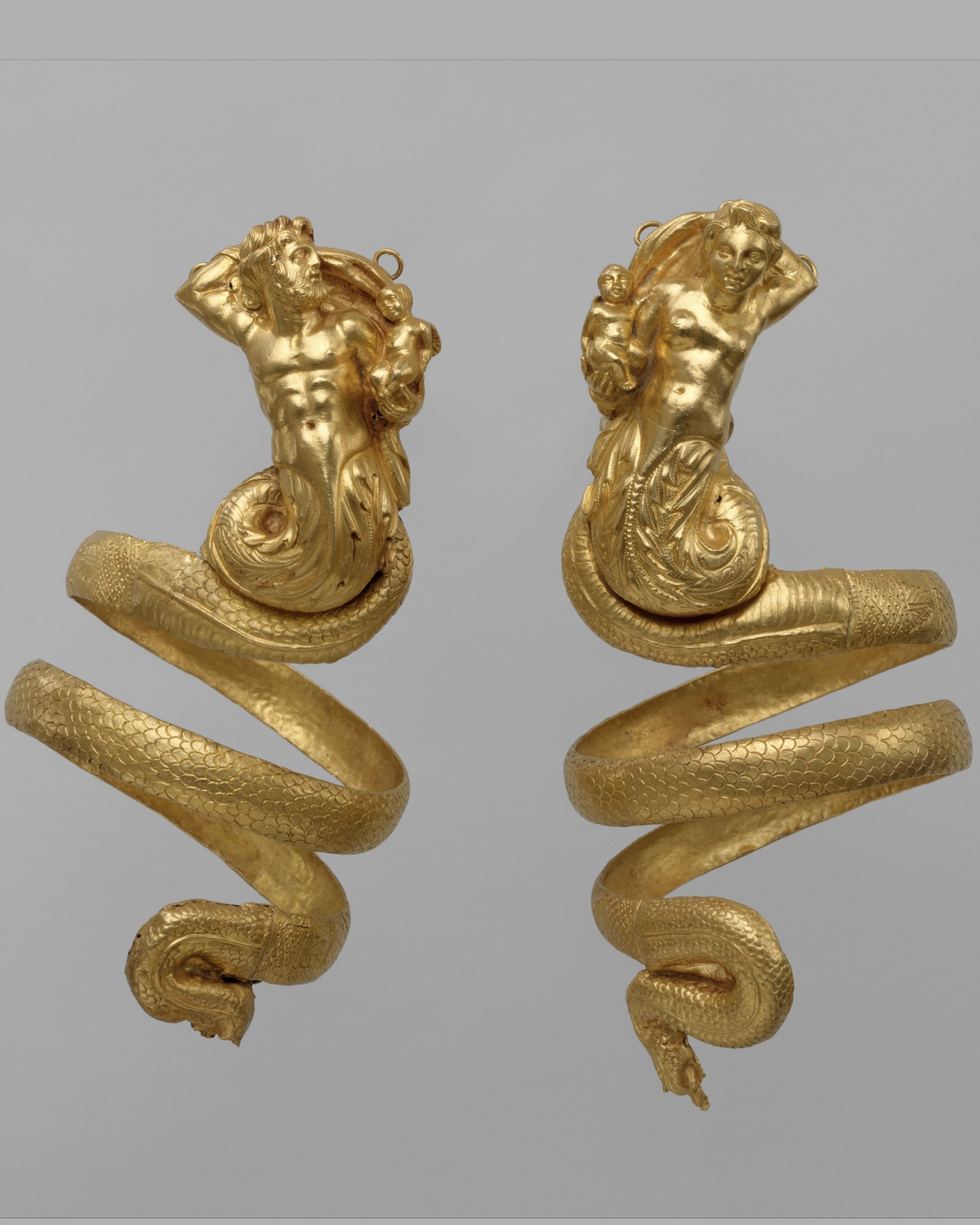
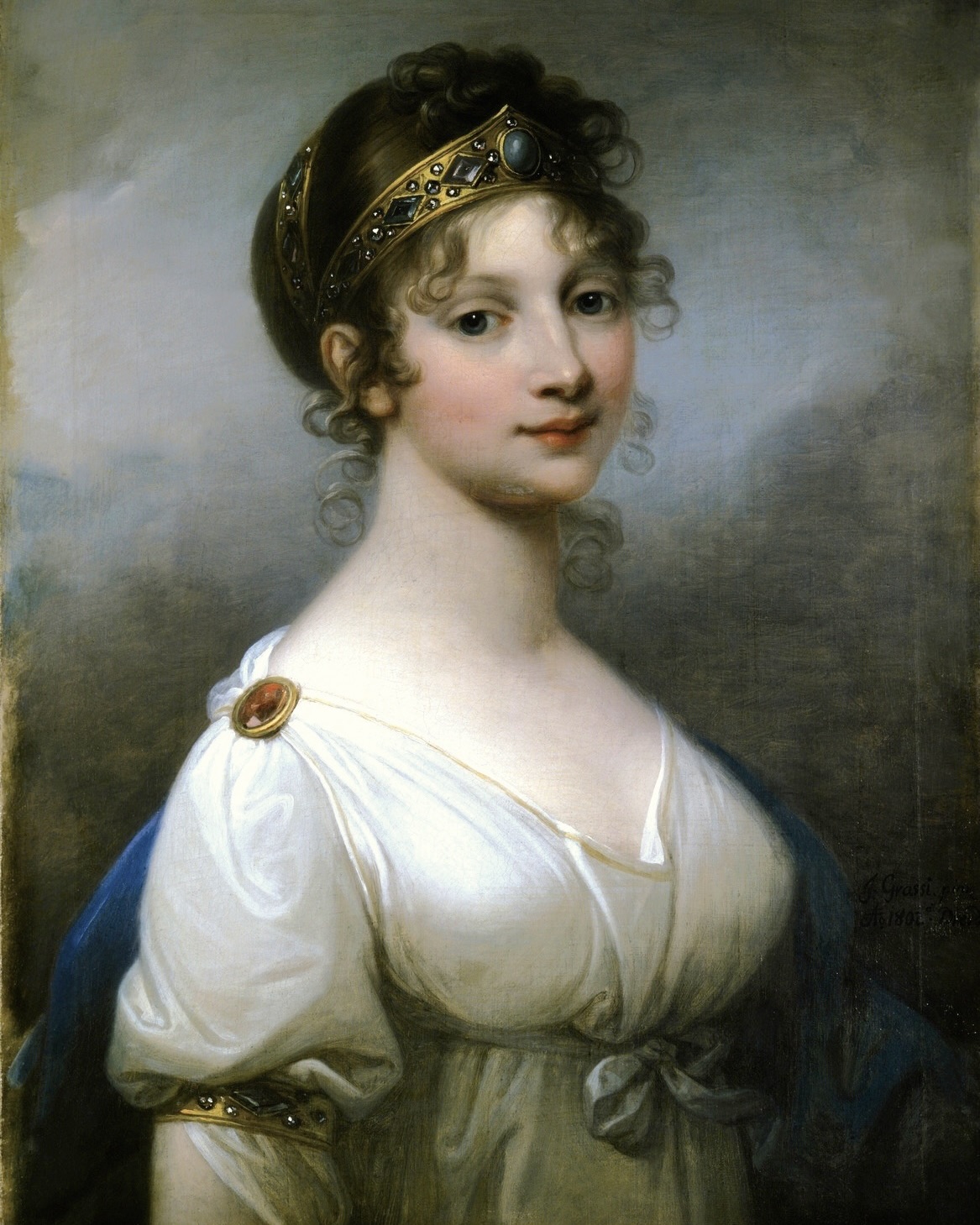
Given the fashion left arms bare, armlets, often incorporating natural diamonds, suited for romantically candle-lit rooms, became a popular choice during the Neoclassical era, worn on the upper arm to best channel your inner goddess or Amazon. Arm bands (or “armilla”) were always worn as a symmetrical set. Favored since ancient times across civilizations, these bicep bracelets have been uncovered in Etruscan tombs and were said to be given to Roman soldiers as military decorations.
In ancient Greece, soldiers would wear them into battle, and brides treasured them as a traditional rite of marriage. Armlets of hammered gold would be worn in twos. One would be given to the bride as an engagement gift, while the other was presented to her upon her nuptials.
According to Roman naturalist and philosopher Pliny the Elder, some armbands would be crafted to feature a Herakles knot that was thought to cure wounds. According to the Metropolitan Museum of Art, the motif’s popularity in Hellenistic jewelry suggests that it was thought to have the power to ward off evil. Many cultures believed that arm jewelry stimulated the pranic energy that flows through the body through specific pulse points, and that it deflected nazar, or the evil eye.
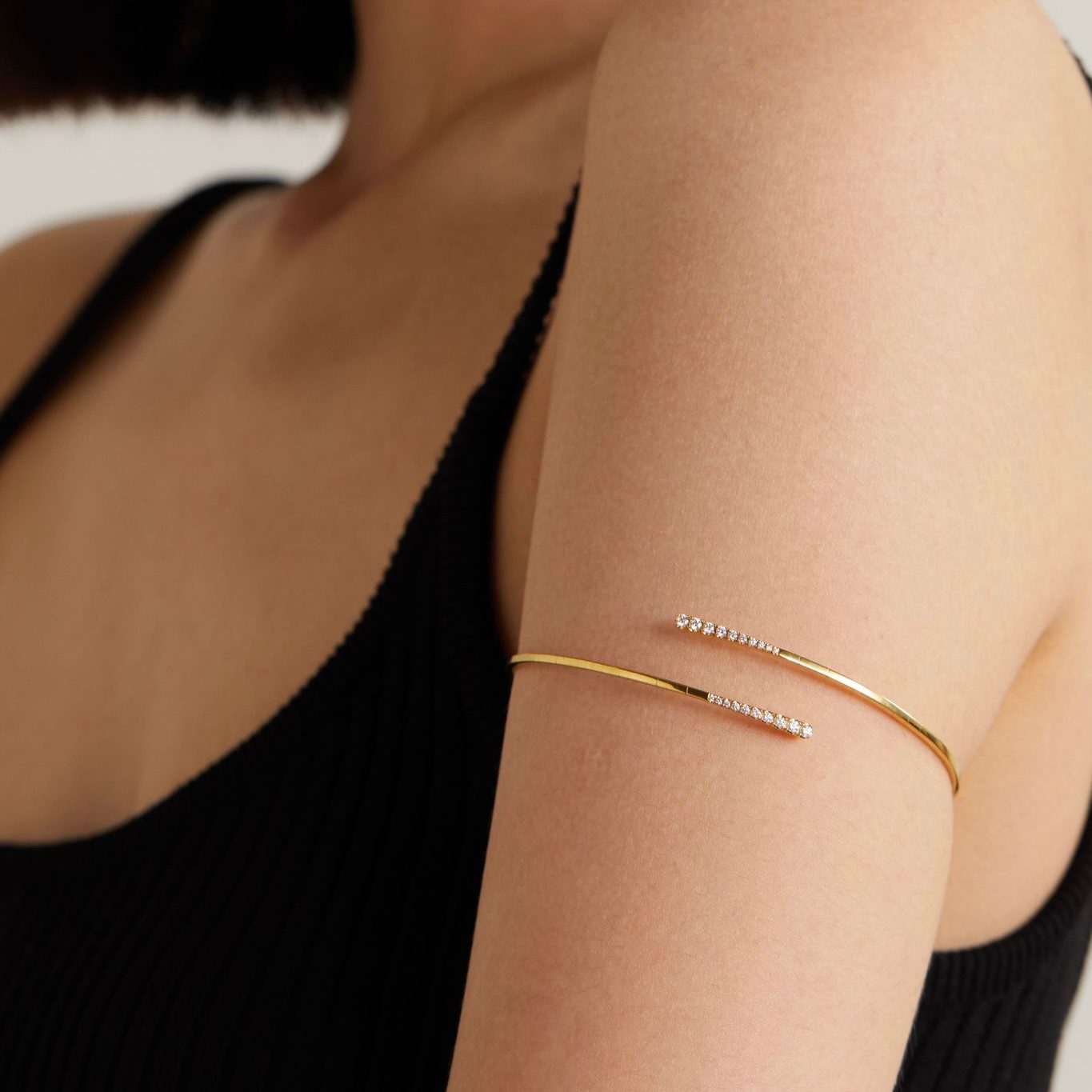
DIANE KORDAS 9-karat gold diamond arm cuff, $3,255, net-a-porter.com
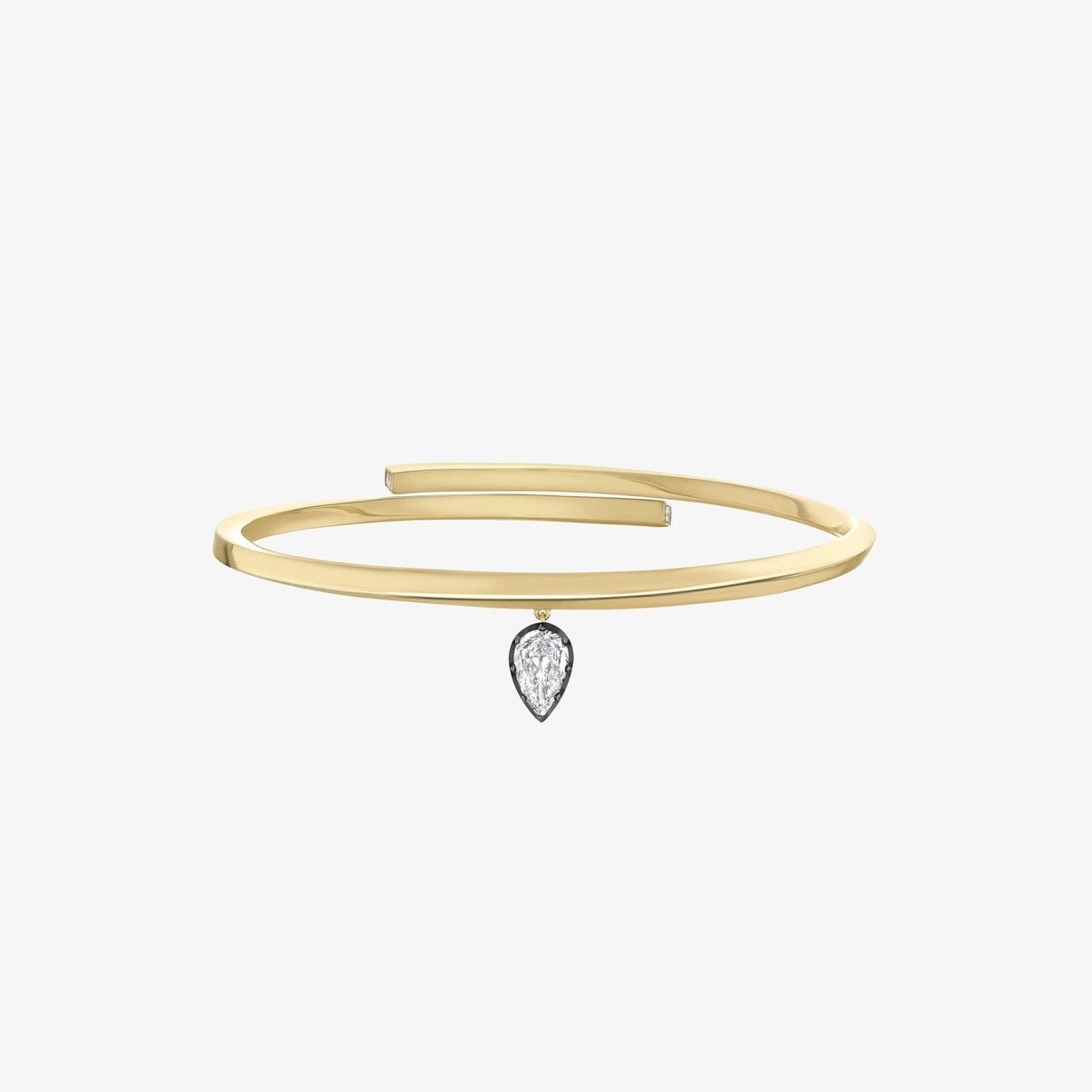
Jessica McCormack, Orbit 1.21ct Pear-Shaped Diamond Arm Bangle, $45,000, jessicamccormack.com
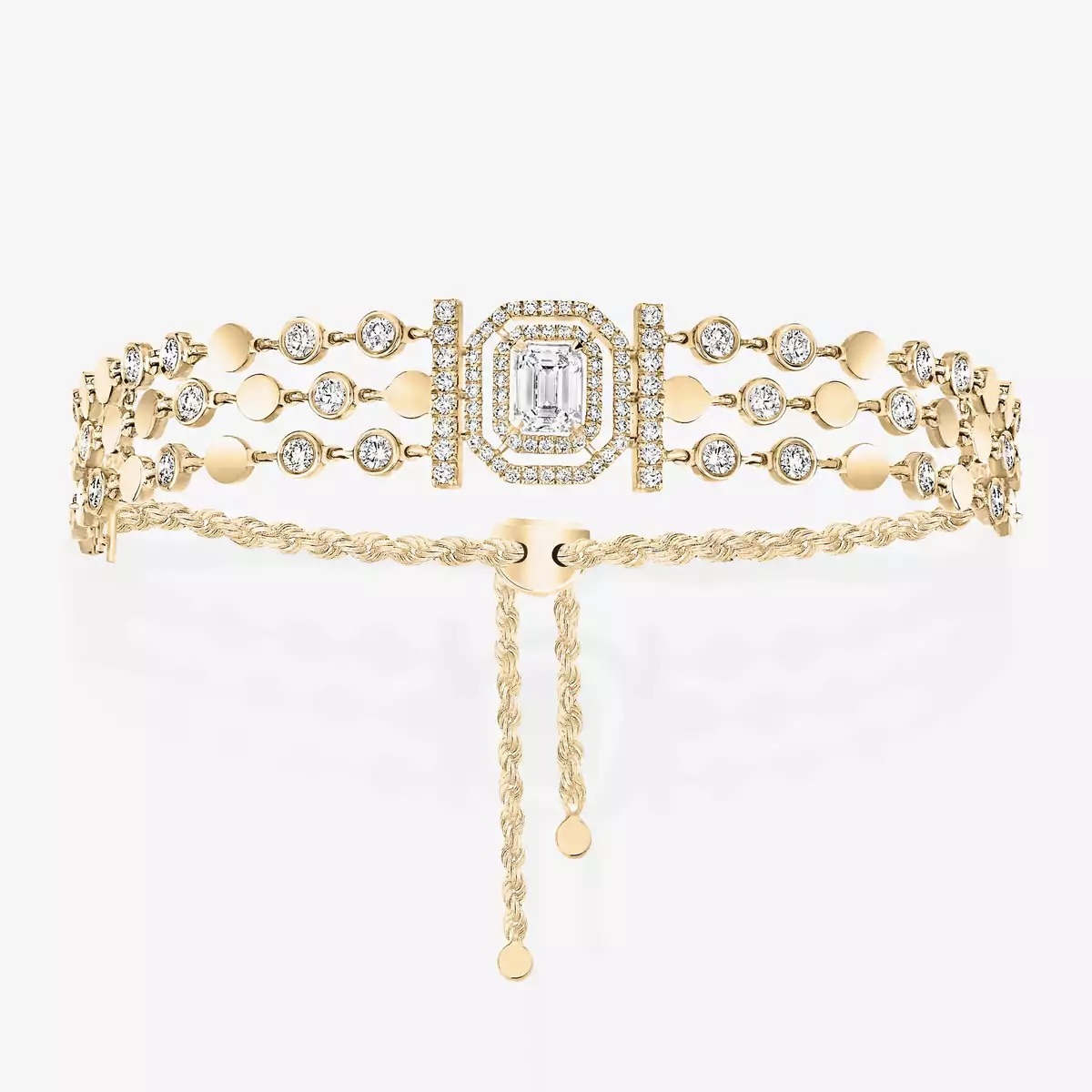
Messika D-VIBES MULTI-ROW BRACELET, $26,100, messika.com
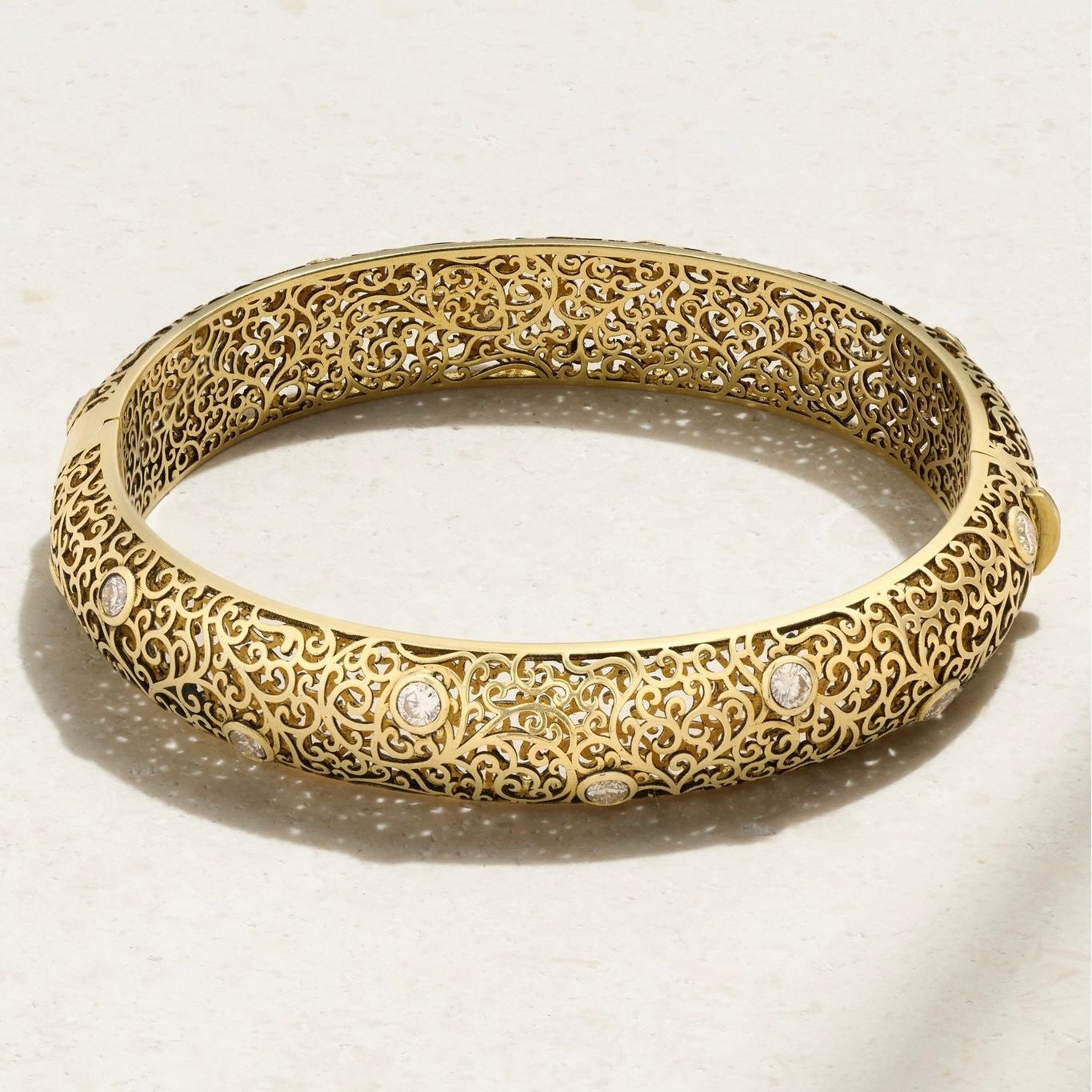
AMRAPALI LONDON Jali 18-karat gold diamond bangle, $17,100, net-a-porter.com
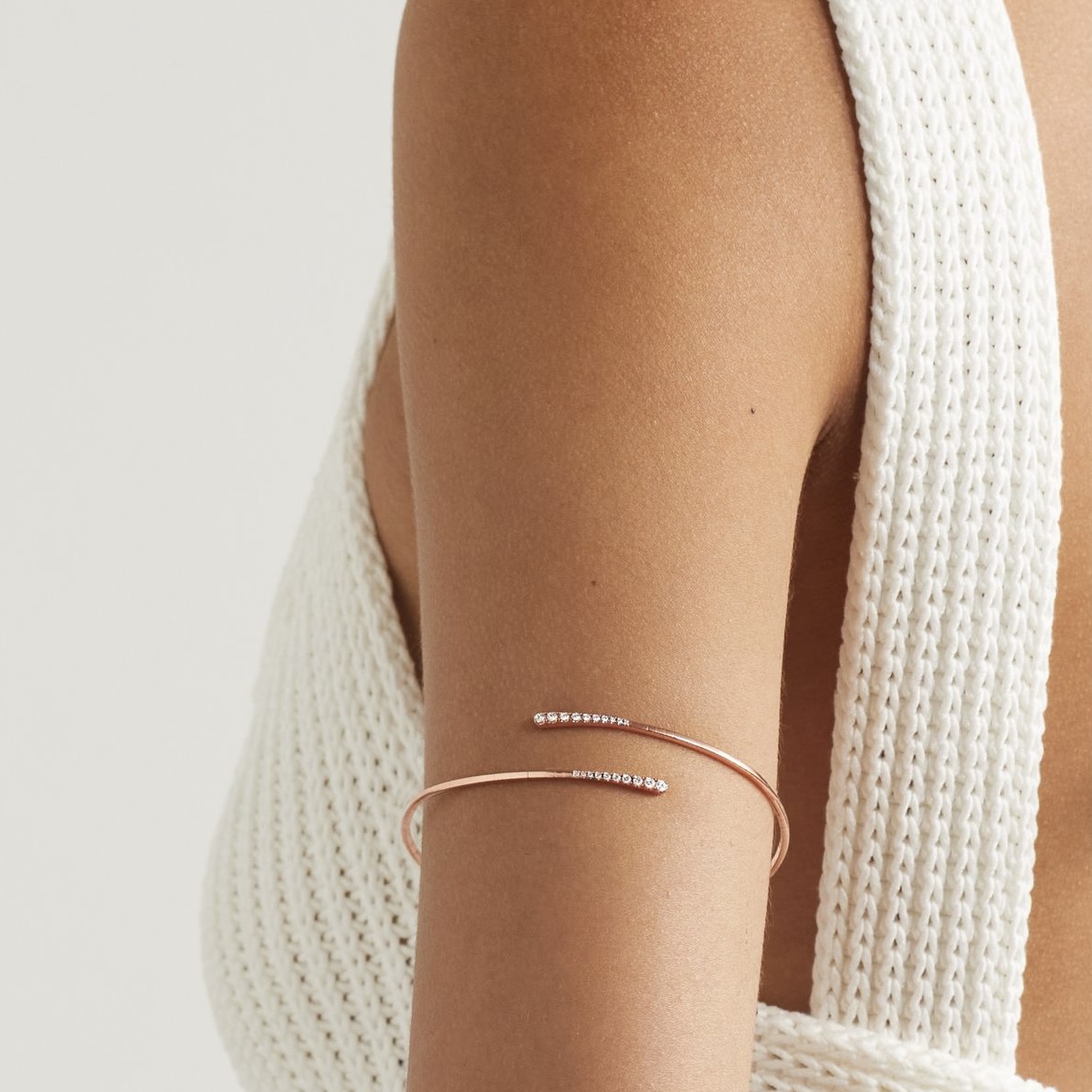
DIANE KORDAS 9-karat rose gold diamond cuff, $3,690, net-a-porter.com
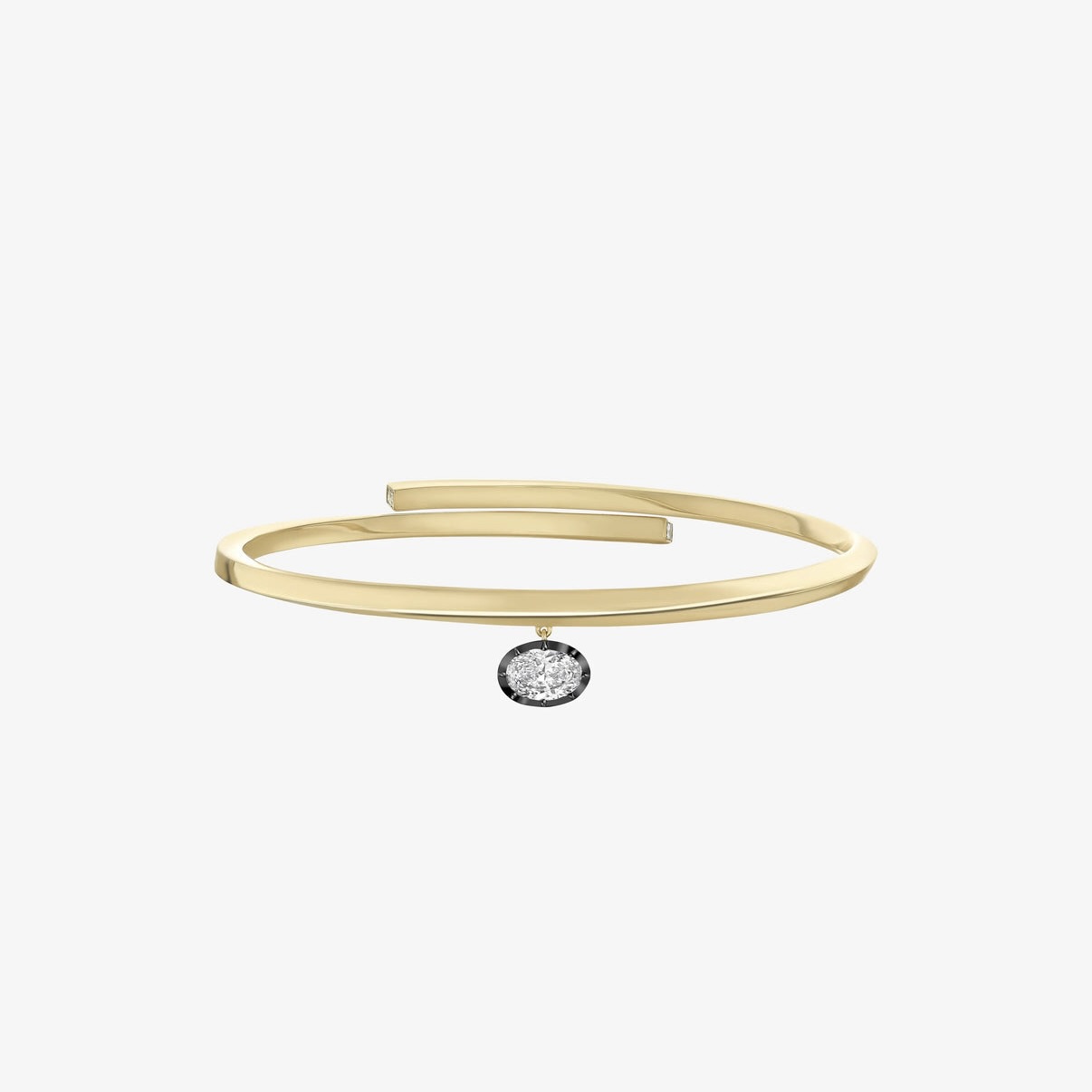
Jessica McCormack Orbit 1.22ct Oval Diamond Arm Bangle, $38,000, jessicamccormack.com
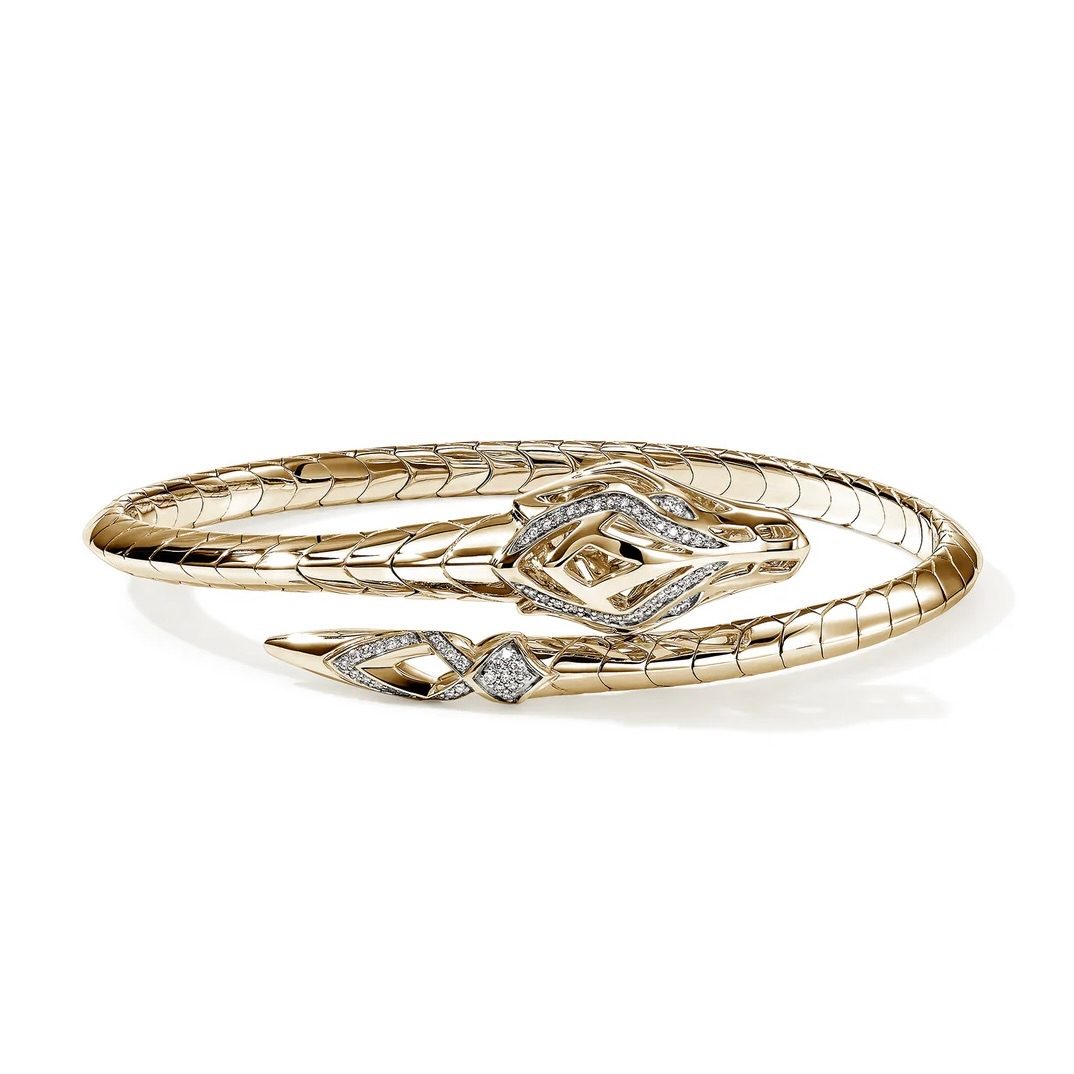
John Hardy Naga Flex Cuff, Gold, Diamonds, $12,000, johnhardy.com
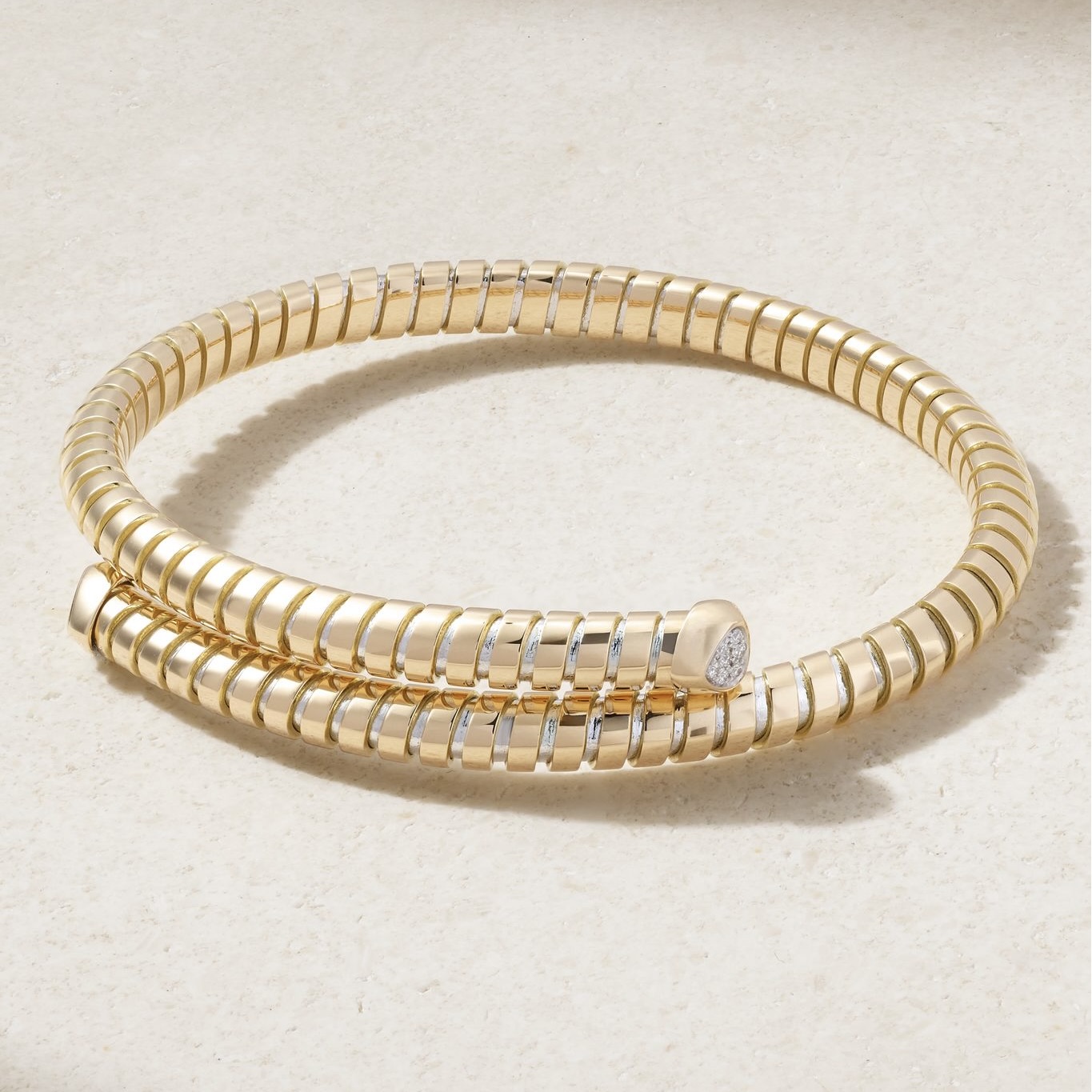
MARINA B Trisolina Bypass 18-karat yellow and white gold diamond bracelet, 7,500, net-a-porter.com
Cameos and Intaglios Have Been in Style for Centuries


Cameos and intaglios are engraved gemstones, shells, or other natural materials carved to depict anything from people to landscapes, and are mounted in jewelry. They’ve been crafted since antiquity. “The engraving into gemstones goes back a millennium,” says Daniela Mascetti, author of The Age of Grandeur, a definitive guide to 19th-century jewelry.
By the 18th century, European royalty began assembling elaborate cabinet de curiosités, or “Gem Cabinets,” filled with cameos and engraved jewels acquired during the Grand Tour through Italy and Greece. According to the Metropolitan Museum of Art, the Hellenistic Greeks are credited with being the first to master carving small hardstones with figures in relief, often depicting deities and talismanic symbols. Rooted in ancient Mesopotamian stones, the practice was implemented to create identifying seals.
Until approximately the fifth century B.C., gems were only carved in sunken relief, or intaglios. The name comes from the Italian verb intagliare, meaning to engrave or to carve. Simultaneously, the Greeks began to engrave in projected relief—the predecessors of cameos.
Napoleon Bonaparte later carried the tradition to France, embracing Greco-Roman cameos as symbols of imperial power. After he became Consul, and later emperor, of France, jewelry became far more abundantly worn in French society. After the “successful” campaigns of Italy in 1796 and Egypt in 1798, Neoclassical fashions and jewelry trends loomed large. Cameos became such an obsession for Napoleon that he started a gem carving academy so he’d never run short of these intricately carved works of art.
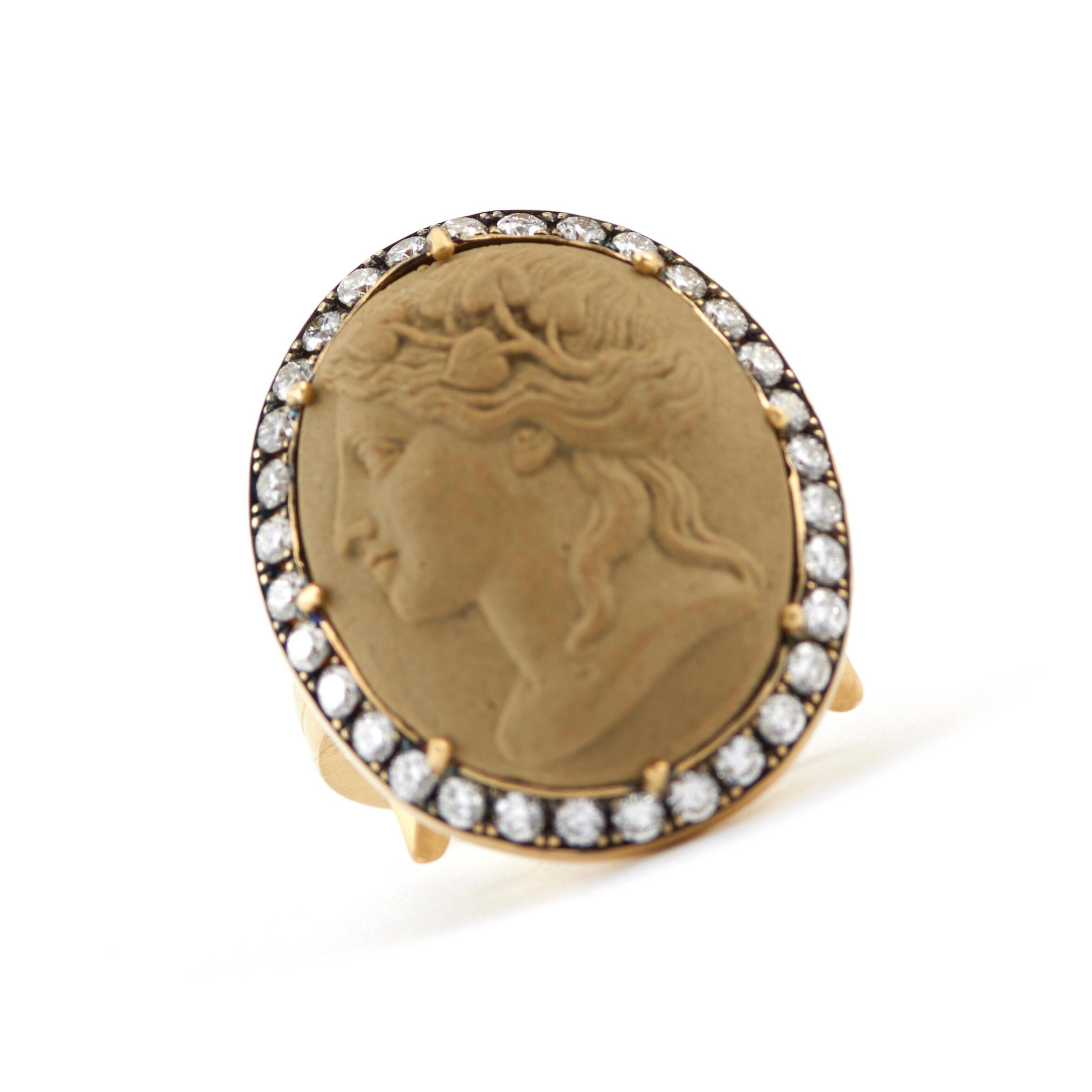
Sylva & Cie Lava Cameo Ring, $17,600, shop.mitchellstores.com
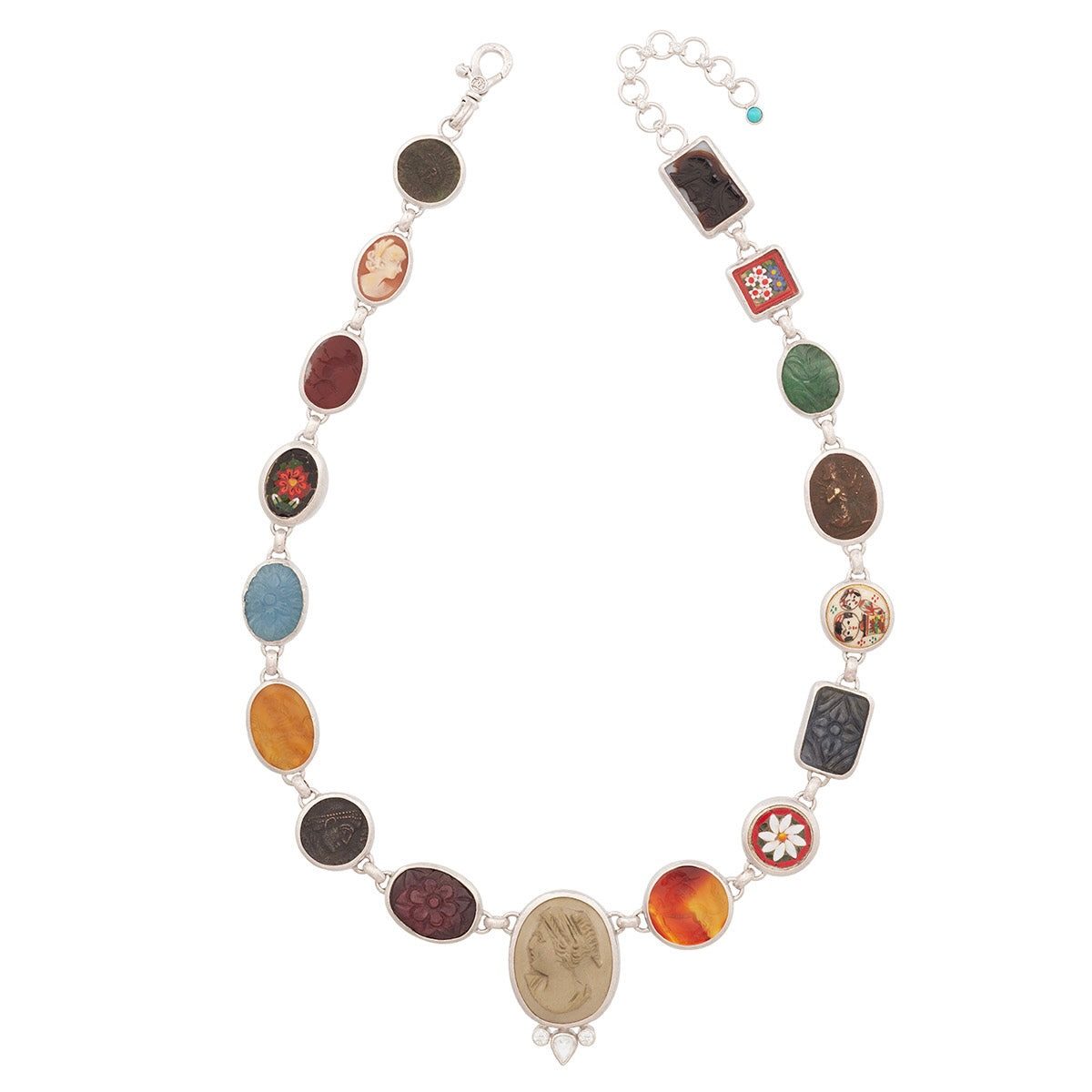
Gurhan Antiquities One-of-a-Kind Couture Silver Multi-Stone Rivière Link Necklace, Mixed Artifacts and Gemstones, $23,090, gurhan.com
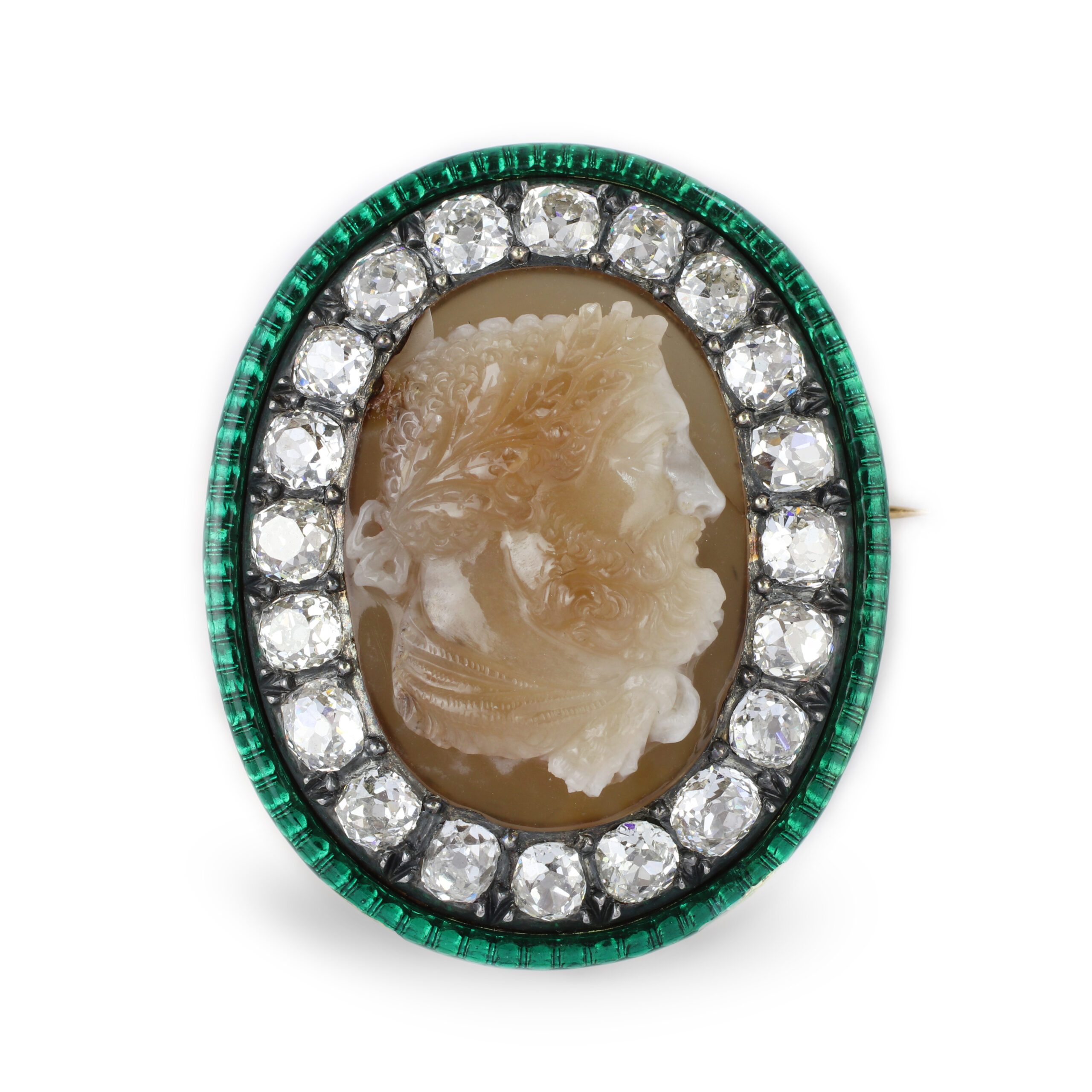
FD Gallery Agate Cameo, Enamel And Diamond Brooch, $45,500, fd-gallery.com
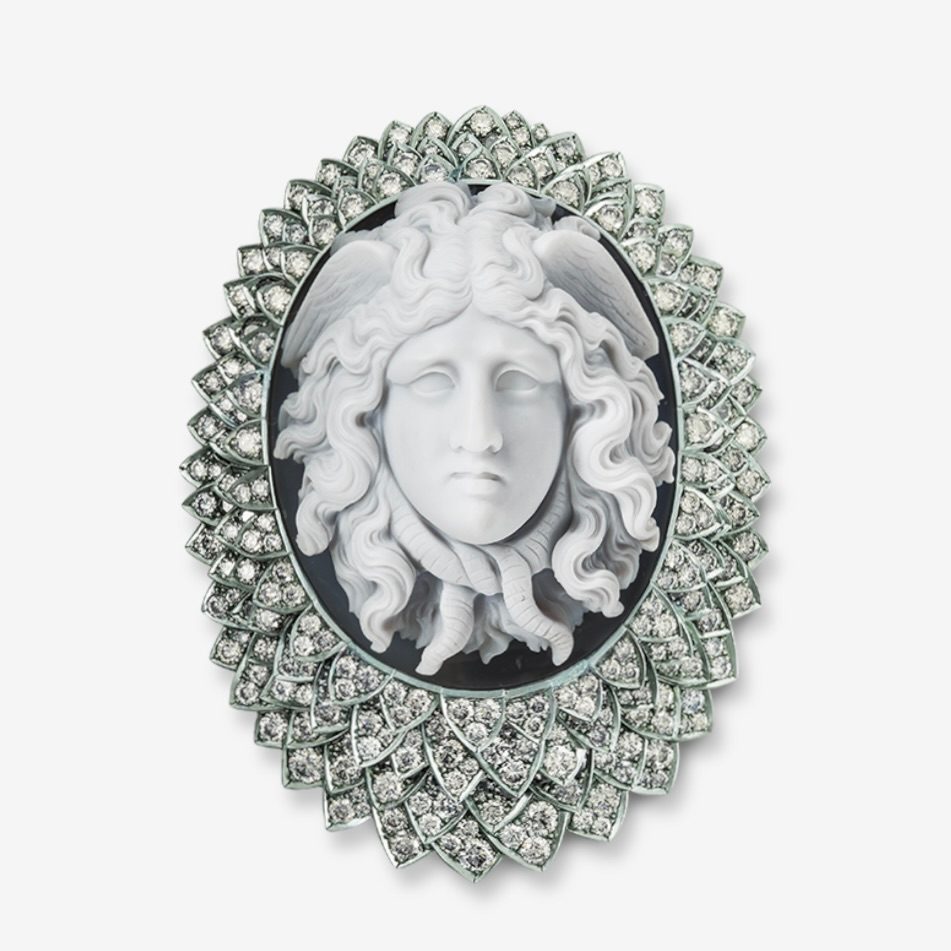
Hemmerle Cameo and Diamond One-of-a-Kind Brooch, Price Upon Request, hemmerle.com
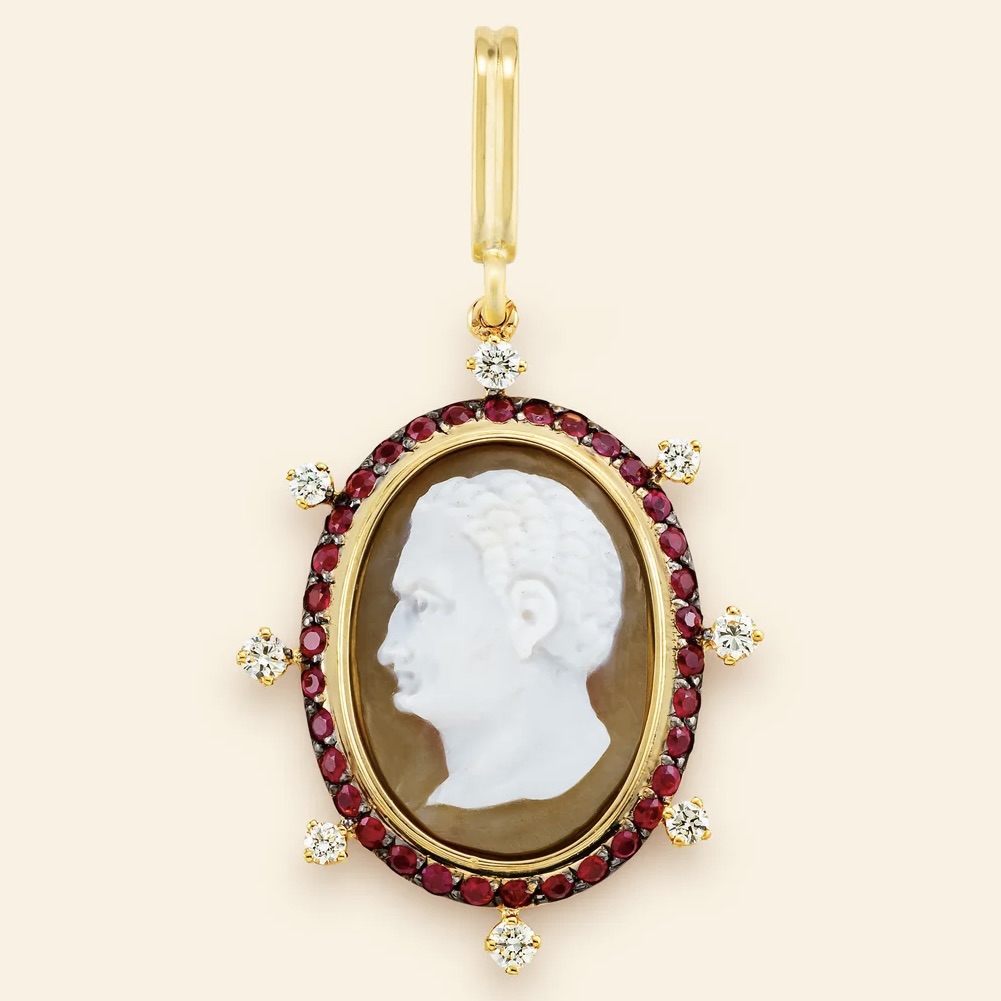
Mellerio Precious Cameo Diamonds, $9,945, mellerio.com
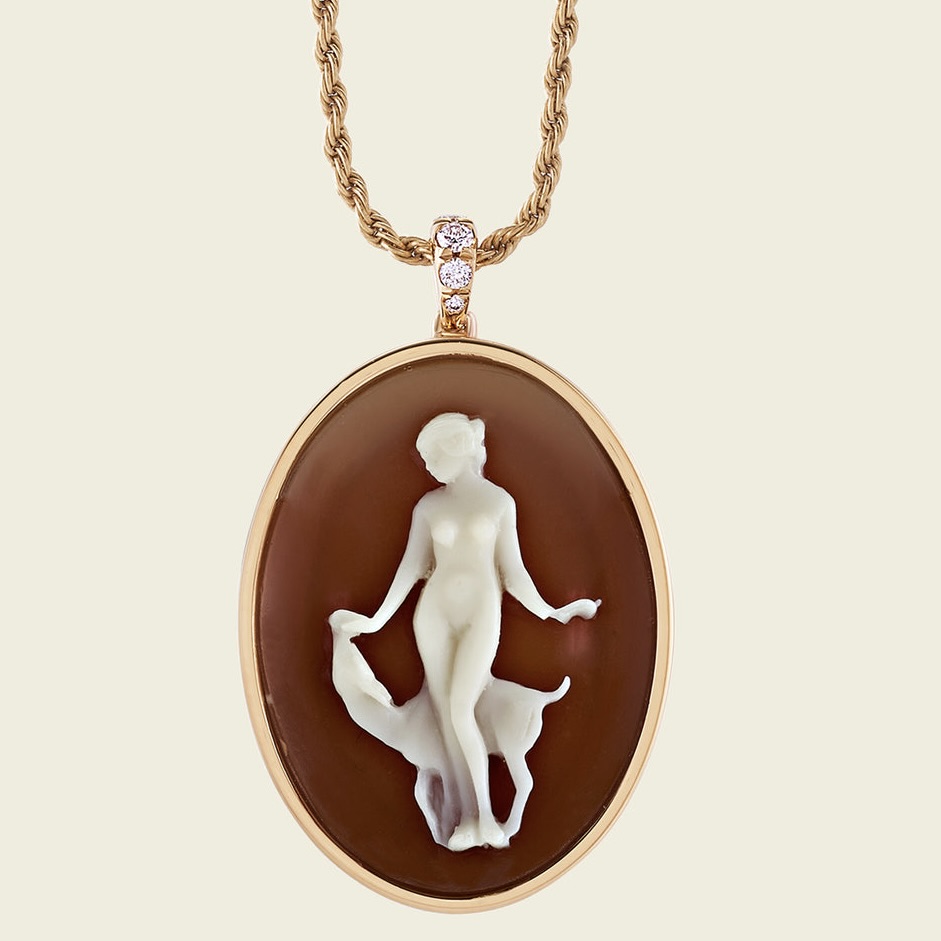
Francesca Villa Snaking Beauty Necklace, Price Upon Request, francescavilla.com
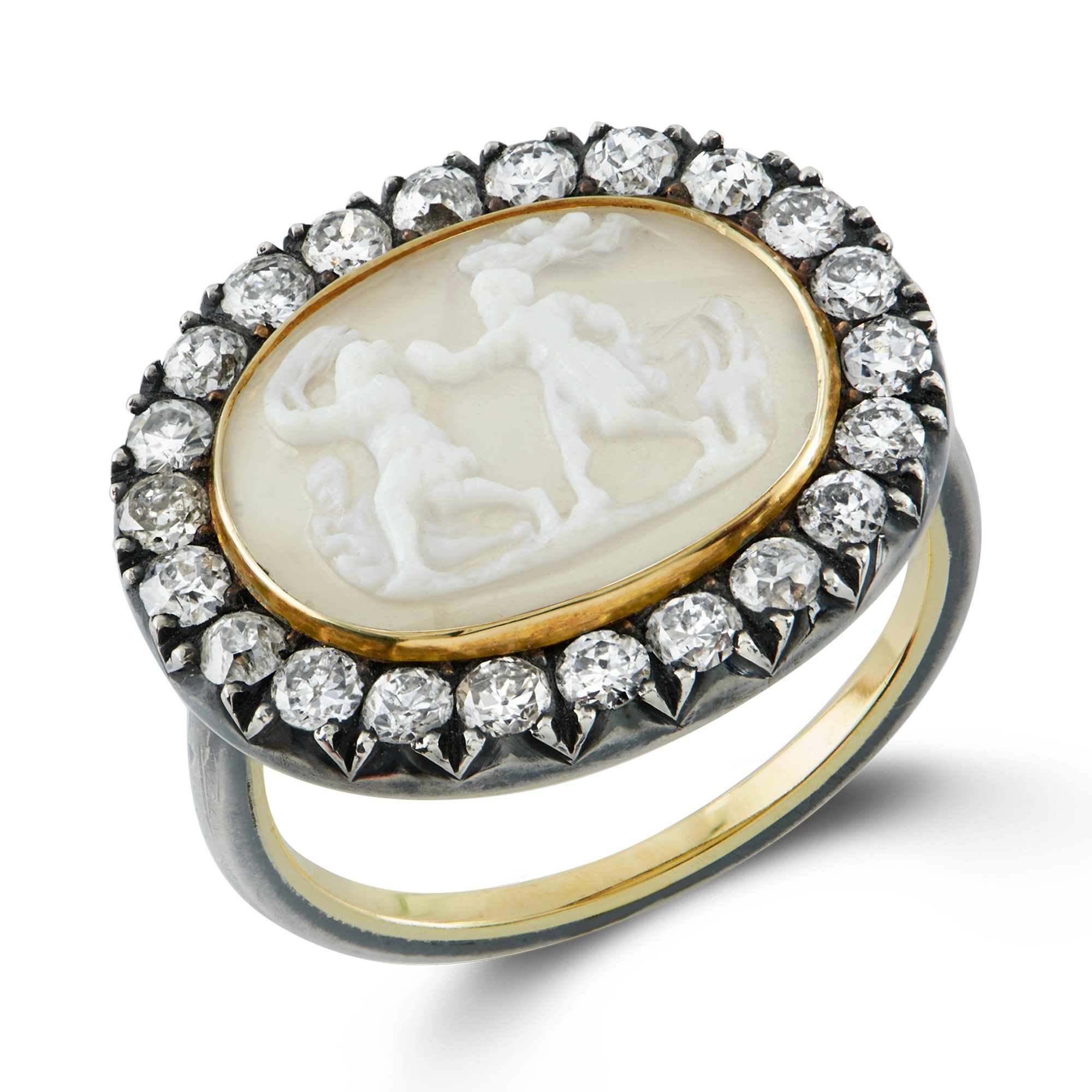
Pragnell Georgian Agate Cameo Ring 1.03ct in Silver and 18ct Yellow Gold, $8,525, pragnell.co.uk
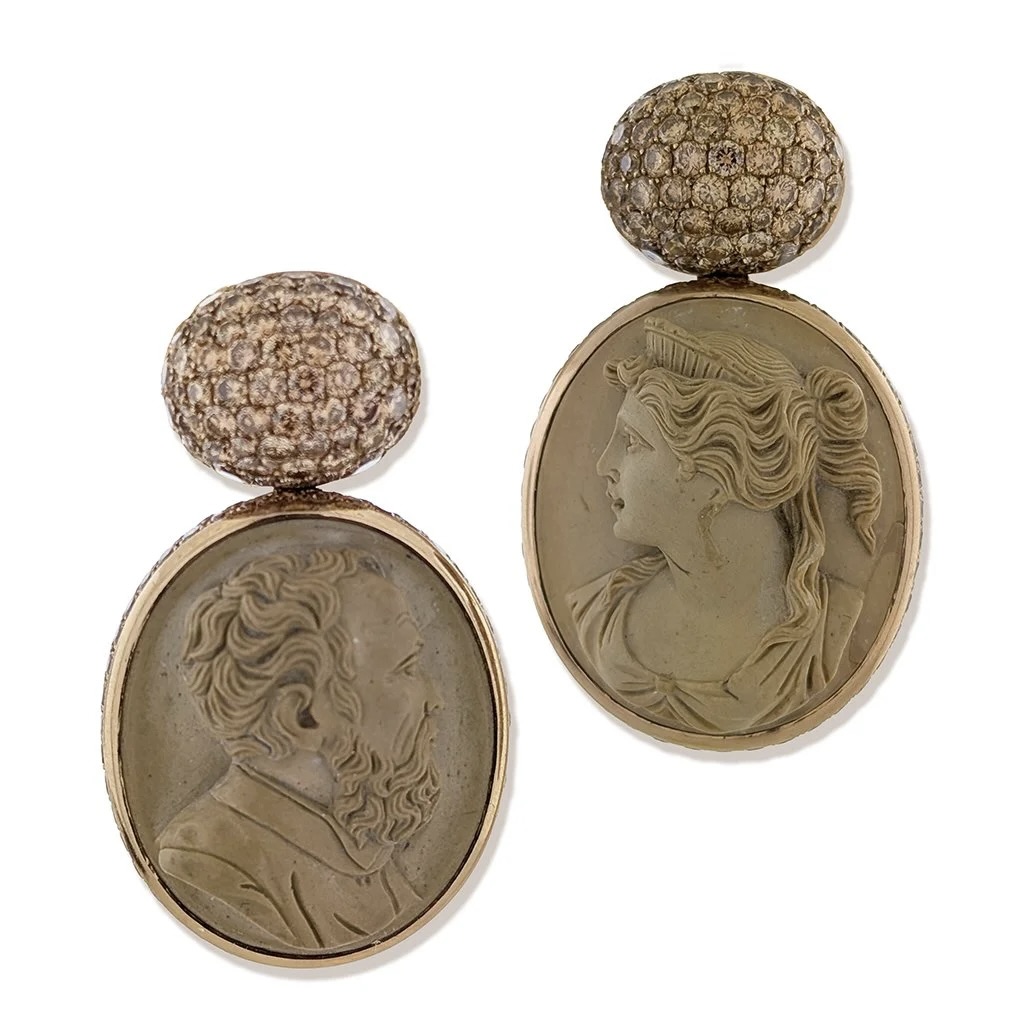
Hemmerle Lava Cameo and Diamond Earrings, $88,000, simonteakle.com
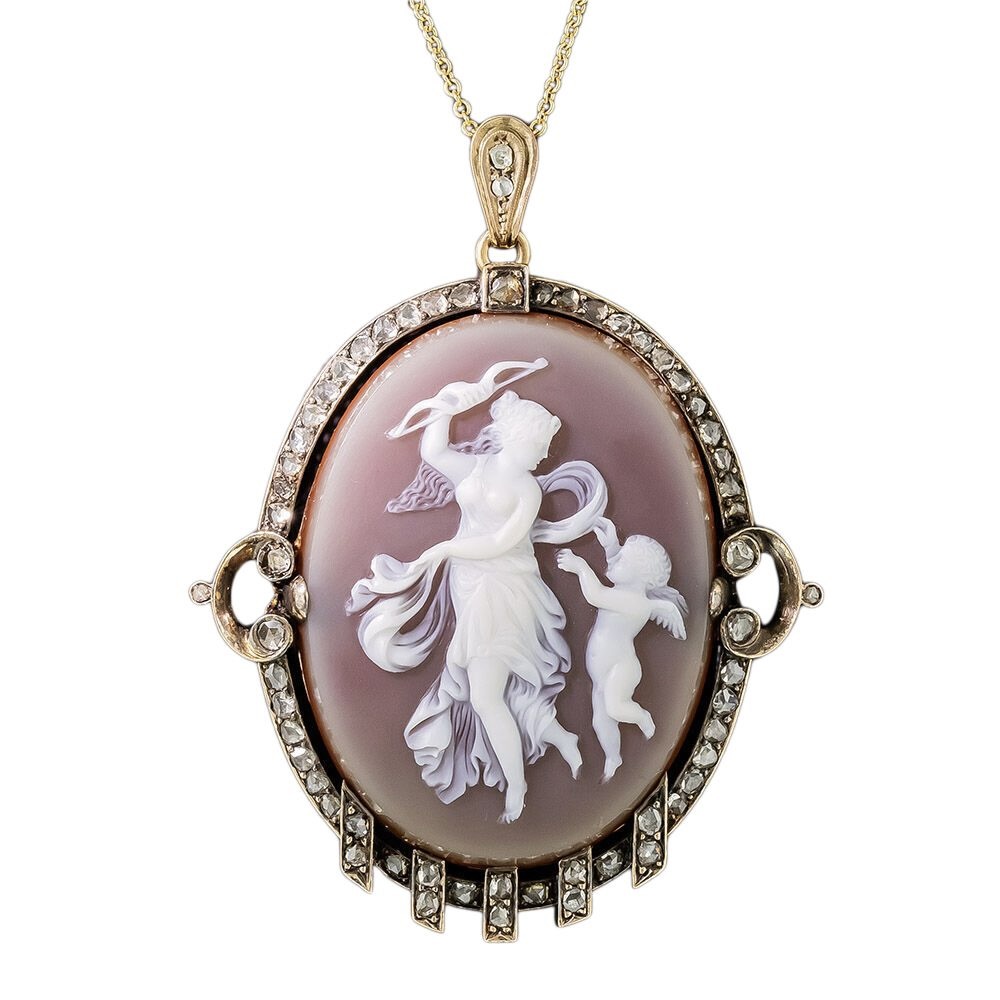
VICTORIAN ARTEMIS/DIANA AND CUPID CAMEO PENDANT, $5,355.00, langantiques.com
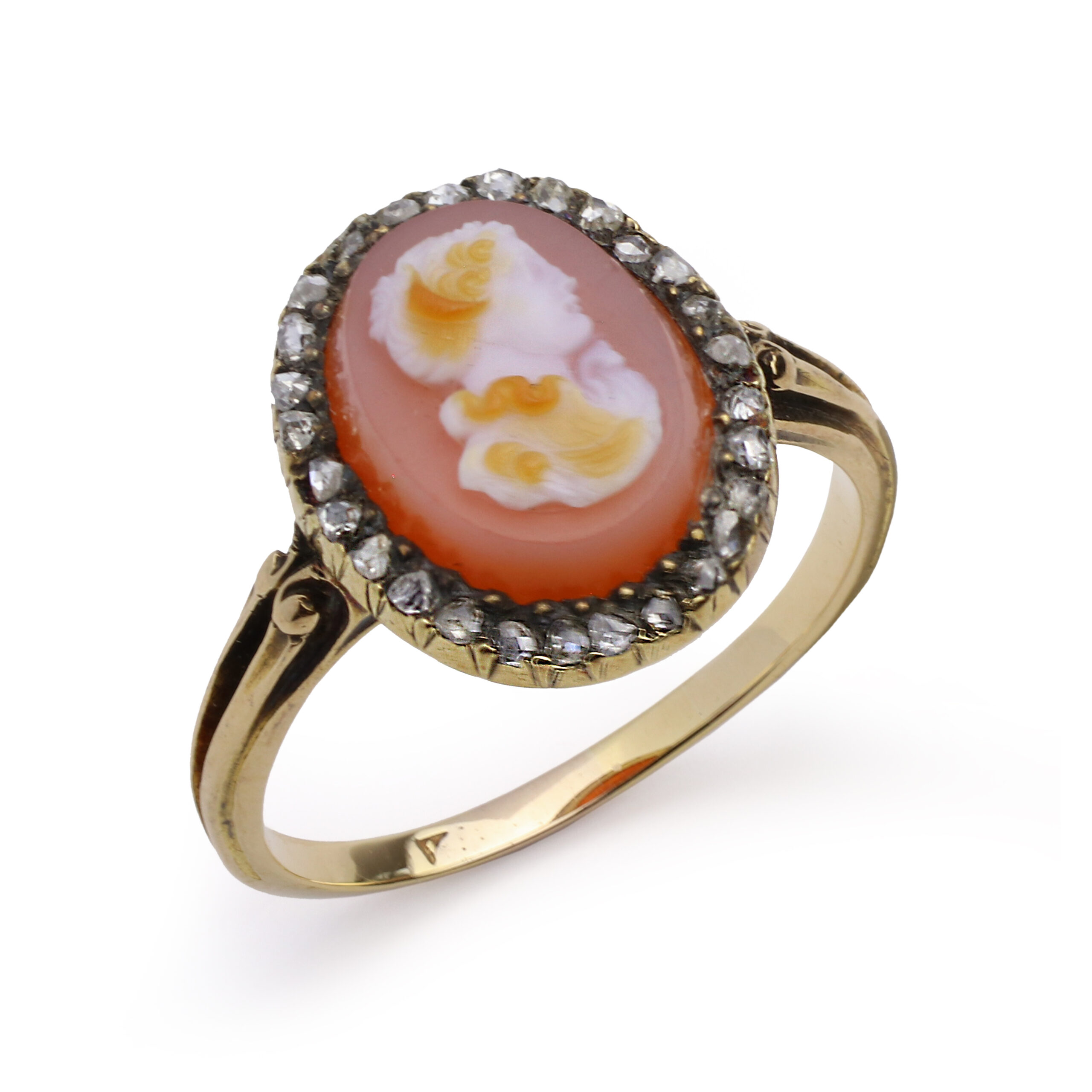
FD Gallery Antique Agate Cameo And Diamond Ring, $3,300, fd-gallery.com
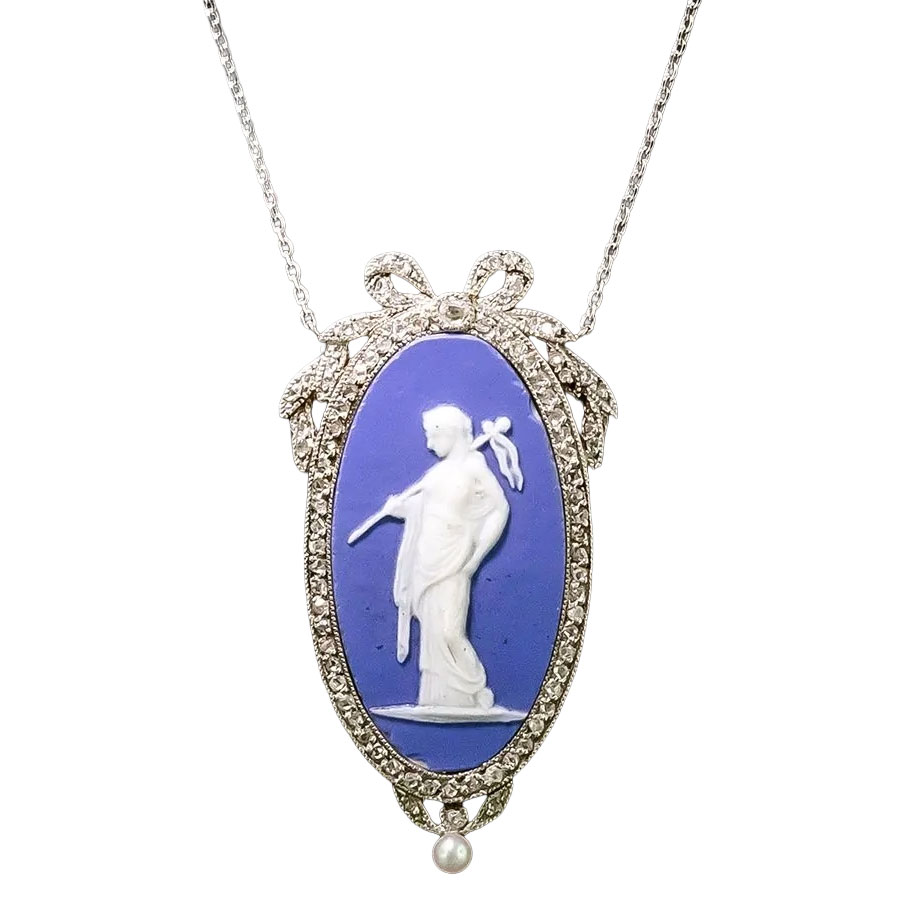
Edwardian Wedgewood Cameo Necklace, $2,950, langantiques.com
Diamond Coin Jewelry Has Ancient Roots
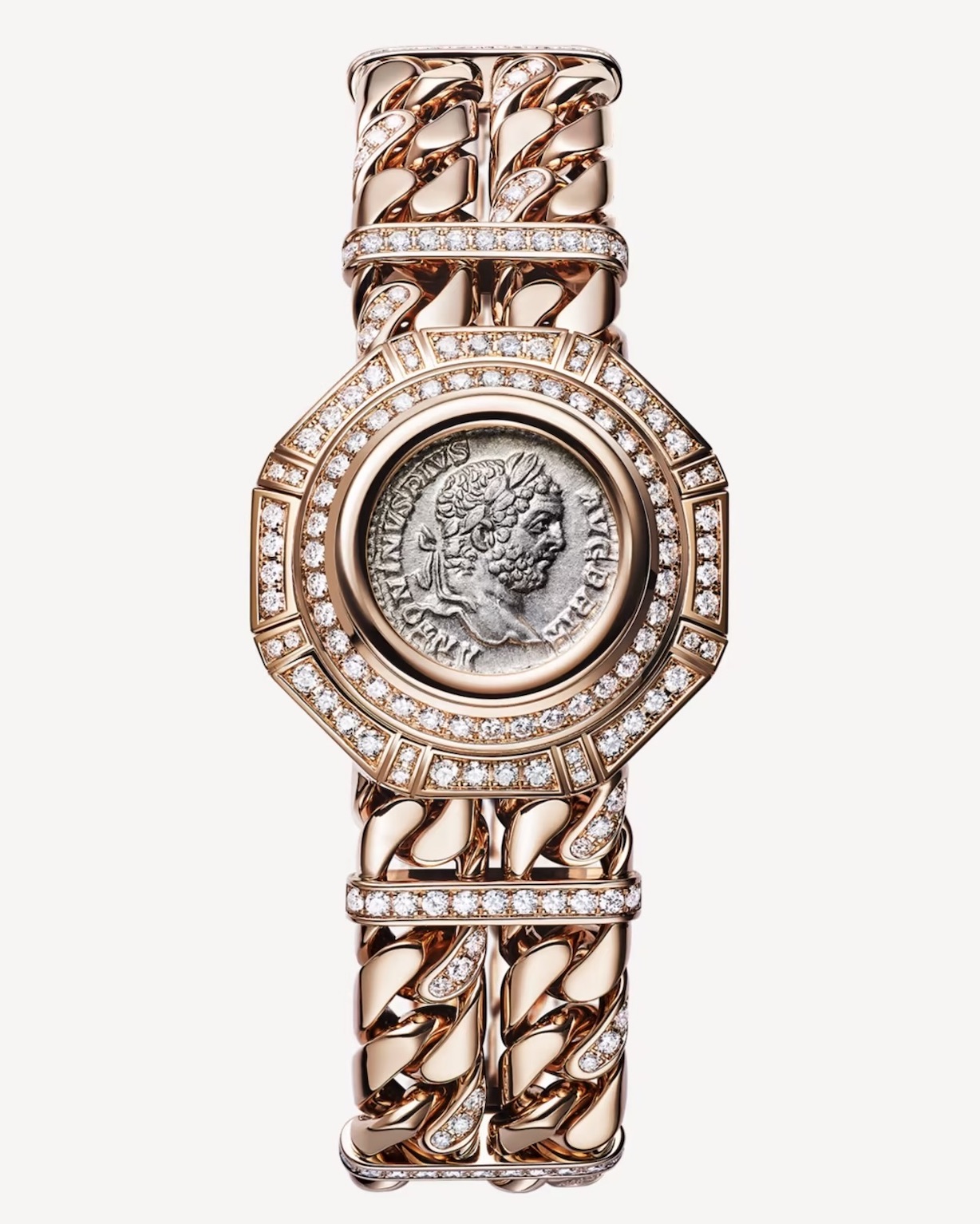

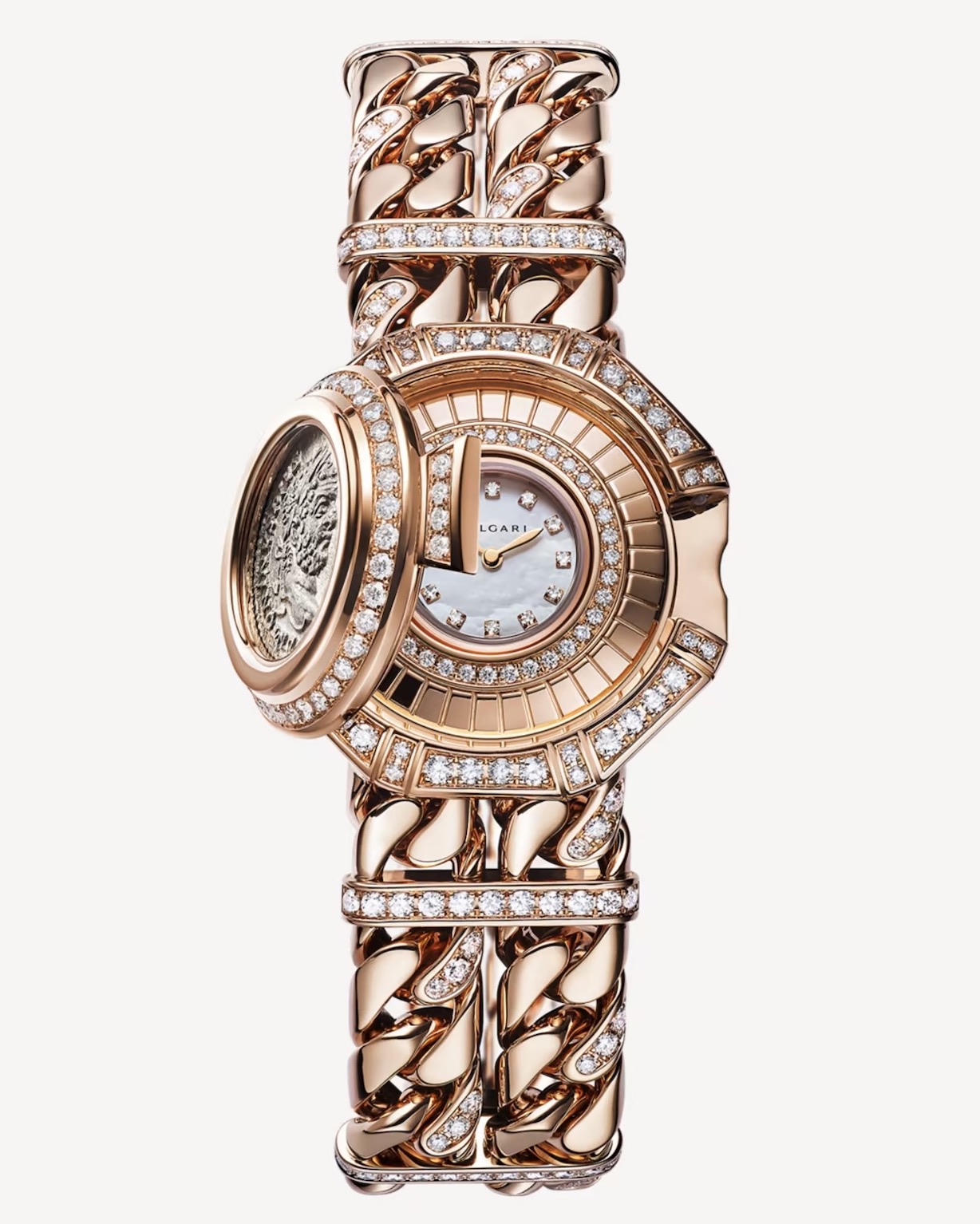
For the London photocall of The Odyssey, Anne Hathaway looked the part of a Grecian goddess in an angelic white Blumarine frock with Bulgari jewels. The Academy Award-winning actress wore an 18-karat rose gold Monete Catene High Jewelry secret watch. Featuring a chain bracelet set with natural diamonds, the silver coin bearing the effigy of Emperor Caracalla (who ruled from 198 to 217 AD) opens to reveal a mother-of-pearl dial and diamond indexes.
Among the most celebrated Bulgari motifs, the Monete style mounts antique coins into luxurious pieces in homage to the long-standing jewelry tradition, dating back to Ancient Rome.
The Italian jewelry house began incorporating 2,000-year-old coins into its creations in 1966, blending features of Rome’s Imperial glory with contemporary aesthetics thanks to “enthusiastic coin collector,” Nicola Bulgari. Each jewel showcases the unaltered coin, engraved with emperors, the dates in which they ruled, and the type of coin, in a perfectly contoured setting.
Coins have been implemented into creative jewelry for thousands of years. With artifacts discovered in Egypt, North Africa, and the wider Mediterranean, coin jewelry dates back to the Hellenistic period, with evidence that it was transformed into pendants, bracelets, belts, and rings.
Coin jewelry was even thought to unite both commoner and emperor. Once a ruler was depicted on a piece of coin jewelry and worn against the body, the practice was thought to bring the two closer. Many believed these pieces to be talismans as well, protecting the wearer against misfortune, disease, and evil spirits.
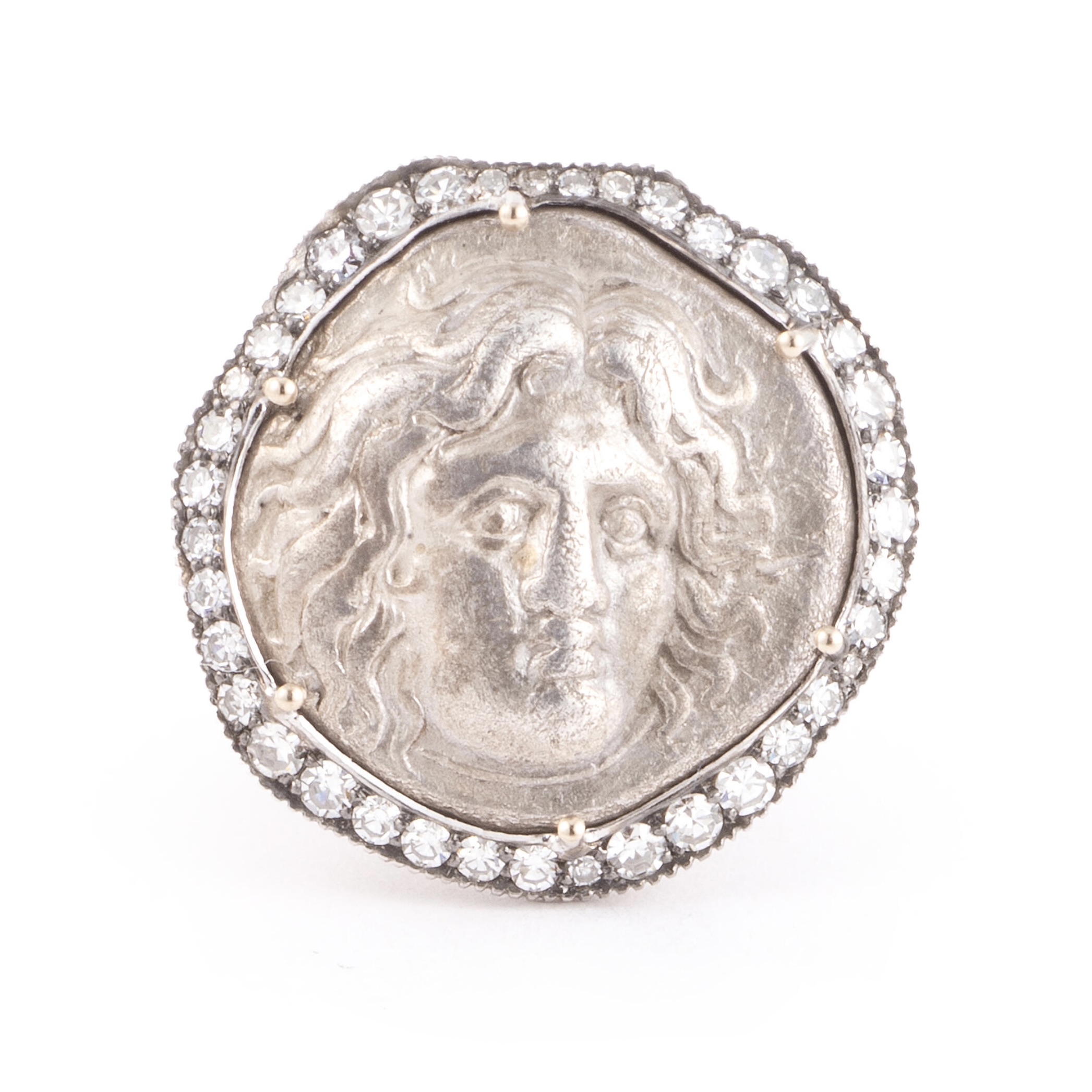
Sylva & Cie Helios Diamond Coin Ring $21,250, shop.mitchellstores.com
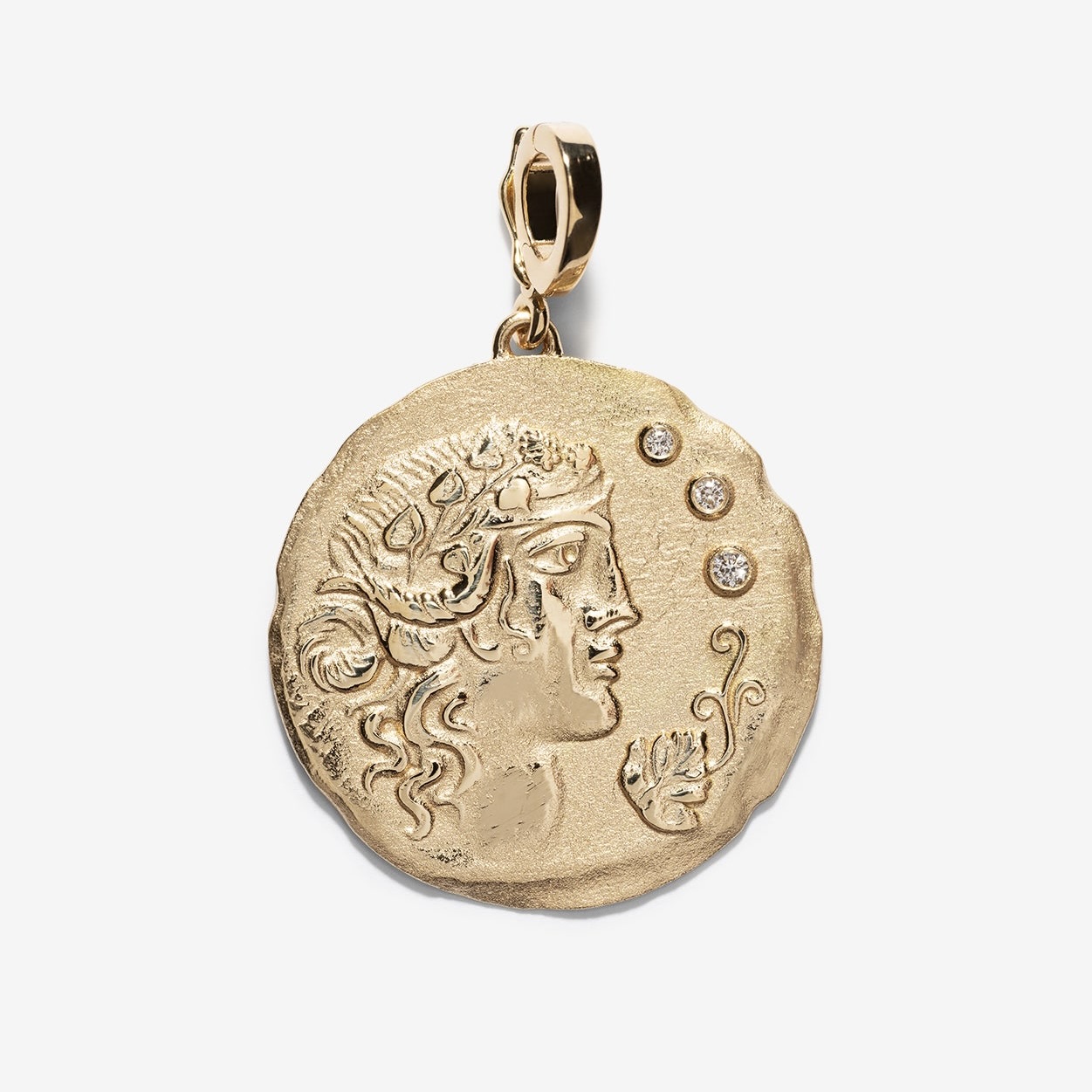
Azlee Dionysus Large Coin, $5,400, azleejewelry.com
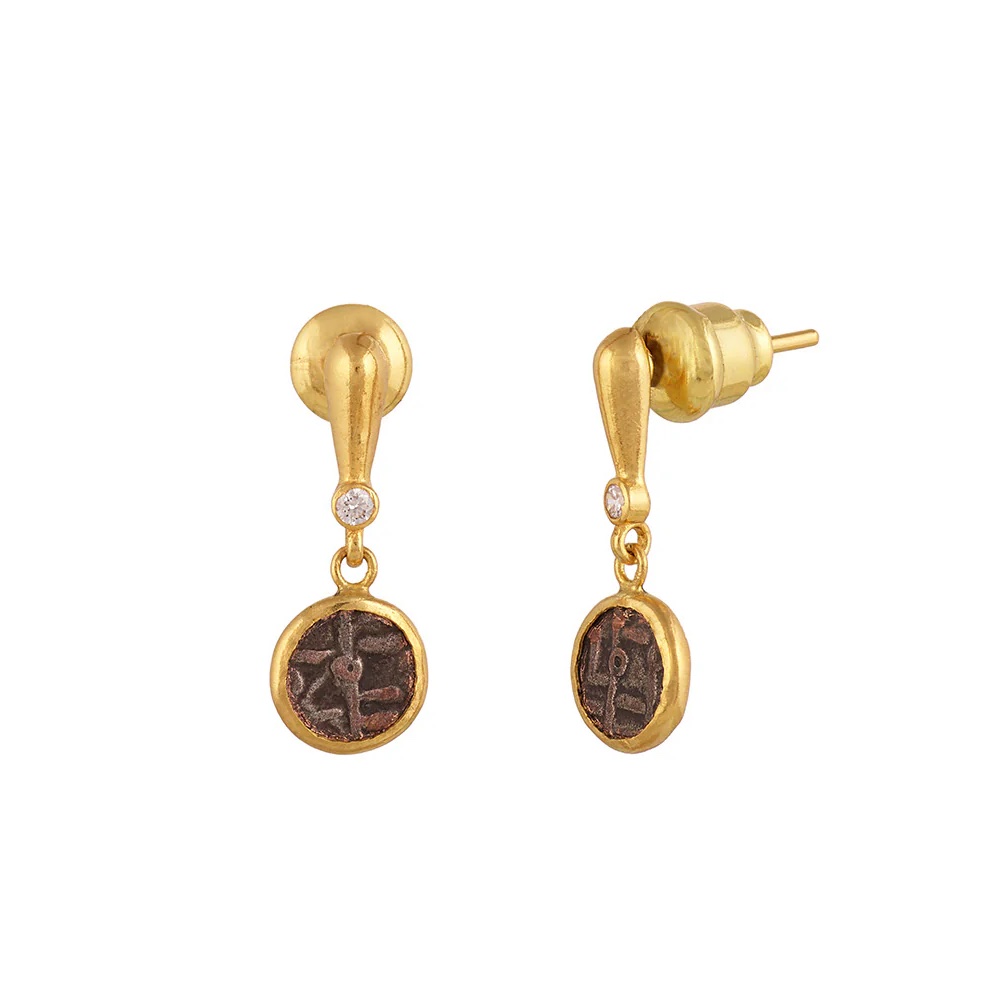
Gurhan Antiquities Gold Coin Single Drop Earrings, $2,200, gurhan.com
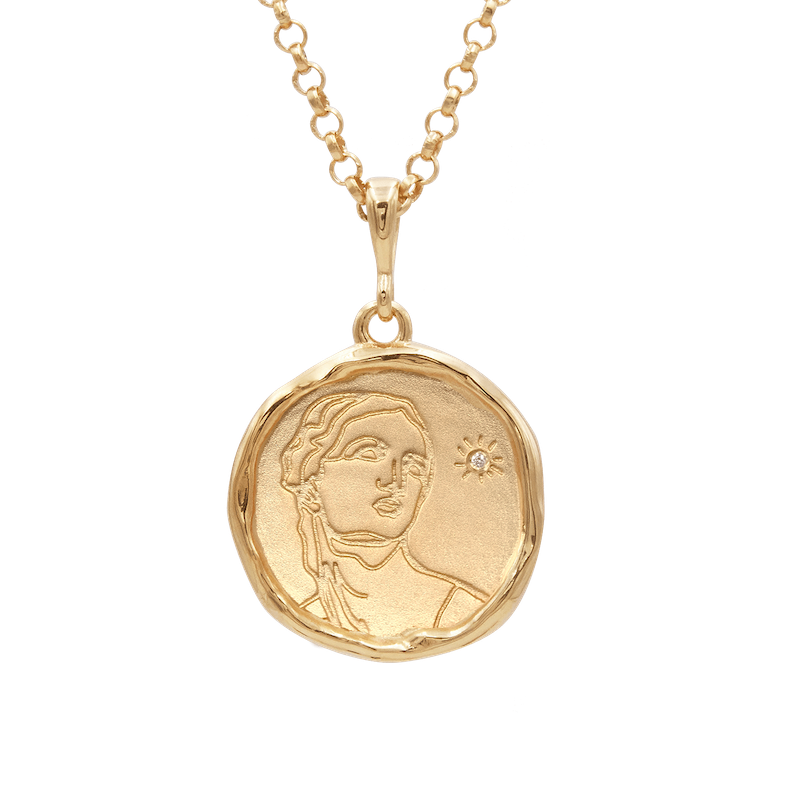
Common Era Circe Demi-Goddess of Witchcraft Necklace with Diamond, $5,000, commonera.com
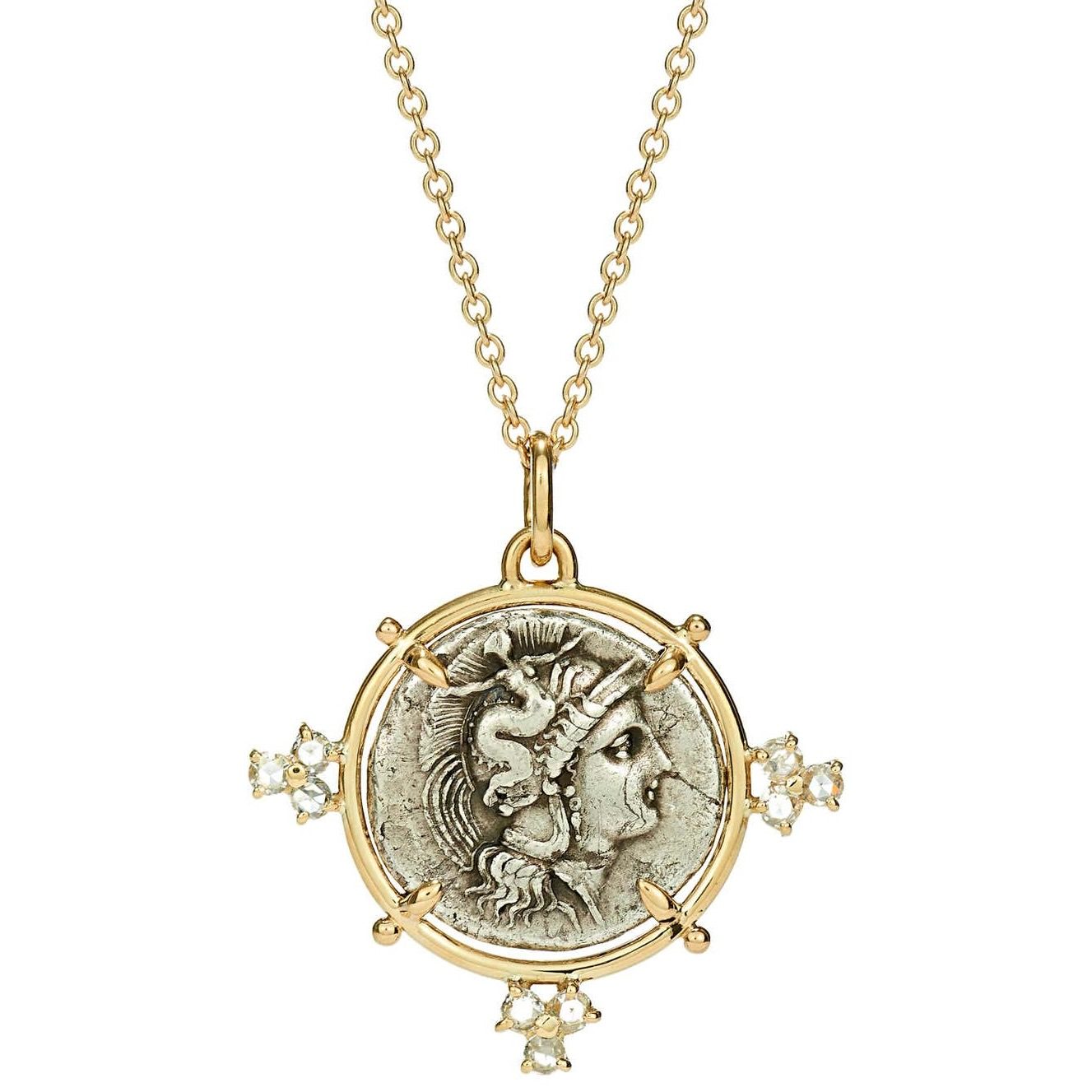
Dubini Athena Ancient Silver Coin Medallion 18 Karat Yellow Gold Necklace, $17,168.62, 1stdibs.com
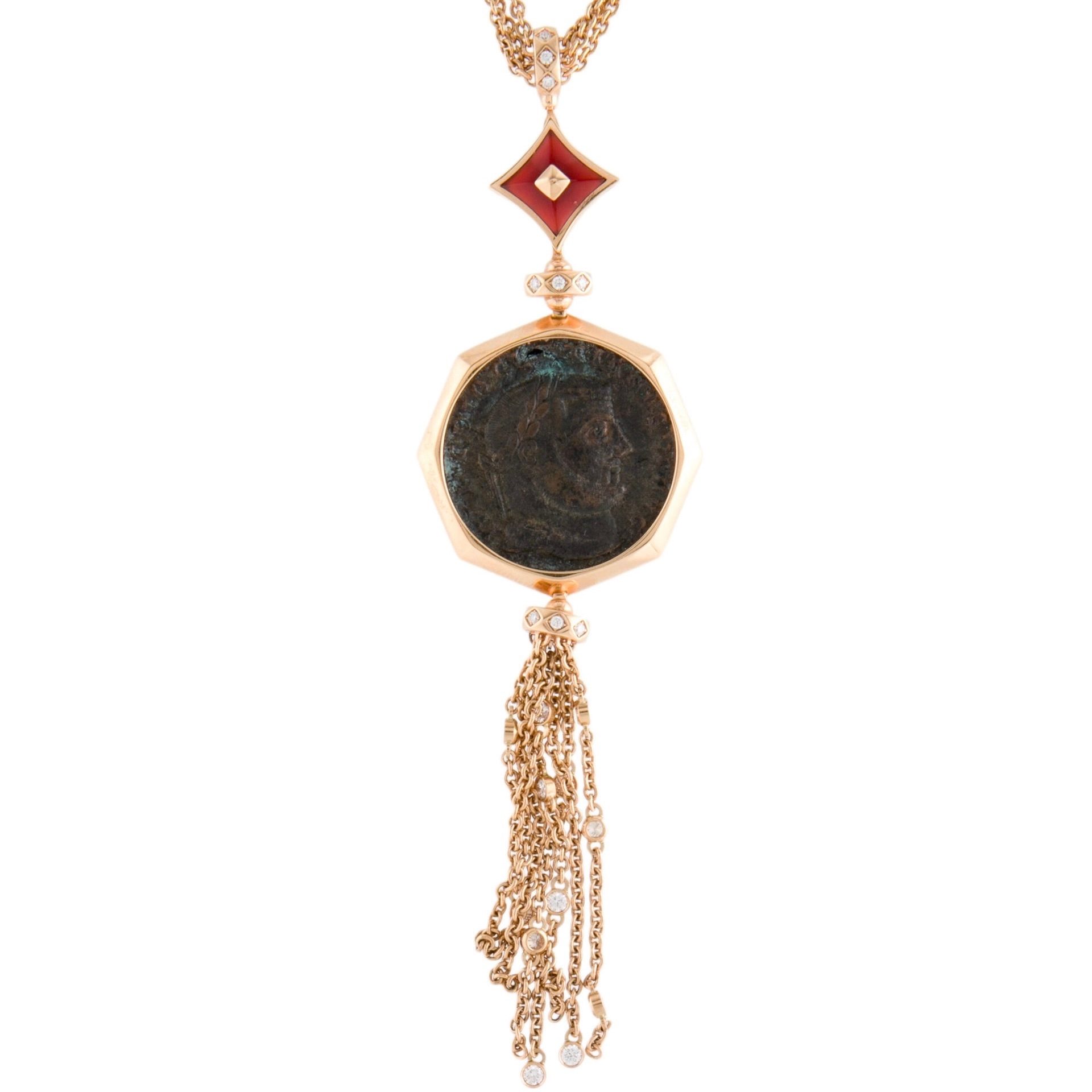
Bulgari 18K Ancient Coin, Carnelian, and Diamond Monete Pendant Necklace, $19,596.50, therealreal.com
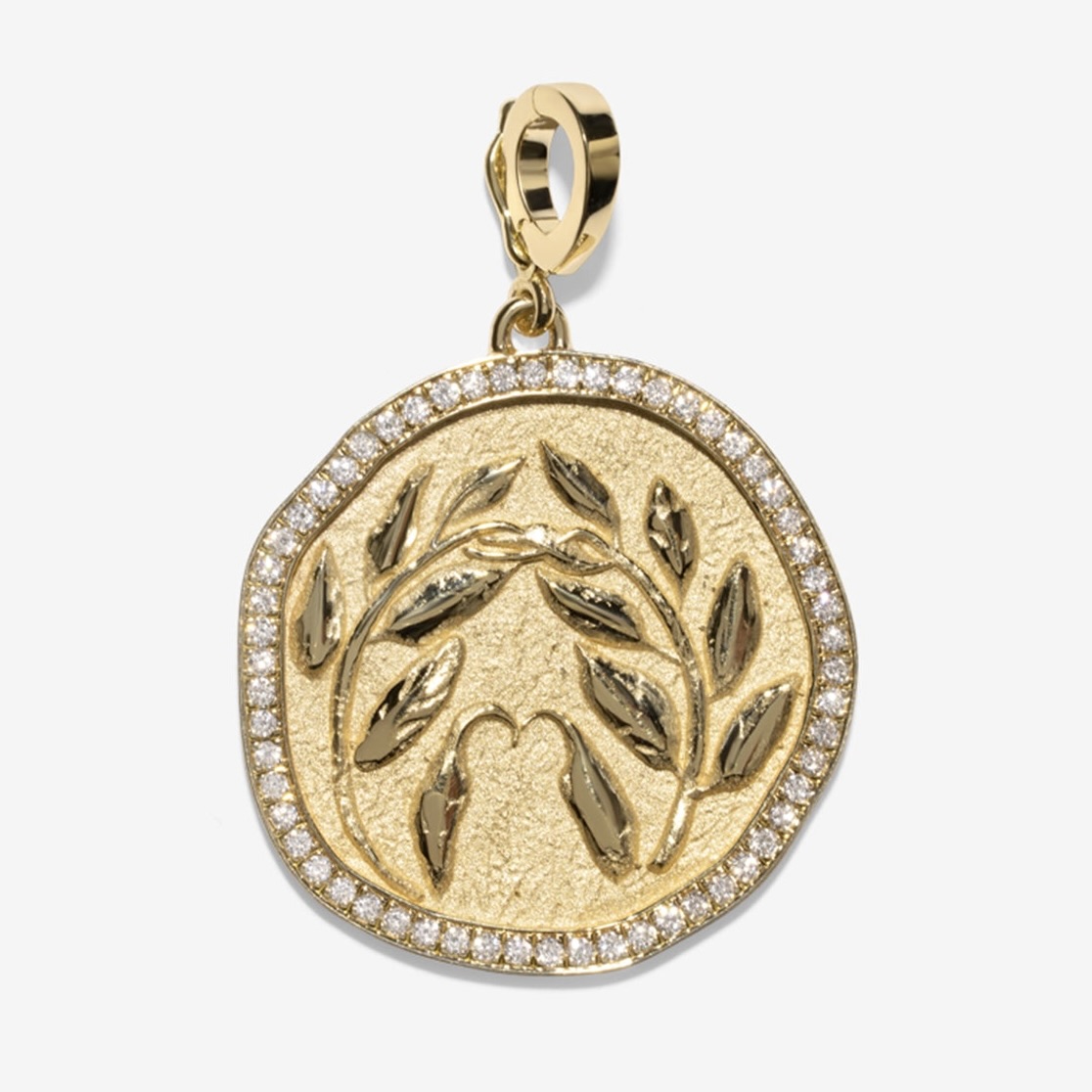
Azlee Olive Branch Large Pave Coin, $8,500, azleejewelry.com
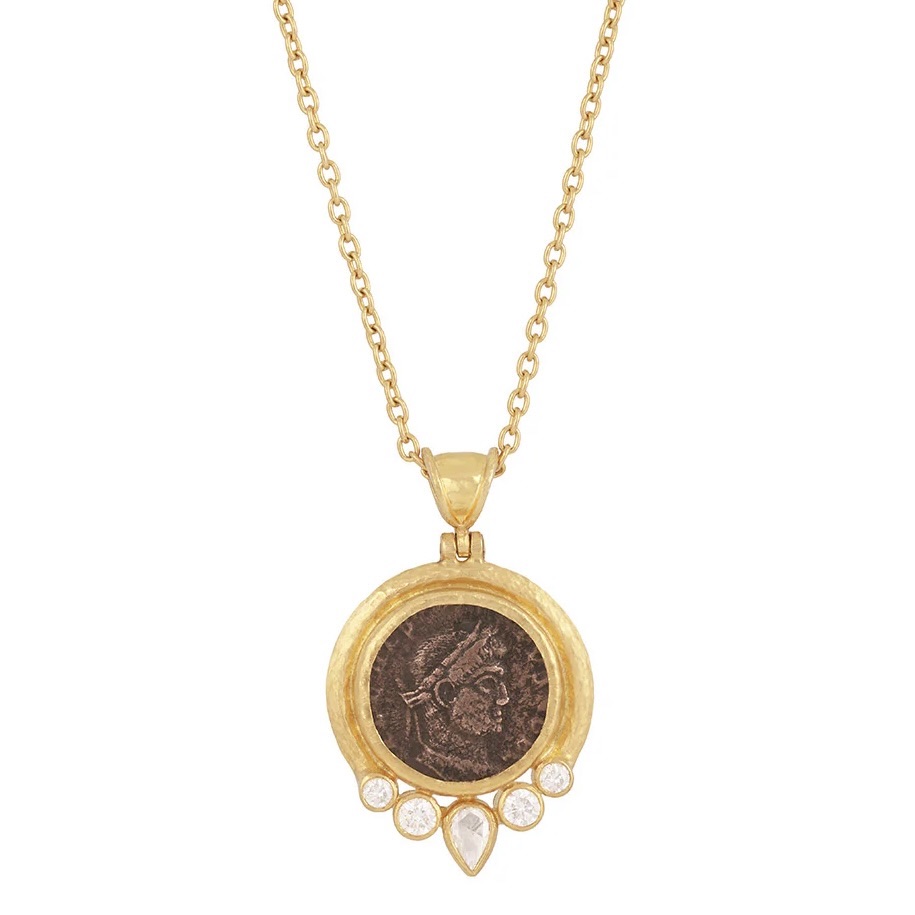
Gurhan Antiquities One-of-a-Kind 24K Gold Coin Pendant Necklace, $13,530, gurhan.com
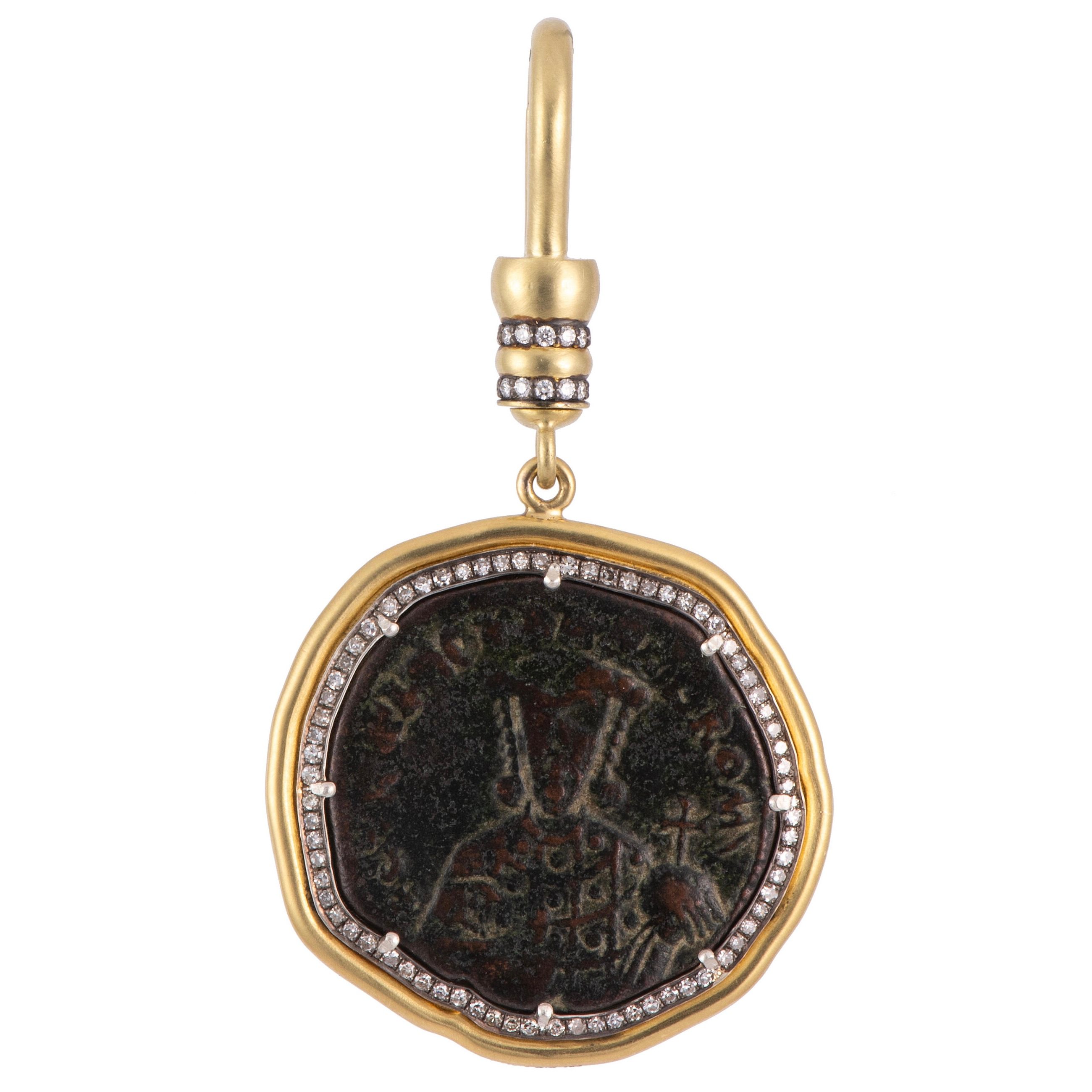
Sylva & Cie Constantine VII Byzantine Bronze Coin Pendant,
$12,500, shop.mitchellstores.com
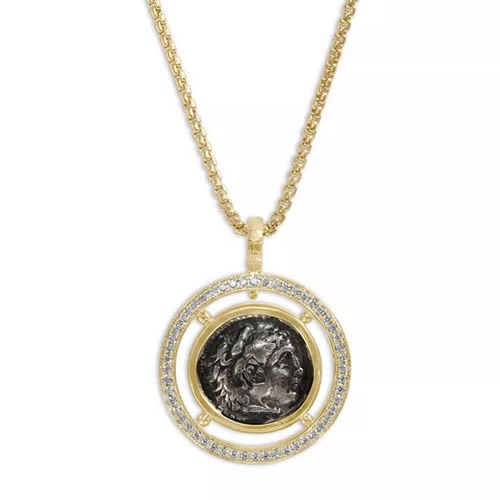
Jorge Adeler 18K Yellow Gold Diamond Alexander the Great Coin Pendant, $12,490, bloomingdales.com
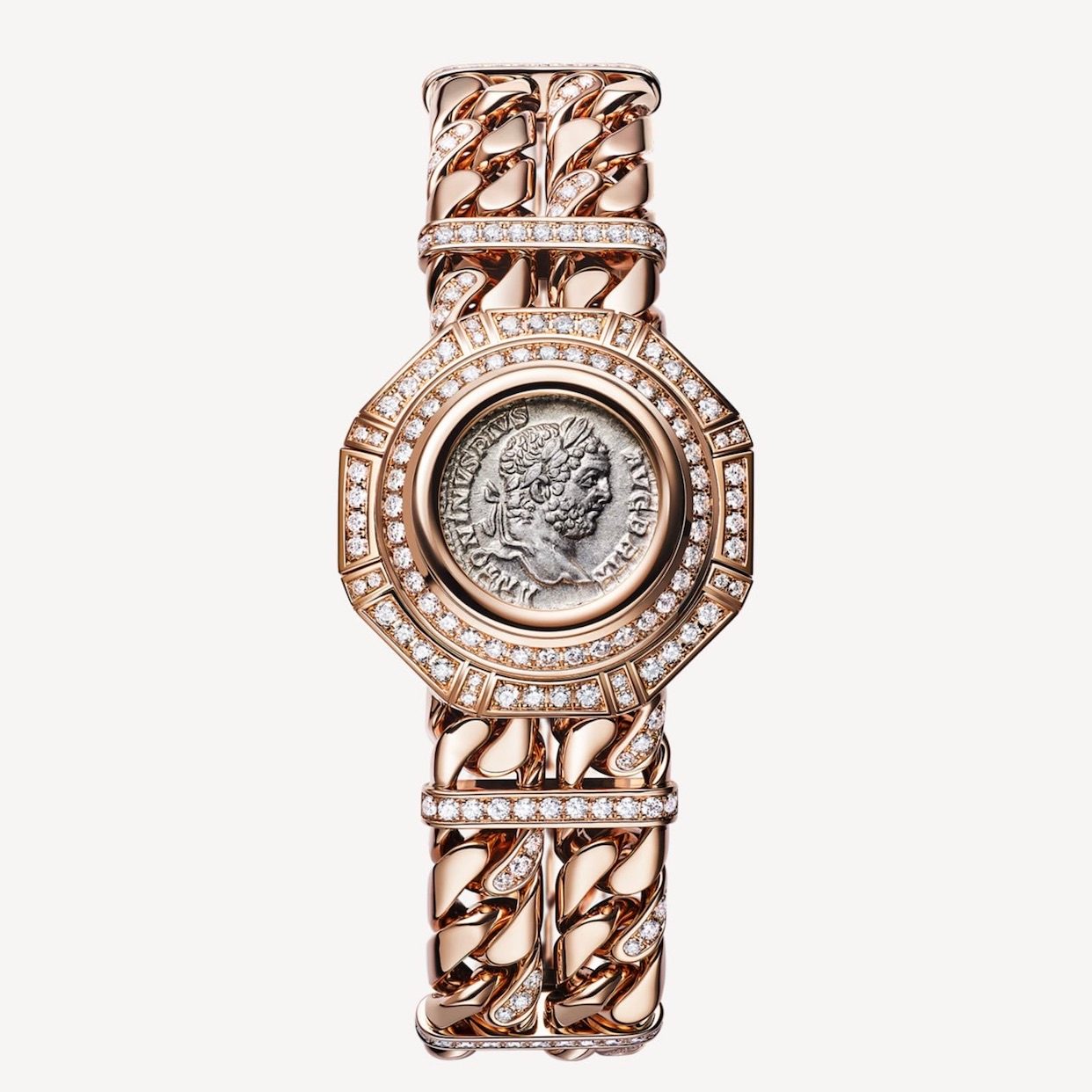
Bulgari Monete Catene High Jewelry Secret Watch, Price Upon Request, bulgari.com
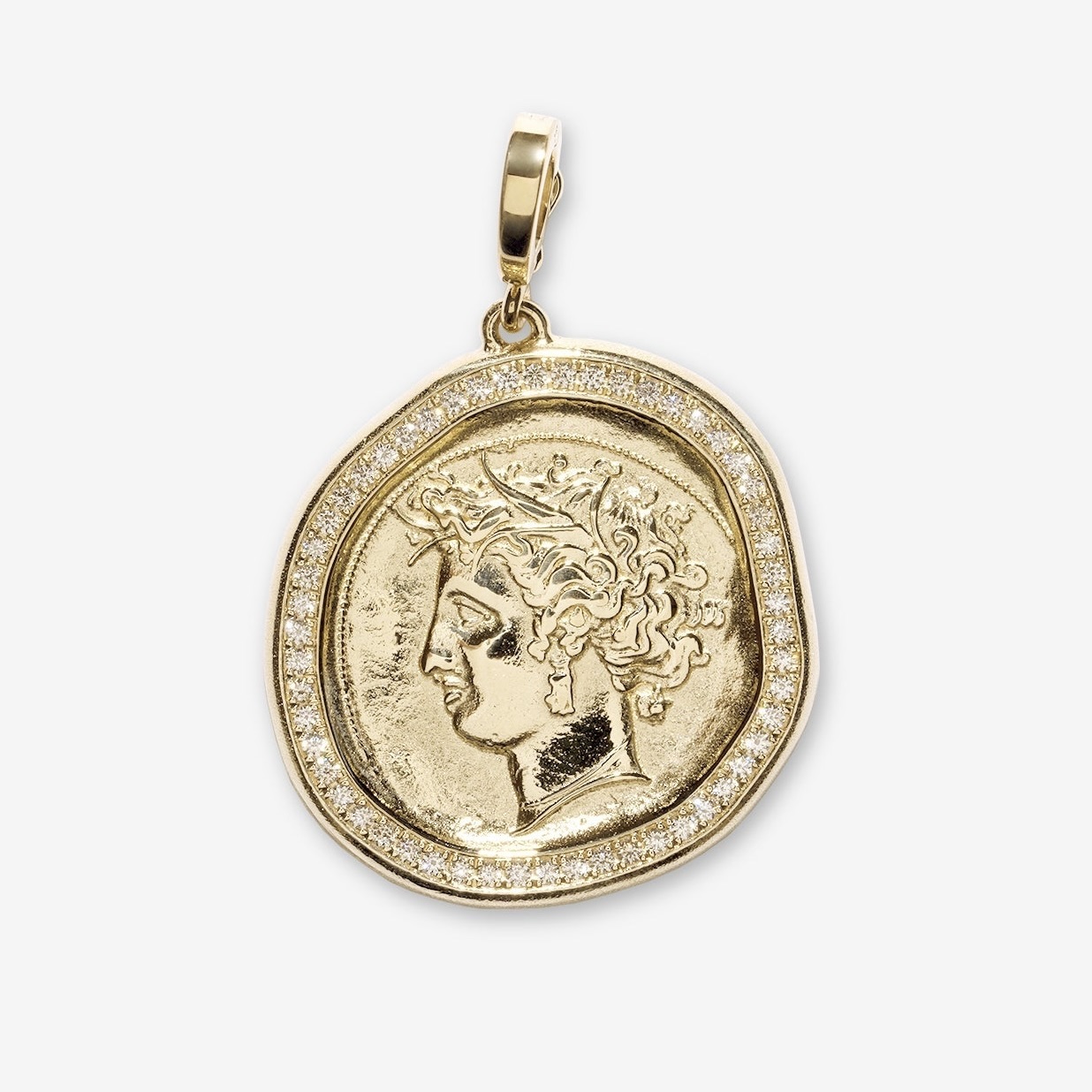
Azlee Goddess Large Pave Coin Charm, $8,500, azleejewelry.com
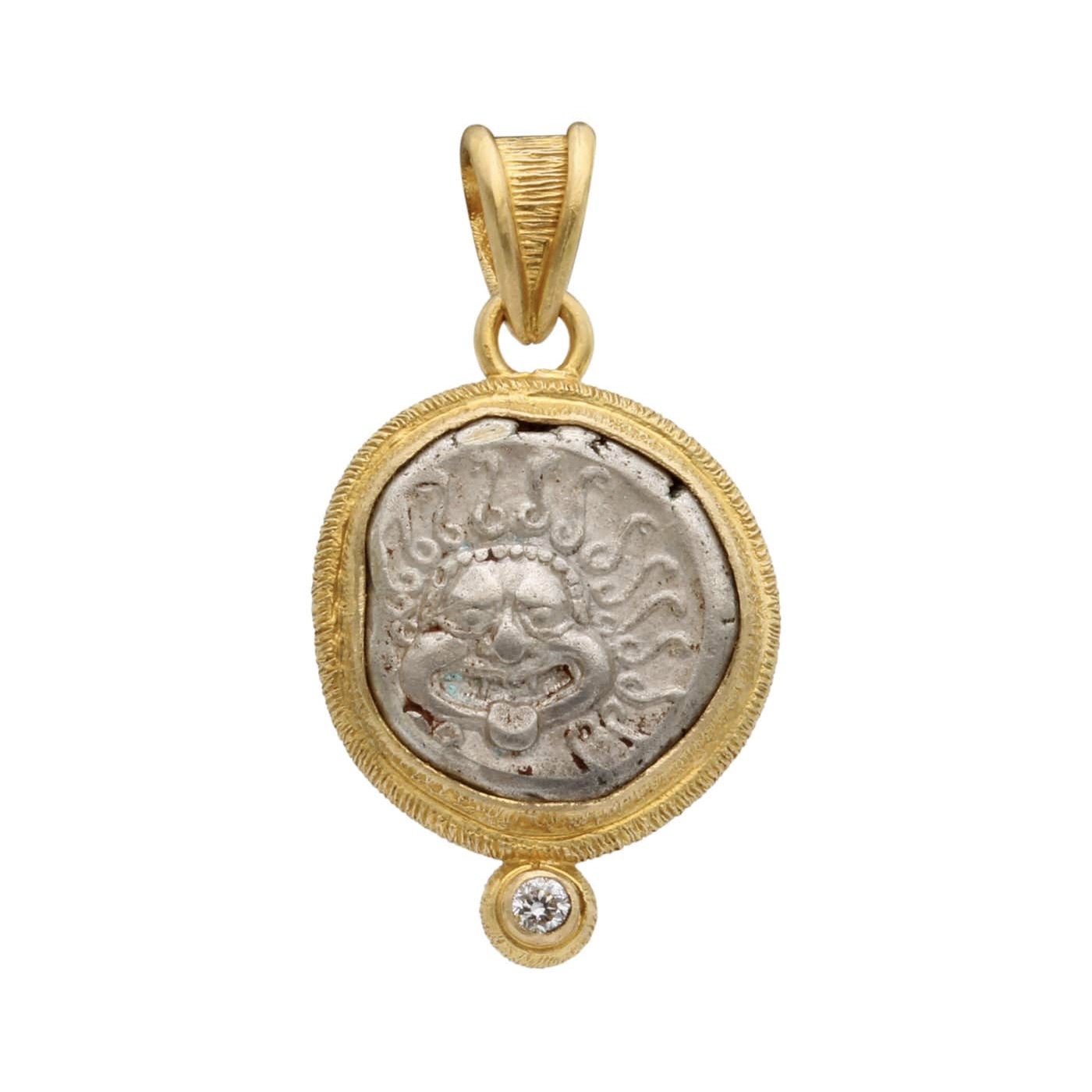
Ancient Greek 5th Century BC Silver Medusa Coin Diamond 18K Gold Pendant, $3,120, 1stdibs.com
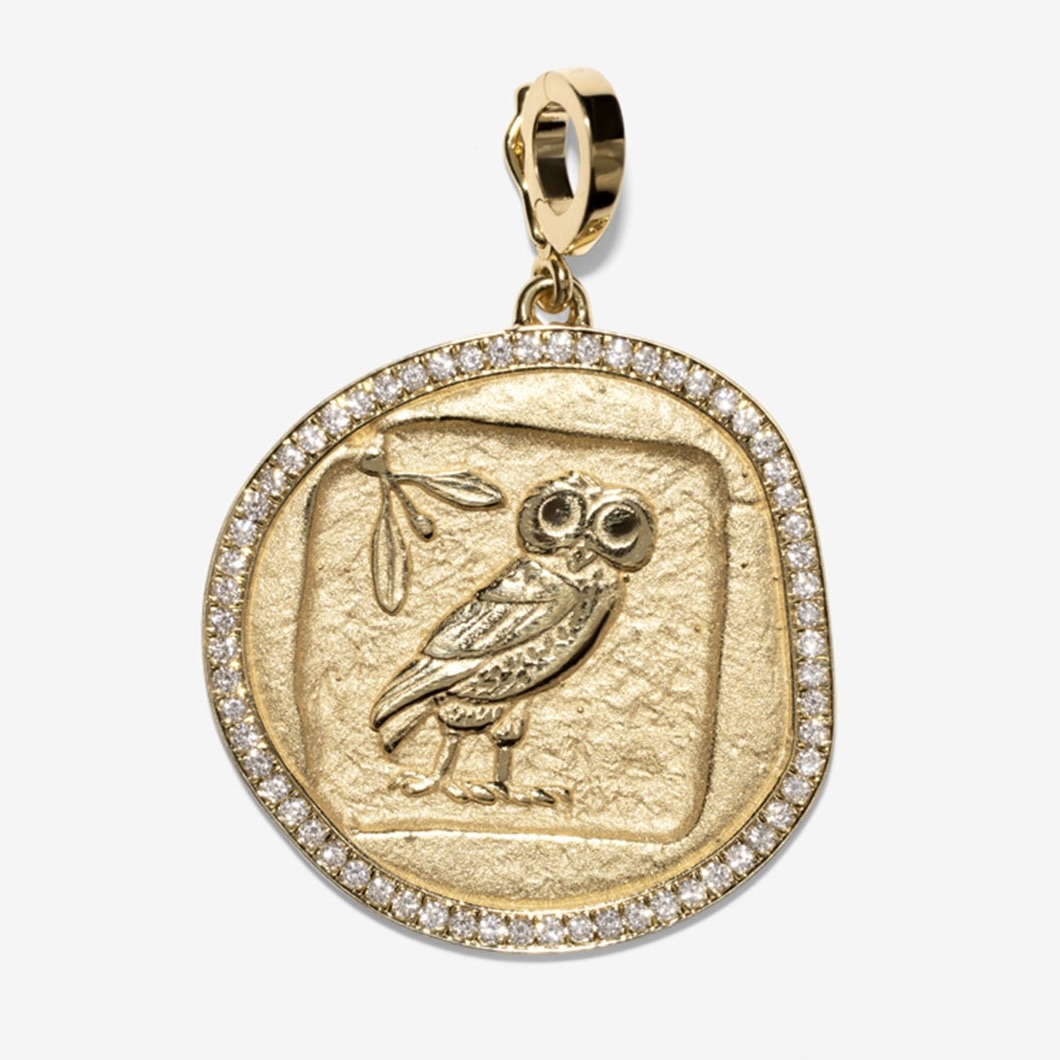
Azlee Owl Wisdom Large Pave Coin, $8,500, azleejewelry.com
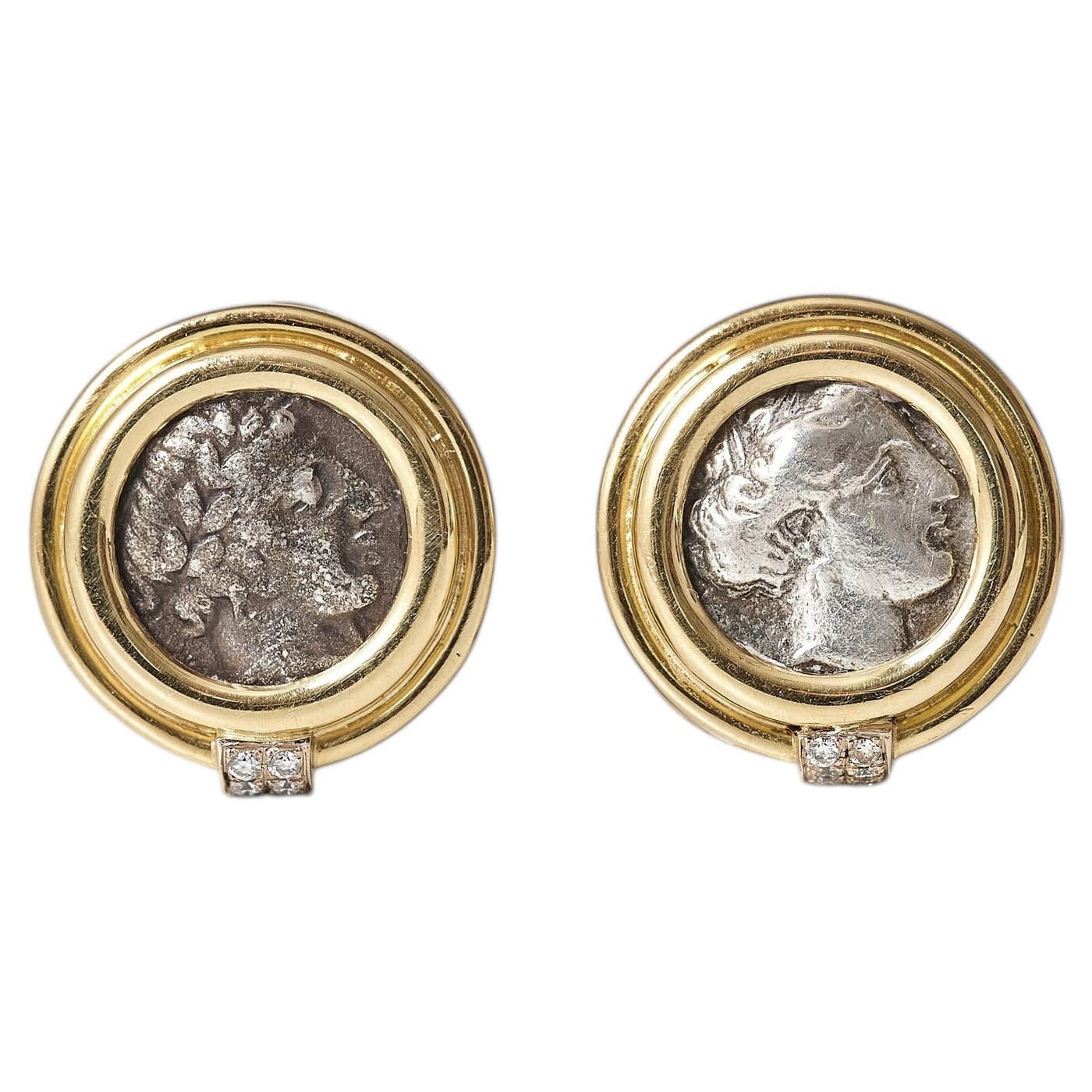
Bulgari Monete 18kt Gold Earrings with Diamonds, 4th Century Coins, $16,918.79, 1stdibs.com
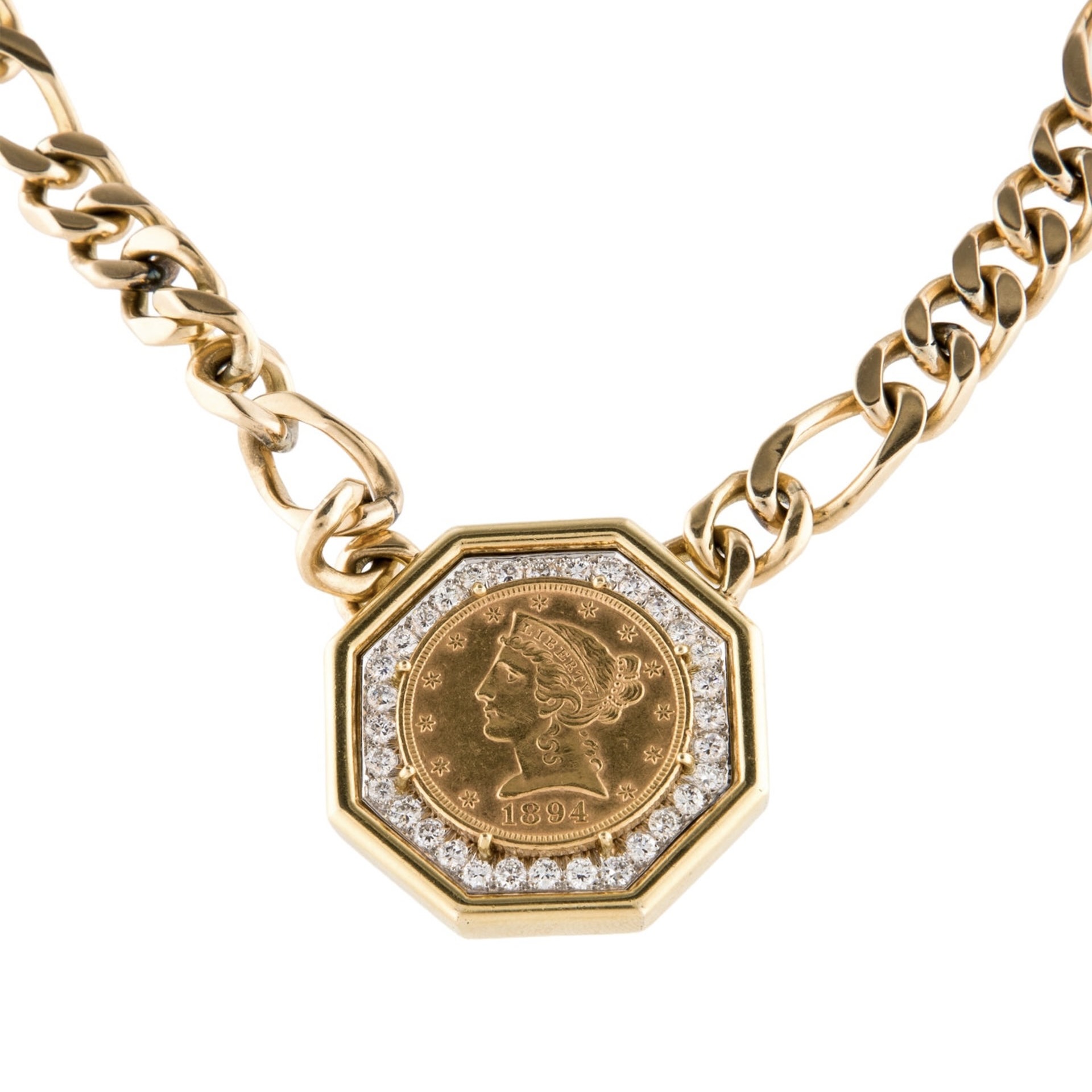
David Webb Liberty Head “Coin” & 1.6-Carat Diamond Pendant Necklace, $34,000, therealreal.com
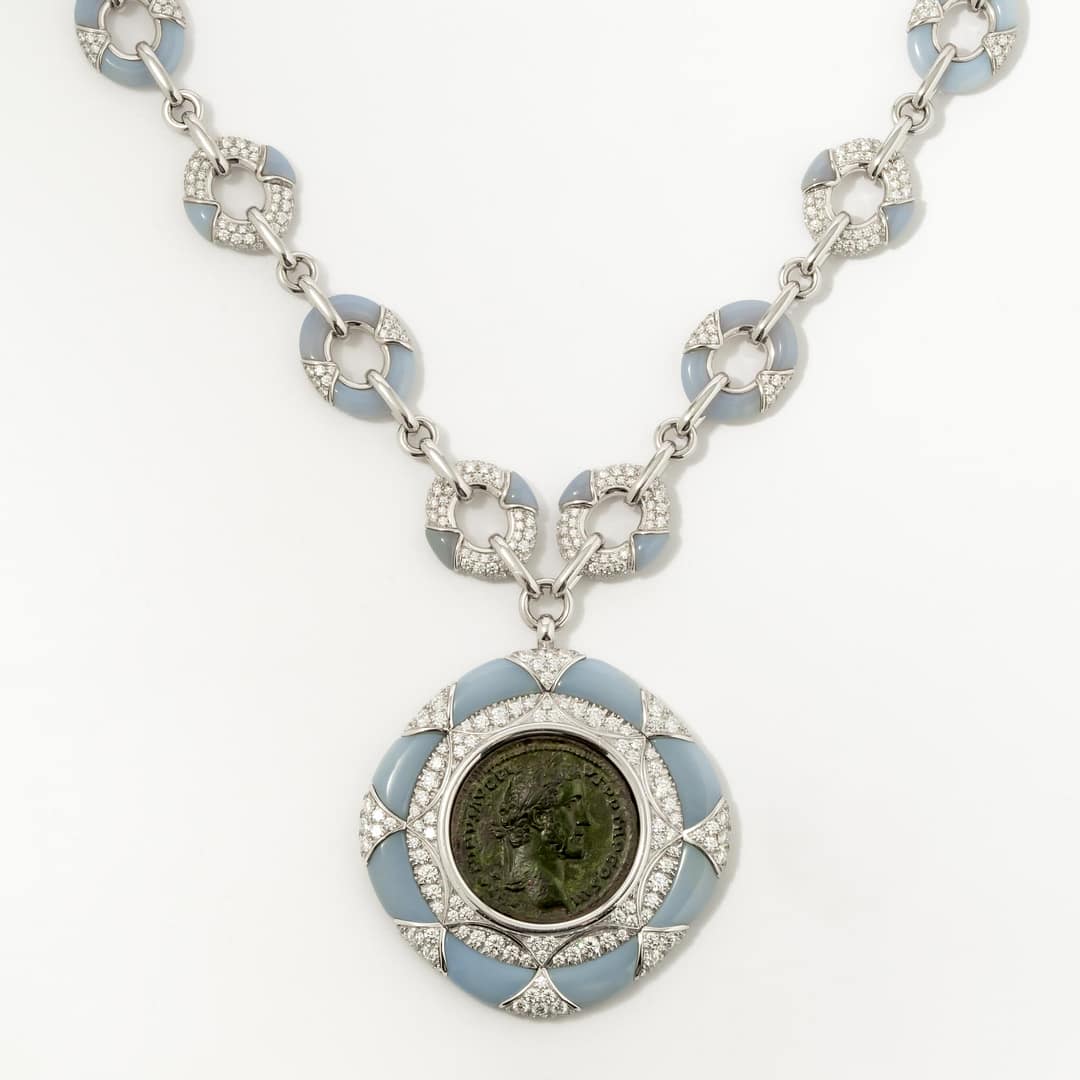
Bulgari Monete Chalcedony & Diamond Necklace, $475,000, shrevecrumpandlow.com
Diamond Signet Rings Date Back Thousands of Years
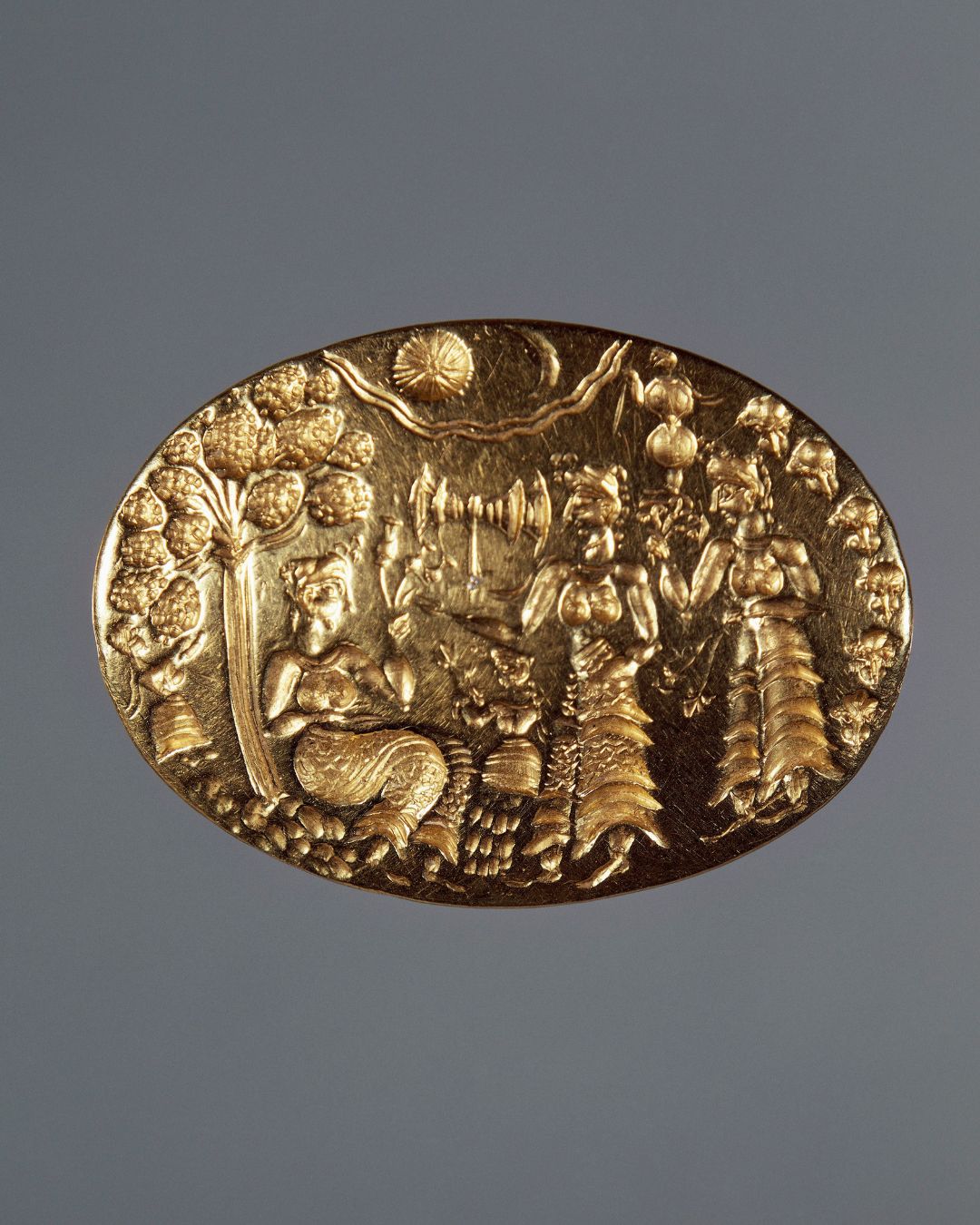
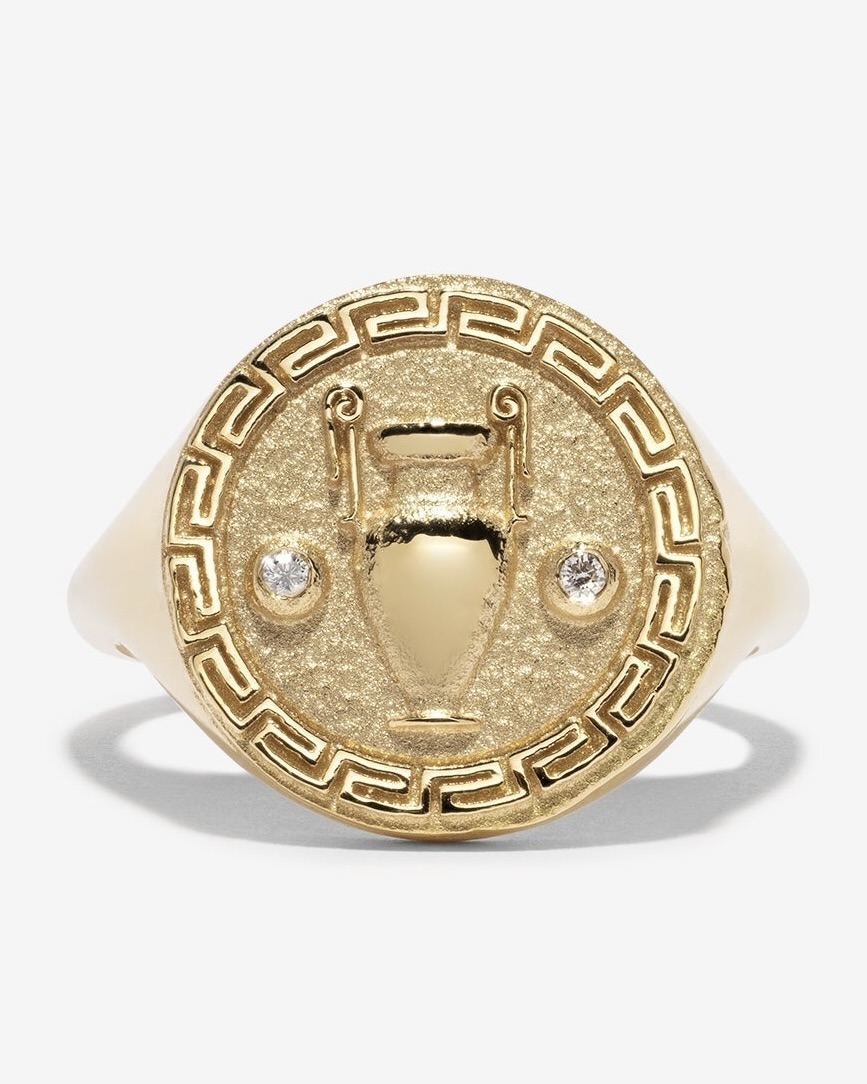
A typical signet ring is made of precious metal, like gold or platinum, with a slightly domed or flat surface engraved with a design, traditionally a family crest or monogram. That surface is the actual signet, which in ancient and classical times was used as a seal instead of a signature. It was often pressed into wax or ink to give authentication to an official document.
Signet rings can be traced as far back as 3500 BC in ancient Mesopotamia, where they used cylindrical seals as marks of authenticity. The ancient Egyptians turned this practice into jewelry, making the first signet rings as we know them today, engraved with hieroglyphics. Prominent leaders of Ancient Rome and Ancient Greece would wear them to show their rank.
Now, designers like Baylee Zwart of Azlee draw from historical romanticism, finding inspiration in ancient civilizations. Azlee’s signet rings are engraved with the signs of the Zodiac, ancient Greek goddesses, subtle references like the wise owl of Athena, and even ancient wine jars, as historically seen on antique Greek coins, paintings, and mosaics as an emblem of celebration and merriment.
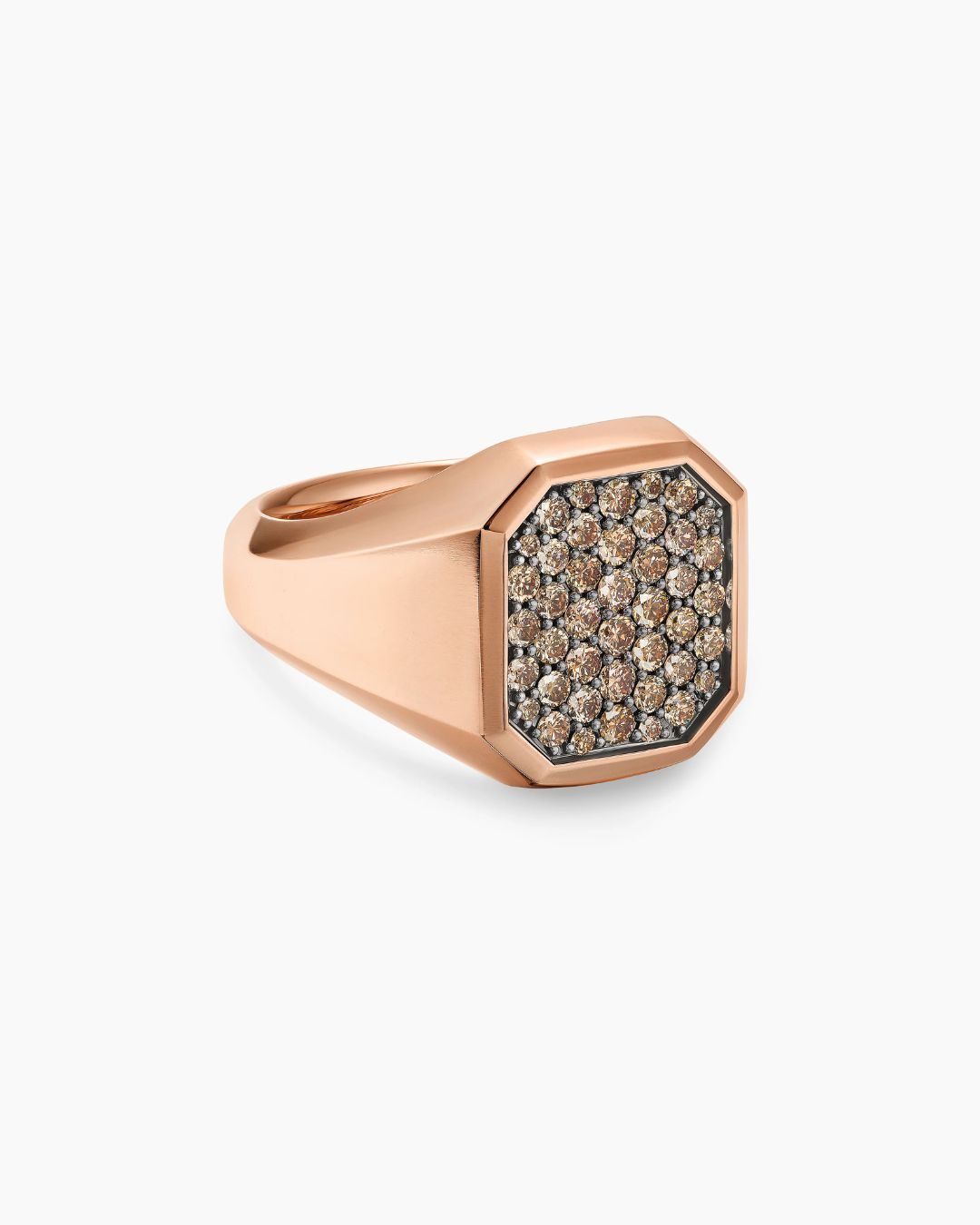
David Yurman Streamline Ring in Rose Gold with Cognac Diamonds, $7,800 davidyurman.com
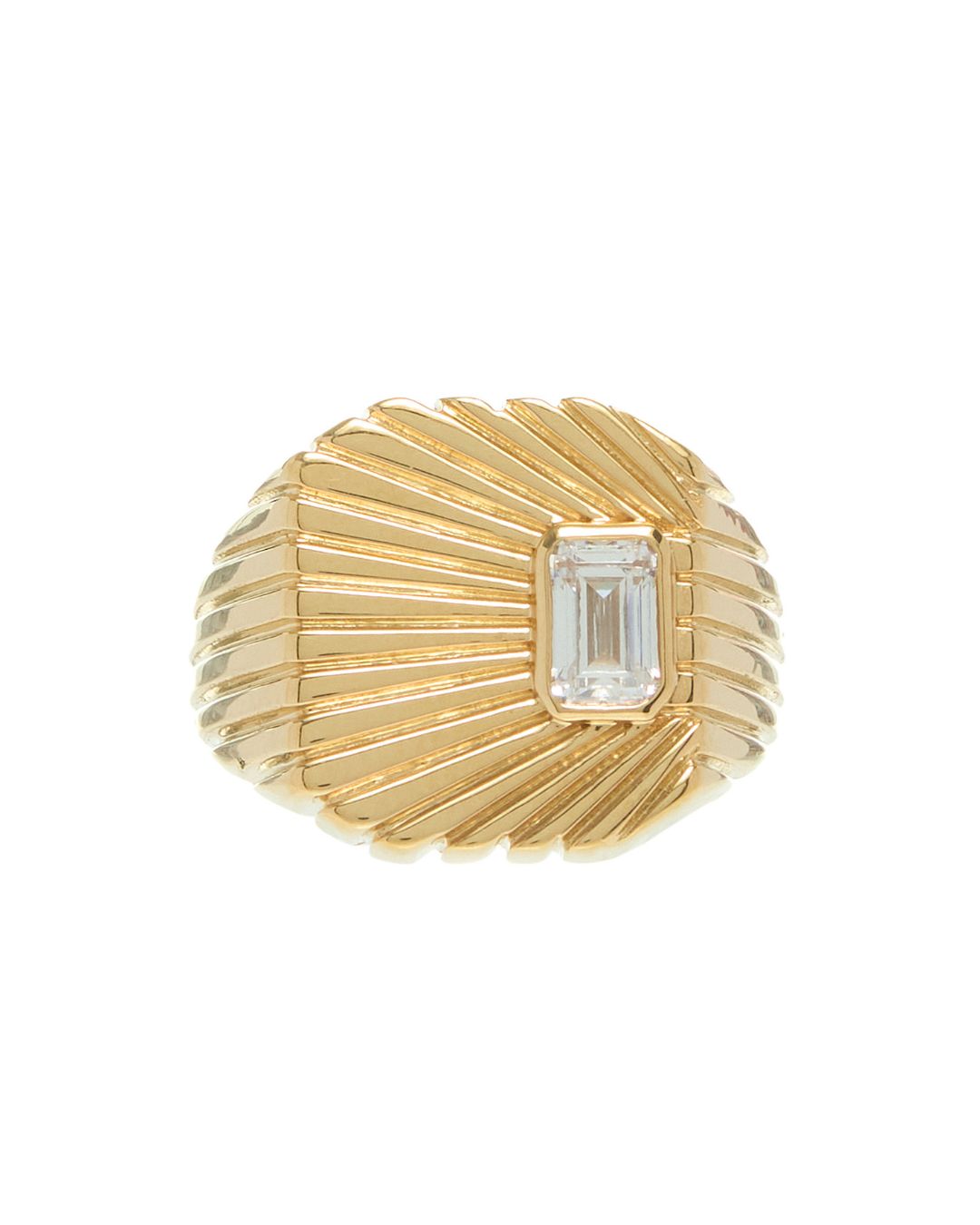
Wyld Box Ray of Light Small Ring, $12,000, wyldboxjewelry.com
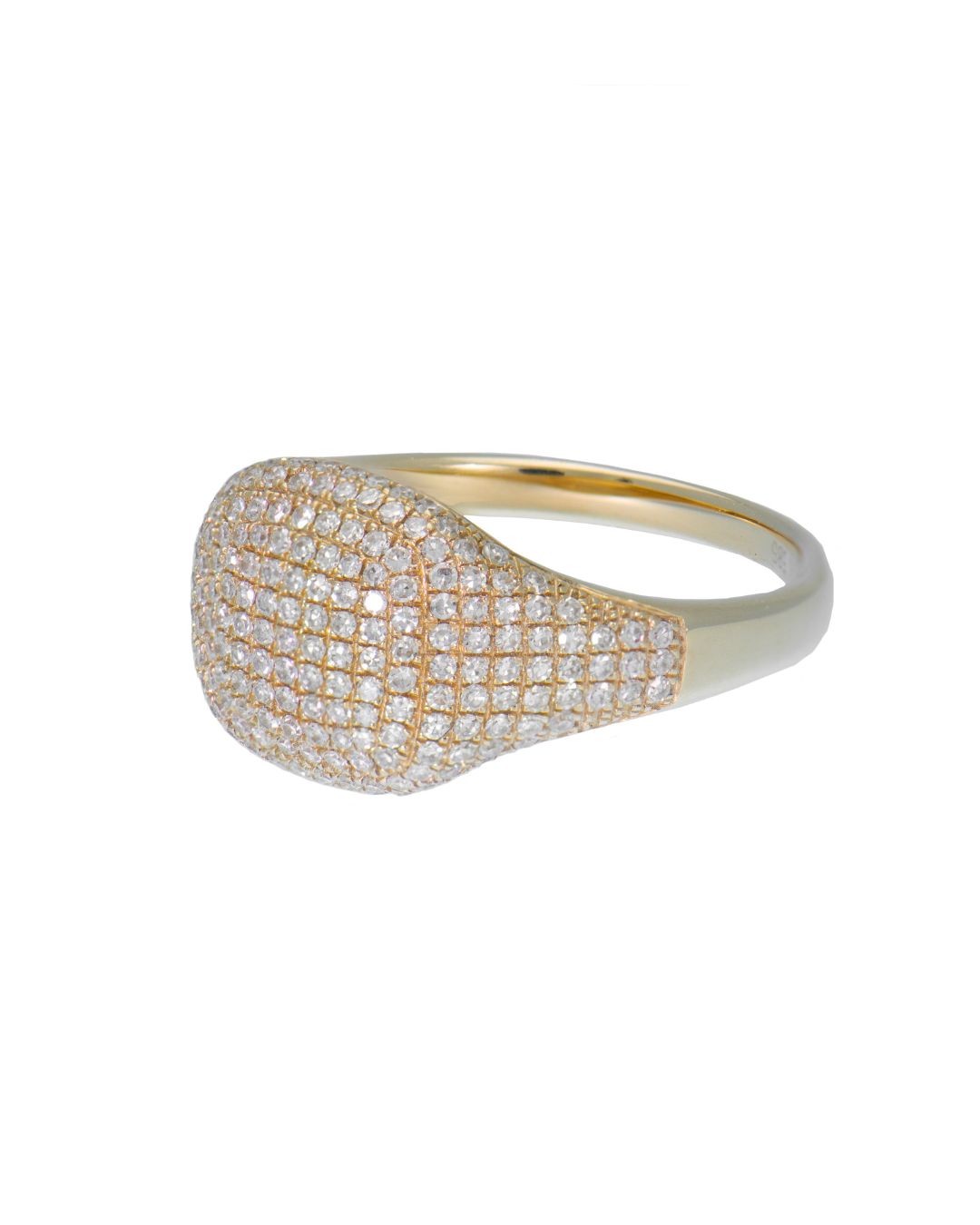
Ali Weiss Square Signet Pave Diamond Ring, $2,100, aliweissjewelry.com
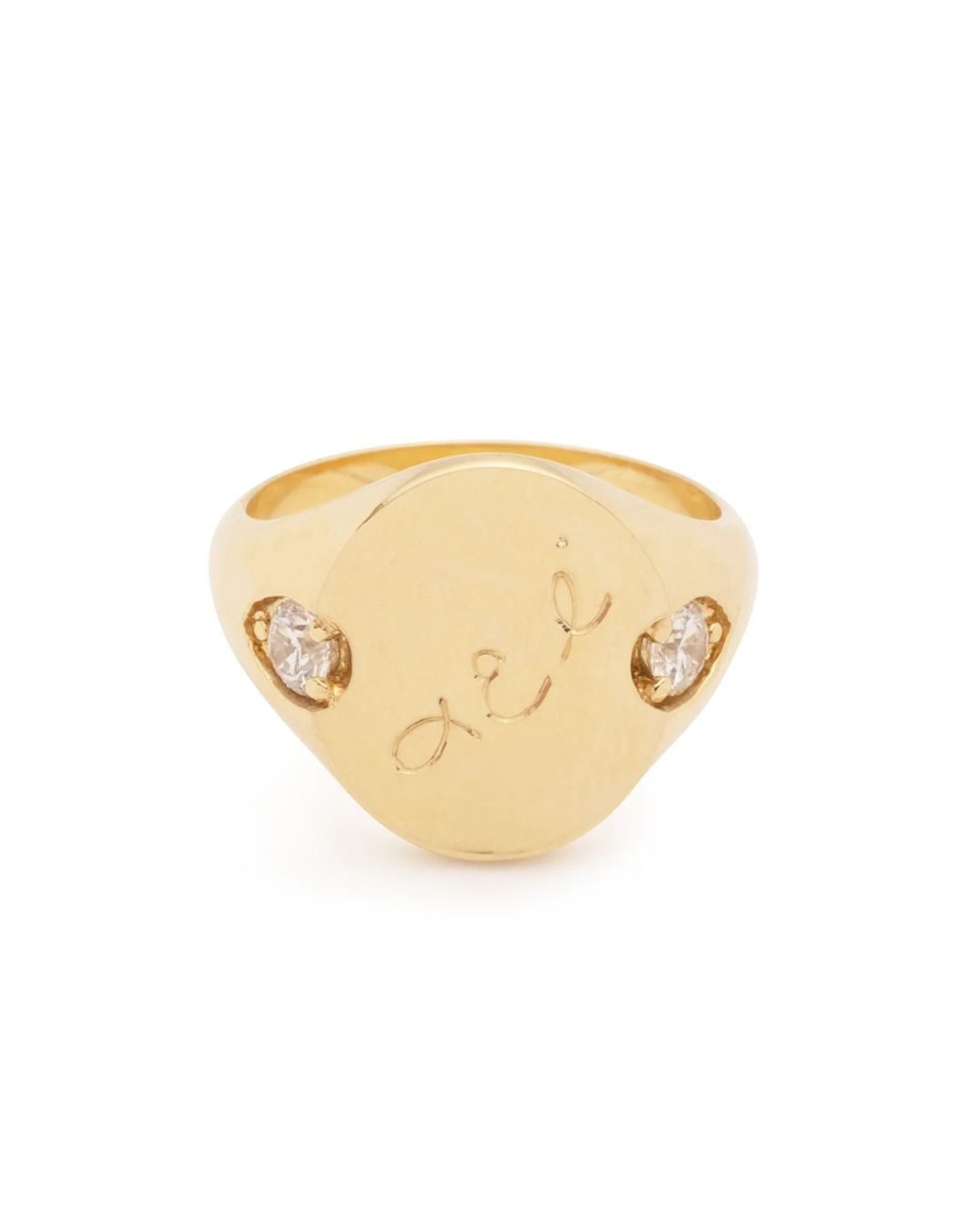
Foundrae Engraveable Ring, $4,750, foundrae.com
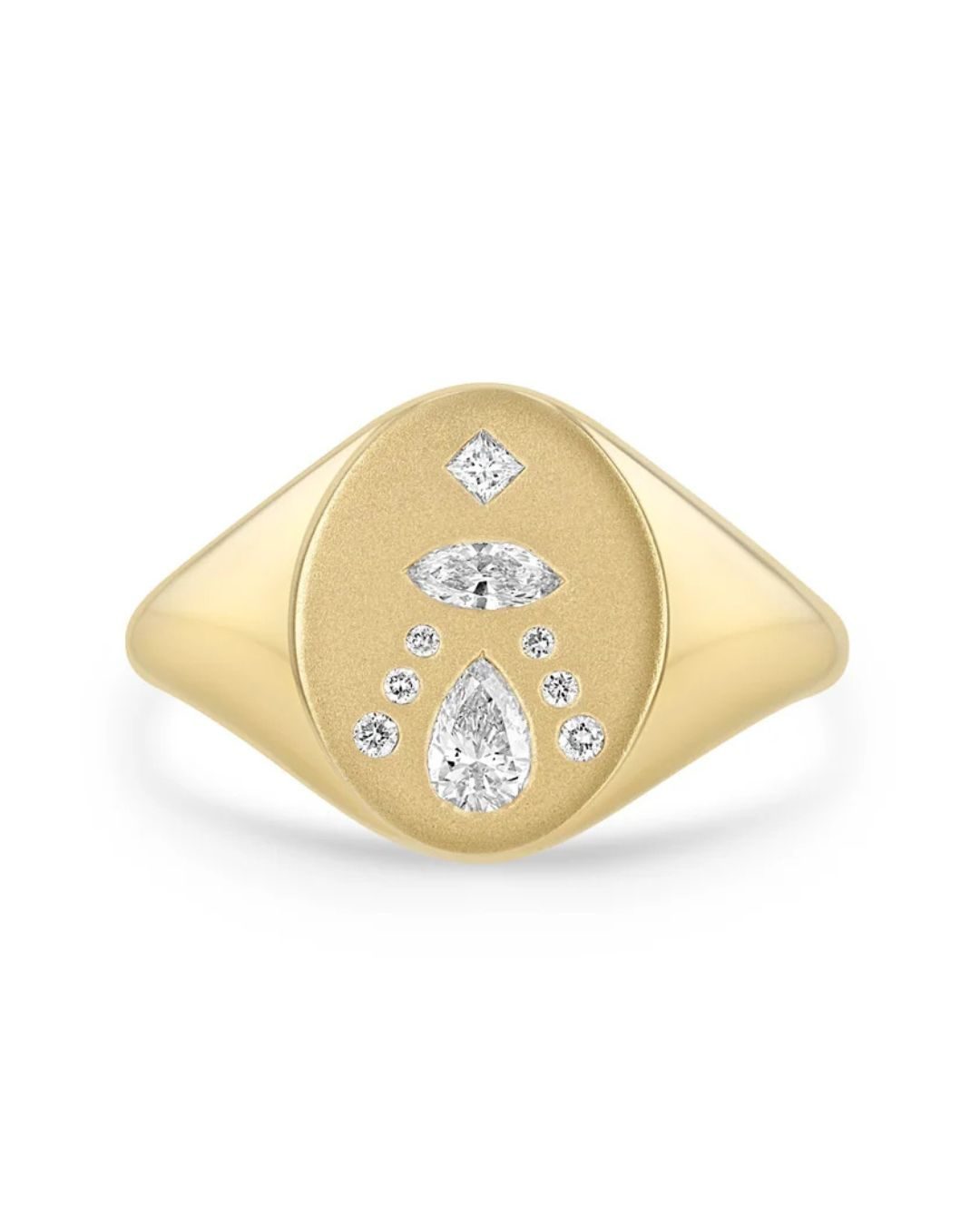
Zoe Chicco Diamond Mosaic Brushed Gold Signet Oval Ring, $2,450, zoechicco.com
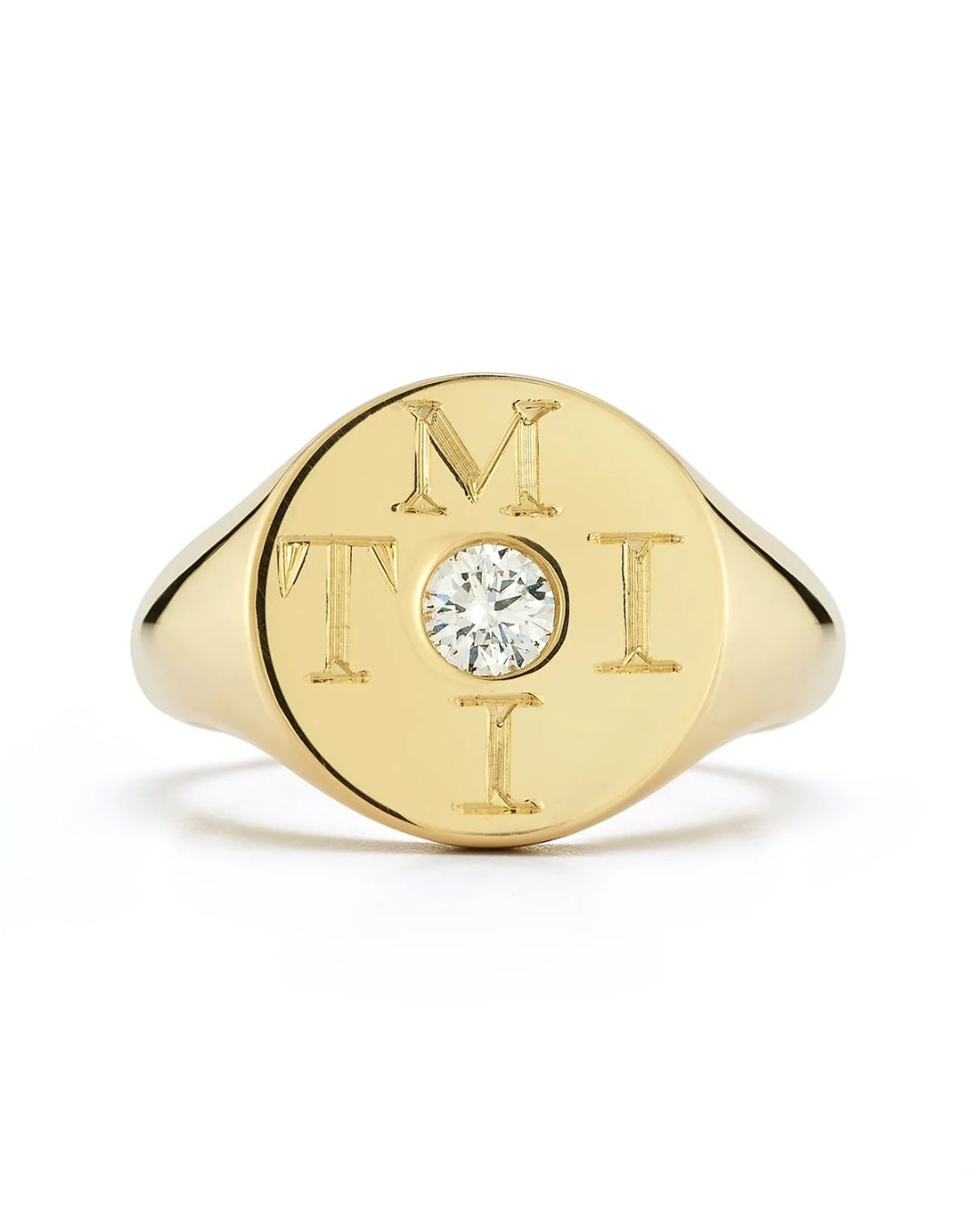
Jemma Wynne Love Notes Moi et Toi Diamond Ring, $5,670, jemmawynne.com
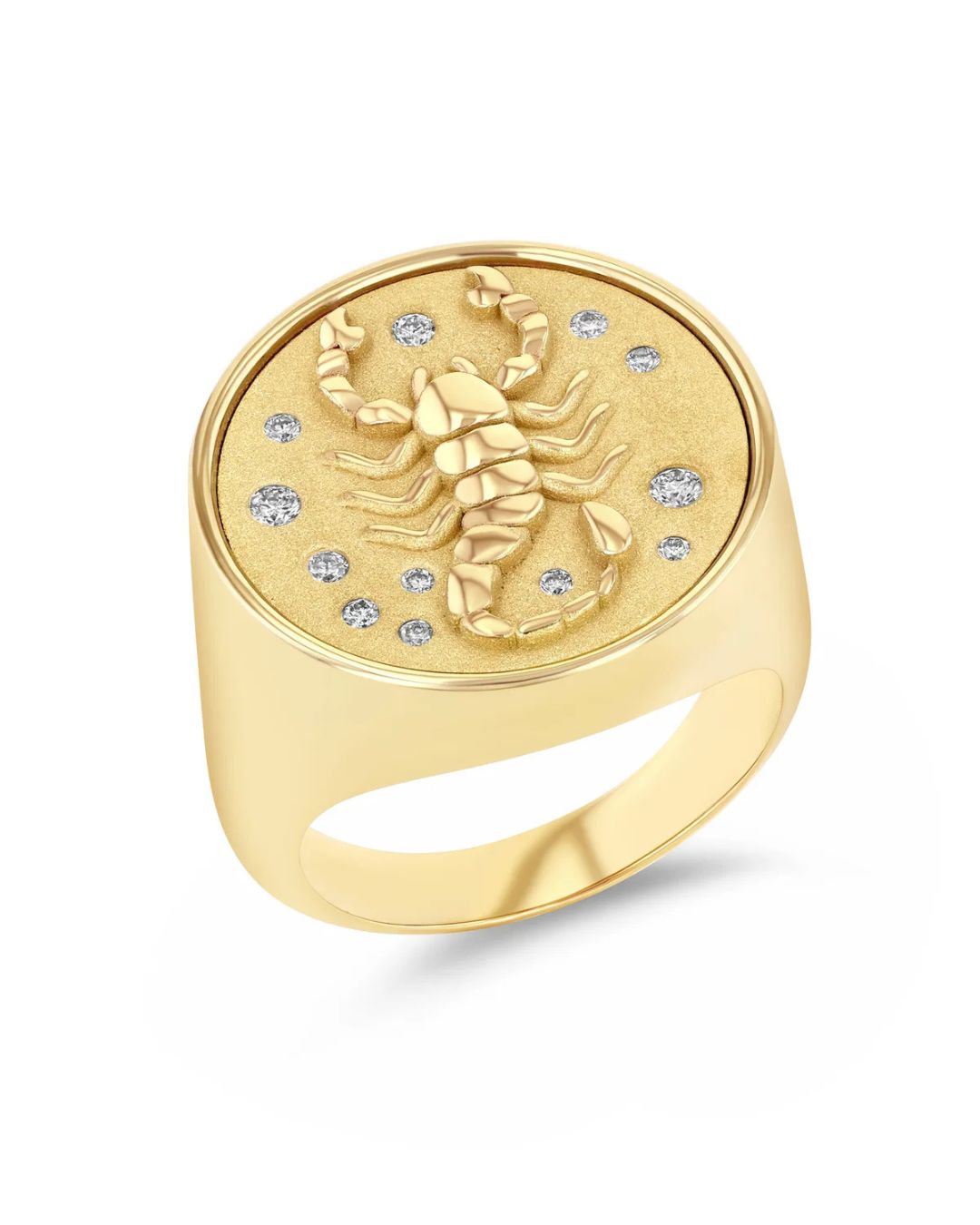
Future Fortune Signet Zodiac Ring, $7,200, futurefortune.com
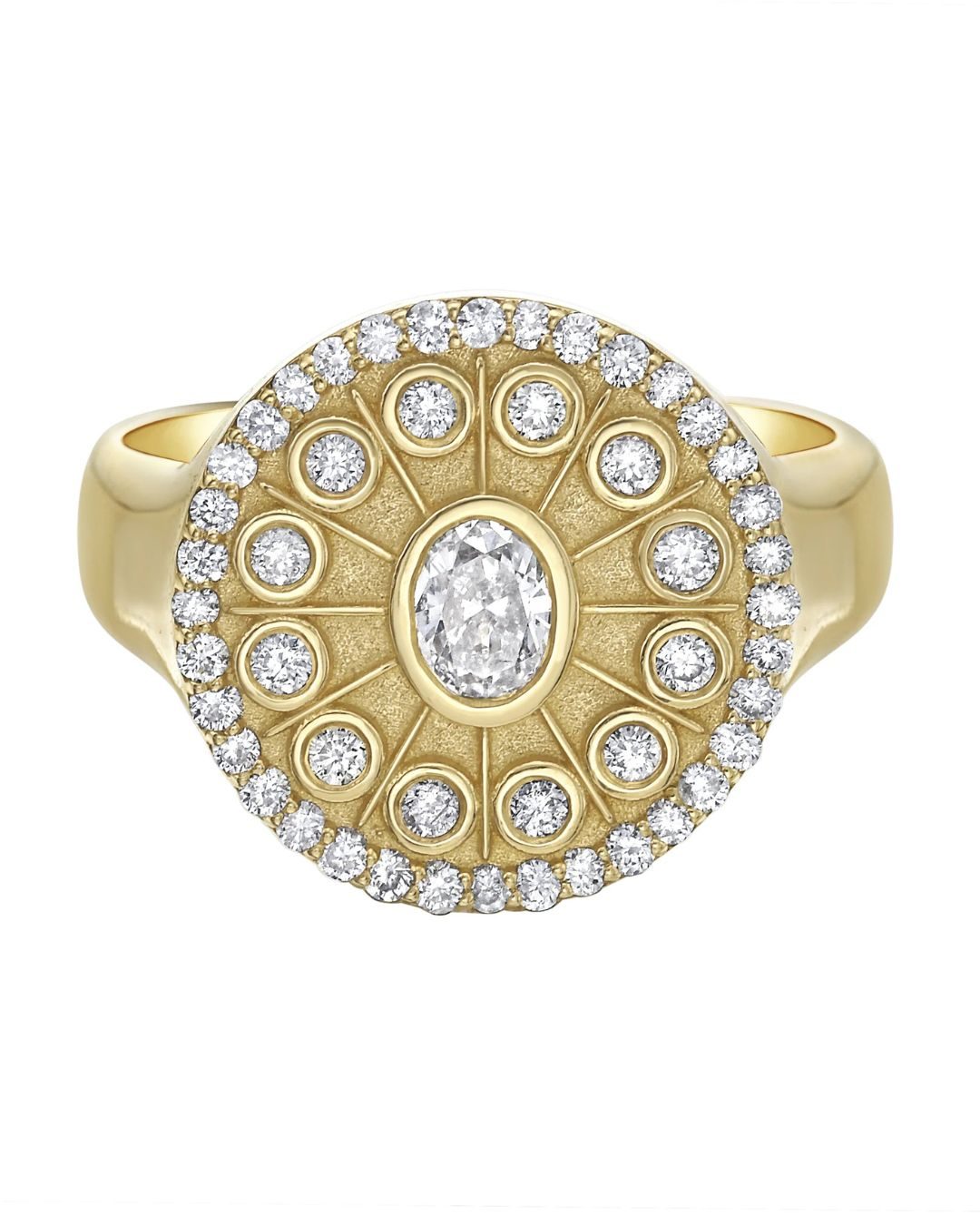
Lionheart Serenity Diamond Ring, $3,785, lionheartjewelry.com