

Botswana’s Extraordinary Half-Pink, Half-Colorless Diamond Discovery
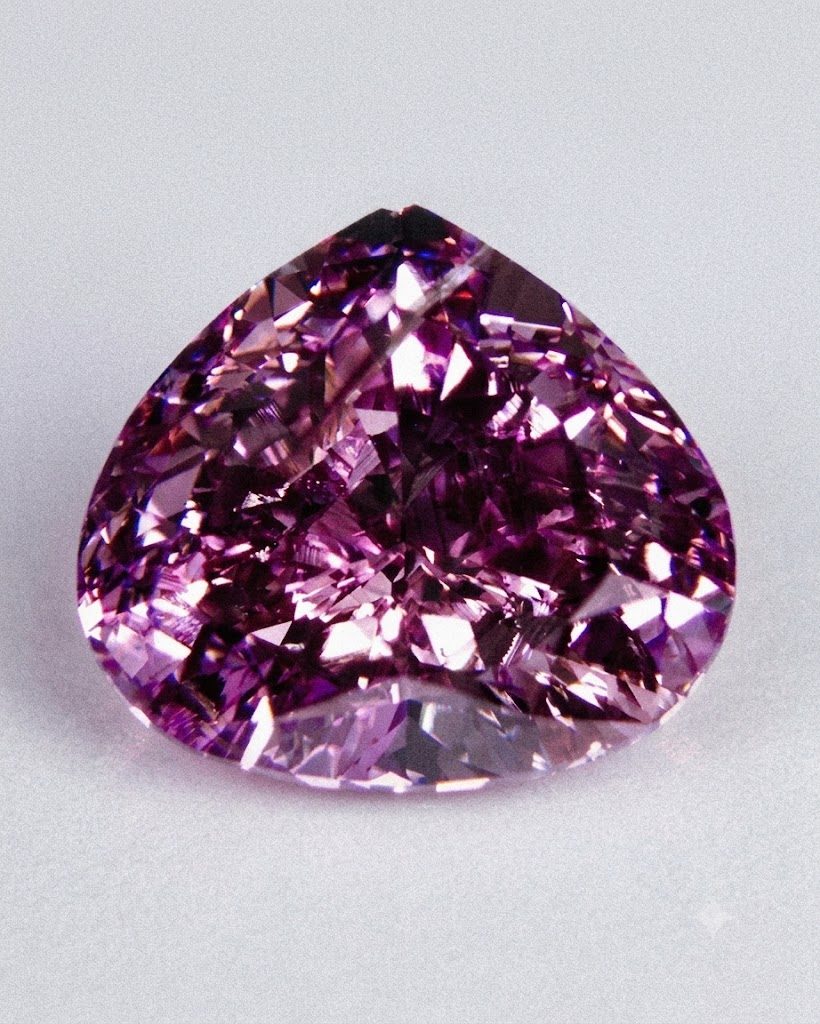
A breathtaking 37.41-carat diamond split between pink and colorless zones has emerged from Botswana, a discovery so rare it challenges everything we know about the formation of natural pink diamonds.
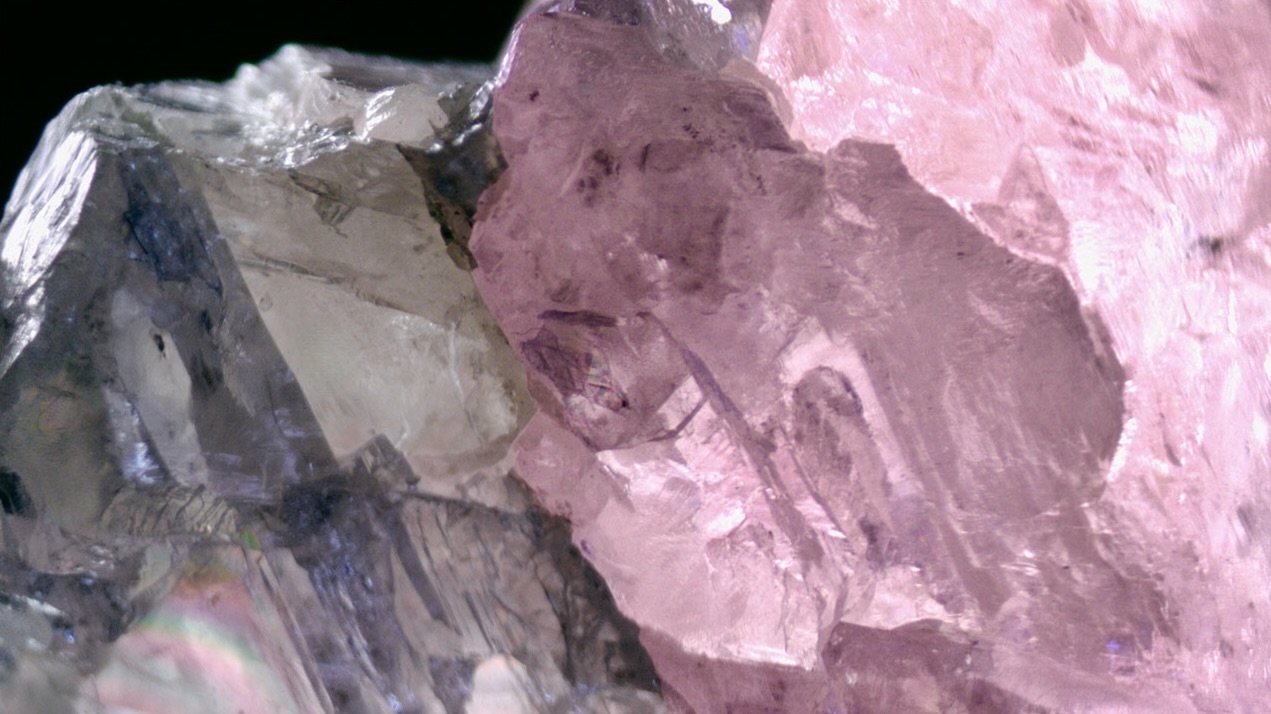
Botswana’s Rare Half Pink Diamond Discovery: This boundary shows a sharp transition from pink to colorless zones. (Photomicrograph by Wanling Tan; field of view 4 mm/ GIA)
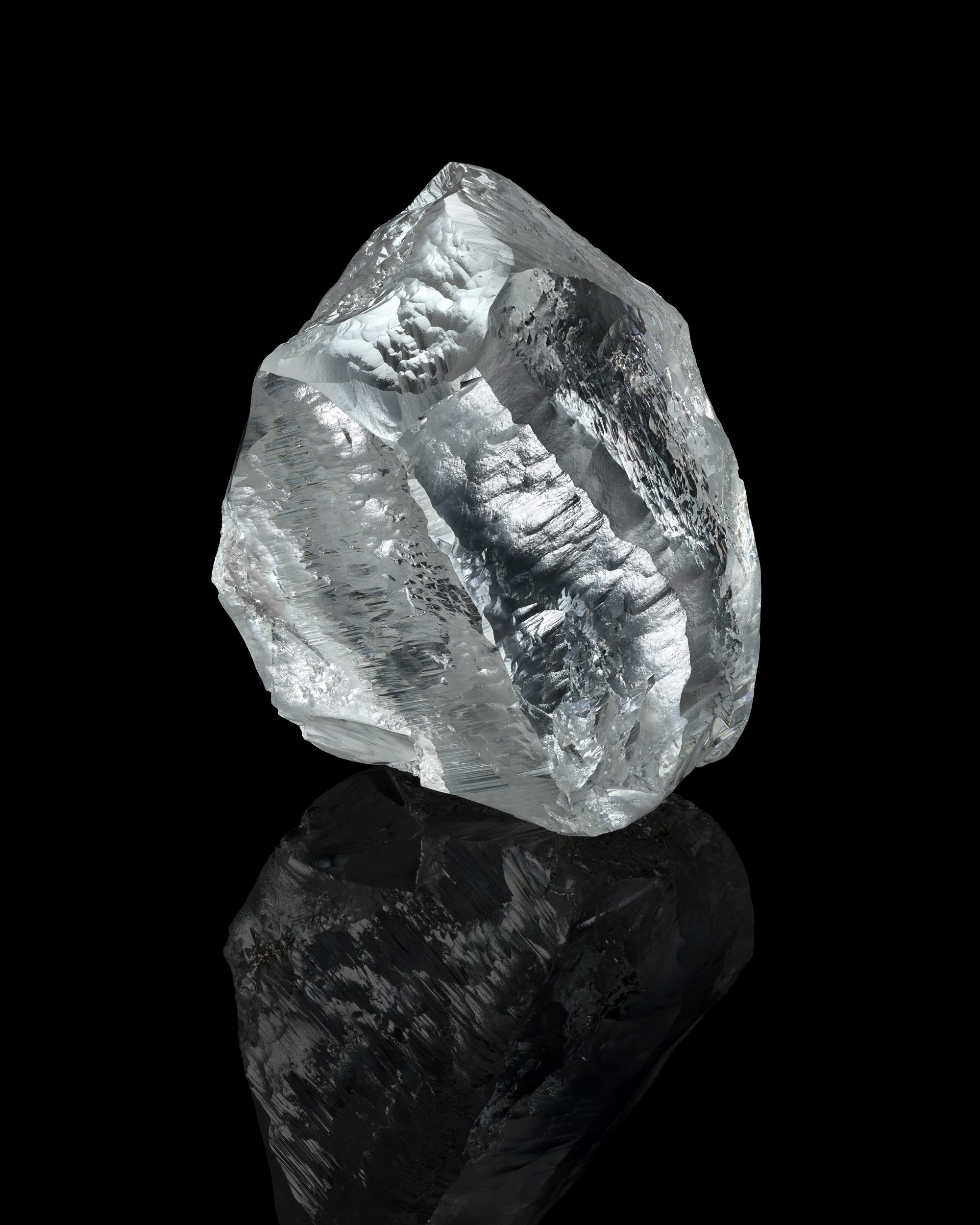
Botswana has done it again. Just when the diamond world thought it had seen it all, from the record-breaking Lesedi La Rona to the Motswedi, one of the largest diamonds ever found, the southern African nation has unveiled yet another natural wonder: a half-pink, half-colorless diamond weighing an astounding 37.41 carats.
Discovered at Botswana’s famed Karowe mine, this extraordinary rough diamond is unlike anything gemologists or collectors have ever seen in this size. Measuring roughly one inch long and containing two sharply divided color zones, it represents an almost impossible convergence of geological conditions. According to experts at the Gemological Institute of America (GIA) laboratory in Botswana, which examined the stone, the find is “astounding”, not just for its size, but for the sheer rarity of its dual coloration.
Below, learn more about Botswana’s rare half pink diamond discovery —and the science behind its extraordinary formation.
Meet the Expert

- Grant Mobley is the Jewelry & Watch Editor of Only Natural Diamonds.
- He is a GIA Diamonds Graduate.
- He has over 17 years of jewelry industry experience, starting with growing up in his family’s retail jewelry stores.
The Rarest Kind of Natural Beauty

Natural pink diamonds are among the most coveted and scarce gemstones on Earth. To put their rarity into perspective: of all diamonds discovered globally, less than one-tenth of one percent display any pink coloration, and fewer still exhibit pure, vivid hues. Ninety percent of the world’s known pink diamonds were discovered at the legendary Argyle mine in Western Australia, which closed in 2020 after nearly four decades of production. With Argyle now exhausted, any new pink diamond discovery instantly commands international attention, especially one as geologically complex and visually striking as this.
How Pink Diamonds Form
Unlike blue or yellow diamonds, whose colors come from trace elements like boron or nitrogen, pink diamonds owe their hue to something far rarer: internal distortion. Deep within the Earth’s mantle, carbon atoms align into the perfect crystal structure that gives diamonds their unmatched brilliance. But in the case of pink diamonds, intense tectonic pressure or mountain-forming events deform that structure ever so slightly, bending the atomic lattice in a way that alters how light travels through it.
That deformation scatters light, resulting in the pink color we see. It’s a geological tightrope act. Too little stress, and the diamond remains colorless; too much, and the structure becomes overstrained, turning the gem brown instead of pink. As GIA researchers often describe it, the conditions for pink diamond formation have to be “just right.”
Two Diamonds in One: A Half Pink, Half Colorless Marvel

What makes this Botswana discovery even more extraordinary is that it tells a double story of creation. GIA experts believe the pink half of the stone likely formed first as a colorless diamond, deep underground, more than 100 miles beneath the surface. Over millions of years, as continents shifted and mountains rose, the diamond endured just the right amount of plastic deformation, compressing and twisting the lattice structure enough to produce a pink hue.
Then, in an astonishing geological twist, new diamond material formed and attached itself to the original crystal, but this time without undergoing the same intense pressure. The result? A single rough diamond with two halves: one vividly pink, the other perfectly colorless, fused by nature’s hand.
GIA scientists have documented other two-toned diamonds before, but none match this stone’s size. Other known examples weigh no more than two carats. At 37.41 carats, this diamond stands as a geological marvel and a once-in-a-lifetime discovery that may never be replicated.
Botswana: The Modern Home of Legendary Diamonds

It’s fitting that such a stone would surface in Botswana, a country whose diamond industry has set global benchmarks for ethical mining, sustainable development, and national prosperity. Diamonds account for a significant portion of Botswana’s GDP, and through its joint venture with De Beers, the nation has become a model for how natural resources can transform an economy for the benefit of all its people.
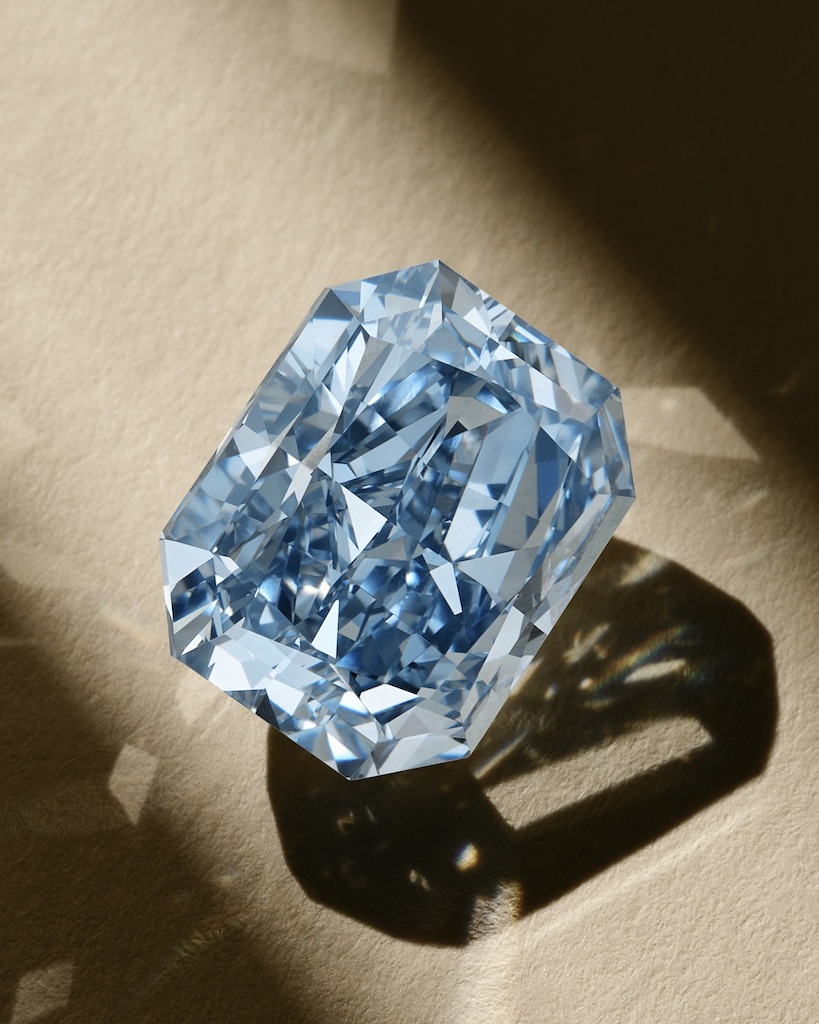
Over the past two decades, Botswana has discovered some remarkable diamonds, including the 1,758-carat Sewelô, the 1,174-carat Okavango Blue, and now this rare two-colored gem that defies conventional science. Each discovery in Botswana reinforces its reputation as one of the world’s greatest diamond-producing regions.
The Rare Half Pink Diamond Is a Geological Enigma
From a scientific perspective, this discovery opens up fascinating new questions. How could two distinct phases of diamond growth occur within a single crystal? What specific geological forces allow one half of a diamond to deform while the other remains untouched? GIA’s researchers are continuing to study the specimen, hoping it might shed new light on the formation of pink diamonds, which remains one of gemology’s great mysteries.
As for the market implications, it’s difficult to assign value to such a singular specimen. Half-pink, half-colorless diamonds are virtually unknown, and given its size and origin, the stone could be priceless to collectors and museums alike. Whether it remains in rough form or one day yields polished diamonds, its story will continue to capture the imagination of scientists and connoisseurs around the world.