
The Winston Blue Diamond Set a World Record and Redefined a Legacy
When Harry Winston’s new CEO decided she wanted the World’s largest flawless vivid blue diamond, the Winston Blue, nothing was going to stop her.
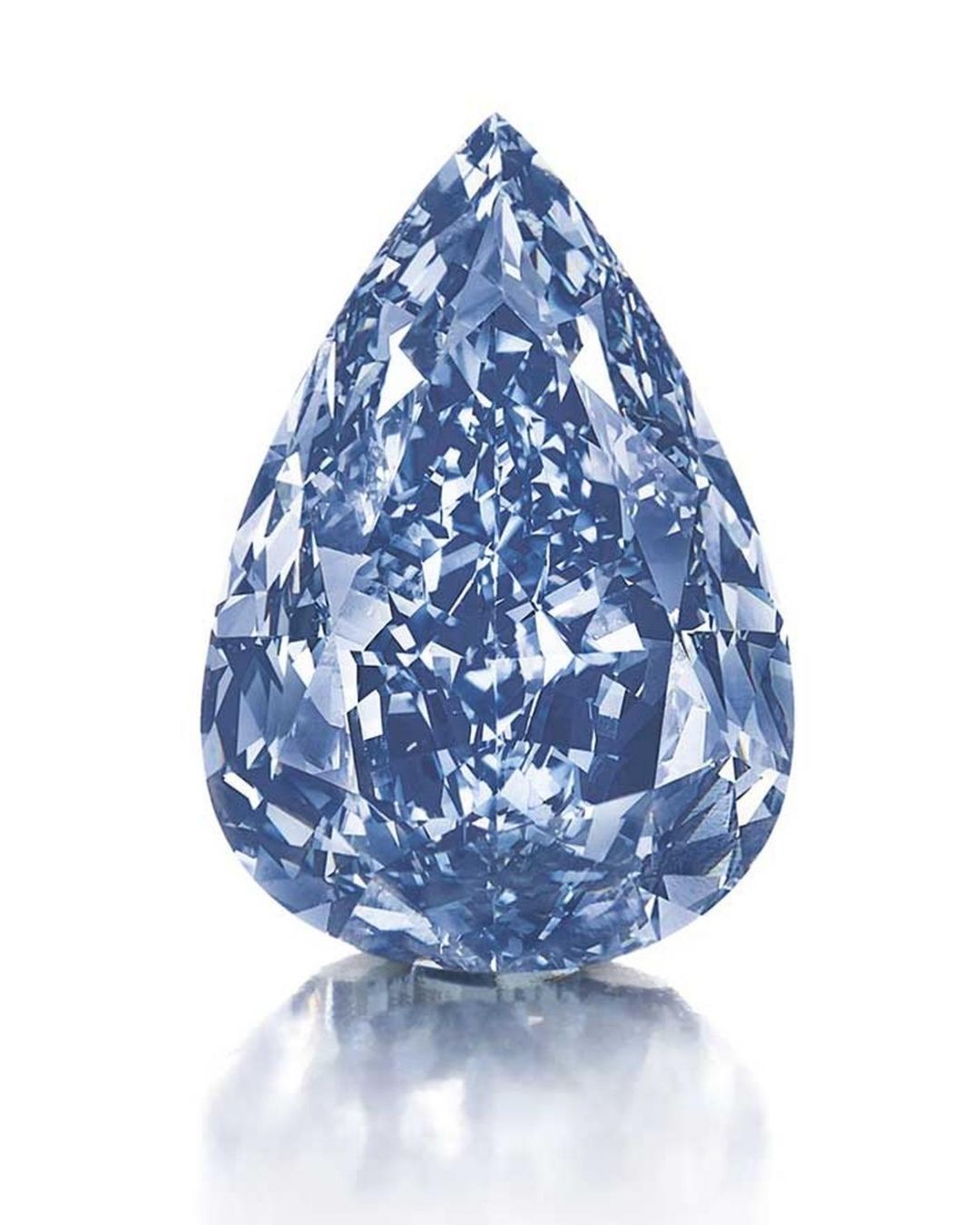
The Winston Blue Diamond. (Courtesy of Christie’s)
On May 15, 2014, inside Christie’s Geneva, an auction kicked off that we are still talking about more than a decade later. The top lot, a 13.22-carat fancy vivid blue diamond, flawless, Type IIb, the largest of its kind the GIA had ever graded, crossed the auction block and sold for $23.8 million. The buyer was Harry Winston Inc. The price per carat, approximately $1.8 million, set a world record for a blue diamond. The name the stone would carry from that day forward – the Winston Blue diamond – came from the woman who had the vision to claim it.
Meet the Expert

Nayla Hayek is CEO of Harry Winston Inc. and chairwoman of Swatch Group Ltd. She has served on the Swatch Group board since 1995 and was named vice chair in May 2010.
The Origins of the Winston Blue Diamond
Christie’s listed the stone simply as “The Blue” when it announced the sale. Everything about its early history remains unclear. The seller chose to remain anonymous, and the diamond’s origins before it reached the auction block remain unknown.
Based on its distinct hue, experts believe it likely came from the Cullinan Mine in South Africa, the same historic source that produced the famous Cullinan Diamond and many of the world’s natural blue diamonds in this particular shade. Whether it surfaced in the 20th century through private channels, changing hands quietly before diamonds of this caliber made international headlines, nobody can say for certain.
What the GIA confirmed on March 25, 2014, was all the market needed to know. Fancy vivid blue color. Flawless clarity. Type IIb classification. The rarest possible combination for a natural blue diamond, in a size the laboratory had never seen before in that color and clarity tier.
Why Blue Diamonds Like the Winston Blue Command Record Prices

To understand what happened in that Geneva auction room, it helps to look at what makes a natural blue diamond so extraordinary in the first place.
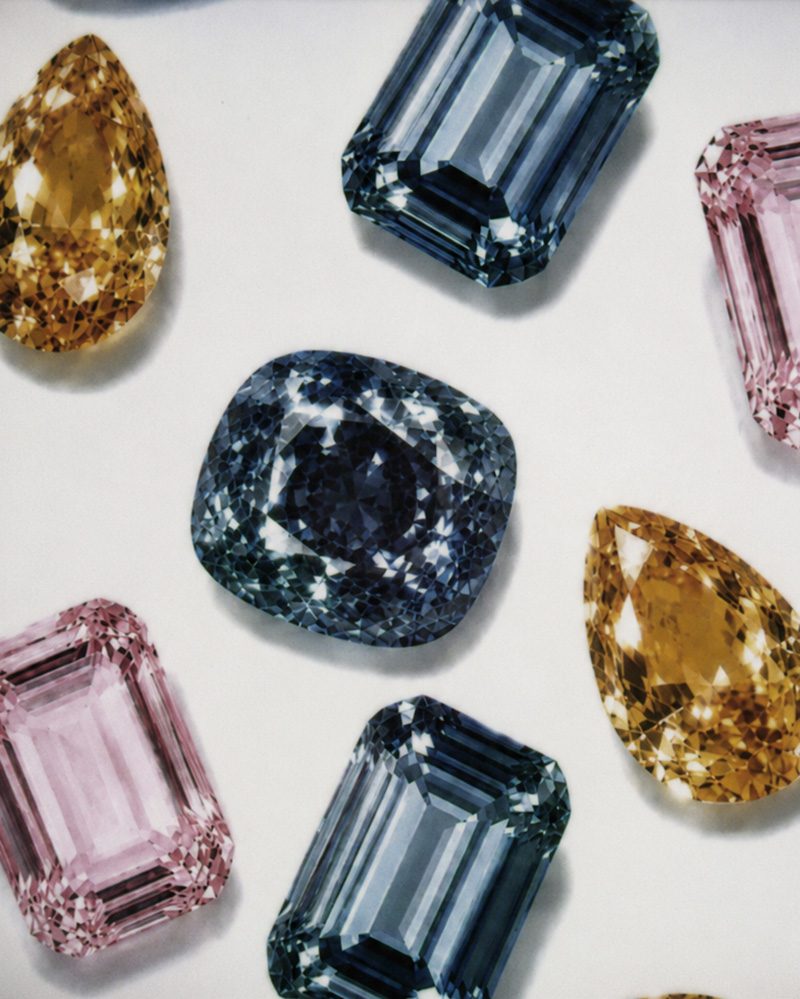
Blue diamonds owe their color to boron, a trace element that occasionally enters a diamond’s crystal structure during formation deep in the Earth’s mantle. Boron causes the stone to selectively absorb light, allowing blue wavelengths to dominate what the eye perceives. Diamonds with enough boron to produce blue color belong primarily to the Type IIb classification, which represents fewer than 0.1 percent of all natural diamonds. Many Type IIb stones even conduct electricity, a physical property that distinguishes them from most other gem materials on Earth.
Among blue diamonds, the GIA grades color saturation across a scale that includes Fancy Light, Fancy, Fancy Intense, Fancy Vivid, Fancy Deep, and Fancy Dark. Fancy Vivid represents the absolute pinnacle of beauty and rarity. Finding a stone that achieves that grade is rare enough. Finding one at 13.22 carats with flawless clarity had, according to the GIA, never happened before.
How the Winston Blue Diamond Got Its Name
When Christie’s announced it would offer the largest flawless fancy vivid blue the GIA had ever graded, Hayek moved decisively. After securing the stone for $23.8 million, she spoke about the purchase directly: “When Christie’s announced they were offering the largest flawless fancy-vivid blue the GIA had ever graded, I had to buy it. Today, I am proud to own the most beautiful blue diamond in the world: The Winston Blue.”
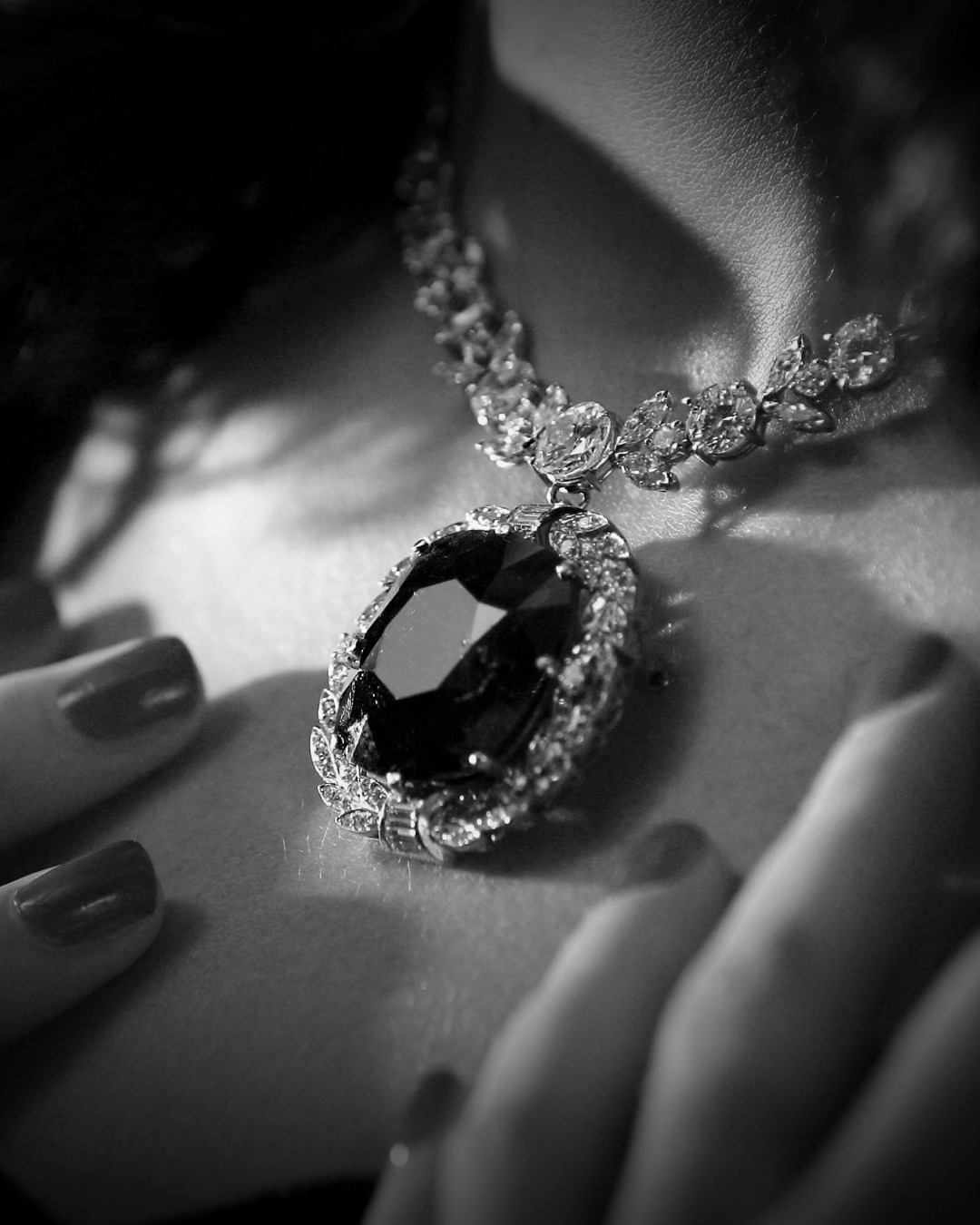
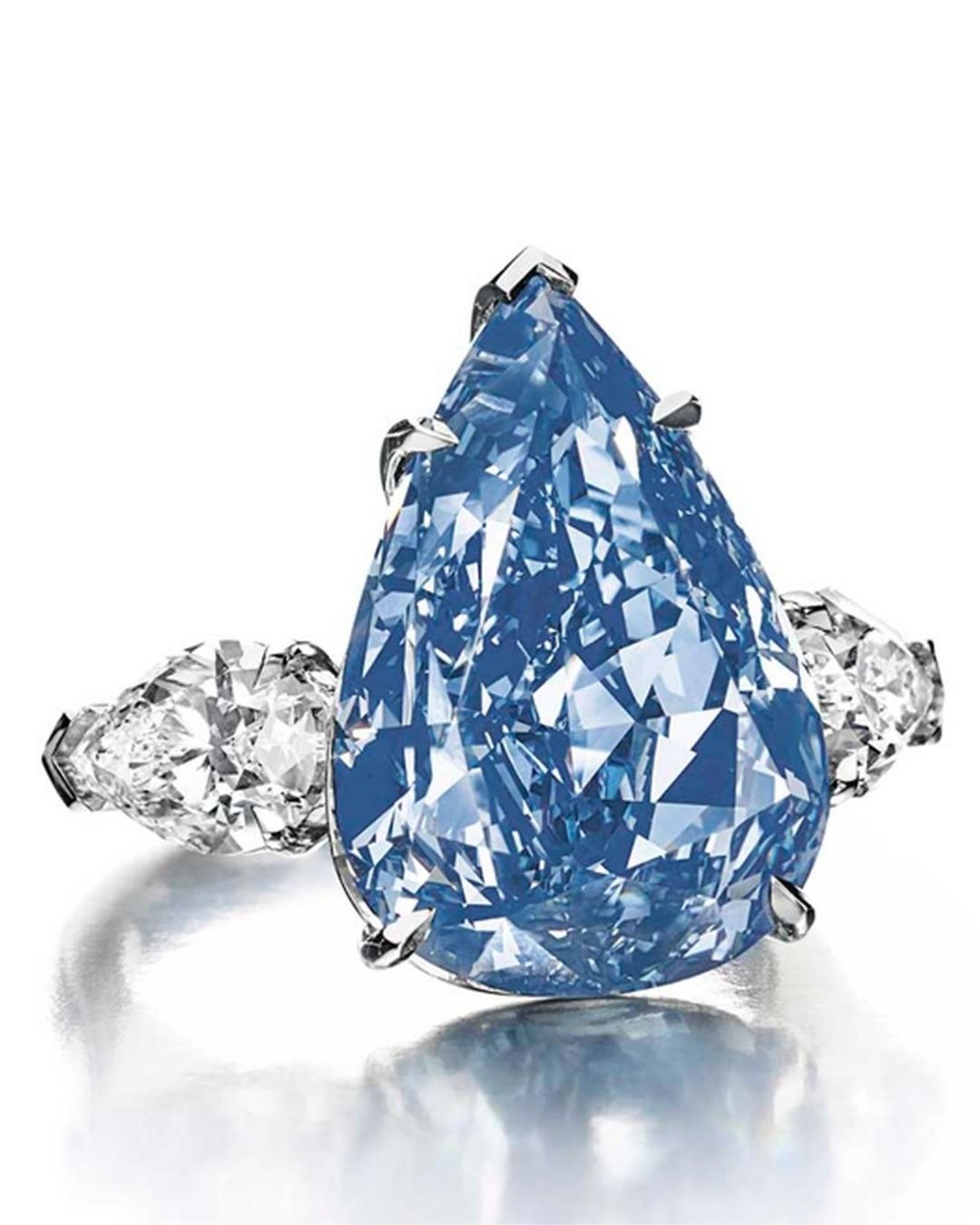
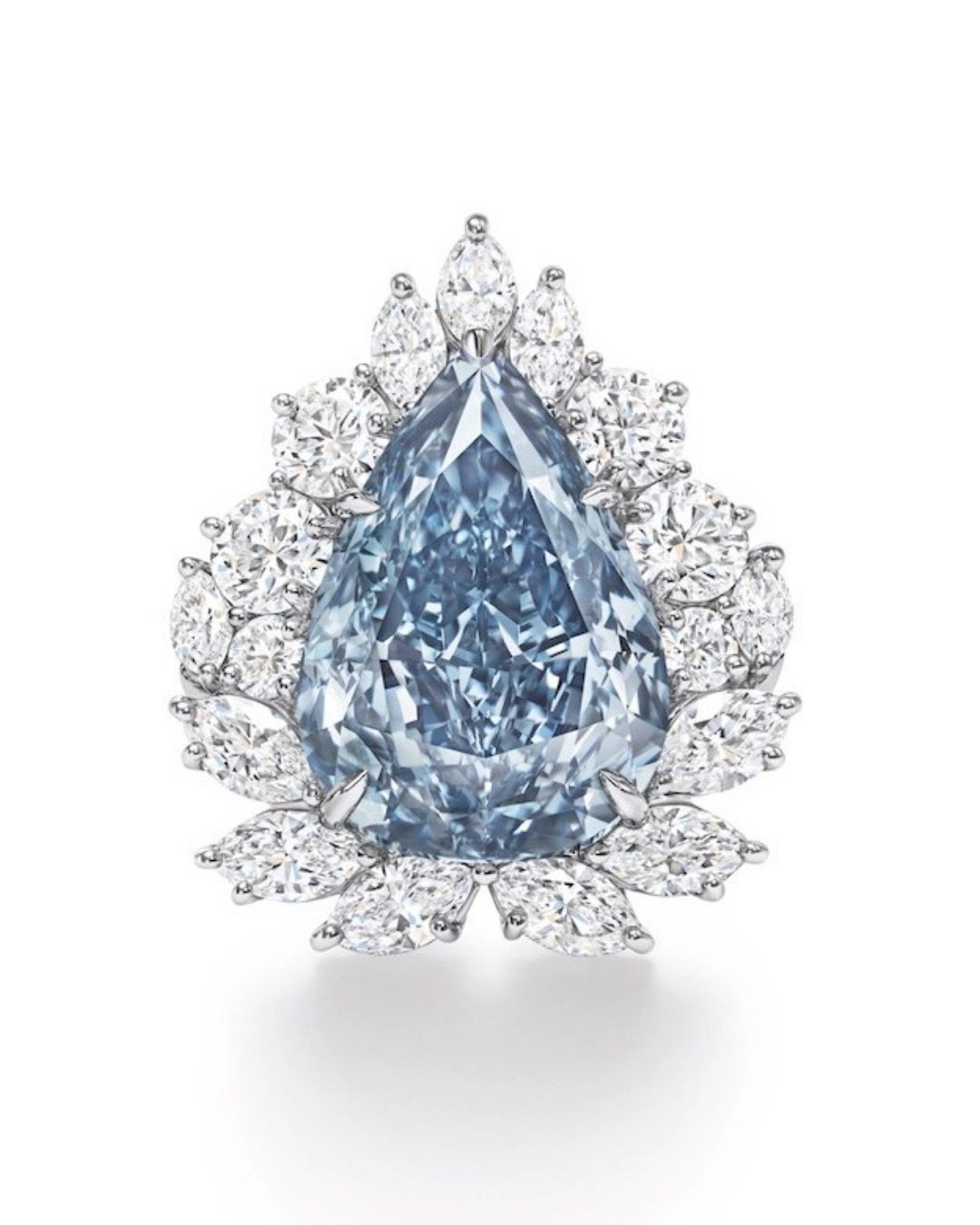
Since the purchase, the diamond has appeared in at least two mountings. At Christie’s, it sat flanked by two pear-shaped diamonds, each weighing approximately 1 carat. In a subsequent Harry Winston setting, it appeared surrounded by a cluster of mixed-cut colorless diamonds mounted in platinum, a configuration more in keeping with the house’s signature aesthetic.
Inside the Record-Breaking Sale of the Winston Blue Diamond
The Winston Blue diamond was the crown jewel of one of the most remarkable jewelry auctions ever held. Christie’s Geneva Magnificent Jewels sale on May 15, 2014, realized a total of $154.19 million, setting a world record for the highest total ever achieved at a jewelry auction at that time. The record stood until 2023, when The World of Heidi Horten sale, also at Christie’s, surpassed it, with a total exceeding $202.1 million.
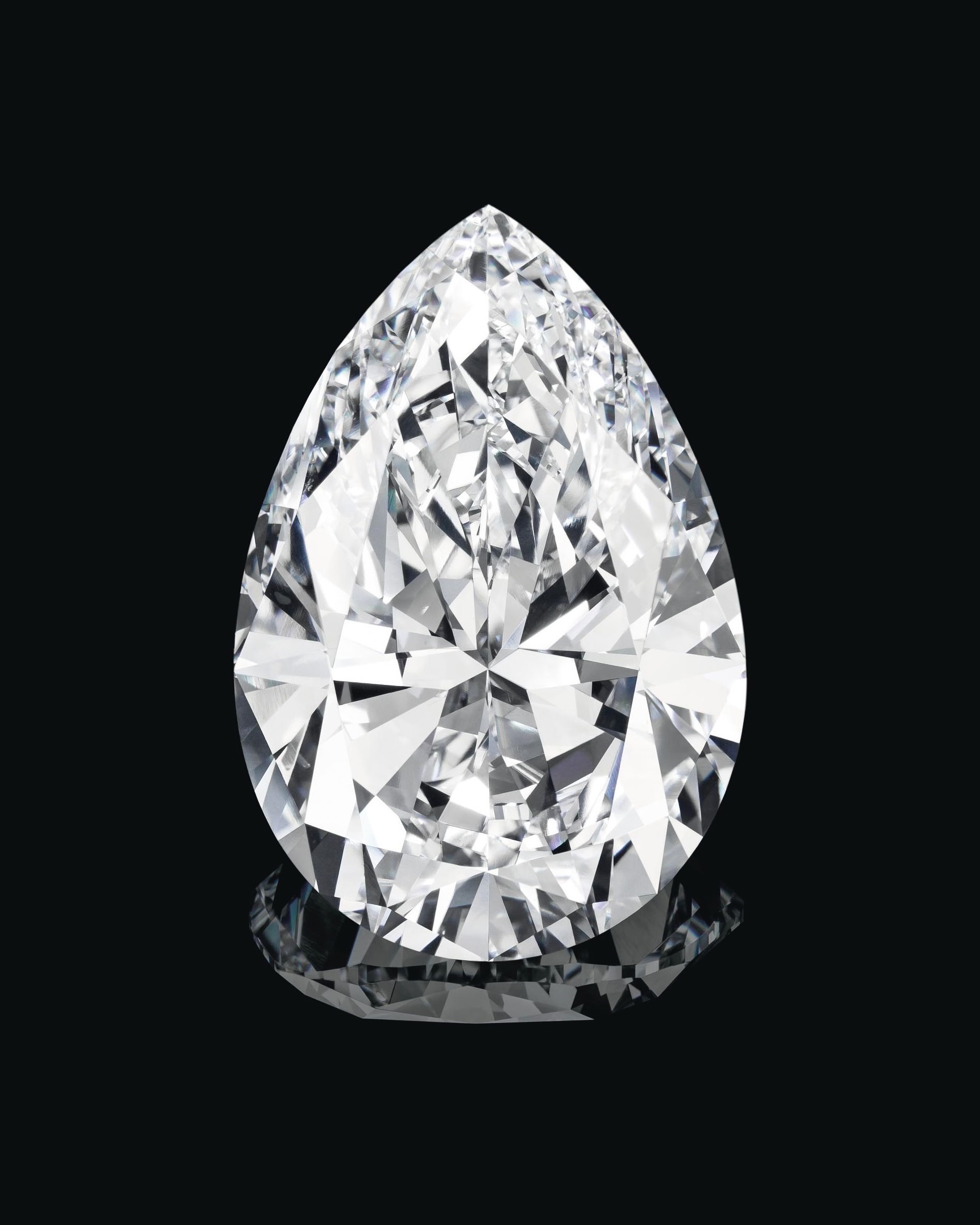
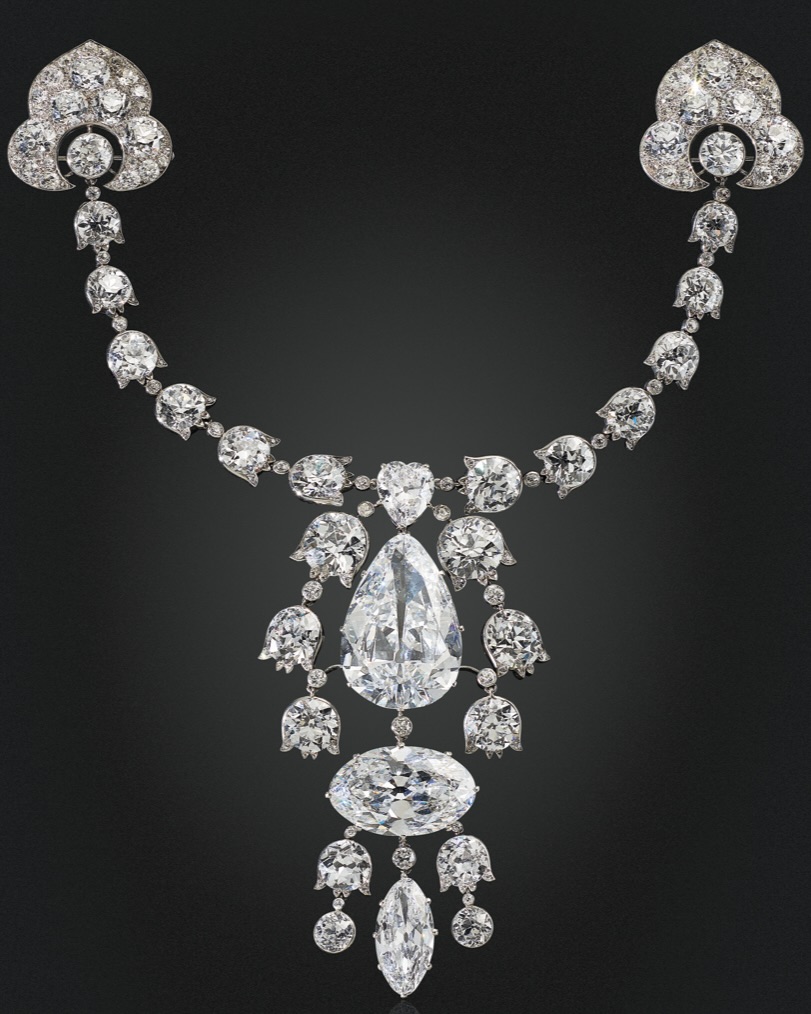
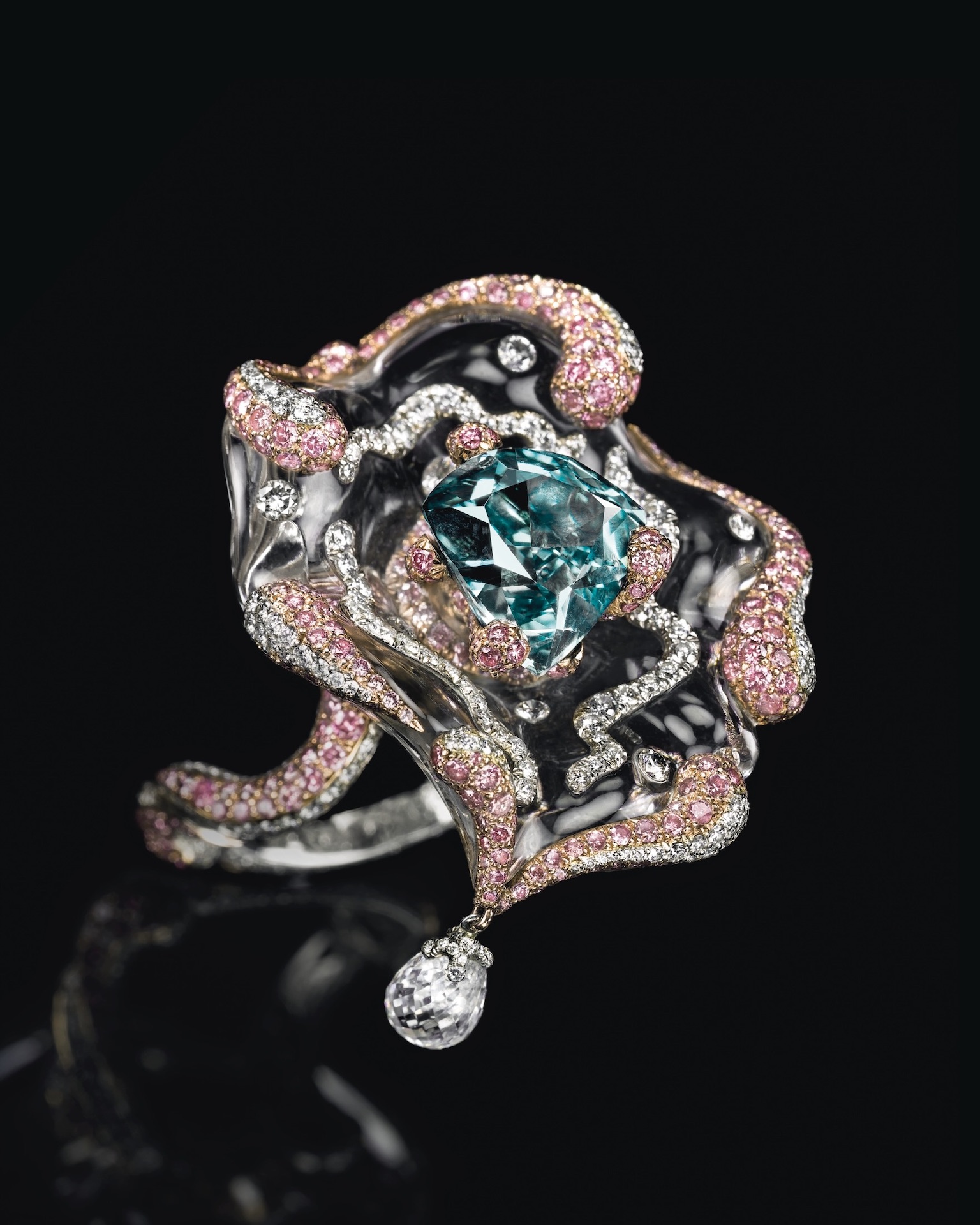
The 2014 sale gathered an extraordinary concentration of important pieces in a single room. A Belle Époque diamond Devant-de-corsage brooch by Cartier sold for more than $17.5 million. A 75.97-carat pear-shaped D color flawless diamond brought more than $14.4 million. A 76.51-carat Asscher-cut light pink diamond necklace by Leviev sold for $10 million, setting a world auction record for a light pink diamond. And the Ocean Dream, a 5.50-carat triangular-cut fancy vivid blue-green diamond, sold for more than $8.6 million, setting a world auction record for a blue-green diamond.
Notably, the Ocean Dream is heading back to auction this year, allowing the market to see exactly how much its value has appreciated in the decade since that historic sale.
How the Winston Blue Diamond Compares to Today’s Record Sales
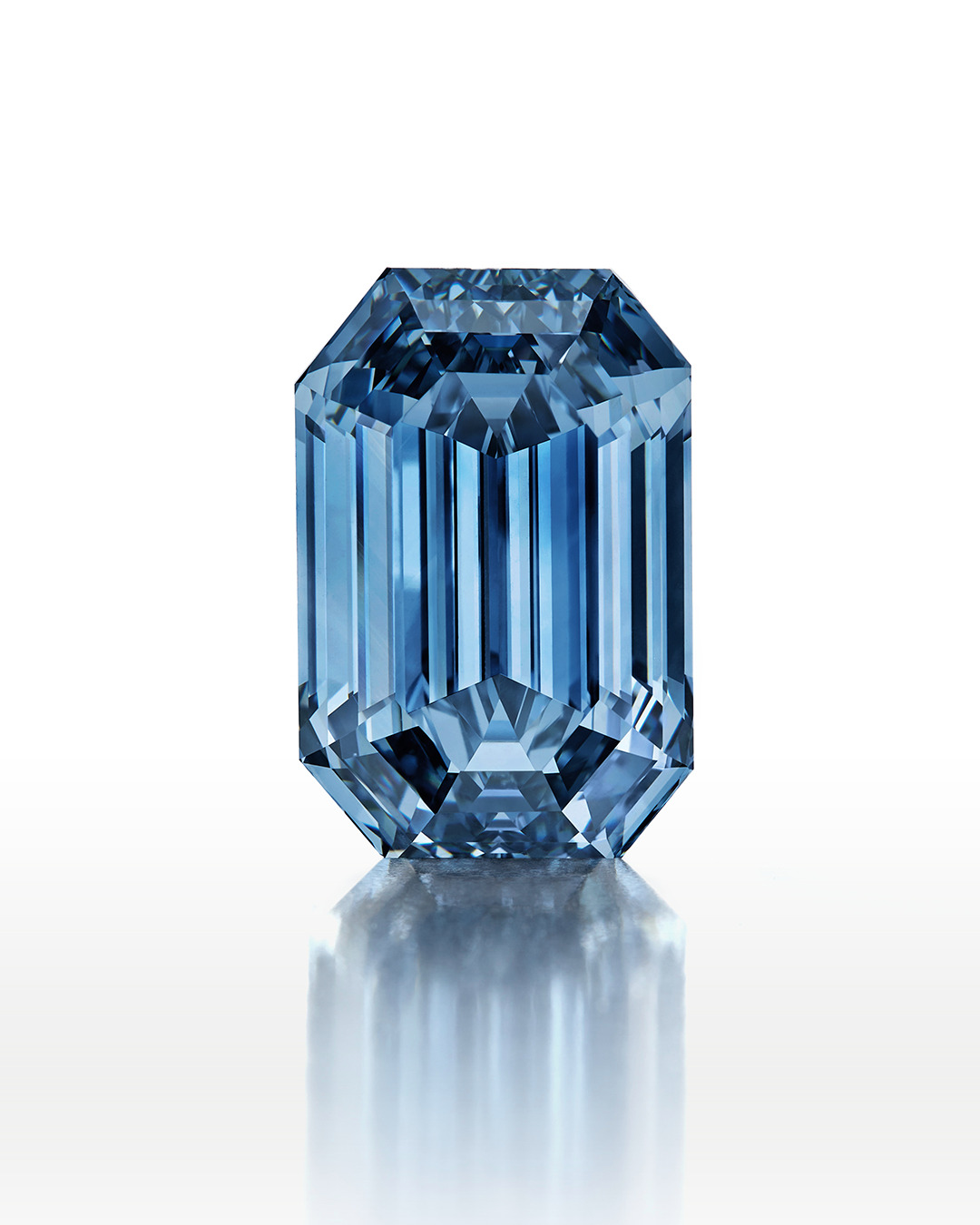

The $1.8 million-per-carat record the Winston Blue diamond set in 2014 has since been surpassed, as the blue diamond market has continued its extraordinary trajectory. The De Beers Blue, a 15.10-carat fancy vivid blue internally flawless Type IIb stone, sold at Sotheby’s Geneva in May 2023 for $57.5 million, currently holding the blue diamond auction record. The Oppenheimer Blue, a 14.62-carat fancy vivid blue VS1, sold at Christie’s Geneva in 2016 for $57.5 million. The Blue Moon of Josephine, a 12.03-carat, fancy vivid-blue, internally flawless stone, sold for $48.4 million in 2015.
The Winston Blue diamond predates all of them, and, in many ways, its sale helped establish the market trajectory that led to those results. When Nayla Hayek walked out of Christie’s Geneva in May 2014 with the world’s largest flawless fancy vivid blue diamond, she did more than acquire an extraordinary stone. She signaled to the entire market that natural blue diamonds represent something the Earth produces in such small quantities that finding one becomes an event.