

What the Ocean Dream Diamond’s $17.3 Million Sale Proves About Natural Color Diamonds
The mesmerizing blue-green diamond that makes one industry expert’s pulse race.
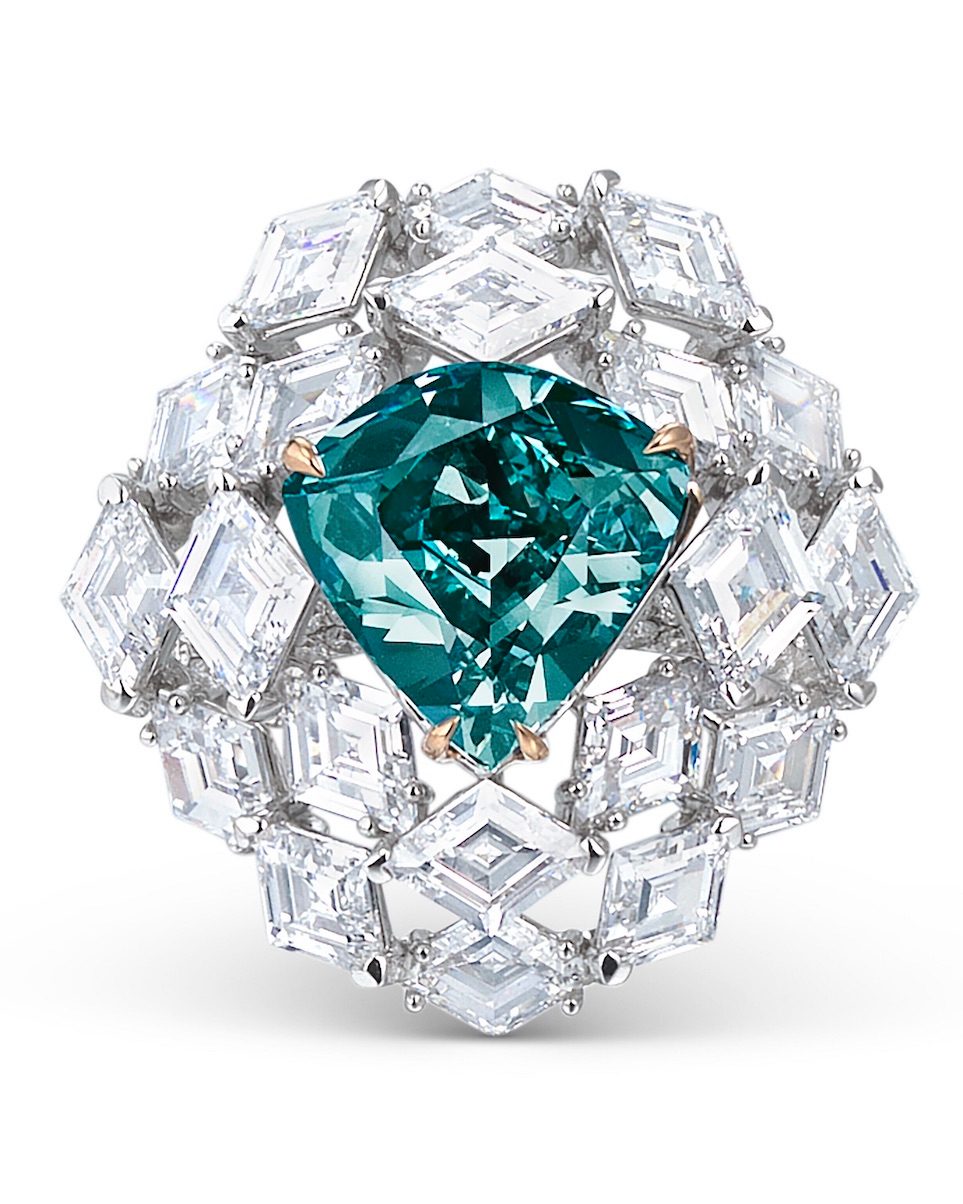
The 5.5-Carat Fancy Vivid Blue-Green Ocean Dream Diamond (Courtesy of Christie’s Auction House)
The Ocean Dream Diamond sold today at Christie’s Magnificent Jewels auction in Geneva for $17,300,000 — nearly double the $9.8 million it fetched at the same auction house in 2014. The result is a world record for a blue-green diamond and one of the most compelling demonstrations of natural diamond value appreciation the market has ever produced. In eleven years, the Ocean Dream gained more than $7.5 million in value, an appreciation of approximately 77 percent. For anyone who needs a real-world example of why rare natural color diamonds represent genuine long-term value, look no further than what just happened in Geneva.
Meet the Experts

Tom Moses is the Executive Vice President and Chief Research and Laboratory Officer of the Gemological Institute of America (GIA).

Max Fawcett is Christie’s Global Head of Jewelry. Max Fawcett joined Christie’s a decade ago and has served as both specialist and auctioneer, leading record-breaking sales in London, Geneva, Hong Kong, and New York.
This is the full story of this extraordinary stone and why today’s result was years in the making.
What Is the Ocean Dream Diamond?
Few stones can quicken the pulse of Tom Moses, the Gemological Institute of America’s (GIA) executive vice president and chief research and laboratory officer, who has graded just about every legendary diamond of the last five decades. But the Ocean Dream diamond did.
The breathtaking 5.51 fancy vivid blue-green diamond, cut in a triangular shape, is unlike any other diamond on Earth. “I could spot it from across the room,” said Moses. “I have never seen a natural blue-green diamond of this intensity of color, size, and it is a Type IIa, which certainly makes it a unicorn.”
The only diamond that comes close is the Dresden Green, he says. But even the 42-carat green diamond, also a Type IIa (a category of diamonds that are the most chemically pure), doesn’t come close to the Ocean Dream’s electric color. Until the Ocean Dream, Moses had only seen this shade of blue-green in stones of less than one carat, making this diamond a true natural wonder.
The Origin Story of the Ocean Dream Diamond

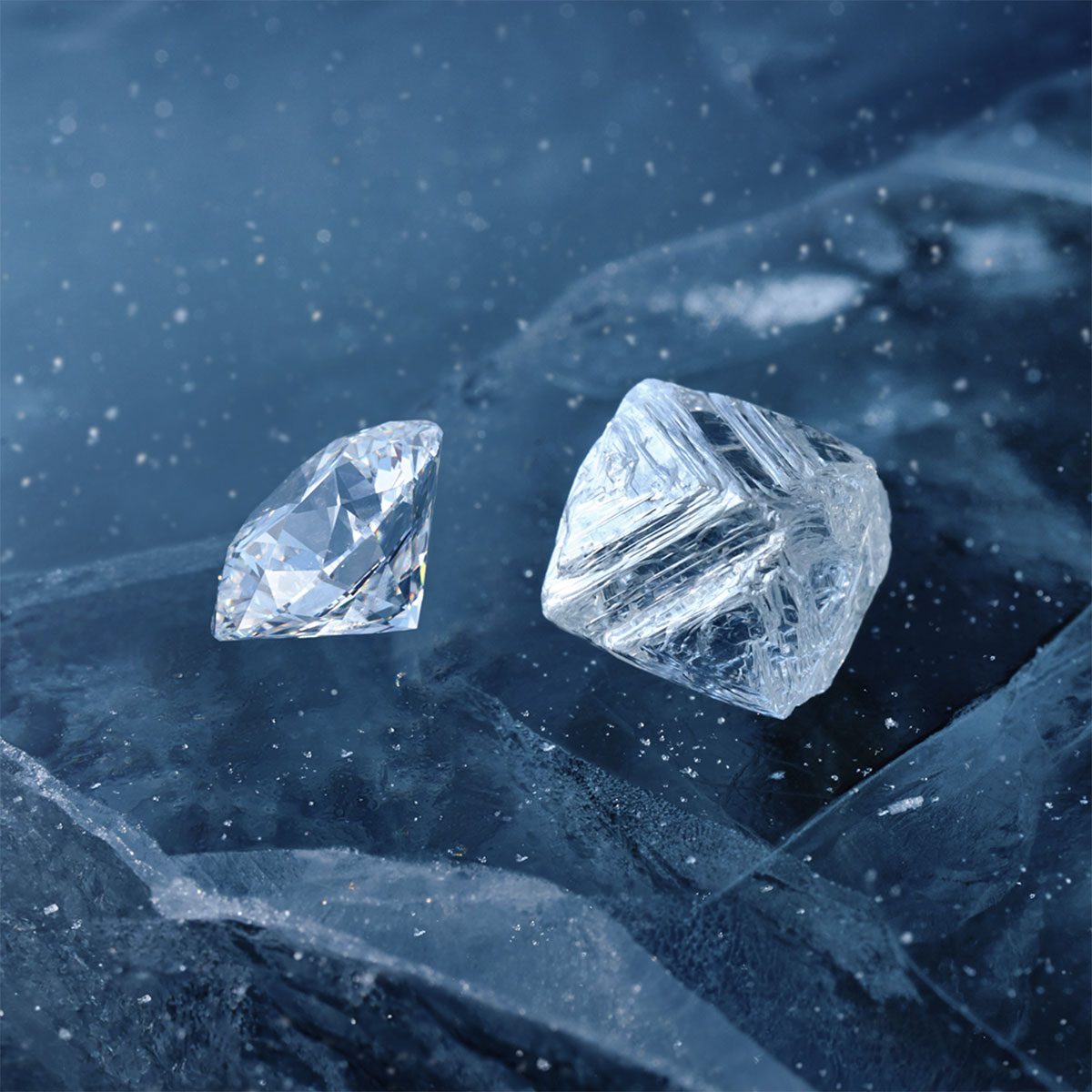
Discovered as an 11.7-carat rough in Central Africa in 2002, the Ocean Dream was purchased by Cora Diamond Corporation in New York. Moses conferred with the company over several months during the high-stakes cutting process, a particularly risky endeavor given the stone’s sensitivity to heat.
“It was a very tense cutting process because it was a gamble,” says Moses about the period more than 20 years ago when the stone was being polished, and that’s what makes his pulse race. The gamble paid off.
When the diamond first appeared at Christie’s Magnificent Jewels sale in May 2014, it fetched $9.8 million. It was a remarkable result at the time and, as today proved, just the beginning of its value story. It was offered in a sculpted rock crystal ring with pavé pink and white diamonds. To this day, it remains the largest fancy vivid blue-green diamond ever graded by the GIA.
“A stone of this rarity would likely command an even higher price at auction today,” said Moses. Moses was right. Today it did exactly that, and then some.
Why Collectors Covet Niche Colored Diamonds


“It’s an extremely rare stone,” says Max Fawcett, Christies’ Global Head of Jewelry. Unlike vivid pink or vivid blue diamonds, he calls the Ocean Dream a “niche fancy-colored diamond,” along with orange and pure green diamonds — colors that are almost unheard of. These niche colored diamonds appeal to a small but extremely knowledgeable group of collectors. When they do come up for sale, Fawcett notes, they spark fierce competition. “Those people who understand them realize how rare they are.”
Today’s result proved that point. The $17,300,000 price is not just a record for a blue-green diamond. It is a statement about what happens when something truly irreplaceable returns to the market after more than a decade. The Ocean Dream is the largest fancy vivid blue-green diamond the GIA has ever graded. There is no comparable stone.
The Ocean Dream’s appreciation from $9.8 million in 2014 to $17.3 million in 2025 mirrors a broader truth about rare natural diamonds. They do not lose value as supply increases, because supply cannot increase. The Earth produced one Ocean Dream. It produced it over billions of years through a combination of geological circumstances so specific and so unlikely that Tom Moses, in a career spanning five decades, had never encountered anything like it before or since. That is not a marketing claim. It is a geological fact. And today, the auction market confirmed exactly what that fact is worth.
ACutting the Ocean Dream Diamond: A Stress-Inducing Process
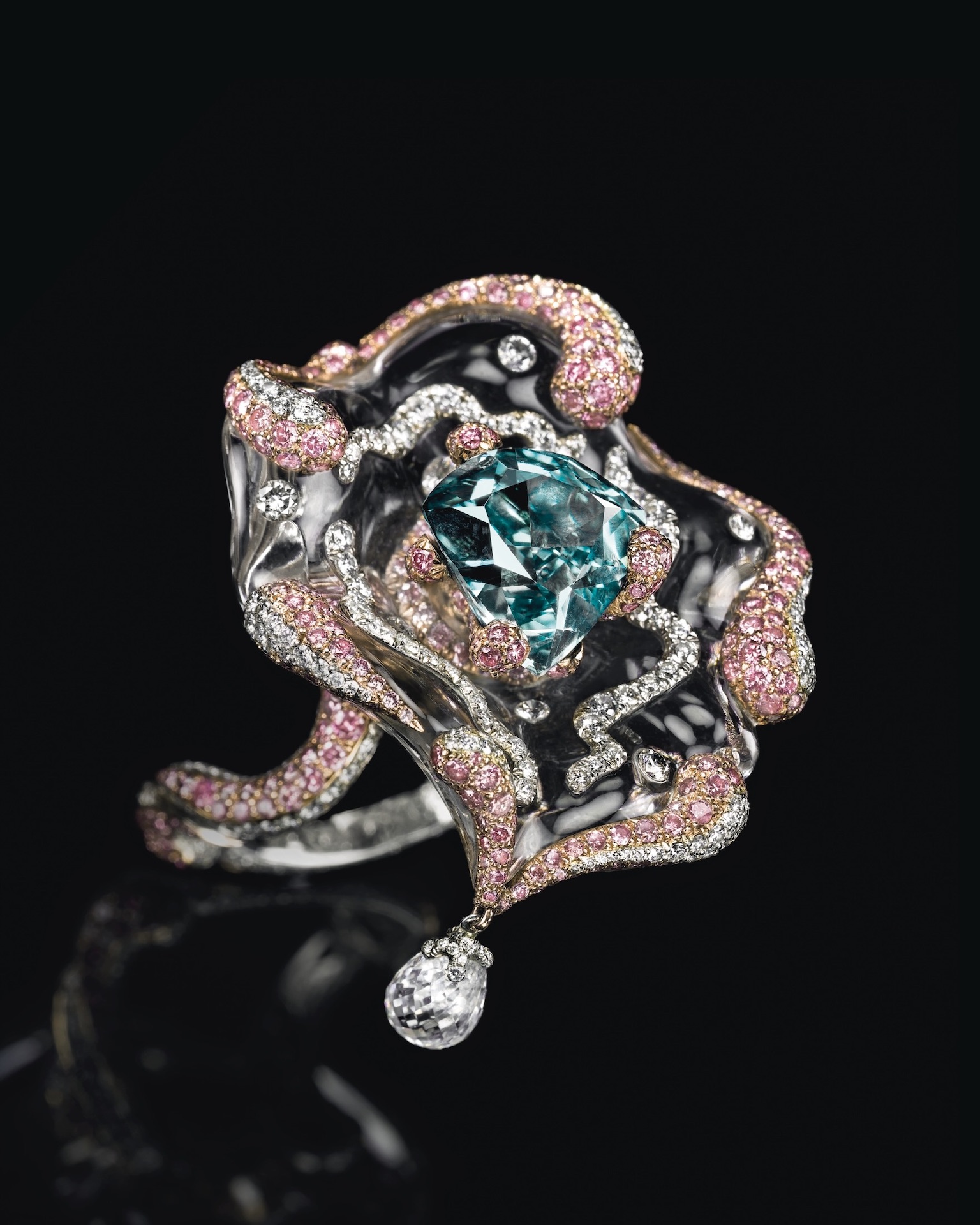
At first glance, the stone’s arresting electric blue-green hue grabs your attention. And once you learn the remarkable science behind it, you realize why Moses refers to it as a unicorn—and why it makes his pulse race.
The blue-green color is the result of an extraordinary natural occurrence. “Most green diamonds owe their color to radiation exposure near the Earth’s surface over millions of years,” explains Moses. It’s serendipity that these events align at the precise temperature because if the stone heats up too much, the diamond’s green hue turns to brown or black. As a result, cutting is a make-or-break moment.
“The trick is to know how much to polish the stone’s surface, so you don’t lose the color, because you if you go too deep, you risk losing the radiation induced color,” said Moses. “You can easily turn a multimillion-dollar stone into a colorless diamond worth a fraction of that.”
Even its unique triangular shape was chosen for color preservation, not aesthetics. Staying as close to the rough shapes allows a better chance of retaining the color. During the cutting and polishing, the stone had to constantly be cooled because with radiation-induced color, if its temperature rises above 300 degrees Celsius you there is a risk it will turn brown.
“It was a very slow, tedious process,” said Moses. “The stone’s thermal conductivity works against you.”
The Ocean Dream Diamond Is a Legend Among Legends


The Ocean Dream Diamond made its public debut in 2003 as part of Smithsonian’s Splendor of Diamonds exhibit, a showcase of the world’s most rare and valuable diamonds, alongside the famous Moussaieff Red, De Beers Millennium Star, and Steinmetz Pink. After that it vanished into private hands, and today it is still whispered about among collectors.
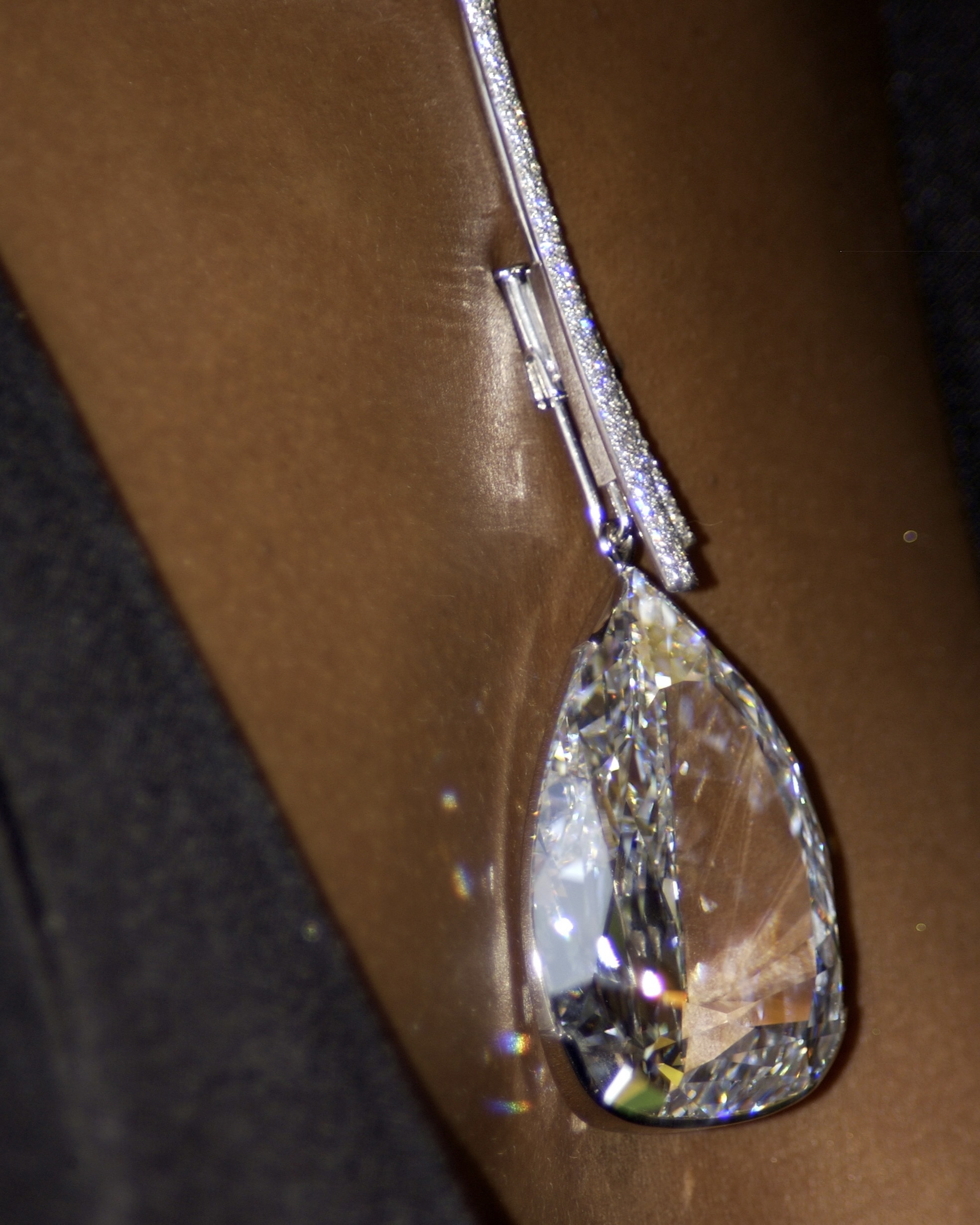

A diamond of this nature always draws fascination. “Gemstones, particularly diamonds, are spellbinding,” said Moses.
“We think looking into a pool of water is soothing, but looking at a diamond with its brilliance and scintillation, well, that’s captivating.” The Ocean Dream is just that captivating, beautiful, and unforgettable.