
The Trapezoid Diamond Cut is a Secret Weapon for a Bigger, Bolder Engagement Ring
The overlooked geometric trapezoid diamond cut can make a center stone look larger, create a striking optical illusion, and lately, it’s stepping into the spotlight all on its own.
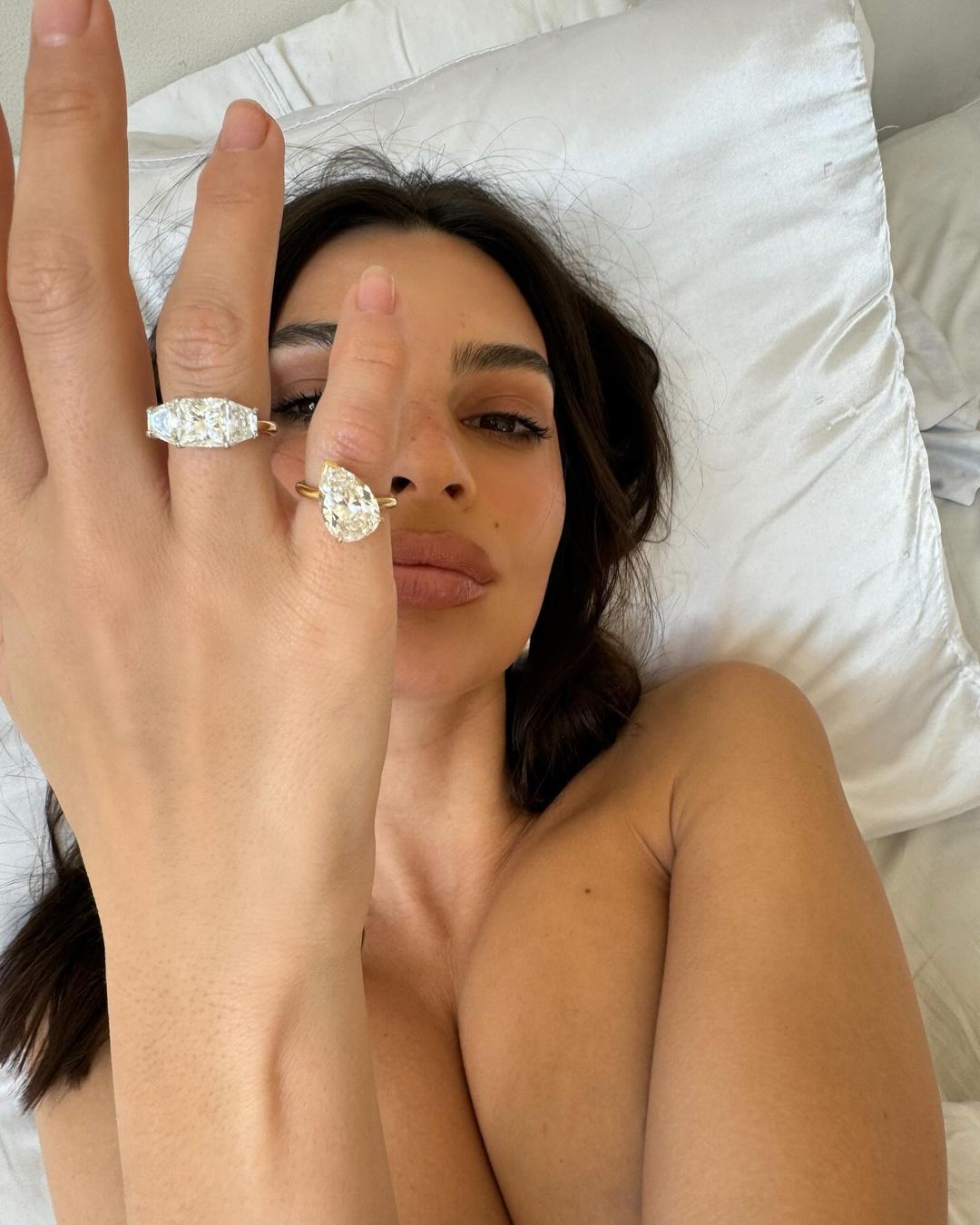
Emily Ratajkowski shows off her repurposed divorce rings, an akimbo-set pear-shaped diamond, and a princess-cut diamond flanked by two trapezoid diamonds, designed by Alison Chemla of Alison Lou. (Instagram: @emrata)
Some diamond cuts get all the glory. Round brilliants, emerald cuts, ovals; these are the shapes that dominate engagement ring searches and fill up social media feeds. But if you ask me, some of the most interesting work in jewelry happens with the shapes that operate quietly in a supporting role. The trapezoid diamond cut is exactly that kind of stone, and once you understand what it can do, you start seeing its potential everywhere.
Learn all about why this geometric little powerhouse deserves far more attention than it gets.
Meet the Expert

- Grant Mobley is the Jewelry & Watch Editor of Only Natural Diamonds.
- He is a GIA Diamonds Graduate.
- He has over 17 years of jewelry industry experience, starting with growing up in his family’s retail jewelry stores.
What Is a Trapezoid Diamond Cut?
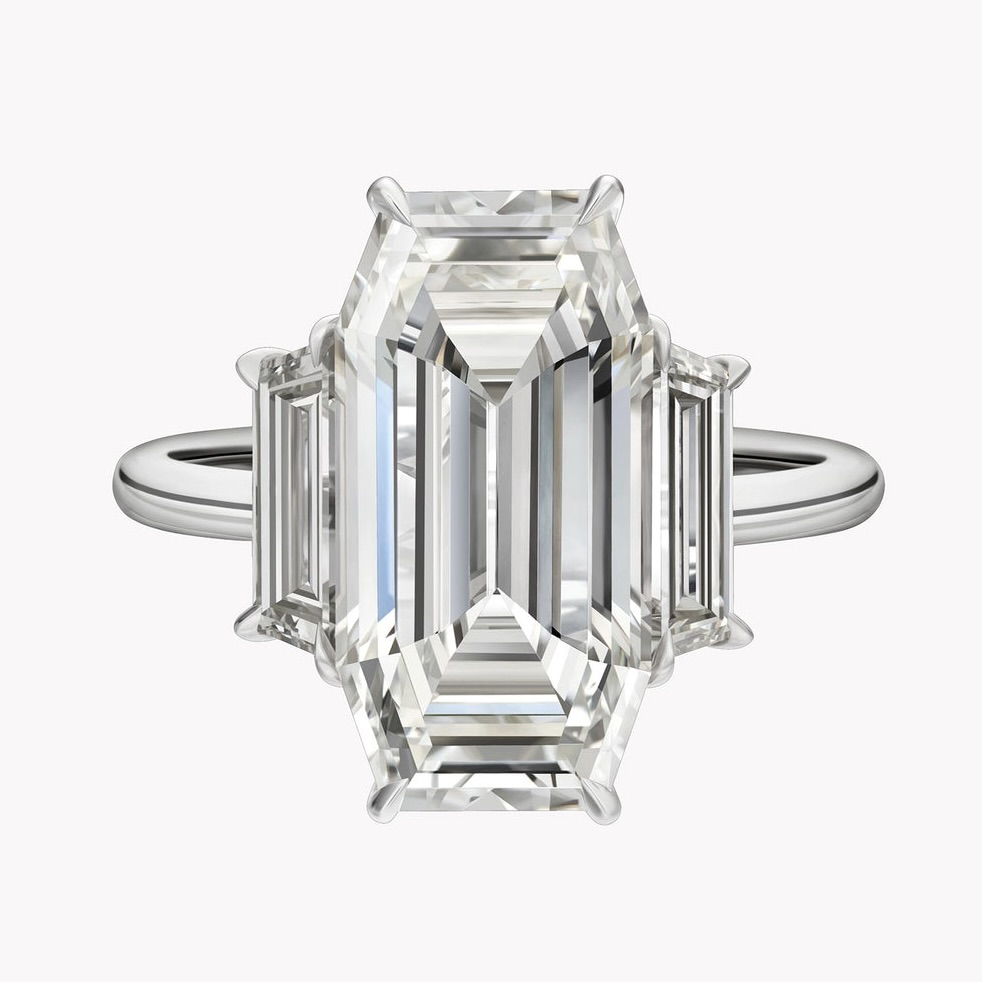
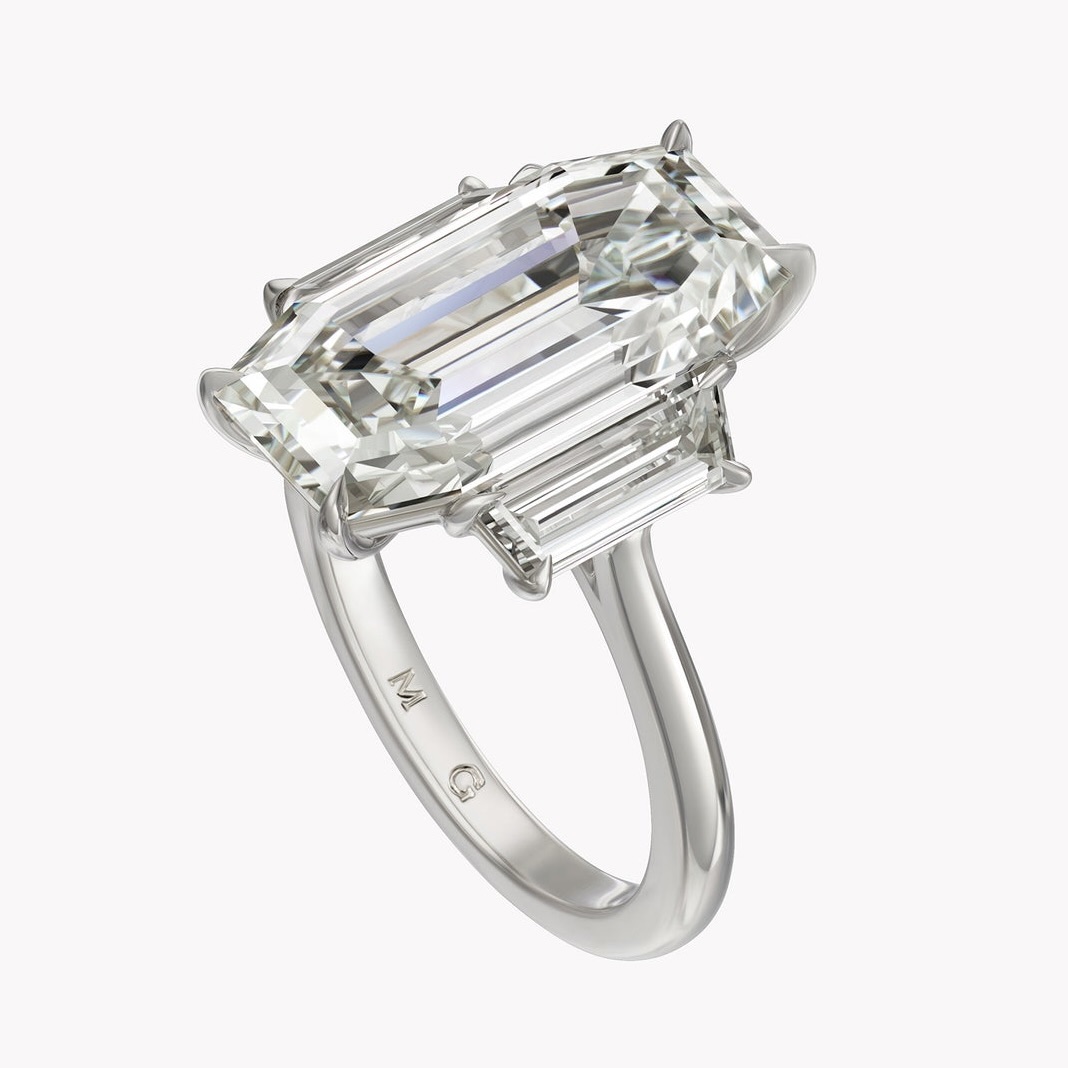
The trapezoid diamond cut takes its name straight from geometry class. Picture a four-sided shape with a wider top line and a narrower base running parallel to each other, joined by two gently sloping sides. That’s the trapezoid diamond cut: clean, symmetrical, and architectural.
Cutters execute this shape in two distinct styles, and the difference matters enormously depending on what you’re pairing it with. A step-cut trapezoid features long, parallel facets that run in clean lines, producing a calm, mirror-like, transparent look. A brilliant-cut trapezoid, by contrast, uses many smaller sparkling facets that throw light in every direction for maximum fire and liveliness. Neither is better than the other; they simply do different jobs.
Why Trapezoid Diamonds Make Center Stones Look Larger
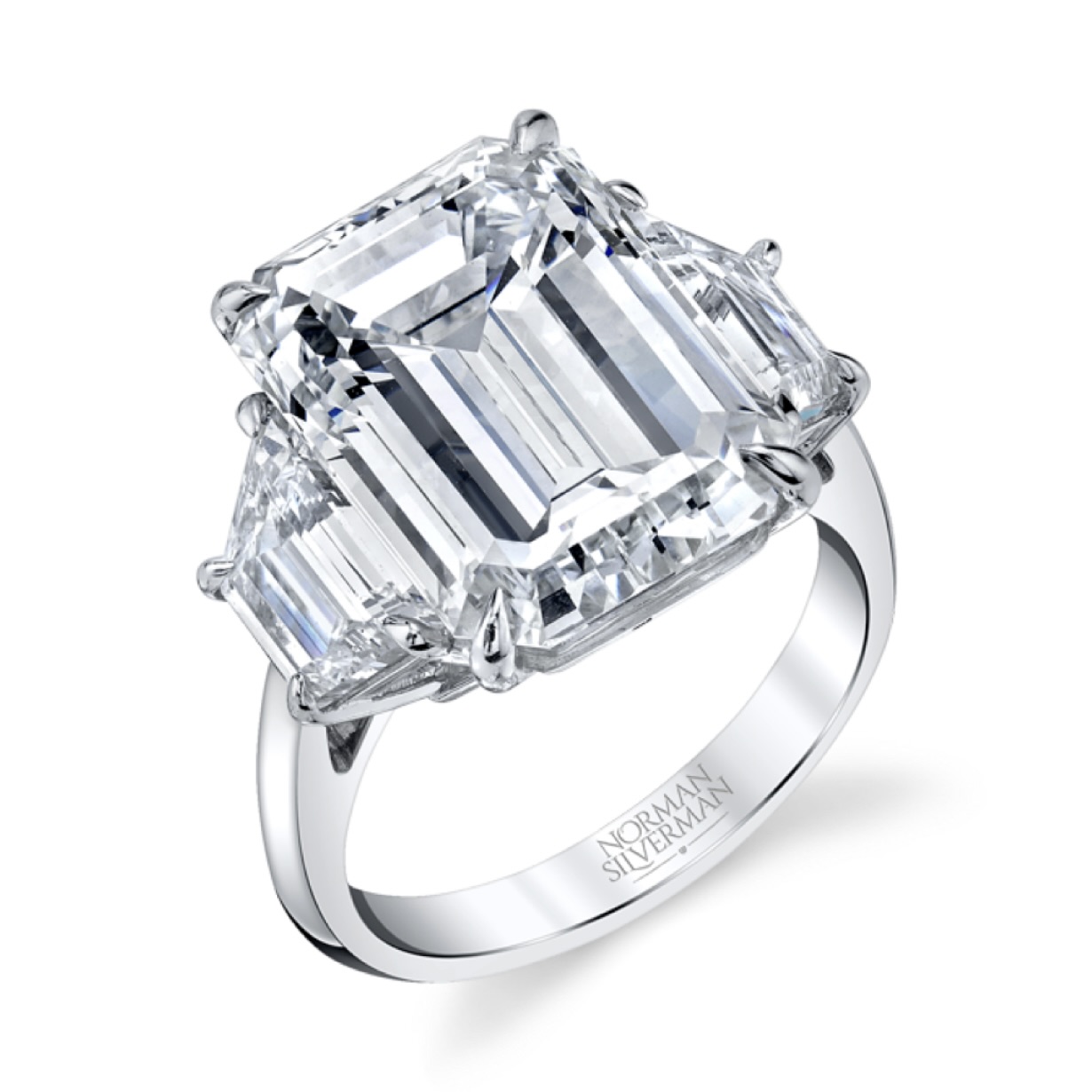
Here’s the key thing to understand about trapezoids: designers originally created this cut to serve as accent and side stones flanking a larger center diamond. And when you choose them well, they perform a genuinely clever trick.
A well-matched pair of trapezoid diamonds can make your center stone look larger and create an optical illusion that the center diamond continues right through the side stones. The best pairings fit together almost like puzzle pieces, so the eye reads the whole arrangement as one continuous, expanded expanse of a diamond. It’s one of the most effective ways to add visual presence to a ring without buying a bigger and far more expensive center stone.
But this illusion only works if you follow one critical rule: the facet patterns have to match.
How to Match Trapezoid Diamonds to Your Center Stone
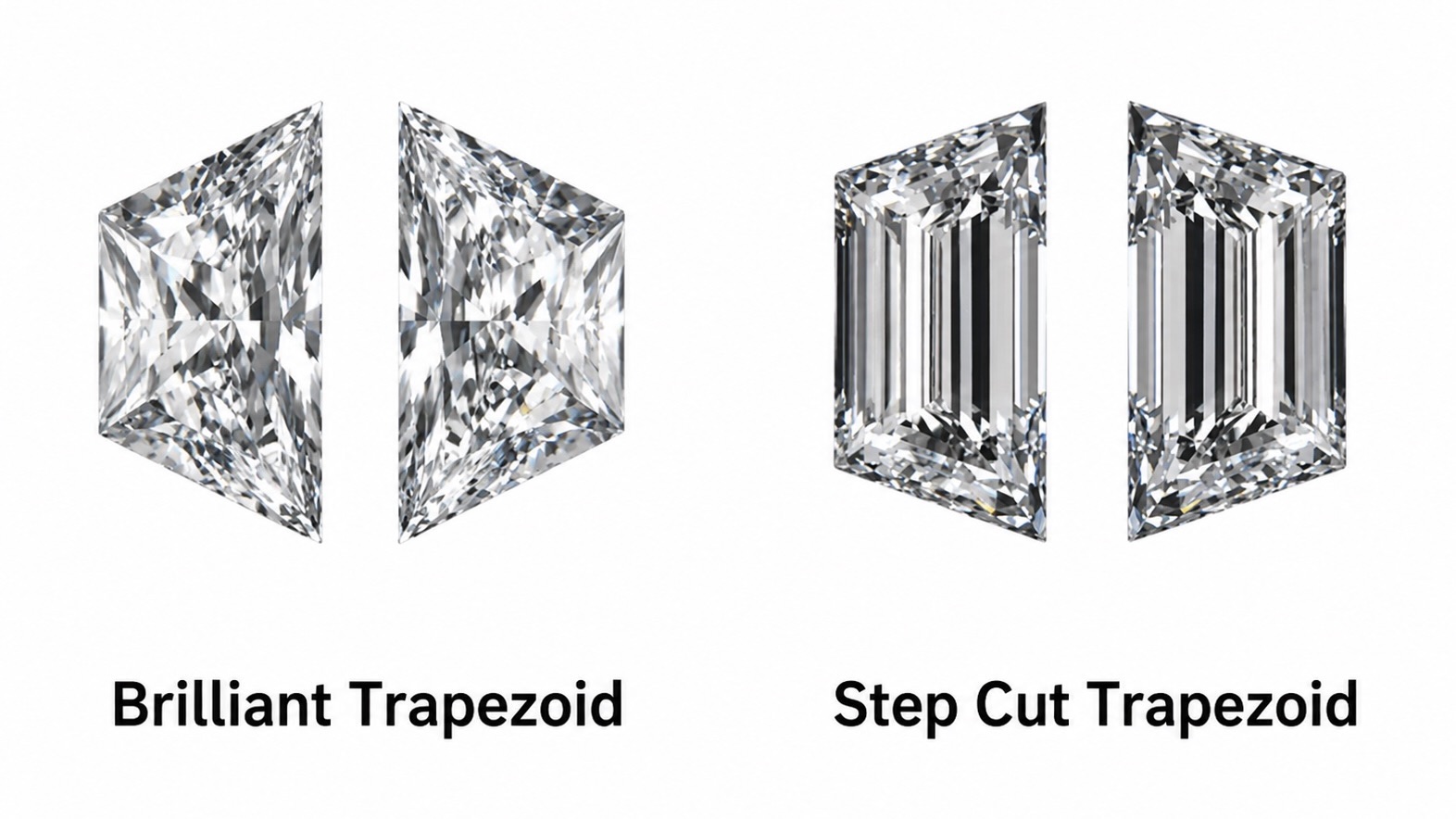
This is where I see people go wrong, so pay close attention. To create that seamless, continuous look, your trapezoids need to share the same faceting style as your center stone.
If your center diamond is an emerald or Asscher cut—both step-cut shapes with those clean, parallel facets—you need step-cut trapezoids beside them. Place a step-cut trapezoid next to an Asscher or emerald center, and you get that gorgeous “parallel set of stones” effect, where the lines flow together, and the whole ring takes on a sharp, architectural, almost regal quality.
If your center is a princess or radiant cut—shapes built on brilliant faceting—then you’ll want brilliant-cut trapezoids to match. Because all those shapes carry so many facets, they combine into an intricate maze of reflections, and the ring reads as complex, dynamic, and full of sparkle.
Mismatch the two, and the illusion falls apart. A brilliant trapezoid next to an emerald cut, or a step-cut trapezoid next to a radiant, creates a visual hiccup where your eye catches the seam instead of gliding past it. Get the pairing right, and the effect is seamless.
The Trapezoid Diamond Has Art Deco Roots
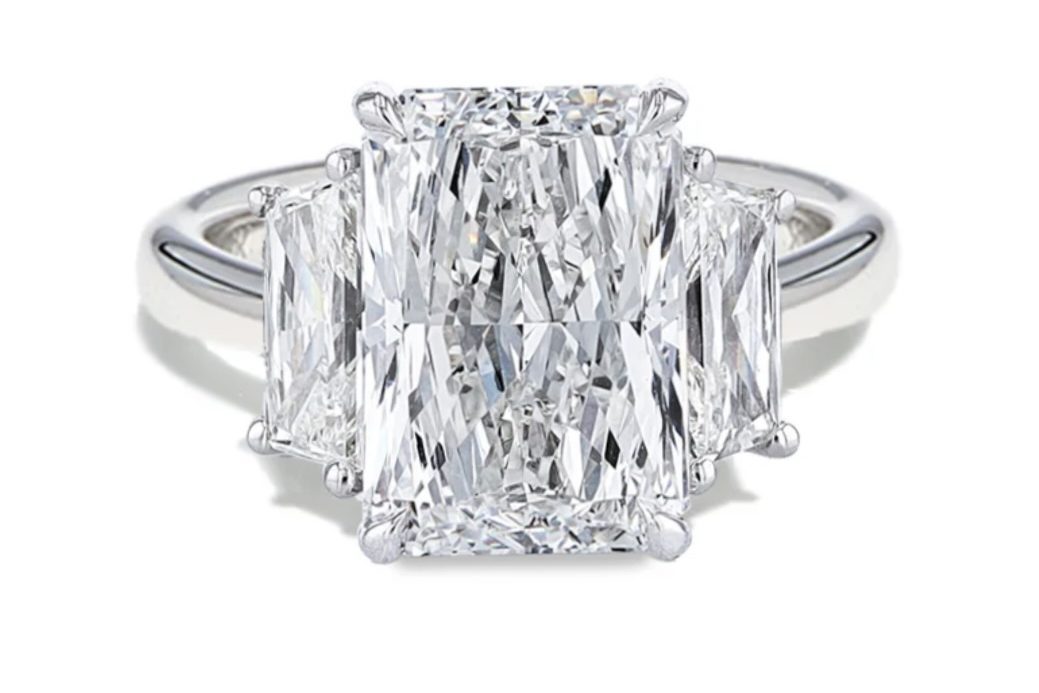
The trapezoid diamond’s popularity traces back to the early 20th century and the rise of Art Deco, a movement obsessed with clean lines, geometric precision, and symmetry. Jewelers of that era loved flanking larger emerald-cut stones with trapezoids, using them to build the bold, structured compositions that defined the period. The step-cut version came first, prized for its clarity and calm. The brilliant-cut variant arrived later, developed to satisfy a growing appetite for shinier, more fiery designs.
Why Trapezoid Diamonds Offer More Sparkle and Value
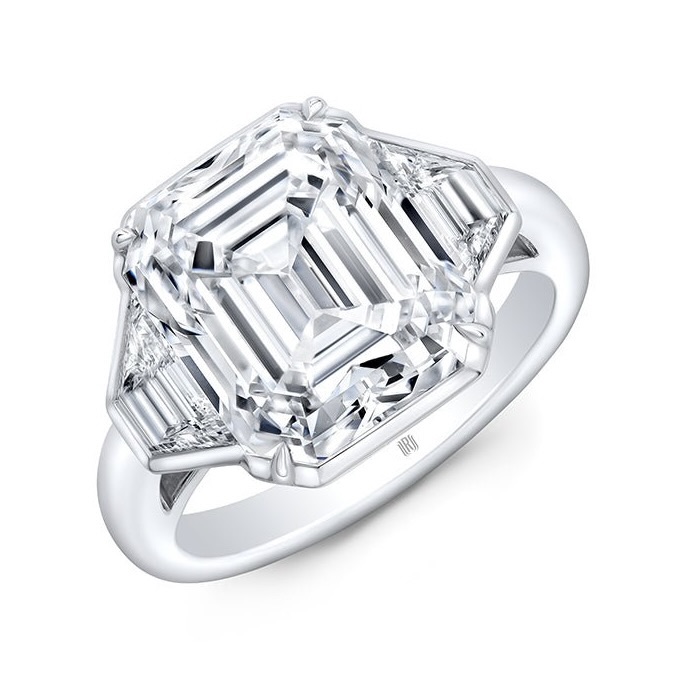
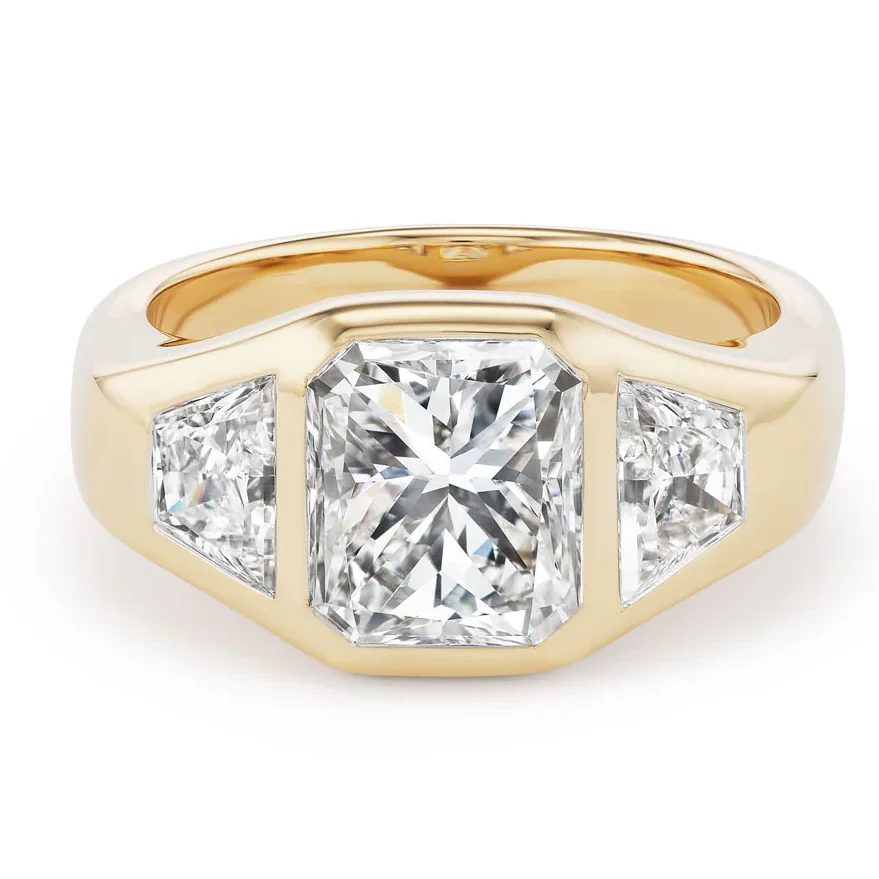
One reason I’ve grown so fond of trapezoids is practical. Compared to the popular trillion and baguette shapes, trapezoids offer a comparatively large surface area and produce more sparkle. That means you get more visual impact for your money.
Their adaptability is another huge selling point. Trapezoids play beautifully alongside a wide range of center shapes, including emerald, radiant, princess, Asscher, and round diamonds. Few side-stone shapes are this versatile.
Why Trapezoid Diamond Engagement Rings Are Having a Moment
While flanking a center stone remains their most common job, trapezoids are no longer content to stay in the background. Designers have gotten wonderfully creative with this shape, and I’ve seen it used as a genuinely unique center stone for engagement rings, with designs perfect for someone who wants a geometrically inspired piece that nobody else will have.
So whether you’re using them to amplify a center diamond or letting one stand alone as the star, don’t overlook the trapezoid. It might be the smartest, most impactful shape you’ve never considered.