

The Hexagon Cut Diamond Is Geometry at Its Chicest
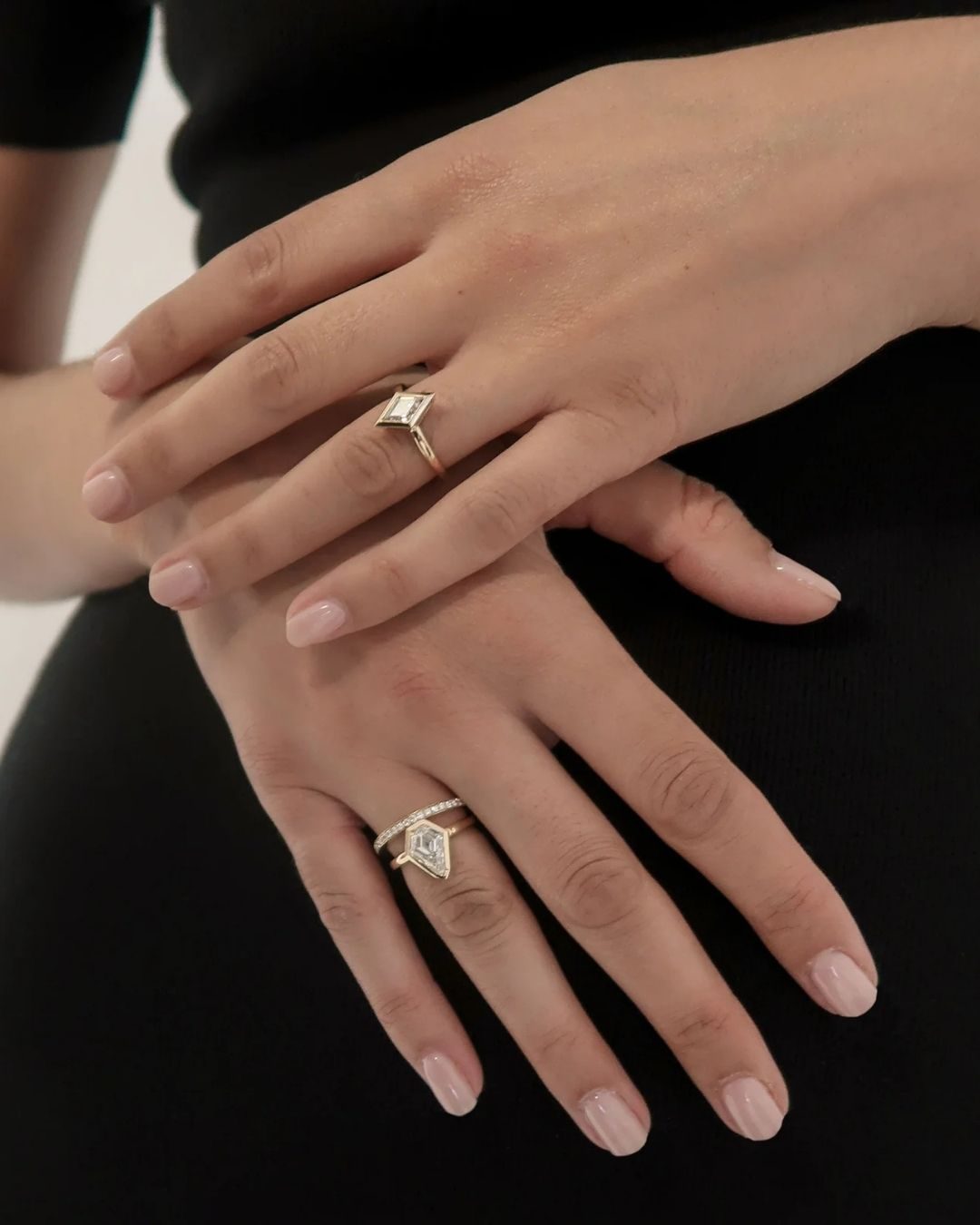
A bold step-cut style that bridges vintage Art Deco glamour and contemporary edge, the hexagon cut diamond is the choice for anyone who wants a stone that nobody else has.
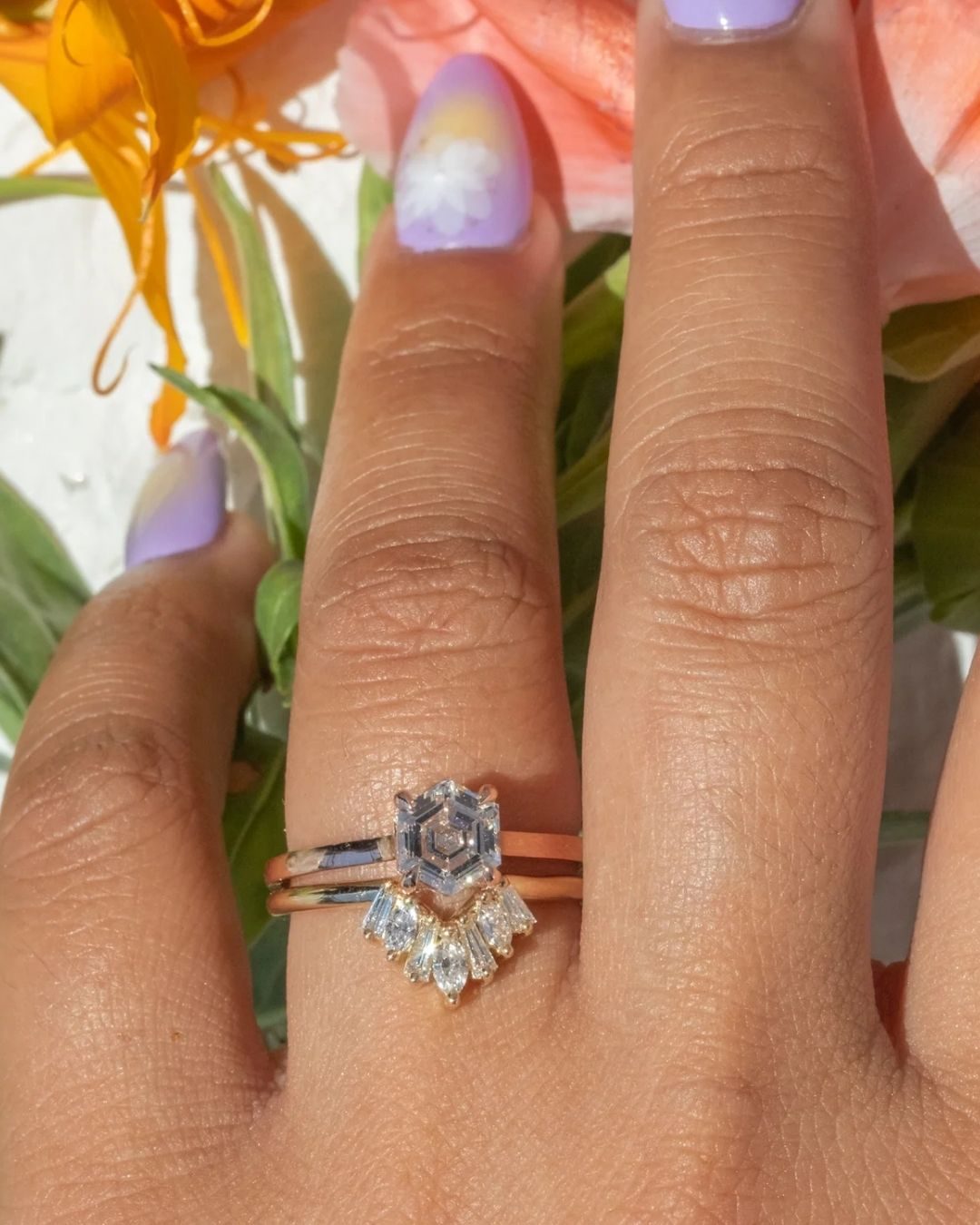
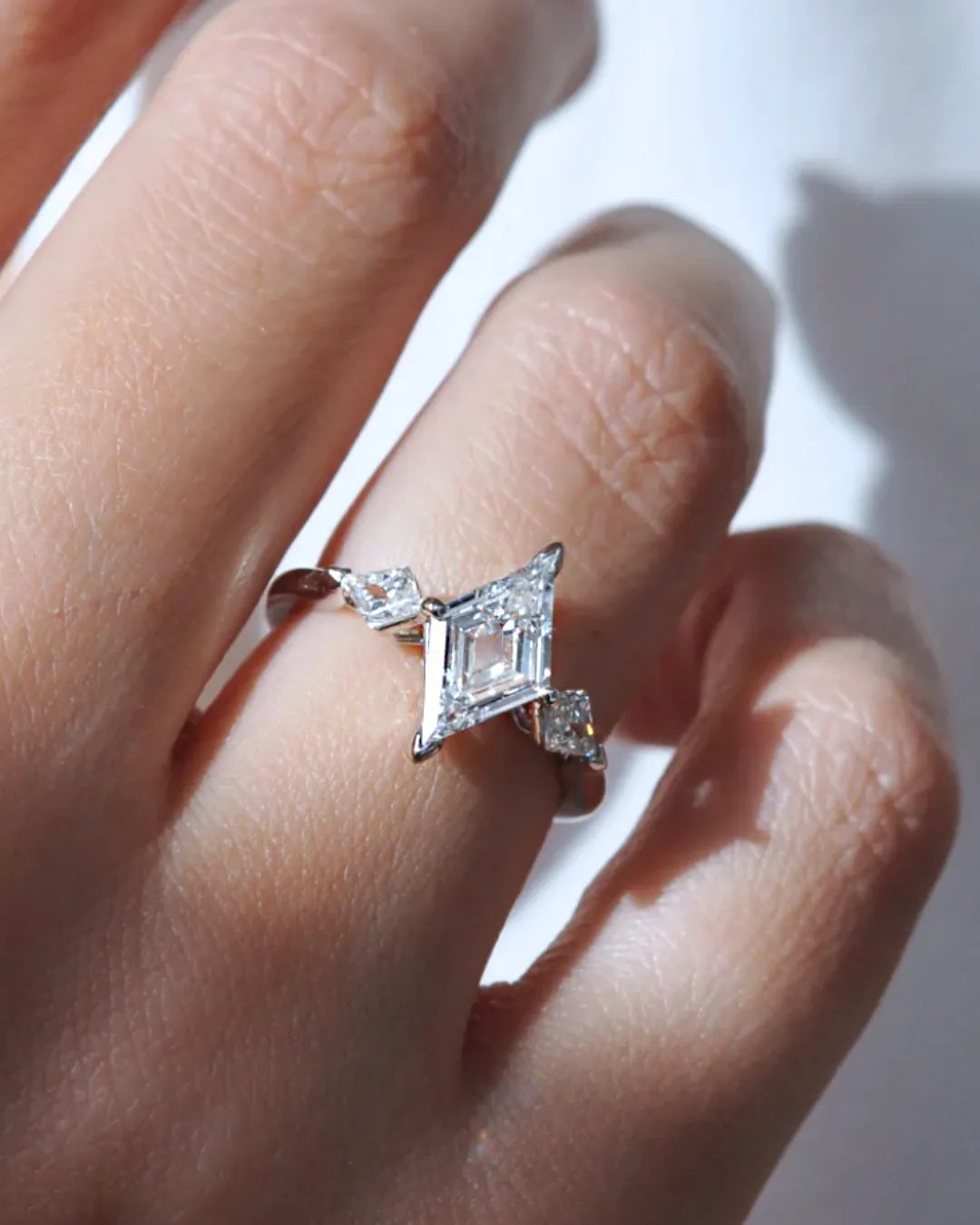
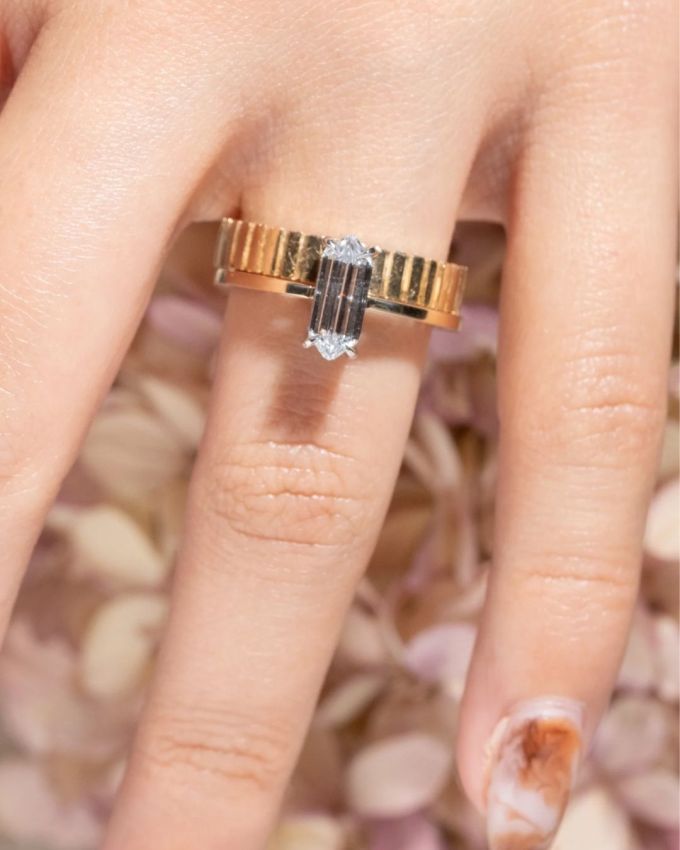
Point No Point Studio 1.20 Carat Clear Hexagon Cut Diamond Engagement Ring. (Courtesy of Point No Point Studio)
It seems that every decade or so, a forgotten diamond shape steps out of the shadows and captures the imagination of people who want something genuinely different. Right now, that shape is the hexagon cut diamond. This six-sided stunner has evolved from a rare curiosity to a rising star of geometric cuts among couples and collectors who crave individuality.
The hexagon cut diamond manages something very few shapes pull off: it feels vintage and modern at the same time, and it looks like nothing else on the finger.
Meet the Expert

- Grant Mobley is the Jewelry & Watch Editor of Only Natural Diamonds.
- He is a GIA Diamonds Graduate.
- He has over 17 years of jewelry industry experience, starting with growing up in his family’s retail jewelry stores.
What Is a Hexagon Cut Diamond?
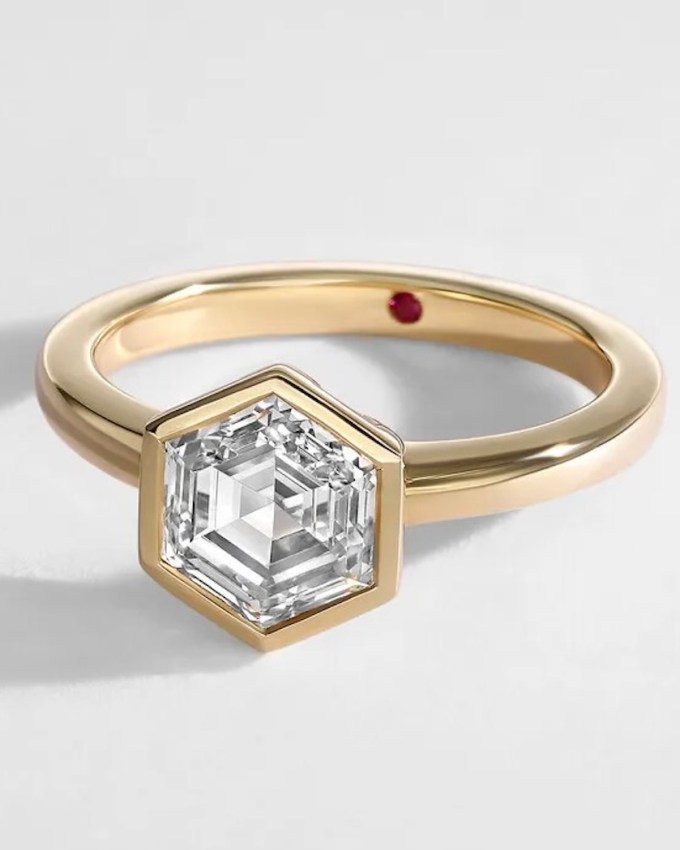
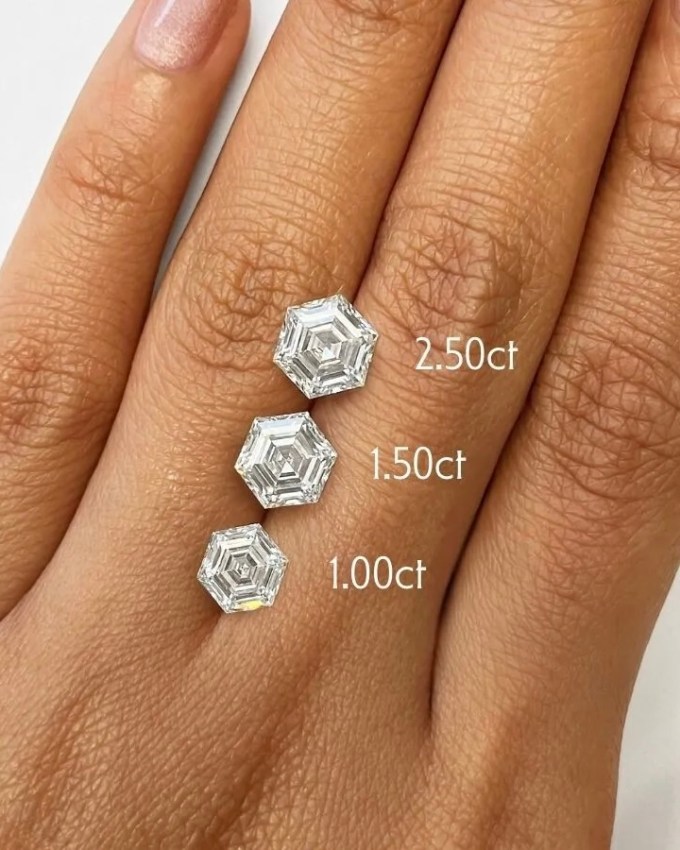
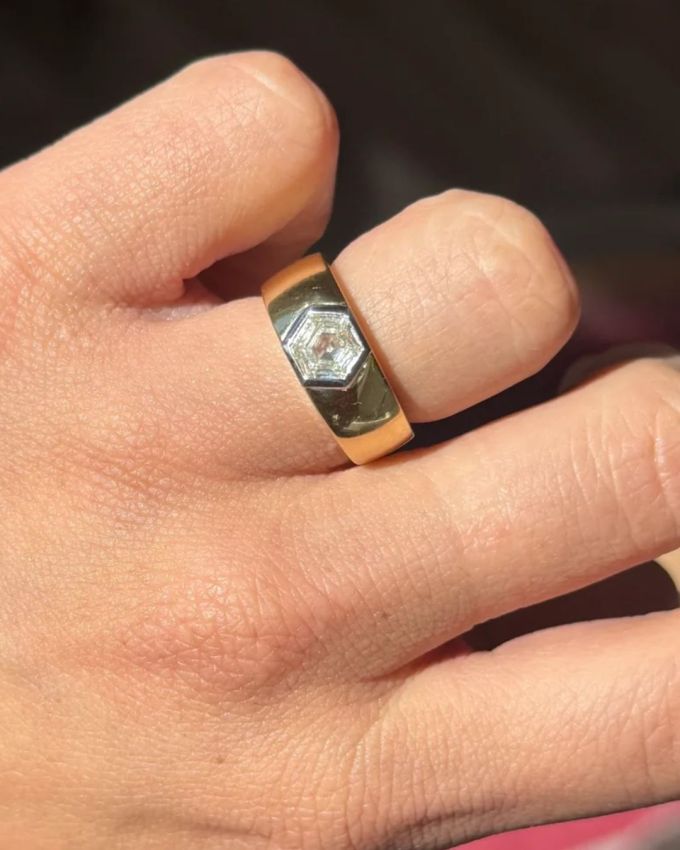
As the name says, a hexagon cut diamond has six sides. Most versions belong to the step-cut family, meaning the stone features long, straight, parallel facets that run in clean rows descending toward the center, the same faceting logic you see in emerald cuts and Asscher cuts. Those long, open facets create broad, mirror-like flashes of light rather than the rapid sparkle of a brilliant cut. The result is a clean, architectural, sophisticated look that shows off the transparency and quality of the diamond itself.
The hexagon comes in two main forms. The first is a perfect hexagon, with all six sides equal in length, creating a balanced, symmetrical silhouette that reads as bold and geometric. The second is an elongated hexagon, which stretches two of the sides longer to create a more elongated shape. That elongated version tends to flatter the finger by drawing the eye along its length, and it gives you a slightly larger visual footprint. Both versions have their devotees, but the right choice comes down to personal taste and the look you are going for.
Hexagon Cut Diamonds and the Honeycomb Effect
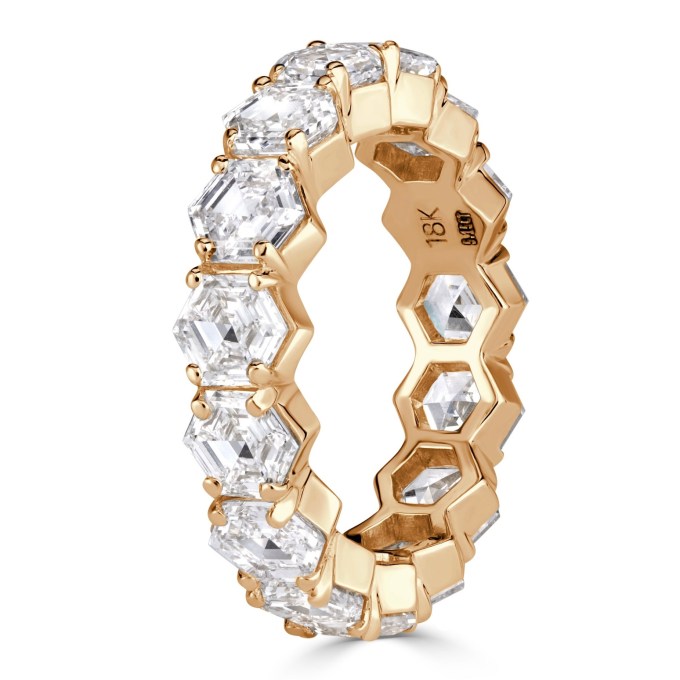
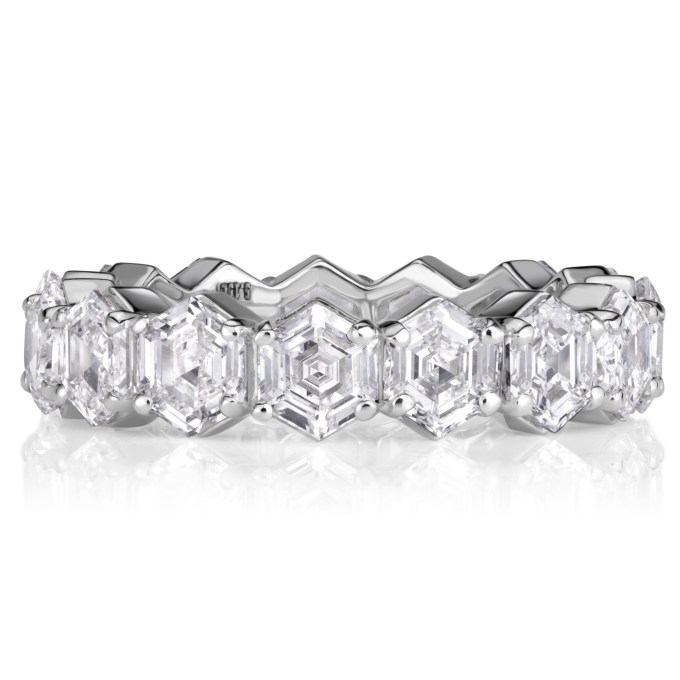
When you set multiple hexagon cut diamonds side by side, they fit together in a repeating pattern with no wasted space between them, exactly like the cells of a honeycomb. For that reason, some people call them honeycomb diamonds.
Designers have embraced this quality in clusters, eternity bands, and geometric arrangements where several hexagons interlock into a continuous, tessellated design. It is a wonderful example of how a diamond’s shape can influence not just a single stone but the entire architecture of a piece of jewelry. Few shapes offer that kind of design flexibility.
The History of the Hexagon Cut Diamond
Although the hexagon feels strikingly contemporary, geometric diamond cutting has real historical depth. The Art Deco period of the 1920s and 1930s celebrated exactly this kind of bold symmetry, clean lines, and architectural precision, and step-cut stones flourished during that era. The hexagon fits naturally into that lineage. When you wear one today, you are tapping into a design sensibility that jewelry lovers have admired for a century.
What makes the current moment so interesting is that antique hexagon cut diamonds are extremely rare. The shape never achieved the mass popularity of the round brilliant or even the emerald cut, so surviving vintage examples are hard to come by. That scarcity has only heightened the appeal for collectors who want something with authentic character and history. At the same time, modern cutters have revived and refined the shape, giving today’s buyers access to beautifully proportioned hexagons that simply were not widely available a generation ago.
Why the Hexagon Cut Diamond Is Having Its Moment
The engagement ring market has shifted decisively toward individuality. Couples increasingly want a stone that says something about who they are rather than simply following convention. The hexagon answers that desire perfectly. It carries the elegance and clarity of a step cut, the boldness of a geometric silhouette, and the rare distinction of being a shape most people have never seen on a ring.
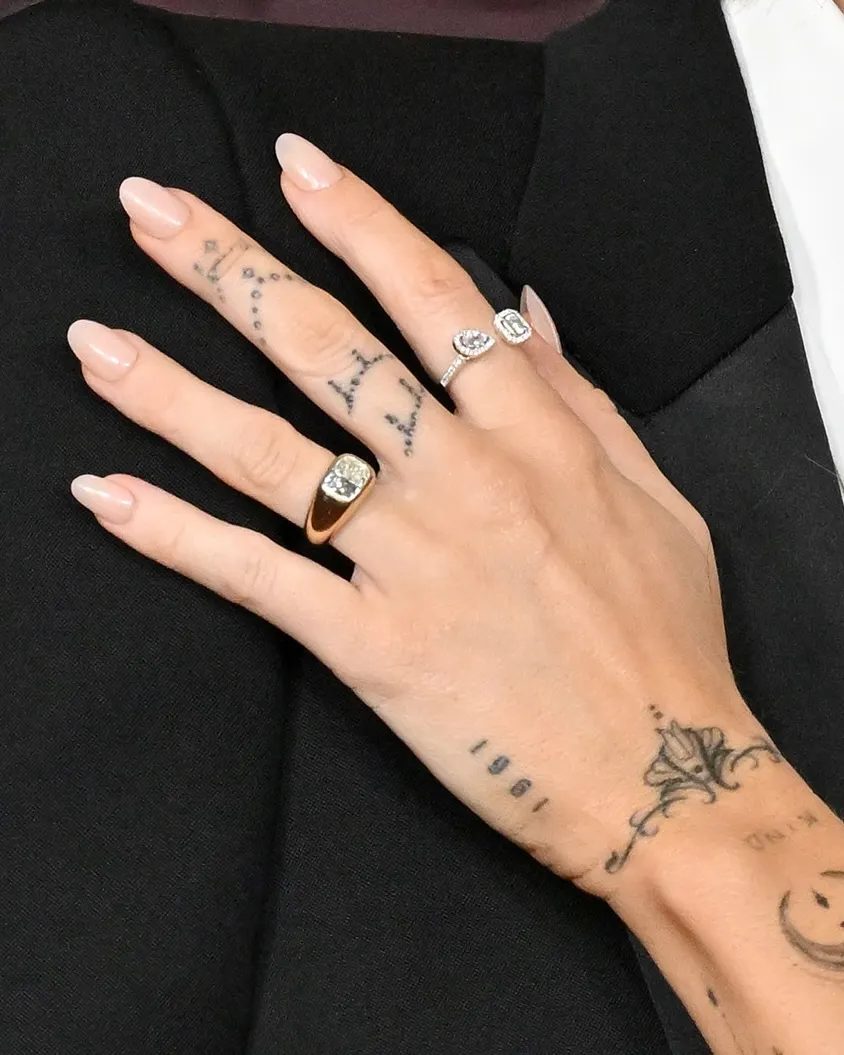
Elongated hexagons could be set east to west, traditional hexagons in a chunky bezel, framed by a thin halo, stacked in a honeycomb band, fit together like puzzle pieces, or standing alone as a unique solitaire; the hexagon cut delivers genuine surprise. Surprise and uniqueness are qualities worth everything. If you want a diamond that feels timeless and daring in equal measure, the hexagon deserves a very close look.