
This Industrial Metal Is a Diamond’s Best Friend
Elevated titanium jewelry is worth obsessing over. See why designers are pairing this lightweight metal with natural diamonds for bold, modern jewelry.

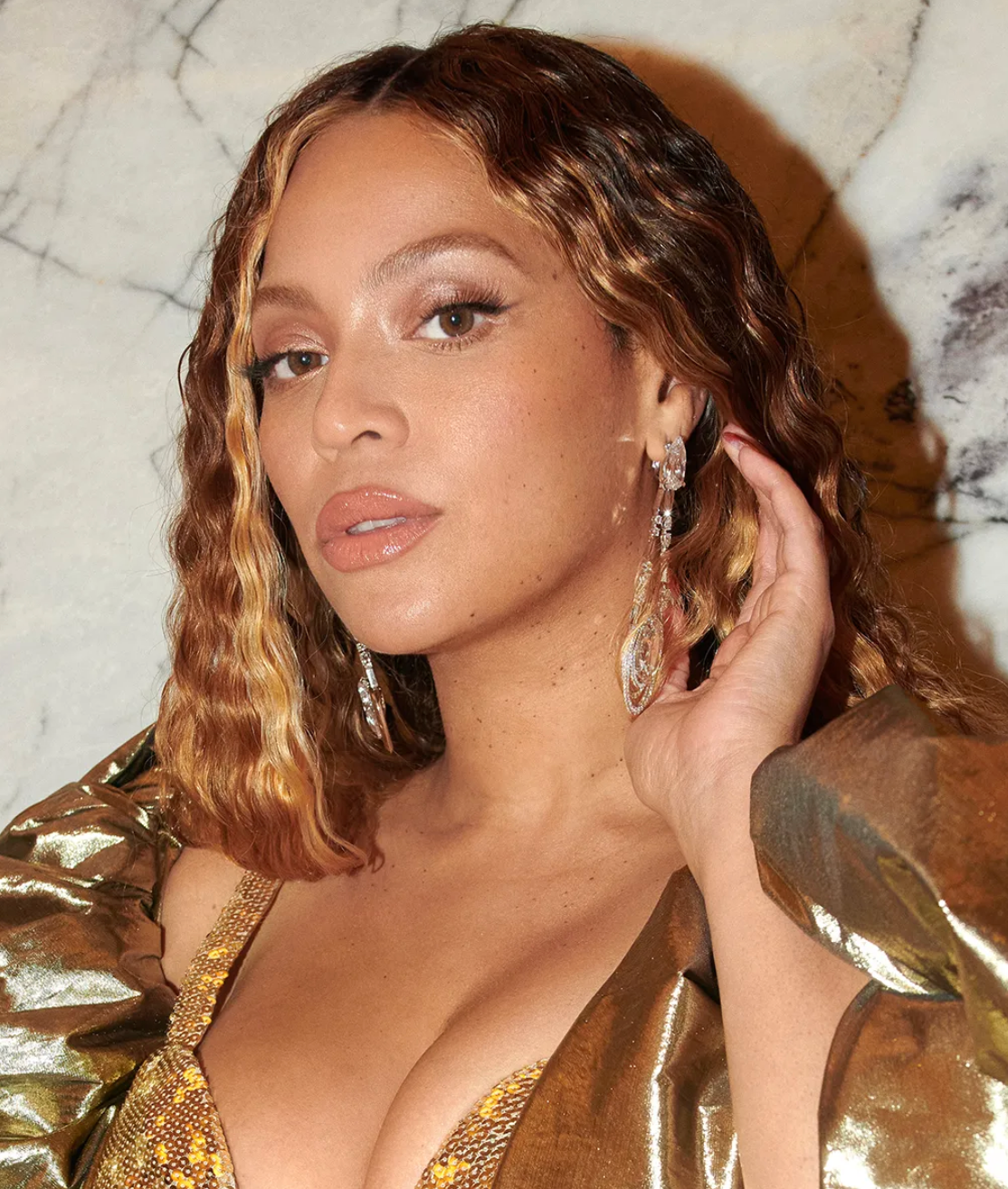
Charlize Theron wears Glenn Spiro Diamond Rivière Earrings in Cognac Titanium at the world premiere of “The Odyssey” on July 06, 2026. (Getty Images)
Titanium isn’t just for aerospace engineering—or Sia songs—anymore. The industrial metal has become one of fine jewelry’s most unexpected stars, with designers pairing lightweight titanium and natural diamonds to create sculptural pieces that feel distinctly modern. Once prized for building aircraft, titanium jewelry is now redefining luxury with bold contrasts, vibrant color, and remarkable comfort.
While titanium costs far less than gold or platinum, its real appeal goes beyond price: it’s incredibly lightweight, exceptionally strong, and allows jewelers to create bold, oversized designs that would be heavier—and often significantly more expensive—in traditional precious metals.
Meet the Expert

- Inesa Kovalova, the Ukrainian-born, Netherlands-based jewelry designer, is known for her titanium and diamond creations.
- With a background in architecture, Kovalova began studying design at Central Saint Martins in the UK before beginning her jewelry career with an internship at Van Cleef and Arpels, going on to work for a number of international fine and high jewelry houses.
- She launched her online jewelry illustration school, Draw Me a Jewel, in 2020 before officially establishing her eponymous brand in 2023.
“Today’s clients are increasingly interested in jewelry that expresses individuality rather than simply material value. Titanium offers a fresh aesthetic: it feels modern, still unusual, and unexpectedly lightweight. Comfort has become a luxury in itself, and titanium also answers that demand. Why should we still accept the discomfort of heavy earrings for the sake of appearance in the 21st century?” says Inesa Kovalova, the Ukrainian-born, Netherlands-based jewelry designer known for her titanium and diamond creations.
Find out why this once-industrial metal is suddenly jewelry’s it-material, why top designers are pairing it with natural diamonds for a look that’s anything but basic, and how titanium is quietly rewriting the rules of modern luxury.
Titanium’s Unlikely Journey to Fine Jewelry
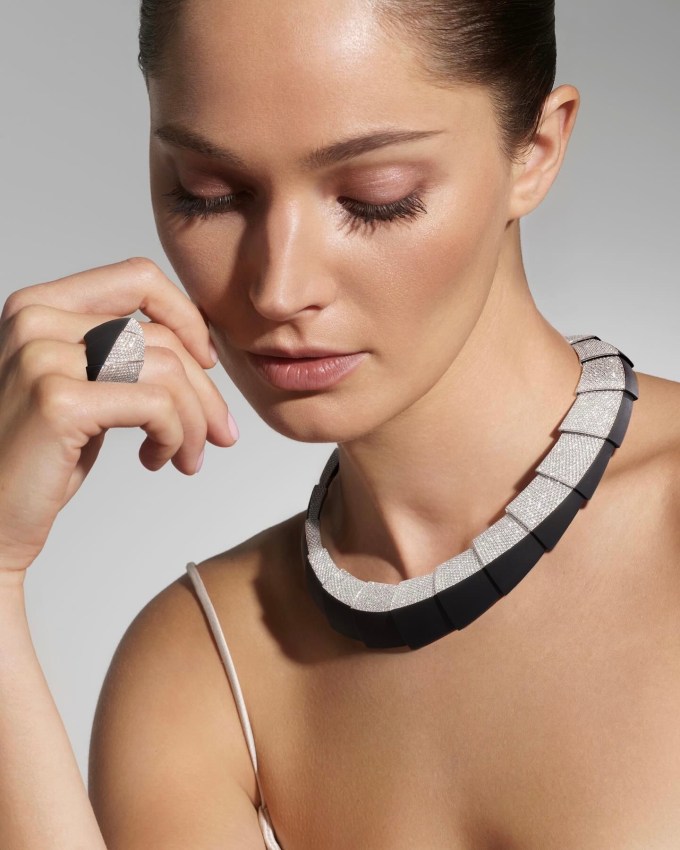
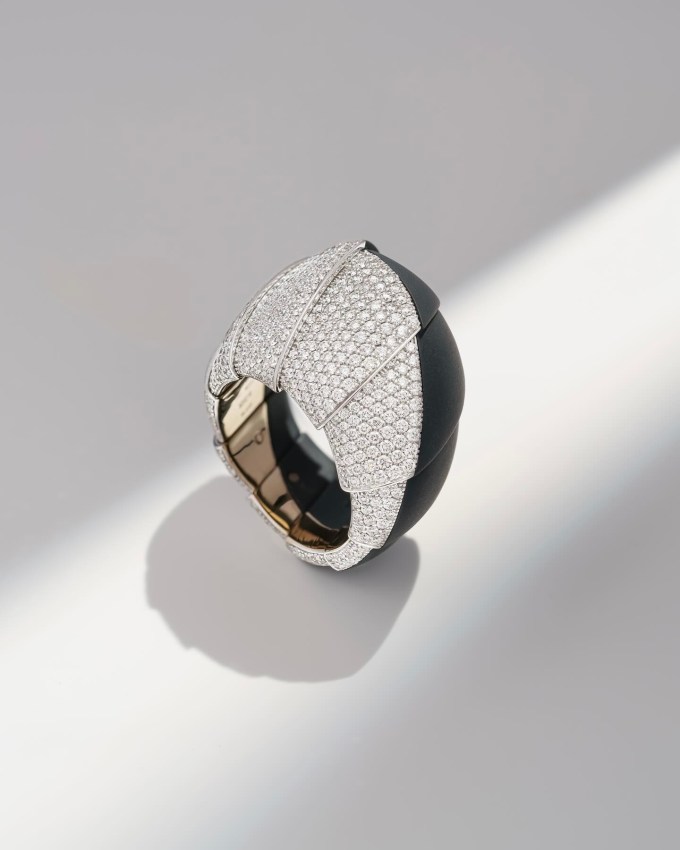
Titanium jewelry is having a real moment, with Millennial and Gen Z shoppers driving demand for pieces that are affordable, eco-friendly, and totally unique.
A little history first: titanium was discovered in 1791, prized early on for being incredibly light yet strong. But it didn’t hit the jewelry scene until the 1960s, and even then, it was still experimental. The material didn’t go commercial until the 1990s, when it was already a go-to in medical and aerospace tech thanks to its strength and durability. Jewelry designers took note, and today, titanium is everywhere, especially loved by anyone wanting hypoallergenic pieces (it’s nickel-free, so no irritation).
The real glow-up happened in the 2000s, when designers started setting diamonds directly into titanium bands. It was an obvious pairing: titanium’s lightweight, hypoallergenic, sustainable qualities meet diamond brilliance for a piece that’s luxurious and wearable every single day. Bonus — it resists saltwater, bending, and corrosion, so it can basically keep up with your life.
Why Titanium Is Winning Over Designers
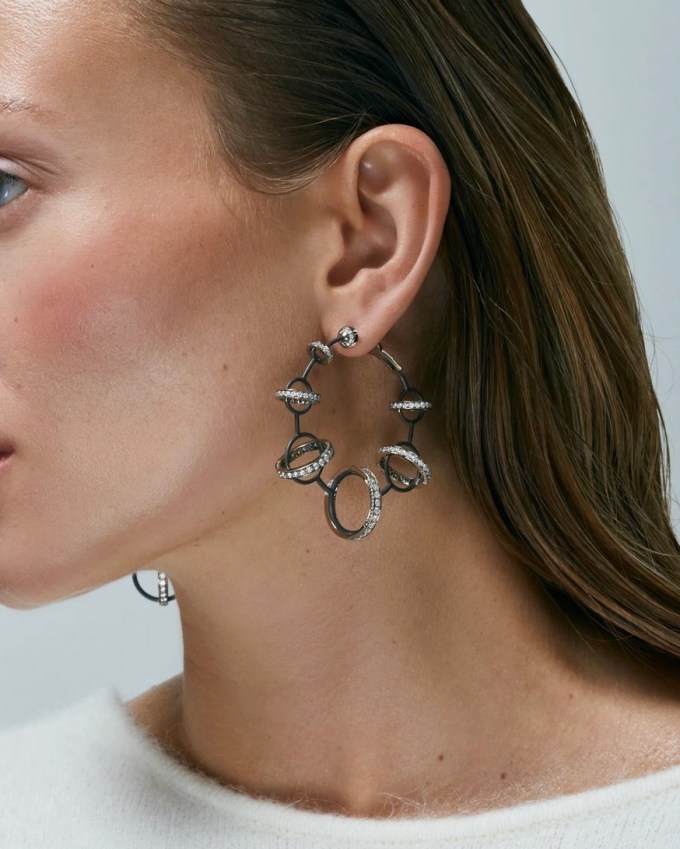
Though gold, silver, and platinum are stalwarts of the luxury jewelry market, titanium has seen tremendous growth in the last few years. By 2033, the global jewelry market is projected to reach between $578.45 and $578.5 billion, and titanium jewelry, in particular, is expected to grow at a CAGR of nearly 9%—surpassing gold and silver—according to a 2025 report on jewelry market trends. The most demand is seen in Asia, but North America and Europe aren’t far behind, with strong demand for titanium and diamond wedding bands, as well as earrings.
Customization is where titanium jewelry really shines in 2026. Personalized engravings, CAD-designed pieces, and fully bespoke orders are on the rise, along with hybrid designs that pair titanium with natural diamonds for a look that’s entirely your own. Leading the way are brands like Tiffany & Co. (including standout pieces from Pharrell Williams’ collaboration with the house), Graziela, and David Yurman.
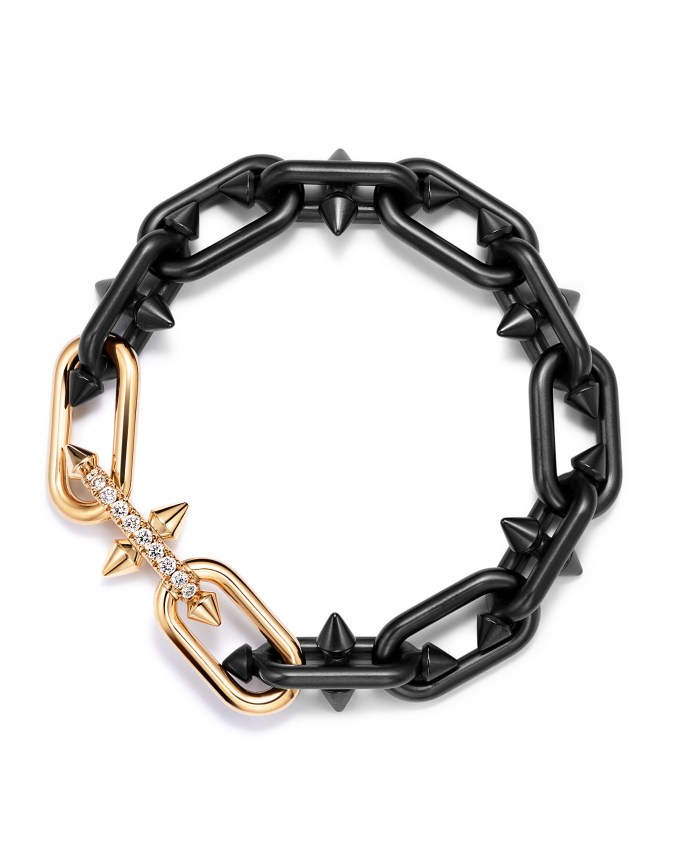
$19,500, tiffany.com
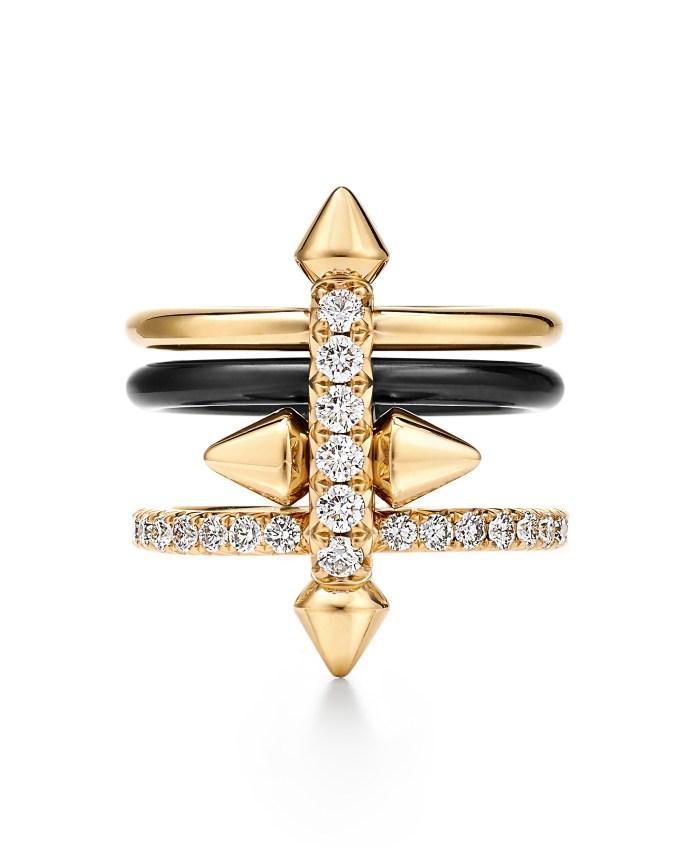
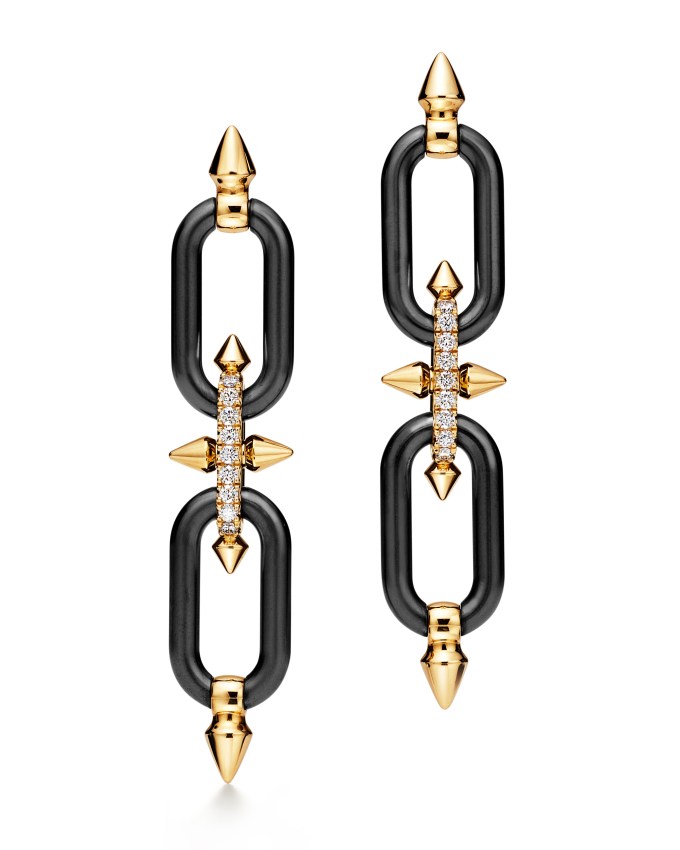
According to Kovalova, luxury has never been about a material’s price tag alone — it’s about creativity, craftsmanship, rarity, and emotional resonance. Titanium captures that shift perfectly. It isn’t a precious metal, but turning it into fine jewelry demands specialized engineering, advanced manufacturing, and a level of craftsmanship that can actually exceed what’s required for gold. As she puts it, “in many cases, crafting a titanium jewel is more demanding than making the same design in gold.”
Rather than competing with gold, titanium opens the door to a more contemporary vision of fine jewelry — one where innovation and design carry as much weight as the materials themselves. In Kovalova’s words, titanium represents “a new definition of luxury, one where exceptional design, technical innovation, and craftsmanship carry as much value as the preciousness of the material itself.”
Kovalova also notes that titanium lets designers push past traditional size limitations without adding extra weight, which is a major advantage for statement earrings, given how delicate the ear can be. “A pair of titanium earrings can be nearly twice the size of an equivalent gold design while weighing the same, or even less. This gives designers far greater creative freedom without compromising comfort. I love designing statement pieces; for me, titanium is the ideal material,” she said. For Kovalova, true luxury means jewelry that makes a statement without weighing you down, without sacrificing quality along the way.
The Engineering Behind Every Piece of Titanium Jewelry
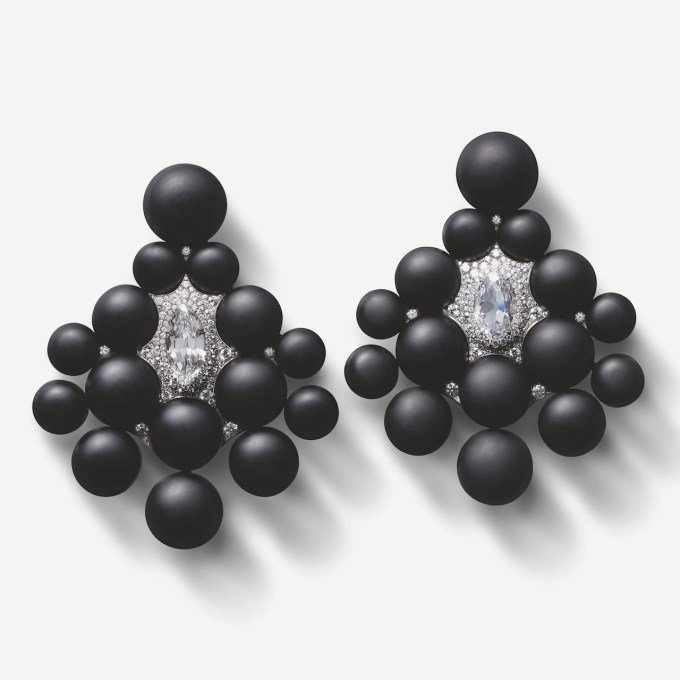
The challenge with titanium jewelry lies in how difficult the material is to manipulate. Kovalova said that because titanium has such exceptional strength, it requires more expensive tools than those used to produce gold jewelry. It also demands advanced techniques, including laser cutting, laser melting, and 3D printing, along with highly skilled craftsmanship to achieve refined finishes or delicate stone settings. As a result, production costs tend to exceed those of gold jewelry.
Despite all that, Kovalova prefers this medium for her designs. “Titanium also offers unique creative opportunities,” she said. She can anodize it into a range of colors, though she personally favors its natural grey tone for the contrast it creates against natural diamonds.
One of the main draws for Kovalova is titanium’s compatibility with selective laser melting (SLM) — an advanced 3D-printing technology that builds metal pieces layer by layer using a laser. It allows her to create intricate shapes that traditional jewelry-making techniques simply can’t achieve. The catch is precision: achieving high-resolution, refined surface quality with SLM is difficult, and the technology has largely been confined to aerospace manufacturing. As Kovalova put it, it “remains inaccessible to many jewellery ateliers.”
Titanium Isn’t Replacing Gold — It’s Doing Something New
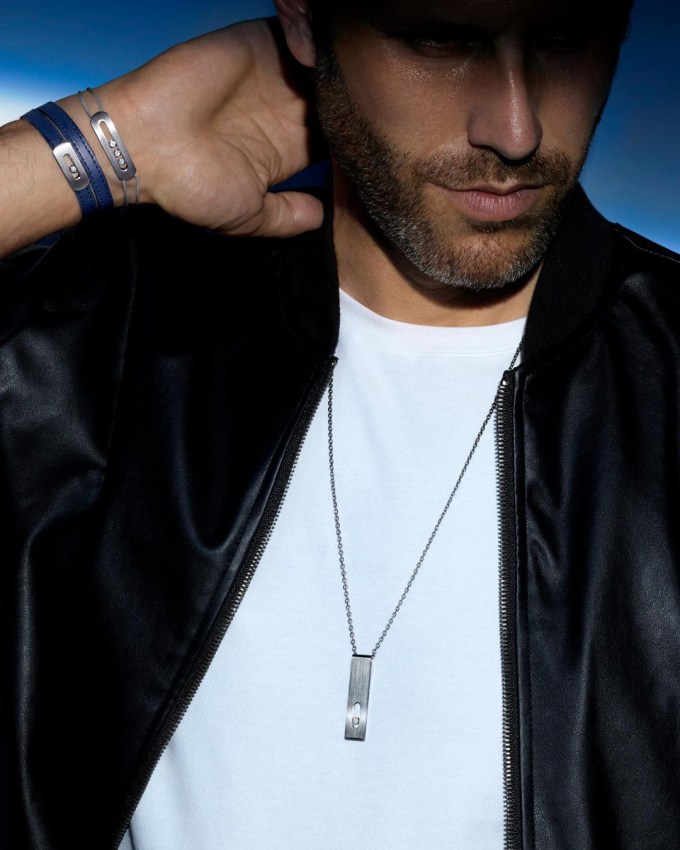

Demand for titanium and natural diamond jewelry is surging — but don’t expect it to dethrone gold or platinum anytime soon. Kovalova sees it less as a replacement and more as a creative unlock: a chance to build bold, sculptural, statement pieces using technology that simply wasn’t possible before.
“I don’t believe titanium will replace gold or platinum; they carry centuries of cultural and emotional significance,” she says. Instead, titanium expands what fine jewelry can even look like — breaking past old constraints on size, weight, and color to make designs that precious metals alone could never pull off. As 3D-printing technology keeps advancing, she expects designers to push even further, blending lightness and strength in increasingly complex ways. “I believe titanium will increasingly be used for highly creative, statement pieces featuring natural diamonds and gemstones, where engineering and craftsmanship become integral parts of the design story.”
Shop Diamond and Titanium Jewelry
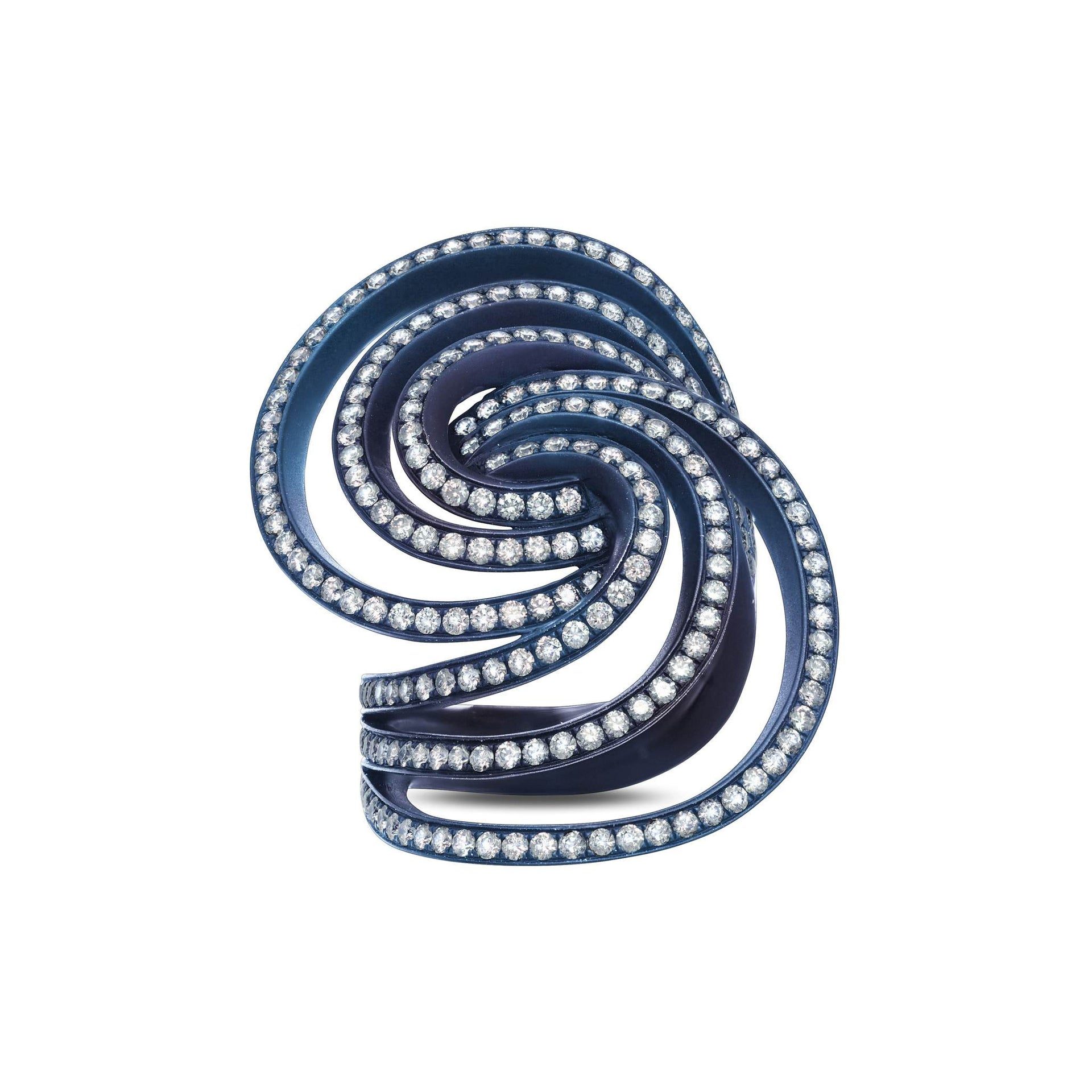
Graziela SWIRL TITANIUM RING IN PURPLE & BLUE, $16,250, grazielagems.com
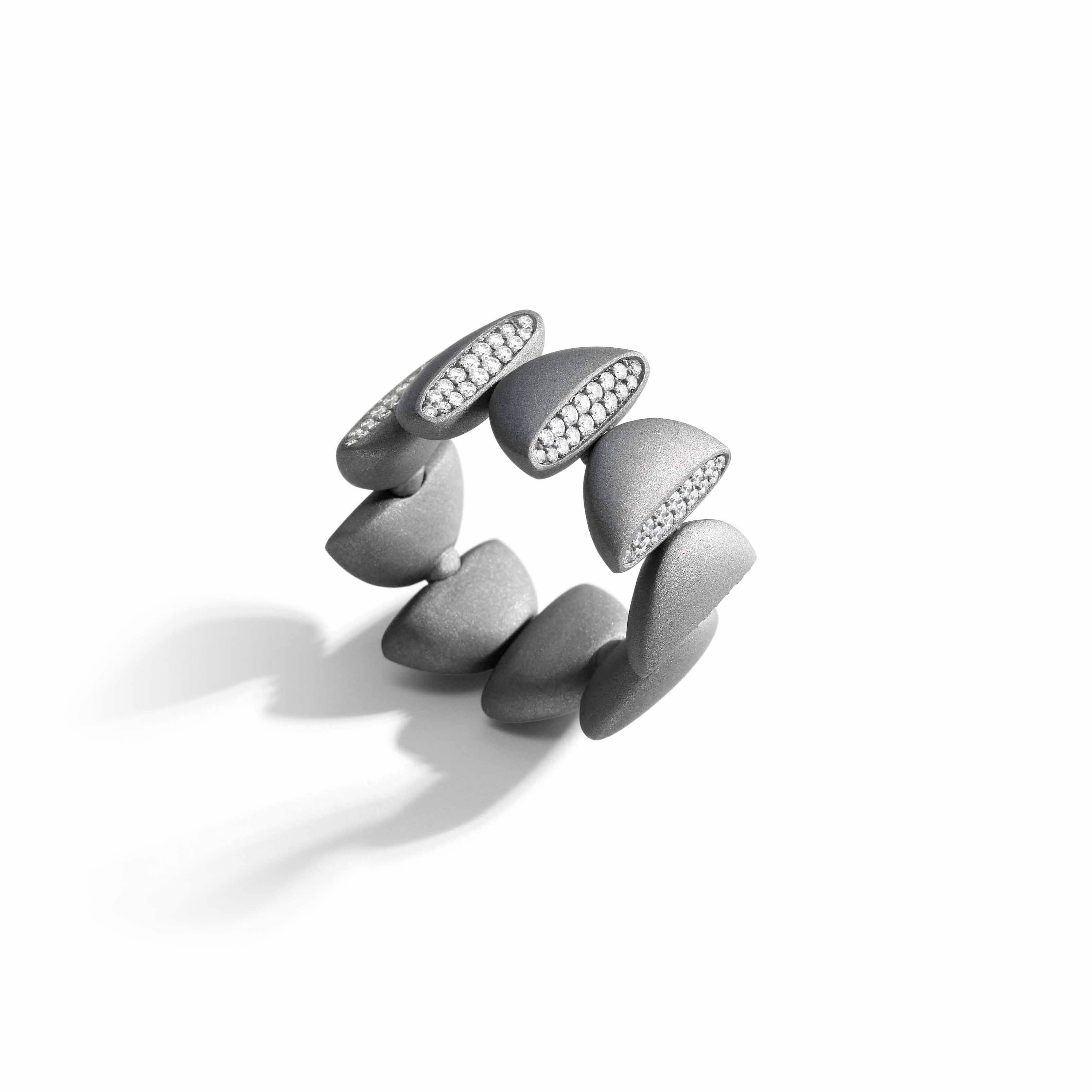
Vhernier Eclisse Ring in titanium and diamonds, $8,650, vhernier.com
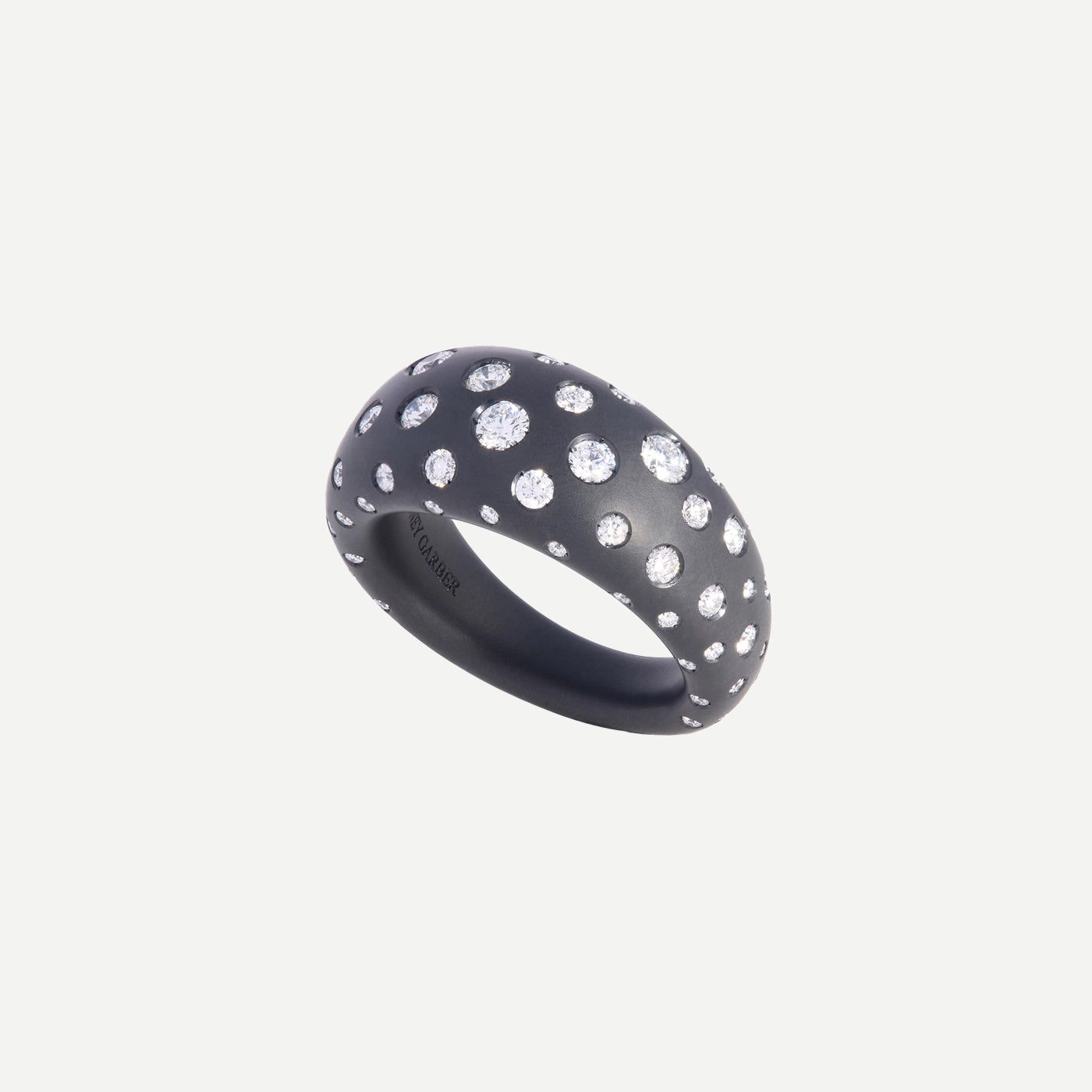
Sidney Garber Titanium French Dome Spotted Diamond Ring, $9,200, sidneygarber.com
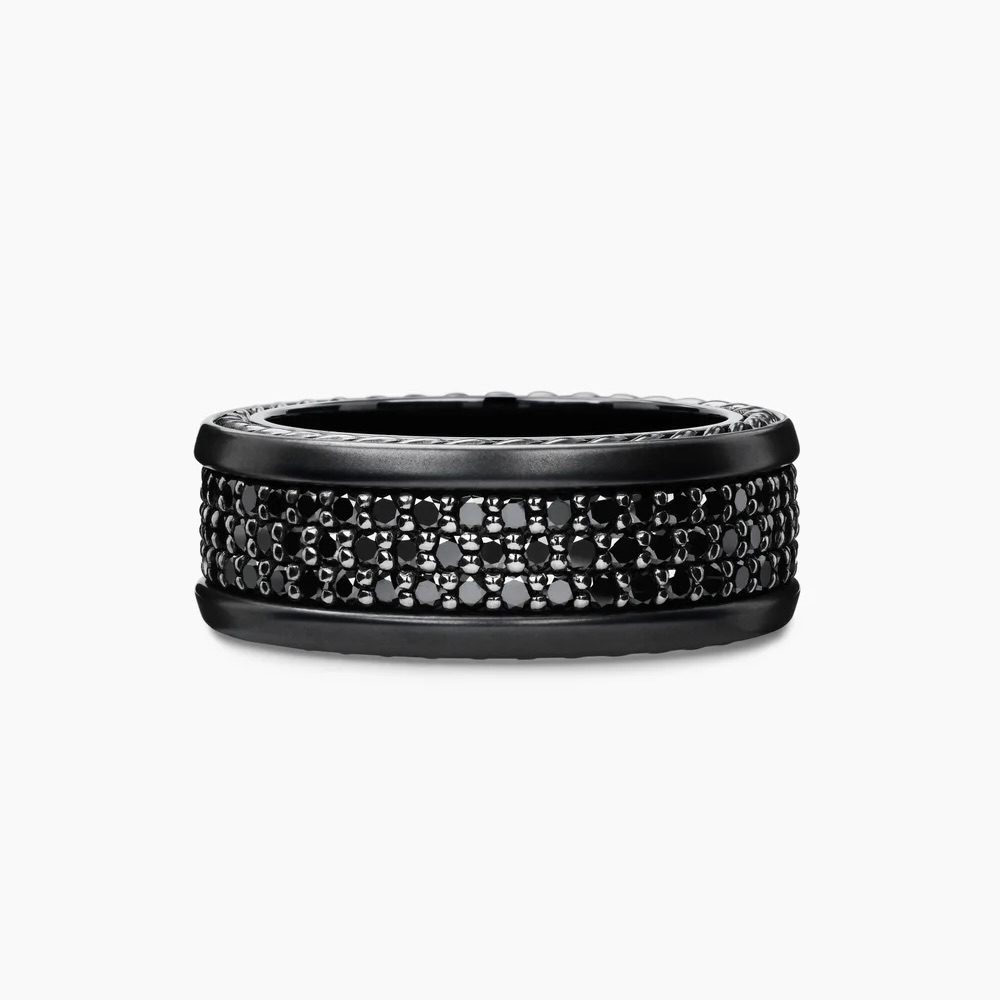
David Yurman STREAMLINE® PAVÉ THREE ROW BAND RING in Black Titanium with Black Diamonds, $3,000, davidyurman.com
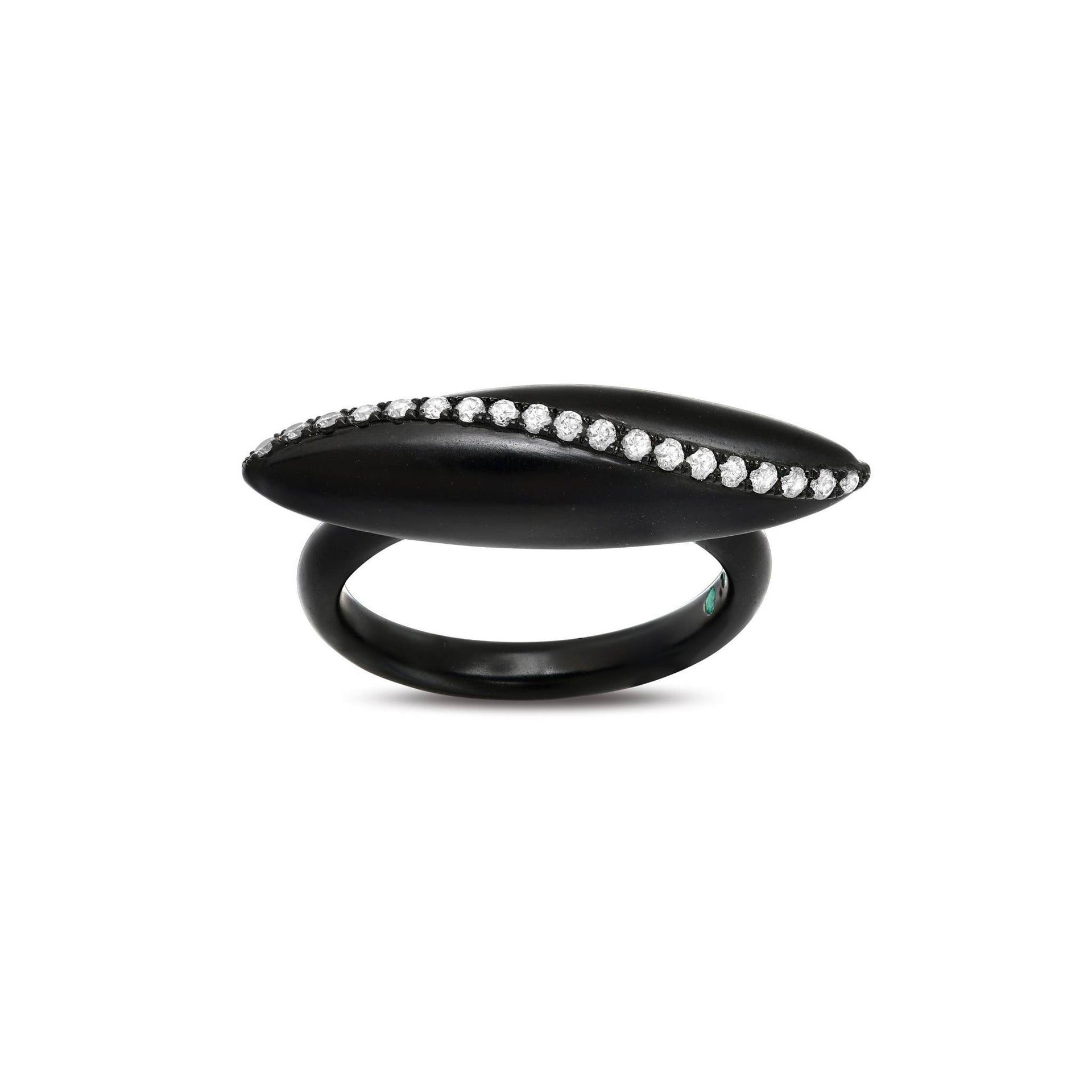
Graziela MATTE BLACK TITANIUM RING, $4,500, grazielagems.com
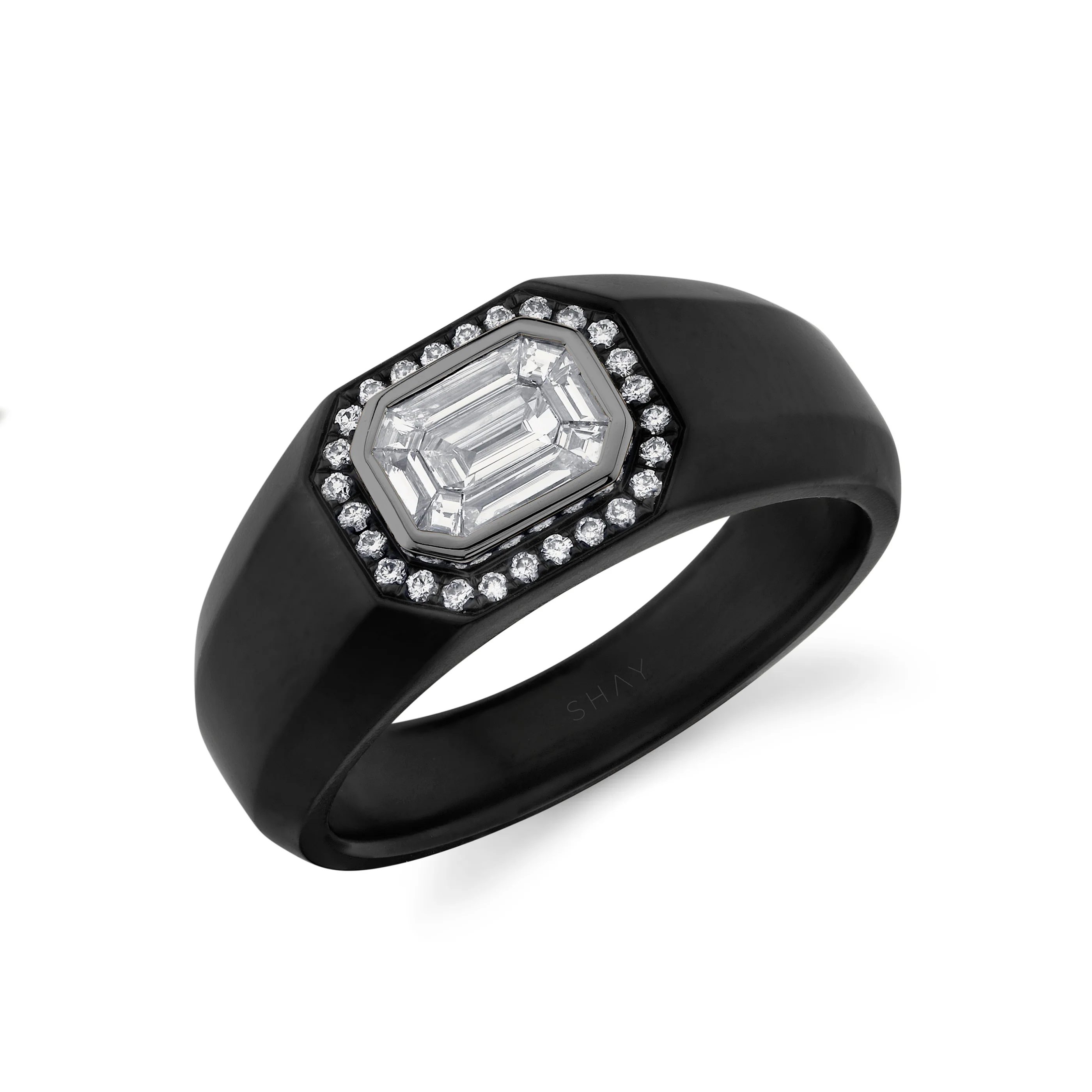
Shay Jewelry DIAMOND ILLUSION BLACK TITANIUM SIGNET RING WITH NATURAL DIAMOND, $5,980, shayjewelry.com
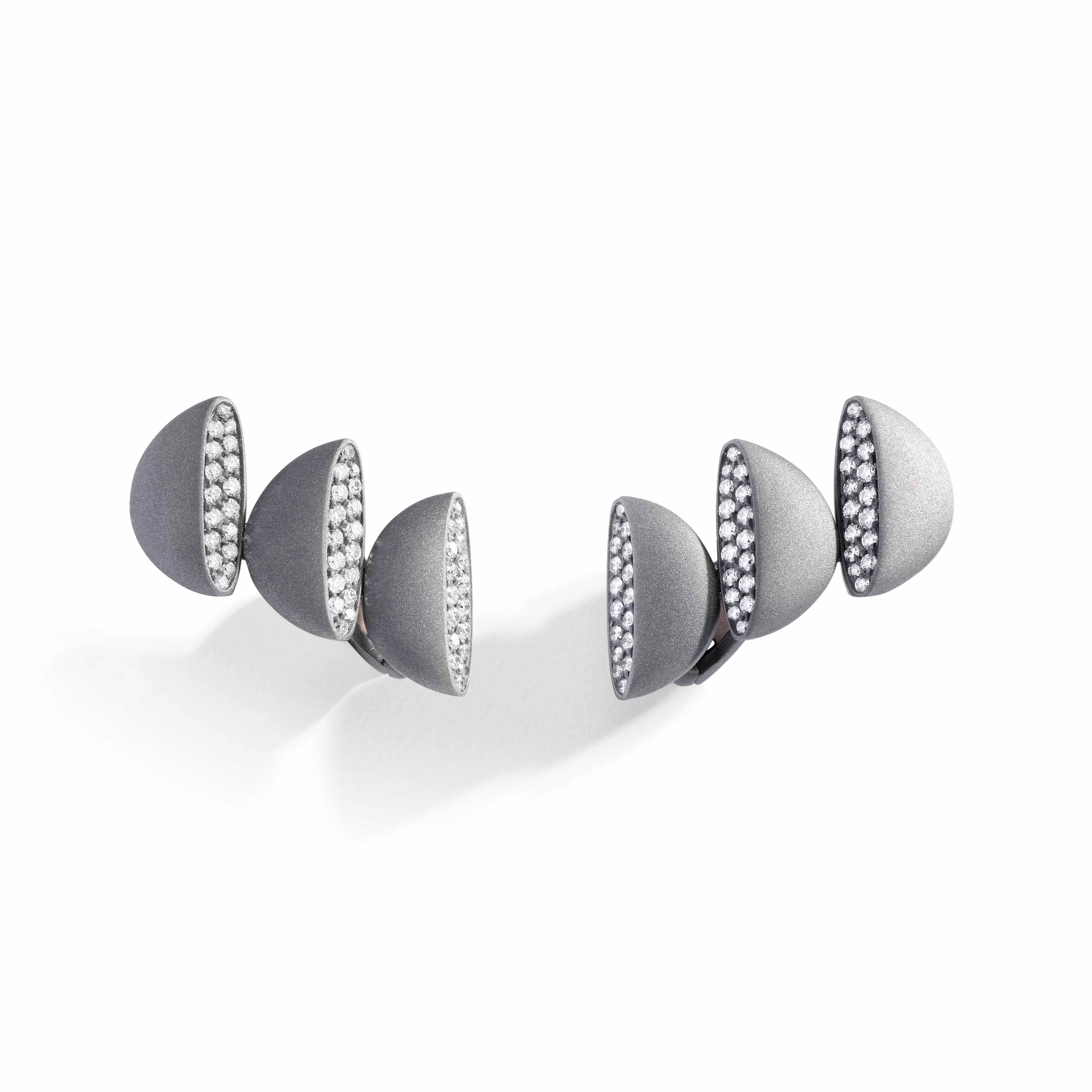
Vhernier Eclisse Earclips in titanium and diamonds, $6,950, vhernier.com
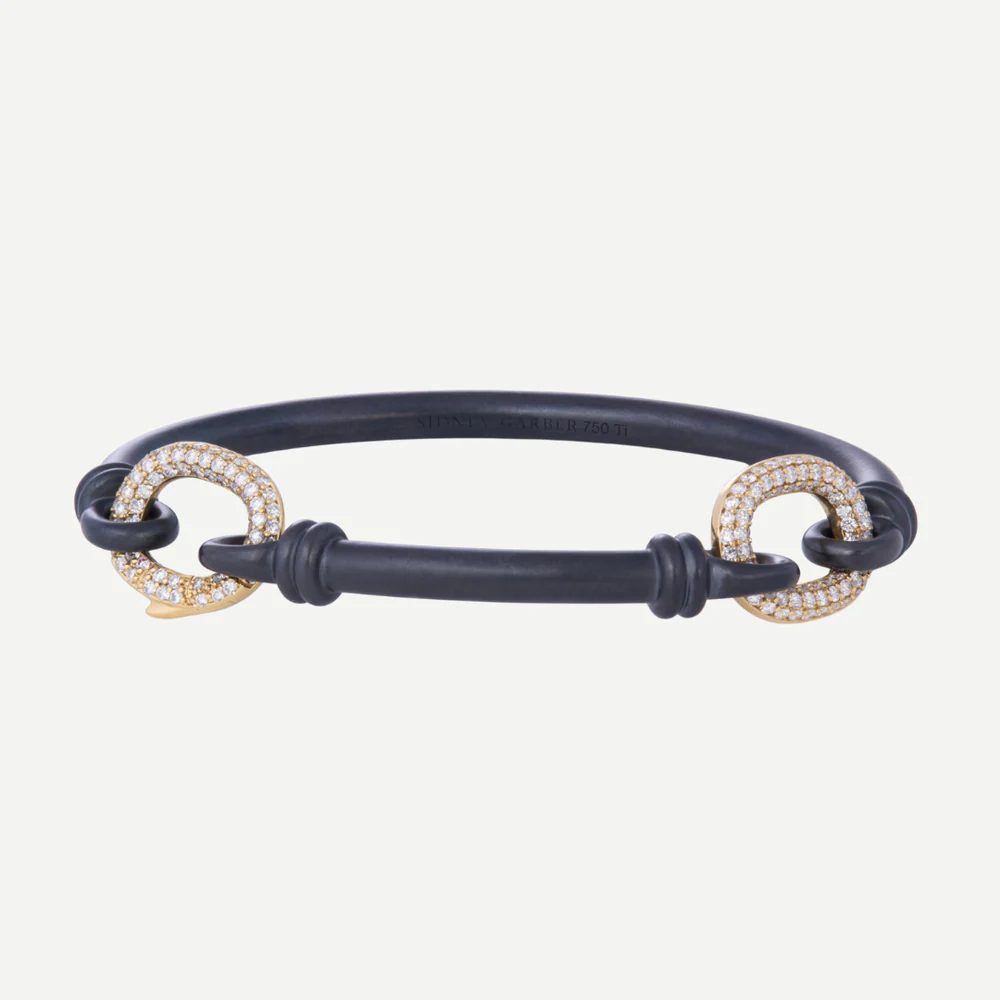
Sidney Garber Titanium and Diamond Loop Bracelet, $8,700, sidneygarber.com
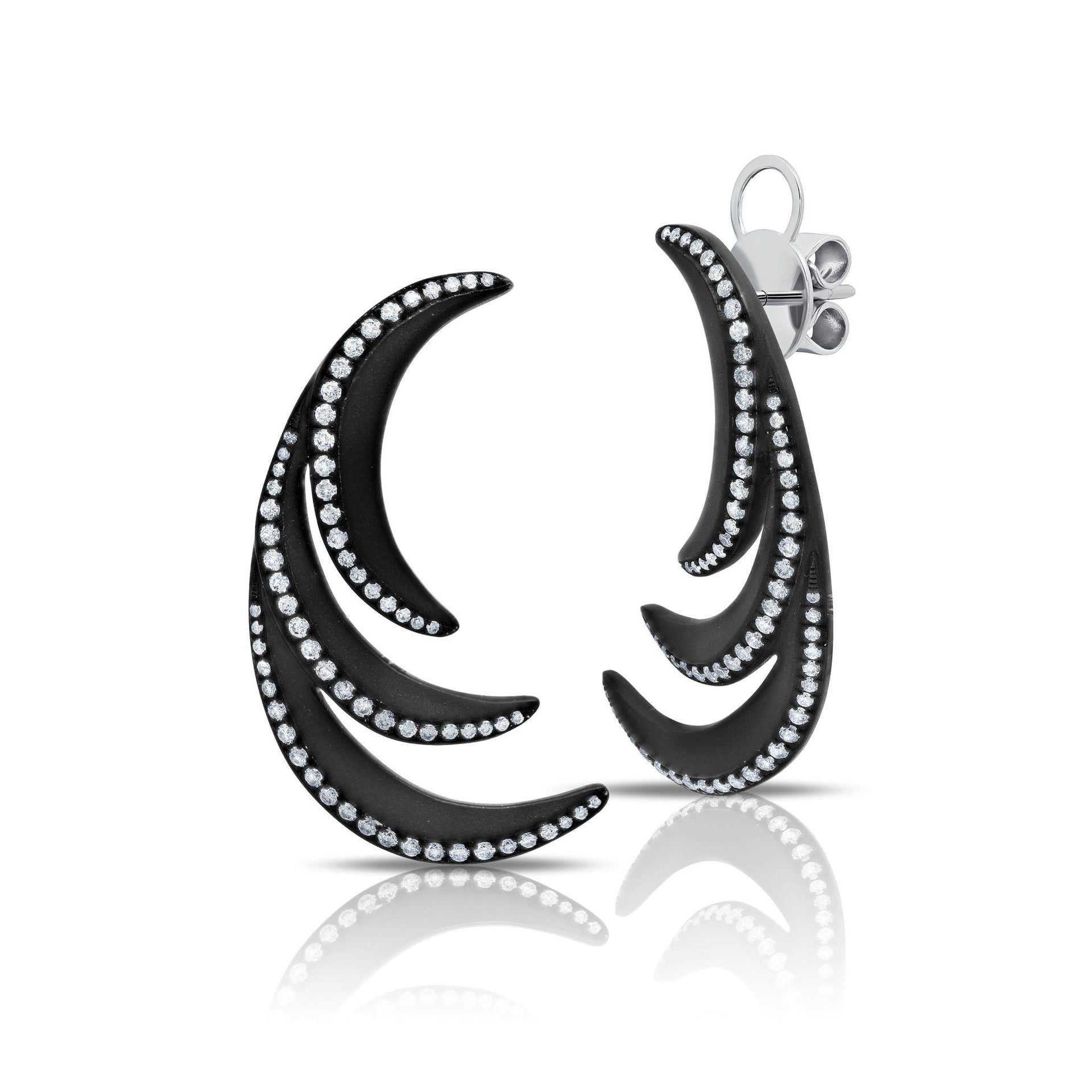
Graziela LARGE BLACK TITANIUM EAR CUFFS, $10,250, grazielagems.com
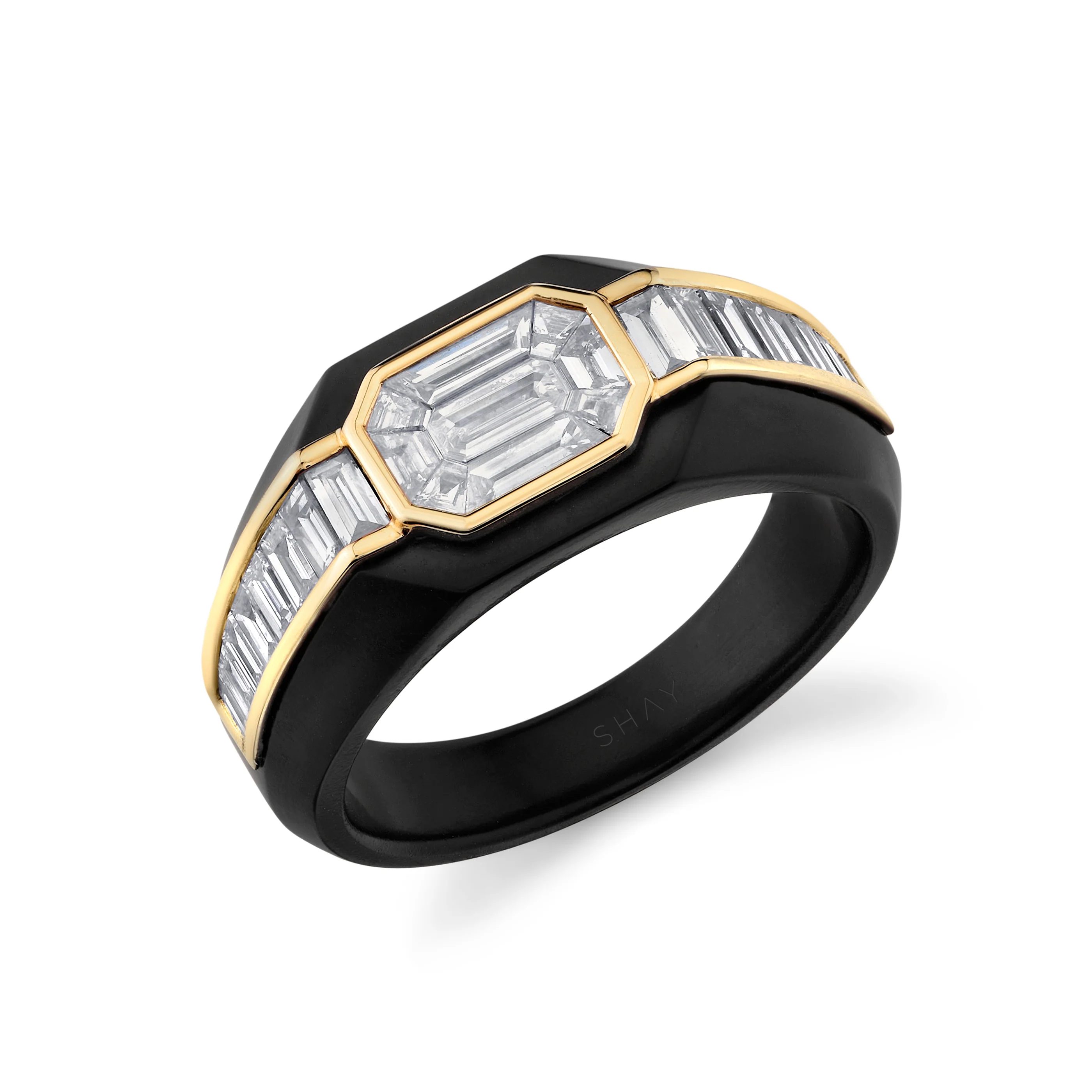
Shay Jewelry DIAMOND BAGUETTE TITANIUM SIGNET RING WITH NATURAL DIAMOND, $11,390, shayjewelry.com
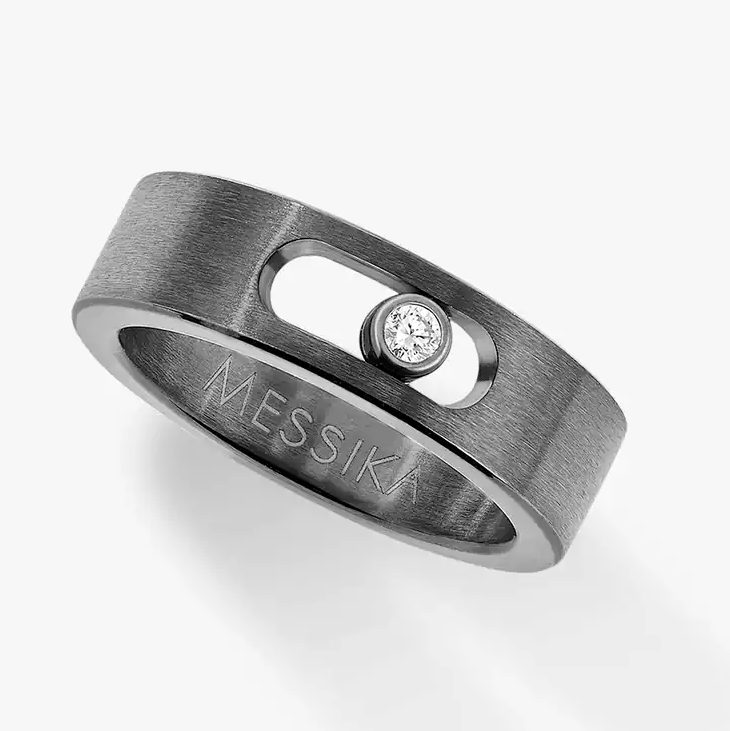
Messika MOVE TITANIUM ANTHRACITE Graphite titanium & white diamond ring, $1,100, messika.com
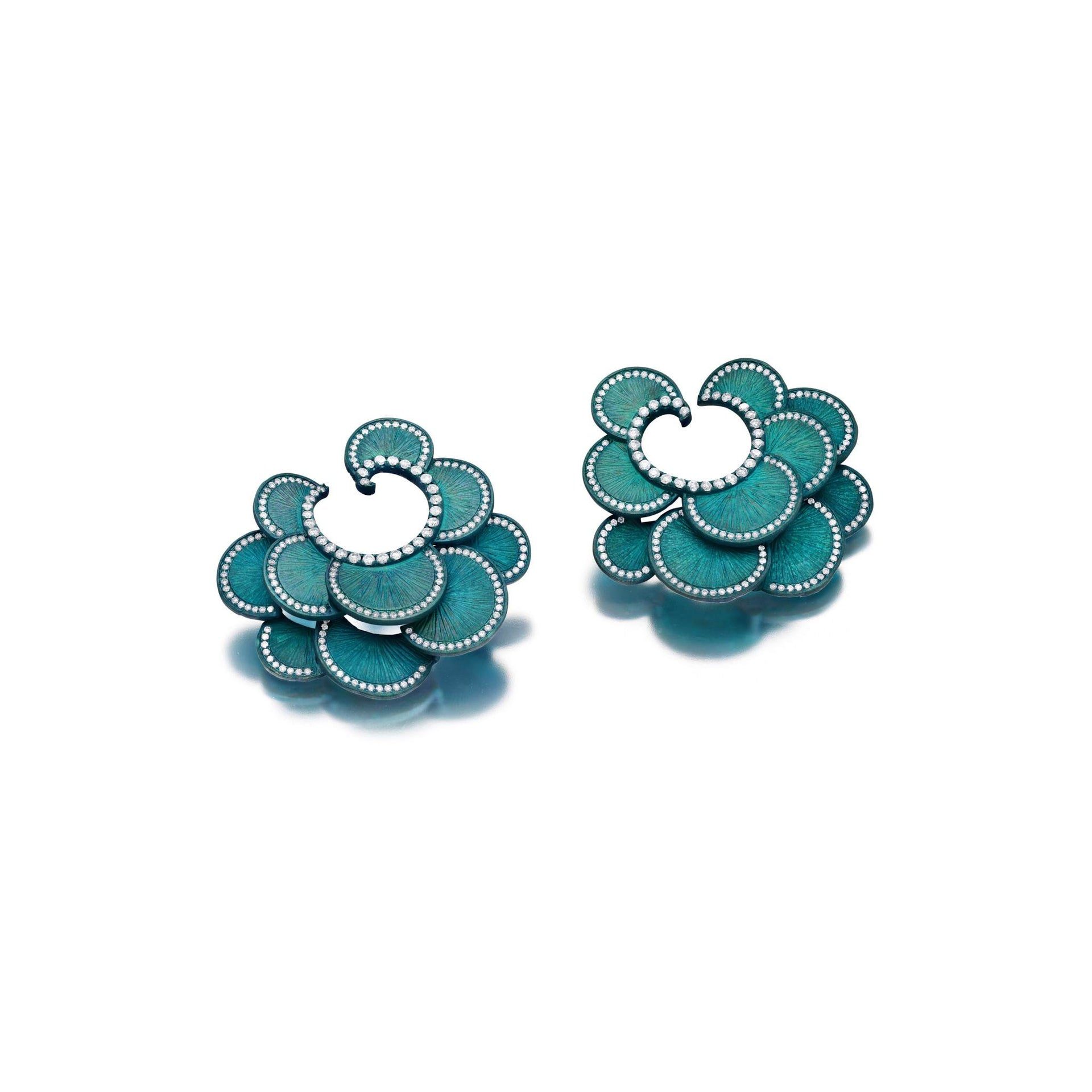
Graziela SCALLOPED TITANIUM EARRINGS IN TEAL, $27,500, grazielagems.com
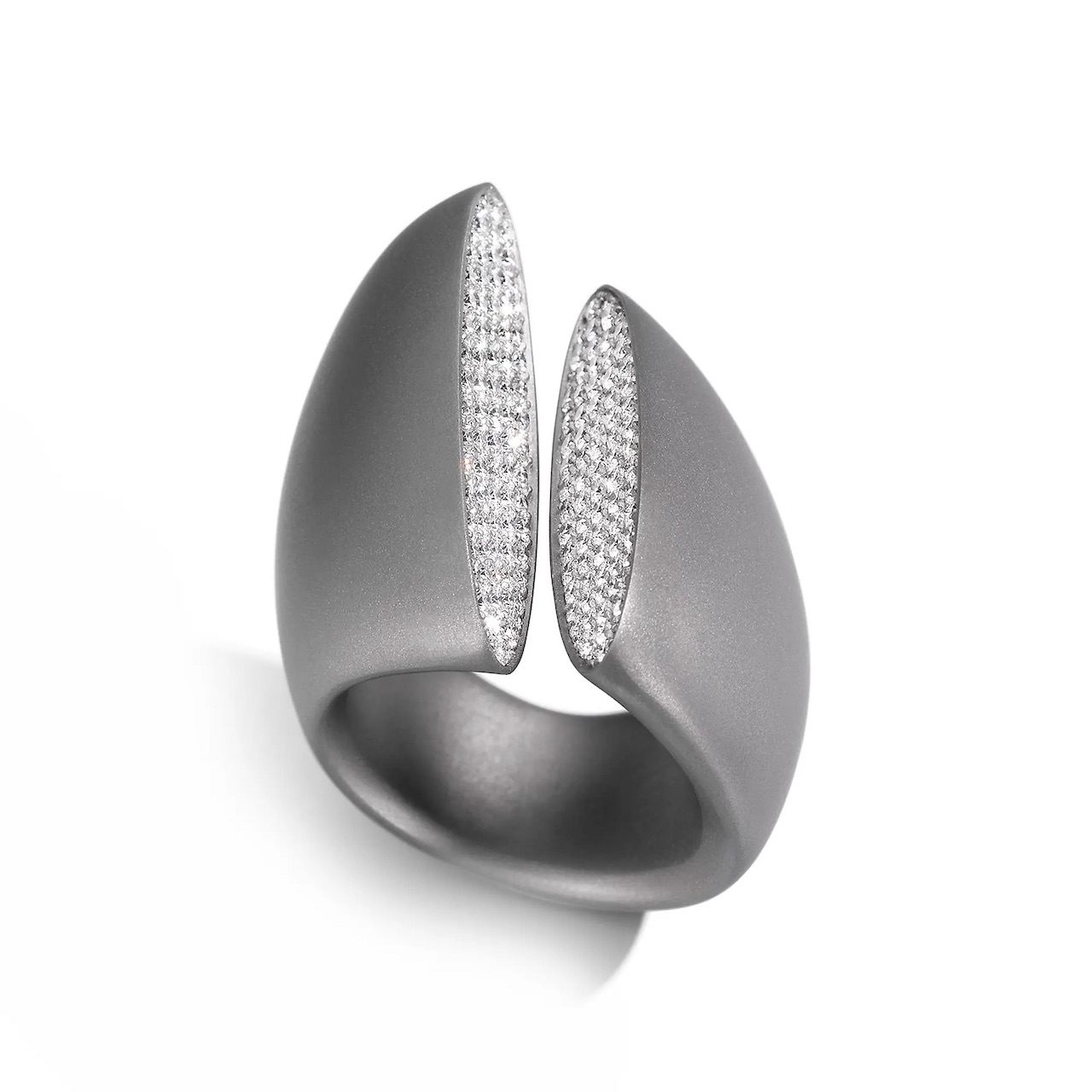
Vhernier Eclisse Titanium & Diamond Ring, $17,700, saksfifthavenue.com
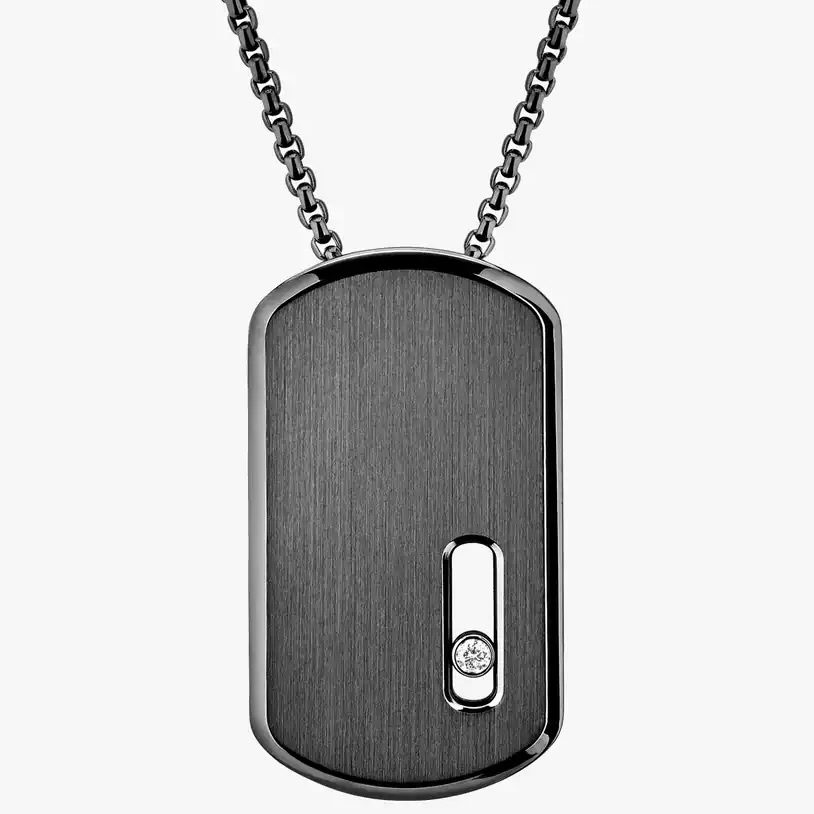
Messika MOVE TITANIUM ANTHRACITE Graphite diamond pendant necklace, $1,830, messika.com