
The Briolette of India: The World’s Oldest Diamond on Record
From Eleanor of Aquitaine and the Crusades to a controversial $8.2 million sale, this 90-carat D-color marvel witnessed nine centuries of human history.
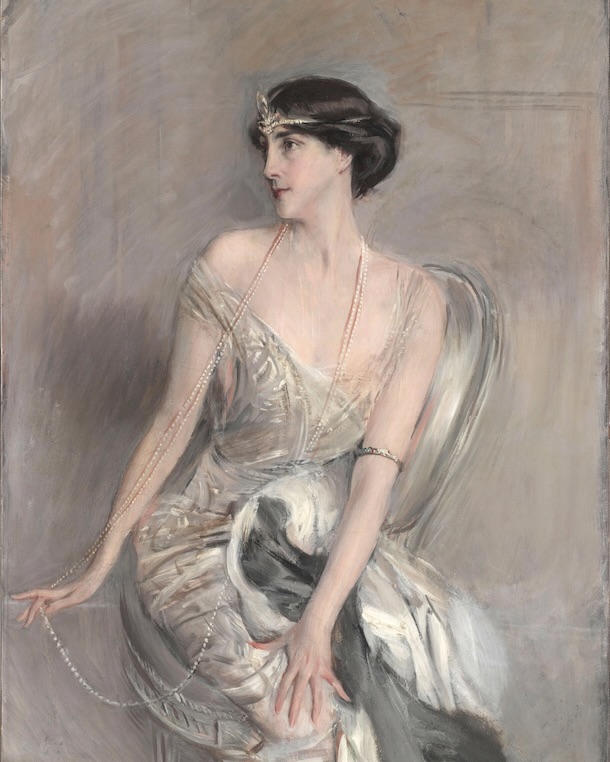
Portrait of Philanthropist Florence Meyer Blumenthal (1875–1930), wearing the Briolette of India Diamond in 1896 by Giovanni Boldini. (© Musée d’Orsay, Dist. RMN-Grand Palais / Patrice Schmidt / Wikimedia Commons)
At 90.38 carats, D-color, and classified as a Type IIa, the Briolette of India Diamond ranks among the purest diamonds nature produces. But its gemology, remarkable as it is, almost takes a back seat to its biography. If even half the legend holds, this is the oldest diamond on record anywhere in the world, even older than the Koh-i-Noor and older than every named stone we celebrate today.
Meet the Expert

- Grant Mobley is the Jewelry & Watch Editor of Only Natural Diamonds.
- He is a GIA Diamonds Graduate.
- He has over 17 years of jewelry industry experience, starting with growing up in his family’s retail jewelry stores.
Learn all about why collectors and historians have chased the fascinating story of the Briolette of India Diamond for the better part of a millennium.
What Makes the Briolette of India Diamond Special
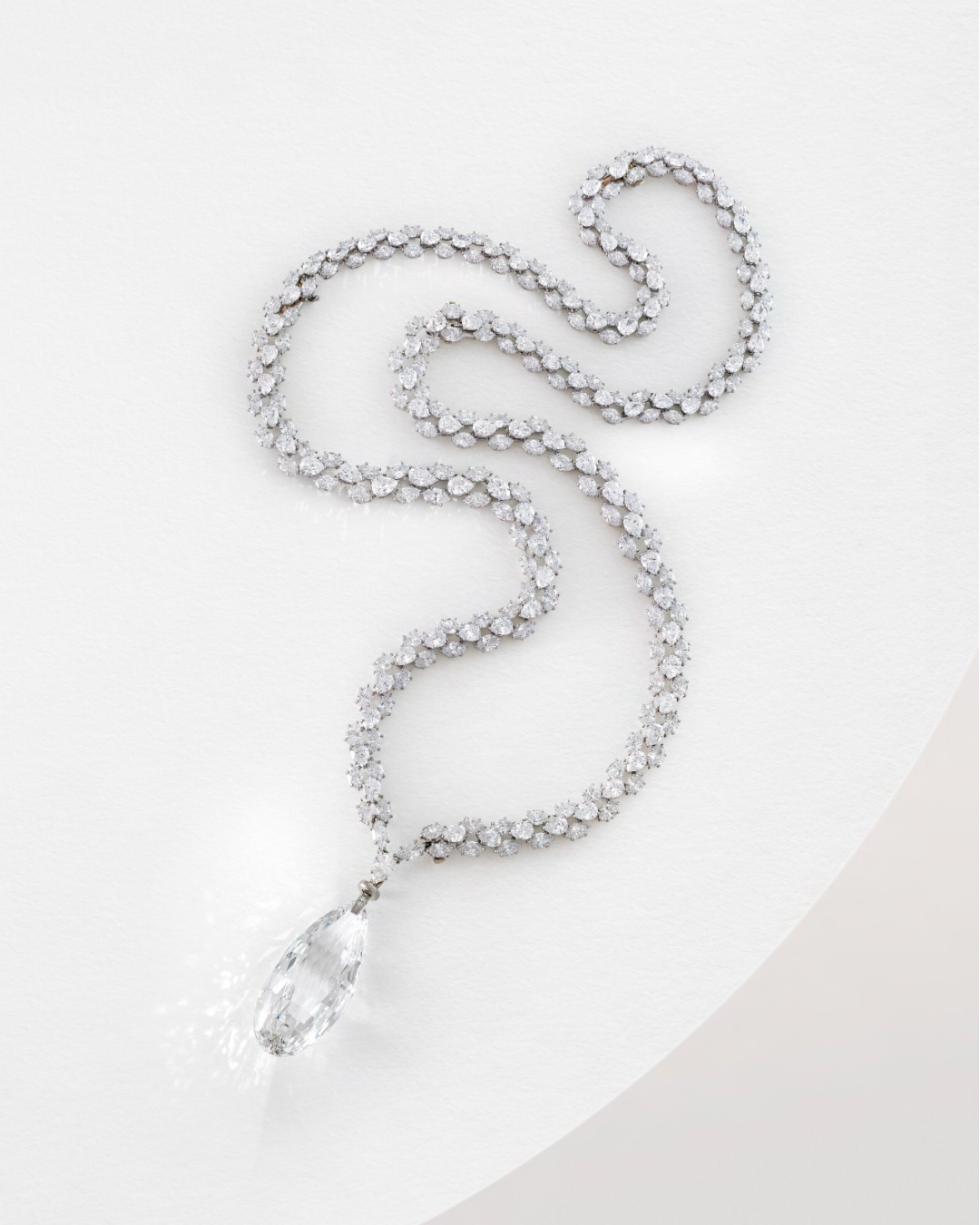
First, the gemology, because it matters. The Briolette of India Diamond is a colorless diamond that originated in India, the historic source of nearly all the world’s great stones before the discovery of Brazilian or African deposits. Its D-color grade marks it as the most colorless a diamond can be, with no trace of yellow or brown to tone it down.
The Type IIa classification reflects its purity. Type IIa diamonds contain almost no nitrogen, which gives them extraordinary transparency and a limpid, water-clear character. They make up roughly 1 to 2 percent of all diamonds, and historically, many of the legendary Golconda stones fell into this elite group. So before we even reach the history, we’re talking about a diamond that sits in one of the rarest pockets of the gem world.
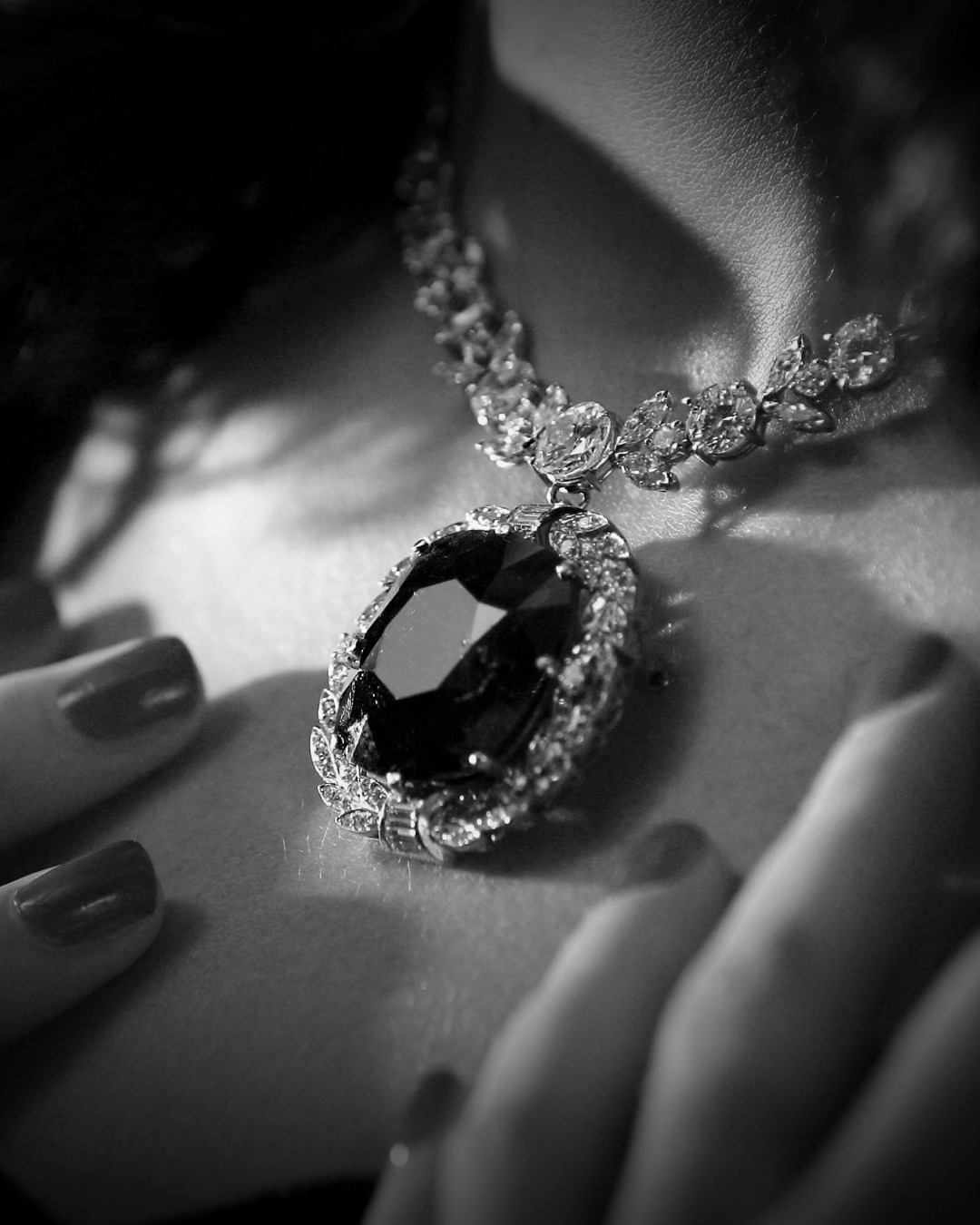
Then there’s the cut. As the name suggests, the stone is cut as a briolette. This three-dimensional, faceted teardrop catches light from every angle, with no flat table or pavilion like a conventional brilliant. Briolettes demand exceptional cutting skill and depend on superb rough to pull off well. The result here is a stone that functions almost like a jewel sculpted in the round.
The Briolette of India Diamond’s History Reaches Back to the 12th Century
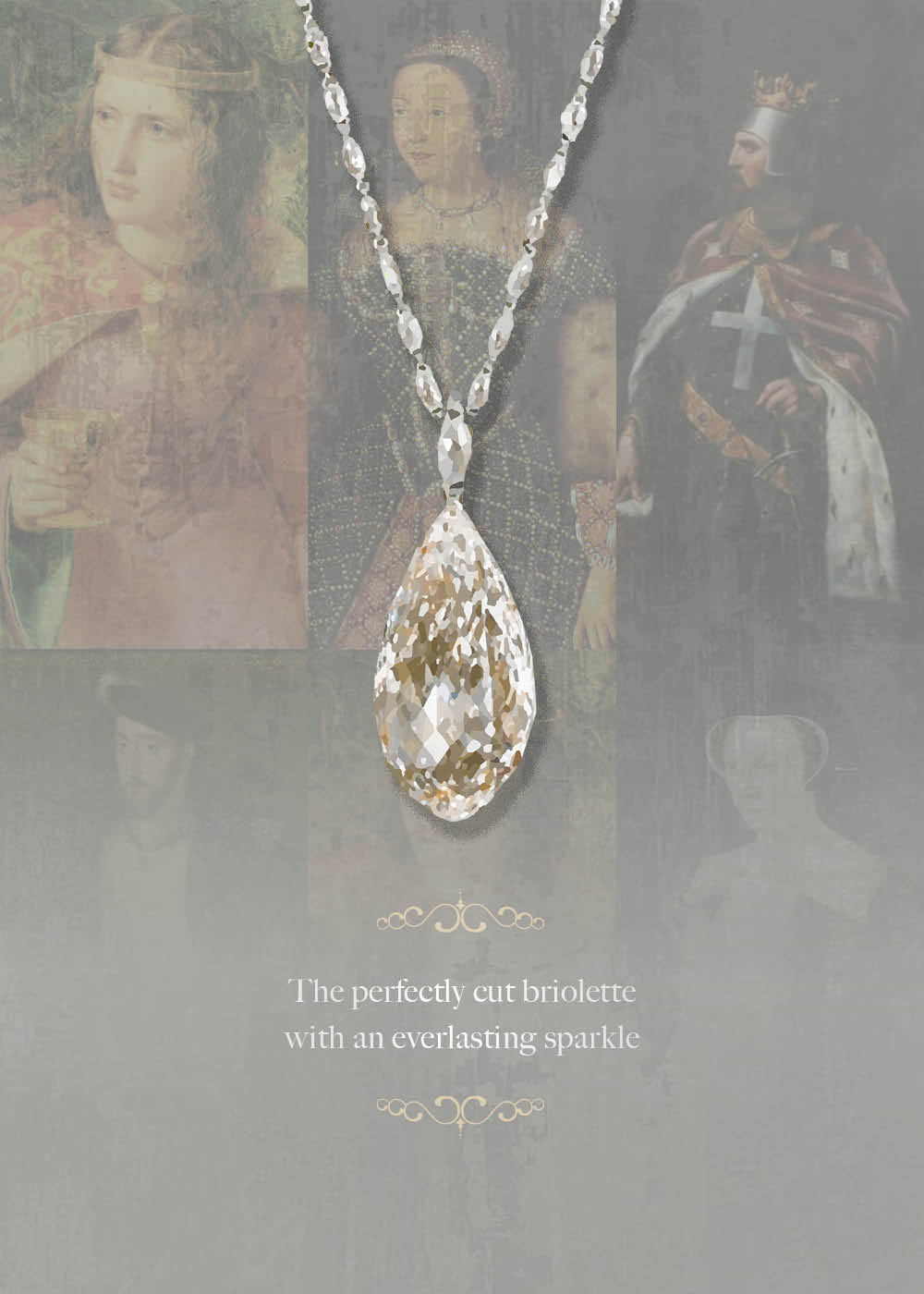
Here’s where the Briolette separates itself from every other famous diamond. Modern accounts trace its earliest recorded owners to the Nawabs of Punjab sometime in the 11th century. By the middle of the 12th century, it is documented that the stone traveled to Europe and into the hands of Eleanor of Aquitaine, then Queen of France.
Eleanor may have acquired the diamond in the Middle East during the ill-fated Second Crusade. If that is the case, the timing points to somewhere between 1137 and 1152, which would make the Briolette of India Diamond the oldest diamond on record, predating even the Koh-i-Noor that so often claims that title.
The diamond remained Eleanor’s personal property as Duchess of Aquitaine, and it remained hers after her marriage to King Louis VII was dissolved, and she wed Henry II of England. That second marriage produced eight children, among them Richard I, aka Richard the Lionheart. According to the legend, Richard inherited the stone and carried it with him on the Third Crusade, where it likely became part of the ransom paid to the Holy Roman Emperor after his capture.
The Briolette of India Diamond’s Disappearances and Reappearances
One of the most captivating things about the Briolette of India Diamond is how it vanishes. The diamond drops off the historical record for long stretches, even centuries, before surfacing again in a new pair of hands.
After Richard I, the trail goes cold for nearly three hundred years. The story resumes in the 16th century, when King Henry II of France reportedly gave the diamond to his mistress, Diane de Poitiers. Following the king’s death, his queen, Catherine de’ Medici, compelled Poitiers to surrender the jewels the monarch had given her, and the Briolette may have been among them. From there, it likely entered the French Crown Jewels, though without any particular distinction, before either being stolen in the chaos of the French Revolution or sold off in 1887.
How Cartier and Harry Winston Shaped the Briolette of India Diamond
The Briolette as we know it today owes its shape to the early 20th century. Diamond cutter Atanik Eknayan recut the stone, which had lived all those years as a double rose cut, into its distinctive briolette form around 1908. According to historian Hans Nadelhoffer, the recutting took place in Neuilly, and Cartier acquired the diamond.
Cartier first set it as a pendant with a 126-grain pearl, then, the following year, combined it with two 22-carat emeralds and that same pearl to form a brooch, which was sent to the firm’s New York branch. In 1911, Cartier sold the piece to American financier George Blumenthal, who gave it to his wife, Florence Meyer Blumenthal. She appears wearing it in a tiara in her portrait by Giovanni Boldini, a painting that now hangs in the Musée d’Orsay in Paris.
The diamond surfaced again in 1950, when the legendary New York jeweler Harry Winston acquired it. Winston sold it to Dorothy J. Killam, wife of Canadian millionaire I.W. Killam, then bought it back from her estate a decade later after her death.
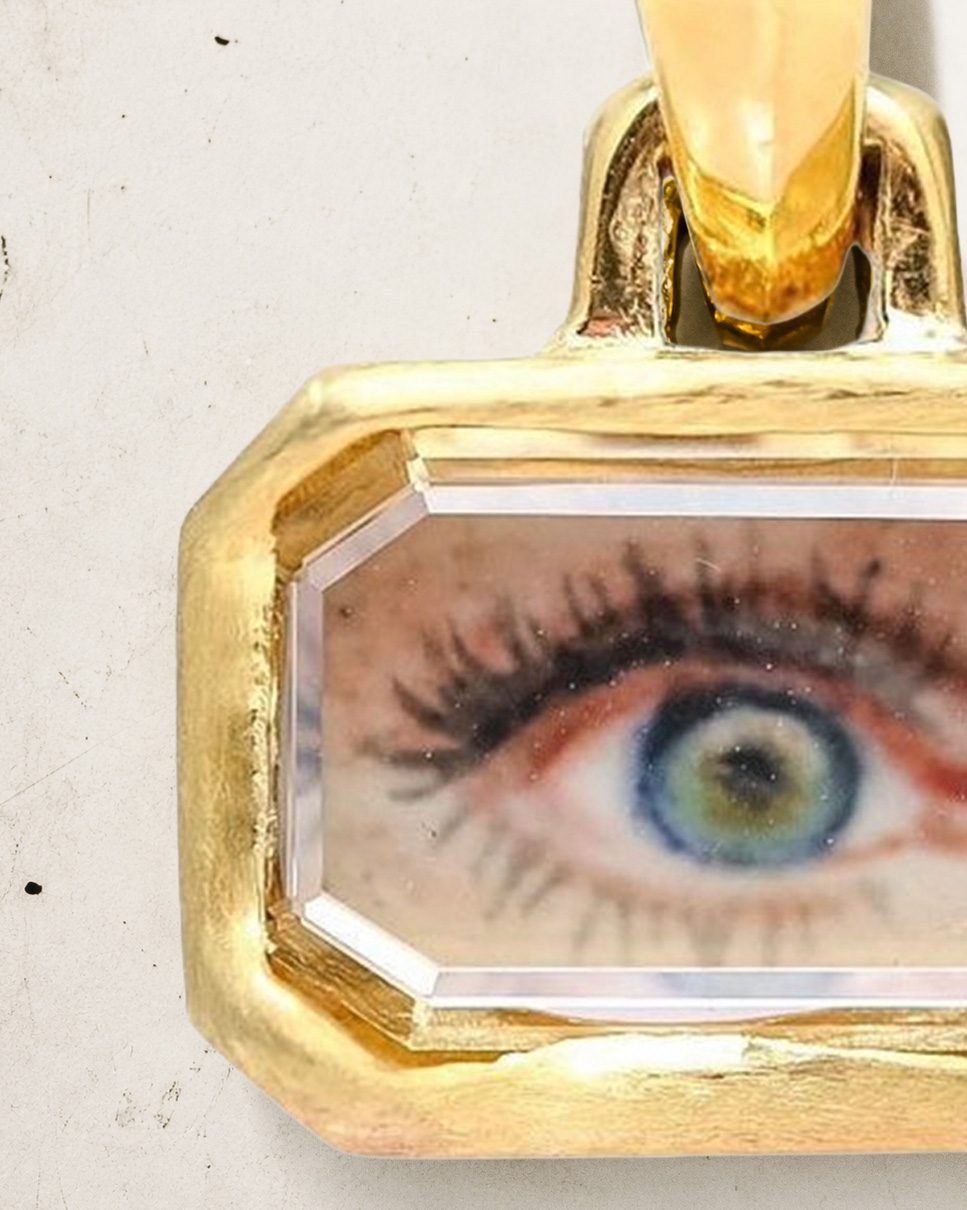
The Briolette also earned a place in fashion history. In July 1967, photographer Richard Avedon captured a now-famous image of model Penelope Tree holding the unset stone before her right eye.
The Horten Collection and the $8.2 Million Sale of the Briolette of India Diamond

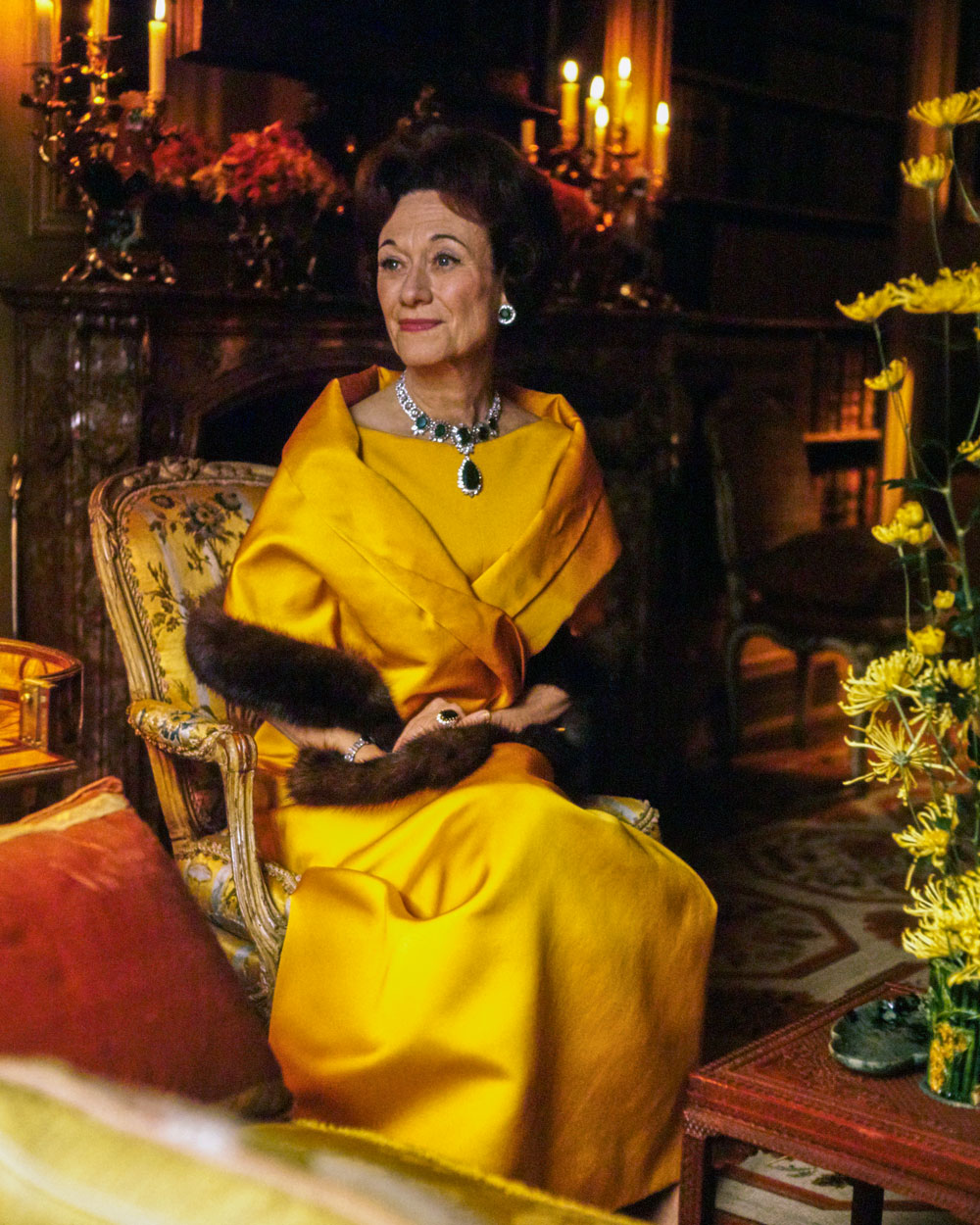
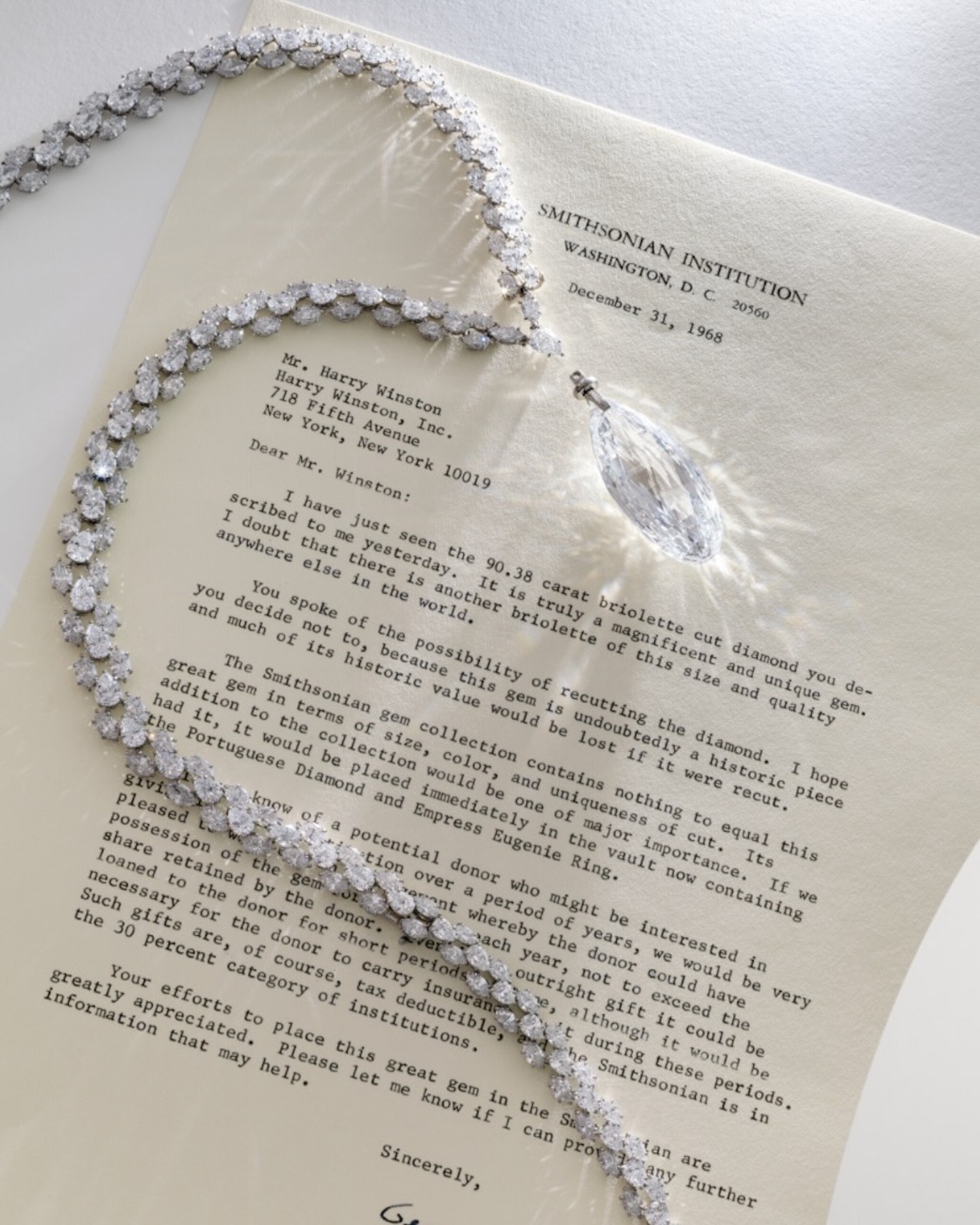
In 1971, after exhibiting the stone at a dinner for American fashion editors, Harry Winston sold the Briolette, mounted in a spectacular necklace, to a “European client.” That client turned out to be Austrian billionaire Helmut Horten, who bought it for his young wife, Heidi. She wore the Briolette of India necklace in a memorable portrait in the 1980s, and the stone remained with her until she died in 2022.
The following June, Christie’s offered the diamond as part of “The World of Heidi Horten,” a sale that still holds the record as the largest and most valuable single-collection jewelry auction ever held, surpassing even the famous dispersal of Elizabeth Taylor’s jewels. The Briolette sold for just over $8.2 million.
That figure surprised a lot of people in the trade, myself included, because it landed below the estimate for a diamond of this stature and provenance. The explanation almost certainly lies outside gemology. The auction drew heavy criticism because Helmut Horten built his department-store fortune during the Nazi era, partly by acquiring businesses at bargain prices from Jewish owners forced to sell under duress. Even though the proceeds were directed to a charitable foundation, the controversy hung over the sale and likely dampened bidding on its most prominent pieces. It probably also explains why the buyer of the Briolette chose to remain anonymous.
Why the Briolette of India Diamond Still Matters Today
For me, the Briolette of India Diamond represents the rarest thing a diamond can offer: not just beauty, size, or rarity, but the sense that you’re holding a witness to nearly nine centuries of human history. Stones like this don’t simply get bought and sold. They get inherited by the ages, surfacing now and then to remind us how long a natural diamond can outlast the kings and queens who once called it their own.