
Individuality Is the New Luxury—and Warm Diamonds Are Leading the Way
Although tradition may push you towards icy perfection, a growing number of diamond buyers are embracing warm diamonds, drawn to the buttery yellows, soft champagnes, and warm undertones that only nature can make, and discovering better value in the process.
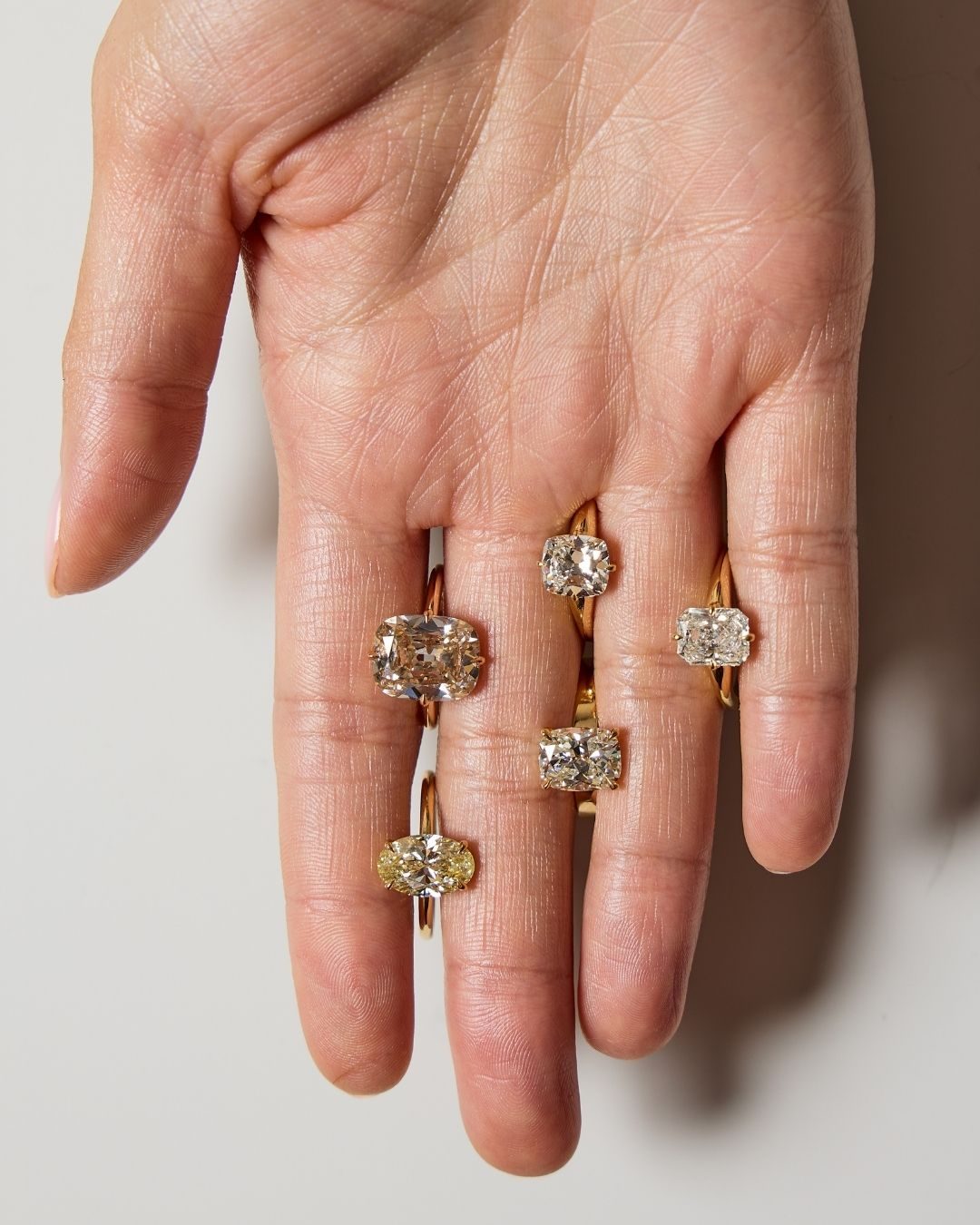
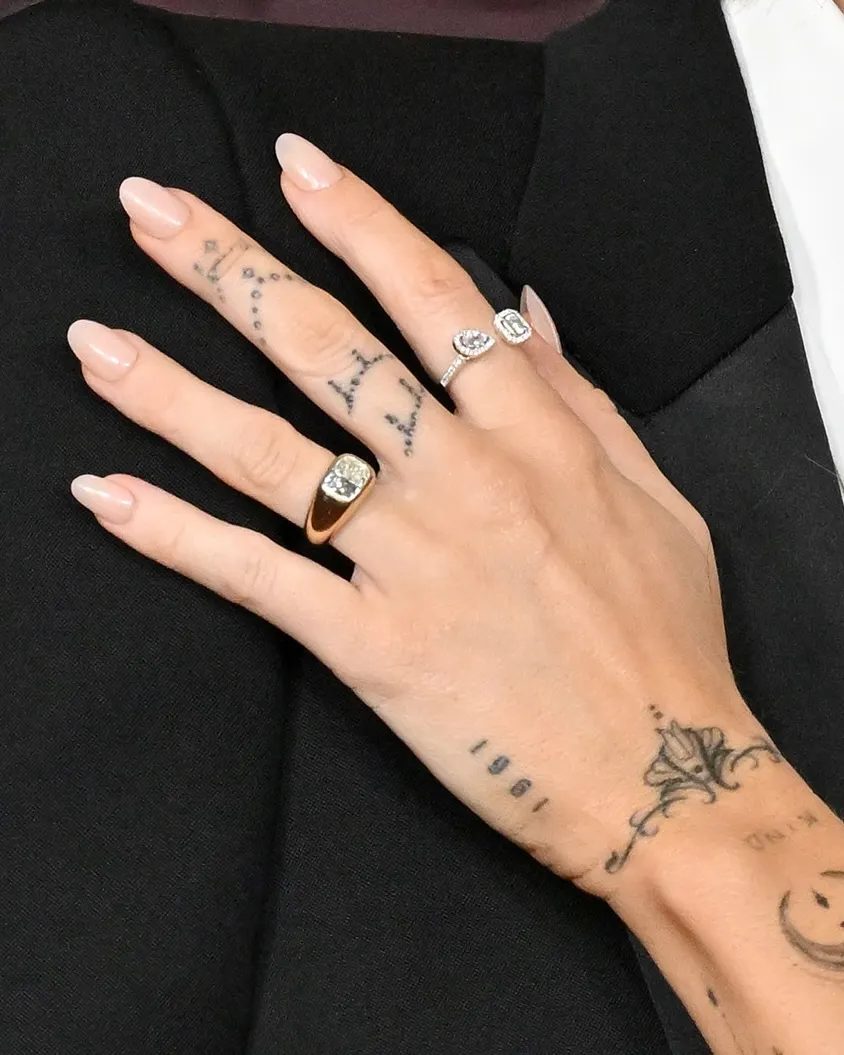
Warm diamond engagement rings. (Courtesy of AARYAH)
For decades, the diamond conversation ran in mostly one direction: whiter, brighter, colorless, period. If you walked into a jewelry store to shop for an engagement ring, the unspoken goal was to climb as high up the color scale as your budget allowed. People thought of warm diamonds as a flaw, a compromise to avoid.
Thanks to Gen Z, that thinking is changing fast. Some of the most coveted diamonds in showrooms right now aren’t the iciest whites at all; they’re stones with warmth, character, and a visible hint of nature’s fingerprint. After years of watching this trend build, I’m convinced we’re witnessing a genuine shift in how people define a beautiful diamond. Let me explain what’s driving it, and why I think buyers who embrace it are onto something smart.
Meet the Experts

Megan Kothari is the founder of AARYAH, a New York City–based fine jewelry brand known for its sculptural engagement rings and rare natural diamonds. A third-generation jeweler and the first woman in her family to lead the business, she blends generations of diamond expertise with a modern approach to design. Today, AARYAH is one of the leading brands in the natural diamond bridal space.

Dr. Chari Belmonte is a newly engaged physician based in New York City and self-proclaimed jewelry fanatic. Her fiancé, Marko, is a Finnish native who also lives and works in New York City.
Understanding Diamond Color, From D to Z
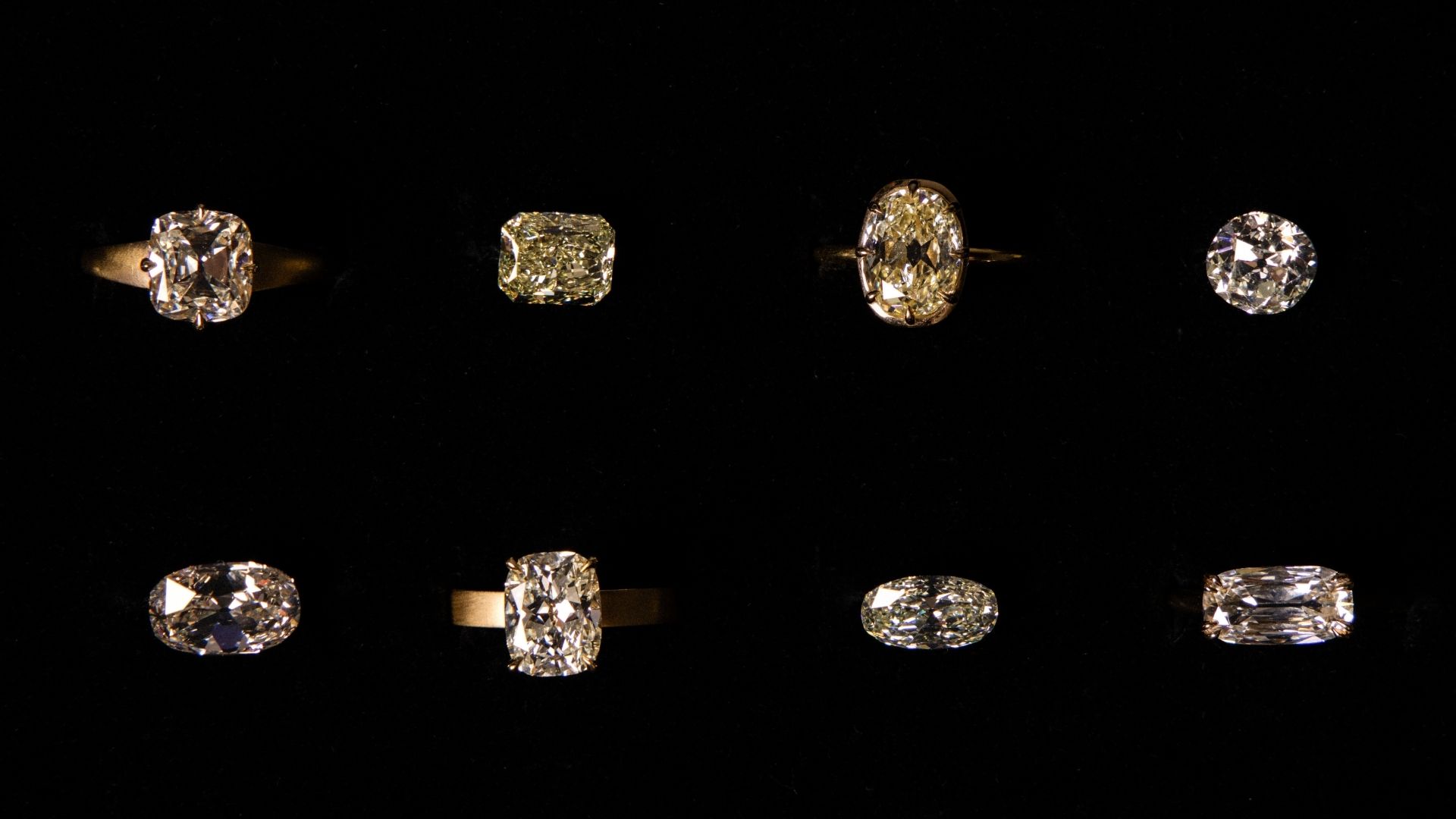
Before we get into the why, you need to understand how the industry grades diamond color, because the whole conversation hinges on it.
The standard scale runs from D to Z. A D-color diamond sits at the very top: completely colorless, with no detectable tint whatsoever. As you move down the alphabet, diamonds pick up increasing amounts of warmth—faint yellows and browns—until you reach Z, which shows a heavy, obvious tint. (Beyond Z, you enter the world of fancy color diamonds, where the color becomes so saturated that it’s prized in its own right.)
Here’s the practical part most shoppers never learn. Historically, the vast majority of diamonds sold for engagement rings fall around H color or higher. The reason is simple: from D down through H, the color is so subtle that the diamond still reads as clear, bright white to the naked eye. Once you drop below H—into the I, J, K range and beyond—you start actually to see the warmth. The stone takes on those soft, golden, candlelit tones.
For a long time, consumers treated anything below that invisible-color threshold as a lesser product. But “different” and “worse” are not the same thing, and buyers, especially Gen Z, are finally catching on.
Why Warmer Doesn’t Mean Lesser
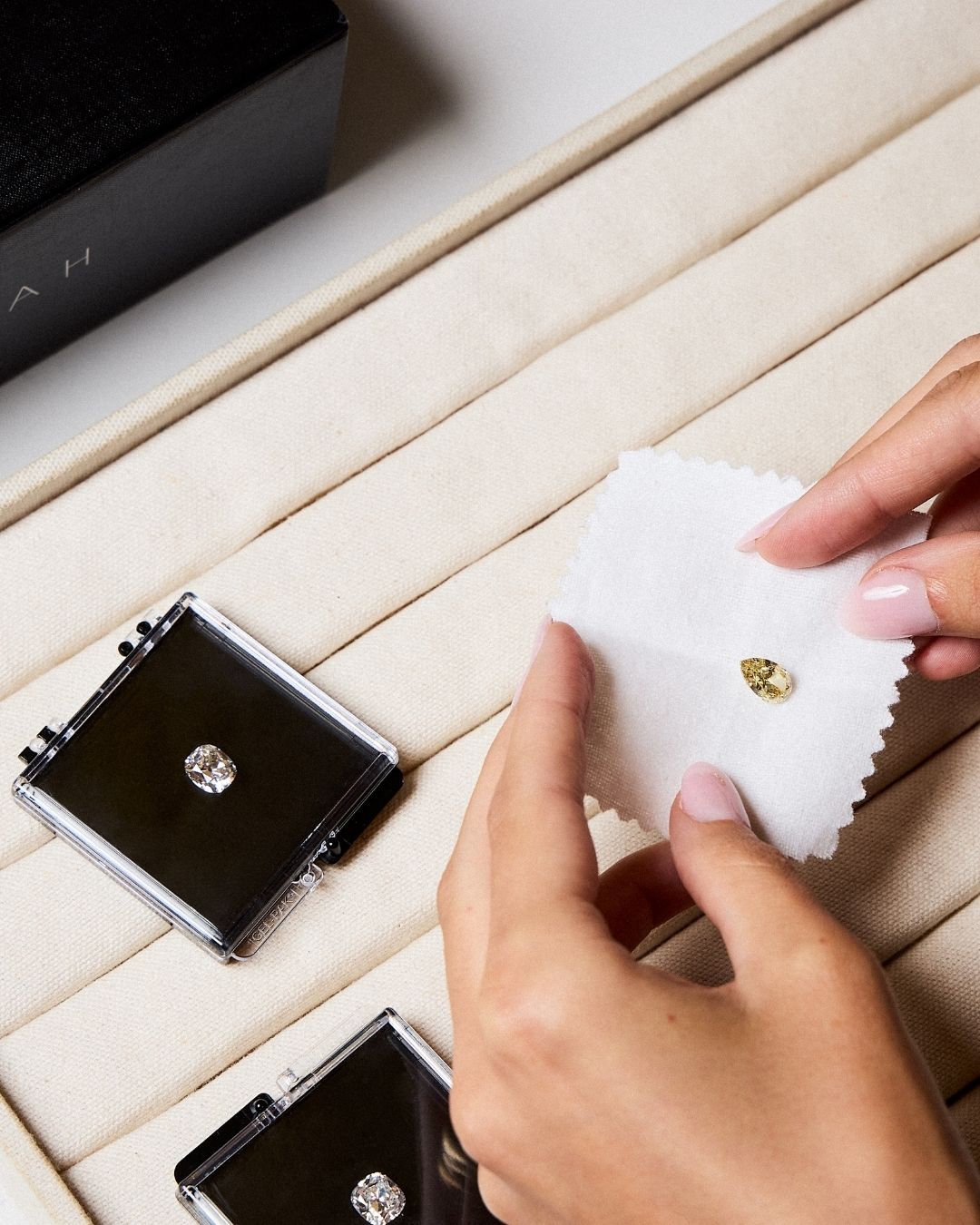
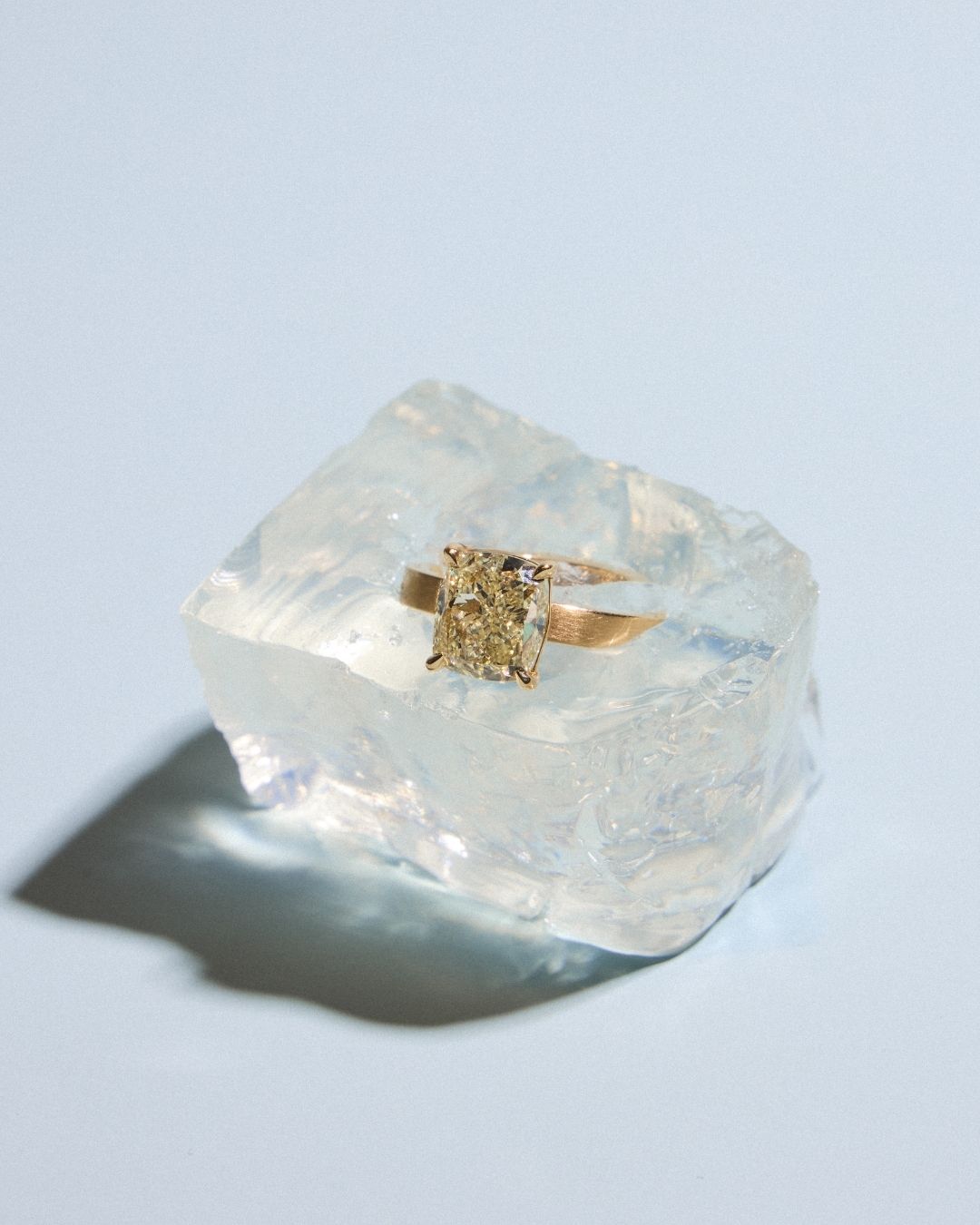
The most important idea I want you to take away is this: a lower color grade doesn’t mean a less attractive diamond. It means a different look.
Megan Kothari, founder of the jewelry brand AARYAH, has watched this realization spread through her client base firsthand. “When I first started in bridal, the conversation was always about how white a diamond could be. Everyone wanted the highest color grade possible,” she told me. “Today, the conversation has completely shifted. Clients are looking for diamonds that feel distinctive and unique. They love warmer natural diamonds because they stand out and feel one of one. In a world where everything is becoming more uniform, individuality has become the new luxury.”
That word—individuality—keeps coming up, and for good reason. Warm diamonds bring something icy whites simply can’t. “A warmer diamond has a depth and character that super icy white diamonds simply don’t,” Kothari said. “The buttery yellows, soft champagne hues, and subtle brown undertones create incredible dimension. Combined with beautiful faceting, the sparkle and shimmer feel richer and more dynamic. They offer something fresh compared to what you see everywhere else.”
I’d echo that completely. There’s a reason candlelight flatters everyone in the room. Warmth has a softness and richness that pure, clinical white can’t replicate.
Why Warm Diamonds Have Color—and How It Affects Price
To really appreciate warmer diamonds, it helps to understand where the color comes from in the first place.
Every natural diamond contains nitrogen impurities. It’s the most common element to enter a diamond’s crystal structure as it forms deep in the earth. As a general rule, the more nitrogen a diamond contains, the more yellow or brown color it shows. A truly colorless diamond is one that formed with remarkably little nitrogen.
And because nitrogen is so common, those colorless diamonds are genuinely rarer in nature. This is the part that surprises people: a diamond’s price depends on how rare it is to find, so the completely colorless stones near the top of the scale command higher prices precisely because they’re harder to come by. Flip that logic around, and you arrive at the warmer diamond’s quiet advantage. Because stones with a bit of color are more common by comparison, you can buy them at better prices.
That’s not a downgrade. That’s an opportunity
This value angle has become one of the most compelling reasons buyers consider them, and it’s where I think the warmer-diamond trend stops being just aesthetic and starts to feel genuinely smart.
“One of the biggest misconceptions is that choosing a warmer diamond is settling,” Kothari explained. “In reality, it allows clients to maximize their budget. They can purchase a larger, beautifully cut natural diamond with incredible presence. It’s truly getting more bang for your buck without sacrificing beauty.”
Dr. Chari Belmonte, a newly engaged New Yorker, discovered exactly that when she started shopping. “I wasn’t thinking much about price at first, but when I really started looking, I realized how much better the prices are for diamonds with a little color,” she told me. “So it was a nice surprise and means I probably got a bigger diamond than I would have otherwise.”
Her path to warmer color started, as so many things do now, on social media. “I started seeing warmer color diamonds more and more on my social media feeds the last couple of years, and it was the first time I had even thought about them,” she said. “Before that, I just thought the higher the color, the better, and that I would eventually be proposed to with a completely colorless diamond. But the more I looked at the warmer colors, the more I liked how they looked on my skin and were different than what everyone else had.”
The Lab-Grown Diamond Factor
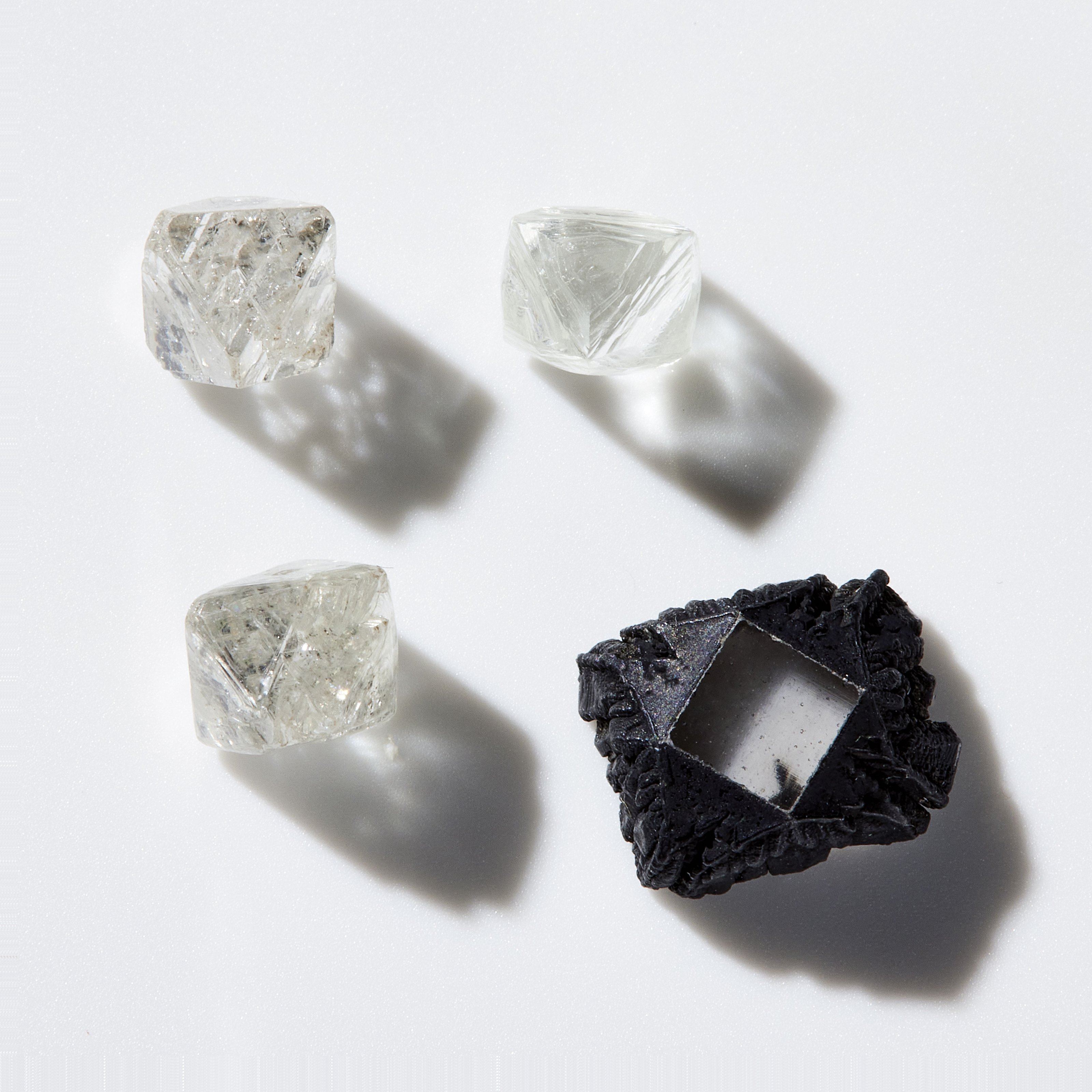
You can’t talk about this shift without talking about lab-grown diamonds, because they’ve quietly influenced the market.
Lab-grown diamonds are almost always colorless. They are also endlessly replicable. That uniformity has had an unexpected side effect: it’s made warmer, natural color a clear signal of authenticity, which is a priority for Gen Z. When a diamond shows a little warmth, it announces itself as a product of nature rather than man-made.
For Belmonte, that distinction mattered enormously. “Lately, I have seen these girls proposed to with these huge colorless diamonds that I know are lab grown, and the last thing I wanted is for people to think my diamond was lab grown,” she said. “When it has a little bit of color, it’s obvious that it’s natural.”
Kothari sees the same instinct driving her clients. “As lab-grown diamonds have become increasingly standardized, we’ve seen clients gravitate toward natural diamonds that celebrate individuality,” she said. “Warmer color is often embraced because it reflects the uniqueness of nature. Every natural diamond has its own personality, and that’s something you simply can’t manufacture in a lab.”
How Warm Diamonds Became a Luxury Trend
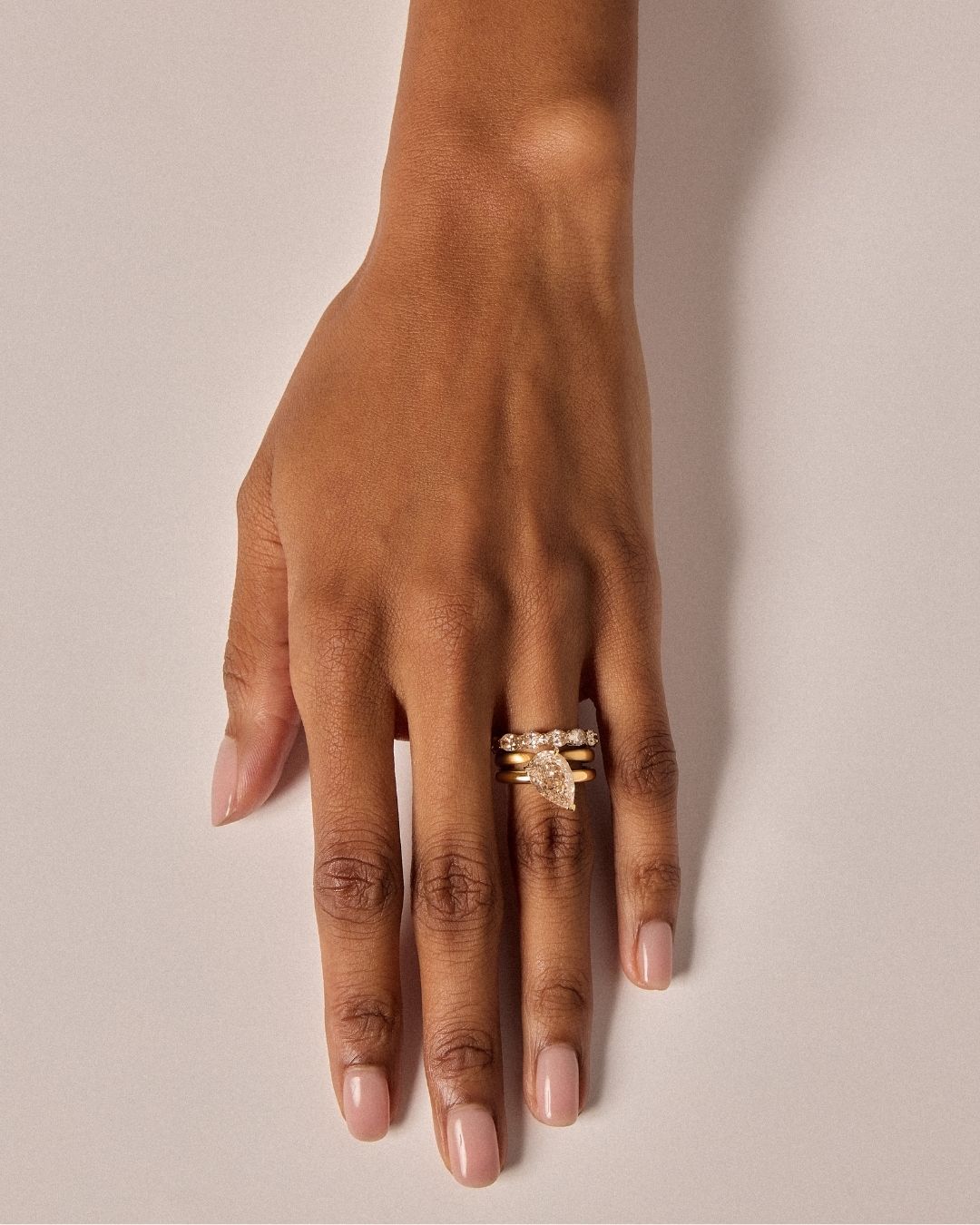
What strikes me most about this moment is how completely the perception has flipped. The very characteristic that buyers thought they had to compromise has become a selling point.
“People aren’t looking for the most technically ‘perfect’ diamond anymore. They’re looking for something no one else has,” Kothari said. “Really beautiful, warm natural diamonds have become incredibly sought after, and we’ve actually seen prices increase because demand has grown so much. It’s becoming harder to source exceptional warm diamonds because they’re exactly what today’s clients are asking for.”
That demand now reaches all the way to stones that people once thought of as less than. “Warm diamonds were once overlooked. Today, they’re some of the most requested diamonds in our showroom,” she said. “The majority of our clients are looking for warm colors, or even fancy yellow and brown diamonds, because they want something that feels different from the traditional engagement ring. They’re searching for the diamond that makes them stop in their tracks.”
It’s a philosophy AARYAH committed to early. “At AARYAH, we celebrated color in natural diamonds long before it became a broader trend,” Kothari said. “We’ve always believed that warmth adds personality and character, and it’s exciting to see more consumers embracing that perspective. Some of the most unforgettable diamonds are ones with the most soul.”
A Diamond That Tells a Story
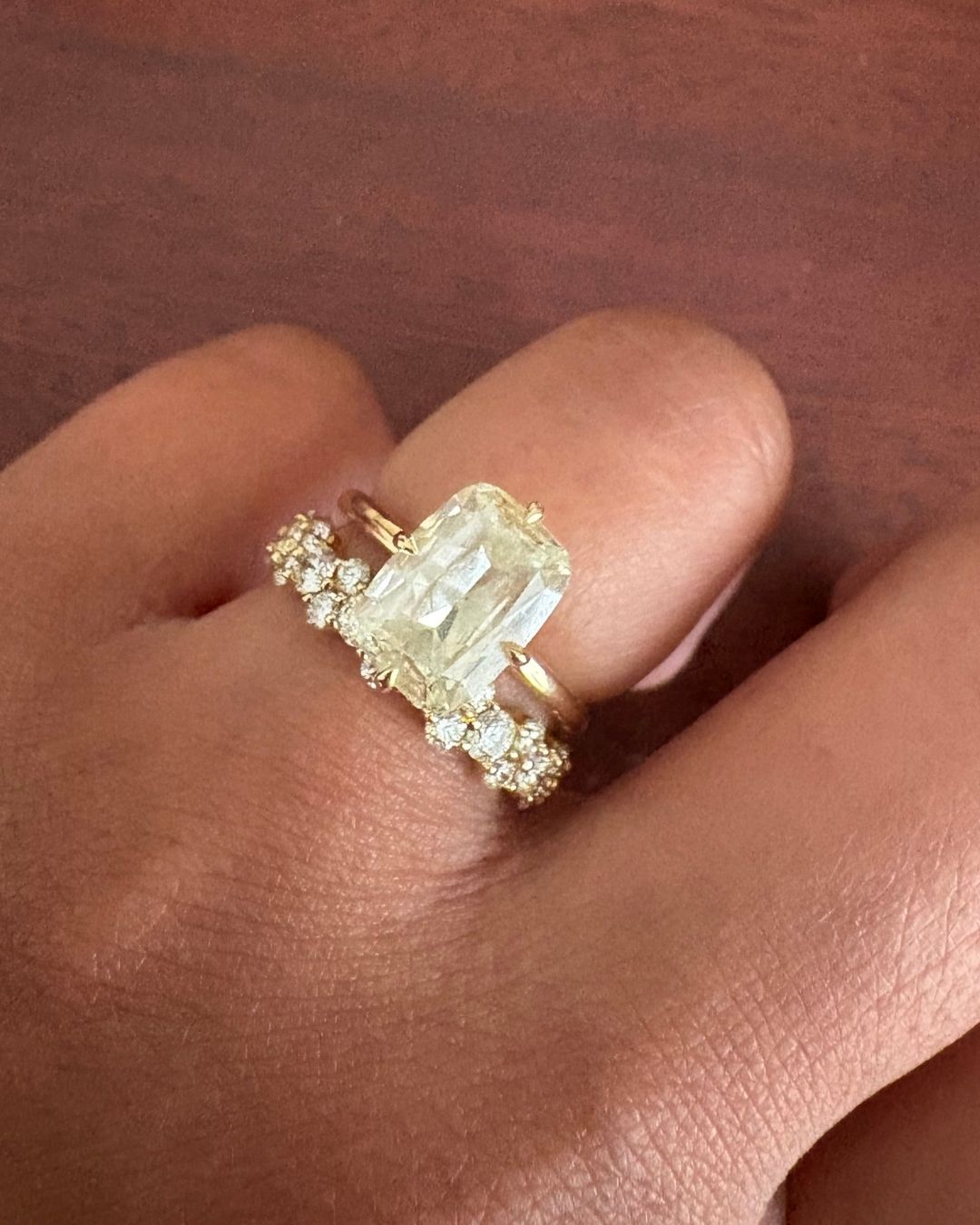
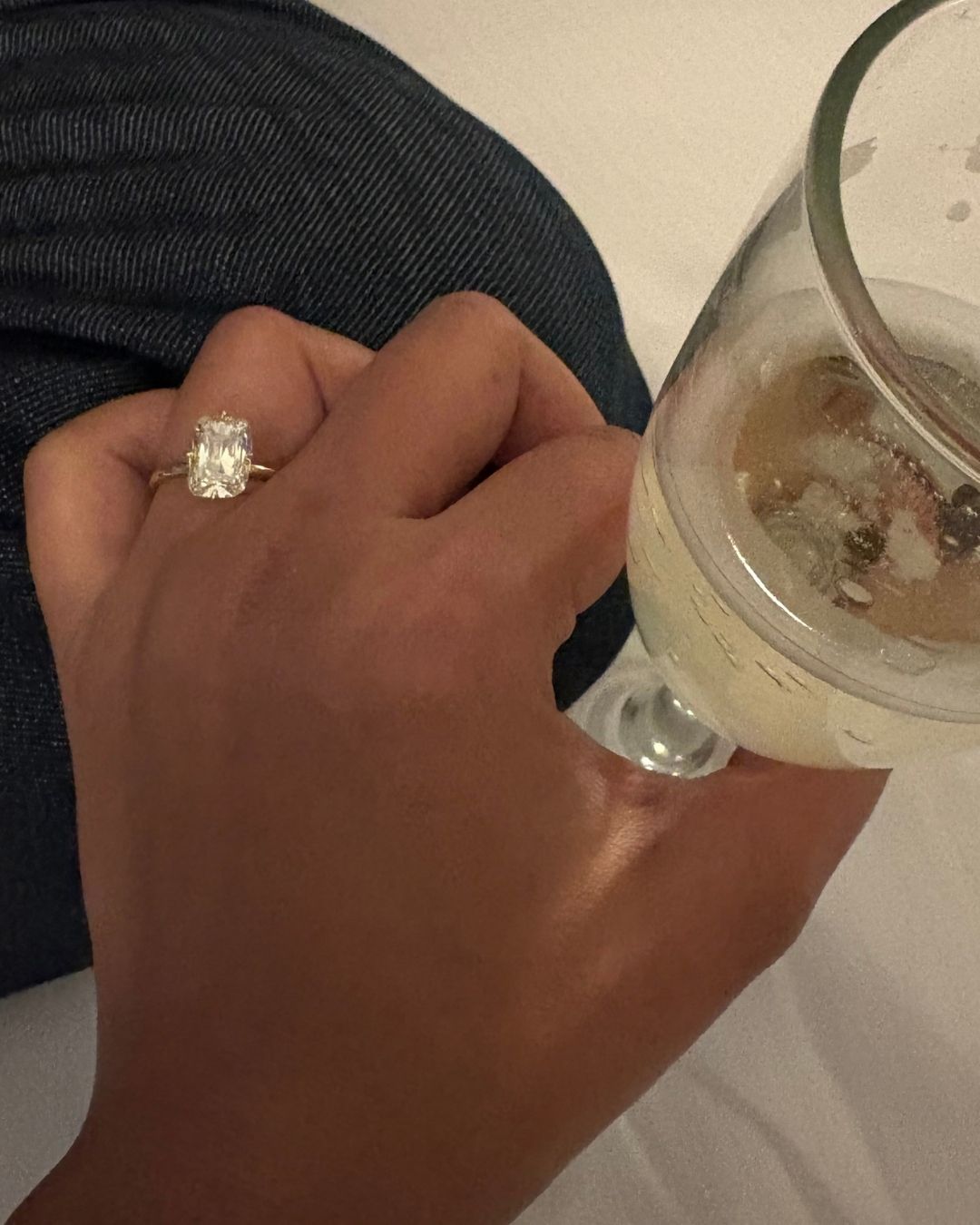
For Belmonte, the whole journey came together in a single moment. She’d given her fiancé only two instructions. “I didn’t want to have much input in my engagement ring. I really wanted the surprise,” she said. “The only thing I told Marko was that I wanted a warmer color diamond and an elongated cushion cut. The rest was up to him.”
The result exceeded everything she’d pictured. “When he finally proposed, and I saw the ring, I couldn’t believe it. It was way better than anything I even imagined,” she said. “I am still constantly distracted by it, and the compliments are never-ending.”
Why Experts Believe Warm Diamonds Are Here to Stay
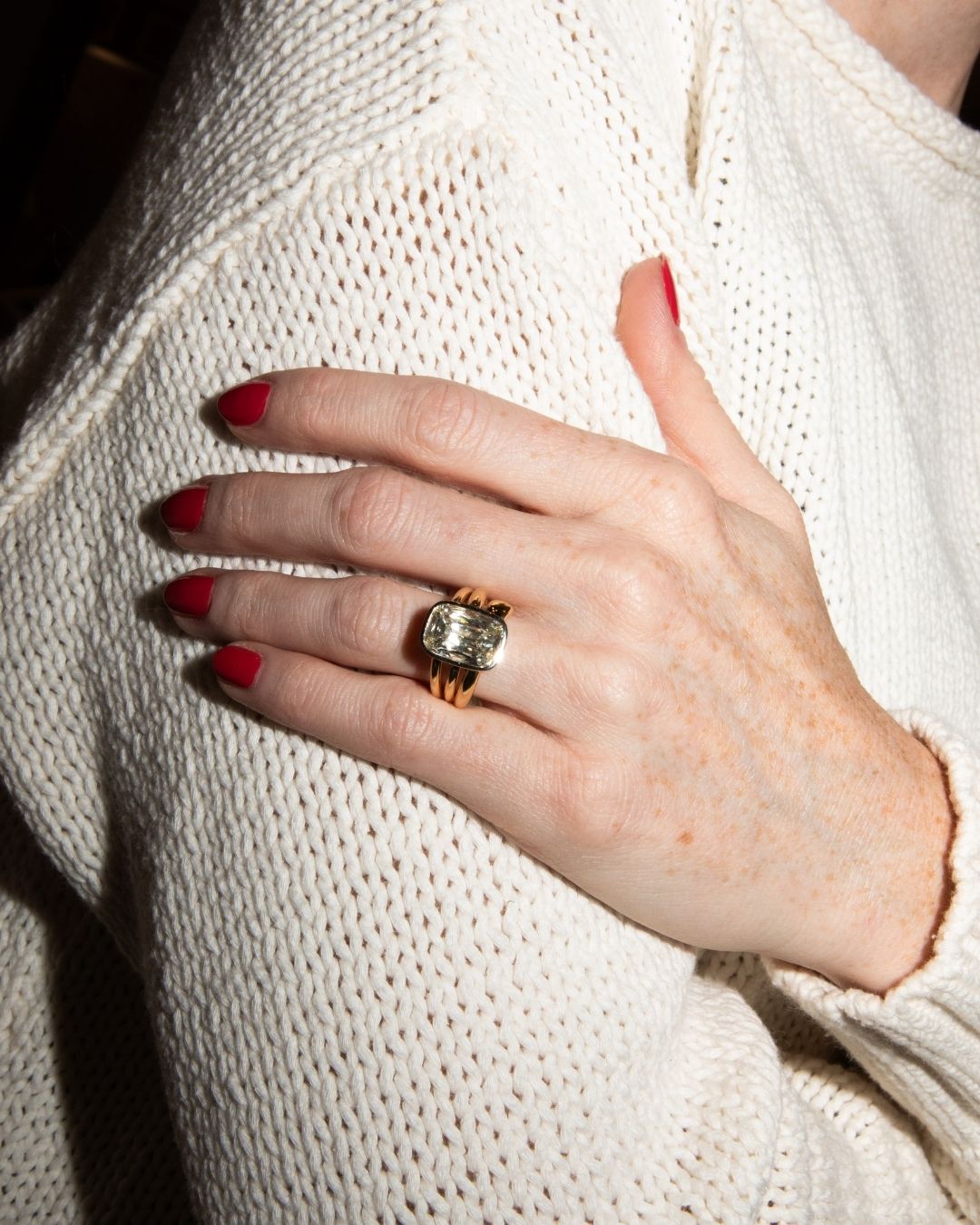
I’m with Kothari in believing we’re still near the start of this shift towards warm diamonds, not the end of it. “I think we’re only at the beginning,” she said. “As consumers become more educated about natural diamonds, they’ll continue moving away from standardized ideas of beauty and toward stones that feel personal, natural, and impossible to replicate. I think the future of bridal is less about chasing a grading report and more about finding a diamond that tells your story.”
That resonates with me, because it gets at something the obsession with D-color always missed. A diamond isn’t a test score. The numbers and letters on the grading report tell you the identifying characteristics of the diamond, not how beautiful it is on your hand or how right it feels for the person wearing it. For a long time, the industry trained everyone to chase the top of the scale. Now buyers are realizing they’re allowed to chase something else entirely: a stone with character, individuality, and soul. It’s a far more romantic way to fall in love with a diamond.