
Read More
The Dinner Ring: The Most Glamorous Jewel You’ve Never Heard Of
The elegant precursor to the diamond cocktail ring is returning as collectors embrace a new style of statement ring with history, personality, and presence.
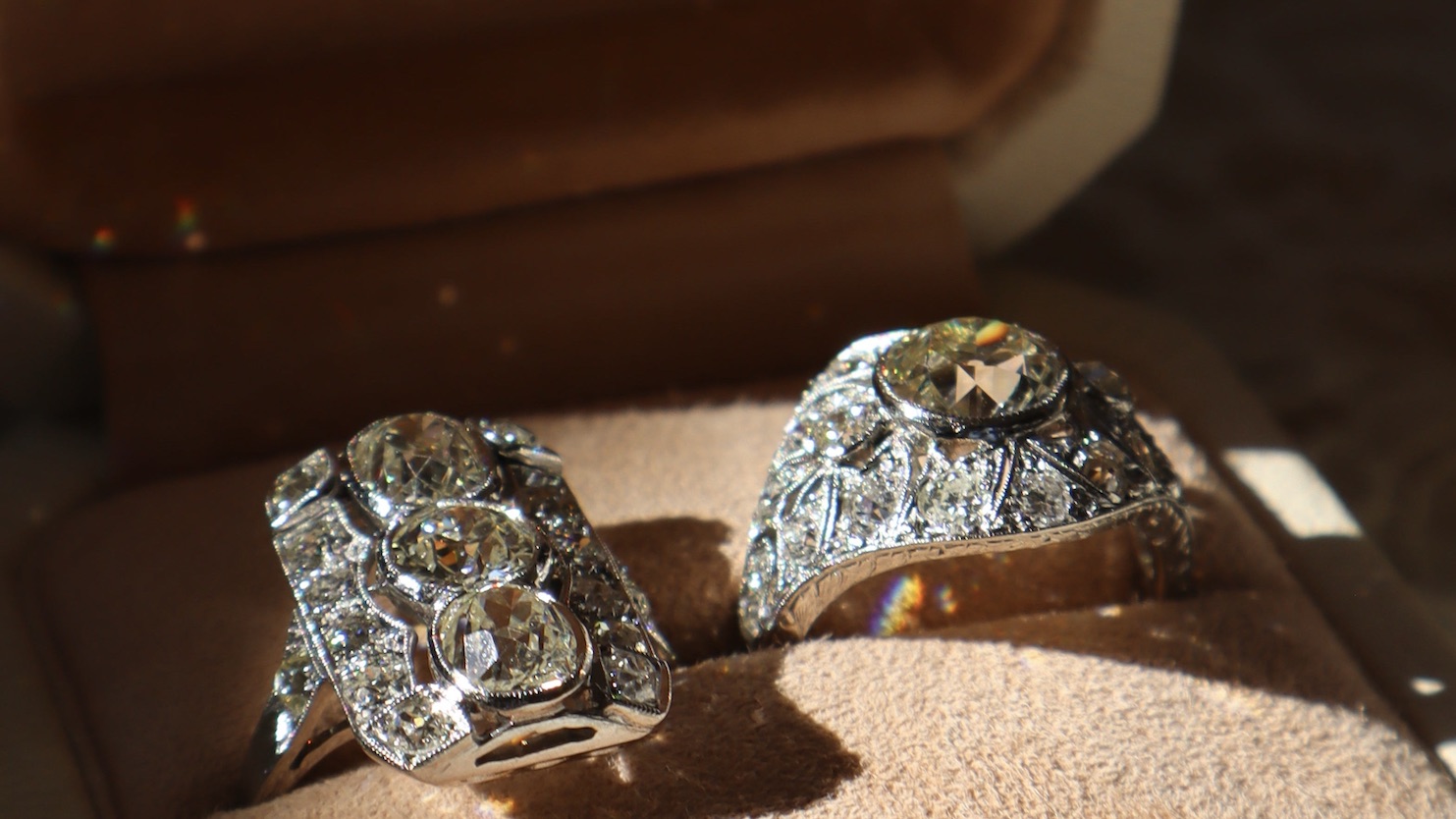
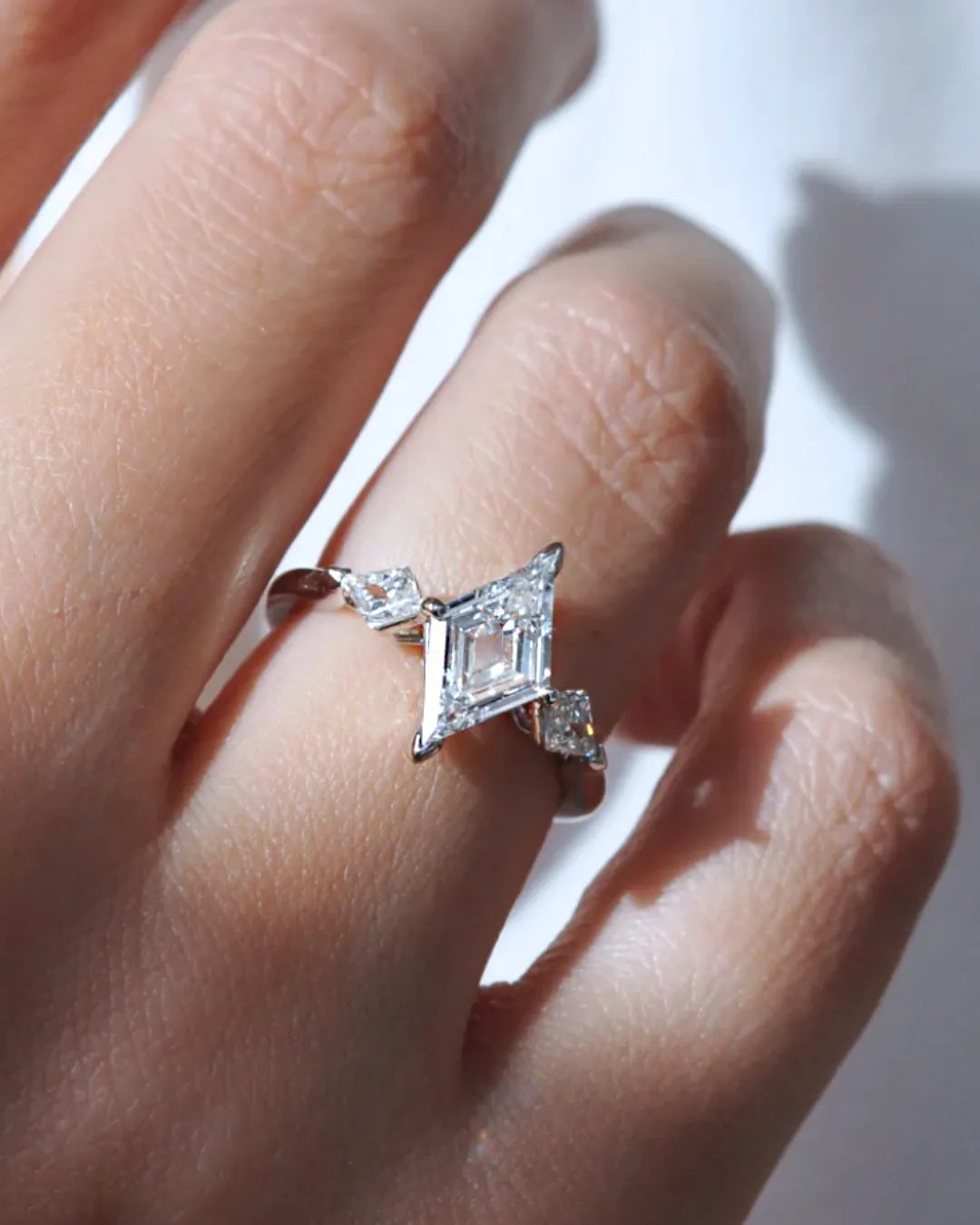
Diamond Dinner Rings (Courtesy of Andria Barbone)
Though the cocktail ring gets all the fame and glory, the dinner ring actually predates it and is just as glamorous—if not more so—yet is often overlooked. It also deserves credit for being profoundly feminist. Similar to cocktail rings, dinner rings were typically bold statement pieces featuring colorful gemstones such as emeralds, garnets, citrines, and aquamarines, often surrounded by a halo of sparkling diamonds. While diamonds frequently framed and enhanced the design, dinner rings were less about showcasing a single stone and more about creating a dazzling composition of color, geometry, and light.
Unlike cocktail rings, however, these rings were not usually gifts from a husband or boyfriend; they were purchased by the women who wore them. This was the 1920s, after all, a time when women were finding new freedoms both politically and through fashion and jewelry. Gone were the suffocating corsets, and in came eye-catching dinner rings. These jewels were heavily influenced by the Art Deco aesthetic, with an emphasis on geometric shapes, intricate patterns, vibrant colors, and innovative combinations of precious metals.
Meet the Experts

Jillian Sassone is the founder and creative director of Marrow Fine, an independent fine jewelry brand based in San Diego, California. She launched the brand in 2016 after reimagining her grandmother’s heirloom jewelry, a process that sparked her passion for art and jewelry design. The name Marrow reflects her belief in honoring the “old good bones” of heirloom pieces and the meaning they carry.

Zuleika Gerrish is an antique, vintage, and fine jewelry expert as well as a gemmologist and co-founder of Parkin and Gerrish with her husband, Oliver. Alongside running Parkin & Gerrish, she lectures on historic jewelry, sharing her expertise with new audiences.
Marrow Fine founder and creative director Jillian Sassone tells Only Natural Diamonds, “What makes a dinner ring such an interesting piece is that it captures a very specific social moment—when jewelry was part of how you participated in an evening, not just how you dressed. It carries that sense of intention and presence.”
Ahead, take a closer look at the fascinating history of this vintage ring style, its recent rediscovery as a sophisticated jewel designed to shine under candlelight, and why collectors are once again gravitating toward these distinctive, richly expressive pieces.
What Is a Dinner Ring?

First, let’s define what a dinner ring actually is.
Antique jeweler and historian Zuleika Gerrish defines a dinner ring as a specific category of dress ring that largely predates the cocktail rings of the 1920s. According to Gerrish, these jewels originated during the late Victorian, Edwardian, Belle Époque, and Art Nouveau periods—essentially the late 19th and early 20th centuries—when women dressed formally for dinner and evening jewelry played a significant social role. In fact, Gerrish argues that the dinner ring could more accurately be described as an “evening dress ring.”
“Such rings were meant for dressing up, not just for dining. At the height of the Edwardian, Gilded Age, and Belle Époque, women of a certain class might change clothes several times a day, sometimes five, six, or even seven times, depending on the household, occasion, and level of formality. There could be morning dress, walking dress, visiting dress, shooting/sport dress, tea dress, evening dress, and court or ball dress. Dinner was not simply an evening meal; it was part of the theater of society.”

According to Gerrish, the social worlds of the Gilded Age and Belle Époque created the perfect environment for the dinner ring to flourish. “Think of The Gilded Age and Downton Abbey. The hand was highly visible at the table, holding a glass, lifting a fork, turning a menu, holding a fan, or resting in candlelight. Lightning was also an important point to highlight since electricity was just starting to enter homes. You can imagine how a diamond’s sparkle would look under these different lighting conditions. That is where the so-called “dinner ring” makes sense,” she says.
Dinner Ring vs. Cocktail Ring: What’s the Difference?

Dinner rings and cocktail rings are often mistaken for one another, but they emerged from different social worlds. The dinner ring dates to the Edwardian and Belle Époque periods (roughly 1871 to 1914), when it was worn for formal dinners and elegant evening gatherings. Cocktail rings arrived later, rising to prominence during the Jazz Age of the 1920s and 1930s. While both styles are bold, decorative, and often feature colorful gemstones, their origins reveal distinct purposes.
According to Gerrish, the cocktail ring earned its name during Prohibition, when cocktails became fashionable as a way to disguise the taste of poor-quality bootleg alcohol. The ring became closely associated with that culture of nightlife, jazz clubs, and newfound social freedoms for women.
“It was not simply a large dress ring; it was a ring connected to a new social ritual—women going out, drinking cocktails, dancing, smoking, listening to jazz, and being seen in public in a way that would have been much more shocking before the First World War,” says Gerrish.
Sassone explains that cocktail rings were designed to command attention. “Cocktail rings feel more outward-facing and social—built for parties, movement, and nightlife, where jewelry needed to read from a distance,” she says. “Over time, the two terms blurred, since both ended up becoming shorthand for bold, statement-making rings.”
The clearest distinction lies in the settings for which the rings were created. “A dinner ring is really rooted in the early 20th century and was designed for intimate evening settings—seated dinners, at-home entertaining, candlelit tables,” says Sassone. “It was meant to be seen up close, which is why the design language feels more composed and centered.”
Gerrish notes that even the etiquette surrounding gloves helped heighten the drama of a dinner ring. Women often arrived wearing gloves with rings placed over them, only to remove the gloves once seated at the table. The gesture revealed the jewel at precisely the right moment—whether lifting a glass, dining, or resting a hand in the glow of candlelight.
The Design Codes That Define a True Dinner Ring

According to Sassone, a true dinner ring is instantly recognizable by its balanced, architectural design and the interplay between natural diamonds, colored gemstones, and intricate metalwork. “They tend to feel more centered and architectural, often with a defined focal point and that elongated north–south orientation across the finger,” she says. “The overall effect is sculptural, but controlled—elegant rather than oversized or theatrical.”
That elongated silhouette is one of the style’s defining characteristics. Gerrish notes that dinner rings frequently appeared in navette, marquise, oval, lozenge, and long plaque shapes that stretched gracefully across the finger. “Dress rings are often elongated and worn lengthwise on the finger, frequently set with diamonds and colored gemstones,” she says. “This shape matters because it flatters the hand. It lengthens the finger, creates movement, and makes the jewel visible when the hand is resting at the table.”
Other hallmarks include pierced settings, millegrain edges, platinum or platinum-topped gold, and old-cut natural diamonds, often arranged in delicate garlands, bows, scrolls, and lace-like motifs that showcased the craftsmanship of the era. “Compared to a later cocktail ring, a dinner ring is usually romantic in shape, usually flat on the finger, and it tends to be elegant and balanced, more like an architectural piece than a loud statement,” says Gerrish.

While colored gemstones provided drama and personality, natural diamonds were often the element that unified the design. Whether outlining an elongated silhouette, framing a vibrant center stone, or adding flashes of light throughout an intricate setting, diamonds brought cohesion, brilliance, and movement to the jewel.
Sapphires, emeralds, rubies, aquamarines, amethysts, pearls, and onyx were frequently paired with diamonds to create rich visual contrast. “Colored gemstones gave these rings life,” says Gerrish. “While diamonds added a beautiful sparkle, the rich colors set the mood and added depth.”


Sassone notes that these gemstones were particularly effective in evening settings. “Sapphires, emeralds, and rubies came alive in low, warm light, where depth and saturation mattered more than sparkle. They felt rich and atmospheric in evening environments.”
Color also allowed women to express individuality, complementing the symbolism and brilliance that natural diamonds already carried. As Gerrish explains, while diamonds were frequently associated with engagement rings, colored gemstones offered a more personal form of adornment. “Quite simply, colored stones allow the women to add some personality.”
The Contemporary Designers Reviving the Dinner Ring


While the dinner ring may have originated more than a century ago, its spirit lives on in the work of contemporary designers. Gerrish points to names such as Jessica McCormack, Marina B, Fernando Jorge, Stephen Webster, and Clio Saskia as modern jewelers who embrace many of the same principles that defined historic dinner rings.
“The designers who best capture the spirit of historic dinner rings are not necessarily copying Belle Époque designs exactly,” says Gerrish. “Rather, they are allowing women to have truly individual personalities at the dinner table.”
Among them, Gerrish highlights Clio Saskia for her nature-inspired creations, which recall the flowing lines and organic motifs of the Art Nouveau period. “Her sea dragon, snake, and lizard jewels seem to move over the hand rather than simply sit on it,” she says. “All share the same essential belief: that a ring can be theatre, identity, and conversation on the hand.”
That philosophy echoes the original purpose of the dinner ring. During the Belle Époque and early 20th century, hands became an important site of display, whether at dinner parties, grand hotels, opera suppers, or country-house weekends. “Unlike a tiara or a necklace, a ring was intimate and mobile; it moved with the wearer,” says Gerrish. “It could be admired across a table in a way that felt personal and conversational.”
Why Collectors Are Rediscovering Dinner Rings

Part of the appeal of dinner rings is that they remain somewhat under the radar. Many examples are still catalogued simply as dress rings, Art Deco rings, or cocktail rings, meaning the category has never achieved the same widespread recognition as the cocktail ring.
“That hidden quality is part of their appeal,” says Gerrish. “A good dinner ring fills a particular space in a collection: it is not an engagement ring, not a mourning jewel, not a signet, and not a formal parure piece. It is jewelry at its most social, a jewel of conversation and display.”
Their resurgence also reflects a broader shift in how women buy and wear jewelry today. Gerrish notes that dinner rings emerged during a period when jewelry began moving beyond traditional roles tied to marriage, inheritance, or social status and became increasingly associated with personal style and self-expression.
That idea feels particularly relevant today. Recent data from Jewelers Mutual shows that self-purchasing remains a meaningful driver of jewelry sales, with nearly 60% of self-purchasers identifying as collectors. Rather than waiting for a milestone or special occasion, many women are building personal collections that reflect their own tastes, stories, and achievements.
Dinner rings fit naturally into this movement. Rich in history, craftsmanship, and individuality, they offer something beyond conventional luxury—a jewel with personality, provenance, and a story to tell.
Jewelry Designed for Conversation


The dinner ring was more than a beautiful accessory—it was designed to facilitate social interaction. More than a century later, that idea still feels remarkably modern. As Sassone notes, “They feel especially relevant again because they strike that balance between bold and refined—statement pieces that still feel wearable, personal, and easy to make your own.”
While cocktail rings were designed to command attention in crowded rooms, dinner rings flourished in more intimate settings. Around candlelit tables, they invited admiration from across the room and conversation among guests seated nearby. Gerrish describes the Gilded Age dinner table as “the most exquisitely polite sort of ring-off,” where jewelry became part of the evening’s social theater.

Gerrish describes the Gilded Age dinner table as “the most exquisitely polite sort of ring-off,” where jewelry became part of the evening’s social theater.
Yet the appeal of a dinner ring was never solely about possessing the largest diamond or the most extravagant jewel. Instead, it reflected personal taste, style, and self-expression. Whether crafted with old-cut natural diamonds, vibrant colored gemstones, or a combination of both, the most successful dinner rings revealed something about the woman wearing them.
That is perhaps why the style continues to resonate today. At a time when collectors are increasingly drawn to natural diamonds for their individuality, history, and one-of-a-kind character, the dinner ring feels especially relevant. As Gerrish explains, “Before the cocktail ring became the bold symbol of Jazz Age freedom, the dinner ring already demonstrated how jewelry could help a woman make a memorable impression in society, beautifully, gracefully, and with style.”
Each dinner ring tells a story through its design, craftsmanship, and gemstone, reminding us that the most memorable jewels have always been the ones with personality.
Shop For the Perfect Diamond Dinner Ring
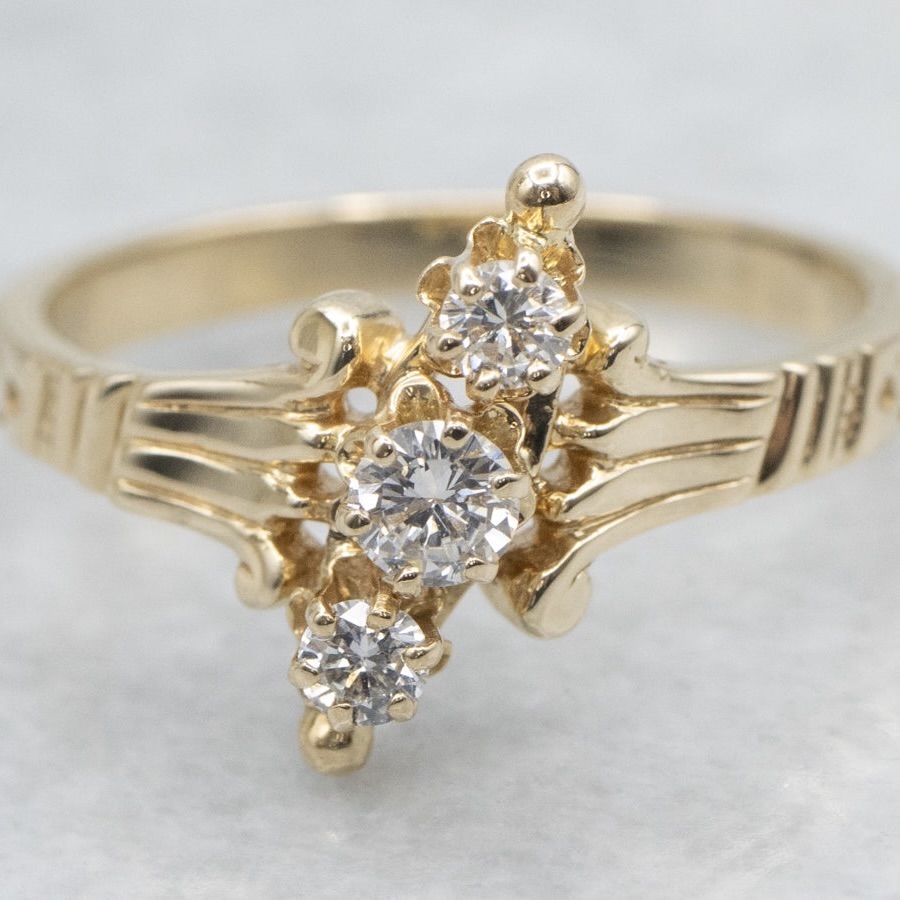
Victorian Gold Triple Diamond Navette Dinner Ring, $1,965, marketsquarejewelers.com
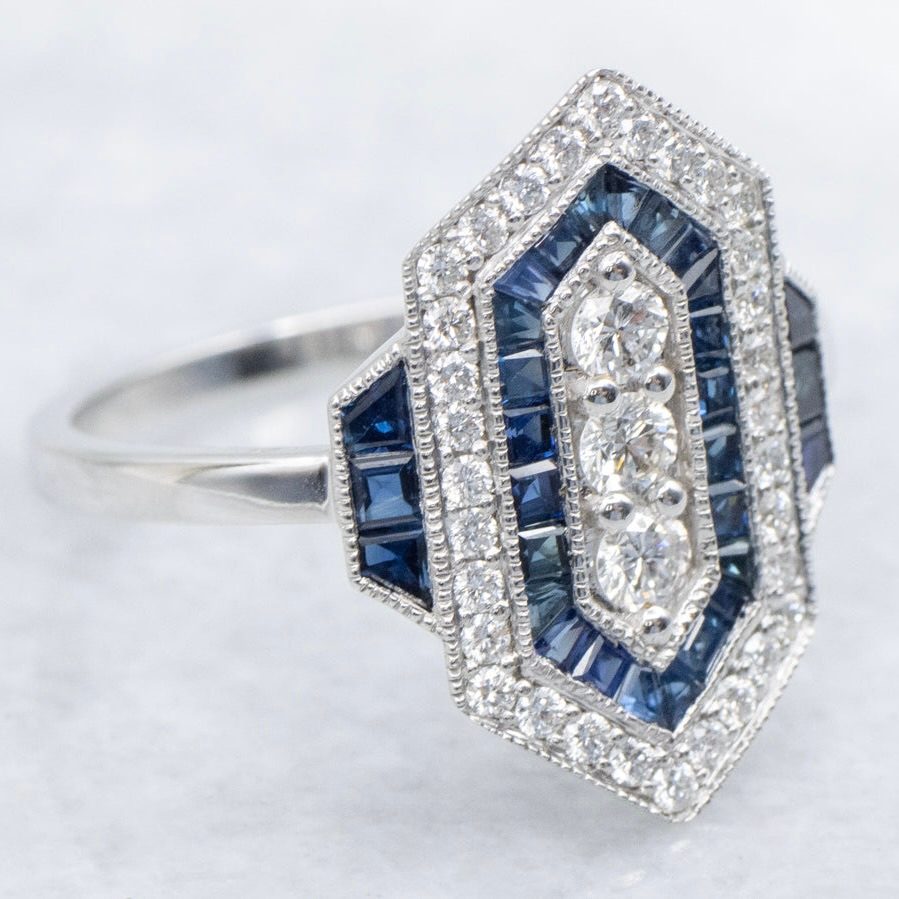
The Belfast Sapphire and Diamond Dinner Ring, $3,765, marketsquarejewelers.com
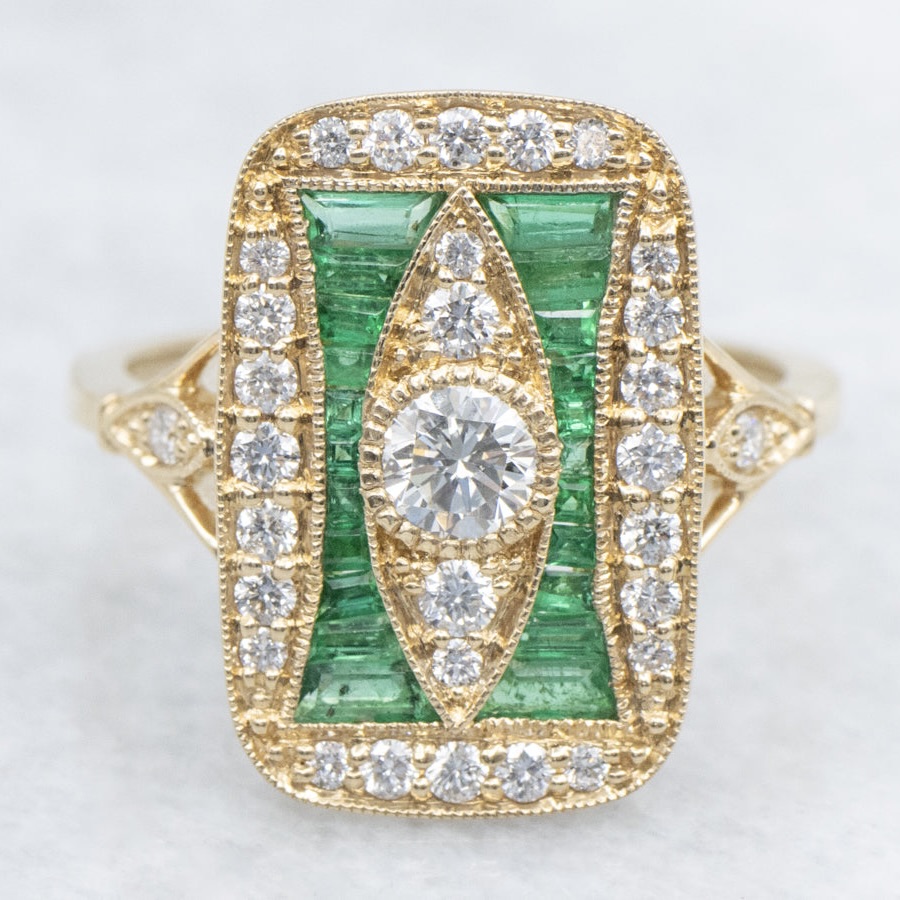
The McIntyre Emerald and Diamond Dinner Ring, $5,565, marketsquarejewelers.com
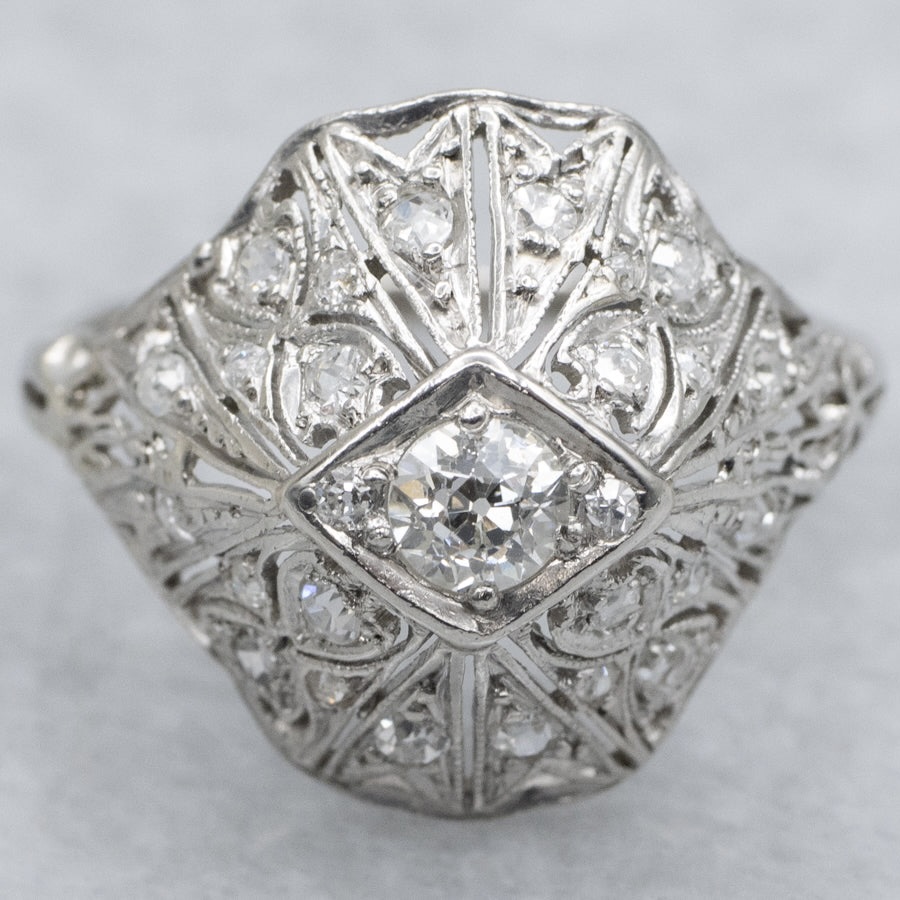
Edwardian Era Platinum and Old Mine-Cut Diamond Filigree Dinner Ring, $2,645, marketsquarejewelers.com
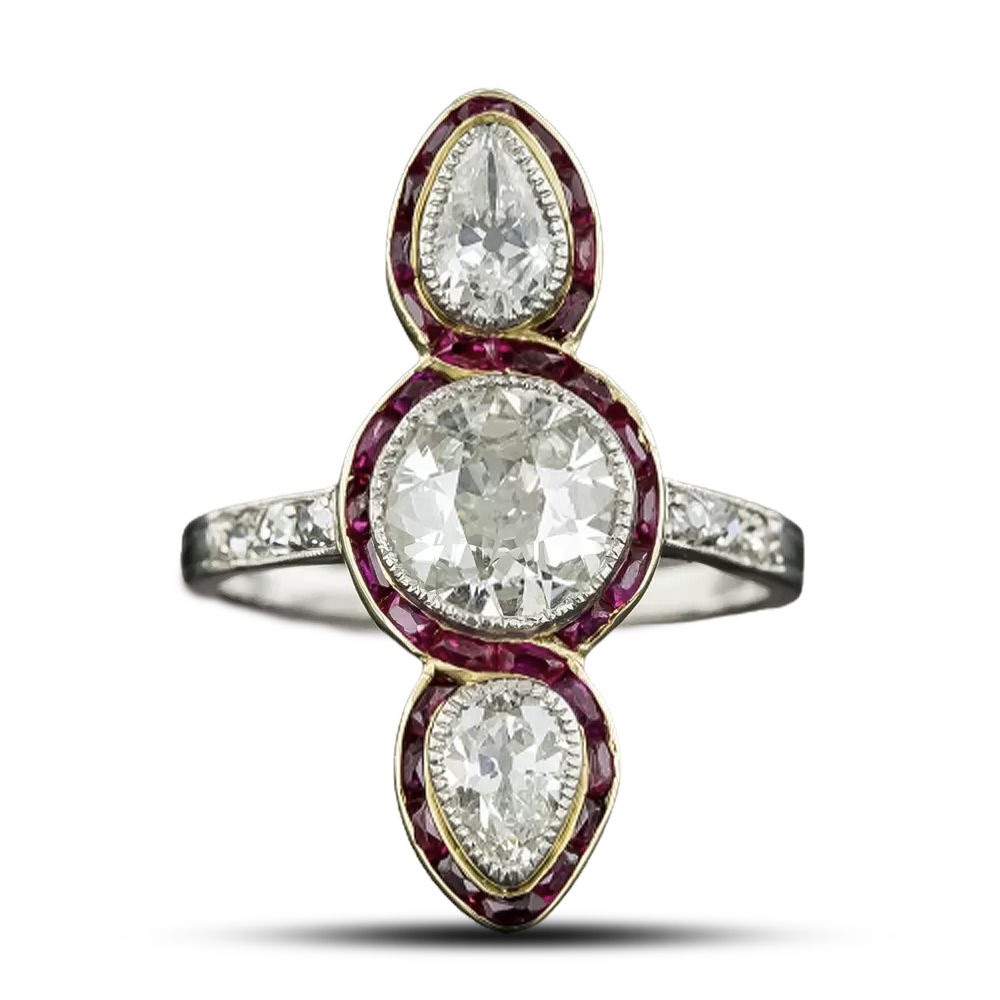
Edwardian Unique Three-Stone Diamond and Ruby Dinner Ring, $9,950, langantiques.com
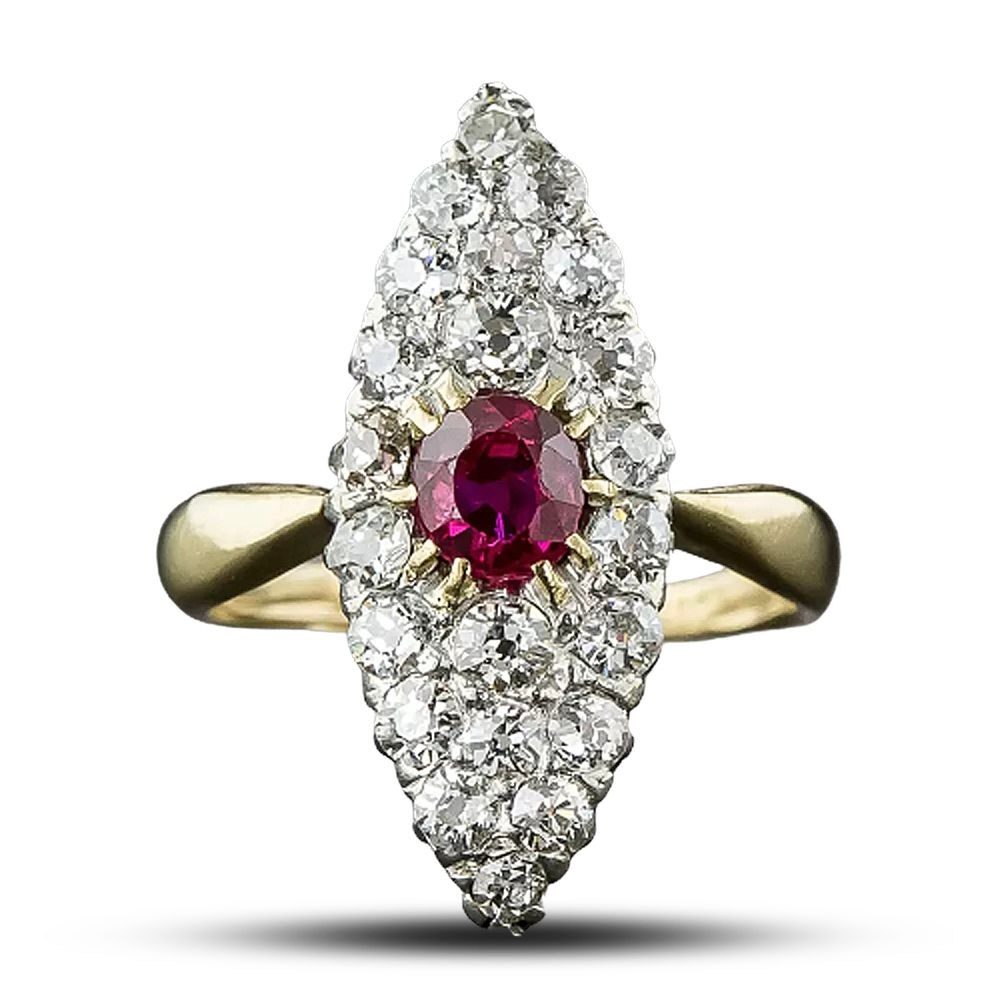
Edwardian Ruby and Diamond Navette-Shaped Dinner Ring, $3,950, langantiques.com
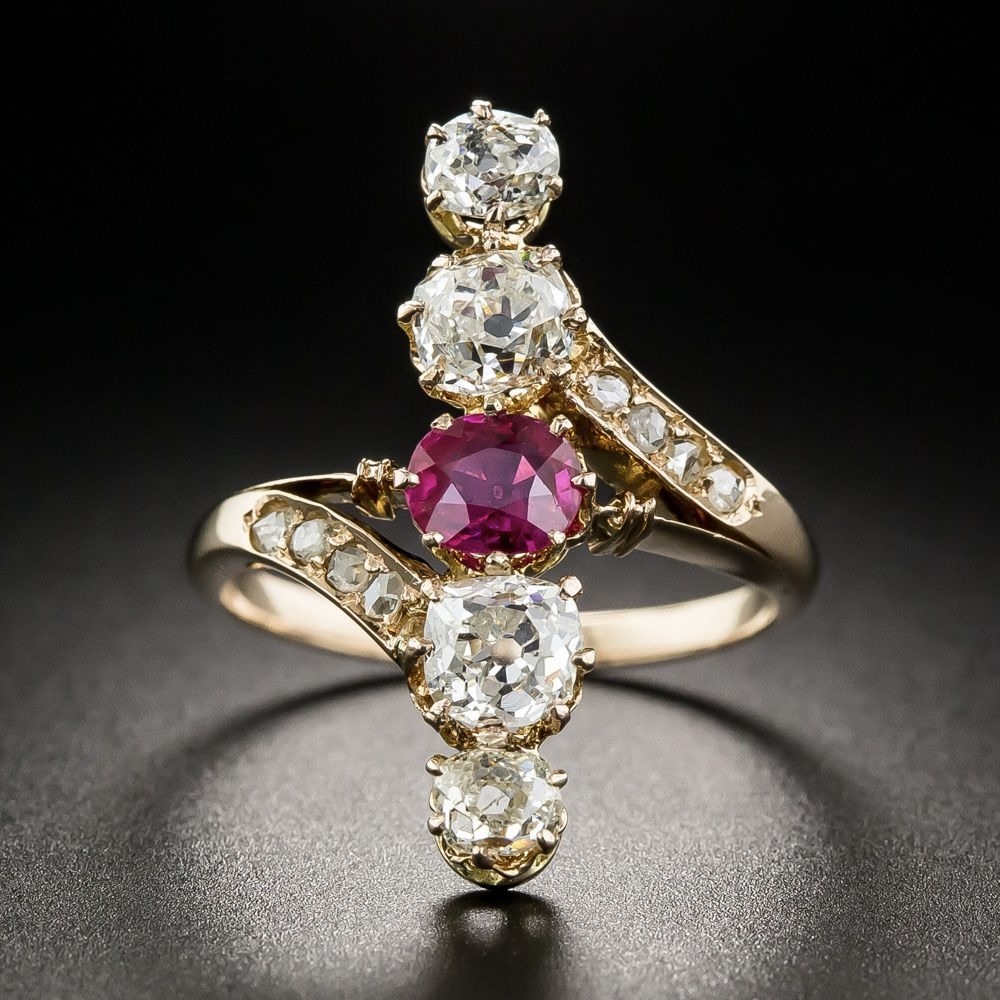
Victorian Ruby and Diamond Dinner Ring, $6,950, langantiques.com


Get the Newsletter
Sign up for the latest diamond news, delivered directly to your inbox.