Art-Inspired Jewelry That Transforms Masterpieces Into Wearable Art
The 2026 Met Gala dress code is “Fashion is Art,” so it feels only fitting to take a diamond deep dive into the most exquisite fine jewelry inspired by fine art.
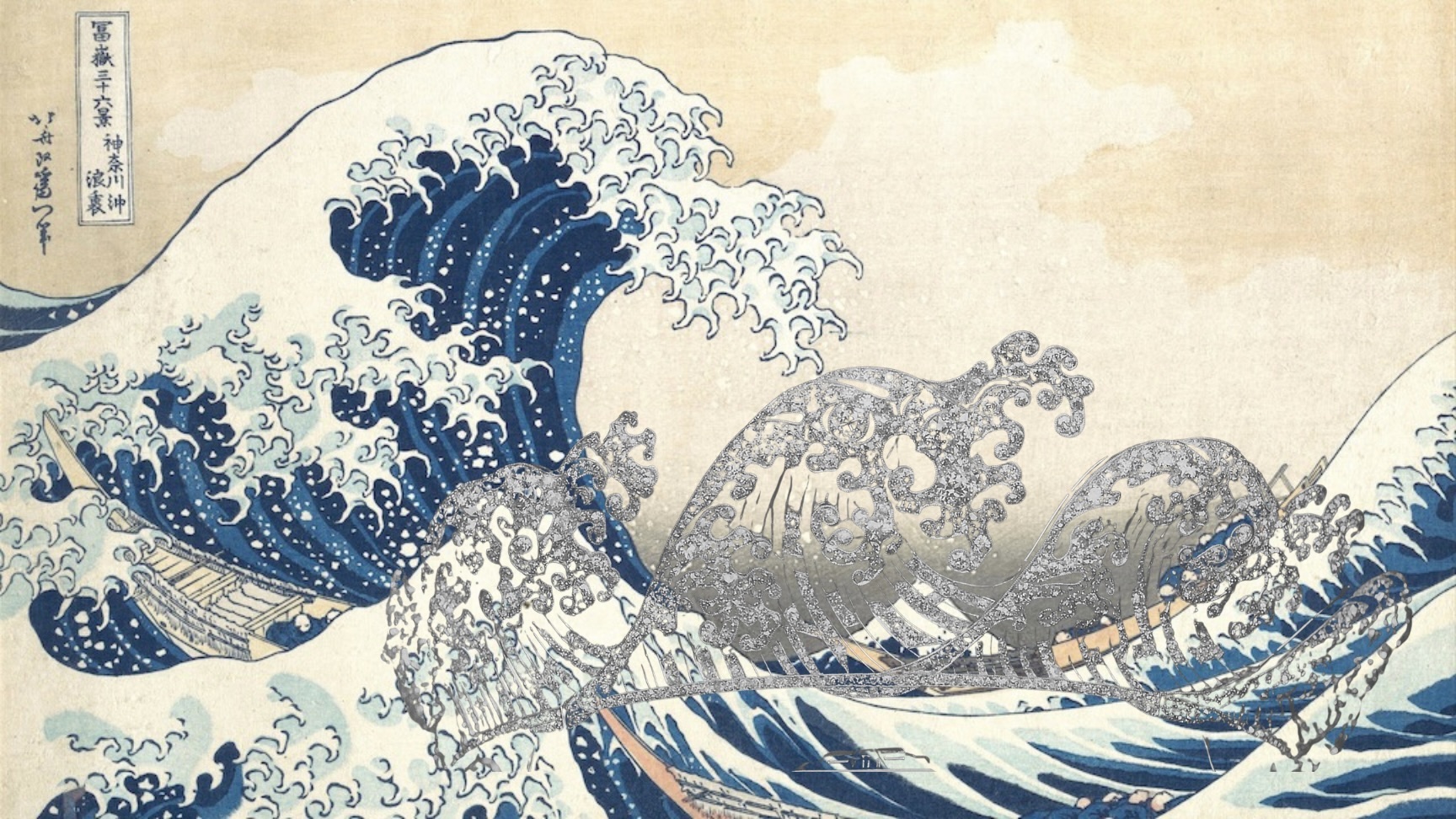
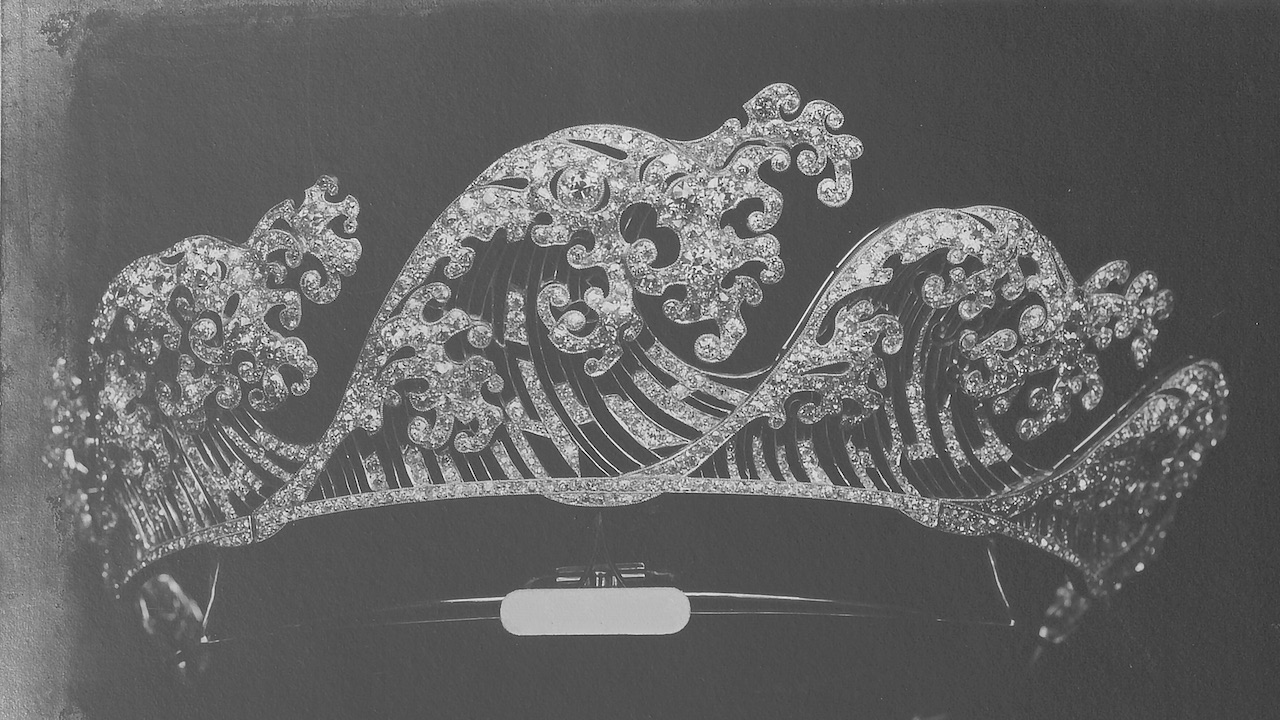
The Great Wave off Kanagawa by Katsushika Hokusai, 1831. (Public Domain / Wikimedia Commons), Boucheron Wave diamond tiara, 1910. (Boucheron Archives)
Art has always served as the pinnacle of design inspiration for creatives, no matter their discipline. And while jewelry designers have always created through an artistic lens, once in a while, the two crafts of fine jewelry and fine art intersect. Drawing inspiration from the masterpieces on view in museums, paintings, sculptures, and gallery visits have all influenced jewelry designers’ quest for fresh ideas, sometimes resulting in the actual artwork reimagined in wearable form, with art-inspired jewelry embellished in natural diamonds. If natural diamonds are art from the Earth, consider extreme heat, pressure, and carbon atoms, the mediums behind their creation.
This year, the 2026 Met Gala will debut the exhibition, Costume Art, which will explore the juxtaposition between garments and works of art, along with “the complex interplay between artistic representations of the body and fashion as an embodied art form,” according to the Metropolitan Museum of Art. The Gala dress code will be “Fashion is Art,” inviting its esteemed guests to express their individual and unique relationship to fashion as an art form and celebrate depictions of the dressed body throughout history on fashion’s biggest night.
Meet the Experts

Carol Woolton is an author, broadcaster, and jewelry historian. The founder and host of the podcast If Jewels Could Talk, she released her latest book of the same name in 2024. Woolton was Jewelry Editor at British Vogue for over 20 years and remains the magazine’s Contributing Jewelry Director. She is credited with initiating the role of Jewelry Editor at Tatler and Vogue magazines. She’s written for publications like Vanity Fair, Air Mail, The Financial Times, and more.

Levi Higgs is the Head of Archives and Brand Heritage of luxury jewelry house David Webb. He began his time with the company in 2013 and was previously the archivist and social media manager, where he built and managed the David Webb Instagram page.
From Yves Saint Laurent’s Mondrian collection to Elsa Schiaparelli and Salvador Dalí’s famed lobster dress, Alexander McQueen’s Gustav Klimt references, and Rodarte’s Van Gogh–inspired frocks, the red carpet has long drawn from fine art. The focus now turns to art-inspired jewelry: Hokusai’s The Great Wave off Kanagawa has influenced the French maison Boucheron, while David Webb’s Iris Brooch feels as though it belongs in a Van Gogh painting.
The annual Met Gala will take place on Monday, May 4, and the Costume Art exhibit will be on view at The Met Fifth Avenue from May 10, 2026, through January 10, 2027. Ahead of the 2026 Met Gala, explore the most captivating art-inspired jewelry, deserving of its own museum.
Salvador Dalí’s The Persistence of Memory (1931)
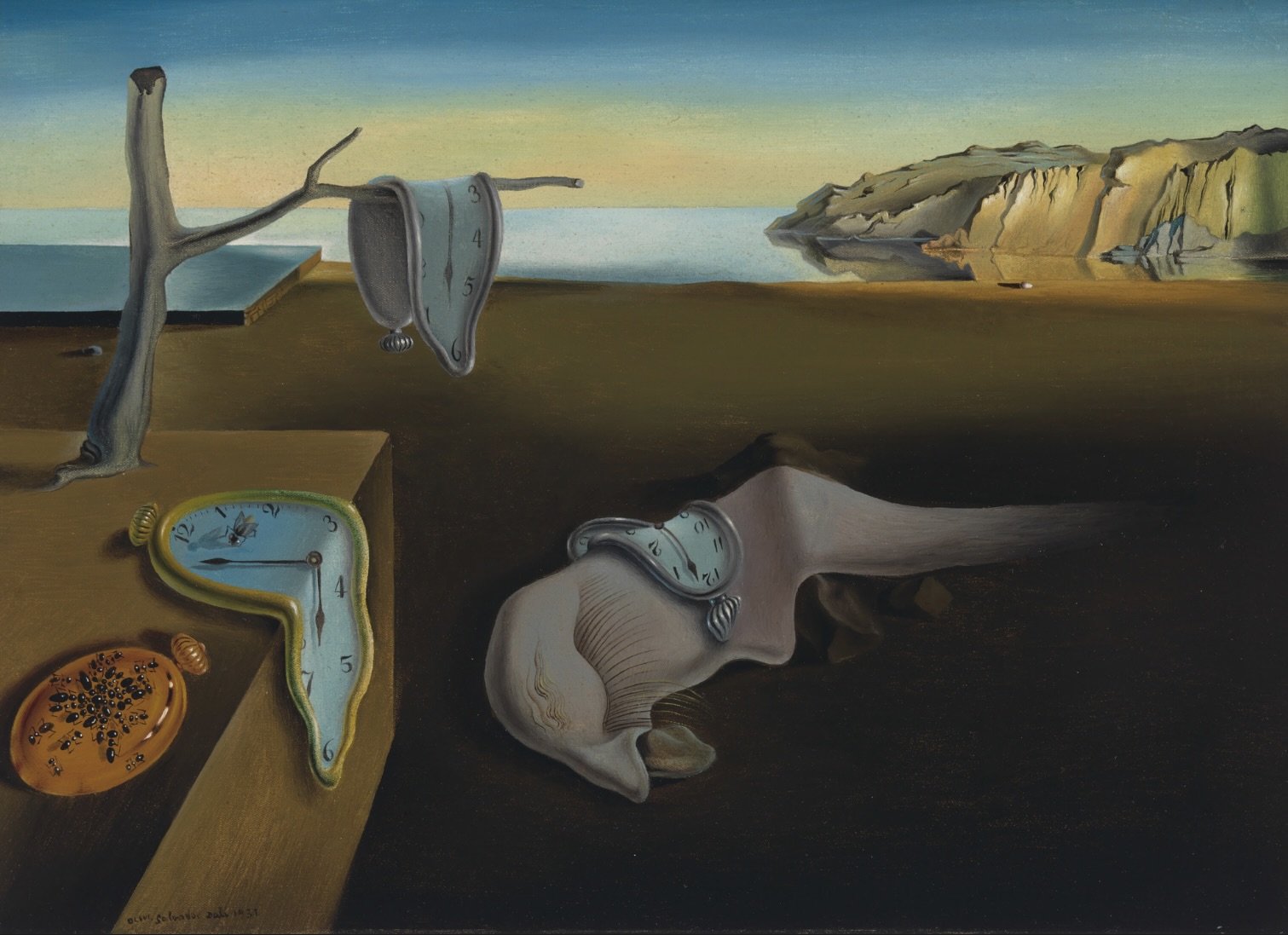
In 1931, Salvador Dalí created one of his most famous paintings and one of the best-known Surrealist works to this day. The Persistence of Memory is sometimes referred to as Soft Watches. It depicts a collection of watches melting in a barren landscape. Many believe the piece conveys that time is not a rigid construct and all things come to an end.
Dalí’s world-famous paintings are far from his only legacy. Emancipated from expectation and never one to be confined, the art provocateur worked closely with well-respected jewelers like Alemany & Ertman and Henryk Kaston to create art-inspired jewelry. Made according to his sketches, they translated his ideas into unique handmade jewelry, bringing his vision to life.
In collaboration with New York jewelers Alemany & Ertman, the artist created a series of natural diamond and gold brooches depicting a pocket watch draped over a tree.
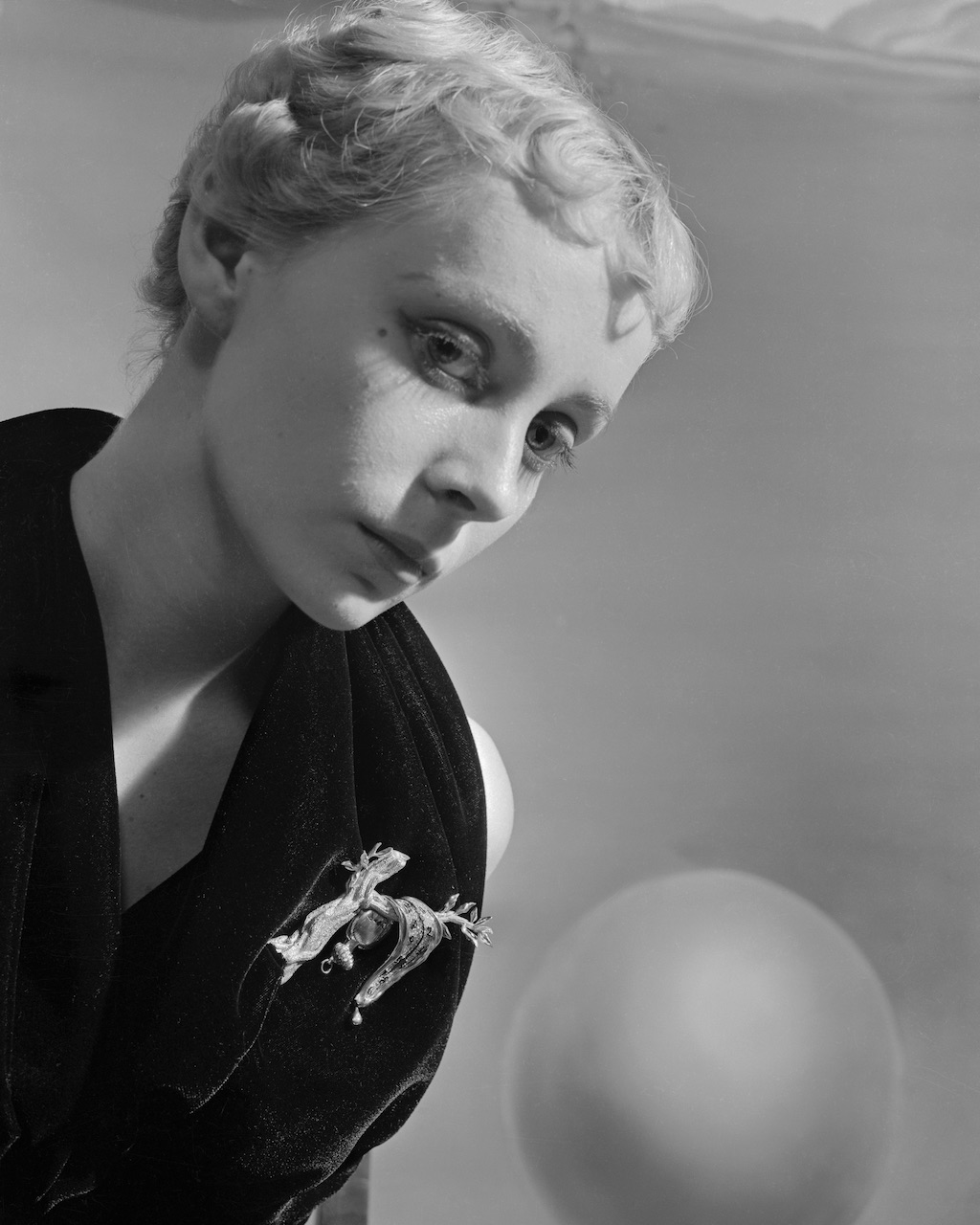
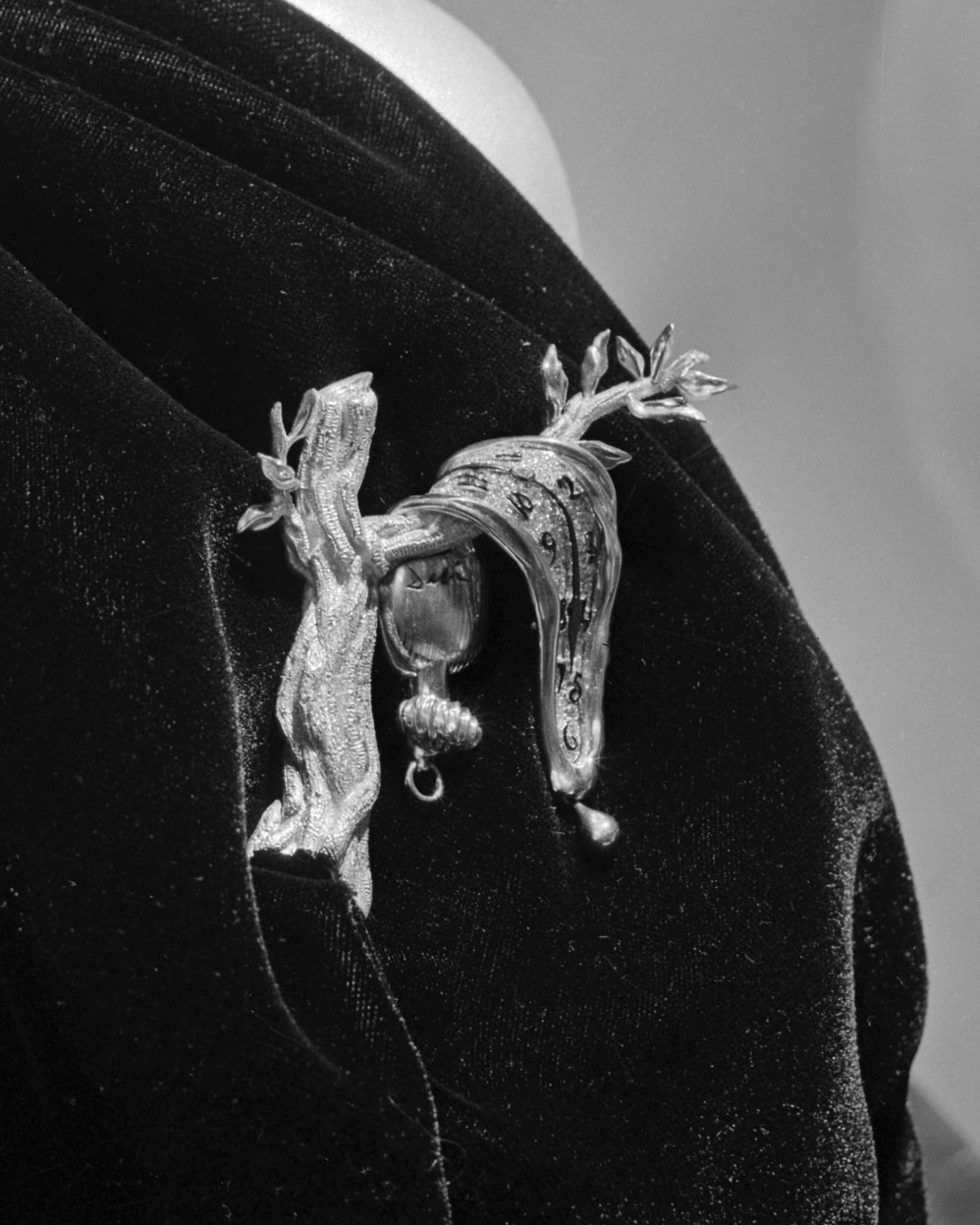
“The impact of Salvador Dalí’s jewels was huge at the time because he created a new lexicon of jewels, departing from traditional forms whilst pushing radical new ideas of what jewelry could be,” says Carol Woolton, author and podcaster of If Jewels Could Talk. “Using his unique artistic vision, he focused on symbolism and storytelling.”
As one of the most striking and unconventional watch designs in history, the Cartier Crash is known for its memorable asymmetrical “melted” case shape and distorted Roman numerals. After it debuted in 1967 in London, the Crash stood out for its surrealist nature, defying traditional timepiece design standards and further amplifying Cartier’s reputation for innovation. The Crash quickly became a highly sought-after collector’s item and a cult favorite among watch aficionados.
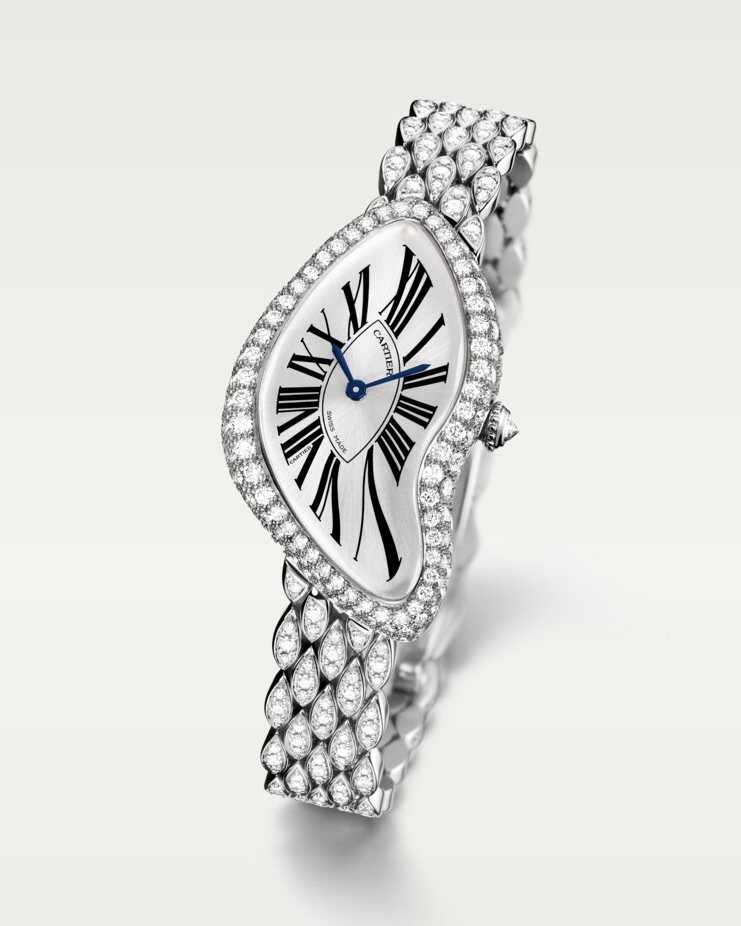
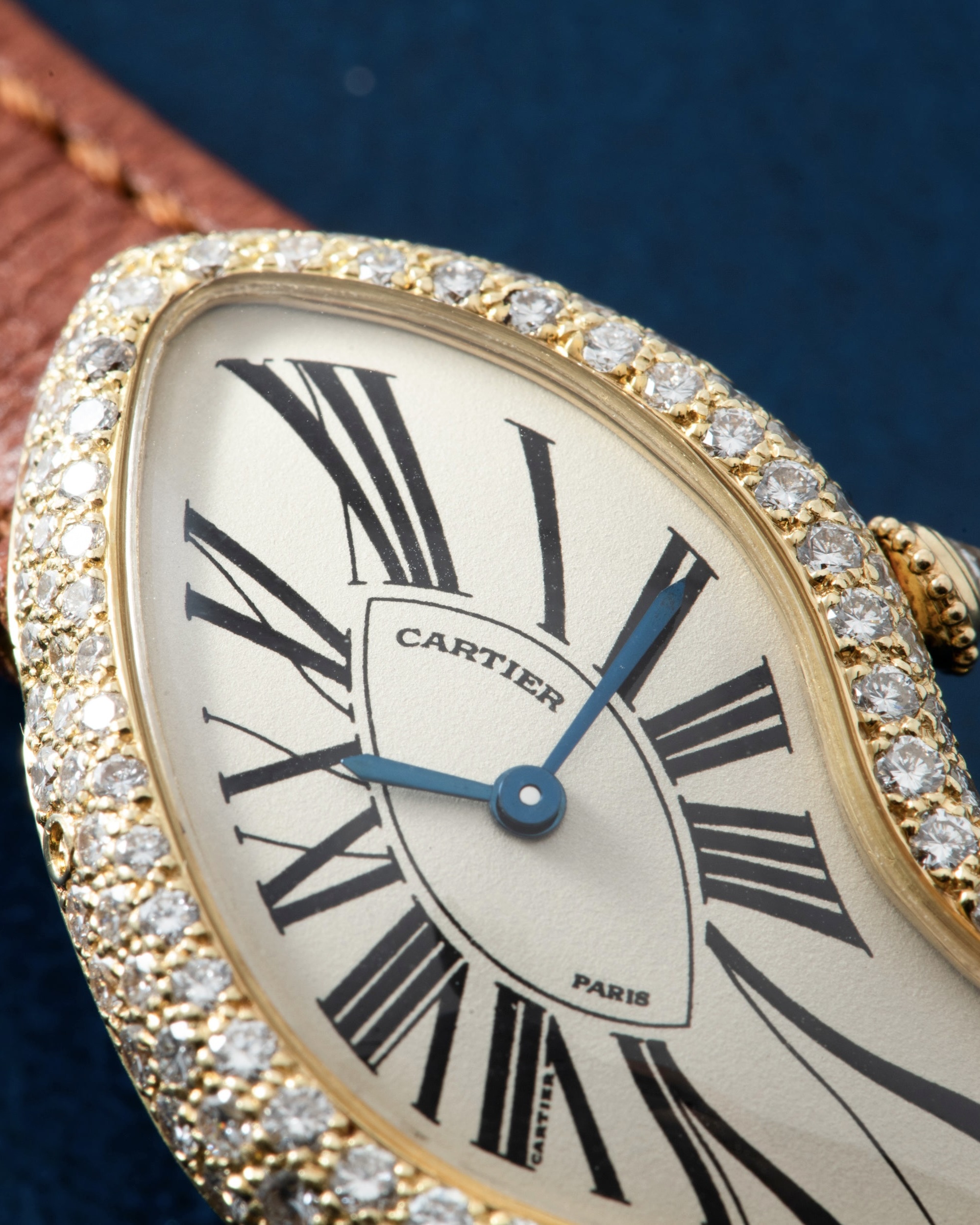
The watch was conceived by Jean-Jacques Cartier and his team of expert craftsmen at the Bond Street boutique. Thought to have been influenced by Salvador Dalí’s surrealist paintings, the Cartier Crash is often compared to the artist’s 1931 piece, The Persistence of Memory.
It’s also rumored to have been inspired by a Cartier Baignoire watch damaged in a car crash that was brought into the London boutique for repair, hence the name. Natural diamond iterations elevate the iconic timepiece into the stratosphere, transforming it into both a masterpiece of horology and a timeless work of wearable art.
Katsushika Hokusai’s The Great Wave off Kanagawa (1831)

The woodblock print, The Great Wave off Kanagawa, was created by the Japanese ukiyo-e artist Katsushika Hokusai during the Edo period of Japanese history in 1831. Featuring three boats navigating stormy seas, a large, cresting wave forms a spiral above the boats with Mount Fuji in the background.
In the early 20th century, French jewelry house Boucheron had the Wave Diamond Tiara made by expert goldsmith Coulot in 1910. A prime example of art-inspired jewelry, the headpiece replicated the breaking waves in platinum and natural diamonds. The crown of the waves is rendered with larger diamonds, with smaller stones rumbling beneath. The diadem was dismantled in 1913.
The French jewelry house’s 2024 Carte Blanche high jewelry collection, dubbed “Or Bleu,” was dedicated to water. Boucheron creative director Claire Choisne was inspired by the waters of Iceland. The range of 26 designs sees interpretations of waterfalls, water drops, icebergs, and more.
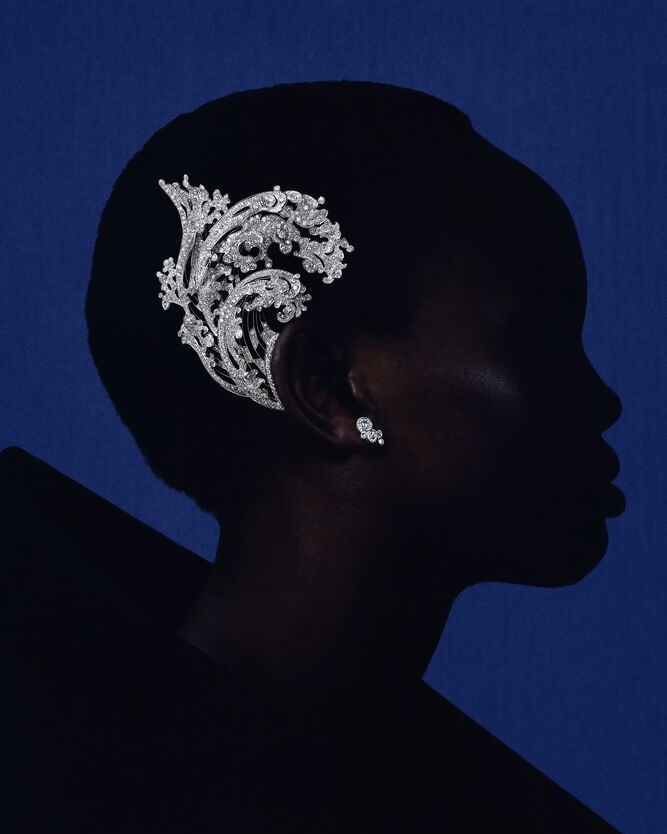
The convertible bauble is also an asymmetrical earring, a diamond brooch and a piece of hair jewelry. Titled the “Wave,” art-inspired jewelry pays tribute to the power of water. In line with the rest of the aqua-themed collection, the diamond jewel also echoes the 1910 Diamond Wave Tiara from the Boucheron archives, and therefore, Hokusai’s The Great Wave off Kanagawa. Each organic detail is molded by hand, implementing lost-wax casting, with 851 round natural diamonds for a total of 20 carats.
Sandro Botticelli’s The Birth of Venus (1485–1486)

Italian artist Sandro Botticelli painted The Birth of Venus circa 1485–1486. The work depicts the goddess Venus arriving ashore on a scallop shell on the island of Cyprus. This iconic image has since become a lasting source of inspiration for art-inspired jewelry.
Jamaican-born jewelry designer Matthew Harris of Mateo New York was inspired by Florentine Renaissance artist Sandro Botticelli’s ‘The Birth of Venus’ painting for a myriad of rings. The Diamond Venus Signet Ring is a “bold yet graceful ode to femininity and divine beauty,” crafted in 14-karat yellow gold, featuring a sculpted Venus shell motif, fully adorned with pavé diamonds that follow the shell’s natural ridges in a radiant fan-like formation.
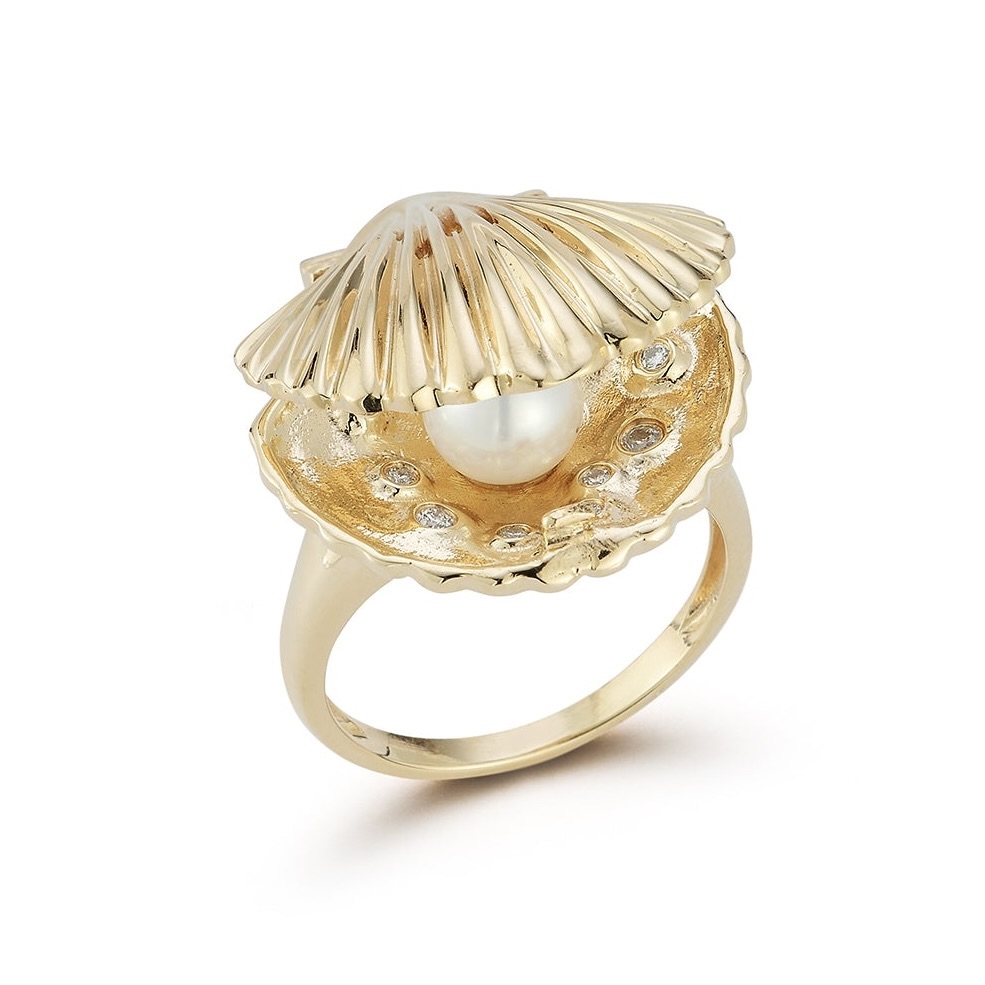
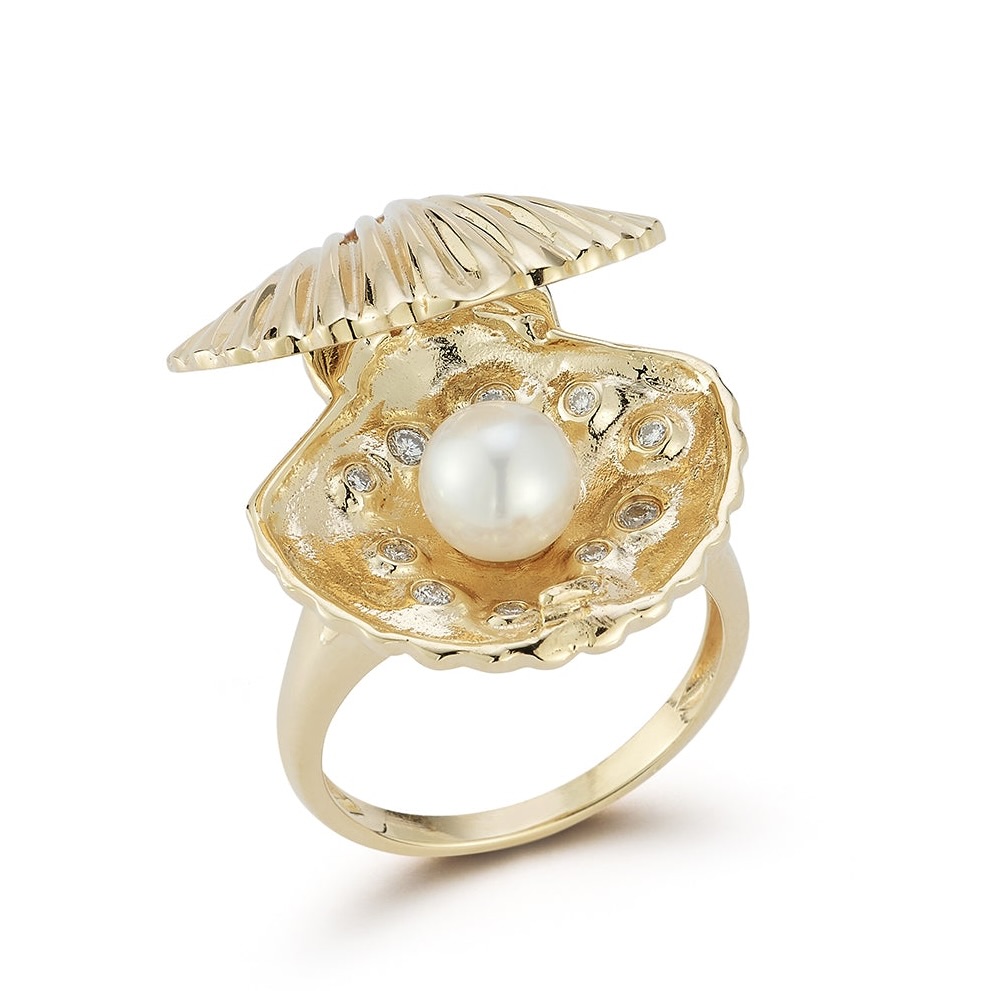
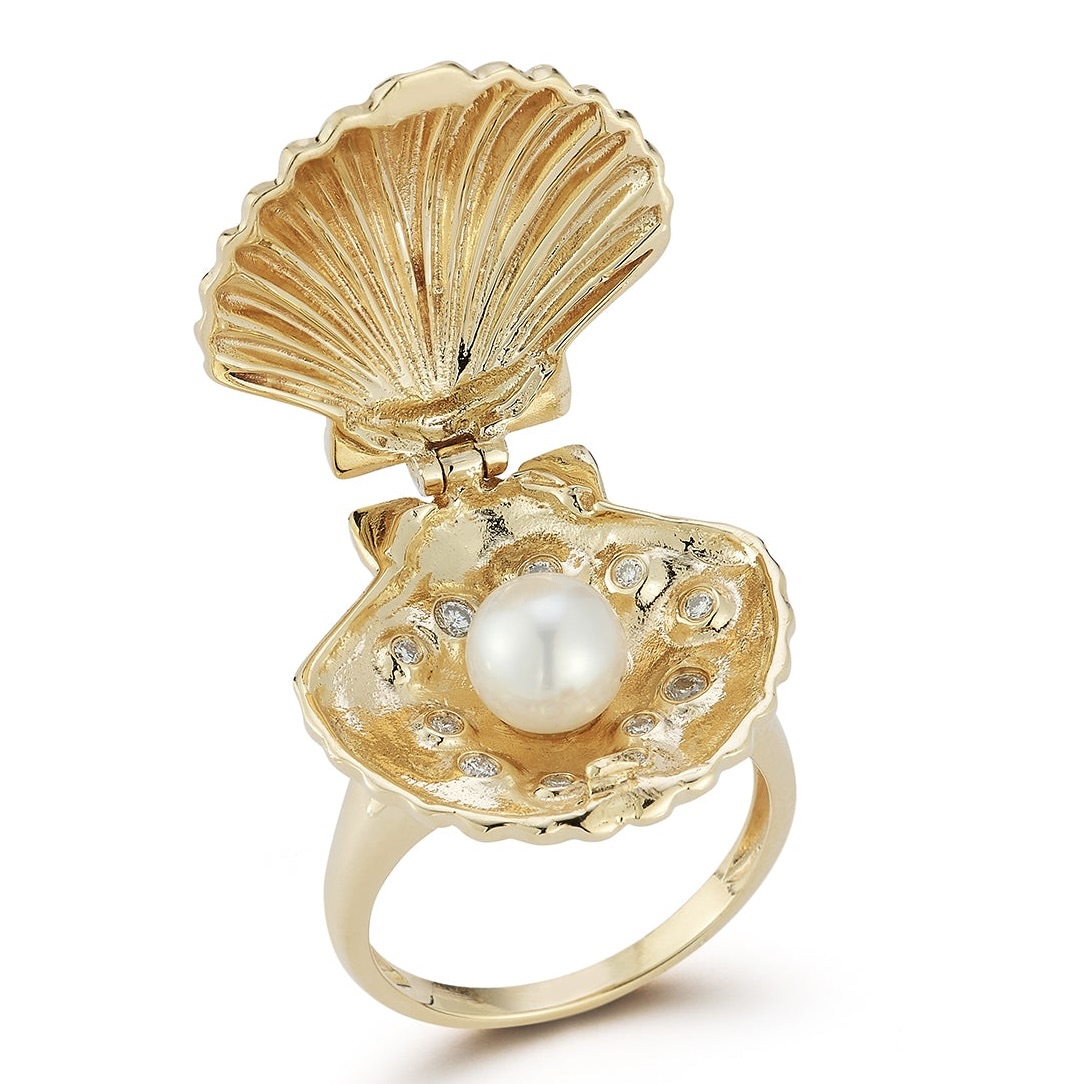
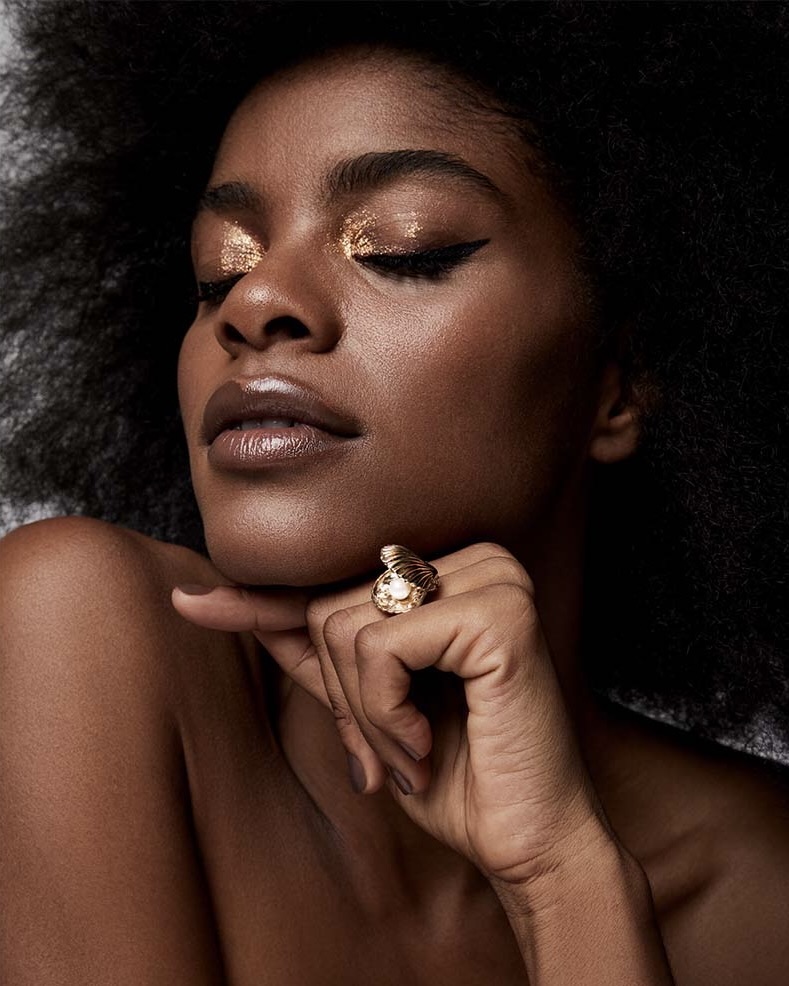
The exquisite Lady Venus Ring is a radiant fusion of artistry and craftsmanship, designed with a scallop shell opening mechanism and a secure snap-lock closure. The 14-karat gold ring opens to reveal a cultured pearl nestled within a bed of natural diamonds.
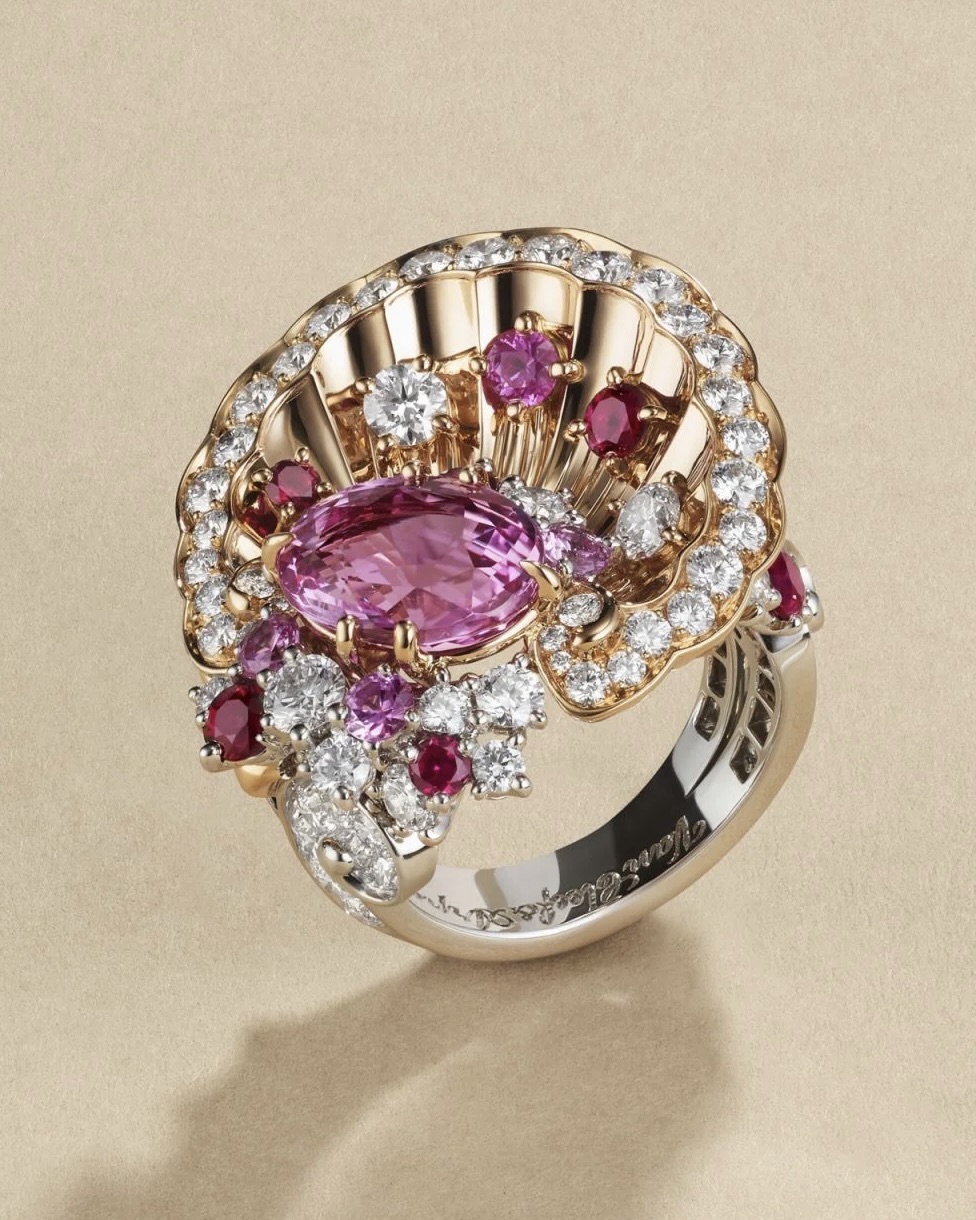
Van Cleef & Arpels released the Le Grand Tour High Jewelry collection, including the Ode à l’amour ring inspired by The Birth of Venus. Paying homage to the Florentine painter Sandro Botticelli, the three‐dimensional ring features a 4.04-carat oval-cut pink sapphire enfolded in a rose gold scalloped shell, surrounded by rubies and natural diamonds within the shell and outlining its contour.
Vincent van Gogh’s Irises (1889)
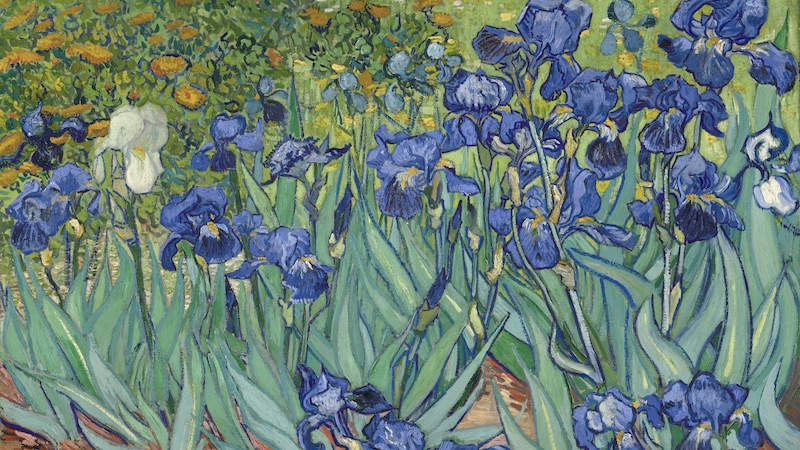
Dutch Post-Impressionist painter, Vincent van Gogh, began his beloved oil landscape painting Irises in 1889 on his first full day at the Saint Paul-de-Mausole psychiatric hospital in Saint-Rémy-de-Provence, France. He began a painting of some flowers in the institution’s garden. The vibrant, blooming irises come to life with dynamic brushstrokes, expressing optimism about his choice to admit himself to the hospital.
American luxury jewelry house David Webb’s Iris Brooch would seamlessly blend into the painting. Crafted in blue and green basse taille enamel and accented with 2 to 2.5 carats of brilliant-cut natural diamonds on the petals.
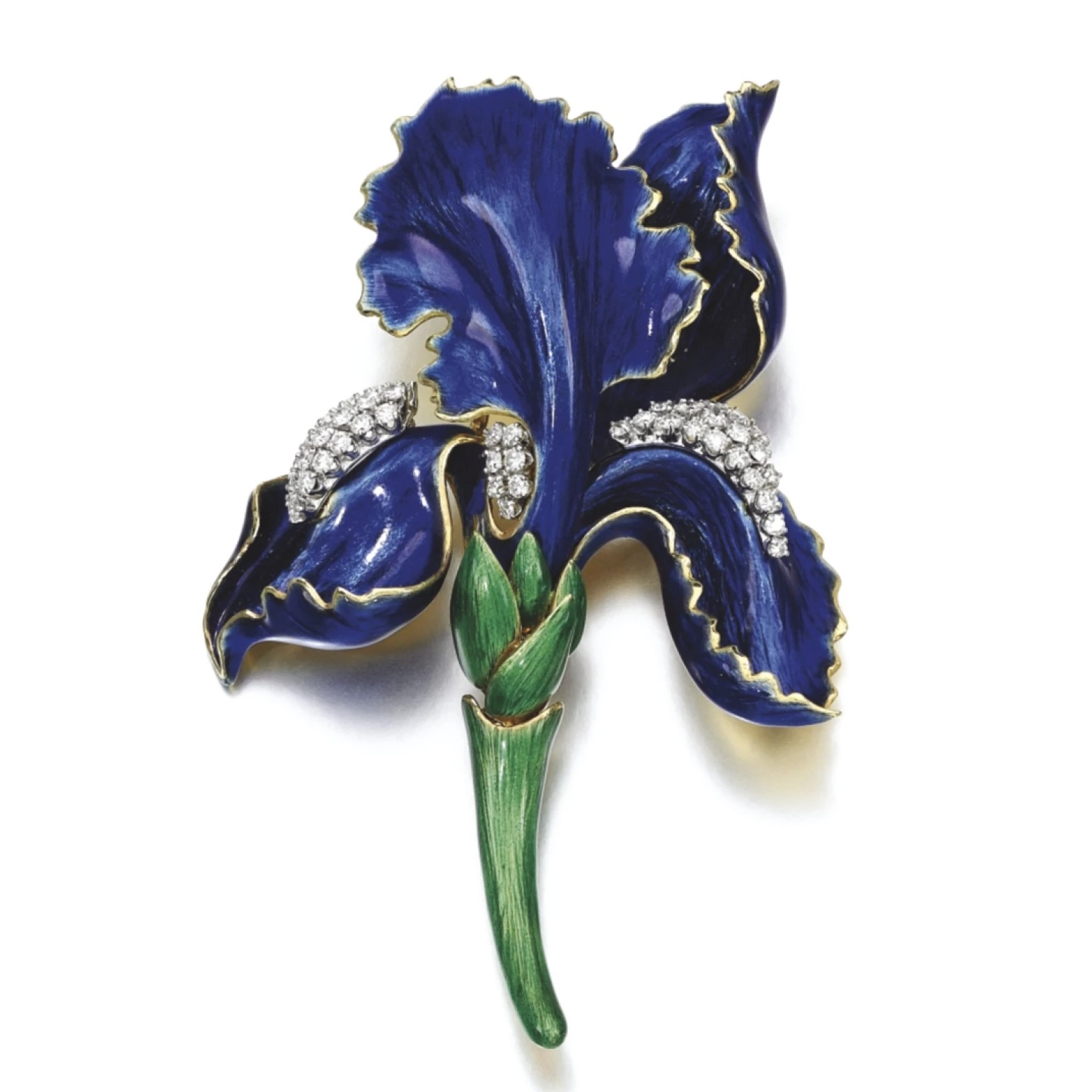
“This David Webb Iris Brooch design was first introduced in 1965,” says Levi Higgs, Head of Archives and Brand Heritage at David Webb. “Over the years, it has been crafted in a variety of enamel colors; however, the blue version is exceptionally rare, having been produced only twice.”
Higgs explains, “The inspiration behind the piece reflects the house’s deep-rooted connection to nature. David Webb himself was an avid gardener, nurturing a wide range of blooming plants both at his home in upstate New York and in his Upper East Side townhouse. This design fits in perfectly with the many varying types of flowers that interested David Webb as a designer, and that have bloomed throughout his work for ages, and continue to flourish today.”
From surrealist icons to Renaissance masterpieces, art-inspired jewelry reveals how creativity transcends mediums—and centuries. Natural diamonds, formed over billions of years, bring these visions to life with unmatched brilliance and permanence, transforming artistic influence into something enduring and wearable. In the world of art-inspired jewelry, they are not just embellishments, but essential to capturing the legacy of the original work.