

Why the Winston Red Diamond Made Smithsonian History Again
Visual artist Reena Ahluwalia spent months painting the full story of a 2.33-carat Fancy Red diamond, and the result just made history.

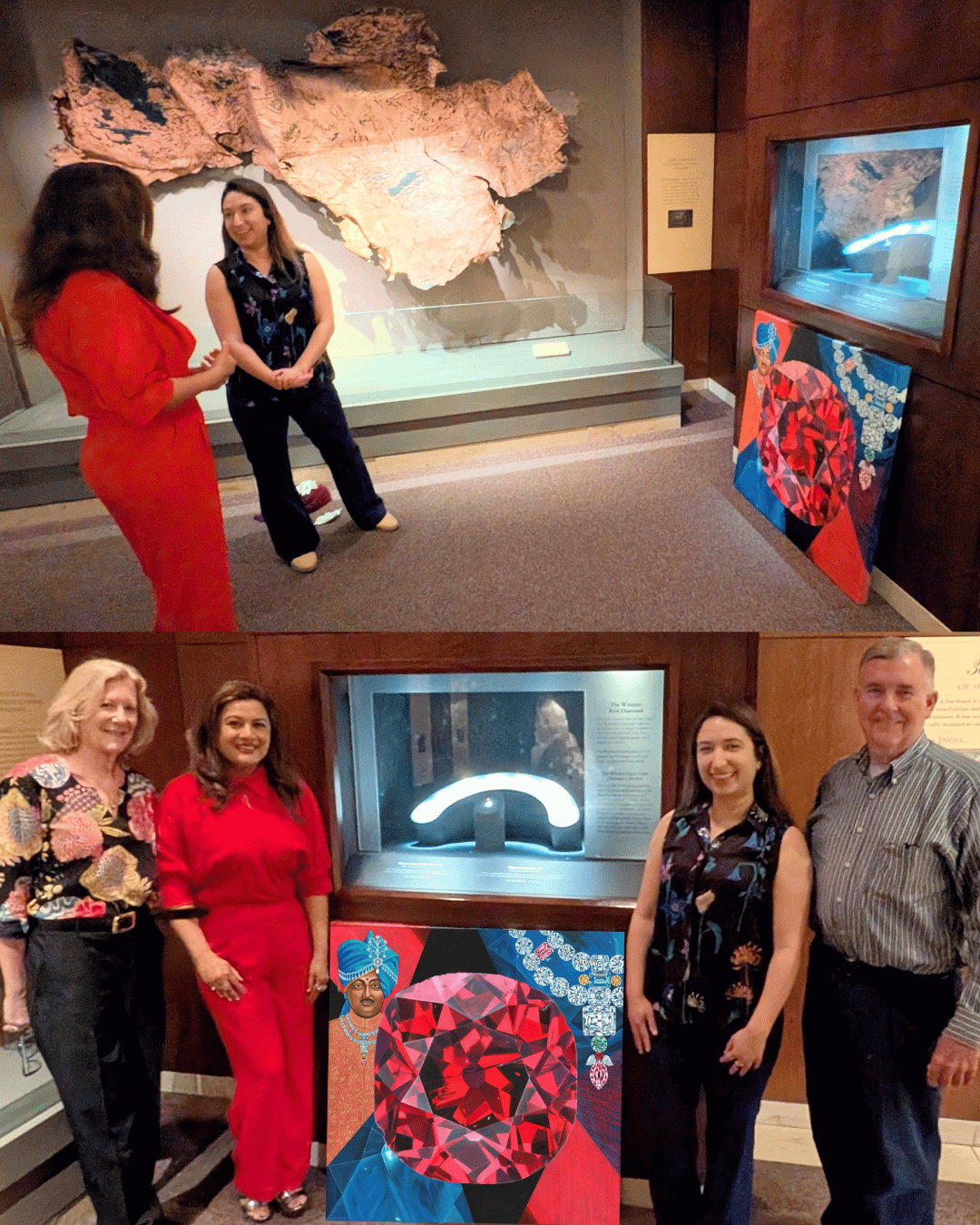
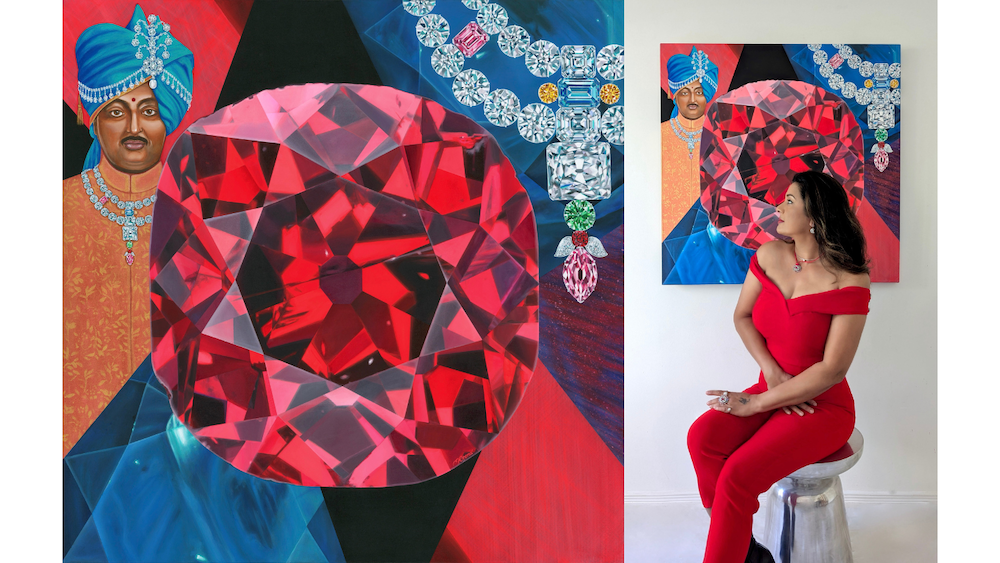
Visual Artist Reena Ahluwalia with the Winston Red Diamond painting, “The Legacy of the Winston Red Diamond”. Now held in the permanent collection of the Smithsonian National Museum of Natural History. (Courtesy of Reena Ahluwalia)
The Smithsonian National Museum of Natural History has welcomed a lot of extraordinary objects into its permanent collection over the years. The Hope Diamond. The Uncle Sam diamond, meteorites, rare minerals, and geological specimens that took billions of years to form. But in May 2026, something entered the National Gem Collection for the very first time: a Winston Red diamond painting.
Meet the Author

- Grant Mobley is the Jewelry & Watch Editor of Only Natural Diamonds.
- He is a GIA Diamonds Graduate.
- He has over 17 years of jewelry industry experience, starting with growing up in his family’s retail jewelry stores.
Visual artist Reena Ahluwalia’s work, “The Legacy of the Winston Red Diamond,” became the first contemporary painting ever accessioned into the National Gem Collection. At a ceremony in the Janet Annenberg Hooker Hall of Geology, Gems, and Minerals, Dr. Gabriela Farfan, the Coralyn W. Whitney Curator of Gems and Minerals, formally accepted the artwork. The moment marked an institutional milestone and a genuine expansion of what the National Gem Collection considers worth preserving.
Ahead, discover how the Winston Red Diamond painting became the first contemporary artwork ever accessioned into the Smithsonian’s National Gem Collection.
The Gem That Inspired Reena Ahluwalia’s Winston Red Diamond Painting
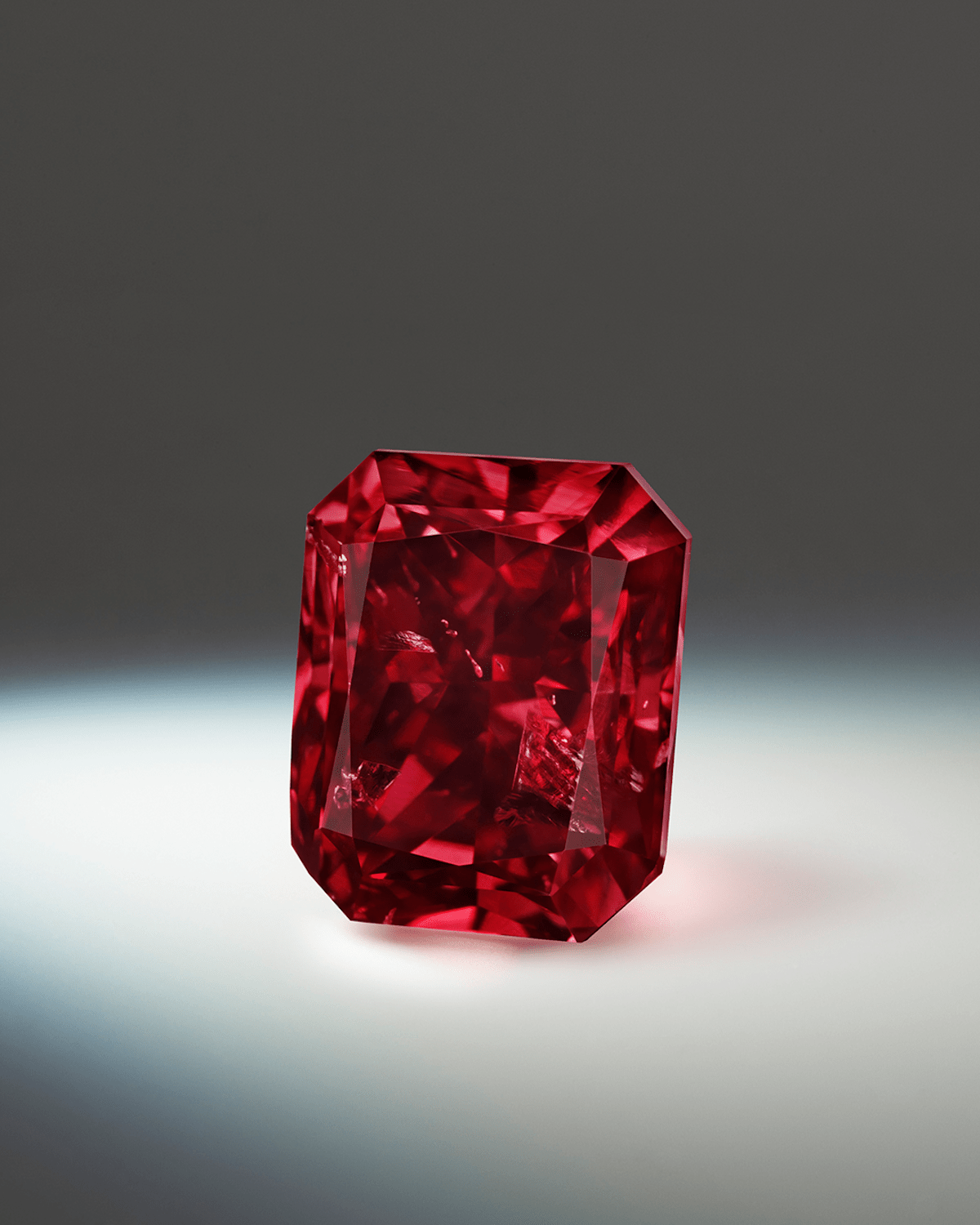
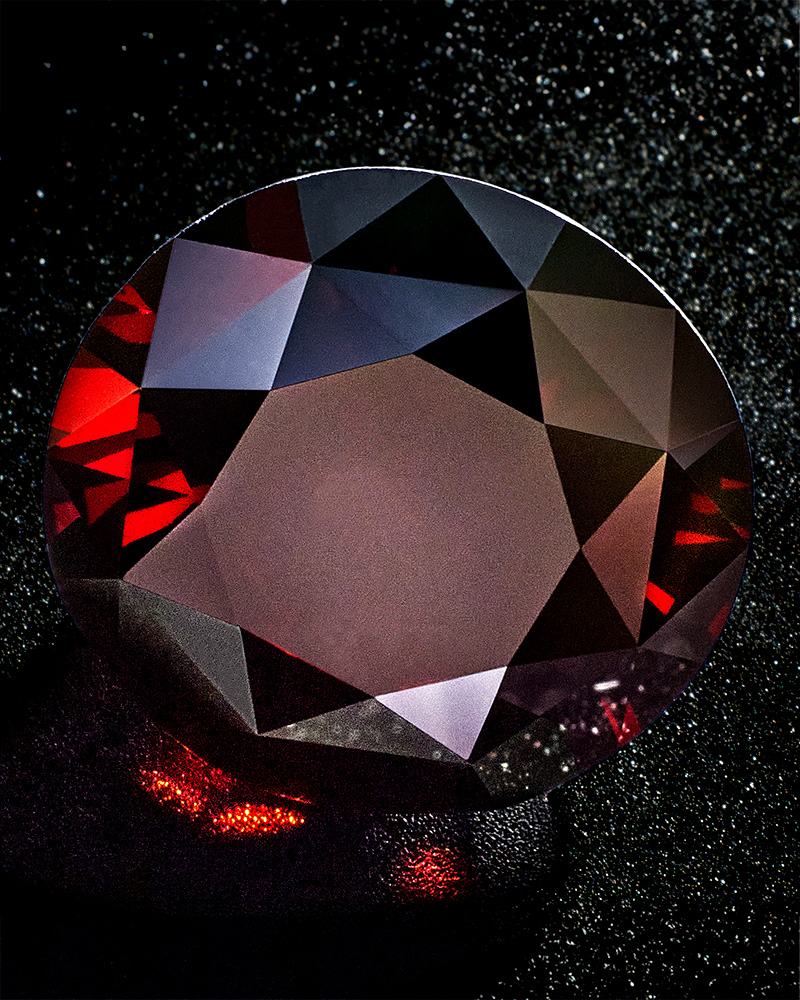
To understand why the Winston Red Diamond painting belongs in that room, you need to know the diamond that inspired it. The Winston Red diamond is a 2.33-carat old mine brilliant-cut natural Fancy Red diamond and one of the rarest gemstones on Earth.
The GIA estimates its rarity at one in 25 million. It ranks as the fifth-largest known Fancy Red diamond in existence and holds a distinction that no other red diamond can claim: it is the only straight Fancy Red diamond currently on public exhibit anywhere in the world.
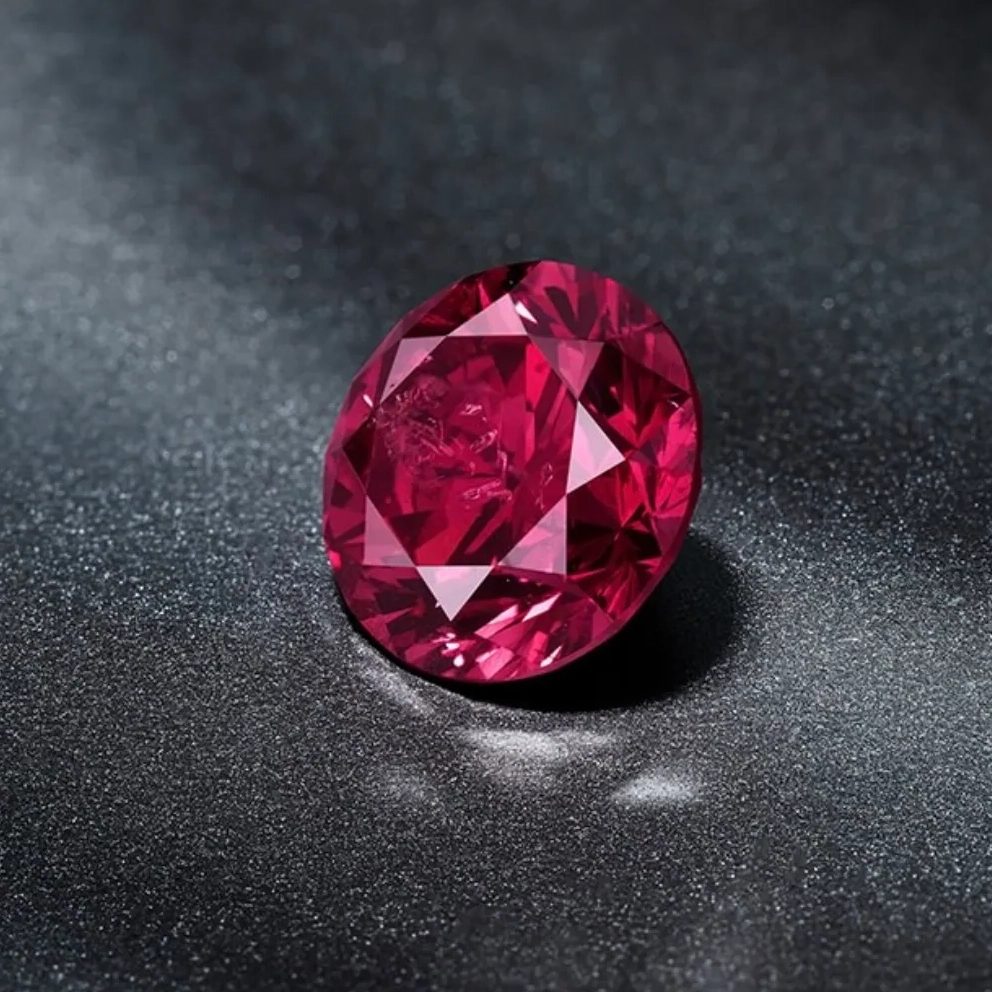
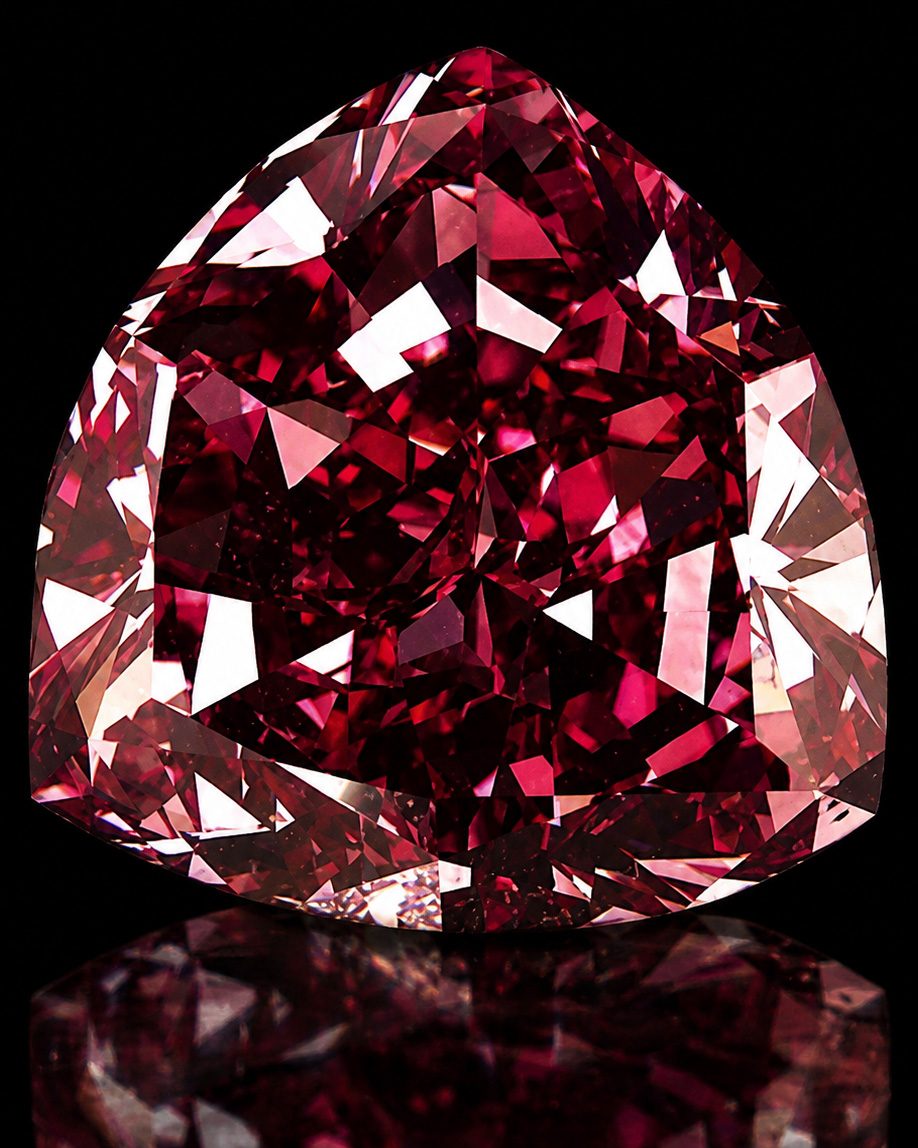
Of all the fancy color categories the GIA grades, red sits at the top in terms of rarity. Not close to the top. At the top. Fewer than 30 true natural red diamonds are known to exist anywhere in the world, and their color does not come from a trace element the way blue comes from boron or yellow from nitrogen.
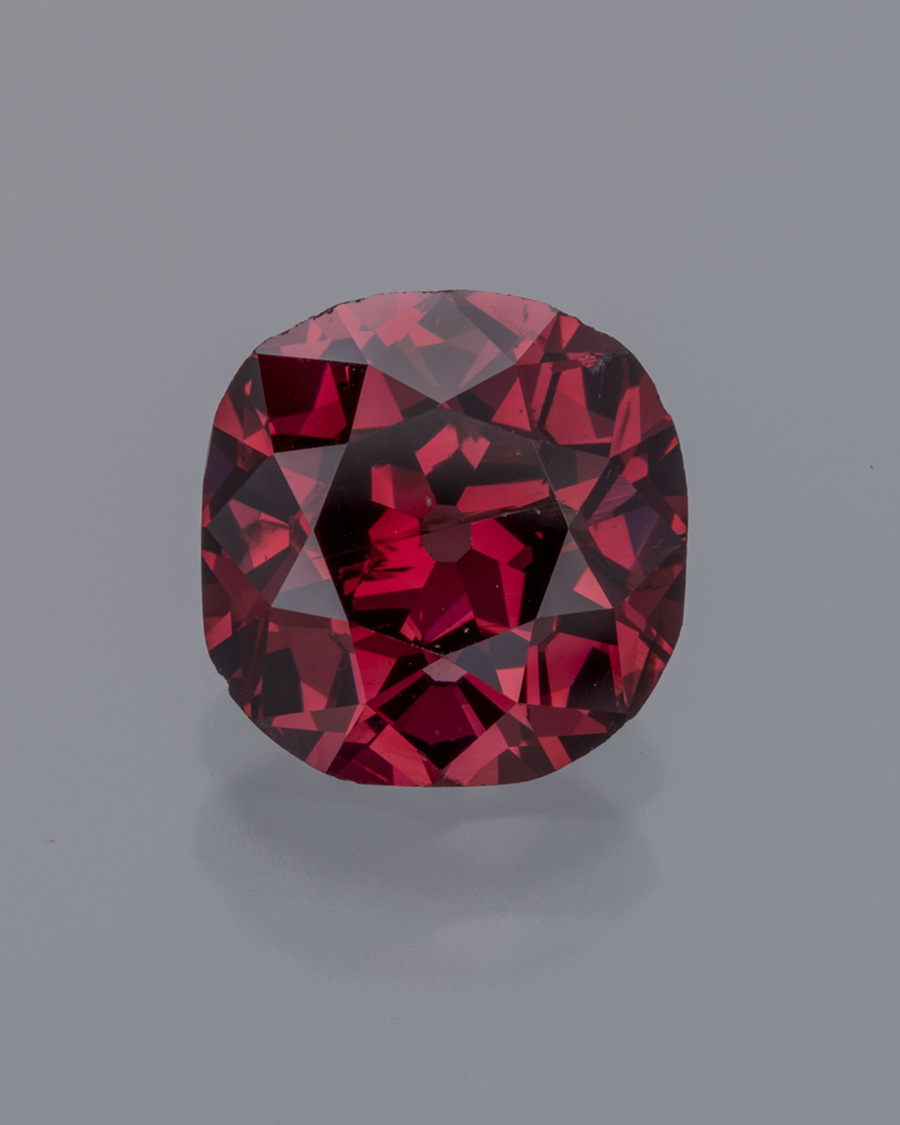
Red diamonds get their color from plastic deformation of the crystal lattice. This structural phenomenon occurs so infrequently that scientists genuinely cannot accumulate enough examples to study it thoroughly.
The GIA published a study on the Winston Red diamond in the Spring 2025 issue of Gems and Gemology, and the findings point to a specific balance of absorption features, including the 550 nm band tied to plastic deformation and nitrogen-related defects. The color, in other words, is the product of forces acting on the crystal structure in ways that remain only partially understood. That is not a gap in the science. It is a reflection of how rarely nature produces these conditions.
The diamond’s path to the Smithsonian covered a remarkable amount of ground. It most likely started somewhere in South America, though its early history is not fully documented. In 1938, Jacques Cartier sold it to Digvijaysinhji, the Maharaja of Nawanagar, a man remembered historically as the Good Maharaja for the humanitarian work he did during his reign.
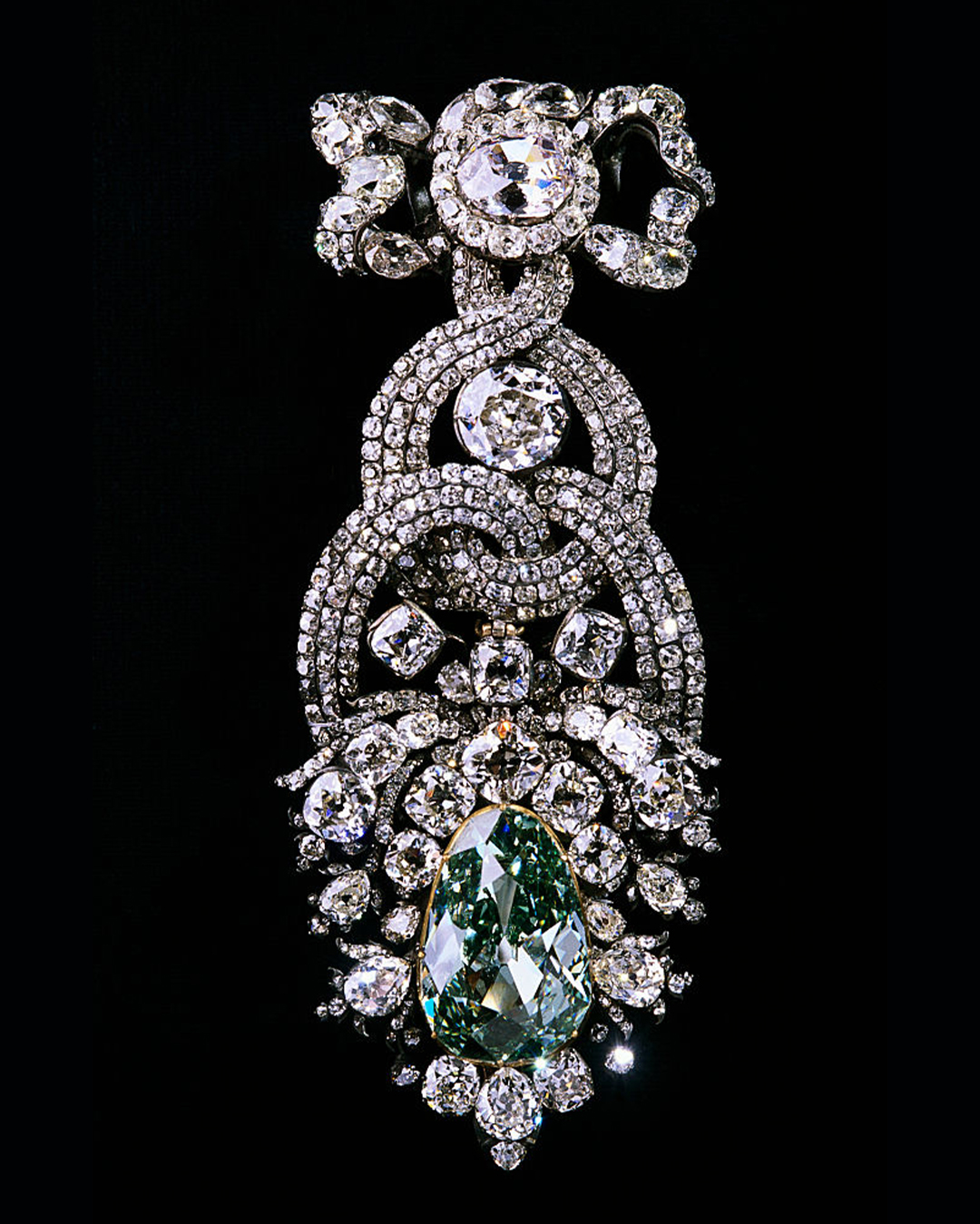
The Maharaja had the stone set into his Ceremonial Necklace of Nawanagar, a Cartier creation that later inspired the famous Toussaint Necklace. For decades, the diamond was known as Raj Red before Ronald Winston, son of the legendary Harry Winston, purchased it from the Maharaja of Jamnagar in the late 1980s. In 2023, Ronald Winston donated the stone to the Smithsonian, and with that gift, it became the Winston Red diamond and moved permanently into public hands.
The Story Behind the Winston Red Diamond Painting
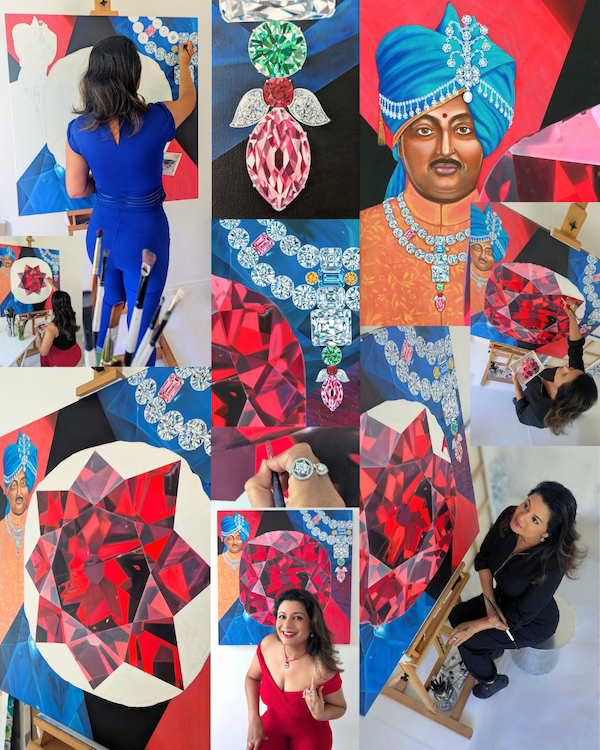
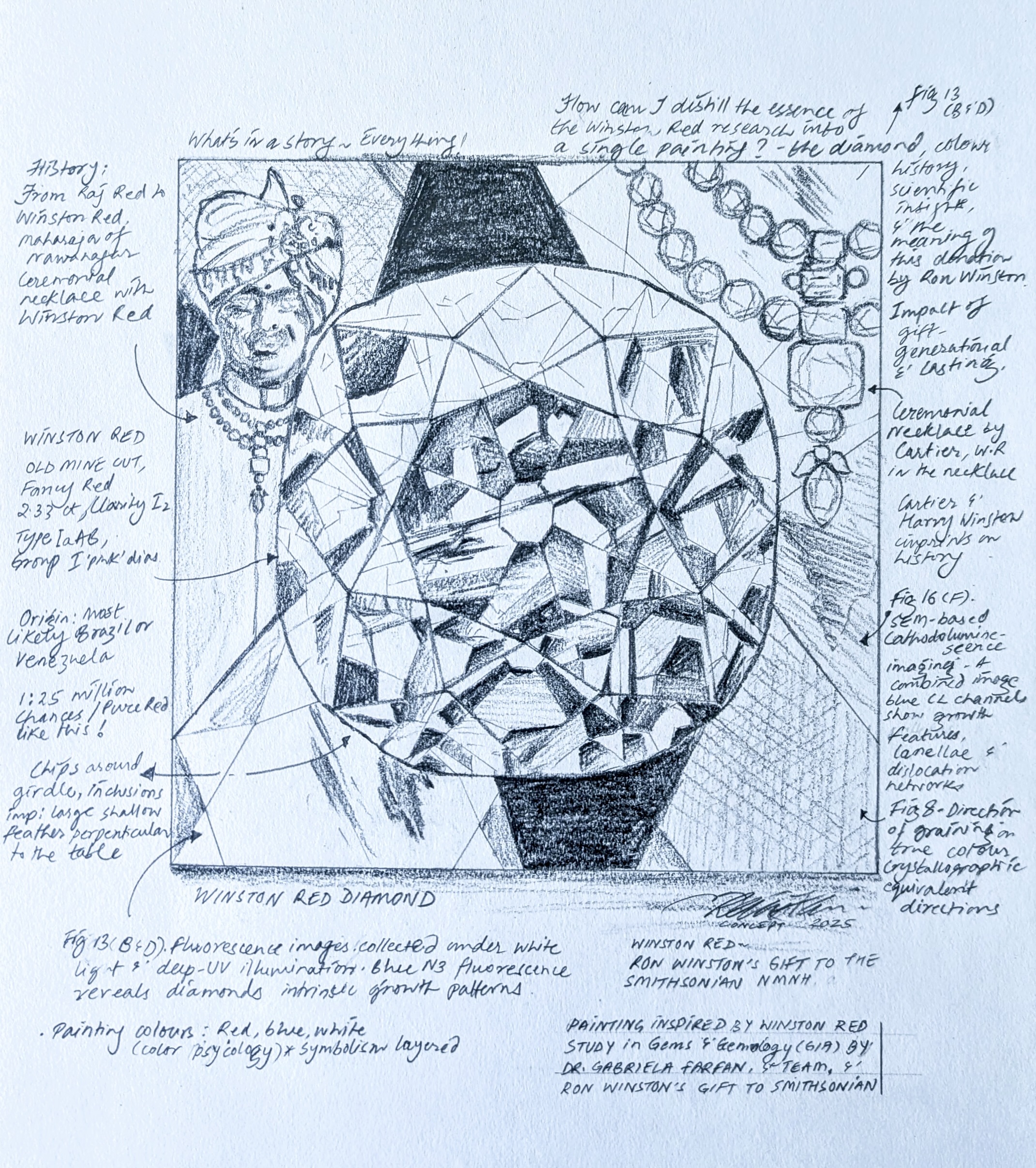
Ahluwalia spent the creative process in direct dialogue with both Ronald Winston and Dr. Farfan, absorbing the diamond’s scientific findings, its historical arc, and its cultural symbolism before translating all of it onto a single canvas. The result is a remarkably detailed representation, including the stone’s journey from Cartier to the court of a Maharaja, to the Smithsonian’s gem hall, all in precise color and form.

I chose to paint the Winston Red because I felt a responsibility to tell its whole story through an artistic lens.
“Art endures beyond its physical form as an idea whose meaning transcends time,” Ahluwalia says. “I chose to paint the Winston Red because I felt a responsibility to tell its whole story through an artistic lens. Using the diamond as a philosophical prism, my practice treats minerals as analogs for human resilience — formed under pressure, shaped by circumstance, and resilient through adversity.”
Ahluwalia’s broader practice, which she describes as the Human-Gem Arc, treats gemstones as vessels of human experience rather than simply objects of beauty. Her ultra-magnified fine art paintings record the intertwined histories of gems and the civilizations that have prized them.
Why the Smithsonian Acquired the Winston Red Diamond Painting
The National Gem Collection houses over 10,000 gemstones and 385,000 mineral specimens. Adding a painting to that collection was an unconventional decision. But looking at what Ahluwalia produced and understanding the diamond it documents, it’s easy to see why.
The Winston Red diamond already belongs to everyone, placed in public hands by a generous donor. Now, the story of how it got there, what it means scientifically, historically, and culturally, lives in the same building. “I want it to spark curiosity and inspire the next generation,” Ahluwalia says, “from gem lovers and historians to mineralogists and Earth scientists.”