< Historic Diamonds / Royal Stories
The Lavish Diamonds That Made Queen Charlotte
From dazzling coronation diamonds to intimate royal heirlooms, Queen Charlotte used jewelry as a language of power and lasting authority.
Published: January 27, 2026
Written by: Meredith Lepore
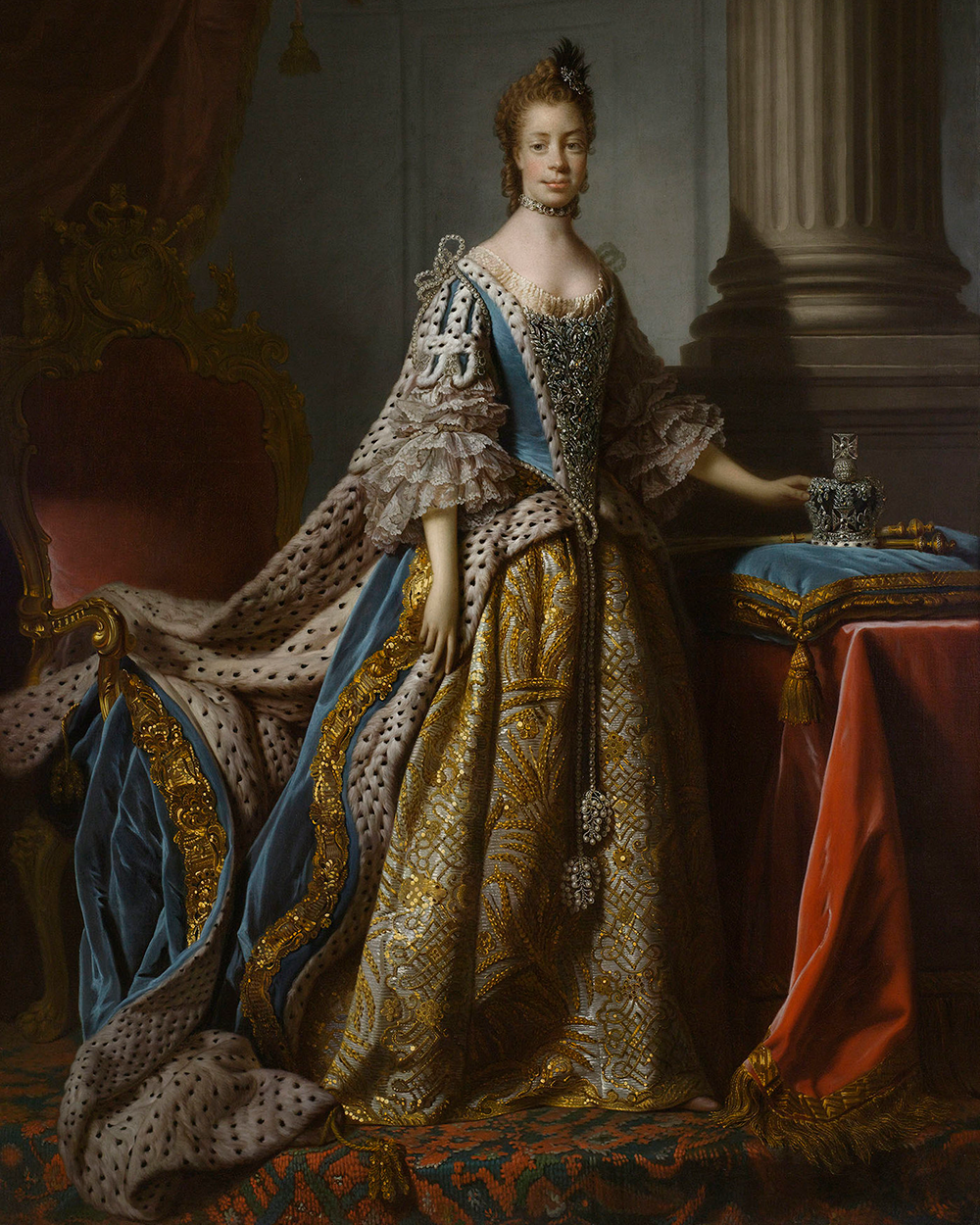
It is no wonder Queen Charlotte received her own Bridgerton spinoff. She is a fascinating figure and the longest-reigning female consort in English history. Besides being one of the most compelling characters on the hit Netflix series, her story in particular is full of intrigue, struggle, and power. She also had an absolutely stunning jewelry collection—and a natural diamond-forward one at that—which deserves closer analysis.
Meet the Experts

Alisa Klusner is the co-founder of Erstwhile, a vintage jewelry brand created by her and her husband, fifth-generation jeweler Jared Klusner. Klusner studied fashion and design at Parsons.

Rafael Gluz is a historic jewelry expert and content creator of @z.ulg. His work focuses on the jewels of the British Royal Family, the Greek Royal Jewels, the Royal Jewels of India, as well as the collections of historic socialites and cultural icons.

Marisa Ceccarelli is a history and philosophy expert specializing in jewelry and material culture. She is also the content creator of @mindofmarisa, where she explores the cultural meaning, symbolism, and legacy of historic jewels.
Ahead is an in-depth look at how Queen Charlotte’s natural diamonds helped build her public persona, reinforced her authority, and secured her place in history.
Queen Charlotte in History: A Young German Princess Becomes Queen

Born Sophia Charlotte of Mecklenburg-Strelitz, Queen Charlotte had a tough start to her reign. The German Charlotte came to Britain at just 17 years old and did not speak English fluently. She met her future husband, King George III, and they were married later that same day. The Netflix spinoff series portrays the couple—despite their arranged marriage—as sharing a genuine love for one another, and they would go on to have 15 children together. However, George’s struggles with mental illness later in life would place a significant strain on their marriage.
The British monarchy was a rigid, symbolic system, and young Queen Charlotte was expected not only to adhere to its stringent and often confusing rules but also to fully understand and embody them. Public image was everything for royals, and the young queen faced a steep learning curve, as the wife of King George III was expected to project an unmistakable royal presence while maintaining modesty and restraint.
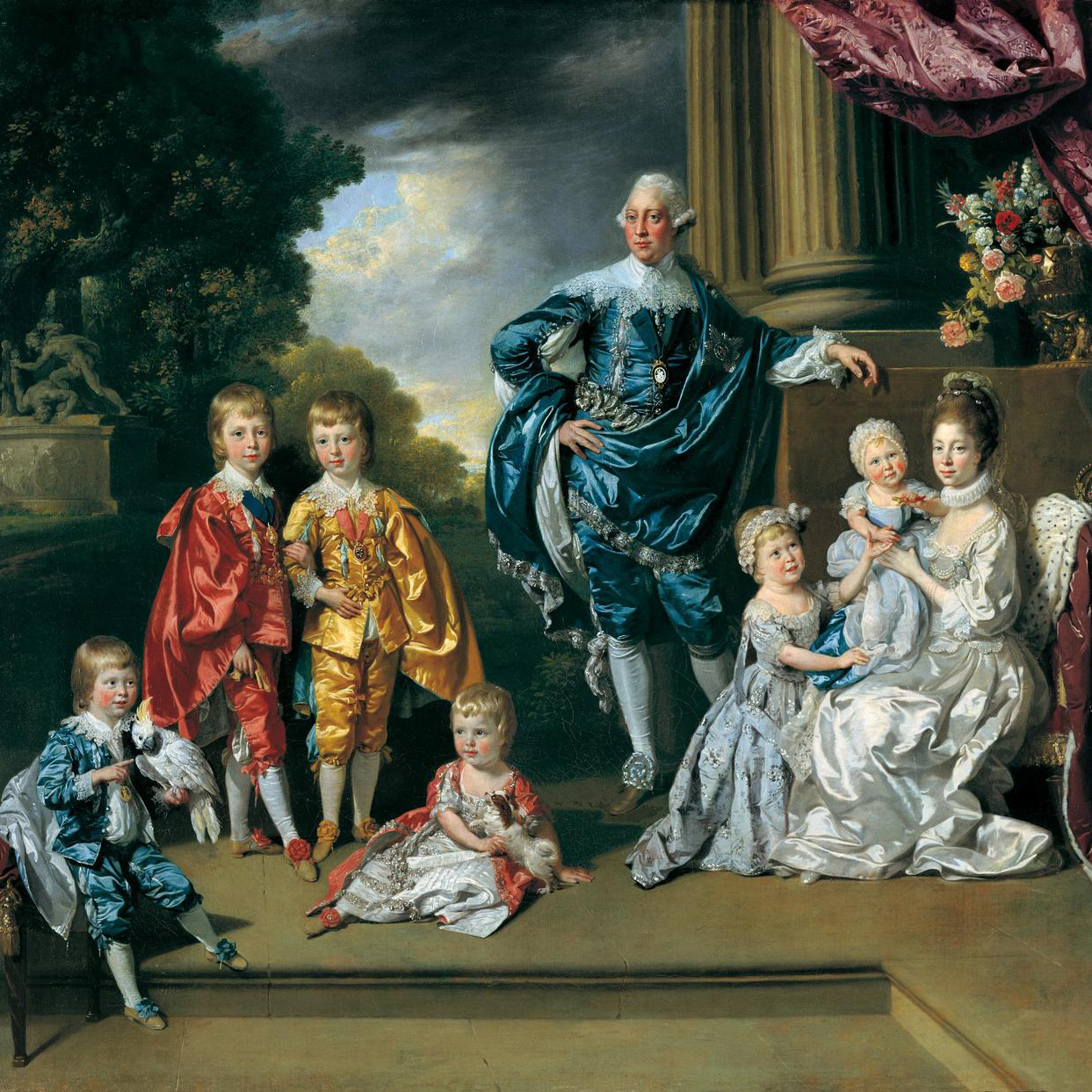
Jewelry became a crucial tool for Queen Charlotte as she worked to establish her legitimacy as a ruler. In a court where symbols carried immense weight, jewels signaled permanence, continuity, and authority, helping her project power long before she could fully command it through words or tradition alone.
Alisa Klusner, co-founder of Erstwhile, tells Only Natural Diamonds, “Diamonds always symbolized wealth, which in turn is tied to power. Today, they still signal power, but with agency attached—who chose the diamond matters. As women increasingly buy their own fine jewelry, even embracing ideas like “divorce diamonds,” diamonds have become about more than wealth. The style of the stone, the setting, and how it’s worn now communicate taste, independence, and personal identity.”
The Defining Jewels of Queen Charlotte
Let’s take a look at some of the most significant pieces in Queen Charlotte’s staggering collection of royal jewels—one of the most diamond-heavy of the Georgian era. Unlike many of her contemporaries, Charlotte wielded jewelry with intention, using diamonds to project permanence, command respect, and reinforce her position at the heart of the monarchy.
Jewelry historian Rafael Gluz says of her collection, “Queen Charlotte’s tenure as Queen Consort coincided with other legendary royals, including Queen Marie Antoinette and Catherine the Great. In most royal collections, jewelry may be a display of wealth, of personal taste, but is also a statement of dynastic continuity. Charlotte’s collection included important heritage pieces passed down through generations, testifying both to the power and tradition of the royal family. It was – and in some cases, still is – common practice for each royal to adapt inherited jewels to reflect personal taste and the current fashions.”
Queen Charlotte’s Coronation Nuptial Crown: A Crown Like No Other

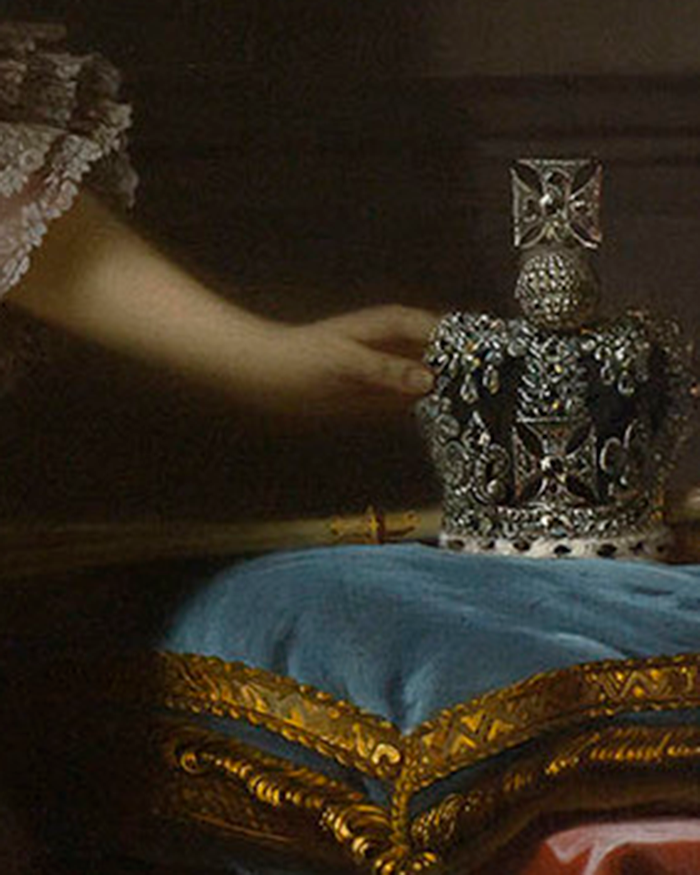
When King George III married Charlotte in 1761, he gifted his bride approximately £50,000 worth of jewels, which were combined with some of Charlotte’s Hanoverian heirlooms (pieces brought with her from her native German duchy of Mecklenburg-Strelitz, part of the wider House of Hanover) to create her coronation crown. The generosity of the gift may have been influenced by the extraordinary circumstances of the occasion: Charlotte’s wedding day and coronation took place on the same day. It was a logistical feat that must have tested even the most seasoned royal planners.
This crown was especially distinctive. Unlike most British crowns of the period, it was crafted in gold rather than silver and featured an openwork structure decorated with alternating crosses and fleurs-de-lis. From each of these motifs hung large pendeloque-cut diamonds, designed to move with the wearer and interact dramatically with the candlelight of Westminster Abbey, where the coronation took place.
What made the crown even more remarkable was Queen Charlotte’s decision to wear this grand piece to her coronation instead of the traditional, smaller consort’s crown. This bold choice, particularly striking for a teenage queen, signaled that she was more than a royal bride. She presented herself as a sovereign presence from the outset, using jewelry as a visual assertion of authority and permanence.
Queen Charlotte’s Diamond Stomacher
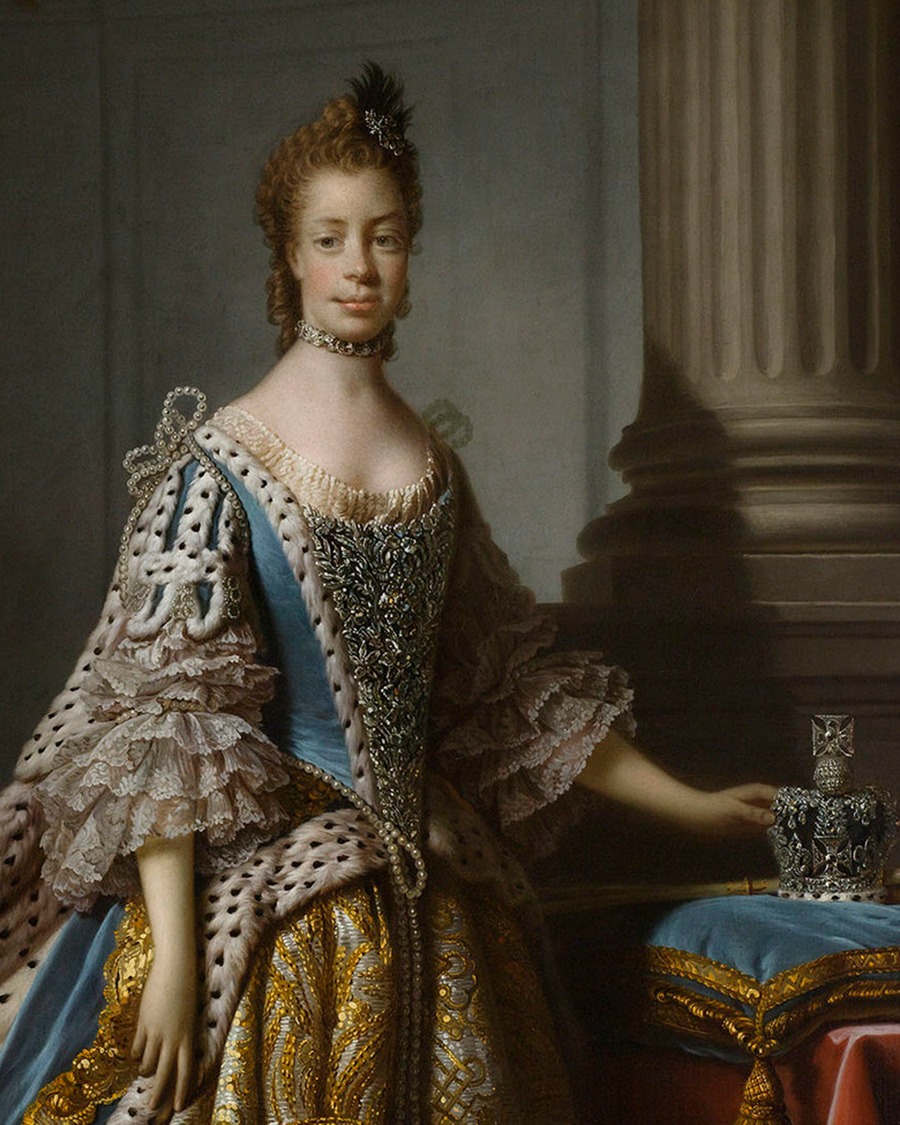
Perhaps her most iconic jewel—and an extraordinary one at that—was Queen Charlotte’s diamond stomacher. According to jewelry historian Marisa Ceccarelli, the large, leaf-like panel combined diamonds of varying sizes, including one taken from her wedding ring, and was valued at £60,000 in the 1760s—roughly $10 million today—with the most expensive diamond alone costing £18,000 in 1761.
Ceccarelli notes that the stomacher stood apart even among Europe’s most lavish court jewels. It was created from diamonds originally owned by Queen Caroline, the grandmother of the future King George III, including a large stone from her wedding ring and two diamonds given to her by her husband, King George II.
“Other stomachers that were worn at European courts during this time period would have also been expensive, decorated with silk, and featured ornate embroidery that was done with thread made of silver and gold. Some would have also featured diamonds, such as the Duchess of York’s mentioned in a 1792 newspaper as being valued at £22,000. However, Queen Charlotte’s was most likely the most expensive and opulent stomacher that existed during this time period,” says Ceccarelli.
Gluz notes that the stomacher introduced a new jewelry concept by drawing on historic and important diamonds from the royal family collection. He tells Only Natural Diamonds, “Within her collection, the diamond stomacher stands out as particularly extraordinary. Of immense value, it combined diamonds of varying sizes, many of them of impressive size. It is no coincidence that the Queen herself referred to it as ‘the great diamond stomacher’. The piece wasn’t only ornamental – it was a statement.”
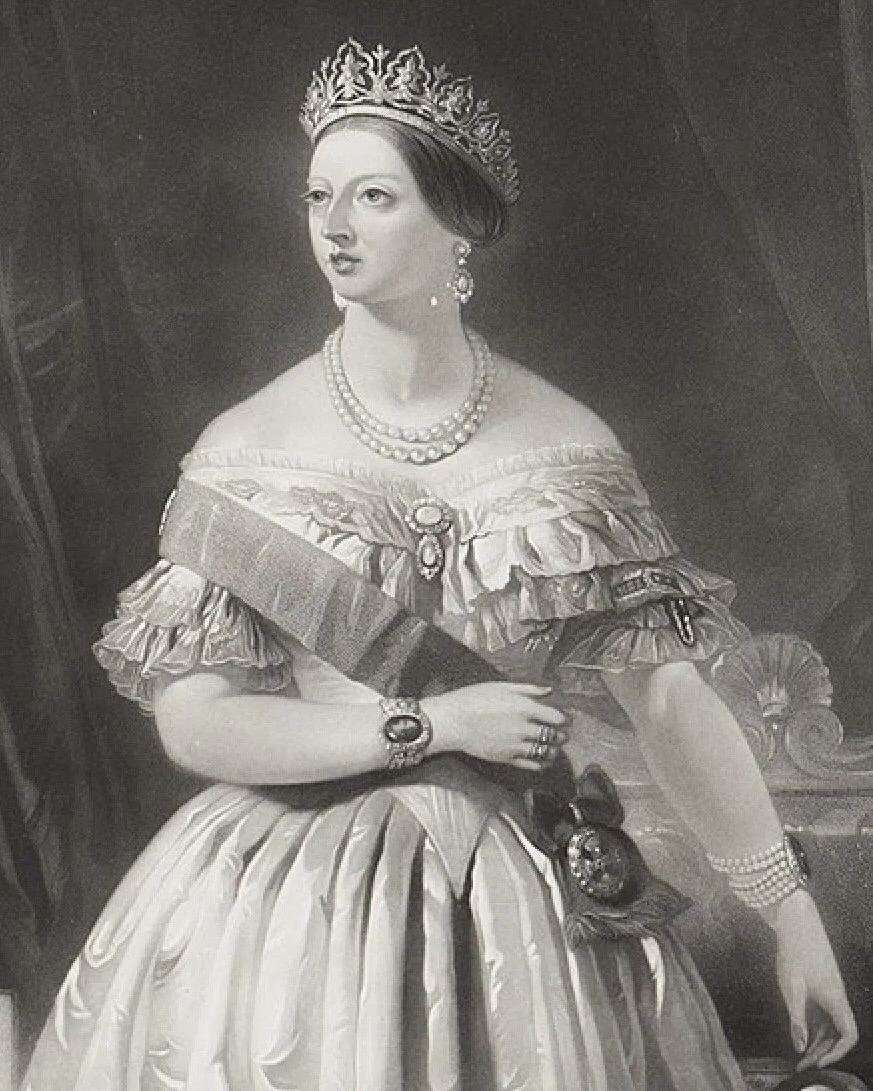
The stomacher remained intact until King William IV ascended the throne, at which point a significant number of its diamonds were used to create Queen Adelaide’s Coronation Crown. Following her coronation, those diamonds were repurposed once again to form the Regal Circlet, which later became a jewel worn by Queen Victoria, Charlotte’s great-granddaughter. Victoria also inherited the lower portion of Queen Charlotte’s original stomacher, the only remaining segment that still retained its diamonds. Even so, she would later dismantle it, reusing those stones in her opal and diamond Oriental Circlet.
King George III’s Miniature Ring for Queen Charlotte
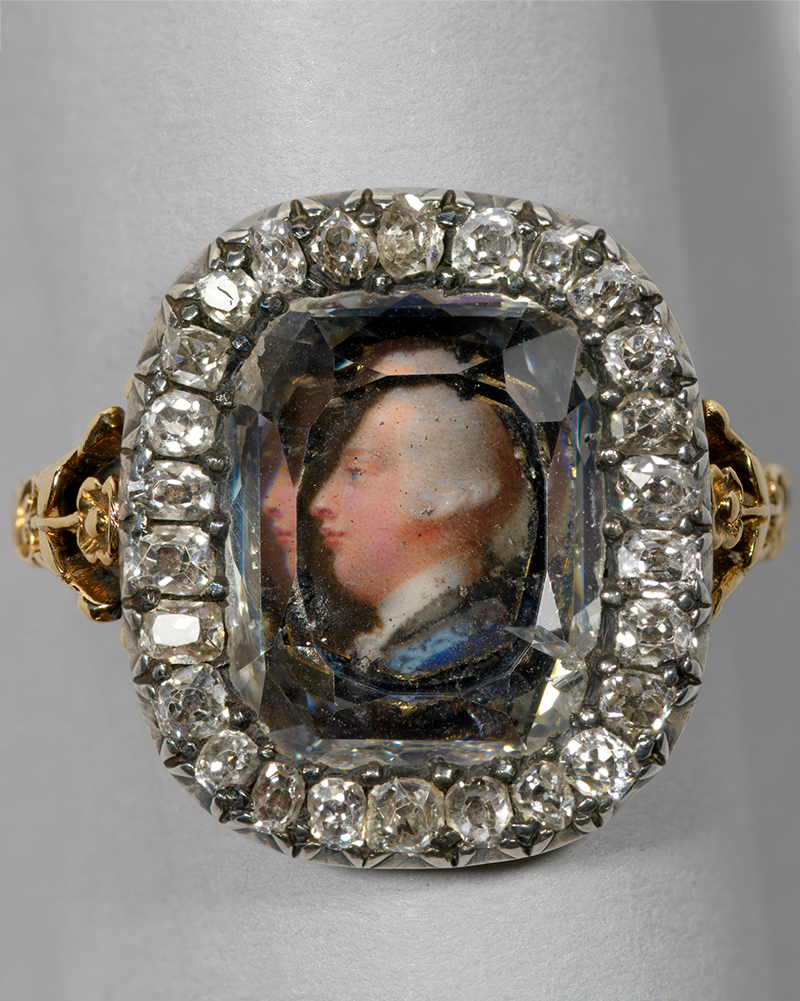
Another important piece in Queen Charlotte’s wedding jewelry suite was a ring from King George III. Gluz describes it as a ring set with a miniature portrait of the King beneath a large flat-cut diamond, surrounded by additional antique diamonds. “While diamond engagement rings had been documented since the late 15th century, the inclusion of the King’s portrait is a romantic touch that transforms the ring into both a public symbol of their unity and a deeply sentimental object of the couple. The ring feels strikingly modern, particularly when we think about the renewed interest in portrait-cut diamonds,” he says.
Klusner says that George’s thoughtful choice was especially meaningful. Miniature portrait jewels were a favorite in royal and aristocratic circles, she says, and not solely as romantic gifts for spouses. “People commissioned miniatures of children, parents, and even pets! This was long before photography, phones, or any kind of instant communication, so these portraits served as a stand-in for a person you might not see for months or even years. In a marriage context, wearing your husband’s portrait was deeply intimate. It communicated devotion and attachment while publicly signaling alliance,” she says.
Ceccarelli notes that Queen Charlotte wore the ring on the pinky finger of her right hand as a reminder of her husband. “The ring represented their happy marriage and devotion to each other, which was not always the case with European royal marriages. Unlike his predecessors and sons, George III never took a mistress and remained loyal to Charlotte throughout their marriage,” she says. In the late 1700s, their son, then the Prince of Wales, followed suit and proposed with a portrait of his eye set in a locket to the love of his life, Maria Fitzherbert, whom he went on to marry in an illegal ceremony.
Queen Charlotte’s Keeper Ring

According to the Royal Collection Trust, Queen Charlotte was also given a diamond hoop ring engraved with her wedding date on her wedding day. Intended as a guard—or keeper—ring to protect her wedding ring, the piece carried both practical and symbolic significance. Charlotte, however, preferred to wear it on its own and was frequently depicted wearing it solo in portraits, even as fashion conventions often encouraged stacking or additional adornment. In this choice, she proved herself something of a style pioneer.
The ring offers insight into how engagement and wedding jewelry functioned in the 18th century. “People tend to think that diamond engagement rings are either a completely modern invention or that they’ve existed exactly as we know them forever. The truth is somewhere in between. Queen Charlotte’s ring shows us that diamonds were already being used to symbolize marriage and romance, but the styles were deeply personal and one-of-a-kind. Before the solitaire was standardized largely through Tiffany, men took a much more creative approach, commissioning original designs that carried specific meaning, like incorporating a portrait or symbolic motif,” says Klusner.
Queen Charlotte’s Gold Finger Ring with Cushion-Cut Diamond
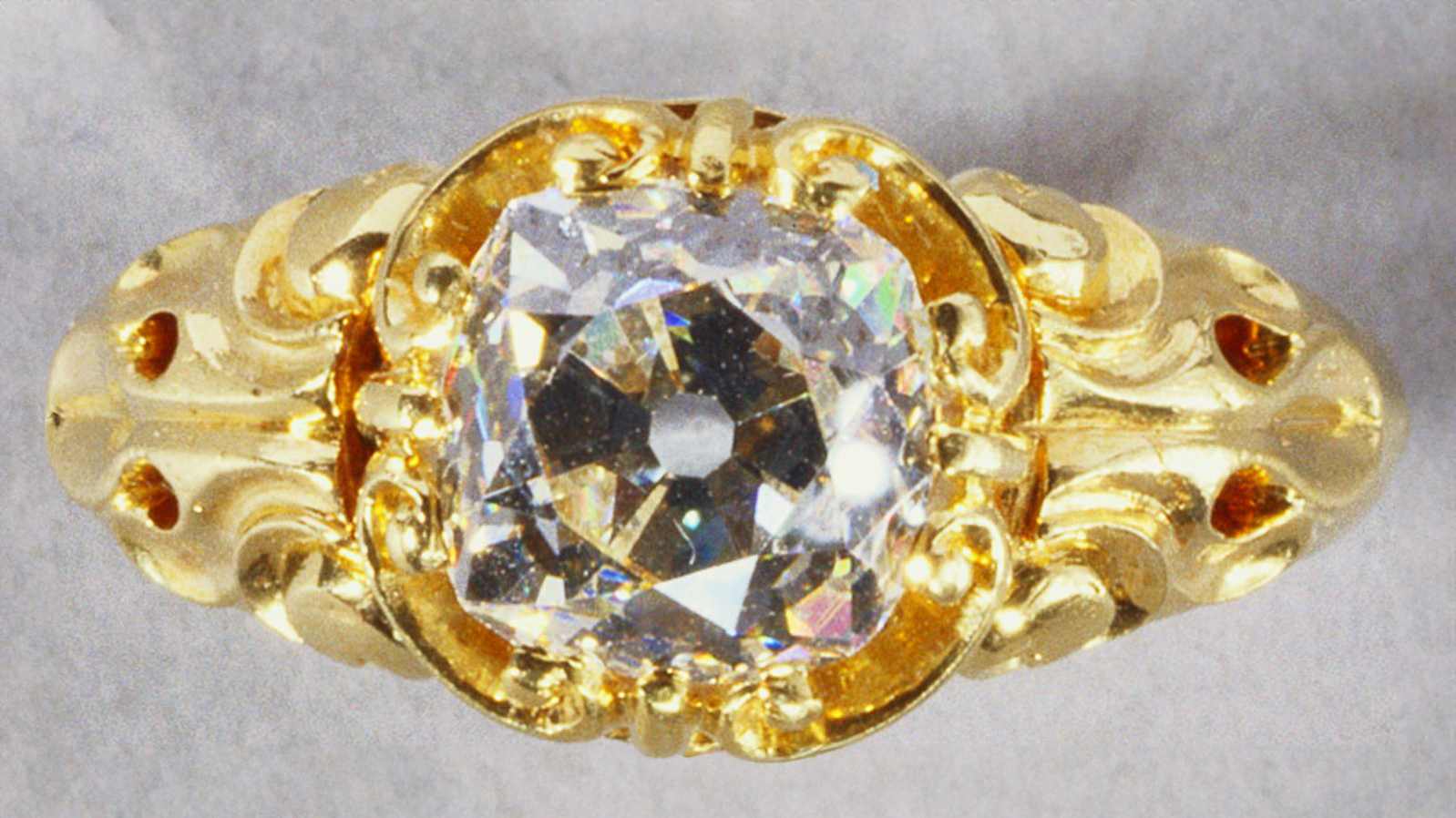
Another, more opulent ring worn by Queen Charlotte in her later years reflects the enduring scale of her status—she reigned as Queen Consort for 51 years, after all. This gold finger ring features a cushion-cut diamond, with the mount and shoulders adorned in delicate foliage motifs. The ring was later passed to Charlotte’s daughter, Princess Mary, Duchess of Gloucester, who, in turn, gifted it to her niece, Queen Victoria, in the mid-19th century, ensuring its place within the continuing lineage of royal jewels.
Queen Charlotte’s Pearl and Opal Finger Ring

Though Queen Charlotte’s collection was notably diamond-forward, as previously noted, she also had a fondness for pearls. This ring is a clear example of that preference. This gold finger ring features a pierced hoop chased with floral motifs and is set with a cabochon opal surrounded by nine pearls—an elegant example of late Georgian design that balances restraint with symbolism. Opals and pearls were favored materials in royal jewelry of the period, often associated with continuity and dynastic femininity.
The ring later entered the collection of Queen Victoria, to whom it was given by her aunt, Princess Mary, Duchess of Gloucester, in 1849. The Duchess had been in close attendance during Queen Charlotte’s final illness at Kew in 1818 and may have received the ring during that period. An alternative account suggests it first passed to Princess Sophia before reaching Princess Mary, who presented several items from her sister’s estate to Queen Victoria in the late 1840s. Either way, the ring’s journey reflects the deeply personal passage of Queen Charlotte’s jewels through generations of royal women.
Queen Charlotte’s Enduring Diamond Language

While renewed interest in Queen Charlotte’s jewels has undoubtedly been fueled by the immense success of Bridgerton and its spinoffs, her collection has long been admired for its power, scale, and intentionality. One especially striking aspect of her jewelry legacy is the unusually rich visual record documenting her wearing these pieces. “We do have many portraits of her wearing jewels when compared to some other royals (like Marie Antoinette), which may have reinforced the notion that her collection was truly amazing,” Klusner says.
Each item—from her rings to her bold diamond stomacher—was worn with purpose and strategy. It is little wonder that an entire kingdom later fought over these jewels through legal action, even if that battle would not come until nearly a century after her reign.
Both Klusner and Ceccarelli note that Bridgerton has helped spark a renewed fascination with this period of jewelry history, but Queen Charlotte remains in a category of her own, something evident both in the series and in her surviving jewels. Ceccarelli says, “Queen Charlotte is such a dynamic character, and the ornate jewelry that she wears emphasizes her power. It also mirrors the famous jewelry collection owned by the real-life Queen Charlotte, which is considered one of the largest owned by a royal. The dazzling diamonds worn in Bridgerton showcase the Queen’s place at the head of society and allow for a visual queue to elevate her above the other characters, as they would have during her reign.”