< Historic Diamonds / Royal Stories
Princess Margaret’s Wedding Tiara Was a Rebellious Self-Purchase
Known for marching to the beat of her own drum, Princess Margaret didn’t earn her reputation as the royal rebel for nothing. Instead of borrowing an heirloom tiara for her wedding, she bought a grand and historic headpiece of her own.
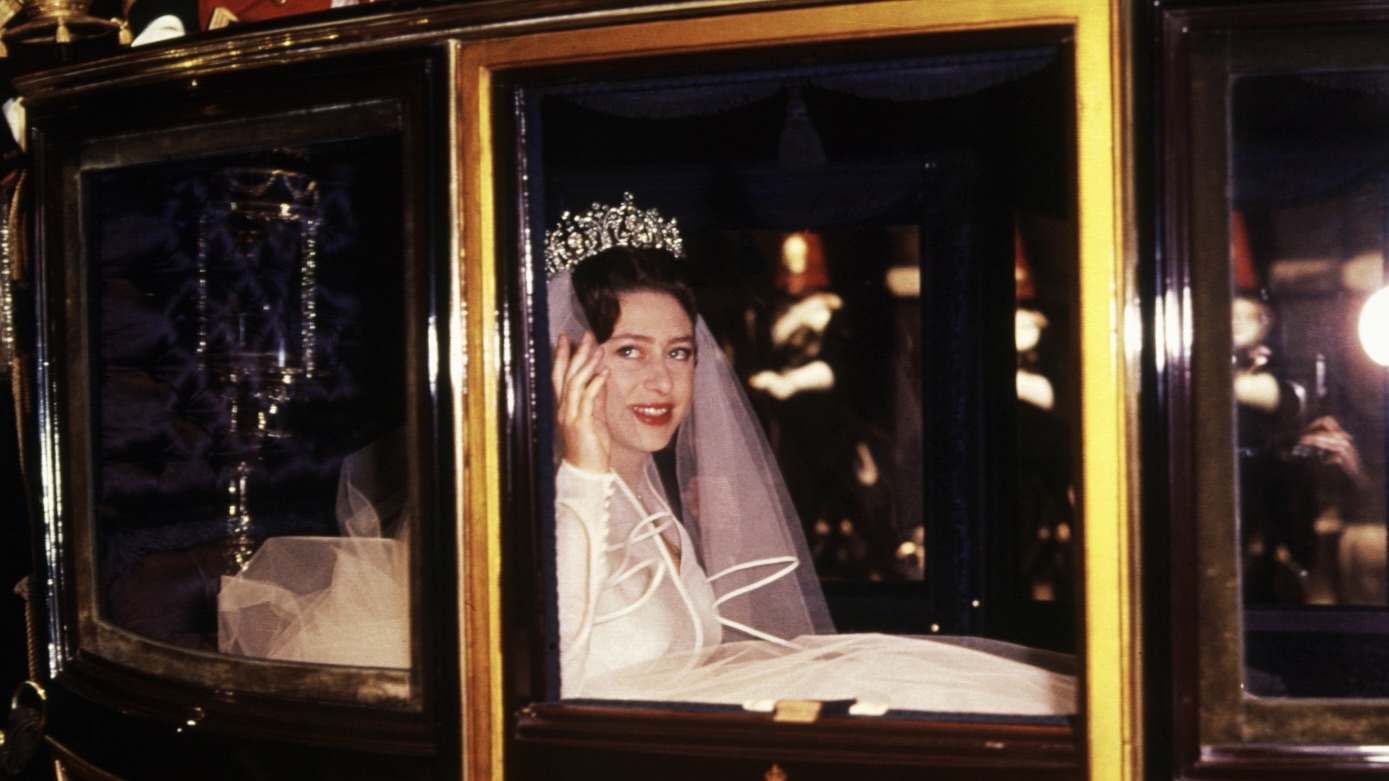
Princess Margaret waves from the Royal Coach during her wedding to Lord Snowdon in London. (Photo by © Hulton-Deutsch Collection/Getty Images)
Princess Margaret was always known for her quick wit and strong sense of self, and her unconventional choice of an intricate wedding tiara was an excellent example of just that. The younger sister of Queen Elizabeth II, Margaret, chose to abstain from borrowing from the royal vaults, paving her own path and purchasing the historic natural diamond Poltimore Tiara for herself at auction, signifying her powerful personal style and independence.
Breaking with tradition, she wore the sky-scraping Victorian jewel to marry photographer Antony Armstrong-Jones in 1960, before he infamously photographed her irreverently grinning, wearing only the tiara in the bathtub. Providing an exceptional glimpse behind the gilded curtains of royal life and perfectly encapsulating the playful attitude of the rebellious princess, the cheeky image was only released in 2006, four years after Margaret passed away, and the same year as the landmark Christie’s auction, where the headpiece sold for nearly five times its high estimate.
Meet the Expert

- Claire Scott is the Design & Development Director at Garrard.
- Scott has previously held positions like Senior Jewelry Designer and Head of Design at the first official Crown Jeweler.
- With over 20 years of experience in the luxury jewelry industry, Scott has developed iconic collections and custom commissions at some of the most prestigious jewelry houses in the world.
Here, Only Natural Diamonds dives deep into the details behind the Poltimore tiara, from its origins with Lady Poltimore to Princess Margaret’s bold acquisition, the piece’s convertible nature, and its groundbreaking auction.
The History Behind Princess Margaret’s Poltimore Tiara
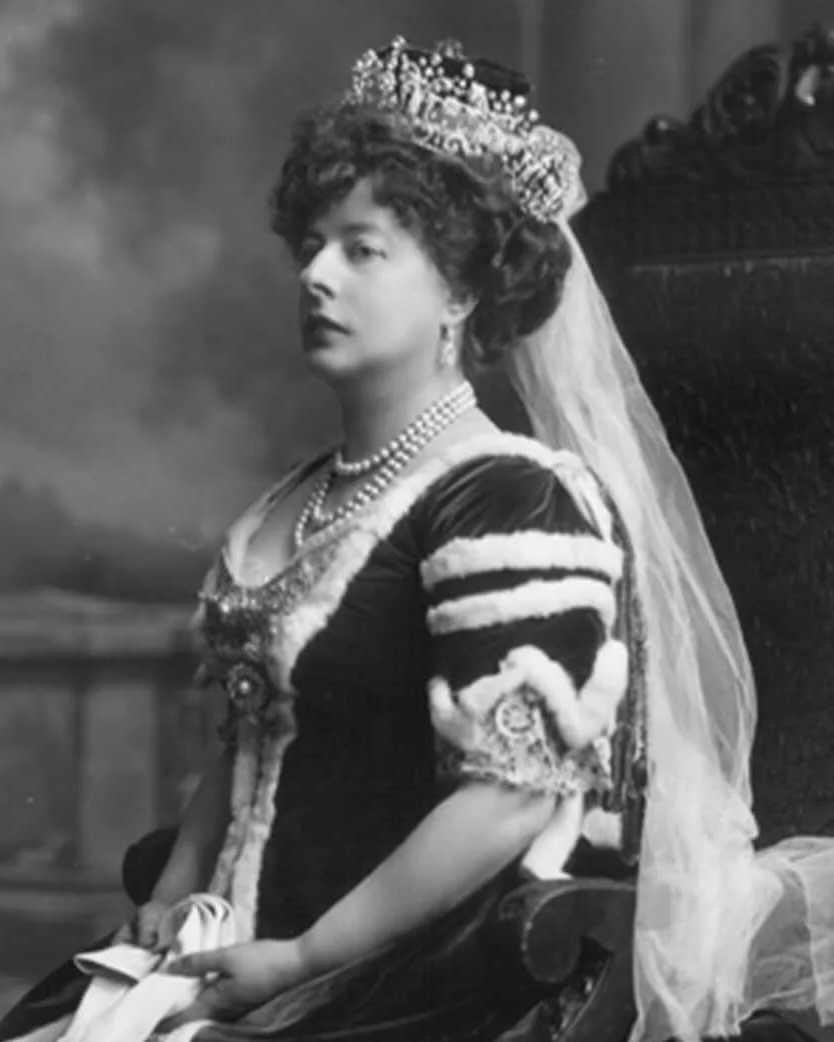
Princess Margaret’s Poltimore Tiara was designed by the House of Garrard in 1870 as a private commission for Florence, Lady Poltimore, who was the wife of the second Baron Poltimore and Treasurer to Queen Victoria’s household from 1872 to 1874. Lady Poltimore even wore the intricate headpiece to the coronation of King George V in 1911.
Comprised of both silver and gold metal, the tiara is sprinkled with cushion-cut and old-cut diamond clusters, which alternate between diamond-embellished scroll motifs, evoking the floral motifs that were in vogue during the Victorian era.
Princess Margaret Transformed Her Wedding Tiara Into a Necklace
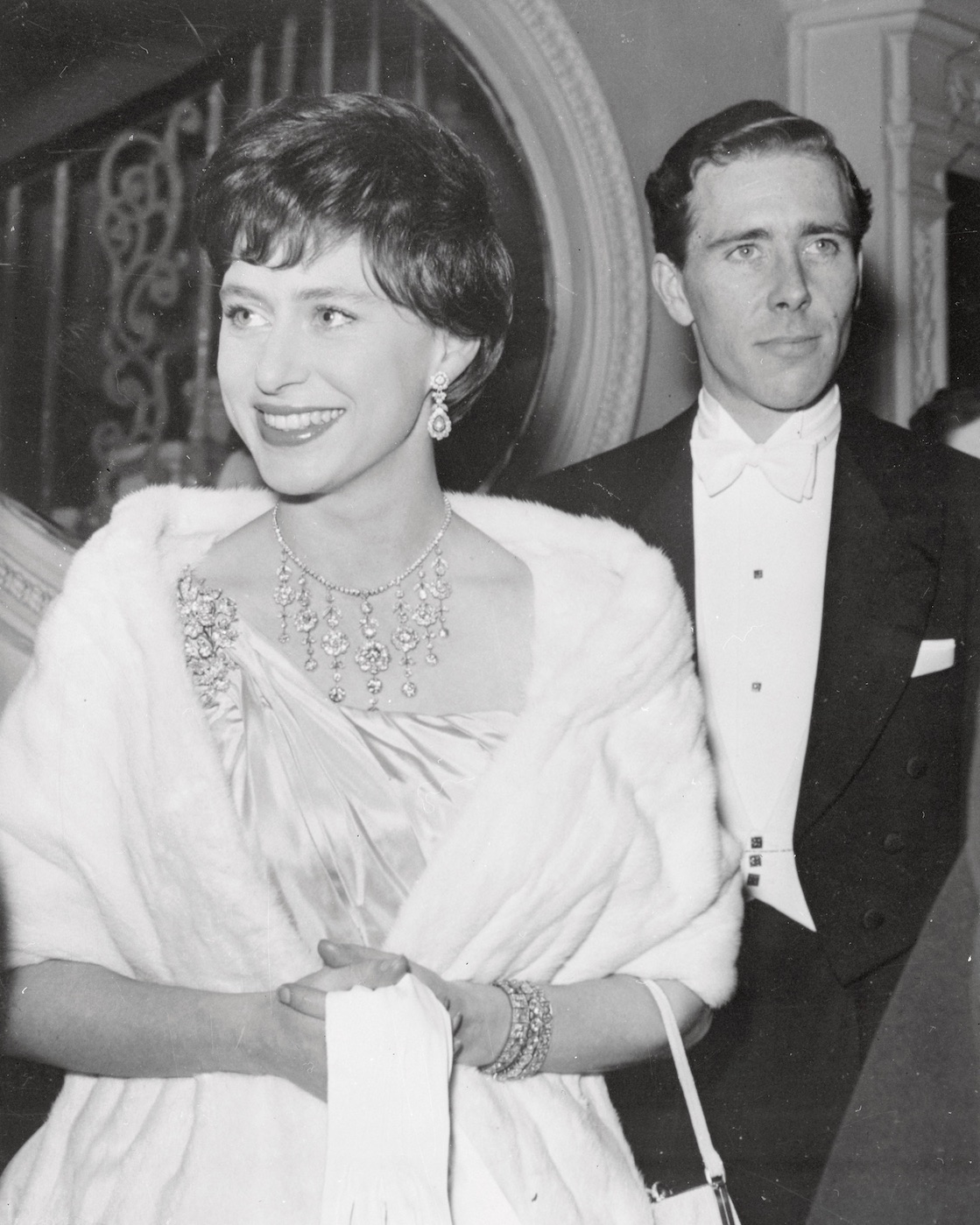
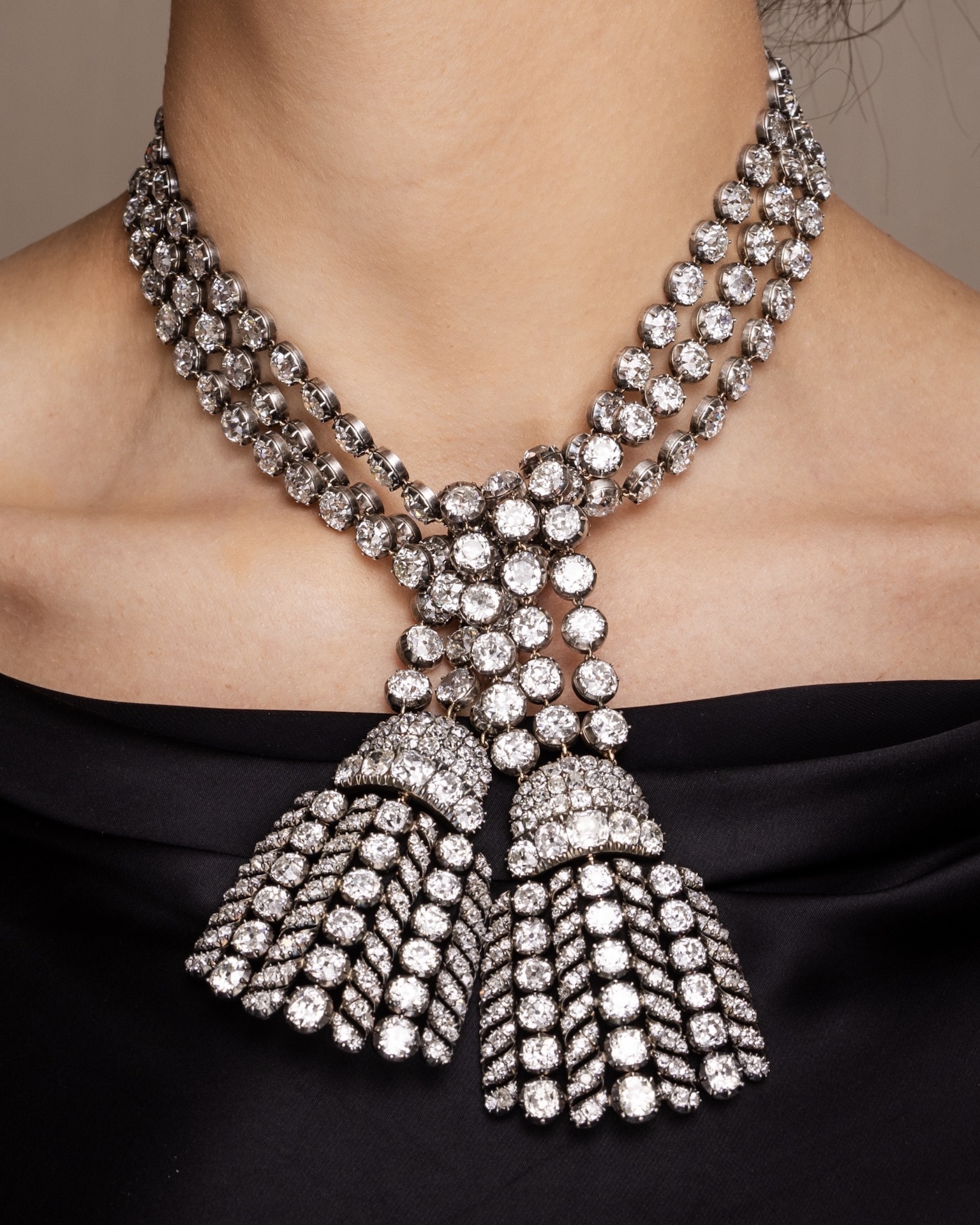
The convertible nature of the tiara transformed it into a fringe necklace and could also be separated into 11 different brooches. A few months ahead of the royal wedding, Margaret wore the Poltimore Tiara in its necklace form at a gala ballet performance at the Royal Opera House in Covent Garden, London.. She went on to wear it as a necklace again in October of that year for a film premiere in Charing Cross.
“Princess Margaret wore the Poltimore Tiara faithfully throughout her life, in its original form and also as a necklace and brooches,” says Claire Scott, Design and Development Director at Garrard. “The design demonstrates the full extent of the ingenuity and skill of Garrard’s designers and craftspeople of the time. To create a piece that can be worn in so many ways, but also converge seamlessly as a magnificent tiara, is no easy feat. The images of Princess Margaret wearing the tiara in the 1960s with a beehive hairdo illustrate its timeless appeal.”
Why Princess Margaret Bought Her Own Wedding Tiara
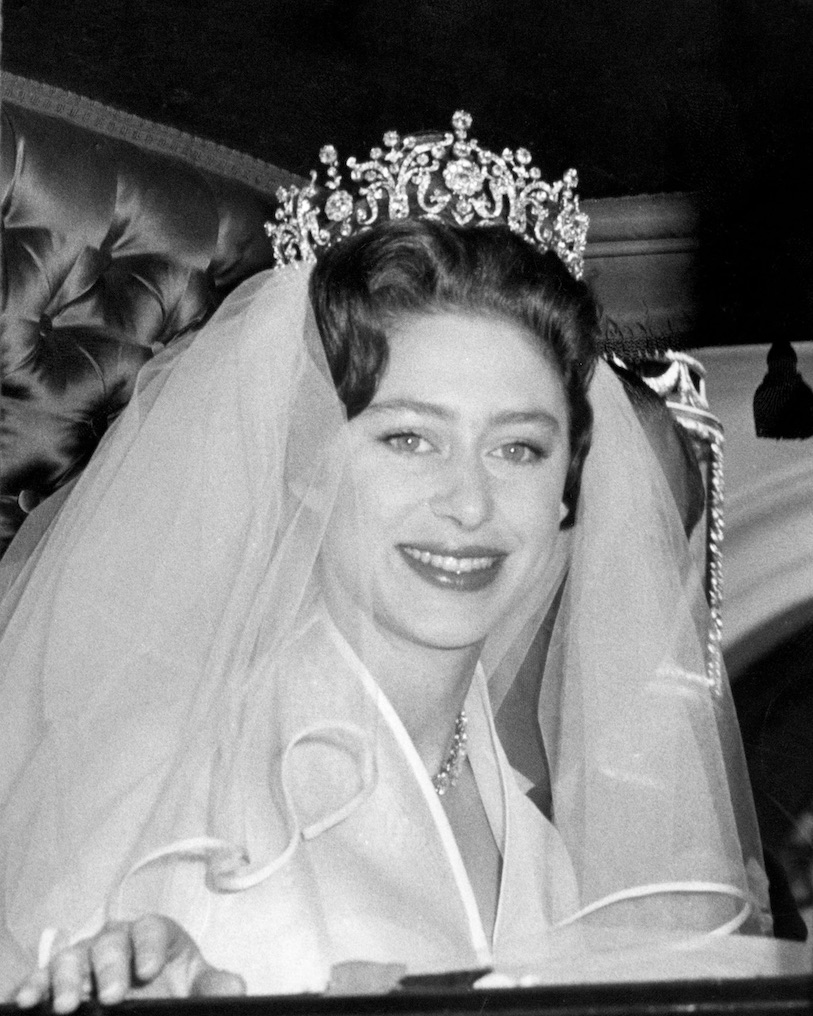
Before Princess Margaret walked down the aisle to marry Armstrong-Jones in May 1960, many expected she would borrow a wedding tiara from her sister, Queen Elizabeth II, who ascended the throne in 1952. Princess Margaret would have been given free rein over the vast assortment of tiaras in the Royal Collection.
Instead, the Princess purchased the Poltimore diadem for £5,500 when the Poltimore family put the Poltimore Tiara up for auction in 1959 as “a highly important tiara,” about a year and a half ahead of the wedding.
Known for marching to the beat of her own drum, Princess Margaret didn’t earn her reputation as the royal rebel for nothing. With a discerning eye for jewelry and a flair for the unconventional, she famously favored the grand Poltimore Tiara not just for its beauty, but because its towering silhouette gave her a boost in the height department. After all, Margaret stood just five feet one.
A seamless match, the framework of the tiara is bound in velvet to match Margaret’s brunette hair color.
The nuptials marked the first royal wedding to be broadcast on television, drawing an estimated 300 million international viewers when Margaret arrived at Westminster Abbey in a horse-drawn carriage, wearing her Norman Hartnell bridal gown and the enormous diamond headpiece.
As a personal purchase, Princess Margaret wore the Poltimore Tiara on several occasions after her wedding, such as state banquets, gala ballet performances, the Shah of Iran’s state visit to the United Kingdom in 1977, various State Openings of Parliament, and in multiple royal portraits.
The Iconic Bathtub Photo of Princess Margaret and the Poltimore Tiara
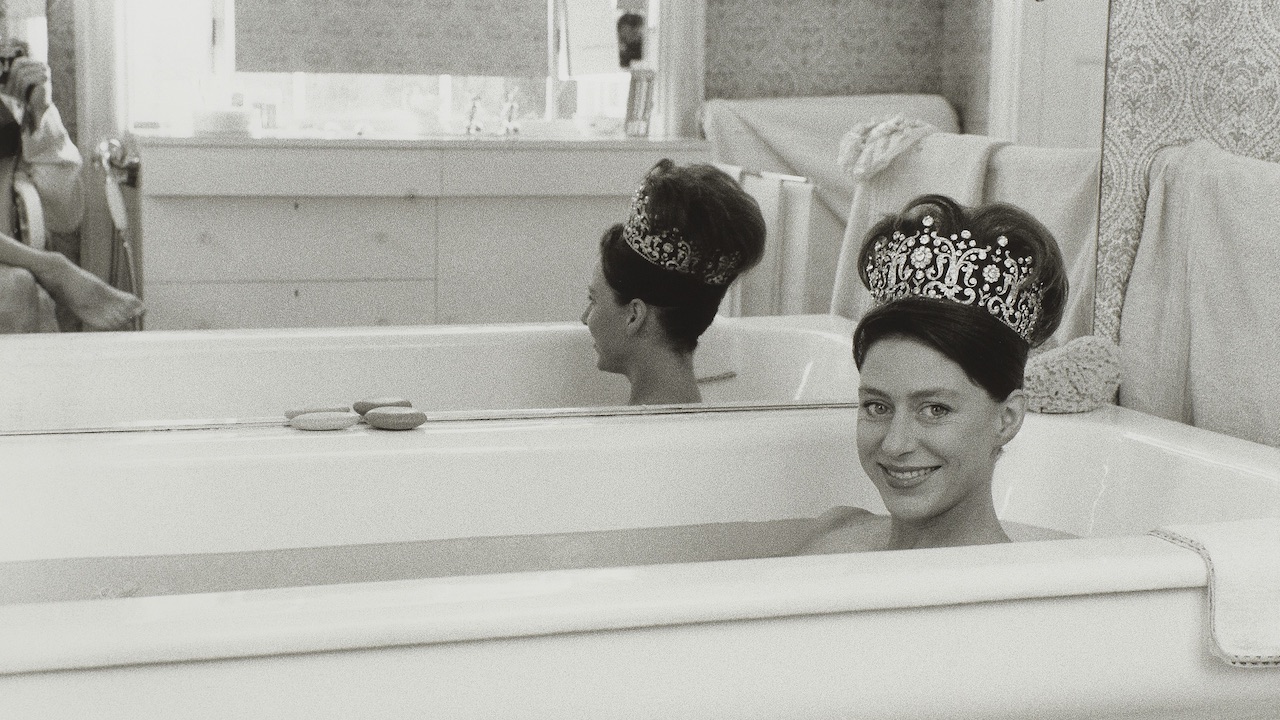
Her husband, Armstrong-Jones, the 1st Earl of Snowdon, was a successful British photographer, known for his portraits featured in Vogue, The Telegraph, Vanity Fair, and The Sunday Times.
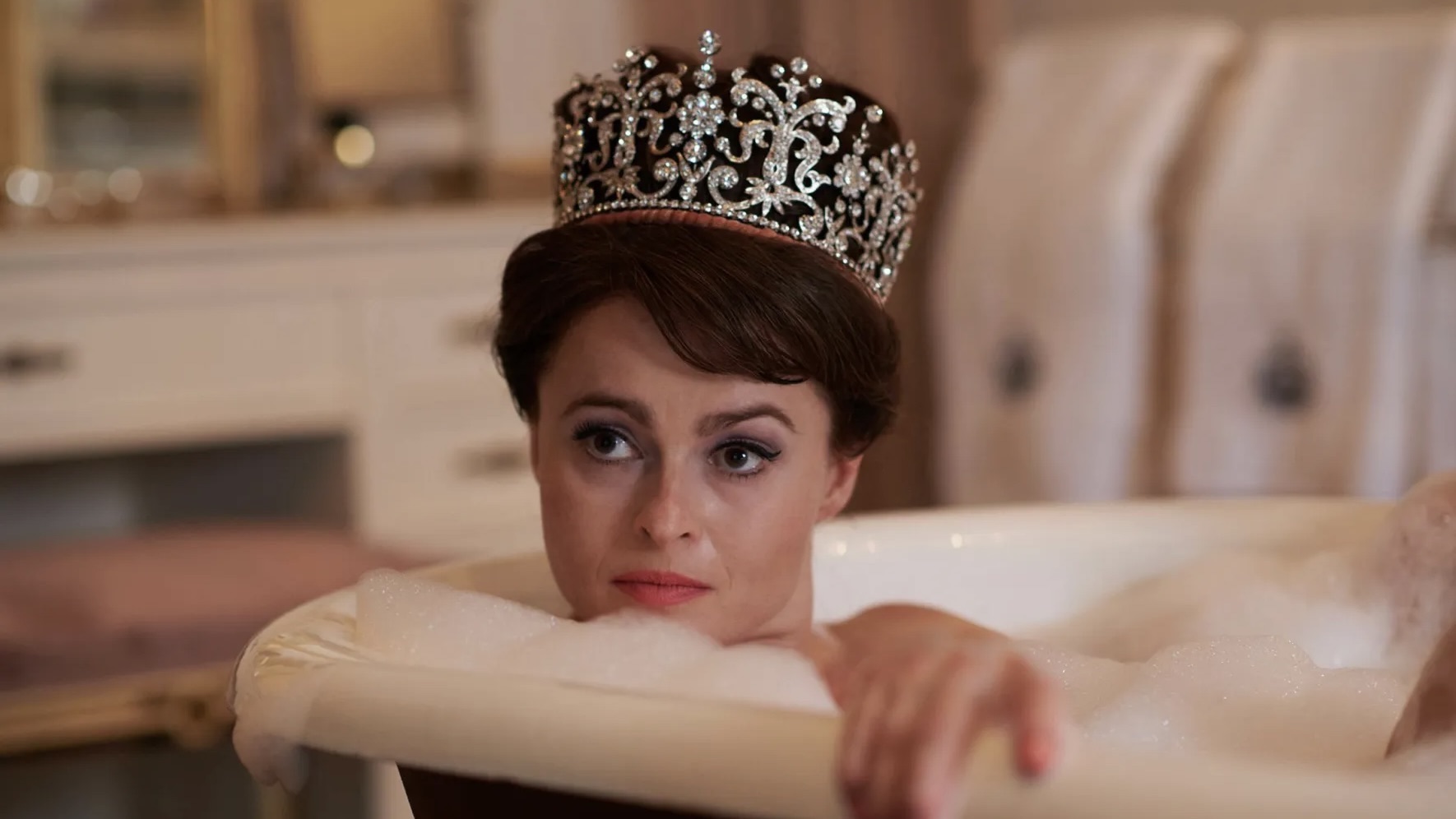
In 1962, he captured one of his most iconic images: Princess Margaret lounging in a bathtub at Kensington Palace, wearing only the Poltimore Tiara atop a sky-high beehive, just a few years after their wedding. The moment was so memorable that it was later recreated in Season 3 of The Crown, with Helena Bonham Carter portraying the glamorous royal.
Although the photo wasn’t originally meant for public release, Lord Snowdon kept it private until 2006—four years after Princess Margaret died in 2002. He then included the image in a gallery exhibition in London, where it was briefly on display before being withdrawn from public view more than a decade later.
In 2022, the black-and-white image was included in the exhibition, ‘Life Through a Royal Lens‘ at Kensington Palace.
How Princess Margaret’s Poltimore Tiara Made Auction History

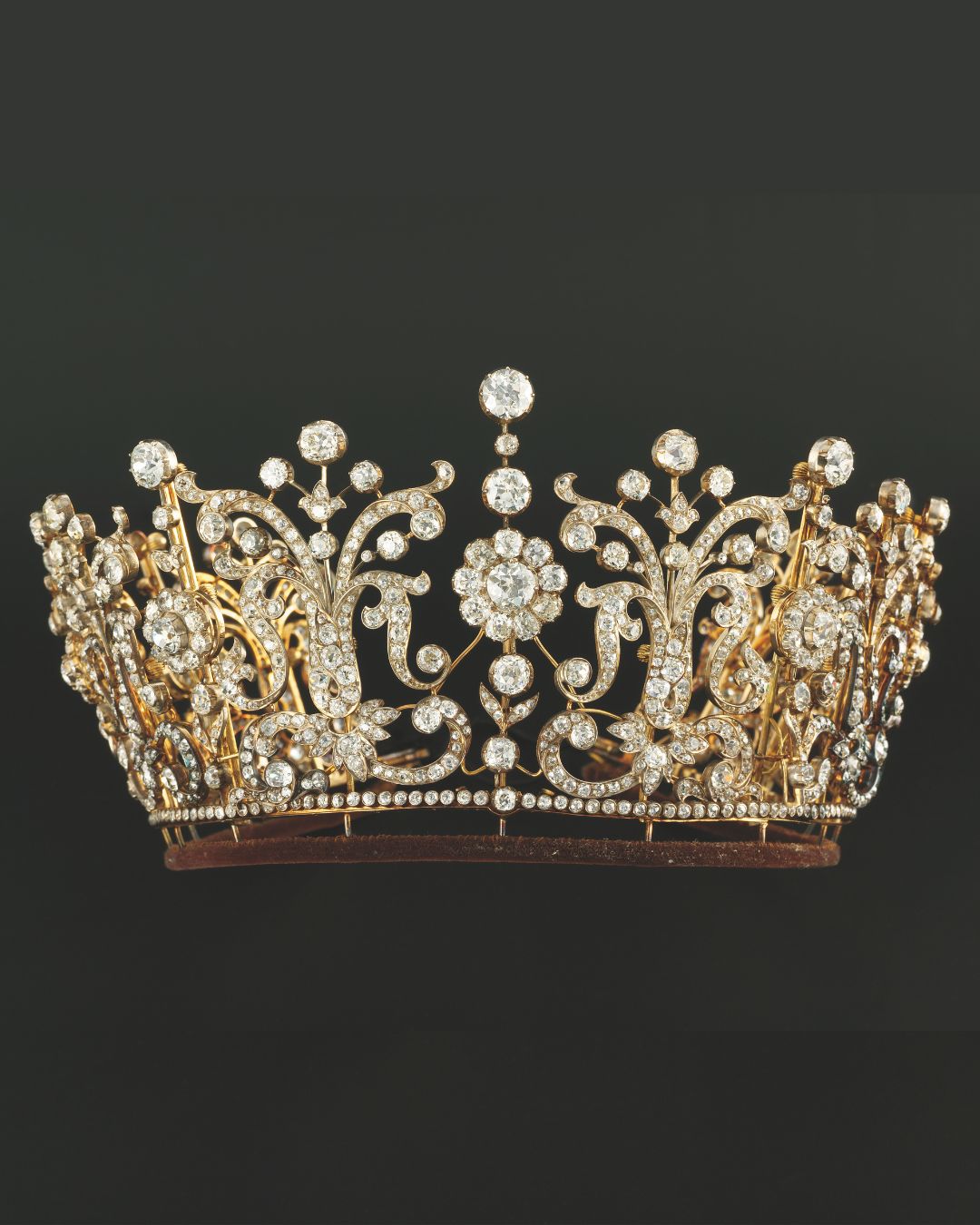
In 2006, the same year Lord Snowdon included the bathtub image in a London gallery exhibition, Princess Margaret’s children, Viscount Linley and Lady Sarah Chatto, decided to sell some of her jewels, including her wedding tiara. A collection of 800 pieces went on sale at Christie’s Auction House in London, and the Poltimore was purchased for $1.7 million by a private buyer, achieving the second-highest price of the evening and nearly five times its high estimate. Its current whereabouts are unknown.
The auction has gone down in history as one of the most illustrious sales conducted by François Curiel, one of the leading auctioneers of our time.
Head of Christie’s jewelry department in the Americas, Claibourne Poindexter, reminisced with Only Natural Diamonds. “When I was 15, Christie’s held Princess Margaret and Ellen Barkin’s jewelry sales the same year in 2006, and I was completely enraptured by them,” he explained. “I thought the jewels were the coolest things I’d ever seen, and from that point forward, I started buying old auction catalogs, reading and studying them. I learned about the wonderful jewelry that came up for sale and the people who owned the jewels.”
Princess Margaret’s Favorite Tiaras Over the Years
The Cartier Halo Scroll Tiara
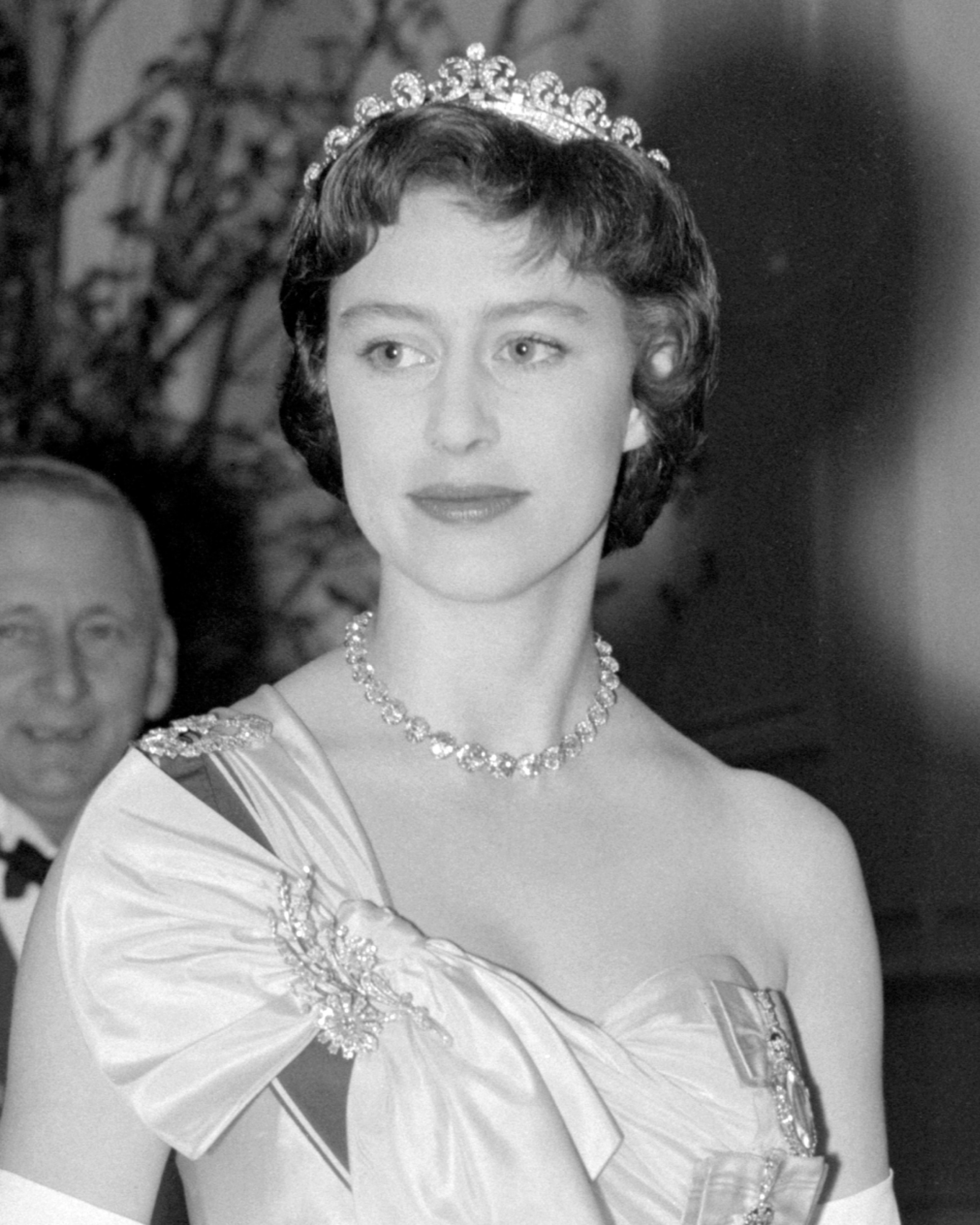
For many royals, their first tiara is typically worn on their wedding day. That is, unless your sister is the Queen of England.
Before Kate Middleton wore the Cartier Halo Tiara on her wedding day, it was considered a strong “starter tiara,” best fit for younger members of the royal family due to its dainty design and smaller stature. Both Princess Margaret and Princess Anne were known to wear the piece frequently in their youth.
Crafted with remarkable precision, the Cartier Halo Scroll Tiara features nearly 1,000 diamonds—739 brilliant-cut and 149 baguette-cut—making it a radiant symbol of royal elegance. When he was still the Duke of York, George VI commissioned Cartier to create the delicate diamond and platinum tiara as a gift for his wife, the future Queen Elizabeth, the Queen Mother. The piece was completed in 1936—just three weeks before he unexpectedly ascended the throne.
Queen Elizabeth the Queen Mother later gifted the tiara to her daughter, the future Queen Elizabeth II, on her 18th birthday in 1944. Many consider it to be the very first piece in the late monarch’s extensive tiara collection. While Queen Elizabeth II was rarely photographed wearing the Halo Scroll Tiara, Princess Margaret and Princess Anne kept it warm until it found renewed fame when Middleton selected it for her royal wedding in 2011.
The Lotus Flower Tiara
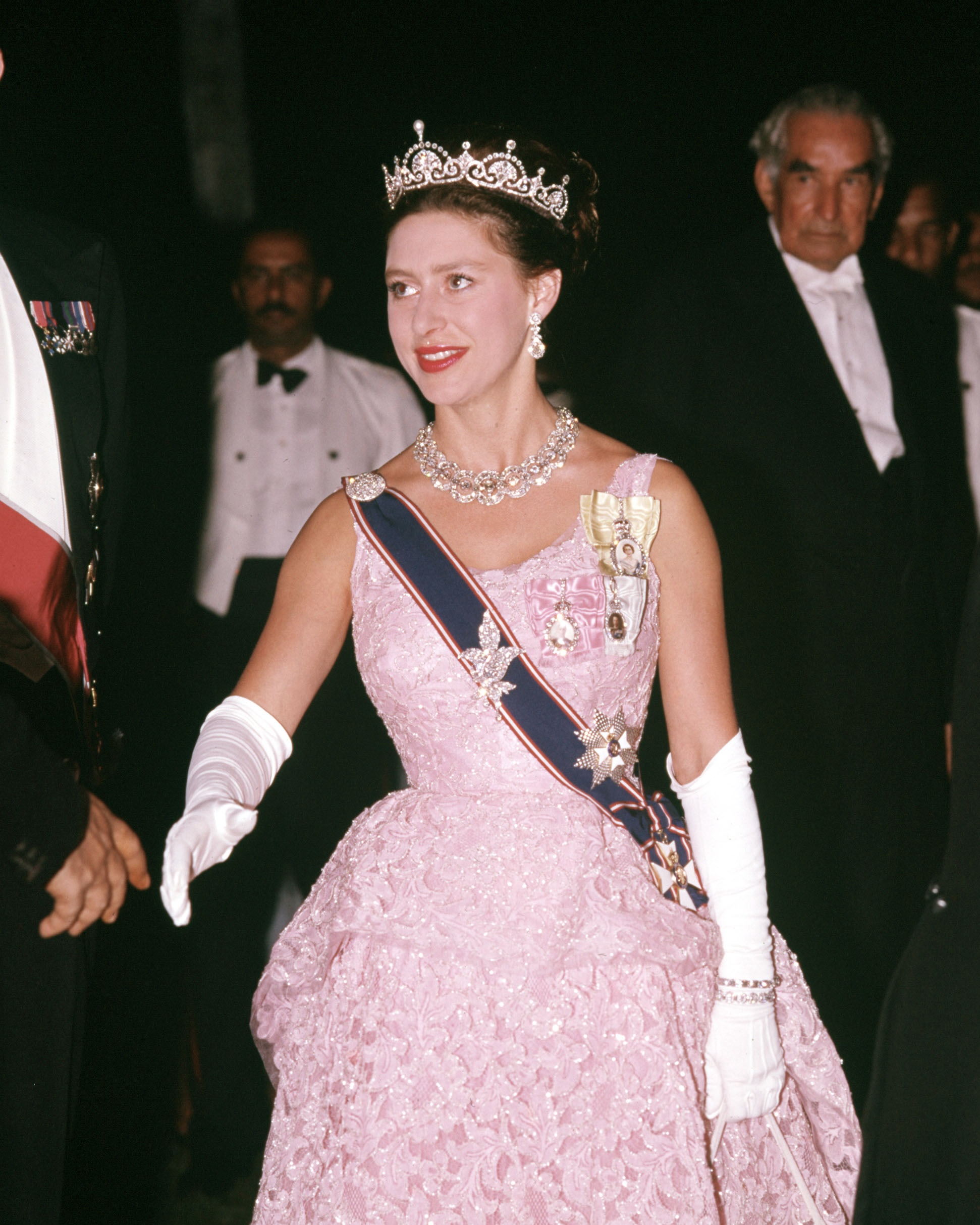
Princess Margaret was also known to frequently wear the Lotus Flower Tiara, also known as the Papyrus Tiara. The Queen Mother reportedly had the tiara made from a natural diamond and pearl Garrard necklace she received as a wedding gift in 1923 from her husband, the future King George VI. In her day, she would wear it low on her forehead, aligned with the 1920s style.
The headpiece was eventually passed down to Princess Margaret in 1959, shortly before she married Armstrong-Jones. The Princess was known to wear the dazzling tiara often to balls and royal dinners.
Passing the Lotus Flower Tiara down to a third generation, Princess Margaret loaned the piece to her daughter-in-law, Serena Stanhope, to wear at her 1993 wedding to Margaret’s son, Viscount Linley. Now, Kate Middleton has taken the rarely-seen jewel out for a spin on several occasions.