< Historic Diamonds / Royal Stories
The Most Dazzling Diamond Royal Tiaras In History
Take a deeper look at some of the most exquisite royal tiaras in history, from the British Royal Family to Spain, Sweden, Monaco, Luxembourg, and more.
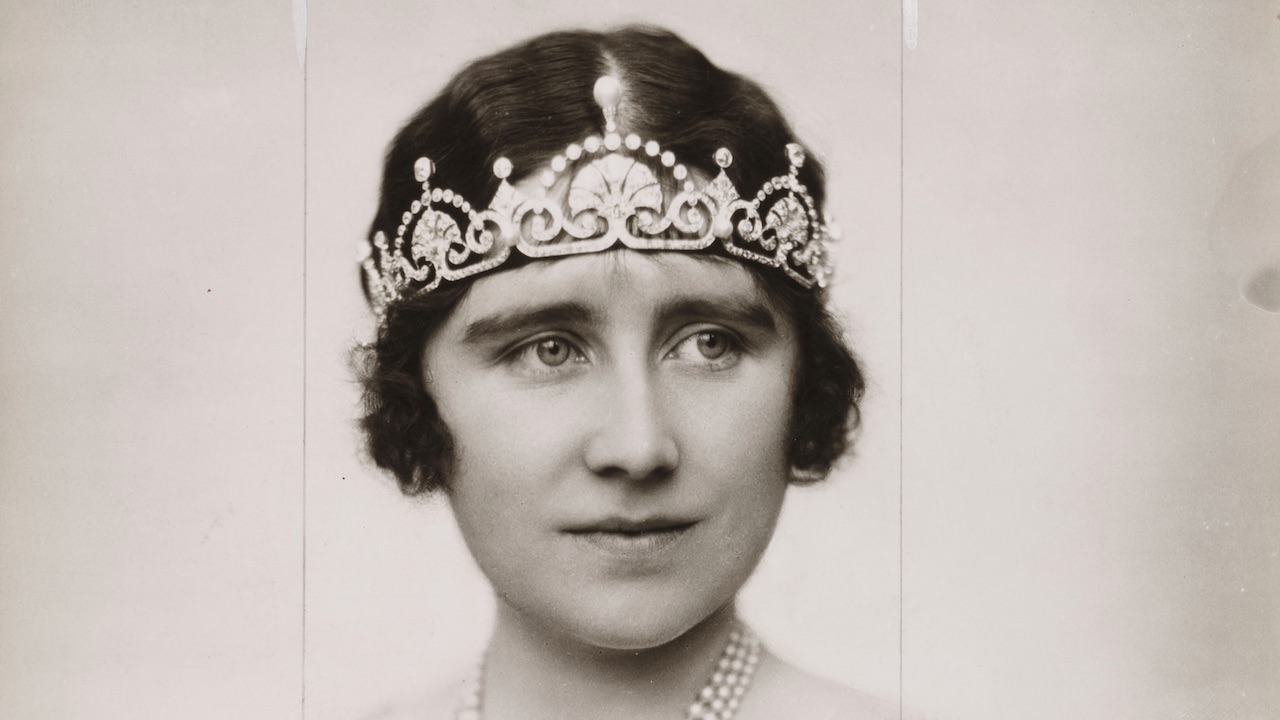
Queen Elizabeth, The Queen Mother, wears the Lotus Flower Tiara in the 1920s. (Getty Images)
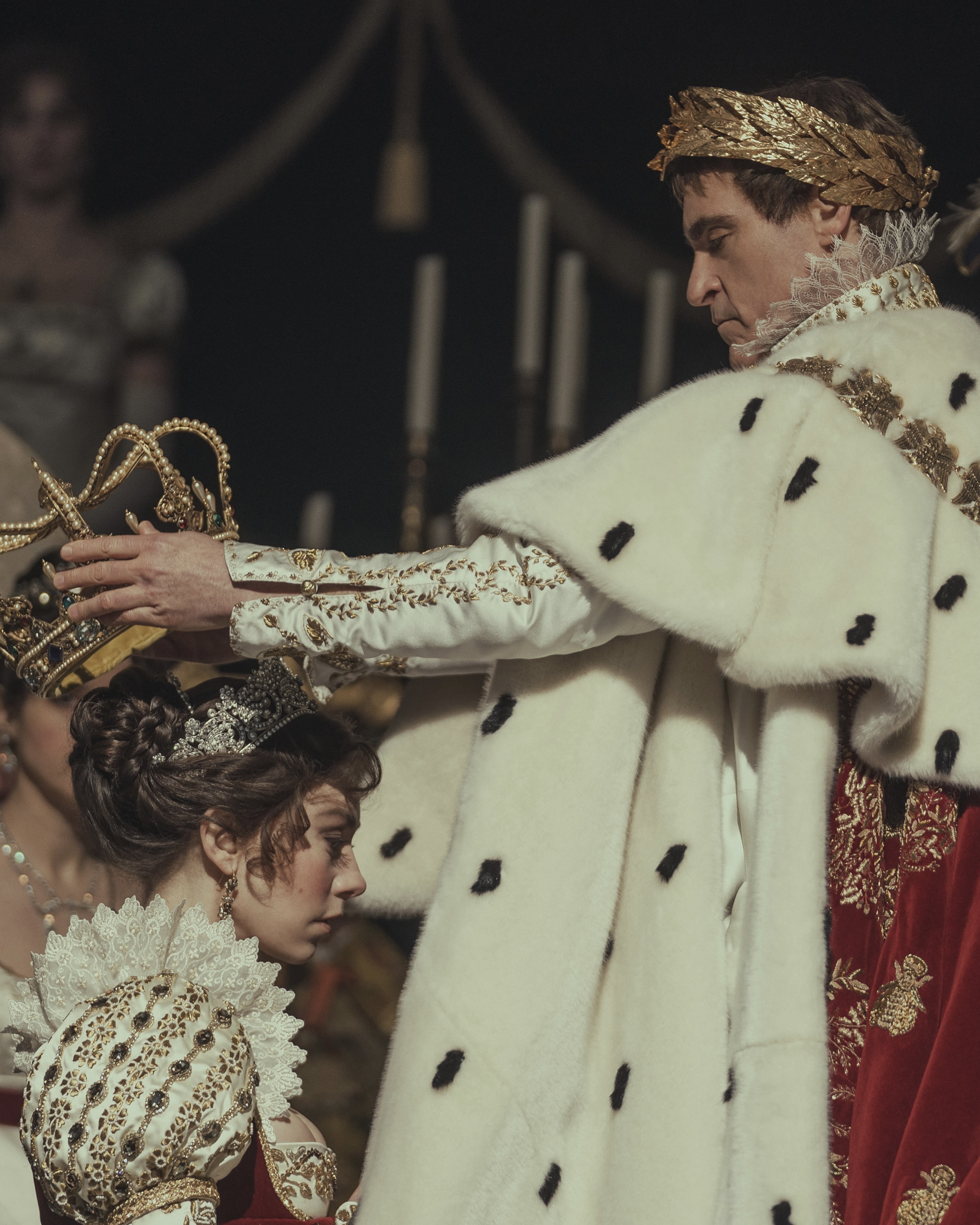
Tiaras have been worn since the days of Antiquity, during the Greek and Roman empires, when prestigious men and women wore headpieces to represent wealth, power, and status. Inspired by ancient emperors, Napoleon and his wife, Empress Josephine, are credited with popularizing royal tiaras as we know them today.
Regal and magnificent, the stunning nature of these breathtaking diamond diadems took hold within the royal court. An emblem of sovereignty and imperial grandeur, royal tiaras cemented their place as an essential element of courtly dress among noblewomen.
Meet the Expert

- Claire Scott is the Design & Development Director at Garrard.
- Scott previously held positions like Senior Jewelry Designer and Head of Design at the first official Crown Jeweler.
- With over 20 years of experience in the luxury jewelry industry, Scott has developed iconic collections and custom commissions at some of the most prestigious jewelry houses in the world.
Now, royal women across the globe wear these eye-catching sparklers on state visits, royal weddings, and more, either inheriting a cavalcade of historic royal tiaras or commissioning bold new pieces from official crown jewelers or legendary jewelry houses.
Here, learn all about some of the most sparkling diamond royal tiaras in history, from the British Royal family to Spain, Sweden, Monaco, Luxembourg, and more.
Queen Mary’s Fringe Tiara
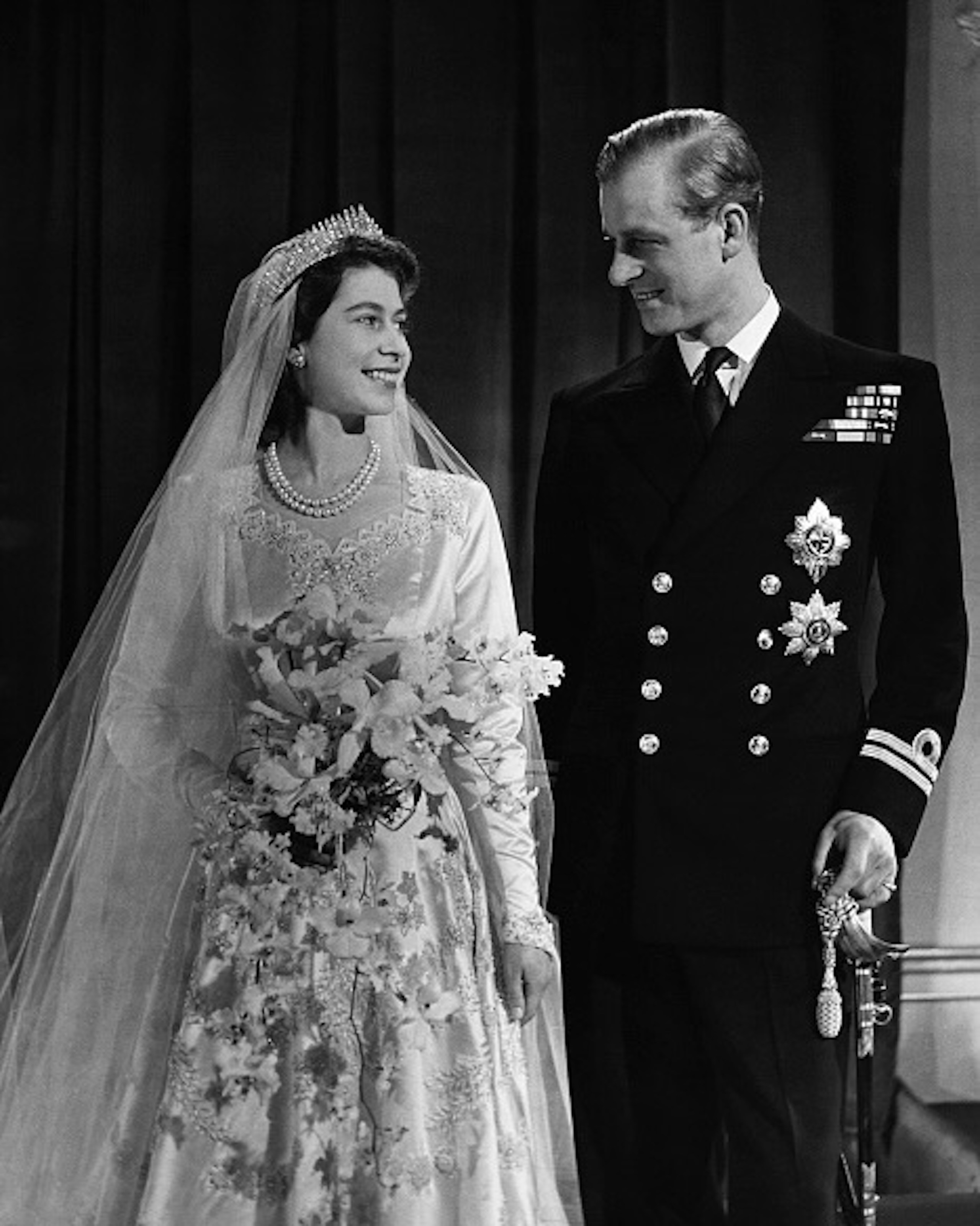
Queen Mary’s Fringe Tiara is so legendary that it’s been the top choice for royal weddings in its lifetime. Most notably, Queen Elizabeth II chose the headpiece for her nuptials to Prince Philip at Westminster Abbey on November 20, 1947. Queen Mary passed down the tiara to her daughter-in-law, Queen Elizabeth (later known as the Queen Mother), in 1937. The Queen Mother later lent the jewel to her daughter, Princess Elizabeth, for her wedding day.
Queen Elizabeth II’s daughter, Princess Anne, kept tradition alive when she wore the same tiara to marry Mark Phillips in 1973. Another generation would continue the pattern for her wedding day when Queen Elizabeth’s granddaughter, Princess Beatrice, wore Queen Mary’s Fringe Tiara for her wedding in 2020.
Over 100 years old, the Fringe Tiara features 47 pointed bars of brilliant-cut and rose-cut diamonds, alternating with smaller prongs of lozenge-shaped brilliant-cut diamonds. Originally called the Collingwood Fringe Tiara, it was a wedding gift from Queen Victoria, the grandmother of Mary’s future husband.
Garrard, the official crown jeweler at the time, recently rediscovered two of their handwritten royal ledgers. On November 3, 1919, the ledger recounted the notes, “Mounting 633 brilliants and 271 rose diamonds from your Majesty’s own tiara, bracelet, and monogram in gold and silver settings in a Russian pattern tiara with adjustable head frame, allowing for old settings.”
According to Design & Development Director at Garrard, Claire Scott, “The Fringe Tiara is a true testament to Garrard’s exquisite craftsmanship and technical mastery. The fact that it can be worn as a fully articulated necklace without any additional components is a feat of artistry and precision that defines our heritage.” She explains, “Stories and histories often enhance the allure of a piece of jewelry, but few can hold more romance than one worn by three royal brides on their wedding day.”
The Spencer Tiara

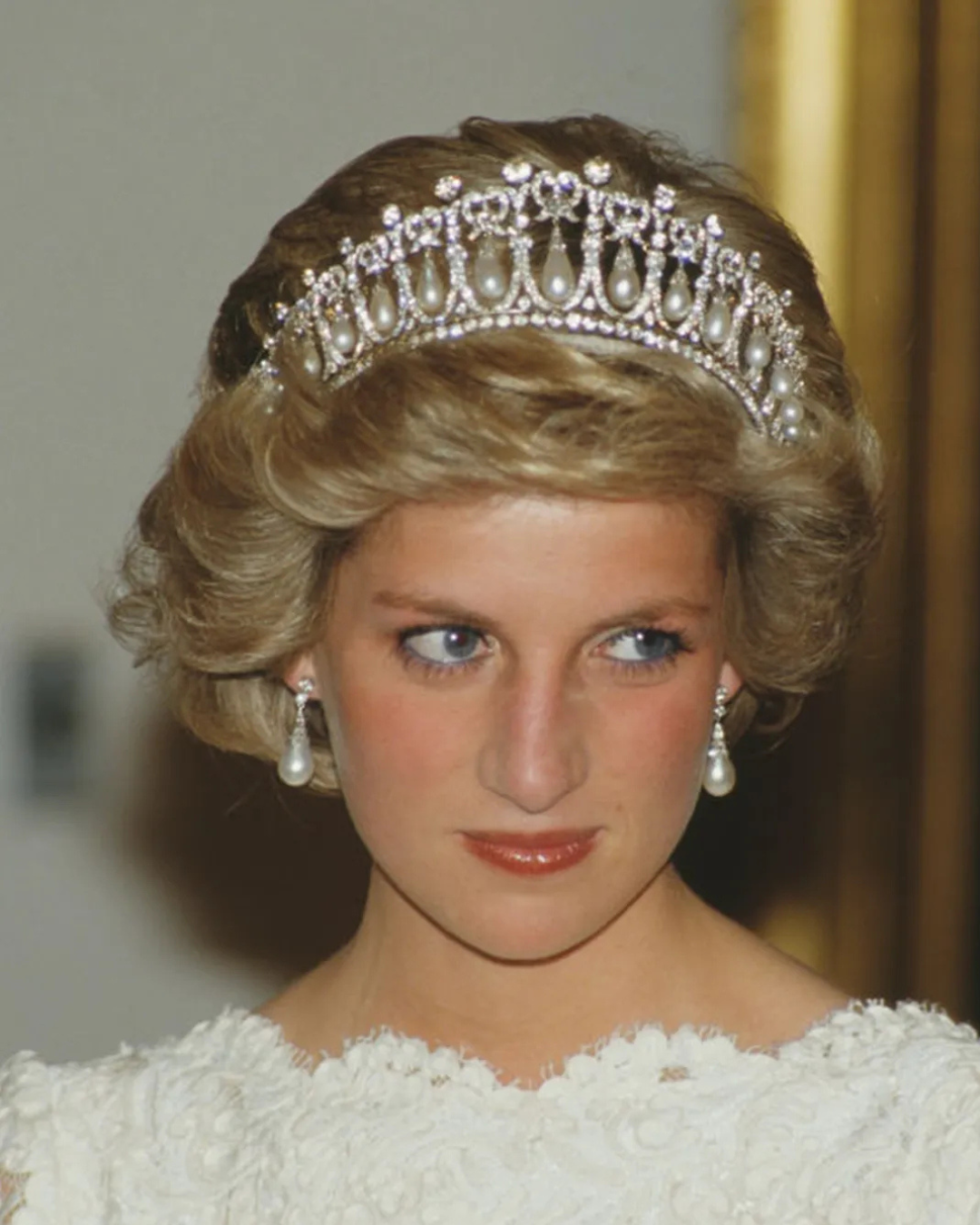
When Princess Diana wore the Spencer Tiara on her wedding day in 1981, the legendary diamond headpiece cemented its place in modern royal history. Instead of borrowing one of the many royal tiaras from Queen Elizabeth II’s robust Royal Collection, Diana used the opportunity to honor her own family heritage.
Her father, the 8th Earl Spencer, loaned her the Spencer Tiara – a family jewel that has been passed down through generations. “When Diana wore her family heirloom for her wedding day, it became one of the most famous tiaras in modern history,” says Scott.
Designed in an intricate garland style, a heart-shaped motif sits in the center of the Spencer Tiara, flanked by looped scrolls, and sprinkled with sparkling stars and trumpet-shaped diamond flowers. Round, rose-cut, pear-shaped, and cushion-cut natural diamonds are interspersed throughout the diadem, mounted in gold.
The Spencer Tiara is said to have been created in 1767 for the Viscountess Montagu. In 1919, Lady Sarah Spencer gifted the tiara to Lady Cynthia Hamilton (Princess Diana’s grandmother) as a wedding present after she tied the knot with Albert, Viscount Althorp. Garrard eventually modified and expanded the tiara, incorporating elements from other family jewels, resulting in the design as we know it today.
“The remodeling of the Spencer Tiara in our workshop in 1937 resulted in a lovely, cohesive design that is so typical of the period,” Scott explains. “This tiara is one of those jewels that will always be associated with Diana.” The Spencer Tiara remains in the possession of the Spencer family to this day.
The Cartier Loop Tiara
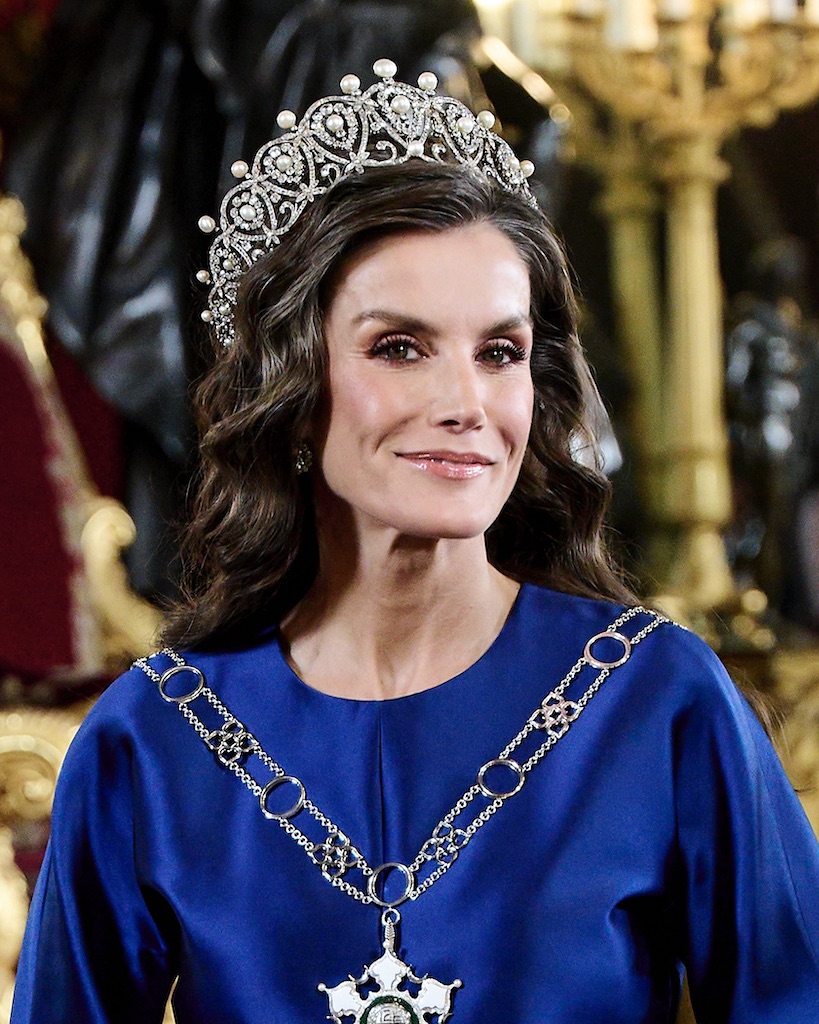
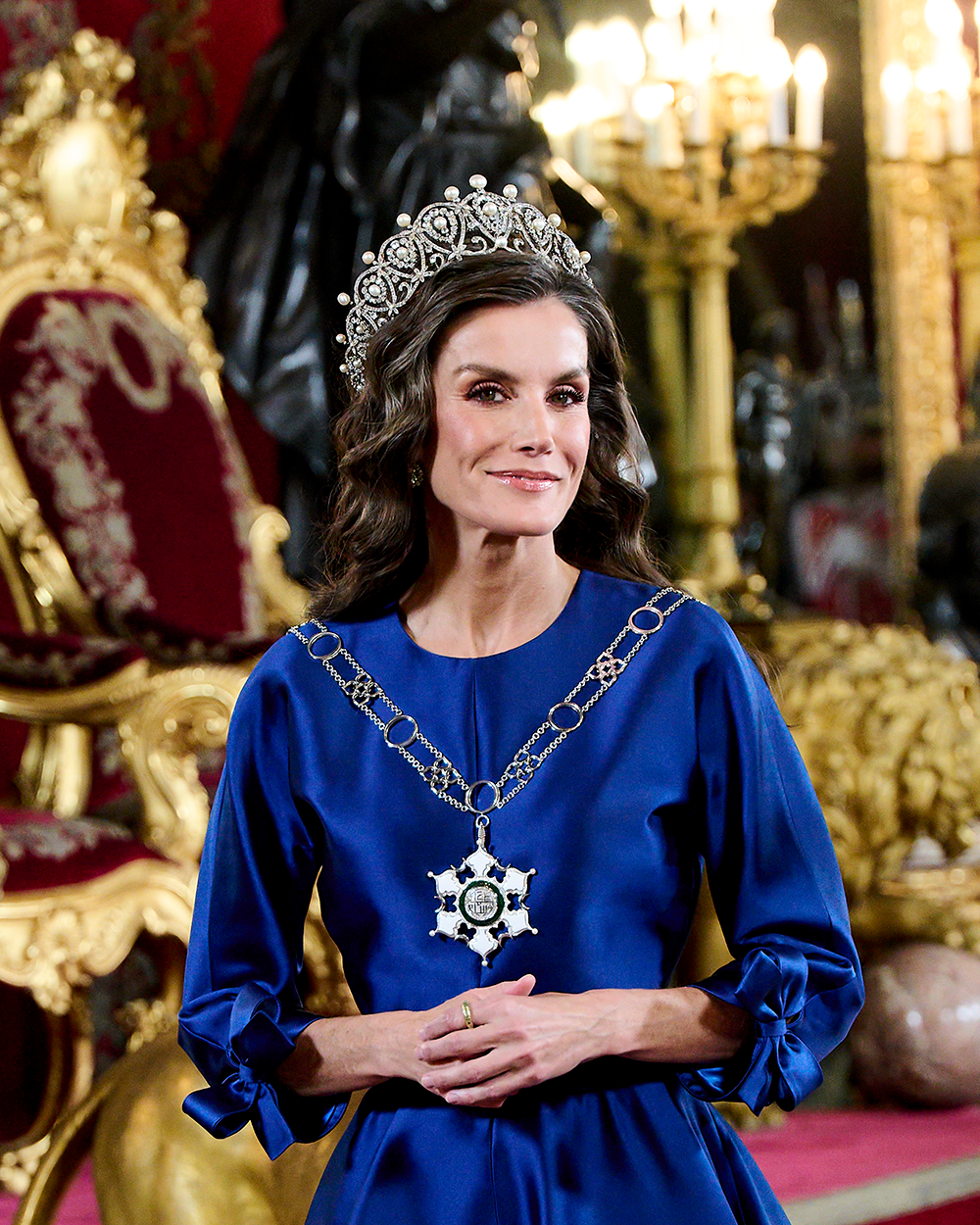
Crafted from platinum, pearls, and natural diamonds, the Cartier Loop Tiara has been in the jewelry collection of the Spanish royal family for generations now, as is one of many opulent royal tiaras beloved by Queen Letizia. The floral tiara is defined by a rhythm of diamond looped garlands – each softly accented with dainty pearls.
It’s believed to have been created by Cartier in 1886 for Queen Maria Christina of Austria, who ruled over Spain after the death of her husband, King Alfonso XII, before her son, Alfonso XIII ascended the throne in 1902. Upon Maria Christina’s death in 1929, Alfonso XIII inherited the tiara before it was passed down to Princess Maria Mercedes of Bourbon-Two Sicilies when she married Infante Juan, Count of Barcelona. She then bequeathed the jewel to her daughter-in-law, Queen Sofia, who was known to especially favor the piece and wore it frequently throughout the 20th century.
Queen Letizia of Spain has now worn the Cartier Loop Tiara on several occasions, such as the 2018 banquet for the Chinese President Xi Jinping, the Italian President Sergio Mattarella’s 2021 state visit to Spain, and to welcome Colombian President Gustavo Petro in 2023. She wore it to a state visit to the Netherlands, hosted by the Dutch royal family in 2024. Most recently, Queen Letizia donned the tiara to the banquet in honor of Haitham Bin Tariq, the Sultan and Prime Minister of Oman.
The Poltimore Tiara
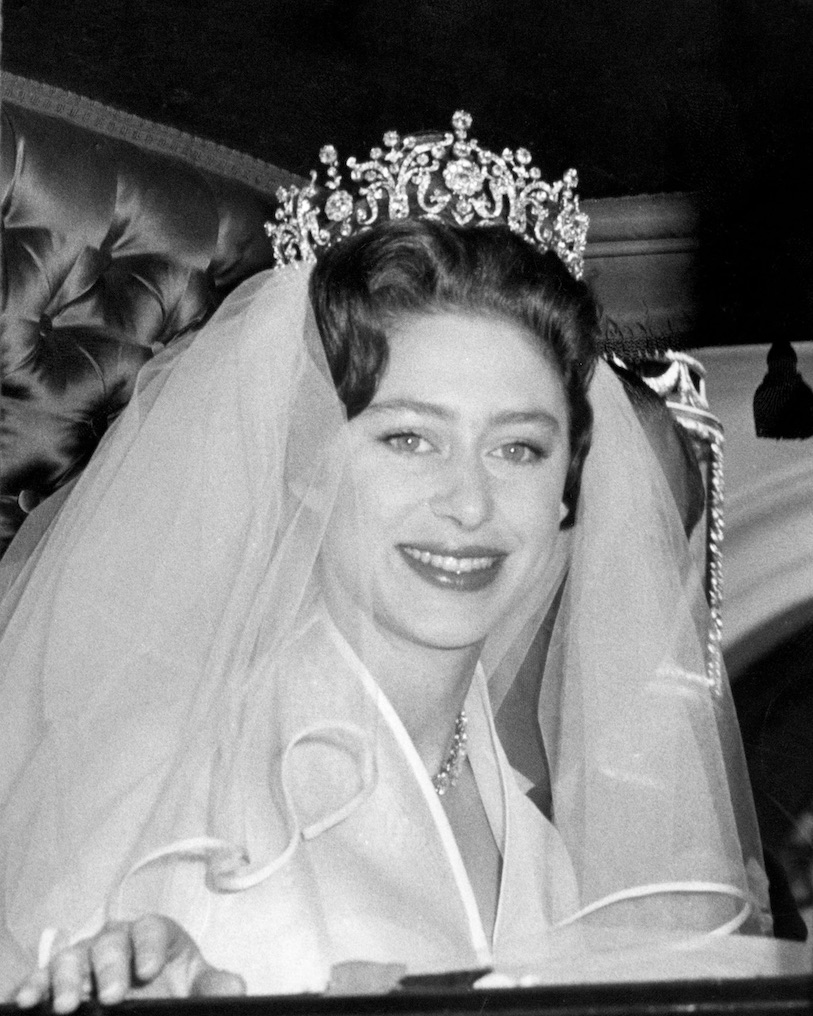
Princess Margaret wore the Poltimore Tiara to marry Tony Armstrong-Jones in May 1960. Many suspected she would borrow a wedding tiara from her sister, Queen Elizabeth II, who had ascended to the throne in 1952. Instead of utilizing her free pass over the assortment of royal tiaras in the family collection, the Princess purchased the Poltimore diadem for £5,500 when the Poltimore family put the Poltimore Tiara up for auction in 1959 as “a highly important tiara.”
Known for marching to the beat of her own drum, Princess Margaret didn’t earn her reputation as the royal rebel for nothing. With a discerning eye for jewelry and a flair for the unconventional, she famously favored the grand Poltimore Tiara and eschewed all other royal tiaras—not only for its beauty, but because its towering silhouette quite literally gave her a boost in the height department. (After all, Margaret stood just five feet one.)
It was designed by Garrard in 1870 for Florence, Lady Poltimore, who was the wife of the second Baron Poltimore and Treasurer to Queen Victoria’s household from 1872 to 1874. The tiara is sprinkled with cushion-cut and old-cut diamond clusters, which alternate with diamond-embellished scroll motifs, evoking the floral motifs that were in fashion during the Victorian era. The convertible tiara can transform into a fringe necklace and 11 different brooches.
Her children decided to sell some of her jewels, including her wedding tiara. The Poltimore was sold at Christie’s Auction House in 2006 for $1.7 million to a private buyer. Its current whereabouts are unknown.
The Cartier Halo Scroll Tiara
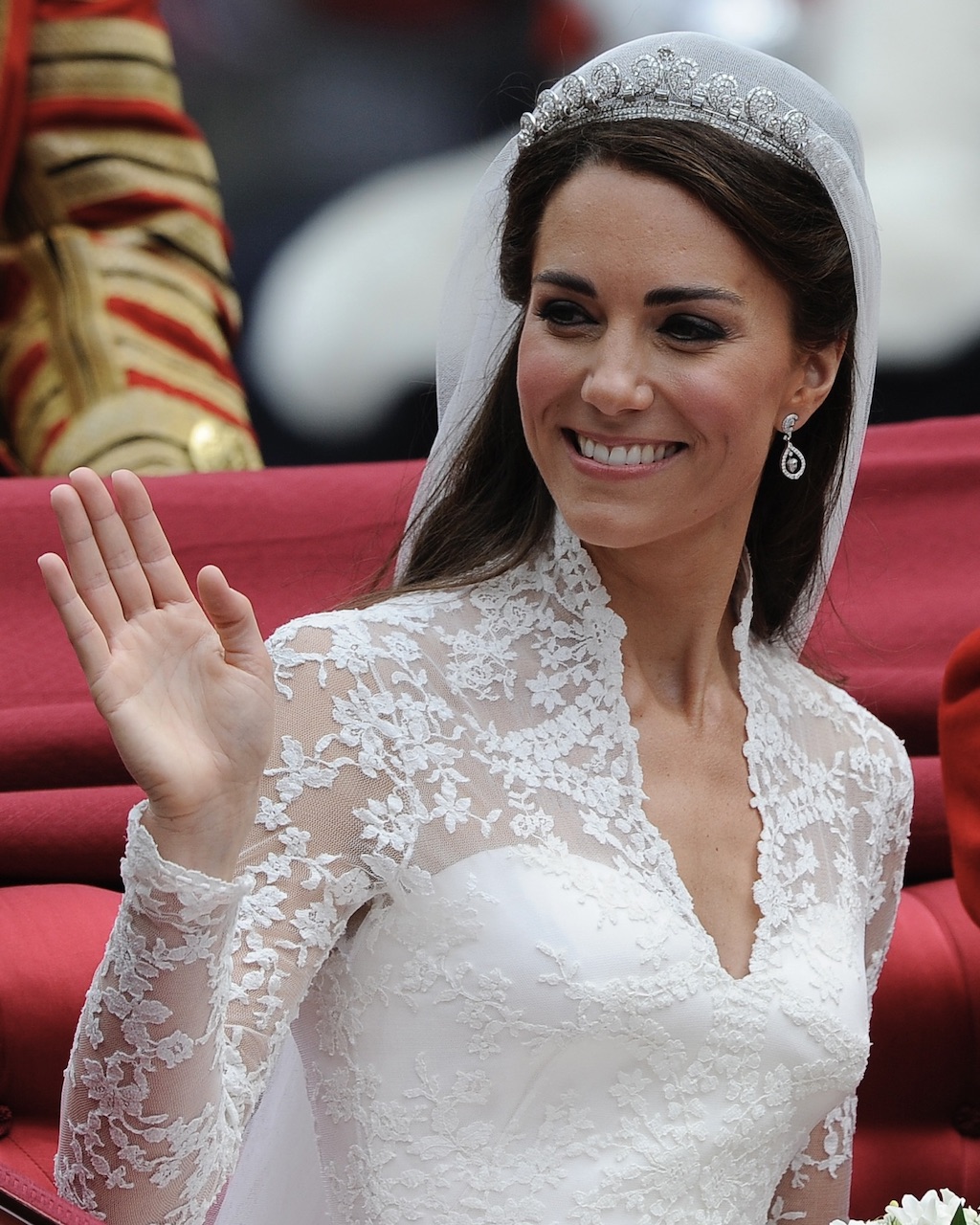
Kate Middleton’s debut tiara moment packed a significant historical punch. When she married Prince William on April 29, 2011, at Westminster Abbey, Middleton adorned an Alexander McQueen bridal gown and topped off her wedding day ensemble with the Cartier Halo Scroll Tiara—marking her first appearance in one of the most closely watched royal tiaras of the modern era.
George VI originally commissioned Cartier to craft the demure diamond and platinum topper for his wife, Her Majesty Queen Elizabeth the (future) Queen Mother, as a gift in 1936, just before the couple ascended the throne. She passed the heirloom down to her daughter, the soon-to-be Queen Elizabeth II, on her 18th birthday in 1944 – many believe the Halo Scroll Tiara to be the first in the monarch’s expansive collection of royal tiaras.
Queen Elizabeth loaned the bride the headpiece to use as her traditional “something borrowed,” while Kate Middleton’s parents had matching scroll and acorn diamond drop earrings commissioned for her “something new.”
Made with nearly 1,000 diamonds, the piece includes 739 brilliant-cut diamonds and 149 baton diamonds. With its dainty and delicate design, the Cartier Halo is considered a strong “starter tiara,” best fit for younger members of the family due to its smaller stature. The Queen’s younger sister, Princess Margaret, was known to borrow the piece frequently and even wore it to her sister’s coronation ceremony in 1953. The diadem was also loaned to the Queen’s daughter, Princess Anne, in her youth.
The Braganza Tiara
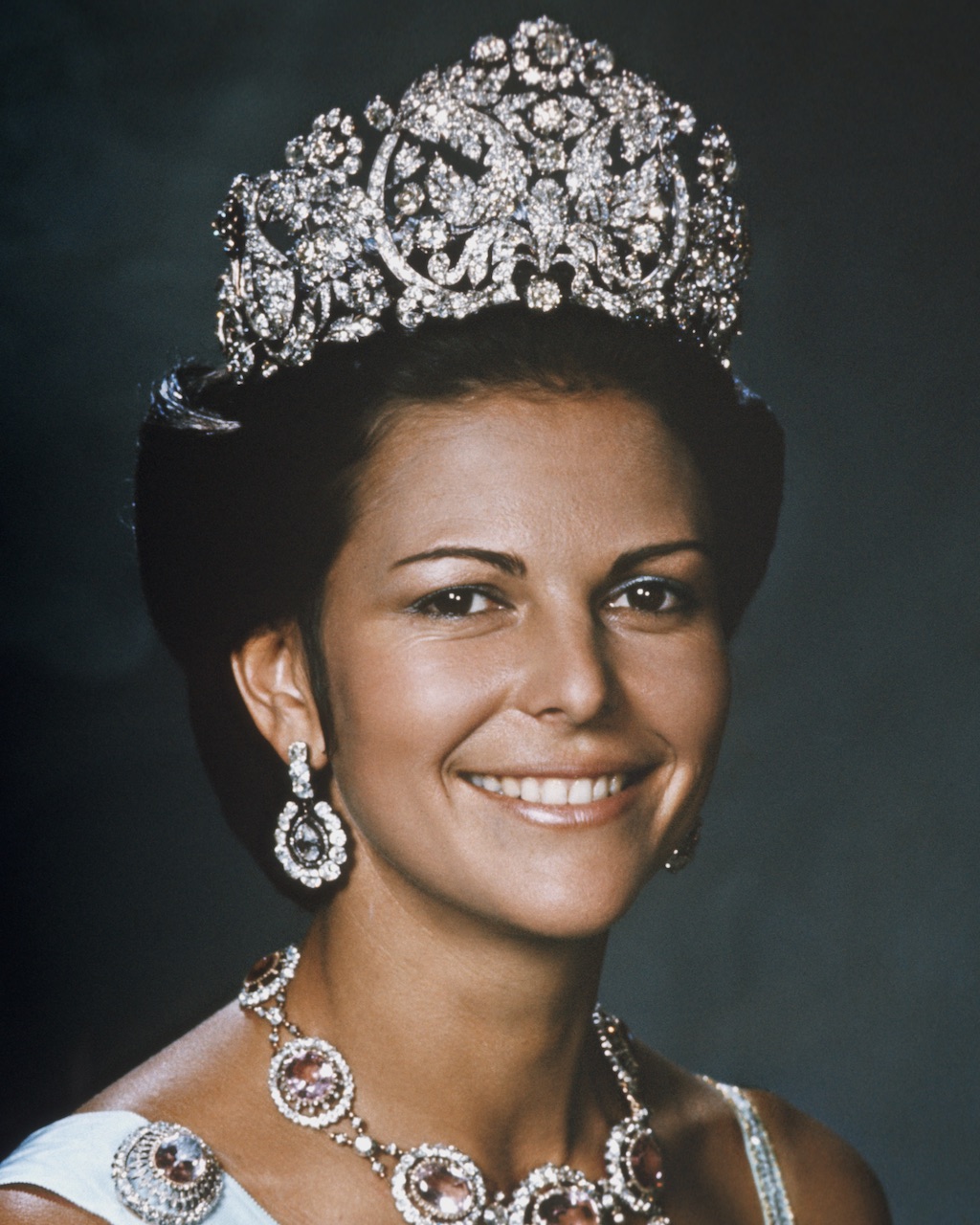
Queen Silvia of Sweden has worn the Braganza Tiara (also spelled Bragança Tiara) throughout her more than 50-year tenure as queen consort, reserving the imposing headpiece for only the most significant state occasions and royal celebrations. Its appearances are rare and intentional, underscoring its status among the most important royal tiaras in Europe.
Often described as a Brazilian royal heirloom, the Braganza Tiara entered the Swedish royal collection in the late 19th century through Crown Princess Victoria of Baden, whose marriage helped cement dynastic ties and bring some of the most exceptional royal tiaras into the family’s vaults. For more than 150 years, it has remained a cornerstone of the Swedish Royal Family’s ceremonial jewels, passed down not as personal ornament, but as a symbol of monarchy and continuity.
Standing at approximately 12.5 centimeters (nearly five inches) tall, the Braganza Tiara is still one of the largest and most commanding royal tiaras in existence. Its towering silhouette and historic weight ensure that whenever it is worn, it reads as an unmistakable emblem of power, tradition, and royal legacy.
Empress Joséphine’s Tiara
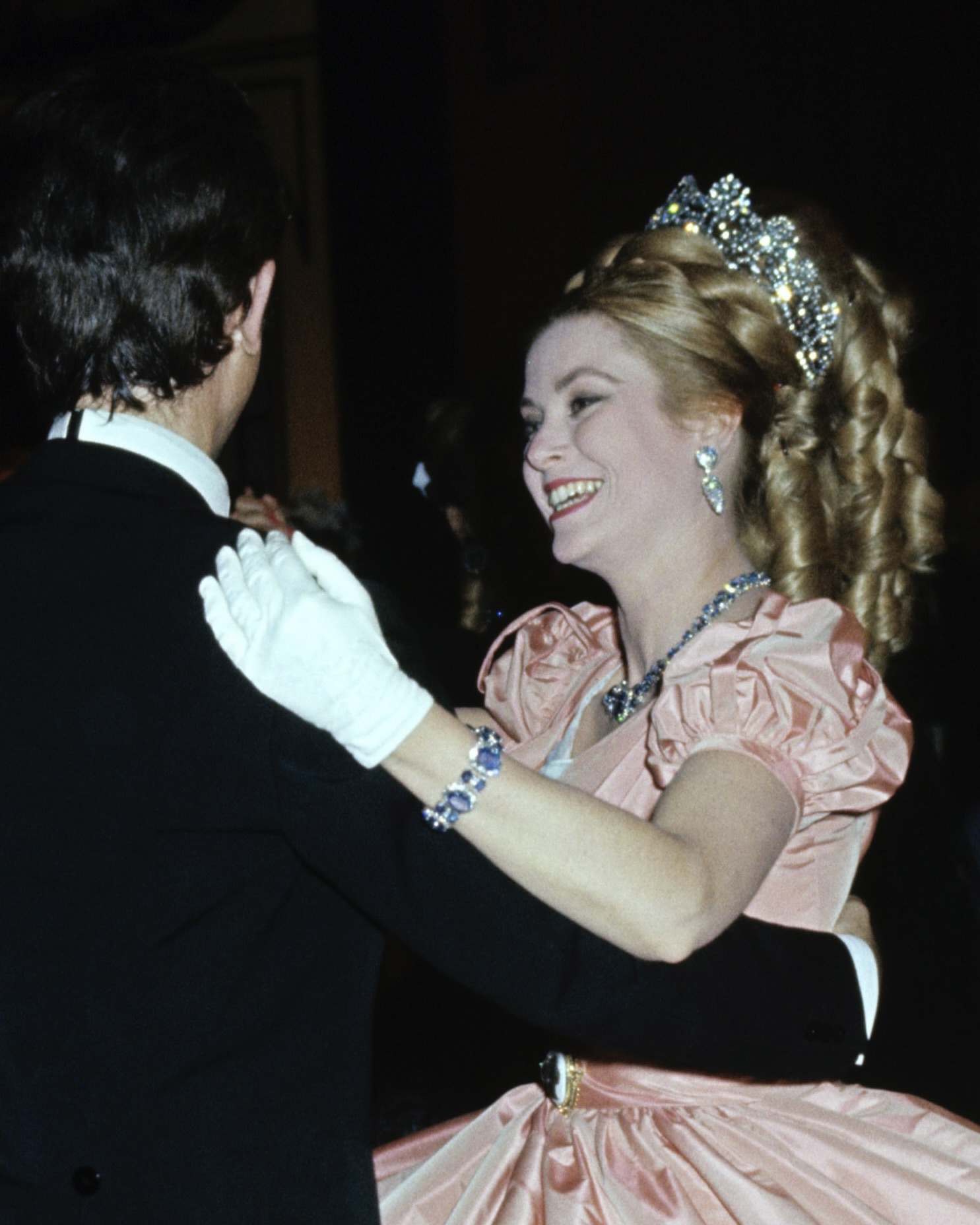
For the coronation of Napoleon at Notre-Dame Cathedral in Paris on December 2, 1804, his wife, Empress Joséphine, wore a magnificent custom diamond tiara, said to be set with more than 1,040 diamonds.
Considered one of her most treasured jewels, the piece was later inherited by her daughter, Queen Hortense, and remained within the French Crown Jewels until 1887, when the French Republic dispersed the collection and sold at least part of the tiara to the luxury jeweler Van Cleef & Arpels.
After acquiring the historic jewel, Van Cleef & Arpels refurbished the tiara and occasionally loaned it to modern royals. Its most famous appearance took place in May 1966, when Grace Kelly, Princess of Monaco, who wore the tiara for the opulent ‘Second Empire’ Ball. Hosted in Paris to celebrate the opulence and artistry of Napoleon III’s era, the ball revived the grandeur of 19th-century court life—and of course, the dazzling nature of royal tiaras.
Princess Andrew’s Meander Bandeau Tiara

The Meander Bandeau Tiara is notable for being the only tiara in the royal collection to come from Prince Philip’s side of the family. It originally belonged to his mother, Princess Alice of Battenberg, later known as Princess Andrew of Greece and Denmark after marrying Prince Andrew, hence the tiara’s name.
Its Greek key design, known as a “meander,” is crafted entirely from natural diamonds and accented with a central circular laurel wreath flanked by two honeysuckle motifs. Many believe the tiara was either a wedding gift from her 1903 marriage to Prince Andrew or part of his inheritance following the 1913 assassination of his father, King George I of Greece. The earliest photographs of Alice wearing the tiara date back to 1914.
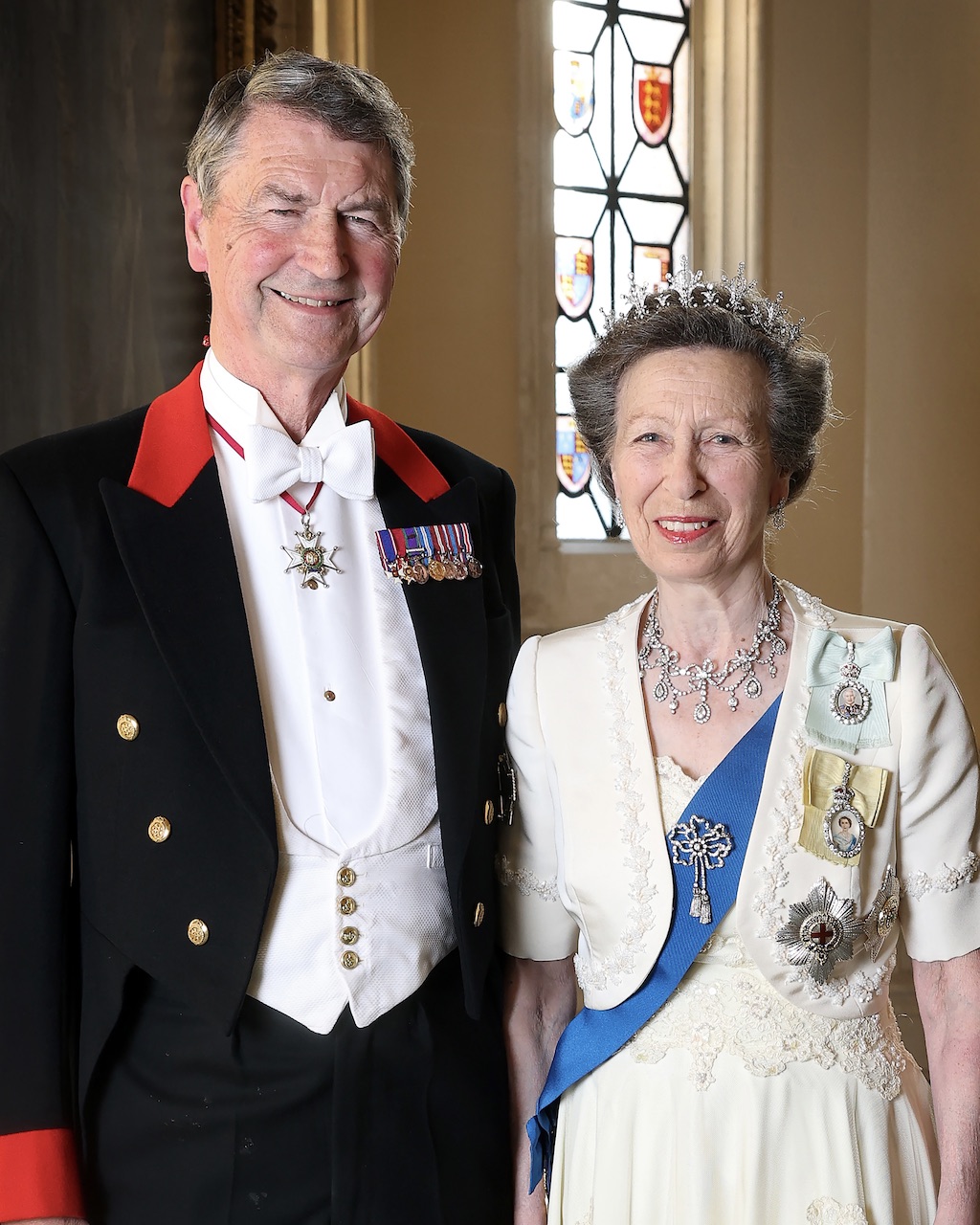
Princess Alice was frequently seen wearing the piece before gifting it to her daughter-in-law, then-Princess Elizabeth, upon her 1947 marriage to Prince Philip. Although Queen Elizabeth II never wore the tiara publicly, she passed it on to her daughter, Princess Anne, in 1972. As one of her most cherished pieces, Anne has since worn it on numerous occasions and generously lent it to her daughter Zara Tindall (née Phillips) for her wedding day.
Queen Mary’s Diamond Bandeau Tiara
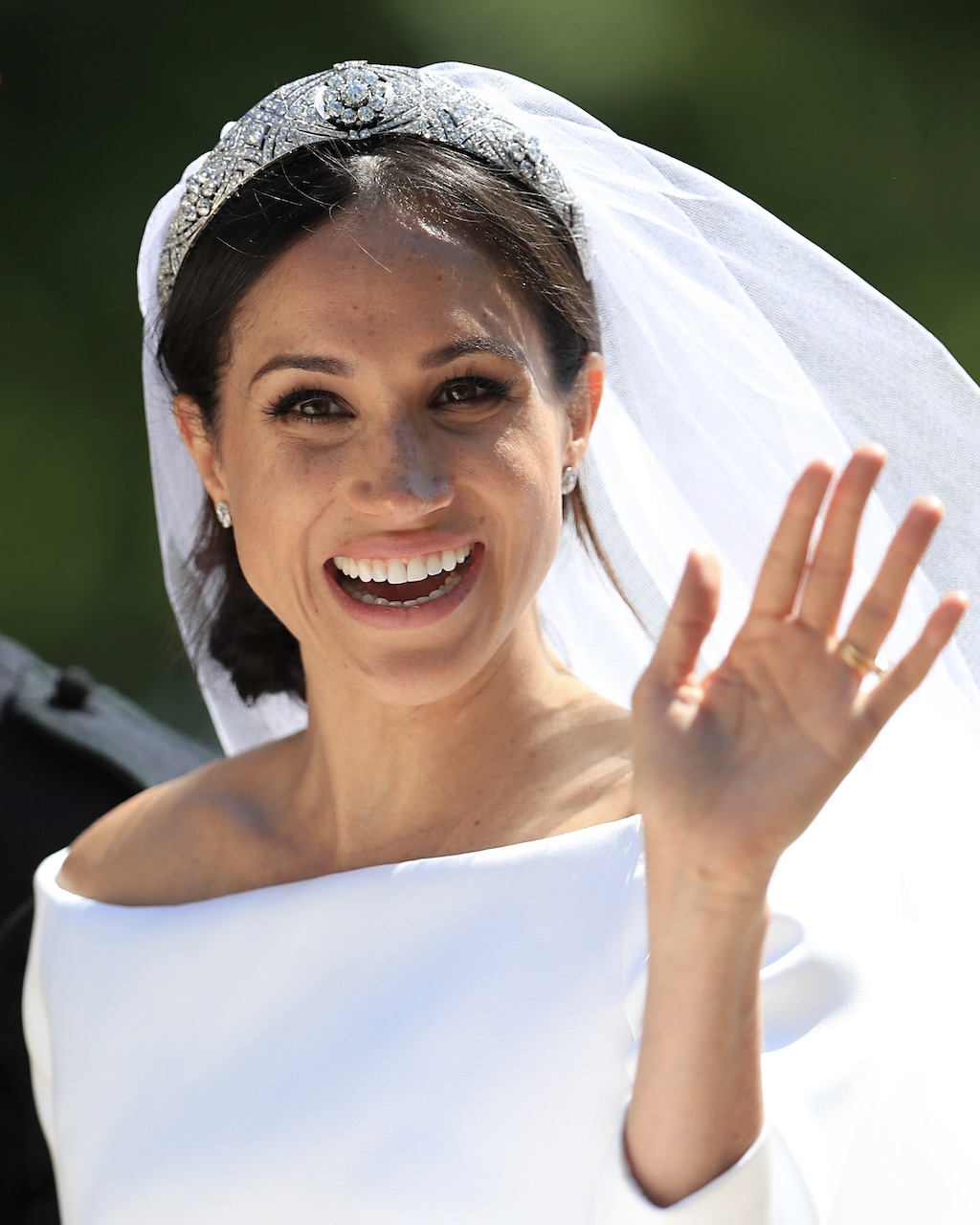
Meghan Markle wore Queen Mary’s Diamond Bandeau Tiara when she married Prince Harry on May 19, 2018. The Duchess of Sussex paired her off-the-shoulder Givenchy gown by designer Clare Waight Keller with a cascading veil, Galanterie de Cartier diamond stud earrings, and the dazzling royal headpiece—formerly known as the Filigree Tiara.
The tiara has deep historical roots dating back to 1893, when Queen Mary—then Princess Victoria Mary of Teck—received a stunning assortment of jewels as wedding gifts upon her marriage to the future King George V. Among them was a striking brooch from the County of Lincoln, featuring a large center diamond surrounded by nine smaller stones, an heirloom destined to become part of one of Britain’s most storied royal tiaras.
In 1932, Queen Mary commissioned Garrard to design a diamond bandeau-style tiara set in platinum to showcase the detachable County of Lincoln Brooch at its center. According to the Royal Collection Trust, the tiara is composed of “a flexible band of eleven sections, pavé set with large and small brilliant diamonds in a geometric design.” The headpiece was passed down to Queen Elizabeth II in 1953 and later loaned to Meghan for her modern royal wedding.
The Greville Emerald Kokoshnik Tiara
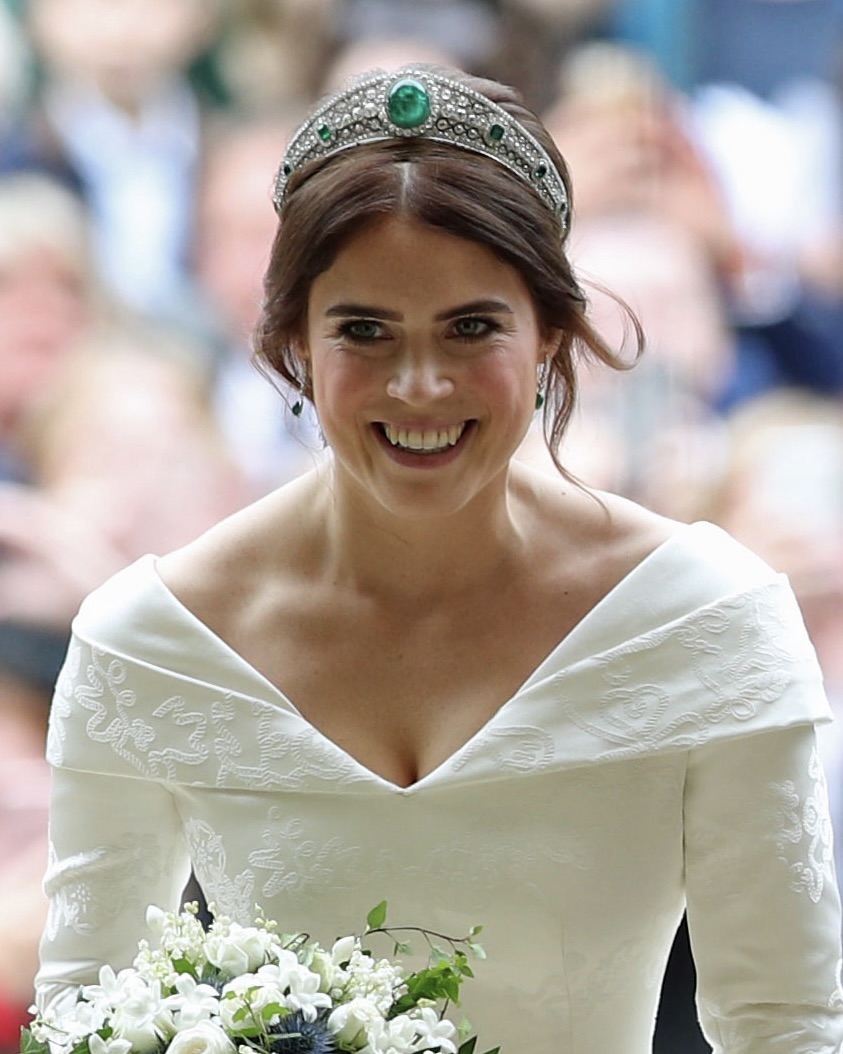
The Greville Emerald Kokoshnik is one of the most distinctive royal tiaras, crafted by French jeweler Boucheron in 1919 (though jewelry historian Vincent Meylan suggests it may date closer to 1921). The tiara features a striking design of brilliant and rose-cut diamonds pavé-set in platinum, accented by nine cabochon emeralds – the central emerald weighing in at 93.7 carats. The kokoshnik style, inspired by traditional Russian court headdresses, first gained popularity in the early 19th century. This particular example embodies the sleek elegance of 1920s Art Deco design, blending imperial grandeur with modern sophistication.
It originally belonged to Dame Margaret Greville, a renowned society hostess and philanthropist, who bequeathed a significant portion of her jewelry collection to her close friend Queen Elizabeth, the Queen Mother, upon her death in 1942. Following the Queen Mother’s passing in 2002, the jewel—along with other historic royal tiaras—was inherited by Queen Elizabeth II.
When the Queen Mother passed away in 2002, her jewelry—including the Greville Emerald Kokoshnik—was inherited by Queen Elizabeth II. The tiara had not been seen in public for over 50 years until Princess Eugenie wore it for her wedding to longtime love Jack Brooksbank at St. George’s Chapel in 2018, making it a truly memorable “something borrowed.”
Neither Queen Elizabeth ever wore the piece publicly, which had led many to believe it was no longer part of the royal collection until Eugenie’s nuptials. Since then, Queen Camilla has worn the diadem to attend a reception for the Diplomatic Corps at Windsor Castle on November 18, 2025.
The Fleur de Lis Tiara
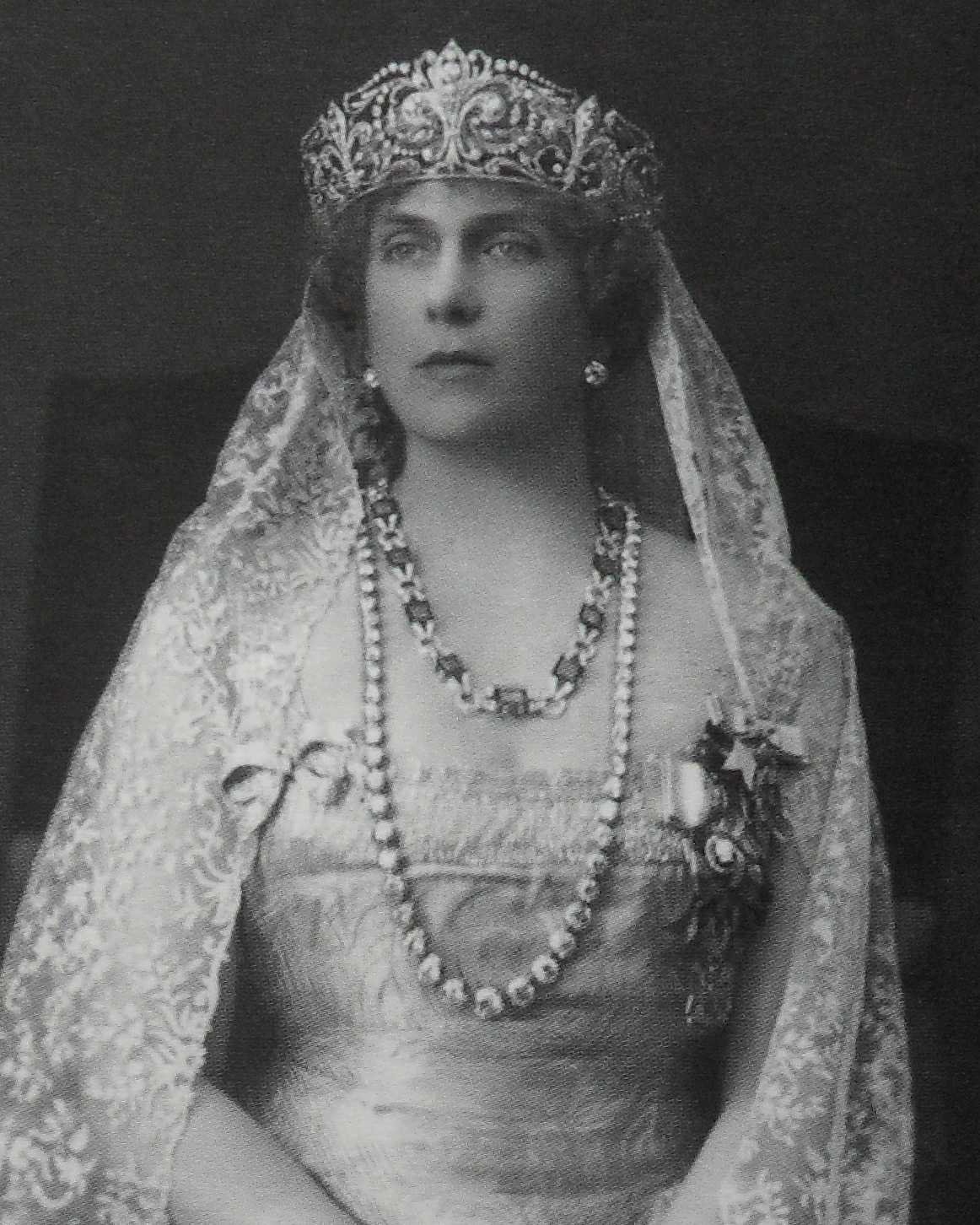
In 1906, King Alfonso XIII of Spain commissioned the Fleur de Lis tiara from the Spanish royal jewelers, Ansorena. It would be a gift for his new bride, Princess Victoria Eugenie of Battenberg, the granddaughter of Queen Victoria and Prince Albert, to wear on their wedding day. Crafted in platinum and set with natural diamonds, the tiara features three prominent fleur-de-lis motifs, the enduring floral emblem of the House of Bourbon, instantly establishing it as one of Spain’s most important royal tiaras.
At the time of their nuptials, Spain was becoming increasingly politically unstable, with anarchists violently storming the royal wedding. The couple was exiled in 1931. Unsure if the Crown would ever reemerge, Queen Eugenie included a specific clause in her Will in 1963, called Joyas de Pasar (jewels that are passed on). She left instructions that a particular assortment of her jewelry remain within the family and be passed on from monarch to monarch.
The Crown was re-established in 1978, and her jewels and royal tiaras were handed down to Queen Eugenie’s daughter-in-law, the Countess of Barcelona, who famously wore the Fleur de Lis tiara for the coronation of Queen Elizabeth II in 1953.
Now, the current King and Queen of Spain find themselves the benefactors of her jewels, including the Fleur de Lis. Queen Letizia has worn the tiara on multiple occasions, such as during a visit to Buckingham Palace in 2017 and to the 2019 Imperial Enthronement in Tokyo.
The Lotus Flower Tiara
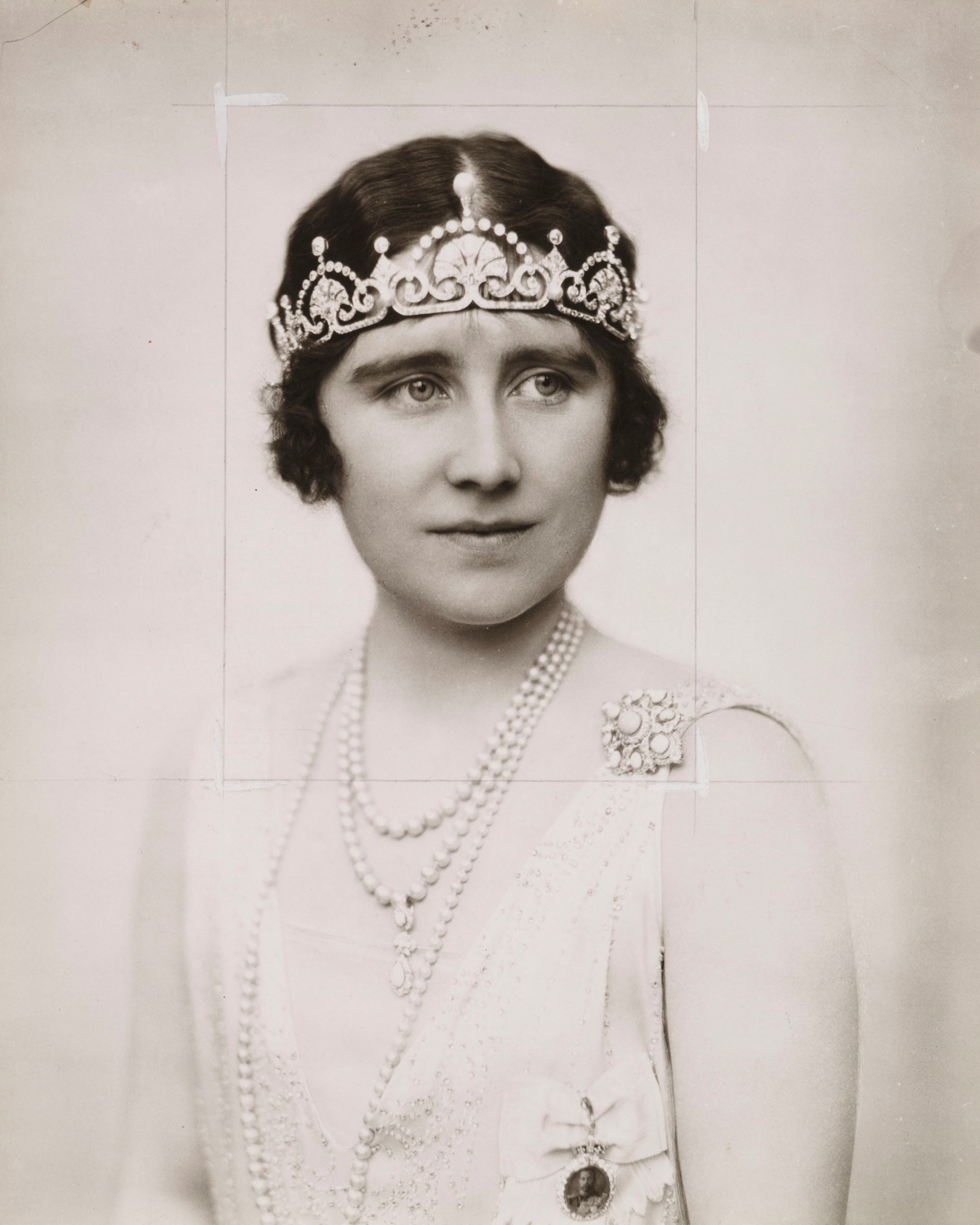
The Queen Mother reportedly had the Lotus Flower Tiara (also known as the Papyrus Tiara) made after transforming a natural diamond and pearl Garrard necklace she received as a wedding gift in 1923 from her husband, the future King George VI. In her day, she wore it across her forehead, aligning it with the sleek, elongated silhouettes favored in the 1920s and securing its place among the most distinctive royal tiaras of the period.
The headpiece was eventually passed down to Queen Elizabeth’s sister, Princess Margaret, in 1959, shortly before she married Anthony Armstrong-Jones, the first Earl of Snowdon, in 1960. Margaret was known to wear the dazzling tiara often.
Passing the Lotus Flower Tiara down to a third generation, Princess Margaret loaned the piece to her daughter-in-law, Serena Stanhope, to wear at her 1993 wedding to Margaret’s son, Viscount Linley—marking a rare instance of one of Britain’s historic royal tiaras appearing at a non-state family occasion.
In December of 2022, Kate Middleton wore the seldom-seen tiara at the annual Diplomatic Reception held at Buckingham Palace. Before that, the Princess of Wales wore the sparkling Lotus Flower Tiara at the 2013 Diplomatic Reception at Buckingham Palace as her first post-wedding tiara, and at the 2015 state banquet for Chinese President Xi Jinping.
The Cambridge Lover’s Knot Tiara
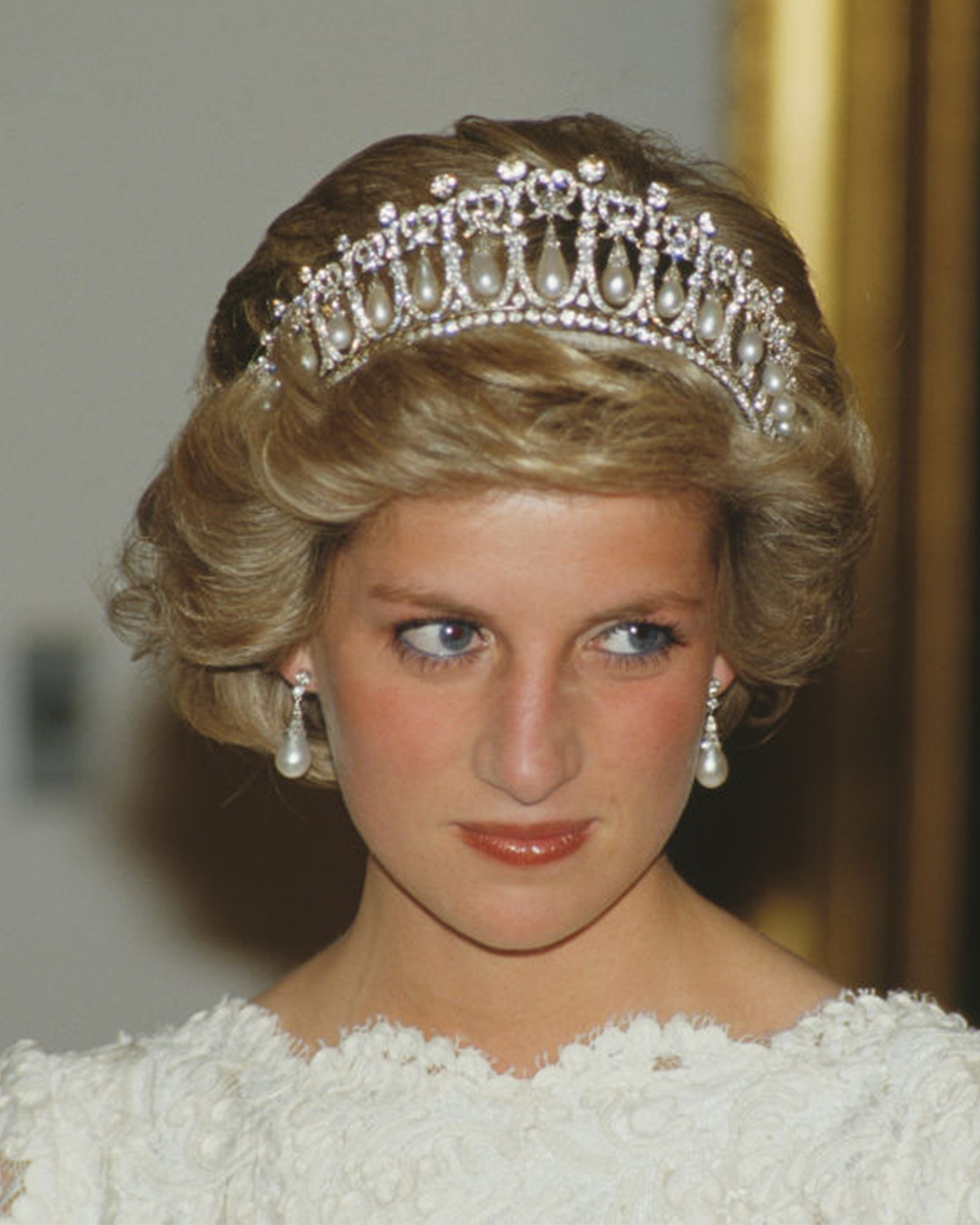
The Cambridge Lover’s Knot tiara is one of the most instantly recognizable royal tiaras. It was commissioned by Queen Mary (Mary of Teck, Queen Elizabeth II’s paternal grandmother) in 1913 or 1914, crafted by the House of Garrard. Queen Mary requested the piece replicate that of a design owned by her maternal grandmother, Princess Augusta of Hesse, the Duchess of Cambridge. Queen Mary provided one of her existing tiaras— the Ladies of England Tiara— and other diamond and pearl pieces from her jewelry box to use for the Lover’s Knot.
Consisting of 19 archways of brilliant and rose-cut diamonds, the headpiece is capped with a diamond ribbon “lover’s knot” bow motif, including 19 dangling drop-shaped pearls. Previously, the tiara included an extra 19 pearls that pointed upright from each diamond curvature. They’ve since been replaced with standalone round-cut diamonds.
After Queen Mary passed away in 1953, she left the tiara to her granddaughter, Queen Elizabeth II, who went on to wear the Lover’s Knot consistently throughout the 1950s, make it one of the most famous royal tiaras of the modern era. Princess Diana received a treasure trove of royal family jewels from the Queen on permanent loan, including the Lover’s Knot Tiara as a wedding gift when she married Prince Charles in 1981. Now, the piece has become the most frequently worn tiara by the new Princess of Wales, Kate Middleton.
“The Lover’s Knot Tiara is a true expression of Garrard’s design language, where romantic symbolism meets exquisite craftsmanship,” Scott explains. “The suspended baroque pearls bring the piece to life, giving it movement and grace. The lover’s knot itself is deeply tied to our heritage, a reimagining of the Sovereign motif, notably seen on the Sovereign’s Scepter set with the Cullinan I diamond. This design thread runs through our 290-year history, continuing to inspire today’s high jewelry designs and collections.”
The Luxembourg Empire Tiara
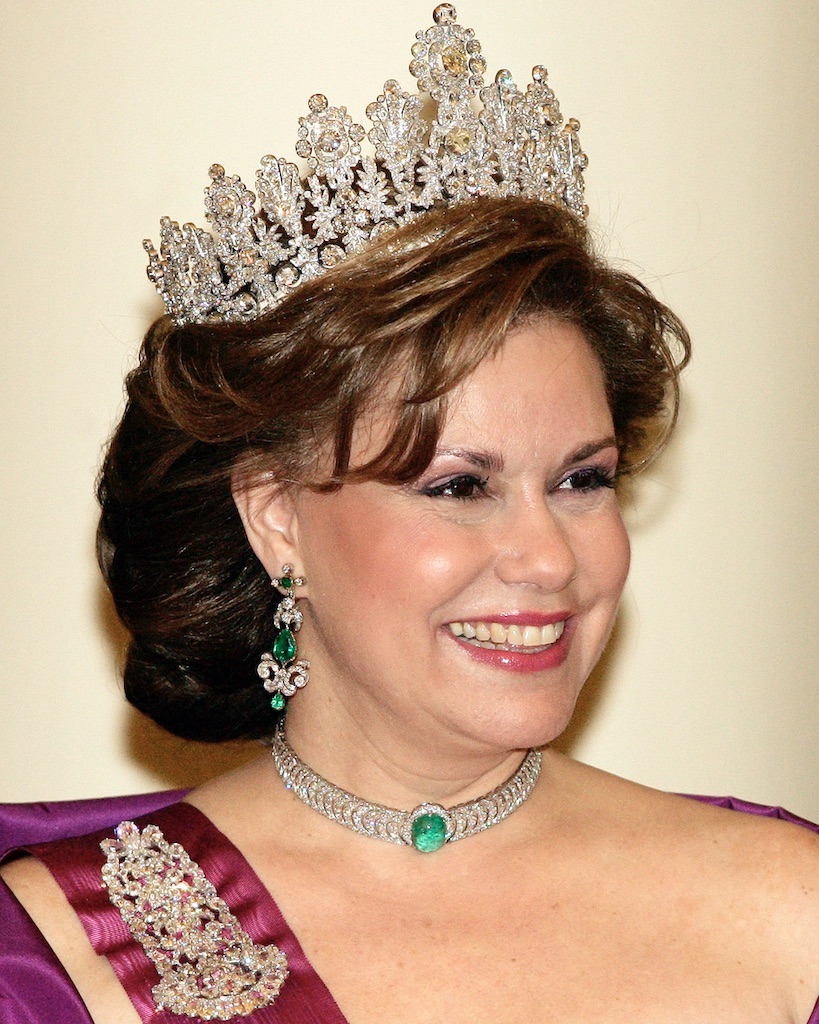
Owned by the last remaining Grand Duchy in the world, the Luxembourg Empire Tiara stands among Europe’s most imposing royal tiaras. Towering at over 10 centimeters high, the sky-high sparkler features a single-stone diamond headband crowned by a rhythmic row of scroll motifs, each accented with cluster-set diamonds that create dramatic height and unmistakable presence. Its scale alone places it in rare company among surviving royal headpieces.
The earliest records of the tiara date back roughly 200 years, when it belonged to the House of Nassau—the ruling family whose lineage forms the foundation of modern Luxembourg’s monarchy. Unlike many historic royal tiaras that were sold, dismantled, or lost to exile, the Luxembourg Empire Tiara has remained with the dynasty, preserved as a symbol of sovereignty rather than personal adornment.
Its first major public appearance came in 1919, when Grand Duchess Charlotte of Luxembourg wore the tiara for her marriage to Prince Felix of Bourbon-Parma, cementing its role as a ceremonial jewel of state. The tradition continued when her sister, Princess Hilda, chose the same tiara for her 1930 wedding to Adolf, the 10th Prince of Schwarzenberg.
Today, the tiara is worn by Grand Duchess Maria Teresa, the wife of the Grand Duke of Luxembourg, continuing a remarkable lineage in which three generations of Grand Duchesses have worn the same monumental jewel. In a royal landscape where so many heirlooms have vanished, the Luxembourg Empire Tiara endures as one of the most intact and continuously worn royal tiaras in Europe.
The Festoon Tiara

The diamond Festoon Tiara is estimated to be worth $4 million and has been heavily incorporated into Princess Anne’s tiara rotation over the last five decades. As one of the hardest-working members of the royal family, Anne has amassed quite an impressive jewelry collection.
The magnificent antique diamond Festoon Tiara was gifted to Princess Anne in 1973 by the World Wide Shipping Group of Hong Kong to commemorate her launching of the tanker World Unicorn. That same year, Queen Elizabeth II’s only daughter wore the glittering tiara in a series of official portraits by Lord Lichfield, released in celebration of her 23rd birthday.
She later donned the tiara in another portrait session—this time by renowned photographer Norman Parkinson—alongside her then-fiancé, Captain Mark Phillips, at Windsor Castle ahead of their royal wedding. Over the decades, the Festoon Tiara has remained one of Princess Anne’s most-worn pieces, making regular appearances at state banquets and formal royal occasions. Crafted in platinum, the Festoon tiara is set with a myriad of natural diamonds, featuring round and cushion-cut diamonds in an openwork design. The headpiece includes seven scalloped diamond swag motifs.
In 2008, Autumn Kelly wore Princess Anne’s Festoon Tiara for her wedding to Peter Phillips (Princess Anne’s son) at St. George’s Chapel, Windsor Castle. The couple reportedly met at the 2003 Montreal Grand Prix, but Kelly didn’t realize Peter’s royal status until she later saw him on television with his family.
The Cartier Diamond and Pearl Tiara
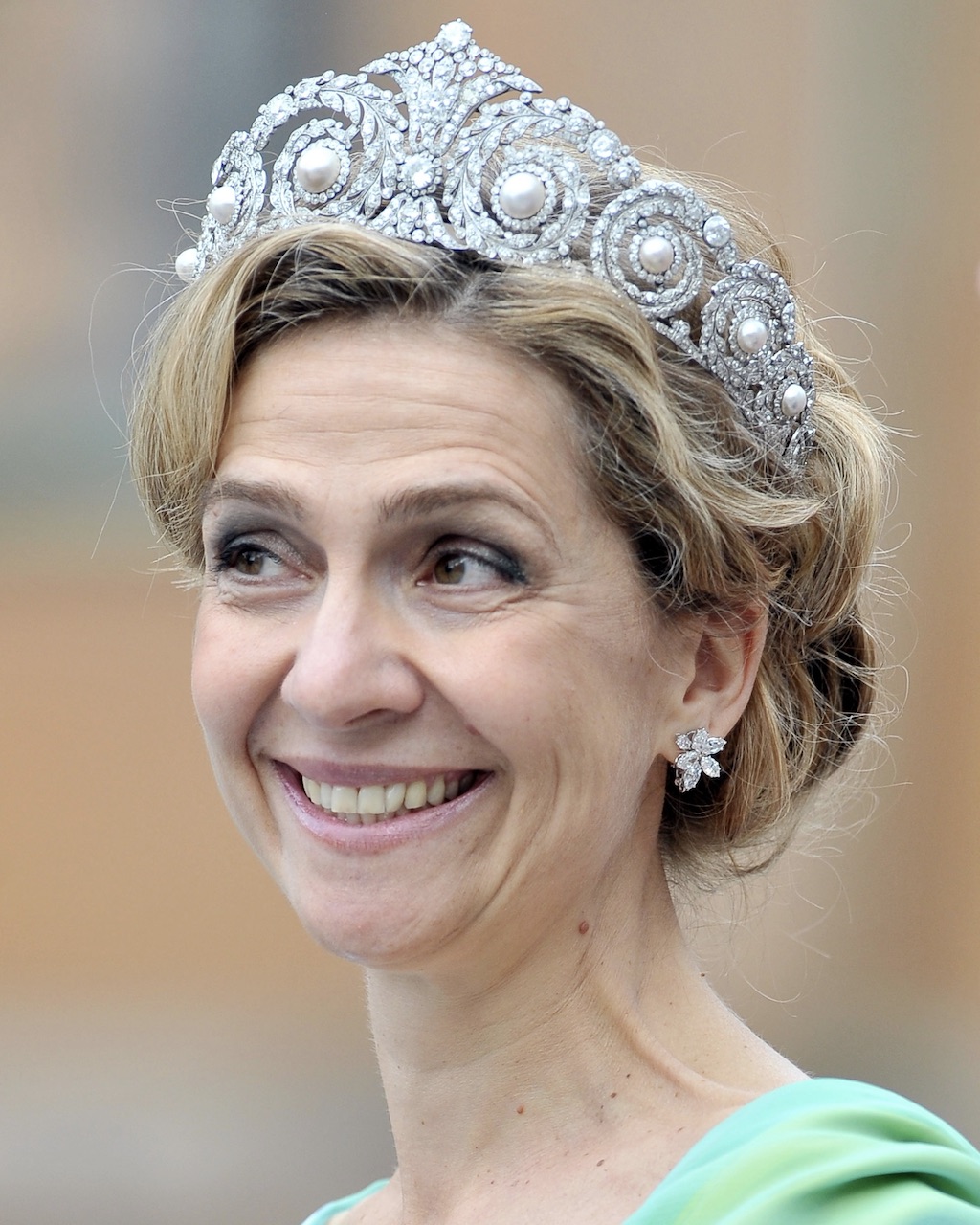
Queen Victoria Eugenia’s mother-in-law, Maria Christina of Austria, was famously unenthusiastic about her son’s choice of bride. Having hoped Alfonso XIII would marry a higher-ranking, born-Catholic princess, the Queen Mother was reportedly restrained when it came to wedding gifts. What she did commission, however, was a striking, Louis XVI–inspired diamond and pearl tiara created by Spain’s official court jeweler, Ansorena—an imposing piece defined by its height and formal symmetry.
Queen Ena appears to have had little affection for the tiara in its original form. While it is sometimes associated with her wedding trousseau, clear photographs of her wearing it as originally designed are notably scarce, suggesting it never became a favored piece in her personal rotation.
After becoming Queen, Ena brought the tiara to her preferred jeweler, Cartier, where it was substantially reworked to better suit her taste and the emerging style of the period. The redesigned version took on a lighter, Edwardian character, emphasizing diamond garland and foliate motifs set in platinum and centered with prominent pearls. This softer, more fluid iteration proved far more to her liking, and she was photographed wearing the remodeled tiara on multiple occasions throughout the 1920s.
Ena didn’t stop there. Elements associated with the tiara were further adapted into diamond bracelets, reinforcing her preference for jewels that could evolve and be worn in multiple ways rather than remain fixed in a single form.
The Khedive of Egypt Tiara
Princess Margaret of Connaught (known in the family as Daisy) was a granddaughter of Queen Victoria and a very eligible Princess. Daisy joined her parents, the Duke and Duchess of Connaught, on a royal tour of Egypt.
While visiting Cairo, the family met Prince Gustav Adolf, the future King of Sweden, and he and Daisy promptly fell in love. When they married at Windsor Castle, Daisy received the most glamorous wedding gifts imaginable.
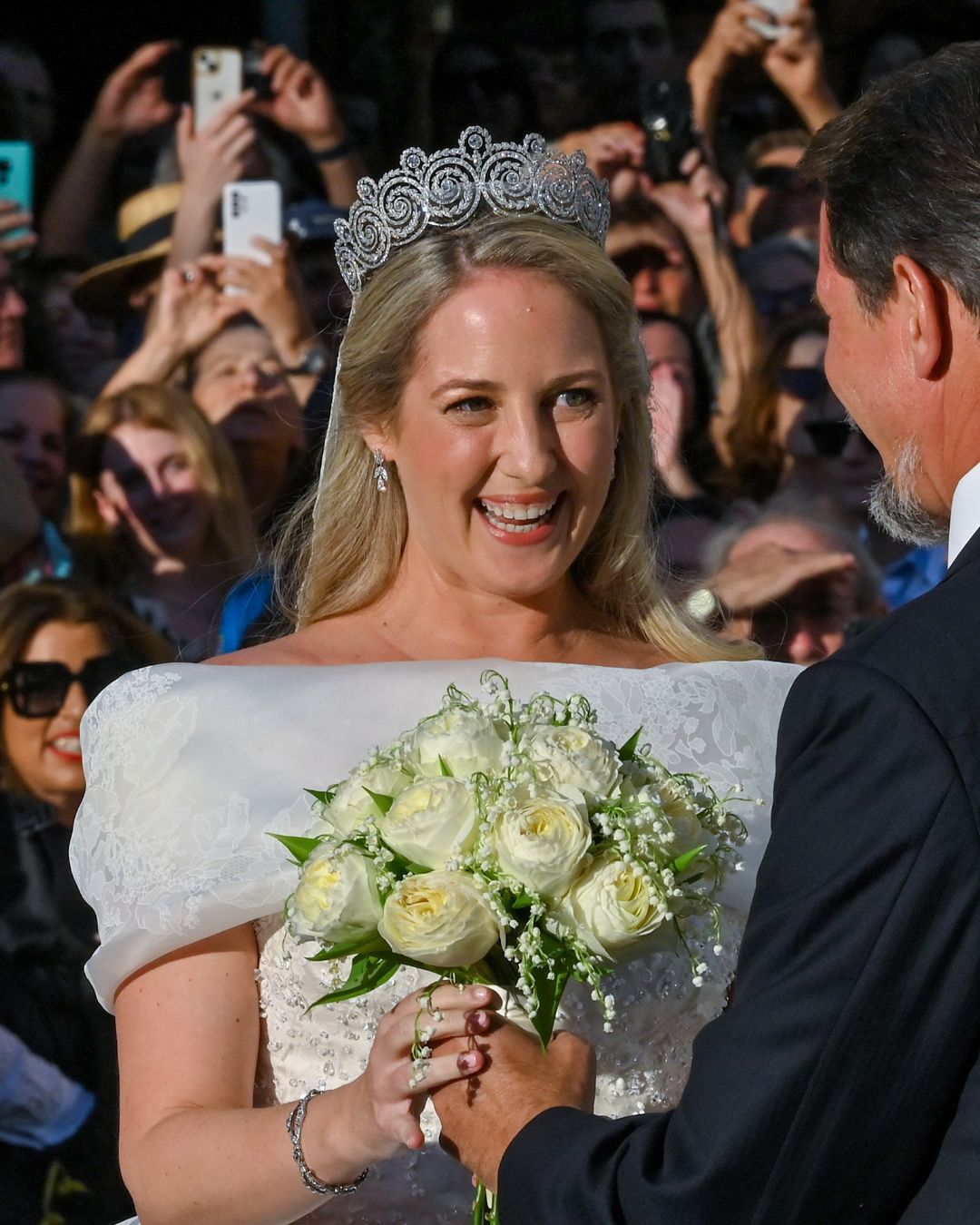
Among the most sentimental was the Khedive of Egypt tiara – a diamond scroll tiara given by Khedive Abbas II of Egypt, as a memento of the couple beginning their love story in Cairo. Created by Cartier in 1905, the Khedive of Egypt tiara features seven circular scrolls in diamonds set in platinum and topped by floating diamonds surrounded by a laurel wreath pattern. The tiara could even be transformed and worn as a dress ornament or stomacher.
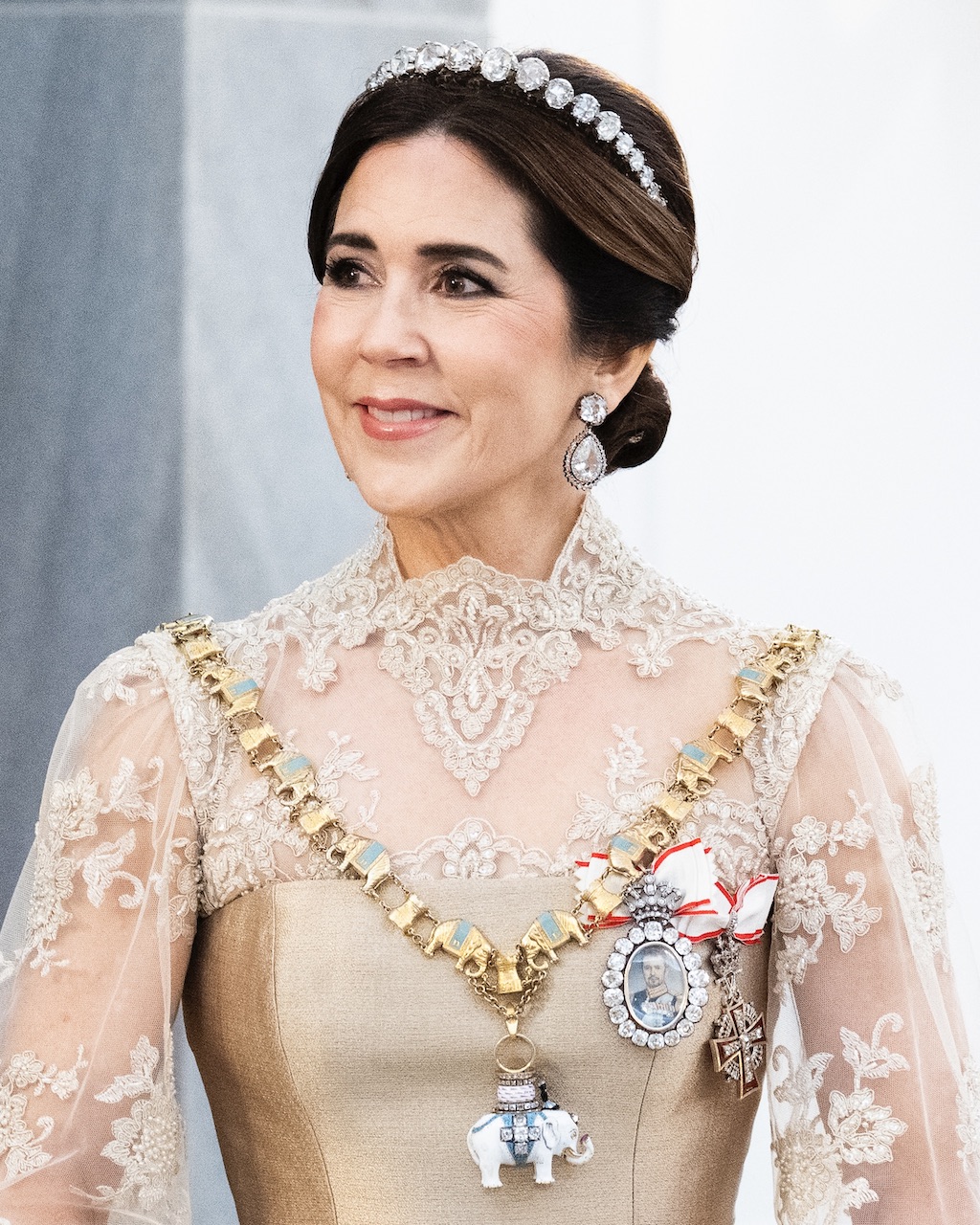
The couple’s daughter, Ingrid, inherited the Khedive of Egypt tiara and brought it with her to Denmark when she wed Crown Prince Frederik in 1935. Ingrid didn’t wear the Khedive for her wedding, but it’s become the wedding tiara of choice for all Ingrid’s female descendants, including all of her daughters – Queen Margrethe of Denmark, Princess Benedikte of Sayn-Wittgenstein-Berleburg, and Queen Anne-Marie of Greece. All of Ingrid’s married granddaughters have carried on the tradition. Most recently, it was worn by her granddaughter, Princess Theodora of Greece, at her wedding to Matthew Kumar in 2024.
The Strathmore Rose Tiara
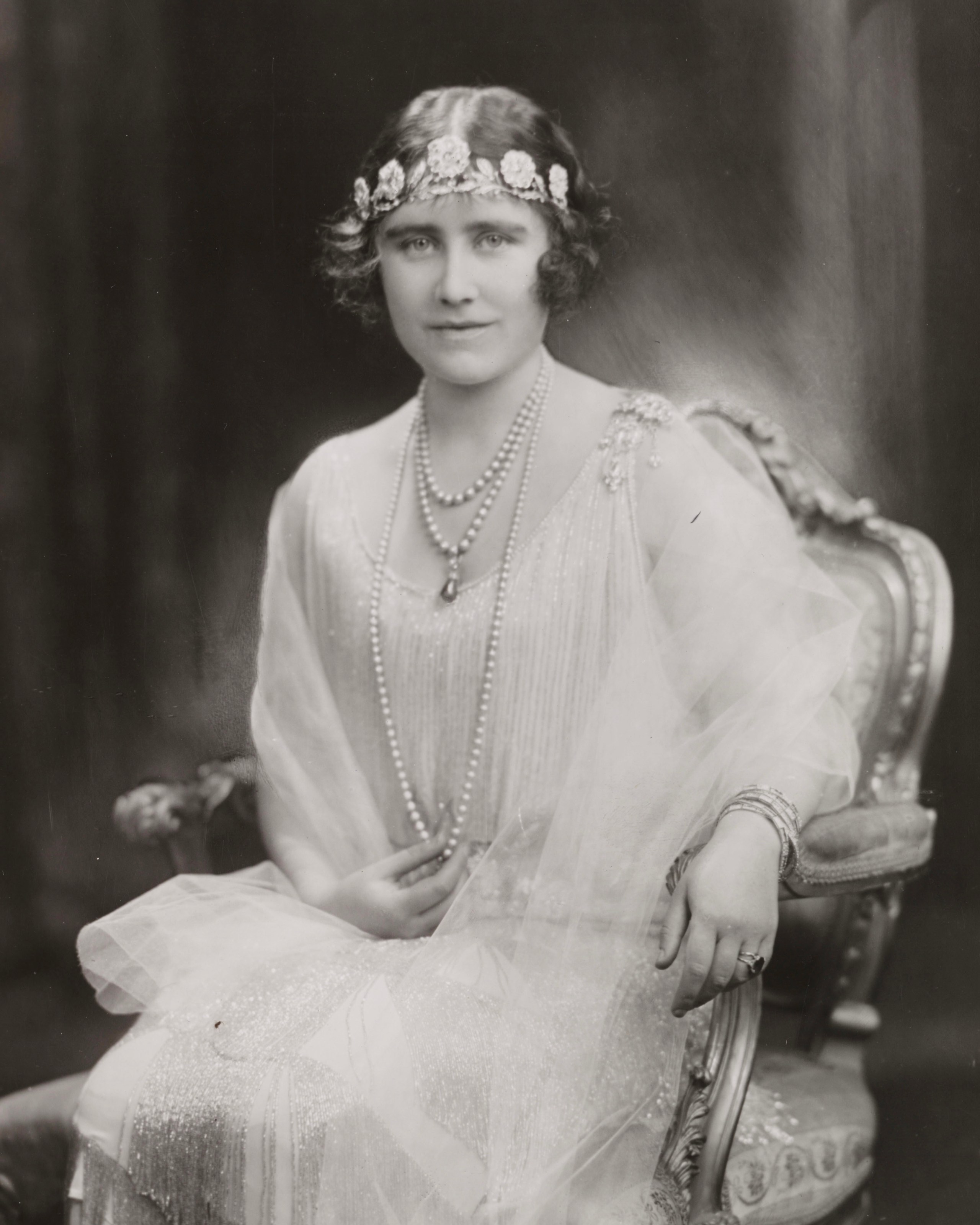
The rare and delicate floral diamond Strathmore Rose tiara was first given to the Queen Mother (born Lady Elizabeth Bowes Lyon) as a wedding gift by her father, Earl of Strathmore and Kinghorne, ahead of her nuptials to the Duke of York in 1923, originally purchased from London-based jewelers Catchpole & Williams.
Crafted to emulate a garland of wild roses, the sparkling diamond topper has two alternative frames – one to sit atop the head like a traditional tiara and another to wear the piece across the forehead, just above the brow line, in 1920s signature style (as the Queen Mother preferred to wear her tiaras in her youth). The elusive, 100-year-old piece can also be broken up into five separate brooches.
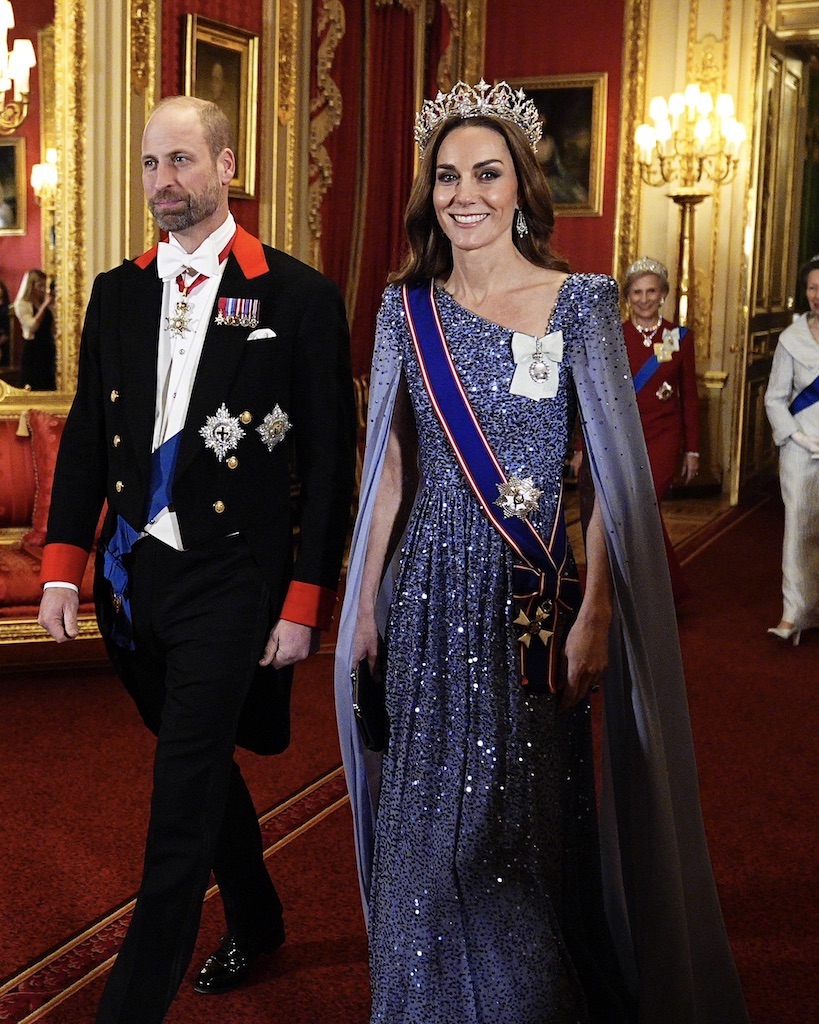
Catherine, the Princess of Wales, surprised royal watchers everywhere when she arrived at Buckingham Palace in 2023 for the official state visit of President of South Korea Yoon Suk Yeol and First Lady Kim Keon Hee, wearing the tiara after it had not been seen in nearly a century. She is only the second person ever to wear the Strathmore Rose.
Queen Victoria’s Oriental Circlet Tiara
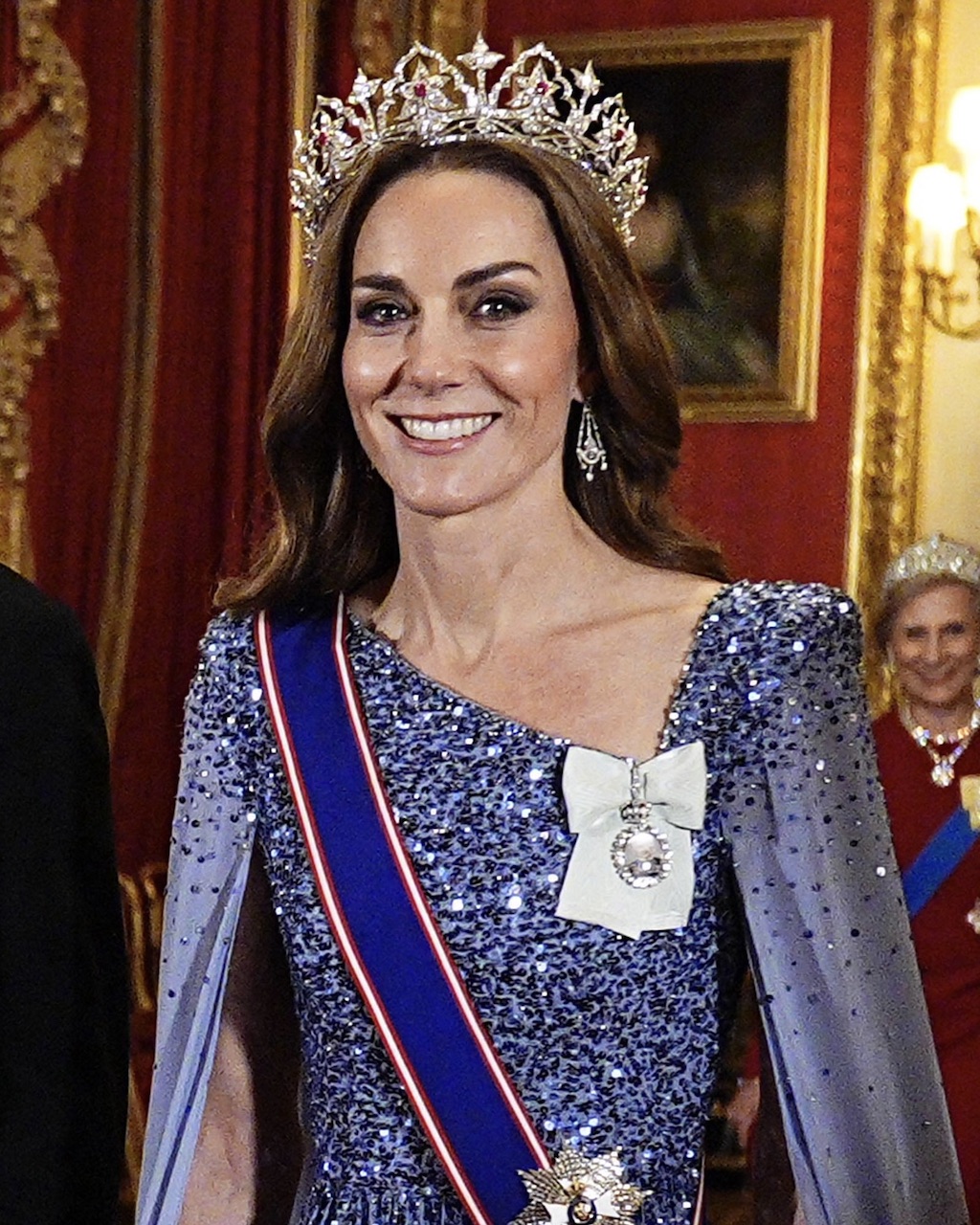
The British royal family’s third State Visit of 2025 saw Kate Middleton debut her most substantial tiara yet. She sported Queen Victoria’s Oriental Circlet tiara to welcome the German President Frank-Walter Steinmeier and his wife Elke Budenbender.
The Oriental Circlet was commissioned in 1853 by Queen Victoria, designed under the direction of her husband, Prince Albert. The royal jewel was originally set with 2,600 natural diamonds and a collection of opals, which were later replaced with a sprinkling of Burmese rubies. The tiara’s Mughal-inspired design includes lotus flower motifs and regal arches. According to the first official Crown Jeweler, Garrard considers Queen Victoria’s Oriental Circlet Tiara one of the most important Victorian-era jewels in the Royal Collection and among the earliest and most significant tiaras created by Garrard for the British Royal Family.
“The Oriental Circlet is an extraordinary example of both artistry and technical skills,” Scott says. “Designed for opals and later adapted for rubies, its evolution reflects not only the changing tastes of its royal custodians but the craftsmanship and precision that define Garrard. Adjusting the arches and replacing the stones required exceptional finesse, a flexibility in design that remains central to our work today, whether creating bespoke jewels or reimagining heritage pieces for new generations.”
The headpiece has also been worn by Queen Alexandra, The Queen Mother, and Queen Elizabeth II, who chose the historic piece for a 2005 visit to Malta. This occasion marks the first time Kate Middleton has worn the jewel, and only the fifth tiara she’s worn during her time as a member of the Royal Family.
Queen Mary’s Girls of Great Britain and Ireland Tiara

Queen Mary’s Girls of Great Britain and Ireland Tiara was named after the women’s clubs across the British Empire, who fundraised to purchase the headpiece as a wedding gift to Queen Elizabeth’s grandmother, Queen Mary, in 1893.
Originally, it was topped with pearls and designed to be transformable. The pearls were later replaced with more diamonds. Affectionately referred to as “Granny’s tiara,” it is thought to be one of Queen Elizabeth II’s favorite jewels and among the most memorable of all the royal tiaras made by Garrard. The piece has been featured in official portraits, on stamps, and even on currency.
“The Girls of Great Britain and Ireland Tiara is one of Garrard’s most iconic creations, a masterpiece of design and technical versatility,” Scott says. “Its signature Windsor motif has become a cornerstone of our design language, inspiring jewelry past and present. Few jewels embody both history and craftsmanship so seamlessly.”
The Stuart Tiara
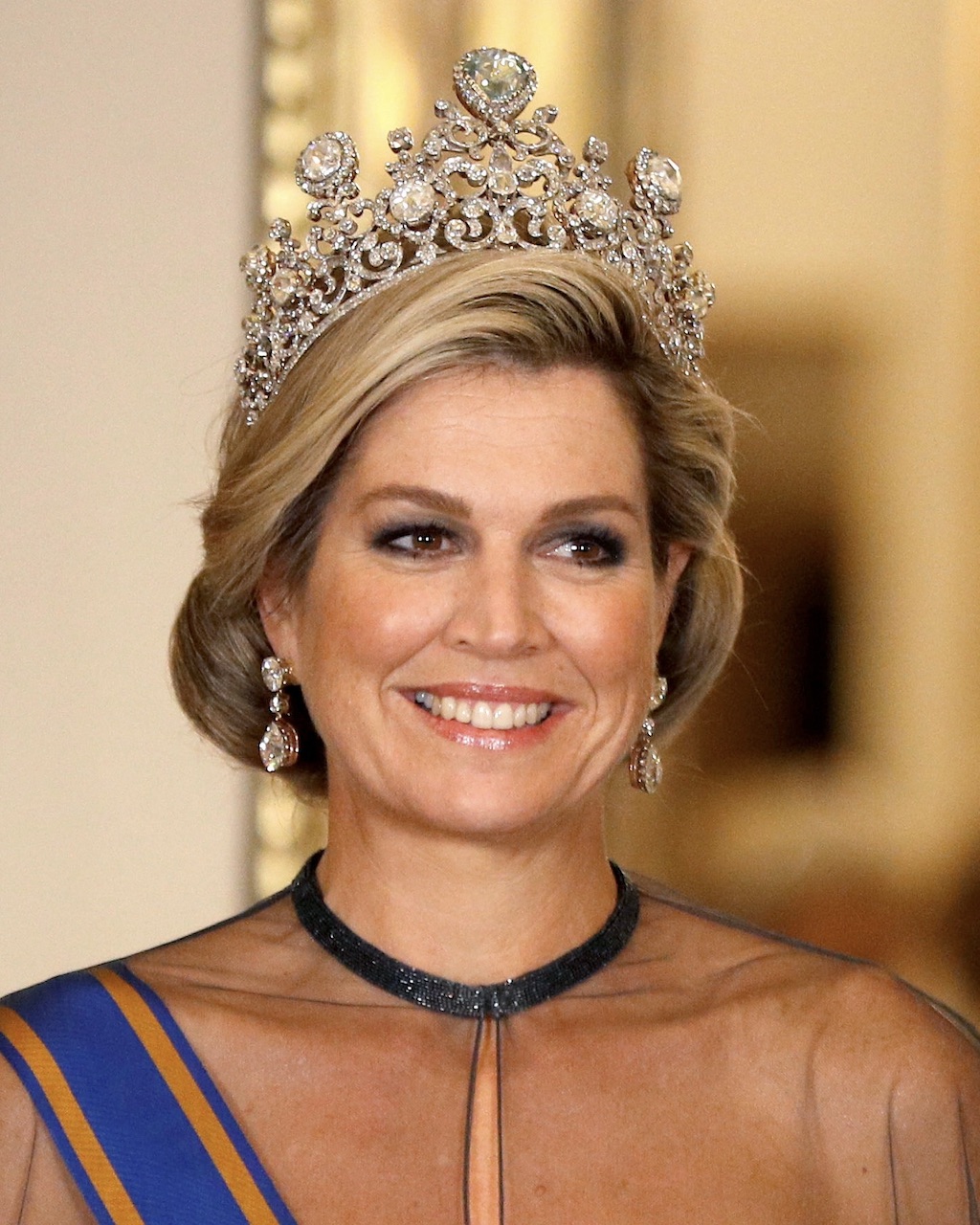
Designed for Queen Wilhelmina (King Willem-Alexander’s great-grandmother) in 1897, the Stuart tiara is a part of a suite of jewels dubbed the “House of Diamonds.” Queen Wilhelmina’s daughter, Queen Juliana, was known to wear the Stuart tiara frequently, including for her birthday celebration in 1962, and to visit the British Royal family at Windsor Castle ten years later.
The most impressive element of the Stuart tiara has to be the ultra-rare 39.75-carat pear-shaped, rose-cut diamond at its center, once belonging to King William II and Queen Mary II. After the death of the King and Queen, the diamond was returned to the Netherlands in 1702. It was passed back to England for a short period of time when Dutch King William V and his family fled Britain due to political turmoil in the 1790s. Then, their jewels were returned to the Netherlands by 1815.
The tiara includes over 900 other diamonds of varying sizes. In 2018, Queen Maxima of the Netherlands wore the sparkling jewel during her state visit to the United Kingdom.
The Grand Duchess Vladimir Tiara

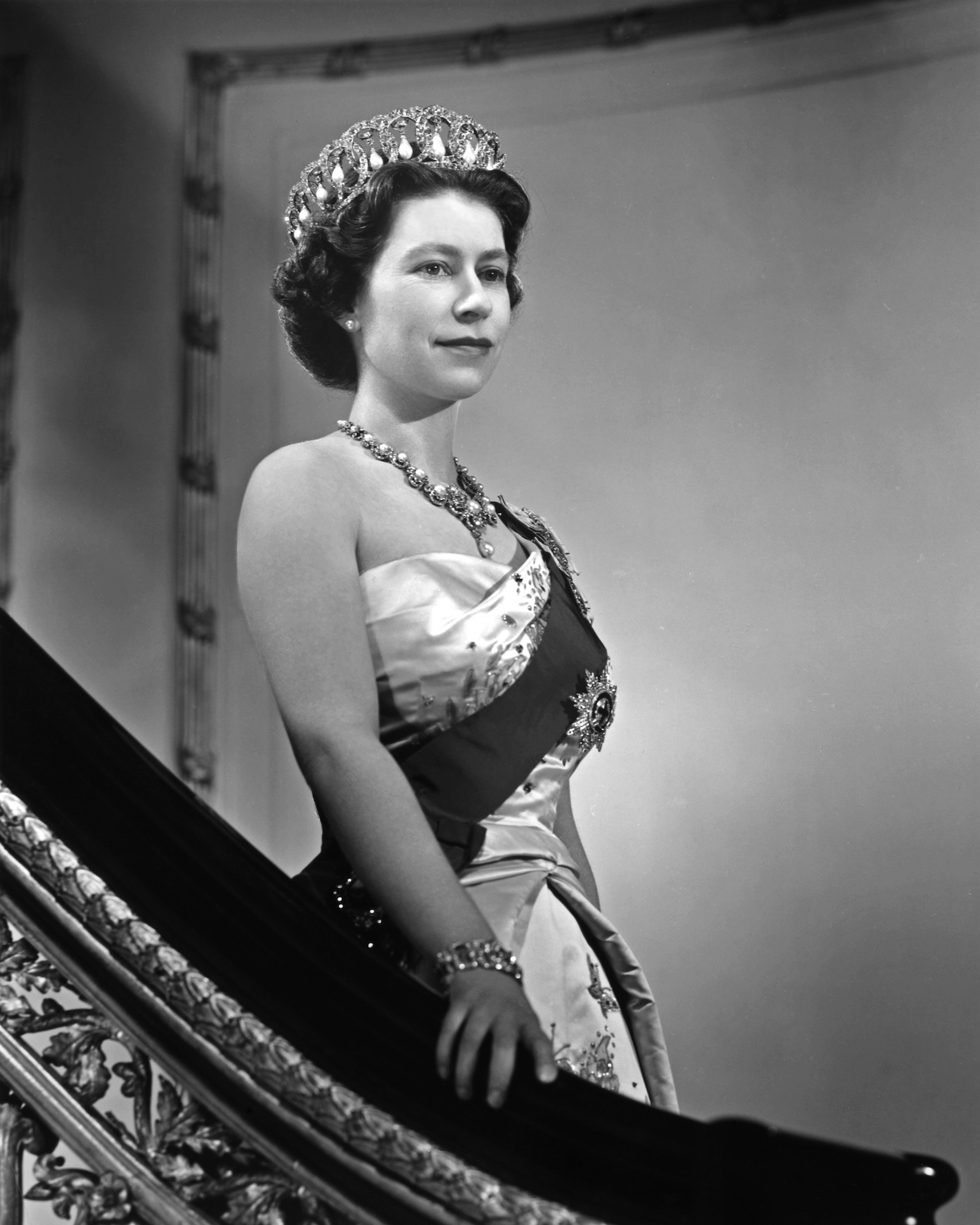
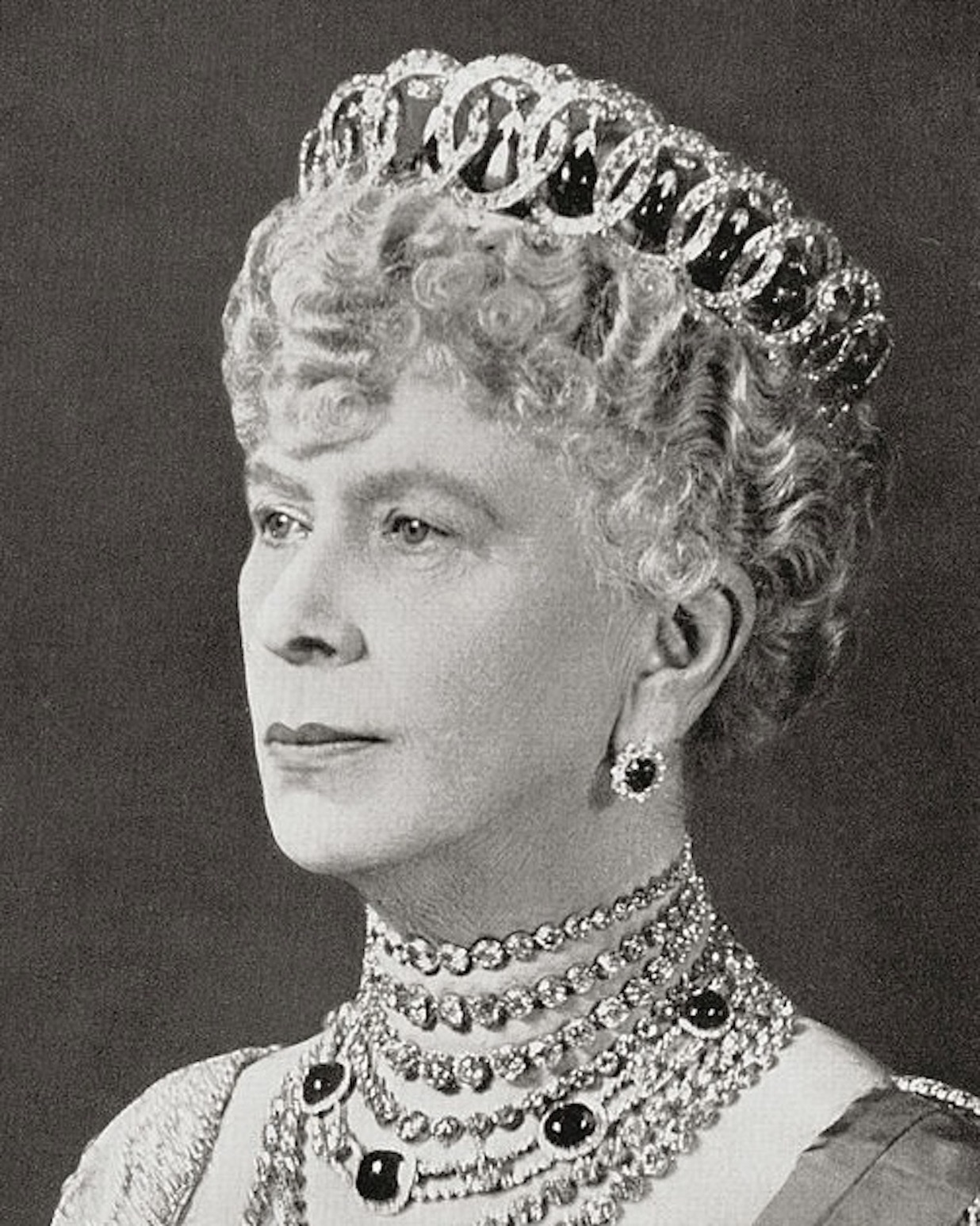
Among Queen Elizabeth’s favorite headpieces, the Grand Duchess Vladimir Tiara was purchased by her grandmother, Queen Mary, at auction in 1921. But even before it landed in the hands of the British royal family, the tiara had a thrilling tale to tell. Originally made in 1874 by the Russian court jeweler Bolin, the tiara was created for its namesake owner, Grand Duchess Vladimir, the wife of Grand Duke Vladimir Alexandrovich, uncle to Tsar Nicholas II.
According to reports, Grand Duchess Vladimir smuggled her jewels out of Russia during the 1917 revolution with the help of two British antique dealers who posed as servants following the Tsar’s assassination. Though she was the last Romanov to escape Russia, her treasures made it out before she did. After she died in 1920, much of the Grand Duchess’s jewelry was sold to support her children, with many pieces acquired by European royals.
Unfortunately, the Vladimir Tiara was damaged during its journey out of Russia. Queen Mary later commissioned Garrard to restore the historic piece, adding 15 emerald drops and a mechanism that allowed the original pearls to be easily interchanged with the emeralds within its interlocking natural diamond loops. Queen Elizabeth II wore the tiara with pearls, emeralds, and even without any drops. In 1988, Queen Elizabeth II had it repaired again to update the frame.
“The Vladimir Tiara is a remarkable example of how a jewel can evolve across centuries,” Scott explains. “The alterations made at Garrard in the 1920s introduced a level of versatility that allows it to seamlessly alternate between pearls, emeralds, or a clean diamond silhouette. It stands as a testament to both the tiara’s enduring beauty and the technical mastery behind its transformation.”