
Comité Colbert’s “Hidden Treasures” Reveals French Diamonds With American Roots
The Comité Colbert “Hidden Treasures” Exhibit offers a rare glimpse into the connection of the two countries via cultural diplomacy.
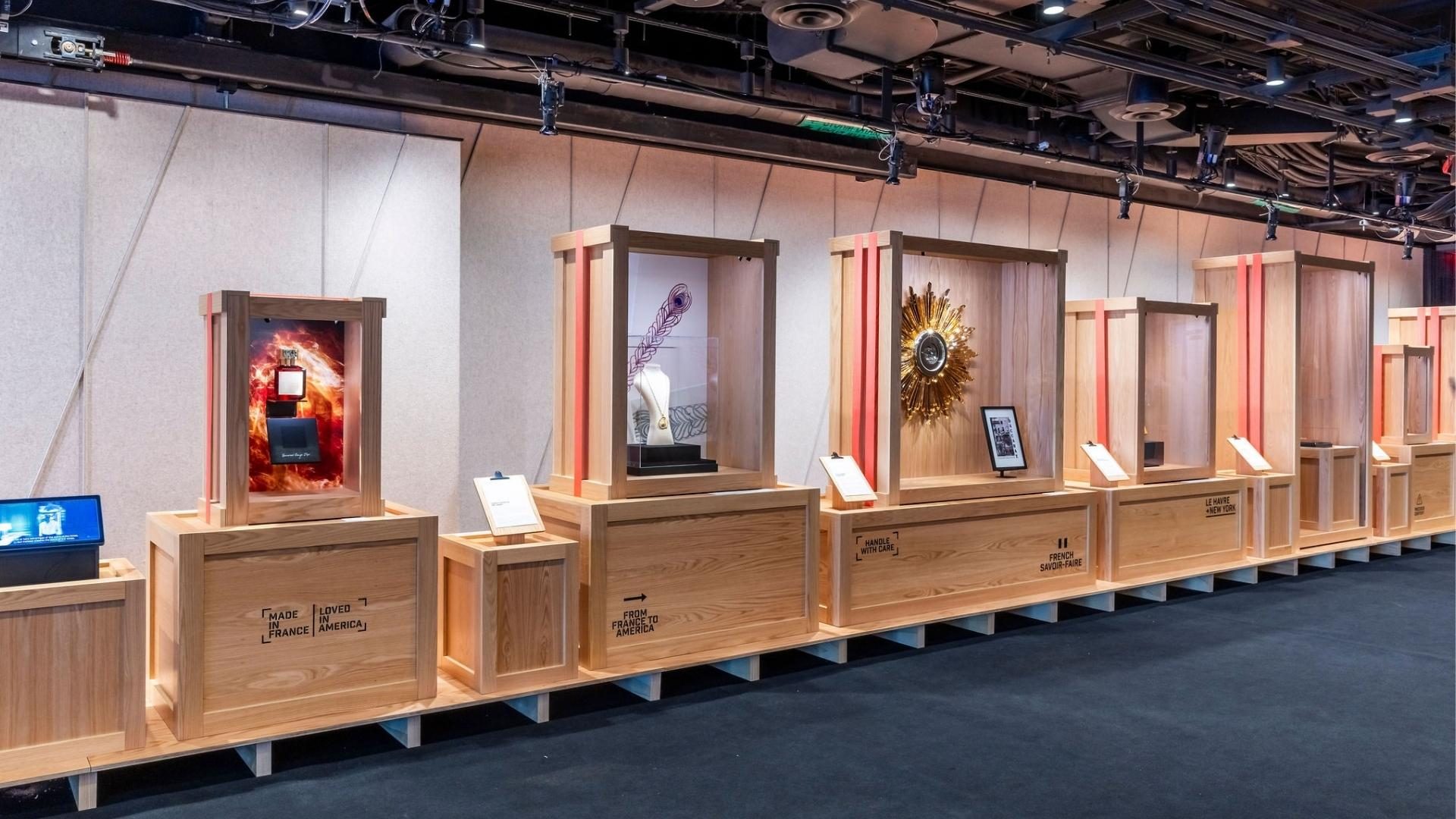
Displays at Comite Colbert’s “Hidden Treasures Exhibit. (Photo Credit: David Filipponi)
The national love affair between the United States and France is evident since day one. Without support during the Revolutionary War—including the military acumen of the Marquis de Lafayette and the charm of America’s first diplomat, Benjamin Franklin, which convinced the French to aid the independence movement—America may not have materialized. The synergy between the two cultures has flowed for 250 years.
In honor of that friendship and anniversary, Comité Colbert, a French heritage initiative founded in 1954 by Jean-Jacques Guerlain that supports and honors more than 100 luxury Maisons representing 14 trades—including fragrance, jewelry, horology, fashion, goldsmithing, gastronomy, wine, spirits, design, and decoration across France and Europe—launched its first U.S.-based exhibition, “Hidden Treasures.” The Comité Colbert exhibition highlights French savoir-faire intersecting with American culture. Included in this heritage is Place Vendôme, the preeminent global destination for high jewelry.
Meet the Experts

Bénédicte Épinay is the President and CEO of Comité Colbert. She spent her early career working at a variety of publications covering luxury news.

Helene Poulit-Duquesne is the CEO of Boucheron and President Elect of Comité Colbert. In this role she works to shake up the traditional world of High Jewelry.
“It’s a celebration of Franco-American friendship and sharing culture. These artifacts are a testimony to this longstanding history. The American people are the first market for our products and we mutually inspire each other,” Bénédicte Épinay, President and CEO of Comité Colbert told Only Natural Diamonds. The exhibition features exquisite fine jewelry pieces, studded with natural diamonds, from iconic jewelry brands. Only Natural Diamonds got a sneak peek at the French jewels with American provenance in the Comité Colbert Hidden Treasures exhibition.
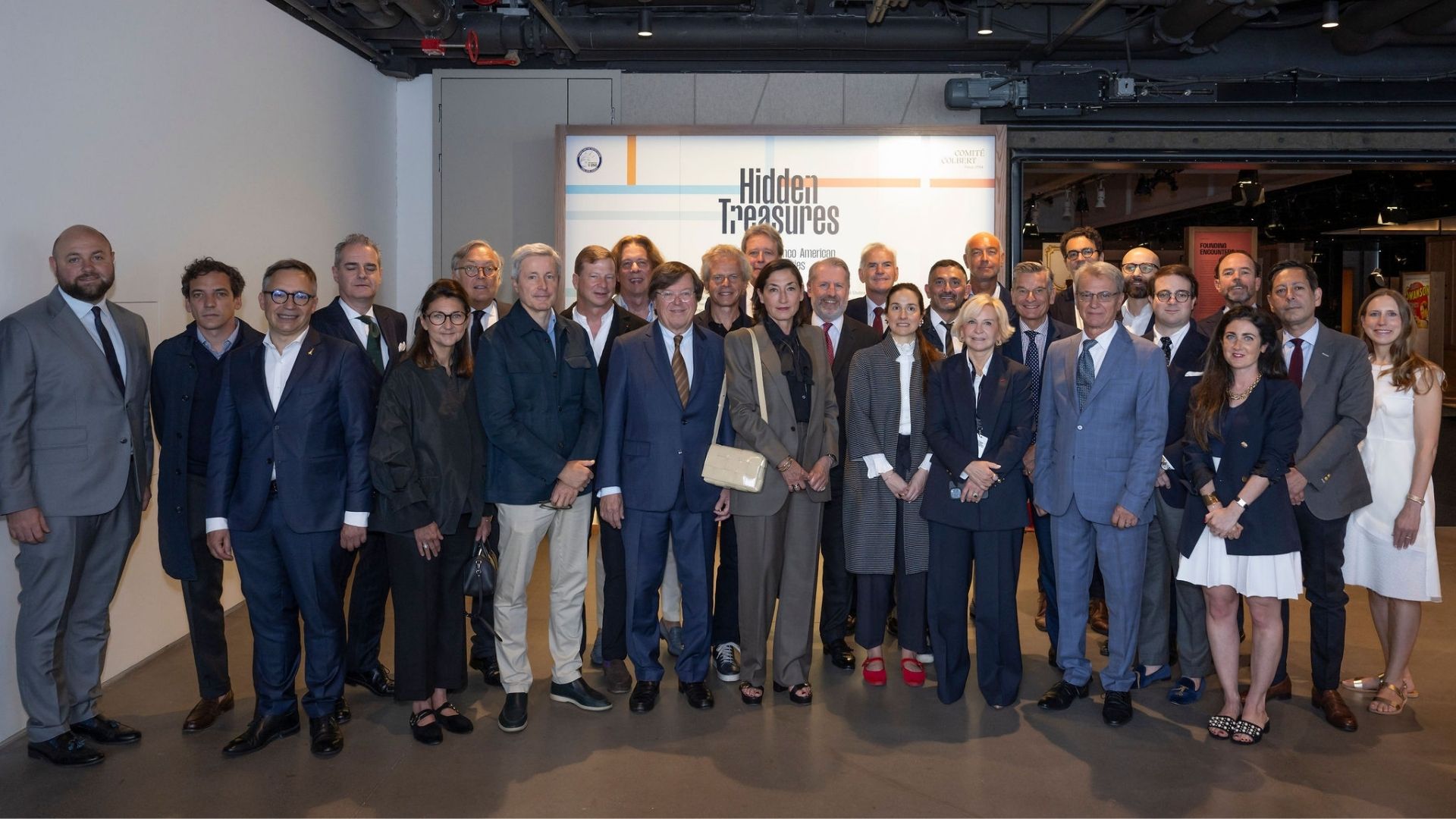
Boucheron’s Belle Époque Masterpiece for an American Heiress
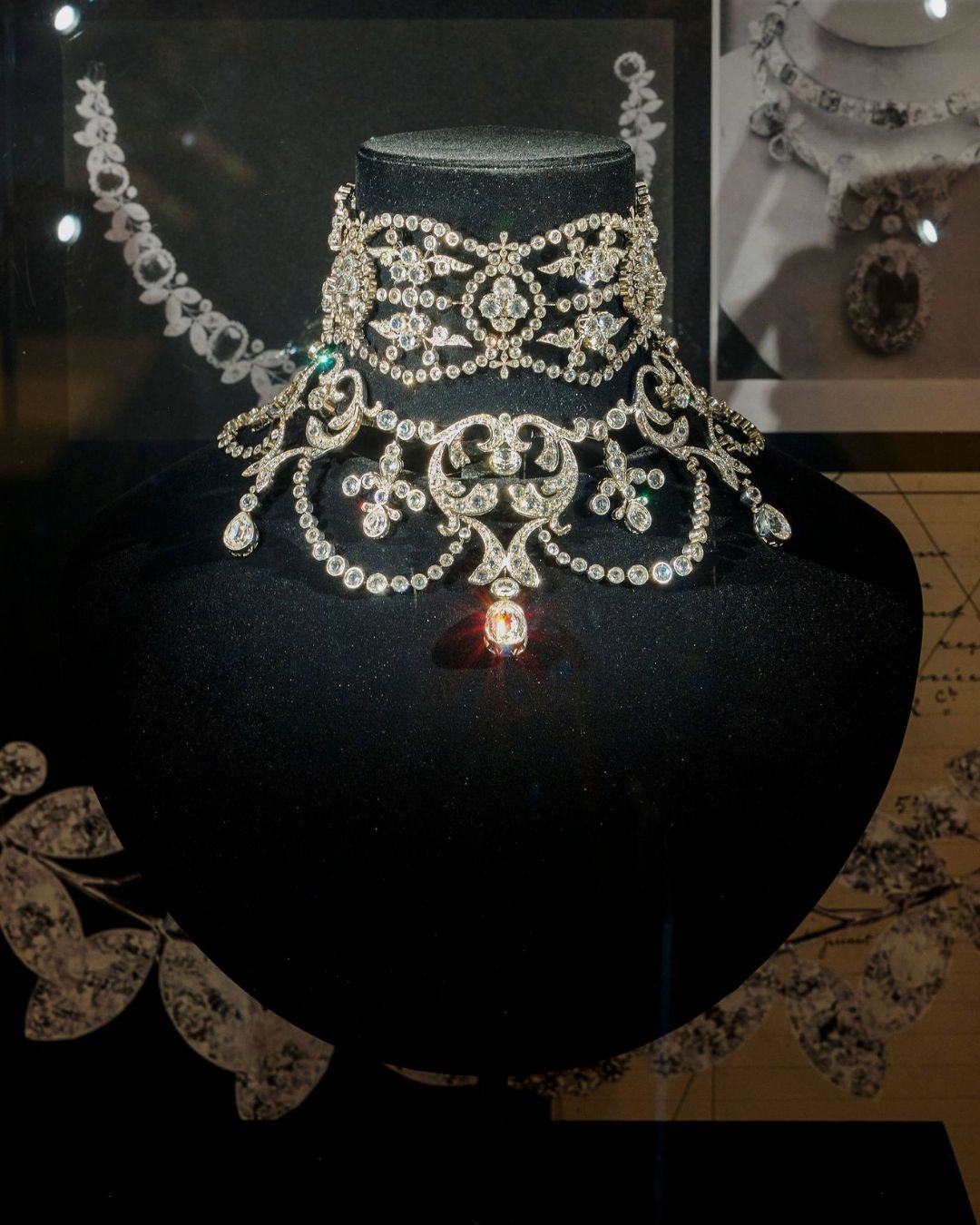
The diamond pièce de resistance on display was Boucheron’s Belle Époque diamond necklace, made for a Gilded Age American socialite. It was conceived in 1899 for Marie-Louie Mackay, one of the brand’s most loyal and esteemed customers. She was also the wife of rags-to-riches Irish American industrialist John William Mackay, who made his fortune discovering a Nevada silver mine.
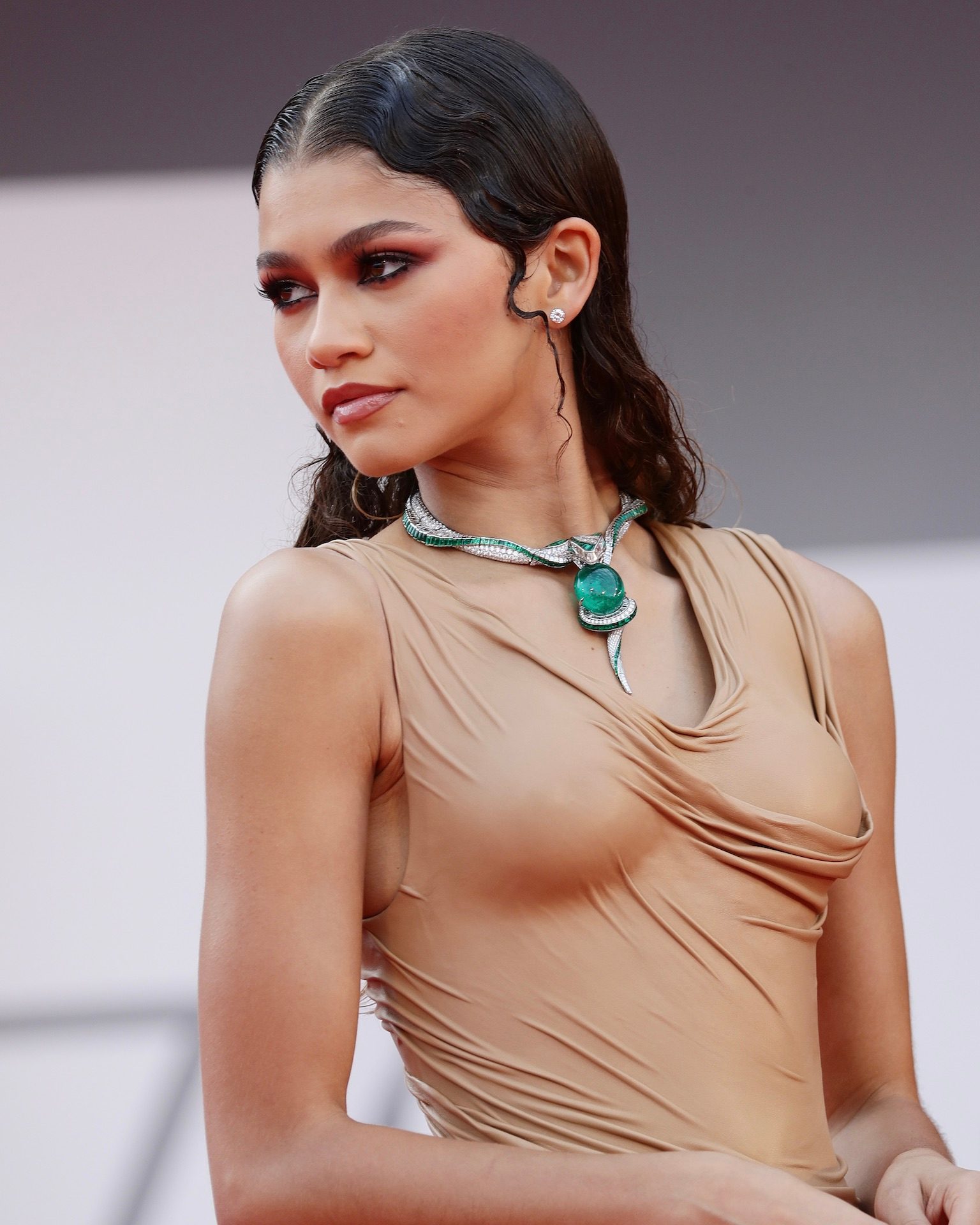
The collar-style necklace with Plastron (also known as a breastplate) features 621 diamonds. The commission is verified in Boucheron’s records. This underscores the importance of American patronage in establishing the house as one of the most sought-after Parisian Haute Joaillerie houses in the late 19th century.
While Boucheron no longer has the necklace, CEO Helene Poulit-Duquesne (President Elect of Comité Colbert) commissioned three necklace replicas, this being one, that were created by the brand’s atelier in 2024 after the exhibition at the Cooper-Hewitt Museum that highlighted the jeweler’s connection to the US. “One of the most famous pieces Mrs. Mackay owned was a necklace gift from her husband, made of rubies and diamonds that recently sold at auction.”
“We are not sure if the diamonds were from Golconda; it is possible. At that time, the diamonds were rough and old mine cuts, not of high quality. In the late 1800s and early 1900s, size was more important than quality. The stones were not particularly beautiful or brilliant, but personally, I love them,” Poulit-Duquesne said.
Mrs. Mackay visited Boucheron over 100 times and commissioned 50 custom pieces. At this time, wealthy Americans were among the top clients, along with royalty and the Maharaja. Typically, customers would purchase the stone and then create something with it. One of the most famous pieces Mrs. Mackay owned was a necklace gift from her husband, made of rubies and diamonds that recently sold at auction,” she added. Indeed, it sold at Sotheby’s in December 2025 for $1.27M.
How Mellerio’s Peacock Became an American Treasure
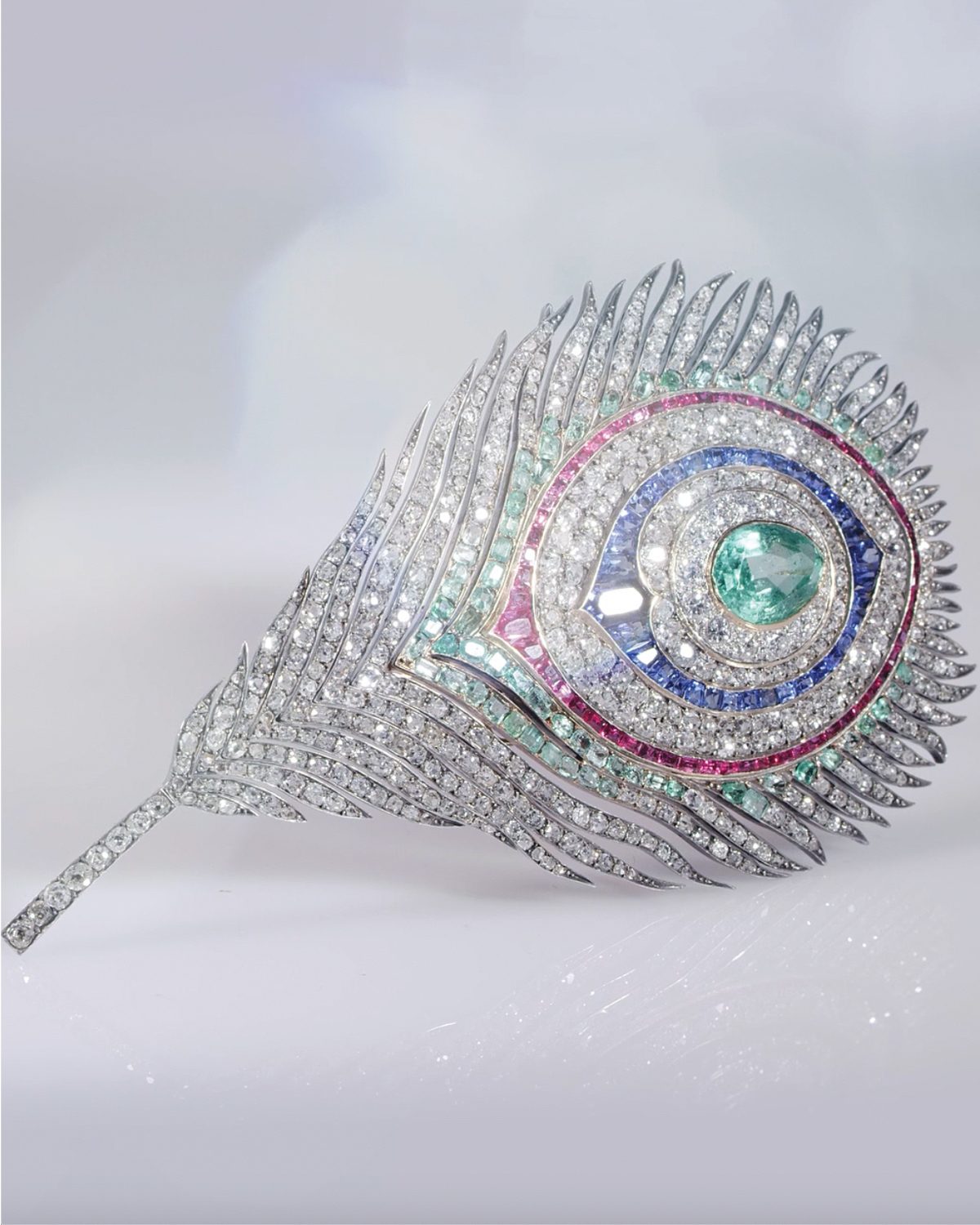
Mellerio boasts the title of the oldest surviving jewelry company in the world. Many consider its colorful Pierreries baubles—once favored by Marie-Antoinette—a brand signature. Yet, this 400-year-plus house has another defining symbol: the peacock feather. As a brand spokesperson notes, the design debuted at the 1867 Exposition Universelle in Paris. Later, Empress Eugenie commissioned a brooch featuring the colorful feather.
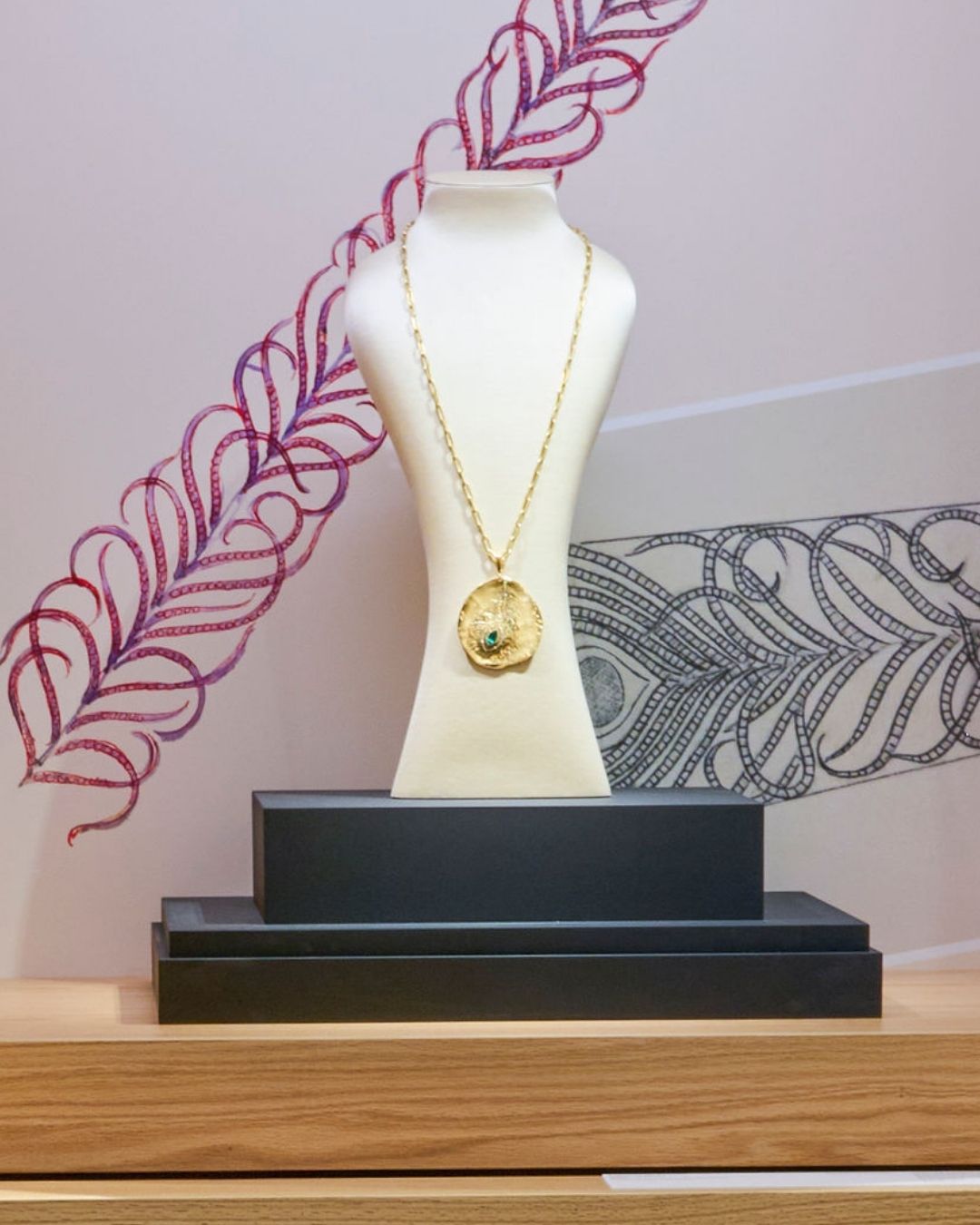
Making the American connection, and featured at Hidden Treasures, is a gouache of a choker commissioned by American heiress-turned-feminist and artist Alice Park Barney around 1900. Its Art Nouveau roots are reflected in the original design, now housed at the Smithsonian. The choker features an enamel, lifelike feather surrounded by diamond pavé, which echoes the plume’s flue.
On display at the exhibit is Mellerio’s Talisman Paon Medal, positioned next to the original painting. The medal captures the spirit of the original, now a long pendant-style necklace, and features a large gold disc depicting a feather crafted from diamonds, with its eye made from sapphires, emeralds, and Paraiba instead of enamel. The necklace can be viewed and purchased at Bergdorf Goodman, creating another connection to the US.
Cartier, Van Cleef & Arpels, and Their American Inspirations
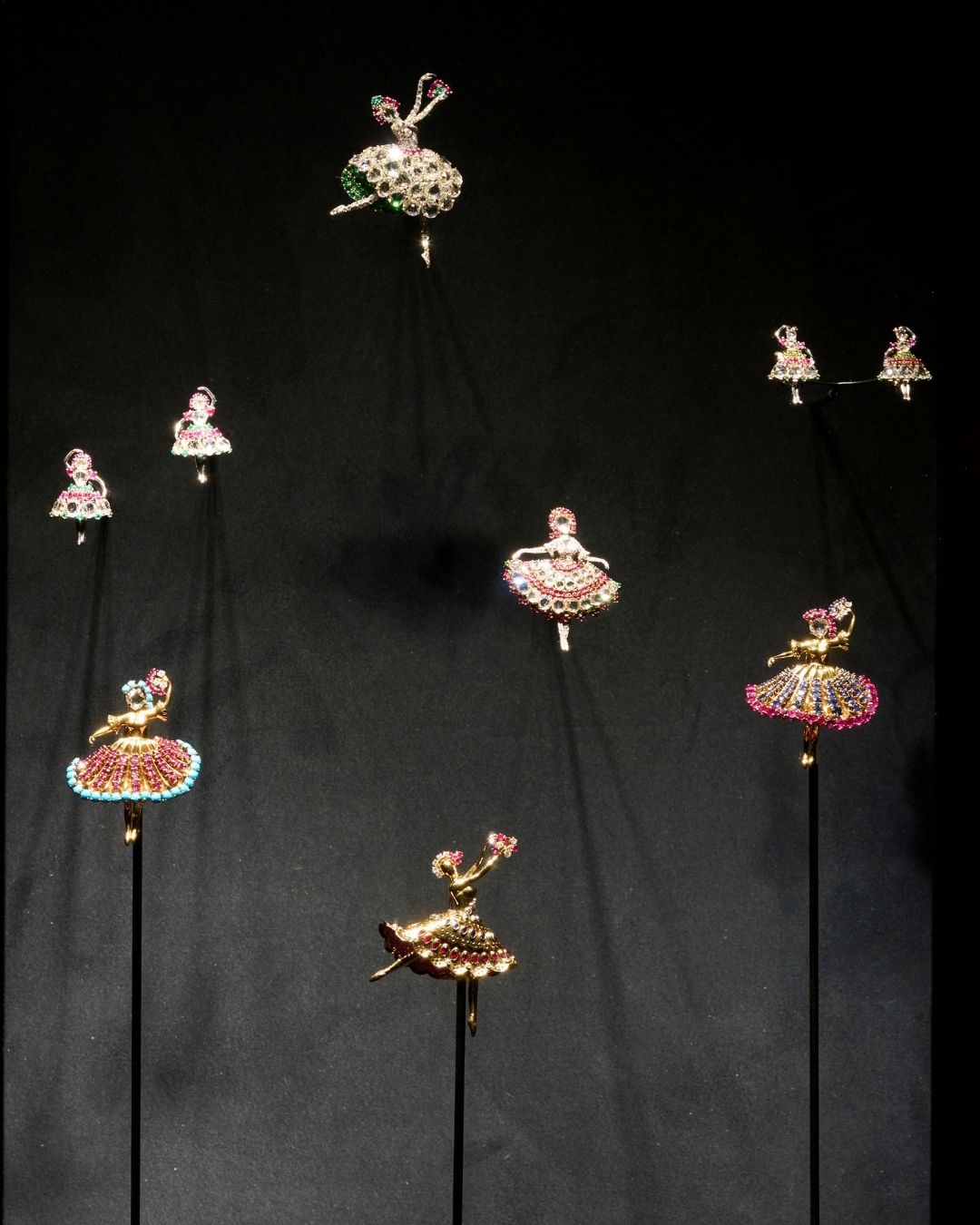
Two major jewelry brands from the luxury group Richemont demonstrate expert craftsmanship and reflect their appreciation for American culture.
Place Vendôme jeweler Van Cleef & Arpels established itself in Paris in 1906. It arrived in New York in 1939, opening an office, then, in 1940, its flagship at 744 Fifth Avenue, located in Bergdorf Goodman. Second-generation jeweler Claude Arpels developed a love of dance after visiting the ballet at the Paris Opera with his father, which birthed the brand’s hallmark ballerina brooch motifs in the 1940s.
Famously, after meeting George Balanchine, co-founder of the New York Ballet, in 1961, the sympatico love of gemstones and dance inspired the 1967 ballet “Jewels,” which in turn then inspired Van Cleef & Arpels’ 40th-anniversary high jewelry collection, called “Ballet Précieux.”
Cartier was founded in Paris in 1847 and established itself in New York City in 1909. This move reinforced its relationship with Americans. To commemorate the American space achievement—the 1969 Apollo 11 landing with Neil Armstrong, Buzz Aldrin, and Michael Collins—French newspaper Le Figaro planned to present a special gift to the astronauts when they visited Paris after this success.
Raising funds through subscriber donations, the paper commissioned Cartier to create reproductions of the Lunar Excursion Module (LEM), the smaller spacecraft designed to land astronauts on the lunar surface. On display is the spacecraft with Michael Collins’ name.
While these designs are diamond-free, a fun fact is that Van Cleef & Arpels made three brooches to mimic the moon’s surface. They were gifted to the three astronauts’ wives and made from diamonds, rubies, and other gemstones. Van Cleef & Arpels is enthralled by dance, but it also has a long-standing fascination with space. In the 2025 exhibit Cosmic Splendor: Jewelry from the Collections of Van Cleef & Arpels at the American Museum of Natural History, one of the three brooches had been reacquired by the jeweler and was included in the show.
Modern French Jewelers Making Their Mark in America
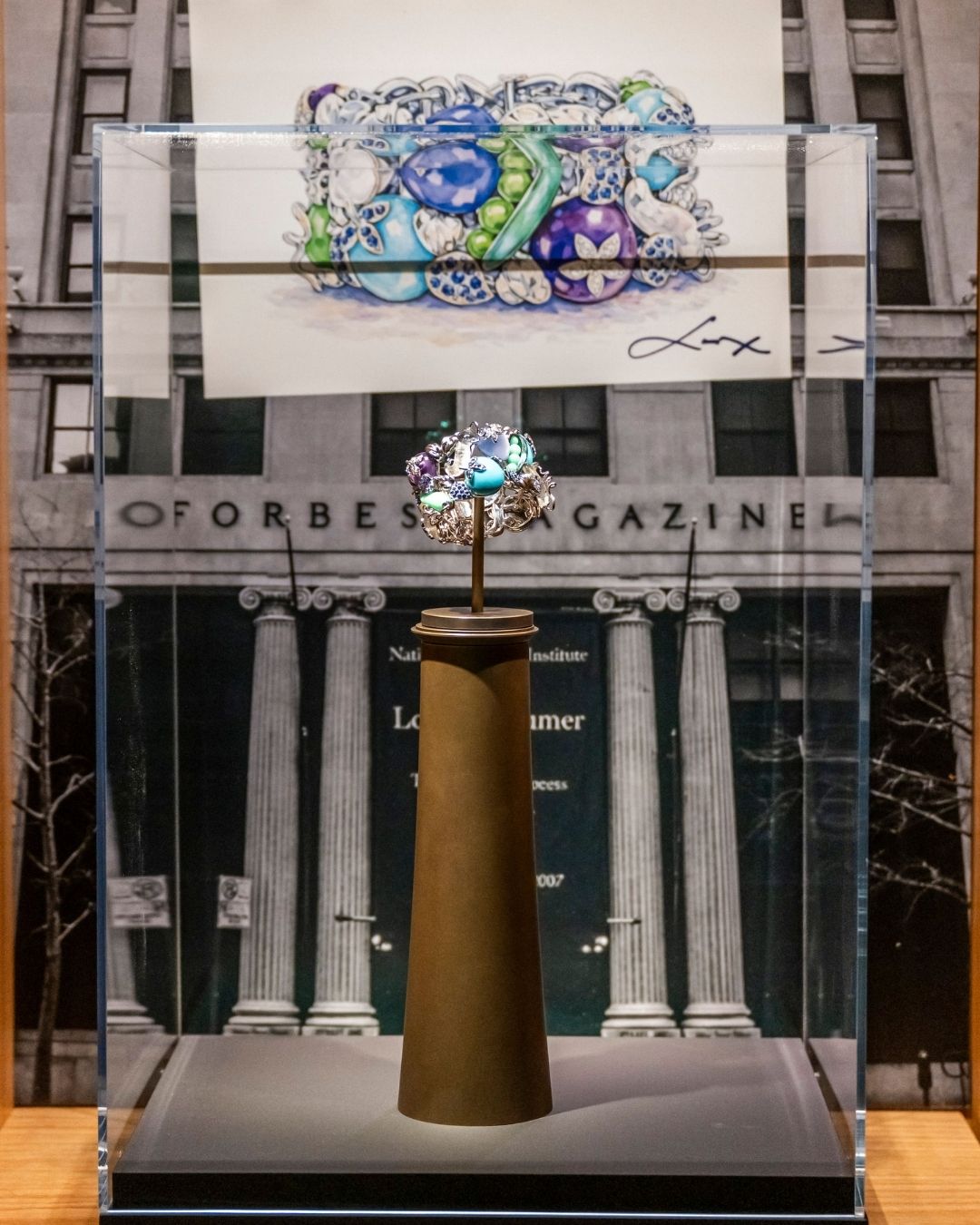
Not all French jewelry maisons were founded before the 20th century. Lorenz Baümer and Valerie Messika of Messika have also established fine jewelry brands steeped in savoir-faire, a love of natural diamonds, and a deep connection to the American market.
Baümer—a French German national born in Washington, DC, to diplomat parents—has personal and professional ties to the US. In 2007, he was featured in the Forbes Gallery exhibit in New York City titled “Lorenz Bäumer: The Creative Process of a Jeweler.” There, he revealed his “Gourmadise” bracelet, part of the “Hidden Treasures” collection. This bracelet, inspired by fruits and vegetables, is made of white gold set with more than 4 carats of white diamonds and features decorative details in blue sapphire, chalcedony, rock crystal, turquoise, and amethyst. Another highlight from the Forbes exhibit was a white-gold and diamond dragon pendant depicting the creature clutching a large sapphire.
Messika cemented its connection to the US in 2025 with the opening of its Madison Avenue flagship store. The opening coincided with the brand’s 20th anniversary. A signature of its contemporary design language is the So Move motif, which appears in this demonstrative necklace on display worn by ambassador Julianne Moore.