< Historic Diamonds / Royal Stories
Inside the Portuguese Royal Collection’s Most Astonishing Pieces
Step inside Lisbon’s vault of royal wonders to explore the Portuguese Crown Jewels and other dazzling, historic treasures.

(Courtesy of the Royal Treasure Museum)
In November 2024, the Royal Treasure Museum in Lisbon, Portugal, became the setting for the inaugural Treasures, Royal Gems & Jewellery International Colloquium—a landmark event spotlighting the Portuguese Crown Jewels and other extraordinary royal gems from around the world. The gathering brought together leading museum curators, auction-house valuers, and gemologists to examine Portugal’s royal cache and its global significance.
Portugal’s royal collection, housed in the Royal Treasure Museum since June 2022, remains one of Europe’s most remarkable yet under-recognized assemblages. Owned by the state since the country became a republic in 1910, the trove was first amassed by the Braganza royal family, who ruled Portugal and Brazil. Today, it includes everything from captivating jewelry and regalia to glittering military orders—each piece carrying centuries of history and artistry.
Meet the Expert

- Elisa Anniss is a London-based luxury journalist who started her career at Fairchild Publications in New York, specializing in shoes. Lately, she has written jewelry features for the Financial Times, Rapaport, The Natural Diamond Council, Aston Martin magazine, and Vanity Fair (Watches & Jewellery supplement).
Today, both the surviving Portuguese Crown Jewels and the Braganza family’s royal jewelry collection are housed together in the Royal Treasure Museum at the Ajuda National Palace, offering the first permanent, high-security home for Portugal’s most important gems and regalia.
Ahead, discover the most spectacular natural diamond-studded highlights of the Portuguese Crown Jewels and royal jewelry collection and the stories behind the diamonds that shaped this extraordinary collection.
Brazilian Diamonds and Their Impact on Europe’s Royal Jewelry

The kingdom of Portugal claimed Brazil in April 1500, and the royal family became beneficiaries of its gold and diamond wealth. The Royal Treasure Museum illustrates this legacy with a 44.954-pound gold nugget and a 35.80-carat rough diamond on display, showcased alongside interpretive materials detailing Brazil’s gold rush and the discovery of diamonds in Minas Gerais in the early 18th century.
Jeffrey Post, Curator Emeritus of Gems and Minerals at the Smithsonian Institute, delivered a lecture during the colloquium. According to Post, the discovery of diamonds in Brazil in the 1720s was a game-changer. “Until then, they were only recovered in any kind of commercial way in India.” He explains that with this new source, diamonds became a more prominent feature in royal regalia and jewelry across Europe, even more so after the discovery of diamonds in South Africa in the 19th century.
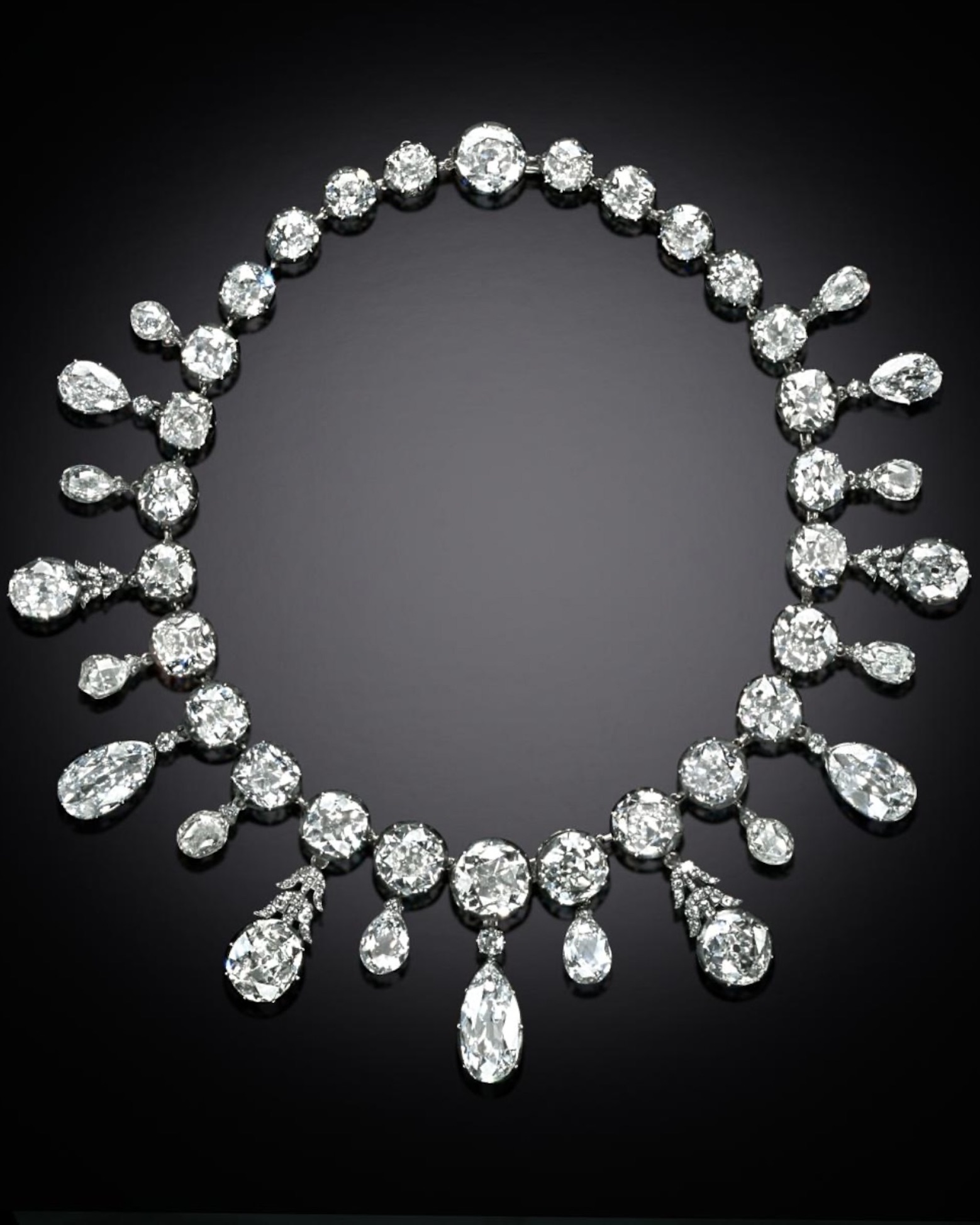
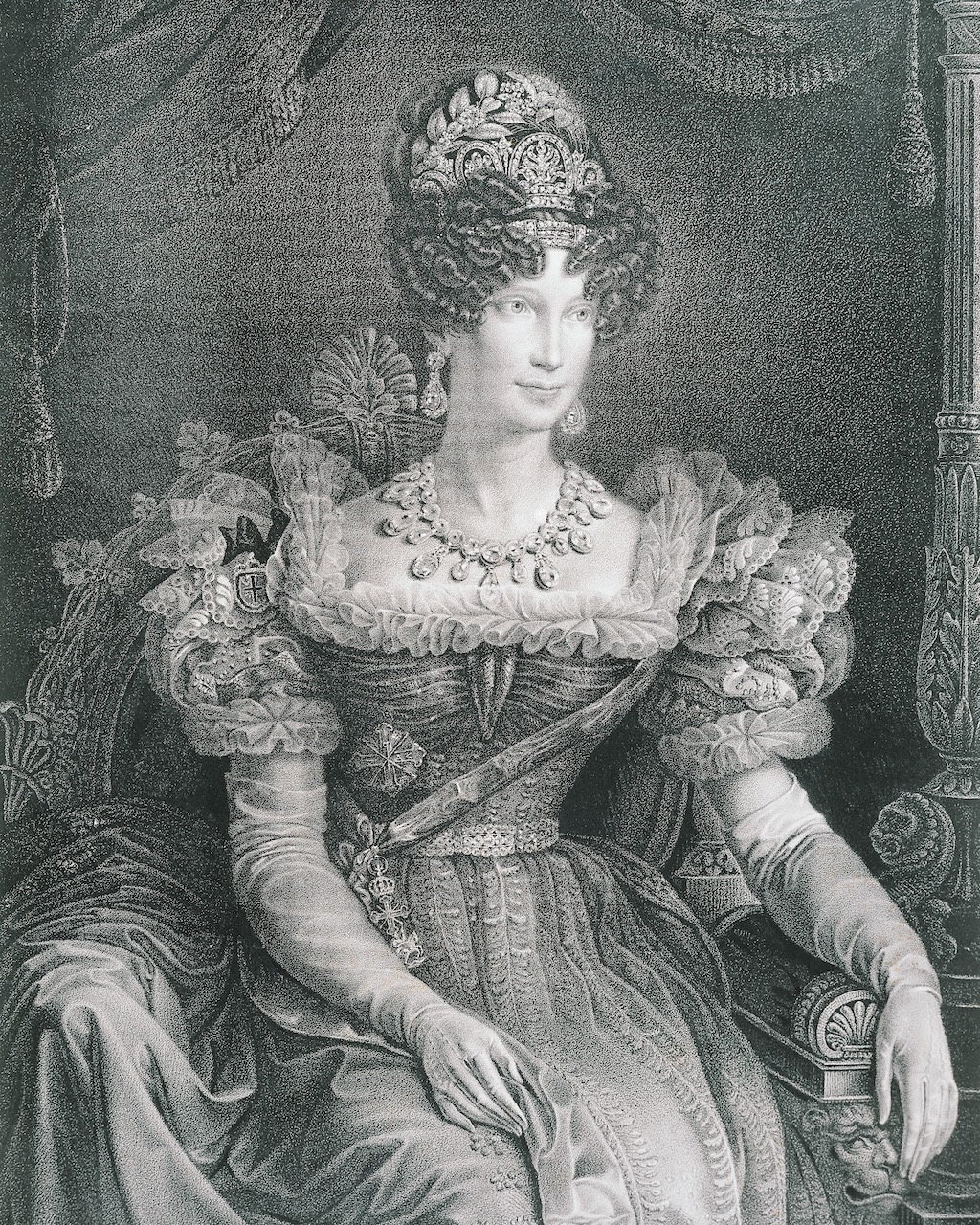
Post adds that the Smithsonian holds a necklace that Napoleon gave to his second wife, Empress Marie Louise. “It has 162 carats of big, high-quality diamonds that would have mostly come from Brazil,” he says.
What Are the Portuguese Crown Jewels?
Although Portugal’s royal collection is vast, only a small group of objects are formally recognized as the Portuguese Crown Jewels. This designation refers specifically to the surviving pieces of state regalia linked to the Braganza monarchy’s ceremonial functions. Unlike the British Crown Jewels, Portugal’s regalia is limited: much of the original treasure was destroyed in the 1755 Lisbon earthquake and subsequent fire.
The surviving Portuguese Crown Jewels are primarily crafted from gold, reflecting their symbolic and ceremonial purpose rather than gemstone display. They do not feature the large diamonds and colored gemstones seen in other European regalia.
Today, the official Portuguese Crown Jewels include:
- The Crown of João VI
- The Sceptre of the Kingdom of Portugal
- The Mantle
- Additional pieces of state regalia and insignia connected to royal investitures
These items are distinct from the far more extensive Braganza Family Collection, which includes personal royal jewels—many richly adorned with diamonds sourced from Brazil—as well as parures, bodice ornaments, chivalric badges, and the approximately 18,000 diamonds documented by museum gemologists.
Both the Portuguese Crown Jewels and the broader royal jewelry collection are now housed together in the high-security Royal Treasure Museum at the Ajuda National Palace in Lisbon.
Maria Bárbara de Bragança’s Emerald and Diamond Bow

Pieces in the Portuguese royal collection are not only visually spectacular but also historically, artistically, and gemologically significant. While not part of the formal Portuguese Crown Jewels, one of the museum’s most celebrated royal jewels is an extraordinary emerald and diamond bow described by the Royal Treasure Museum as a “bodice ornament.” Traditionally worn at the center of a queen’s gown, this sculptural masterpiece features 31 Colombian emeralds totaling 301 carats, arranged in an opulent bow motif emblematic of 18th-century court style.
At its center sits a breathtaking 47.91-carat emerald, suspending a cascading diamond tassel anchored by a 24-carat diamond—a scale rarely encountered in surviving European court jewelry. The ornament belonged to Maria Bárbara de Bragança, the Portuguese-born Queen of Spain, whose patronage of the arts and love of grand jewels helped shape the aesthetic legacy now preserved within the Royal Treasure Museum.
King José’s Diamond Tobacco Snuff Box


While also not part of the formal Portuguese Crown Jewels, one of the most remarkable objects in the Royal Treasure Museum’s collection is an opulent diamond tobacco snuff box commissioned by King José I. Crafted by Pierre André Jacquemin, master jeweler to King Louis XV of France, the box represents the height of 18th-century French goldsmithing—an era when diplomatic gifts and personal luxuries were often more elaborate than official regalia.
Fashioned from gold, silver, and hundreds of hand-set diamonds, the snuff box is celebrated as a masterpiece of Rococo-era jewelry design. At its center lies a spectacular 30-carat diamond, a stone of extraordinary size and clarity for the period, believed to have originated from Brazil’s early diamond fields. Today, it sits among the remarkable treasures displayed alongside the Portuguese Crown Jewels, the construction, symmetry, and technical finesse reflect both the refinement of the French court and King José’s desire to surround himself with objects that conveyed prestige, power, and access to the finest gemstones in Europe.
King João VI’s Badge of the Order
of the Golden Fleece

Among the most imposing objects associated with the broader universe of the Portuguese Crown Jewels is the Badge of the Order of the Golden Fleece belonging to King João VI. Measuring an extraordinary 10.63 inches in length, it is the largest known representation of this prestigious Catholic chivalric order—an honor traditionally reserved for Europe’s most powerful monarchs and statesmen. Crafted with intricate goldwork and set with exceptional diamonds, the badge reflects both Portugal’s deep ties to European royal houses and the Braganza dynasty’s long-standing participation in elite dynastic orders.
The Portuguese gemologist and international lecturer Rui Galopim de Carvalho led research and documentation of the collection at The Royal Treasure Museum. During the colloquium, he outlined the process of assessing the collection. Compiling a 600-page gemological study covering each gem-set piece of the collection, it totaled approximately 18,000 diamonds.
Maria Pia of Savoy and the Birth of Portugal’s Modern Royal Jewels

Like so many European dynasties, the Braganza family fortified their political power through strategic marriages, forging alliances with ruling houses such as the Habsburgs and Bourbons. These connections not only shaped Portugal’s royal lineage but also enriched the heritage now preserved alongside the Portuguese Crown Jewels. Many of the most distinctive jewels in the Royal Treasure Museum’s collection are attributed to Maria Pia of Savoy, the Italian-born princess whose refined taste left an indelible mark on Portugal’s royal aesthetic.
Maria Pia became Queen Consort upon her marriage to King Luís I of Portugal in 1862, and quickly emerged as one of the monarchy’s great aesthetes. Known for her impeccable style, she devoted herself not only to commissioning exquisite jewelry but also to modernizing and redecorating the Ajuda Palace, transforming it into a showcase of 19th-century cosmopolitan luxury. Among her most celebrated commissions is the Diadem of the Stars—designed by Portuguese court jeweler Estevão de Sousa—along with its matching necklace, both adorned with brilliant Brazilian diamonds. These star-studded pieces exemplify Maria Pia’s flair for bold, celestial motifs and her desire to elevate Portuguese craftsmanship to the level of Europe’s finest royal courts.

Emily Stoehrer of The Museum of Fine Arts Boston, who attended the colloquium, describes the diadem set en tremblant as “so modern.” She explained that she was mostly unfamiliar with the Portuguese royal collections before the colloquium. She adds, “I knew of Maria Pia’s Castellani jewelry, but I did not fully appreciate the context of it or the connection between Portugal and Italy.”


The Royal Treasure Museum of Portugal: A Home for Extraordinary Gems
In Europe, tourists flock to museums such as the one in Lisbon, specializing in extraordinary treasures once owned by emperors, monarchs, and those of royal lineage, much like the Royal Treasure Museum in Lisbon, home to the Portuguese Crown Jewels and the Braganza family’s historic collection.
Rosenborg Castle in Copenhagen holds the Danish crown jewels. The Imperial Treasury at Vienna’s Hofburg Palace showcases pieces that once belonged to the Habsburgs, who ruled the Holy Roman Empire. Likely the most famous of all, The Tower of London boasts over 23,578 gemstones contained in the British Crown Jewels. These specialist museums showcase spectacular gemstones within a historical context, giving a different focus than that of auction houses.
How the Royal Treasure Museum Protects the Portuguese Crown Jewels

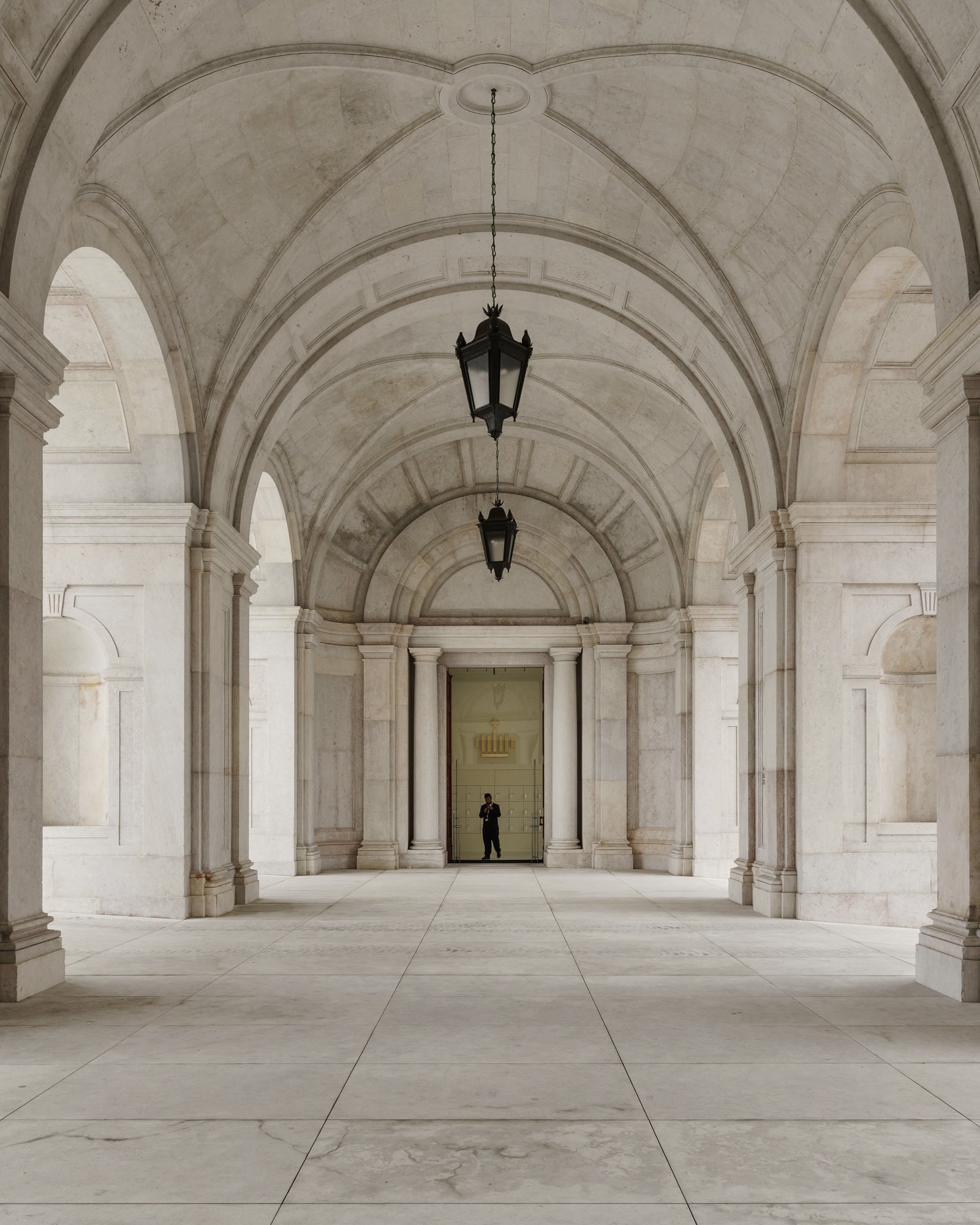
The Royal Treasure Museum is fashioned like a huge, gold-colored box showcased in a building-within-a-building, outfitted with airport-style security systems to protect the Portuguese Crown Jewels and the Braganza family’s extraordinary royal treasures. Nuno Vale, executive director at the Royal Treasure Museum, describes the gold structure within a contemporary space on the west wing of the historic Palácio Nacional da Ajuda, as “the largest safe box in the world.” In 2002, a large portion of the Portuguese crown jewels was stolen during a heist. At the time, they were on loan to the museum in The Hague, Netherlands, for an exhibition titled “The Diamond: From Rough Stone to Gem.” No wonder, then, that security is of utmost importance.

The last word goes to Post, who has viewed the Portuguese Crown Jewels in person. “Had we seen the diamonds that have been stolen, there would have been an even more impressive display of rough diamonds that came out of Brazil,” he concludes.
The next international colloquium is Treasures, Royal Crowns & Tiaras, which will take place in November 2026.