A Private Language: The Stories That Make Jewellery Personal
A jewel’s story is never finished at the point of purchase. Its real life begins in the wearing, gathering of memory, meaning and identity as it moves across countries, cultures and time. A conversation between Akshat Ghiya, Devisha Kumari Singh, and Radhika Chopra, on what it means to wear, inherit, and pass on a natural diamond.
There are some pieces of jewellery that enter your life as objects, and then consistently become part of your autobiography. A ring you inherit, a pendant you never take off, a diamond brooch remembered from childhood, a pair of earrings that still carries the presence of the woman who wore them before you. Real diamond jewellery is often spoken about through value, rarity and brilliance, but in the conversation I moderated for the Natural Diamond Council, A Private Language: Jewellery and Personal Identity, what became far more interesting was the wearer.
Meet the Author
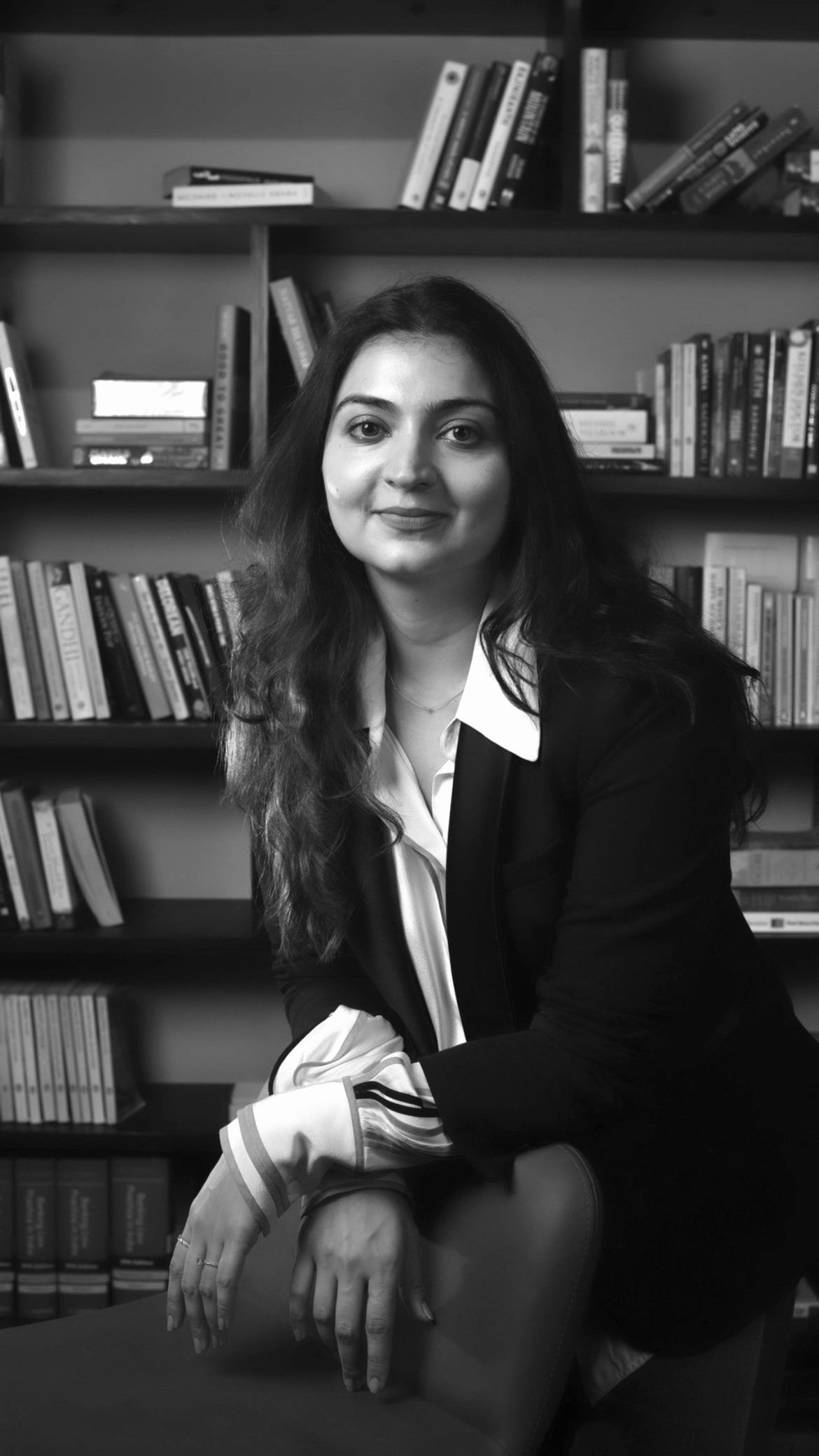
- Akanksha Kamath is a London-based author and columnist writing on fashion, beauty, luxury and culture.
- A former fashion features director at Vogue India, she has spent over a decade reporting for titles including Vogue Business, The Business of Fashion, British Vogue and FT Weekend.
- She is the founder of LSS on Substack and Instagram, a platform curating conversations and narratives at the intersection of fashion, luxury, craft and creativity.
What does a jewel absorb from a life? What happens when it is worn to a wedding, then to dinner, then with a white shirt, then every day? At what point does it stop being “occasion wear” and start becoming an emotional shorthand?
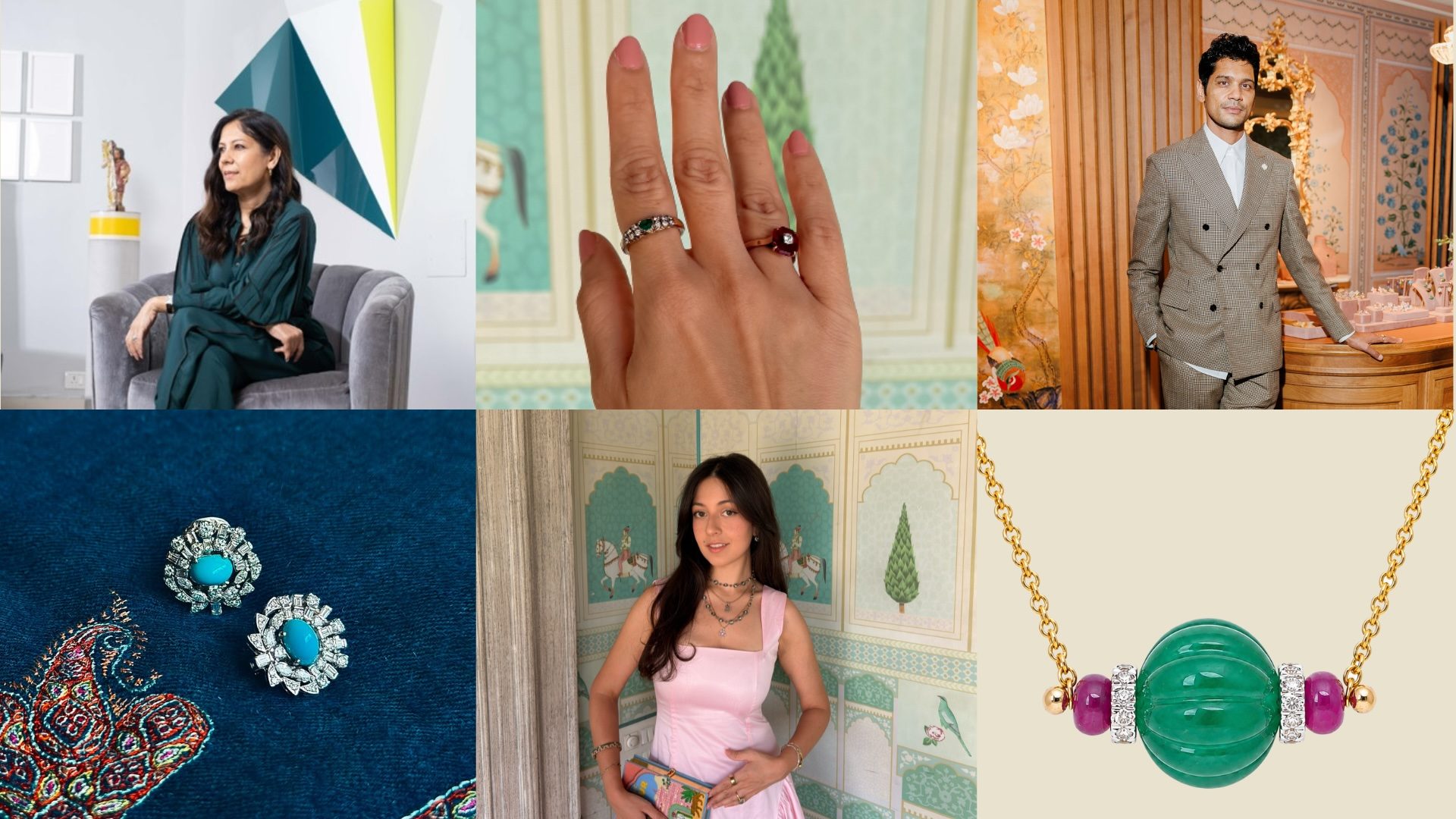
The panel brought together three people who understand objects as more than decoration. Radhika Chopra, collector and patron of modern and contemporary South Asian art and founder of No. 3 Clive Road, came to the discussion with a collector’s instinct for memory, context and provenance. Devisha, a creative director and brand strategist whose work sits at the intersection of luxury, craft, hospitality and cultural storytelling, brought a perspective shaped by heritage, modernity and a very enviable sari (and jewellery) wardrobe. Akshat Ghiya, founder of Jaipur-based jewellery atelier Tallin, brought the maker’s eye, shaped by India and Italy, by stones, craftsmanship and the intimacy of working with people’s personal stories.
We began, naturally, with what everyone was wearing. Akshat held up his carved emerald pendant with diamonds, rubies and gold, a piece he wears constantly. “I can play sports in it, go swimming in it, go to a party in it, I never have to take it off,” he said. Devisha was wearing her dadi’s ring, a ruby with a natural diamond drilled into it. “When I wear it every day, it kind of reminds me of her,” she said, adding that it speaks to both of them as women, “a little bit of a softer stone on the outside, but a diamond and hard on the inside.” Radhika wore one of her mother’s earrings. “I value each of those pieces, and I carry them with me,” she said, “and they hold a lot of memories and reminders of who she is.”
Already, we were not talking about jewellery as embellishment. We were talking about objects that hold people.
The Jewel Becomes Personal When It Becomes Lived-in
One of the loveliest things about jewellery is that it sits so close to the body that it cannot help becoming intimate.
It is put on in private, taken off in private, slept in, showered in, travelled with, occasionally hidden away in a drawer because it feels too precious to risk. As Akshat said, “It is so connected to your body that it automatically becomes an intimate object.”
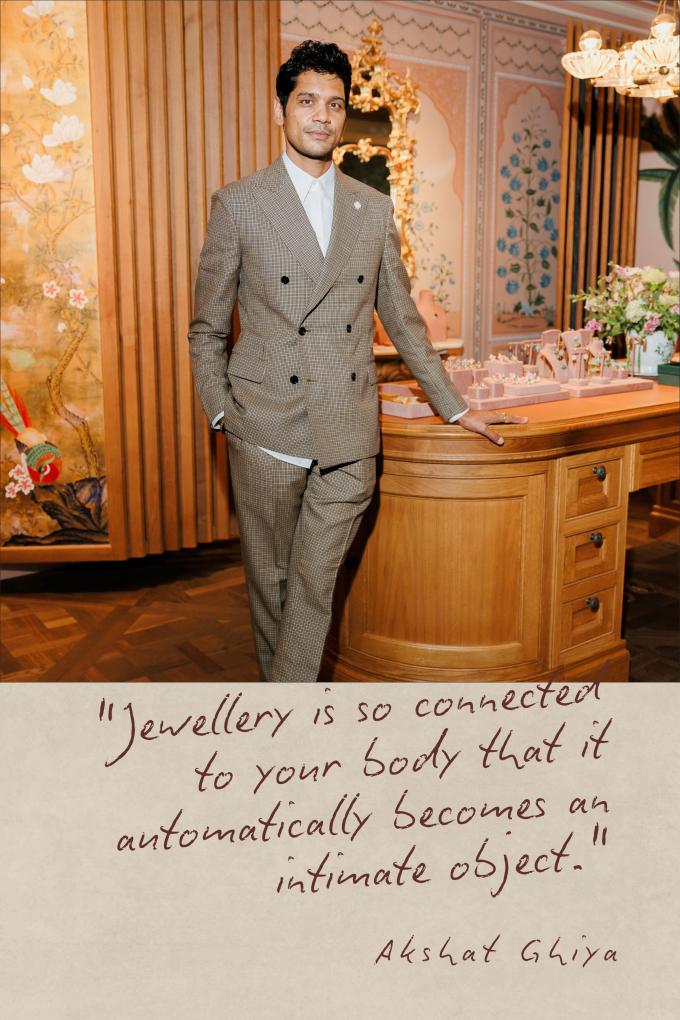
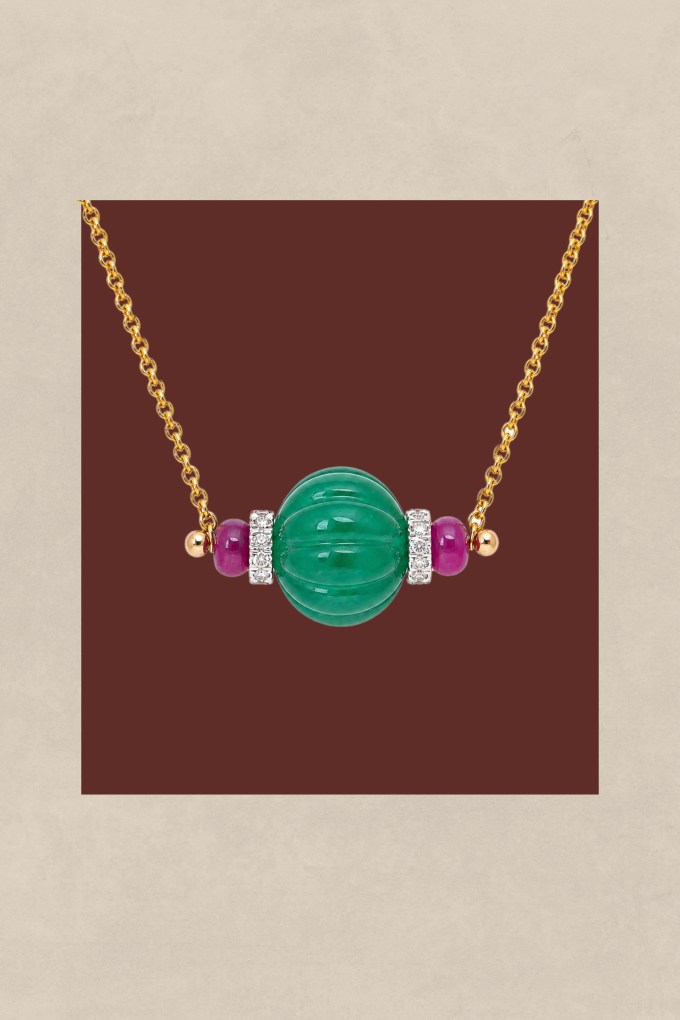
Worn daily, Akshat Ghiya’s pendant feels like a part of him.
That intimacy changes the meaning of value. Radhika spoke about her mother’s jewellery in terms of feeling, rather than size and rarity. “They carry so much memory, craft, heritage,” she said of inherited pieces. Later, when asked about the objects that most express her personal vocabulary, she returned to her mother’s shawls, jewellery and engagement ring. Her art collection, she said, is her own personal journey, while those inherited objects are “really my mother’s journey that I’m holding on so dearly to.”
That description stayed with me – mostly because I, too, wear an upcycled diamond ring made from two of my mum’s toe-rings. Jewellery, then, can hold both the self and the predecessor. It can be personal because it is yours, or because it belonged to someone whose story you are still carrying.
Heritage Survives When It Is Allowed to Adapt
Our conversation eased from memory, to style. How jewellery plays up in era-defining portraiture that tell us so much about how jewellery is a signifier of people, places, heritage and time. Think Francesco Renaldi’s painting of a Mughal woman, where jewellery appears not simply as adornment but as code: rings, anklets, social place, seduction, power, region, ritual. Jewellery has always told the world who someone was, or who they were expected to be. What feels different now is the appetite to interfere with that code.
Devisha articulated this beautifully. “My generation and the next one is less interested in preserving heritage perfectly because we do very few things perfectly and more interested in living with it honestly,” she said. Think, the sari with the unexpected blouse. The diamond toe ring turned into a ring for the hand. The grandmother’s jewel worn outside the rules that once shaped it. “If the younger generations feel freedom within tradition,” she added, “they’re more likely to keep returning to it and reinterpreting it in a different way and making it part of their everyday identity rather than something that is reserved purely for ceremony or preservation.”
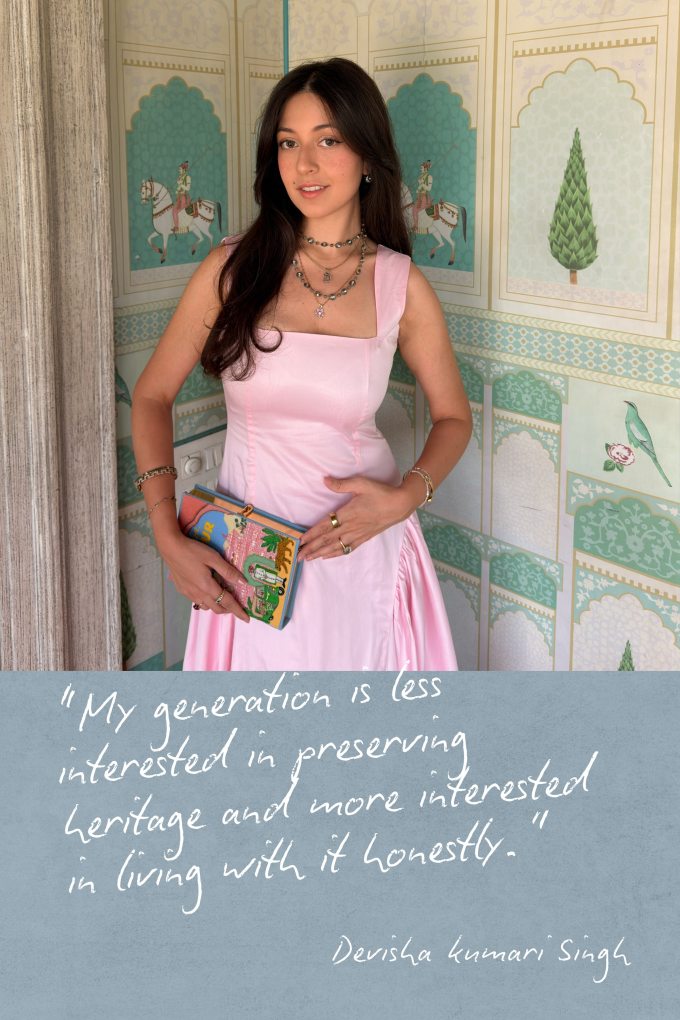
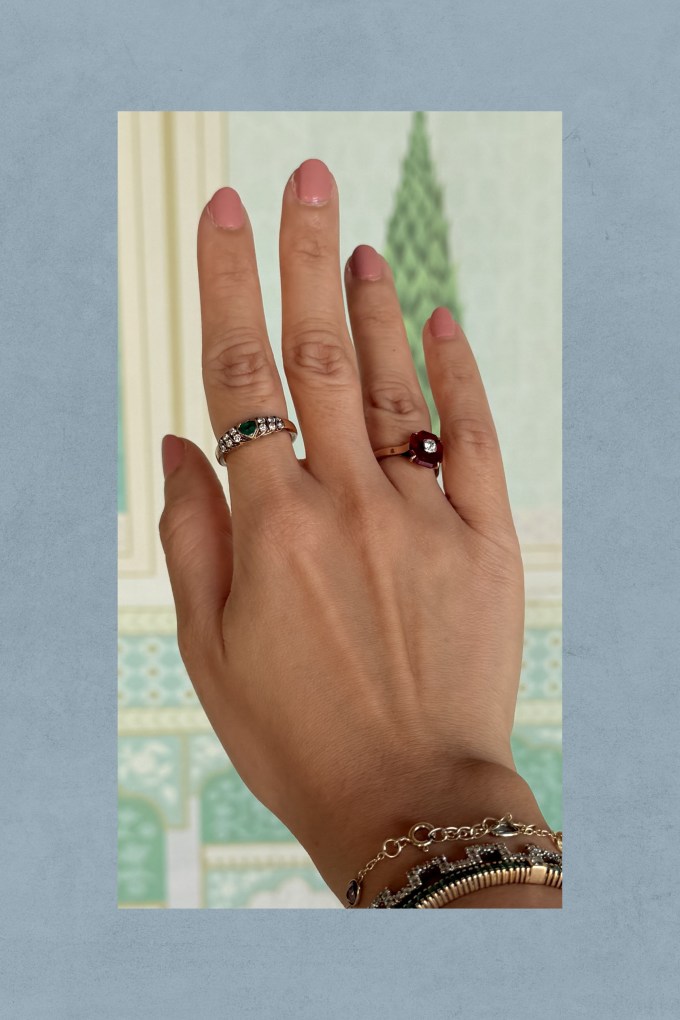
Devisha Singh wears her grandmother’s ruby and diamond ring.
Akshat sees this shift through the atelier. He spoke about clients coming in with inherited jewellery they no longer wear, asking to rework it into something that feels like them. “They want to buy jewellery that speaks to their identity,” he said. “They want to collaborate and get their own creative input in making the jewellery.” What might once have been a family decision is now often an act of personal identity.
There was a parallel here with Radhika’s experience at the Venice Biennale and an exhibition at the Dries Van Noten Foundation. A kind of cabinet of curiosities where fashion, objects, furniture, textiles and jewellery were placed in conversation with one another. For me, that felt close to the way many of us dress now: less faithful to one era, more interested in building a personal language from fragments – a kind of antithesis to AI algorithms and everyone morphing into one another, I added.
Diamonds Are No Longer Waiting for the Occasion
Natural diamonds still carry ceremony. That is part of their power. But the most modern relationship with them may be the one that allows them into the everyday.
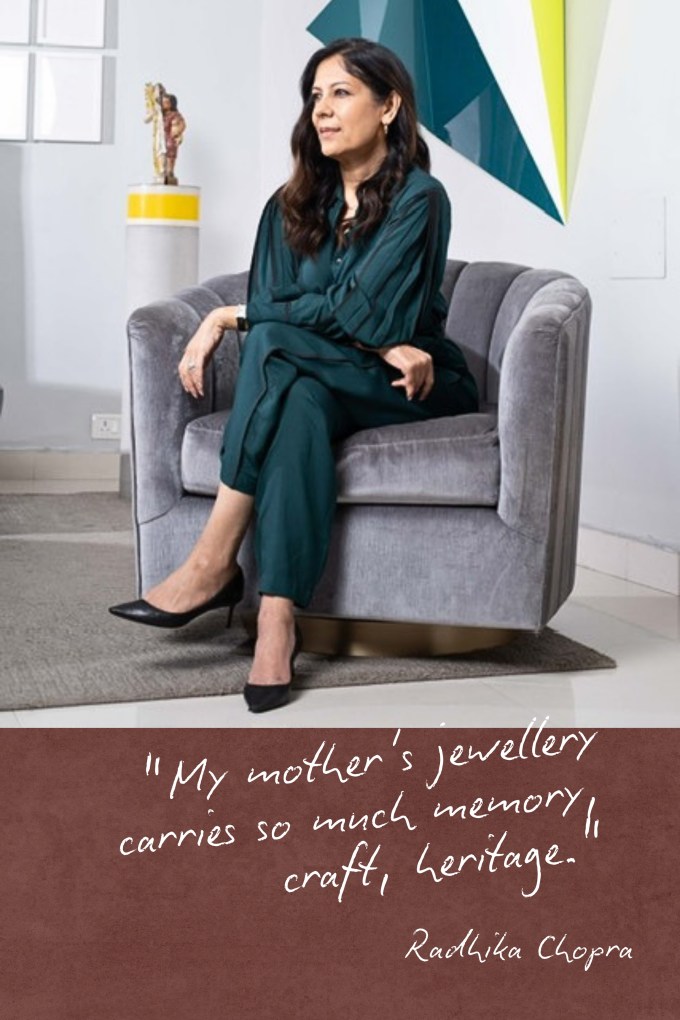
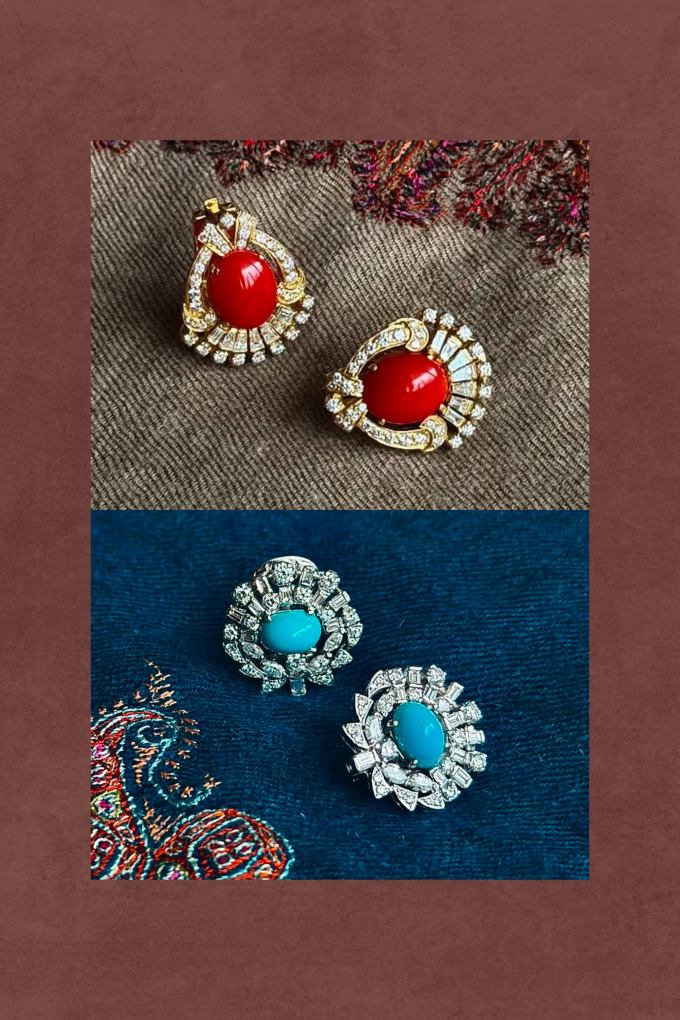
Radhika Chopra cherishes her mother’s natural diamond earrings.
Devisha described a generational shift in which natural diamonds are being reclaimed “in a more personal and instinctive way.” The grand diamond pieces still come out for weddings and major ceremonies, and dressing up remains its own pleasure. But diamonds are also being allowed to participate in daily identity.
We also spoke about the public performance of style, especially on social media. The idea that we are witnessed on social media – our existence (life, outfits, jewellery) consumed in a random scroll. Devisha highlighted this and then brought us back to Jaipur and meenakari kundan jewellery, where the privacy of the back of the jewel is as much for personal consumption as it the outwardly parts for external compliments. “The stones in front are what the world will see. But the back is for you to acknowledge.”
That, to me, is the heart of a private language. The world may see the diamond, the emerald, the ruby, the shine. The wearer knows the joke, the grief, the grandmother, the mother, the city, the trip, the person who made it, the person who gave it, the version of herself she was when she first put it on.
By the end of the conversation, what stayed with me was not one definitive idea of jewellery, but the freedom of many meanings coexisting.
Radhika put it simply: she is drawn to objects “that are much more layered, rather than perfect and pristine.” Devisha spoke of heirlooms as things that “evolve through wear, and they gather new memories and new stories over time.” Akshat said, “What makes jewellery personal is the story you tell yourself.”
Perhaps that is why natural diamonds endure so powerfully in personal style. They come with geology, craft and cultural weight, but they are never finished at the point of purchase. Their real life begins in the wearing. A longer runway than we’d ever imagined – one that can travel countries, cultures, and time.


Newsletter