What the Diamond Asks For: Instinct, Craftsmanship and Continuity
Three exceptional jewellery designers – SK Castro, Pratik Shah, and Karina Choudhrie – on dreams, inspiration, and how a natural diamond composes a piece.
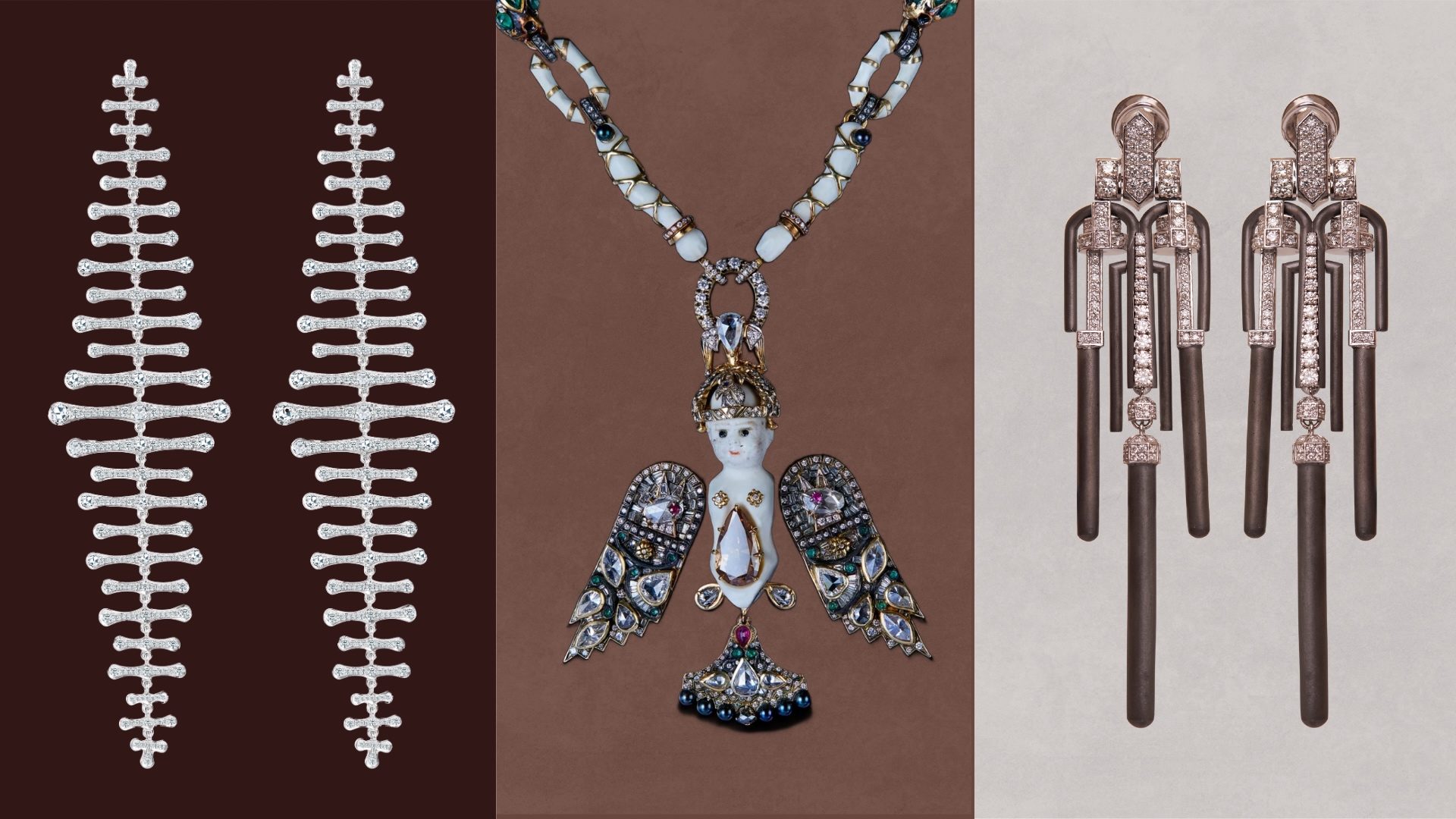
Every jewellery designer knows of the moment, when you are turning a rough natural diamond under a loupe, and something shifts. An inclusion catches the light, and the diamond stops being just a stone. The designer’s first job is not to impose a design, but to understand —as Michelangelo said of the marble block, the art that is already there is simply waiting to be freed.
Meet the Author
The writer is a London based author and columnist writing on fashion, beauty, luxury and culture. She is the founder of LSS on Substack and Instagram — a platform curating conversations and narratives in fashion, luxury, craft and creativity.
This was the heart of a recent panel conversation between three designers whose work moves well beyond conventional fine jewellery: Pratik Shah of Estaa, based in Mumbai; SK Castro of Castro NYC; and Karina Choudhrie of K&CO, London. Moderated by creative director Rymn Massand, what emerged a shared meditation on what it means to work with a real diamond, and the true value of their nature.
The Memory Bank
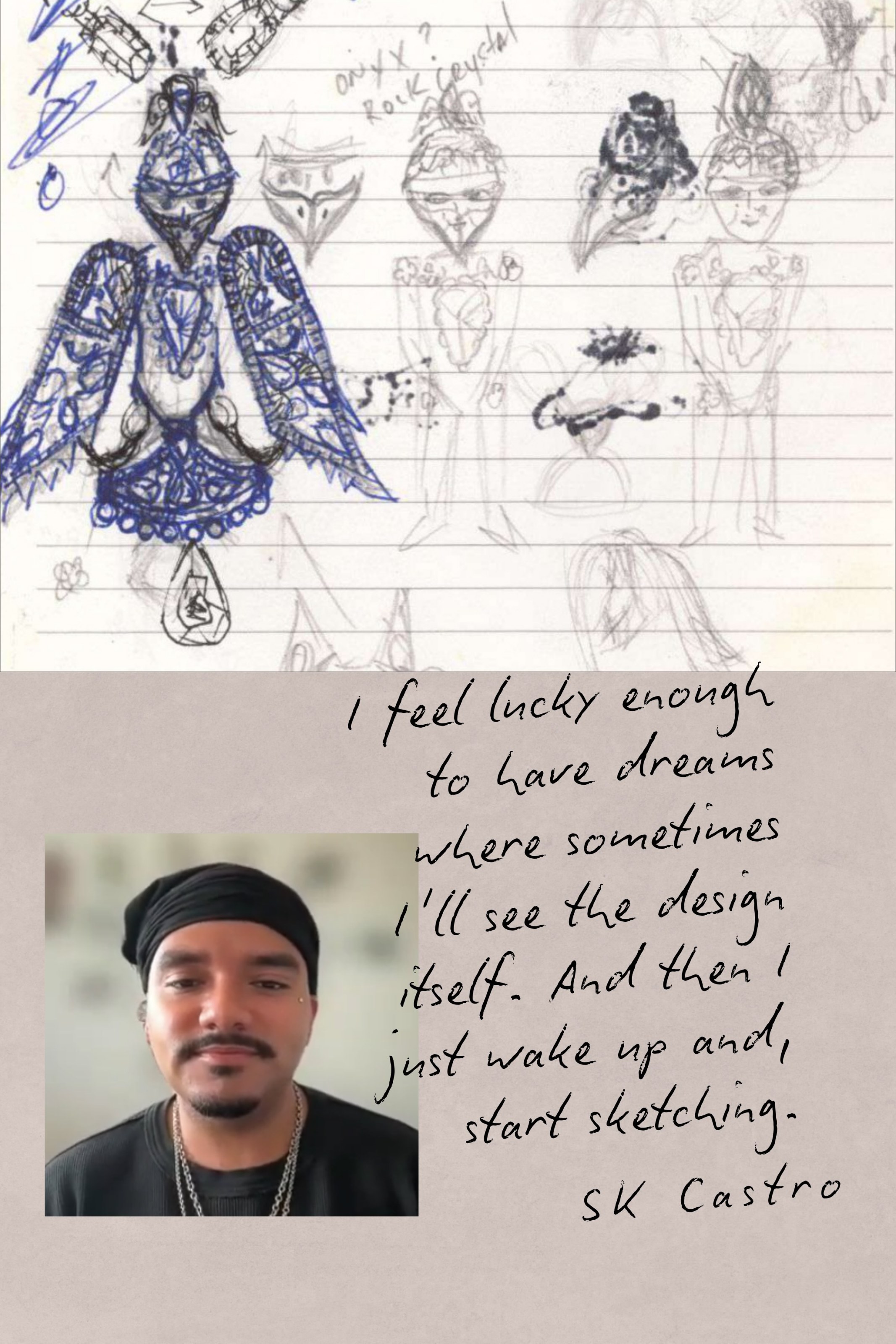
The creative process often resists prescription. SK Castro, doesn’t begin a collection with a sketchbook, but rather a deeply subconscious experience. His current work draws on the grief of losing his father, jeweller Terry Castro, and the heartbreak of other losses along the way. “It’s the grief of losing a parent, it’s the heartbreak of losing somebody that I loved, and the transformation that has happened through those processes,” he said. “In the dreams, those things just kind of come and they melt together.” Eventually he throws away all the research and references, trusting the subconscious to have done its work, and returning to the sketchbook or the model with something that can be hard to fully trace back to its sources.
Pratik Shah traces a similar path through his collections, each one rooted in something that has settled in what Massand called a “memory bank.” His Bombay Deco collection drew on buildings he passed every day as a schoolboy. “Most of the jewellery is supposed to merge craft and consciousness,” he explained. “To make you feel something, make you remember something, and make you connect with something.”
Karina Choudhrie’s Summer Forest collection grew out of years of hiking in the Swiss Engadine. For her, structure and storytelling are inseparable – the stone’s position informs everything that comes around it. “When I go into this almost imaginative world,” she said, “every pattern that we make has already existed in nature in some way or another.”
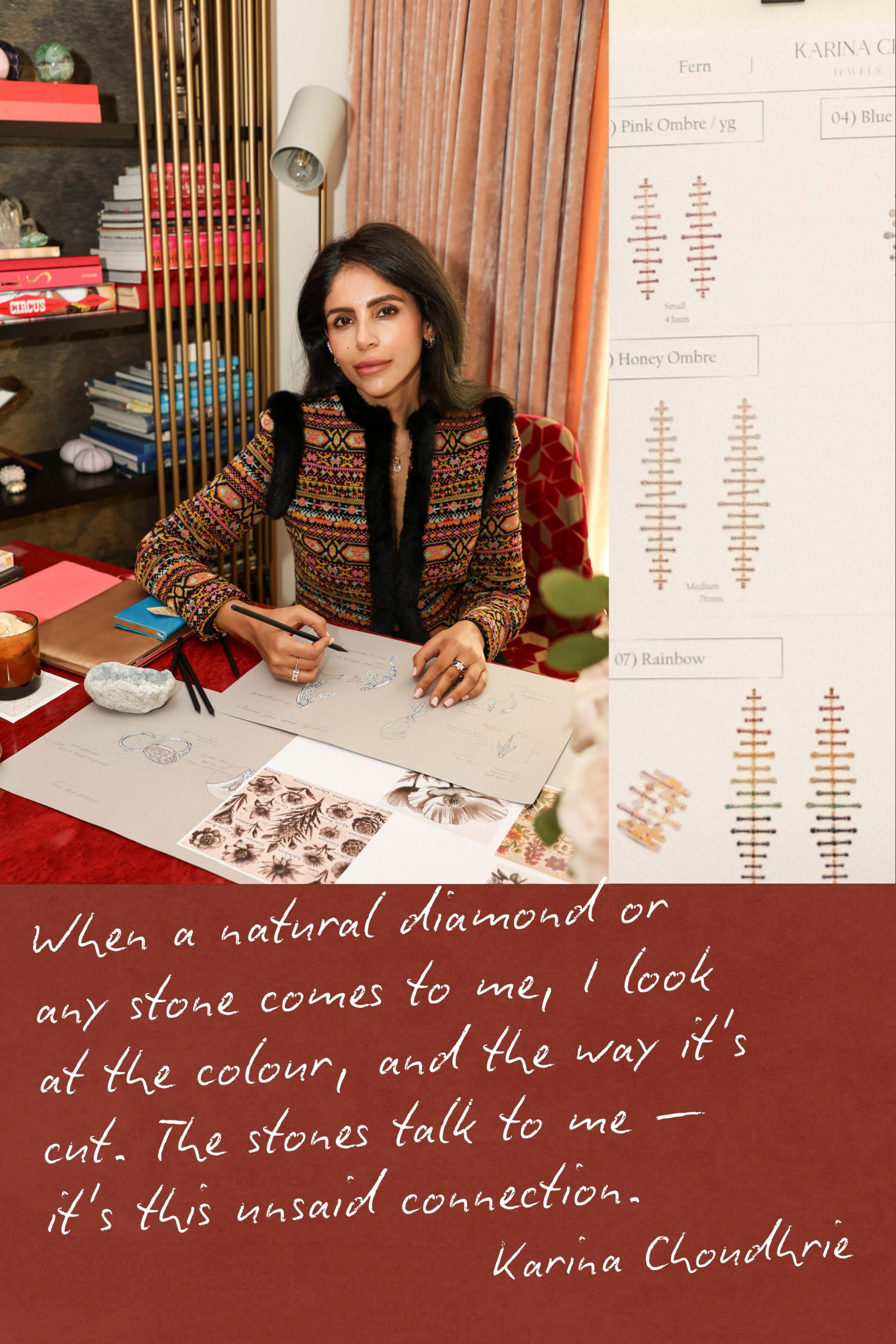
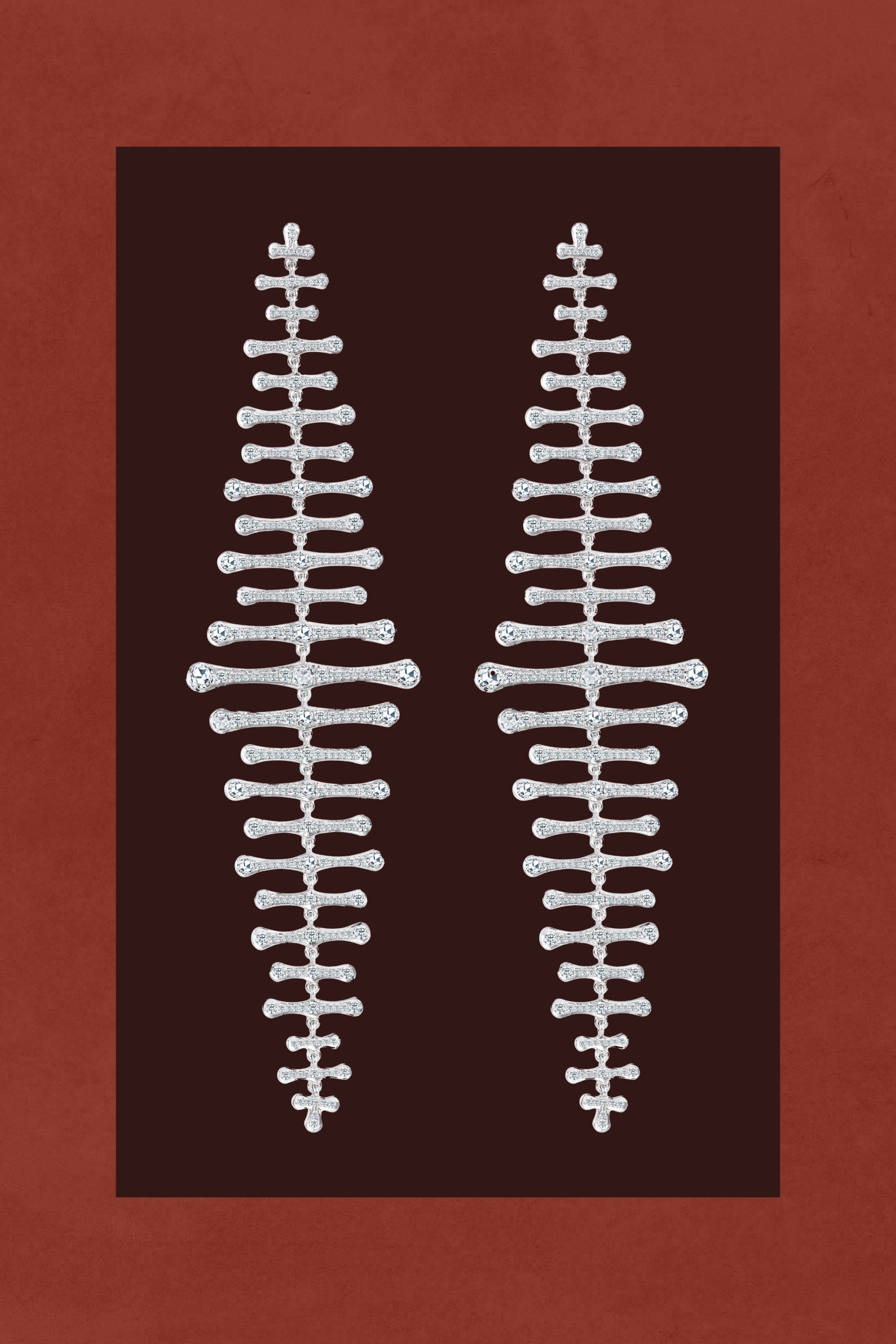
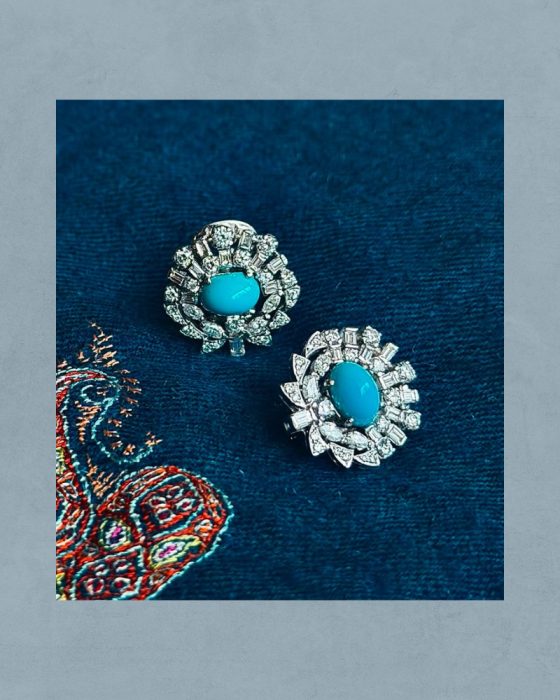
Karina’s Long Fern Diamond Earrings from her Summer Forest collection
The Stone That Inspires
Ask any of these three designers about the natural diamonds they work with, and the language shifts. Grading charts and certificates fall away. Something more instinctive takes over.
Choudhrie was direct: “I feel like when it comes to me, I look at the colour, it can be a cape-coloured stone, or an off-coloured stone, an SI1 – but I find that beauty in the make, in the way it’s cut. The stones talk to me. It’s against everything I learned in gemology school.”
Shah described thinking about stones synesthetically. “When I see them, I kind of get feelings, or I feel like they have some sound – they sound loud, or they sound soft.” In his Akasha collection, inspired by Vedic astrology, each gemstone is understood as an embodiment of planetary energy; the diamond, assigned to Venus, carries the qualities of beauty, brilliance, and neutrality. “Nothing can match a diamond in terms of its colour,” he said. “It’s so neutral that it just goes with everything.”
Castro, working in the inheritance of his father’s practice, spoke of stones that simply wait. “Like Michelangelo who believed the sculpture was inside the marble. I kind of feel that way about some of these jewellery pieces. It’s just not the right time yet to find the piece inside the marble. And one day it just clicks.” It’s a philosophy that extends to the pieces themselves finding their rightful wearers. When Madonna wore Castro’s Falcon Crest pendant, studded with natural diamonds, to the 2026 Met Gala – a bold, sculptural work that few could carry – it was the dream situation: the right object, meeting exactly the right person, at exactly the right moment.
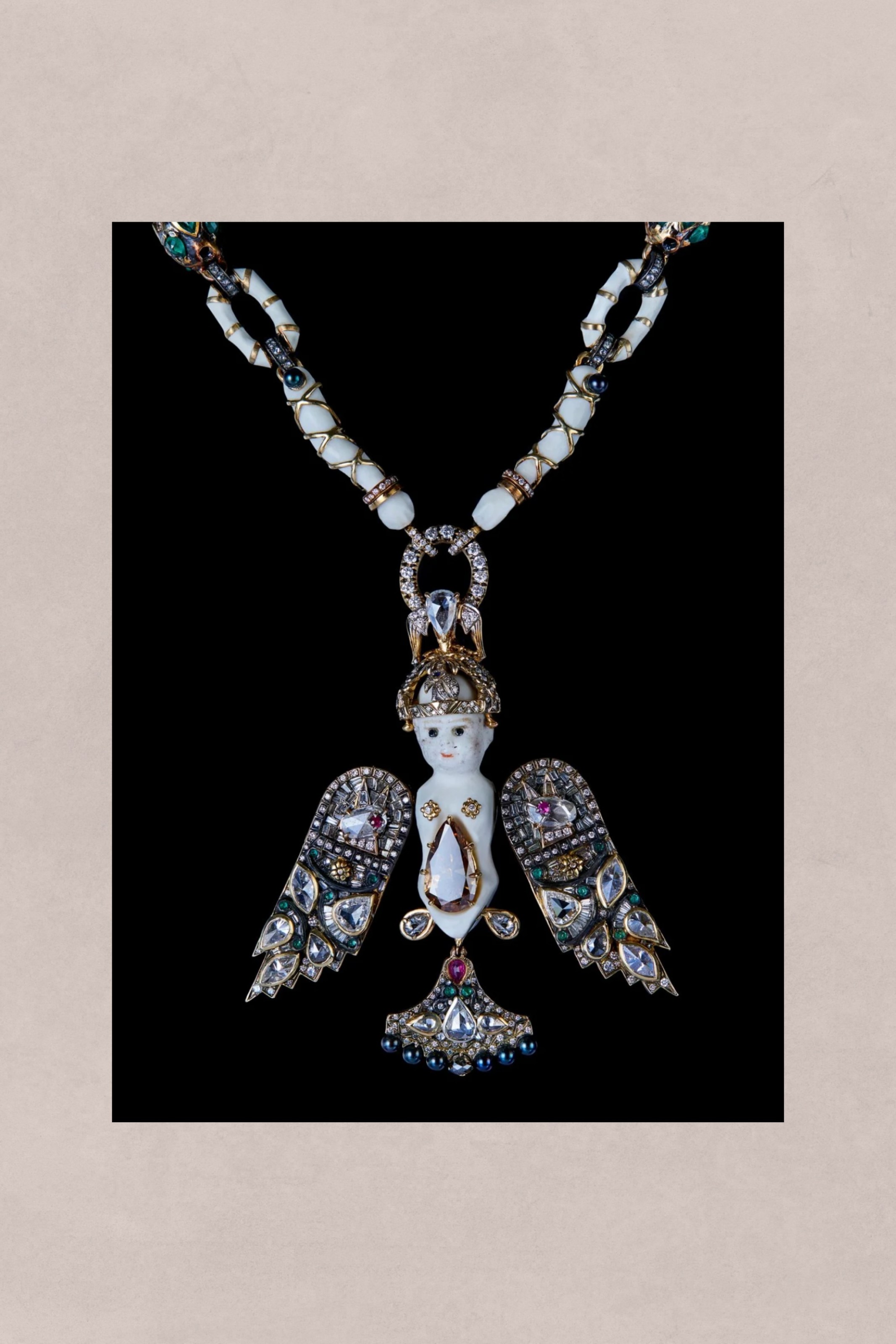
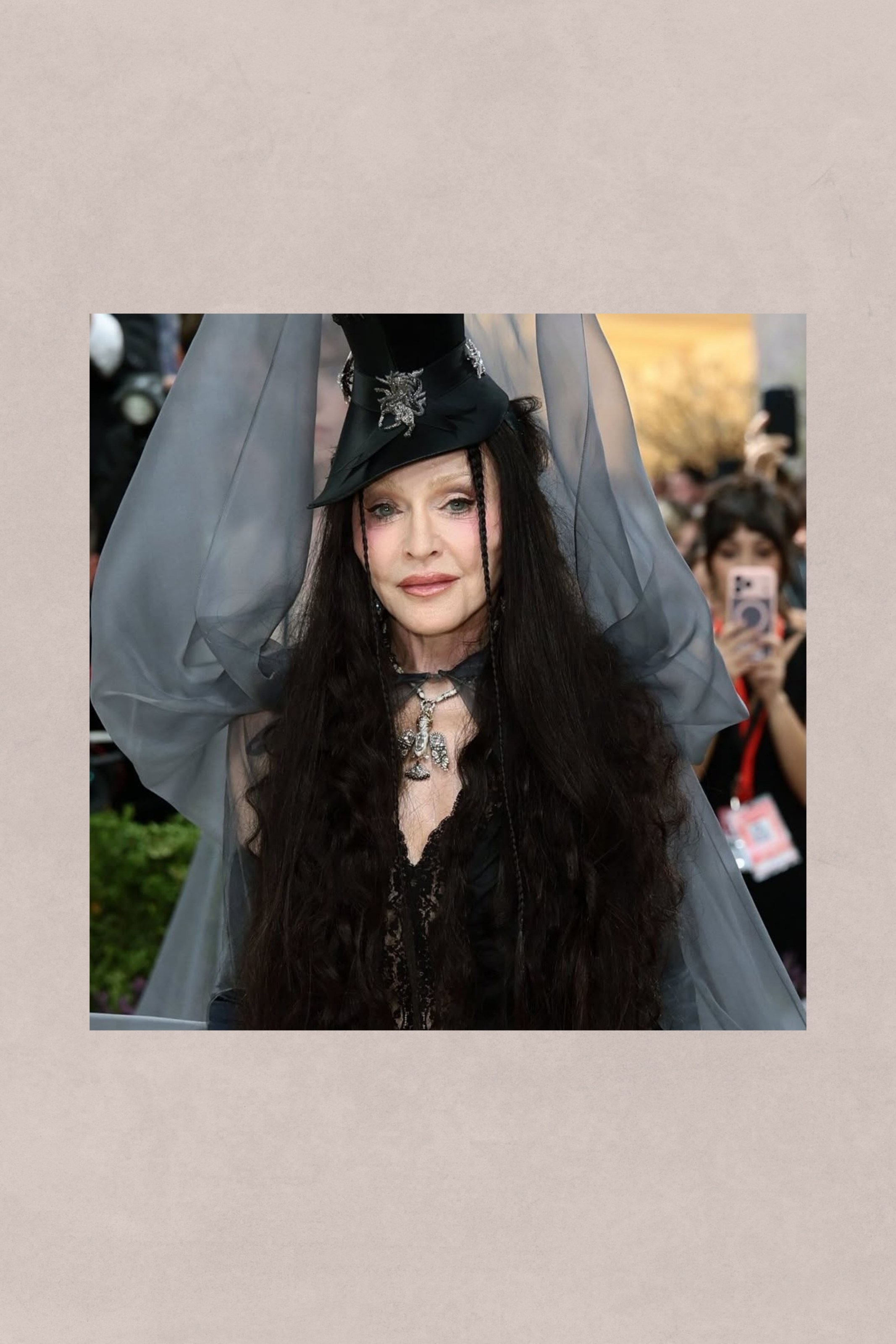
Castro’s Falcon Crest pendant worn by Madonna at the 2026 Met Gala.
Image Instagram: @castronyc
A natural diamond is already authored by pressure, time, and the particular conditions of its formation. It becomes the designer’s task not only to overwrite that history, but to enter into a dialogue with it. The result is never entirely either of theirs.
Continuity As The Fifth C
Perhaps the conversation’s most resonant insight came when the panel turned to the question of legacy. Beyond cut, colour, clarity, and carat, the traditional four Cs, Massand proposed a fifth: continuity. It is, she suggested, what makes a natural diamond singular. Not only as an investment value, but with the capacity to carry a human story across generations.
Shah shared an account of a friend whose grandmother had fled Pakistan during the 1947 Partition, carrying nothing but two pairs of natural diamond earrings. Decades later, the friend wanted to reset the stones in a new design. “The design belonged to a time which was 50, 60 years ago,” Shah reflected. “But the diamond has stayed on. The designs can keep changing around the stones, but those stones and their emotional inheritance will always be in their family.”
This is what no certificate can quantify. Through residues of love, intention, survival, a real diamond’s value only deepens with wearing, and never depreciates.
The End Of Generic
If there is anxiety in the industry about AI and laboratory-grown diamonds, it wasn’t visible in this room.
Castro sees it as a flooding effect – technology lowering the barrier to entry means a flood of new creation, but only up to a certain level. The people who want something with a story, with craftsmanship, with intention, he argued, will always know where to go, and those are the only clients he’s focused on.
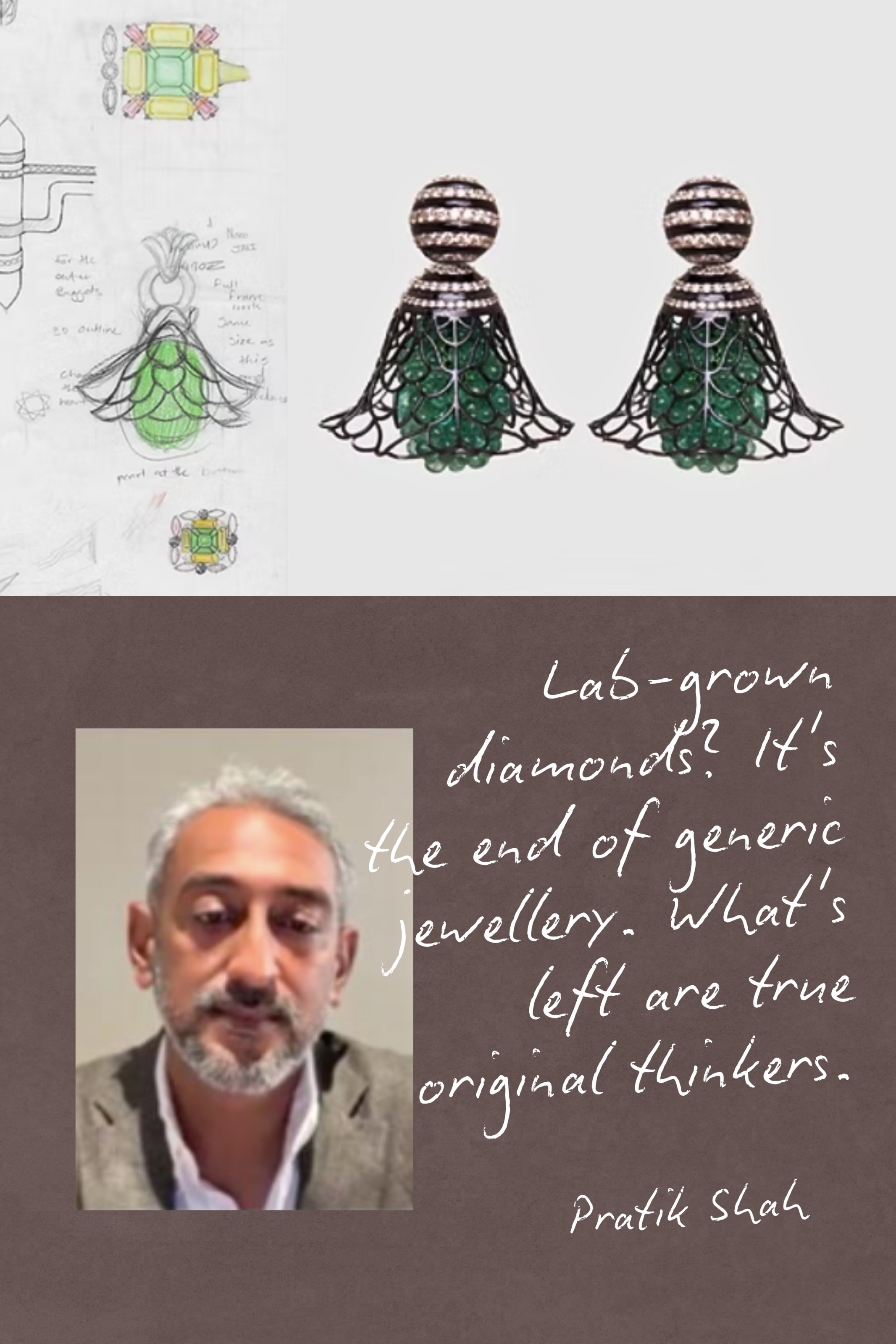
Shah welcomed both AI and laboratory-grown diamonds as a kind of filter. “It’s the end of generic jewellery, if you ask me,” he said. “It’s only a matter of time before generic becomes so freely available that it’s not going to be desirable.” What remains, he believes, will be the true original thinkers, designers and clients alike who choose meaning over status. Choudhrie drew the same distinction through a different lens, pointing to the Picasso prints sold outside museums for fifty pounds alongside the originals inside. The copies exist. They always have. And there is still, unambiguously, a reason people want the real thing.
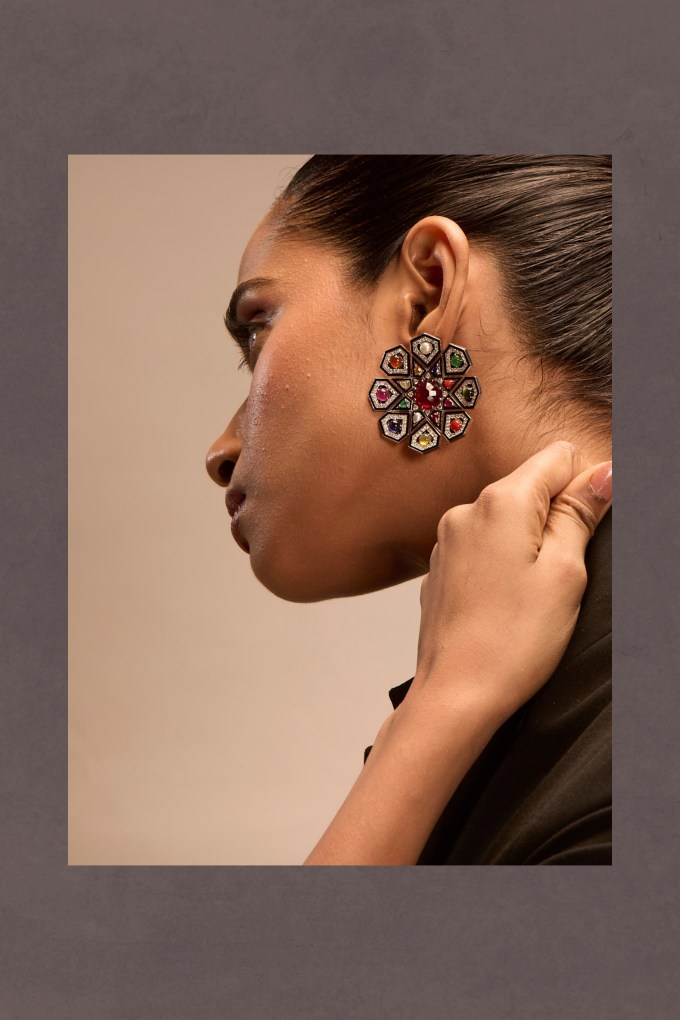
A natural diamond is not merely the hardest substance on earth, but one of the most humanly weighted. It contains a journey, grief or a declaration, and waits for the next hand that will hold it, and the next story it will carry forward.
The natural diamond doesn’t just sit in the piece. It composes it.
Newsletter