< Historic Diamonds / Famous Diamonds
How Nancy Astor’s Diamond Jewels Became a Language of Power
From Cartier tiaras to the legendary Sancy Diamond, explore the natural diamond jewels that defined Nancy Astor’s groundbreaking rise from American heiress to Britain’s first woman in Parliament.
Published: February 12, 2026
Written by: Meredith Lepore
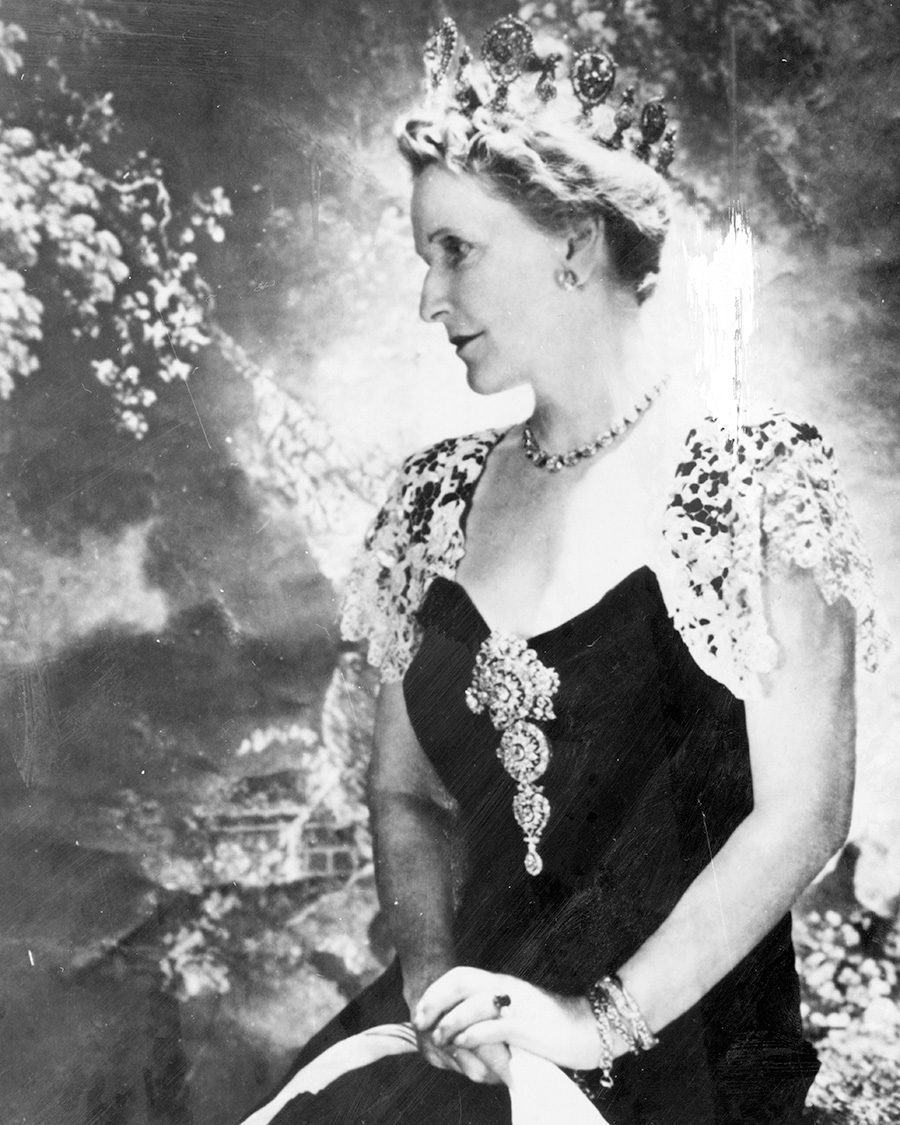
Nancy Astor was an extraordinary figure. An American-born aristocrat, she became the first woman to take her seat in Britain’s House of Commons in 1919. Astor entered Parliament after her husband, Waldorf Astor, succeeded to the peerage and vacated his Commons seat, but she quickly distinguished herself in her own right. Known for her sharp wit and formidable presence, she transformed her social influence into political capital, championing social reform and carving out a lasting place in British history.
Her jewelry choices were an extension of that authority. Astor’s collection of natural diamonds—worn in brooches, necklaces, and statement earrings—was more than decorative; it was deliberate. In an era when appearance carried enormous political weight, natural diamonds signaled permanence, prestige, and power. Their rarity and endurance mirrored the resilience she needed to navigate a male-dominated institution, creating a visual language that moved seamlessly between high society and the floor of Parliament.
Meet the Experts

Justin Daughters is the Director of Berganza, a UK-based antique and vintage jewelry dealer renowned for sourcing and presenting rare, museum-quality pieces. With a deep expertise in historic jewels, Daughters oversees a collection distinguished by exceptional provenance and authenticity.

Zuleika Gerrish is an antique, vintage, and fine jewelry expert as well as a gemmologist and co-founder of Parkin and Gerrish with her husband Oliver. Alongside running Parkin & Gerrish, she lectures on historic jewelry, sharing her expertise with new audiences.

Trang Do is a GIA Diamond Graduate and the Founder and Creative Director of Kimjoux, a fine jewelry house grounded in heritage and shaped by a global perspective. Born in Hanoi and based in London, she brings over two decades of experience, including senior roles at Cartier, Graff, and Garrard.
Ahead, a closer look at her remarkable life and the natural diamonds that became part of her legacy.
Nancy Astor’s Journey from American Heiress to British Power Broker

So how did an American become the first woman to take her seat in the British Parliament, and remain there for nearly 25 years? Nancy Astor (née Nancy Witcher Langhorne) was born in 1879 in Danville, Virginia. Though not part of the old American aristocracy, her father, Chiswell Dabney Langhorne, built a substantial fortune in railroads and tobacco after the Civil War, allowing the family to rise into Virginia’s elite social circles.
After divorcing her first husband, Robert Gould Shaw II, in 1903, she moved to England in 1905 with her young son. Like many well-connected American women of the era—sometimes called “dollar princesses”—she entered British high society, where wealthy American heiresses often married into titled families. Wallis Simpson managed to find a real British prince, but Astor won the heart of the Prince of America even before she set foot on British soil. She met none other than Waldorf Astor, the heir to the powerful Astor fortune, on a UK-bound ship in 1906.
Though the future Viscountess seemed to think she was quite worthy of the match, as she is quoted for saying, “I married beneath me. All women do.”
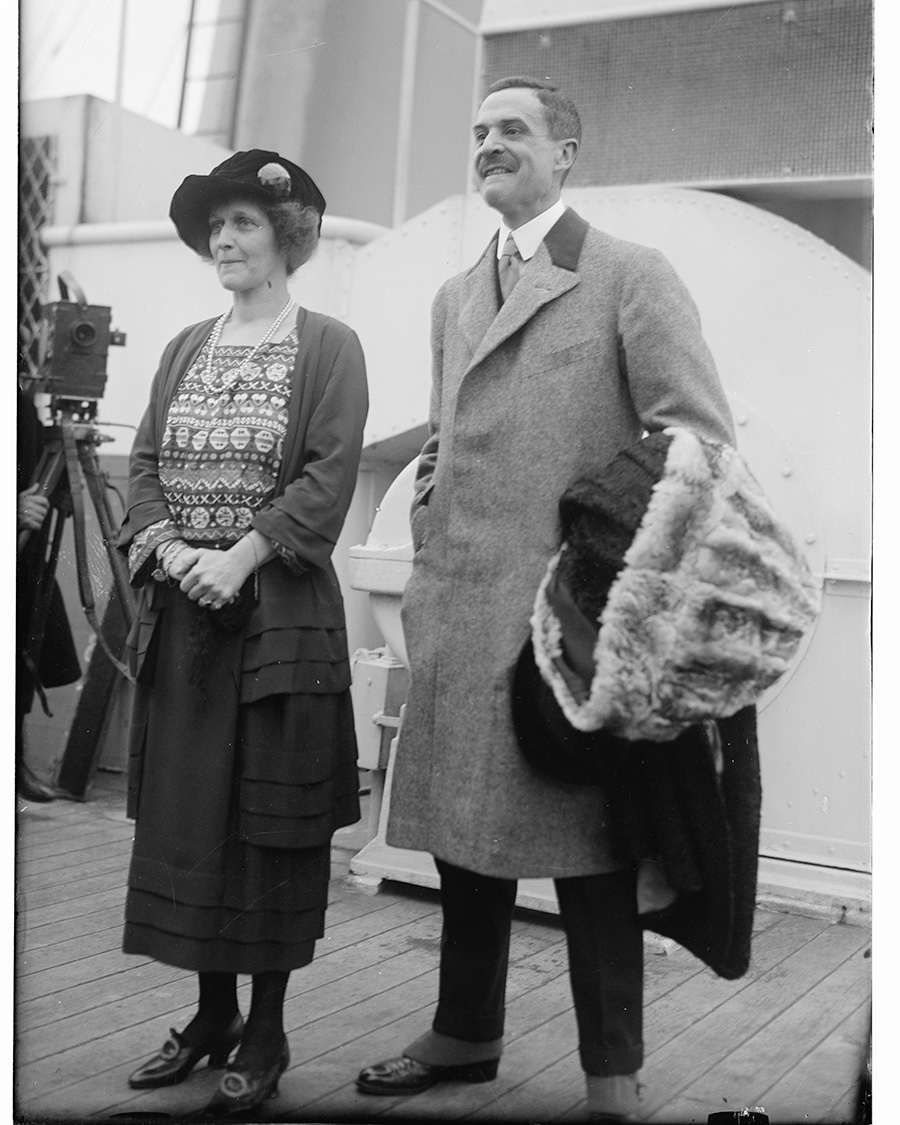
The Astors were one of America’s most powerful Gilded Age dynasties, their vast fortune originally built by John Jacob Astor through the North American fur trade, Manhattan real estate, and luxury hospitality (most notably the Waldorf and Astoria hotels). The Astor name became synonymous with immense wealth, social influence, and transatlantic power. They ruled society in the 19th and 20th centuries, setting the tone for how the highest level of the American upper class should act, dress, and spend their money.
Despite being “new money,” the Astors were considered the zenith of the upper class (if you are a Gilded Age fan, you know what we mean).
Nancy Astor in Parliament: Power Dressing with Purpose

Waldorf Astor, though American-born, was raised in England from age 12 and served as a Conservative MP before inheriting his father’s title in 1919 and moving to the House of Lords. He later devoted himself to philanthropy, estate management, and overseeing the family-owned newspaper, The Observer. As a wedding gift, his father, William Waldorf Astor, gave the couple Cliveden, the grand estate overlooking the River Thames. The Astors became central figures in London society, entertaining at both Cliveden and their St. James’s Square home, where Nancy’s sharp intellect and formidable hosting made her a political force in her own right.
When Waldorf inherited the viscountcy and vacated his Plymouth Sutton seat in 1919, Nancy ran for Parliament and won—becoming the first woman to take her seat in the House of Commons. Though she had not been a leading suffragette, she championed social reform, including raising the voting age for women from 30 to 21 (equalizing it with men in 1928), expanding educational access, and opening more opportunities for women in the civil service.

She was also known for her legendary verbal sparring with Winston Churchill. When he reportedly complained that having a woman in Parliament was like having one intrude on him in his bathroom, she famously replied, “Sir, you are not handsome enough to have such fears.”
As the first woman to be a part of Parliament, you can bet her wardrobe—and specifically her jewelry—acted as tools in her arsenal. Justin Daughters, Managing Director of Berganza, tells Only Natural Diamonds, “Astor pioneered ‘Power Dressing’ through a pattern of ‘contained brilliance.’ She selected pieces that were visually elegant but never overpowering, using them to command respect without compromising her professional credibility. She used jewellery to express sophistication while ensuring she was never dismissed as ‘just’ a woman in a room of men.”
Though famously known for her Cartier Tiara, Astor’s jewelry choices were all strategic. Daughters says, “While traditional peers wore jewellery as a passive, lavish display of social theatre (and often their husband’s wealth), Astor’s selections were strategic. She favoured versatility and contextual appropriateness, integrating her adornments into her active public persona rather than using them purely for spectacle.”
“By using jewellery to complement her authority rather than define her, Astor demonstrated that women could maintain femininity while exercising influence. She modelled a new standard for female professionals: assertive yet elegant, visible yet credible. She proved that a woman could hold a seat of power without losing her identity,” says Daughters.
Nancy Astor’s Cartier Diamond and Turquoise Tiara
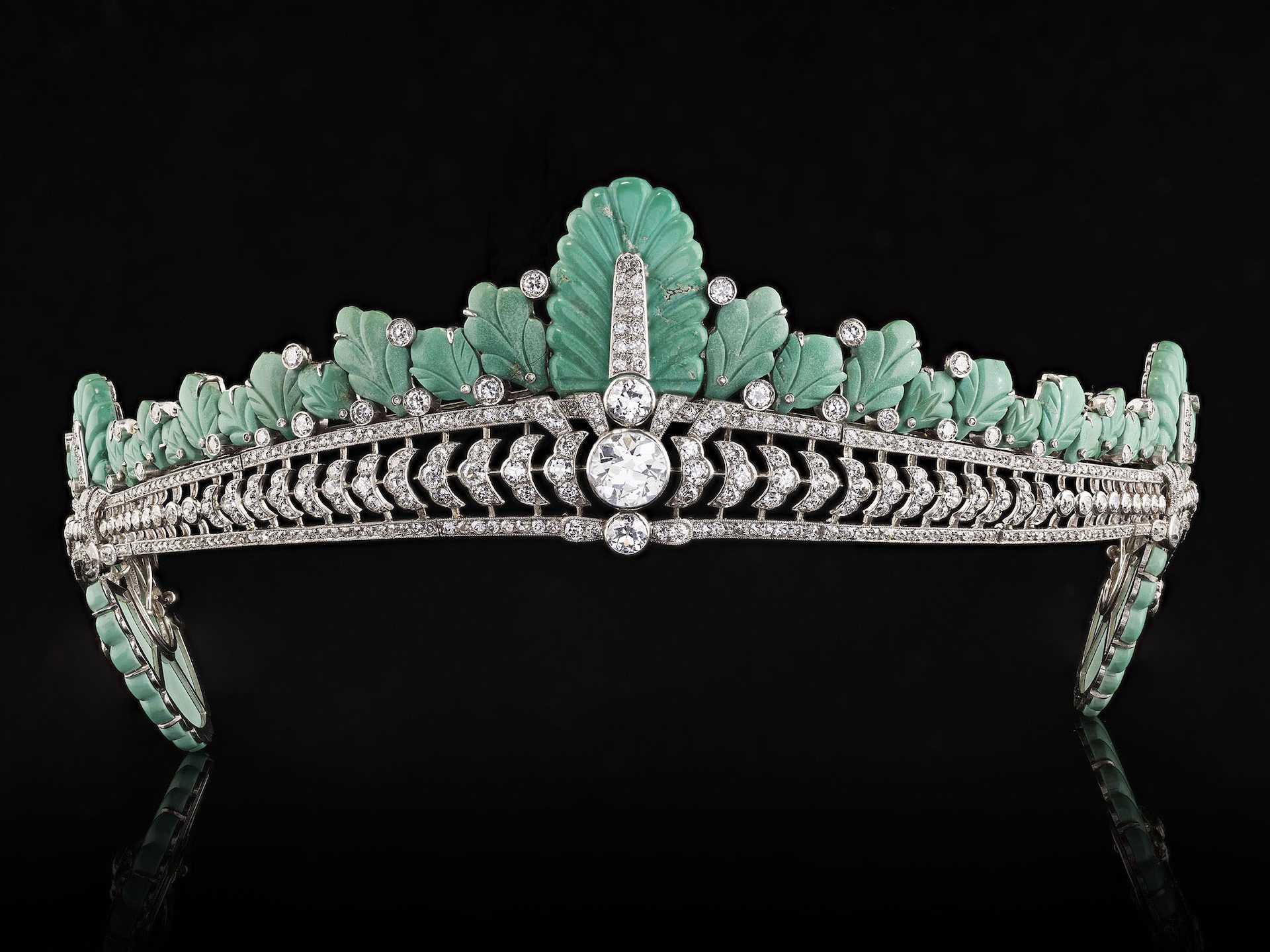
Nancy Astor’s most famous jewel is arguably the Cartier Turquoise and Diamond Tiara. The piece was adapted in 1930 from a previously crafted diamond bandeau that Cartier acquired in the late 1920s, which was then embellished with carved turquoise plumes, leaves, and palmettes in the Art Deco style. The finished tiara blends early 20th-century diamond architecture with the fluid, color-accented motifs popular at the time. Though she had at least five tiaras, this was by far the standout.
The redesigned tiara is distinguished by carved turquoise plumes and foliate motifs set among old brilliant, single, and rose-cut diamonds, echoing Egyptian, Indian, and Persian artistic influences. Fan-shaped diamond sections extend outward from the central motif, reinforcing both its structure and its geometric Art Deco presence. Waldorf Astor purchased the tiara from Cartier for Nancy in 1930, and it quickly became her most recognizable diadem among the several tiaras she owned.


“A tiara signals wealth, leisure, and aristocratic femininity, qualities at odds with the seriousness of parliamentary duties. For a woman in a sea of dark suits, it could have reinforced stereotypes that women were ornamental rather than authoritative,” Daughters say. “Yet, she used its presence at other events to signal that she was not an interloper, but a woman of significant independent means and social standing, holding ‘soft power’ long before she attained ‘hard power’ in the Commons.”
Astor famously wore the tiara in 1931 to the London premiere of City Lights, where she was photographed seated beside Charlie Chaplin. She also lent the tiara to her sister, the Hon. Mrs. Robert Brand, for presentation at Buckingham Palace. In later years, her granddaughter wore it to the Coronation Gala at Covent Garden.

Trang Do, Founder & Creative Director of fine jewelry brand, Kimjoux, in London, says, “When I look at Nancy Astor’s jewelry choices, I don’t see ornament for ornament’s sake. I see a woman acutely aware that jewelry speaks before she does…Nancy Astor wore her tiara in settings where lineage and ceremony were the shared language. Court occasions, elite social gatherings, moments where inherited status was not only accepted but expected.”
The Astor Tiara Featuring the Sancy Diamond
It is rare enough to have one spectacular tiara in a single collection, let alone two—but Nancy Astor was no ordinary collector. As a wedding gift, her father-in-law, William Waldorf Astor, presented her with a Cartier diamond tiara set with the legendary 55.23-carat Sancy Diamond at its center. Though he reportedly had reservations about his son marrying a divorced mother of one, the gift was nothing short of extraordinary.
One of history’s most storied gems—long associated with French royalty and widely believed to have been worn by Marie Antoinette—the pale yellow, shield-shaped diamond was likely discovered in the Golconda region of India. Its journey reads like legend: it passed through the hands of European monarchs and statesmen, and, according to lore, was once smuggled to safety inside a loyal servant’s stomach. In the early 20th century, William Waldorf Astor acquired the Sancy, bringing the famed diamond into the Astor collection.

The remarkable stone remained in the Astor family for more than 70 years. In 1978, it was sold to the Louvre for approximately $1 million and is now exhibited in the Galerie d’Apollon in Paris. The remainder of the Cartier tiara, however, is believed to remain in private hands within the Astor family.
Why Nancy Astor Did Not Wear Tiaras in Parliament
One place Nancy Astor did not wear her extensive collection of tiaras was the House of Commons. Zuleika Gerrish tells Only Natural Diamonds that when Lady Astor became an MP, she habitually dressed in simple black garments for her parliamentary duties to signal seriousness to her male colleagues and the press.
“In a political setting characterised by debate, accountability, and seriousness, such bold symbols of inherited privilege could have reinforced the idea that she was more a symbol of social spectacle than of political power… Her decision to avoid wearing high-regalia jewellery in Parliament shows her clear understanding that political legitimacy needed to be earned through actions, not just appearances.”
Her restraint was not accidental; it was strategic. Jewelry for Astor was never just decoration; it was a calibrated language, deployed differently in governance than in ceremony.
Nancy Astor’s Pearl and Diamond Brooch
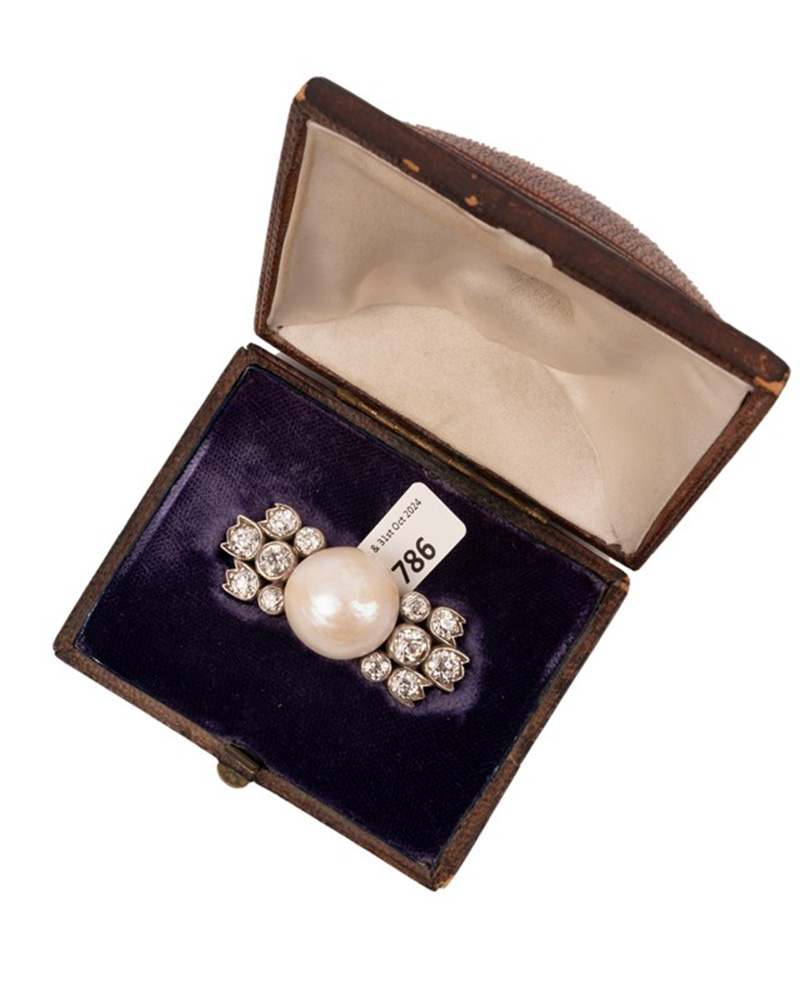
When Nancy Astor did wear jewelry to the House of Commons, she chose pearls. One piece she most likely wore was this elegant pearl and diamond brooch, which is fashionable yet timeless. “Astor’s pearl and diamond brooch exemplifies her transition from American socialite to political figure. Early in her life, her jewellery displayed the opulence of the Gilded Age, but as she entered politics, the brooch became a fixture of professional attire. Pearls, in particular, conveyed steadfastness and virtue, softening her presence in a male-dominated institution,” Daughters says.
Daughters emphasized that a brooch offers subtlety and control, punctuating an outfit without distracting from the wearer’s words. The piece itself is modest in scale: a significant central pearl framed by a precise arrangement of diamonds, likely old brilliant and single-cut stones. “It sits on a lapel like a badge of office. For Astor, it was a way to reclaim femininity in a space that demanded she act like a man, making jewellery an accessory to authority rather than a distraction. It is the ultimate weapon in a political wardrobe,” he adds.
Gerrish also notes that the brooch marked a shift from jewels meant to dazzle to those designed for proximity and purpose. “It mirrors Astor’s own journey from a spirited American socialite to someone actively involved in political life. For her, influence, dialogue, and presence mattered more than just making a splash with her jewellery … Pearls provided a subtle glow without being ostentatious, offering elegance without overstatement. A fitting choice for a woman shaped by old-world values, navigating a male-dominated political sphere.”
Nancy Astor’s Style and the Modern Power Brooch

We still see the brooch used as a political wardrobe signifier even today, Gerrish points out. In September 2019, Lady Hale, then President of the UK Supreme Court and the first woman to hold the role, delivered the Court’s unanimous ruling that Prime Minister Boris Johnson’s suspension of Parliament was unlawful while wearing a large silver spider brooch that quickly became a subject of public fascination.
“Lady Hale’s spider brooch, worn during the 2019 Supreme Court judgment on parliamentary prorogation, demonstrated how a small piece of jewellery can carry significant interpretive weight while remaining within the bounds of formal decorum. Astor’s choice of the brooch decades earlier marked the start of this visual tradition,” Gerrish says.
Do adds that the brooch has become a modern symbol of power dressing for both men and women. In recent years, brooches have reappeared consistently on red carpets and at awards ceremonies. “It signals authority without needing to announce it. That instinct feels very aligned with Astor’s transition from American socialite to political figure,” she says.
Daughters believes this piece best encapsulates Lady Nancy Astor. “It symbolises the perfect bridge between her social origins and her historic political role. It is refined, practical, and politically astute, elegant without being ostentatious. While the tiara represented her social achievement, the brooch represents her legacy.”
Nancy Astor’s Edwardian Aquamarine and Diamond Brooch

It should be noted that despite her reserve in Court, not all of Nancy Astor’s brooches were understated. Another striking jewel in her collection was an Edwardian aquamarine and diamond brooch, a stunning example of Belle Époque craftsmanship. The brooch, made around 1910 in platinum-fronted gold, centers a massive step-cut aquamarine (estimated just under 88 carats) framed by rose-cut diamonds, with a dramatic aquamarine briolette drop suspended below. It is an interplay of cool blue and soft diamond glow that epitomized early 20th-century elegance.
Formerly in the direct possession of Viscountess Astor, the piece descended through her family for generations. When it went to auction at Dreweatts in Newbury in March 2019, it sold for approximately £54,000, well above its pre-sale estimate. The brooch remains in private hands following that sale,
Nancy Astor’s Cartier Diamond and Sapphire Necklace

Often compared to a skipping rope made of diamonds, the Diamond and Sapphire necklace by Cartier London is a true beauty and a marvel of jewelry engineering, as it can be dismantled and reconfigured into multiple pieces.
Daughters notes that Astor’s preference for modular jewels, which could be transformed into bracelets or separate clips, reflected a pragmatism that mirrored her own work ethic. “She valued versatility and efficiency. It reveals a modern approach where a single jewel could meet multiple needs, reflecting a life that was split between being a mother, a world-class hostess, and an MP,” he says.
This flexibility allowed Astor to tailor her adornment to the context, from intimate gatherings to coronations, according to Daughter. It demonstrated an awareness that power could be signaled through nuance rather than excess. He adds that the piece had the rare quality of allowing her to “dial” her social power up or down, depending on the setting.
Gerrish explains that the necklace’s engineering represents functional sophistication rather than excess. “Its ability to be worn as bracelets, a shorter necklace, or separate elements reduced ostentation while increasing usability, allowing Astor to calibrate formality with precision,” she says.

The necklace’s versatility extended to state occasions. Astor wore it reconfigured as bracelets to the 1937 Coronation of King George VI and Queen Elizabeth, achieving what Gerrish described as a careful balance of formality and restraint without overshadowing the monarchy. She also notes the importance of the sapphires within the design. “Nancy Astor had those captivating blue eyes, symbolising wisdom, steadfastness, and authority. They contrasted beautifully with diamonds, emphasising seriousness over glamour.”
Do adds that this kind of versatility remains highly desirable today. “Nancy Astor was already living this idea decades ago. One jewel, many expressions. It suggests taste, confidence, and a belief that “jewellery should keep up’.”
Astor later gifted the necklace to Plymouth, the constituency she represented for more than twenty years. Decades later, it resurfaced on Antiques Roadshow, where its remarkable provenance and ingenious transformable design once again captured public attention.
Nancy Astor’s Brilliant and Rose-Cut Diamond Bracelet

Another favorite of Nancy Astor’s was her diamond bracelet, circa 1870, featuring old brilliant- and rose-cut diamonds totaling approximately 36 carats. Dating to the late 19th century—likely Victorian in origin—the bracelet predates Astor herself and reflects the craftsmanship and aesthetic preferences of the period, when rose cuts and early brilliant cuts were prized for their soft luminosity rather than sharp scintillation.
“Antique diamond cuts reward patience and attention. Choosing to wear such stones suggests an appreciation for history and craftsmanship over trend-driven fashion. It contrasts beautifully with her modular Cartier jewellery. One anchors her in continuity, the other in progress. Together, they tell a complete story,” Do says.
Of this piece, Daughters adds that the 1870 bracelet is historical, ornamental and static, emphasising lineage and prestige. “In contrast, her modular Cartier pieces highlight utility and modernity. Together, they illustrate her unique ability to balance tradition with practicality, choosing whichever ‘armour’ the context required.”
The Legacy of Nancy Astor’s Jewels: Where Femininity Meets Power

Lady Nancy Astor understood that appearance could never be separated from influence, and her natural diamond jewelry gave her the tools to navigate both.
Daughters says that while her contemporaries may have made jewelry choices driven by social theatre, Astor favored versatility and contextual appropriateness. “By using jewellery to complement her authority rather than define her, Astor demonstrated that women could maintain femininity while exercising influence. She modelled a new standard for female professionals: assertive yet elegant, visible yet credible. She proved that a woman could hold a seat of power without losing her identity.”
Her collection reflects independence, intelligence, and a deep respect for impeccable craftsmanship. Natural diamonds, formed over billions of years and prized for their permanence, mirrored the steadiness she projected in public life. Gerrish notes that Cartier played a much bigger role in Astor’s life than simply outfitting her for political milestones. She continued to wear Cartier jewellery into her 80s, drawn to its harmony of design, authority, and discretion.
Her jewelry may have been adaptable, but Nancy Astor’s strategy was consistent. As Do points out, she used jewellery to balance femininity and authority with precision. “She understood when to amplify and when to edit. That instinct separates women who simply wear jewellery from women who use it.”
Enduring, rare, and unmistakably powerful, they reflected a woman who reshaped political history without ever surrendering her identity.