
The History of Bulgari Serpenti: Where Myth Meets Mesmerizing Design
It’s the jewelry world’s most seductive shape. From ancient symbolism to high-glamour design, Bulgari Serpenti continues to slither its way into the spotlight.
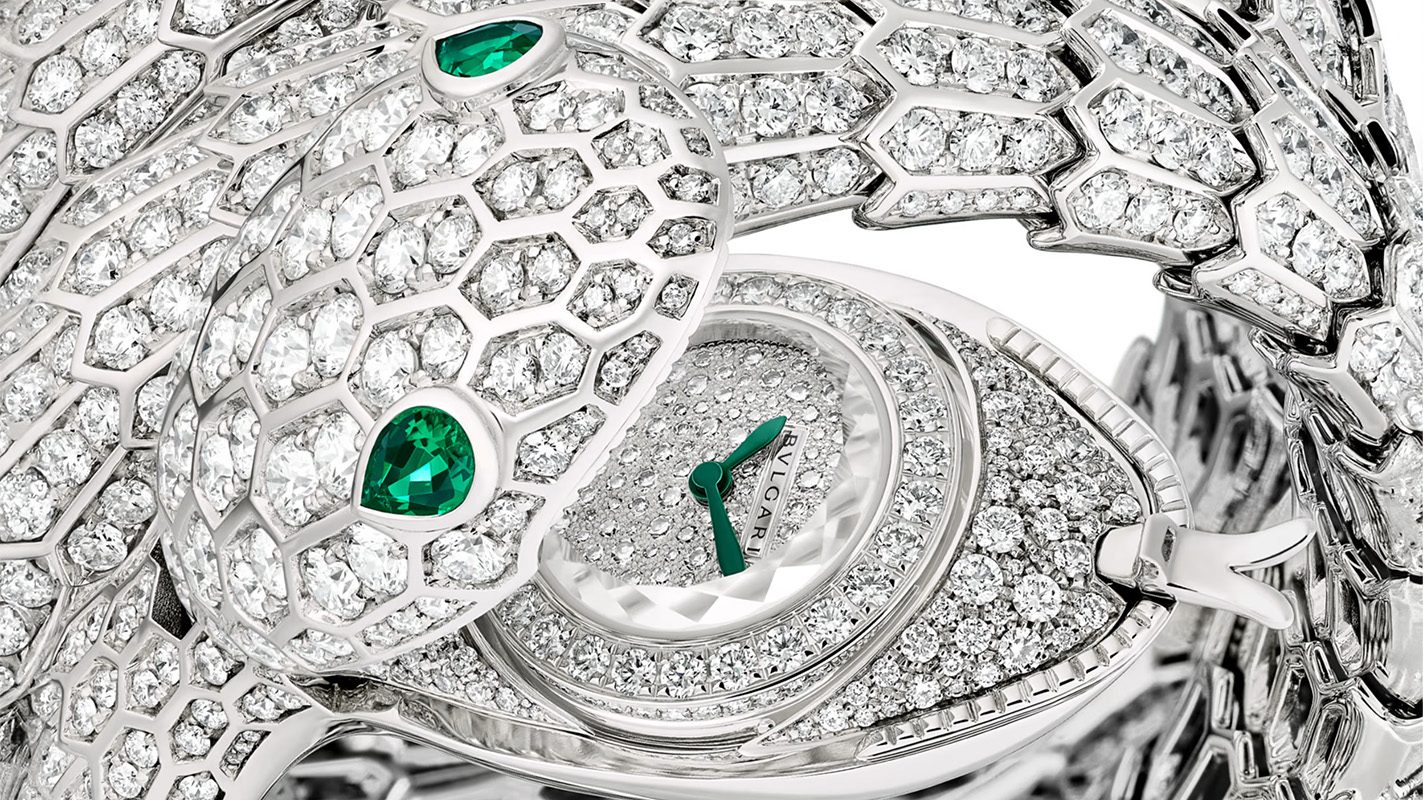
(Courtesy of Bulgari)
It is remarkable that a creature so feared in nature is so embraced in style—especially in fine jewelry. The snake, or serpent, is one of the oldest and most powerful motifs in jewelry history, representing power, eternity, and rebirth across cultures for thousands of years. When paired with natural diamonds, formed over billions of years and prized for their enduring brilliance, the symbolism becomes even more compelling, blending nature’s most ancient forces into one captivating design. When Bulgari reimagined the serpent through Bulgari Serpenti in the mid-20th century, it took on an entirely new dimension, drawing in celebrities, style icons, and collectors alike.
Meet the Experts

Kosta Theochari, co-owner and managing director of MDT Design, is a qualified jeweler with decades of hands-on experience in diamond grading, bespoke design, and high jewelry craftsmanship. Having trained in his family’s workshop since childhood, he combines deep technical expertise with a refined design sensibility,

Claire Paris, Director of Beverly Hills & Calabasas at CIRCA, is a trusted authority on fine jewelry with years of experience advising clients on high-value diamonds and exceptional pieces. CIRCA is a leading global buyer of fine jewelry, diamonds, and watches, known for its expertise in evaluating, sourcing, and reselling some of the world’s most important jewels.
Ahead, discover the history of the Bulgari Serpenti and how the iconic motif evolved into a defining signature that has endured for more than 75 years.
The Ancient Origins of the Bulgari Serpenti Snake Motif
The serpent is an ancient symbol dating back to early civilizations. In ancient Egypt, it appeared on the crowns of pharaohs in the form of the upright uraeus, representing power and protection. In ancient Greece, the snake symbolized medicine and healing, as it is one of the few creatures capable of shedding its skin and beginning a new life cycle. The Ouroboros—a serpent consuming its own tail—further reinforced this symbolism of eternity and continuous renewal. Serpent motifs later appeared in Greek and Roman jewelry as coiled bracelets and armlets, their fluid form naturally lending itself to designs worn as protective talismans on the body.
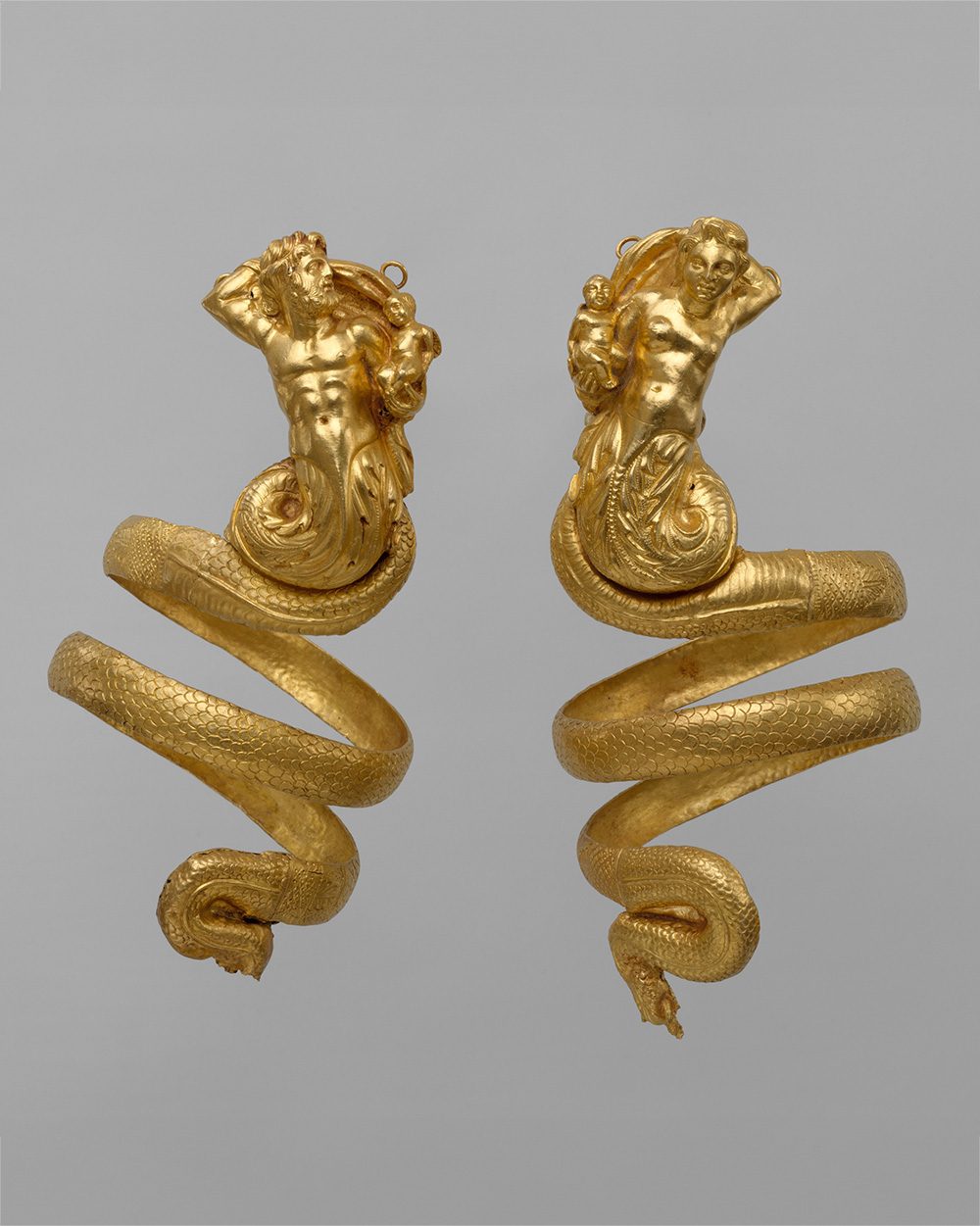
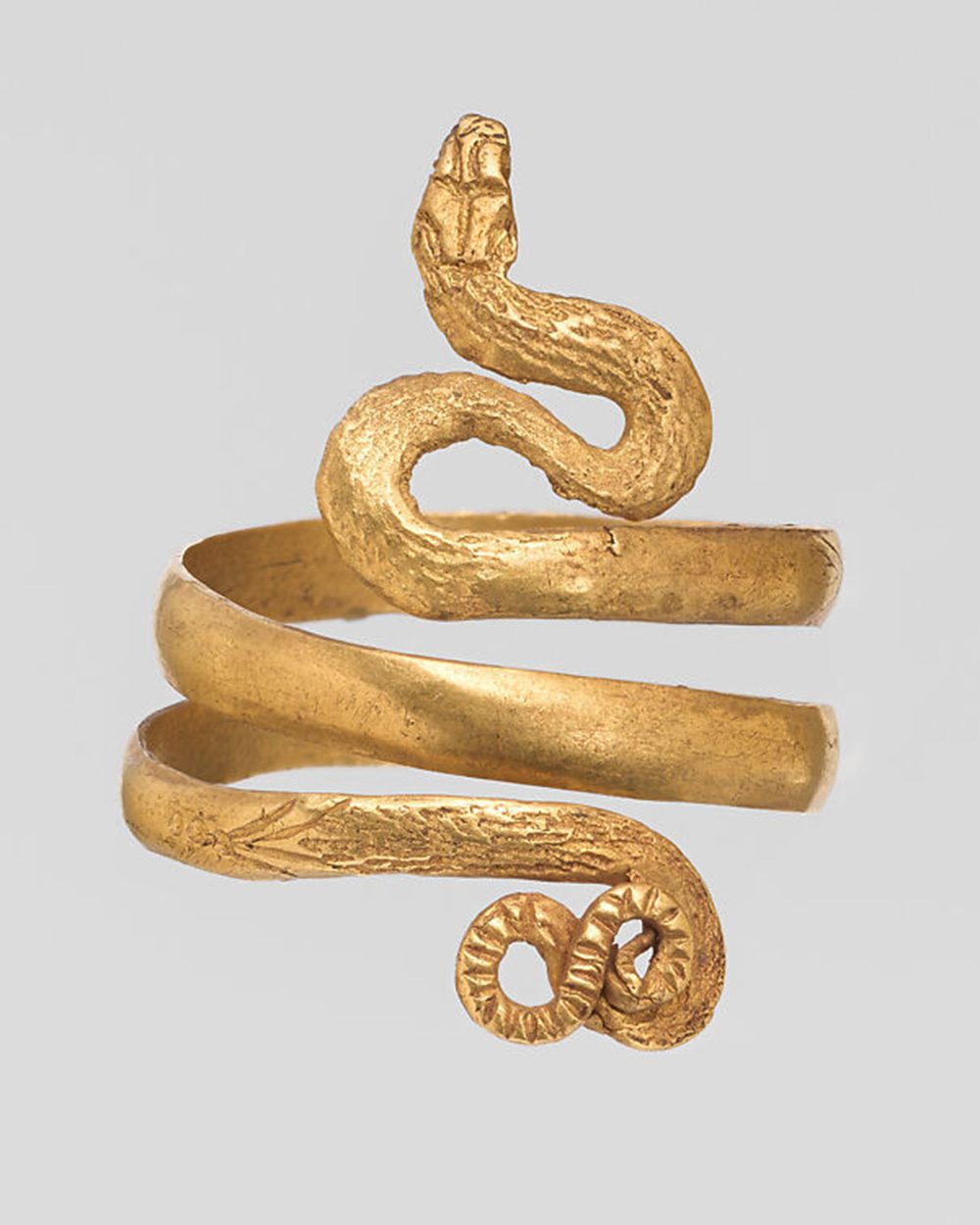
Claire Paris, Director of Beverly Hills & Calabasas at CIRCA, tells Only Natural Diamonds, “The serpent is one of the most enduring symbols because it embodies multiple, often contradictory meanings. In ancient cultures such as Ancient Egypt, Ancient Greece, and Ancient Rome, snakes symbolized rebirth, eternity, protection, wisdom, and sensuality. Because snakes shed their skin, they became a natural metaphor for renewal and transformation, reflecting the cycle of life, death, and rebirth. The Ouroboros, a serpent devouring its own tail, represents this eternal cycle. In jewelry, the snake’s fluid, coiling form lends itself naturally to design, wrapping elegantly around wrists, fingers, and necks.”
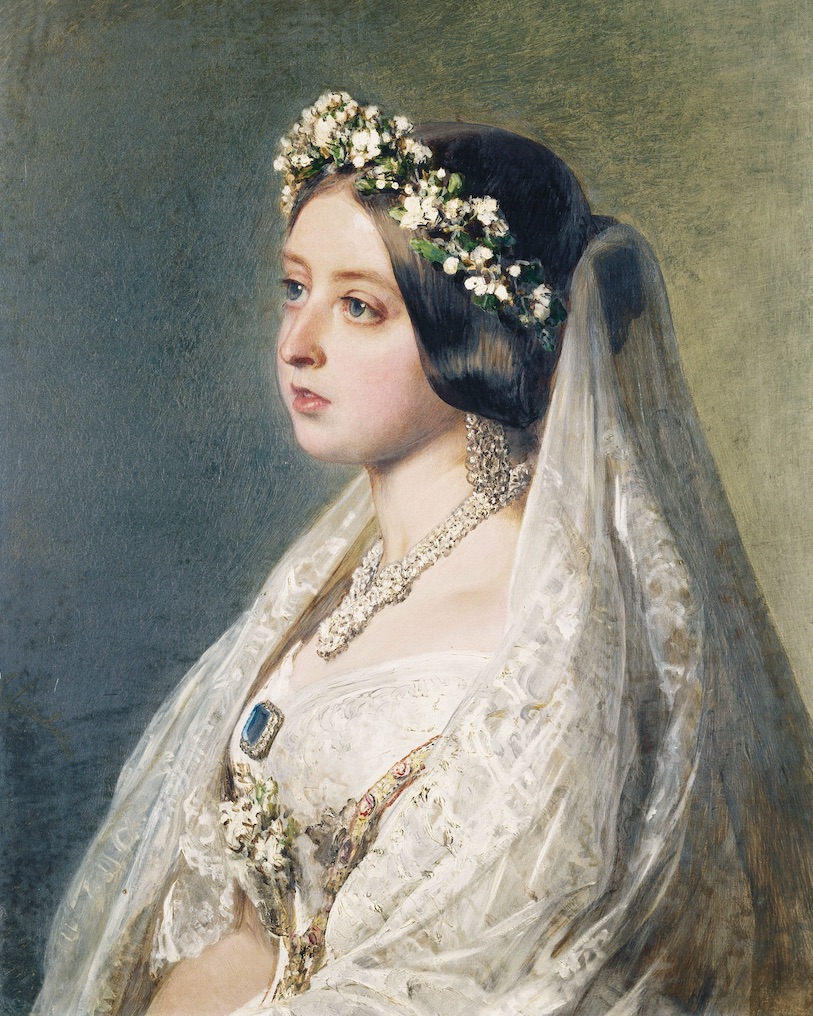
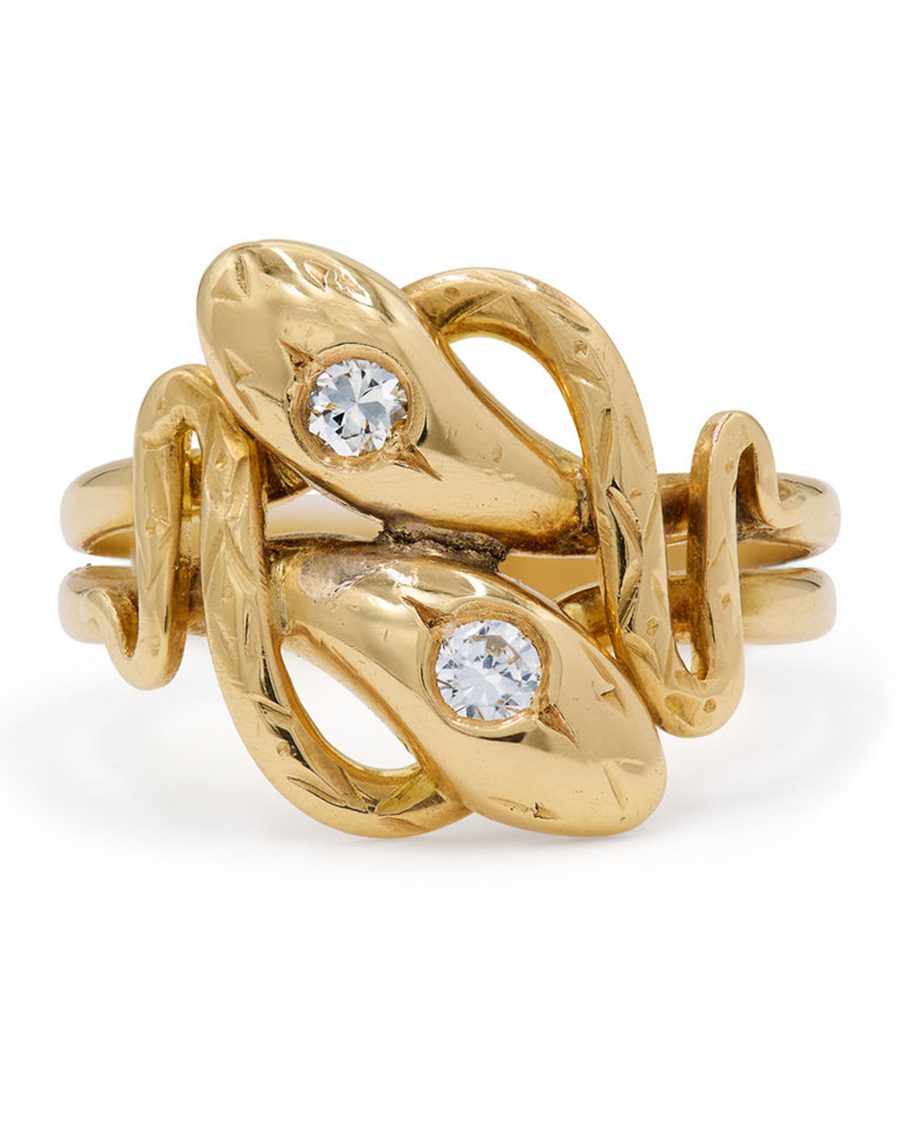
The motif slithered back into prominence during the Victorian era when Prince Albert proposed to Queen Victoria in 1839 with a serpent-shaped engagement ring set with emeralds. Pieces from this period often featured gemstone-set eyes and intricate metalwork, reinforcing the serpent’s romantic and symbolic appeal. “Symbolizing eternal love and wisdom, the motif became a romantic emblem and inspired a fashion trend that lasted throughout her reign,” says Paris.
How Bulgari Serpenti Became a Luxury Jewelry Icon
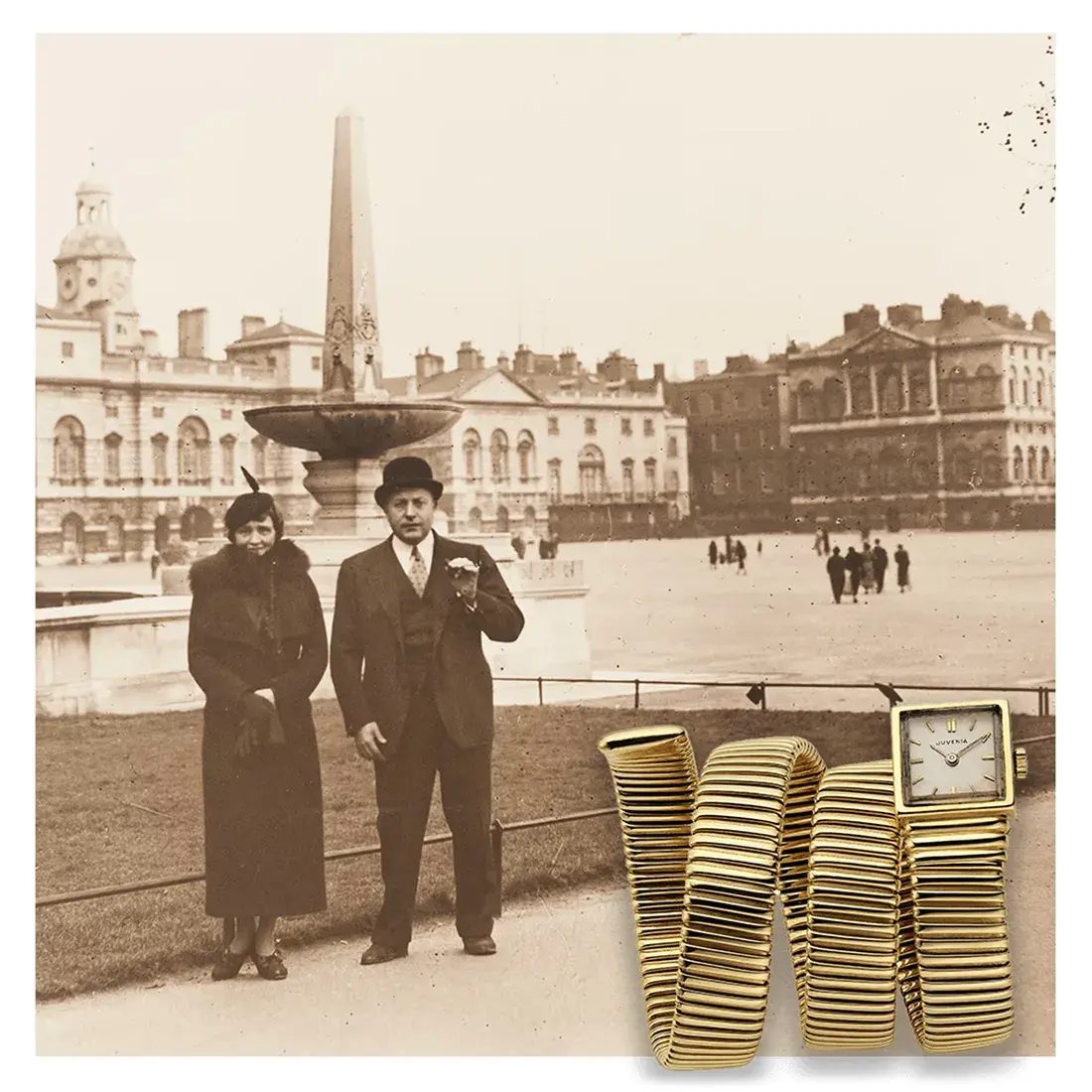
Though Bulgari was established in 1884, it wasn’t until the late 1940s that the house introduced its now-iconic Serpenti designs. In 1948, Bulgari unveiled its first Serpenti piece, a gold bracelet-watch with a square dial and a coiled body that wrapped around the wrist. The brand debuted this innovative design using the Tubogas technique, creating a flexible, coiling bracelet that wrapped effortlessly around the wrist with an avant-garde, self-assured aesthetic. This marked the beginning of an entirely new universe of serpent-inspired watches and jewelry.
Rather than simply replicating a snake’s form, Bulgari deconstructed and reimagined the motif into modern, sculptural designs. Paris explains that when Bulgari introduced Serpenti in the late 1940s, it stood apart from prevailing postwar jewelry aesthetics. “Most European jewelry houses were still influenced by Art Deco and moving toward more delicate Retro styles. Serpenti featured sculptural, three-dimensional forms that wrapped around the body, merging watchmaking with jewelry to create bold, statement pieces. More than decorative, they were kinetic and architectural, functioning both as timepieces and as striking works of wearable sculpture,” she says.
Kostas Theochari, General Manager of MDT Design, adds that postwar jewelry was entering a period of creative expansion. “Bulgari’s Serpenti design captures this moment perfectly. Its bold but wearable structure makes it a standout, recognizable piece, setting it apart from traditionally designed jewelry of that era,” he says.
The Tubogas Technique Behind Bulgari Serpenti Jewelry
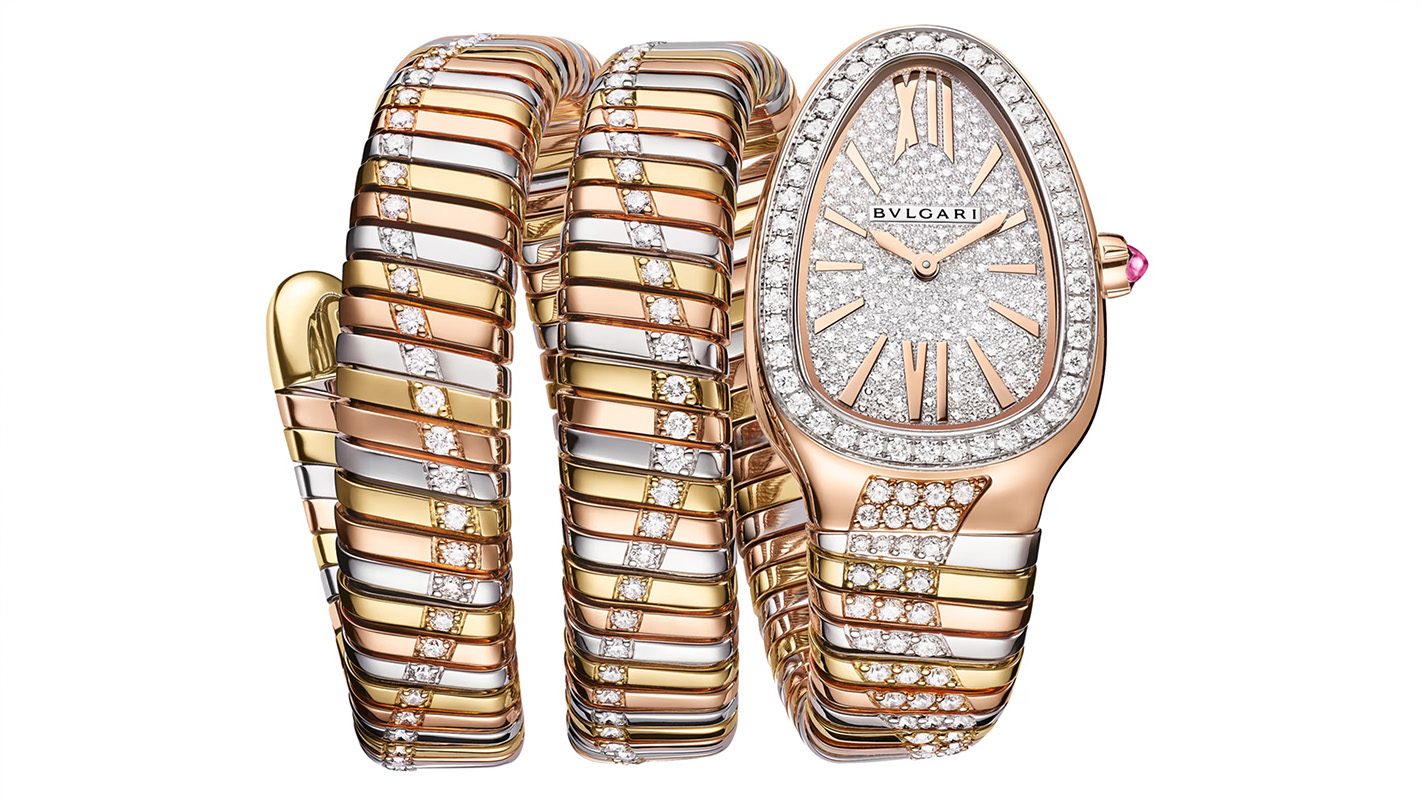
The early Serpenti bracelet watches used a technique called Tubogas to create the flexible coil that defines their fascinating aesthetic. Inspired by industrial gas pipes, this method uses interlocking metal bands to produce a design that is both highly flexible and structurally precise. The expertise required to achieve even tension in the design was the result of years of practice by skilled Bulgari artisans.
Paris explains, “From a jewelry history perspective, Tubogas represents a remarkable fusion of industrial engineering and luxury craftsmanship, making the serpent form both mechanically convincing and elegantly wearable.” These early designs were primarily crafted in yellow gold, often with minimal gemstone embellishment, emphasizing form and movement over decoration.
Bulgari Serpenti in the 1950s–1960s: Diamonds, Color, and Hollywood Glamour
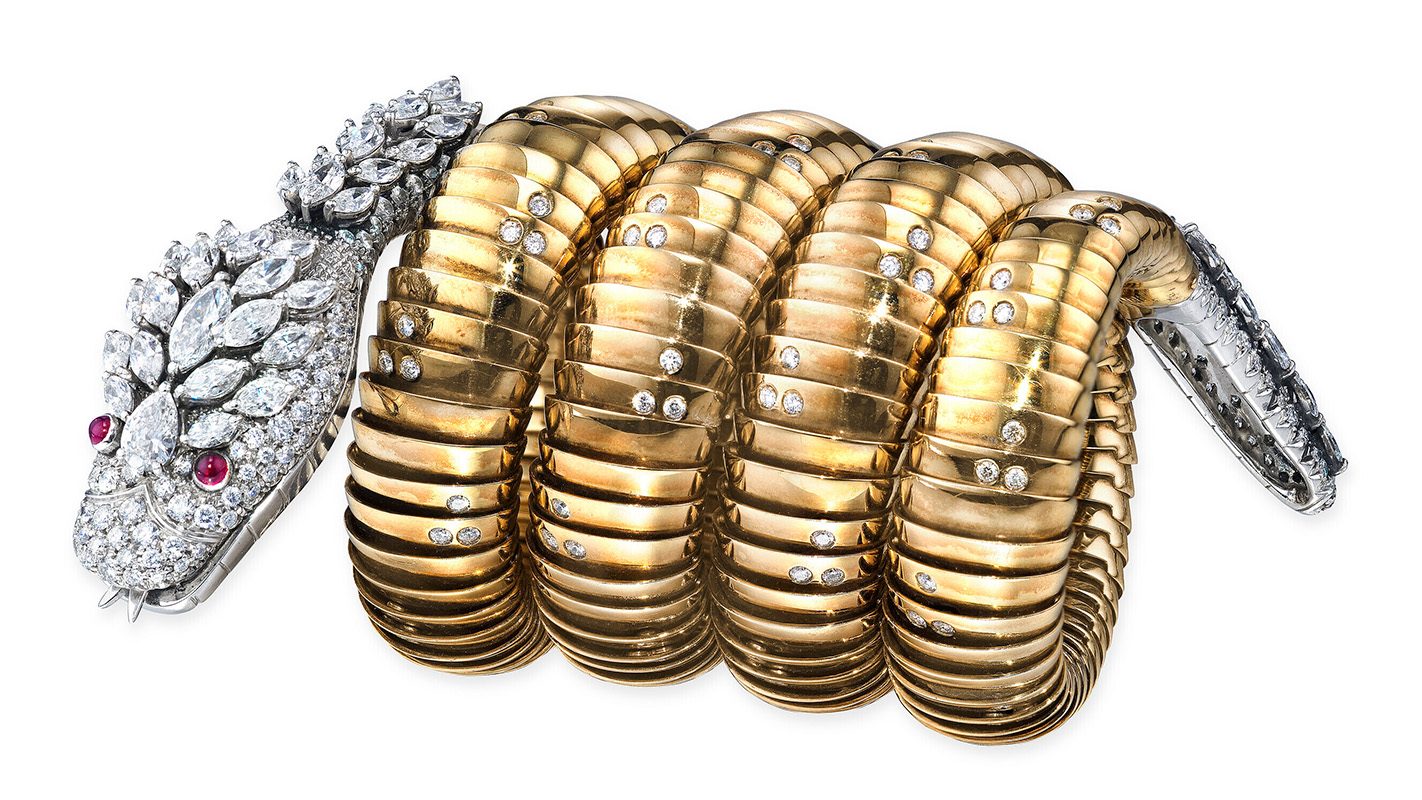
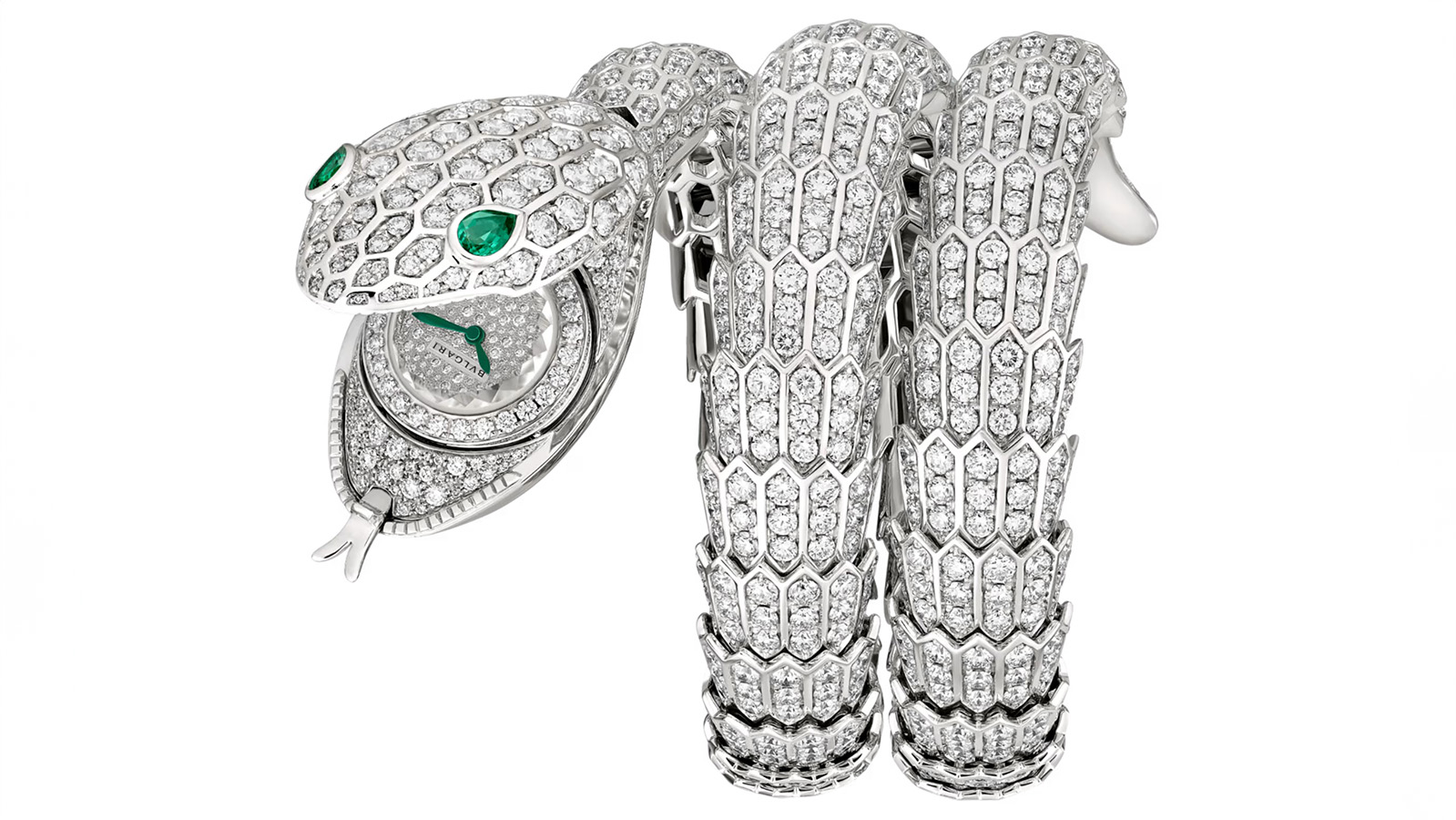
The 1950s and ’60s marked a turning point for Serpenti, as designs became increasingly elaborate. Paris says the motif evolved to incorporate diamonds and colored gemstones, with gemstone-set eyes, pavé diamond scales, and vibrant hues transforming the serpent from a sleek modernist form into a symbol of luxury and glamour. During this period, the serpent itself became more lifelike, with sculpted heads and gemstone-set eyes in rubies, sapphires, and emeralds. Many designs also concealed the watch dial within the serpent’s head, a feature known as a “secret watch.”
Paris says, “This evolution mirrored broader mid-century jewelry trends: a move toward bold color and exuberance, a focus on individual statement pieces, and the influence of Italian design culture, which favored drama and sensuality.”
Theochari adds, “This evolution reflects a growing desire for bold and expressive jewelry. After the war, there was a renewed sense of prosperity and optimism, and people chose to express this through brightly colored, statement pieces. The gemstones added to Serpenti designs capture this shift perfectly.”
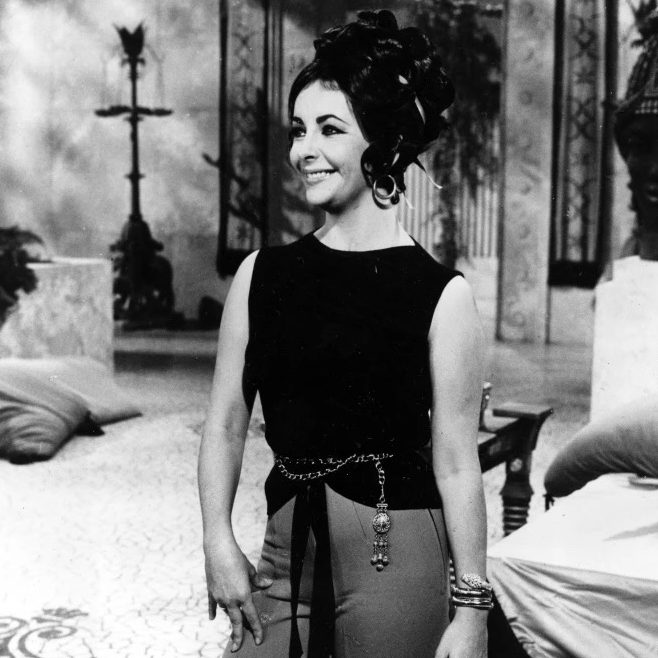
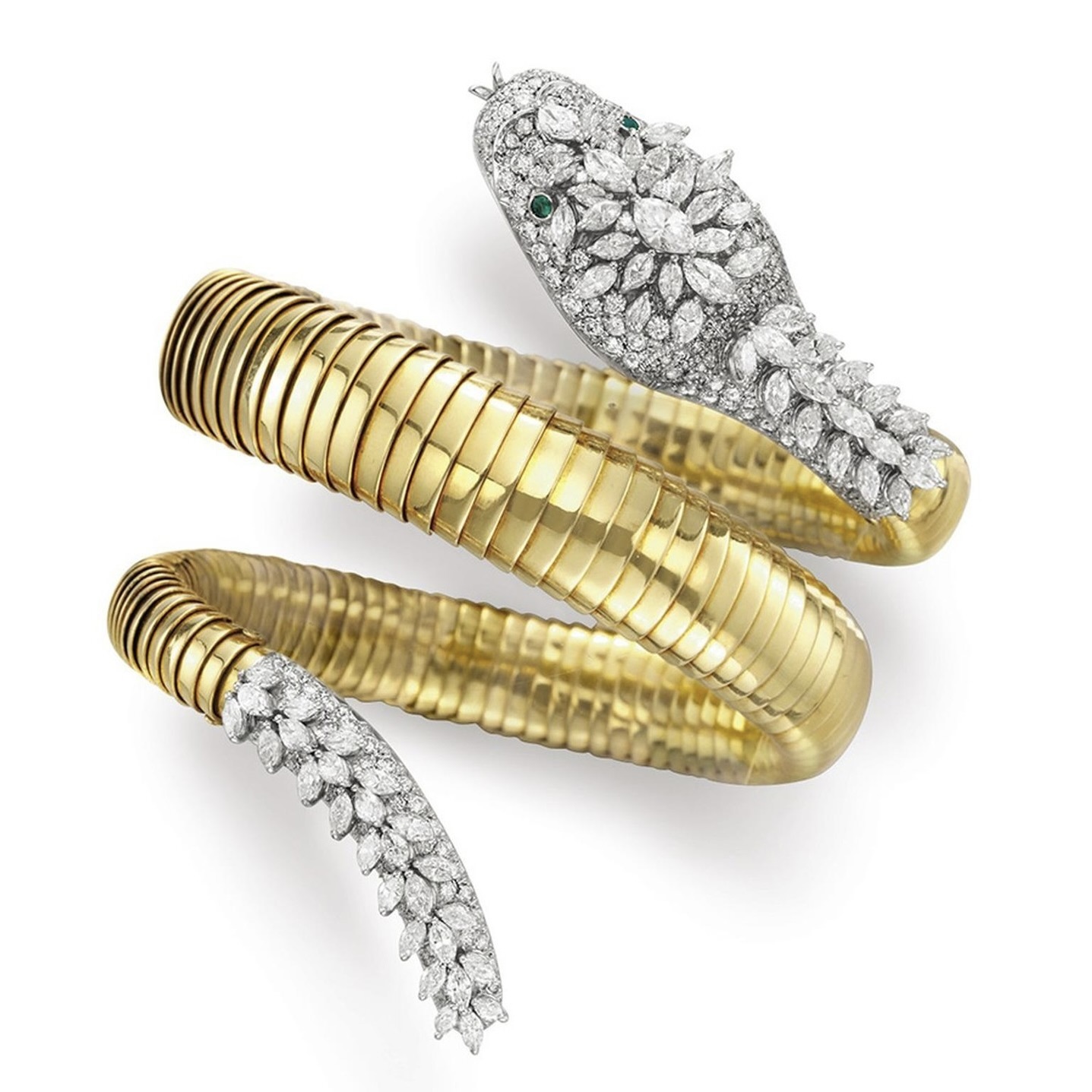
The nake motif’s enduring association with Cleopatra, who famously adorned herself with serpent imagery, made its Hollywood debut all the more fitting. Bulgari Serpenti entered its Hollywood era when Elizabeth Taylor—one of the world’s most photographed women and a renowned jewelry aficionado—famously wore and collected Bulgari pieces while filming Cleopatra in Rome in 1963, including Serpenti designs. Her well-documented passion for exceptional jewelry, combined with her global visibility, played a defining role in elevating Serpenti into a symbol of celebrity glamour and desirability.



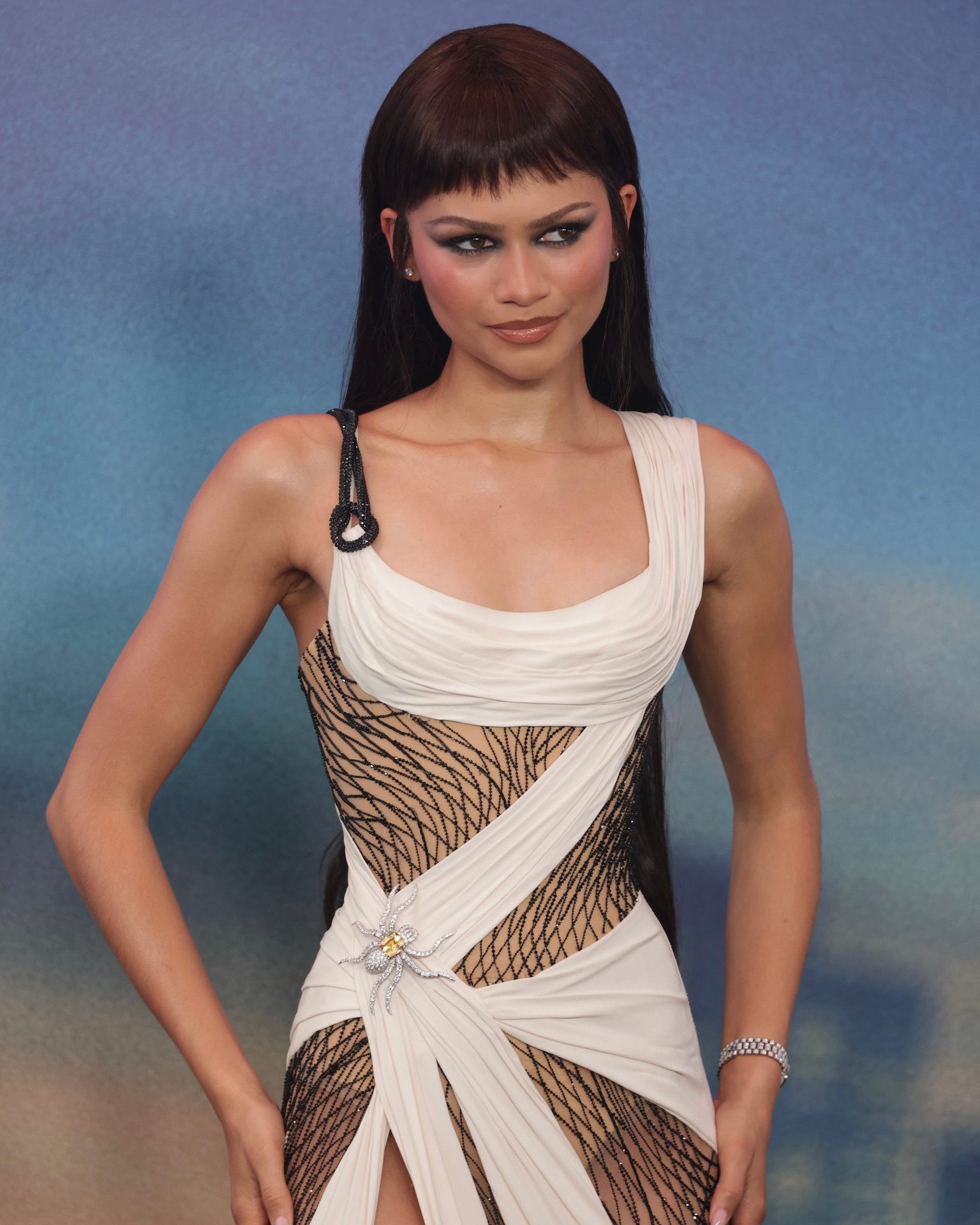
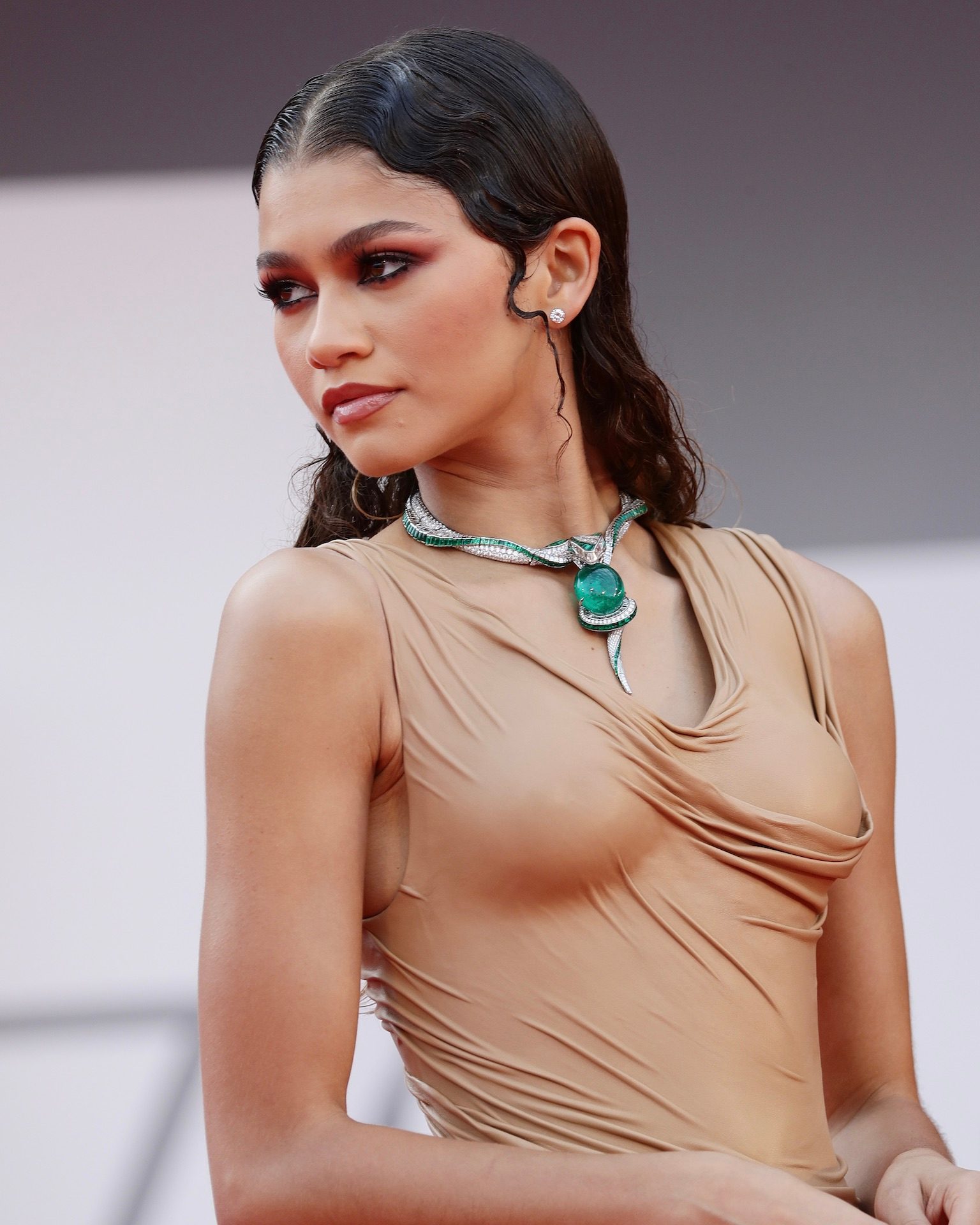
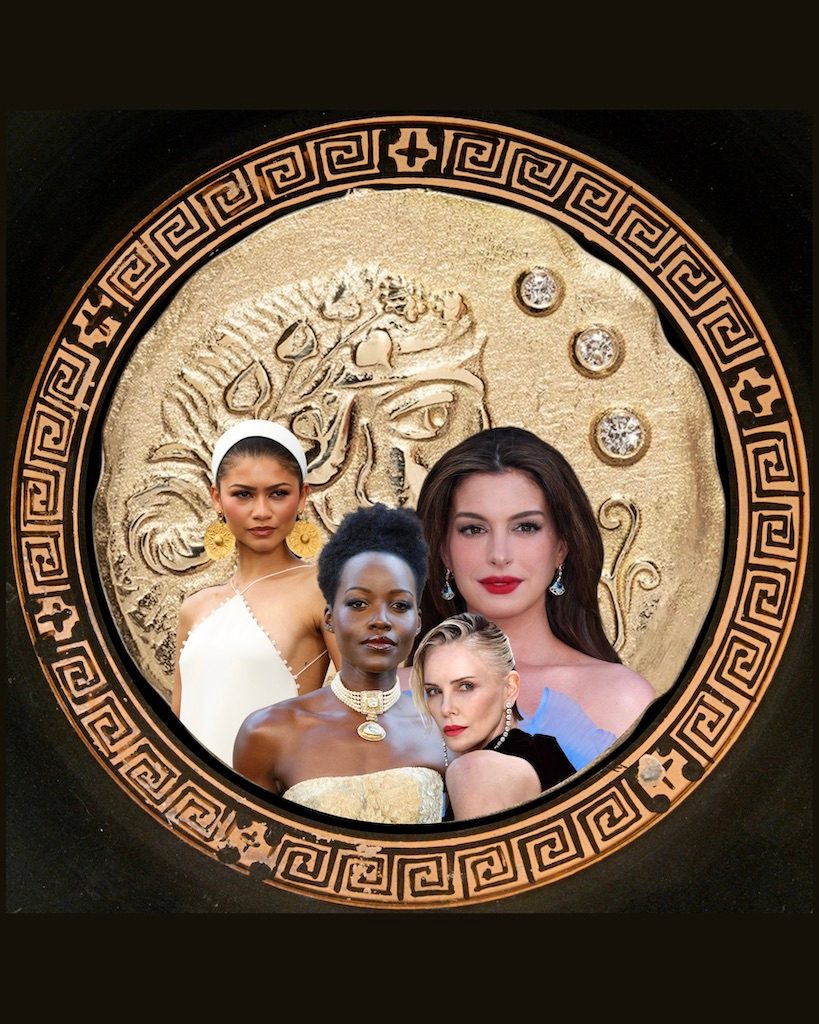
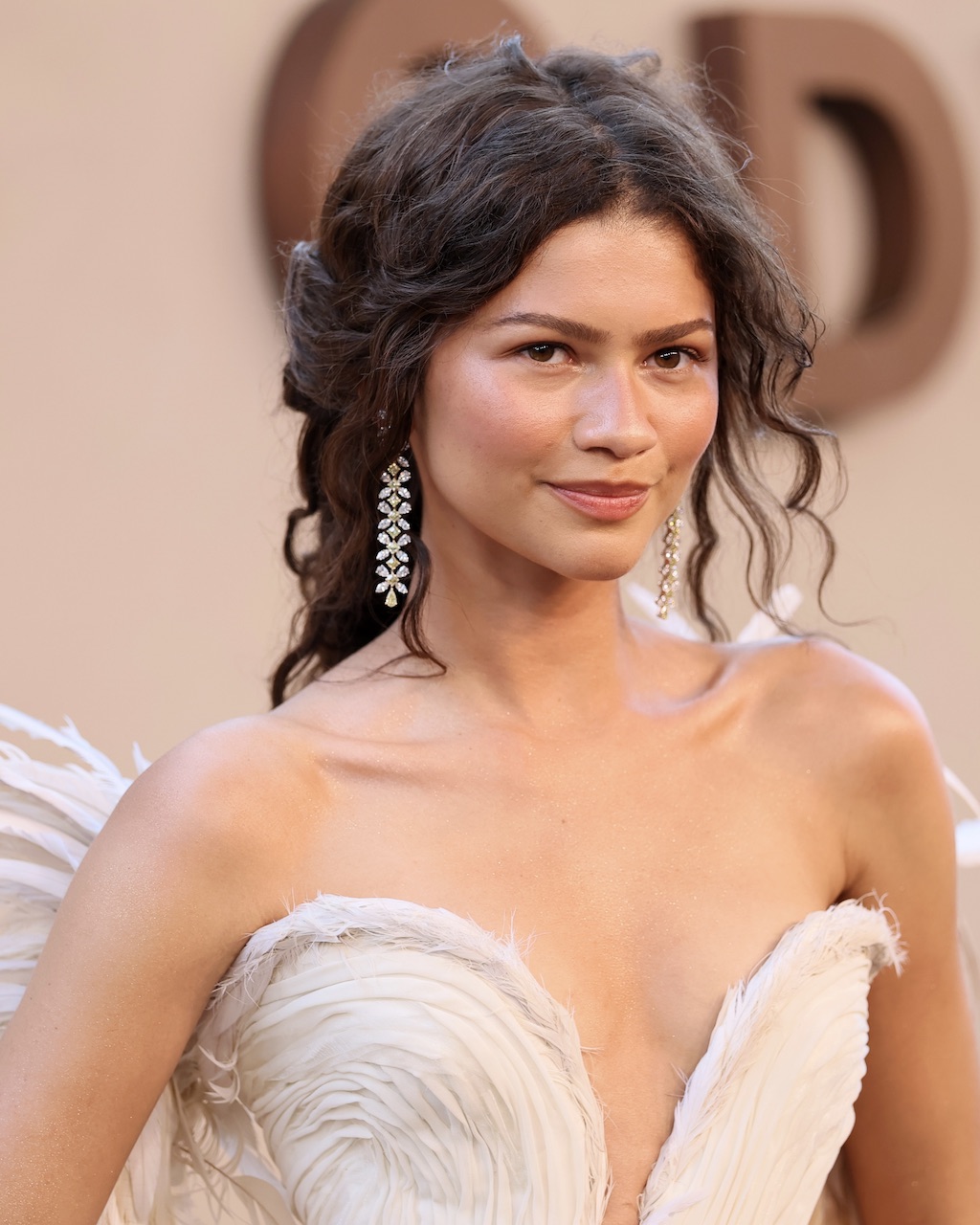
Paris notes that Taylor’s well-publicized passion for Bulgari jewelry helped cement the brand’s Paris notes that Taylor’s association with Bulgari helped cement the brand’s international reputation, turning Serpenti into a symbol of cinematic luxury. Today, celebrity ambassadors such as Zendaya, Bella Hadid, and Anne Hathaway continue to wear Serpenti on red carpets, reinforcing its enduring cultural relevance.
The Evolution of Bulgari Serpenti: 1970s to Today
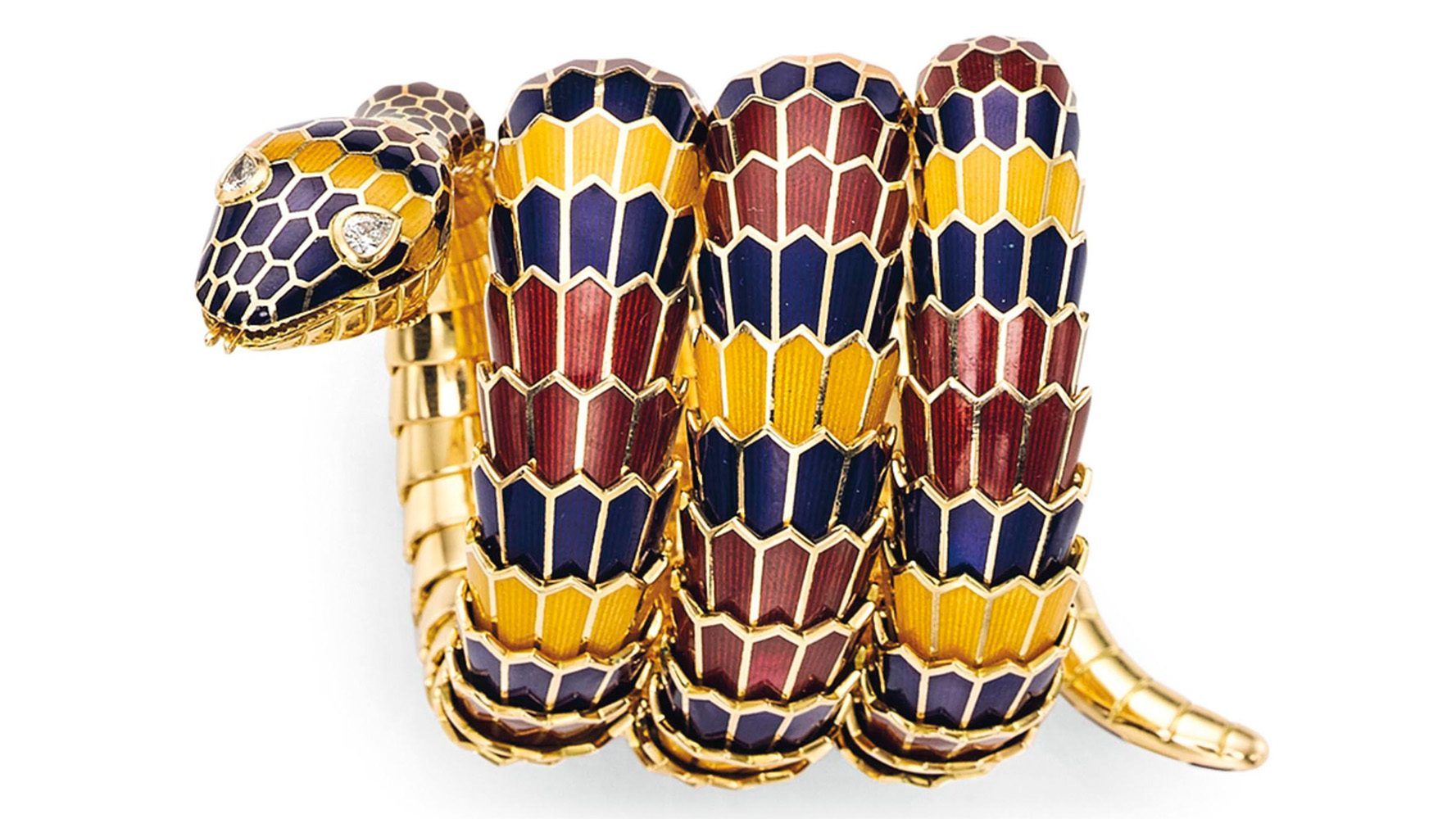
From the 1970s through the 1990s, the Bulgari brand expanded Serpenti into necklaces, rings, earrings, and sculptural bracelets, while also experimenting with new enamel techniques and gemstone designs.
Kostas says Serpenti has been reimagined many times with subtle changes, including the addition of colored gemstones, diamonds, and variations in metal finishes. Because it spans a wide range of jewelry types—from watches and necklaces to rings and bracelets—it remains a universal and adaptable design while still being instantly recognized as a Bulgari piece.
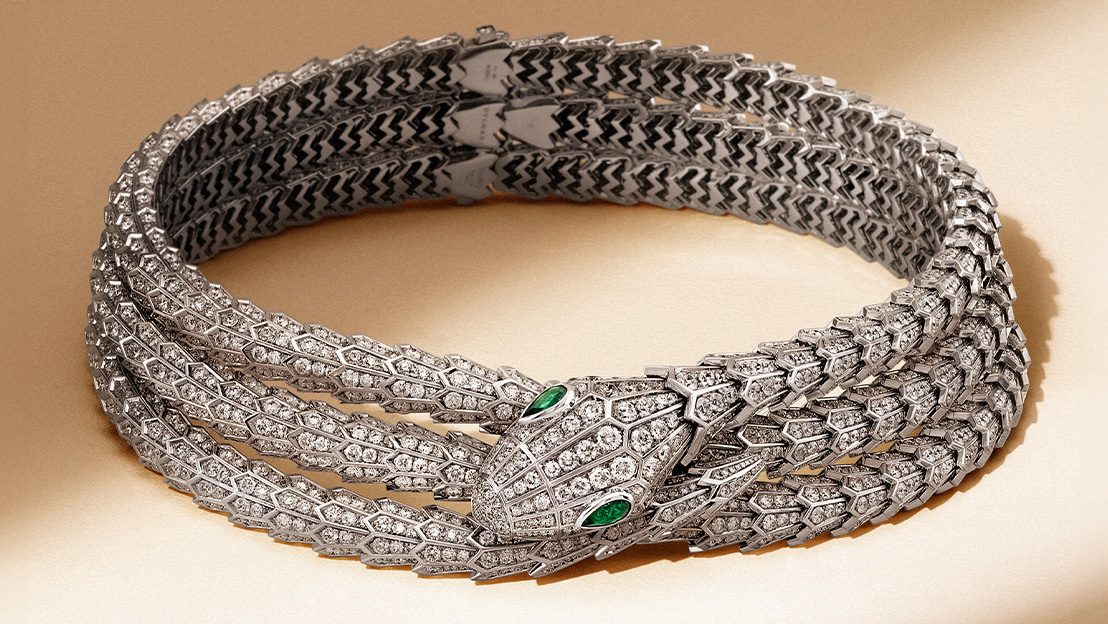
In the 2010s and beyond, Bulgari introduced increasingly innovative designs, combining multiple signature elements. The Serpenti Tubogas collection, for example, merges the iconic coiled body with a defined serpent head. In 2017, the house launched the Twist Your Time collection, featuring the Bulgari Diamond Bangle Serpenti—a coiled design set with brilliant-cut diamonds and pear-shaped diamond eyes. Around this time, Bulgari also introduced the Bulgari Diamond Necklace Serpenti.
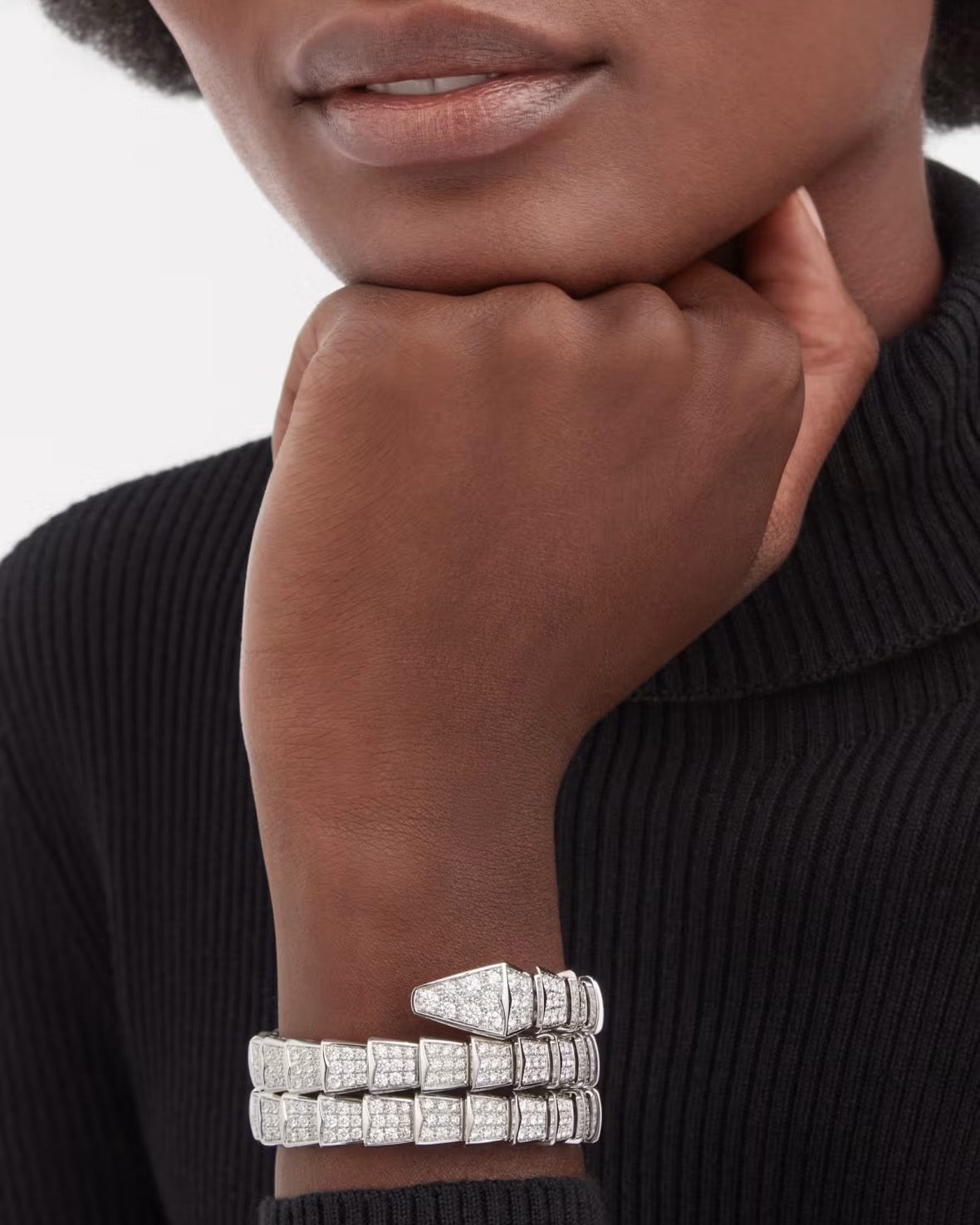
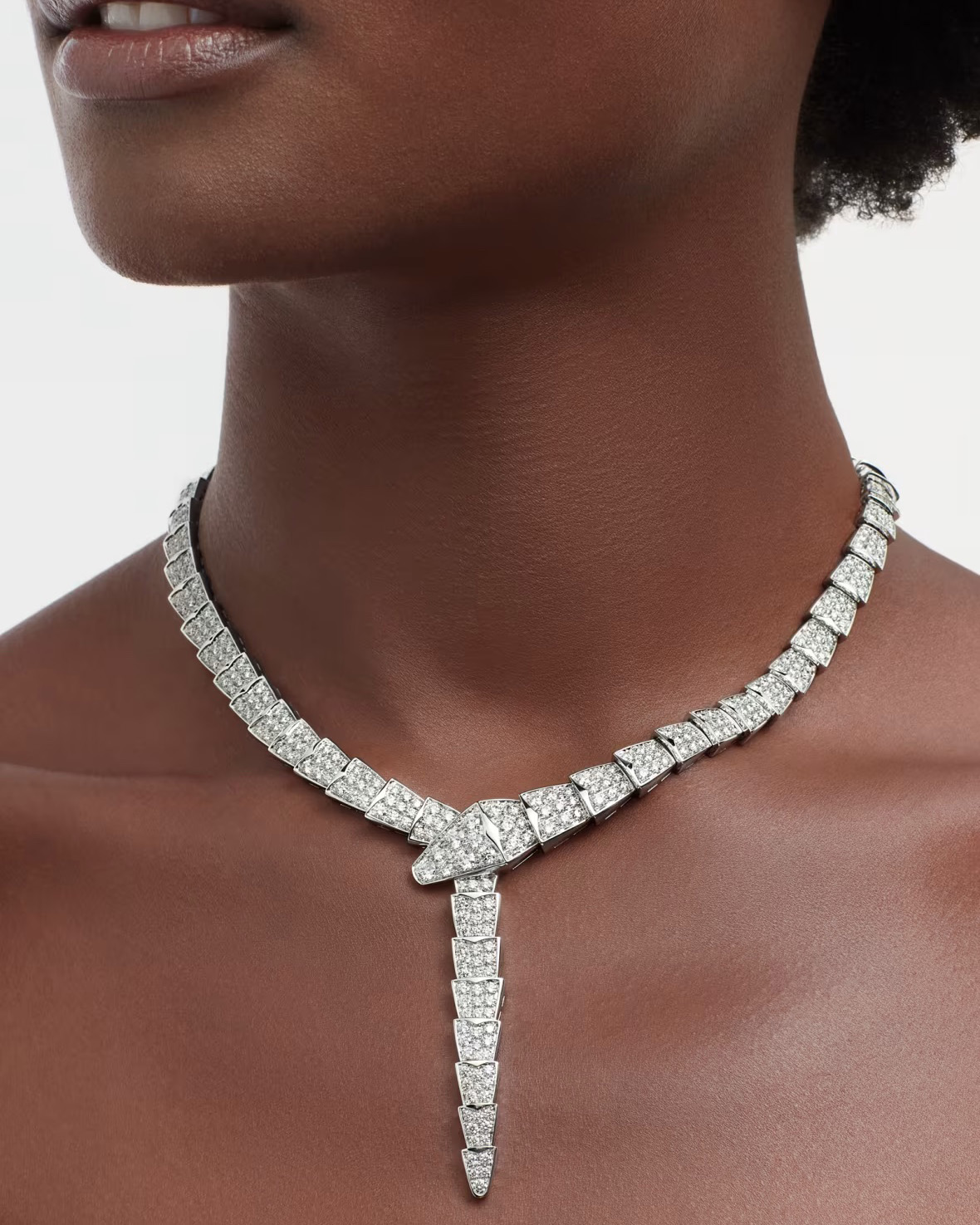
While the house continues to experiment with new interpretations, Serpenti remains a core motif across its collections. Kostas says, “Serpenti is aligned with many other popular motifs, with one instantly coming to mind being Cartier’s Panthere collection. Pieces such as these are instant identifiers for these brands and hold longevity with cultural significance, great icons of recognisable modern jewellery design. Other contemporary Bulgari collections include Serpenti Seduttori and Serpenti Viper.”
Why Bulgari Serpenti Continues to Shape Modern Jewelry
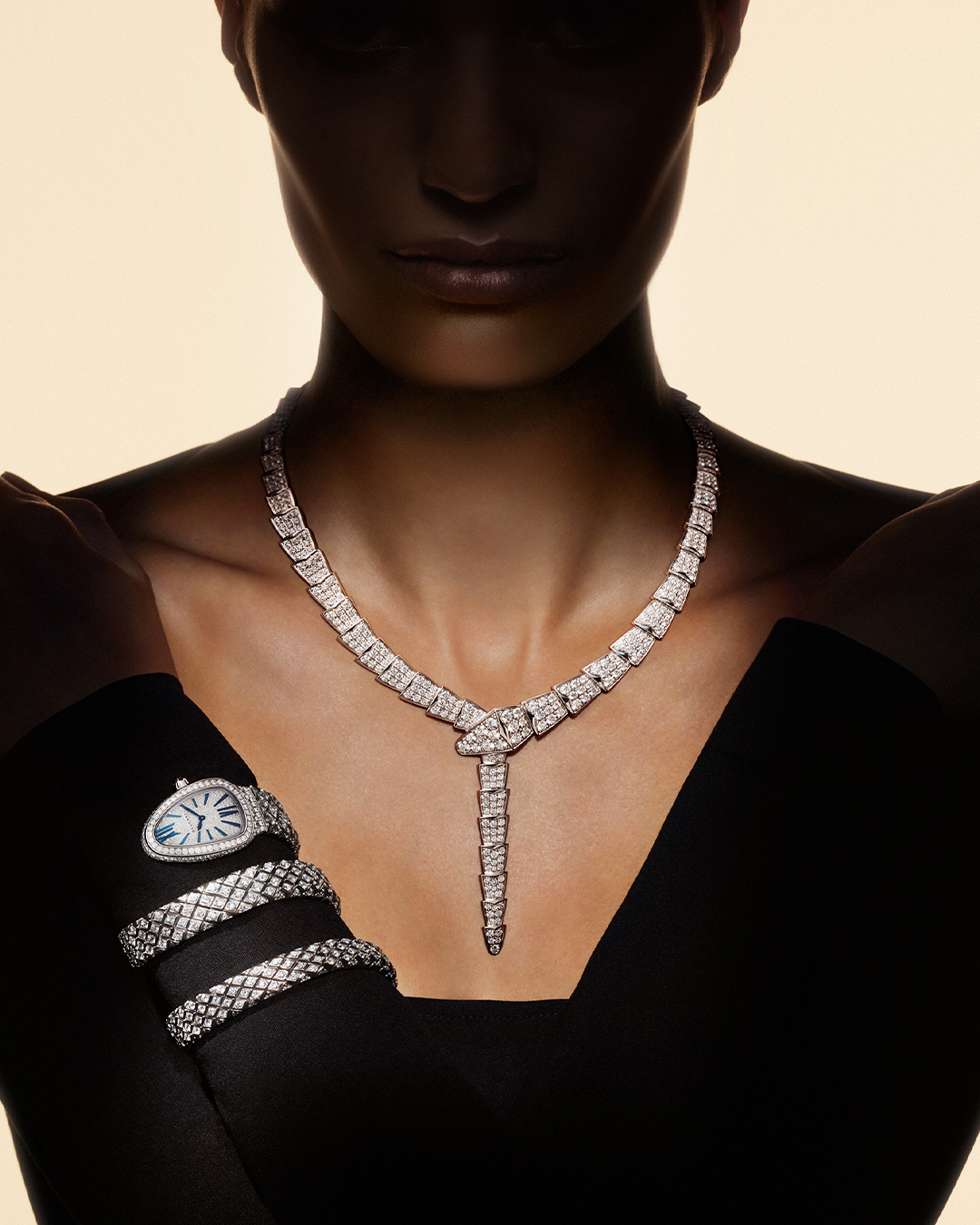
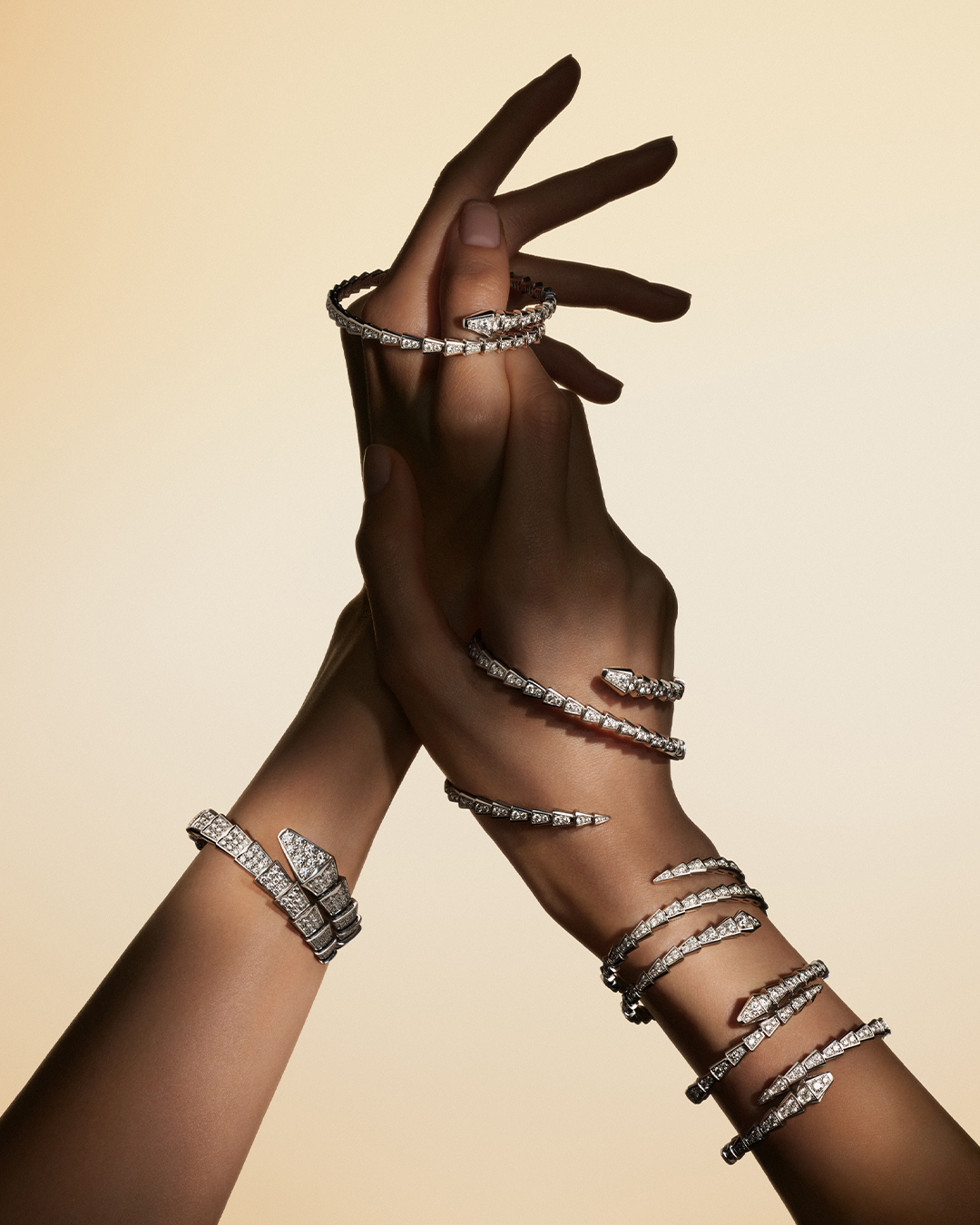
For over 75 years, Bulgari Serpenti has remained a cornerstone of fine jewelry design. Paris explains that its longevity is rooted in both symbolism and adaptability. “Its archetypal symbolism—transformation, seduction, and power—continues to resonate across cultures. The design’s adaptability allows it to appear as watches, bracelets, rings, necklaces, and high jewelry pieces. Bulgari continuously reinterprets the motif with new materials, scale patterns, and gemstone palettes. Because the core form is simple and symbolic, each reinterpretation preserves the design’s identity while keeping it fresh and relevant,” she says.
Its instantly recognizable silhouette places it among the most iconic motifs in fine jewelry, alongside Cartier’s Panthère and Van Cleef & Arpels’ Alhambra. What sets Serpenti apart is its unique combination of ancient symbolism, technical innovation, and modern Italian design—proving that a historical motif can evolve into a defining signature of a global luxury house.