< Historic Diamonds / Famous Diamonds
The Hortensia Diamond: The Pink French Crown Jewel That Survived Revolution and Theft
Discovered in India and treasured by French royalty, the Hortensia diamond’s journey through revolution, empire, and mystery makes it one of the most important historic diamonds still on display today.
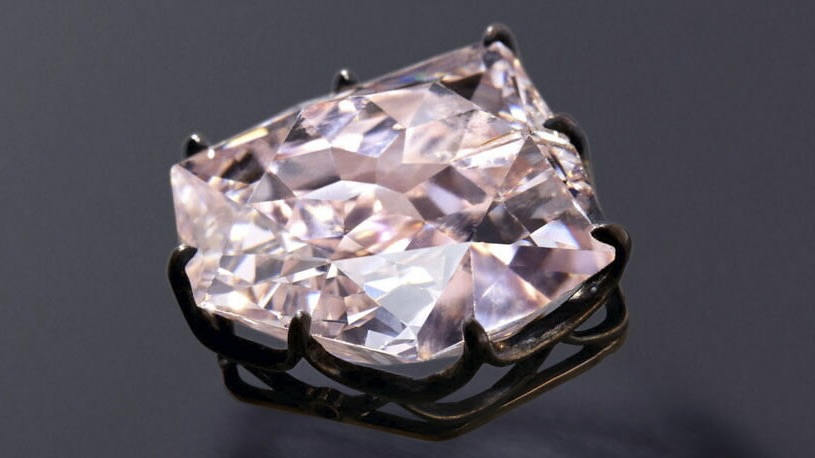
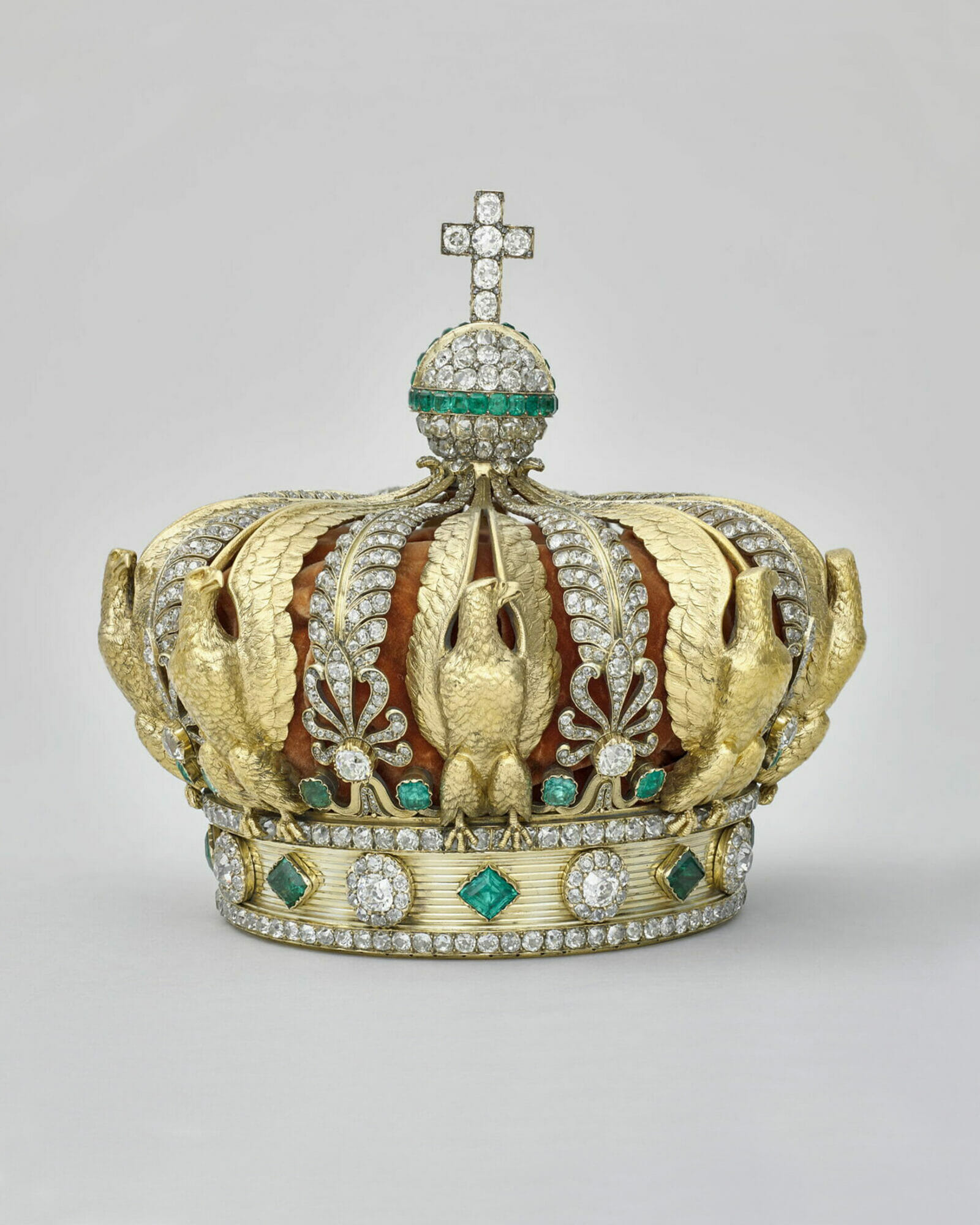
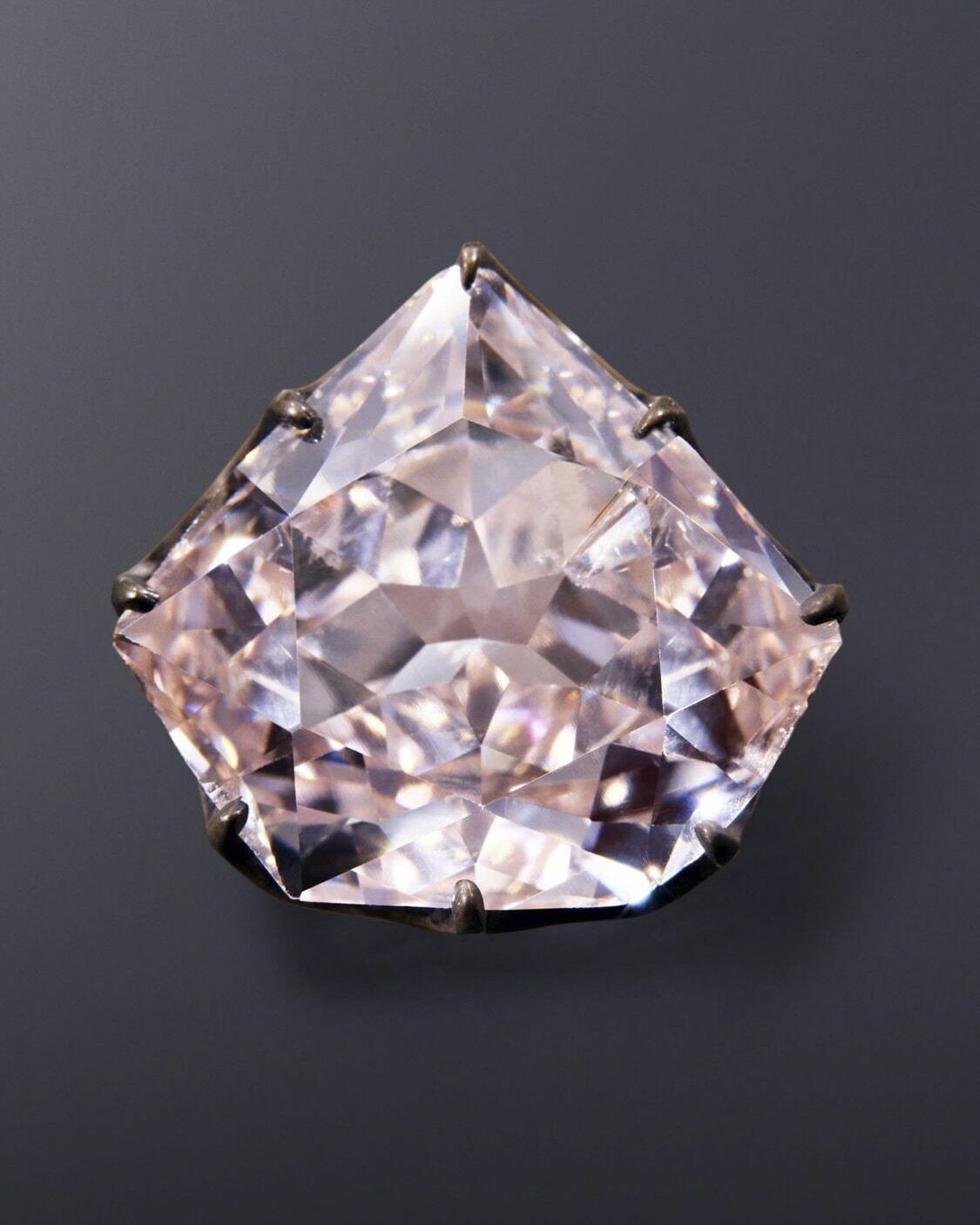
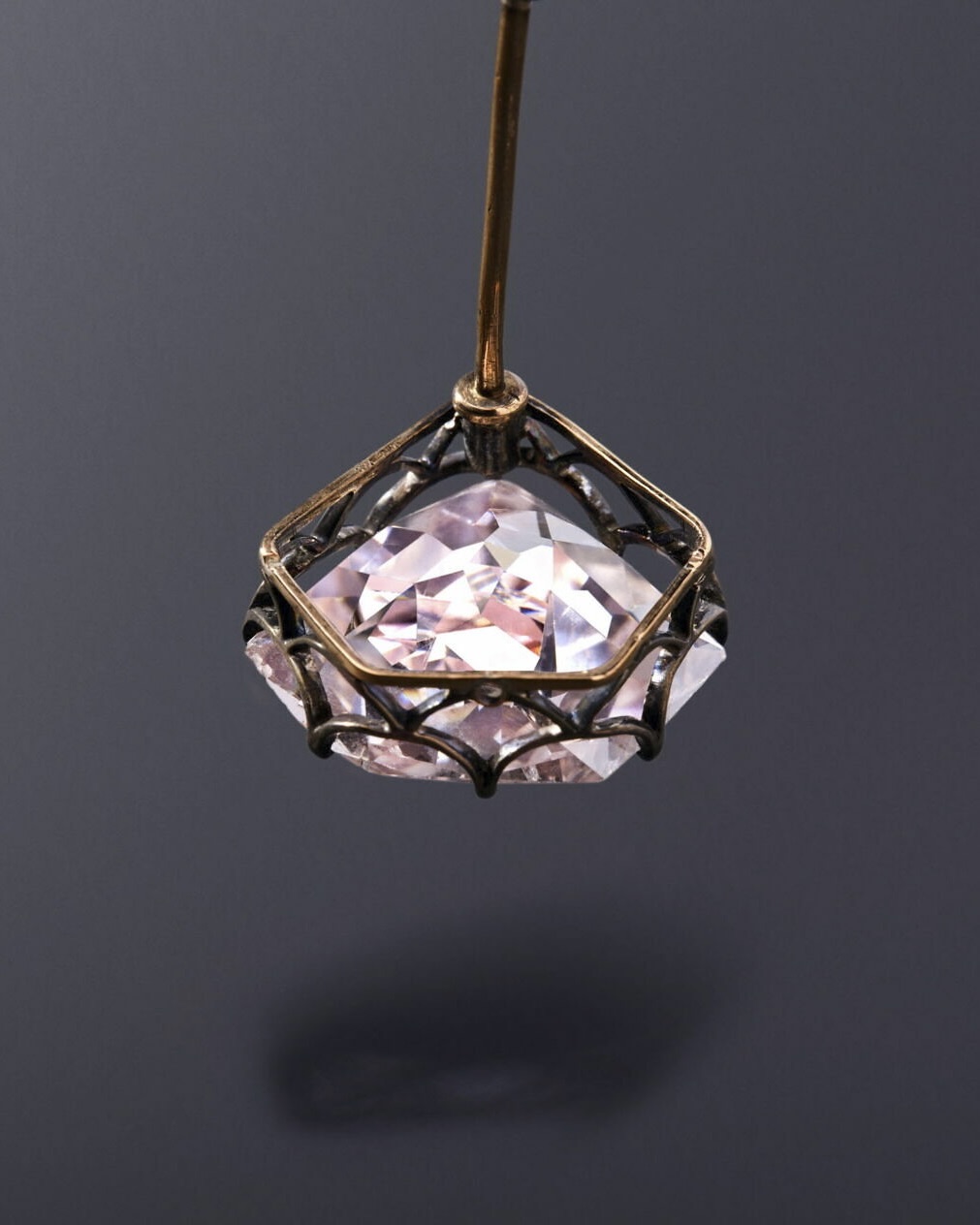
(© 2023 Musée du Louvre, Dist. GrandPalaisRmn / Thomas Deschamps)
Today, visitors to the Louvre Museum in Paris can stand inches away from a diamond that survived revolutions, theft, empire, exile, and mystery, only to emerge as one of the most intriguing and beautiful treasures in the French Crown Jewels. The Hortensia Diamond traveled from India’s legendary Golconda mines over three centuries ago. She somehow survived some of the most chaotic chapters in European history and the recent heist at the Louvre Museum.
Meet the Expert

- Grant Mobley is the Jewelry & Watch Editor of Only Natural Diamonds.
- He is a GIA Diamonds Graduate.
- He has over 17 years of jewelry industry experience, starting with growing up in his family’s retail jewelry stores.
The Origins of the Hortensia Diamond in Golconda
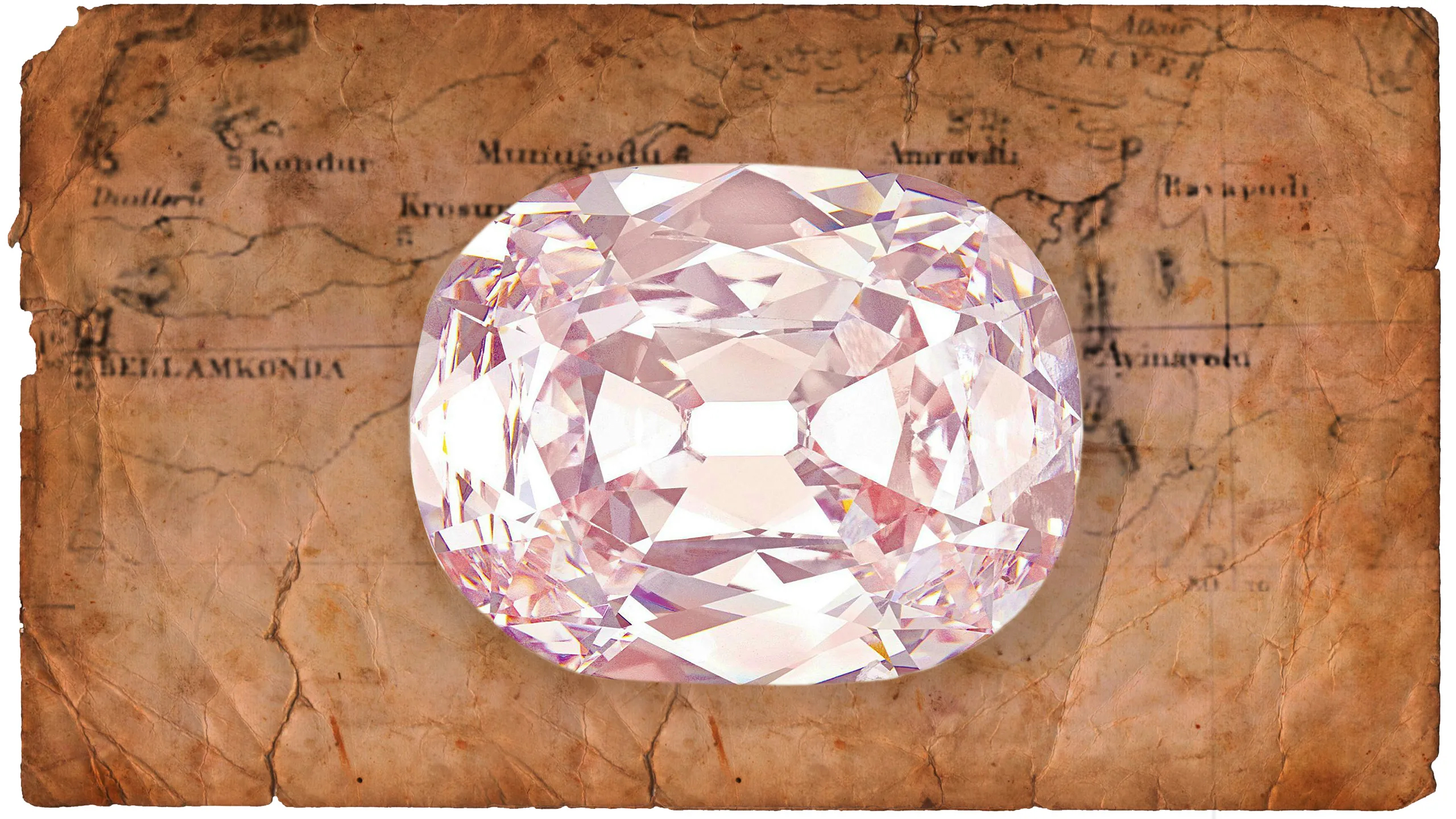
Like many of history’s most famous diamonds, the Hortensia Diamond likely began its journey in India’s Golconda region, the birthplace of diamond mining more than 3,000 years ago. Long before discoveries in Brazil or South Africa changed the global diamond industry, Golconda supplied the world’s most coveted stones.
This region produced legendary diamonds, including the Koh-i-Noor, the Hope Diamond, and the Regent. Golconda diamonds earned their reputation thanks to exceptional clarity and colors, characteristics that still command premium prices today.
No one knows exactly when miners discovered the Hortensia, but records confirm that it appeared in the French Crown Jewels inventory in 1691 during the reign of Louis XIV. Historians believe royal jeweler Jean Pitan le Jeune likely acquired the stone in the Netherlands, which was Europe’s primary diamond-trading hub at the time.
From there, the diamond entered royal ornamentation, reportedly mounted among decorative buttons before later being set in imperial regalia.
Why the Hortensia Diamond Is a Rare Pink Diamond
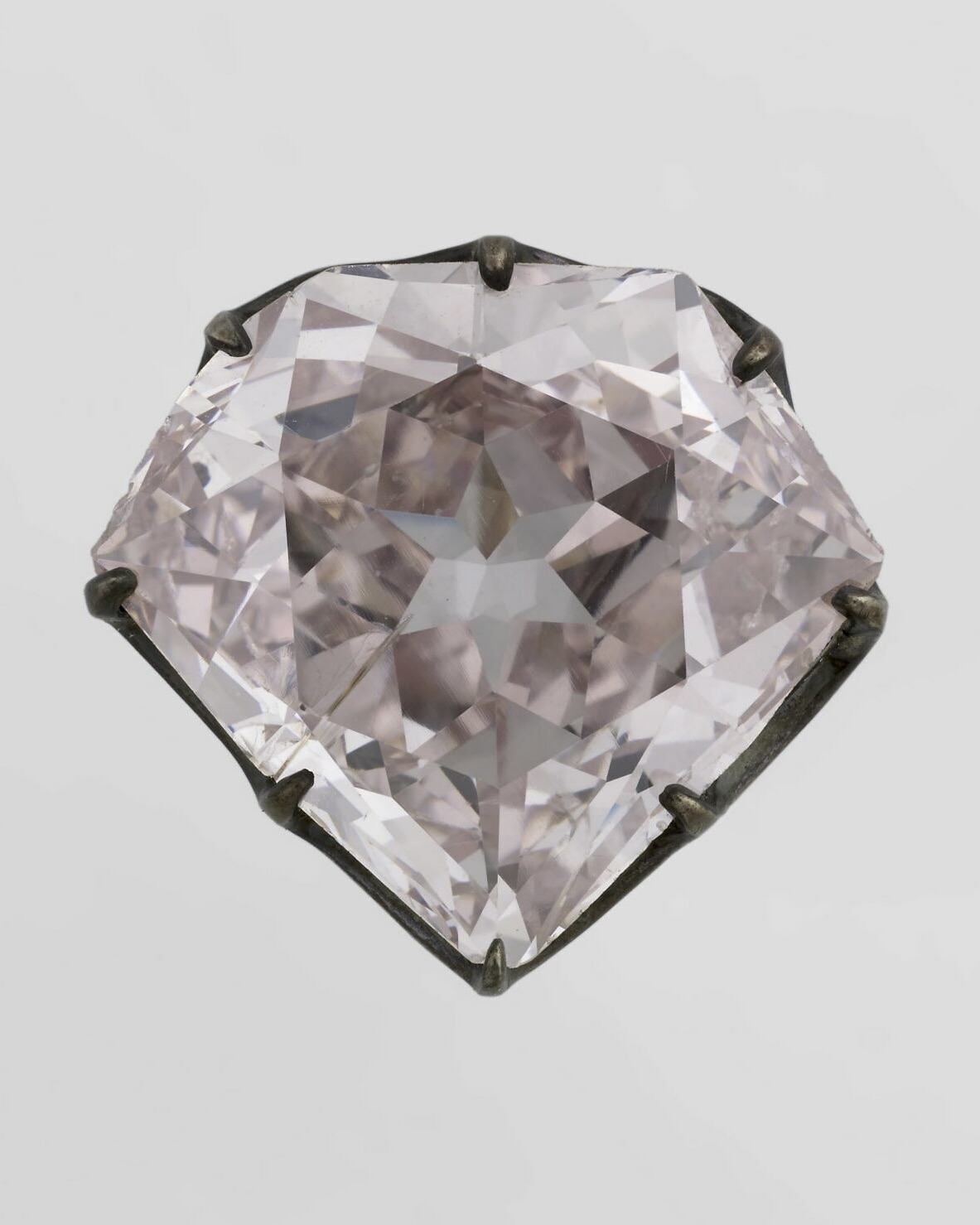
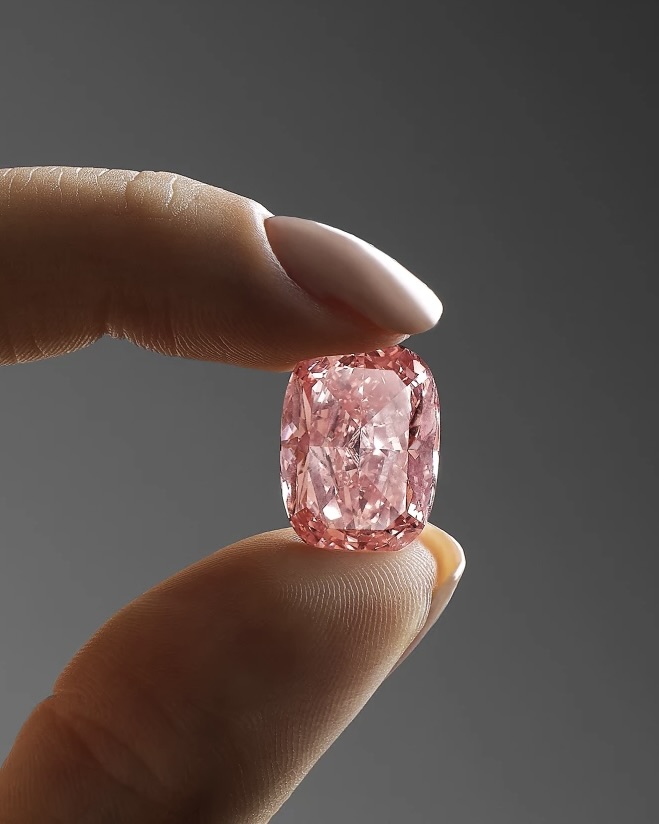
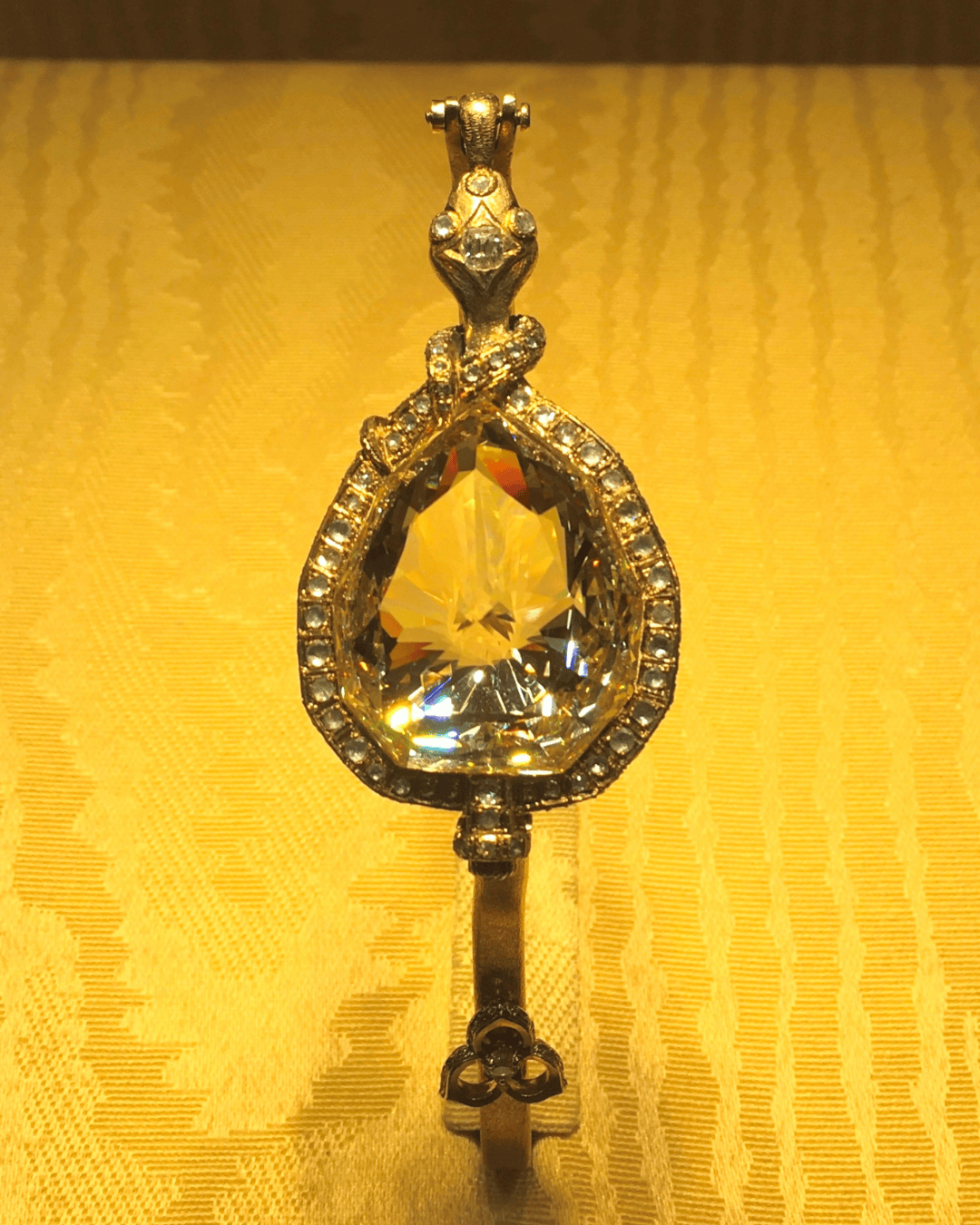
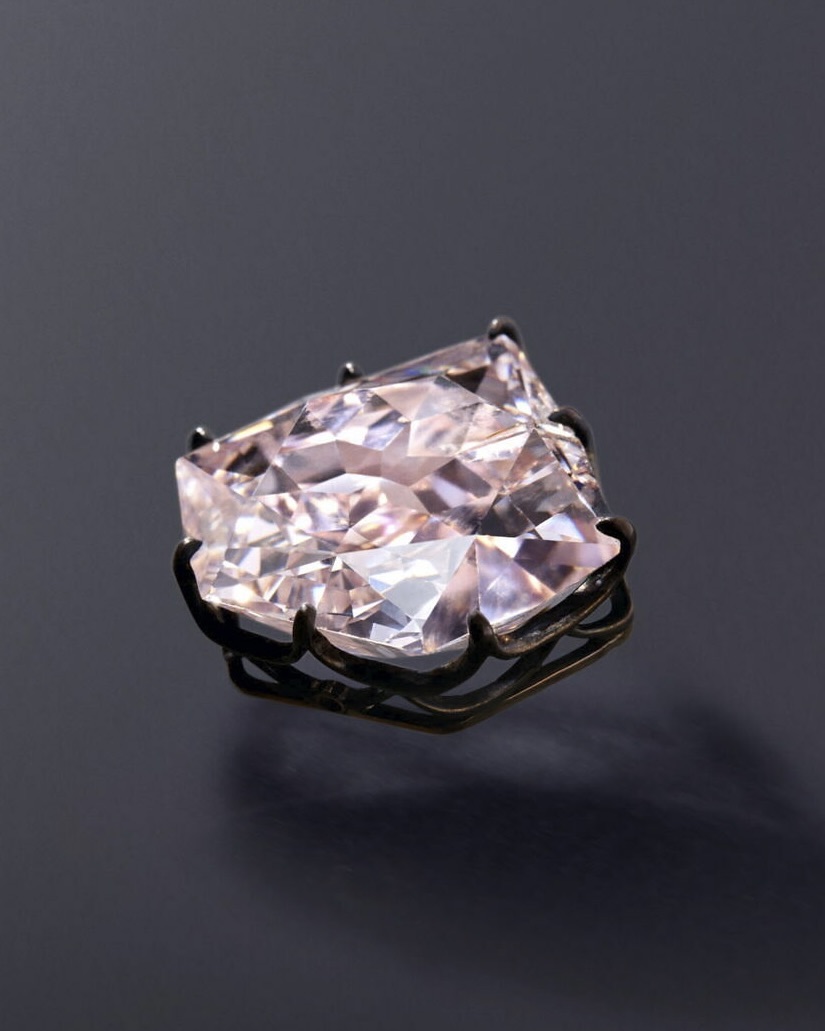
Weighing 21.32 carats, the Hortensia Diamond stands apart from most historic stones because of its unusual color. Rather than icy white brilliance, the gem displays a delicate peachy-pink tone with a hint of orange.
That color comes from slight distortions within the diamond’s crystal lattice that change how light travels through the stone. These subtle distortions produce rare pink shades that are among the most sought-after and valuable gems today.
The Cut and Shape of the Hortensia Diamond
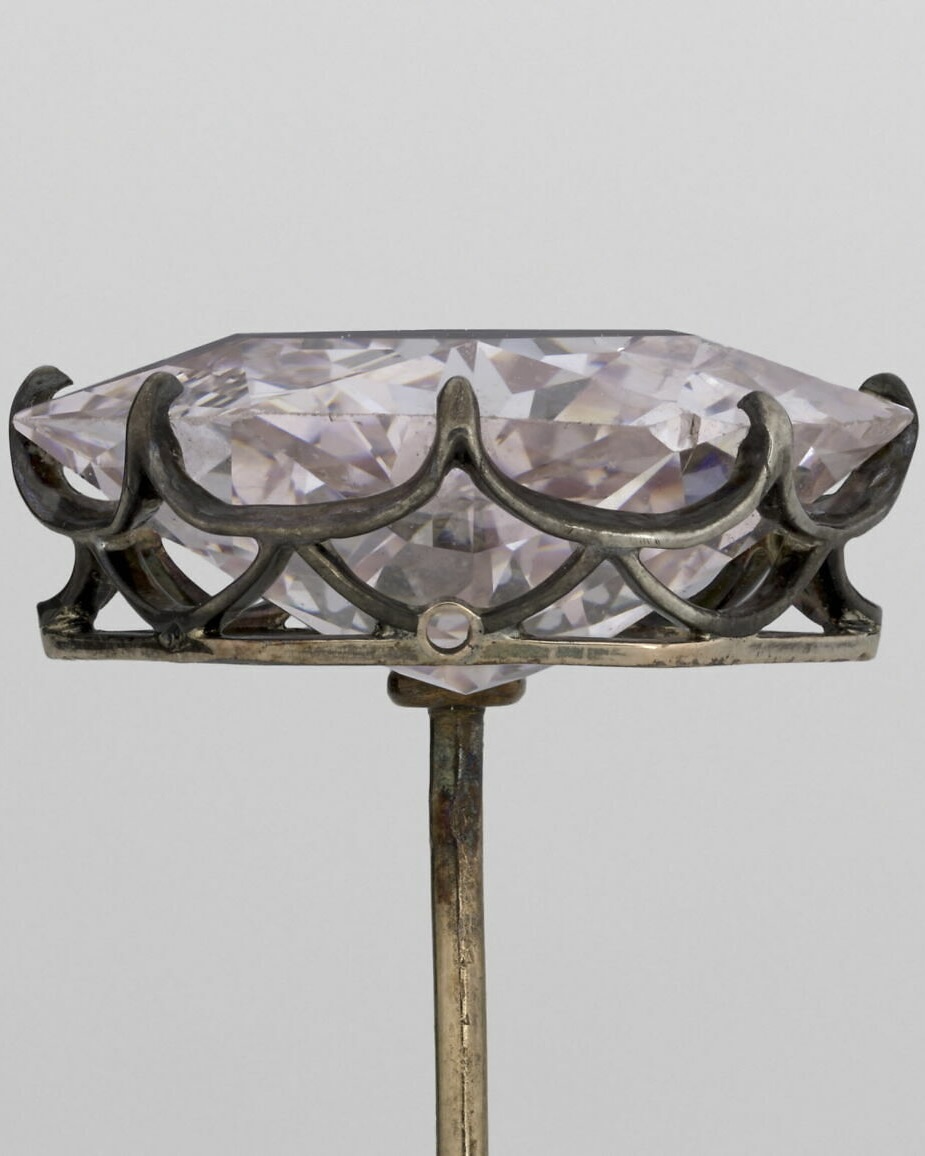
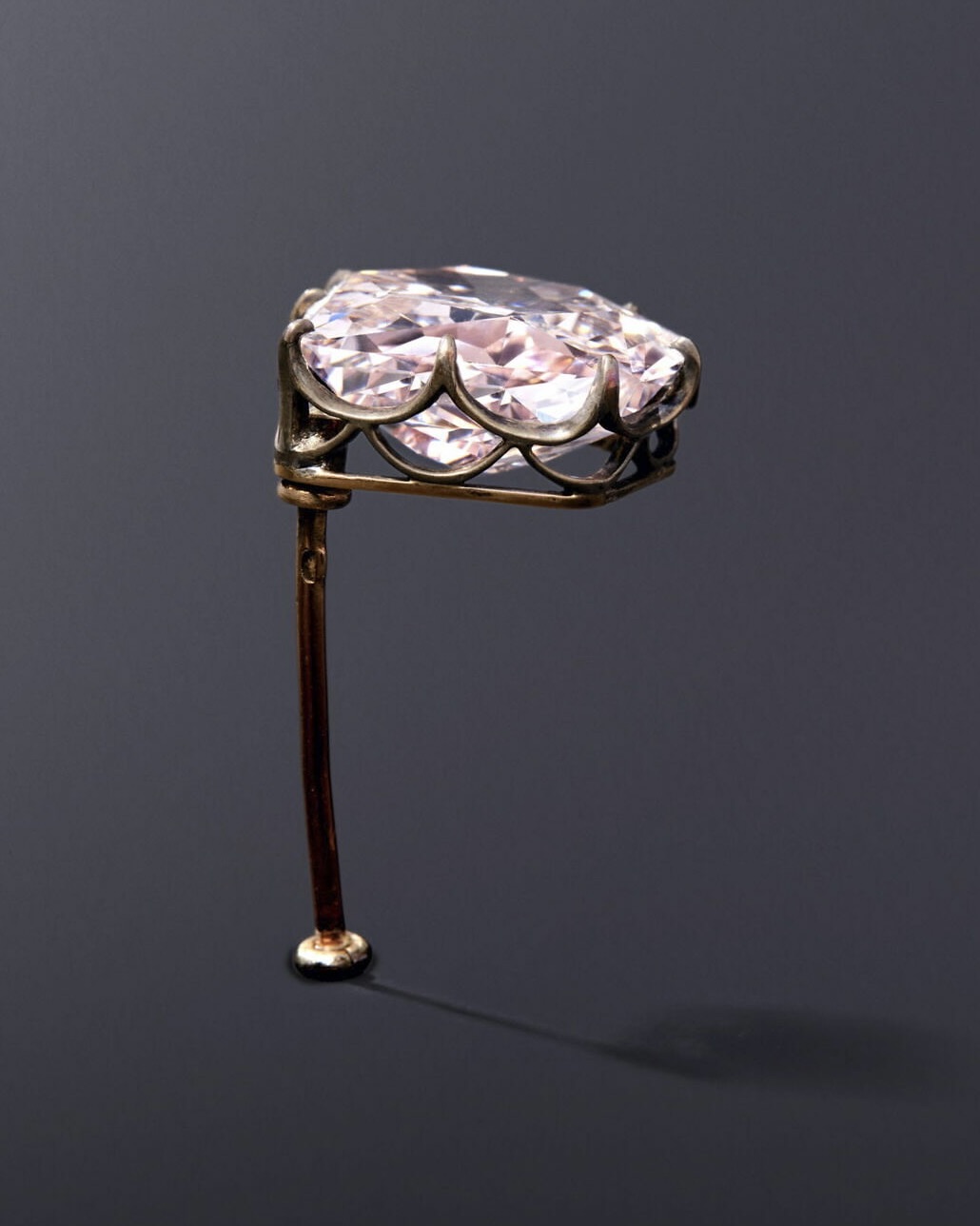
Equally unusual is the diamond’s five-sided, shallow shape, reflecting late 17th-century cutting techniques. At the time, cutters prioritized preserving as much weight as possible from the original rough rather than maximizing brilliance and color, as modern cutters do.
Then there is the flaw that only adds to its legend: a visible crack running from near the girdle toward the culet. While such damage would devastate most diamonds’ value, in this case, it serves as a physical scar left by its tumultuous journey.
The Theft, Revolution, and Survival of the Hortensia Diamond
In 1792, during the chaos of the French Revolution, rioters stormed the Garde-Meuble, the royal treasury, stealing many of France’s crown jewels. Some treasures vanished forever, including the famed French Blue, which some believe was recut into today’s Hope Diamond.
The Hortensia Diamond nearly suffered the same fate.
According to historical accounts, one of the looters, François Dupeyron, revealed the hiding place of several stolen jewels shortly before his execution. Authorities recovered the Hortensia and other jewels, including the Regent, in Paris, allowing it to return to state possession.
The diamond later reappeared during Napoleon’s era, mounted in imperial regalia and eventually set in an elaborate headband for Empress Eugénie in 1856.
It disappeared again briefly during the 1830 unrest after being stolen from the Ministry of the Marine, though authorities recovered it quickly.
When the French government sold most of the Crown Jewels in 1887, officials spared only the most historically important pieces. The Hortensia remained, eventually entering the Louvre’s collection, where it still resides.
Remarkably, it escaped danger yet again during a recent 2025 heist at the Louvre. Thieves stole several historic jewels from the same gallery but failed to access the case housing the Hortensia and the Regent Diamond.
Why Is It Called the Hortensia Diamond?
Perhaps the greatest mystery surrounding the Hortensia Diamond involves its name.
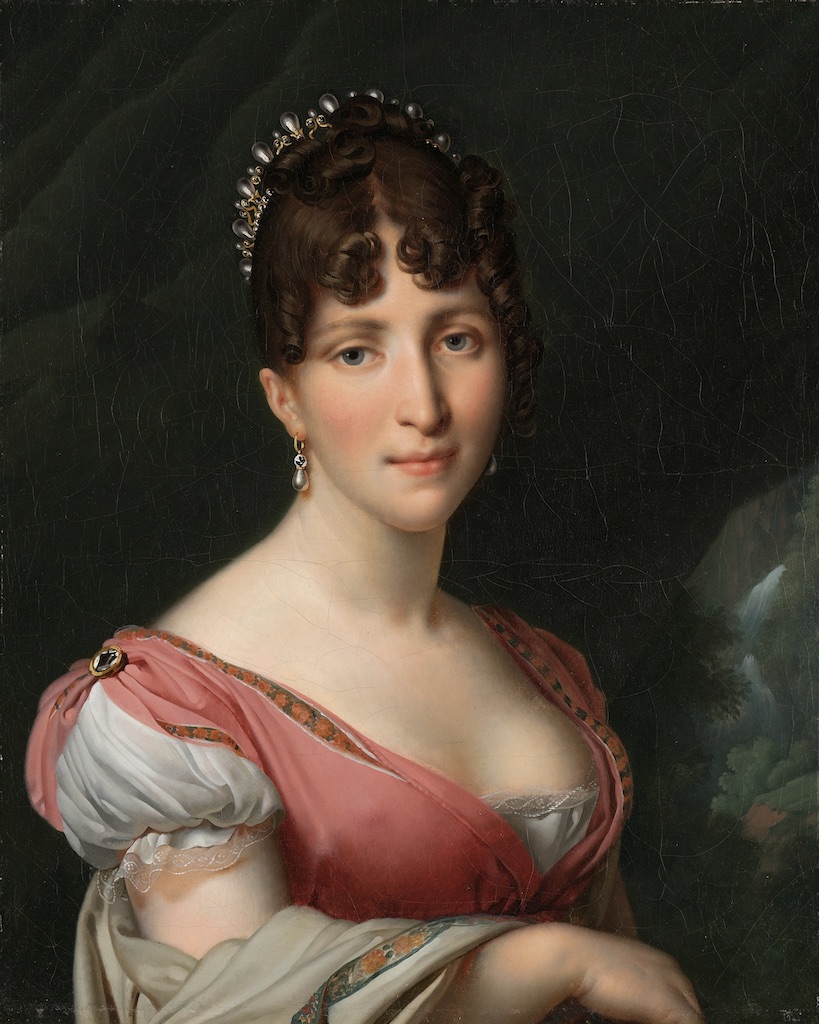
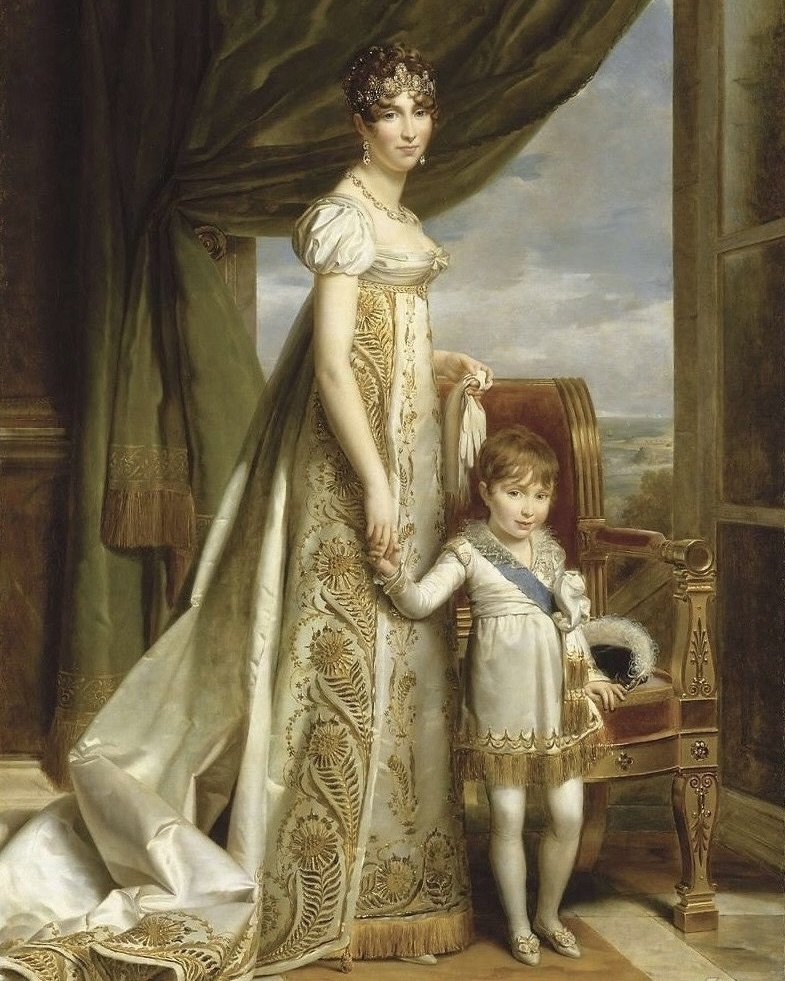
The stone honors Hortense de Beauharnais, Napoleon Bonaparte’s stepdaughter and later Queen of Holland. Yet historical records reveal no direct connection between Hortense and the diamond. She never owned or wore it, and no documented event ties her personally to the gem.
Historians speculate the name may have emerged when she rose to prominence within Napoleon‘s family or during political events surrounding his reign. But no definitive explanation survives.
Unlike many famous diamonds named after owners or wearers, the Hortensia’s title remains an unanswered question and a reminder that even well-documented treasures can hold secrets.
Where Is the Hortensia Diamond Today?
Today, visitors to the Louvre Museum in Paris can stand inches away from the Hortensia Diamond, one of the few remaining jewels from the original French Crown collection.
Now preserved as part of France’s national heritage, the diamond remains on public display alongside other surviving treasures of the French monarchy, a rare pink gem that has endured centuries of upheaval and still captivates modern audiences.