The 10 Most Famous Diamonds from the Legendary Golconda Mines
From the temples of India to the crown jewels of Europe and beyond, the diamonds from the legendary Golconda mines shaped the course of history and set a standard for purity and beauty that no source on earth has matched since.

Before Brazil. Before South Africa. Before any of the great locations that now define the diamond industry, there was Golconda, and for nearly 2,000 years, it stood alone.
The diamonds didn’t actually come from Golconda itself, which was a fortress city near modern-day Hyderabad. Miners pulled the stones from alluvial deposits along the Krishna River, particularly near the town of Kollur, and traders moved them through Golconda, where the name stuck. For 2,000 years, the Golconda mines produced the only known fine diamonds on earth. Centuries of mining eventually exhausted the deposits by 1830, and gemologists and connoisseurs have since placed Golconda diamonds in a category of their own.
Meet the Expert

- Grant Mobley is the Jewelry & Watch Editor of Only Natural Diamonds.
- He is a GIA Diamonds Graduate.
- He has over 17 years of jewelry industry experience, starting with growing up in his family’s retail jewelry stores.
Ahead, discover 10 diamonds from the Golconda mines that changed the course of jewelry history.
What Makes Golconda Diamonds Special?
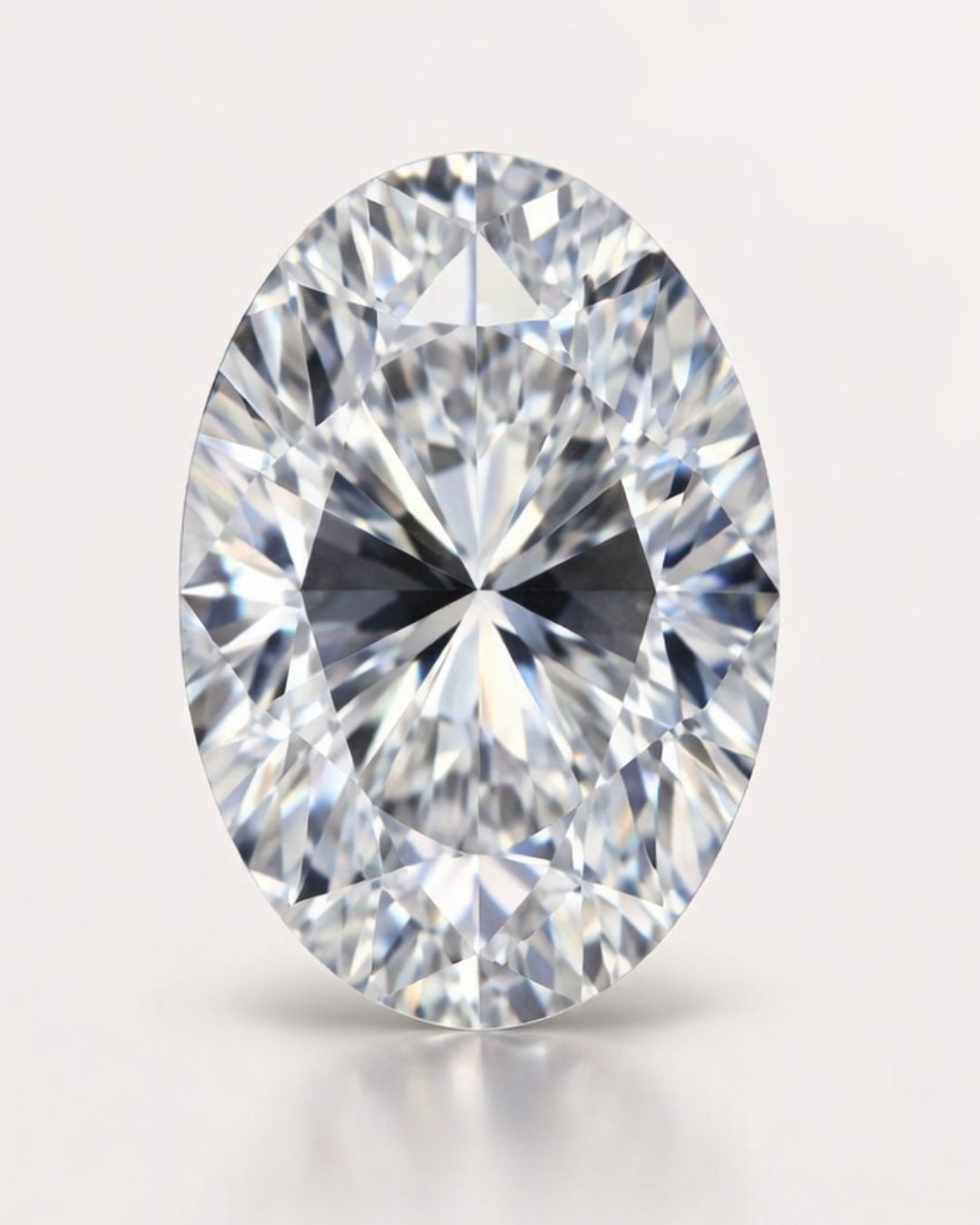
What separates diamonds from Golconda mines from the finest modern diamond is a scientific classification known as Type IIa. While the vast majority of diamonds mined globally contain measurable nitrogen—which often imparts a subtle yellow or brown tint—Type IIa stones are chemically pure, containing virtually no nitrogen.
This purity results in a transparency so profound that 18th and 19th-century connoisseurs famously described the stones from the Golconda mines as having “the first water,” a term denoting a clarity and brilliance that seems liquid. Because of this lack of impurities, these diamonds possess an extraordinary ability to disperse light, creating a signature “inner glow” that gemologists still consider the gold standard of the industry. These are stones comparable in rarity to the finest original art: finite in number, geologically impossible to replicate, and unmatched in their structural perfection.
1. The Hope Diamond
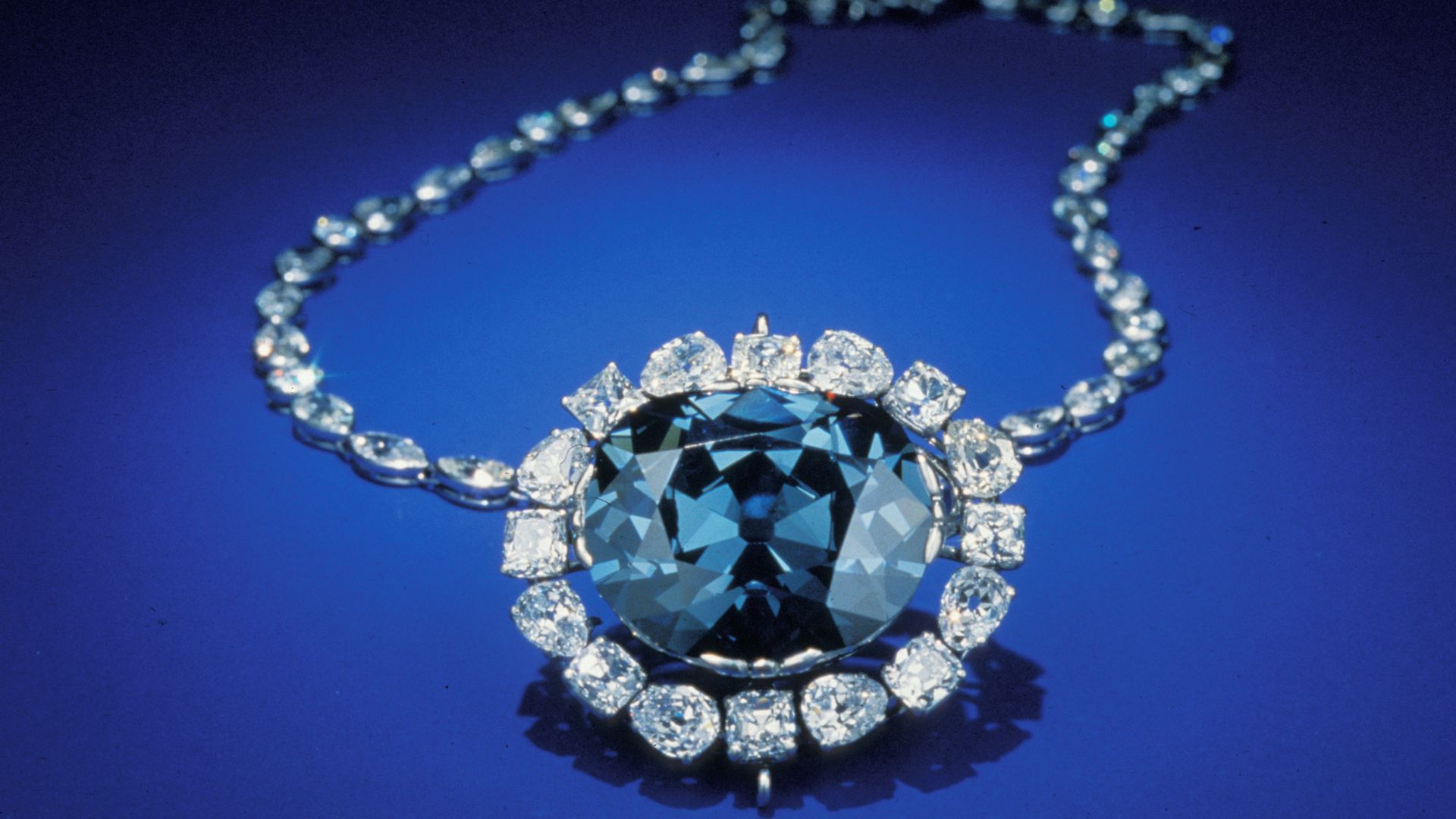
The 45.52-carat fancy deep grayish-blue Hope Diamond has an incomparable history. During its long and allegedly cursed lifetime, it intersected with the French monarchy through Kings Louis XIV and XVI, and likely with the British monarchy through King George IV. Tavernier sold the original rough from the Golconda mines to King Louis XIV in 1668, and the court jeweler recut it into the 67-carat French Blue.
It disappeared during the French Revolution, resurfaced in London, and eventually reached the Smithsonian in 1958, mailed there by Harry Winston in a plain brown package via USPS. Winston donated it after purchasing it from the estate of eccentric heiress Evalyn Walsh McLean, who previously purchased it from Cartier in 1911. (Walsh McLean was actually famous for casually wearing the priceless stone and even letting her children play with it.) Its boron-driven blue color and vivid red phosphorescence under ultraviolet light make it one of the most scientifically extraordinary diamonds ever studied.
2. The Koh-i-Noor Diamond
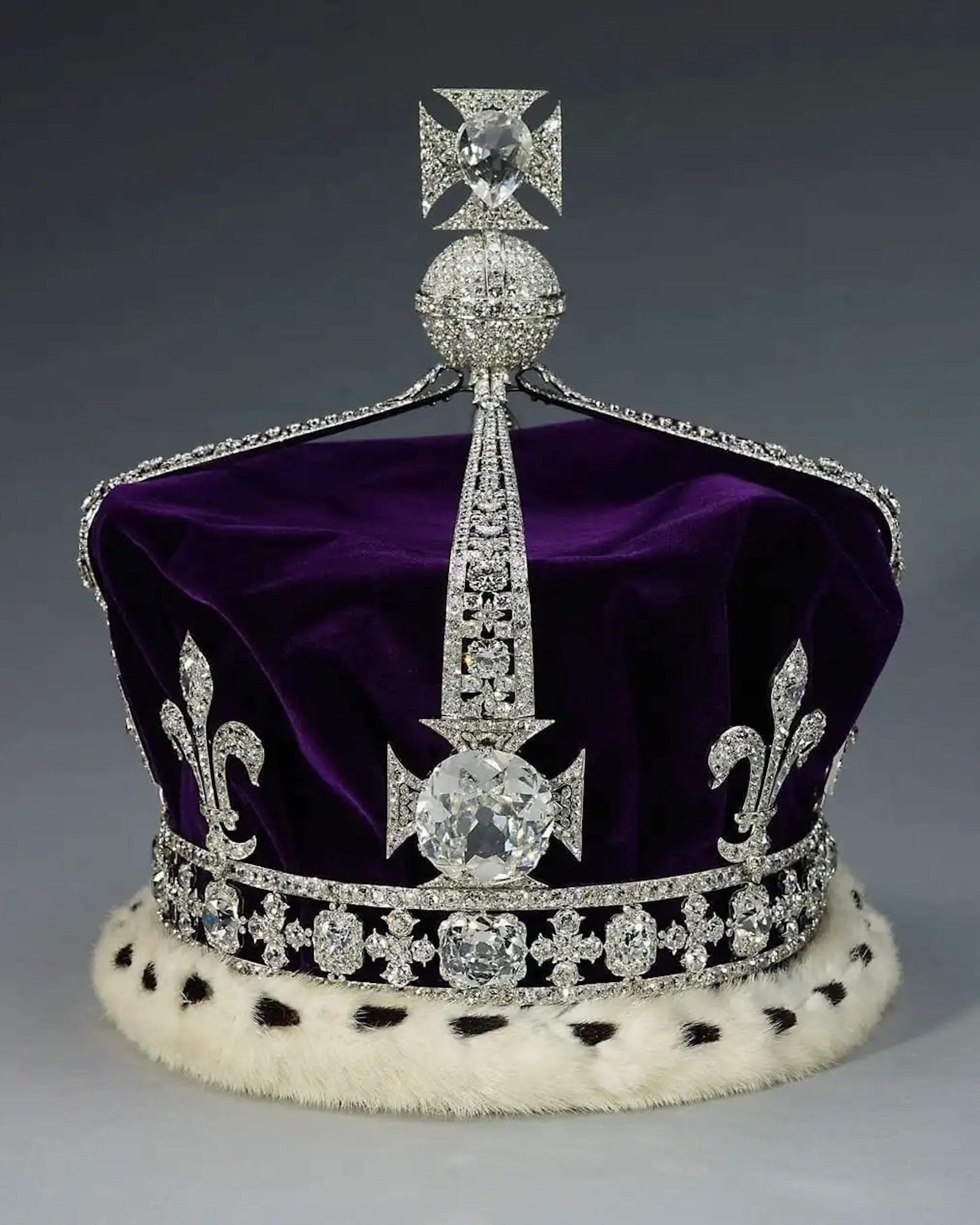
The Koh-i-Noor diamond is a 105.6-carat diamond with a history spanning 750 years, full of royal power struggles, tragic wars, and an extraordinary jewel at the center of it all. Originally unearthed in the Golconda mines, it was placed atop Mughal Emperor Shah Jahan’s Peacock Throne. Persian conqueror Nadir Shah seized it in 1739, reportedly exclaiming “Koh-i-Noor” (Mountain of Light) when he first saw it.
British jewelers recut it in 1852, reducing it from 186 to 105.6 carats to enhance its brilliance. A specific legend suggests the stone carries a curse that only affects men; consequently, it has been worn exclusively by female members of the British Royal Family since its arrival in the UK. It now sits in the Queen Mother’s Crown in the Tower of London, the subject of ongoing repatriation claims from India, Pakistan, and Afghanistan.
3. The Regent Diamond
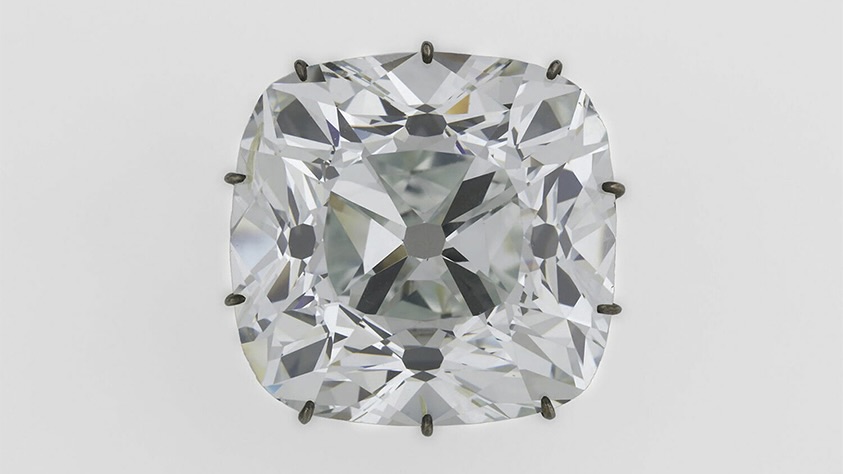
The saga of the Regent Diamond begins in 1698 in the Golconda mines, where a worker concealed the 410-carat rough stone rather than surrender it to his superiors. It eventually reached Thomas Pitt, Governor of Madras, who shipped it to London hidden in his son’s shoe heel. Cutters transformed it into a 140.64-carat cushion-cut diamond of near-perfect clarity and considered one of the most accomplished masterpieces of old-cut diamond craftsmanship.
Purchased in 1717 for the French Crown Jewels, it became the most valuable gem in the realm.It adorned the crowns of Louis XV and XVI, sat on Napoleon’s ceremonial sword, and graced Empress Eugénie’s hair. When the French Third Republic auctioned off the majority of the crown jewels in 1887, the Regent was spared due to its immense historic value.The Regent has lived in the Louvre since 1887 and remains one of the most perfectly proportioned old-cut diamonds ever produced.
4. The Dresden Green Diamond
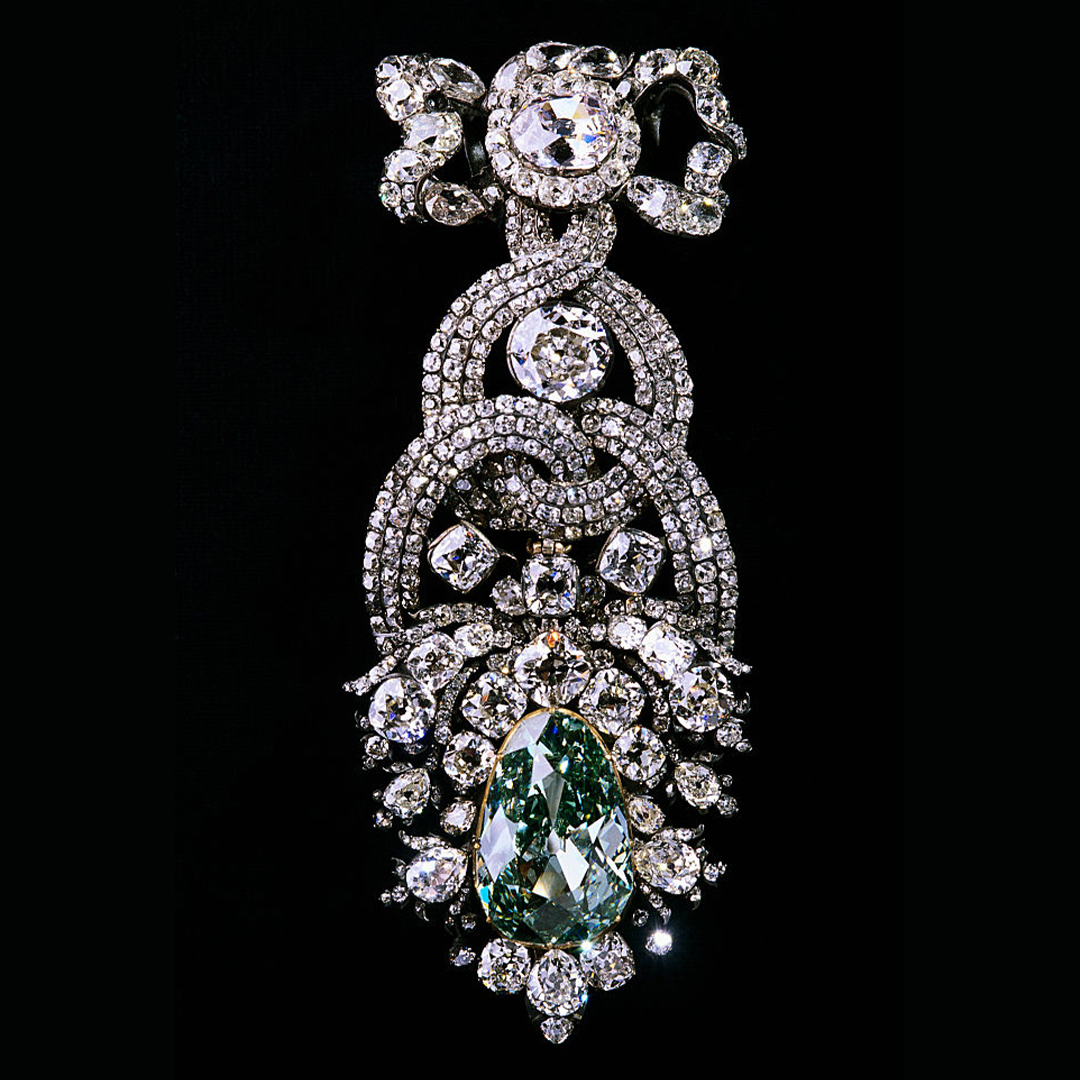
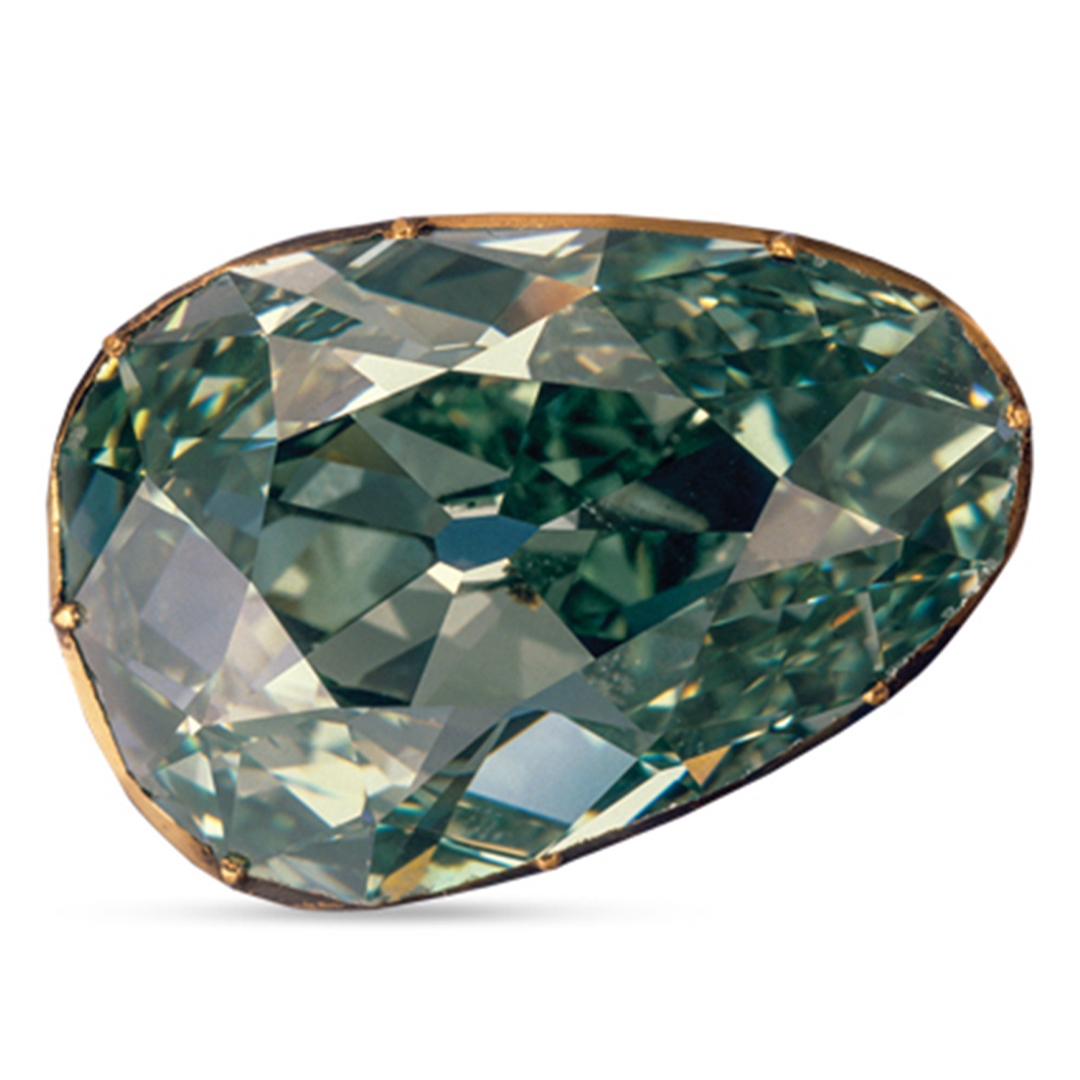
At 41 carats, the Dresden Green diamond is the largest known natural green diamond; its color is the product of natural radiation exposure within the earth. Unlike most green diamonds, whose color sits only at the surface and disappears during polishing, this stone carries its hue throughout, which is a near-impossible geological circumstance. Its known history dates to at least 1722.
Frederick Augustus II acquired it from a Dutch merchant at the Leipzig Fair in 1741, and in 1768, jewelers set it into a hat clasp surrounded by over 400 diamonds, where it remains. In November 2019, it narrowly escaped the infamous Green Vault heist as it was on loan at the Metropolitan Museum of Art at the time. It resides today in Dresden Castle, its home for nearly 300 years.
5. The Daria-i-Noor Diamond
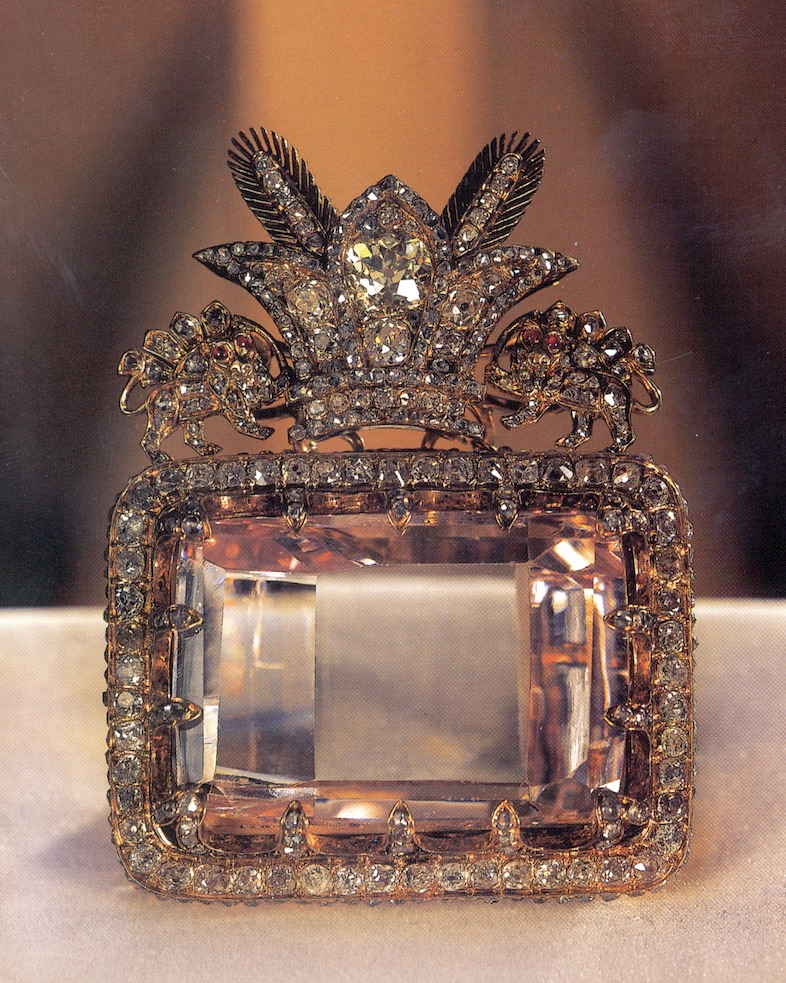
With an estimated weight of 182 carats, the Daria-i-Noor diamond (Sea of Light in Persian) stands as the largest known pink diamond in the world and one of the most historically important diamonds ever discovered. Miners likely discovered it in the early 1600s at the Kollur Mine, the most productive of the Golconda mines. It was likely unearthed in the early 1600s at the Kollur Mine and is believed to have been part of the Mughal Empire’s treasury, possibly mounted in the legendary Peacock Throne created for Emperor Shah Jahan.
Many historians believe the stone was originally the largest section of the legendary “Great Table” diamond, a massive 242-carat stone that was likely cleaved into two pieces: the Daria-i-Noor and the Nur-ul-Ain. The diamond passed through Persian hands after Nadir Shah invaded India and today sits in the Central Bank of Iran’s collection in Tehran, rarely seen by the public.
6. The Princie Diamond
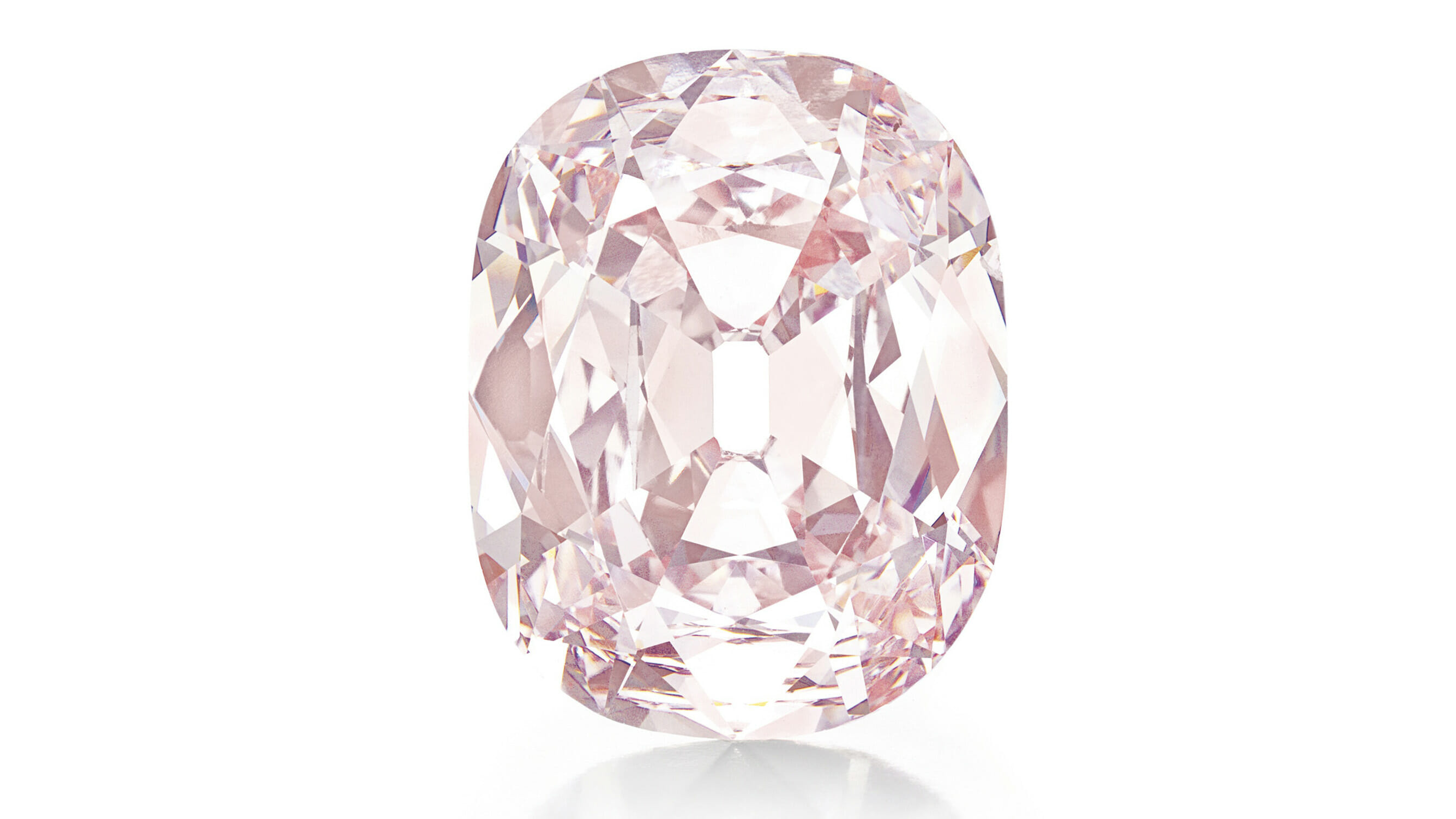
When Pierre Arpels purchased a magnificent 35-carat fancy intense pink diamond at Sotheby’s in 1960, he named it the Princie diamond after the 14-year-old Prince of Baroda, who attended the stone’s coming-out party at Van Cleef & Arpels in Paris with his mother. The stone’s story began 300 years earlier in the ancient Golconda mines and was recorded first in the Nizam of Hyderabad’s collection.
Technically, the Princie is world-renowned for its rare orange-pink fluorescence under ultraviolet light—a hallmark of the finest Golconda pinks. After passing through private hands in Italy, the diamond vanished in 2009, only to surface at Christie’s in 2013. Christie’s sold it for a record-breaking $39.3 million to the Qatari royal family, triggering an international legal battle over its ownership that took years to settle.
7. Le Grand Mazarin Diamond
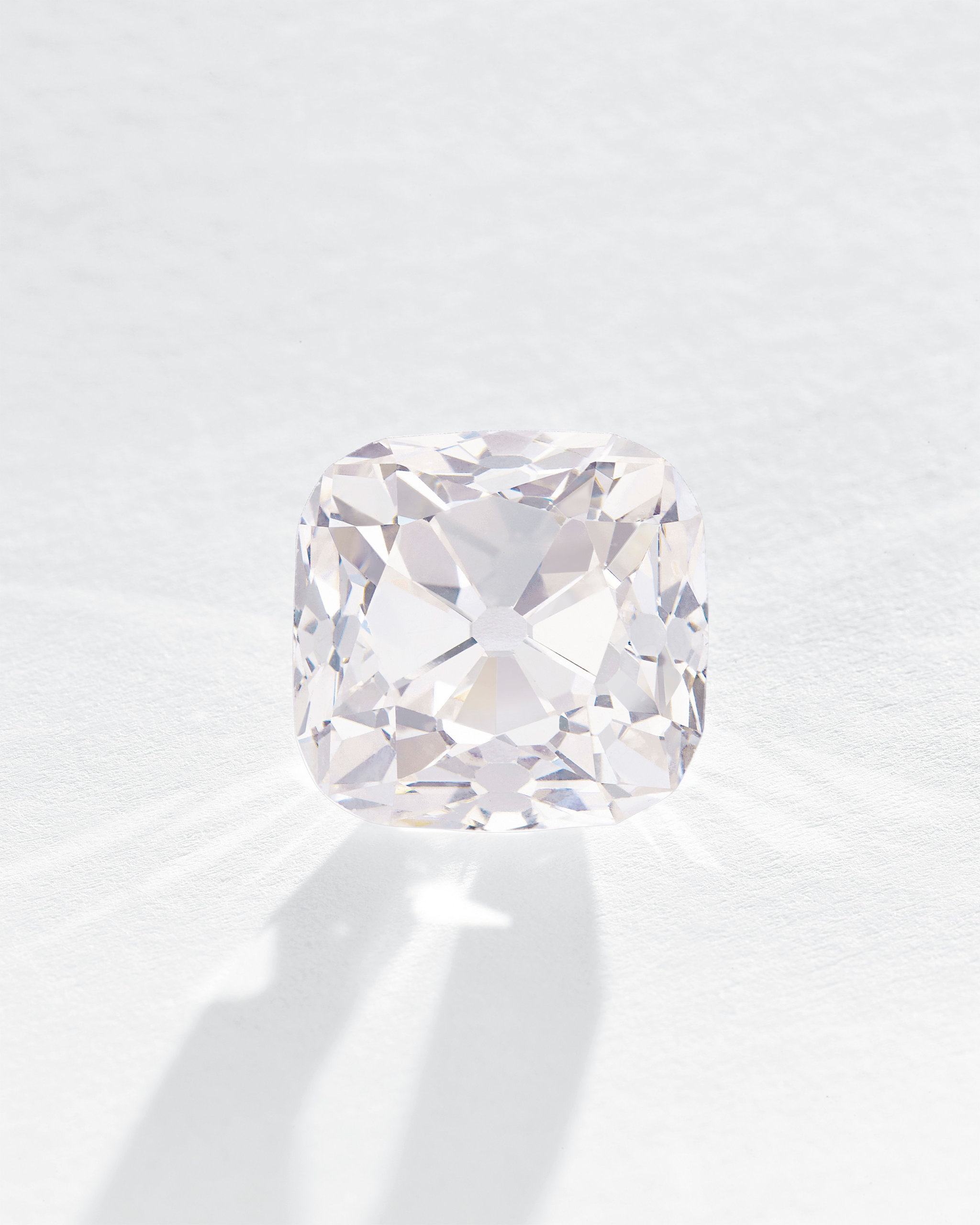
Le Grand Mazarin diamond is a 19.07-carat pink diamond of extraordinary pedigree. Recovered centuries ago in one of the Golconda mines, it graced the crowns of kings, queens, emperors, and empresses for over two hundred years, witnessing coronations, revolutions, and the rise and fall of empires. The diamond takes its name from Cardinal Jules Mazarin, Chief Minister of France, whose passion for extraordinary stones helped shape the French Crown Jewels.
Pink diamonds occupy the most elusive tier of fancy colors, their hue produced not by trace elements but by distortion in the crystal lattice during formation. Like many legendary Golconda stones, its soft pink hue is often accompanied by the distinct fluorescence that separates archival Indian stones from modern Australian pinks. Le Grand Mazarin was sold at Christie’s in Geneva in 2017 for $14.46 million and entered a private collection.
8. The Florentine Diamond
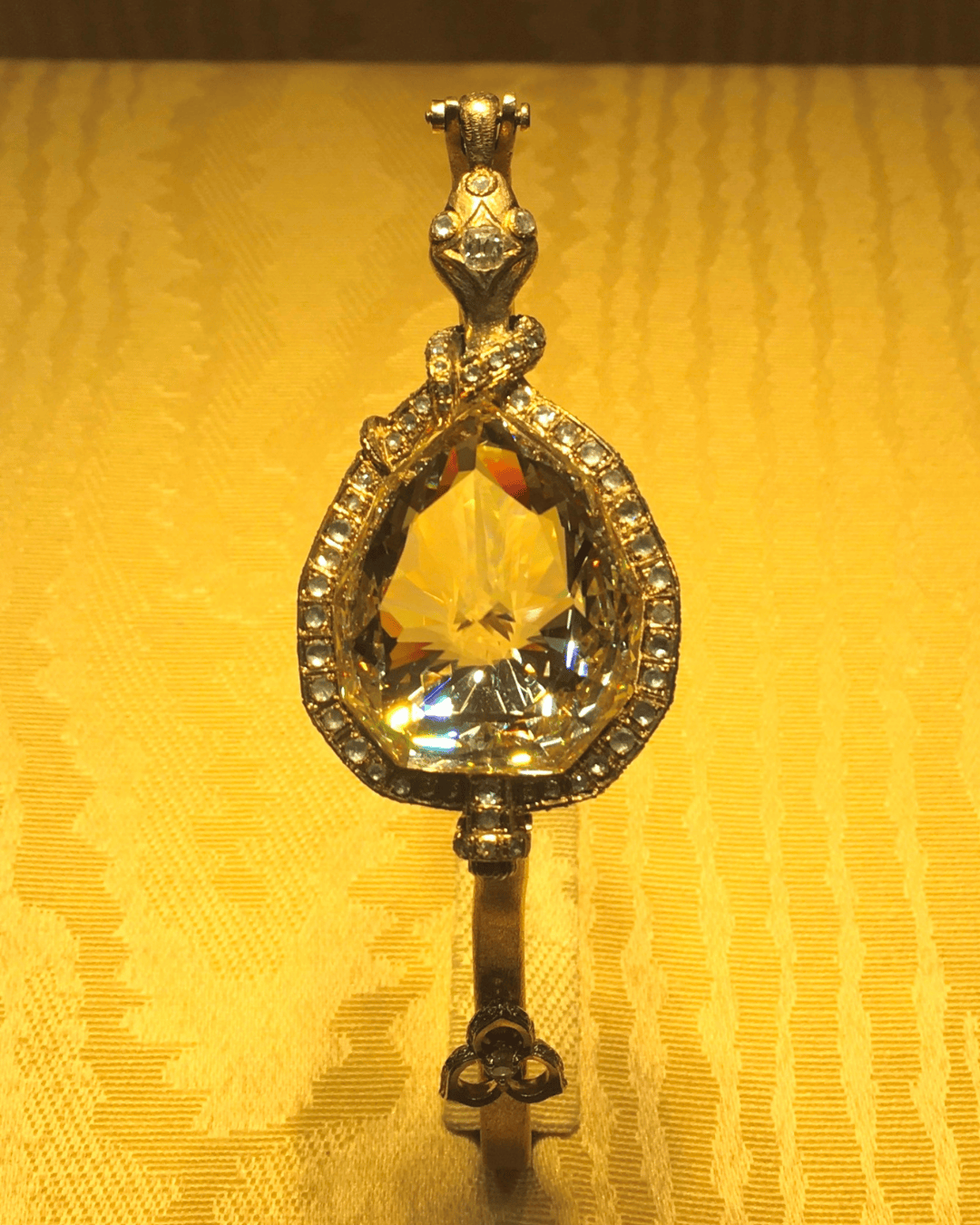
The Florentine Diamond’s long history began in India’s Golconda region. Likely discovered in the 15th century and described as a pale yellow stone with a hint of green, its first recorded mention dates to 1657, when Jean Baptiste Tavernier saw it among the treasures of Ferdinando II de’ Medici, Grand Duke of Tuscany. It passed to the Habsburg family and adorned the crown of Holy Roman Emperor Francis Stephen in 1745.
After the fall of the Austro-Hungarian Empire, the stone vanished. In 2025, the Habsburg family publicly revealed the Florentine for the first time in a century, and it had never left the family’s possession. It had been kept in a secure Montreal bank vault for a century, hidden for safekeeping by the family after Empress Zita carried it into exile. The Florentine Diamond’s golden hue is still radiant, its distinctive nine-sided double rose cut instantly recognizable from centuries-old illustrations.
9. The Sancy Diamond

The Sancy Diamond is not only one of the most storied gems from the Golconda mines, but one of the most legendary diamonds in history. The 55.2-carat pear-shaped pale yellow diamond passed between royals, was pledged to fund wars, stolen more than once, and even swallowed by a loyal servant to keep it from thieves. The stone touched the hands of Cardinal Mazarin, Louis XIV, Louis XVI, and Marie Antoinette before disappearing in the French Revolution. In 1906, William Waldorf Astor bought the Sancy as a wedding gift for Lady Astor, who wore it on a tiara. The French government purchased it in 1978, and it now lives in the Louvre Museum.
10. The Orlov Diamond/Great Mughal Diamond
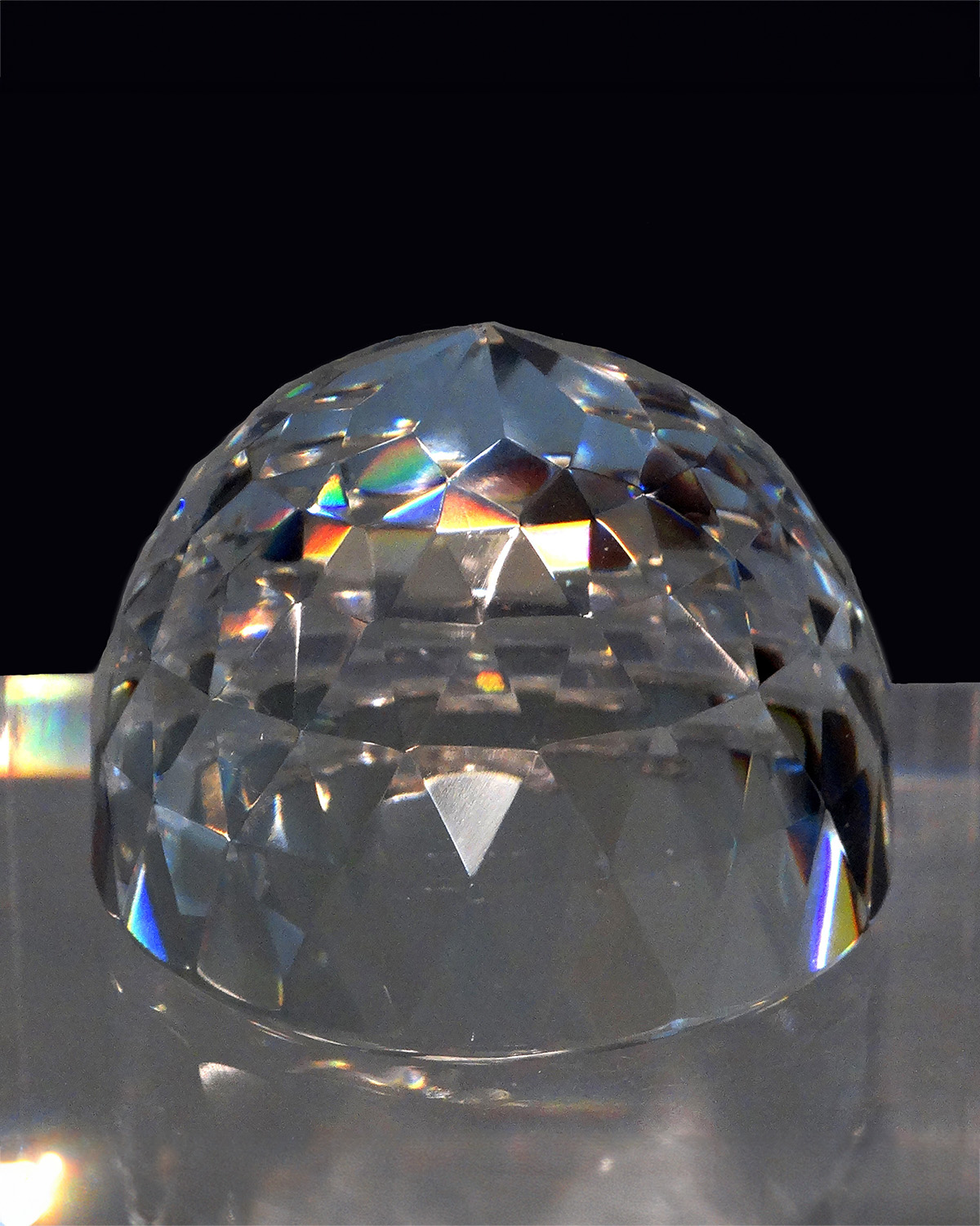
Perhaps no diamond from the Golconda mines has a more cinematic origin story than the Orlov, also known as the Great Mughal Diamond. This 189.62-carat rose-cut gem, flat on one side, was described by Tavernier in 1665 as “like half of a pigeon’s egg” and began as the sacred eye of a Hindu idol of the god Vishnu. Around 1700, a French soldier disguised himself as a worshiper, stole the stone, and fled India with one of the great diamonds of the ancient world.
It eventually reached Count Gregory Orlov, who purchased it for Empress Catherine the Great of Russia, hoping the gift would win her hand in marriage. She accepted the diamond but not the proposal. She placed it atop her Imperial Scepter in 1774 and gave it his name. It resides today in Moscow’s Kremlin Armory.
Notably, despite the shared name, the white Orlov is unrelated to the 67.50-carat Black Orlov diamond. The former is an archival treasure of the Golconda mines of the 17th century, the latter is a much later discovery with an entirely separate legend.