
Christie’s Just Sold the Azure Blue, the Largest Fancy Blue Diamond Ever Offered
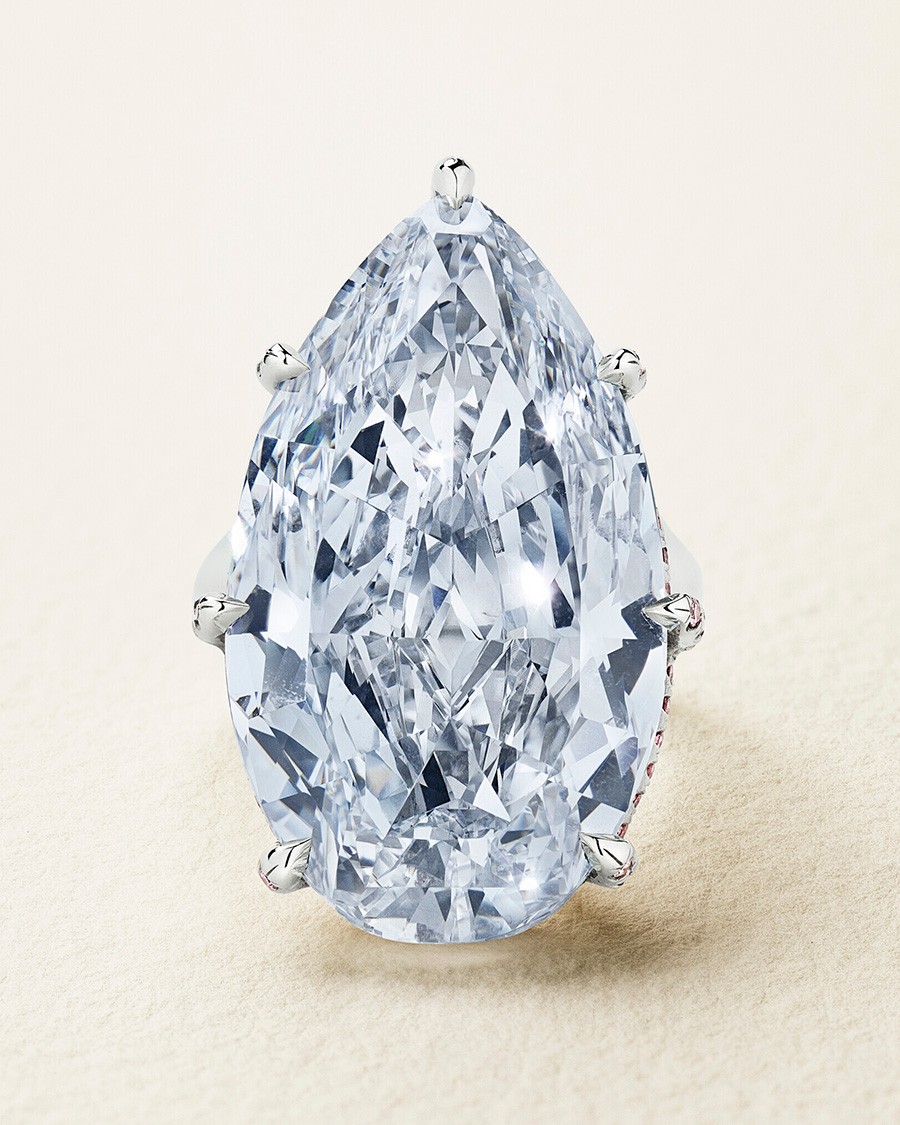
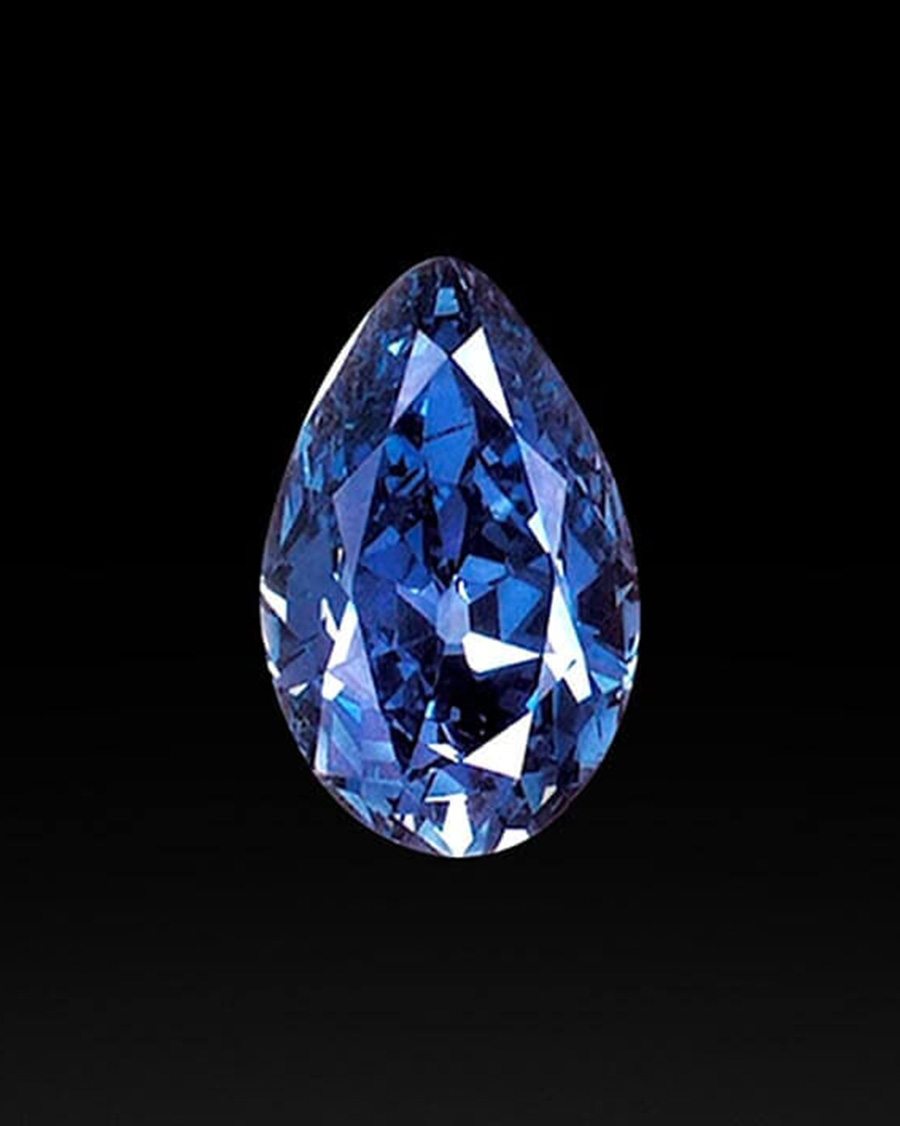
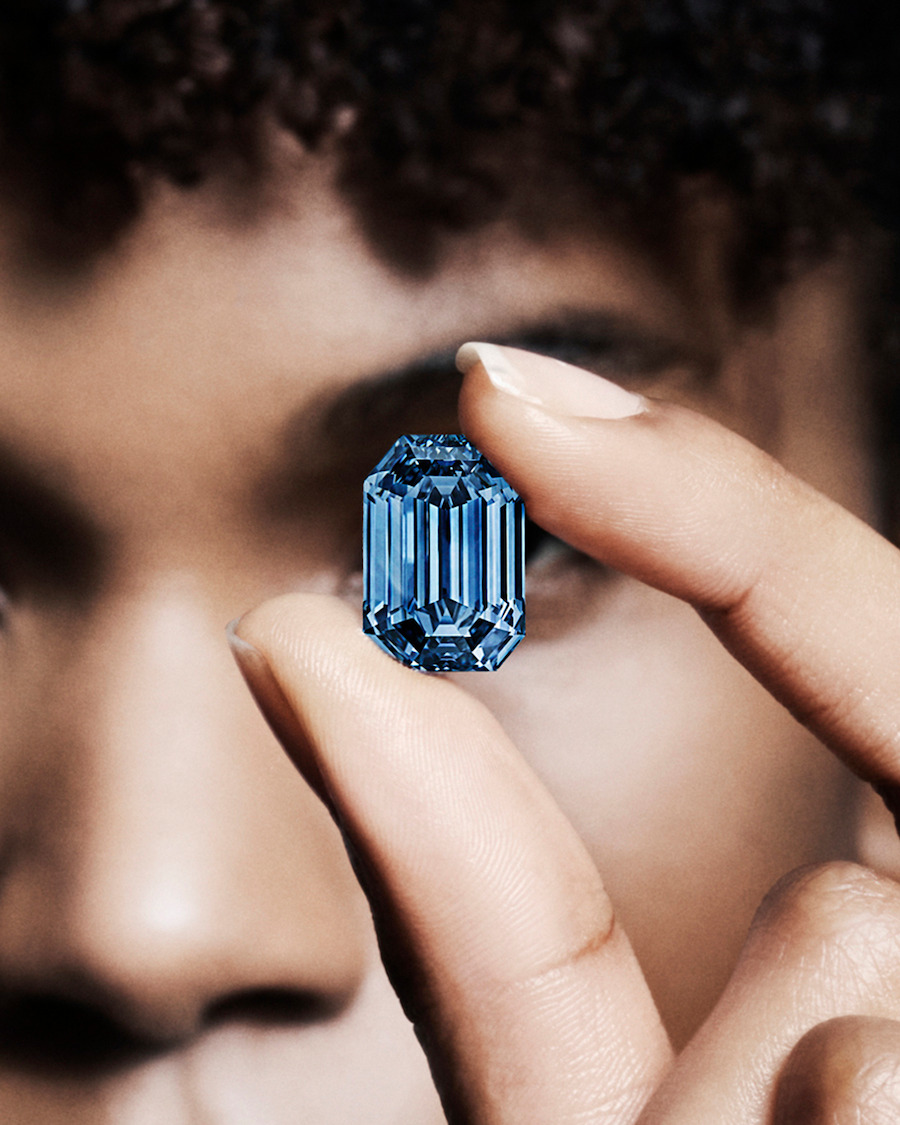
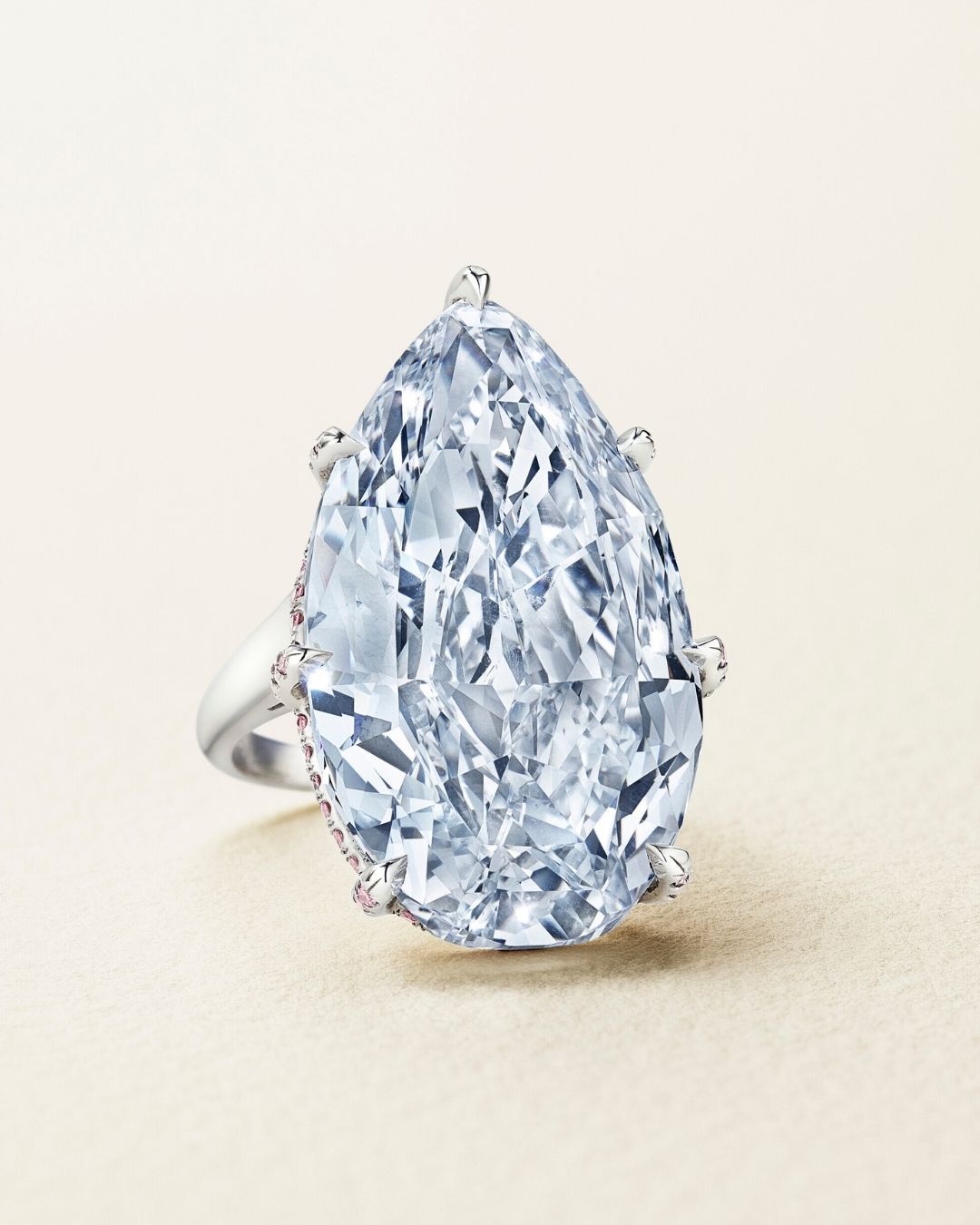
The Azure Blue diamond. (Courtesy of CHRISTIE’S IMAGES LTD. 2026)
Christie’s has just sold two natural blue diamonds in its much-anticipated Magnificent Jewels auction at Rockefeller Center on June 9—and the story behind their value is almost as fascinating as the stones themselves.
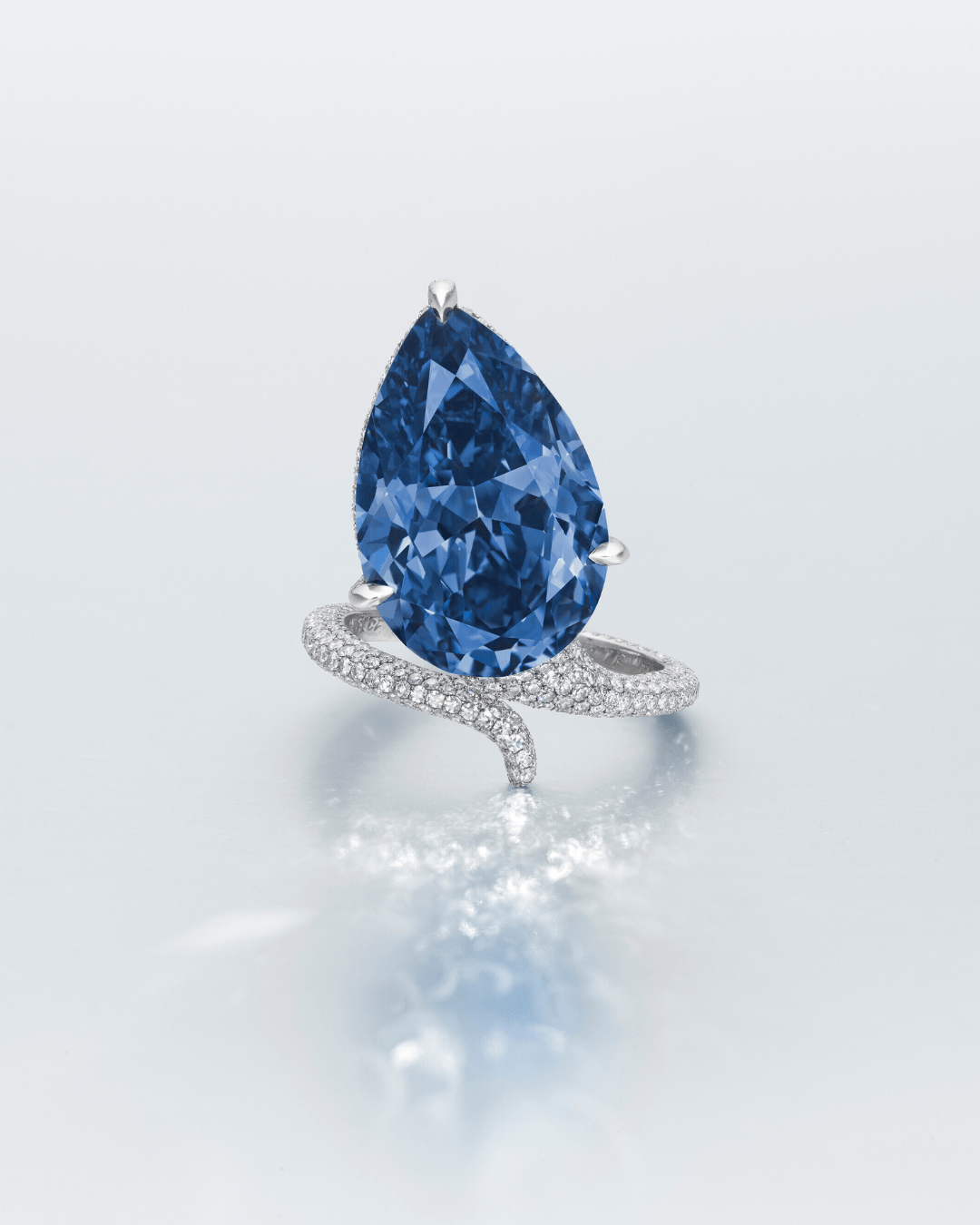
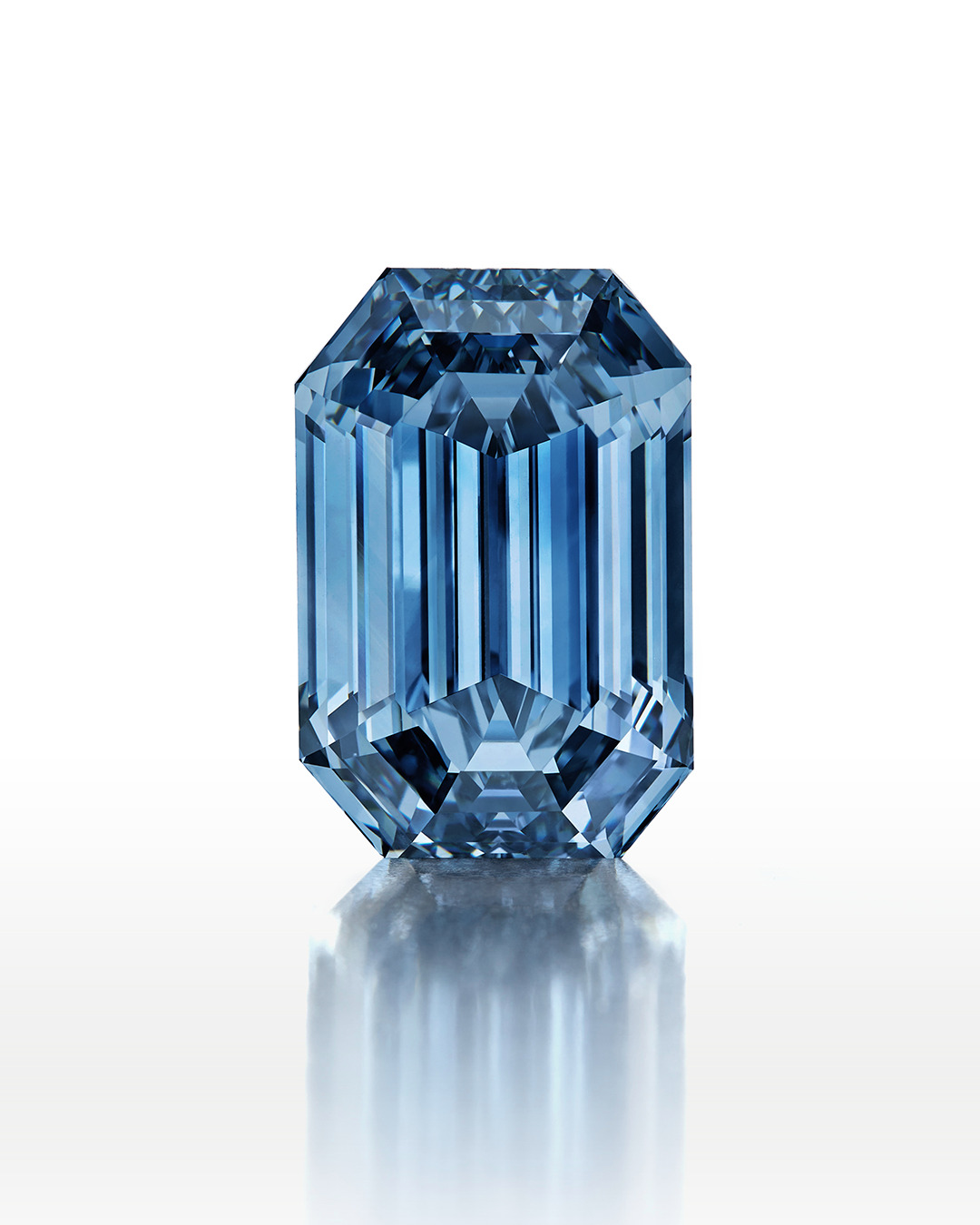
The headliner was the Azure Blue diamond. The 31.62-carat fancy blue pear-shaped diamond that Christie’s describes as the largest fancy blue diamond ever offered at auction. Its pre-sale estimate was $6.5 to $8.5 million. Sharing that estimate exactly was the 5.04-carat fancy vivid blue marquise-cut diamond also appearing in the same sale. When the hammer fell, the Azure Blue realized over $8.3 million, while the 5.04 carat realized over $8.1 million. Six times the size difference and a nearly identical result. And that, right there, is the story.
Meet the Expert
Claibourne Poindexter is the Senior Vice President and Senior Specialist for the Jewelry Department at Christie’s, where he oversees all jewelry sales across the Americas, focusing on growth and client engagement in the region.
Two Blue Diamonds, One Surprising Estimate

Anyone who follows the natural colored diamond market will immediately grasp what is happening here, but for everyone else, it requires a brief explanation. Blue diamonds get their color from boron, a trace element that occasionally enters a diamond’s crystal structure during its formation deep in the Earth’s mantle. Boron causes the stone to selectively absorb light at the red, orange, and yellow ends of the visible spectrum, leaving blue wavelengths to dominate what the eye perceives.
The process is extraordinarily rare. Blue diamonds primarily fall within the Type IIb classification, which accounts for fewer than 0.1 percent of all natural diamonds. Many Type IIb stones even conduct electricity, which is a physical property that makes them behave unlike almost any other gem material on Earth.
Within the world of blue diamonds, color saturation drives value as powerfully as size. GIA grades blue diamond color across a range that includes Fancy Light, Fancy, Fancy Intense, Fancy Vivid, Fancy Deep, and Fancy Dark. Fancy Vivid represents the pinnacle, the most saturated, most striking blue a natural diamond can achieve, and the rarest to find in nature.
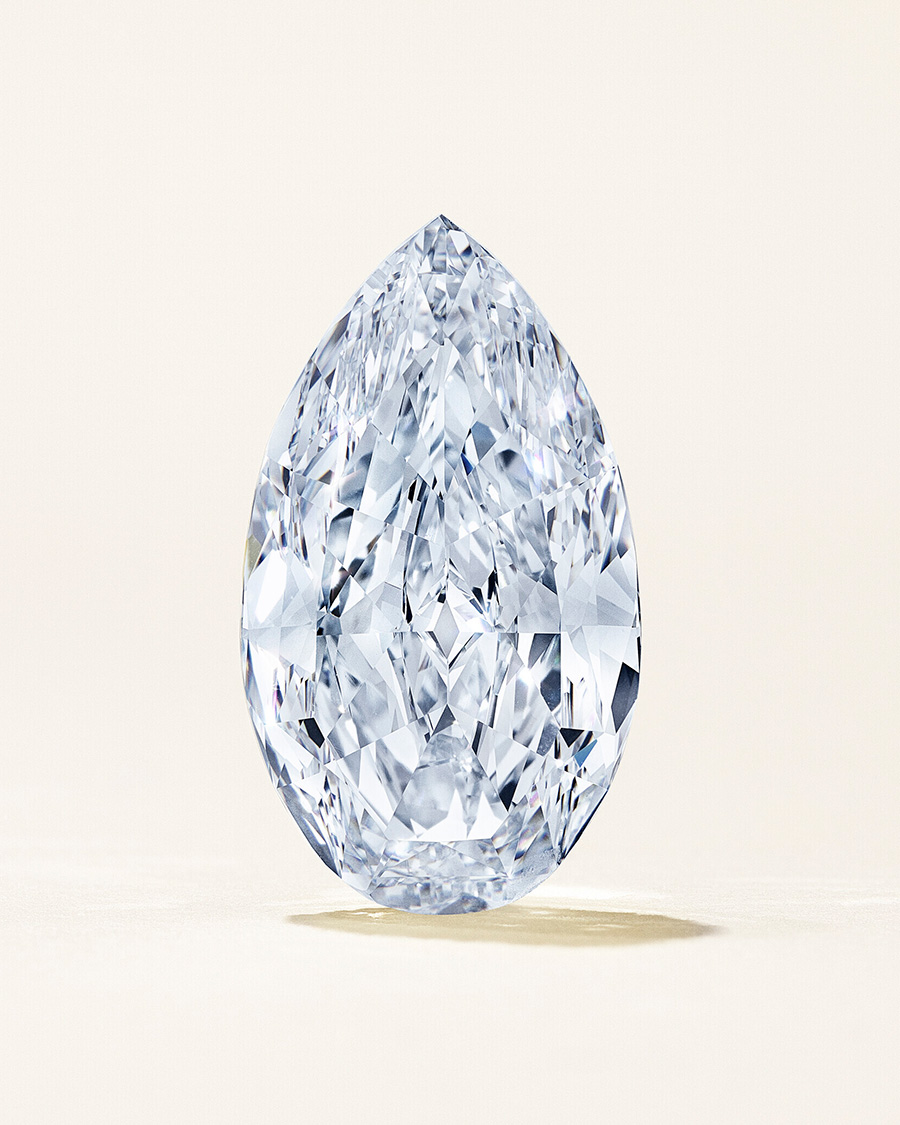
The Azure Blue diamond carries a Fancy Blue grade. Magnificent color, extraordinary size, and GIA-graded as potentially Internally Flawless. It’s a stone that any serious collector would stop everything to consider. The 5.04-carat marquise cut, however, carries a Fancy Vivid Blue grade. That single word — vivid — closes an enormous size gap.
A Fancy Vivid Blue of over five carats with VVS2 clarity, potentially Internally Flawless, and Type IIb classification is a stone of almost incomprehensible rarity. The difference in color grade between the two diamonds essentially offsets the difference in size, which is why their final sale prices were so close. Nature and the GIA grading scale have produced a perfect equilibrium between two completely different stones.
The Azure Blue diamond sits in a platinum ring featuring a hidden halo of natural pink diamonds. The setting complements its even, distinguished blue tone without competing with it. The 5.04-carat vivid blue marquise sits in a platinum ring with baguette side diamonds. Both settings let the diamonds do the talking.
How They Compare to the Most Expensive Blue Diamonds Ever Sold

To understand the excitement of this auction, it helps to look at how the market has valued the finest blue diamonds in recent auction history.
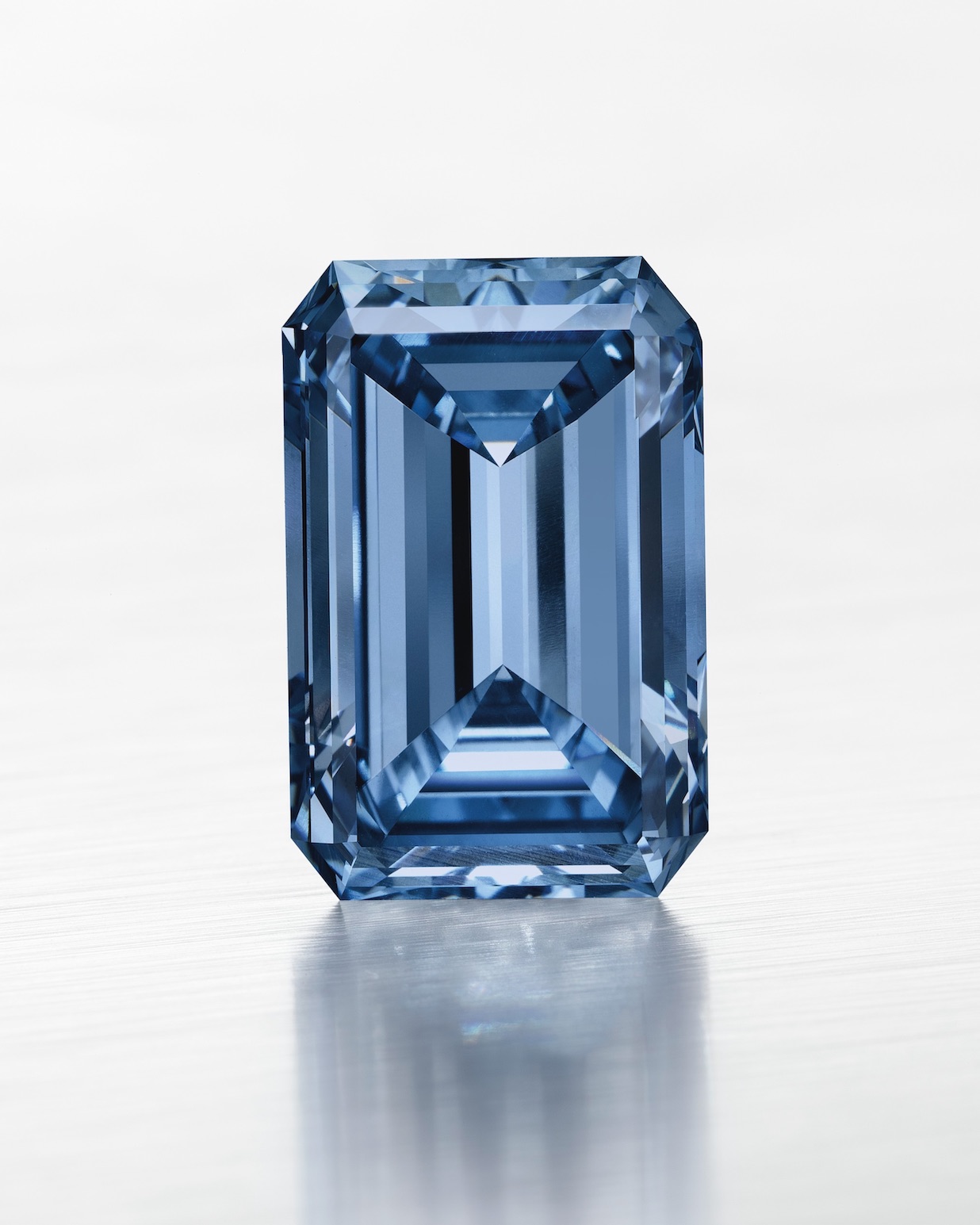
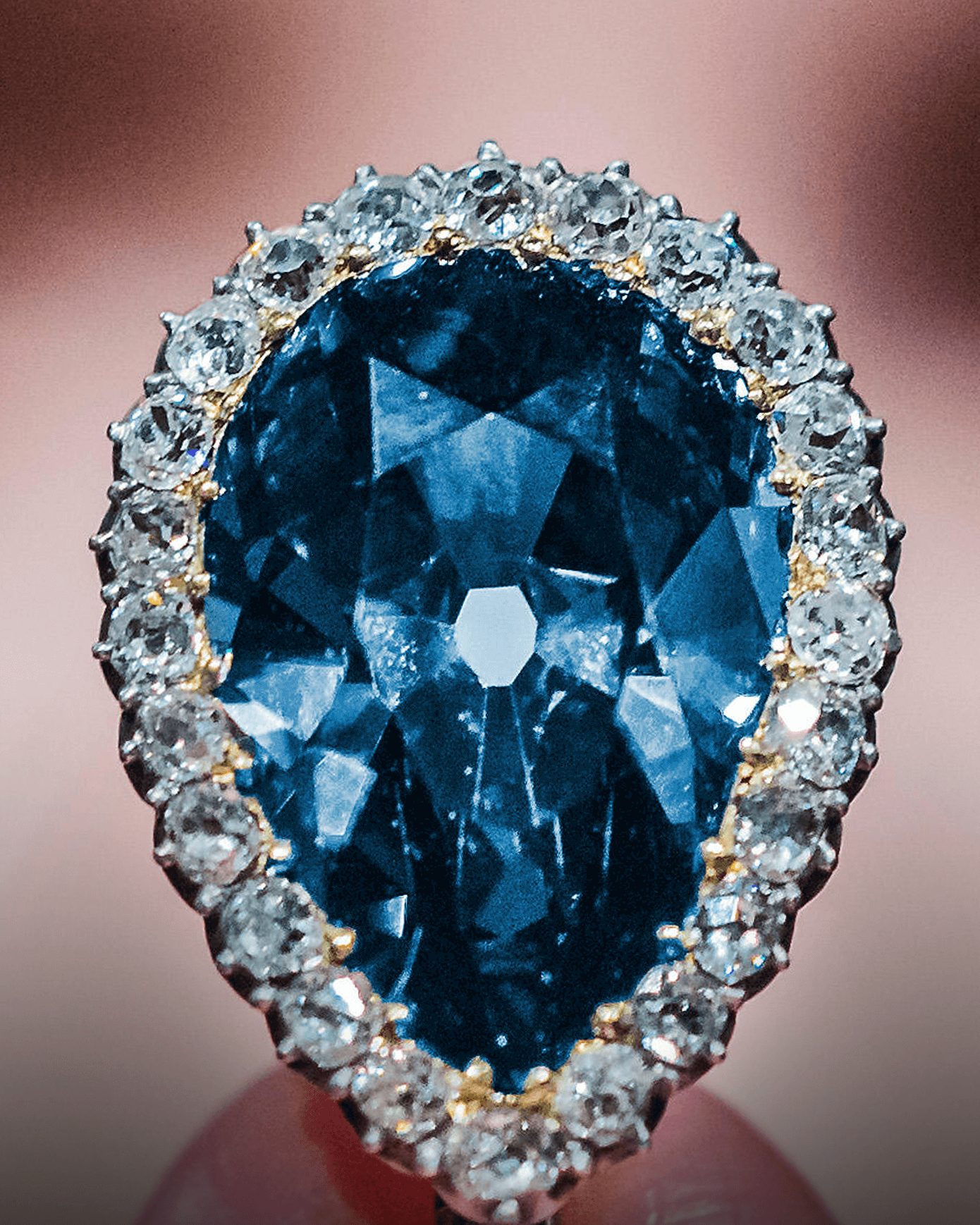
The blue diamond auction record currently belongs to the De Beers Blue, a 15.10-carat fancy vivid blue internally flawless Type IIb stone that sold at Sotheby’s Geneva in May 2023 for $57.5 million, clearing $3.8 million per carat. Before that stone rewrote the books, the Oppenheimer Blue held the title: a 14.62-carat fancy vivid blue VS1 that Christie’s Geneva sold in May 2016 for only slightly less at $57.5 million, making it the most expensive jewel sold at auction at that point in history.
A year earlier, in November 2015, the Blue Moon of Josephine, a 12.03-carat fancy vivid-blue internally flawless stone, sold for $48.4 million at Sotheby’s Geneva. Hong Kong billionaire Joseph Lau bought it for his twelve-year-old daughter and named it after her.
All three of those record-breaking stones carried Fancy Vivid Blue grades, which explains their extraordinary per-carat values. The Azure Blue diamond, at 31.62 carats, surpasses all of them in size by a significant margin, but its Fancy Blue rather than Fancy Vivid grade places it in a different value conversation because ‘vivid’ is rarer to find in nature.
The 5.04-carat vivid blue marquise, by contrast, sits in the same color tier as those record-breakers, making its estimate feel entirely justified.
What the Results Reveal About Blue Diamond Value
Christie’s has long held a leadership position in presenting some of the world’s most important natural colored diamonds, and the Magnificent Jewels sale at Rockefeller Center on June 9th reinforces that standing. Claibourne Poindexter, Head of Jewelry Americas at Christie’s, put it directly: “With its striking color, exceptional size, and elegant shape, The Azure Blue is a rare masterpiece of nature. As the largest Fancy Blue diamond ever offered at auction, Christie’s is honored to present this superb stone to a new generation of collectors this June.”
The Azure Blue diamond and its sale alongside a Fancy Vivid Blue of genuine significance made the June 9 auction one of the most important single sessions for natural blue diamonds in recent auction history.