
Fashion Revolutionary Elsa Schiaparelli’s Hidden Influence on the Jewelry World
While Elsa Schiaparelli left an undeniable and everlasting mark on fashion and the way we dress, the Surrealist designer also made an impression on the jewelry world, championing iconic creators and even inspiring landmark designs we continue to exalt today.
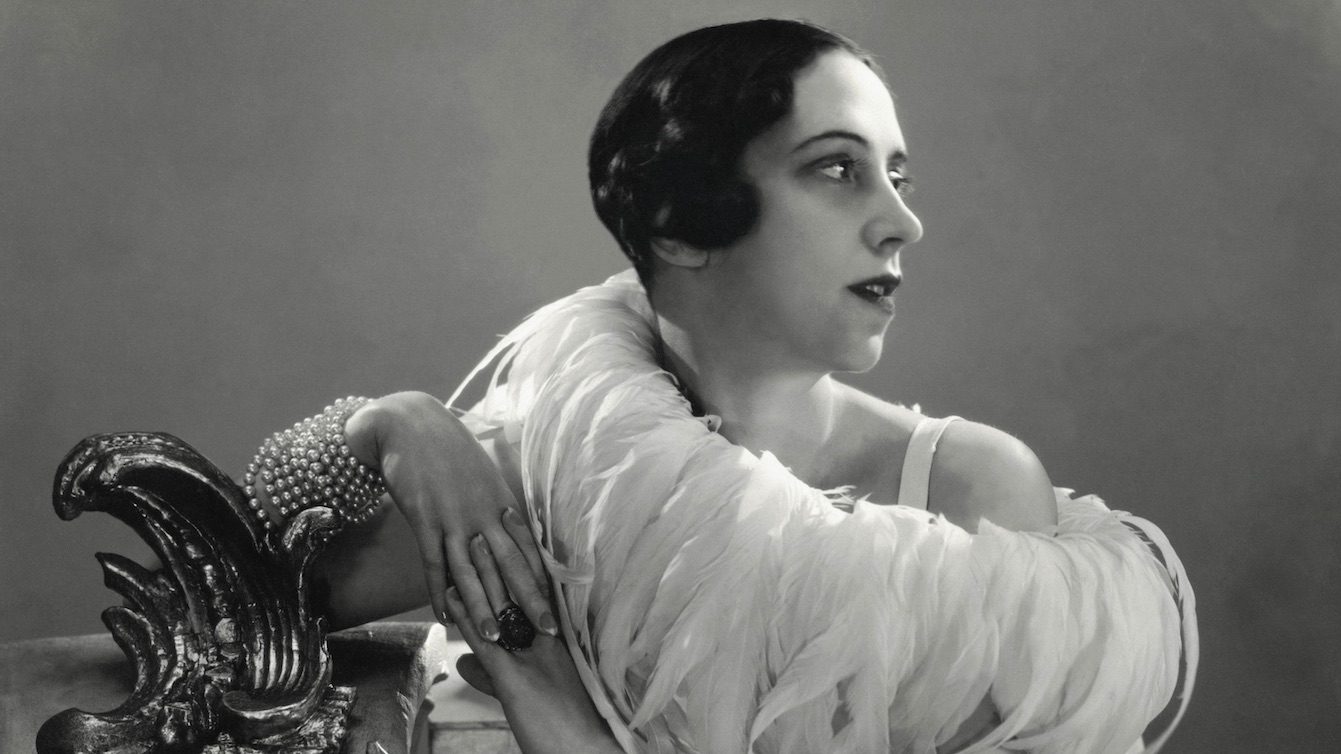
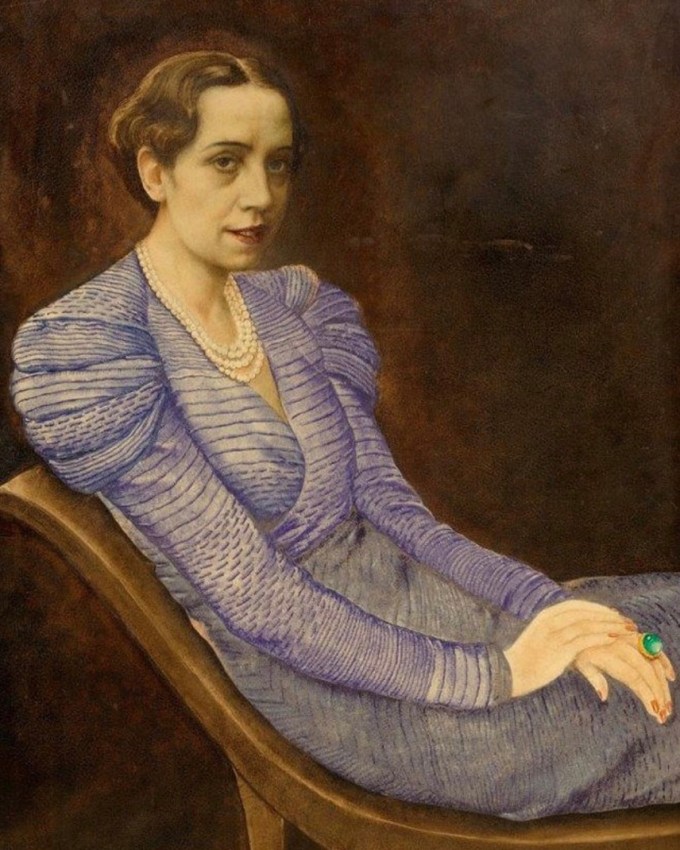
Elsa Schiaparelli (Photo by George Hoyningen-Huene/Condé Nast via Getty Images)
Legendary fashion designer Elsa Schiaparelli will forever be remembered by the fashion industry as a creative trailblazer, forging a Surrealist path through style and the way we express ourselves. Her influence, however, was far from just the confines of the fashion world – she also left an indelible mark on jewelry, uplifting burgeoning talents like Suzanne Belperron and Tiffany’s own Jean Schlumberger, as well as inspiring designs as enduring as the Van Cleef & Arpels Zip Necklace.
Meet the Author

- Hannah Militano covers diamond jewelry trends, the fashion industry, pop culture, and celebrity news.
- She holds a Bachelor’s degree from the Fashion Institute of Technology.
- As a journalist, her work has been featured in publications such as Editorialist, Carine Roitfeld’s CR Fashion Book, L’Officiel USA, Grazia USA, Coveteur, and more.
This year, the V&A Museum in London is hosting the UK’s first exhibition on the Italian-born French couturière, titled “Schiaparelli: Fashion Becomes Art,” spanning from the 1920s to today, celebrating her innovative influence. The exhibit follows her eponymous fashion house’s revolutionary origins and its evolution under current creative director Daniel Roseberry, who consistently pays homage to Schiaparelli’s early design codes.
Elsa Schiaparelli and Salvador Dalí Created Surrealism’s Most Iconic Partnership
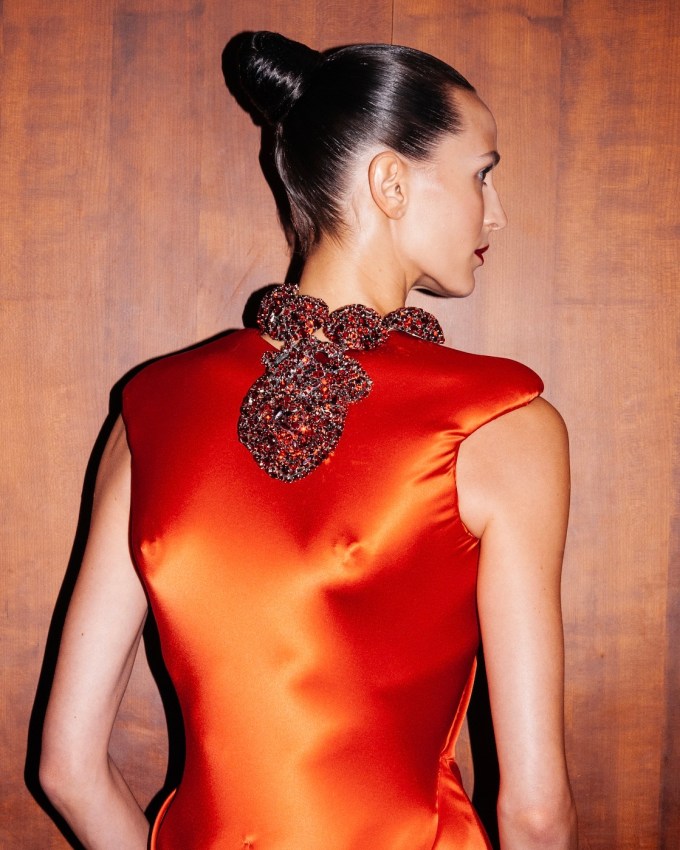
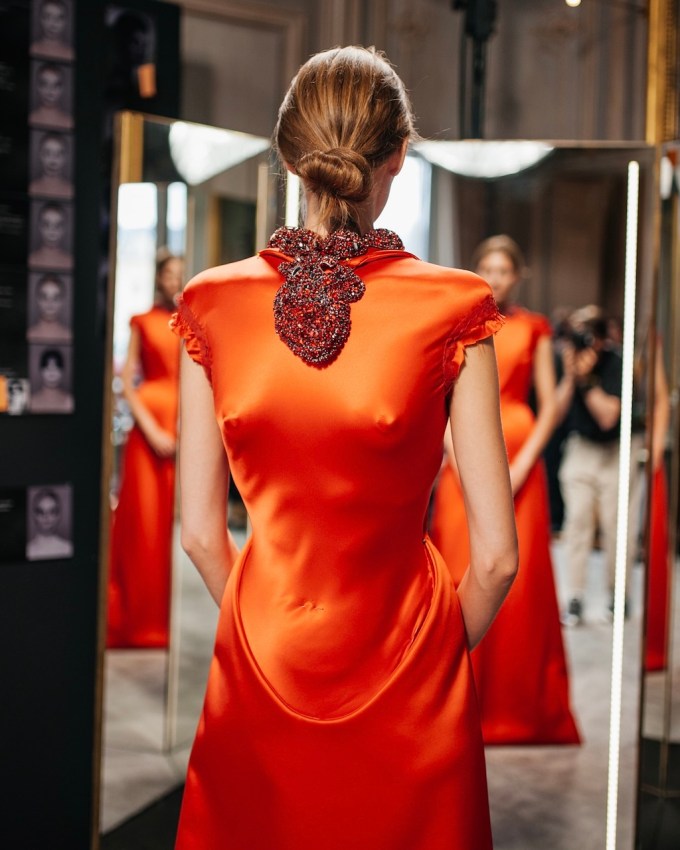
Last July, Schiaparelli creative director Daniel Roseberry unveiled his Haute Couture Fall/Winter 2025–2026 collection, titled “Back to the Future,” during Paris Fashion Week.
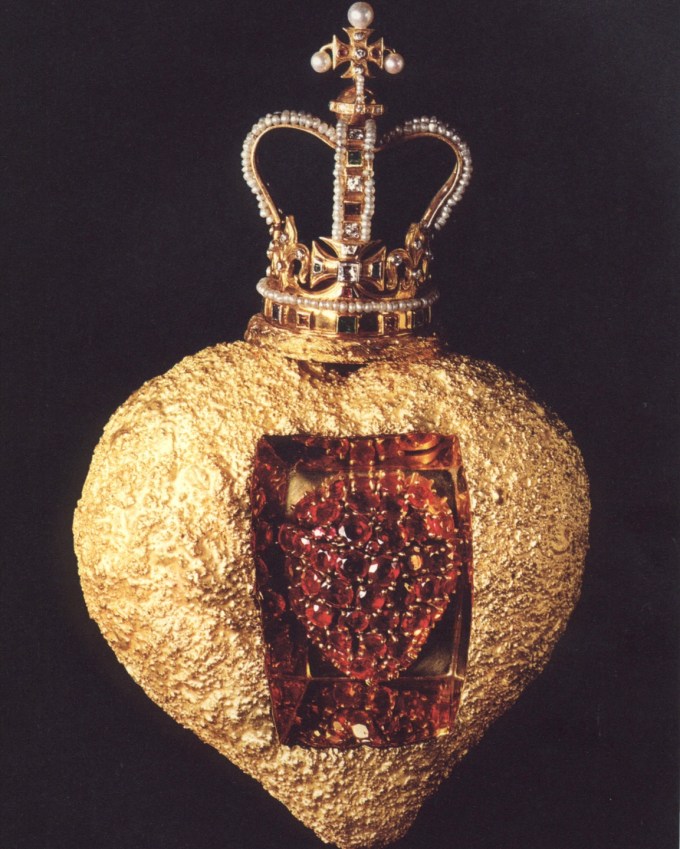
Through a sea of black and white ensembles came Look 24. The red satin trompe l’oeil backwards dress featured a corseted front and a back with molded breasts. The look was complete with a red rhinestone human heart necklace, beating with mechanical pulsations. The necklace was a clear homage to Schiaparelli’s close collaborator Salvador Dali’s 1953 piece, “The Royal Heart.”
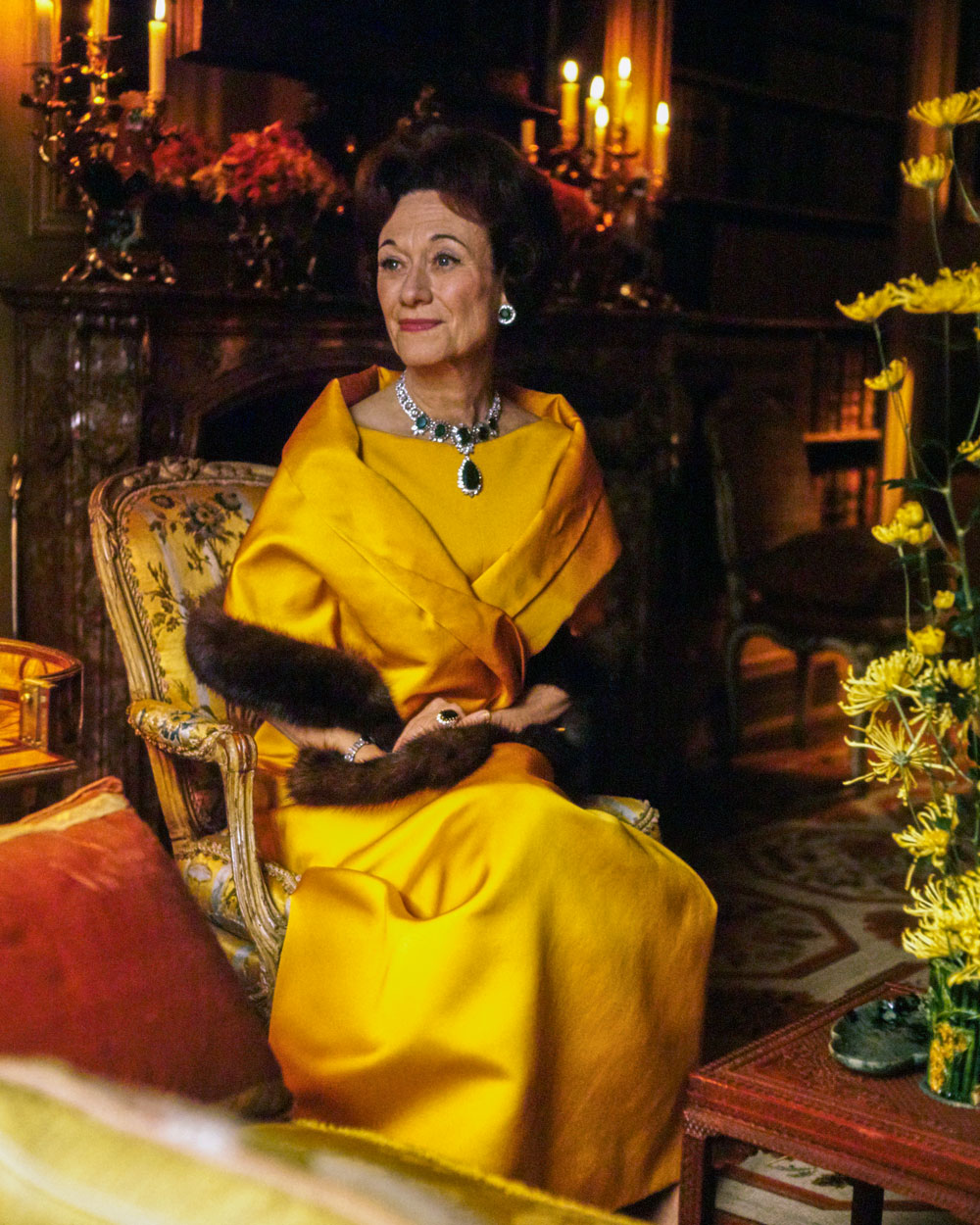
A fellow leader of surrealism, the Maison’s founder and eternal inspiration, Elsa Schiaparelli, was a close friend and collaborator of Dali. Together, the pair created the “lobster dress” made famous by American socialite Wallis Simpson, the Duchess of Windsor, who married into British royalty with Edward VIII.
“The value of his pieces lies in his ideas,” says Carol Woolton, author and podcaster of If Jewels Could Talk. “He was a significant figure at the time in the avant-garde scene, influencing designers such as Elsa Schiaparelli, and I’d argue that he still does.”
On display at the Dalí Theatre and Museum in Figueres, Spain, the artwork features a textured 18-karat yellow gold heart topped with a regal crown set with natural diamonds, pearls, sapphires, emeralds, aquamarine, and amethyst. At its center, a carved compartment houses a ruby-red heart that appears to beat, powered by a mobile and reducer mechanism.
Elsa Schiaparelli Discovered Tiffany & Co. Designer Jean Schlumberger
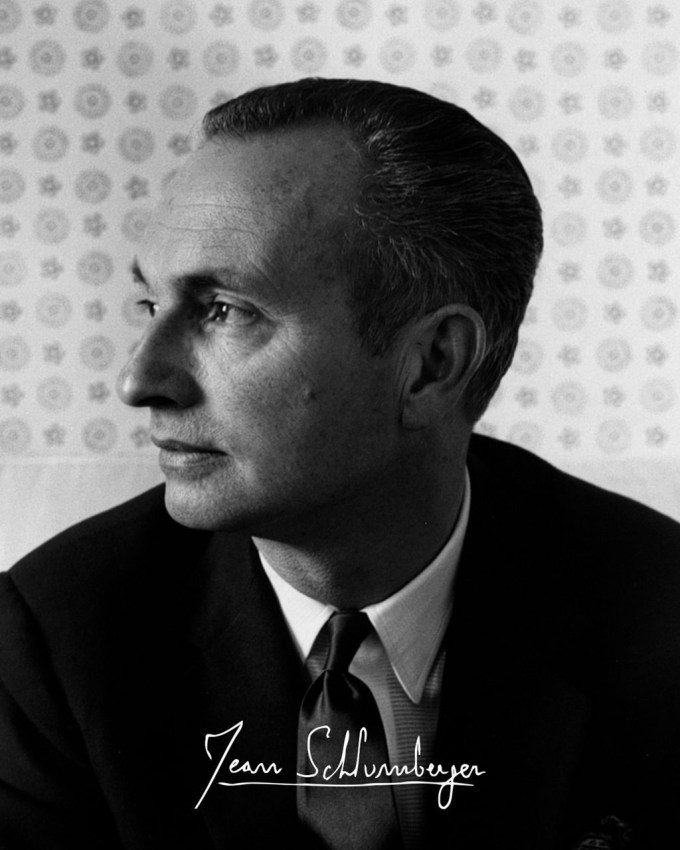
One of the most celebrated and gifted artists of the 20th century, Tiffany & Co. designer Jean Schlumberger began working for French couturier Lucien Lelong before landing a position at a Parisian art publishing house. Eventually, he opened an atelier on rue de la Boétie, swiftly becoming an in-demand purveyor of exceptional jewelry for the Parisian elite. He even designed a pair of earrings for the Duchess of Kent, and jewels for style icon Mona Bismarck, which caught the eye of fashion designer Elsa Schiaparelli. That’s when Schlumberger really cut his teeth.
In 1937, Schiaparelli enlisted Schlumberger to lead the design for her collections of surrealist buttons and costume jewelry. He would rummage through Parisian flea markets for Meissen porcelain floral motifs.
He created the famed Schiaparelli Haute Couture Harlequin clips for her Modern Comedy collection in 1939. He also created the Pine Cone necklace for Schiaparelli’s Pagan collection, credited as “Schlumberger for Schiaparelli.”
But just as his career in Paris began to take off, he was called to serve the French forces in World War II. Upon his homecoming, Schlumberger decided to move to New York City to open his very own jewelry salon. In 1956, Tiffany chairman Walter Hoving struck gold when he discovered the self-taught French-born jewelry designer and brought him on board, inviting him to join as Vice President.
How Elsa Schiaparelli Inspired the Van Cleef & Arpels Zip Necklace
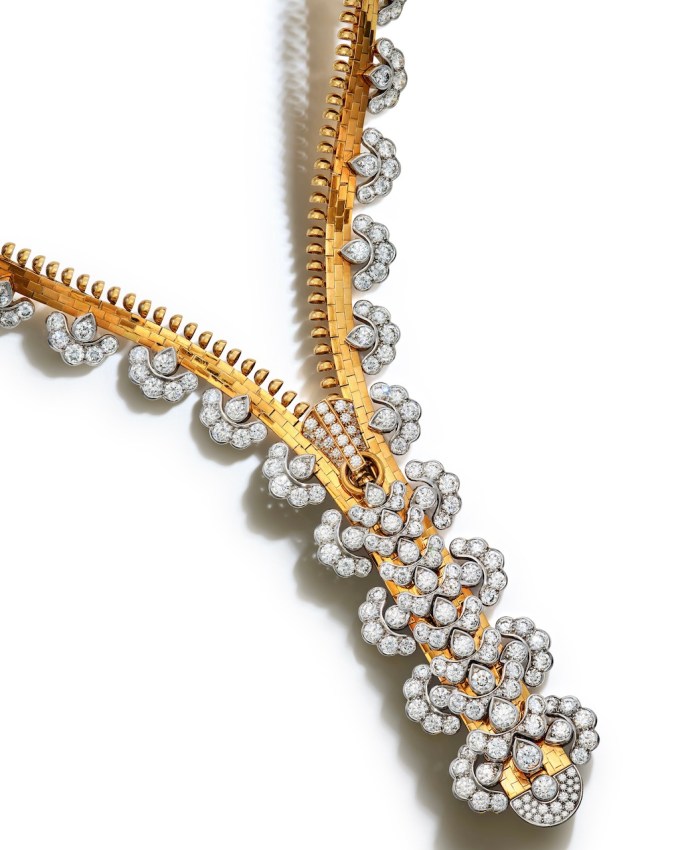
The fruition of the Van Cleef & Arpels Zip Necklace is the stuff of high fashion legend. Wallis Simpson, the Duchess of Windsor, noticed a visible zipper on a dress created by Schiaparelli, who was one of her favorite couturières. In 1938, she decided to coax her friend, then artistic director of Van Cleef & Arpels, Renée Puissant, about how the humble zipper had become a focal point of Schiaparelli’s recent couture lines. She felt it could be transformed into an incredible piece of jewelry. The Maison eventually fulfilled that wish and made an accessory far beyond the Duchess’ imagination.
Elsa Schiaparelli Helped Make Suzanne Belperron a Jewelry Legend
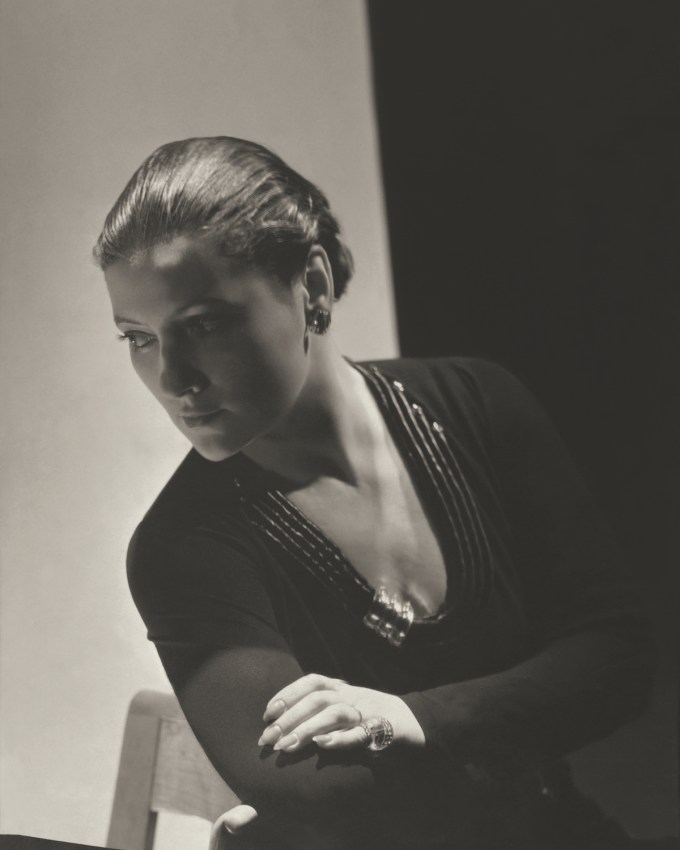
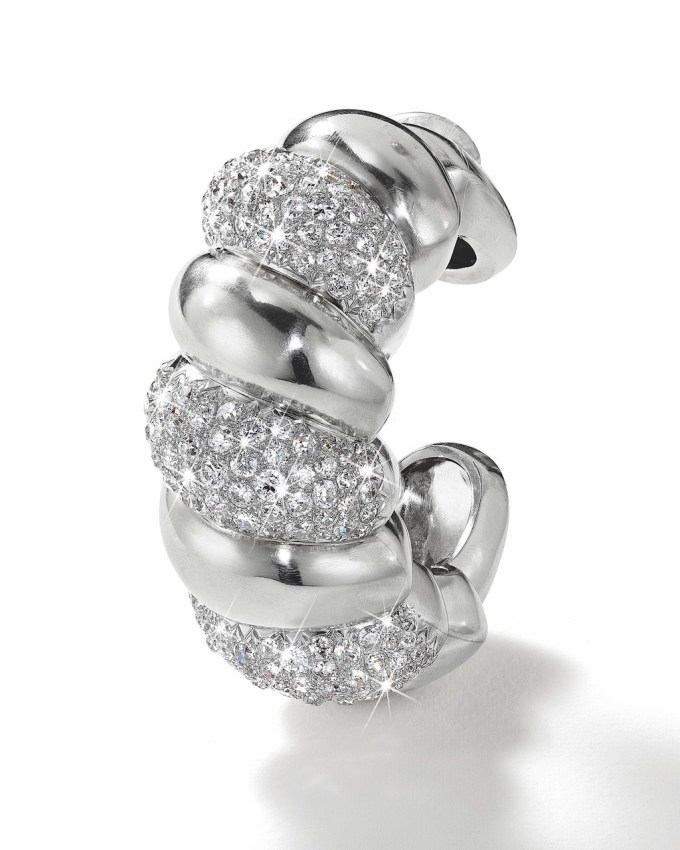
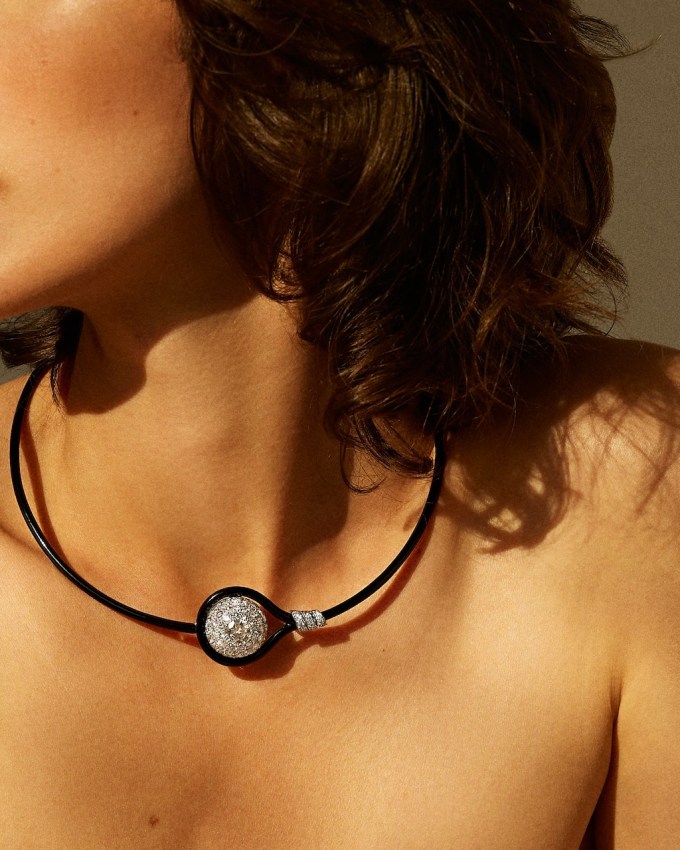
Despite being one of the most innovative jewelers of the 20th century with devoted clients like the Duke and Duchess of Windsor, Elsa Schiaparelli, and Karl Lagerfeld, Suzanne Belperron’s name remains relatively unknown outside the circle of jewelry collectors.
After her career gained momentum in the early 1930s, Belperron created the Torsade Cuff, which is widely considered emblematic of her sculptural, fluid, and innovative approach to jewelry design. Some of her earliest diamond Torsade Cuffs were notably commissioned by fashion visionary Elsa Schiaparelli and style icon Millicent Rogers. The piece has since become synonymous with Belperron’s bold and modern aesthetic.
By 1933, Belperron created the beloved Toggle Torque Necklace. That year, Vogue Paris declared, “Let us rejoice, the year 1933 marks the revival in the art of jewelry.” The editorial spread featured images of avant-garde fashion designer Schiaparelli modeling her very own suite of Belperron’s natural diamond and black lacquer jewels.