< Science of Diamonds / Colored Diamonds
Three Billion Years in the Making: The Black Falcon Diamond
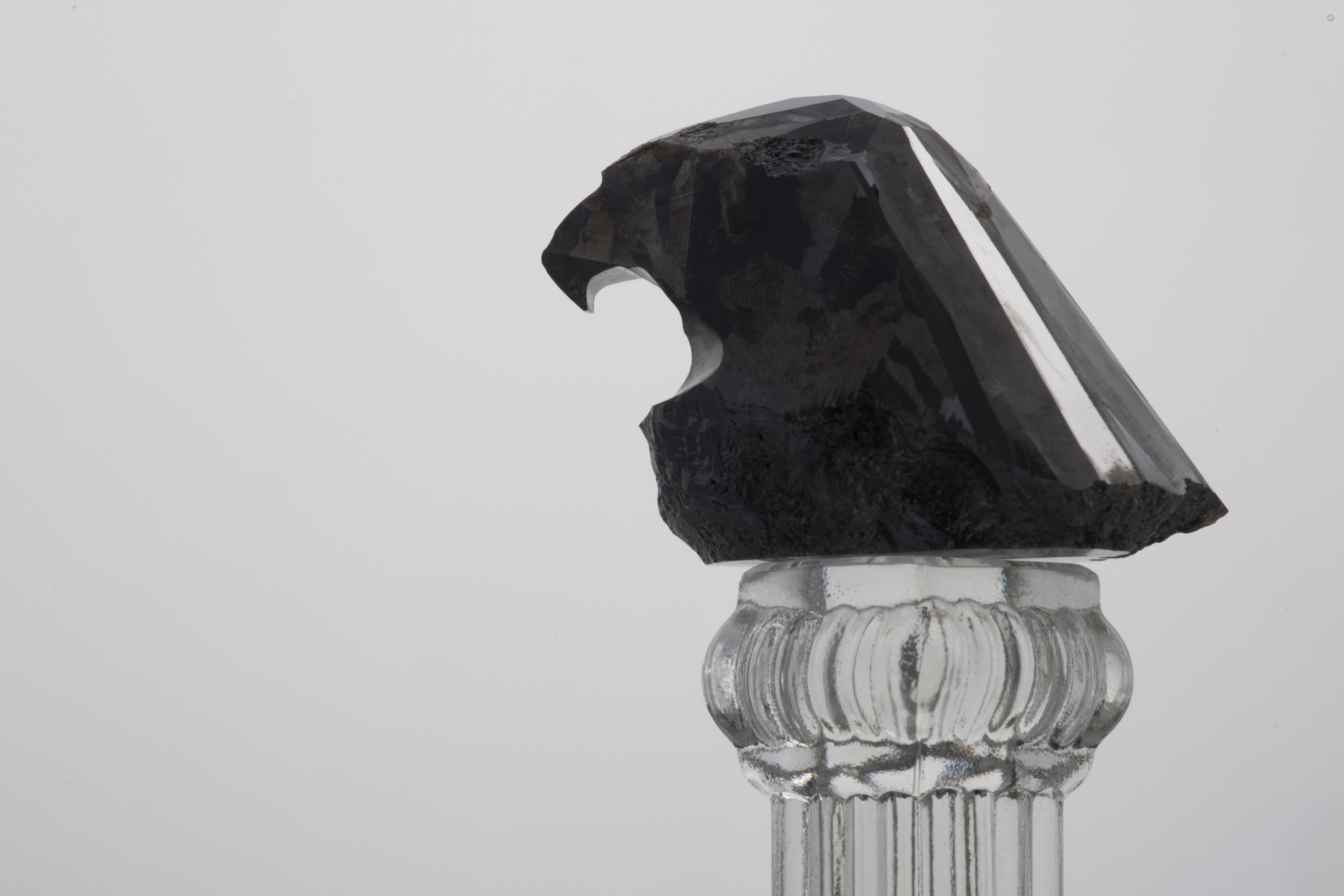
The world’s largest cut black diamond was transformed into a fierce, elegant falcon’s head.
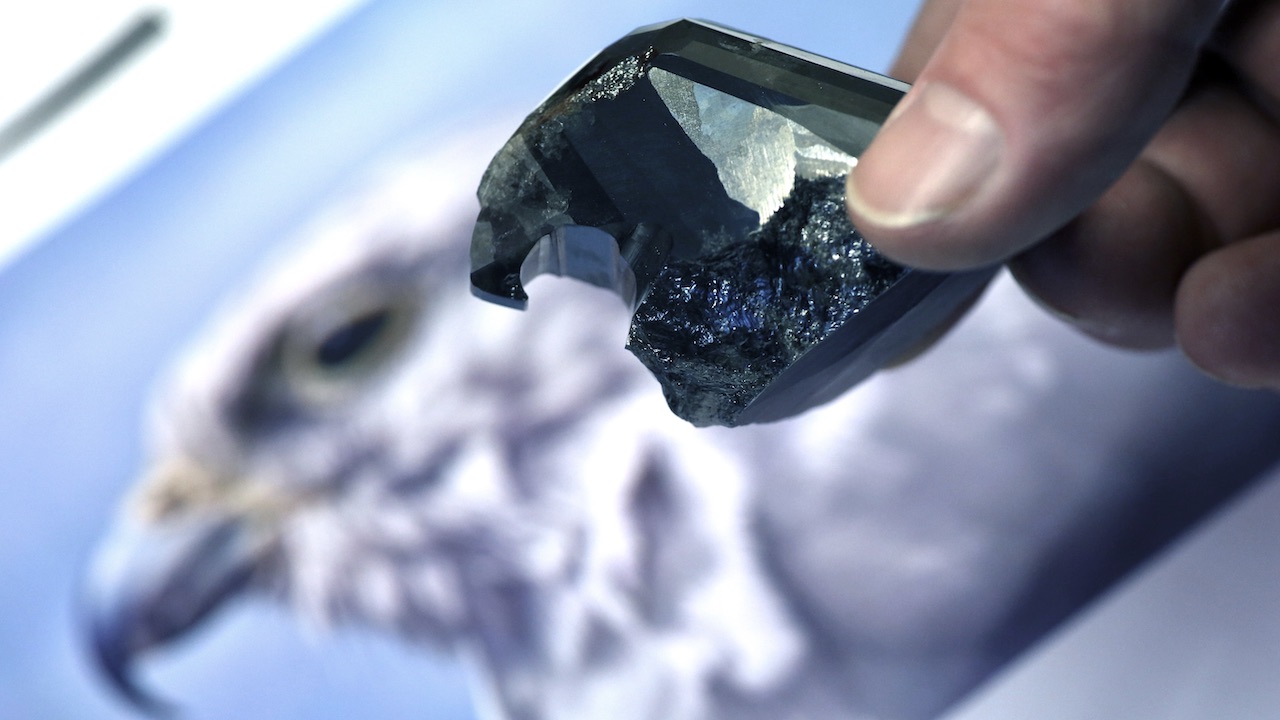
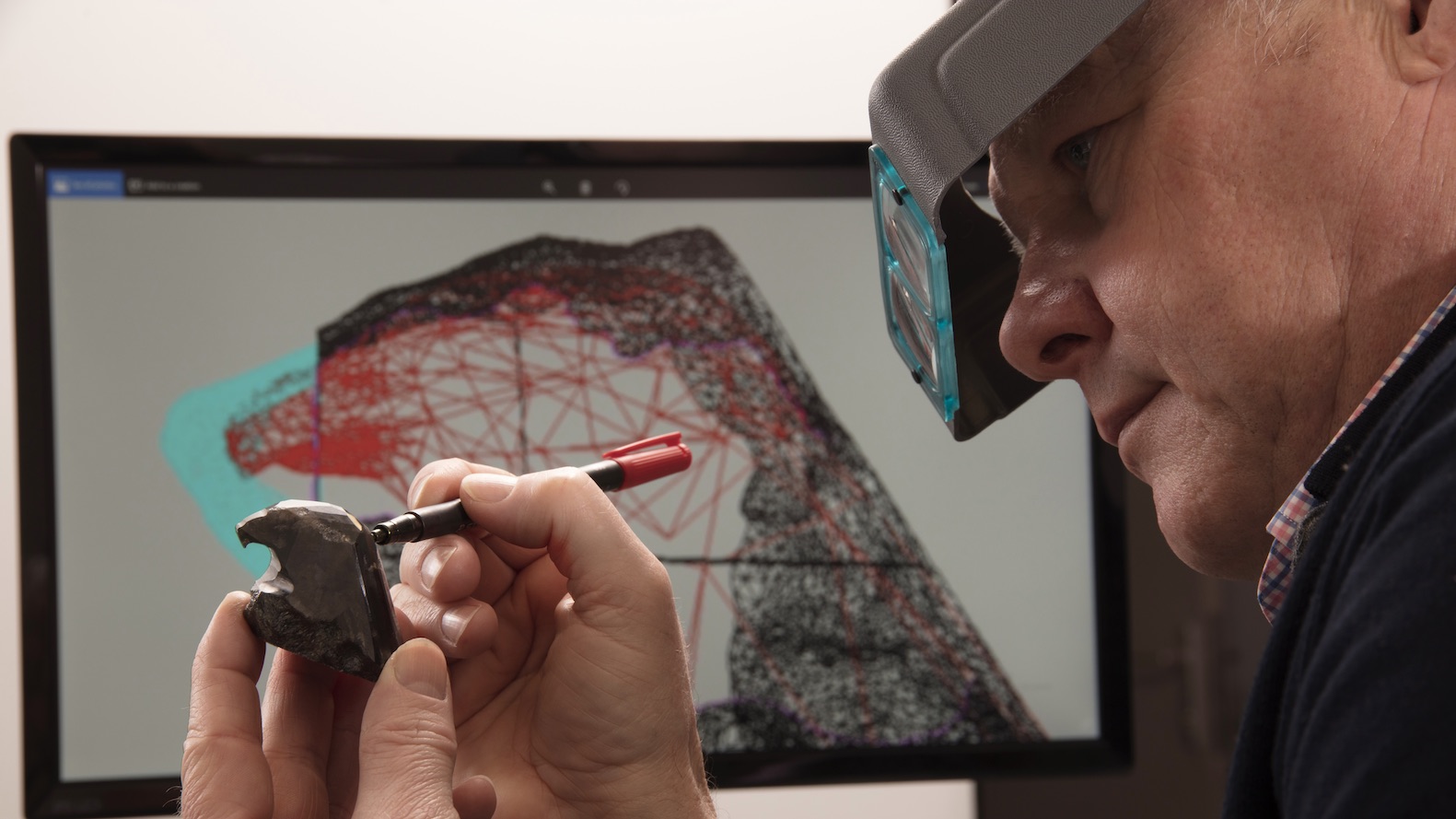
Peter Herbosch inspecting the Black Falcon Diamond. (Courtesy of Donald Woodrow)
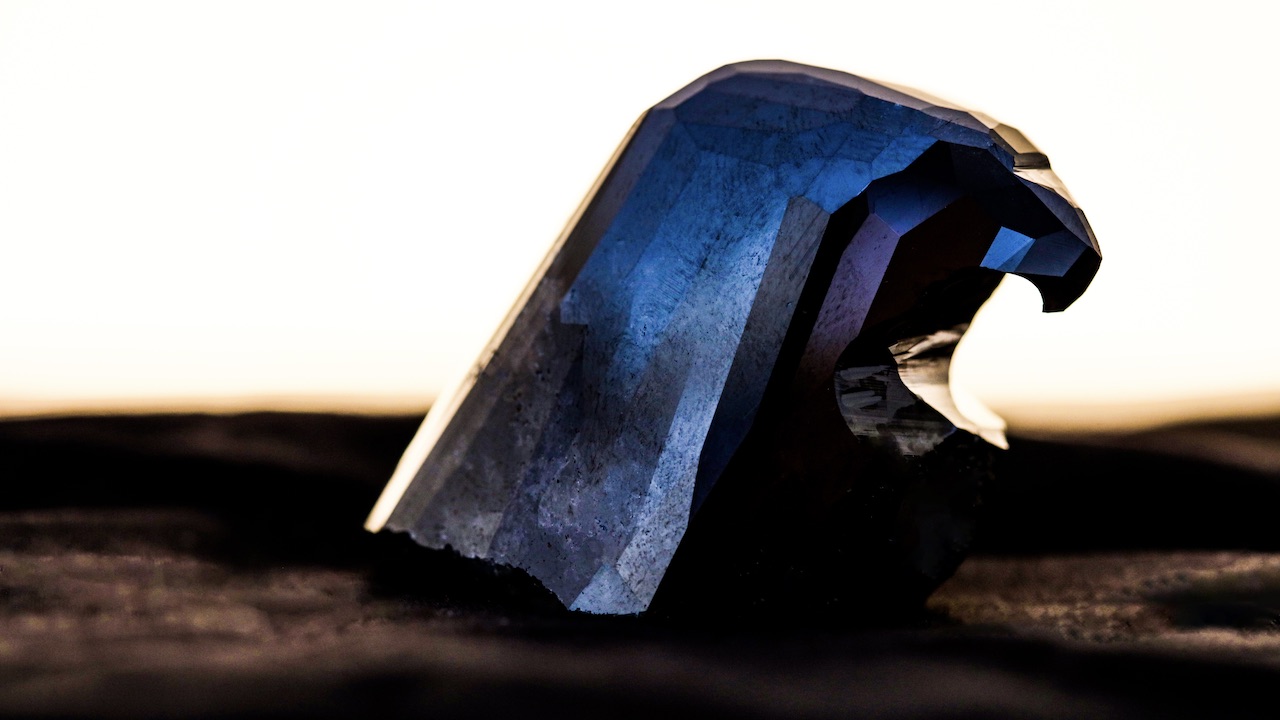
Weighing an astonishing 612.34 carats, the Black Falcon Diamond is unlike any diamond ever seen. The diamond sculpture is the work of master Belgian lapidarist Peter Herbosch. “It is both a work of art and a jewel,” he said.
From the moment he first examined the rough diamond, he saw the silhouette of a bird’s head emerging from its dark, mysterious surface. Leaning into that vision, he forged a dramatic falcon’s profile that has already drawn attention from collectors in the Middle East, where falconry carries deep cultural significance.
Forged from a massive 887.22 carat rough black diamond uncovered in Guinea, Africa in 2008, the Black Falcon Diamond is an unlikely achievement. At the time, few believed it could ever be cut.
Meet the Author

- Jill Newman is a jewelry authority, editor, and storyteller with over 25 years of experience, having reported from diamond mines in Africa, cutting workshops in India and Belgium, and ateliers around the world.
- She serves as Editor-at-Large for the Natural Diamond Council, with additional bylines in The New York Times, Town & Country, Elle Décor, and Robb Report.
“It was an uncuttable diamond,” said Herbosch, speaking from his workshop in Antwerp. Its previous owner had consulted several top cutters, but none succeeded. Finally, Herbosch agreed to attempt to cut the stone. That decision set in motion a seven-year journey.
Black diamonds, he explained, pose unique challenges. Their atomic structure is chaotic, with carbon atoms pointing in many different directions, making it nearly impossible to identify the best way to polish the stone. Unlike white diamonds, they resist traditional polishing methods.
The Seven-Year Cutting Journey of the Black Falcon Diamond
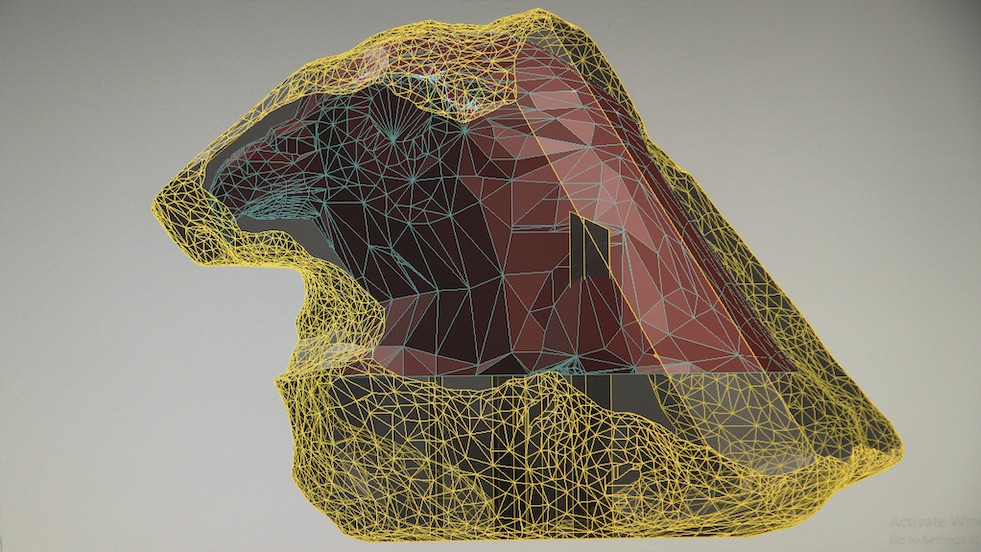
Even with 50 years of diamond cutting expertise, Herbosch approached the project with caution. He spent several months studying the stone, capturing 3D images, and experimenting with plaster models. Ultimately, he had to create the tools needed to cut the ultra-hard stone (black diamonds are harder than white, he said).
With the help of a computer programmer, Herbosch developed a custom laser-cutting system specifically for the Black Falcon Diamond. An engineer collaborated with him to create a new polishing setup, a diamond-edged grinding machine, a specialized disk, and a tailor-made grip to securely hold the unwieldy stone.
Herbosch’s career began at De Beers, cutting diamonds the old-fashioned way before helping develop the company’s first diamond laser-cutting machines more than 40 years ago. At 25, he opened his own cutting workshop in Antwerp, merging innovative laser systems with traditional techniques.
Now 67 years old and having cut important large white and pink diamonds over the years, he sometimes considers retirement, but the excitement surrounding the Black Falcon proves his curiosity and technical prowess are as sharp as ever.
The Black Falcon Diamond’s Cosmic Origins
While white diamonds dazzle with brilliance, black diamonds, known as carbonados, hold a different kind of allure. They don’t sparkle in the conventional sense, but they carry an otherworldly mystery. The dark, luminous stone is captivating to some designers, who prefer the discreet style.
What makes the Black Falcon Diamond even more extraordinary is its cosmic birth story: this diamond didn’t simply form deep within the Earth, but it likely fell from the sky. Carbonados are believed to have originated in dying stars, traveling through space for billions of years before crashing into the planet as meteorites or fragments of diamond-rich asteroids. Few gemstones can claim a journey so epic.
Found largely in alluvial deposits Central Africa and Brazil, black diamonds contain traces of nitrogen and hydrogen, elements abundant in outer space, as well as osbornite, a mineral uniquely found in meteorites. This further underscores the stone’s extraterrestrial roots.
Black Diamonds: Curse or Curiosity?

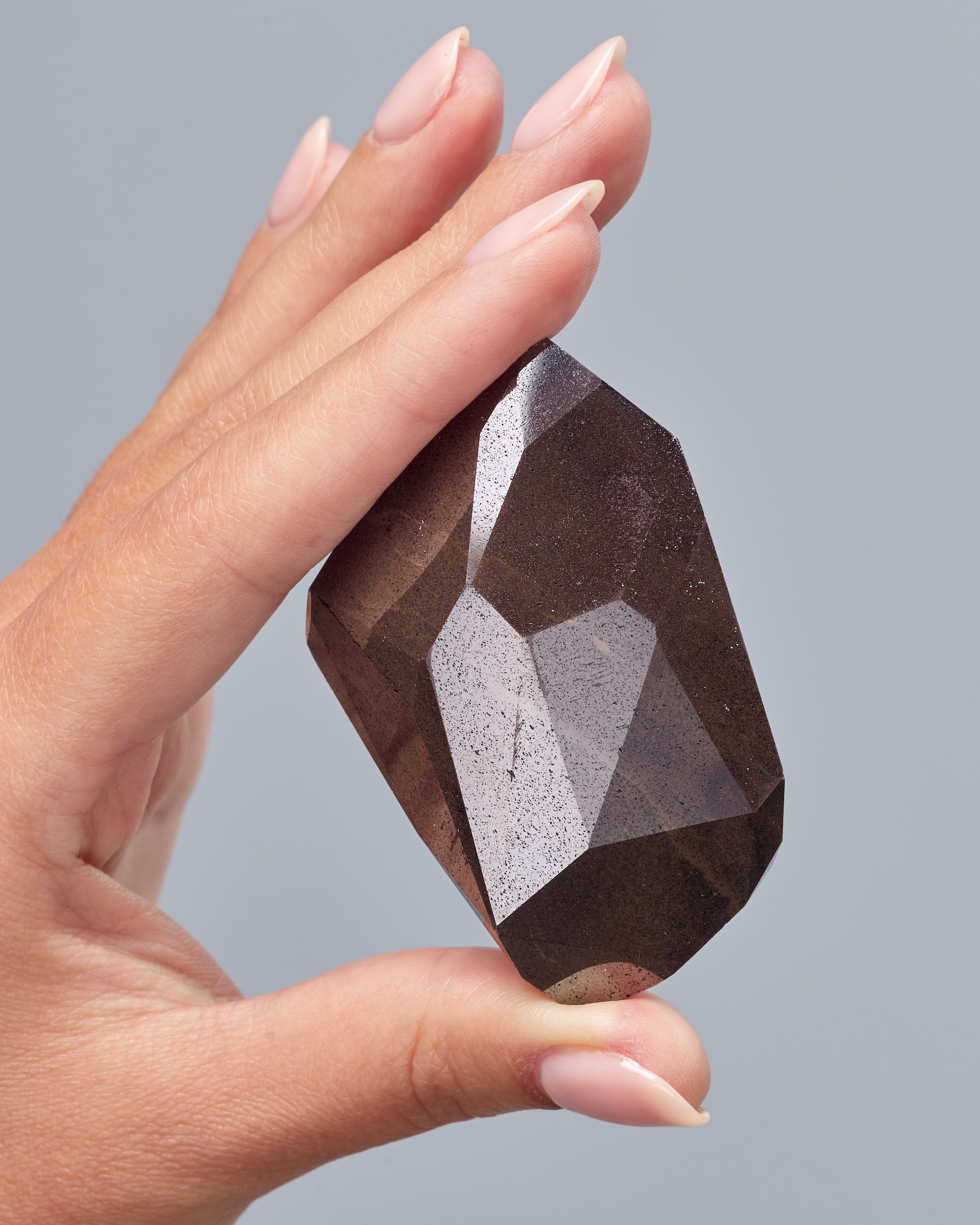
Perhaps because of their rarity and enigmatic origins, black diamonds have long inspired legends. The most famous, the 67.40-carat Black Orlov Diamond, has a legacy steeped in mystery. According to legend, it was originally a 195-carat black diamond stolen from the eye of a Brahma statue in 18th-century India, after which the diamond was cursed, bringing misfortune to all who encountered it. Whether it was found in India or not, it eventually came into the hands of Russian Princess Nadia Vyegin Orlov, from whom it takes its name.
More recently, the 555.55-carat Enigma Diamond made headlines when it sold for $4.3 million at a Sotheby’s auction in February 2022. Cryptocurrency entrepreneur Richard Heart purchased it using cryptocurrency and renamed it the Hex.com diamond after his company.
In the end, the Black Falcon Diamond is far more than a record-breaking gemstone—it’s a fusion of cosmic history and human ingenuity. From its birth in the depths of a dying star to its violent arrival on Earth, and finally to the steady hands of a master craftsman who dared to shape the uncuttable, this black diamond embodies an epic journey billions of years in the making.
As it takes its place among the world’s most remarkable diamonds, the Black Falcon Diamond stands as a reminder that the universe still holds mysteries and that, with imagination and persistence, we can bring their beauty into the light.