How Do Diamond Testers Work?
Since diamonds conduct heat and electricity differently than most imitations (such as cubic zirconia or moissanite), the tester provides a quick and reliable way to verify authenticity. Diamond testers work by measuring the conductivity of the gemstone. However, standard handheld diamond testers cannot reliably distinguish between natural and laboratory-grown diamonds, as both have similar conductivity.
While some advanced laboratory-grade instruments analyze UV reaction or growth patterns to tell them apart, a basic diamond tester will generally identify both natural and lab-grown diamonds simply as “Diamond.” By using a reliable diamond tester, you can gain confidence in determining if your stone is a diamond or a simulant like Cubic Zirconia.
Types of Diamond Testers
There are two primary types of diamond testers available: thermal conductivity testers and electrical conductivity testers.
Thermal Conductivity Testers: These testers work by measuring how quickly heat moves through the gemstone. Since diamonds are excellent thermal conductors, they dissipate heat faster than most diamond simulants, such as cubic zirconia. It is important to note that thermal testers will identify lab-grown diamonds as “Diamond” because lab diamonds possess the same thermal properties as natural ones.
Electrical Conductivity Testers: Electrical conductivity testers measure how well a gemstone conducts electricity. These are primarily used to distinguish diamonds from Moissanite, which is a semiconductor. While they are more precise for identifying simulants, they are not a definitive tool for separating natural from lab-grown diamonds.
- Natural Diamonds: Generally do not conduct electricity (with the exception of rare Type IIb blue diamonds).
- HPHT Lab Grown diamonds: May occasionally show electrical conductivity due to trace metallic flux remnants from the high-pressure manufacturing process, which can sometimes cause them to be misidentified as Moissanite on basic testers.
- CVD Lab Grown Diamonds: Generally have low electrical conductivity, like the vast majority of natural diamonds.
- Moissanite: Exhibits high electrical conductivity, which is a key characteristic that helps distinguish it from diamonds.
Are Diamond Testers Foolproof?
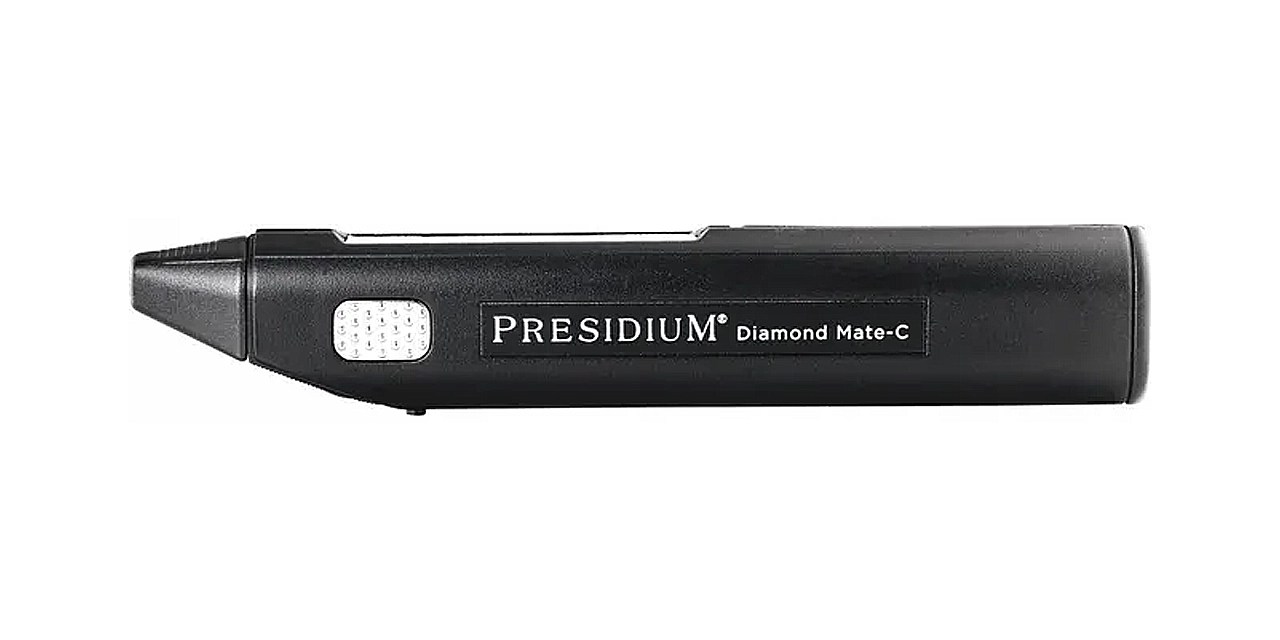
While diamond testers provide valuable information, they are not always foolproof. A standard handheld tester can tell you if a stone is a diamond, but it cannot definitively prove a diamond is natural. The most accurate way to verify whether your diamond is natural or lab-grown is through professional certification from a reliable, independent gemological laboratory, such as the Gemological Institute of America (GIA).
These certifications use advanced tools—such as photoluminescence spectroscopy and UV fluorescence imaging—to determine the origin of the diamond. For the most accurate results, jewelers use specialized equipment like the GIA iD100 or De Beers Synthetic Diamond Detector, which look for specific atomic-level signatures that handheld probes cannot detect.
For at-home testing, a combined thermal and electrical tester (like the Presidium Multi Tester) can provide helpful results, but for absolute certainty, a professional gemological laboratory assessment is best. If you need a quick and convenient test—whether at home or with a jeweler—a diamond tester is a practical option. However, to definitively determine if a diamond is natural or lab grown, a professional evaluation is recommended.
How to Use a Diamond Tester Effectively
If you decide to use a diamond tester at home, follow these steps for accurate results:
Clean the Diamond: Ensure your diamond is free from dirt and oils, as contaminants can interfere with conductivity readings.
Turn On the Tester: Allow the device to warm up according to the manufacturer’s instructions.
Place the Probe on the Diamond: Gently place the tip of the tester onto the stone’s surface at a 90-degree angle, ensuring it makes good contact with the stone and not the metal setting.
Interpret the Results: The tester will indicate whether the stone is a diamond, moissanite, or a simulant like cubic zirconia. Remember that a “Diamond” result includes both natural and lab-grown origins.
Repeat if Necessary: For confirmation, test multiple areas of the stone and compare the readings.
Factors That Can Affect Diamond Tester Accuracy
Several factors can impact the accuracy of a diamond tester, including:
Battery Power: Low battery levels can lead to incorrect readings.
Stone Temperature: Testing a stone immediately after it has been cleaned with hot steam or held closely to a heat source can skew thermal readings.
Metal Interference: Always test the stone itself, avoiding metal prongs or settings.
Diamond Coatings: Some diamonds have coatings that can alter conductivity results.
Choosing the Right Diamond Tester
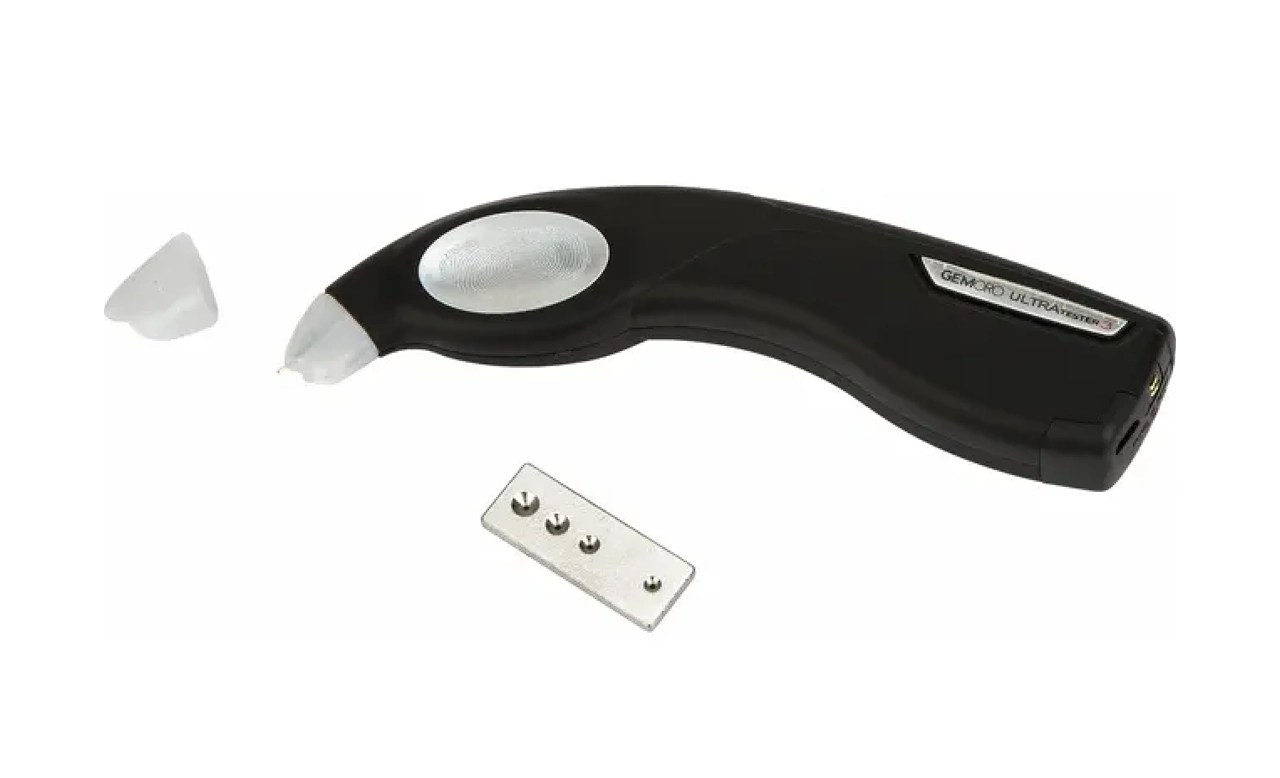
When selecting a diamond tester, consider the following:
Accuracy: Opt for a tester that can distinguish between diamonds and moissanite.
Ease of Use: A user-friendly design ensures better handling and reliability.
Portability: Compact and lightweight models are ideal for on-the-go testing.
Additional Features: Some testers come with built-in UV lights or magnifiers to enhance testing precision.
A diamond tester is an invaluable tool for determining the basic material authenticity of a gemstone. While it provides quick and reliable results for identifying simulants like Cubic Zirconia, it is best used in combination with other verification methods.
It is important to remember that a standard diamond tester cannot confirm if a diamond is natural or lab-grown; for that level of certainty, a professional gemological assessment or a specialized Diamond Verification Instrument (DVI) is required.
Whether you are a jeweler, collector, or buyer, investing in a high-quality diamond tester ensures peace of mind when evaluating stones against common imitations. To see available professional diamond verification instrument options, visit the ASSURE Directory.
Protecting and Reassuring Consumers
- Retailers obtain specific grading reports or certifications from independent organizations that can verify the origins and quality of natural and synthetic diamonds.
- Legal terminology, definitions, and advertising guidelines exist to protect and reassure consumers about whether they are purchasing a natural or laboratory grown diamond. They also guide audiences on what can and cannot be classified as a diamond.
- In the US, the Federal Trade Commission put out Guides to address these topics. Key points from all the standards are:
- The word ‘diamond’ used on its own always implies a natural diamond.
- Terms like ‘natural, real, genuine and precious’ (which can be used for natural diamonds from the Earth), are forbidden in the marketing of laboratory grown diamonds.
- Just three terms can be used to describe synthetic diamonds: ‘synthetic diamonds’, ‘laboratory grown diamonds’ and ‘laboratory created diamonds’. In the US, the term ‘manufacturers name’-created diamonds is also accepted
- ‘Man-made’, ‘cultured’, and ‘above-ground’, ‘sustainably-made’ are not acceptable terms for laboratory grown diamonds.
SOURCES
1. Gemological Institute of America (GIA)

About Natural Diamond Council
Natural Diamond Council (NDC) is the global authority on natural diamonds. As a not-for-profit organization, NDC is committed to advancing the integrity of the natural diamond industry and celebrating the unmatched beauty and value of natural diamond jewelry. NDC serves as the industry’s definitive voice, offering expert insight, trusted education, and unparalleled access to the world of real, rare, and responsibly sourced natural diamonds.