The Van Cleef & Arpels Zip Necklace: How the Zipper Became a High Jewelry Icon
Van Cleef & Arpels found inspiration for the Zip necklace not in traditional jewelry motifs, but in the humble zipper, a modern invention transformed into one of high jewelry’s most ingenious creations.
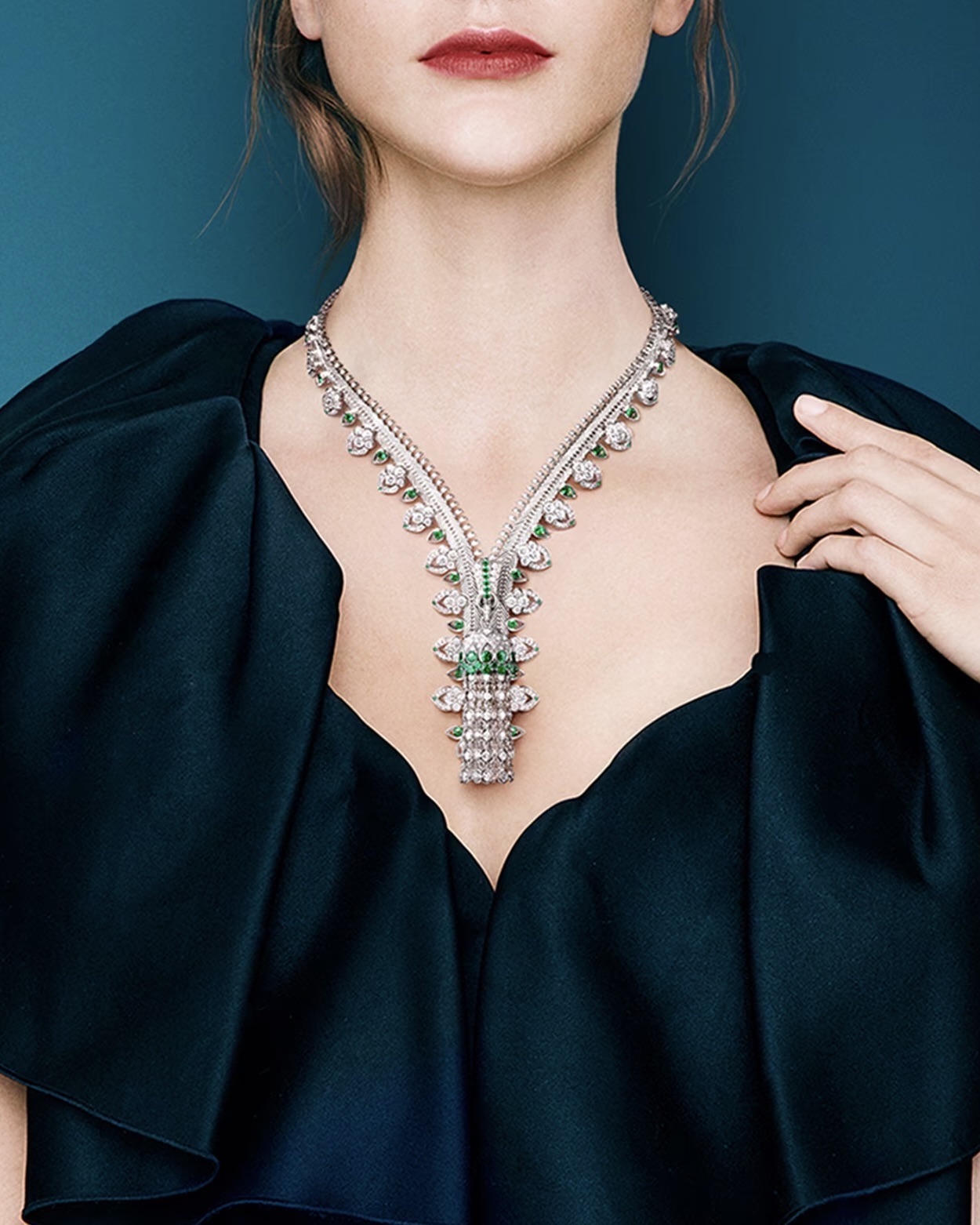
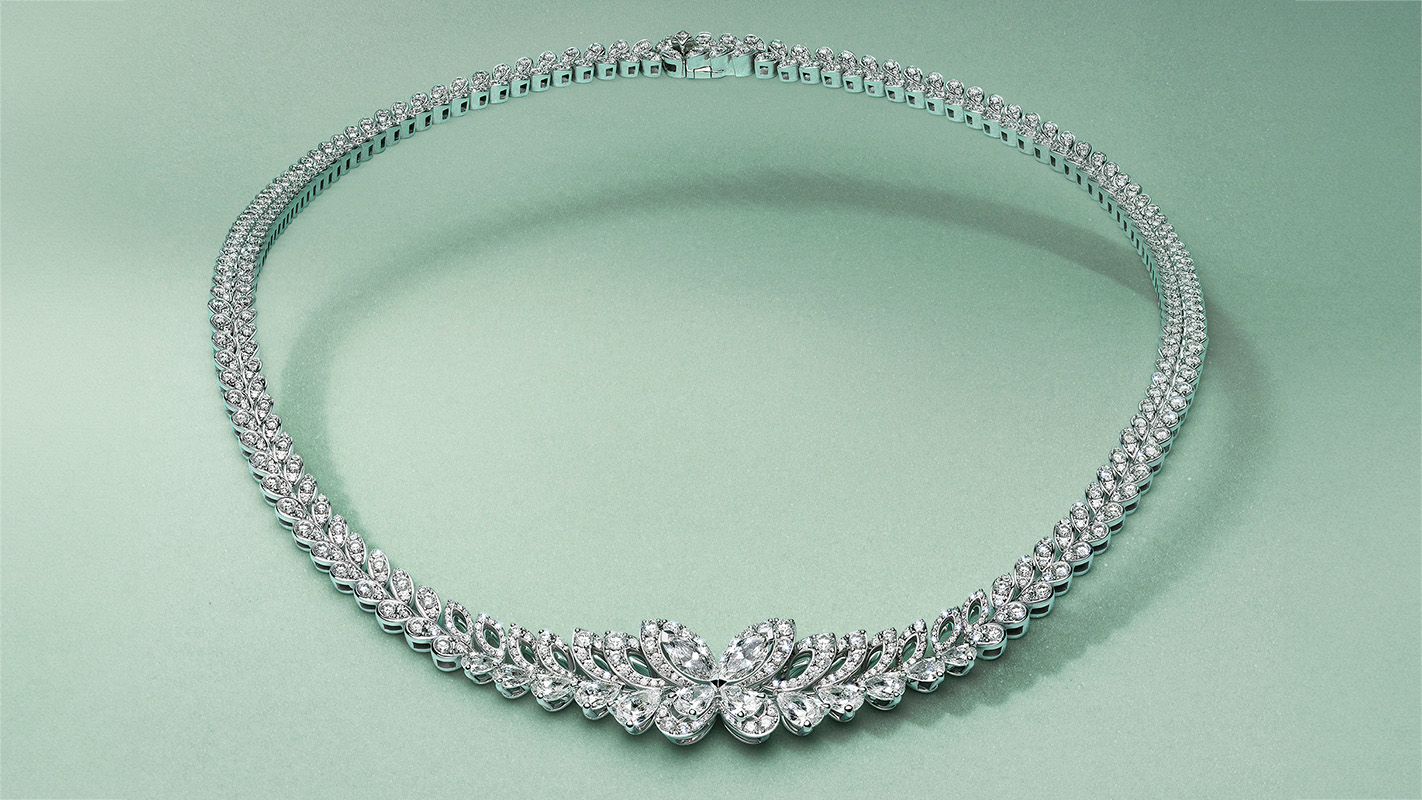
Van Cleef & Arpels Zip Necklace (Courtesy of Van Cleef & Arpels)
Few pieces of jewelry transform an everyday object into something extraordinary quite like the Van Cleef & Arpels Zip Necklace. Inspired by a simple zipper — first introduced in 1893 by Whitcomb L. Judson as the “clasp locker” and later refined in 1917 by Swedish-American engineer Gideon Sundback — the design reimagined a functional fastener as a masterpiece of high jewelry.
When the Van Cleef & Arpels Zip necklace was unveiled in the mid-20th century, it was unlike anything the jewelry world had seen before. Fully functional and exquisitely engineered, the piece could unzip and rezip like its industrial counterpart while shimmering with natural diamonds and precious gemstones. The result was a bold fusion of couture, mechanical ingenuity, and exceptional craftsmanship that transformed a simple invention into one of the most iconic creations in high jewelry history. It was considered radical and absolutely breathtaking at the same time.
Meet the Expert

- Justin Daughters is Director of Berganza, one of London’s leading authorities on antique and period jewelry.
- His work spans decades of handling rare rings and heirloom-quality stones, giving him a nuanced understanding of craftsmanship, provenance, and historical context.
Ahead is a look at how the Van Cleef & Arpels Zip Necklace changed the jewelry game forever—and still rules the red carpet today.
The Origins of the Van Cleef & Arpels Zip Necklace
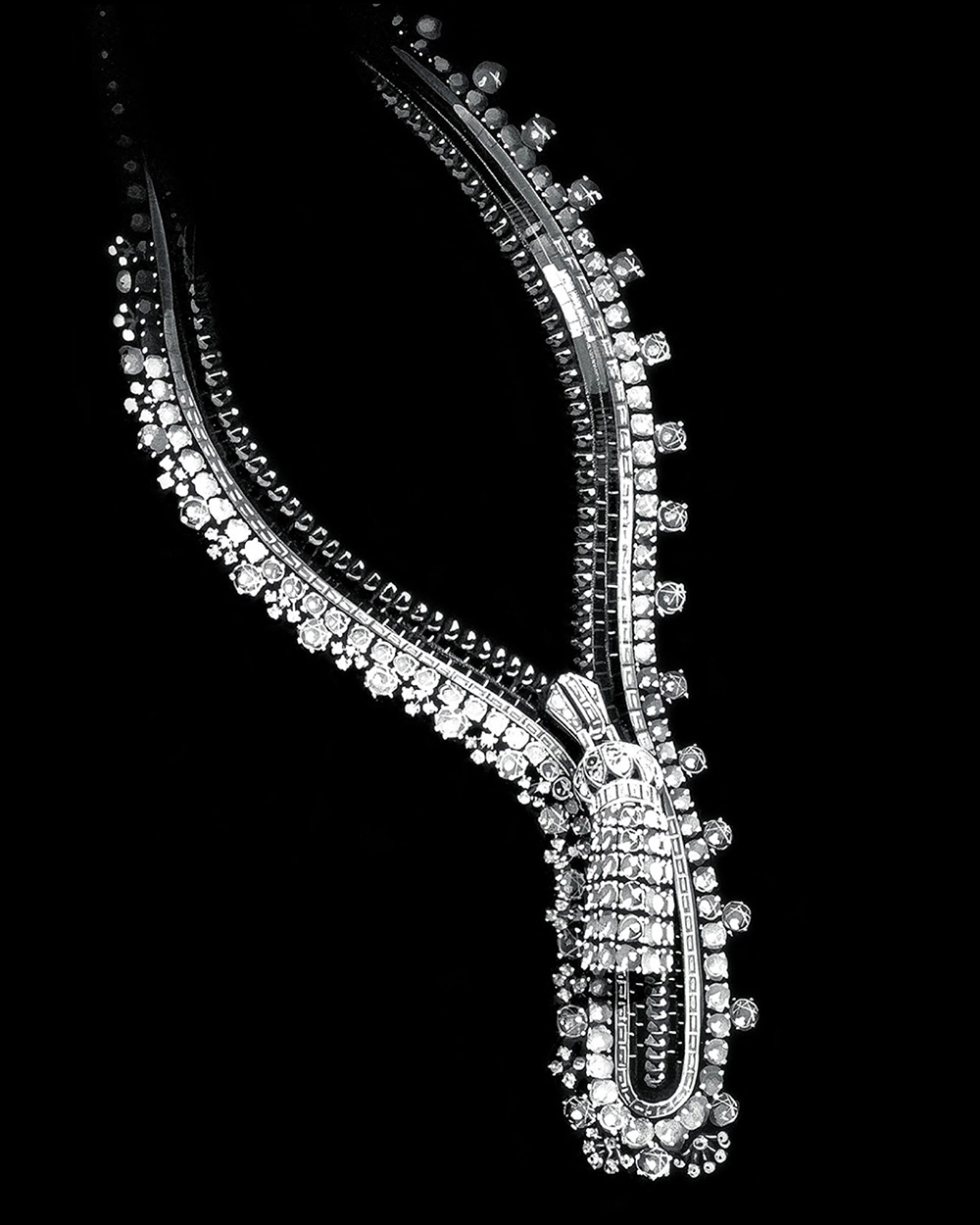
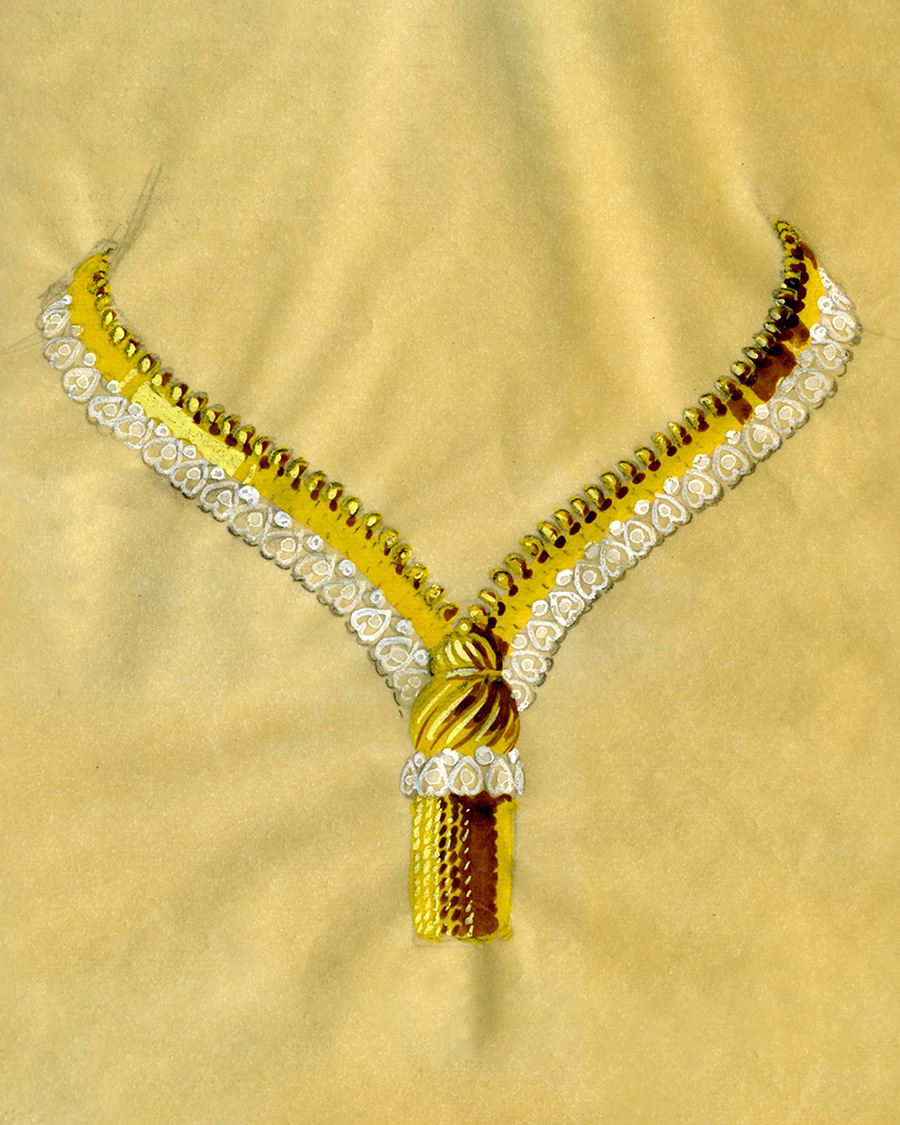
The fruition of the Van Cleef & Arpels Zip Necklace is the stuff of high fashion legend. In the late 1930s, Wallis Simpson, the Duchess of Windsor, told her friend Renée Puissant, the then artistic director of Van Cleef & Arpels, how a zipper had become part of her favorite designer, Elsa Schiaparelli’s, recent couture lines. “Schiaparelli’s influence was fundamental. By making the zipper a visible, colorful, and decorative part of a dress rather than a hidden closure, she paved the way for the Zip Necklace. She turned the zipper into a fashion ‘event’. Van Cleef & Arpels simply took that event to its ultimate, precious conclusion,” says Justin Daughters, Managing Director of Berganza.

By making the zipper a visible, colorful, and decorative part of a dress rather than a hidden closure, she paved the way for the Zip Necklace.
Puissant was excited to hear this and began developing her own ideas for integrating a zipper into jewelry design. The zipper itself debuted in 1893 at the World’s Columbian Exposition in Chicago. Swedish-American engineer Gideon Sundback later refined the invention in the early 20th century, helping establish its widespread use in the United States. By the 1930s, the zipper was appearing more frequently in high design.

The daughter of Estelle Arpels and Alfred Van Cleef, Puissant was known for encouraging experimental ideas within the maison and was a strong advocate for bringing the zipper-inspired jewelry concept to life—an unconventional idea at the time. It also took many years to fully evolve. The idea was first proposed in 1938, but the necklace was not finalized until the early 1950s, with the first examples appearing around 1951–1952. Although the Duchess of Windsor is frequently associated with the idea, historians note that there is no confirmed documentation that she commissioned the piece, and her role is generally described as inspirational rather than factual.
“While the design is a masterpiece of its own merit, the Duchess of Windsor provided the essential ‘spark’ of disruption. She was a woman who lived to challenge royal and social codes, and her suggestion of the piece in the late 1930s provided the necessary dare for the Maison,” Daughters says. “Her approval gave the Van Cleef & Arpels Zip Necklace an edge of rebellion and high-fashion pedigree that helped cement its status as an icon of the 20th century.”
How Van Cleef & Arpels Engineered the Zip Necklace
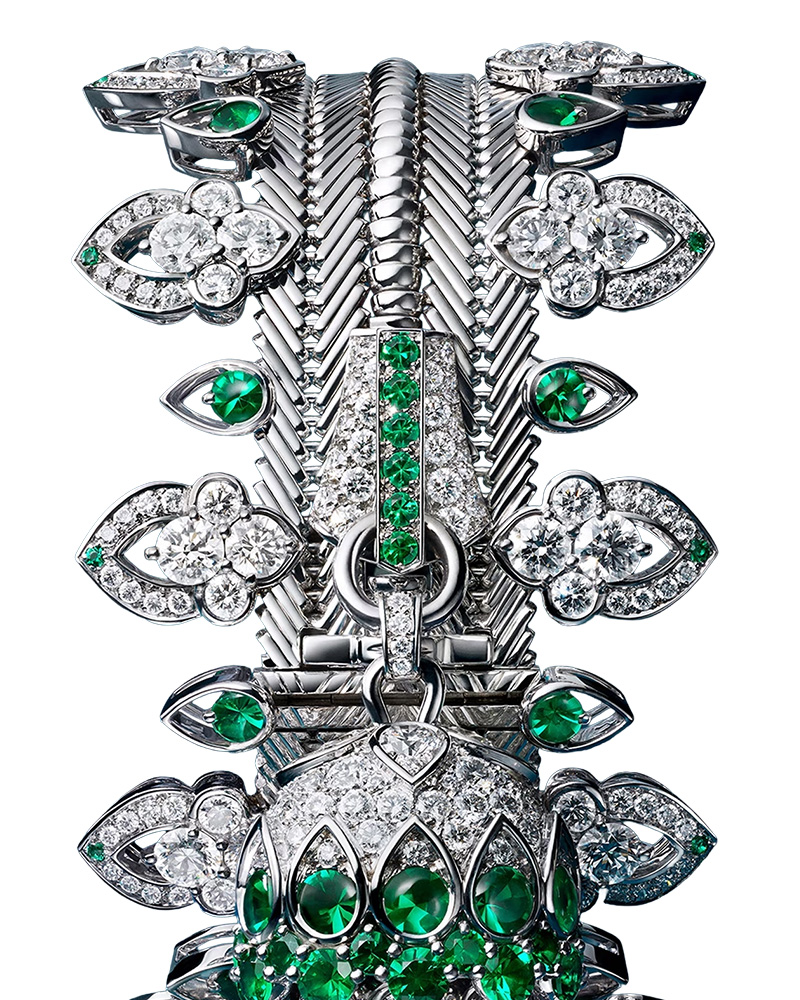
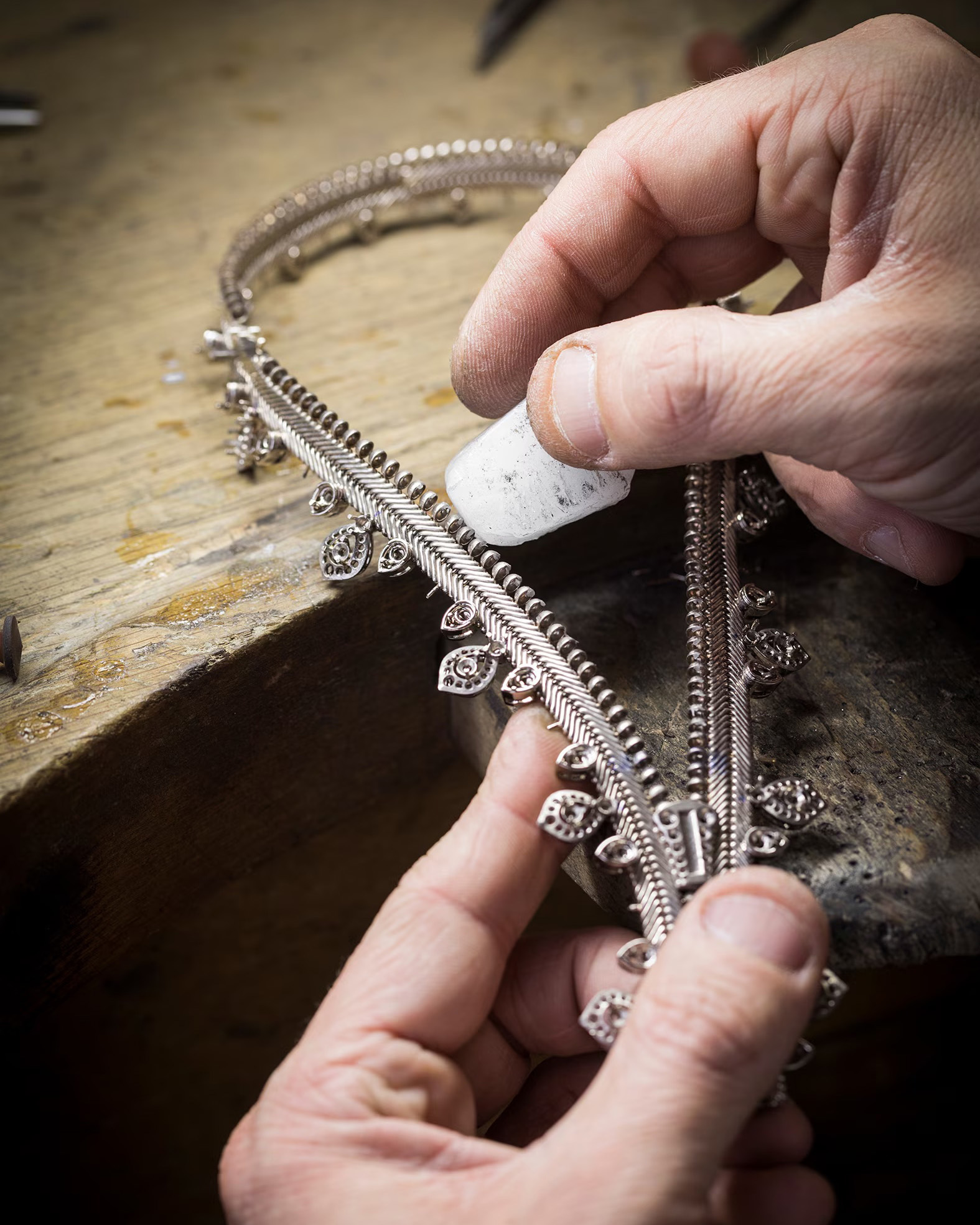
The necklace was an incredible idea, but making it feasible was an epic challenge. The Zip Necklace had to function exactly like its industrial counterpart, unzipping and re-zipping smoothly while remaining flexible enough to drape like fabric. This would require an immense level of craftsmanship, often estimated at more than 1,000 hours of work to produce a single piece. The prototype was rendered in platinum and set with round and baguette-cut diamonds, with articulated precious-metal elements forming the zipper teeth rather than using an actual industrial zipper mechanism.
“The single most difficult aspect is the synchronisation of the teeth. For the zipper to slide smoothly without snagging, hundreds of tiny gold ‘ribbons,’ or teeth, must be hand-filed and aligned with a precision of less than a tenth of a millimetre,” Daughters says.
The piece also works as a bracelet when fully “zipped.” Later versions of the Van Cleef & Arpels Zip Necklace were produced in either plain platinum or yellow gold and enhanced with various colored gemstones and, of course, natural diamonds. Due to its complexity and time-consuming nature, production of the Zip Necklace was limited. According to Daughters, there are very few other pieces of jewelry that operate with this level of literalism.
Why the Van Cleef & Arpels Zip Necklace Changed High Jewelry Design
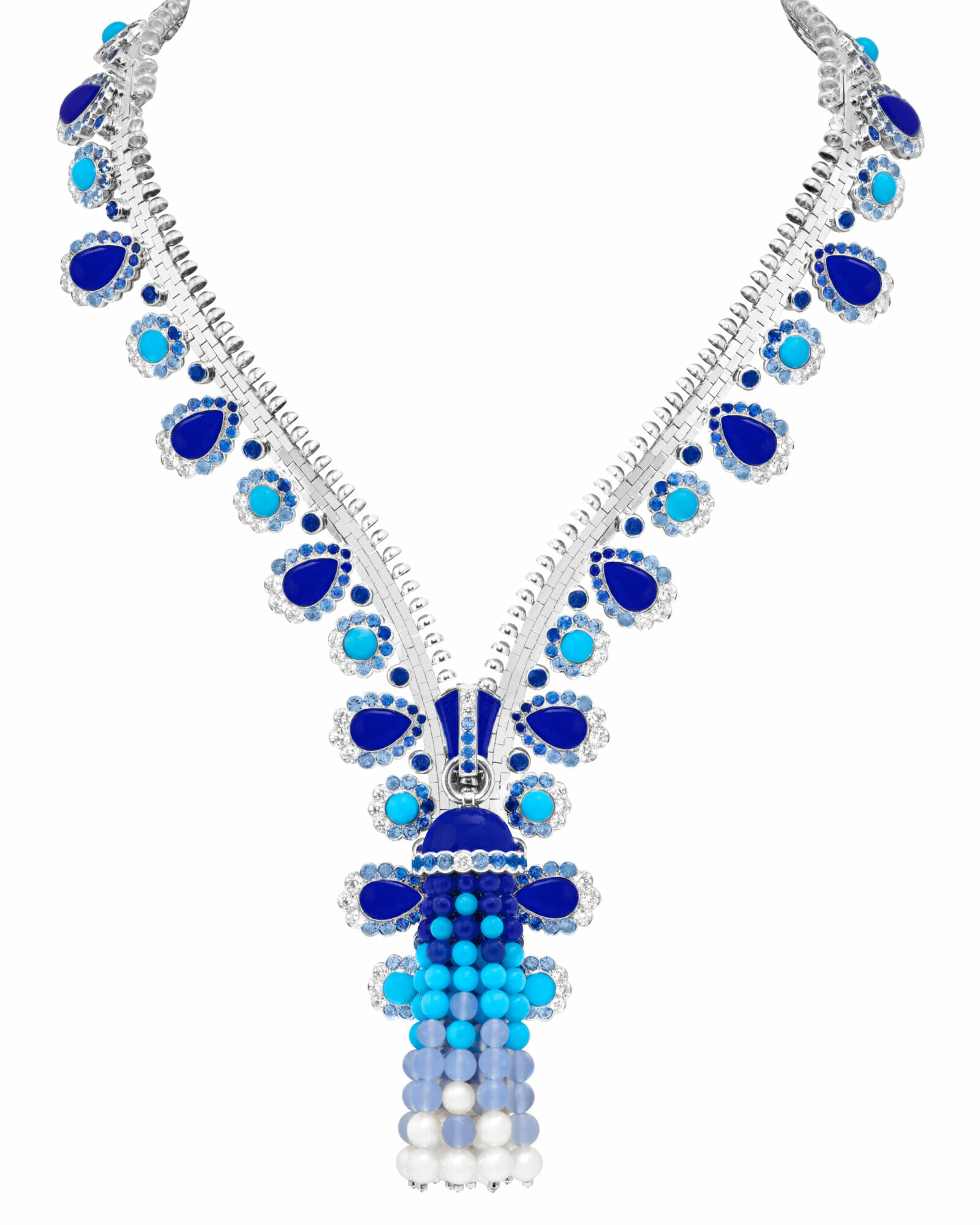

The Zip Necklace was especially extraordinary because it fused two worlds: fashion and fine jewelry craftsmanship. At a time when high jewelry was dominated by traditional motifs, the design introduced a bold new dialogue between industrial innovation and luxury craftsmanship.
Daughters says of the brilliant partnership, “It is impossible to separate the two, but if pressed, it is the ultimate engineering achievement in jewelry. Most jewelry uses design to hide the engineering; in the Zip, the engineering is the design.”
He also points out that it was truly radical in the mid-20th century because it subverted the very definition of luxury. “During that time, high jewelry was traditionally meant to be naturalistic or romanticized adornment—flowers, animals, or scrolls. By taking a purely utilitarian, industrial fastener, an object born of the machine age, and rendering it in gold and diamonds, Van Cleef & Arpels challenged the boundary between couture hardware and fine art.”
The Zip Necklace also tells us something very unique about the innovation of Van Cleef & Arpels in the mid-20th century. “It shows a willingness to blur the lines between engineering and artistry,” he says.
The Zip Necklace’s Modern Revival on the Red Carpet

Even the most innovative designs occasionally benefit from thoughtful reinterpretation. In 2005, Van Cleef & Arpels introduced a new iteration of its classic Zip Necklace. The redesign helped reintroduce one of the Maison’s most technically daring creations to a new generation of collectors and red-carpet stylists. The more slender version, called the Zip Couture necklace, is worn along the neckline or down the back and can still be converted into a bracelet by removing the upper portion of the piece to “zip” into bracelet form.
Though this version has been around since 2005, it reached a whole new level of visibility when Margot Robbie wore a diamond and sapphire Van Cleef & Arpels Zip necklace to the 2015 Academy Awards with her Saint Laurent dress. The piece was widely reported to be valued at approximately $1.5 million, making it one of the most spectacular jewels on the red carpet that evening. Robbie told the press, “The necklace is worth more than my life!”
Today, the design is enjoying something of a red carpet revival. Daughters believes this is because it “celebrates mobility, industrial progress, and the interplay between function and elegance.”
Why the Van Cleef & Arpels Zip Necklace Is Still an Icon

The Zip Necklace truly stands in a class of its own. By transforming a simple piece of machinery into an intricate work of high jewelry, Van Cleef & Arpels created a design that is both technically daring and visually striking. More than seven decades after its debut, the Zip Necklace continues to captivate collectors and designers alike for its rare combination of ingenuity, craftsmanship, and style.
“The Zip exists in a space of its own. It possesses the geometric discipline and love of white metal from the late Art Deco period, but it has the playfulness and gold-centric warmth of Mid-Century modernism. It is best described as High-Jewelry Surrealism, taking an object out of its mundane context and transforming it into something magical,” says Daughters.