< Historic Diamonds / Royal Stories
How Queen Letizia of Spain Is Shaping a New Era of Royal Jewelry Style
The modern royal has infused even the most historic heirlooms with a sense of elegance and restraint.
Published: January 30, 2026
Written by: Meredith Lepore
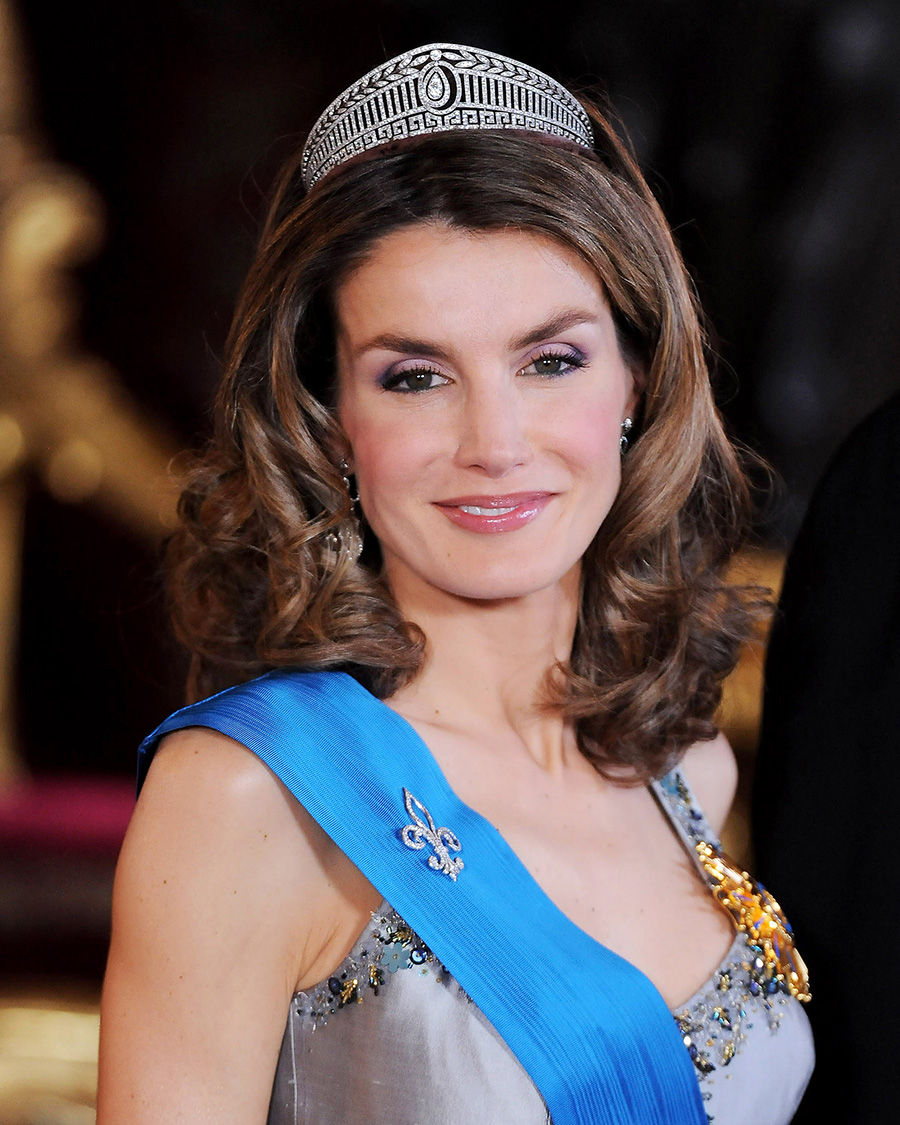
“Respect begins with how a woman treats herself.” The quote, often attributed to Queen Letizia of Spain, feels especially apt when considering her relationship with royal jewelry. Letizia has earned a reputation as one of the most deliberate jewelry wearers of her generation. Perhaps it stems from the fact that she was not born into royalty and spent years as an acclaimed journalist before entering the monarchy. Rather than leaning into spectacle or excess, she gravitates toward tradition and intention. That sensibility mirrors the Spanish royal collection itself, which is defined less by opulence than by the careful passing of meaningful, exquisite diamond jewels from queen to queen.
Zuleika Gerrish, jewelry historian and co-founder of Parkin and Gerrish, tells Only Natural Diamonds, “Unlike many contemporary queens and consorts, Queen Letizia avoids spectacle for its own sake. She edits historic jewels rather than deploying full parures, often isolating a single piece and allowing it to speak on its own. When the occasion demands gravity or institutional seriousness, she is entirely comfortable wearing little or no jewelry at all.”
Meet the Expert

Zuleika Gerrish is an antique, vintage, and fine jewelry expert as well as a gemmologist and co-founder of Parkin and Gerrish with her husband Oliver. Alongside running Parkin & Gerrish, she lectures on historic jewelry, sharing her expertise with new audiences.
Ahead is a look at Queen Letizia’s deliberate, minimalist approach to royal jewelry and how it has reshaped what power and elegance look like in the 21st century.
From Journalist to Queen Consort
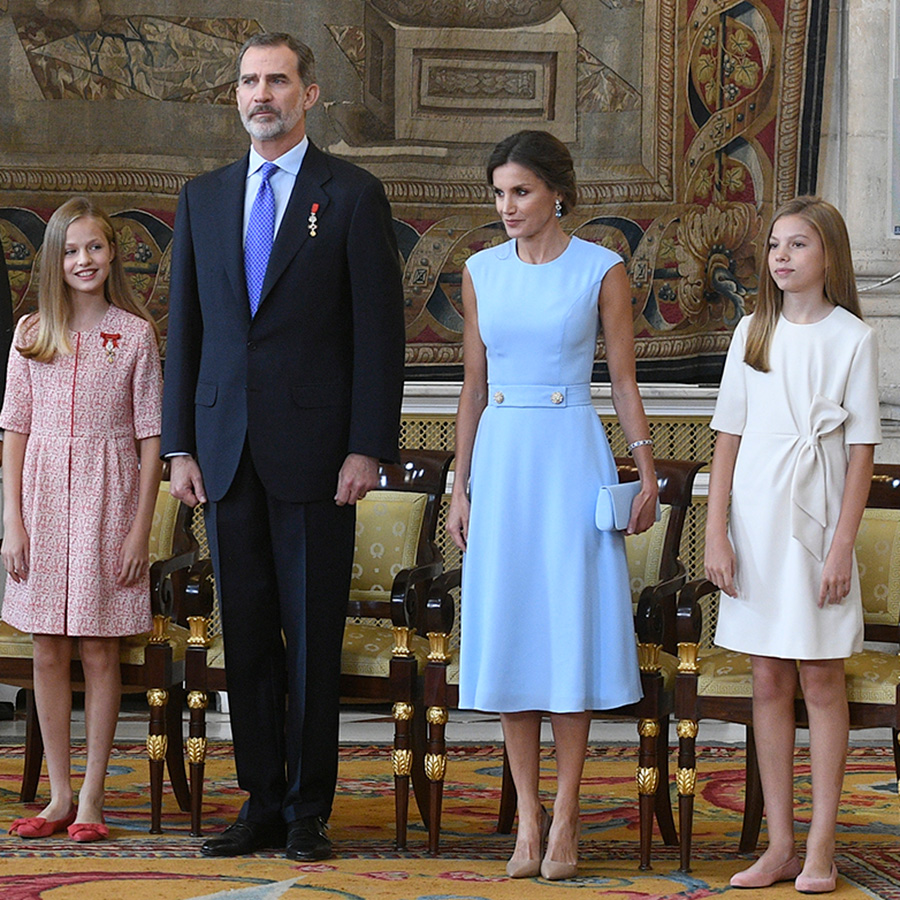
Queen Letizia of Spain was born Letizia Ortiz Rocasolano in 1972 in Oviedo, Asturias, to a journalist father and a nurse mother. She began her education in Oviedo before moving to Madrid, where she earned a bachelor’s degree in journalism, followed by a master’s degree in audiovisual journalism.
She went on to build a successful broadcast career, working for respected outlets including ABC and CNN+, and reported on major global events such as the September 11 attacks and the Iraq War. It was while covering the aftermath of the Prestige oil spill disaster that she met her future husband, King Felipe VI, then Prince of Asturias, at a dinner gathering. The couple became engaged in the fall of 2003 and married the following year. They have two daughters, Leonor, Princess of Asturias, and Infanta Sofía of Spain.
Restraint as Identity: What Sets Queen Letizia’s Style Apart
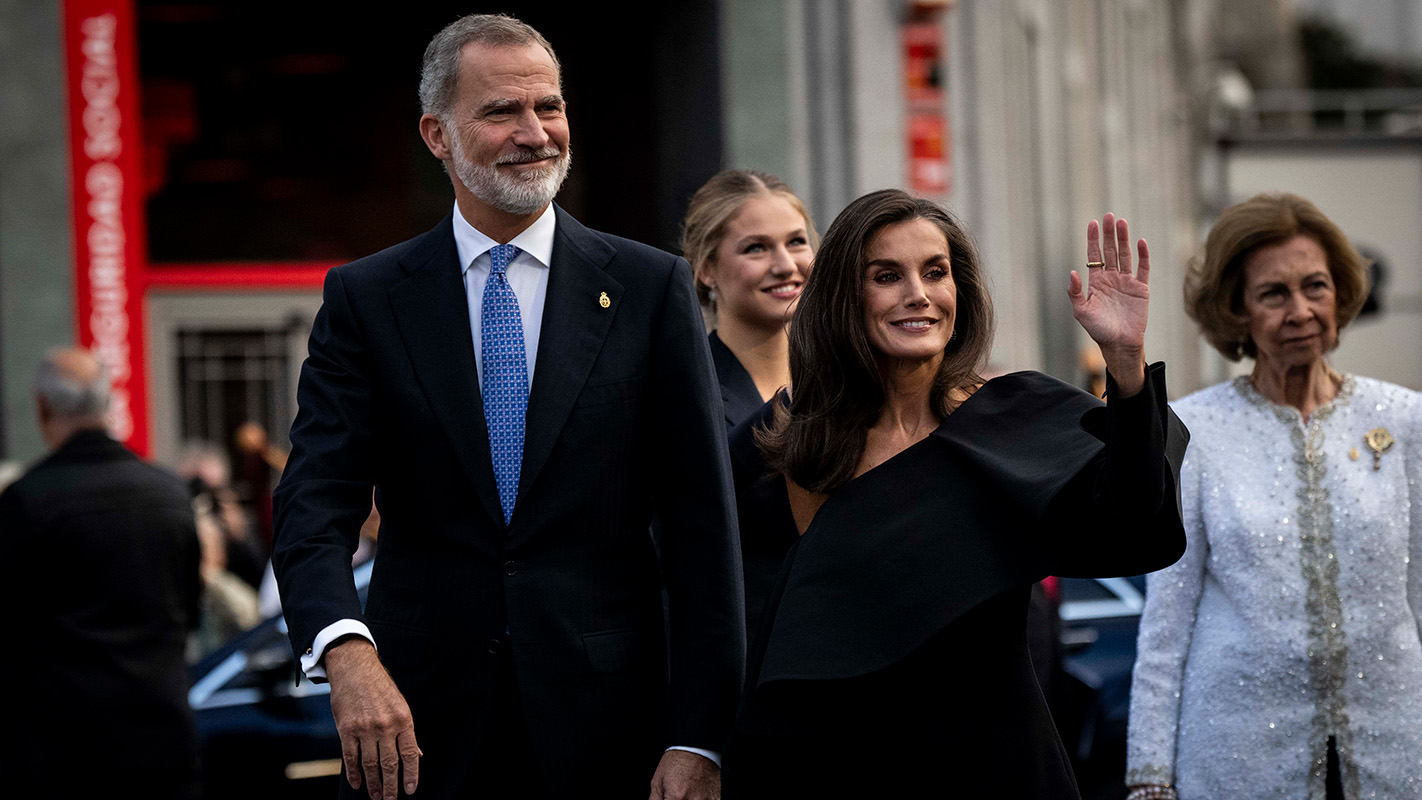
With her high-profile marriage and the couple’s official ascension to the throne in 2014 — making Queen Letizia of Spain queen consort — her style naturally evolved. As a working journalist, she favored tailored suits and neutral tones; as queen, she began experimenting with more formal silhouettes and eveningwear. She counts designers such as Carolina Herrera and Salvatore Ferragamo among her favorites, though she has also become known for high-low diplomacy. During an official visit to Sweden, she notably wore a navy tulle gown from H&M that cost £229.99, an intentional gesture that aligned fashion with message.
Her jewelry choices form a central part of this evolution. As queen consort, every selection carries symbolic weight.
“Queen Letizia of Spain approaches jewelry with the same intentional care a journalist brings to language, always conscious of audience, context, and consequence. As a broadcast journalist and news anchor, trained to communicate clearly, avoid excess, and understand how every visual detail is read,” Gerrish says. “She treats jewelry as information rather than embellishment: repetition is deliberate, restraint is strategic, and omission can be the most powerful statement of all. She is notably the first modern queen to appear without a tiara in an official portrait.”
Researcher and royal jewelry historian David Rato notes that what distinguishes her approach from many contemporary queens and consorts is discipline and intention. Unlike several of her peers, she is not a habitual wearer of jewelry, particularly large-scale pieces or historic heirlooms. In her day-to-day engagements, her formula is strikingly consistent: discreet earrings drawn largely from her personal collection, no necklaces, bracelets, or brooches, and typically a single gold ring. Jewelry is never decorative filler.
He contrasts this with queens such as Queen Máxima of the Netherlands, Queen Mary of Denmark, and Queen Mathilde of Belgium, for whom jewelry plays a visible role in daily royal presentation.
“Because of this deliberate minimalism, the effect is striking when Queen Letizia does turn to what might be called ‘the good stuff.’ When the occasion truly requires it — state visits, gala dinners, or major ceremonial moments — she delivers with precision and impact. The sudden appearance of historic diamonds or significant jewels feels purposeful rather than habitual, elevating the importance of the event itself. Her intentionality lies not in constant display, but in knowing exactly when jewellery should speak — and when, in her point of view, should remain silent,” Rato says.
That restraint does not mean she avoids tiaras altogether. On the contrary, when she wears one, the choice becomes an event in itself. Ahead, we take a closer look at some of Queen Letizia’s most pivotal jewelry moments.
Fleur-de-Lys Tiara
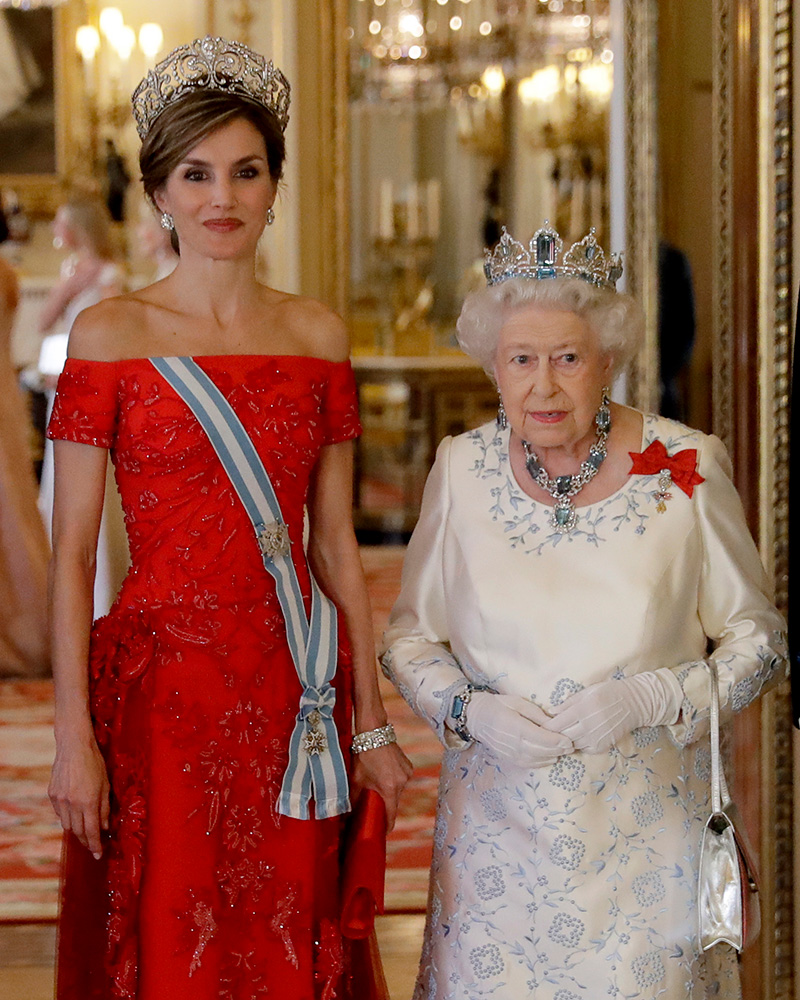
One of the most important tiaras worn by Queen Letizia of Spain is the Fleur-de-Lys Tiara. It originally belonged to Queen Victoria Eugenie of Spain, who received it as a wedding gift in 1906 from her husband, King Alfonso XIII of Spain. Over time, it became the central tiara of the Spanish royal collection and a visual shorthand for the Bourbon crown itself, according to Gerrish.
Known within the family as La Buena (“The Good One”), the tiara is crowned by three monumental fleurs-de-lis filled with large diamonds. The fleur-de-lis is the heraldic emblem of the House of Bourbon, and the piece is one of the most recognizable examples of the Spanish royal jewel tradition known as the Joyas de Pasar. The phrase loosely translates to “jewels to pass on,” referring to privately held royal jewels designated to be inherited from queen to queen rather than treated as state-owned regalia.
Its frequently cited valuation of approximately €12,000,000 underscores its importance, though its symbolic weight far exceeds monetary worth. Queen Letizia wore the tiara during the 2017 state visit to Buckingham Palace and again at the Imperial Enthronement ceremonies in Tokyo in 2019. Her first appearance in the tiara came earlier in 2017 at a gala banquet for the President of Argentina and his wife. It was a moment widely viewed as a turning point in her royal image. For the occasion, she paired the opulent jewel with a restrained Felipe Varela velvet gown, allowing the tiara to command full visual authority.
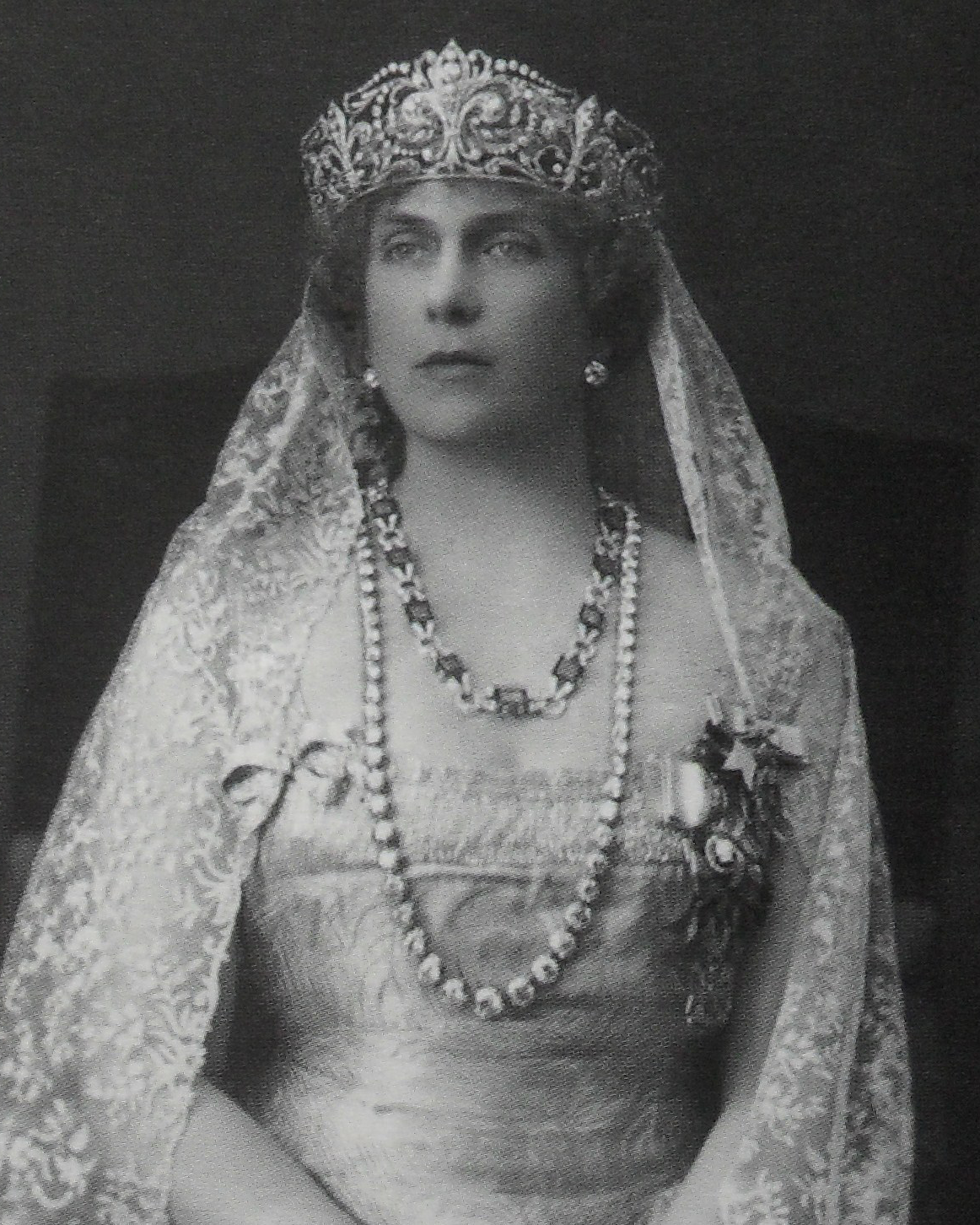
Rato explains that the tiara functions almost as a symbol that requires no explanation. “ I will admit that when she first appeared wearing the Fleur-de-Lys Tiara, it came as a surprise. Given her long-established preference for restraint and minimalism, it was not immediately obvious that she would embrace the grand tiaras of the family,” he says. “And yet, it proved to be a remarkably fitting choice. The tiara suits her with precision — architecturally strong and unmistakably symbolic.
So far, Queen Letizia has worn the tiara on six occasions, each one more important than the last, reinforcing the idea that this is not simply a beautiful jewel but a statement piece reserved for moments of the highest significance.
Gerrish agrees, observing that the tiara complements the queen consort because of its precision and discipline. Its symmetrical, architectural design is boldly graphic, free of softness or excess. That aesthetic mirrors Letizia’s approach to jewelry: she gravitates toward pieces that register instantly, photograph crisply, and project authority without unnecessary ornament. “Crucially, Letizia also deploys the tiara sparingly and strategically. She wears it only when the institution must be foregrounded, allowing it to function as intended: a statement of continuity rather than spectacle,” Gerrish says.
Diamond Necklace and Twin Diamond Bracelets
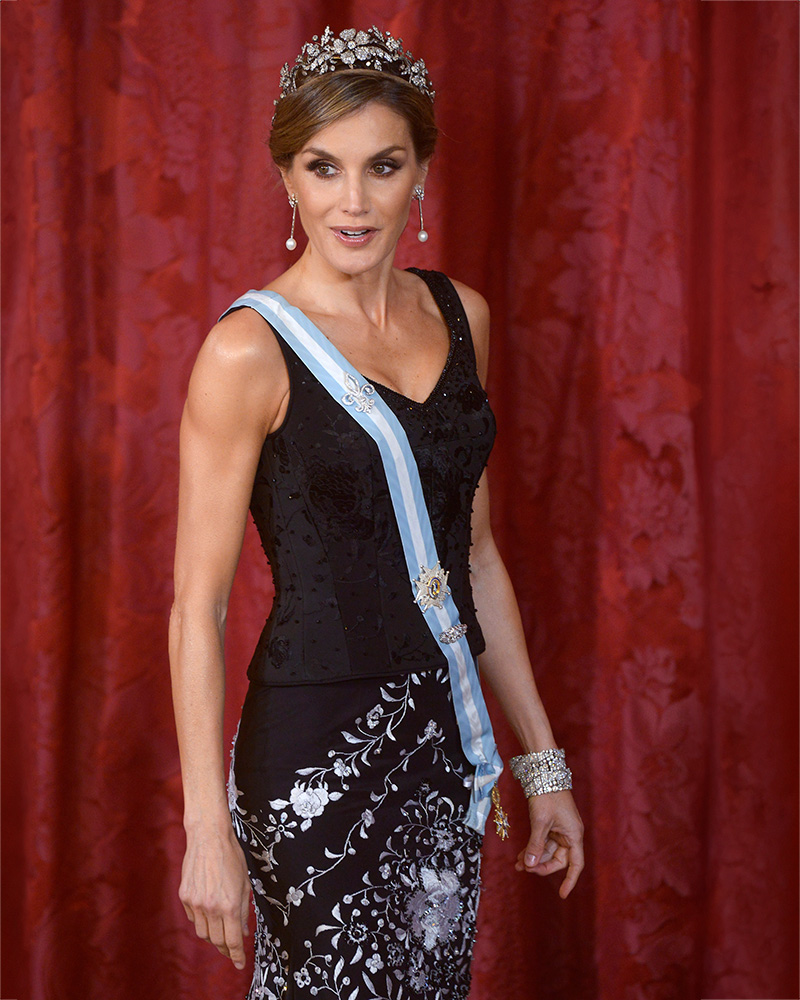
Another wedding gift from King Alfonso XIII of Spain to Queen Victoria Eugenie of Spain, the diamond rivière necklace was worn by the bride on her wedding day in 1906. At the time, it consisted of a line of large round diamonds mounted in individual collet settings — a classic Edwardian design intended to emphasize the stones themselves rather than metalwork.
Over the course of their marriage, additional diamonds were added, gradually transforming the necklace into an exceptionally long and substantial piece. Because of its weight and versatility, Queen Victoria Eugenie later had the jewel divided into sections. Today, the necklace can be worn in multiple configurations, and Queen Letizia of Spain frequently styles it as a shorter strand paired with two matching diamond bracelets from the Joyas de Pasar collection.
The bracelets are often mistaken for a Bulgari commission, but there is no confirmed documentation linking them to the Roman house. They date to the early 20th century and share the same collet-set diamond language as the necklace, designed to function as a coordinated parure. Their ribbon-like articulation gives them flexibility and movement, and they have become signature pieces in Queen Letizia’s evening wardrobe.
Diamond Solitaire Earrings
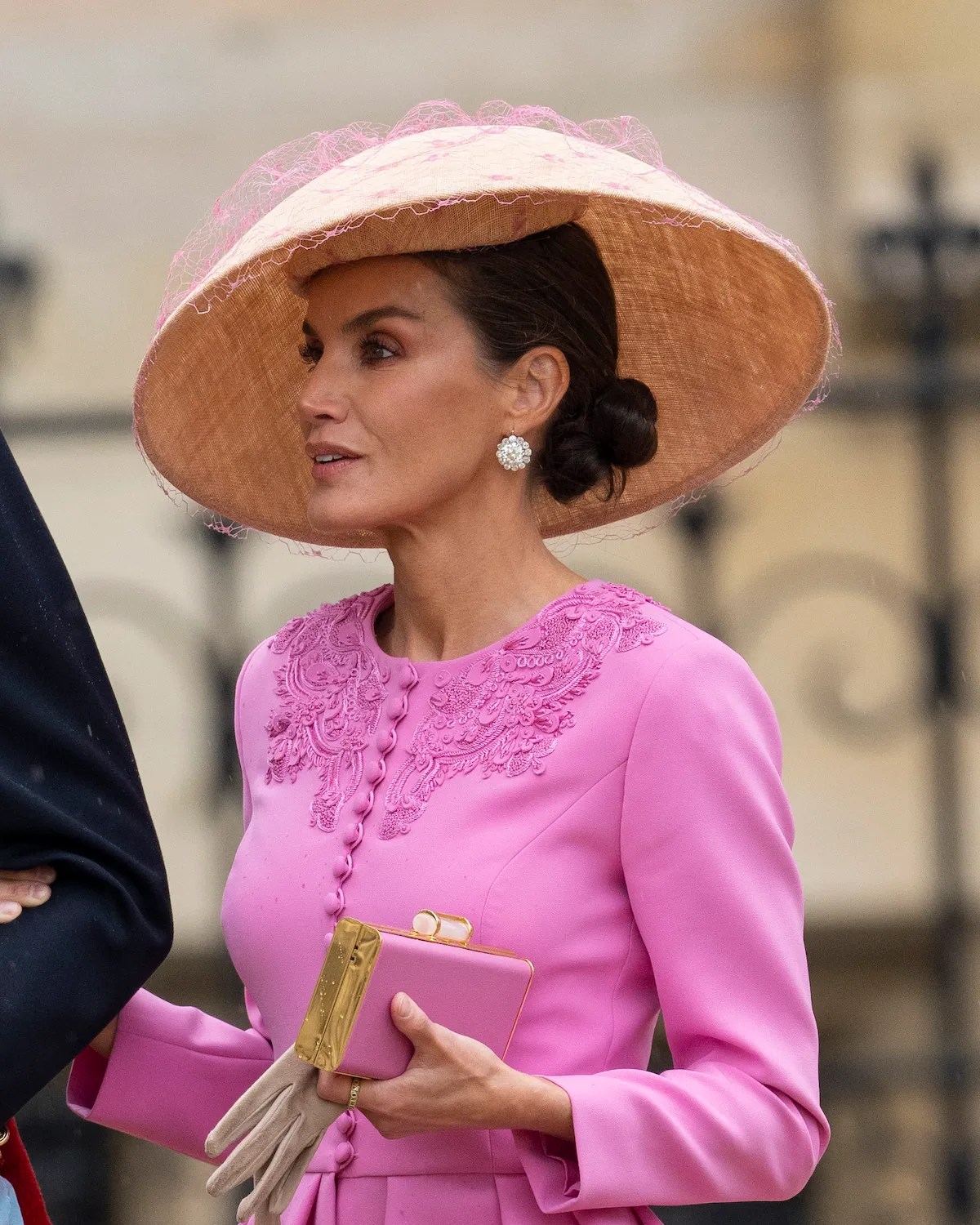
Like many jewels in the Spanish Joyas de Pasar collection, the diamond solitaire earrings have been modified to reflect changing tastes. They are generally attributed to the early 20th century and are believed to have entered the collection during the era of Queen Victoria Eugenie of Spain, though their exact original configuration is not fully documented.
Archival descriptions suggest the earrings were once longer in profile — consistent with Edwardian and early Art Deco evening styles — before being adapted into the button form seen today. Each earring centers on a substantial round diamond surrounded by a halo of smaller stones, creating a clustered solitaire effect that reads clearly at a distance while maintaining symmetry and restraint.
Queen Letizia of Spain wore the earrings in 2021 during a state banquet in Stockholm hosted by King Carl XVI Gustaf and Queen Silvia of Sweden. She later selected them again for the 2023 coronation of King Charles III, underscoring their role as reliable formal anchors within her evening repertoire.
Cartier Diamond Loop Tiara
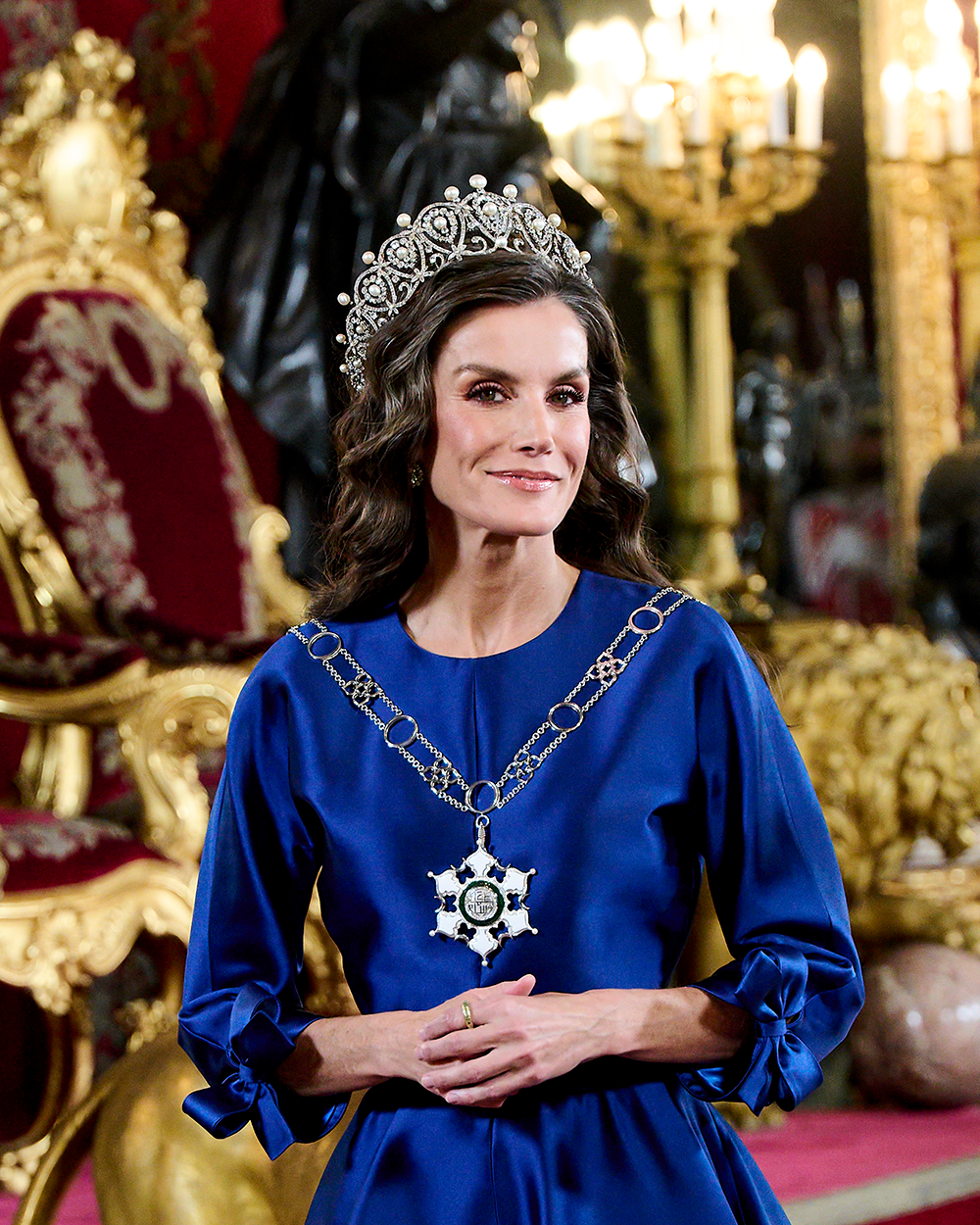
One of the most understatedly elegant jewels in the Spanish royal collection, the Loop Tiara was crafted by Cartier in the early 20th century and is traditionally associated with Maria Christina of Austria. Its design is defined by a rhythmic sequence of diamond looped garlands, each softly accented with natural pearls — a combination that reflects the Spanish collection’s long-standing emphasis on understated sparkle rather than excess.
Queen Letizia of Spain has worn the tiara at several modern state banquets, pairing its delicate architecture with clean, contemporary silhouettes. For a formal German state occasion, she styled it with a black Carolina Herrera gown, diamond drop earrings from the royal collection, and the red-and-gold sash of the Order of Merit of the Federal Republic of Germany — allowing the tiara’s pearl and diamond loops to remain the focal point.
Rato explains the broader aesthetic framework that makes the piece so emblematic of the Spanish treasury: “The core of the historic family collection is exceptionally rich in important natural pearls and fine diamonds. These stones define the visual identity of the Spanish jewels. In terms of design, the pieces favour classic constructions with considerable stylistic variety, reflecting different periods rather than a single dominant aesthetic. There is also a strong presence of naturalistic inspiration — leaves, floral motifs, and organic forms — a language that appears repeatedly in the family’s tiaras and major diamond jewels,” said Rato.
Bulgari Sapphire and Diamond Earrings
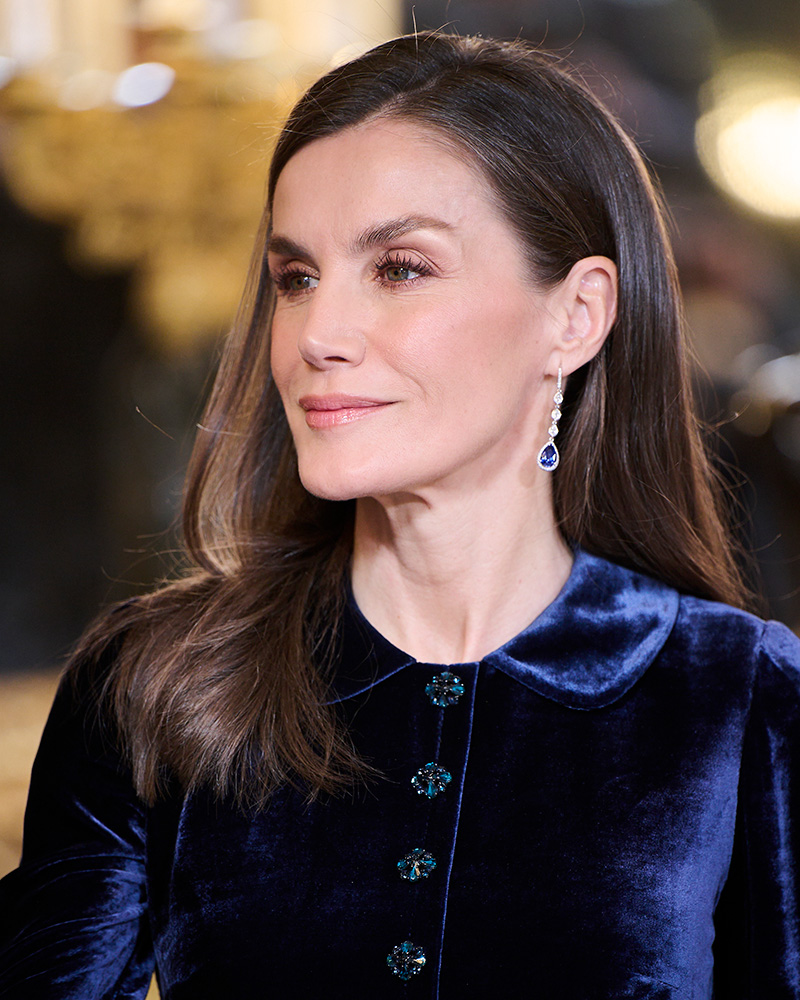
Queen Letizia of Spain frequently returns to a pair of sapphire-and-diamond earrings that, while not part of the historic royal treasury, carry personal significance. The design features four prominent sapphires framed by pavé-set diamonds, creating a rich but controlled burst of color. Press accounts often note that the earrings came from her mother, though the provenance has never been formally documented by the Royal Household.
Despite their scale and weight, they are among Letizia’s most frequently worn evening jewels. She selected them for the July 2017 state banquet at Guildhall in London and has repeated them for multiple diplomatic receptions since. She has also occasionally shared them with the next generation: Leonor, Princess of Asturias, was photographed wearing the earrings in 2024, marking a quiet but symbolic gesture of continuity.
Rato noted, “Queen Letizia has not so much redefined the role of a modern queen consort through her jewellery as she has deliberately neutralised it. Rather than using jewels as a tool for dynastic display or personal narrative — as many queens do — she has treated them as an extension of the institutional uniform. Her restrained, almost austere approach removes jewellery from the realm of aspiration or fantasy and places it firmly within the language of duty. In that sense, her background matters less as a social marker and more as a shaping influence on priorities. She has not attempted to “perform” royal continuity through jewels. Instead, she has opted for correctness and discretion.”
Prussian Tiara
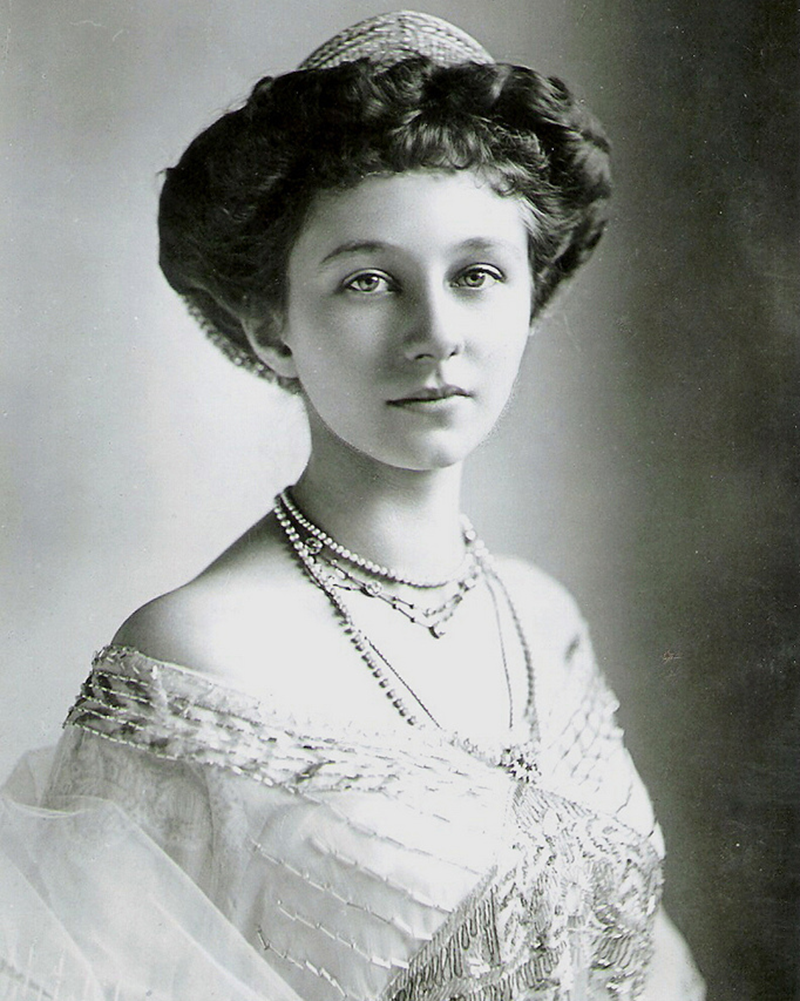
Today, the Prussian Tiara is most closely associated with Queen Letizia of Spain, who has transformed the historic piece into a signature element of her modern royal wardrobe. While its origins lie in German court jewelry, the tiara now feels unmistakably Spanish thanks to her frequent and confident use of it at state banquets and diplomatic receptions.
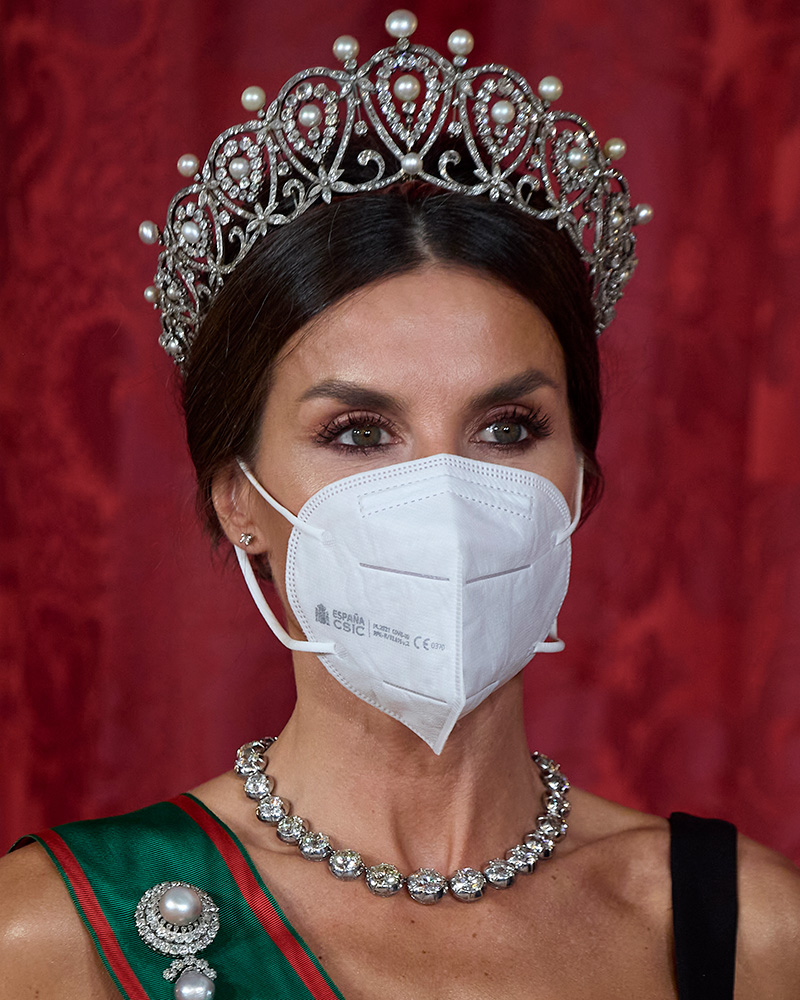
Originally created in the early 20th century by German court jeweler Koch for Princess Viktoria Luise of Prussia, the tiara was designed for grand ceremonial appearances, including a widely publicized visit to Buckingham Palace in 1911. Its neoclassical structure is built around a Russian kokoshnik silhouette, with diamond-set vertical columns rising in perfect symmetry and crowned by 27 pearls, many suspended as pear-shaped drops. The effect is architectural yet delicate — formal, but never heavy.
The jewel later entered the Spanish royal collection through Princess Friederike of Hanover and her granddaughter Queen Sofía, both of whom chose it as a wedding tiara, cementing its association with dynastic continuity. Under Letizia, however, the piece has taken on a distinctly contemporary identity. She favors it for its refined scale and luminous balance of diamonds and pearls, pairing it with sleek gowns and minimalist styling that allows the tiara’s geometry to stand out.
Queen Letizia’s Diamond Eternity Band

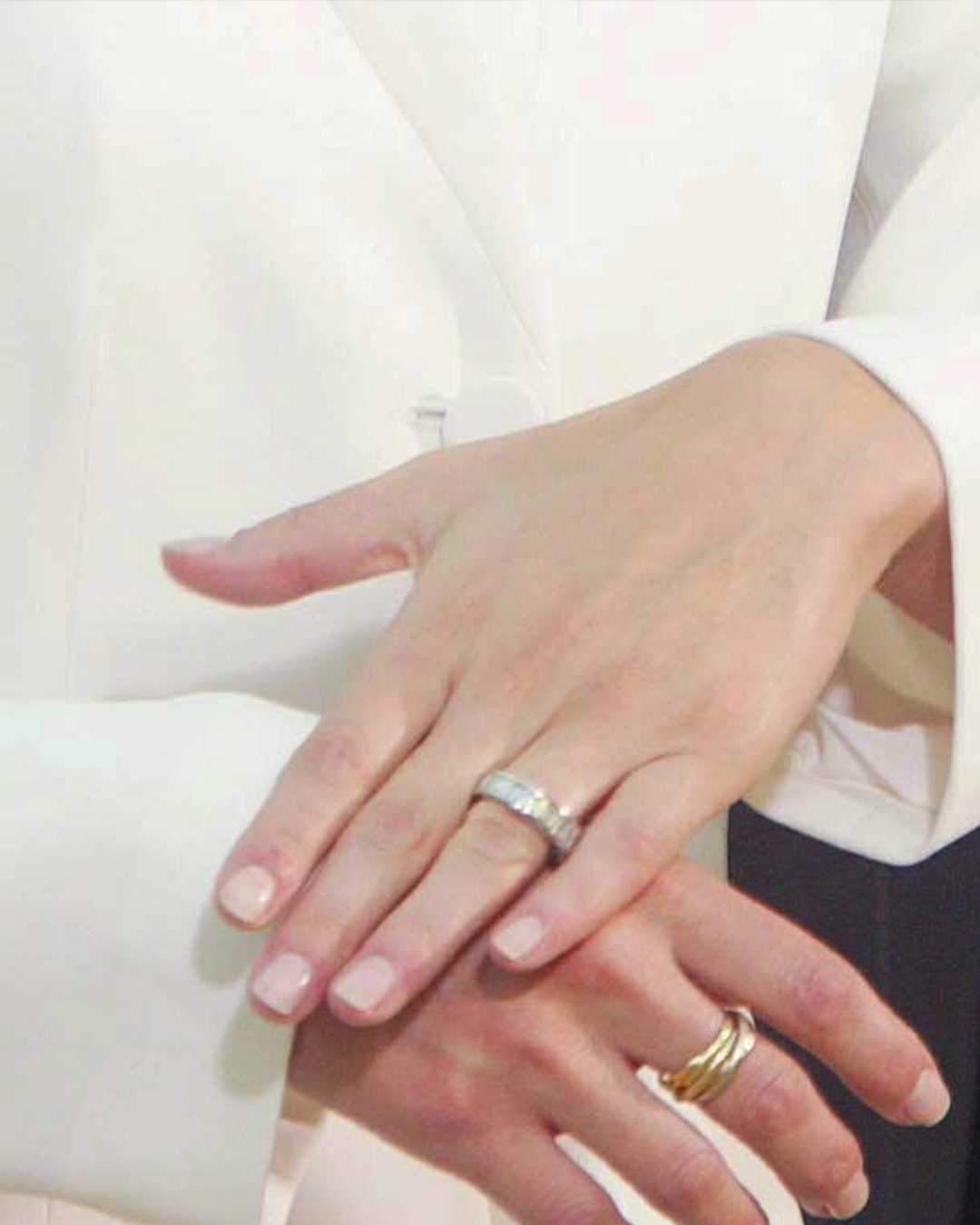
When the Spanish King Felipe VI proposed to the former television journalist Letizia Ortiz in 2004, royal watchers were surprised to learn the couple kept their romance a secret.
Rather than a classic solitaire diamond ring, Queen Letizia broke with tradition and opted for a modern eternity band with 16 emerald-cut diamond baguettes set in white gold made by Spanish jewelry brand, Suárez. While it veers off from the typical royal engagement ring, her choice reflected a sleek, contemporary sensibility. She wears it with a plain gold wedding band from Spanish jewelry designer Karen Hallam.
The Historic Pearl Necklace: Continuity of The Joyas De Pasar
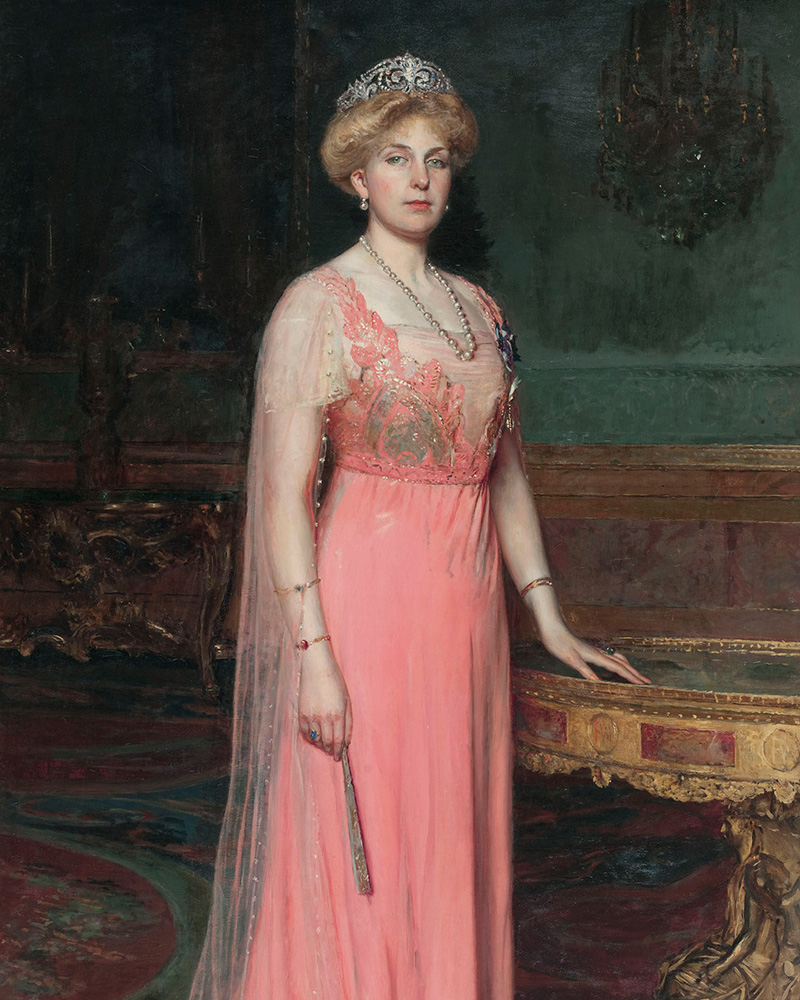
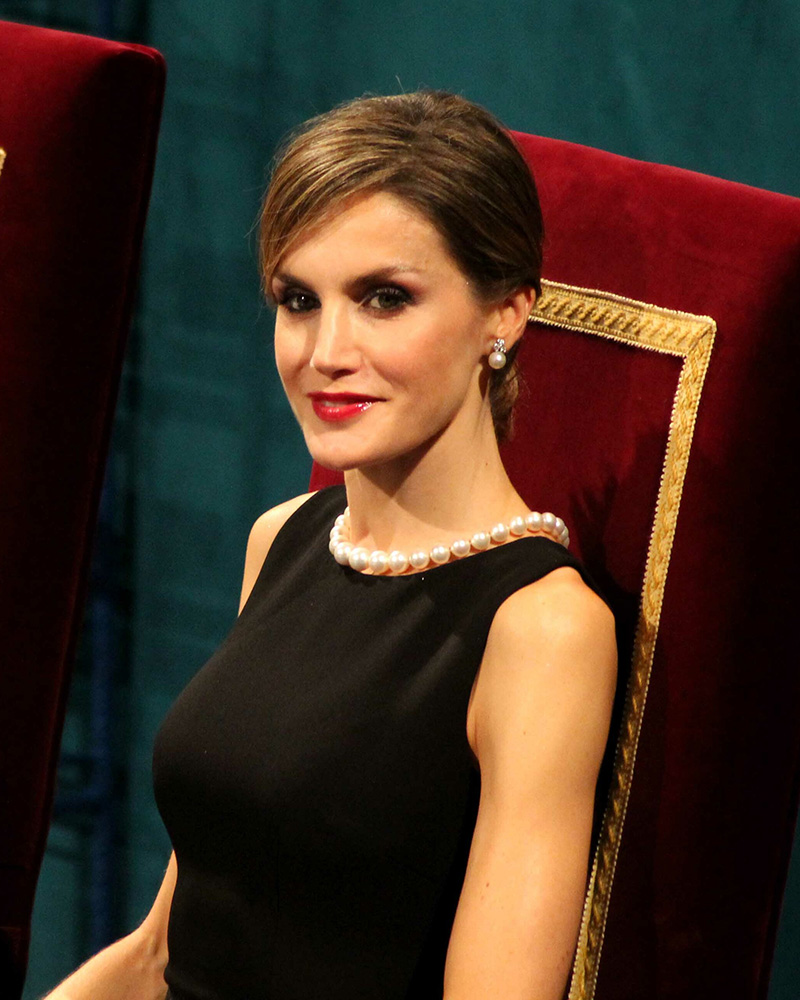
The so-called 37 natural pearl necklace is one of the clearest expressions of the Joyas de Pasar tradition. Originally associated with Queen Victoria Eugenie of Spain, the strand features large, carefully matched natural pearls finished with a diamond clasp — understated in structure but monumental in symbolism. Queen Letizia of Spain has worn it repeatedly, treating it less as a statement jewel than as part of her institutional wardrobe.
Gerrish explains why pearls occupy such a unique place in the Spanish treasury. “Pearls have happily held a cherished place in Spain’s history as a symbol of grace and tradition. Unlike diamonds, which often represent power or celebration, these large, beautifully matched natural pearls have been treasured for their timeless elegance,” Gerrish says. “They are designed to be passed from one queen to the next, symbolising continuity and enduring legacy beyond personal style – truly belonging to the noble office of queen consort, rather than just the individual wearer.”
She adds that Letizia’s broader jewelry language reinforces this symbolism. Gerrish says, “She repeatedly returns to pearls, in strands, drops, and understated combinations, recognising their timelessness, restraint, and authority.” She explained, “When she wears the Joyas de Pasar necklace, it therefore feels like a natural extension of an established visual language rather than a special or performative gesture. She wears the necklace selectively and with restraint, often allowing it to stand alone. In doing so, she reinforces what it has always represented: continuity without ostentation, authority without excess, perfectly aligned with her editorial approach to jewelry.”
Gerrish also points out that pearls, similar to natural diamonds, act as a bridge across reigns:
“The same strand could be worn by Queen Victoria Eugenie in the early 20th century, by Queen Sofía as living continuity, and by Queen Letizia today, without alteration or reinterpretation. That unbroken visual logic lies at the heart of the Joyas de Pasar. In essence, the pearl necklace endures because it expresses exactly what Letizia’s reign requires: a visible link to history that remains credible, restrained, and relevant. At the same time, it is elegant, modest, and unmistakably Spanish.”
How Queen Letizia Rewrites the Meaning of Royal Jewels
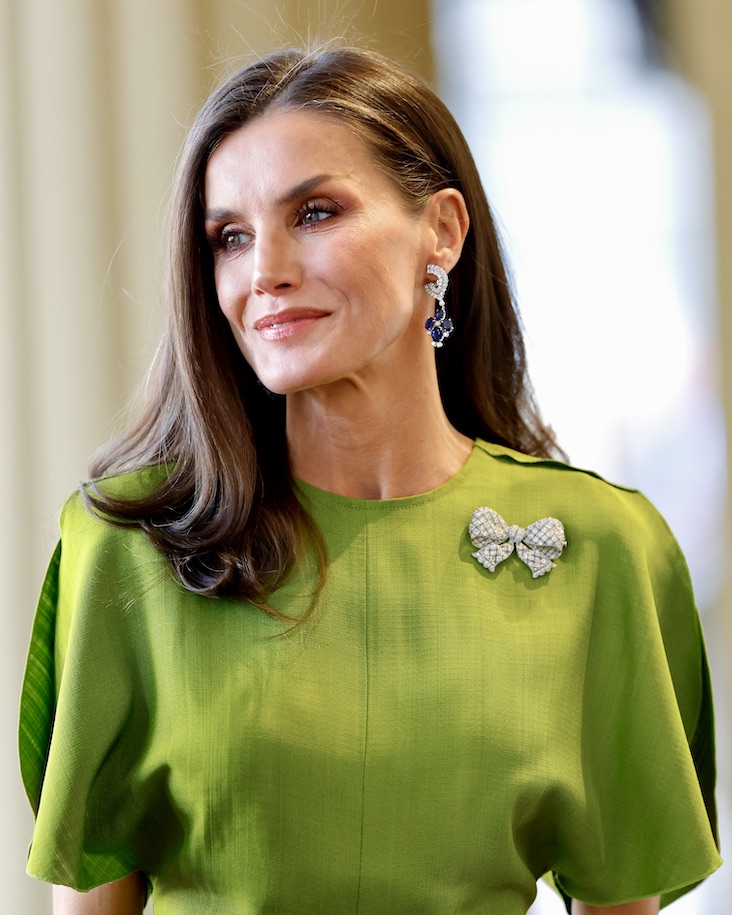
Historians will likely see Queen Letizia of Spain not as a queen who expanded the treasury, but as one who redefined how it is read. Her legacy is editorial rather than acquisitional and shaped through selection, repetition, and restraint.
Gerrish frames this as a shift away from spectacle toward control. “Traditionally, the power of royal jewelry was measured by what was acquired: Queen Victoria embedded empire and sentiment through commissions; Queen Mary expanded and systematised collections; Queen Sofía reinforced continuity through visibility,” Gerrish says. “Letizia, by contrast, operates in an era where legitimacy is fragile, and spectacle can undermine authority. Her significance lies in recognising that modern monarchy requires control, clarity, and restraint rather than expansion.”
Because she came from outside the aristocracy, Letizia treats jewels as institutional language rather than personal decoration. Her authority is built as much on omission as display.
“She uses jewels as institutional language. By repeating a narrow, symbolic vocabulary – pearls, fleur-de-lys motifs, discreet diamonds, and carefully chosen heirlooms- she creates coherence over time,” she says. “Equally important is her deliberate use of absence: choosing not to wear jewels, or not to wear a tiara, when seriousness and credibility matter more than display. In royal terms, omission becomes an active strategy.”
Gerrish ultimately places her in a distinctly modern lineage alongside Catherine, Princess of Wales. “She shows us that authority today is built through consistency, good conduct, and clear messaging,” she says. “Her choice of jewelry highlights a simple yet powerful truth: in the 21st century, being a queen is less about your origins and more about how you embrace and carry out your role.”