Traditional Diamond Mourning Jewelry Keeps Treasured Memories Alive
Deeply rooted in history, natural diamond mourning jewelry has acted as a sentimental talisman to honor lost loved ones for centuries.
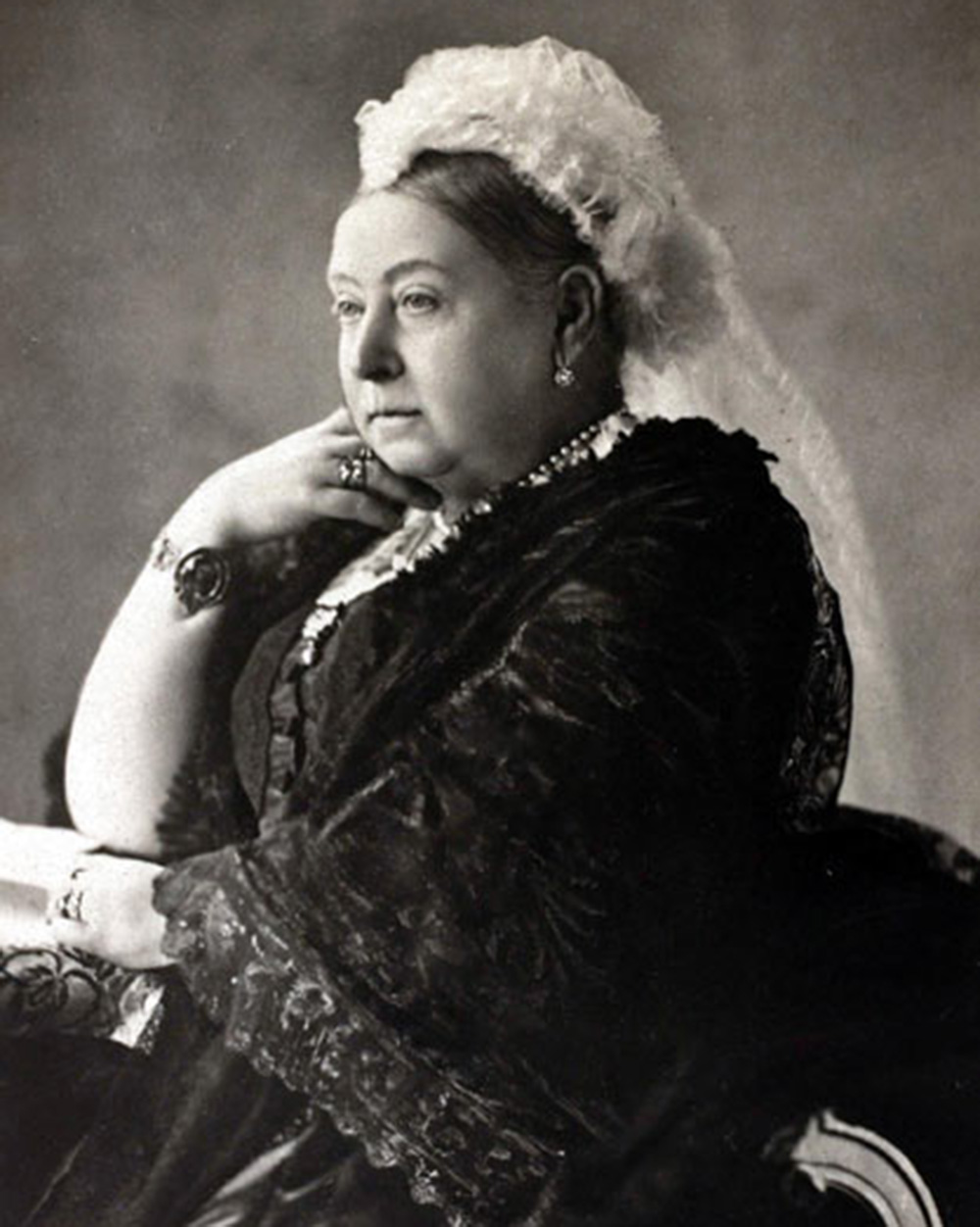
Queen Victoria in mourning attire, 1861. (Wikimedia Commons/Public Domain)
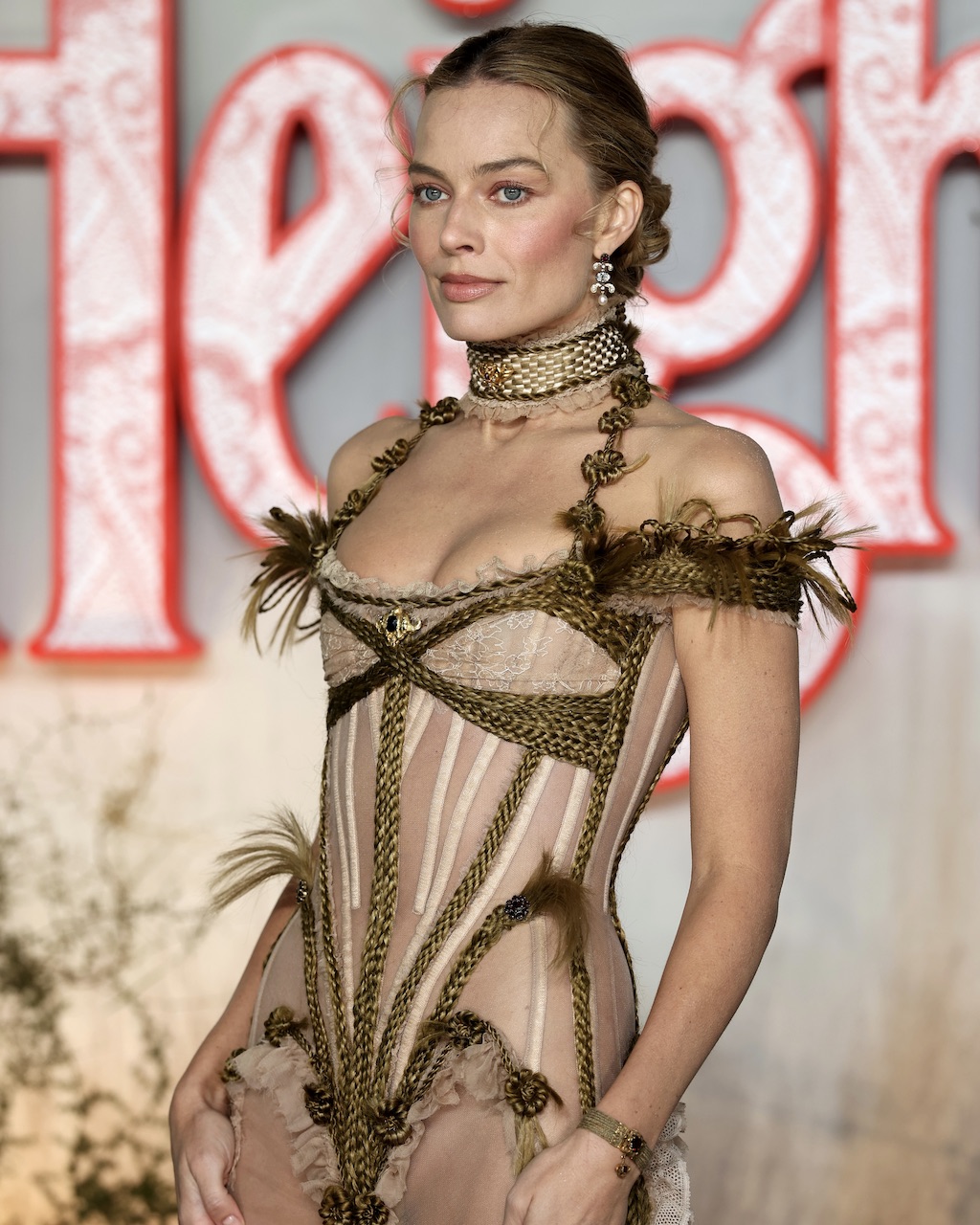
Its safe to say we’ve been thoroughly obsessed with the Wuthering Heights press tour, and all the accompanying jewelry worn by lead actress Margot Robbie. Originally written by Emily Brontë in the Victorian era, the story has sparked renewed fascination with the jewelry of the time, particularly the sentimental tradition of mourning jewelry, including historic examples of diamond mourning jewelry that symbolized eternal love and remembrance.
For the London premiere of Emerald Fennell’s controversial adaptation, Margot Robbie wore a replica of a bracelet once created with the writer’s own hair. A common motif in Victorian mourning jewelry, the original piece belonged to Charlotte Brontë, the sister of Emily Brontë and author of Jane Eyre.
Mourning jewelry of the era often featured intricate hairwork, and the 175-year-old bracelet incorporated braided strands of hair from Emily and their sister Anne Brontë. The two died within a year of one another—six and seven years, respectively, before Charlotte. According to Vogue, Robbie’s replica was created by Haworth-based Wyedean Weaving. Moments like this have helped spark renewed interest in Victorian mourning jewelry and the deeply symbolic materials—such as natural diamonds—often used in these sentimental pieces.
Meet the Experts

Maggi Simpkins is a Los Angeles-based jewelry designer, best known for her narrative-driven engagement rings and future family heirlooms. She believes that when jewelry is passed down, it helps keep stories and memories alive.
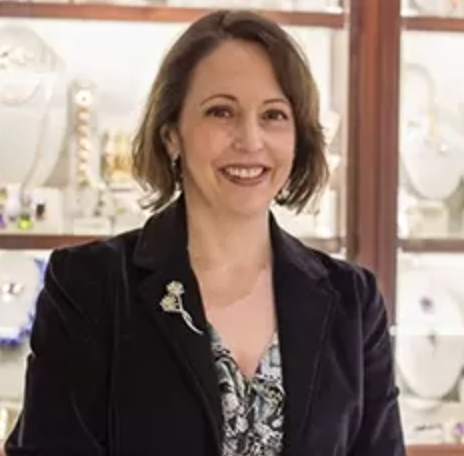
Nicole Corsini is the Marketing Director of Lang Antique & Estate Jewelry, a San Francisco-based vintage jewelry company with one of the largest and most diverse collections in the United States. She holds a Graduate Gemologist certification from the GIA and has been in the jewelry business for over 12 years.
Nicole Corsini, Marketing Director, Lang Antique & Estate Jewelry, tells Only Natural Diamonds, “Keepsake jewelry is such a beautiful and meaningful way to preserve a connection to a loved one. It could be an inherited family piece, like a grandfather’s watch or a great-grandmother’s strand of pearls, that you remember that person wearing. Or a newer piece can be imbued with sentiment in the way it is worn, like a locket with old photos inside, or figural jewelry with special resonance, like a rose brooch to commemorate someone who loved to garden.”
What is Mourning Jewelry?
Though mourning jewelry became popular in the Georgian Period, when “memento mori” jewelry—Latin for “remember you must die”—featured skulls, coffins, and inscriptions reminding wearers of life’s fragility, the tradition of reached new heights in Western Europe during the Victorian era after Prince Albert died in 1861. His wife, Queen Victoria, observed forty years of sustained mourning with sentimental, natural diamond mourning jewelry, including lockets, bracelets, necklaces, and rings.
According to the experts at 1stDibs, an online marketplace known for vetted antique dealers, vintage jewelry specialists, and high-end design galleries, “Mourning jewelry serves as a lasting, wearable memorial, transforming the sentiment of loss into a beautiful tribute. These unique pieces are specifically crafted to commemorate the deceased through the use of specific engravings, artwork, and unique materials such as hair or bone.”
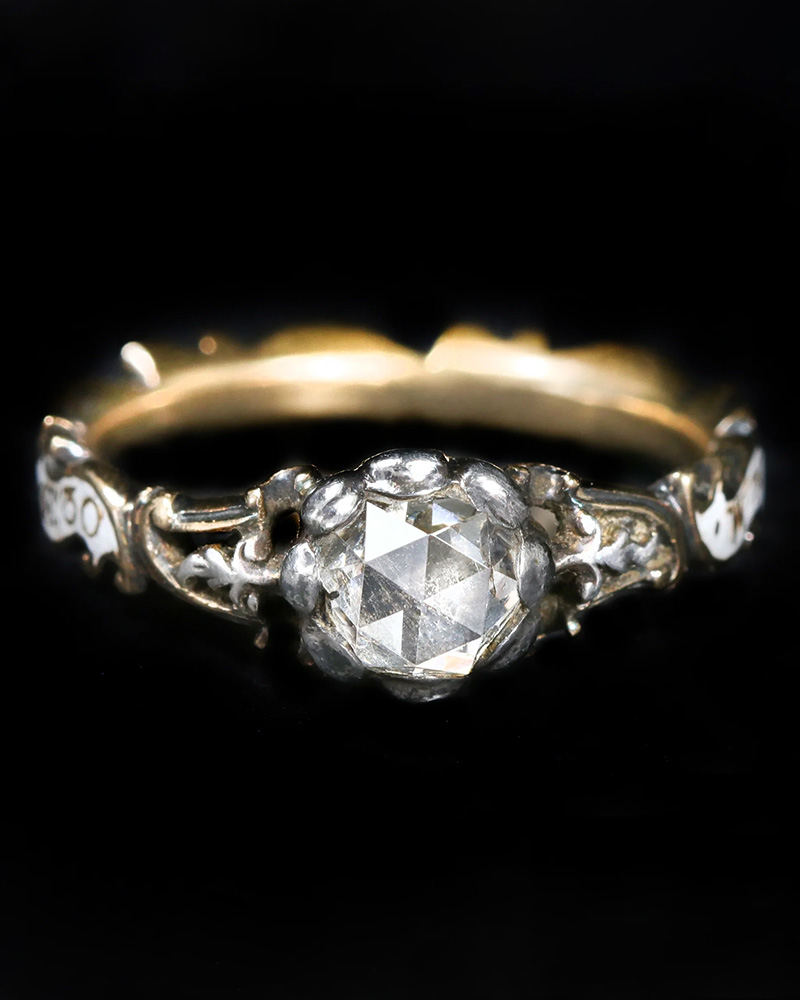
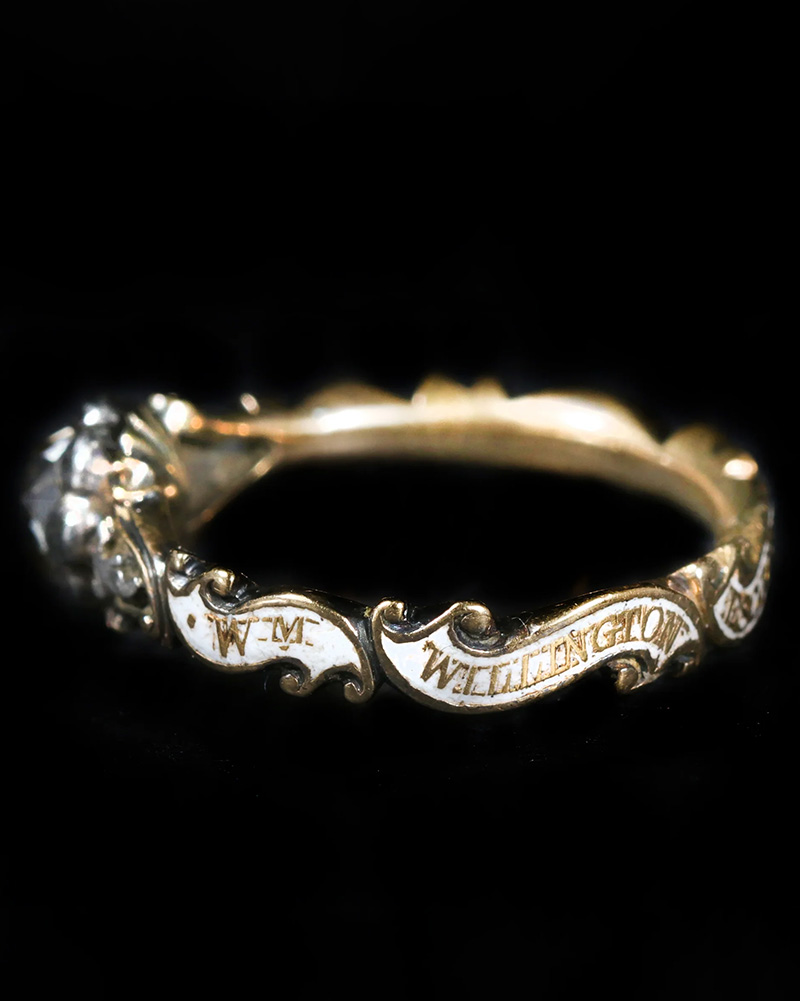
Corsini says, “Mourning jewelry is a category of jewelry dedicated to remembrances of lost loved ones, often using black gems or enamel, and full of sentimental decorative symbols such as weeping willows, urns, and sometimes even locks of hair.”
She explains, “In general, any natural diamonds found in traditional Victorian mourning jewelry tend to be small and discreet. The strict protocols of early mourning prescribed somber, unadorned black clothing and allowed for very few public appearances. However, in the later stages of mourning (known as half mourning), dress colors such as grey and lavender, and subtle adornment with gems like natural diamonds, natural pearls, and amethyst were allowed. Ultimately, though there is often intrinsic material value to mourning jewelry, it is really the accompanying stories and sentiment that make these pieces priceless.”
Queen Victoria’s Influence on Mourning Jewelry
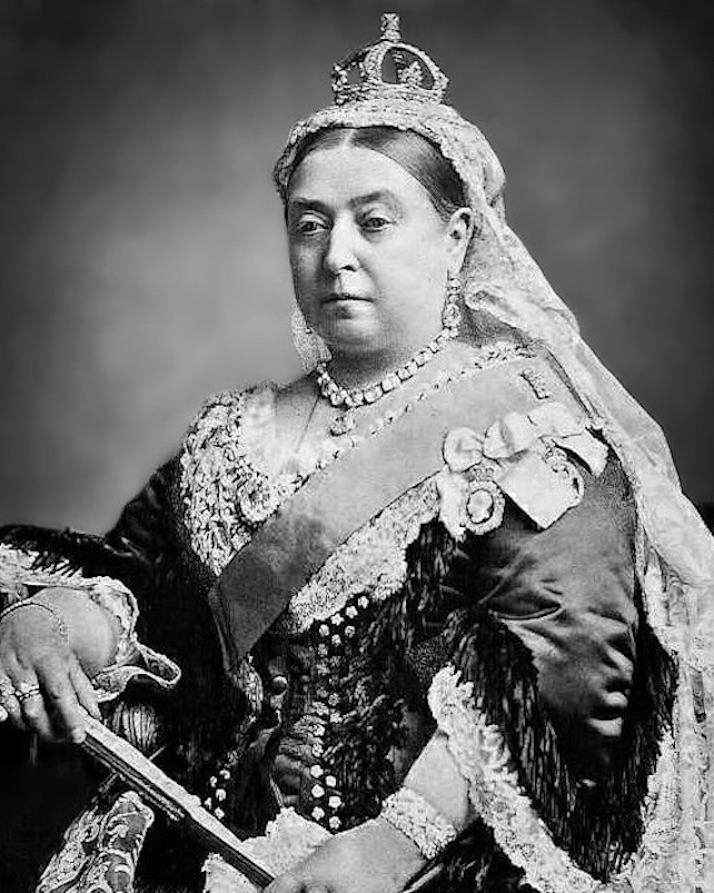
Corsini explains, “In 1861, Queen Victoria – who was in her early 40s – lost both her mother, the Duchess of Kent, and her husband, Prince Albert. She went into deep mourning and observed customs like wearing black (also called “widow’s weeds” colloquially) until the end of her reign in 1901. Since the royals and aristocracy set the fashion trends of the time, mourning customs filtered down to the rest of late 19th-century society.”
Victoria’s grief became one of the defining cultural forces of the Victorian era. After Albert’s death, she favored mourning materials such as jet, onyx, and dark enamel. She also popularized sentimental jewelry that incorporated hairwork, lockets, and inscriptions—pieces meant to keep the memory of loved ones physically close.
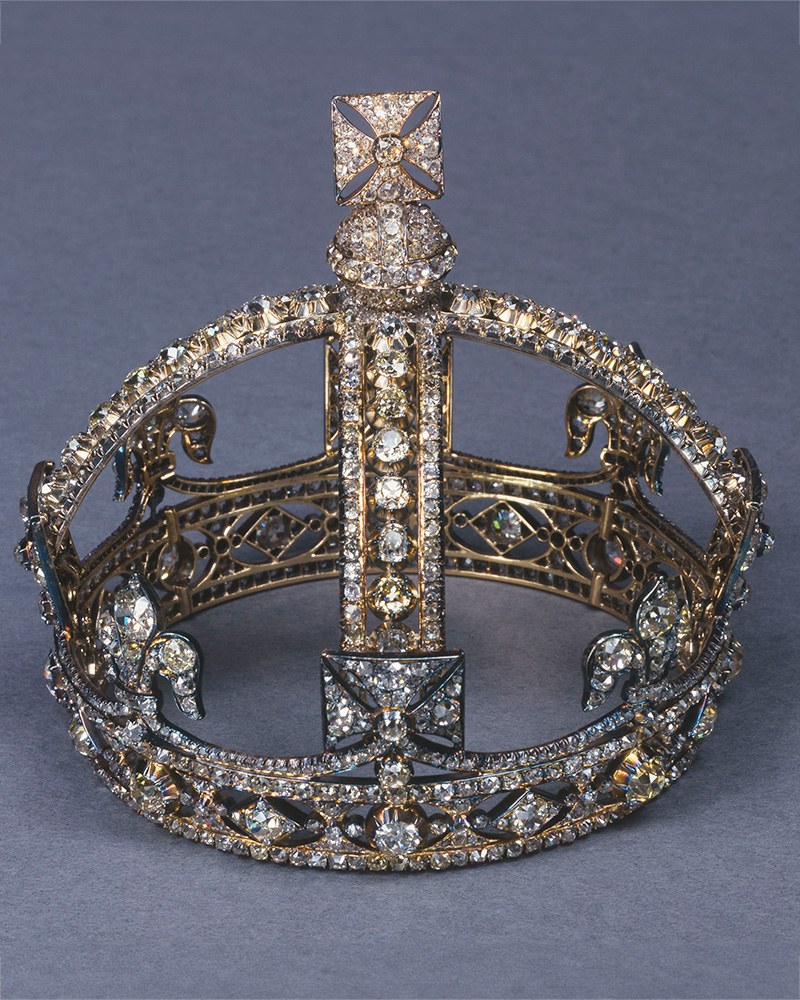
Among the most notable was the Small Diamond Crown of Queen Victoria, a miniature imperial tiara created by the royal jeweler Garrard, which was specially designed to sit over the widow’s cap she wore as part of her mourning attire. Far more restrained than the glittering diamond tiaras typically associated with royalty, the delicate piece allowed Victoria to maintain royal protocol while still honoring the strict conventions of Victorian mourning.
In 2021, a selection of Queen Victoria’s mourning jewelry went to auction at Sotheby’s in London. Four black brooches were included as part of a wider collection of 400 pieces from the estate of Patricia Knatchbull, the second Countess Mountbatten of Burma, who passed away in 2017.
These brooches honored the life and death of Queen Victoria’s third child, Princess Alice, who died from diphtheria at 35 years old in 1878. One pin takes the form of an onyx heart within a cross, crafted from hardstone, black and white enamel, and cushion-shaped natural diamonds spelling out the name Alice beneath a coronet. The words “Dear Alice” are inscribed on the back, along with the date of the Princess’s passing, with a lock of her hair encased in the locket.
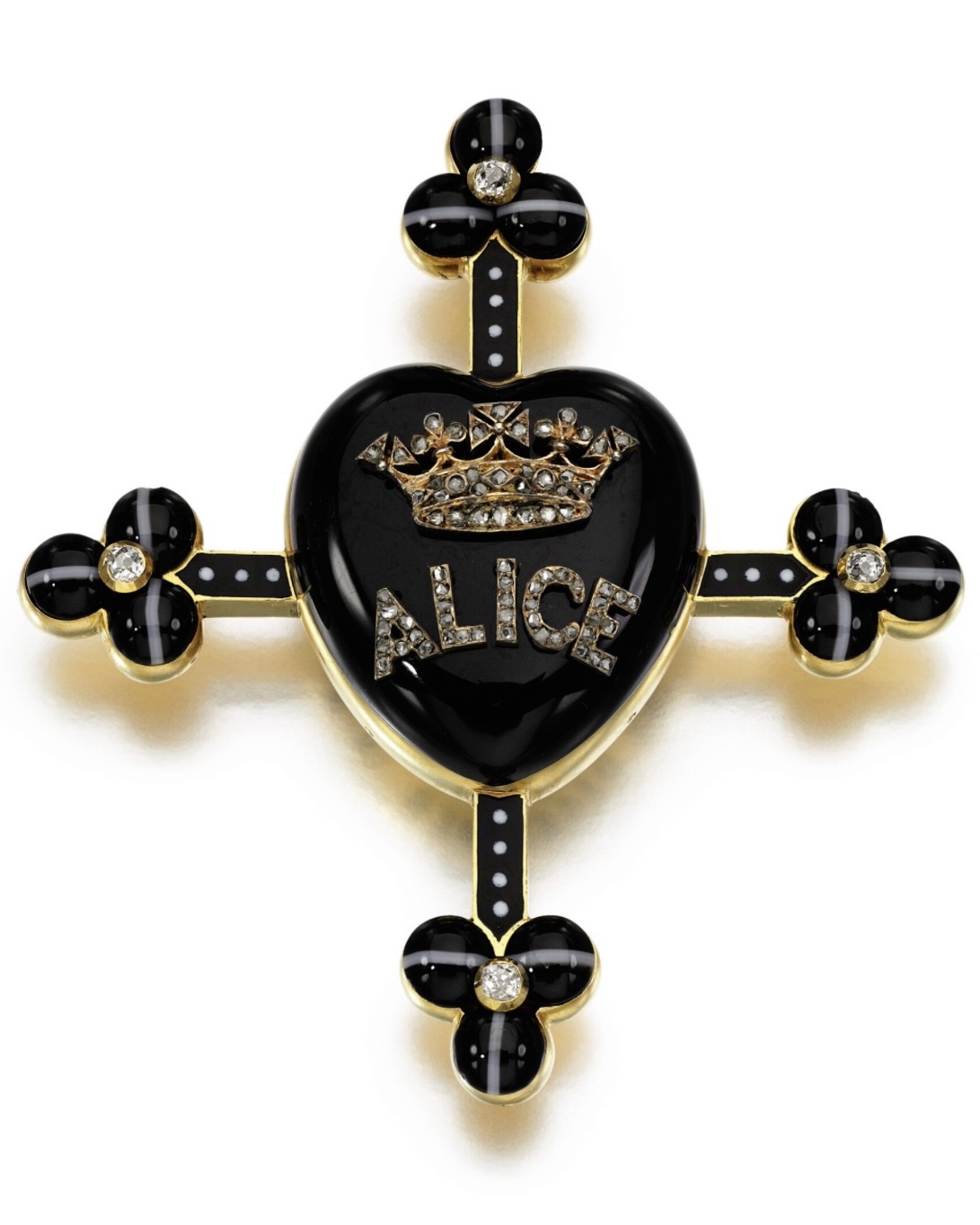
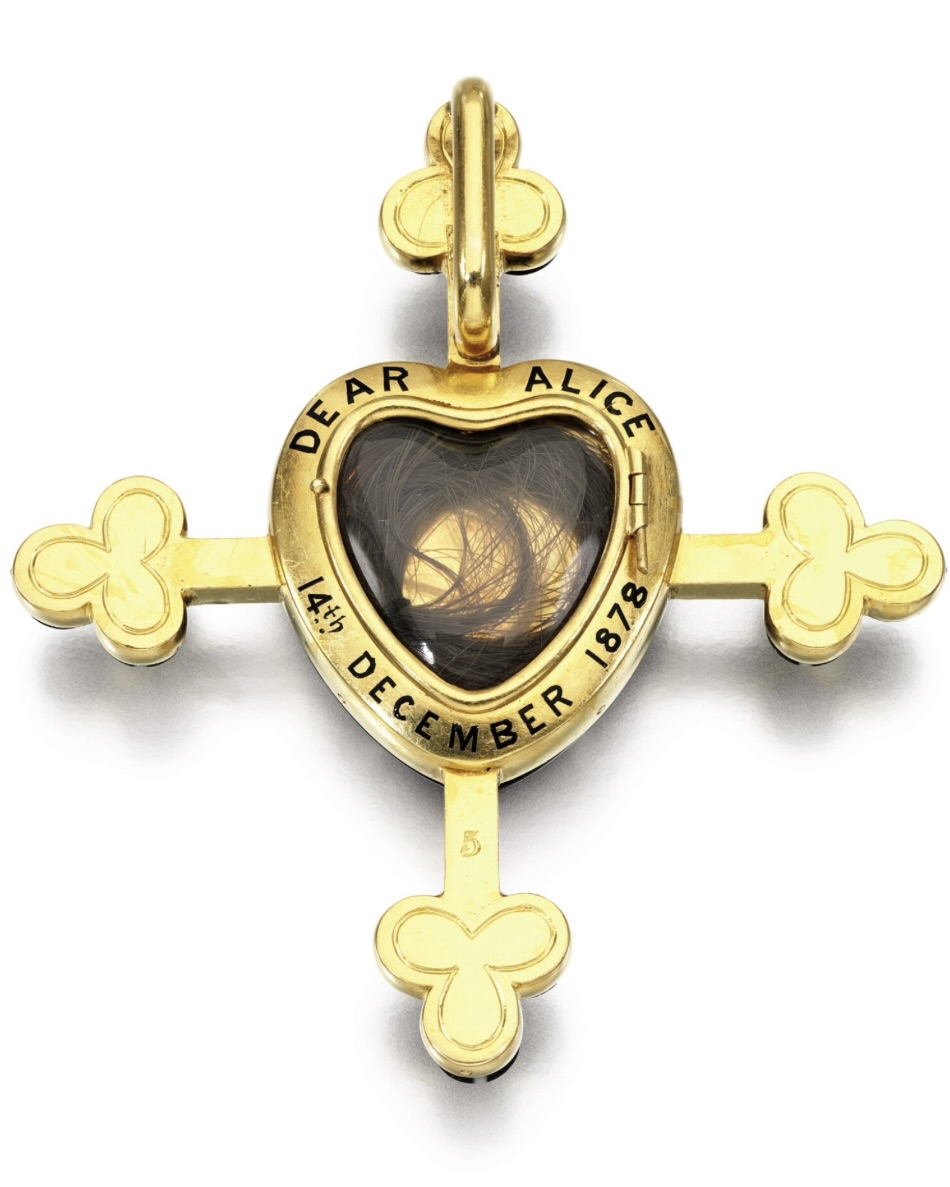
The experts at 1stDibs explain, “Mourning jewelry often incorporated materials like jet, onyx, pearls, dark tortoiseshell, and black enamel, with white enamel typically reserved for children and unmarried women. Natural diamonds, traditionally symbolizing eternal love, were frequently paired with black enamel, jet, and human hair. These older, naturally mined diamonds often featured rose or old cuts, underscoring the piece’s history and representing timeless devotion.”
Modern Day Mourning Jewelry Keeps the Memory Alive
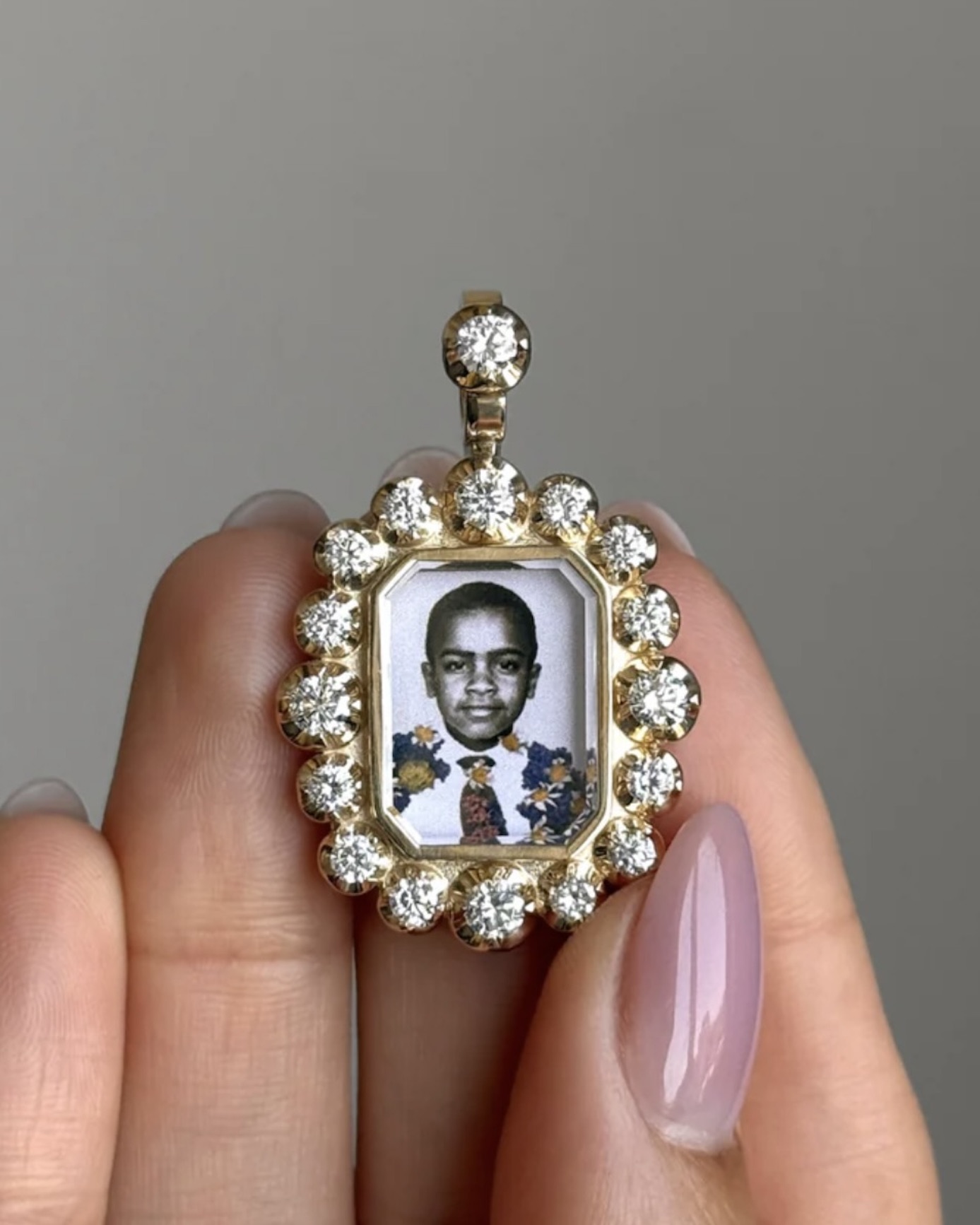
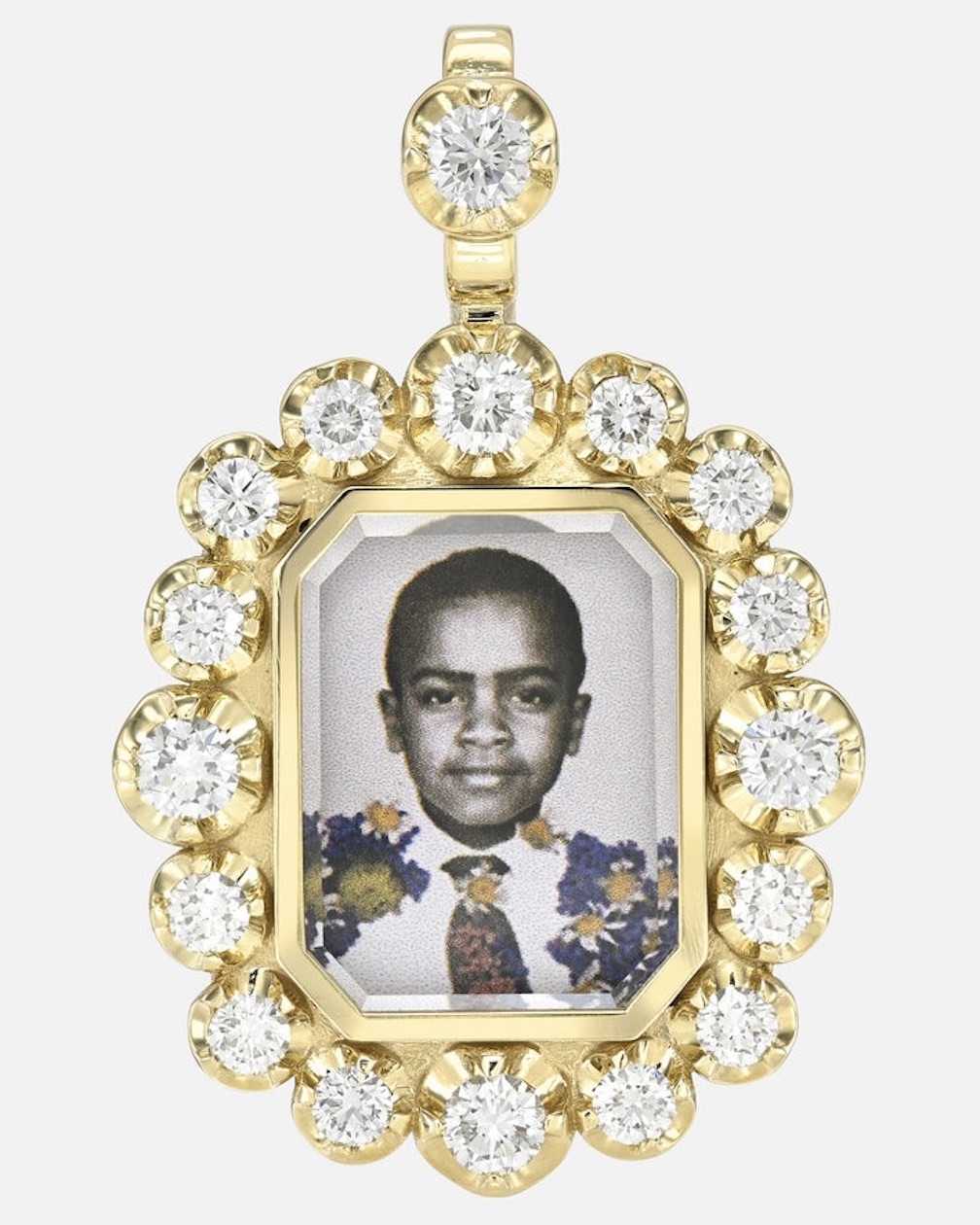
You can’t discuss mourning jewelry without talking about lockets. Jewelry designer Maggi Simpkins sees the jewel as an “ode to your story.” Obviously, a locket is not exclusively meant for mourning, but it’s the perfect talisman to keep a loved one with you always. Her Crown Frame Locket Pendant contains a custom portrait-cut sapphire crystal over a photograph of your choosing, with approximately 1.56-carats of round brilliant-cut diamonds, set in 14-karat gold.
“Growing up, I loved lockets, but it always felt bittersweet hiding the sweet photo inside,” Simpkins tells Only Natural Diamonds. “I remember when I started seeing rapper-style chains with printed photos on them.” In the hip-hop culture, jewelry is king, and bespoke photo “memory pendants” have become customary to honor lost loved ones, shining in natural diamonds. According to Vikki Toback’s comprehensive book, Ice Cold: A Hip-Hop Jewelry History, rapper Meek Mill had a diamond-embellished memory pendant made by Philadelphia-based Joe the Jeweler of Shyne Jewelers, in tribute to his murdered protégé, Lil Snupe.
Simpkins continues, “I thought it would be really cool to be able to print out an actual photo and feature it on a necklace behind a gem, so that it was the main centerpiece, while also having the option to swap out the photos.” The designer wanted to ensure that the image was elevated in the center of the piece, to “serve as the gem itself, while also creating a unique detailed picture frame to accentuate the photo.”
Adoring the concept of mourning jewelry, Simpkins explains, “All of my most important jewelry is sentimental, and reminds me of loved ones, mostly who have passed on. I lost my father in 2012, and I wear a photo of him as a child in my locket on my neck daily. People ask about it all the time, and I get to be reminded of him and his memory all of the time.”
Simpkins, who was displaced after the 2025 L.A. fires, also got involved in auctioning off one of her lockets for charity. She worked with Grace Lavarro of Jewels by Grace and jeweler Mia Moross via a GoFundMe to benefit individuals and families who lost their homes in the Eaton fire, as well as the LAFD. They raised over $150,000 through the auction, to which Simpkins donated her Locket Pendant.
“The fires in LA were absolutely devastating,” recalls Simpkins. “It is always really hard to know the best way to help when something like that happens. Jewels by Grace and Mia Moross had the brilliant idea to put together an auction to raise funds for people affected by the fires.” She says, “The photo locket felt like the perfect piece for me to offer because I thought about how many memories were lost in those fires, and I created the lockets to help honor memories and keep them alive.”
Why Mourning Jewelry Still Resonates
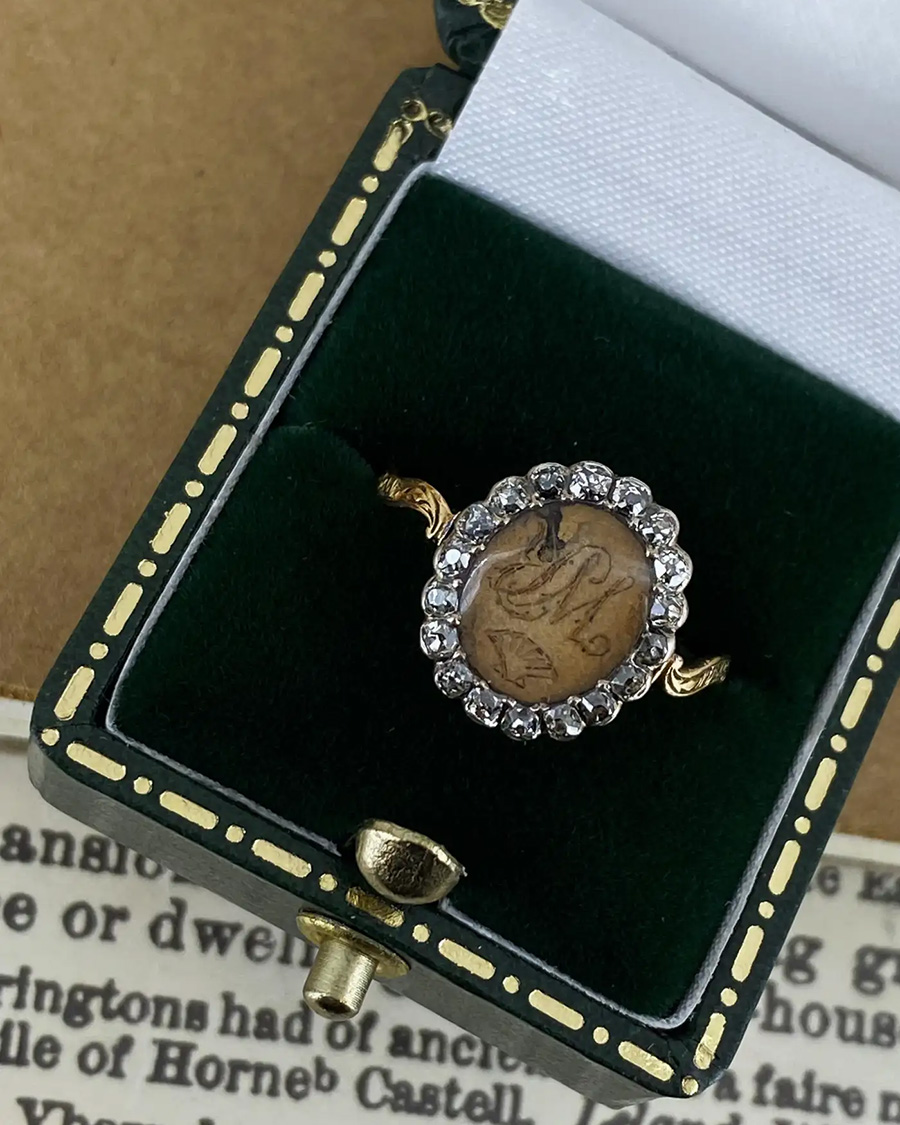
More than a century after the Brontë sisters lived and wrote on the windswept moors of Yorkshire, mourning jewelry continues to resonate because of the deeply human impulse behind it: the desire to remember. Today, that same symbolism endures. From the historic hairwork bracelet worn by Margot Robbie during the Wuthering Heights press tour to modern lockets and memory pendants set with natural diamonds, these jewels continue to transform remembrance into something lasting and beautiful. Long prized for their permanence, natural diamonds remain one of the most meaningful ways to honor the memories—and the people—we never want to forget.