< Historic Diamonds / Famous Diamonds
Inside Marjorie Merriweather Post’s Unrivaled Jewelry Collection
Discover how the billionaire philanthropist and jewelry connoisseur acquired some of the most exquisite jewels the world has ever seen.
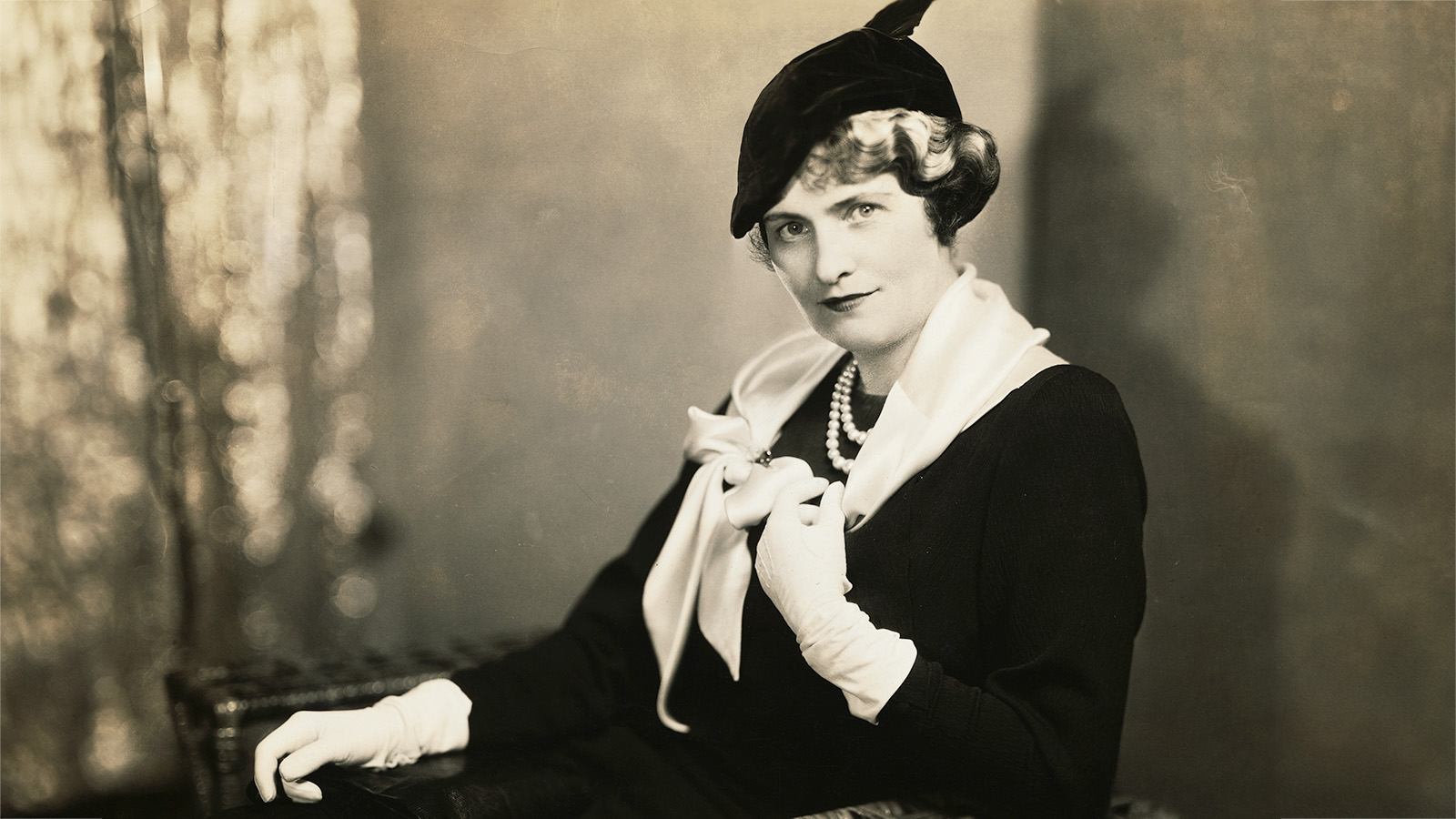
Marjorie Merriweather Post, 1935. (Photo by George Rinhart/Corbis via Getty Images)
Marjorie Merriweather Post was known for many things. As the heiress to the Postum Cereal Company fortune (later known as General Foods), she was a formidable and deeply involved businesswoman from a young age. Under her leadership, and later alongside her second husband, Edward F. Hutton, the already successful company expanded significantly, acquiring household brands such as Jell-O and Maxwell House Coffee.
She was also a real estate scion, best known for building the 114-room Mar-a-Lago estate in Palm Beach (yes, that Mar-a-Lago now owned by President Trump), as well as Hillwood, her Washington, D.C. residence that would later become the Hillwood Estate museum, housing her extraordinary Russian art collection.
As a steward of philanthropy, she donated to many charitable causes throughout her life. During the Great Depression, she even set aside part of her fortune to aid the unemployed and led charity drives for the Salvation Army and Red Cross.
Meet the Experts

Justin Daughters is the Director of Berganza, a UK-based antique and vintage jewelry dealer renowned for sourcing and presenting rare, museum-quality pieces. With a deep expertise in historic jewels, Daughters oversees a collection distinguished by exceptional provenance and authenticity.

Zuleika Gerrish is an antique, vintage, and fine jewelry expert as well as a gemmologist and co-founder of Parkin and Gerrish with her husband Oliver. Alongside running Parkin & Gerrish, she lectures on historic jewelry, sharing her expertise with new audiences.
In addition to all of this, the mother of three daughters assembled one of the most remarkable jewelry collections of the 20th century—one that rivaled those of European royalty. Spanning decades and rich with aristocratic lineage, her collection included tiaras, parures, multi-piece suites, and natural diamonds typically reserved for museums and royal vaults. She was a true pioneer in her approach to collecting.
“Marjorie Merriweather Post was the ultimate ‘connoisseur-collector’. Her style was defined by a rare combination of architectural scale and historical reverence,” says Justin Daughters, Managing Director of Berganza.
Ahead is a closer look at the life of Marjorie Merriweather Post, and how she built one of the most extraordinary jewelry collections the world has ever seen.
Marjorie Merriweather Post: From Heiress to Global Tastemaker
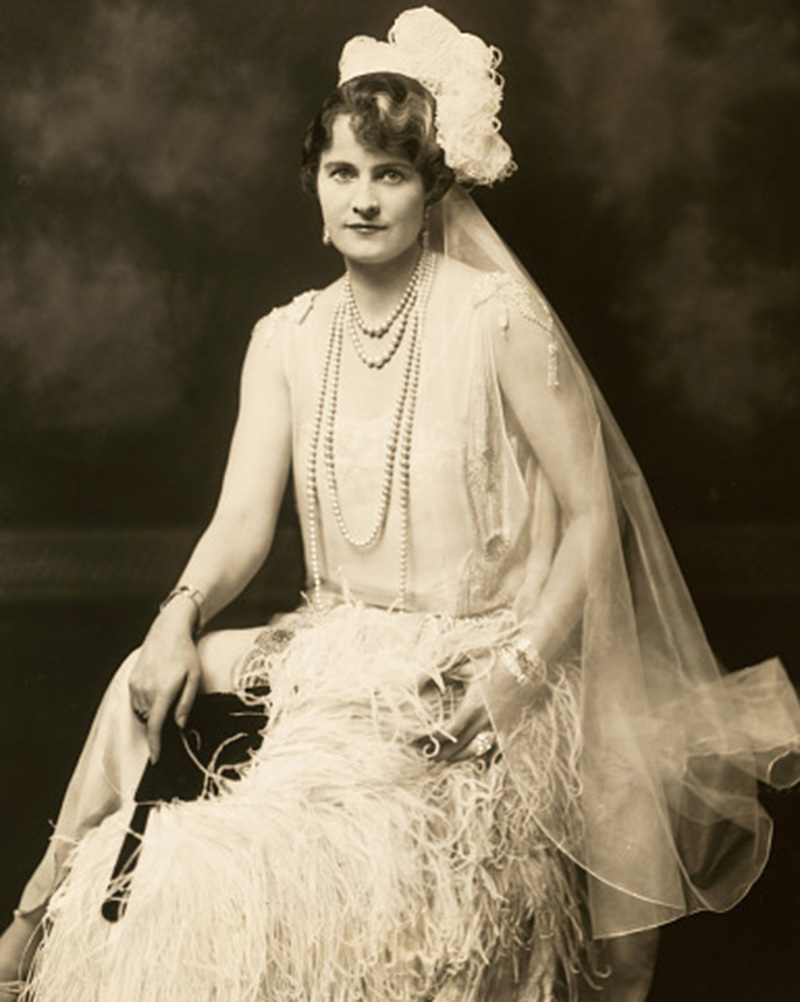
Born in 1887 to cereal magnate C.W. Post, Marjorie Merriweather Post became the sole heir to her father’s fortune and, at just 27, the richest woman in America. Groomed for leadership from childhood, she was deeply involved in the family business long before assuming control.
Under her direction—and later alongside her second husband, E.F. Hutton—Postum went public in 1922, acquired brands including Jell-O, Maxwell House, Sanka, and Birdseye, and was renamed General Foods in 1929. She remained at its helm until 1958, famously recognizing the potential of frozen foods before home freezers were commonplace.
Marjorie Merriweather Post was equally known for her philanthropy, supporting institutions such as the American Red Cross, the National Symphony Orchestra, the Salvation Army, and the former John F. Kennedy Center for the Performing Arts. Her vast real estate holdings included Mar-a-Lago in Palm Beach, a Tudor estate on Long Island, a 54-room New York apartment, and Camp Topridge in the Adirondacks, along with the world’s largest private plane and the legendary yacht Sea Cloud.
A Love of Jewels Shaped by Travel and Collecting
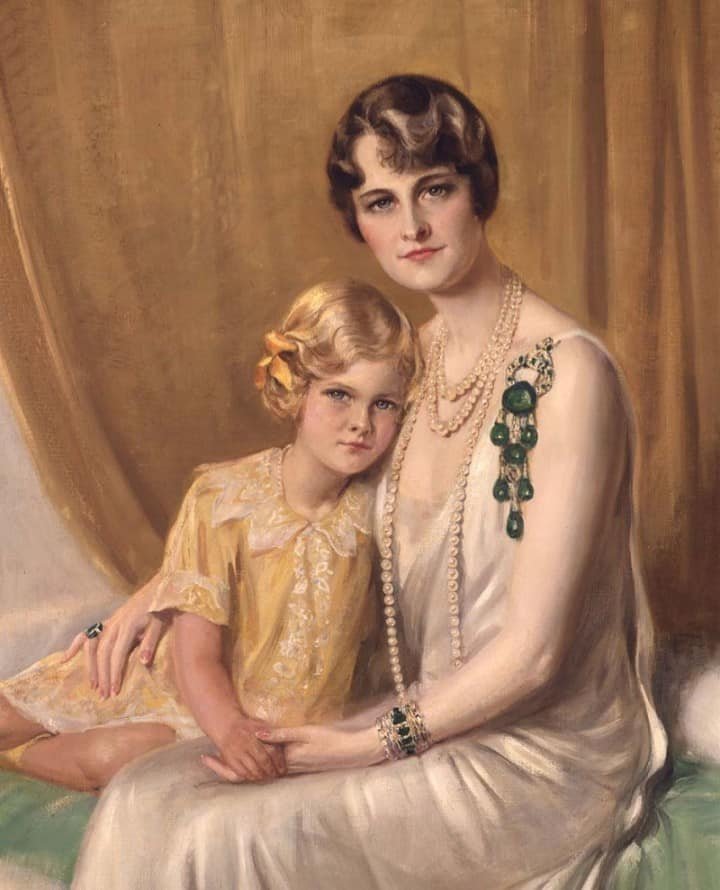
Her global travels fueled a deep passion for jewelry and decorative arts. According to The Houses and Collections of Marjorie Merriweather Post: The Joy of It by Wilfried Zeisler, her exposure to fine jewelry began in infancy—a gold heart charm necklace from her baby photos remains on display at Hillwood today.
Marjorie Merriweather Post’s most significant collecting period began after her 1935 marriage to diplomat Joseph E. Davies, when postings to Moscow and Brussels allowed her to acquire extraordinary Russian treasures being sold by Stalin’s government. These included nearly 90 Fabergé objects, Imperial Easter eggs, religious silver, porcelain services once owned by Catherine the Great, and the nuptial crown of Empress Alexandra—now forming the core of the Hillwood Museum in Washington, D.C.
“Travel deepened her understanding. She was exposed directly to French court traditions, Russian imperial culture, and Indian Mughal craftsmanship, and she collected accordingly, acquiring Russian imperial art, Mughal emeralds, and French royal jewels. Because these pieces came from lived experience rather than trend-driven shopping, her collection feels unusually coherent despite its global scope,” says Zuleika Gerrish, co-founder of Parkin & Gerrish.
Diplomatic life also shaped Post’s eye, according to Gerrish. It required discretion and intelligence rather than spectacle, reinforcing her preference for jewels with historical and cultural gravity. As Gerrish explains, her marriages and travels did not simply expand what she could acquire; they transformed how she understood jewelry itself. Her collection reads less like a society jewel box and more like a personal map of the 20th-century world she inhabited.
The Defining Jewels of Marjorie Merriweather Post
What set Marjorie Merriweather Post apart was her vision: rather than collecting privately, she built cultural legacies for public enjoyment. Her jewelry collection mirrored that philosophy, favoring historically significant natural diamonds and masterpieces by Maisons such as Cartier and Van Cleef & Arpels. More than an American heiress, Post assembled collections worthy of a European court—rooted in craftsmanship, history, and the enduring value of cultural inheritance.
Here is a look at some of the most important pieces from Marjorie Merriweather Post’s extraordinary collection of natural diamond jewels.
Romanov Nuptial Crown
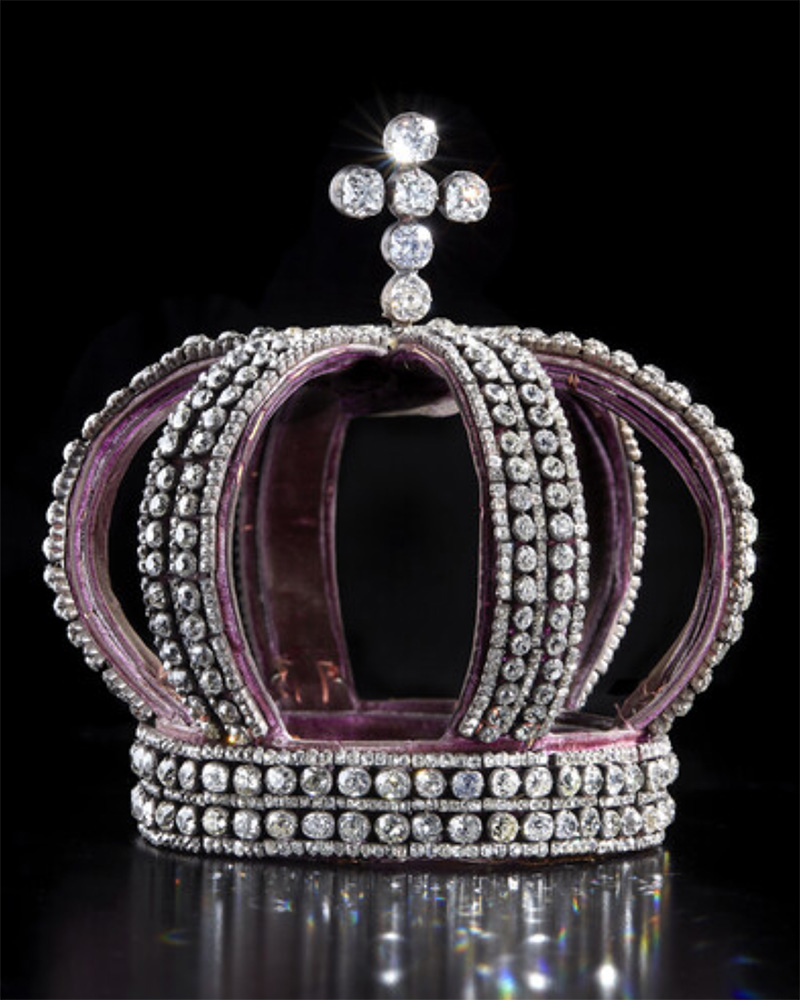
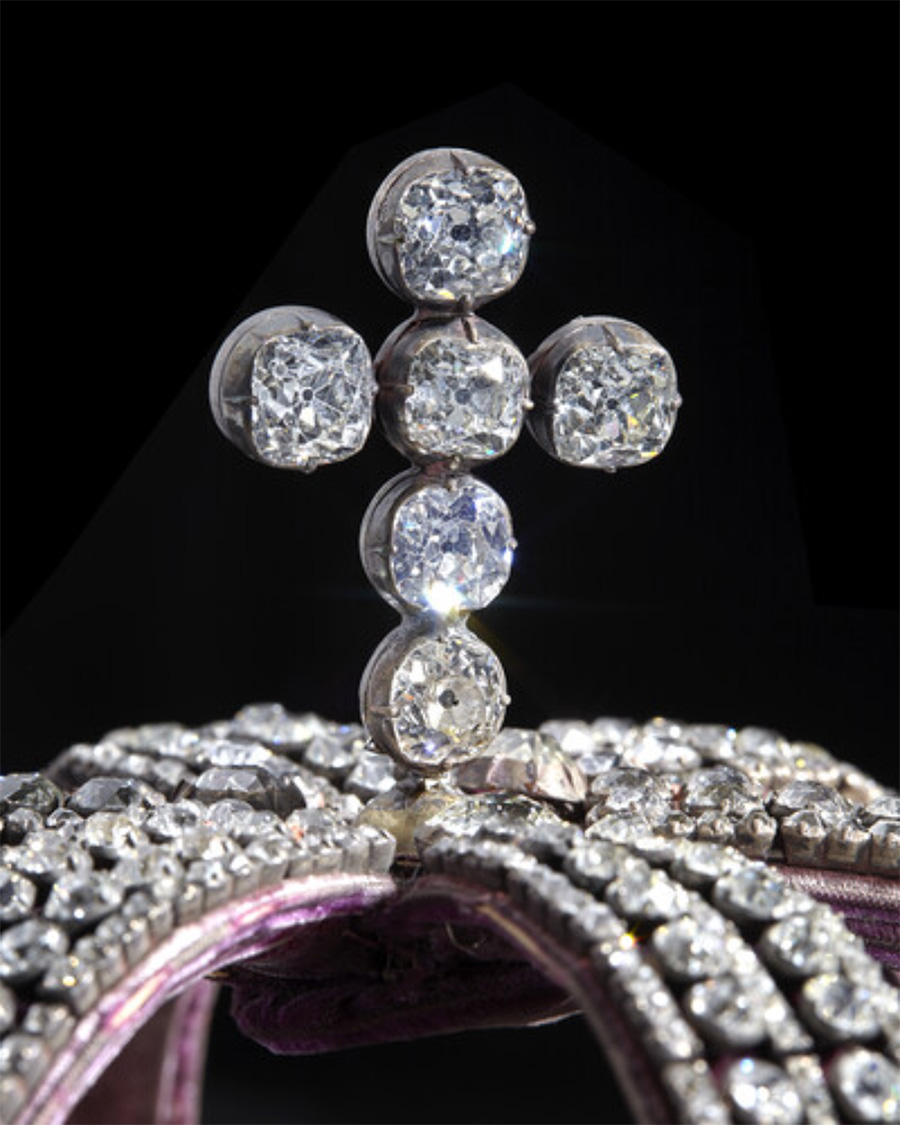
This stunning piece of jewelry and historical artifact reflects Post’s deep fascination with Russian royal jewels. The Romanov Nuptial Crown was created for the wedding of Grand Duchess Alexandra Feodorovna (born Princess Alix of Hesse) to Tsar Nicholas II in 1894. The crown features a restrained yet monumental orb-like silhouette, formed from six silver bands densely set with diamonds and topped with six larger old mine-cut stones, bringing the total to approximately 1,535 diamonds.
Many of the diamonds are sewn directly into velvet-covered supports, a traditional Russian court technique used in kokoshnik-style crowns, allowing the piece to sit securely while maintaining flexibility and comfort. The result is both architectural and wearable, qualities that defined imperial Russian design at the end of the 19th century.
Daughters says of Post’s collection, “Her style was fundamentally ‘Imperial’. Whether she was commissioning Art Deco masterpieces from Cartier or wearing the crown jewels of fallen dynasties, she chose pieces that matched her own stature as a titan of American industry. She had a remarkable ability to wear 200-carat emeralds or heavy Romanov diamonds with a sense of ‘natural right’; it never looked like the jewelry was wearing her. It was a style of ‘Bold Tradition’.”
Napoleon Diamond Necklace
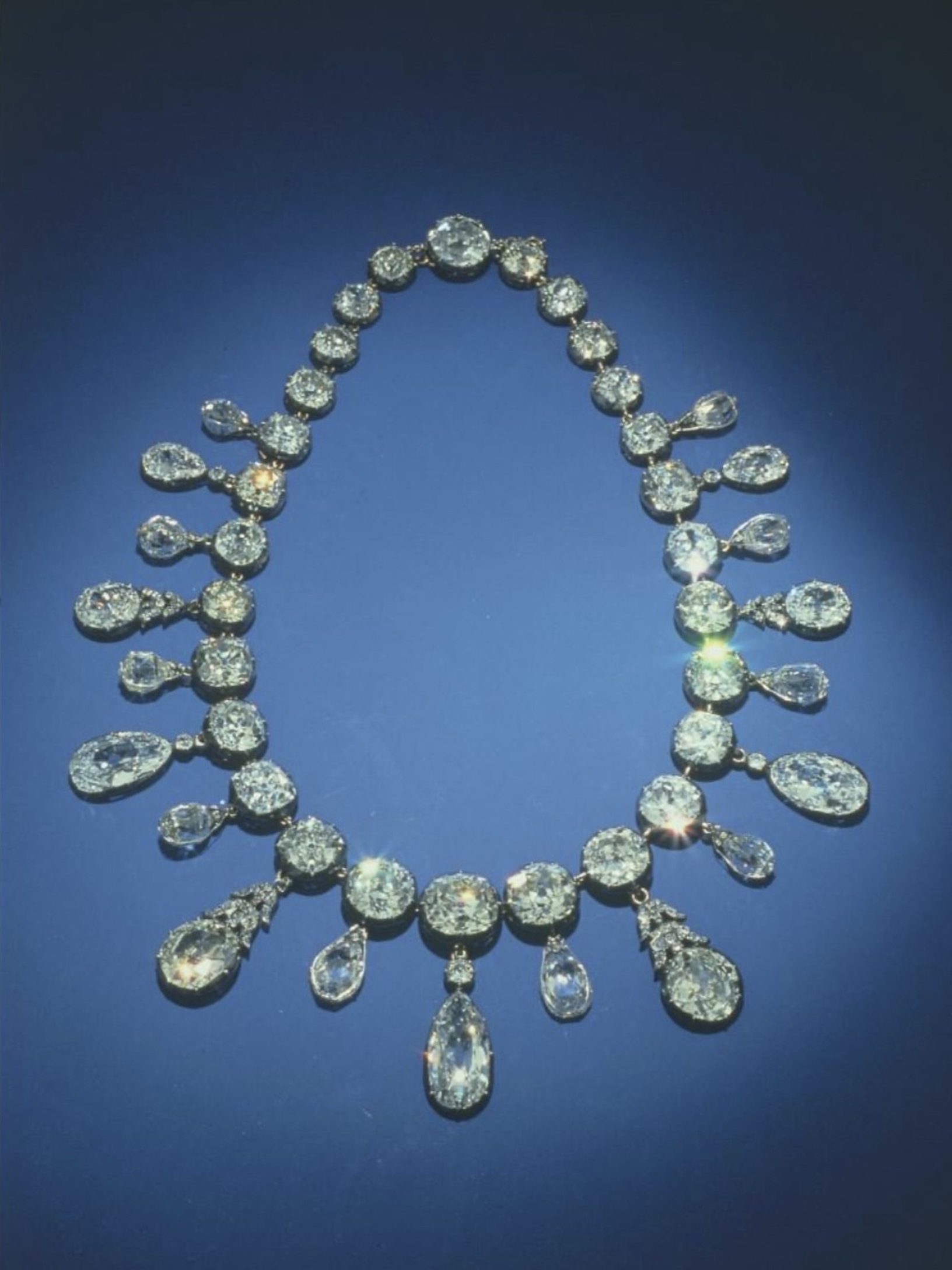
Reflecting on Post’s relationship with natural diamonds, Gerrish explains that she gravitated toward stones with unmistakable scale and presence. “She was especially drawn to antique cuts, valuing their depth, individuality, and the way they performed under candlelight and evening wear,” Gerrish says. These older cuts, with their broader facets and softer geometry, produced a romantic, glowing light that aligned perfectly with Post’s love of historic craftsmanship and theatrical elegance.
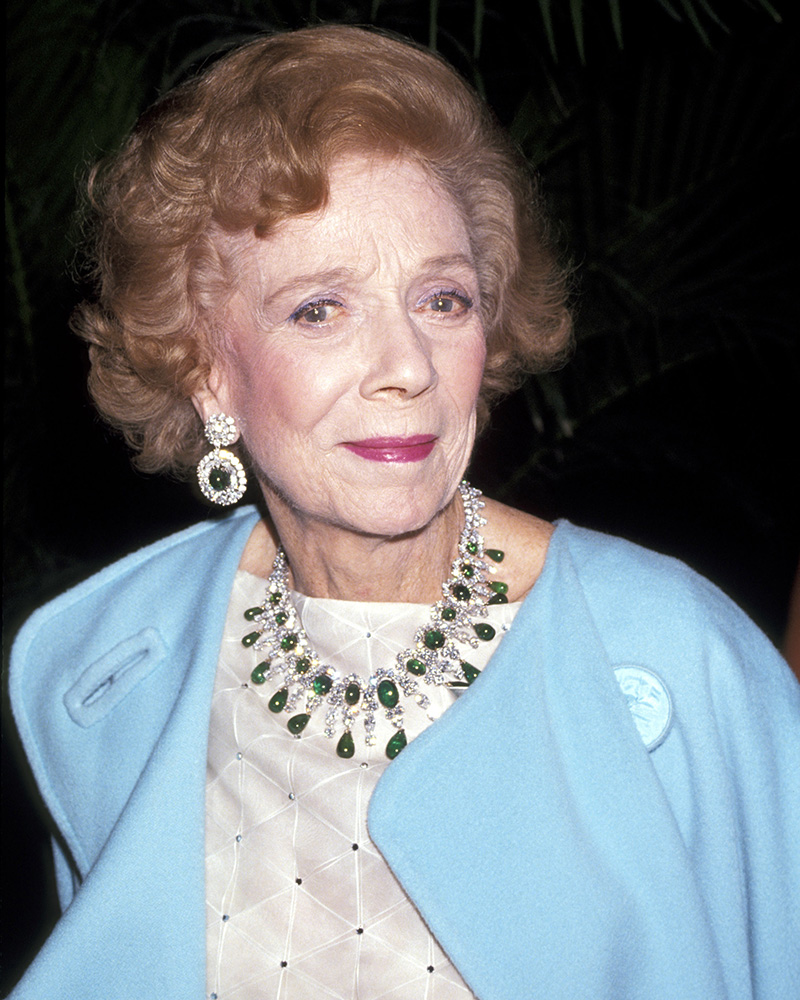
Gerrish points to the Napoleon Diamond Necklace as a defining example of Post’s taste. Commissioned in 1811 by Emperor Napoleon as a gift to Empress Marie-Louise to celebrate the birth of their son, Napoleon II, the necklace was designed by Etienne Nitot et Fils, the official court jewelers of the French Empire. The extraordinary jewel is composed of 234 diamonds, including 28 old-mine cut stones, nine pendeloques, 10 briolettes mounted with 12 rose-cut diamonds, and an additional 23 smaller diamonds. Altogether, the necklace weighs an astonishing 263 carats, a testament to the imperial scale Napoleon favored and to the kind of commanding presence that appealed to Post generations later.
“Made in 1811 for Empress Marie-Louise and later acquired by Post through Harry Winston, whose role was to source diamonds of exceptional size, purity, and historic significance,” Gerrish adds. Yet Post’s taste was never limited to historical jewels alone. She also embraced contemporary diamonds when they met her exacting standards. Gerrish notes her enthusiasm for modern masterpieces, particularly the Harry Winston diamond necklace of 1965–66, composed of 198 round brilliant-cut diamonds set in platinum.
Vintage Ruby and Diamond Parure
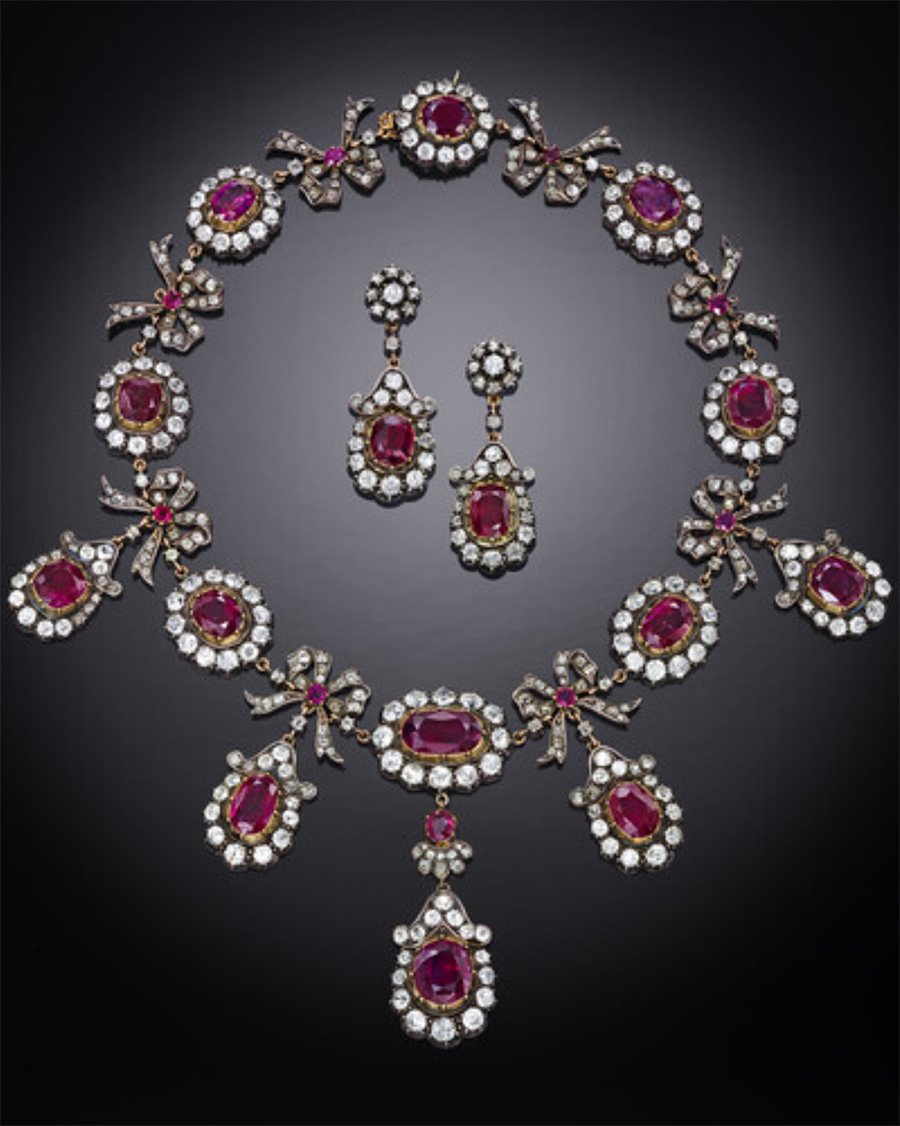
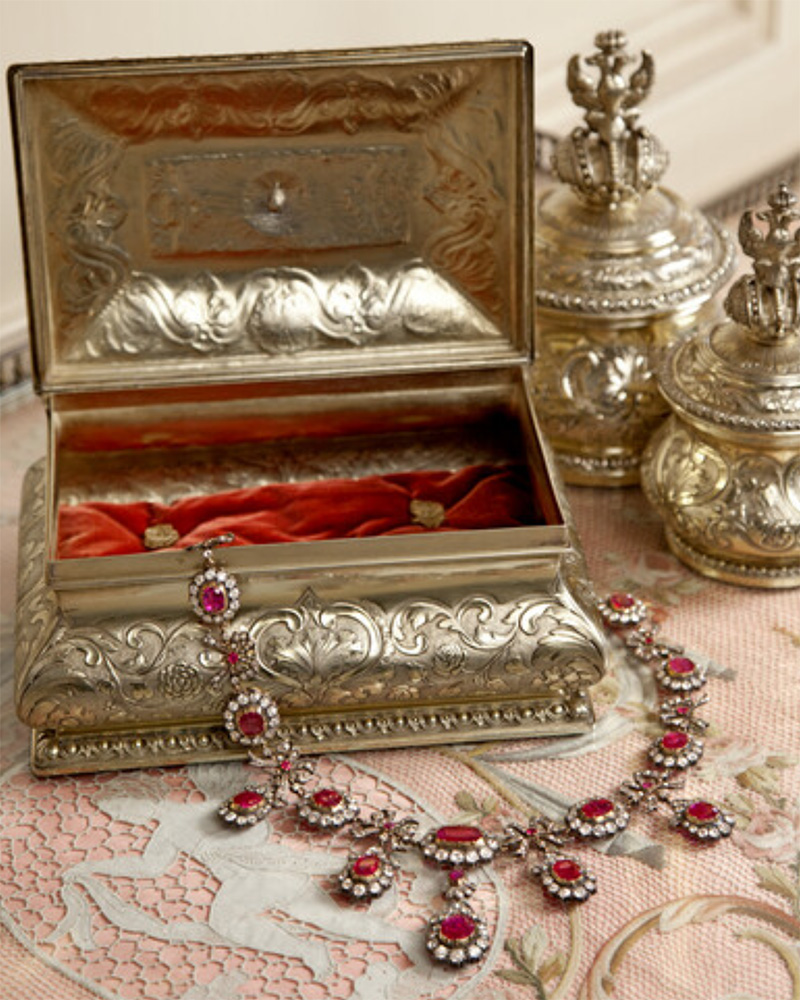
One of Post’s most treasured jewels was a vintage ruby and diamond parure comprising a necklace and matching earrings, set with large rubies and diamonds mounted in gold and silver. The suite is believed to have been made in the mid-19th century for Alexandra of Oldenburg, Duchess of Oldenburg, the daughter of Grand Duchess Maria Nikolaevna and granddaughter of Tsar Nicholas I of Russia.
Post acquired the necklace in the 1960s, and today the parure resides at the Hillwood Estate, where it remains on public display.
Zeisler wrote of Post, “While cultivating an astute eye for rare gems, diversifying by refreshing pieces, and remaining focused on high-quality artisanship, Post engaged in the tradition of assembling parures, a ritual dating back to the 17th century among women at European courts.”
Cartier Emerald and Diamond Pendant Brooch
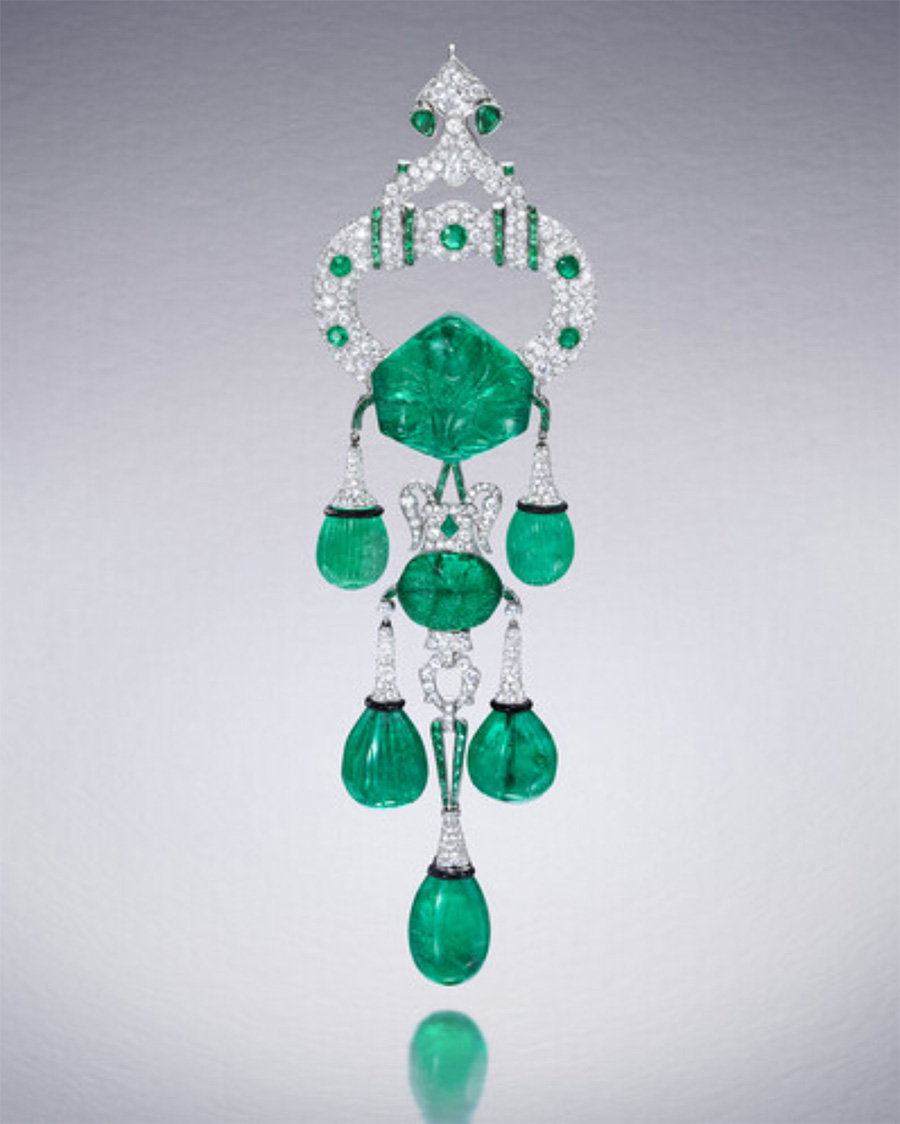
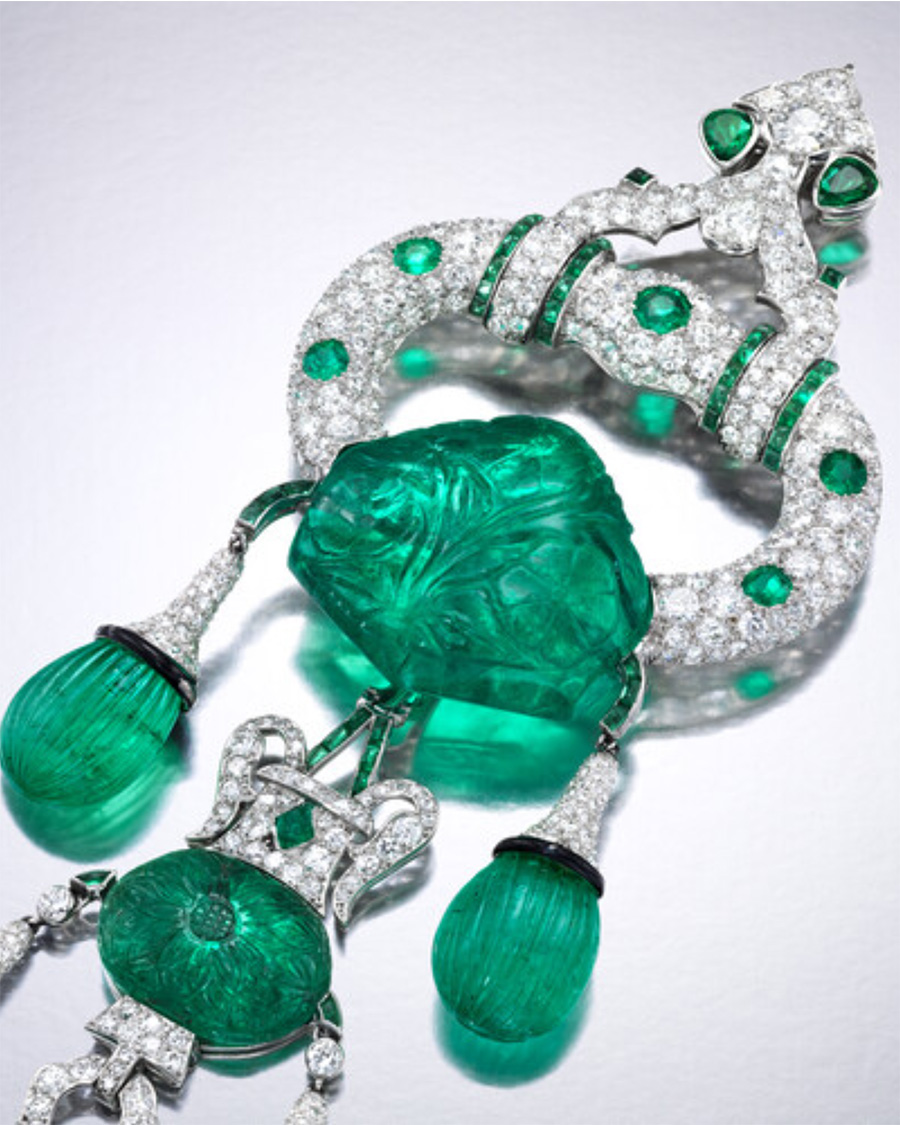
Defined by its extraordinary emeralds and diamonds—together weighing approximately 250 carats, according to Zeisler—this Cartier pendant brooch takes the form of a dramatic V-shaped composition anchored by a 17th-century carved Mughal emerald at its center. Purchased by Post in 1928, the piece exemplifies Cartier’s fascination at the time with Indian-inspired design, alongside broader influences from China and Japan, all interpreted through a distinctly Art Deco lens.
“The motifs are deeply rooted in the Baroque tradition: heavy, dark-toned silver and gold settings that create a dramatic contrast with the vivid green of the emeralds. The stones themselves are often ‘Old Mine’ emeralds, which have a depth and inclusions that modern stones lack,” Daughters says. “It stands out because it feels ‘ancient’, it has a gravity and a religious solemnity to it that reflects the formal, stoic nature of the Spanish court. It is a piece that demands respect rather than just admiration.”
Today, the brooch resides at the Smithsonian’s National Museum of Asian Art.
Cartier Emerald and Diamond Necklace
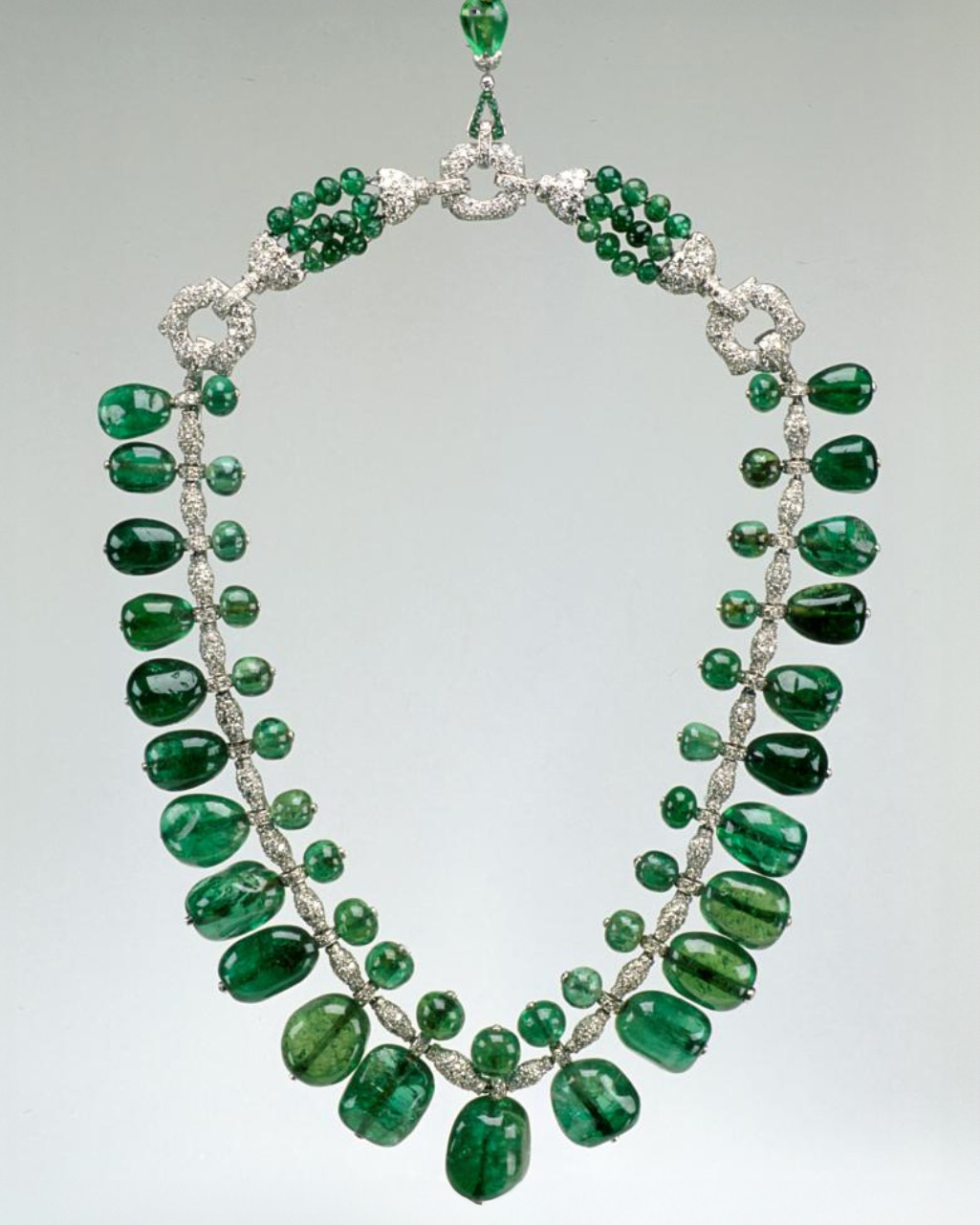
This Art Deco Cartier masterpiece was designed in 1928–1929 and features 24 Colombian baroque-cut emerald drops, each with a smaller emerald bead above it, all linked by platinum pavé-set diamond chains and finished with an elegant diamond clasp. The necklace exemplifies the Indian-inspired Art Deco aesthetic that captivated Cartier and its clients during this era.
Post famously wore the necklace as Juliet from Shakespeare’s play at the 1929 Palm Beach Everglades Ball and would often wear the pendant as a brooch as well. Over the years, Cartier modified the necklace—shortening and lengthening it for her as tastes evolved—reflecting the close and ongoing relationship she maintained with the maison throughout her life.
Zeisler wrote, “For Post, and many other 20th-century jewelry collectors like her, it was important to invest in jewelry that was both versatile and practical. This piece also remains at the Smithsonian.”
While parts of Post’s Cartier collection are displayed at the Hillwood Estate, this necklace was donated to the Smithsonian Institution and is part of the National Museum of Natural History’s gem collection.
Marie Antoinette’s Pear-Shaped Diamond Earrings
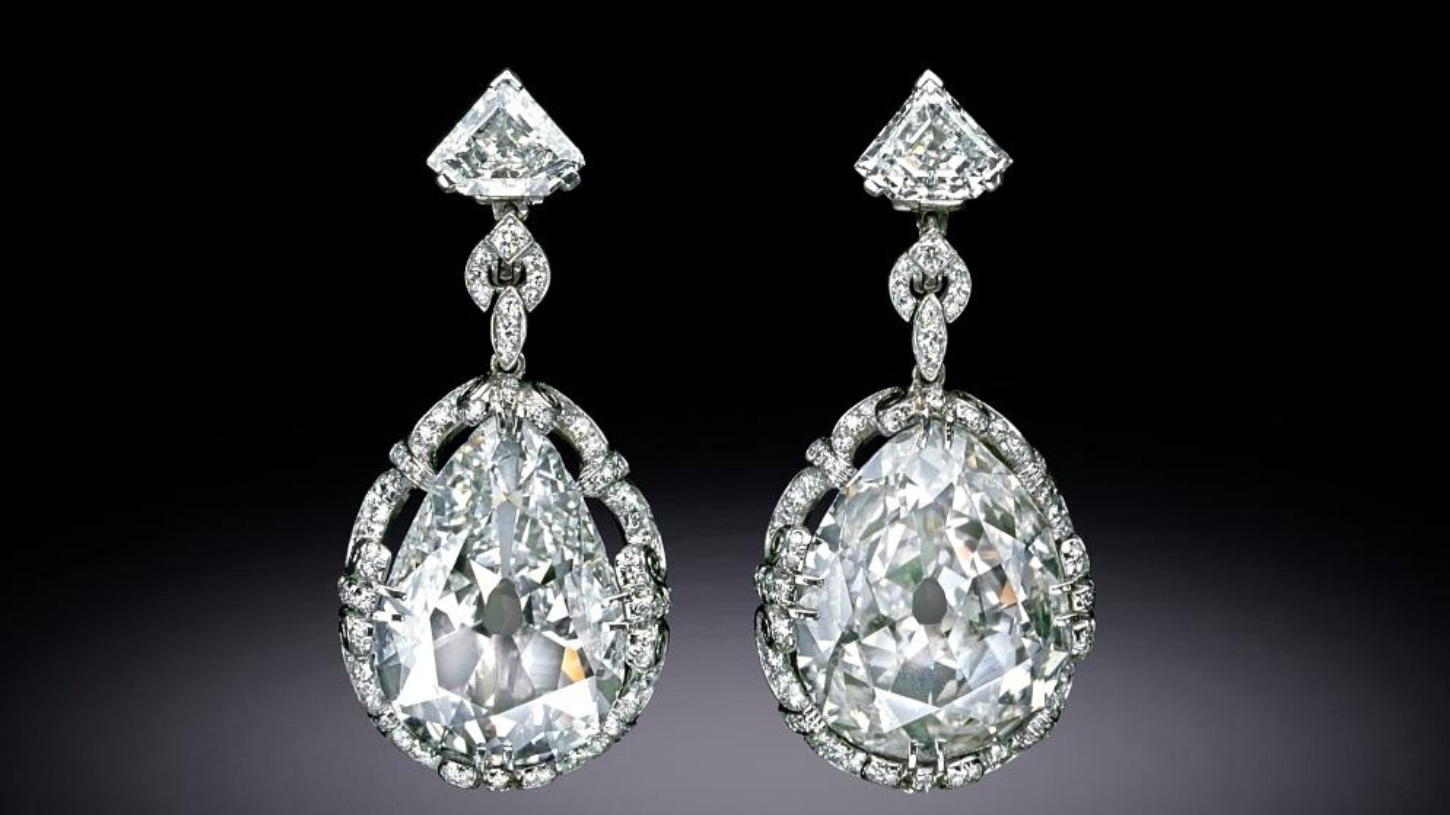
These two beautiful pear-shaped diamond earrings once belonged to Queen Marie Antoinette. The diamonds—totaling approximately 20.34 carats—likely originated in India or Brazil, both major sources of diamonds in the 18th century. After Marie Antoinette was killed during the French Revolution in 1793, these earrings bounced around the collections of some other impressive royals, including Empress Eugenie of France.
When Eugénie was exiled to England, she sold many of her jewels, and the earrings eventually came into the possession of Grand Duchess Tatiana Yusupova of Russia. In 1928, Cartier purchased the earrings from the Yusupov family, and Marjorie Merriweather Post acquired them shortly thereafter.
Remarkably, the earrings were reportedly never reset after Marie Antoinette’s ownership. They were mounted in silver with gold linkages and old mine-cut diamond scrollwork, preserving their historic character. In later years, Cartier replaced the earring tops with platinum-set triangular diamonds, and in 1959, Harry Winston remounted the pear-shaped diamonds in platinum replicas of the earlier silver settings. What is old is new again, truly.
“Crucially, these earrings survived the French Revolution intact, not broken up, recut, or dispersed beyond recognition, which is extraordinarily rare for diamonds of this magnitude.,” says Gerrish. “For Post, this was irresistible. She was drawn not simply to diamonds, but to diamonds that had witnessed history. The earrings embodied everything she valued: royal provenance, exceptional natural stones, and an unbroken narrative stretching from 18th-century Versailles to the modern museum.”
Post’s daughter, Eleanor Barzin, donated the earrings to the Smithsonian National Museum of Natural History in the mid-1960s, where they remain today.
Marjorie Merriweather Post’s Love of Diamond Tiaras
Pulling off a tiara as an American—even as an heiress—is tough. But if anyone could do it, it was Marjorie Merriweather Post (Paris Hilton probably credits her as an inspiration). Post helped to revive the tiara as a wearable jewel in the 20th century, normalizing it not as a relic, but as a bold statement piece.
Her diamond-studded diadems were never meant to languish on a closet shelf; they were made to be seen. From the 1920s through the 1950s, she wore them regularly to state and embassy dinners, charity balls, and the era’s most glittering society events. She leaned into this role most fully during her marriage to Davies, embracing the tiara as both personal signature and social assertion.
Marjorie Merriweather Post played a pivotal role in reviving the tiara as a living jewel in the 20th century, at a time when many historic crowns had been relegated to vaults or museums following the fall of European monarchies. For Post, tiaras were not relics of a vanished aristocracy but dynamic objects meant to be worn, seen, and reanimated in modern life. She understood instinctively that their power lay not only in their history, but in their visibility. Post gave the people the spectacle they wanted from a rich and powerful heiress with her tiaras and other jewelry choices.
The Marie-Louise Tiara
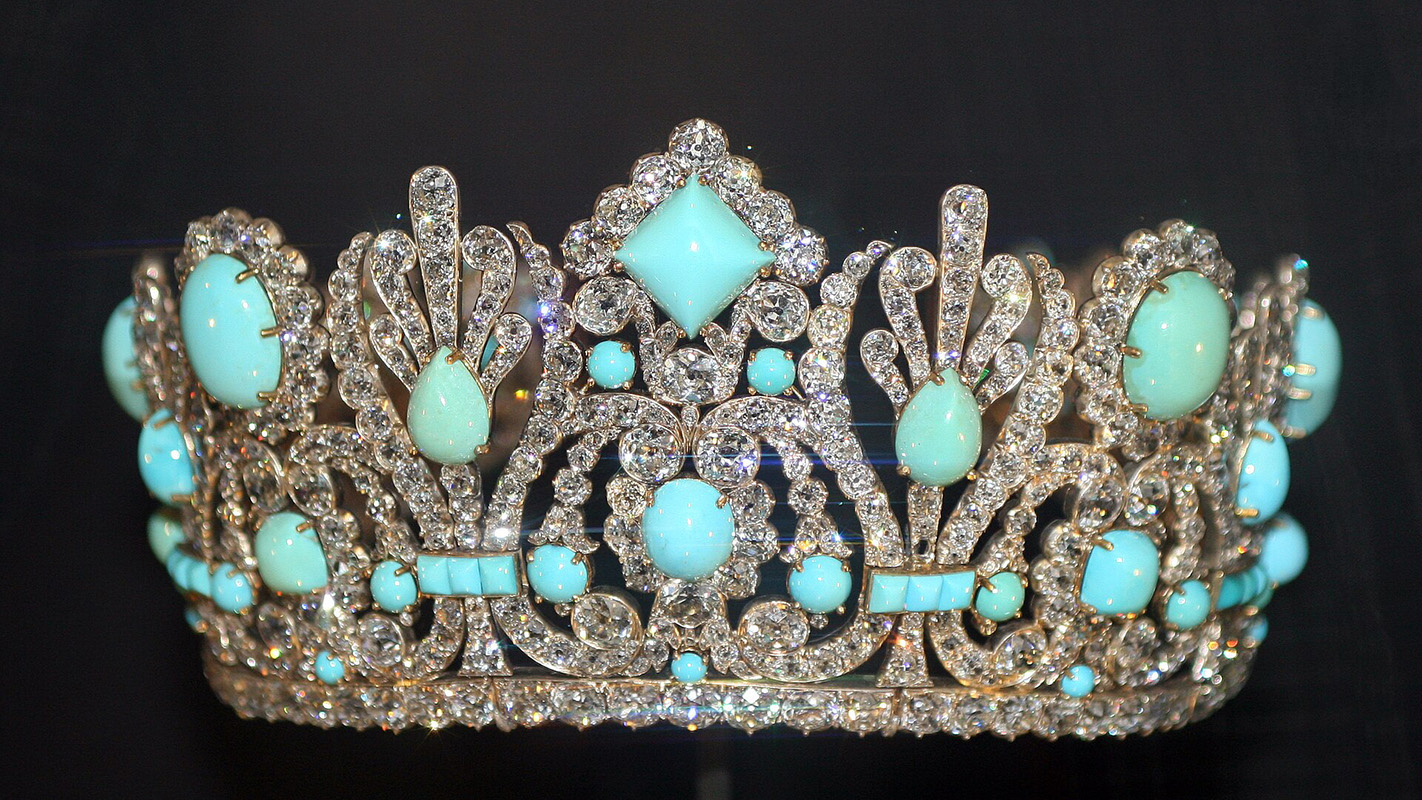
Post loved a good tiara, and she had quite a few of them. Her most iconic one was was The Marie-Louise tiara. It oozed Imperial French history, and Post could not resist it. The tiara was originally commissioned by Napoleon Bonaparte in 1810 as a wedding gift for his second wife, Empress Marie-Louise. The original design was set with 79 Colombian emeralds and formed part of a larger parure that also included a necklace, earrings, and a comb.
By the time Marjorie Merriweather Post acquired the tiara in the 1950s, Van Cleef & Arpels had taken possession of the piece and replaced the emeralds with turquoise, giving the historic jewel a distinctly mid-century sensibility while preserving its imperial silhouette. In 1971, Post donated the tiara to the Smithsonian Institution, where it remains one of the museum’s most celebrated examples of European court jewelry reimagined through an American lens.
Diamond Tiara with En Tremblant Flowers
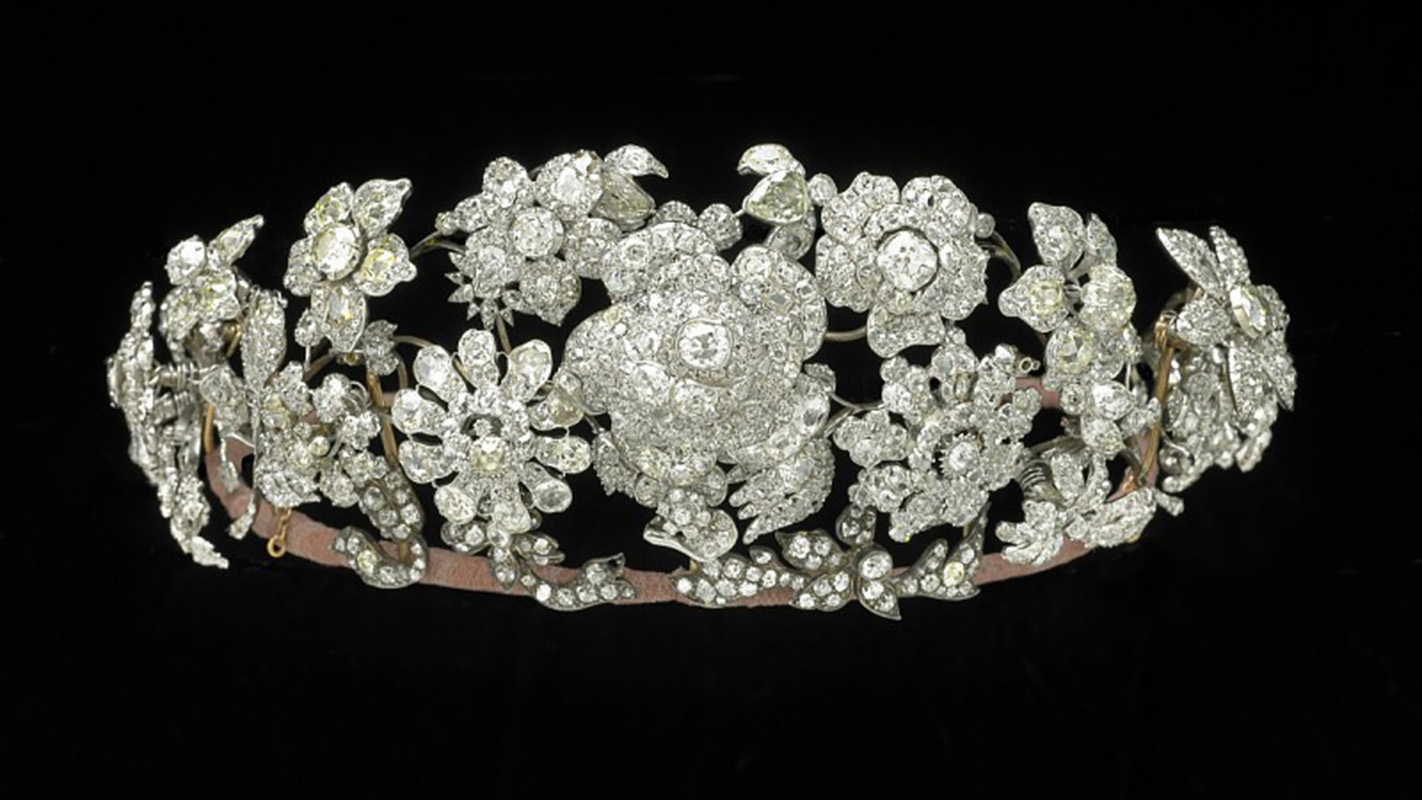
Another favorite in Post’s collection dates to around 1840 and exemplifies the kind of craftsmanship she found irresistible. Each diamond flower is mounted en tremblant, set on fine spring mechanisms that cause the stones to quiver and shimmer with even the slightest movement. What captivated Post was that the tiara wasn’t static—it felt alive.
The piece is also notable for sitting at the crossroads of two eras, bridging the hand-wrought precision of Georgian jewelry with the romanticism of the Victorian period. In many ways, it embodied Post’s philosophy perfectly: jewels were not meant to be sealed away in vaults, but brought to life by the person wearing them.
The Lasting Brilliance of Marjorie Merriweather Post’s Jewelry
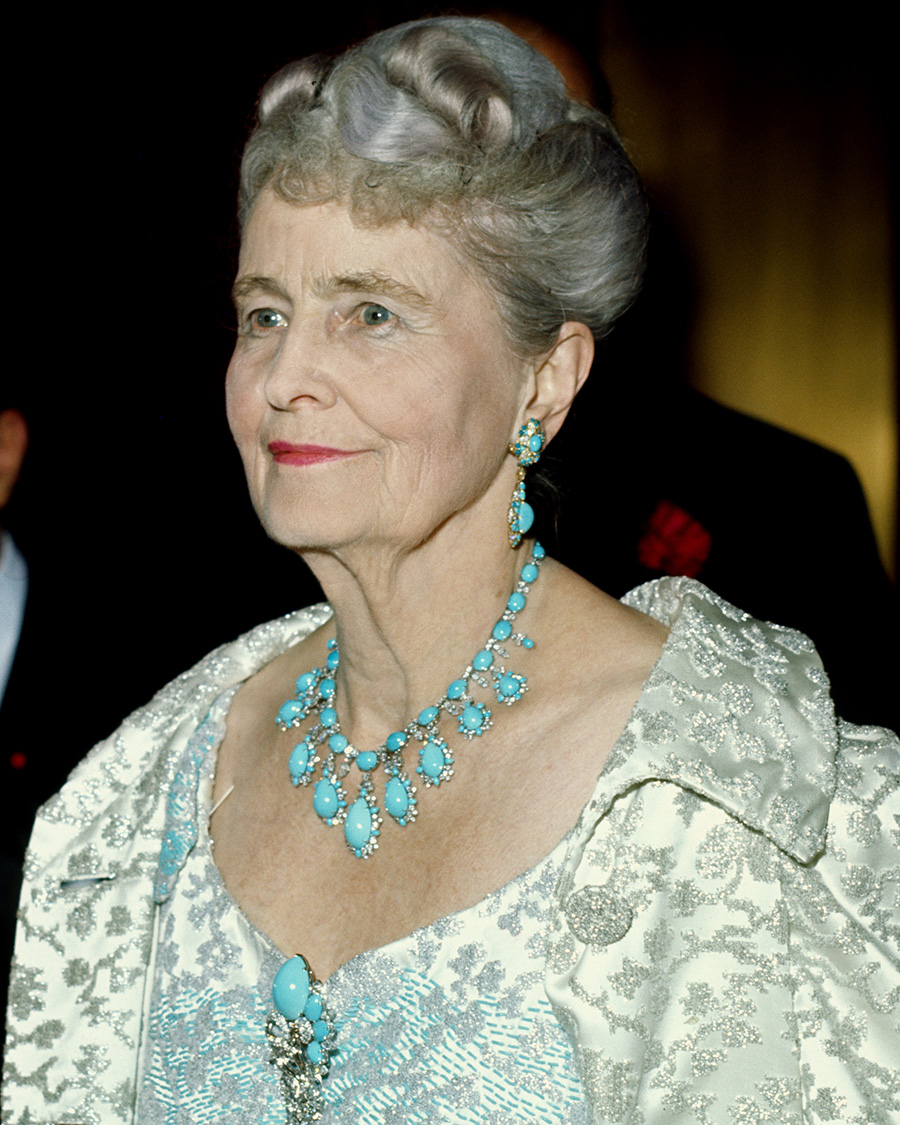
“She didn’t just wear jewelry; she curated a visual autobiography of power,” says Daughters. “Her jewelry had such a deep historical reach and individuality. They were not just accessories to her but artifacts shaped by the extraordinary people who passed them on to her.”
That belief helps explain why Post wanted her treasures to be on public view. She did not see herself as an owner so much as a curator, and her discerning taste is evident in every piece. She wanted people to appreciate and be inspired by her jewels and other artifacts—not for them to be reserved solely for the extraordinarily wealthy. This philosophy is why so many of her possessions are now on display at her former home, Hillwood, and at the Smithsonian. In doing so, Marjorie Merriweather Post helped reshape museum curation, demonstrating how a deeply personal collection could also serve a public purpose.