< Historic Diamonds / Famous Diamonds
Unraveling the Story of the Idol’s Eye, the World’s Largest Natural Blue Diamond
The largest natural blue diamond known, the Idol’s Eye emerged from the famed Golconda mines in the 1600s and traveled through centuries of rumor, disappearance, and royal drama before reemerging in modern collections.
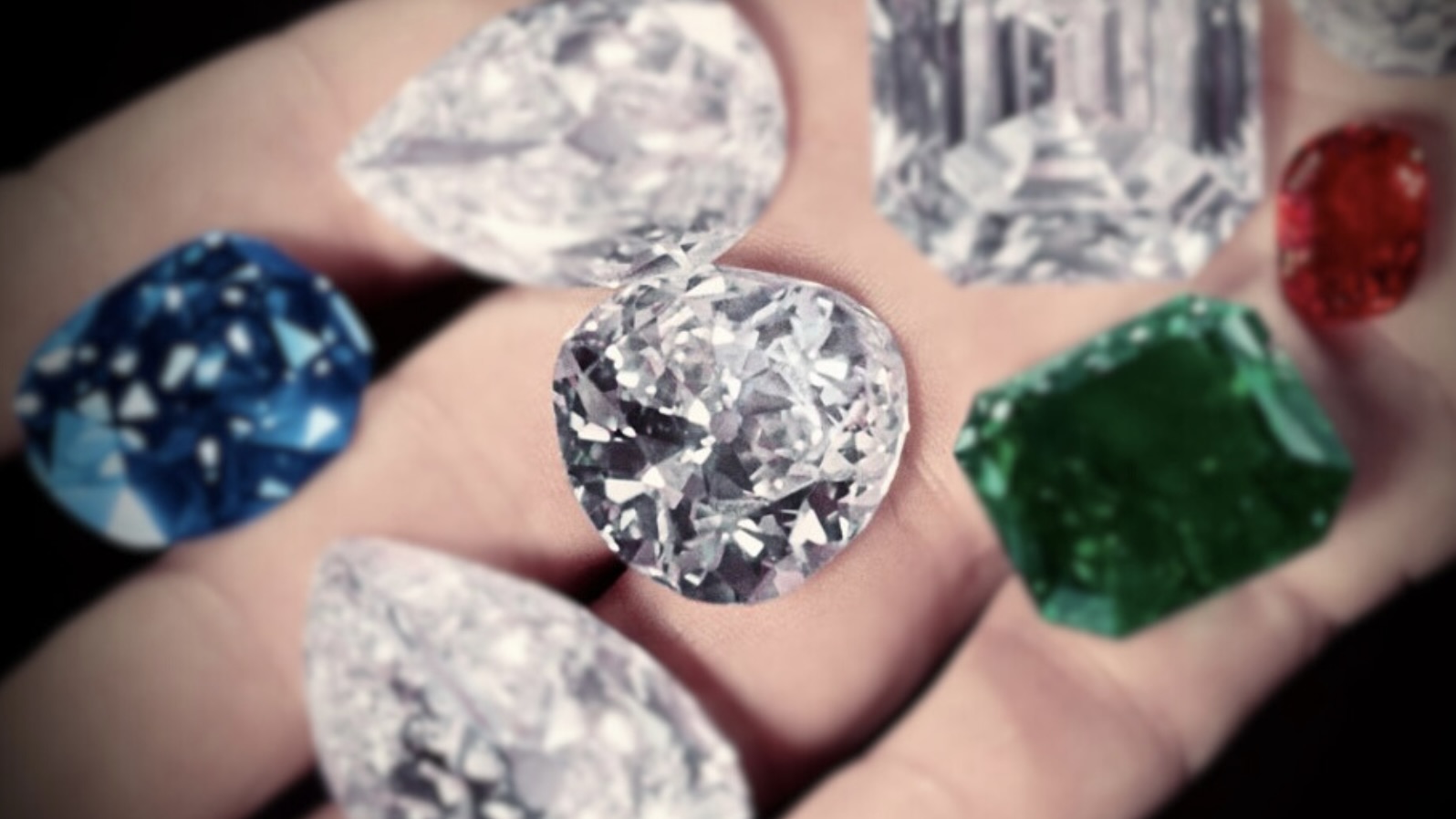
Harry Winston displays some of the gems in his collection, including the Hope Diamond (between index & middle), the Royal Spanish Emerald (green), the Idol’s Eye diamond (left of emerald), the Jonker Diamond, the Star of the East diamond. (Photo by Bernard Hoffman/The LIFE Picture Collection/Getty Images)
Collectors love diamonds with provenance, but they also fall for diamonds that keep their secrets. Few gems hold secrets more than the Idol’s Eye diamond, a 70.21-carat natural light blue diamond from the fabled Golconda region of India. Every major Golconda stone carries its own mystique—the Hope, the Dresden Green, the Koh-i-Noor—but the Idol’s Eye diamond stands out because no one can fully trace its early journey. The stories surrounding it involve princes, debt collectors, kidnappers, thieves, and missing records that span centuries. Few of those tales have proof, and that veil of uncertainty only strengthens this diamond’s mythic status.
Meet the Expert

- Grant Mobley is the Jewelry & Watch Editor of Only Natural Diamonds.
- He is a GIA Diamonds Graduate.
- He has over 17 years of jewelry industry experience, starting with growing up in his family’s retail jewelry stores.
Golconda diamonds don’t need help to feel legendary. People first discovered diamonds near Golconda more than 3,000 years ago, and the region supplied the world with every known diamond until the 1700s. The Idol’s Eye diamond almost certainly came from that ancient source. By the time cutters shaped it in the 17th century, Golconda stood as the center of the diamond trade, and royalty paid enormous sums for its outstanding stones.
The Idol’s Eye diamond emerged from that world with a distinctive, rounded shape. Cutters placed nine corresponding pavilion facets on its underside and scattered irregular facets around the crown. The result gave the diamond an uncanny resemblance to a human eye, which likely inspired its name.
Legends, Rumors, and the Lost Centuries
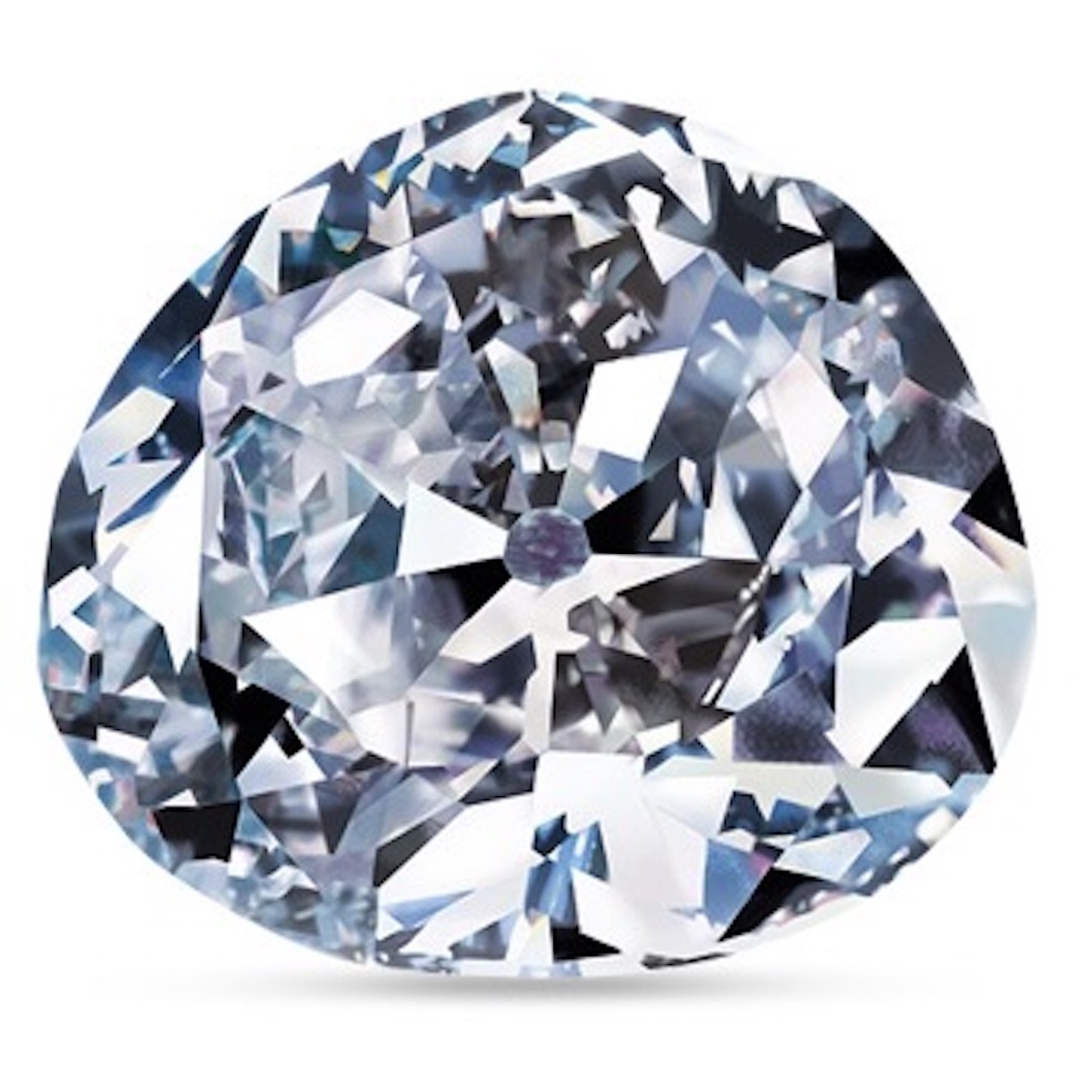
The Idol’s Eye diamond sits at the heart of several dramatic legends that collectors repeat even today. One tale claims that a Persian prince named Rehab owned the diamond around 1607. The story says he fell into debt, and the East India Company seized the stone as payment. According to that account, the diamond then disappeared for almost 300 years.
Another popular legend claims the Idol’s Eye diamond played a role in a kidnapping. The Sultan of Turkey allegedly abducted Princess Rasheetah, and her family used the diamond to meet the ransom demands. No records confirm this story either, but collectors continue to repeat it because the Idol’s Eye practically invites speculation. Its shape looks like an eye. Its origin connects to a region filled with centuries of intrigue. And its whereabouts during those missing centuries remain unknown.
The First Documented Appearance of the Idol’s Eye Diamond
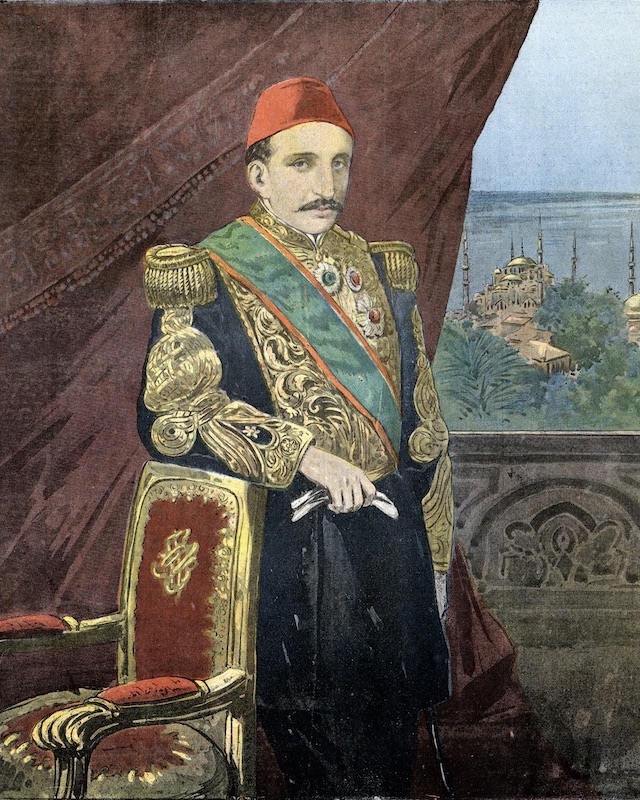
The Idol’s Eye diamond steps out of the shadows in 1865, when Christie’s London placed it on the auction block. That appearance marks the first documented moment in its history. From there, its story becomes much clearer. The buyer, Sultan Abdul-Hamid II of the Ottoman Empire, added the diamond to his personal treasury. His reign ended in political upheaval, and he tried to move his jewels out of danger. The attendant who handled the diamonds betrayed him and stole the Idol’s Eye along with other pieces.
Dealers traced the stone to a sale in Paris, where a Spanish nobleman acquired it. That transaction kept the diamond in Europe until the 20th century, when Harry Winston entered the picture.
Harry Winston and the American Era of the Idol’s Eye Diamond
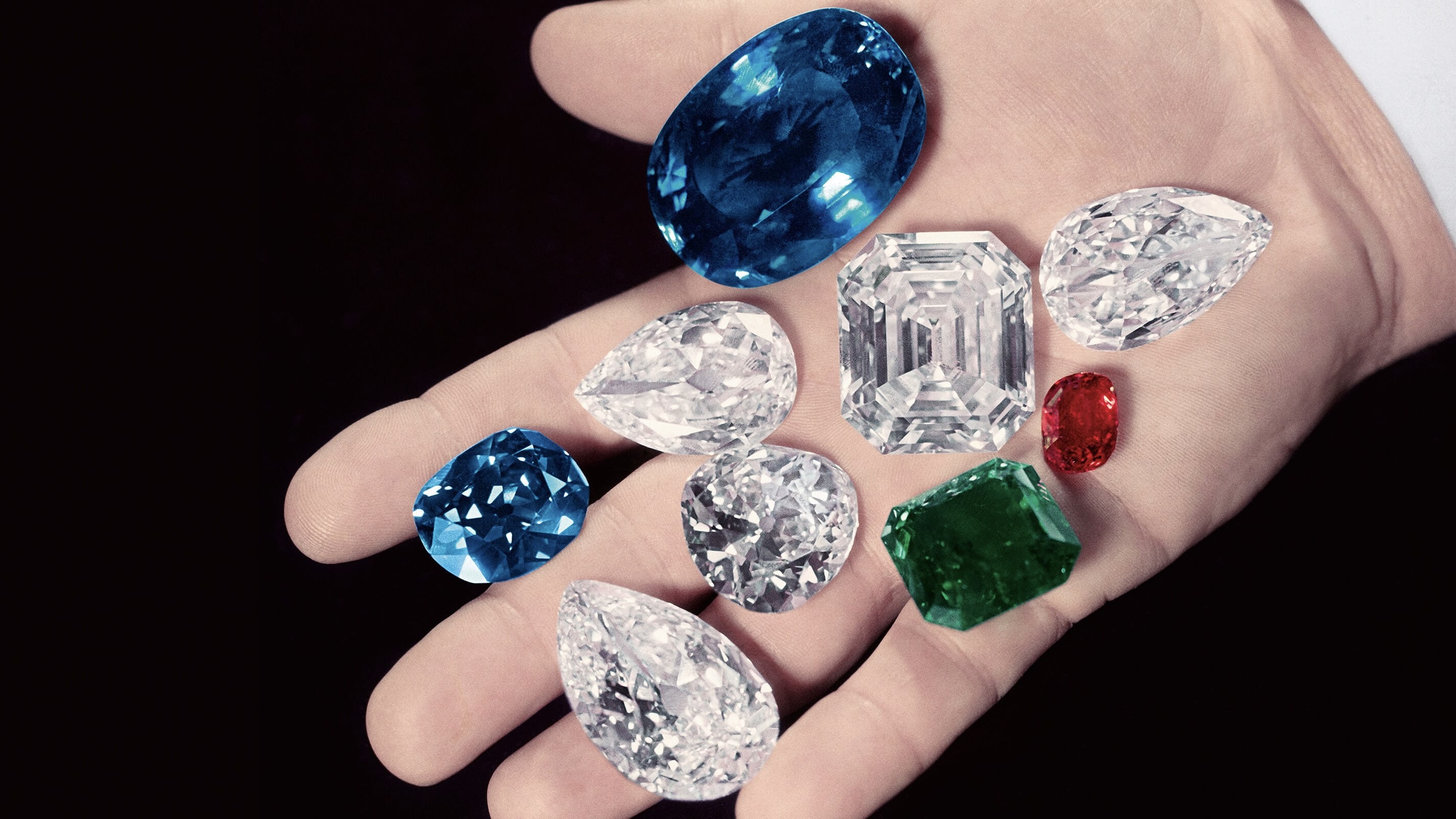
Harry Winston purchased the Idol’s Eye diamond in 1946 and immediately recognized the importance of its size, color, and Golconda origin. The diamond measures 2.6 cm long and 2.45 cm wide, and its natural light blue color remains exceptionally rare. Winston placed the diamond at the center of a dramatic necklace with 41 round brilliant diamonds totaling 22.50 carats and 45 baguette diamonds totaling 12 carats. Most assume the Idol’s Eye diamond still sits in that necklace today.
Winston sold the jewel in 1947 to Mrs. May Bonfils Stanton, a philanthropist and prominent collector. The Stanton Estate later auctioned the diamond, and Chicago jeweler Harry Levinson purchased it in 1962. Levinson sold the diamond to Laurence Graff in 1979. Graff exhibited it at the Metropolitan Museum of Art in New York City. Following the exhibition, Graff sold the Idol’s Eye diamond, along with the Emperor Maximilian diamond and a 70.54-carat fancy yellow known as the Sultan Abdul Hamid II, to one client as a package deal. Although no one disclosed the sale price, experts consider it one of the most valuable sales of all time.
In 2001, jeweler Robert Mouawad purchased the Idol’s Eye diamond. The Al Thani Foundation then acquired it in 2014 and continues to hold it today.
The Idol’s Eye Diamond Modern Ownership and Legal Disputes
The Idol’s Eye diamond still creates drama. After the Al Thani Foundation acquired it, the diamond became the subject of a family legal dispute. Sheikh Saud agreed to lend the diamond to his cousin, Sheikh Hamad, under a 20-year arrangement that allowed him to purchase the stone if the owners chose to sell. After Sheikh Saud’s death, family members disagreed on whether to proceed with the sale, especially as the pandemic disrupted markets. He took the dispute to London’s High Court, but the judge ruled that no binding sale agreement existed. The diamond stayed with the Al Thani Foundation, continuing its pattern of reappearance and retreat.
Why the Idol’s Eye Diamond Continues to Fascinate
The Idol’s Eye diamond fascinates collectors because it refuses to sit neatly in the historical record. Many legendary diamonds feel fully documented. This one does not. It carries Golconda origins, an old-world cut, a natural light blue color, and centuries of stories that no one can prove or disprove. That combination creates a gem that feels alive. The Idol’s Eye diamond invites speculation, rewards research, and continues to reveal new chapters.
Today, experts value the diamond at over 27 million dollars, and many consider it the largest cut blue diamond in the world. It stands as one of the most important natural diamonds ever discovered and one of the great Golconda mysteries still unfolding.