< Historic Diamonds / Famous Diamonds
The Hope Diamond’s Most Daring Owner: Evalyn Walsh McLean
Evalyn Walsh McLean didn’t just own the Hope Diamond — she made it a spectacle. By wearing the world’s most infamous gem without fear, she transformed a cursed legend into a symbol of American glamour and defiance.
Published: February 25, 2026
Written by: Meredith Lepore
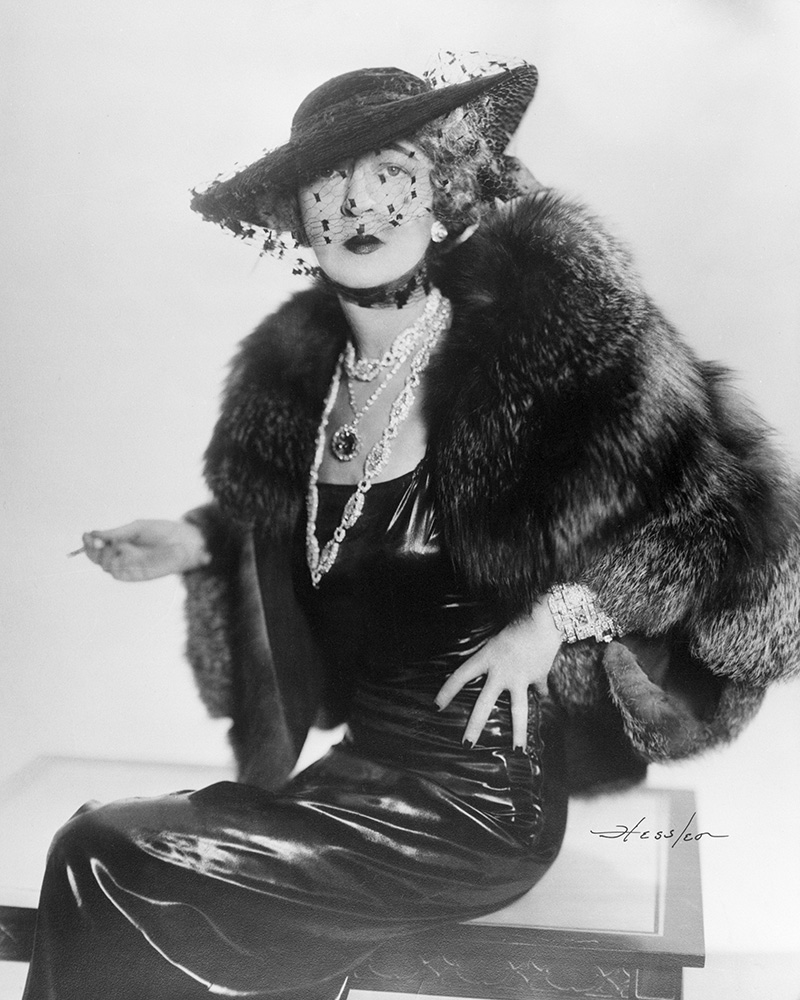
Evalyn Walsh McLean was going to live an extraordinary life, even if she hadn’t become the owner of the most famous diamond in the world, but it certainly brought her notoriety to a whole different level. The Washington mining heiress was quite fond of lavish parties and luxury, and nothing embodies extraordinary luxury quite like the Hope Diamond.
Yet the Hope Diamond did more than amplify her visibility — it transformed her into a cultural icon. By wearing a stone that others treated with fear, she turned a historic gem into a modern spectacle and helped embed it in the American imagination. What made her story unforgettable was not simply wealth or tragedy, but the collision of glamour, mythology, and defiance.
Meet the Expert

- Zuleika Gerrish is an antique, vintage and fine jewelry expert as well as a gemmologist and co-founder of Parkin and Gerrish with her husband Oliver.
- She is a qualified FGA (Fellow of the Gemmological Association) and DGA (Diamond Member), and is training to become an IRV (Institute Registered Valuer) through the National Association of Jewellers.
- Zuleika is also a member of LAPADA and CINOA, and a member of the Society of Jewellery Historians. Alongside running Parkin & Gerrish, she lectures in historic jewelery, sharing her expertise with new audiences.
And it was McLean who made this otherworldly jewel a part of American culture. It was that combination of impossible glamour and a famously cursed diamond that made McLean’s story so unique. Ahead is a look at how she came to possess this rare natural diamond and how it would change her life and captivate the nation.
From Mining Fortune to Gilded Heiress
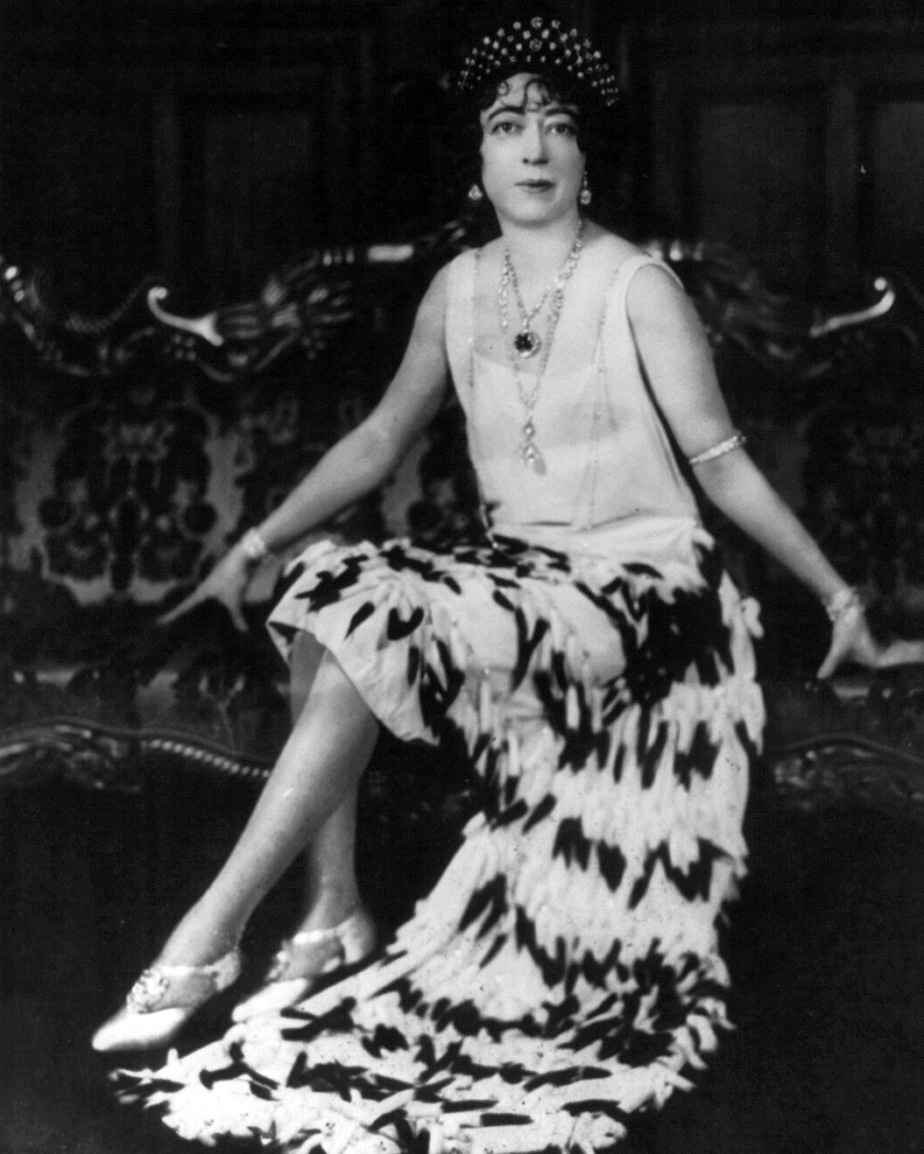
Unlike many of her contemporaries, Evalyn Walsh McLean was not born into old money. Her father, Thomas Walsh, was an Irish immigrant turned multimillionaire mine owner. According to The Washington Chronicles, he lost his first fortune in the Panic of 1893 but then made it back — and then some — when he opened the Camp Bird gold mine in Ouray, Colorado. He sold the mine in 1903 for $5 million and moved to Washington, D.C., where Evalyn was born in 1886.
Their daughter ended up being their only child to survive into adulthood, as one brother died as a child and the other was killed in a car accident. Evalyn was in the car with him but survived, though she had a leg injury that would never fully heal (and would later lead to a devastating morphine addiction).
Though she was undeniably privileged, Evalyn was also deeply guarded after her family’s tragic history. Still, she had a rebellious streak — especially when it came to spending money. In 1904, she moved to Paris to study music, but when her father sent her a $10,000 credit for her education, she bought a sports car instead.
That freewheeling approach to money would resurface again and again in her marriage to Edward “Ned” Beale McLean, heir to the publishing fortunes of The Washington Post and the Cincinnati Enquirer (back when newspapers truly were a goldmine). Her parents were vehemently opposed to the match, as was her good friend Alice Roosevelt, who recognized that McLean shared Evalyn’s appetite for excessive spending. The relationship was troubled from the outset: Evalyn struggled with addiction, and McLean was an alcoholic. Roosevelt reportedly dismissed him as a “pathetic man with no chin and no character.”
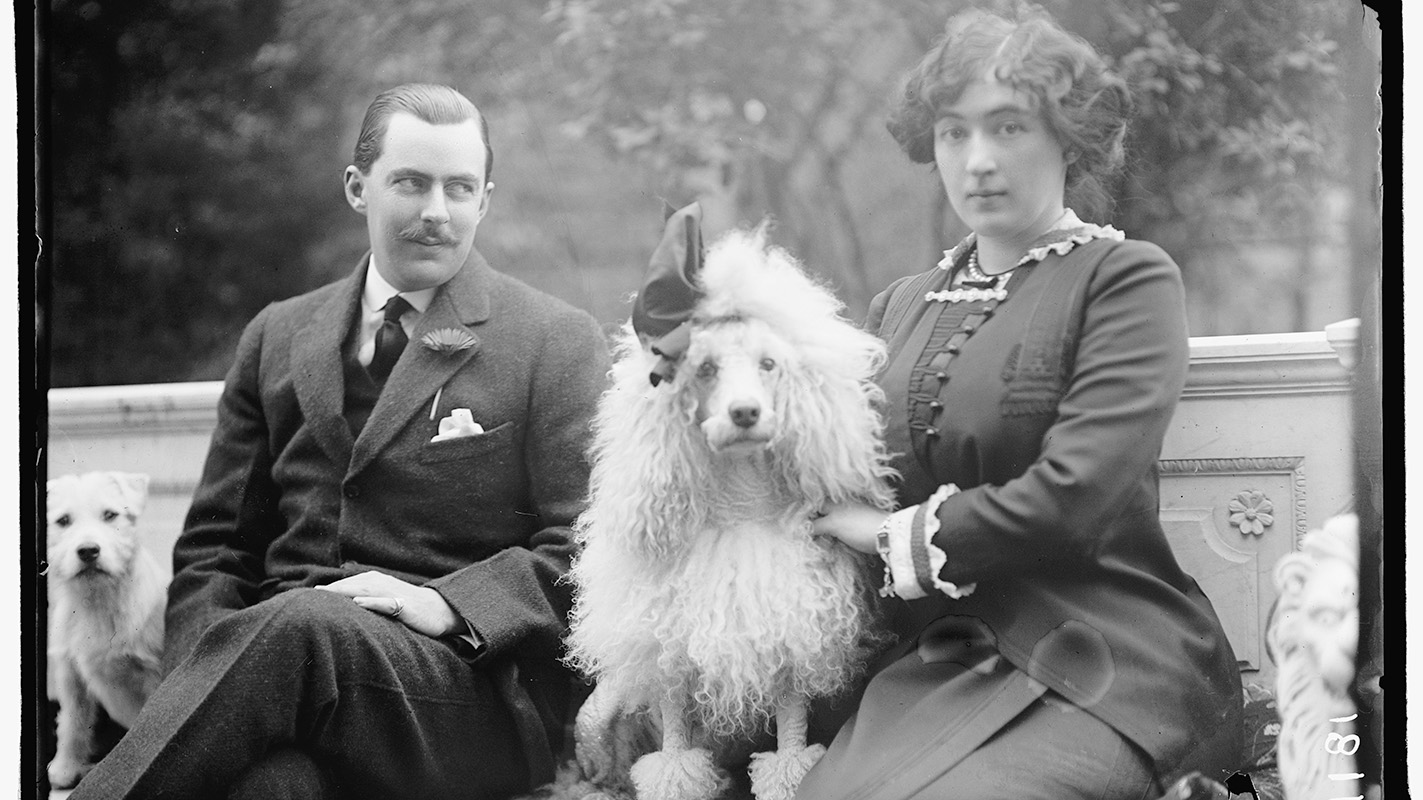
They were known as one of the most extravagant — and arguably eccentric — couples in Washington, D.C., with mansions in Bar Harbor, Palm Beach, and Newport, an ever-growing collection of cars and jewelry (which she often let her Great Dane wear), and a menagerie of animals that included, in addition to the Dane, a llama, a donkey, and a monkey. They threw lavish parties with remarkable regularity.
They also had four children, the youngest of whom, Vinson Walsh McLean, named for her late older brother, was dubbed “the Hundred Million Dollar Baby” by the media. He did bathe in a golden tub, so it was a rather fitting assessment.
But perhaps no other purchase demonstrated Evalyn’s predilection for the finer things in life more than when she became the owner of the most famous diamond on earth: the Hope Diamond.
The Cartier Negotiation: How the Hope Diamond Came to America
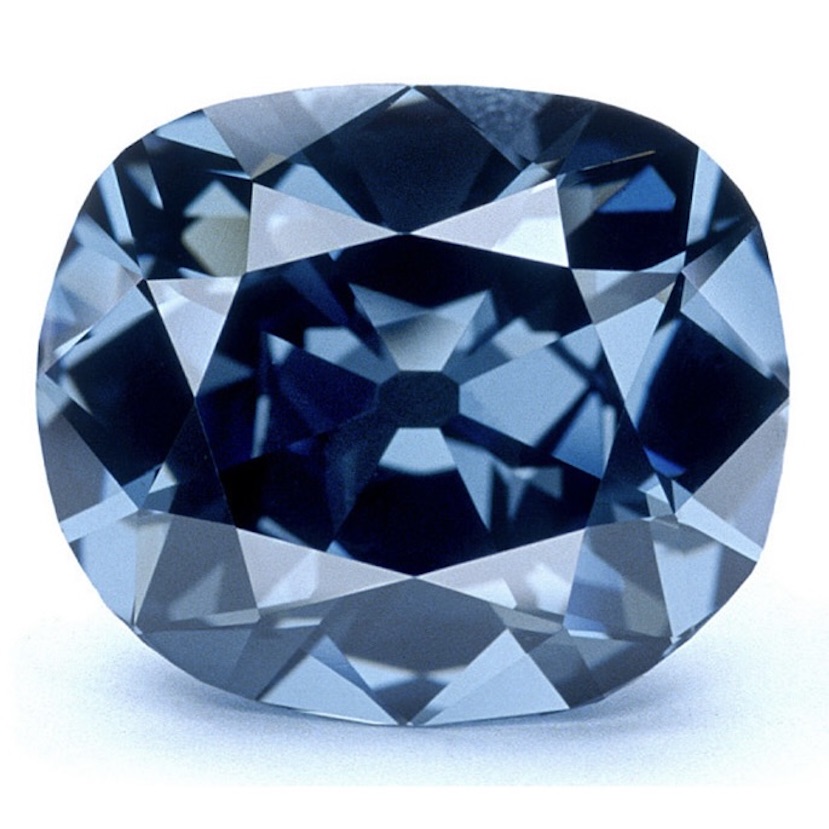
The Hope Diamond, an exceptionally rare 45.52-carat Fancy Deep grayish-blue diamond cut in an antique cushion brilliant and classified as a Type IIb stone, captivated McLean. None other than Pierre Cartier understood exactly why Evalyn would want it — and how to persuade her to buy it.
The legendary diamond has a long and rich history, originating in the mid-17th century in the Golconda mines in India. Still, it earned its cursed moniker from the belief that many who possessed it suffered misfortune and, in some cases, died gruesome deaths. The legend holds that when it was originally stolen from the eye of a Hindu idol in India, the gods placed a curse upon it. Jean-Baptiste Tavernier was a merchant who bought the diamond in India, only to be allegedly ravaged and killed by wild dogs once he sold it to the King of France.
It didn’t get much better after that for anyone who encountered it. Louis XIV later died of gangrene, and the next two owners, Louis XVI and Marie Antoinette — well, we know what happened to them.
And yet, when Evalyn returned to Paris on a trip in 1910 and tried on the necklace at Cartier, she couldn’t resist—with a caveat. She didn’t care for the setting, and so clever Pierre Cartier had it reset on a chain made of 46 diamonds. When Mr. Cartier came to Washington, he left the diamond with McLean for a weekend to test it out. She was sold (literally), and by 1911, the 45.52-carat Fancy Deep Grayish-Blue Hope Diamond was hers for reportedly $189,000 (the equivalent of about $4.8 million today).

Zuleika Gerrish of Parkin & Gerrish, the London-based antique jewelers, tells Only Natural Diamonds that Evalyn Walsh McLean’s relationship with Cartier was not a simple client–jeweler dynamic but a collaboration built on spectacle. Cartier understood the buyer. “Cartier recognised immediately that McLean was not interested in discreet refinement. She wanted presence, narrative, and scale, and Cartier knew how to deliver all three while maintaining authority and balance.”
The acquisition of the Hope Diamond itself set the tone. Cartier did not merely offer the stone; he staged it. After McLean initially rejected the diamond, Cartier had it reset, reframed it, and allowed her to wear it as a trial. The sale was theatrical by design, turning exposure and familiarity into desire. What McLean acquired was not just a diamond, but entry into an existing mythology.
Evalyn Walsh McLean and Cartier’s Grand Alliance
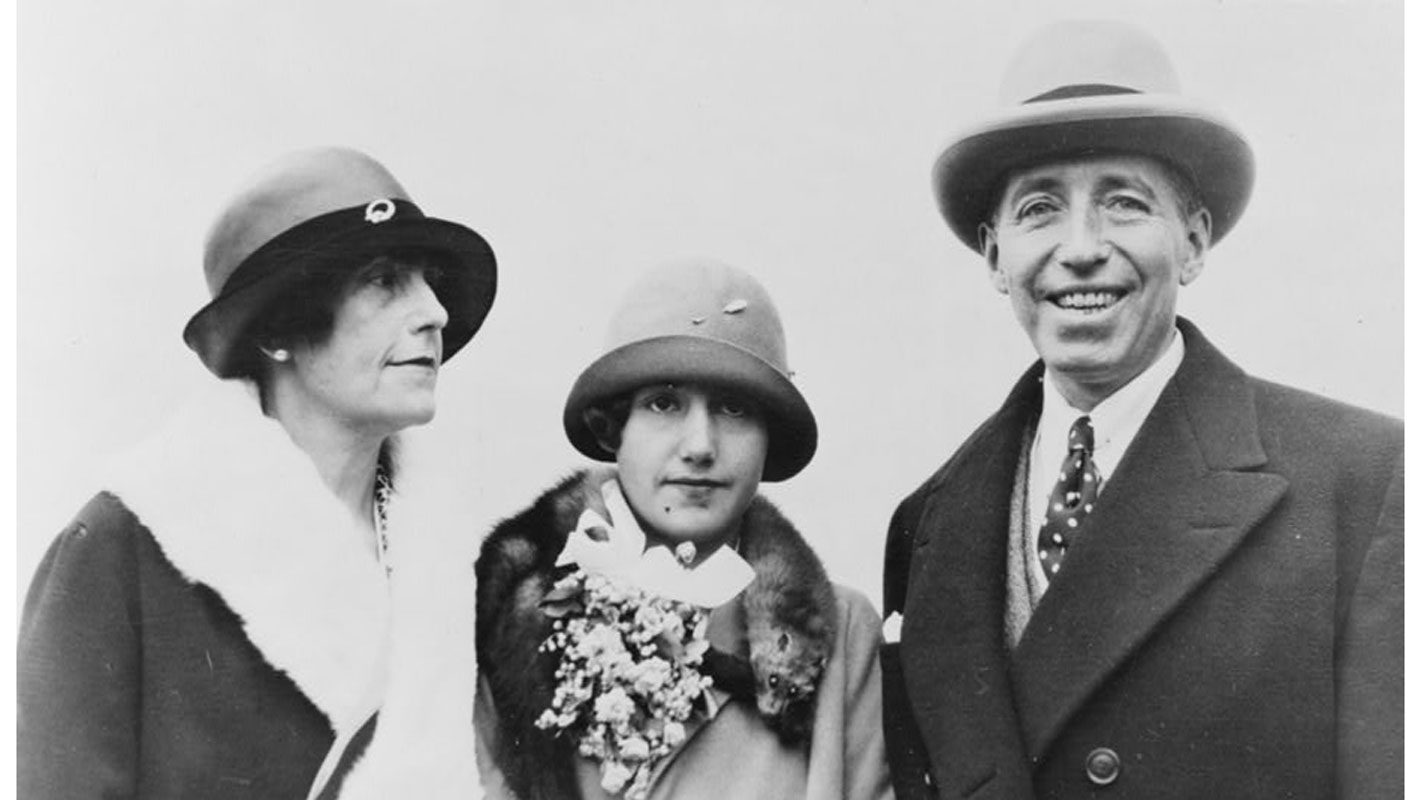
Once their partnership took shape, Cartier warmly nurtured McLean’s love for grandeur, all while offering expert guidance. “Her commissions featured eye-catching large stones, striking contrasts, and daring designs that truly stood out. These were jewels intended to be admired from afar, photographed, and discussed. Cartier’s kindness was in ensuring that the boldness was clear, dramatic yet beautifully balanced, giving McLean the confidence to explore larger scales without losing harmony,” she says.
Gerrish also notes that Cartier functioned as a cultural translator. As a European house working with an American client, the firm understood how to adapt Old World luxury codes to New World expectations. “McLean’s jewelry embraced abundance and visibility rather than restraint, reflecting an American comfort with display, while Cartier’s craftsmanship anchored that excess in recognisable prestige. Cartier also understood that McLean’s appetite for excess was intellectual as well as visual. She enjoyed the audacity, the legend, and the daring of wearing jewels others might hesitate to touch.”
She emphasizes that Cartier enabled McLean to embrace diamond jewelry as theatre — large, dramatic, and unapologetically visible. “Together, they helped define an early 20th-century American approach to luxury in which abundance was not softened or hidden, but carefully staged and confidently performed,” she says.
How Evalyn Walsh McLean Rewrote the Hope Diamond Curse
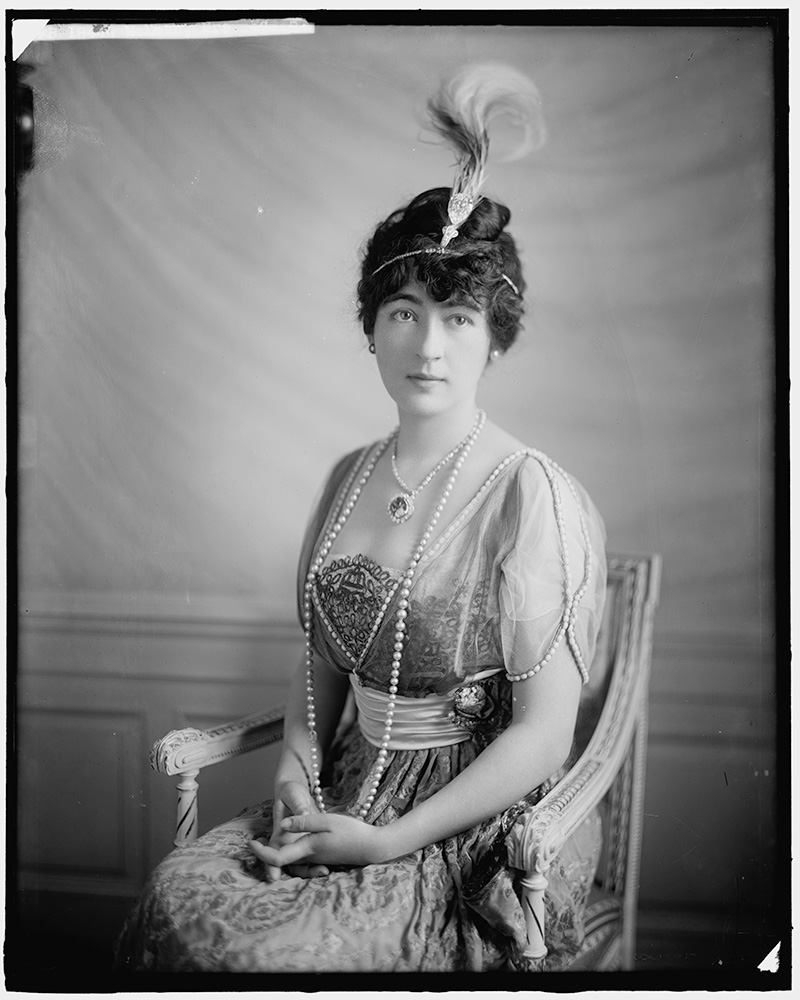
The world viewed the Hope Diamond as an almost mythical object — otherworldly because of its fantastical origins and the magnificent beauty of the jewel. But Evalyn brought it into the orbit of culture. She made it real.
Gerrish explains that Evalyn Walsh McLean reshaped the diamond’s meaning by treating it as jewelry rather than an untouchable historic relic. When she purchased it from Cartier in 1911, it was already surrounded by stories of misfortune — widely discussed yet kept at a distance. By wearing it openly and frequently, McLean brought the diamond out of legend and into everyday social life.
At a time when famous diamonds were expected to be locked away or saved for exceptional occasions, she did the opposite. She wore the Hope Diamond to dinners and social gatherings, effectively “collapsing the boundary between museum object and personal adornment,” as Gerrish notes.
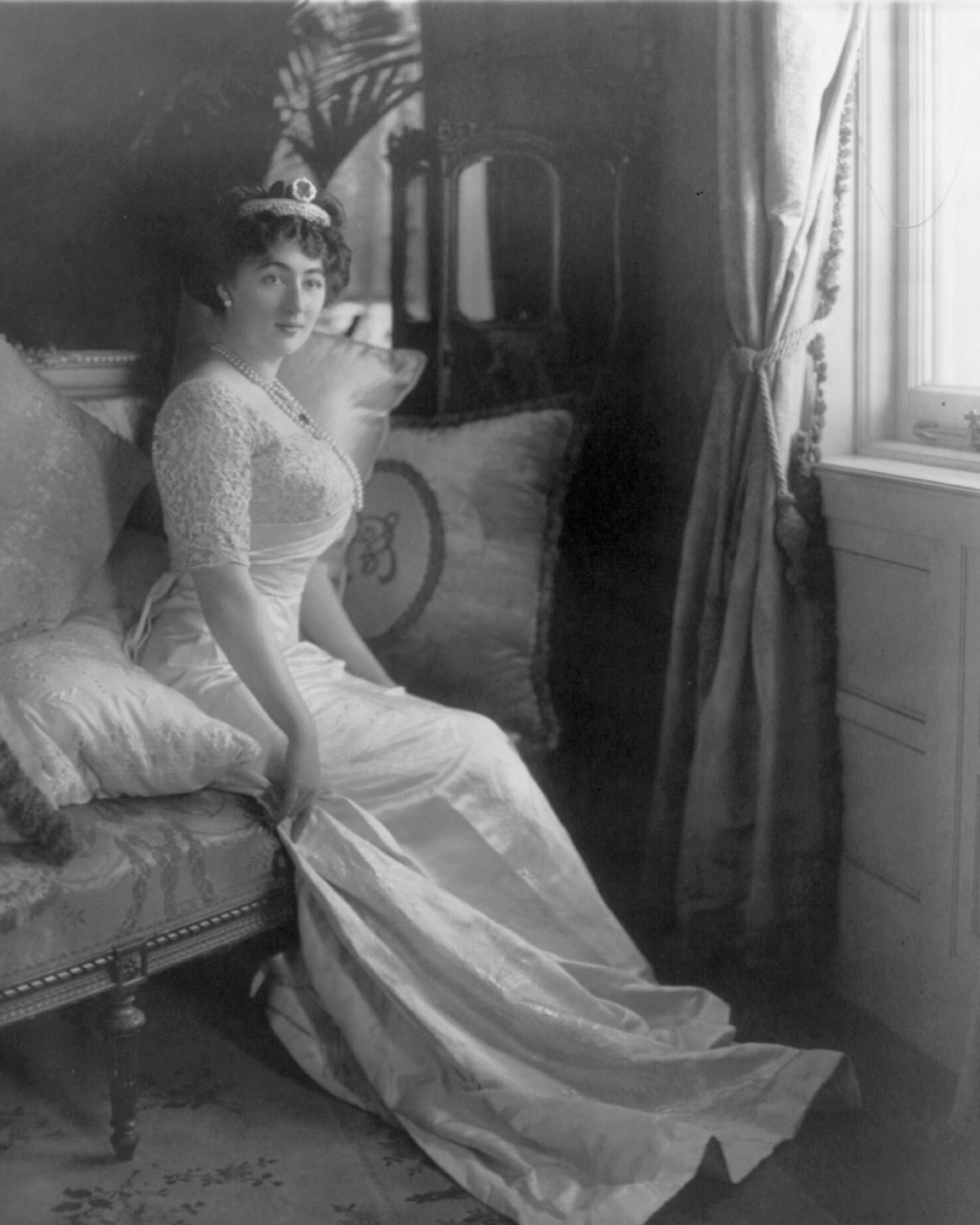
Evalyn loved a dramatic headpiece, and the diamond was mounted on a three-tiered circlet of large white diamonds. She also wore it as a pendant necklace — and she wore it everywhere. She paired it with the Star of the East at grand receptions, practically blinding guests with sparkle. On occasion, she even allowed her children to play with it, incorporating the gem into scavenger hunts at parties.
Gerrish argues that this approach temporarily undermined the idea of the so-called “curse.” Rather than avoiding the stone, McLean dismissed superstition and encouraged others to handle and try it on. She famously insisted that objects believed to bring bad luck instead brought her good fortune. By refusing to act like a fearful owner, she reframed the curse as a story to be challenged rather than obeyed.
She was almost playfully defiant. Gerrish points to well-known anecdotes describing McLean fastening the Hope Diamond to her dog’s collar at a party and wearing it while gardening. These stories, widely repeated during her lifetime, stripped the diamond of reverence and emphasized her control. A jewel that could appear on a dog’s collar was no longer untouchable; it became, in Gerrish’s words, “playful, human, and disarming.”
Tragedy, Myth, and Public Interpretation
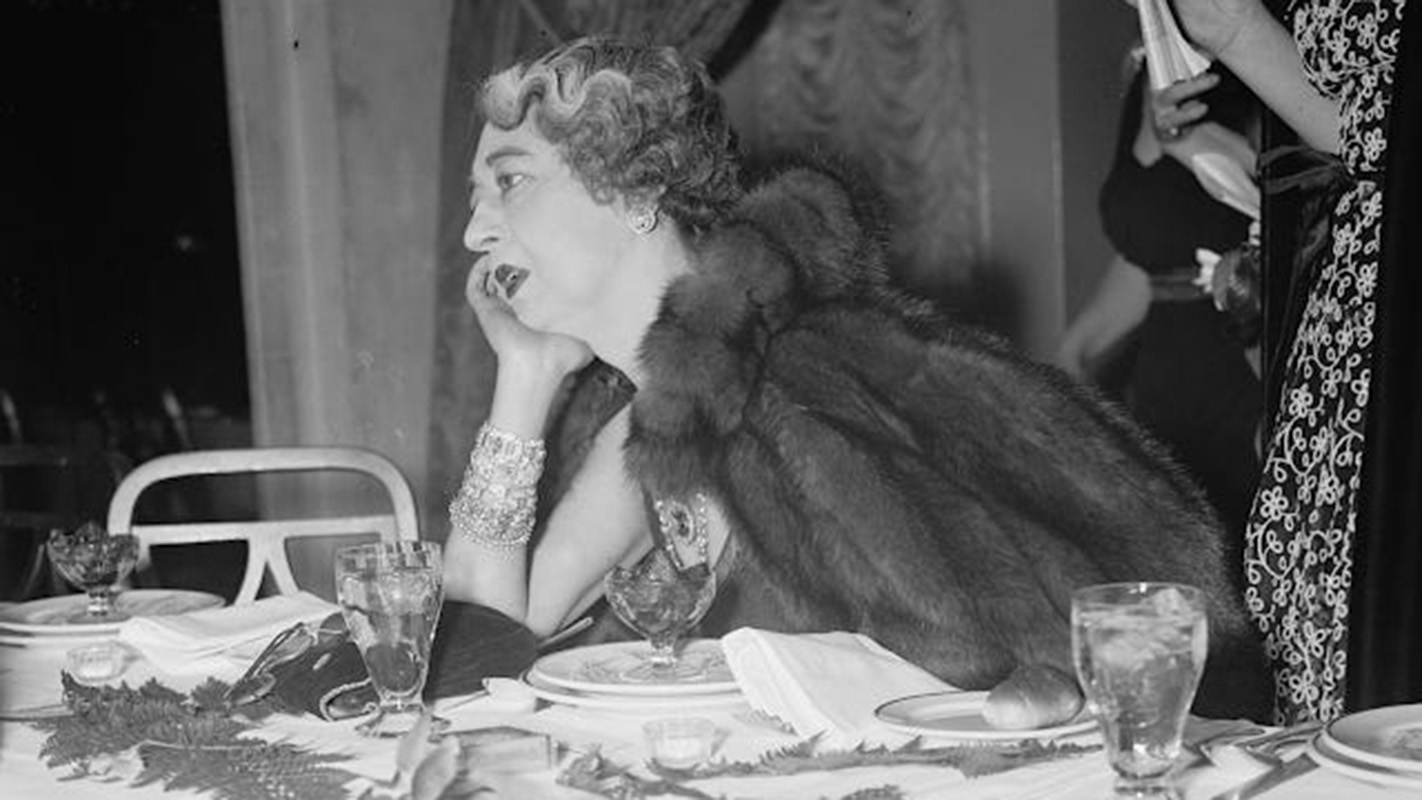
Not everyone was convinced the curse had been disarmed. Evalyn may have worn the necklace while gardening or placed it on a dog collar, but tragedy still hovered nearby. Her mother-in-law reportedly fainted upon hearing of the purchase and died less than a year later. McLean received dozens of letters warning her about the “talisman of evil,” and she even had a priest bless the stone, convinced that would settle the matter.
She was publicly dismissive of the curse, perhaps because she had already endured profound loss, including the deaths of her brothers and her father shortly before acquiring the Hope Diamond. “Bad luck objects for me are lucky,” she once said.
Still, tragedy continued to shape her life. In 1919, eight years after she purchased the Hope Diamond, her young son Vinson died in a car accident. Her husband later became embroiled in a political scandal, struggled with alcoholism, was unfaithful, went bankrupt during the Great Depression, and ultimately died in a mental hospital in 1941. Their daughter died by suicide in 1946. McLean’s fortune was largely dissipated, and she died of pneumonia the following year, in 1947.
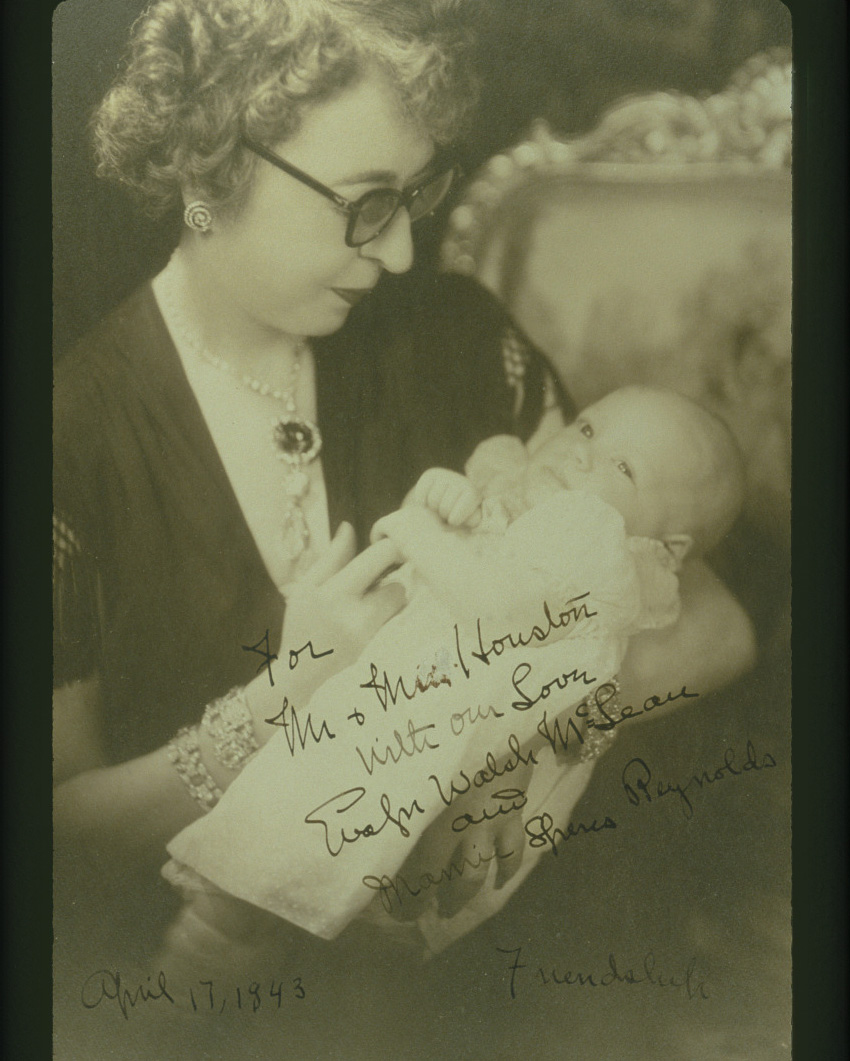
Gerrish notes that the lore of the Hope Diamond did not simply accompany McLean; it actively enhanced her public identity. By 1911, stories of curses and tragic former owners were already well established in the press. Rather than distancing herself from that reputation, McLean absorbed it, allowing the diamond’s mythology to shape how she was perceived. She became not just a wealthy American socialite, but the woman bold enough to live openly with a jewel others feared. Each public appearance of the diamond invited speculation: was she tempting fate, immune to superstition, or deliberately defiant? Her jewelry was never neutral; it was read as a statement of character.
Gerrish further observes that when tragedy struck, the “curse” provided a ready-made lens through which her life was interpreted. Personal losses were retrospectively linked to the diamond, reinforcing the legend and intensifying public fascination. The diamond became a narrative device through which her life was simplified and dramatized, regardless of historical accuracy.
Evalyn Walsh McLean and the Star of the East Diamond
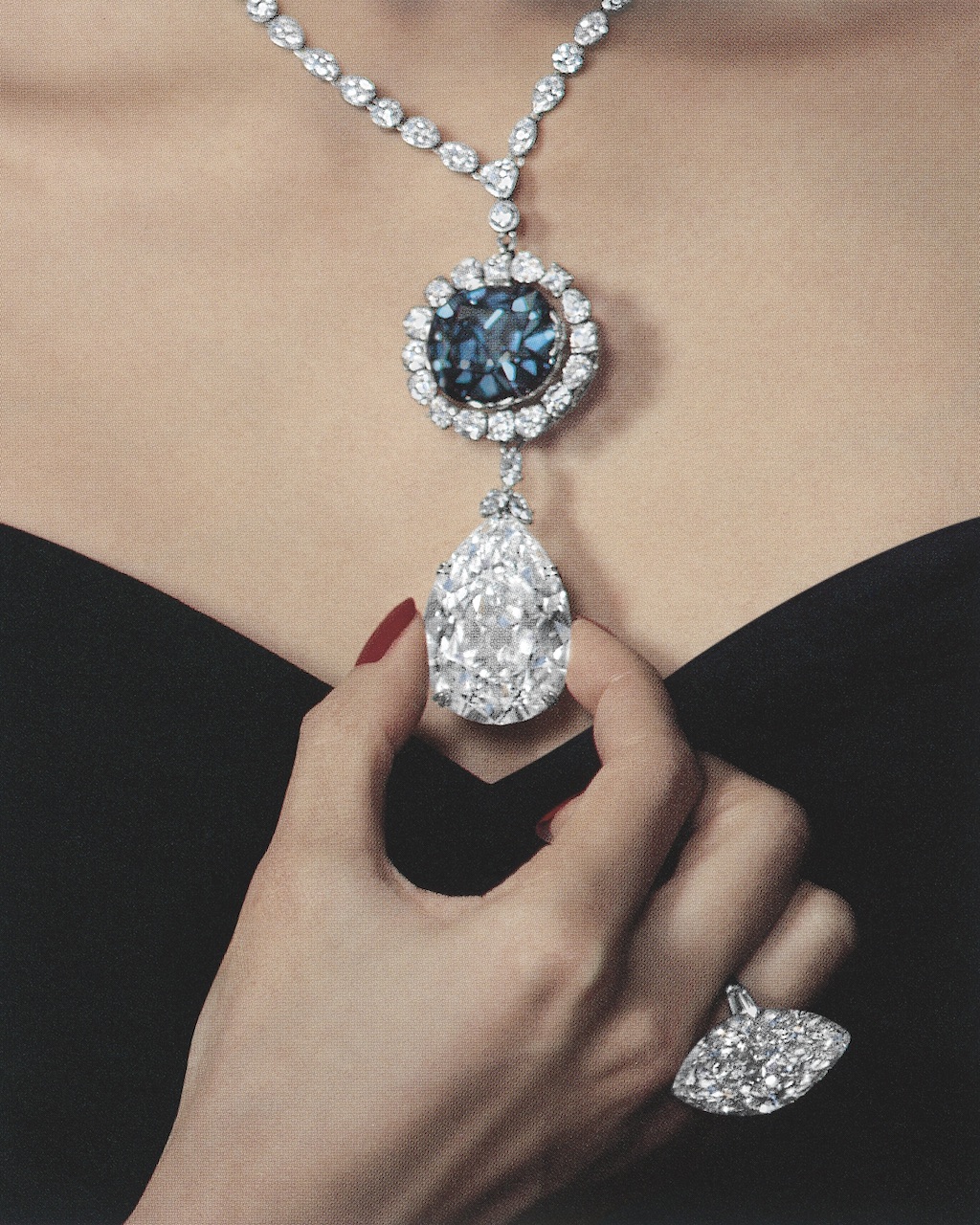
Though the Hope Diamond gets all the attention for its association with Evalyn, her fascination with jewels of the Ottoman Empire began when she bought the Star of the East diamond on her honeymoon. The three-month honeymoon in 1908 took the couple all over Europe, including to Turkey, where she first encountered the Hope Diamond.
However, it was in Paris that Pierre Cartier showed her the Star of the East, a 94.80-carat pear-shaped diamond positioned on a chain below a 34-carat hexagonal emerald and a pearl weighing 32 grains. It reportedly belonged to Sultan Abd al-Hamid II. Evalyn told her husband, “Ned, it’s got me. I’ll never get away from the spell of this.” She used the $100,000 wedding gift from her father toward the purchase and bought it for $120,000, calling it an investment.
The Star of the East remained with Evalyn for the next 40 years. She liked to wear it as a headpiece, often adorned with a real feather in a diamond bandeau. Harry Winston later bought both the Hope Diamond and the Star of the East after her death and sold the latter to King Farouk of Egypt.
Evalyn Walsh McLean’s Other Extraordinary Diamonds
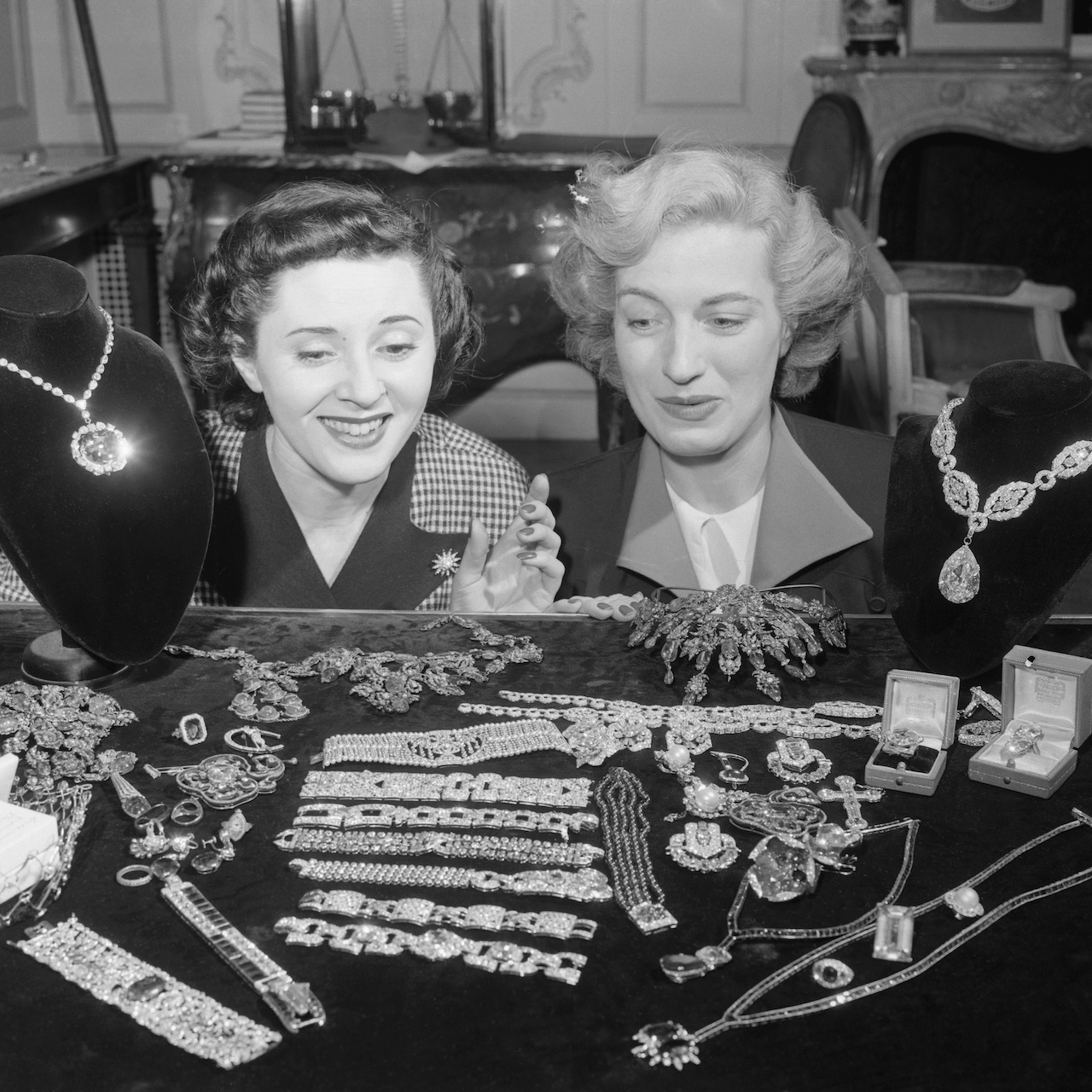
When you acquire a jewel as storied as the Hope Diamond, it has a way of eclipsing everything around it, even extraordinary stones in their own right. According to the Smithsonian, which acquired much of Evalyn Walsh McLean’s jewelry after her death in 1947, her collection also included a 9-carat green diamond and a 31.74-carat diamond now known as the McLean Diamond.
Documentation surrounding some of these acquisitions is sparse, and not every piece from her collection is fully traceable today. The McLean Diamond is a 31.74-carat Old Mine–cut diamond. Far less is publicly documented about this stone or the 9-carat green diamond, but together they underscore the breadth of McLean’s collecting, which extended well beyond the singular mystique of the Hope Diamond.
How Evalyn Walsh McLean Redefined American Luxury
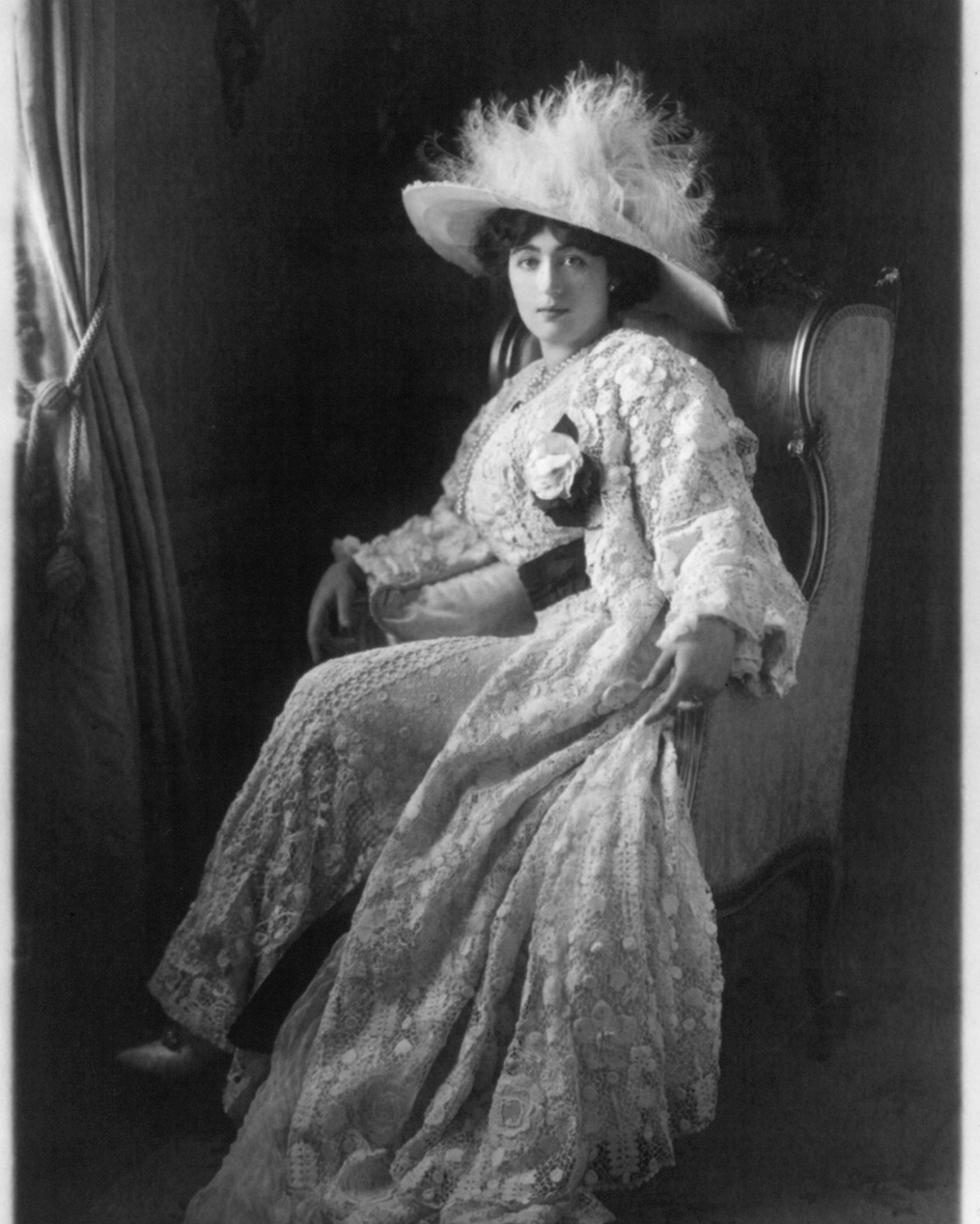
According to Gerrish, Evalyn Walsh McLean’s jewelry commissions mark a turning point in the visual language of American luxury, the moment when new wealth stopped imitating European discretion and began celebrating its own scale, confidence, and immediacy. Her diamonds were not designed to murmur about heritage or lineage; they were created to command attention. They reflected a culture in which success was meant to be seen.
Gerrish explains that, unlike inherited aristocratic jewels that accumulated meaning slowly over generations, McLean’s pieces “announced [their] presence in the present tense.” Rather than signaling ancestry, they conveyed success, independence, and modern identity. Jewelry became a language of self-definition, who you were now, not where you came from. In that sense, it embodied the American Dream. Think of Elizabeth Taylor’s 69-carat diamond ring: it wasn’t subtle. It declared that you had arrived.
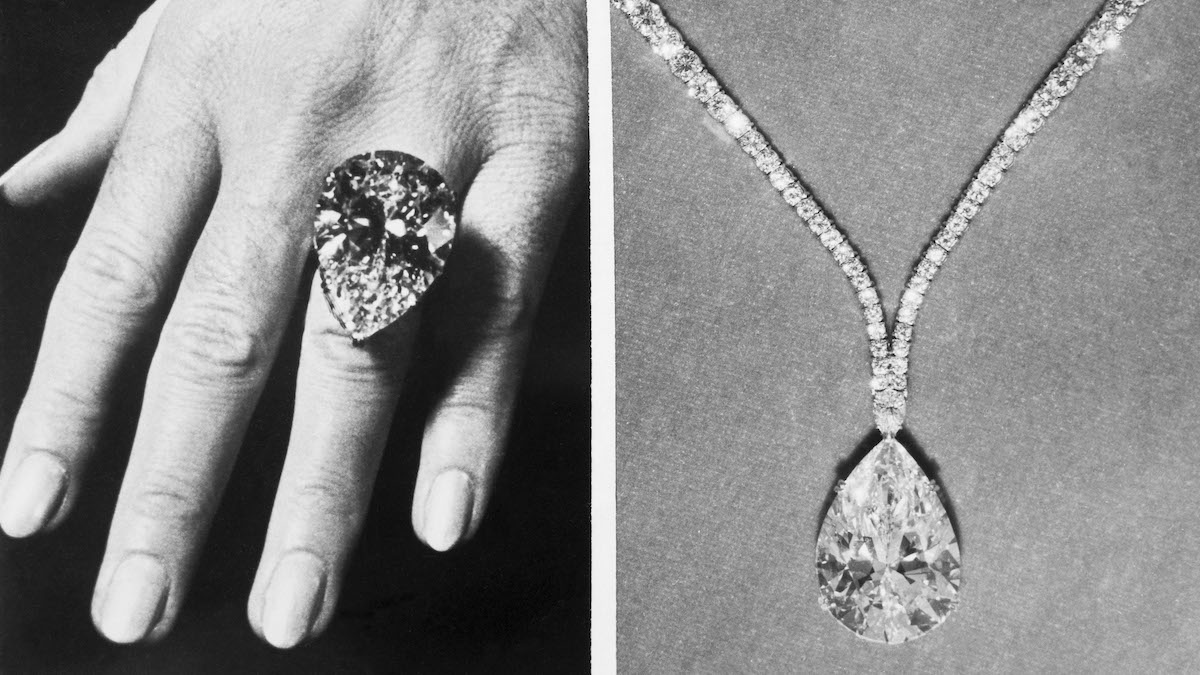
These commissions also reveal a comfort with intentional visibility. McLean’s jewels were created for social gatherings, where grandeur was not merely accepted but encouraged. Showcasing jewelry became a way of engaging and connecting. As Gerrish notes, it wasn’t simply about displaying wealth, but about building presence and earning recognition.
At the same time, McLean’s commissions, especially the Hope Diamond, illustrate how American luxury embraced enjoyment as a value in itself. She didn’t let the stone sit tucked away because it was immensely precious. Her jewels functioned as theater. Gerrish observes that they were “worn, repeated, and circulated rather than preserved or protected,” reflecting an attitude toward wealth as something to be experienced openly rather than safeguarded quietly.
In McLean’s world, jewelry was not about discretion or inheritance. It was about visibility. Her commissions capture an early 20th-century American mindset in which luxury was no longer something one merely possessed, but something one actively performed, in full view.
Evalyn Walsh McLean’s True Legacy Through Her Diamonds
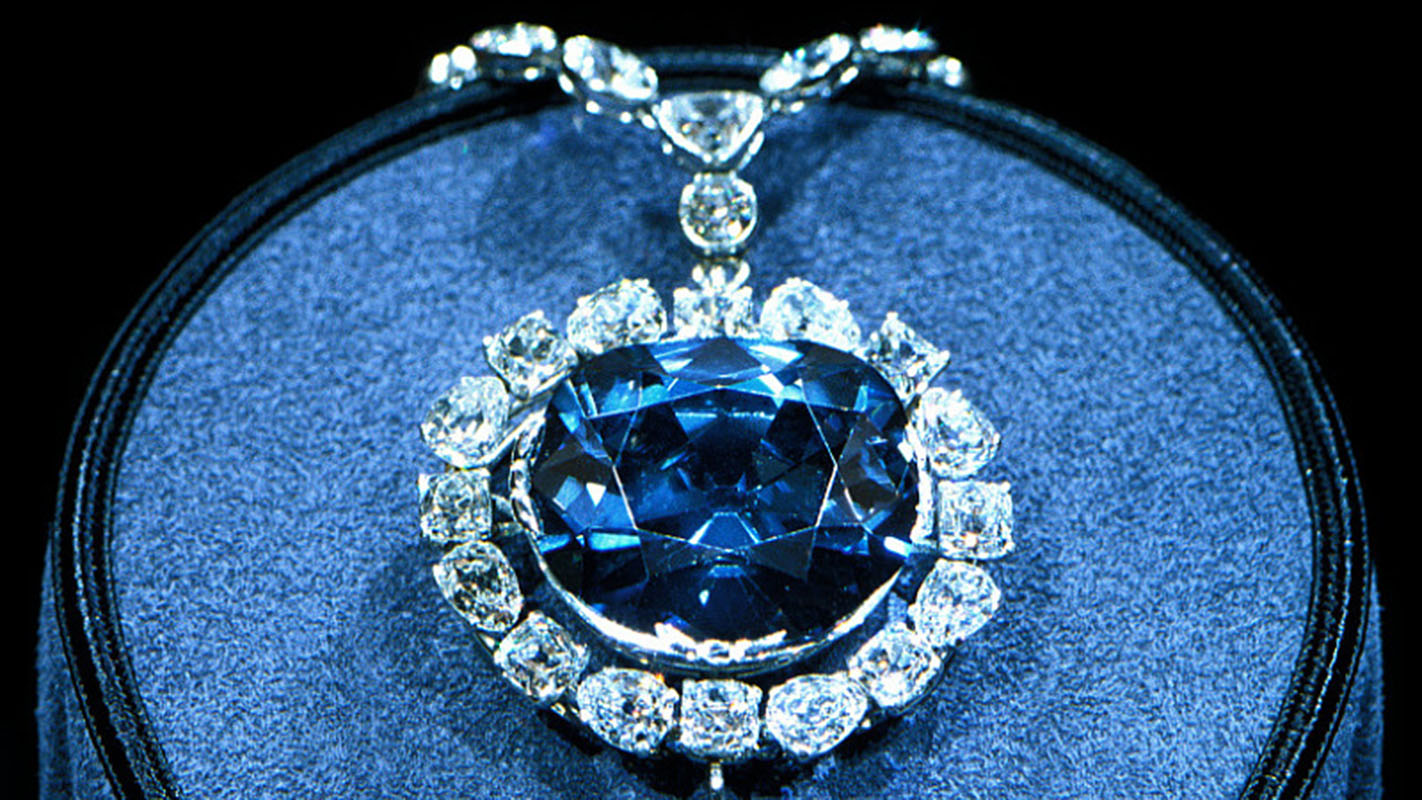
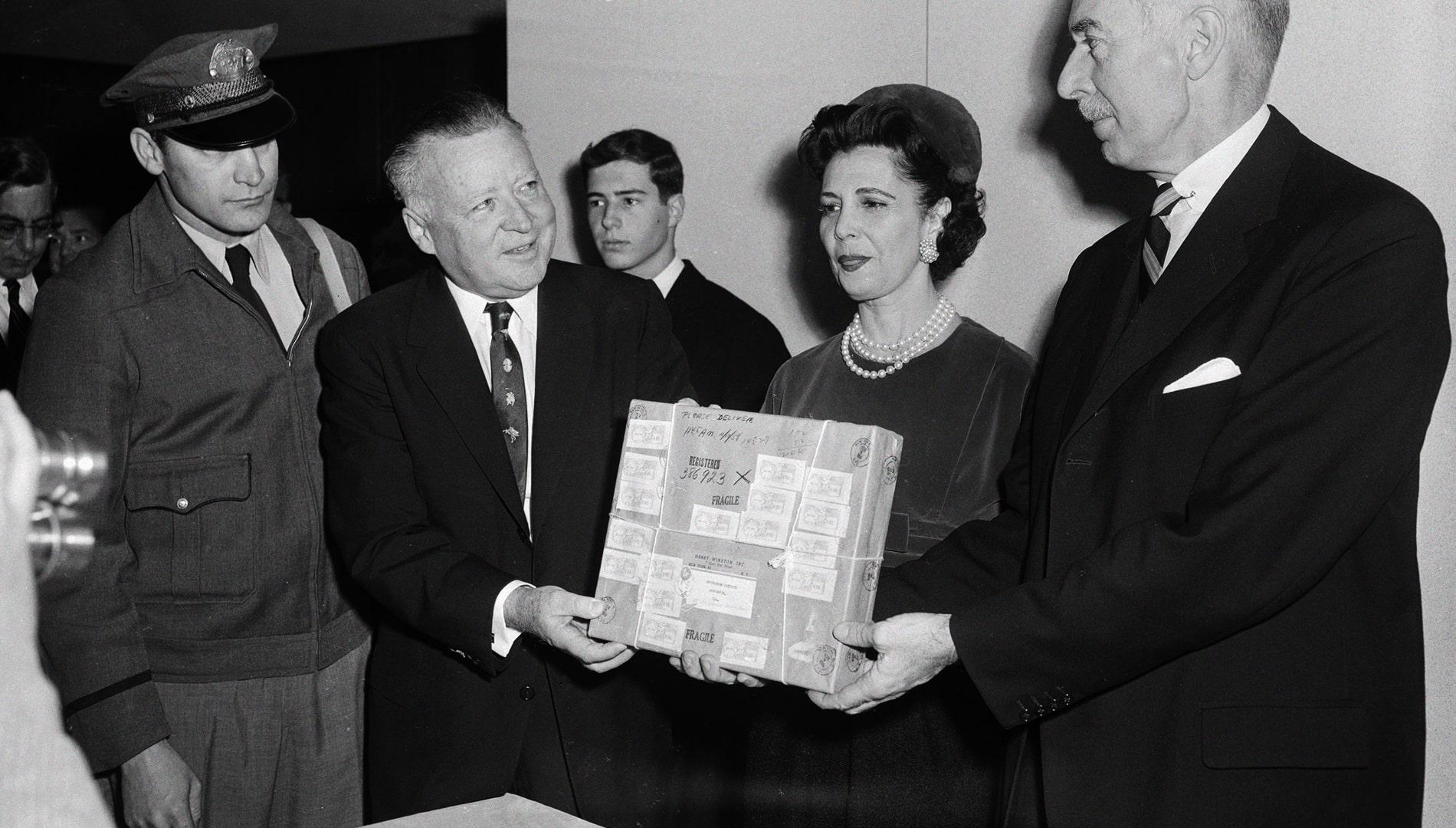
After years of financial strain and mounting personal tragedy, McLean’s fortune had largely disappeared by the time of her death in 1947. Her estate ultimately sold much of her jewelry collection to Harry Winston in 1949 in order to settle debts and liquidate remaining assets. In 1958, Winston famously donated the Hope Diamond to the Smithsonian Institution so that the public could enjoy it, mailing it in nothing more than a plain brown package via USPS. Other pieces were sold privately.
Though some may see Evalyn Walsh McLean’s story as a tragic cautionary tale, it can also be viewed as the story of a defiant woman who owned her power. Gerrish notes that McLean’s ownership immediately placed her in a new role: she became the woman willing to live openly with a diamond that others treated with superstition. McLean’s association with the jewel made her powerful and unforgettable.
As Gerrish explains, “McLean’s legacy lies in this transformation.” She demonstrated that jewelry could operate as theatre, worn not only for beauty or status, but for effect. In doing so, she helped redefine luxury as something “performative, social, and alive,” not hidden away, but shared, debated, and remembered.