< Historic Diamonds / Royal Stories
130 Dynastic Jewels Make a Grand Entrance in Paris
An exceptional exhibition of priceless dynastic jewels is proudly on display in Paris, only months after the Louvre heist.
Published: December 19, 2025
Written by: Josie Goodbody

It might seem bold to hold an exhibition of 130 priceless jewels, only a diamond’s throw from the Louvre, from which only weeks ago, crown jewels were stolen in broad daylight. However, the show must always go on, and in that vein, nothing says forever like a natural diamond – and a display of dynastic ones at that.
This is the third and final exhibition of a clever collaboration between the Al Thani Foundation and London’s Victoria & Albert Museum, Dynastic Jewels, which has lent 60 pieces and is a peerless presentation of some of the world’s most impressive jewelry. Jewels which have seen and suffered everything – from revolutions to retransformations.
Meet the Expert

- Josie Goodbody is a jewelry historian, novelist, and communications specialist with a passion for storytelling and the world of high jewelry.
- Goodbody is the author of the Jemima Fox mystery series, blending intrigue with dazzling jewels, and her work has appeared in the Daily Mail and Rapaport.
Important Golconda Diamonds on Display in Dynastic Jewels

The Dynastic Jewels exhibition includes jewels lent by the Louvre, His Majesty King Charles III, the Duke of Fife, Cartier, and Chaumet, to illustrate the relationship between precious stones and status – how, for centuries, jewels set with precious stones have exemplified both power and prestige, furthermore, as displays of passion.
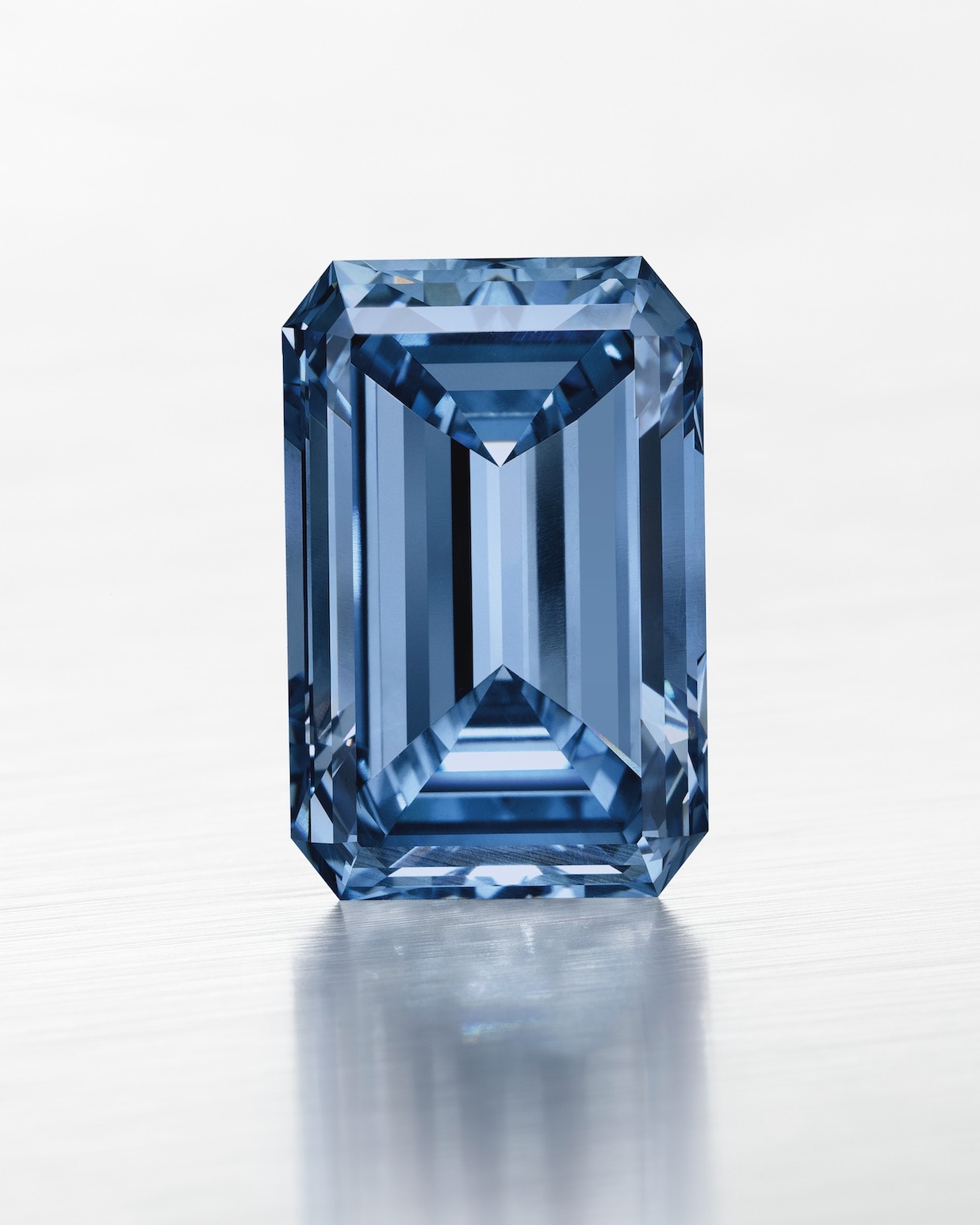
The exhibition begins with two exceptional Golconda diamonds: the 57.31-carat Star of Golconda and the 90.38-carat Briolette of India. In 2011, Cartier created a magnificent Indian inspired bib necklace, Le Collier de Perles du Maharajah: three strands of 116 pearls interspersed with 25 large, round brilliant diamonds, with the spectacular Star of Golconda suspended from a line of six similar stones. Here, however, we have the Star displayed alone, which only emphasizes the extraordinary yet simple beauty of an enormous natural diamond.
The Briolette of India is said to be the oldest recorded diamond, arriving in Europe during the Crusades, a century or so before Vasco de Gama opened the maritime trading route to India. This ancient diamond is believed to have belonged to Eleanor of Aquitaine in the 12th century and to have crossed the English Channel several times before going missing for three centuries.
It is then thought to have been presented to Henry II of France, where it became one of the first French Crown Jewels, before being either stolen in 1792 or sold at an enormous sale in 1887. In 1946, Harry Winston set the D color, type IIa perfect teardrop briolette into a necklace with marquise and pear-shaped diamonds for an Indian maharajah. It was last bought in 2022 for $7.1 million.
Dynastic Jewels: Diamond Diadems Take Over
Power, prestige, and appeal run through each piece on show, but there is little more appealing than a tiara, and joyously, we discover spectacular ones. Empress Eugenie’s 1853 sublime Lemonnier pearl and diamond diadem, having been stolen in the Louvre heist, wasn’t able to take its planned and rightful place, but those that are here are no less showstopping.
Napoleon Bonaparte declared the diadem de rigeur at his Imperial Court. During the 1804 Notre-Dame coronation, Josephine was proclaimed empress, wearing a diadem of diamond-set laurel wreaths reminiscent of Ancient Rome, while the female members of his family were adorned with spectacular tiaras: his family was to be the royal family of France, indeed of all of Europe. Before long, his protocol spread across the continent, and despite many tiaras being broken up and transformed into ‘more wearable’ jewels, many remain – kept in royal and aristocratic dynasties, passed down from mother to daughter to be worn on wedding days and at state occasions.

The earliest example in the exhibition is a group of seven diamond plaques made between 1810 and 1820 and sold at Sotheby’s in 2010, some two hundred years later. They had been part of a tiara given by the Prince Regent, later George IV, to his secret wife, Maria Fitzherbert, who he showered with jewels.
Due to a law prohibiting Catholics from marrying the monarch, and she, being a Catholic, the 1785 marriage was deemed invalid, whilst he was forced to marry a cousin. But the true loves rekindled their relationship during the first decade of the 1800s, when he commissioned the jewel formed of plaques set with circular-cut, old mine and rose cut diamonds, most likely from Brazil. Here they have been remounted to be displayed as the tiara, Mrs Fitzherbert would have worn.

George IV’s niece had no such marital calamities and was equally showered with jewels by her husband; indeed, she wrote in one of her diaries: “Albert has such taste and arranges everything for me about my jewels.” In 1840, the year of their wedding, Prince Albert designed a sapphire and diamond gold coronet for his beloved Queen Victoria.
This historically important coronet was inspired by the Saxon Rautenkranz, a band of trefoil leaves which were part of the German prince’s coat of arms, and matches a brooch that he gave her for their wedding. She became so fond of the jewel that she wore it in 1842 for her first official portrait, also on loan from the Royal Collection, and again in 1846, for a family portrait with their first five children. Both paintings are by Franz Javer Winterhalter. Sitting alongside the coronet is another of her favorite tiaras, also designed by Albert in 1845 and set with emeralds and diamonds.
As with the wearing of opulent jewels to assert power, the last Hanoverian, Queen Victoria, married off eight of her nine children to royal and noble families across Europe to gain power and solidify alliances; she became known as the grandmother of Europe. The ancient Thun-Hohenstein noble family of Austria seemed to have escaped its dynasty, but they were by no means missing out on dynastic jewels.

Holding significant roles at the Viennese court of the Austro-Hungarian Empire in the nineteenth century, it was essential to have important personal and ceremonial jewels; therefore, they engaged the House of Köchert, the imperial jewelers. And one such commission is on display here: the majestic Thun-Hohenstein Tiara, made in 1890 and set with hundreds of old mine cut diamonds and cushion cut diamonds set in a design which incorporates motifs from the family’s coat of arms, and a large flower at the front set amidst swirling scrolls and foliates.

Only weeks ago, a “stash” of seriously important, but forgotten, “Royal Jewels” was discovered in a bank vault in Canada. This included the famous Florentine Diamond and four others made by Köchert for the Viennese Court, and even some that had belonged to Marie Antoinette. But there is still a royal family endeavoring to retrieve jewels that have been stored in a Roman bank vault since 1946, disputes over who owns them, the family or the Italian state.
The House of Savoy, however, has at least one formidable heirloom in the public sphere – Princess Maria-Francesca of Savoy’s Diamond Tiara – and fortuitously on view here. Created by the Italian jeweler Petochi around 1937, it features diamonds that had belonged to the Italian royal family and is designed in the festoon style, transformable into several brooches. This opulent piece was given to her by her parents – the penultimate King and Queen of Italy – in 1939 for her wedding to Prince Luigi of Bourbon-Parma; the family sold the jewel to the Al Thani family.
Dynastic Jewels Cross the Atlantic: Tiaras Triumph Over the Ocean
Naturally, anything that was fashionable in Europe crossed the Atlantic, including many of the 77,000 French Crown Jewels, which were bought in the enormous sale of 1887 by the Gilded Age’s favorite jeweler, Charles Tiffany. Tiaras became an important aristocratic accessory at society events on the East Coast, and in 1905, the Pennsylvanian railroad and coal heiress Mary Scott Townsend commissioned Cartier to create a hair ornament fit for her position as head of Washington’s high society.
Helen Molesworth, the senior jewelry curator at the V&A and a colleague of this exhibition’s curator, Dr Emma Edwards, describes the diamond Scott Townsend Tiara as very European in style, with scrollwork surrounded by laurel leaves. Helen also mentioned that she noticed the tiara’s diamond-set scrolls mirror the swirling circles of the Neo-Classical iron balustrades on the Hotel de la Marine’s marble staircase.

Only two years previously, her compatriot, the Louisiana-born heiress Consuelo Yznaga, as the Dowager Duchess of Manchester, commissioned Cartier to create her a magnificent tiara. Set with at least 1400 of her own diamonds, the design features graduated hearts and scrolls and was worn at innumerable Edwardian-era galas. When she died in 1909, the Manchester Tiara was inherited by her daughter-in-law, Helena, who wore it at the Coronation of George V and Queen Mary in 1911.

Of course, colored diamonds take their place and none so spectacularly as the 32.58 carat fancy intense yellow set in Cartier’s 1904 kokoshnik-inspired Sun Tiara made for Daisy Leiter, another American-born heiress-cum-peeress: the Countess of Suffolk. Sunbeams with hundreds of channel-set old mine cut diamonds radiate away from the central yellow diamond in this remarkable tiara that she wore at her Washington wedding in 1904 – a year after meeting and falling in love with the Earl of Suffolk in India during the Delhi Durbar for Edward VII and Queen Alexandra in 1903.
Dynastic Jewels: Bejewelled Brooches and Courtly Craftsmanship

There are also some very fine bejewelled brooches included in Dynastic Jewels, two of which are by Mellerio, the world’s oldest jeweler. The Rose Brooch made for Princess Mathilde Bonaparte is set with 2637 brilliants and 860 small rose cut diamonds and designed as a Tudor rose in full bloom. Emma Edwards describes the jewel as a ‘study in naturalism’.
After the princess’s death in the early 20th century, it was auctioned at the Parisian house Galerie Georges Petit, and described in the catalogue as “a corsage spray in the form of a fully open rose and two rose buds, with eleven leaves set entirely in very fine Brazilian brilliants”, it was bought by Grace Vanderbilt, wife of Cornelius Vanderbilt III.
The second of these two brooches by Mellerio was commissioned by Empress Eugenie in 1868, inspired by a similar piece she had spotted at Paris’s World Fair the previous year. The Spanish contessa married Napoleon III in 1853 and amassed an enormous collection of jewels from the Parisian jeweler, not least this most exquisite Peacock Feather brooch, made just two years before she escaped France for England during the Fall of the Second Empire. It’s such a dreamy jewel and pavé set with a plethora of gemstones, including a large eye-shaped emerald, sapphires, rubies, more emeralds, and many diamonds.
Dynastic Jewels as Symbols of Power, Legacy, and Permanence
This exhibition, which includes diamonds worn by Catherine the Great in the 1700s, Colombian emeralds carved in India for the Mughals, cameos of Empress Joséphine, Ural amethysts and pink topazes belonging Empress Marie-Louise, as well as a brooch set with a huge 140 carat pink topaz surrounded by diamonds given to my ancestor the Marchioness of Londonderry by Tsar Alexander I, proves how precious gemstones have a permanence that often outlasts their owners, but can entrance others for years to come.