From Royalty to the Red Carpet: The Glittering History of Diamond Hair Pins
Diamond hair pins have long been the secret weapon of women who wanted their sparkle to make a statement. Ahead, discover how these tiny, powerful jewels evolved from royal regalia to one of fashion’s most elegant accessories.
Published: January 12, 2026
Written by: Meredith Lepore

Long before natural diamond hair pins glittered on red carpets or in royal portraits, humans were already adorning their hair with intention and artistry. The earliest known hair accessory appears on the famed Venus of Willendorf, a 30,000 BCE sculpture discovered in Austria. Though the figure lacks limbs and facial features, her intricately detailed hairstyle—marked by horizontal bands or bead-like rows—reveals that hair adornment has been a vital form of self-expression since the very beginning of human history.
Across tens of thousands of years, hair accessories have signified far more than practicality. Materials, craftsmanship, and placement often denoted class, power, and social identity. From simple beads and ribbons to ornate crowns, tiaras, combs, barrettes, and jeweled clips, cultures around the world have used these objects to communicate beauty, status, and ritual meaning.
Meet the Expert

- Zuleika Gerrish is an antique, vintage and fine jewelry expert as well as a gemmologist and co-founder of Parkin and Gerrish with her husband Oliver.
- She is a qualified FGA (Fellow of the Gemmological Association) and DGA (Diamond Member), and is training to become an IRV (Institute Registered Valuer) through the National Association of Jewellers.
- Zuleika is also a member of LAPADA and CINOA, and a member of the Society of Jewellery Historians. Alongside running Parkin & Gerrish, she lectures in historic jewelery, sharing her expertise with new audiences.
In this article, we’re zeroing in on one of the most luxurious expressions of this long tradition: diamond hair pins. Ahead, we trace their evolution—from ancient adornments to the sparkling, timeless luxury pieces we know today.
The History of Diamond Hair Pins
First, let’s define what diamond hair pins actually are. Zuleika Gerrish, an antique, vintage, and fine jewelry expert, gemmologist, and co-founder of Parkin & Gerrish in England, explains that while people have adorned their hair with jewels for centuries, the modern concept of a hair pin emerged much later than most assume. She describes it as a discreet pin that both secures the hair and decorates it, blending function with refined ornamentation.
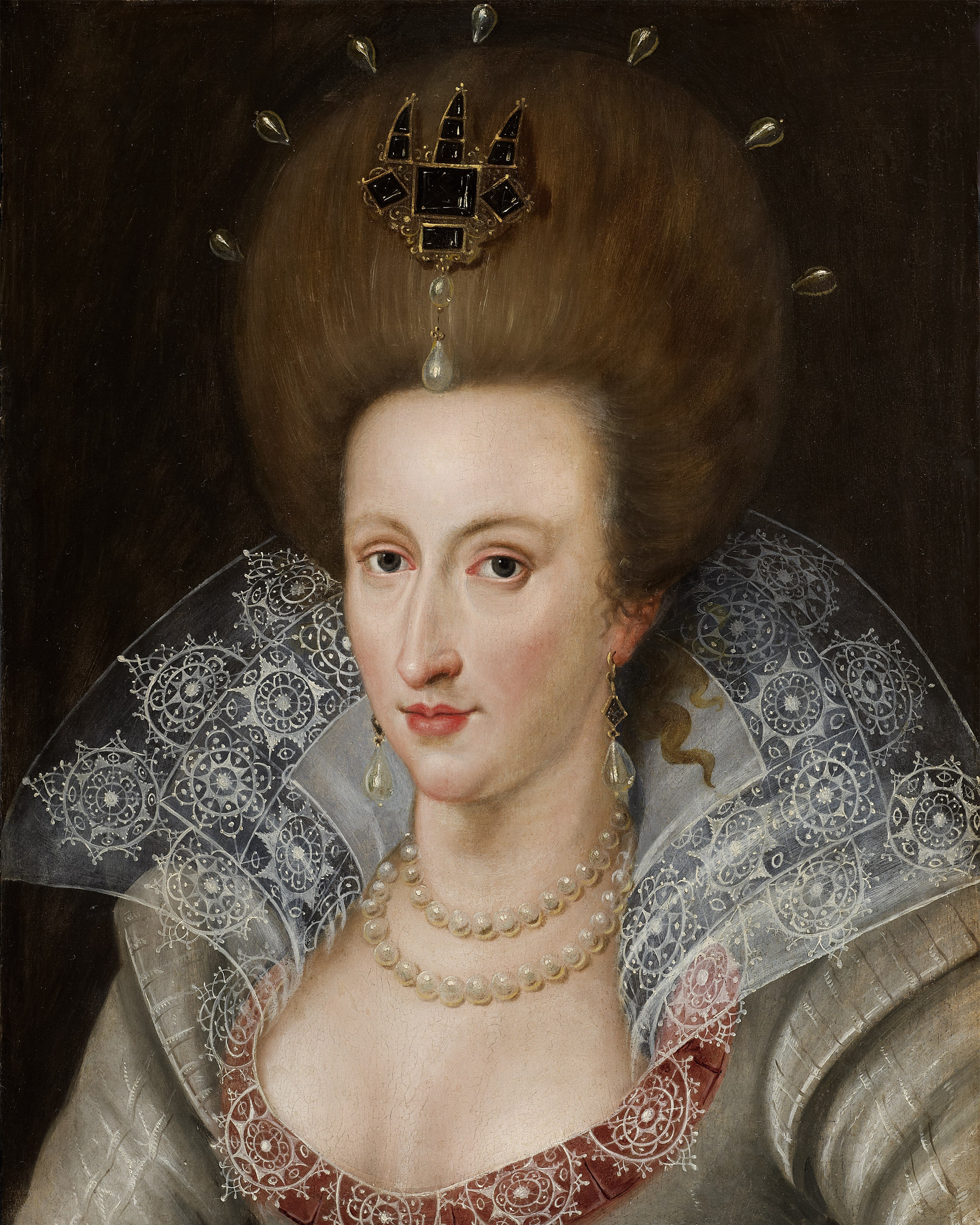
Gerrish points out that one of the earliest documented examples of a true hair pin was with Anne of Denmark, in a painting by John de Critz in 1605. In the portrait, Anne is explicitly described as wearing a diamond aigrette with pearls in her hair. “This places diamonds worn in the hair firmly within the early Stuart court. From there, diamond hair ornaments become increasingly visible and expressive,” she says.
Hair jewelry, including hairpins, reached its true heyday in the late 17th and early 18th centuries. As Gerrish notes, Europe’s towering court hairstyles turned hair into a literal canvas for luxury and creativity. This period also marks the rise of diamonds in hair adornments: by the end of the 14th century, the diamond trade route had expanded from Venice to Bruges, Paris, and later Antwerp, making these stones more accessible to elite jewelers and increasingly prominent in decorative hair pieces.
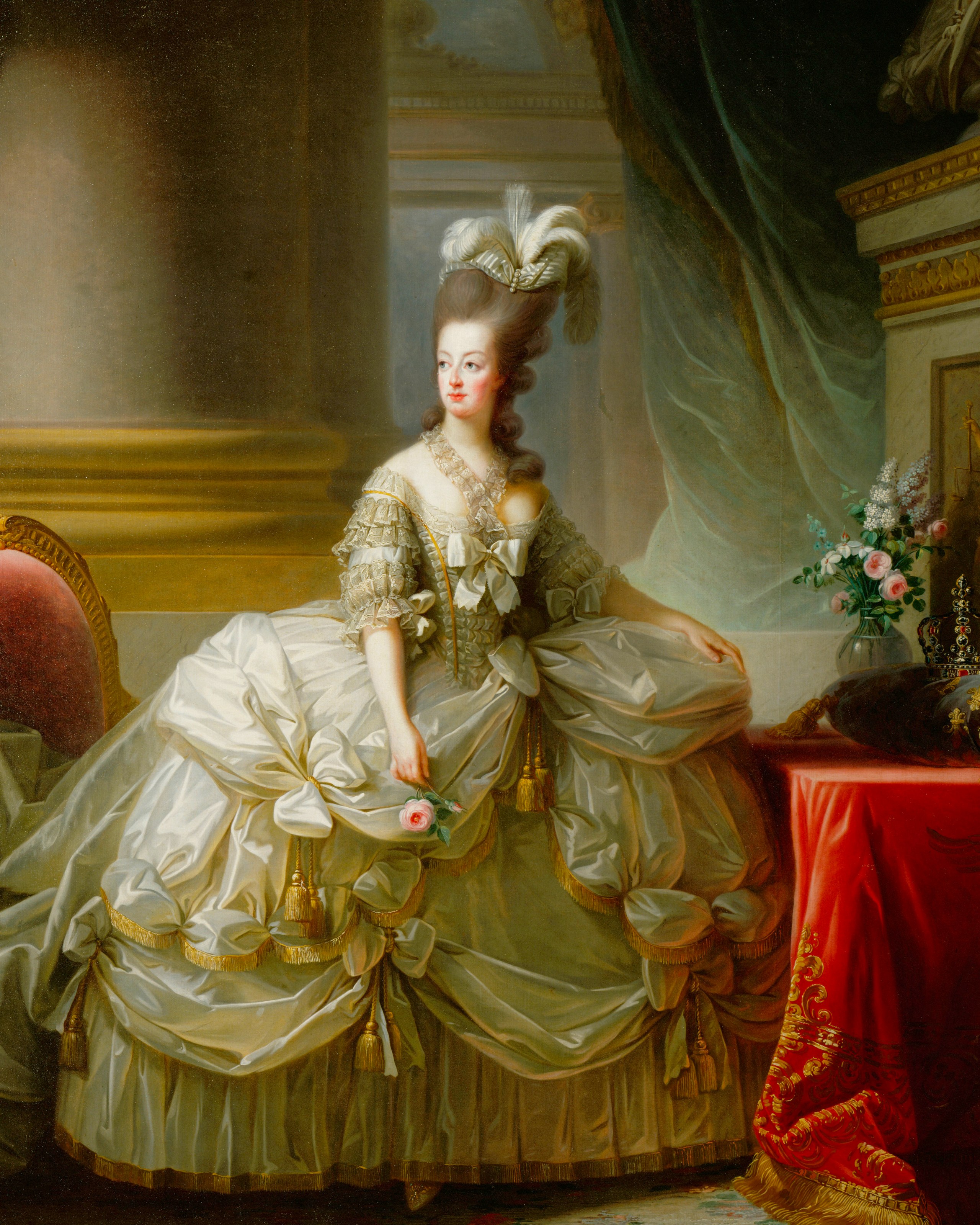
“This is the aigrette at its most theatrical, and Marie Antoinette famously embraced the look, making diamond feathers and jewelled hair ornaments central to her image,” she tells Only Natural Diamonds. The tradition was so entrenched that even the famed Marie-Thérèse Diamond—the historic fancy purple-pink stone recently sold at Christie’s—was originally mounted as a hair pin, underscoring how significant jeweled hair ornaments were in royal presentation.
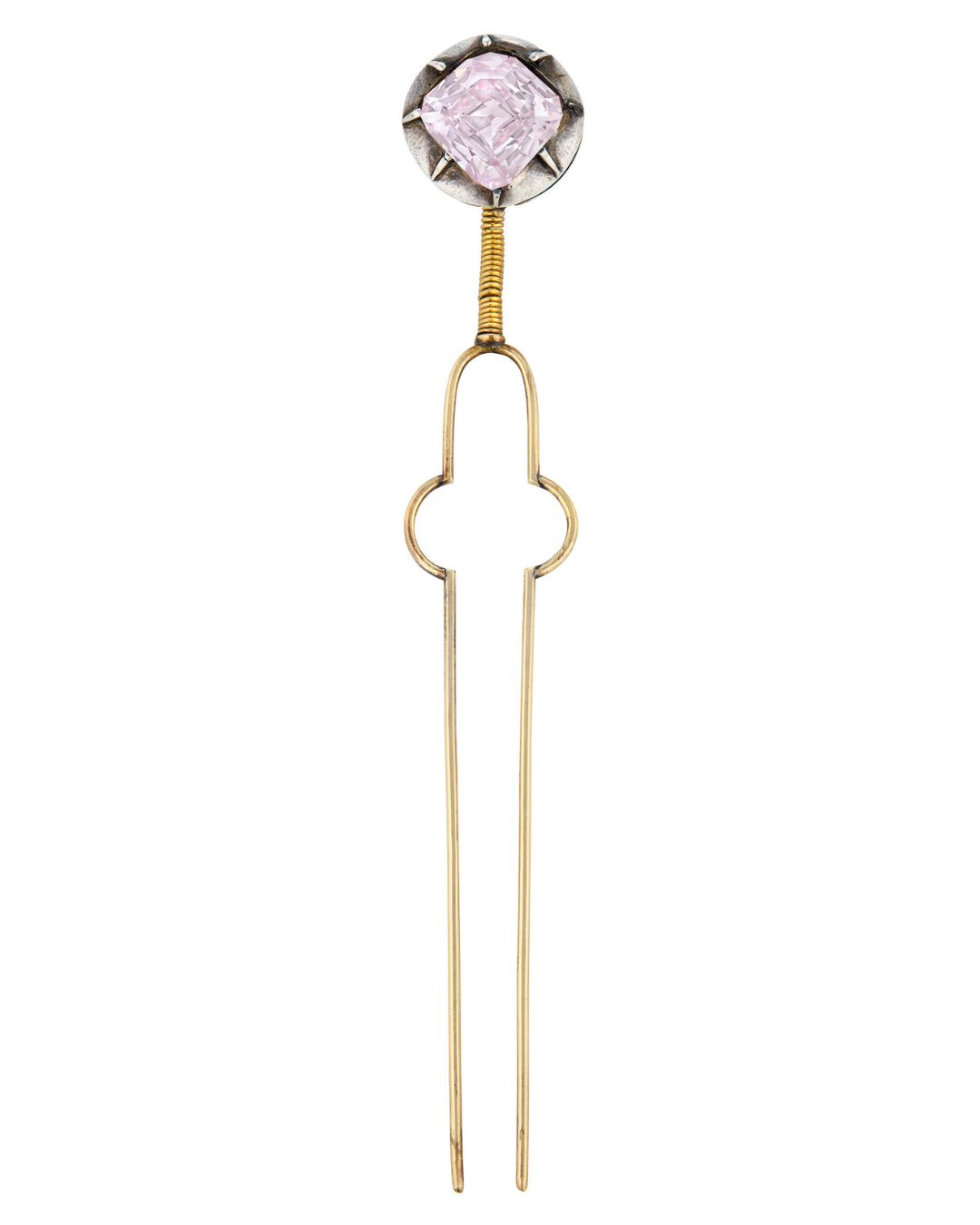
Gerrish says the first convincing evidence for diamond hair pins was seen at the European court level in the early 1600s, most commonly as an aigrette, a jeweled ornament, often feather-inspired, inserted into the coiffure. But she added that there is still uncertainty about when exactly diamonds in the hair appear. “From a painting alone, it is often impossible to say with certainty whether a stone is truly a diamond rather than rock crystal, paste (or ‘Strass’ as it was called back then!), cut steel, or another pale gemstone. Artists painted brilliance and status, not gemological precision, so without written inventories or surviving jewels, we have to be honest about that uncertainty,” she says.
Hairpins were just one part of a broader category of hair jewelry that included combs, slides, aigrettes, U-pins, sprays, and interchangeable ornamental pieces. Gerrish explains that in the 18th and 19th centuries, jewelry was intentionally constructed for versatility: hand-made fittings allowed a piece to be worn as a brooch one day, transformed into a hair ornament the next, or even reconfigured as part of a necklace, tiara, or sewn directly onto a dress. “Versatility mattered enormously—diamonds were even rarer back then!” she notes.
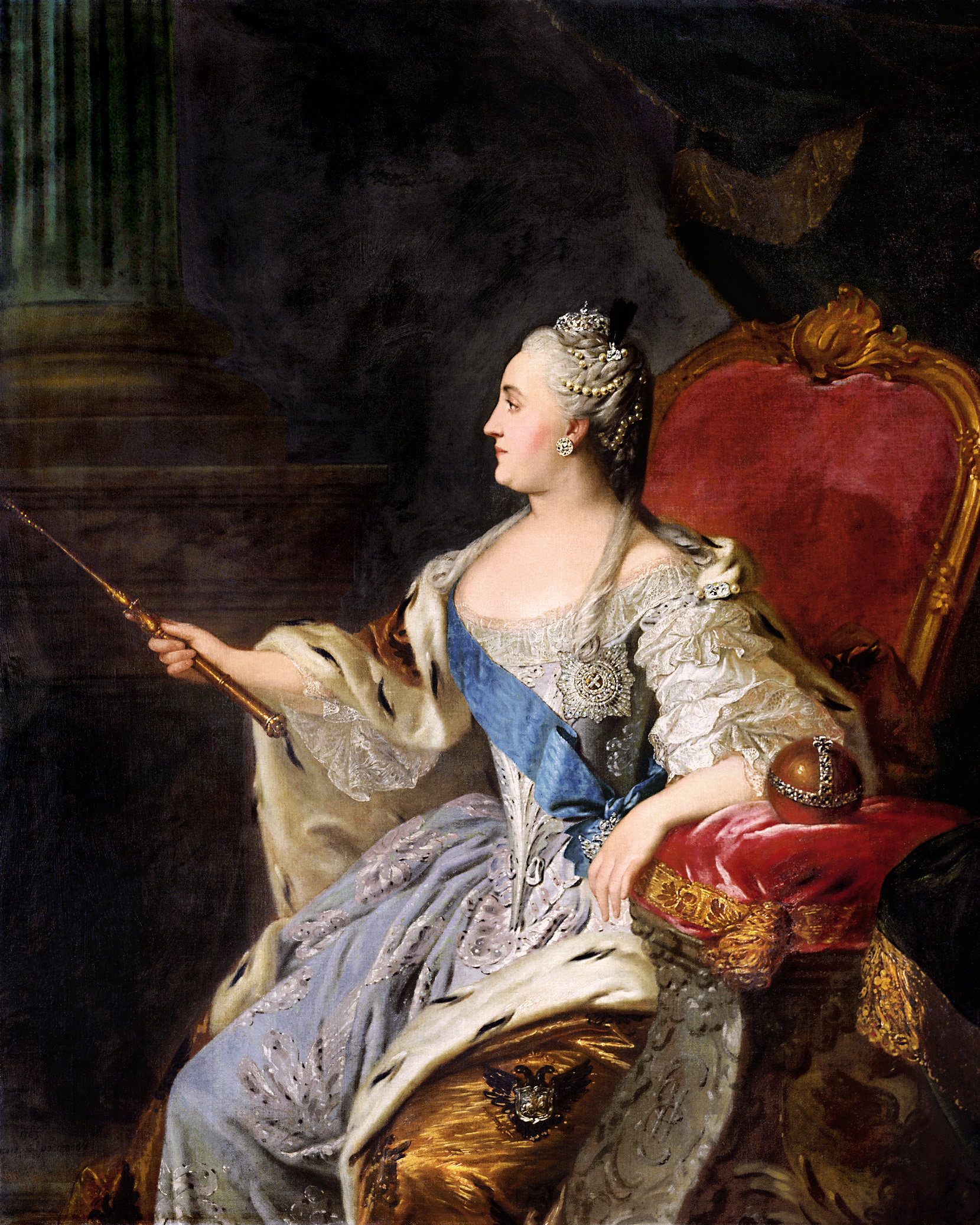
However, the hairpin held a unique place in this ecosystem of adaptable jewelry because it served one purpose only—to be a hairpin. One of the most famous surviving examples is Empress Catherine the Great’s diamond and pearl hairpin, created in 1764, featuring a gold-mounted pearl and glittering diamonds. Part of the Russian Imperial Jewels, it reflects Catherine’s well-documented love of adornment. She was a prolific wearer of jewels, using them as visible symbols of her immense power and rank; if she felt her presence required more brilliance, she simply added more diamonds to her hair.
Catherine owned so many jewels, in fact, that she converted an entire room in the Winter Palace—known as the Brilliant Room—into a mini museum dedicated to her treasures. Truly, the Real Housewives had nothing on Catherine the Great. Today, her gold and diamond hairpin lives on not only as a historical artifact but as a coveted collectible, soon heading to auction at Sotheby’s as part of the Bing and Kathryn Crosby collection.
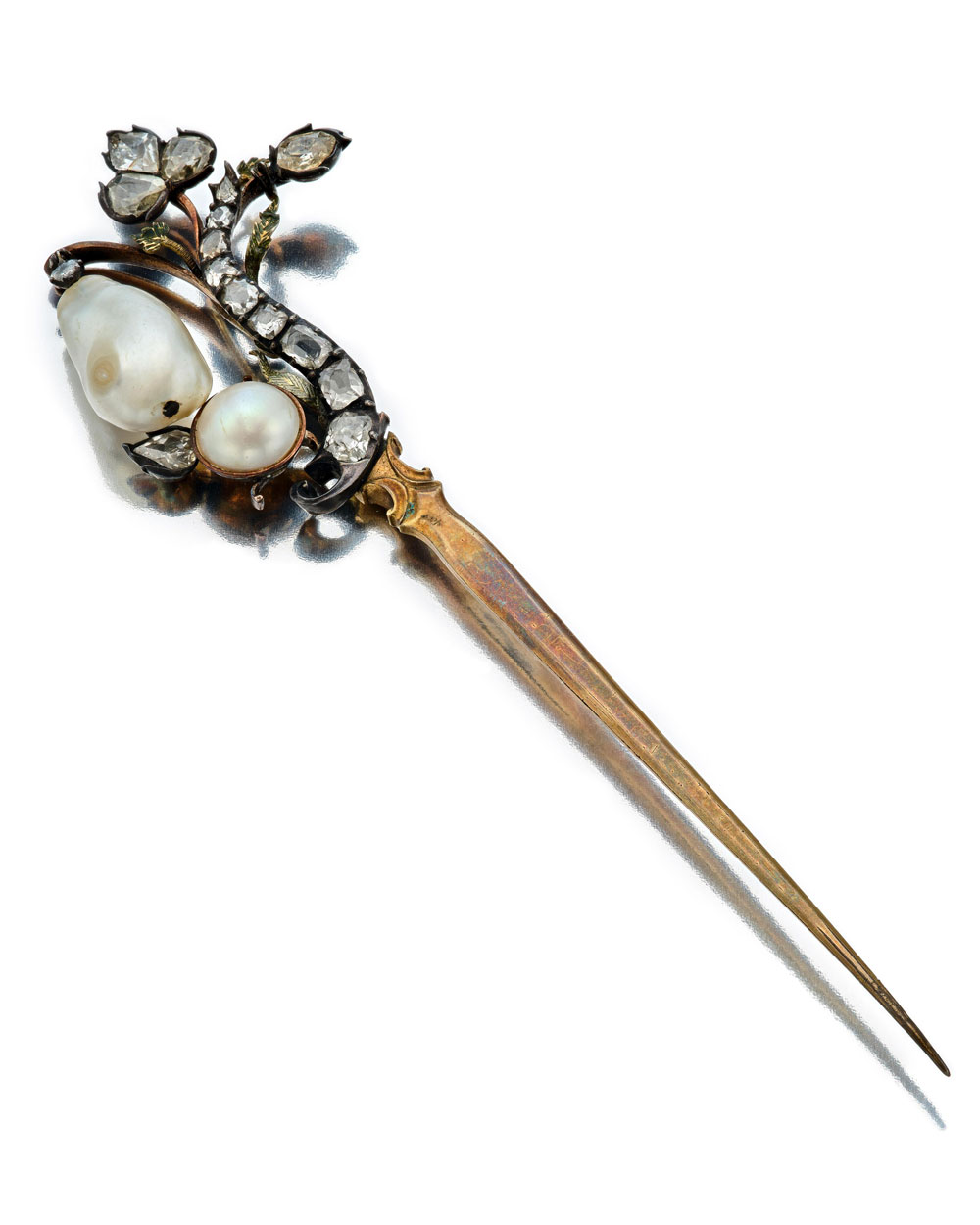
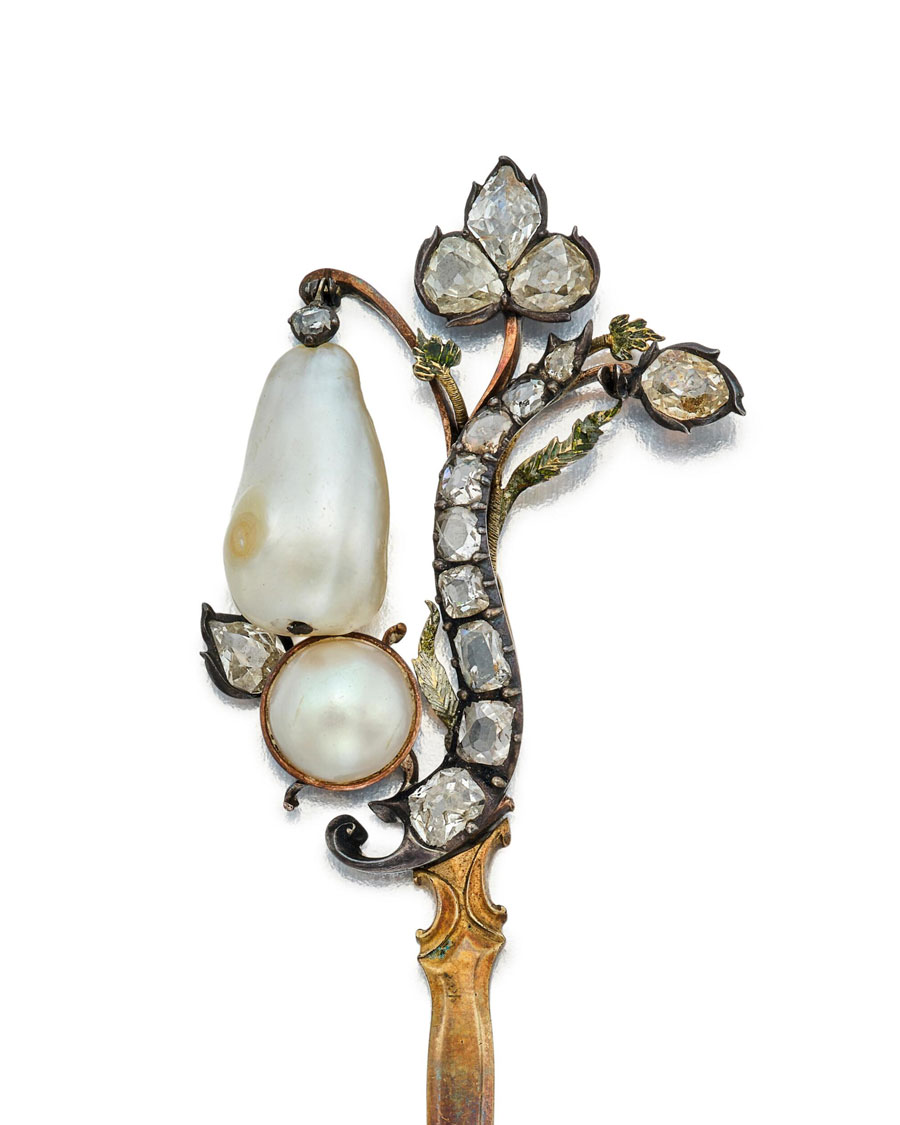
As diamond hair pins moved into the 19th century, diamonds became more accessible, and they began to be viewed as functional tools as well as decorative ones, says Gerrish. She cites the perfect example of Princess Charlotte’s wedding in 1816, “where her hair was described as simply dressed but held together with diamond pins.” By the early 20th century, hair jewelry had evolved into a more clearly defined and widely recognized category.
Elisabeth of Austria (“Sisi”) and Her Diamond Star Hair Pins
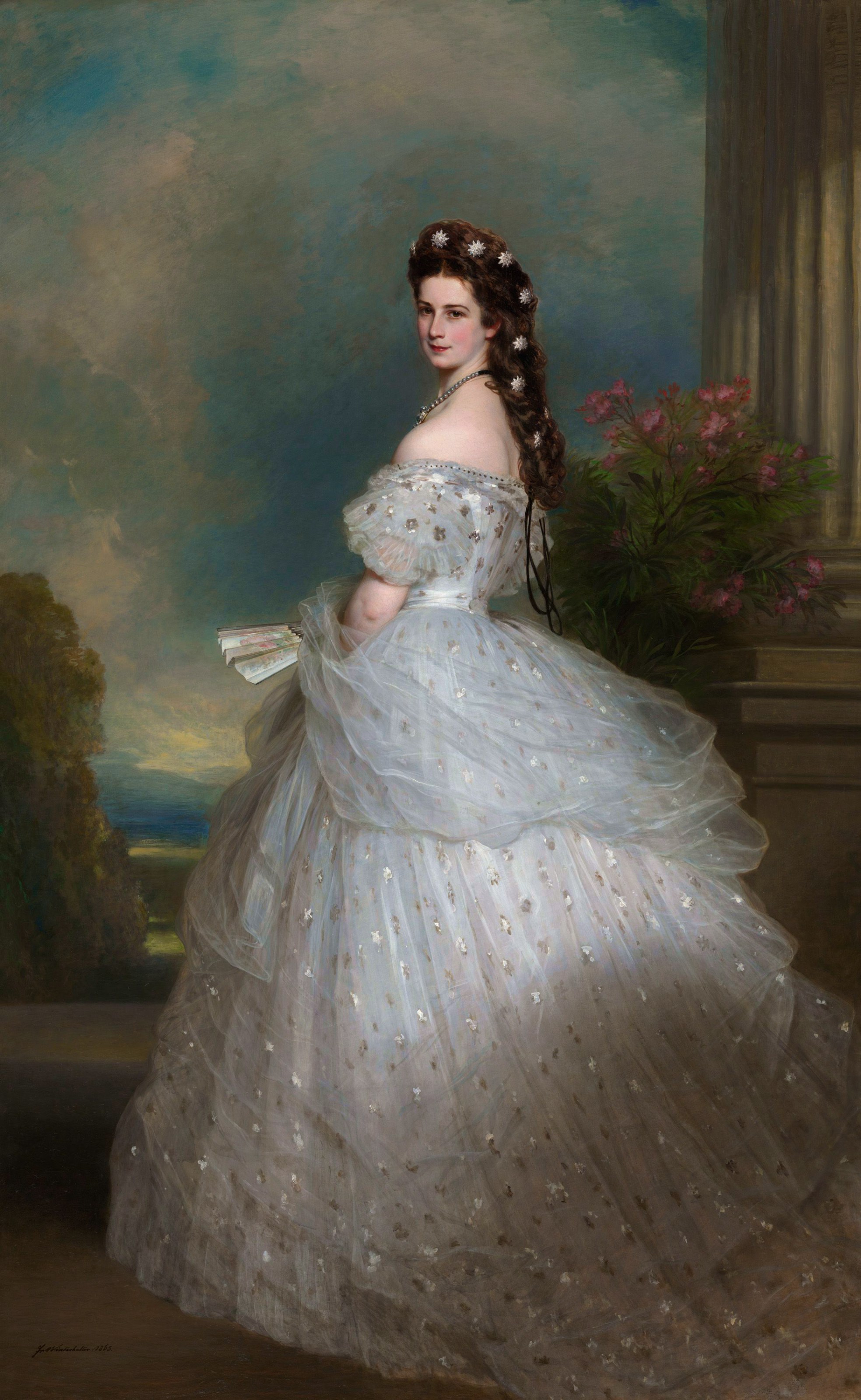
Gerrish points to Elisabeth of Austria’s (“Sisi”) diamond stars as the “single most iconic image of all, wearing her diamond stars in her hair, celestial, light, and unforgettable. These function almost like mini tiaras, pinned into the hair rather than formally worn on the head. Sisi made her look the height of fashion in the late 19th century in Europe,” she says. When Elisabeth married her first cousin, Emperor Franz Joseph of Austria, in 1854, she received a Diamond Star Tiara from the groom. In a true royal fashion disaster, as the Dowager Empress Caroline Augusta examined the tiara, one of the diamond stars fell to the floor in a moment as dramatic as the jewels themselves.
Possibly in an effort to replace the tiara—but with a bit of a twist—Empress Elisabeth ordered at least twenty-seven Pearl and Diamond Stars that would sit in her hair from Court Jewellers Köchert and Pioté in Vienna. The stars consisted of diamonds with a pearl in the center. The exquisite hair pins were captured beautifully in the iconic 1865 portrait by Franz Xaver Winterhalter, in which Elisabeth wore them with a Worth ballgown, also decorated with stars.
Solidifying her status as an early influencer, she shared some of the stars with her Ladies-in-Waiting at the Royal Court, and many other royals soon began wearing them. The painting became an important part of history, popularizing diamond stars across Europe. The shape of the stars resembled the edelweiss, an important symbol of the Austrian Alps. Her granddaughter Elisabeth Marie, the daughter of Crown Prince Rudolf and Princess Stephanie of Belgium, would go on to wear the stars for her own wedding in 1902.
In addition to the epic portrait by Winterhalter, you can see costume versions of this style of hair pin in the 1957 film Sissi, starring Romy Schneider as the Empress, and in Emmy Rossum’s portrayal of Christine in the 2004 film adaptation of The Phantom of the Opera.
The Gilded Age: Hair Pins as an Act of Social Defiance

Like many pieces of diamond jewelry throughout history, accessories held far more meaning than simply being beautiful objects. For diamond hair pins in particular, they served as a tool for single women of high status and wealth to display the power of wearing a diamond hair piece without actually wearing a tiara, which was considered appropriate only for married women.
This is where social etiquette becomes crucial. Traditionally, full tiaras were reserved for married women or for specific court occasions. Unmarried women were not meant to wear them—not as a moral judgment, but as part of a visual language of status and life stage. That’s why hair ornaments became so important. Diamond hair pins, combs, stars, sprays, and crescents allowed unmarried women to wear diamonds in the hair without technically wearing a tiara.
“Hair ornaments became a clever workaround. They allowed unmarried women to wear diamonds in their hair, signaling wealth, fashion, and, yes, availability, politely announcing ‘single, eligible, and extremely well-decorated.’ (It must have made it easy for men to see who was single at a ball!) without breaking the rules,” Gerrish says.
Amazingly, for all the fashion rules she broke—and the trends she started— tastemaker Carrie Bradshaw didn’t wear more diamond hair pins throughout her seven seasons on Sex & the City, the two feature films, and whatever you want to categorize the nightmare that was And Just Like That. Perhaps a few fewer shepherd hats and more hair pins would have gotten them a fourth season.
A television series that has embraced the diamond hair pin power move is the mostly historically accurate HBO series The Gilded Age (and it is certainly accurate when it comes to the jewelry, fashion, and hair of this time). Gerrish cites a scene in the latest season in which Lady Sarah, herself unmarried, is wearing a tiara and yet reprimanding Gladys Russell (now married to Lady Sarah’s brother, the Duke) for wearing diamond stars in her hair.
“Historically, this is exactly where the nuance lies. Traditionally, full tiaras were reserved for married women, not as a moral judgement but as part of a strict visual language of rank and life stage. Diamond stars, sprays, combs, and crescents, however, sat in a grey area,” she tells OND.
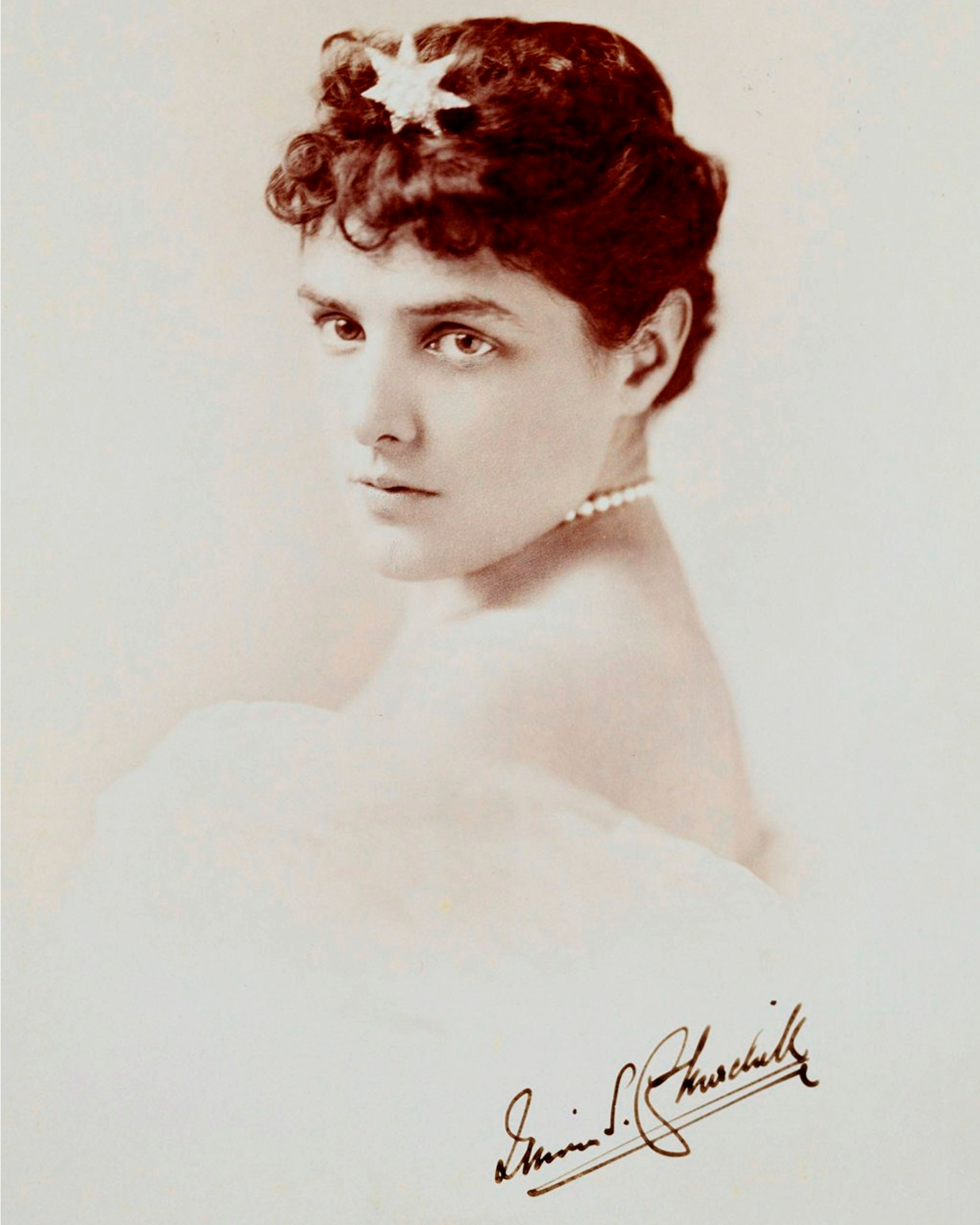
She cited women such as Jennie Jerome (Lady Randolph Churchill), who would wear diamond star hair ornaments that functioned almost like miniature tiaras. “That is why hair jewelry mattered so much in the late 19th and early 20th centuries. It occupied a liminal space: visually grand, socially flexible,” she says. “And it’s why that Gilded Age moment, while heightened for television, is rooted in genuine historical etiquette, even if the irony of who is doing the scolding isn’t lost on modern viewers. Hair jewelry, in many ways, was the most elegant solution: diamonds worn where they could sparkle, signal status, and remain technically correct.”
How Hair Jewelry Evolved as Women’s Social Power Expanded
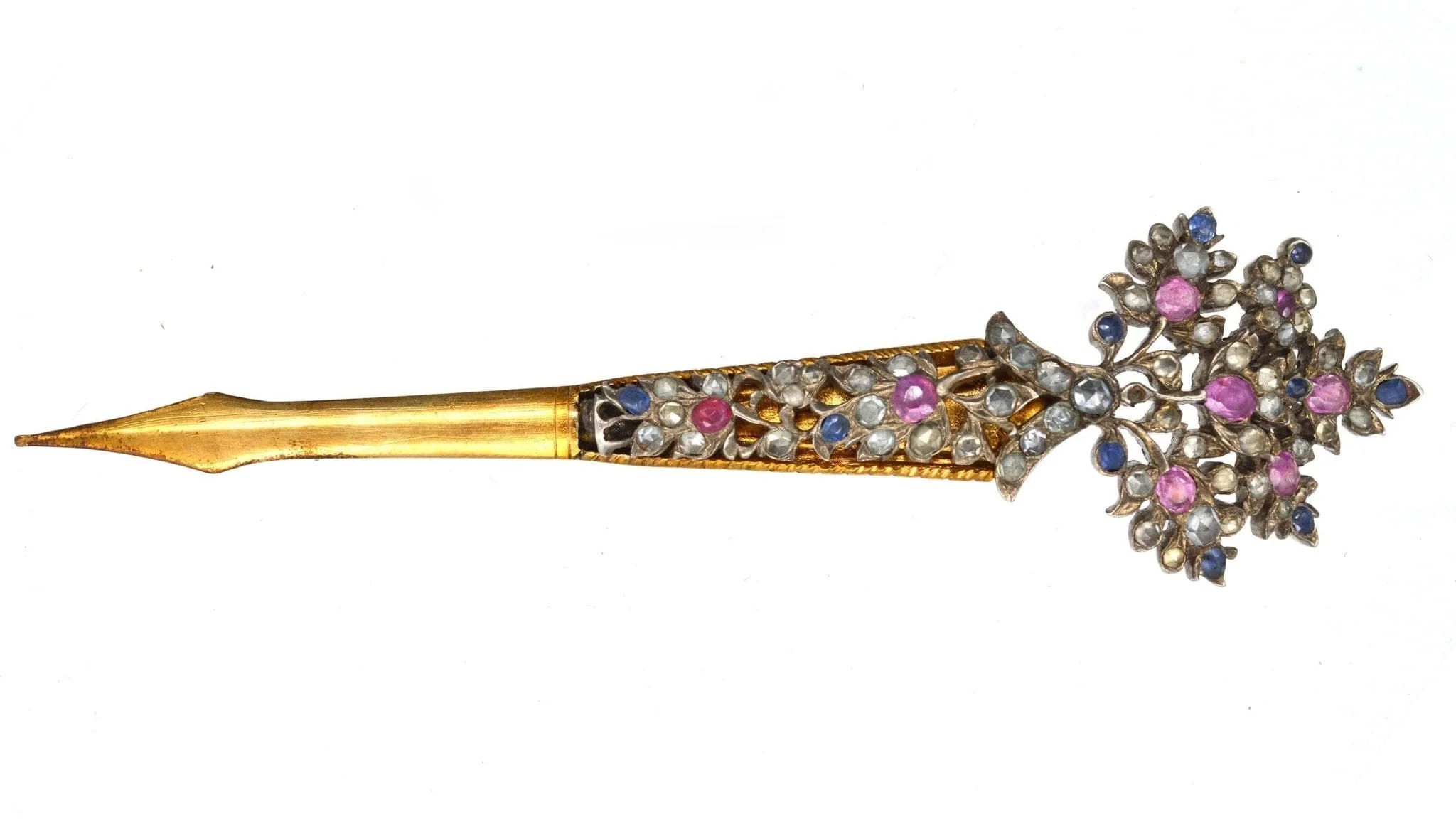
As women gained more autonomy and freedom in society, their opportunities for personal expression grew as well—and hair ornaments became a place where that creativity could truly shine (no pun intended). As diamonds became more widely available, hair ornaments evolved with newfound imagination, incorporating stars, sprays, bows, and feathers rather than rigid, hierarchical forms, Gerrish says. She notes that the Georgians (between 1714 and 1837) introduced a sense of playfulness into the hair with motifs like bugs and stars, the Victorians (between 1820 and 1914) favored floral arrangements and feathers, and the Edwardians (circa 1901 to 1910) simply made everything beautiful.
“The social rules around this were once very real, which is why we still see them dramatized in The Gilded Age, where hair jewelry and tiaras are used to police status, age, and marital position. Hair was one of the few places where women could experiment, where jewelry could express personality without openly breaking the rules. Today, we’re incredibly lucky. Those social guardrails around jewelry have largely fallen away. There’s no longer a rigid code dictating who may wear what, when, or why. Hair jewelry has returned to what it does best: self-styling, self-expression, and joy. And that freedom is exactly what makes diamond hairpins feel so relevant again, because why not?” says Gerrish.
From Society to the Screen: How Hollywood Made Diamond Hairpins Iconic
Though Hollywood would go on to embrace diamond hair ornaments in the 20th century, British and European high society were already doing so by the late 19th century. The previously mentioned Jennie Jerome (Lady Randolph Churchill) wore diamond stars, combs, and sprays woven into elaborate hairstyles, often pinned discreetly into coiffures rather than worn as formal tiaras. This tradition carried into the early 20th century with figures like Princess Marina of Greece and Denmark, later Duchess of Kent, who became closely associated with diamond stars worn in the hair.
In England, the “bright young things”—including writers and political activists Nancy Cunard and Nancy Mitford—also embraced diamond hair jewelry. According to Gerrish, hair diamonds were staples of their evening looks for London society. Cecil Beaton, who moved within their same circle, then became the vessel through which images of diamonds worn in the hair reached the broader public through his photography.
A Moving Canvas: The Art of Hair Jewelry
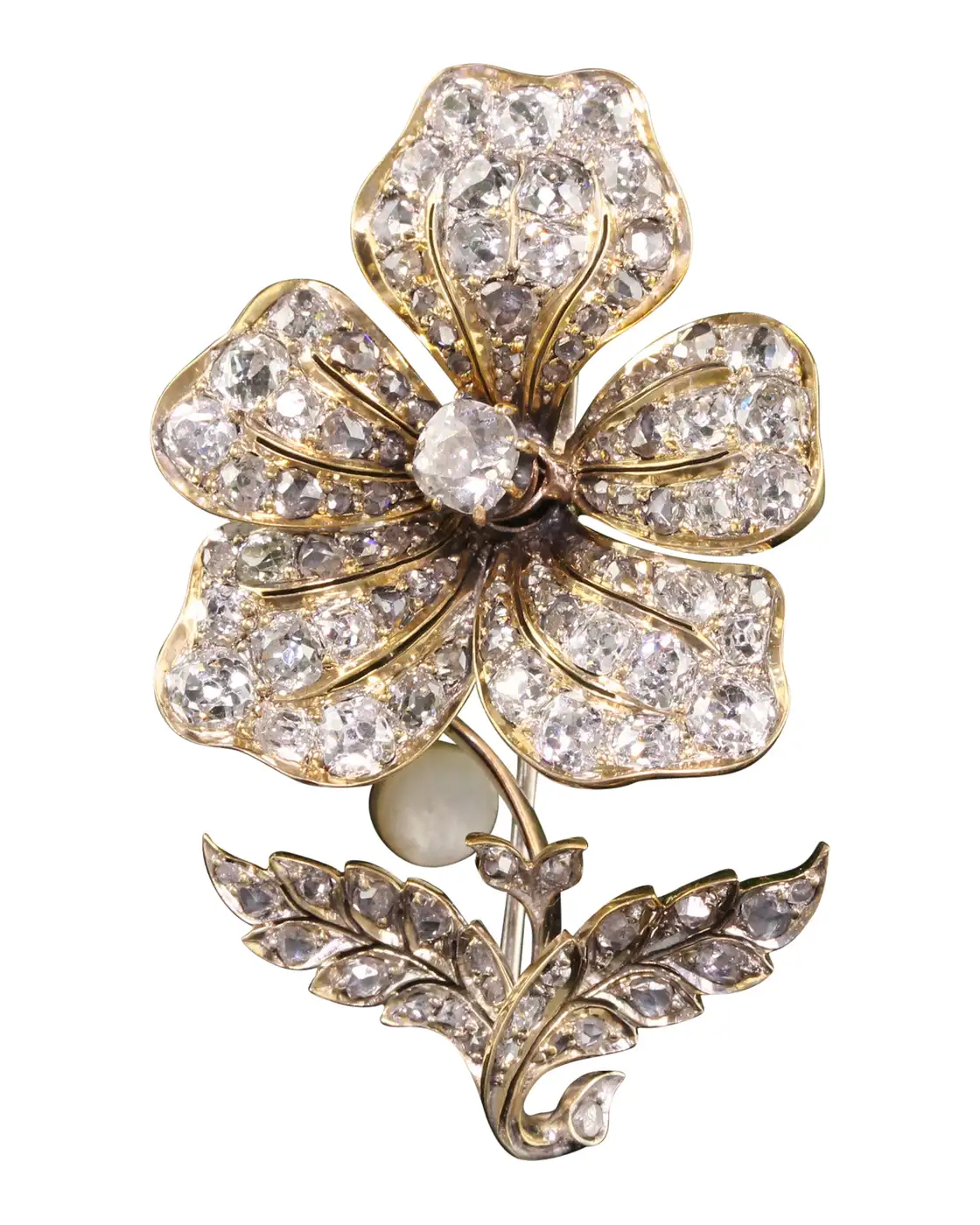
In the 18th and 19th centuries, hair became the ideal canvas for en tremblant hair jewels, including diamond hair pins. These pieces were engineered to shimmer with every turn of the head in both daylight and candlelight, according to Gerrish. Before the 19th century, diamonds were only ever seen in natural or candlelit settings, which added to their romantic allure.
She points out that hair jewelry of this period was a true structural achievement—and that, unlike a brooch or an earring, a hair pin is a functioning tool. “Small diamonds require perfectly cut seats and fine claws; there is nowhere to hide poor workmanship. Anything that lifts too high will snag hair, and weight must be carefully controlled: you want maximum sparkle with minimal metal, but enough strength to withstand movement,” she says, noting that hair pins weren’t simply positioned and left to stay in place magically.
Many pieces were sewn into structured coiffures or added as hair pieces, so the mechanics vanished entirely. “When worn properly, you shouldn’t see the pins or bases at all. Something, unfortunately, our Royal Family has forgotten to do recently!”
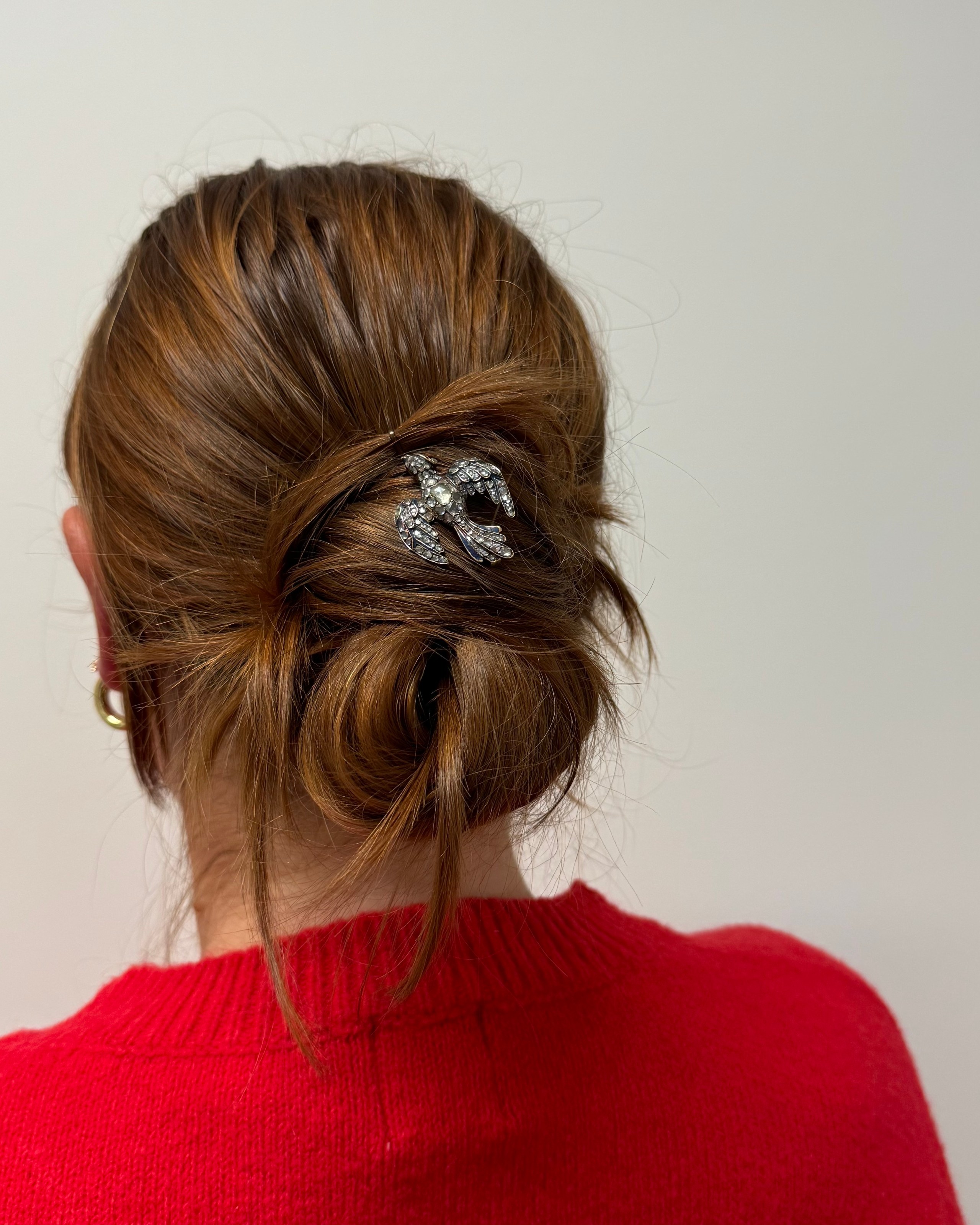
Material choice for each hair pin was also critical, she says. The diamond-set top required a refined but strong metal that could be worked delicately, while the pin itself needed spring and resilience. “Too soft and it bends, too brittle and it snaps. Both have to work together. Finishing is everything. The underside must be smooth, edges softened, and settings kept low-profile. If a hair jewel catches or pulls, it has failed. Balance matters too: a piece that’s too top-heavy will slide, whereas a well-engineered hairpin should disappear into the hairstyle and simply glitter.”
The beauty of these structures lies in their performance. “Diamonds in the hair are never static; even small stones come alive through movement. Antique cuts, in particular, excel here, throwing light broadly so a single turn of the head does half the work. It literally makes your hair sparkle.”
To give these diamond hair pins the ideal backdrop, most women of high society grew their hair long—and kept it long. Gerrish describes how a lady’s maid would collect shed hair from brushing and use it to create switches and the rather unfortunately named “hair rats” to add volume and structure. Hair pins were anchored into this architecture, sometimes even sewn in, which is why antique hair jewelry could be both delicate and remarkably secure.
Designing Diamond Hair Pins for Today
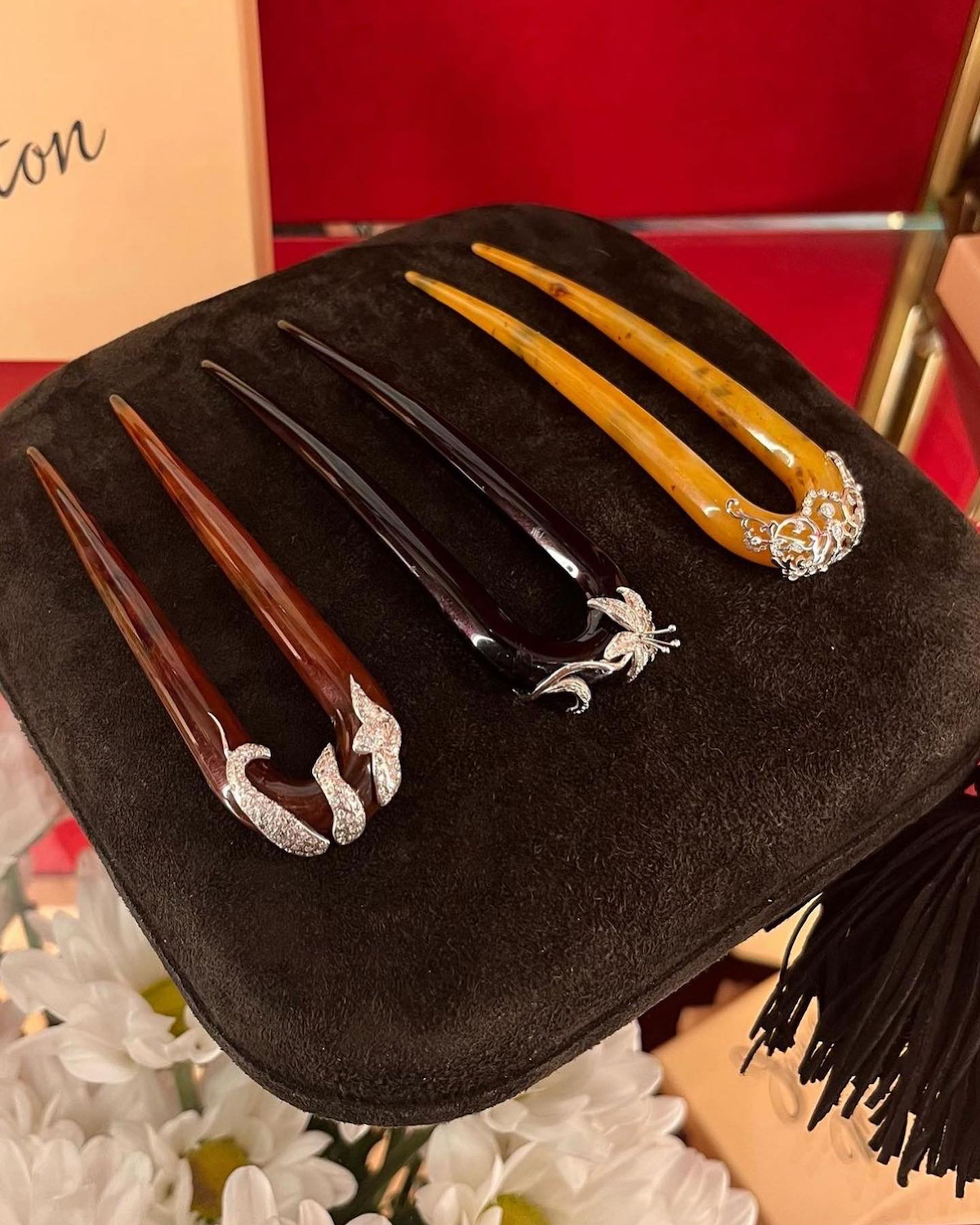
The main categories of hair pins typically fall into these types:
- Straight pin — Antiquity (used in ancient Greek and Roman hairstyling; continued through all later periods)
- U-pin — Medieval period, widely used by the Renaissance and into the Edwardian period
- V-pin — Late 18th century
- Comb-style pin — Late 18th to early 19th century
- Slide / bar pin — Late 19th century
- Wire stem — Mid-18th century (developed alongside aigrettes and en tremblant jewels)
- Cluster base — Late 19th to early 20th century
Gerrish says that with hair pins made today, what “must remain faithful is the lightness. Edwardian U-shaped hairpins were designed to look airy and effortless (or even pretty ‘Belle Epoque’), with openwork and elegant proportions. They should float in the hair, never feel heavy or chunky (Unlike the Victorian bold looks!). The U-shape itself is essential to that grace. I’m firmly in the camp of ‘respect the silhouette, modernise the engineering.’”
She says there is far more opportunity today when it comes to the mechanics of hair pins. Our hair and lifestyles are very different from what they were 120 years ago—hello conditioner and the ability to wash our hair whenever we want. And thankfully, we’re no longer relying on “hair rats.” “We demand stronger and more secure pins, but also want them to sparkle and look amazing, whatever our hairstyle is. Diamonds worn in the hair have an obvious requirement: we don’t want to lose them. Security matters. Settings must be precise, claws low and well-finished, and the pin itself strong enough to hold through movement,” she tells OND.
She also notes that tortoiseshell was once ideal for hair jewelry, but when the Art Deco period ushered in early plastics and new materials, everything changed.
Why Diamond Hair Pins Are Having a Moment


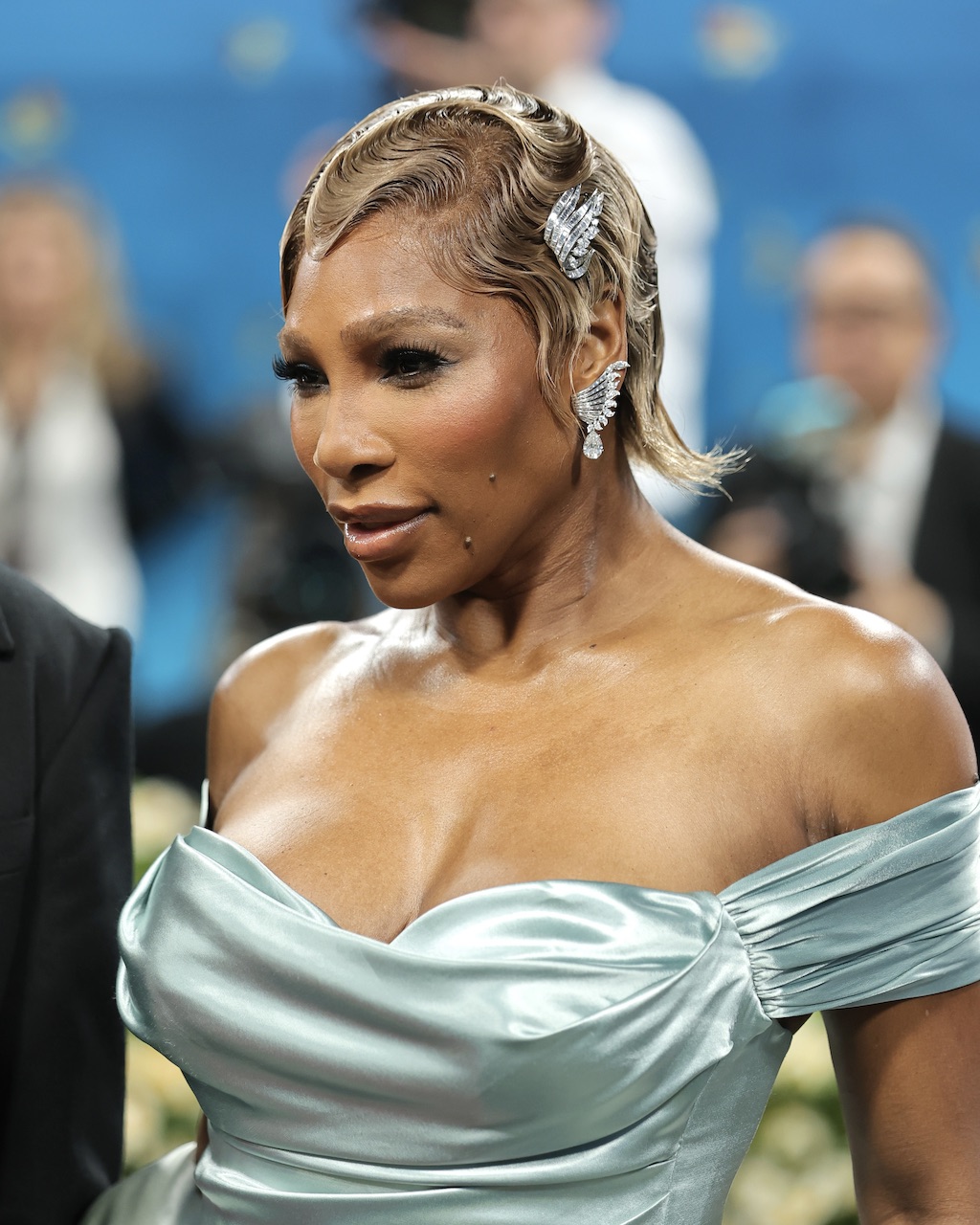
The appeal of diamond hair pins is two-fold. With so much freedom in how we express ourselves with jewelry today—across both women’s and men’s style—hair is a wonderful place to begin. Diamonds worn in the hair don’t need to be reserved for formal events; they can introduce a touch of everyday luxury into your routine. Gerrish notes that a single diamond hair pin worn in a low bun, twist, or half-up style reads as quiet luxury, a look that has firmly re-entered the fashion landscape.
“Why are we becoming so casual when we have every opportunity to be more fabulous? Hair is one of the most expressive places to wear jewelry. It’s visible, playful, and unapologetic. Diamonds in the hair feel joyful, confident, and modern, which is exactly what contemporary luxury should be about. The Met Gala has been putting diamond brooches in the hair (or just on your head (Cynthia Erivo wore that butterfly diamond hairpin somehow on the back of her head!) and I am here for it!”
She adds that there is a growing appetite for historic and vintage jewels. Hair pieces in particular are exquisitely made, carry rich provenance, and are often surprisingly affordable. Antique hair jewelry is also more sustainable, Gerrish points out. “All of this creates the perfect conditions for diamond hairpins to feel relevant, modern, and desirable once more. Get the engineering right, and there’s no reason diamonds in the hair can’t be as natural a daily choice as diamond studs.”