The DeYoung Red Diamond: An Extraordinary Gem That Hid in Plain Sight
Once mistaken for a garnet, the DeYoung Red Diamond is now one of the rarest and most mysterious gems in the world.
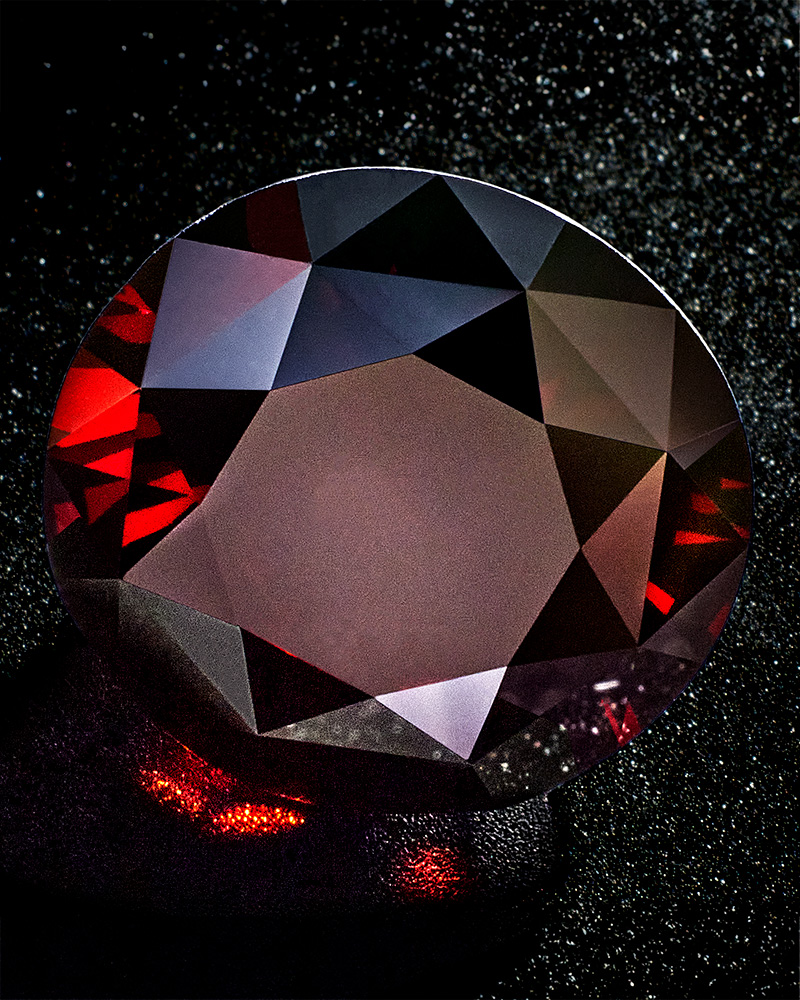
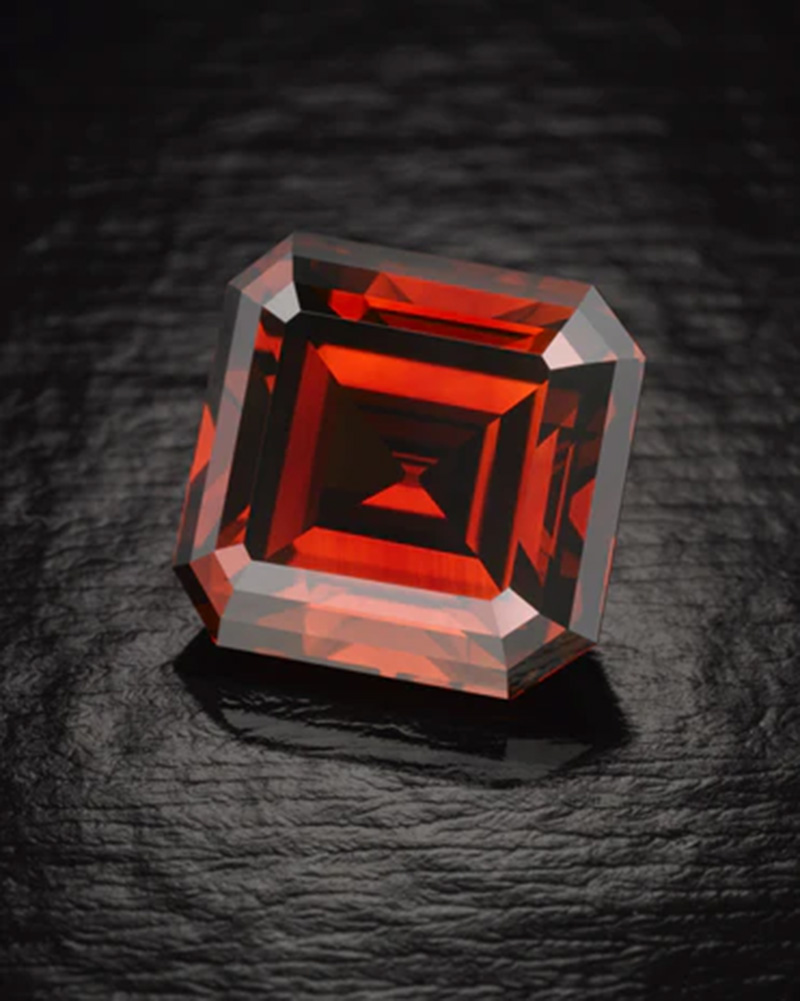
The DeYoung Red Diamond (Photo by Jeffrey Westbrook)
There’s a surprisingly common theme that some extraordinary diamonds don’t grandly announce themselves. Instead, they turn up in dusty estate lots, tangled in forgotten jewelry boxes, or in one particularly remarkable case, set into a scarf pin that everyone assumed held a garnet. That last scenario isn’t hypothetical. It’s the origin story of the DeYoung Red Diamond, one of the most storied and scientifically baffling stones in the entire Smithsonian National Gem Collection.
Meet the Expert

- Grant Mobley is the Jewelry & Watch Editor of Only Natural Diamonds.
- He is a GIA Diamonds Graduate.
- He has over 17 years of jewelry industry experience, starting with growing up in his family’s retail jewelry stores.
The DeYoung Red Diamond’s Discovery: A Garnet That Wasn’t

Sometime in the late 1930s or early 1940s, Boston jeweler Sydney DeYoung purchased what he believed to be a fairly unremarkable piece of estate jewelry: a scarf pin set with what appeared to be a dark reddish-brown garnet. Garnets of that color are common. They’re affordable. They’re everywhere.
Except this one wasn’t a garnet.
It was during a routine cleaning that DeYoung took a closer look and, with what I can only imagine was complete disbelief, realized the stone staring back at him was a diamond. Not just any diamond, but a red diamond. One of the rarest objects on the face of the earth.
Why Red Diamonds Are the Rarest Color
To understand why that discovery was so staggering, you need to understand where red diamonds sit in the hierarchy of rare gemstones. They are, without question, the rarest natural diamond color that exists.
Most other natural fancy color diamonds owe their hues to identifiable causes. Blues get their color from trace boron. Yellows come from nitrogen. Greens typically result from natural radiation exposure. But red? Science still hasn’t landed on a definitive explanation. The leading theory points to plastic deformation, a warping of the diamond’s crystal lattice during formation deep within the Earth. This same plastic deformation gives natural pink diamonds their color, but natural red diamonds are found only in the tiniest quantities. Most weigh well under a carat, making extensive study very difficult.
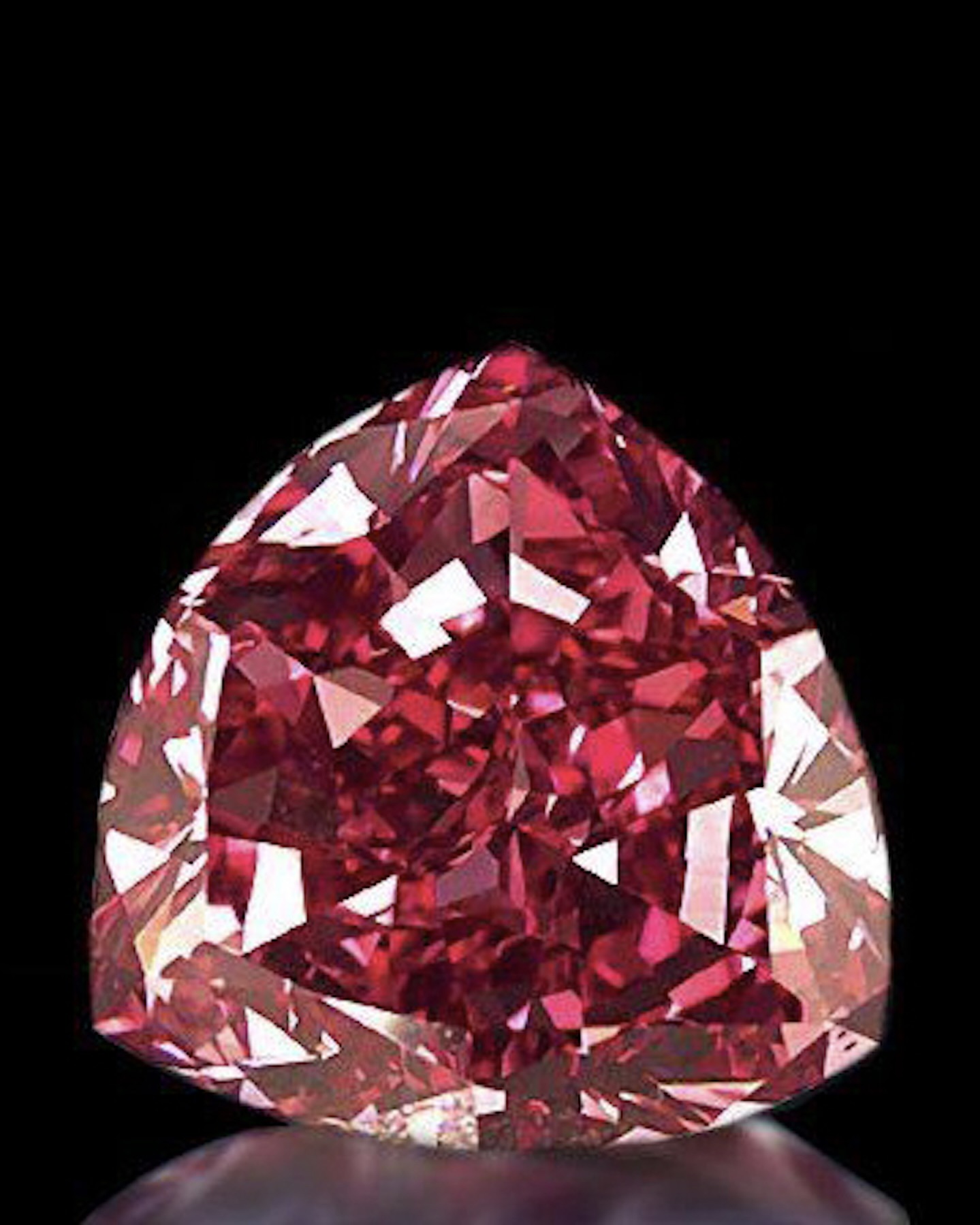
The DeYoung Red Diamond weighs 5.03 carats and is graded by the Gemological Institute of America as a Natural Fancy Dark Reddish-Brown. It is the third-largest red diamond ever recorded, behind only the 5.11-carat Moussaieff Red Diamond and the 5.05-carat Kazanjian Red Diamond. The DeYoung Red is also classified as a Type IIa diamond, an exceptionally pure category of natural diamonds that contain little to no measurable nitrogen, placing it among the rarest and most chemically pristine diamonds known.
The DeYoung Red Diamond’s Properties and Unique Characteristics
Even among red diamonds, the DeYoung occupies strange and fascinating territory. Under standard daylight or fluorescent lighting, it can read as a deep, orangy brown, with only flashes of red catching you off guard. Change the lighting, though, and the stone transforms entirely.
Under ultraviolet light, the DeYoung Red emits a soft yellow fluorescence. More striking still is its reaction to intense direct lighting, where it produces a vivid, chalky green glow that seems almost impossible given the stone’s body color. Gemologists and researchers have been fascinated by this behavior for decades, making the DeYoung Red not just a collector’s trophy but an active subject of scientific inquiry.
Why the DeYoung Red Was Hidden Away For Decades

After realizing what he had, DeYoung didn’t rush to sell. He placed the diamond quietly in his personal vault and kept it largely to himself, sharing it only with a trusted few over the following decades. There’s something old-world about that kind of restraint.
DeYoung was a respected figure in the Boston jewelry world and a patron of the arts. It was during his winters in Palm Beach that a fellow patron encouraged him to consider the stone’s future. His answer was characteristically generous: he chose to bequeath the diamond to the Smithsonian Institution. When he died in 1986, the stone was sent via registered mail by the J. & S.S. DeYoung company—still an active name in estate jewelry today—and officially entered the National Gem Collection in December 1987.
The DeYoung Red Diamond’s Value and Influence on the Diamond Market
The DeYoung Red’s journey from a misidentified scarf pin to the Smithsonian is remarkable enough as a story. But its influence extends beyond the narrative.
According to Isaac Polnauer, color diamond expert and Managing Partner of Leibish, “Natural red diamonds are the rarest of all fancy colors, and the DeYoung’s rise from being unknown into the Smithsonian’s collection has only amplified its legendary status. In today’s market, red diamonds—especially those of significant size and clarity—are considered some of the most exclusive and appreciating assets in the world of collectibles. The DeYoung Red holds not only historic importance but has also played a key role in elevating red diamonds to global recognition, shaping both the perception and value of these exceptional stones for future generations.”
A Gift to the Public: The DeYoung Red Diamond at the Smithsonian

Today, the DeYoung Red is on public display at the Smithsonian National Museum of Natural History in Washington, D.C., alongside some of the world’s most legendary diamonds, including the Hope Diamond. This is a diamond that spent decades in a private vault, known only to a handful of people. Now, anyone can stand in front of it.
Beyond its public role, the stone continues to offer scientists a valuable research opportunity because a diamond this unusual may still hold information about how the rarest colors form deep within the Earth. Sydney DeYoung stumbled onto something extraordinary by accident. What he did with that accident by protecting the stone and ultimately entrusting it to the public was the act of someone who understood that some treasures are too remarkable to belong to just one person.