< Historic Diamonds / Famous Diamonds
Meet the Desert Rose: The Record-Breaking Diamond No One Saw Coming
A record-setting 31.68-carat Fancy Vivid Orangy Pink diamond with no known origin, the Desert Rose stunned collectors and exceeded expectations at auction.
Published: January 21, 2026
Written by: Grant Mobley

The Desert Rose Diamond unites the three pinnacles that define extreme rarity in gems: Color, clarity, and size. At 31.68 carats, this remarkable stone holds the distinction of being the largest Fancy Vivid Orangy Pink diamond ever graded by the Gemological Institute of America (GIA). Its mesmerizing hue captures the fleeting colors of sunrise and sunset and preserves them in the most enduring material known to nature. Orange and pink rank among the rarest natural diamond colors on Earth. To find them combined, vividly saturated, and in a diamond of this scale places the Desert Rose in truly singular territory.
Meet the Expert

- Grant Mobley is the Jewelry & Watch Editor of Only Natural Diamonds.
- He is a GIA Diamonds Graduate.
- He has over 17 years of jewelry industry experience, starting with growing up in his family’s retail jewelry stores.
A Singular Color: The Desert Rose’s Orangy-Pink Hue
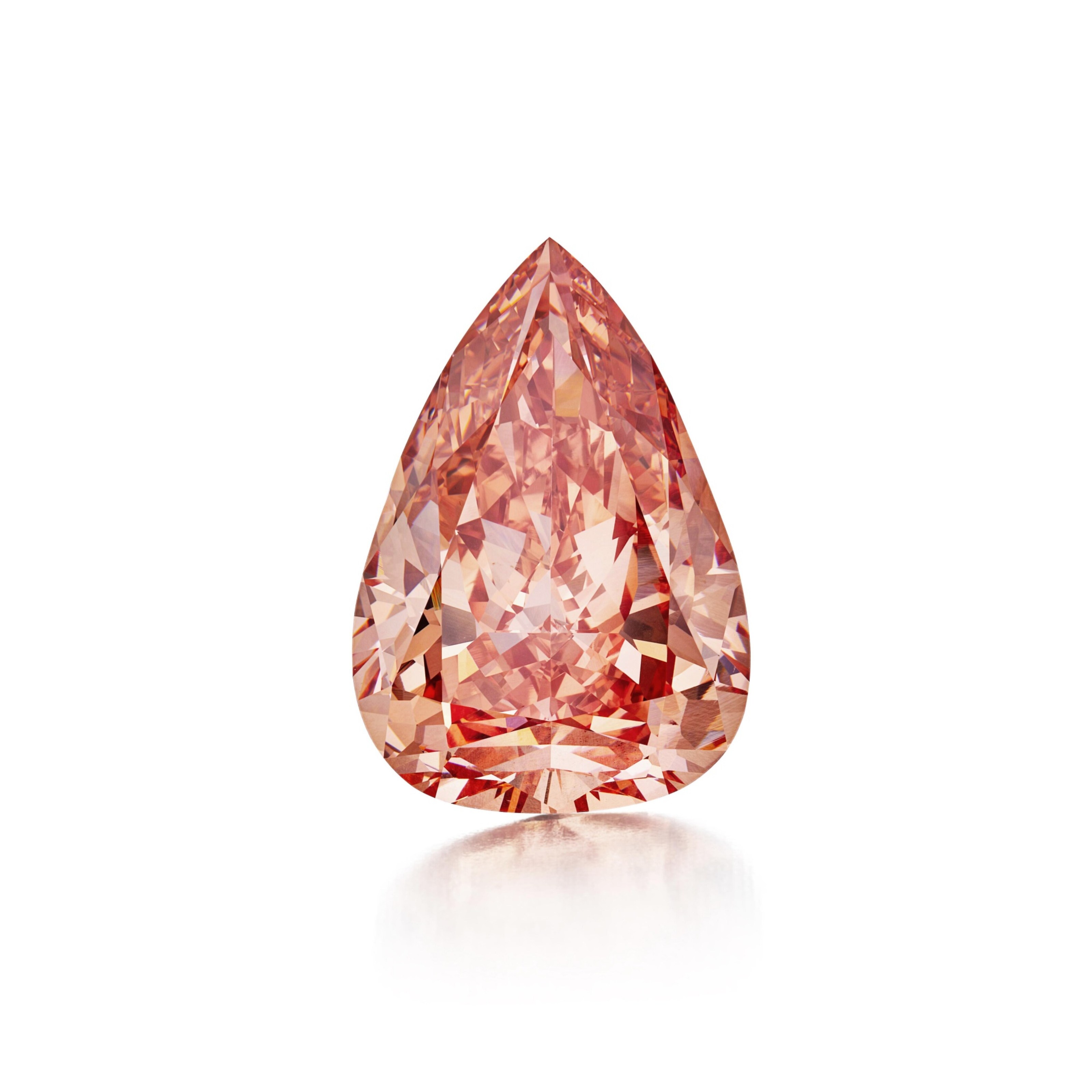
The orangy-pink hue of the Desert Rose does not come from trace elements such as nitrogen or boron, like the majority of fancy color diamonds. Instead, its color originates from minute distortions within the diamond’s crystal lattice. Under immense pressure deep within the Earth’s mantle, the carbon atoms shift and deform. These structural irregularities alter how light travels through the stone, producing a range of browns, pinks, and even reds. Natural orange color, however, is still not fully understood by scientists.
According to the GIA, only a handful of diamond deposits worldwide ever experience the precise conditions needed to create pink and orangy-pink diamonds. That makes every example rare. A Fancy Vivid Orangy Pink diamond weighing more than 31 carats stands in a category of its own.
The GIA monograph, a special report reserved for the rarest of natural diamonds, describes the Desert Rose as “singular—its rare blush color combined with its impressive size and VVS1 clarity make it an exceptional gem like none other.” That assessment speaks not only to color but to the stone’s extraordinary balance of attributes.
Type IIa Purity and Exceptional Clarity
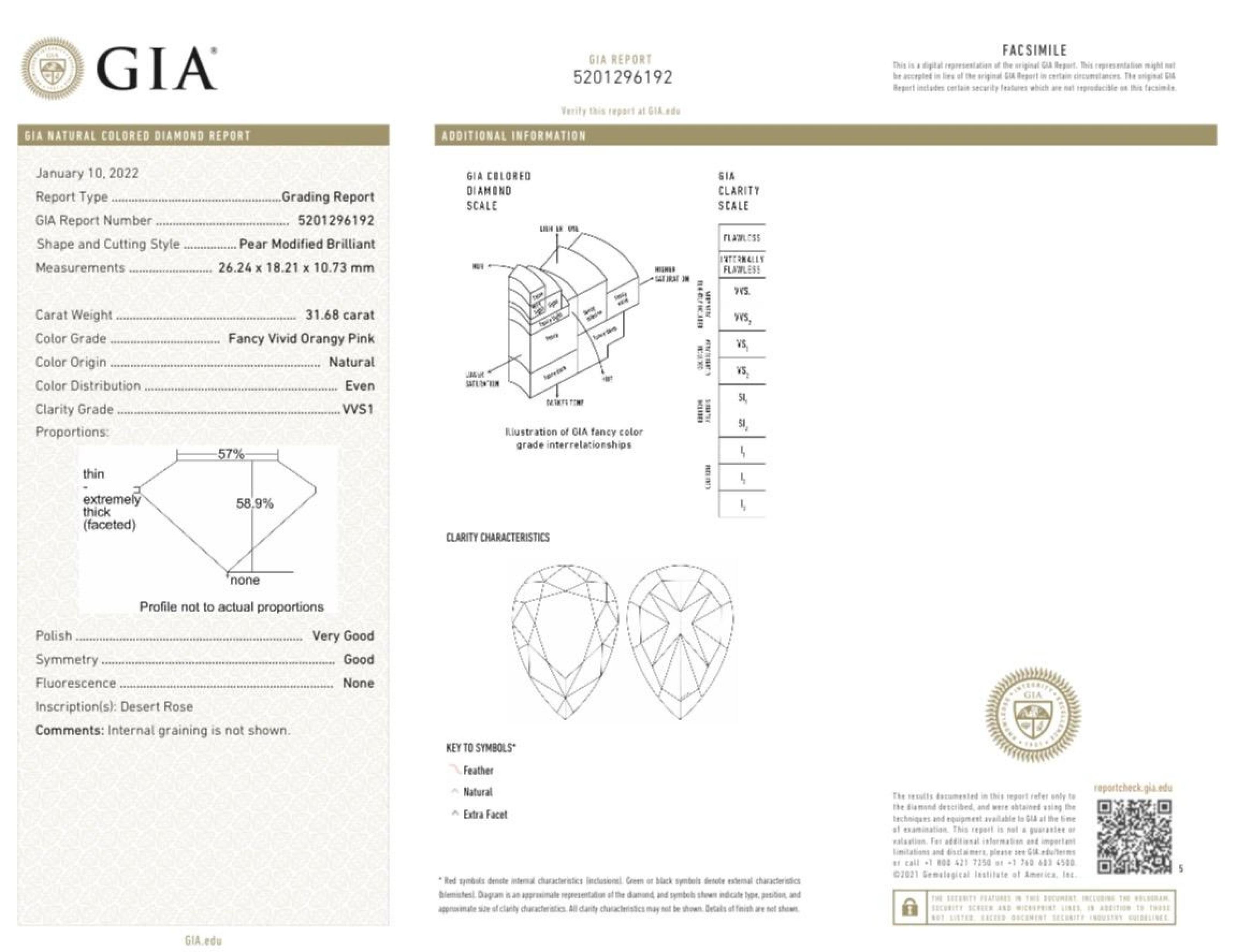
The Desert Rose also carries a Type IIa classification, meaning it contains no detectable nitrogen in its crystal lattice. Type IIa diamonds are among the most chemically pure diamonds discovered and are historically associated with legendary stones from India’s Golconda region.
This purity contributes to the Desert Rose’s exceptional transparency and optical performance. With a VVS1 clarity grade, inclusions exist only at the microscopic level. Combined with a beautifully executed cut, the diamond displays remarkable brilliance and internal fire, allowing its vivid color to radiate.
Fancy-color diamonds require a careful balance between weight retention and color optimization while cutting. In the Desert Rose, the cutter achieved a perfect balance of preserving size while intensifying color saturation.
The Mystery of the Desert Rose’s Origins
One of the most intriguing aspects of the Desert Rose lies in what remains unknown. No public record exists of its discovery. Diamonds of this caliber typically make headlines the moment they emerge from the ground, yet this stone appeared quietly and was already impeccably cut.
That mystery fuels speculation. At first glance, its orangy-pink tone might suggest Australia’s Argyle mine, once the source of the majority of the world’s pink diamonds. Yet Argyle rarely produced stones of this size, and the Desert Rose’s color profile differs from typical Argyle material.

Large mining operations in Canada or Southern Africa also seem unlikely origins. A diamond of this significance would almost certainly have been announced by the large, often state-owned or publicly traded companies that operate these mines. My best assessment points toward a small, independently operated mine, possibly in Brazil, a country known for producing exceptional fancy-colored diamonds that sometimes trade privately rather than through public channels.
The diamond’s cutting style also suggests a relatively recent origin. Everything about the Desert Rose indicates careful stewardship from discovery to debut, from someone who understood its importance from the very beginning.
A Historic Auction Debut in Abu Dhabi
The Desert Rose made its debut during “Abu Dhabi Collectors’ Week”, hosted by Sotheby’s at The St. Regis Saadiyat Island Resort. Timed to coincide with global events such as the Formula 1 Grand Prix and Abu Dhabi Finance Week, the auction drew an international audience of collectors and tastemakers.
Offered with an estimate of $5 to $7 million, the diamond sparked a fierce bidding war and ultimately sold for $8.8 million, exceeding expectations and confirming the market’s appetite for truly exceptional natural color.
The seller remained anonymous, adding another layer of intrigue to an already extraordinary gem.