Cartier and the Making of Modern Luxury
The story of the house that shaped diamond jewelry as we know it—one iconic design at a time.
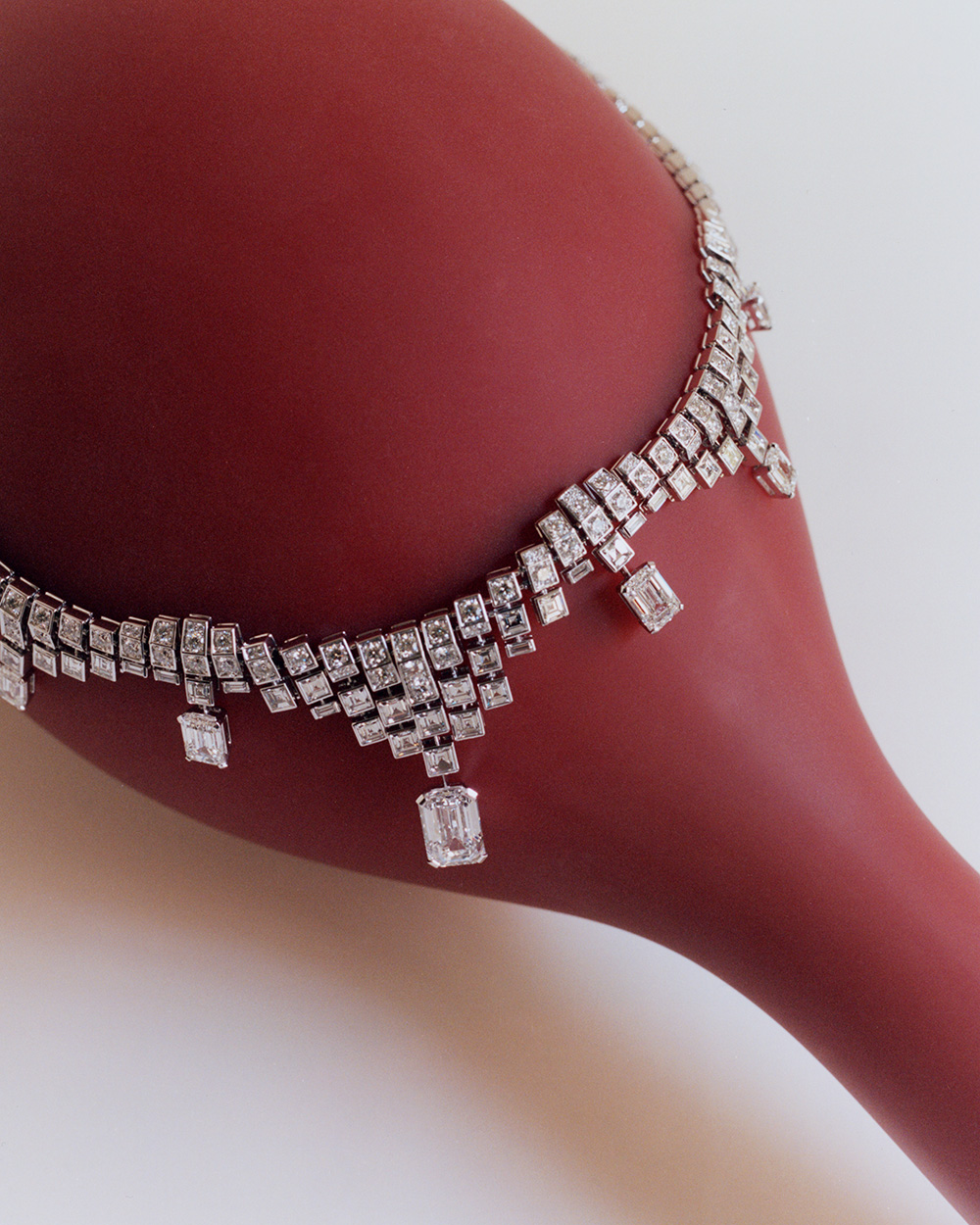
PHOTOGRAPHY: BENJAMIN BOUCHET • PROP STYLISTS: LUNE KUIPERS, ALBAN DIAZ • PHOTO ASSISTANT: CAMILLE COUTHERUT
When watchmaker Louis-François Cartier founded his namesake brand in 1847, after taking over the workshop of Adolphe Picard, he could not have known he was laying the foundation for a jewelry house that would come to define modern luxury. Run by the Cartier family until 1964, the brand has since continued under subsequent ownership, evolving into a cultural force that sets the benchmark for prestige in jewelry, watches, and accessories.
With boutiques in Paris, London, and New York, and a clientele that includes legendary socialites, the Hollywood elite, and dozens of royals, Cartier has become synonymous with refinement, technique, and the highest standards in natural diamonds and jewelry.
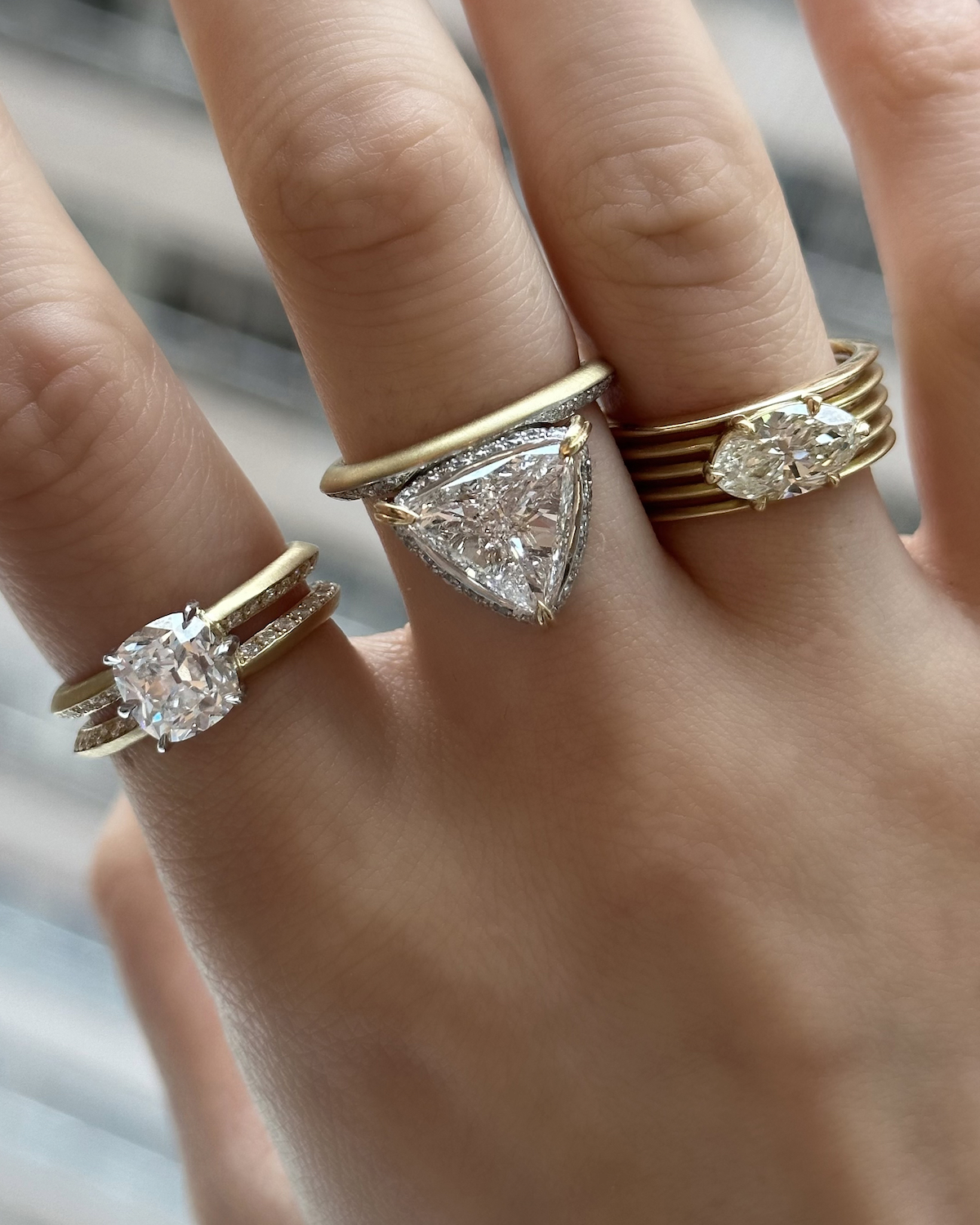
A spokesperson for Cartier tells Only Natural Diamonds, “For more than a century, Cartier’s style has been marked by a taste for refined simplicity and streamlined shapes. Excessive detail and effusive motifs are eliminated to reveal the most compelling, essential lines. This vision, imagined for and inspired by the stones, is often expressed in abstract compositions, which highlight the intrinsic beauty of the gems. To instill rhythm and structure into the design, Cartier plays in particular with the mixing of cuts and shapes.”
Meet the Experts

Sam Pape is a creative digital and integrated marketing leader with experience across e-commerce and retail, spanning Fortune 500 companies, digitally native single-category startups, and design-driven marketplaces. He began his career in journalism, spending nearly three years at The Wall Street Journal and WSJ. Magazine, before earning an MBA from NYU’s Stern School of Business. He currently serves as Director of Integrated Marketing at 1stDibs, a leading online luxury marketplace.

Joshua Ganjei is the CEO of European Watch Company and a leading authority in the global watch market. With extensive experience in the acquisition, valuation, and sale of fine timepieces, he has personally priced more than 35,000 watches on the secondary market. His expertise in horology and keen market insight have helped position European Watch Company as a trusted destination for collectors worldwide.
Ahead, explore the rich history of Cartier.
The Origins of Cartier: Founding, Family, and Early Success
Cartier’s early history is more complex than a single unified house. In the early 20th century, Louis, Pierre, and Jacques Cartier each oversaw the Paris, New York, and London branches, operating with a high degree of independence while maintaining a shared vision. This structure allowed the maison to expand internationally while tailoring its approach to different markets and clientele.
Who Founded Cartier? The Story of Louis-François Cartier
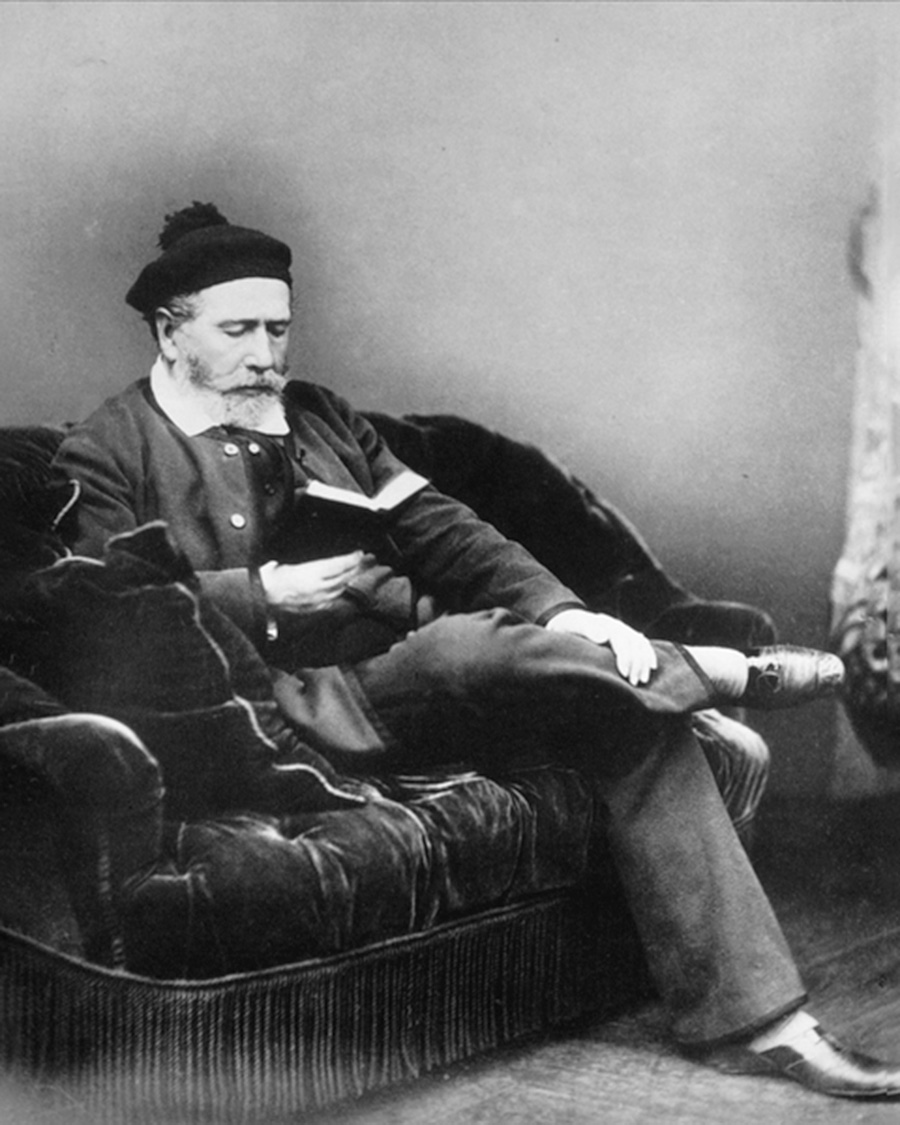
Louis-François Cartier was born into modest means in Paris in 1819, the son of a laundress and a metal worker. As a teen, he apprenticed with watchmaker Adolphe Picard, eventually taking over the store. Though the workshop Louis-François acquired in 1847 could certainly be described as humble, the ambitions of the brand were already firmly rooted. He prioritized custom design and invested time in building personal relationships with clients, setting the business apart in the market. One of the first customers to recognize his talent was a royal, Princess Mathilde, cousin of Napoleon Bonaparte, in 1856. He quickly became known as a jeweler to royalty.
The Cartier Family Legacy: From Workshop to Global Maison
Despite facing a revolution, a ruined economy, a coup d’état, and a fire in the first 12 years of his business, Louis-François was quite successful, according to the book The Cartiers: The Untold Story by Francesca Cartier Brickell (a direct descendant of the family). When his son, Alfred Cartier, took over the brand in 1874, he continued to raise its standards by introducing new materials and innovative designs. According to Brickell’s book, it was tough at first when Alfred traveled to London to make sales as a 29-year-old. Clients were accustomed to his father, but he eventually won them over.
The Cartier Brothers Who Built a Global Empire
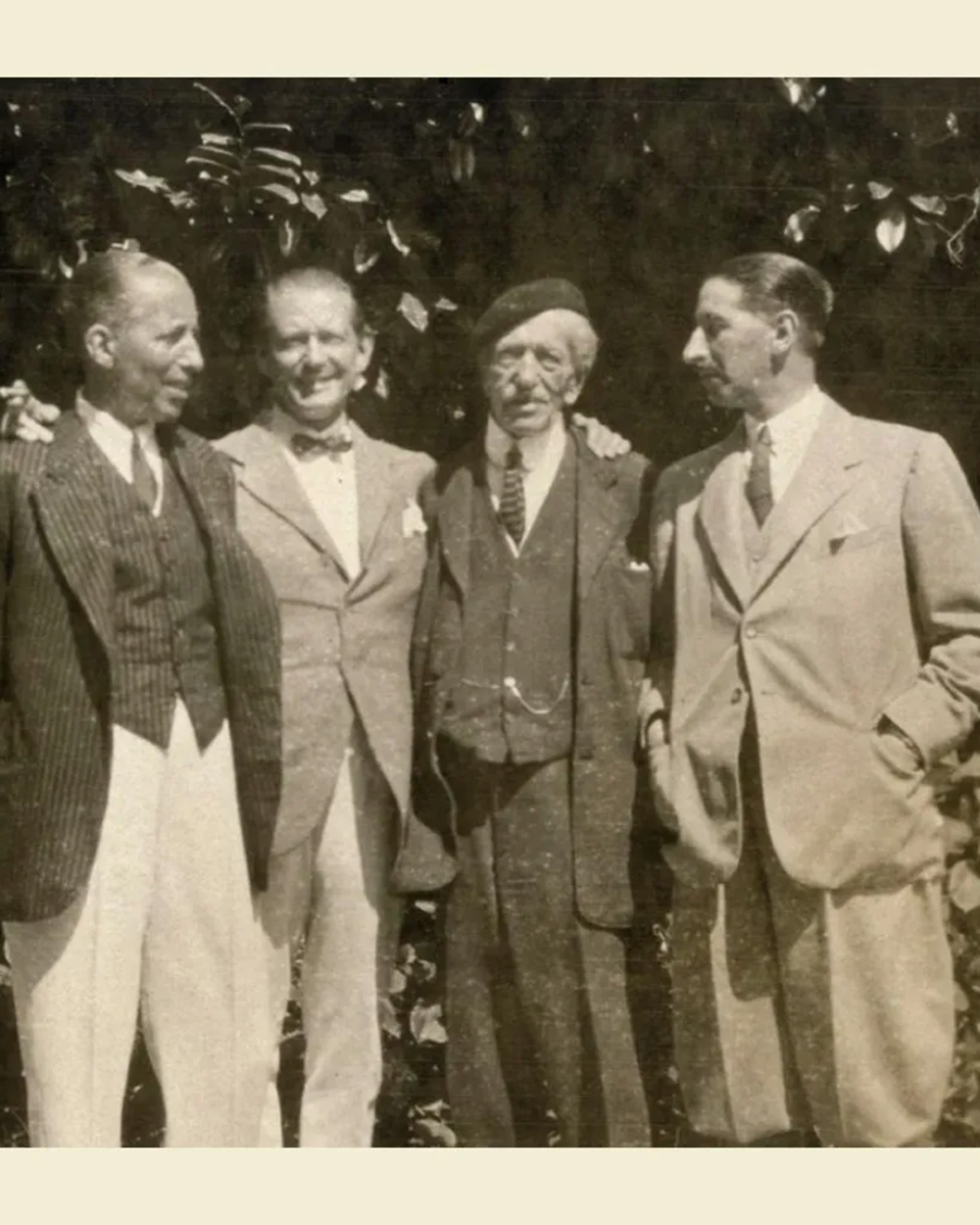
However, it was when Alfred’s sons—Louis, Pierre, and Jacques—began running the company in the early 1900s that the brand saw real expansion. While Alfred remained at the helm, it was his sons who shaped Cartier into the house we recognize today, beginning with the move to the now-iconic Rue de la Paix in 1899. Joshua Ganjei, CEO of European Watch Company, says this relocation to central Paris established Cartier as “the brand’s center of gravity.”
Cartier’s Move to Rue de la Paix and Global Expansion
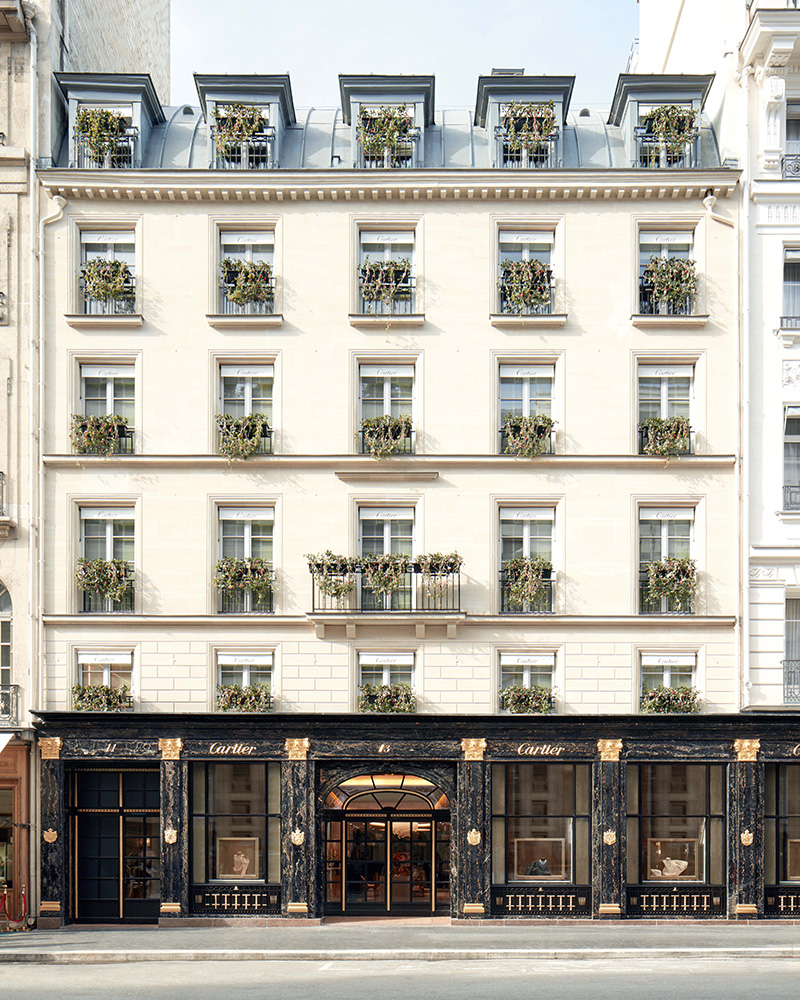
It was under the three grandsons’ leadership that Cartier established its global presence, beginning with Louis Cartier’s move of the Paris maison to Rue de la Paix in 1899, which firmly positioned the house at the center of high jewelry in Paris. Louis ran the Paris branch, overseeing design and innovation, says Ganjei, while Jacques steered the London operation, eventually moving the store to Bond Street, where it remains today.
Pierre Cartier opened the New York City branch in 1909, relocating in 1917 to its current home at 653 Fifth Avenue. Louis Cartier said, “When it was a question of jewelry or business, we were the Cartiers. Our father was unaware that we had secretly made the same oath: to become the greatest in our profession.”
These three locations were pivotal to Cartier’s growth. “[In America] Pierre cultivated relationships with American industrial tycoons and the greatest names of the Gilded Age, including the Astors, Vanderbilts, and Rockefellers. Jacques Cartier took over the London branch and established deep ties with the British aristocracy and the Indian Maharajas, which led to the creation of some of the brand’s most famous ceremonial jewelry and the ‘Tutti Frutti’ style,” Ganjei says.

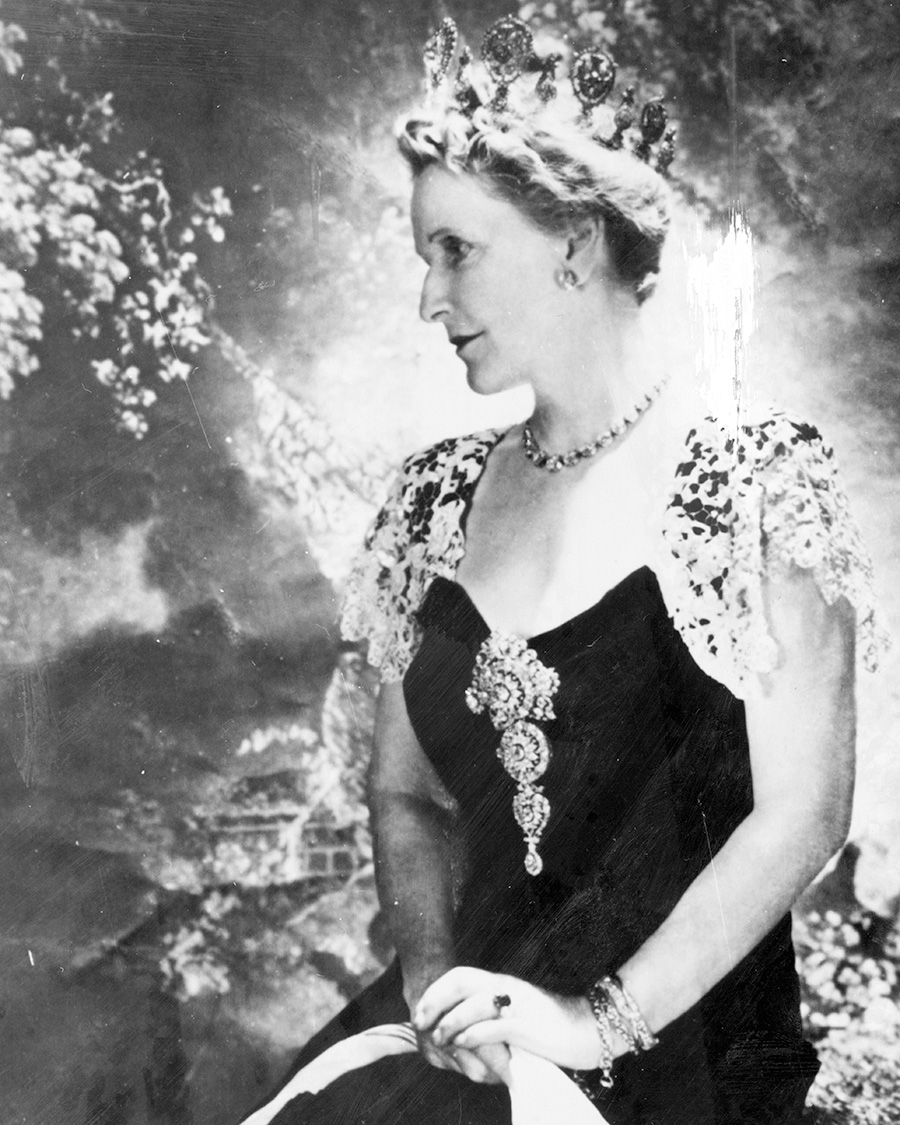
As the official jeweler to royal courts, responsible for warrants and commissions, including tiaras and ceremonial jewels, King Edward VII of Great Britain bestowed the title, “Jeweler of kings… and king of jewelers,” on Cartier. Ganjei adds that King Edward commissioned 27 Cartier tiaras for his coronation in 1902.
According to Ganjei, Cartier secured royal warrants from courts across Europe and used these connections to provide an ultimate stamp of legitimacy and prestige to their work. In later years, celebrities like Grace Kelly and Elizabeth Taylor became living advertisements for the brand, ensuring that Cartier remained synonymous with the highest echelons of global society and “old world” glamour.
Cartier and the Art Deco: Defining a Modern Visual Language

As Cartier expanded globally in the early 20th century, it became a formidable pioneer of the Art Deco movement. “Cartier’s jewels from the Art Deco era helped define the look of that period, which is known for geometric designs and high-contrast combinations, like emeralds or coral paired with onyx and diamonds. And its Tutti Frutti designs, which debuted in 1925 and feature carved gems like rubies, emeralds, and sapphires, have become synonymous with Art Deco and the Cartier brand,” says Sam Pape, Marketing Director at 1stDibs.
Jacques Cartier was inspired by a trip to India during the reign of King George V, where he observed firsthand the stone-carving techniques of the Indian Mughal jewelry tradition. Cartier’s Tutti Frutti style is considered the quintessential expression of the Art Deco movement, characterized by its opulent chromatism.
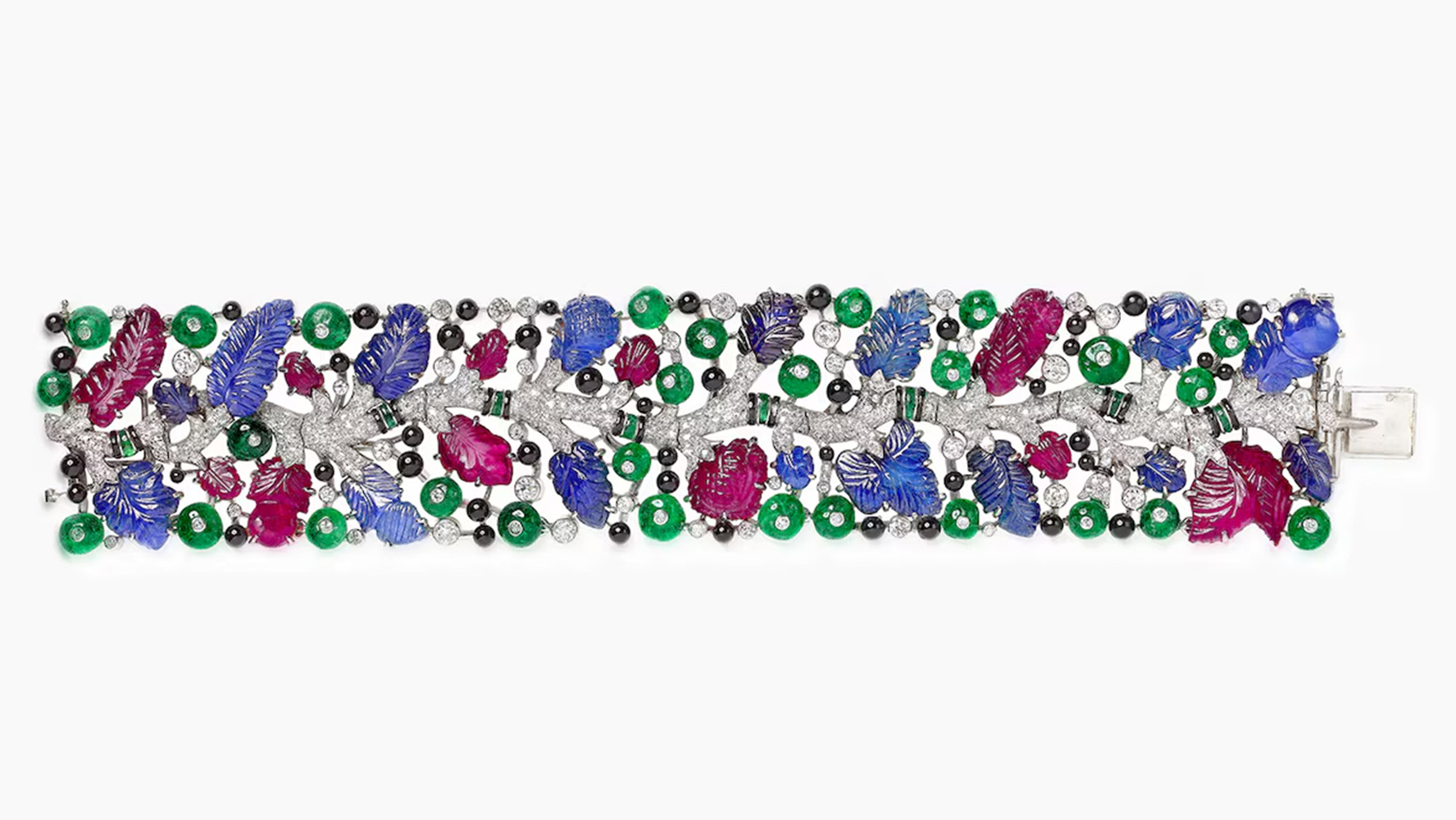
“This style meticulously combines brilliant-cut diamonds with intricately carved rubies, emeralds, and sapphires — often rendered in delicate floral and foliate motifs — evoking the appearance of a lavish, multi-hued fruit basket. This aesthetic was directly inspired by the centuries-old Indian Mughal tradition of gemstone carving and peaked during the 1920s, solidifying its place in jewelry history before being formally designated as a signature Cartier design in the 1970s,” Pape says. Before they were given the Tutti Frutti name, Jacques Cartier referred to them as “Hindou jewels.”
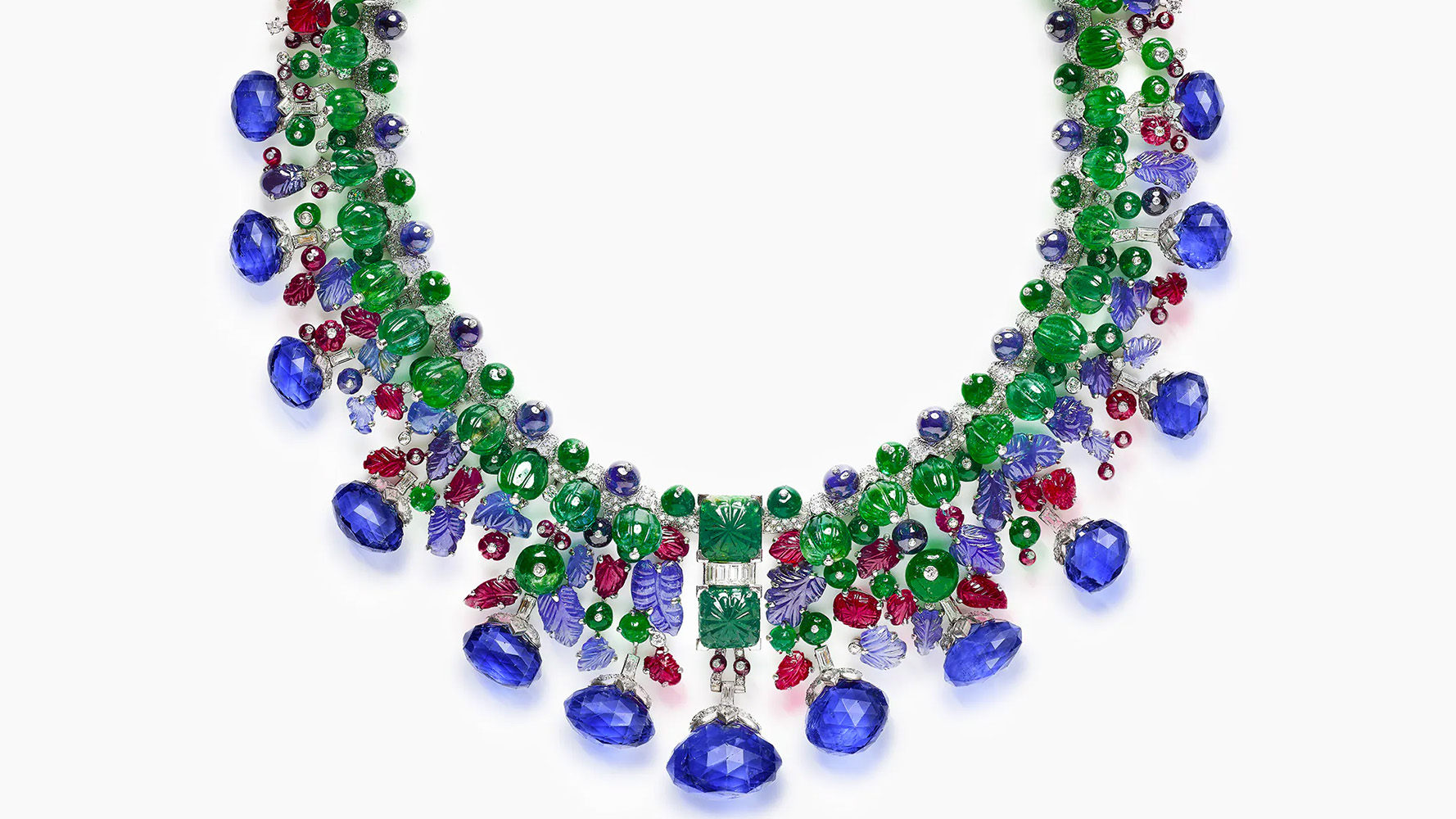
According to the book Cartier: Style and History, it was Cartier designer Charles Jacqueau, who joined the company in 1909, who led the brand’s Art Deco aesthetic. With support from Louis Cartier, he embraced color combinations and materials that were once considered in poor taste. For example, sapphire and emerald became hallmarks of Cartier’s Art Deco pieces, as did the use of less traditional materials. Coral, red enamel, and tortoiseshell became pivotal elements in the brand’s designs during the 1920s.
Notable Tutti Frutti creations included bib necklaces and brooches made of carved rubies, emeralds, and sapphires in floral and fruit motifs, hence their name. Singer sewing machine heiress Daisy Fellowes favored these pieces and was photographed wearing her 1936 Collier Hindou Tutti Frutti.
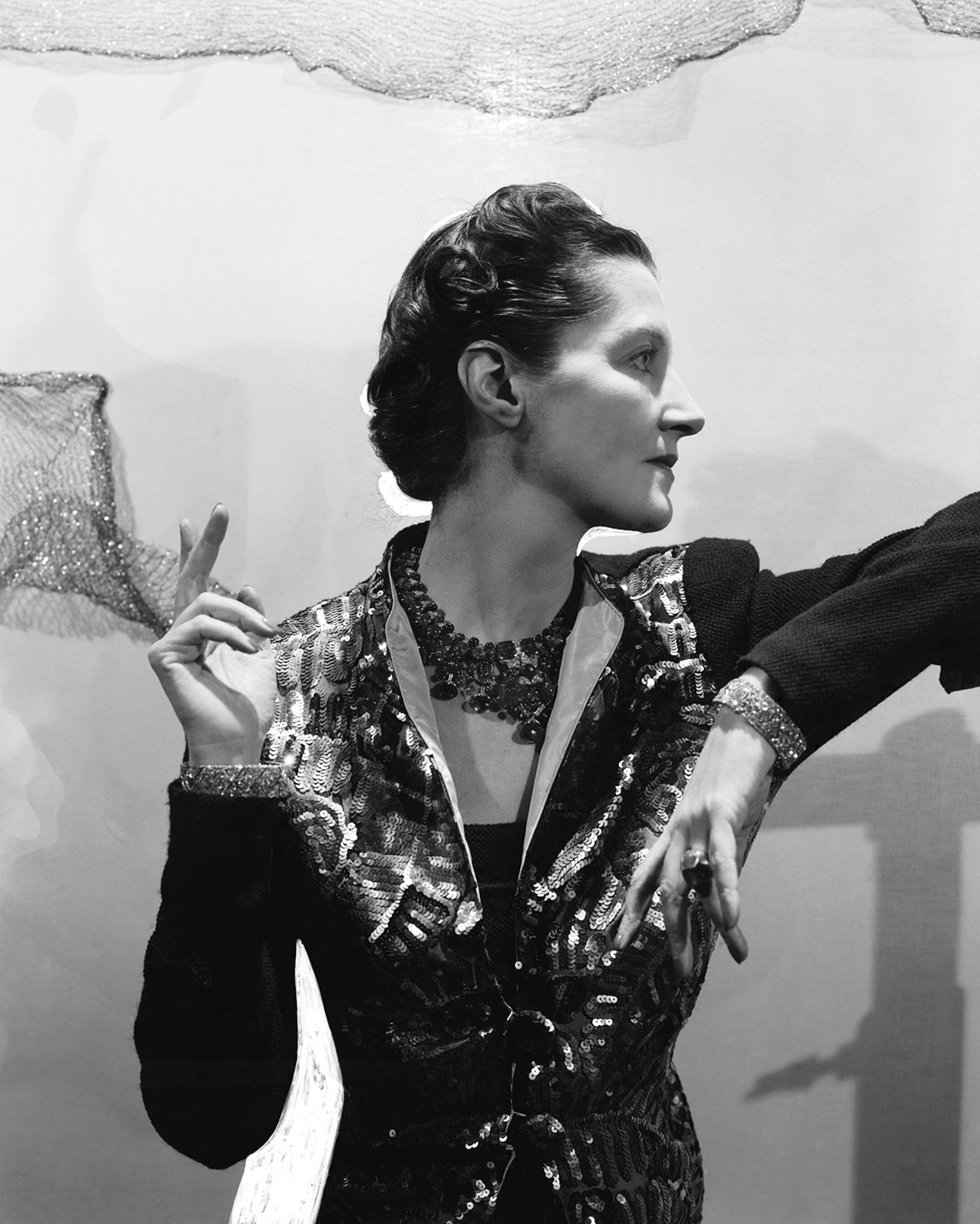
Pape adds that within the “myriad of significant designs, Cartier’s most iconic creations often feature the captivating stones — whether Tutti Frutti carved gemstones or the majesty of Mughal-inspired aesthetics. Above all, its Panthère design endures as the definitive and ever-evolving symbol of the house’s unparalleled style and design mastery.”
The Cartier Panthère: The Power of an Iconic Motif
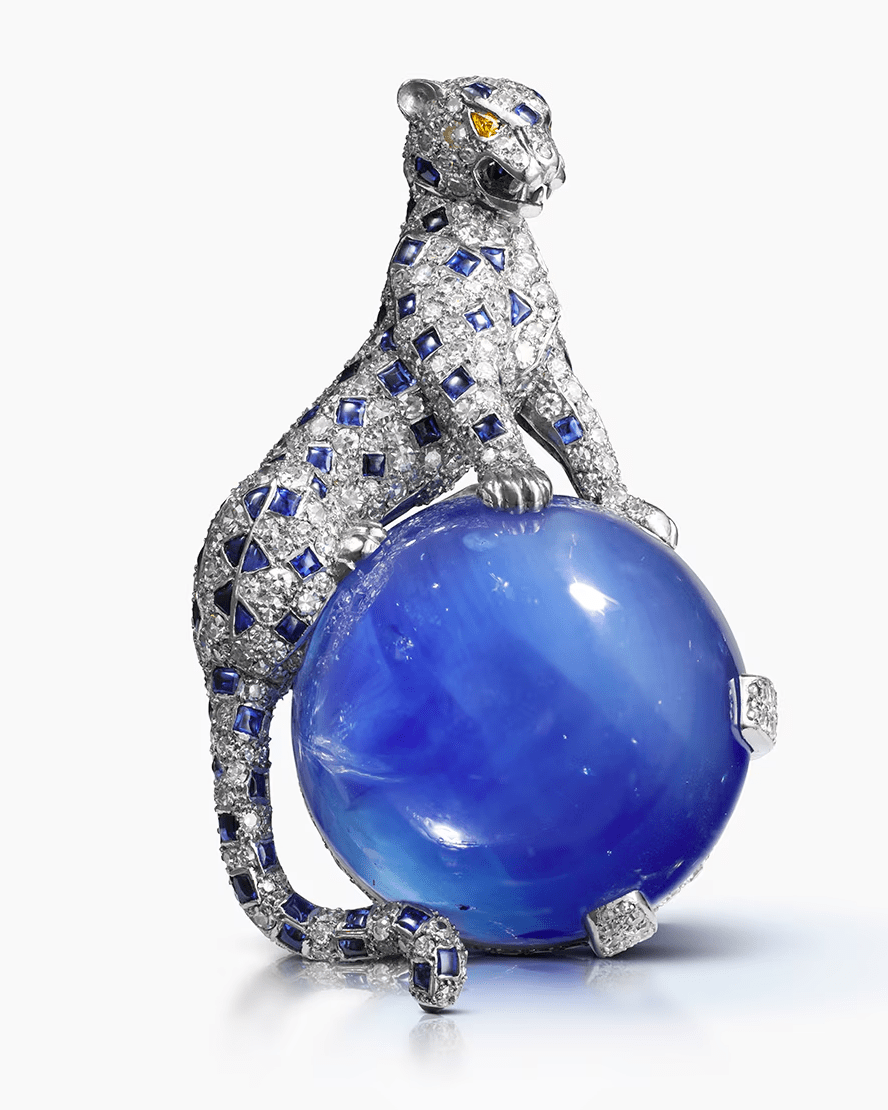
Never underestimate the power of a jungle cat, especially when it’s decked out in diamonds. Few symbols in jewelry are as instantly recognizable as the Cartier panther. It was introduced as a motif in 1914 by Louis Cartier on an invitation depicting the original “Lady with a Panther.” Pape adds that this debut simultaneously featured a novel wristwatch design adorned with contrasting onyx and diamond spots, establishing the animal as a sophisticated house emblem.
Arguably, it was under Jeanne Toussaint’s leadership at Cartier, the formidable Director of Fine Jewelry, that the motif truly came to life, as she transformed the animal into one of the maison’s most enduring symbols. In 1948, she created the first fully realized three-dimensional panther jewel—a striking brooch commissioned by the Duchess of Windsor—marking a defining moment in the house’s design history.
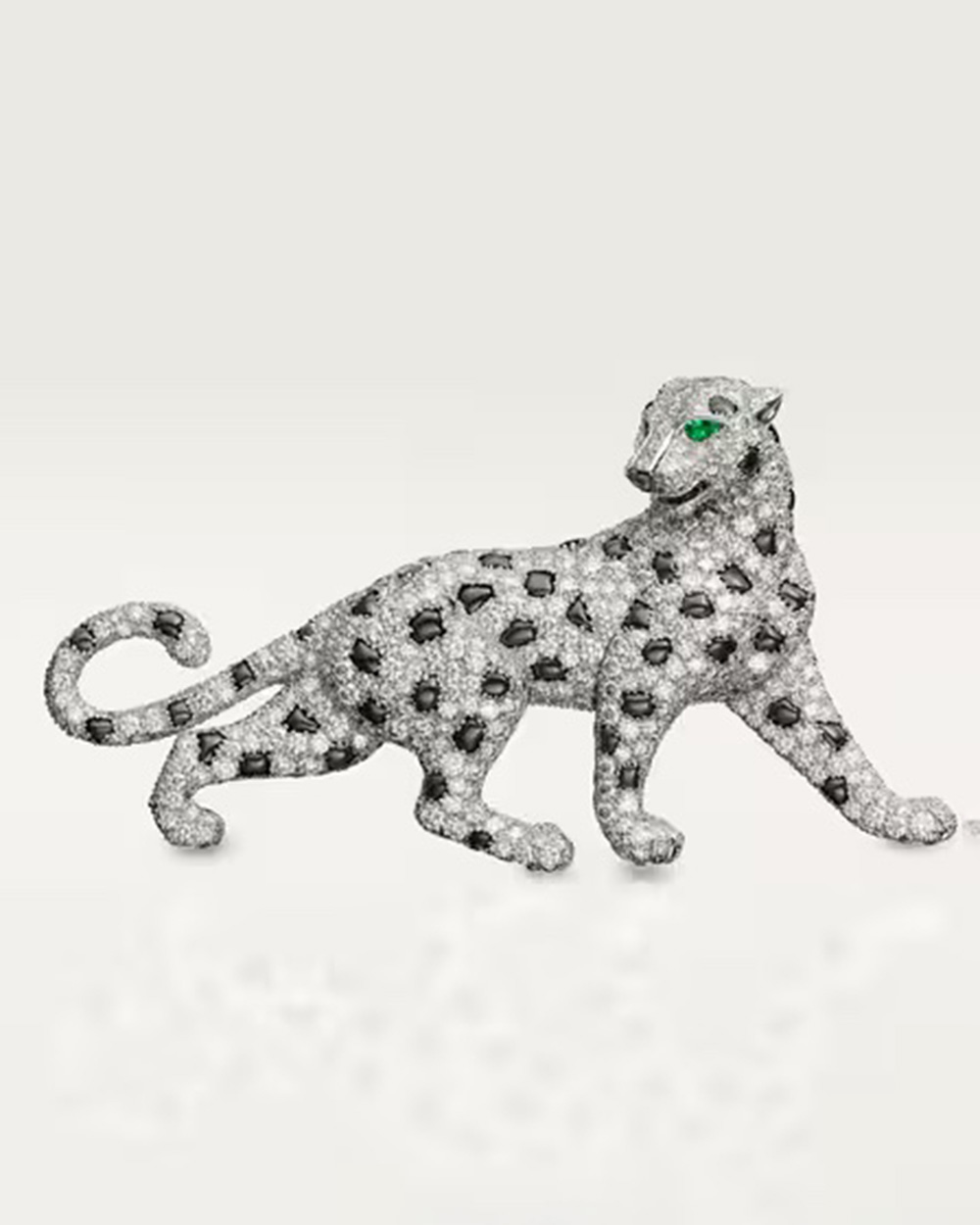
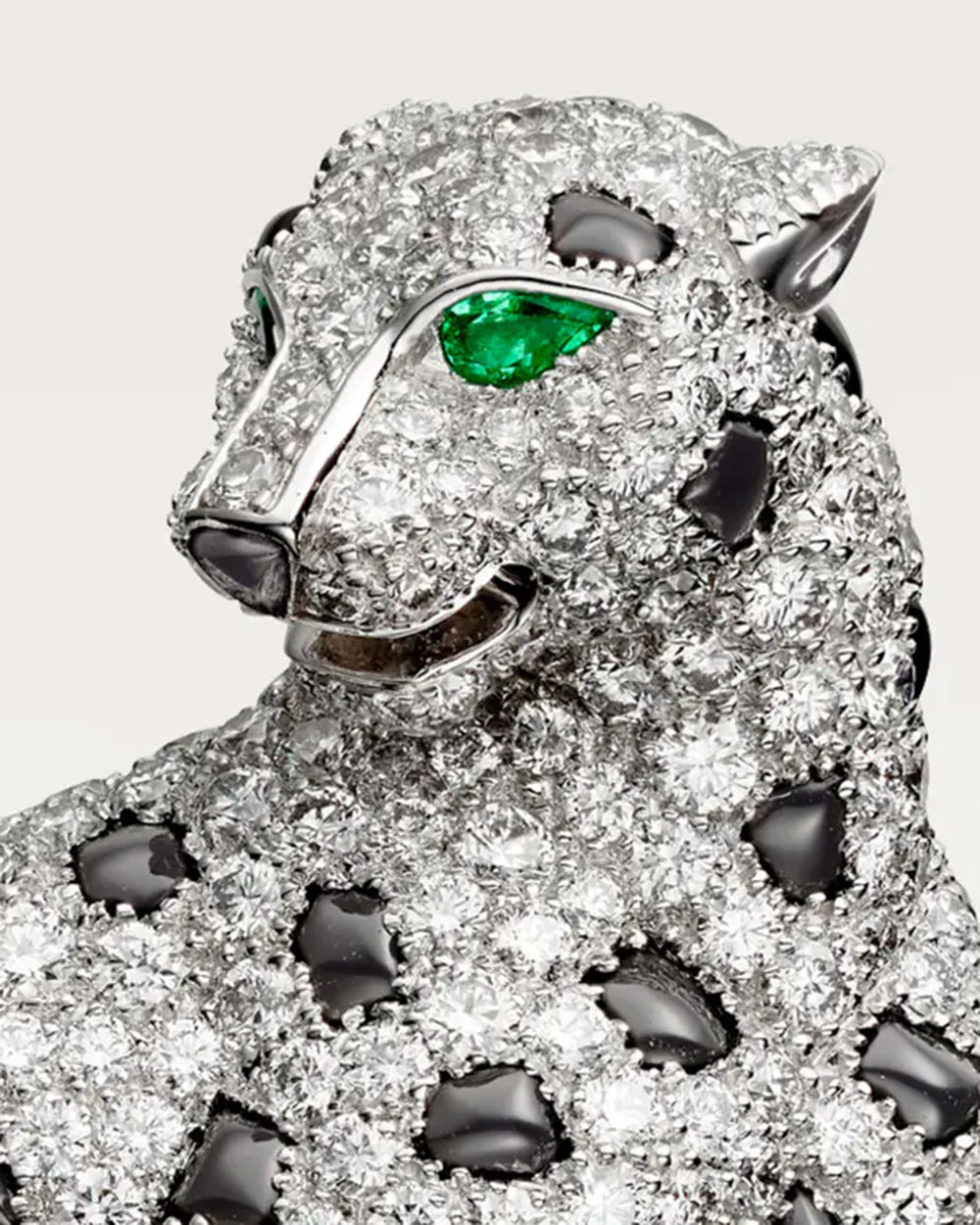
From that point on, the panther became closely associated with powerful, style-defining women. The Duchess of Windsor was one of its earliest champions, followed by figures like María Félix, whose bold, custom Cartier panther jewels pushed the motif into even more daring territory. Over the years, it evolved into three-dimensional jeweled sculptures, imbued with movement, tension, and feminine power. The panther has appeared on brooches, rings, and bracelets, to name a few.
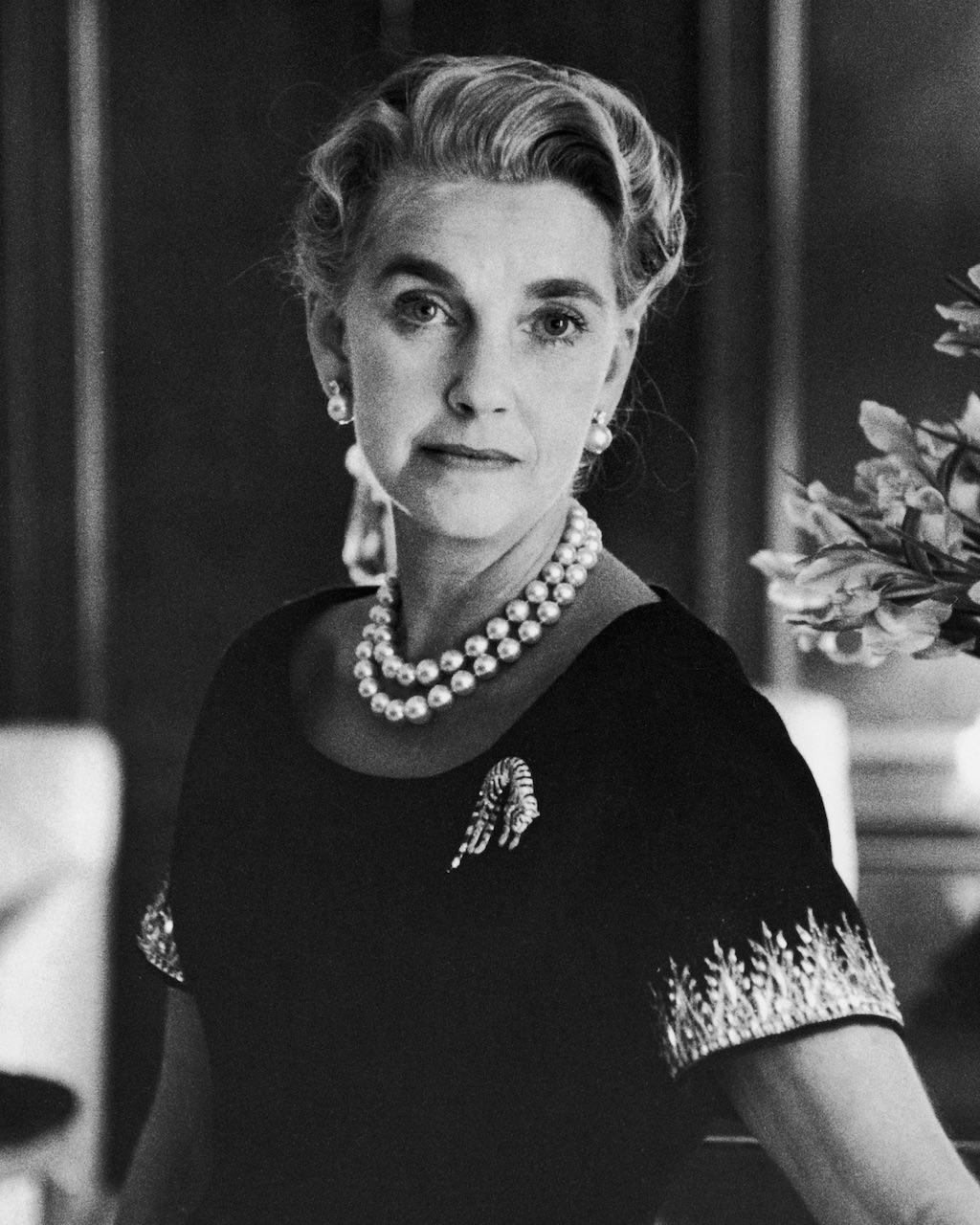
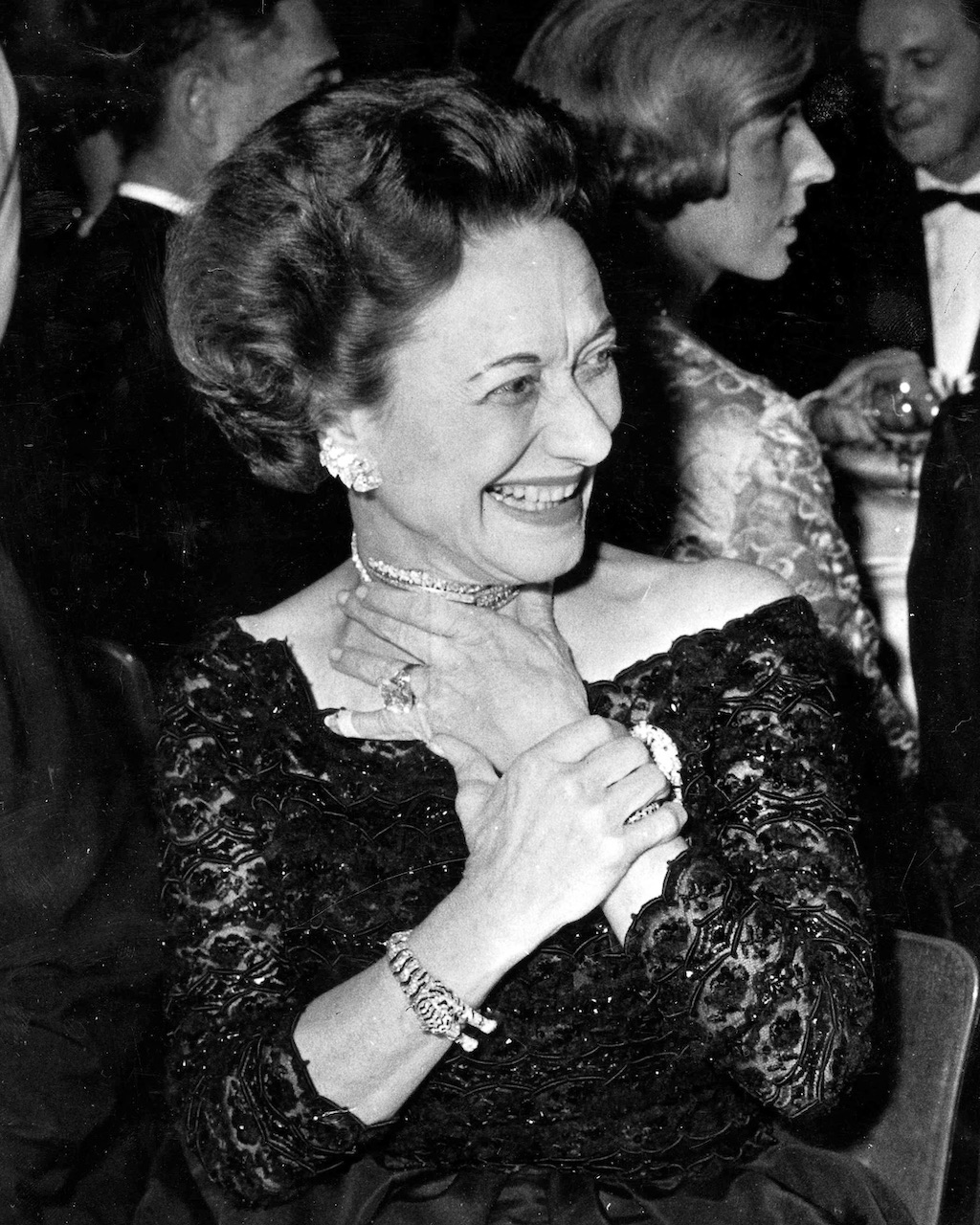
Beyond the panther, Cartier’s fascination with the animal kingdom expanded into a broader menagerie, with crocodiles, snakes, tigers, and even giraffes rendered in precious stones and sculptural forms. Over the years, these creatures—like the panther—evolved into three-dimensional jeweled sculptures, imbued with movement and a sense of lifelike dynamism.
Cartier Mystery Clocks: The Illusion That Redefined Timekeeping
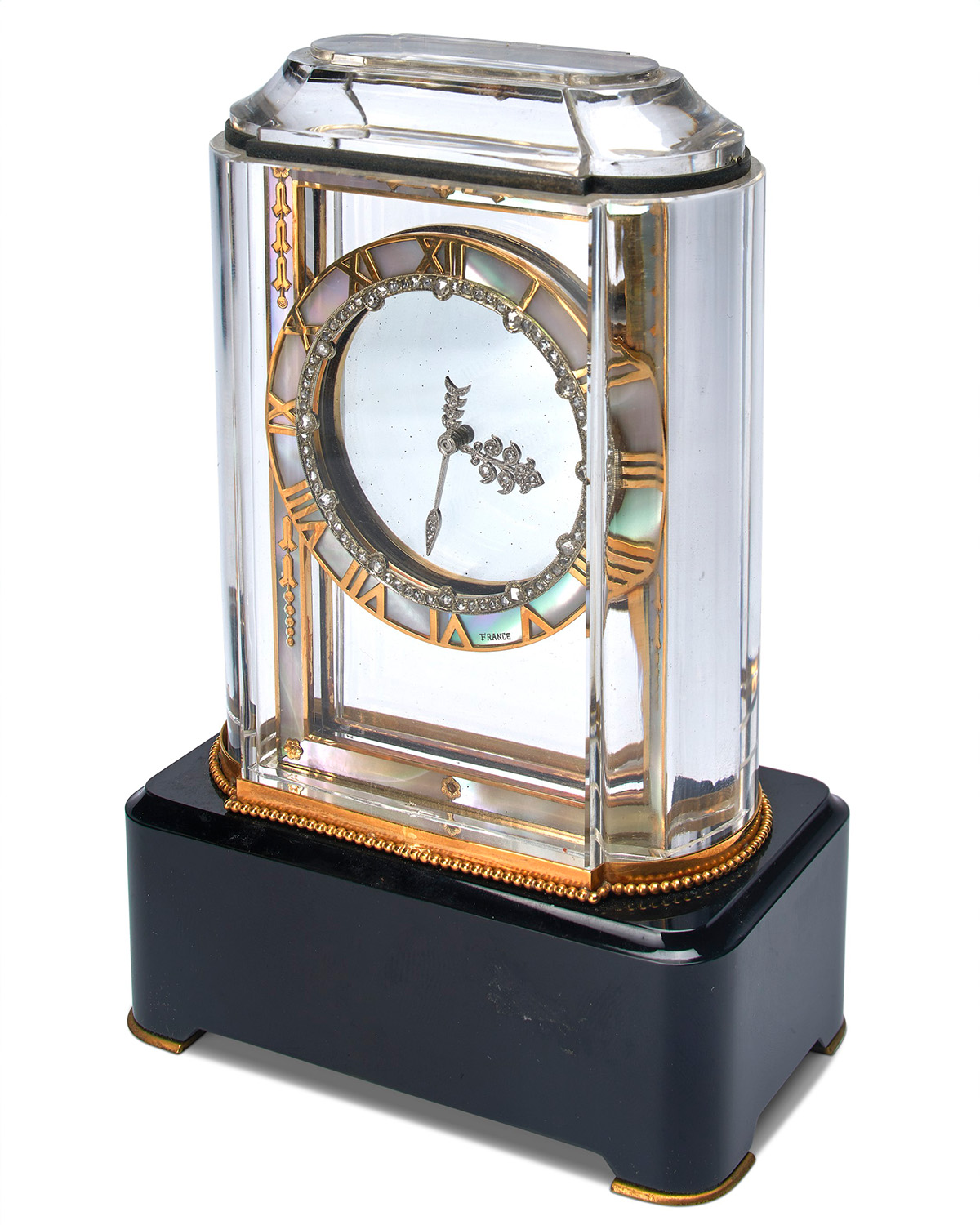
Pape explains that Cartier not only shaped the aesthetics of fine jewelry but also influenced the design language of decorative objects, exemplified by its refined clocks and exquisite boxes. The clocks he references are the Cartier Mystery Clocks, introduced in 1912 with Model A, a standard-shaped mantel clock that appeared almost illusionistic. Developed in collaboration with master clockmaker Maurice Couët, these extraordinary timepieces drew inspiration from the work of 19th-century illusionist Jean-Eugène Robert-Houdin, blending technical ingenuity with artistic expression.
Made of rock crystal, the dial seemed disconnected from any visible mechanical movement, creating a truly mysterious effect. In reality, the hands were mounted on transparent sapphire discs driven by hidden gears concealed within the frame, an innovation that elevated the clock from a functional object to a feat of horological magic. The hands were often set with diamonds, while the cases themselves were crafted from luxurious materials such as jade, lapis lazuli, and onyx.
The Cartier Santos: The First Modern Wristwatch
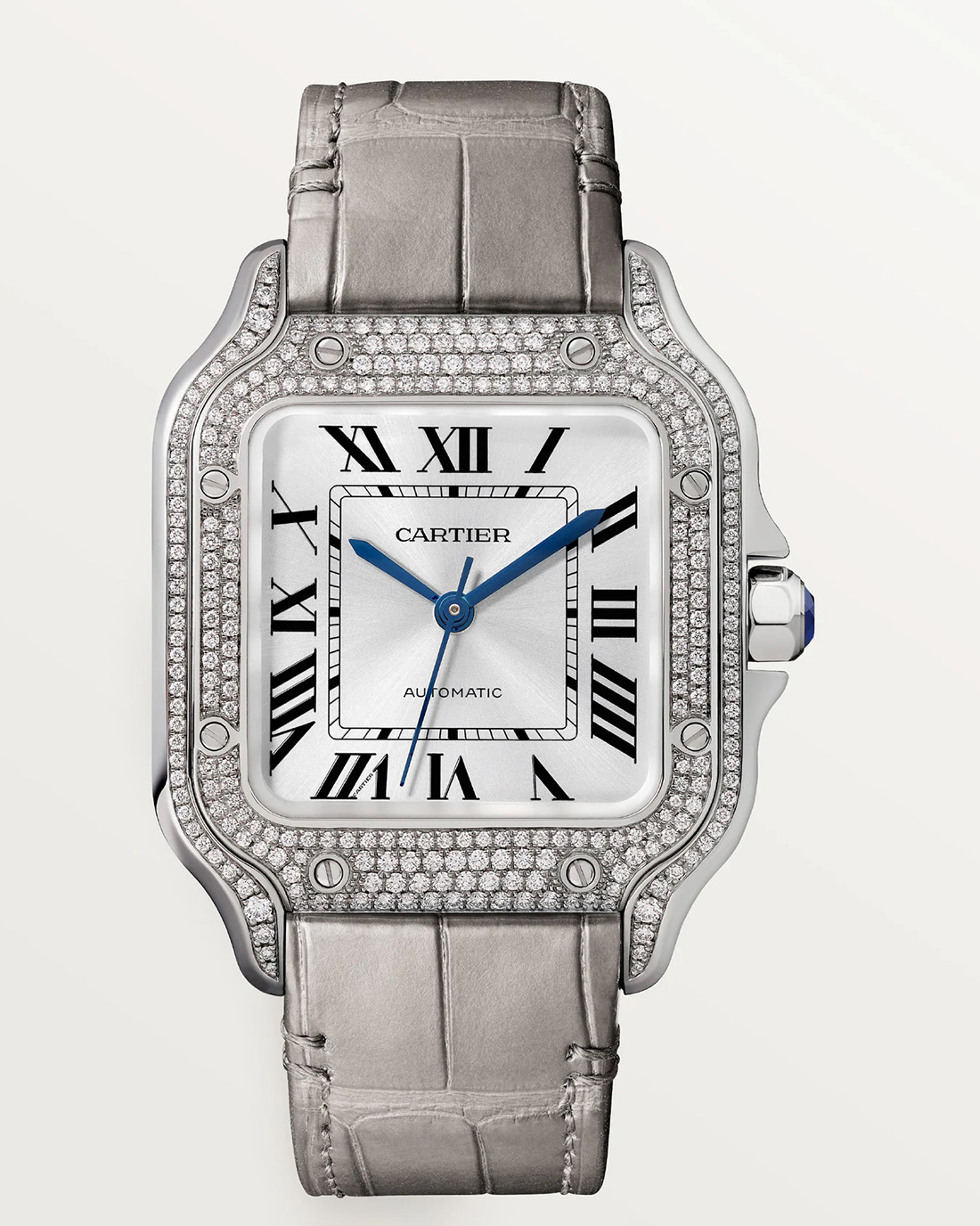
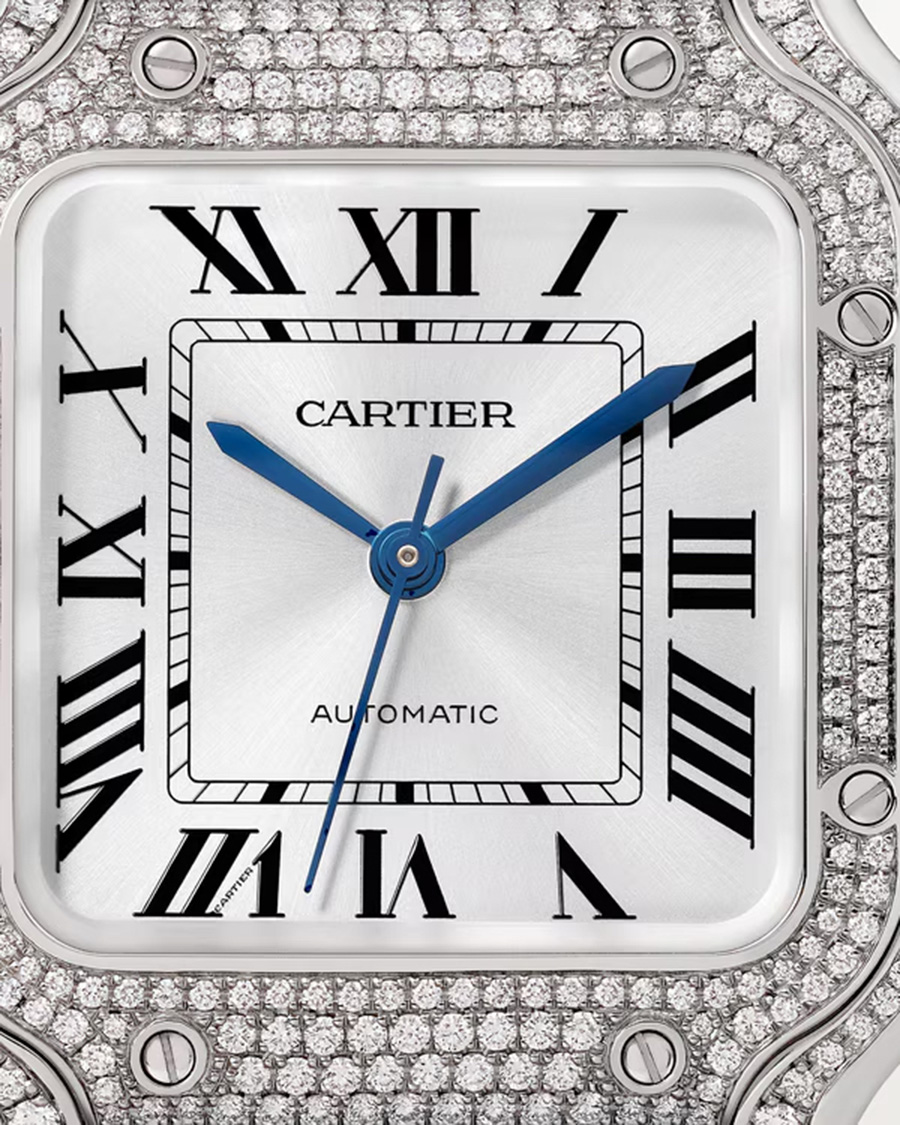
Brooches, necklaces, bracelets, and tiaras had been in Cartier’s catalogue for many years, but it was watches that would take the company to an unprecedented level of recognition and craftsmanship.
It began in 1904, when Brazilian aviator Alberto Santos-Dumont complained to his friend Louis Cartier about how inconvenient it was to use a pocket watch during flight. This inspired Cartier to create a flat wristwatch, inspired by a square pocket watch but far more practical for a modern man.
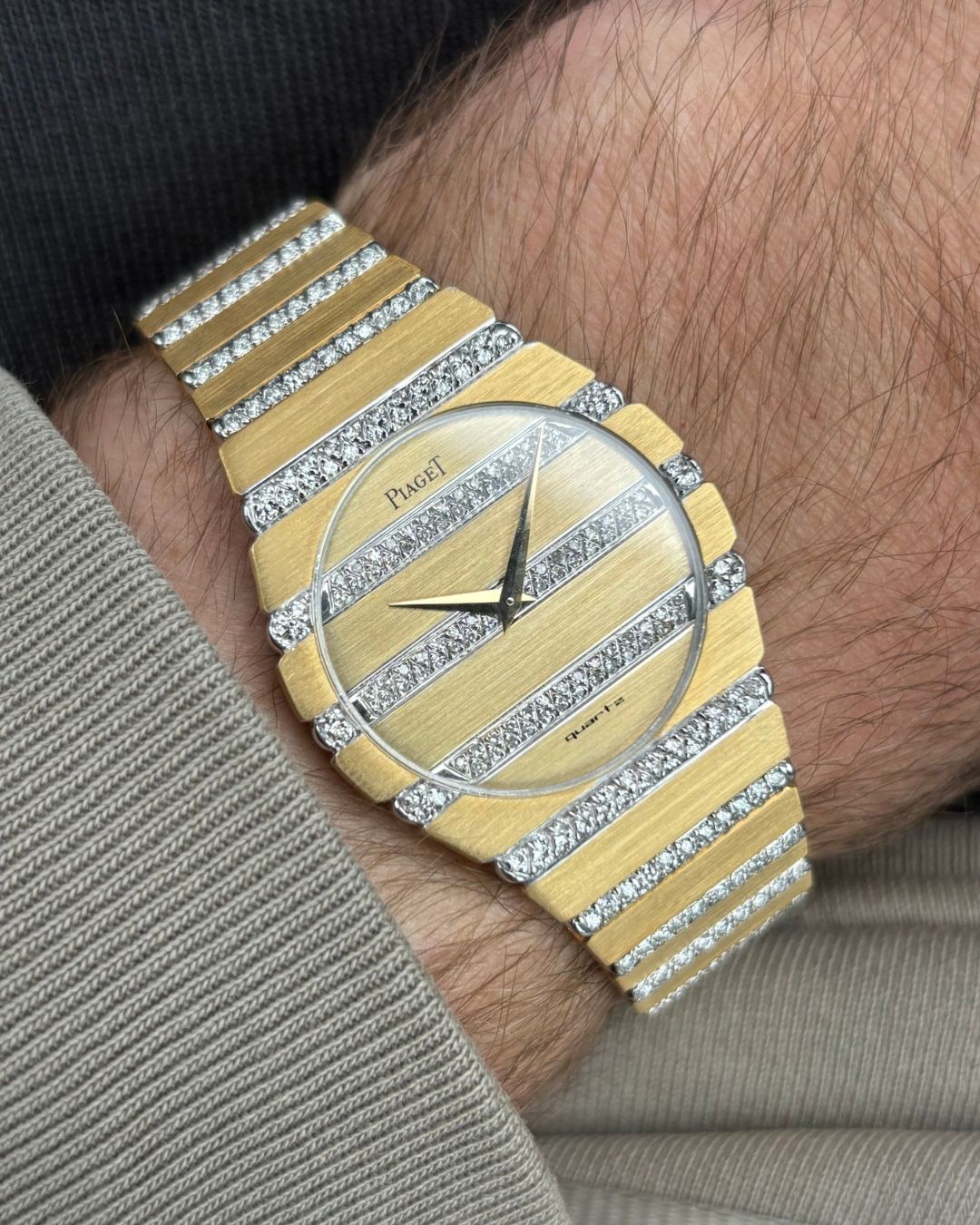
Ganjei tells OND, “The Santos-Dumont fundamentally shifted global social norms by transitioning the wristwatch from a delicate feminine accessory into a functional masculine tool. Its industrial aesthetic, characterized by a bold square bezel and exposed screws inspired by aircraft rivets, moved away from traditional round pocket watches and established the “Parisian style” that prioritized both utility and geometric elegance.”
The Cartier Tank: A Defining Design of the 20th Century

Another defining moment in modern horology came with the conception of the Tank watch, designed in 1917 by Louis Cartier. Introduced in the final years of World War I, the watch marked a radical departure from the ornate, round timepieces of the era, embracing clean lines and a streamlined, architectural form that felt distinctly modern. Its rectangular case, brancards, and minimalist dial reflected Cartier’s evolving design language—one rooted in precision, proportion, and restraint.
More than a stylistic innovation, the Tank embodied a shift in how watches were worn and perceived, becoming a symbol of sophistication for both men and women. It was famously worn by Jacqueline Kennedy Onassis and later by Carolyn Bessette-Kennedy, reinforcing its status as a discreet yet powerful style signifier. Over the decades, it has been reinterpreted in countless variations while retaining its instantly recognizable silhouette, cementing its place as one of the most enduring designs in watchmaking history.
Pape tells OND, “It represented a deliberate evolution in masculine horology, seeking to surpass existing timepieces. Its distinctive rectangular case was a direct aesthetic appropriation of the powerful, geometric silhouette of the Renault FT-17 French military tanks, a potent symbol of World War I–era mechanization.”
The Cartier Crash: A Surrealist Icon of 1960s Design
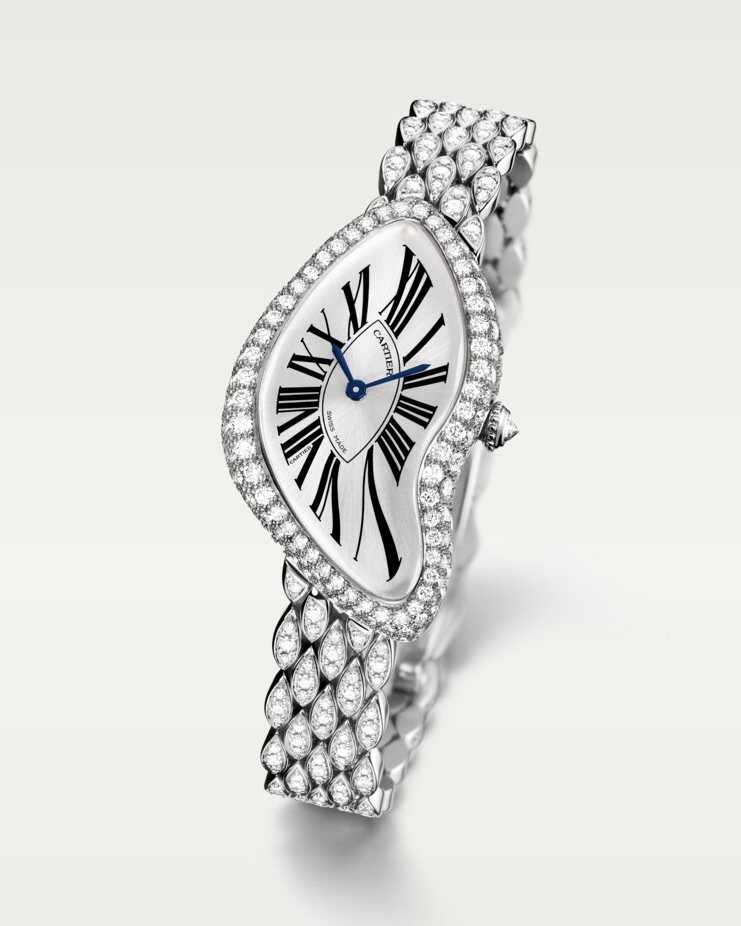
In contrast, the Cartier Crash, introduced in 1967, represents the peak of the brand’s avant-garde artistic expression. “Born in the creative fervor of London in the ‘Swinging Sixties’, the Crash rejected classical symmetry in favor of a distorted, melted silhouette that channeled the Surrealist art movement,” says Ganjei. “Beyond its radical visual impact, the Crash serves as a testament to Cartier’s high-level craftsmanship, as the irregular, asymmetrical case required innovative mechanical engineering and design to execute.”
He notes that the Santos-Dumont and the Cartier Crash encapsulate the Cartier legacy. “The Santos-Dumont redefined how the world tells time through functional innovation, while the Crash redefined the watch as a piece of subversive horological art.”
The Cartier Trinity Ring: A Symbol of Timeless Connection
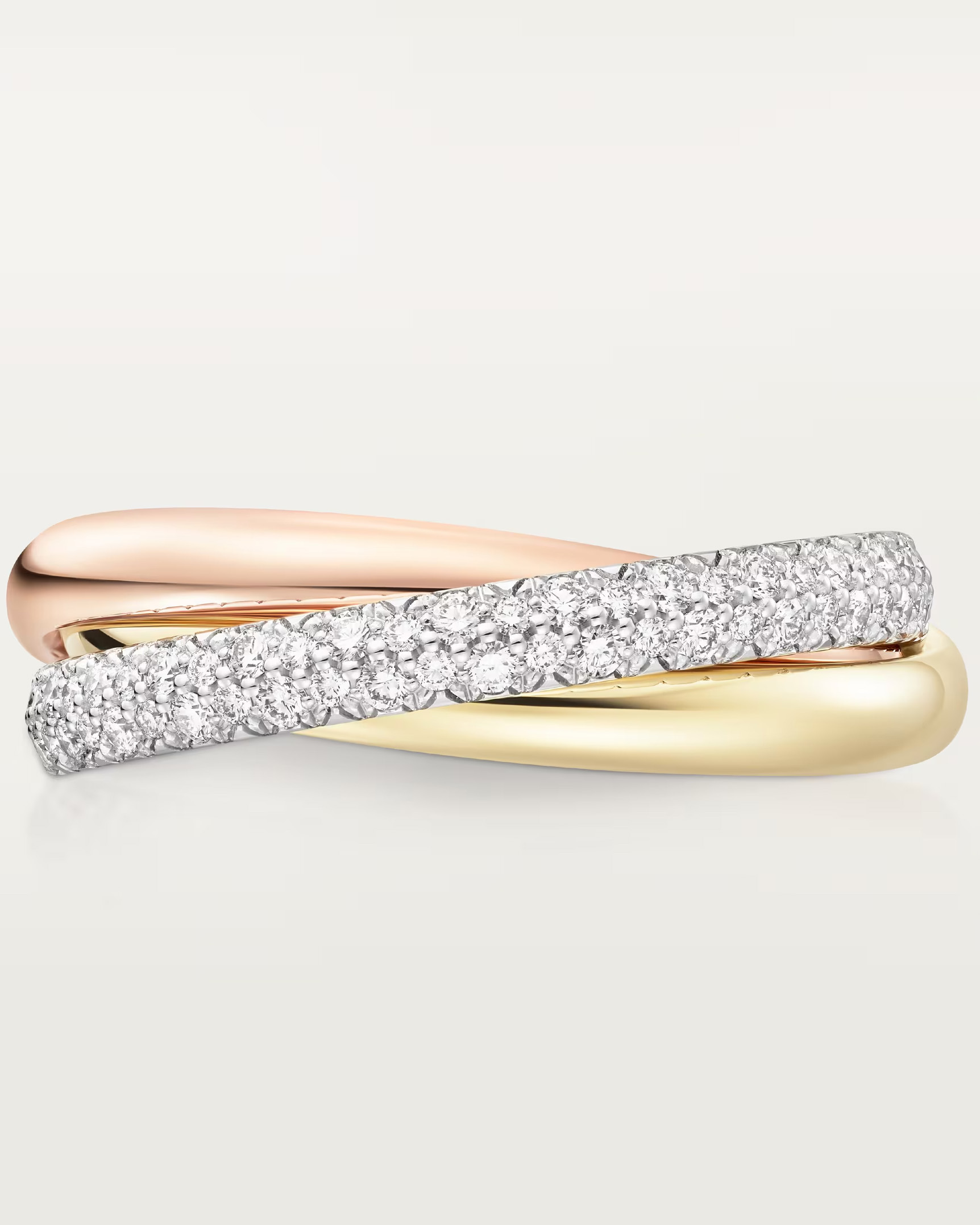
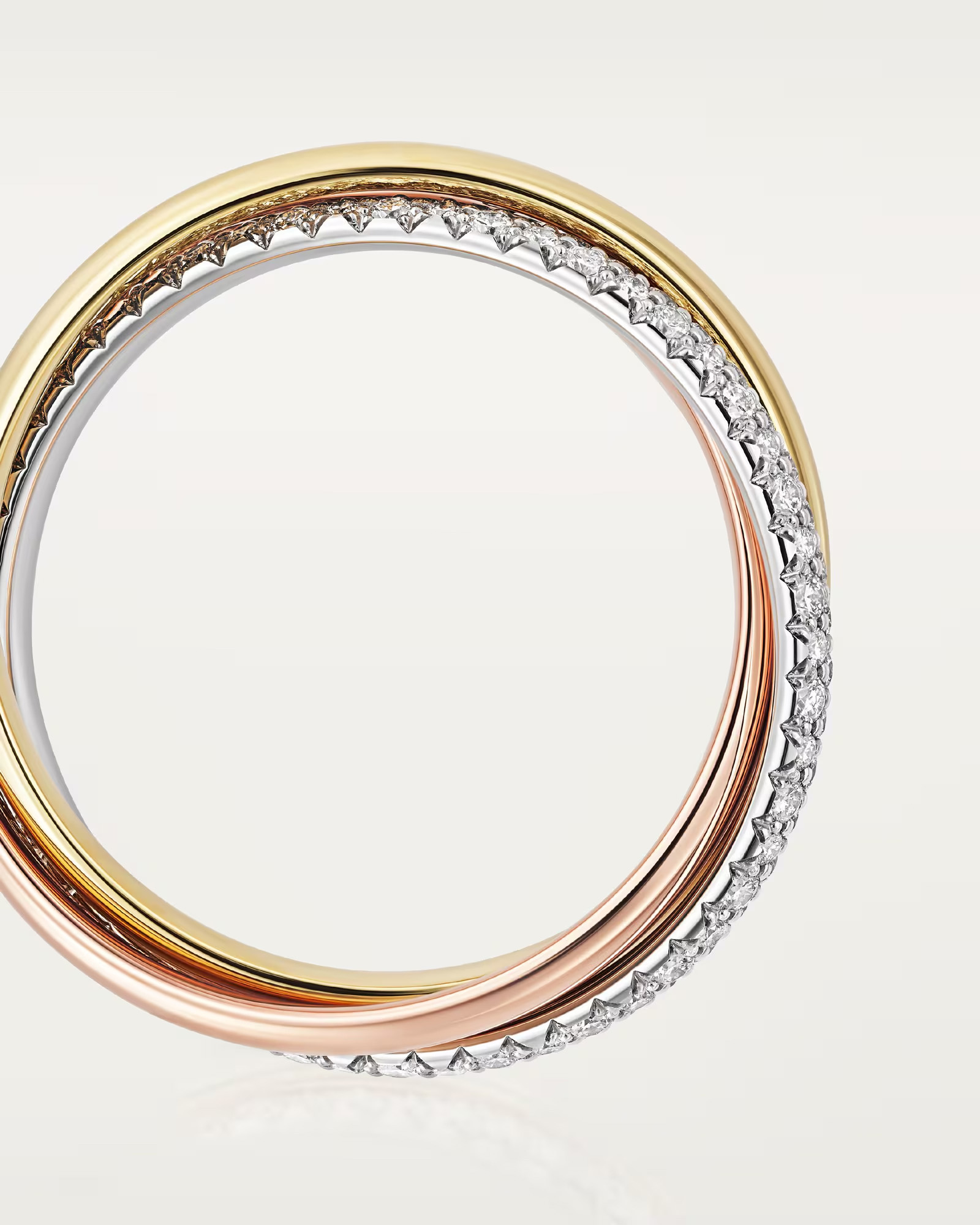
Few designs in Cartier’s history are as enduring—or as instantly recognizable—as the Trinity ring. Created in 1924 by Louis Cartier, the design features three interlocking bands in yellow, white, and rose gold, each traditionally said to represent love, fidelity, and friendship.
At once simple and deeply symbolic, the Trinity ring reflects Cartier’s ability to distill meaning into form. Its rolling structure allows the bands to move fluidly against one another, creating a tactile quality that is as essential to the design as its visual appeal. Over the decades, the Trinity has been reinterpreted in various scales and styles, yet its core identity remains unchanged.
Worn by figures such as Jean Cocteau (who wore two stacked as pinky rings) and embraced by generations since, the Trinity ring underscores Cartier’s mastery of restraint.
The Cartier Love Bracelet: A Modern Icon of Commitment
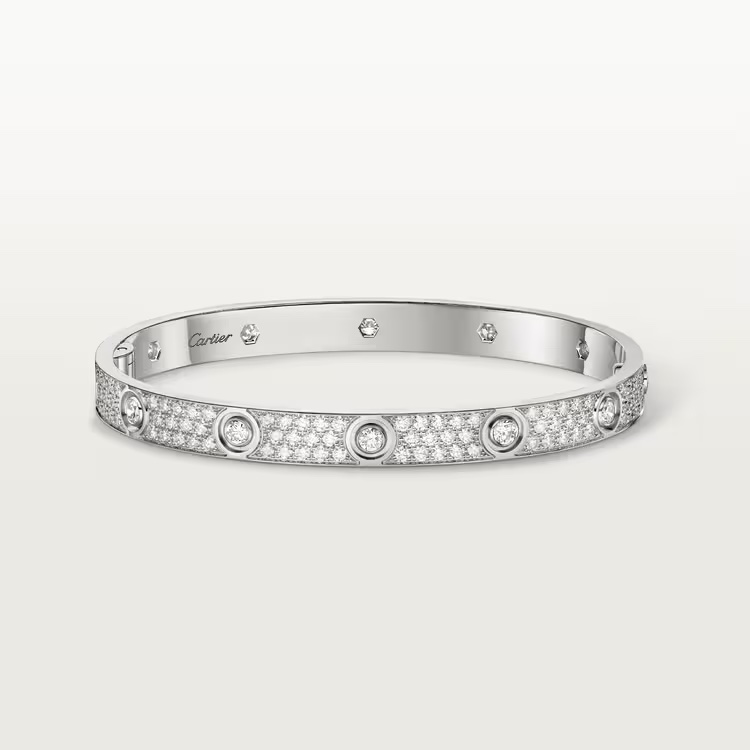
If the Trinity ring reflects Cartier’s early 20th-century sensibility, the Love bracelet speaks to a more modern chapter in the house’s history. Designed in New York in 1969 by Aldo Cipullo, the oval-shaped bracelet is secured with functional screws, intended to be fastened with a matching screwdriver. The concept was unconventional: a piece of jewelry designed to remain on the body, symbolizing permanence and attachment.
With its pared-back lines and subtle industrial references, the Love bracelet marked a departure from traditional high jewelry codes, introducing a more minimal, conceptual approach. It quickly gained a following among artists, actors, and couples drawn to its symbolism.

Today, the Love bracelet is often worn as part of a layered wrist, styled alongside watches and other bangles in a way that feels personal rather than prescriptive. Decades after its debut, it remains one of Cartier’s most recognizable designs.
Why Cartier Is Known as the Jeweler of Kings
Louis Cartier established early on that client relationships came first. So when, in 1907, Czar Nicolas II of Russia granted Cartier an imperial warrant as official supplier to his royal family, it marked the beginning of a relationship that would endure for generations. Cartier pieces continue to be passed down through royal families around the world.

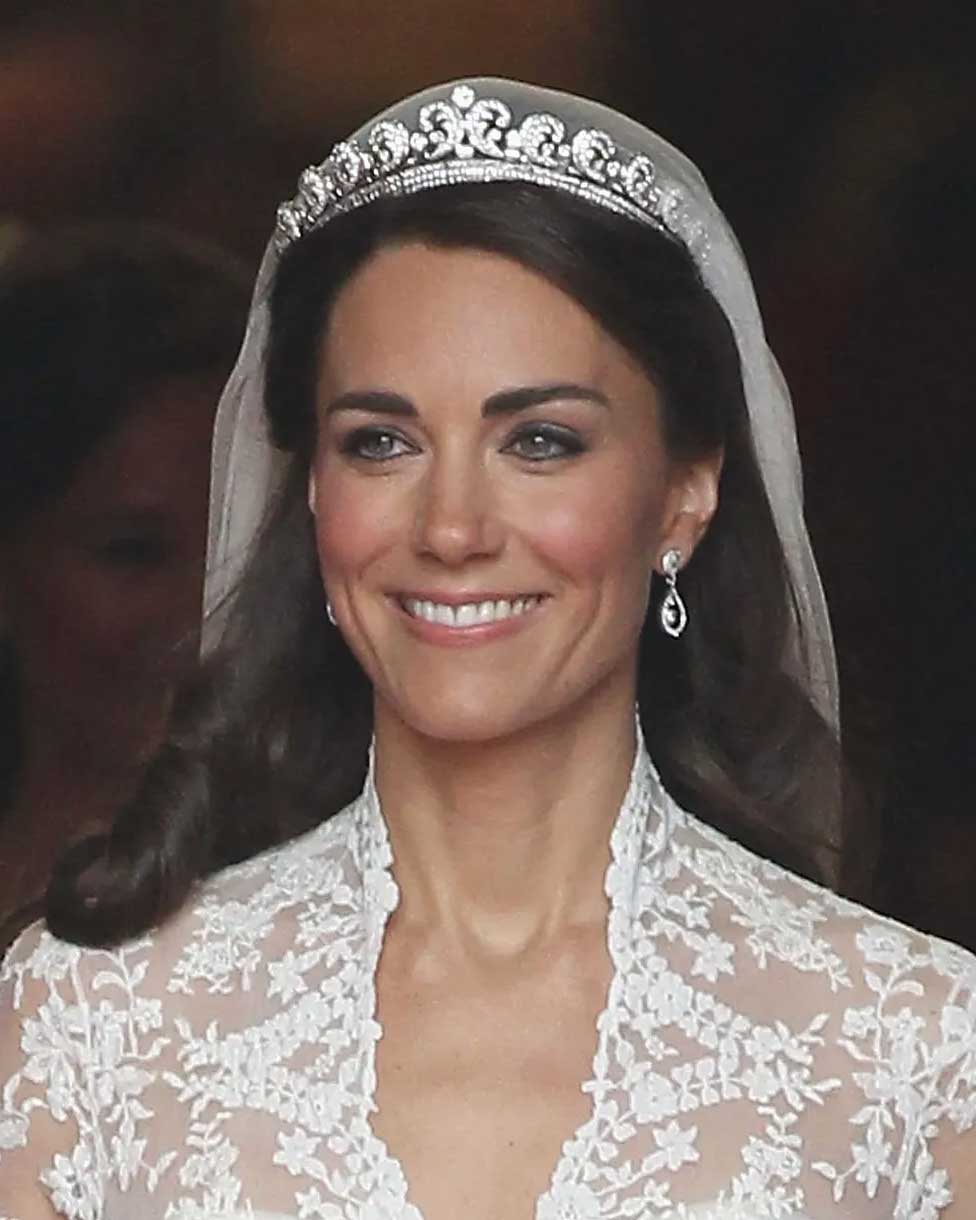
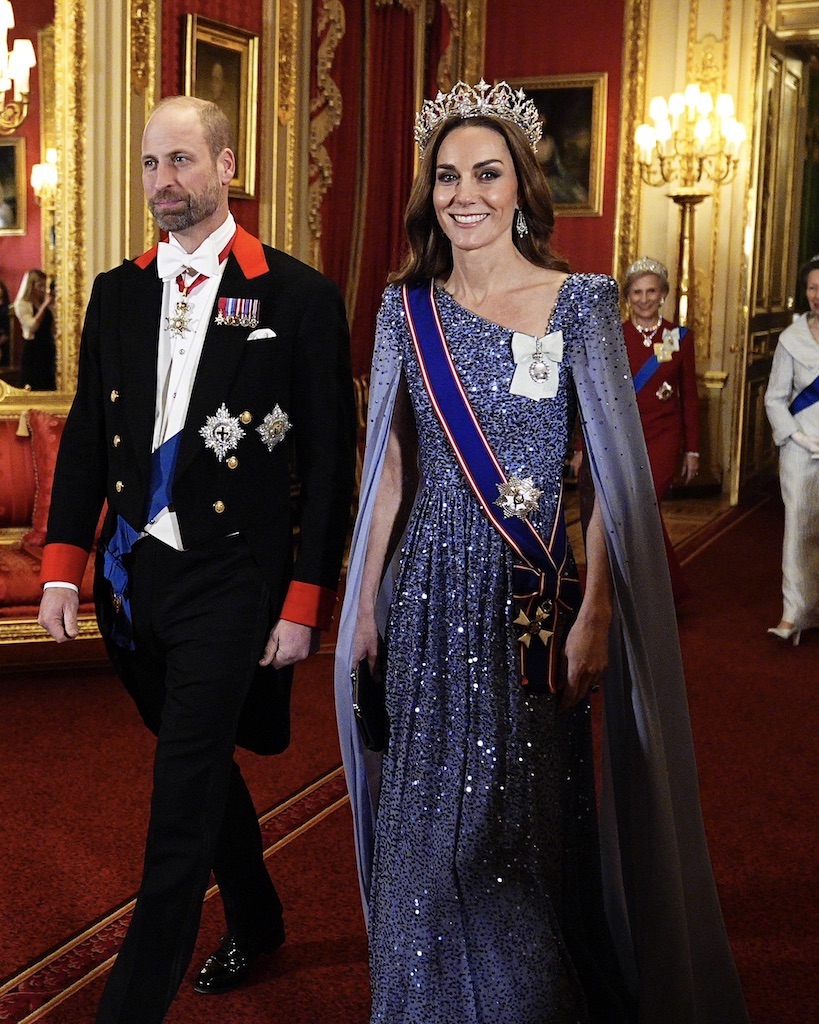
Today, royals including Catherine, Princess of Wales, Queen Letizia of Spain, and many others return to Cartier time and again. Queen Elizabeth II was also closely associated with Cartier, most notably through the Williamson Diamond Brooch, featuring a rare 23.6-carat pink diamond gifted to her as a wedding present in 1947 and later set by the house. Princess Diana also regularly wore a Tank watch. The brand’s ability to innovate while honoring tradition has ensured its status as the jeweler of kings. Meghan Markle, the Duchess of Sussex, wore Cartier earrings on her wedding day to Prince Harry.
The Patiala Necklace: Cartier’s Most Extraordinary Royal Commission
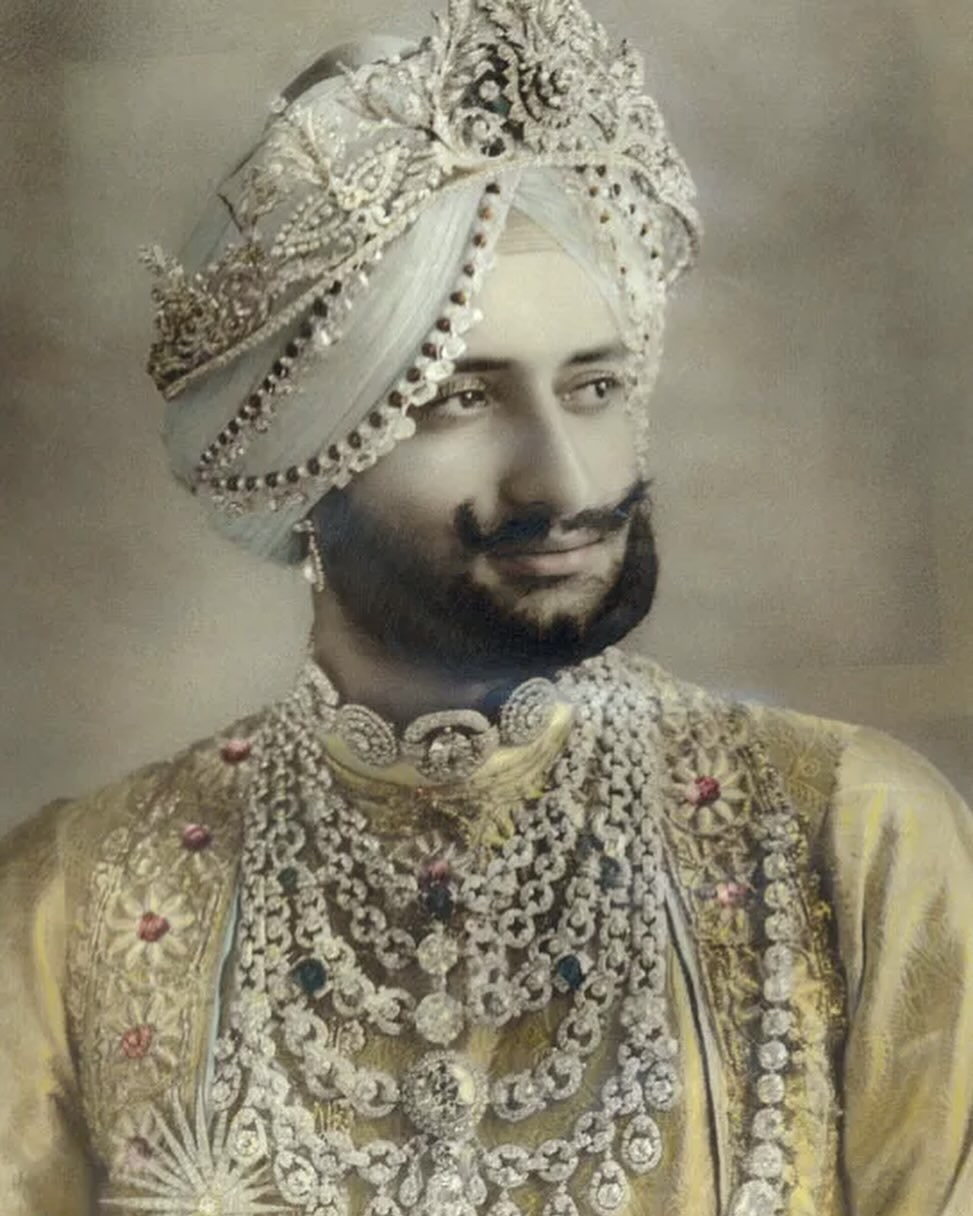
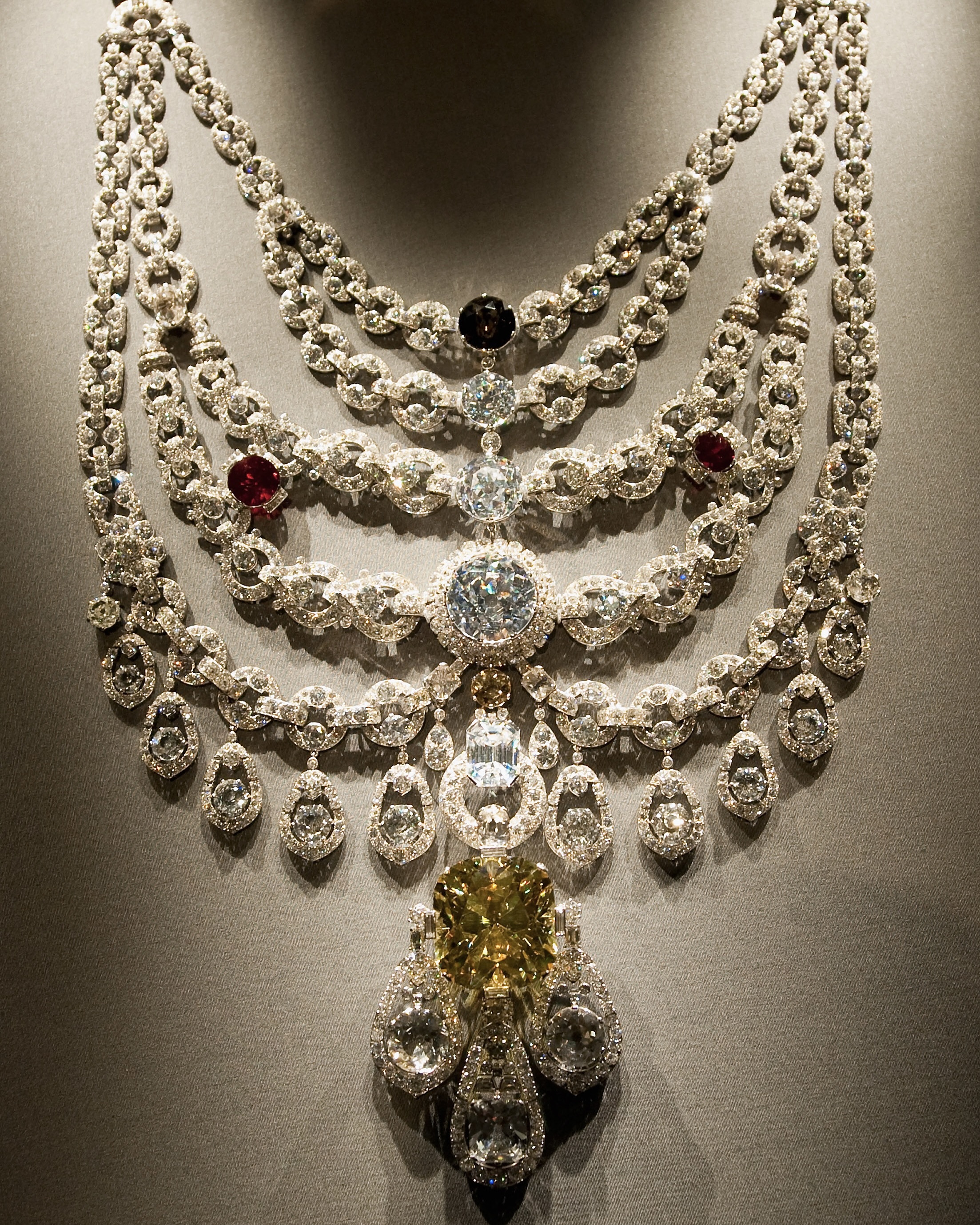
Among Cartier’s most spectacular high jewelry creations is the Patiala Necklace, commissioned in 1928 by the Maharaja of Patiala. One of the largest diamond necklaces ever made, it was set with thousands of diamonds, including the 234.65-carat De Beers diamond at its center.
The necklace does more than just dazzle; it solidifies Cartier’s legacy as the “Jeweler of Kings and King of Jewelers.” This masterpiece serves as an expression of that title, pairing the precision of Parisian craftsmanship with the limitless ambition of the Indian Maharajas. By translating such immense sovereign power into a singular work of art, Cartier proved its unique ability to meet the most audacious demands of the world’s royal houses.
Cartier, the Hope Diamond, and a New Kind of Royalty

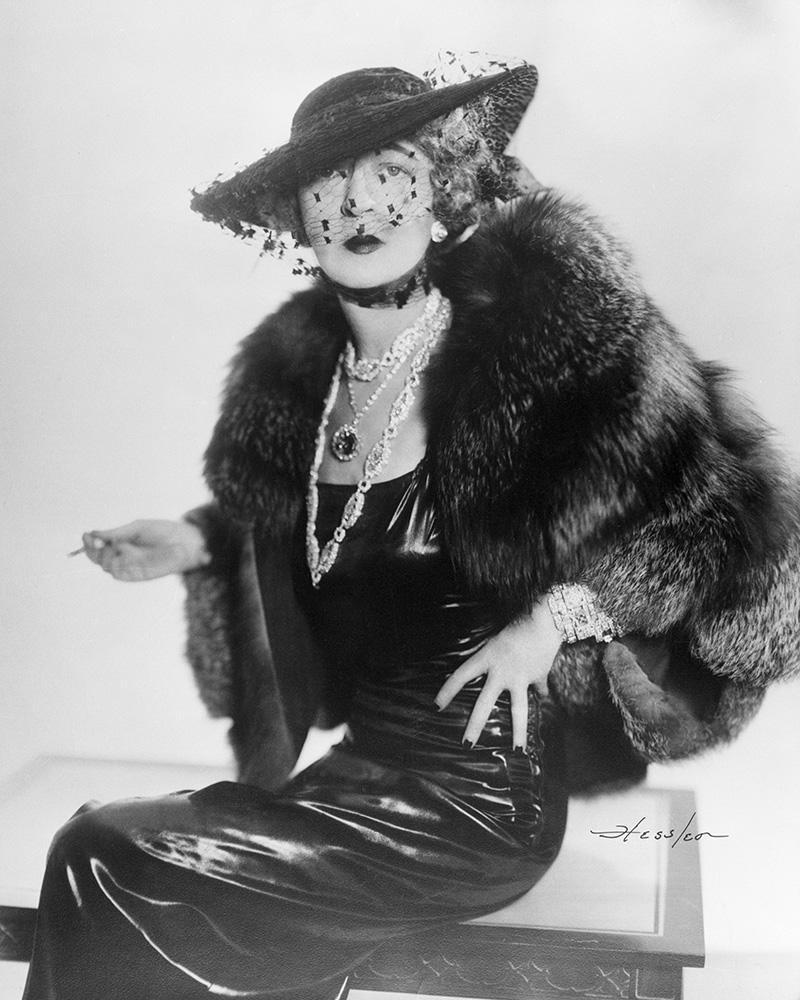
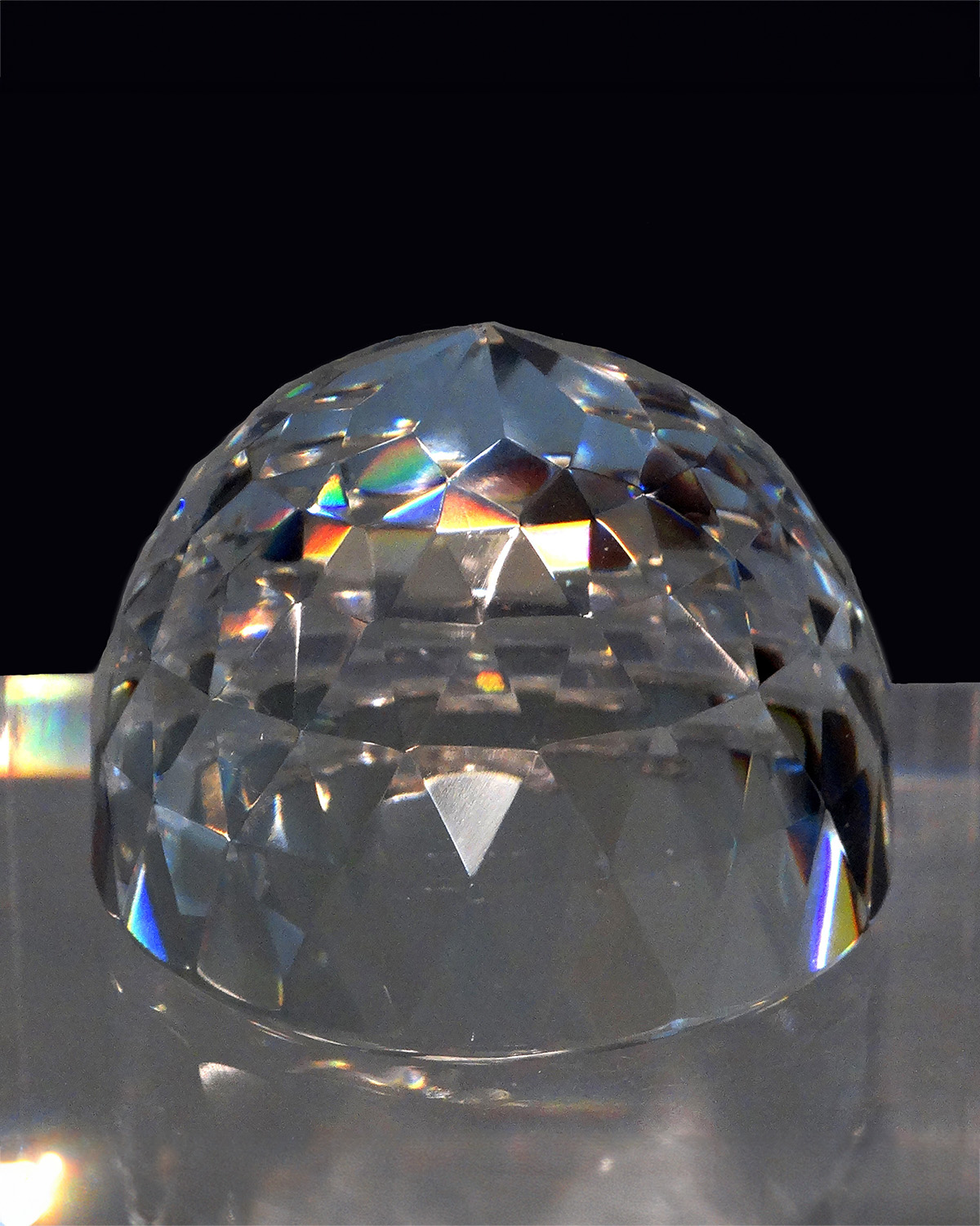
Pierre Cartier also facilitated one of the house’s most storied transactions, selling the 45.52-carat Hope Diamond to American socialite Evalyn Walsh McLean in 1911. An eccentric fixture of Washington society, McLean treated the legendary blue diamond with surprising nonchalance—wearing it to dinner parties, while running errands, and even letting her dog play with it—embodying a distinctly American form of royalty.
The sale marked a shift for Cartier, placing one of history’s most famous gems outside European courts and into the hands of a new kind of elite
Cartier and Hollywood: The Jewels That Defined Celebrity Style
Then, of course, there is the celebrity factor. When two of your most famous clients are Elizabeth Taylor and Grace Kelly, the marketing speaks for itself.
Grace Kelly and Cartier
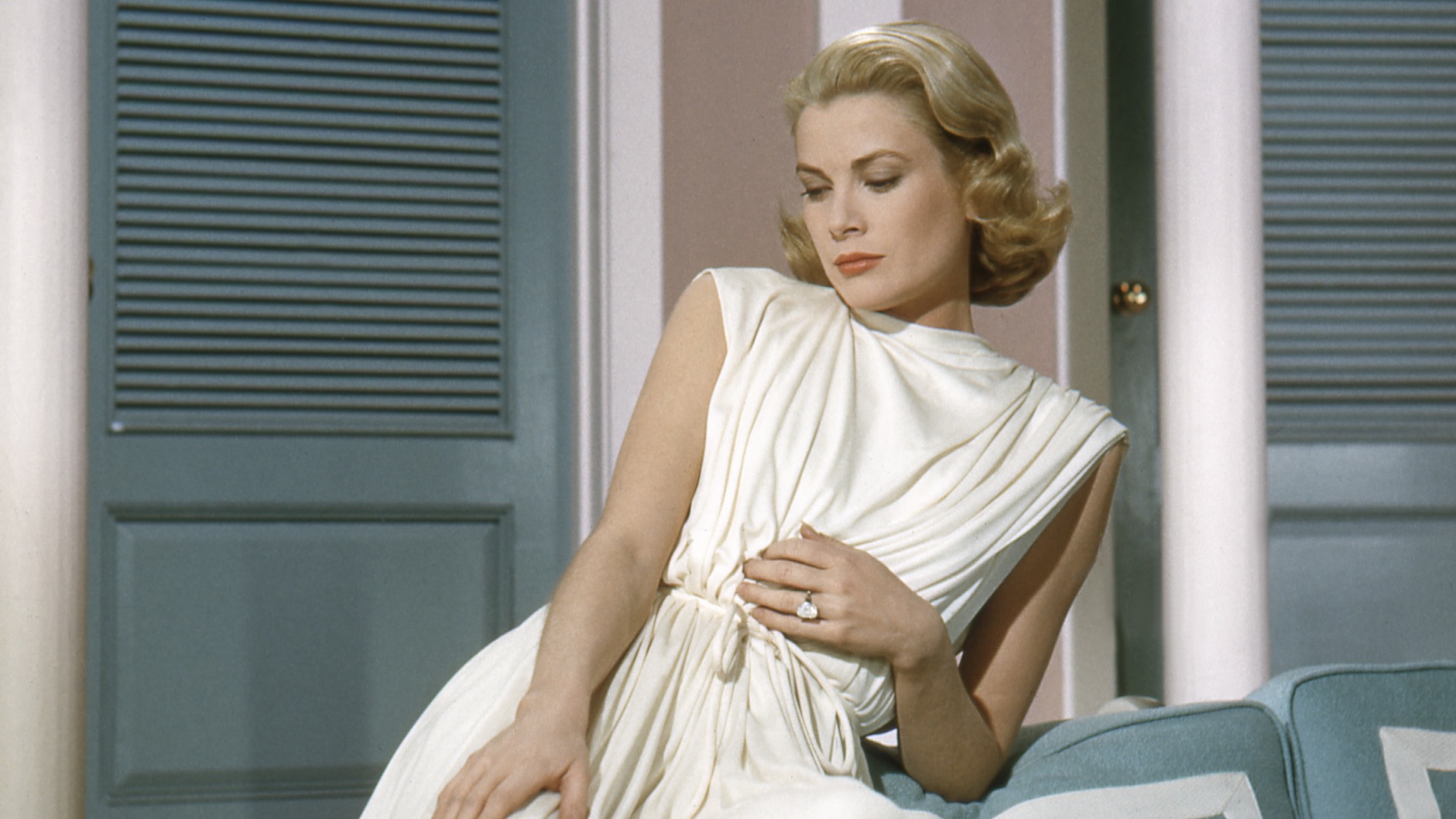
Kelly’s 10.48-carat Cartier engagement ring from Prince Rainier in 1956 appeared in her final film, High Society. Prince Rainier first proposed with a ruby and diamond Cartier eternity band, later presenting Kelly with the now-iconic emerald-cut diamond ring, flanked by baguette diamonds—a design that would go on to influence generations of engagement rings. At a time when round brilliant stones dominated, Kelly’s elegant, step-cut diamond helped popularize the emerald cut as a sophisticated alternative.
Kelly’s relationship with Cartier extended beyond her engagement ring to a suite of jewels that became central to her royal image. Among them was a diamond festoon necklace, a wedding gift composed of 64 brilliant- and baguette-cut diamonds set in platinum. Worn frequently throughout her life, it later passed to Princess Caroline and, more recently, Charlotte Casiraghi, underscoring Cartier’s place within a modern royal lineage.
Cartier also contributed to Kelly’s ceremonial wardrobe. On the evening of her civil wedding in 1956, she wore the Bains de Mer tiara, a ruby and diamond design gifted by the Société des Bains de Mer. Its three detachable ornaments could be worn as brooches, hairpieces, or pendants—an example of Cartier’s emphasis on transformable design, which Kelly wore in multiple configurations throughout her life.
Elizabeth Taylor and Cartier
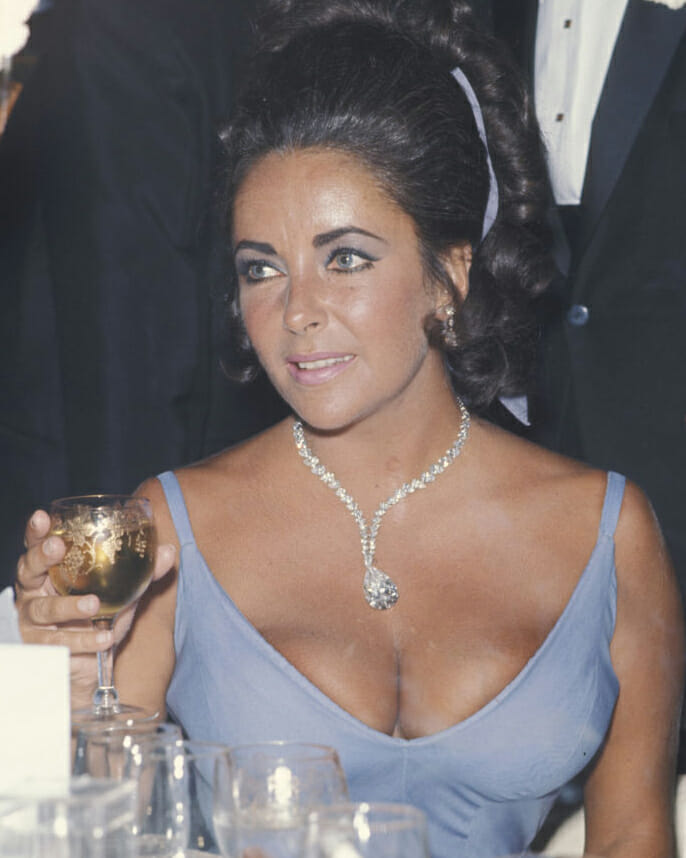
Elizabeth Taylor’s relationship with Cartier is defined by some of the most iconic jewels of the 20th century, each tied to moments of personal and public spectacle. Among them was La Peregrina, the legendary 16th-century pearl once owned by Spanish royalty, which Richard Burton gifted to Taylor in 1969. Cartier later reset the historic gem into a necklace of pearls, rubies, and diamonds, transforming it into a richly colored, Renaissance-inspired design that reflected Taylor’s bold, expressive style.
On October 23, 1969, Cartier purchased a 69.42-carat diamond at auction for $1,050,000, outbidding Richard Burton’s representative. Initially dubbed the “Cartier Diamond,” the stone made headlines before Burton contacted the house the following day and acquired it for a reported $1.1 million, under the condition that Cartier could display it for a week at its Fifth Avenue store. It would later become known as the Taylor-Burton Diamond, a gem synonymous with Taylor’s larger-than-life presence.
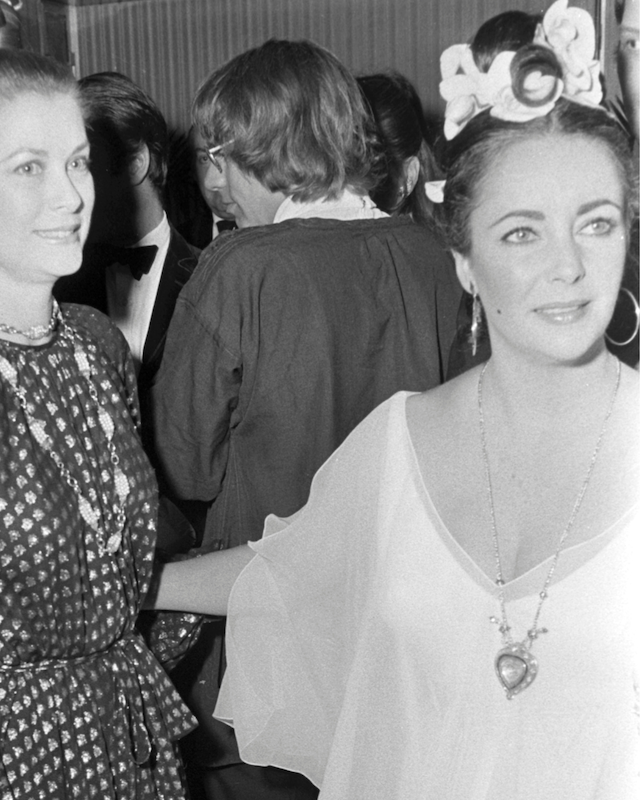
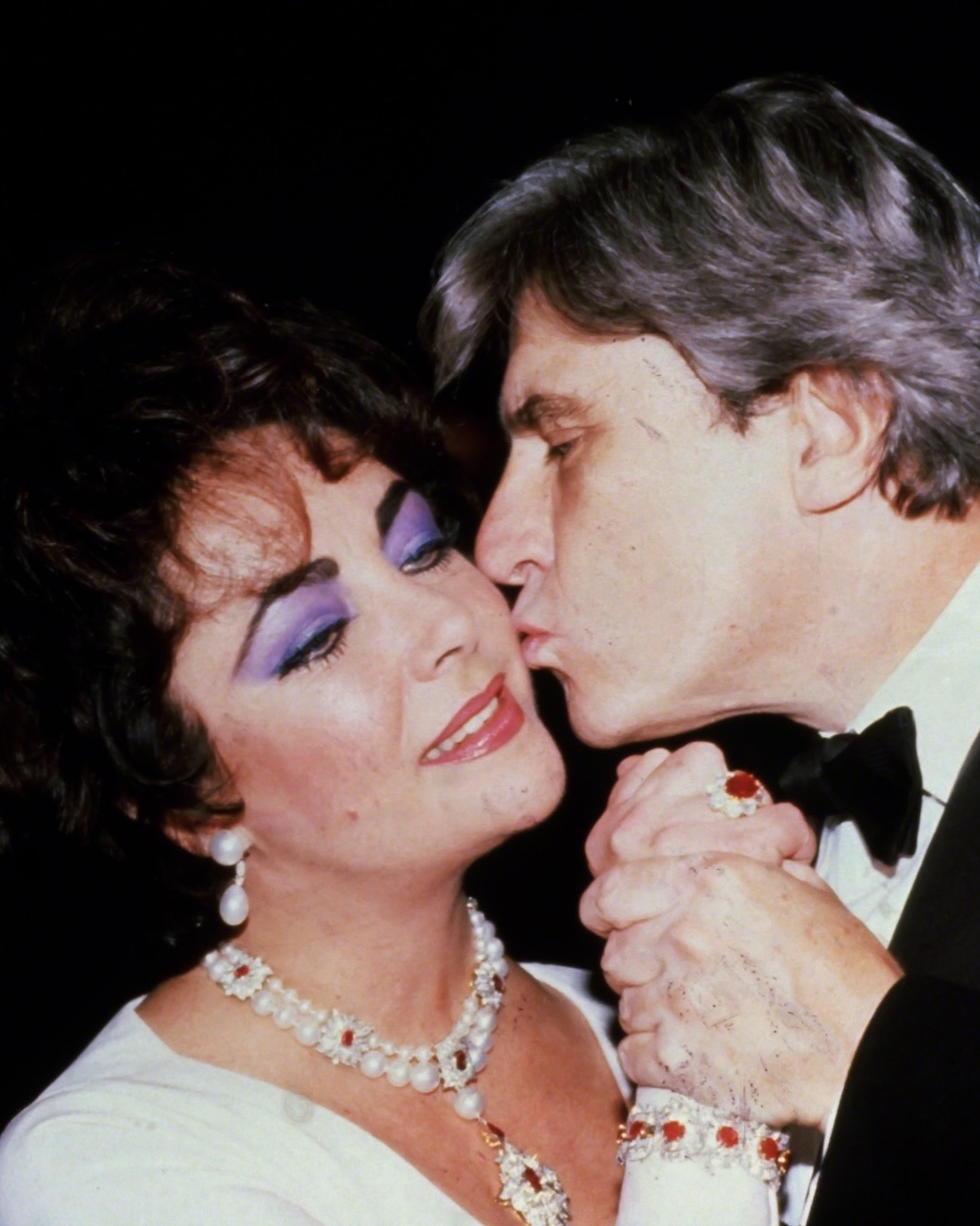
Taylor’s collection also included the Taj Mahal diamond, a 17th-century inscribed heart-shaped stone that Burton gifted to her in 1972. Cartier later set the historic diamond into a gold and ruby necklace, blending Mughal history with the house’s distinctive design language.
The Cartier Toussaint Necklace on Screen


Today, Cartier remains a red carpet mainstay, worn by stars including Rihanna, Zoe Saldaña, Sarah Jessica Parker, and Celine Dion. In Ocean’s 8, the jewel targeted by the heist—worn by Anne Hathaway’s character—was inspired by the Toussaint necklace, originally designed by Jacques Cartier in 1931 for the Maharaja of Nawanagar. Centered on a 136.25-carat blue-white flawless diamond known as the Queen of Holland, the piece also featured a 12-carat green diamond alongside several large white and pink stones.
How Cartier Blends Heritage and Innovation Today

Cartier’s enduring relevance lies in its ability to reinterpret its own history without losing its identity. Rather than revisiting the past as reference alone, the house continuously reimagines its design codes—balance, proportion, and contrast—through a contemporary lens.
A recent example is the En Équilibre Chapter III collection, where pieces like the Euphonie necklace draw inspiration from a 1913 brooch-pendant, translating archival motifs into modern high jewelry.
“Creating a distinctive line through understatement is the paradox of sophisticated simplicity. It’s the art of looking at things differently, but also the art of balancing them with precision. It’s the art of balance, at the heart of our creative approach, that reveals Cartier’s harmony,” Jacqueline Karachi, Director of High Jewelry Creation, said in an official brand statement.
Cartier’s Enduring Influence on Jewelry and Culture
What sets Cartier apart from other brands is its ability to transcend trends while also establishing them. “The enduring Cartier aesthetic is characterized by designs that are instantly recognizable and possess a universal, timeless appeal. Signature creations, such as the Trinity ring, the Juste un Clou collection, and the Love bracelet, exemplify this legacy of instantly identifiable, perennially popular motifs,” Pape says.
Equally important is Cartier’s ability to incorporate its rich history into its designs without compromising it. Classic motifs such as the panther are not relegated to the past but continue to evolve, embraced by new generations through an instantly recognizable visual language. It is this exquisite skill and craftsmanship that firmly position Cartier at the intersection of history, design innovation, and natural diamonds.