Read More
< Historic Diamonds / Famous Diamonds
Bunny Mellon’s Extraordinary Legacy of Jewels
From whimsical Schlumberger masterpieces to one-of-a-kind historic diamonds, explore the jewels that shaped Bunny Mellon’s refined and quietly dazzling world.
Published: December 12, 2025
Written by: Meredith Lepore

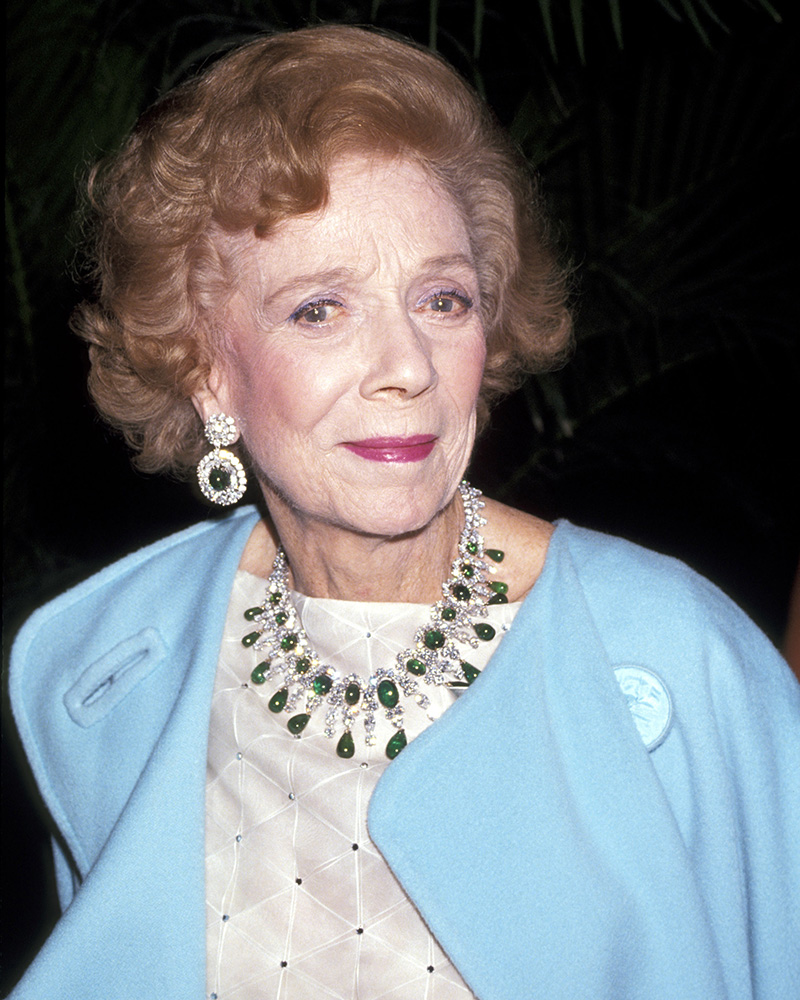
To call Bunny Mellon merely a socialite misses the mark entirely. Yes, Mellon—née Rachel Lowe Lambert—was born into privilege as a Listerine heir on Madison Avenue in 1910 and expanded her considerable fortune through marriage, particularly her second to Paul Mellon, the distinguished American philanthropist. Together, the couple is estimated to have donated more than $600 million to charitable causes over the course of their lives.
Like many of her contemporaries, Rachel “Bunny” Mellon attended the era’s most glittering soirées—including Truman Capote’s Black and White Ball—and moved effortlessly within rarefied circles that included Hubert de Givenchy and the Kennedy family. Jackie Kennedy became a close friend, and Mellon would ultimately design President John F. Kennedy’s grave at Arlington. Though she was no stranger to couture, she was just as at ease in mud boots at her intentionally understated Oak Spring estate in Upperville, Virginia—often topped with a Balenciaga bucket hat, of course.
Beyond the glamour, Bunny Mellon deserves recognition as a formidable philanthropist, a devoted landscape artist, an intuitive interior designer, and the enduring muse to one of the 20th century’s most celebrated jewelry designers. Her extraordinary natural diamond collection would simply not exist without her singular creative partnership with Jean Schlumberger.
Meet the Expert

- Dr. Sylvain Cordier is the Paul Mellon Curator and Head of the Department of European Art at the Virginia Museum of Fine Arts, the institution that now houses Bunny Mellon’s remarkable Schlumberger jewelry collection.
- He earned his Ph.D. in the History of Art from the Université Paris-Sorbonne and specializes in 19th-century French art and decorative arts.
Ahead, we explore some of the most iconic jewels in Bunny Mellon’s extraordinary collection, along with the close and complex relationship between Mellon—who acquired more than 140 Schlumberger creations over her lifetime—and the visionary designer whose work helped shape one of the most remarkable natural diamond collections in history.
How Bunny Mellon and Jean Schlumberger Came Together
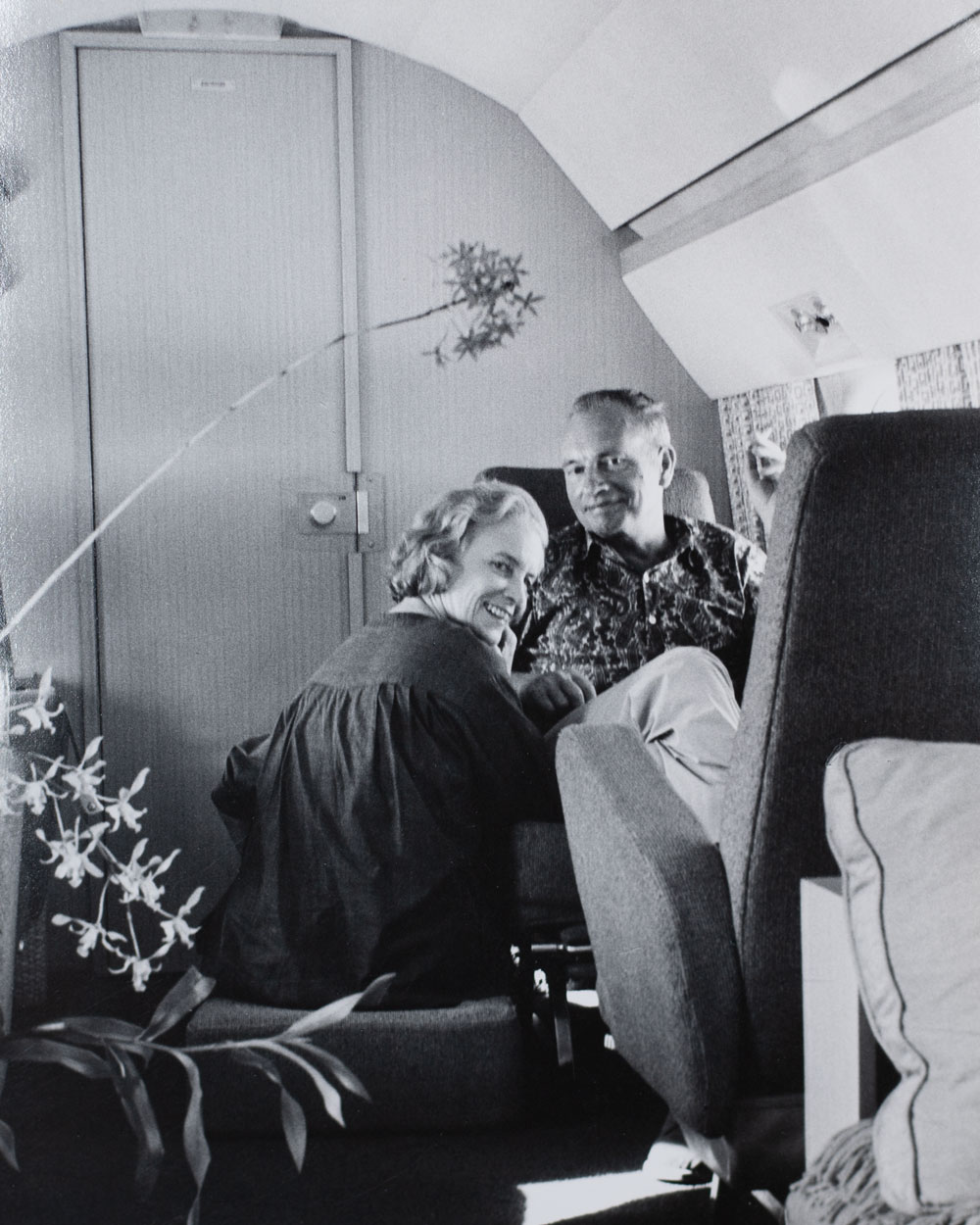
Audrey Hepburn and Givenchy, Bob Mackie and Cher, Jean-Louis Dumas and Jane Birkin, Bunny Mellon and Jean Schlumberger. But how does an artist truly find a muse? In the case of Bunny Mellon and Jean Schlumberger, their first encounter was unremarkable.
They had met briefly years earlier, but it wasn’t until 1955, when both visited the sickbed of their mutual friend, British interior designer Syrie Maugham, that the spark of a deeper connection began to take shape. Bunny Mellon was already a fan of the jewelry designer’s work and made regular visits to his salon on East 63rd Street in New York City. The two simply hit it off both socially and creatively, which developed into a strong trust.
They were aesthetically compatible in almost every way. Dr. Sylvain Cordier, the Paul Mellon curator and head of European art at the VMFA, an extensive scholar on the work of Schlumberger and the Mellons, said there was a natural bond rooted in their shared reverence for nature and form, much of which they found at her Oak Spring Farm estate. “There was a connection that bonded them together, and that’s my feeling is that you realize so much of what she found beautiful in nature, Schlumberger was able to design,” he says.
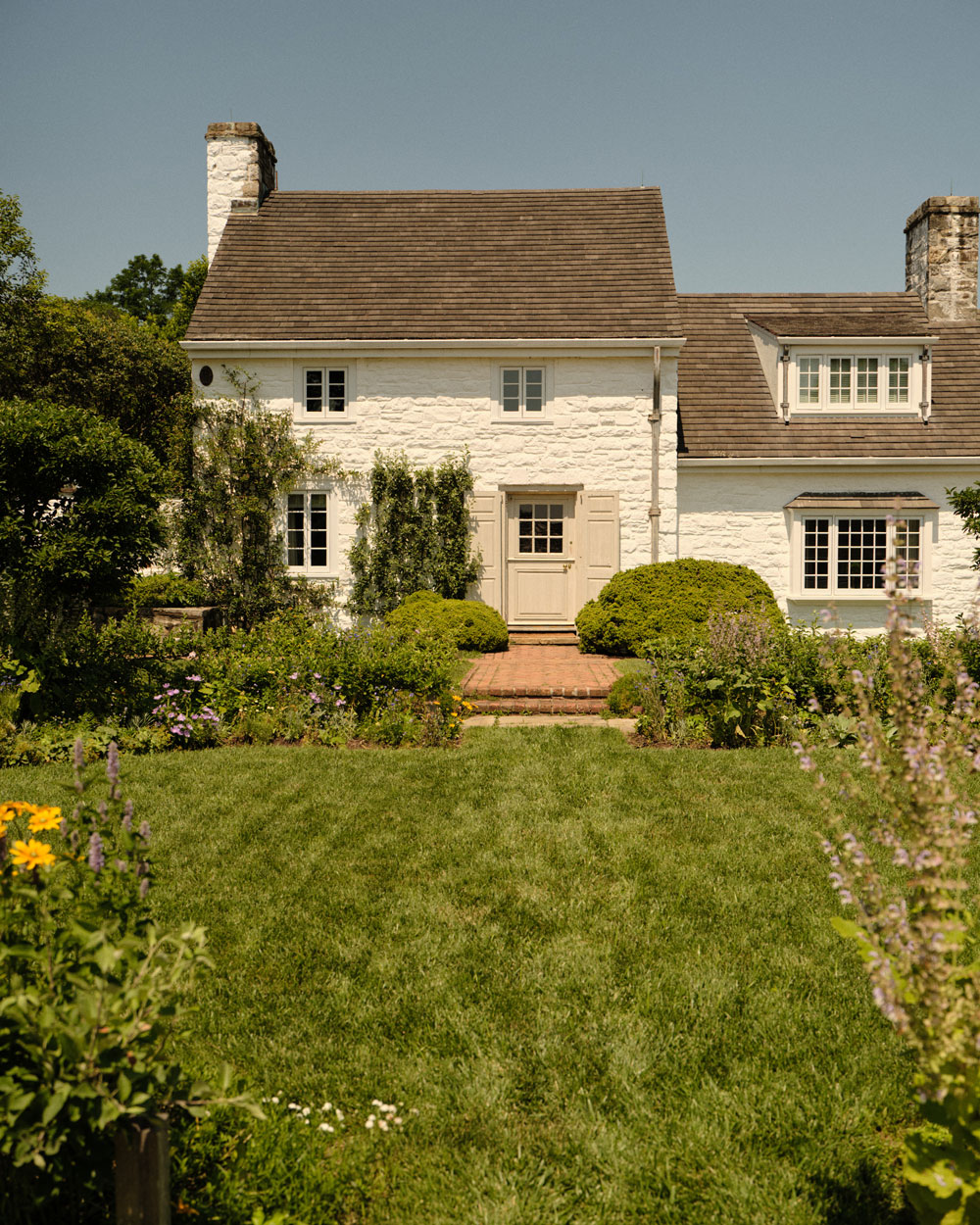
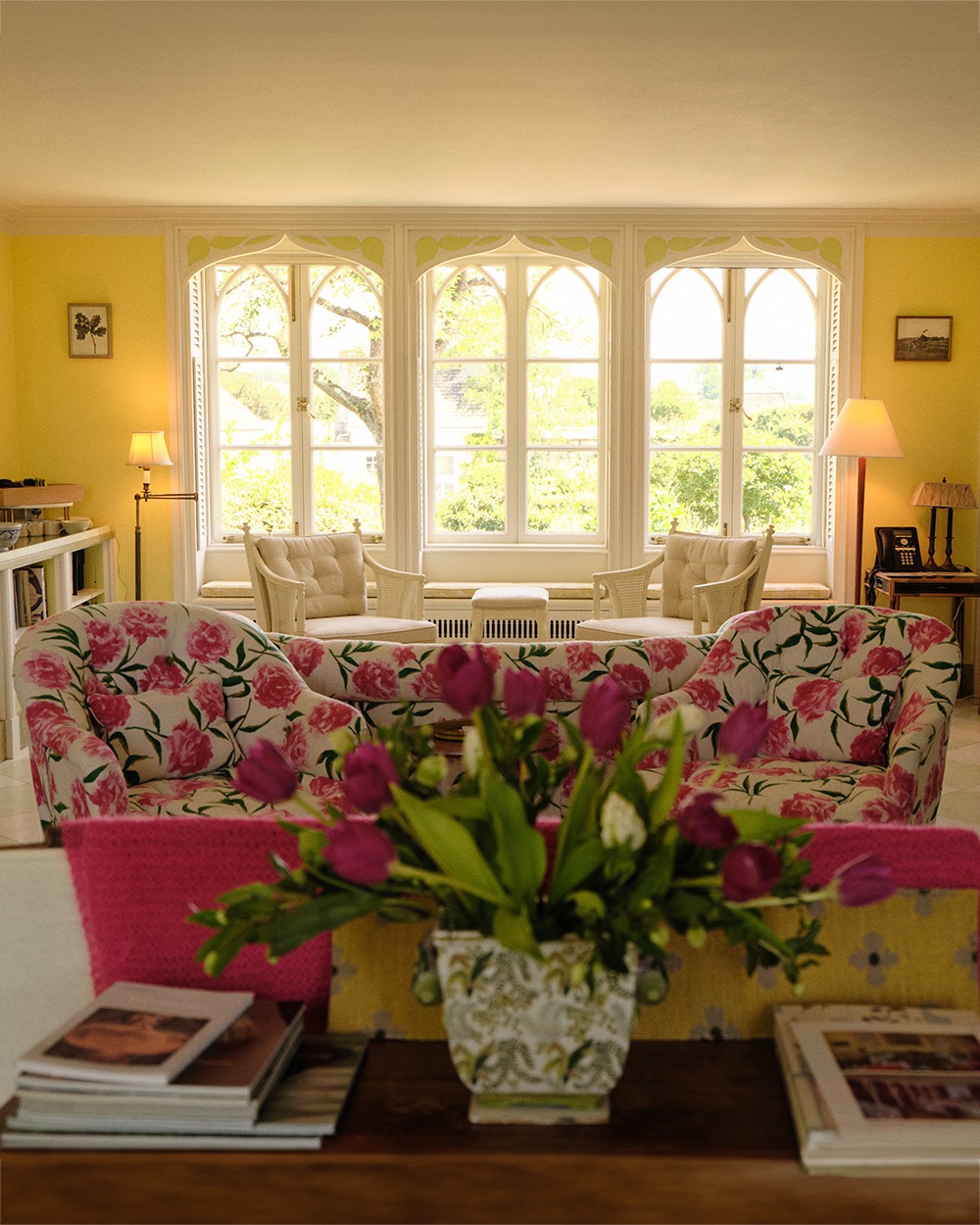
Cordier emphasized that while Bunny Mellon adored the finished jewels, she was equally devoted to the drawings he created for them, treasuring the artwork as deeply as the pieces themselves. He explained that although Mellon certainly loved the jewelry itself, she felt an even deeper connection to the drawings—believing they represented the purest expression of Schlumberger’s vision. As he put it, “It becomes a question of interpretation. And I think that’s something she was very seduced by and very attracted to. There was an attraction between the two. She could feel with him that she was more than a client.”
In 1956, Walter Hoving—then chairman of Tiffany & Co.—invited Schlumberger to join the house as vice president. By that time, his bond with Bunny Mellon was already firmly established. Once he arrived at the world’s premier jewelry retailer, with its unparalleled resources and global reach, their creative partnership entered a new chapter, one that would become among the most exciting and influential in the history of jewelry design.
Bunny Mellon, Jean Schlumberger and the Era of Tiffany & Co.

As one might expect, Schlumberger’s arrival at Tiffany & Co. in 1956 dramatically expanded his access to the caliber of stones and materials he could work with on a regular basis. “Being integrated into Tiffany, he was offered extraordinary gemstones, much more easily than when he was independent,” says Sylvain. With this renewed creative freedom, he naturally turned to his close friend Bunny Mellon. She became a frequent presence in his studio—often visiting every other week—and her discerning eye helped shape the very rhythm of his creative process.
A prime example is the famed Flowerpot brooch created in 1960. When Schlumberger gained access to an exceptionally large sapphire, he immediately reached out to Mellon, both to gauge her interest and to imagine what they might dream up together.“It’s a back and forth of ideas. She does regularly, at the beginning of their relationship, come with ideas like the Butterfly Choker, for instance. But by the time the friendship develops in the 60s, his position at Tiffany’s makes him able to just create and not to rely that much on the patron to explain what the patron wants,” Cordier says.
As Schlumberger’s tenure at Tiffany’s evolved and his friendship with Mellon deepened, their dynamic shifted. It became less about her bringing ideas from their conversations and more about his instinctive understanding of her taste. He knew precisely what would delight her, and could present extraordinary stones with a vision for what they might become. Cordier noted that these bespoke creations, including the famed Flowerpot, stand among Schlumberger’s most exceptional works, with Mellon playing a central, inspiring role in their creation.
The Most Iconic Diamond Pieces in Bunny Mellon’s Schlumberger Collection
Schlumberger once said, “For me, the art of jewelry is, first of all, a means of expression, providing possibilities for pure and durable beauty that are outside the usual framework of fashion.” With that philosophy as his guide—and Mellon as his greatest muse—his most extraordinary creations came to life. Ahead, discover the defining Schlumberger masterpieces he designed specifically for Bunny Mellon.
The Butterfly Bracelets (Originally Conceived as a Choker in 1956)
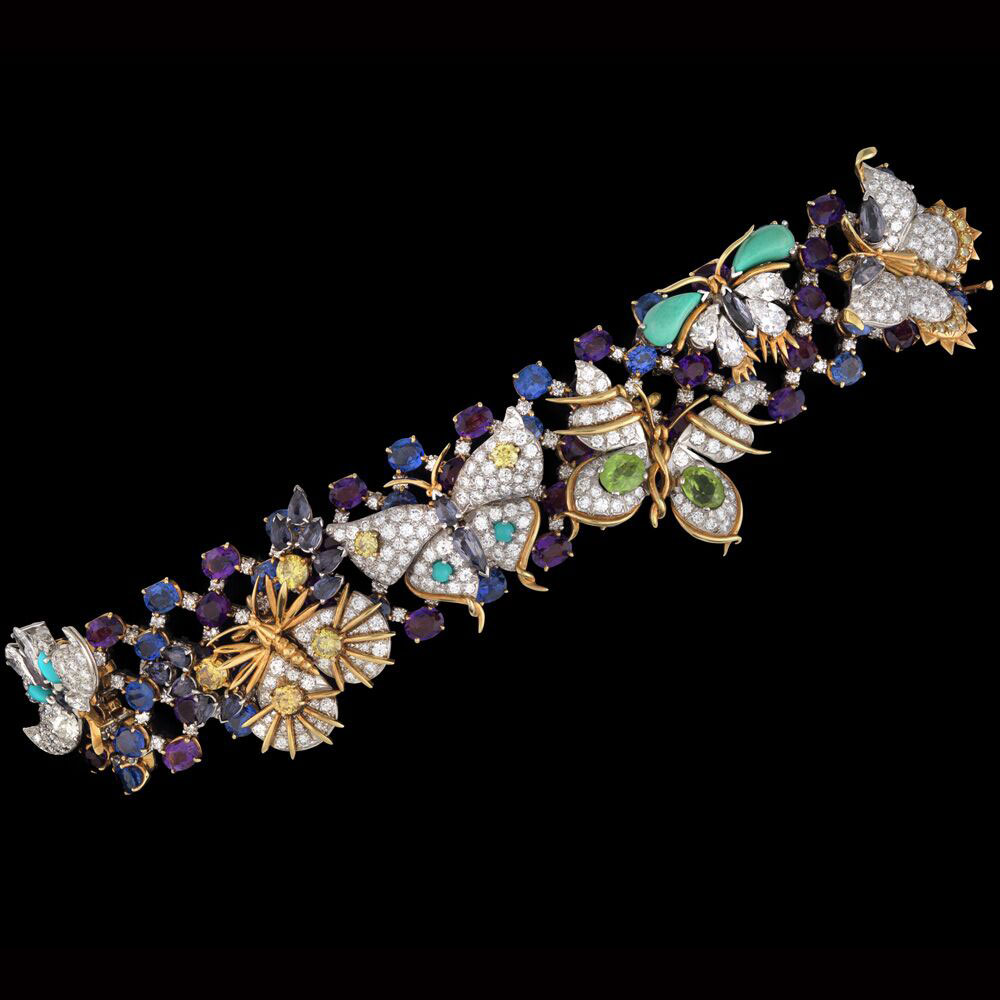
This piece marked a pivotal moment, as it was among the first designs Schlumberger created after joining Tiffany & Co. Cordier noted that Mellon discussed the idea of a butterfly-themed choker with him the day after the new Schlumberger salon opened, making it his first official Tiffany creation.
The concept began as a choker but eventually evolved into two complementary bracelets that could be joined together to form one. Mellon preferred them as bracelets, while Schlumberger was more drawn to the choker concept. In the end, the design satisfied both viewpoints: two exquisite bracelets that could seamlessly transform into a single, striking choker, reflecting the harmony of their creative partnership.
The Shell Bracelets and Clip (1958)
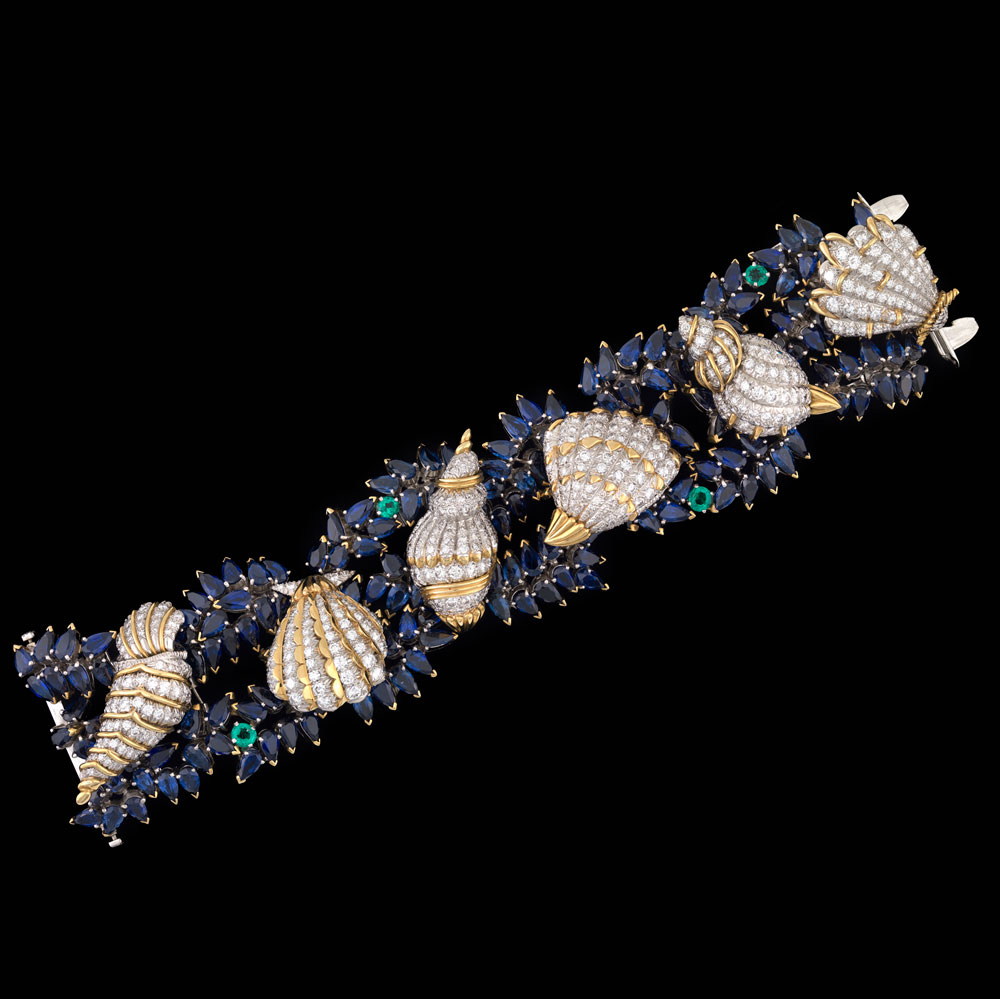
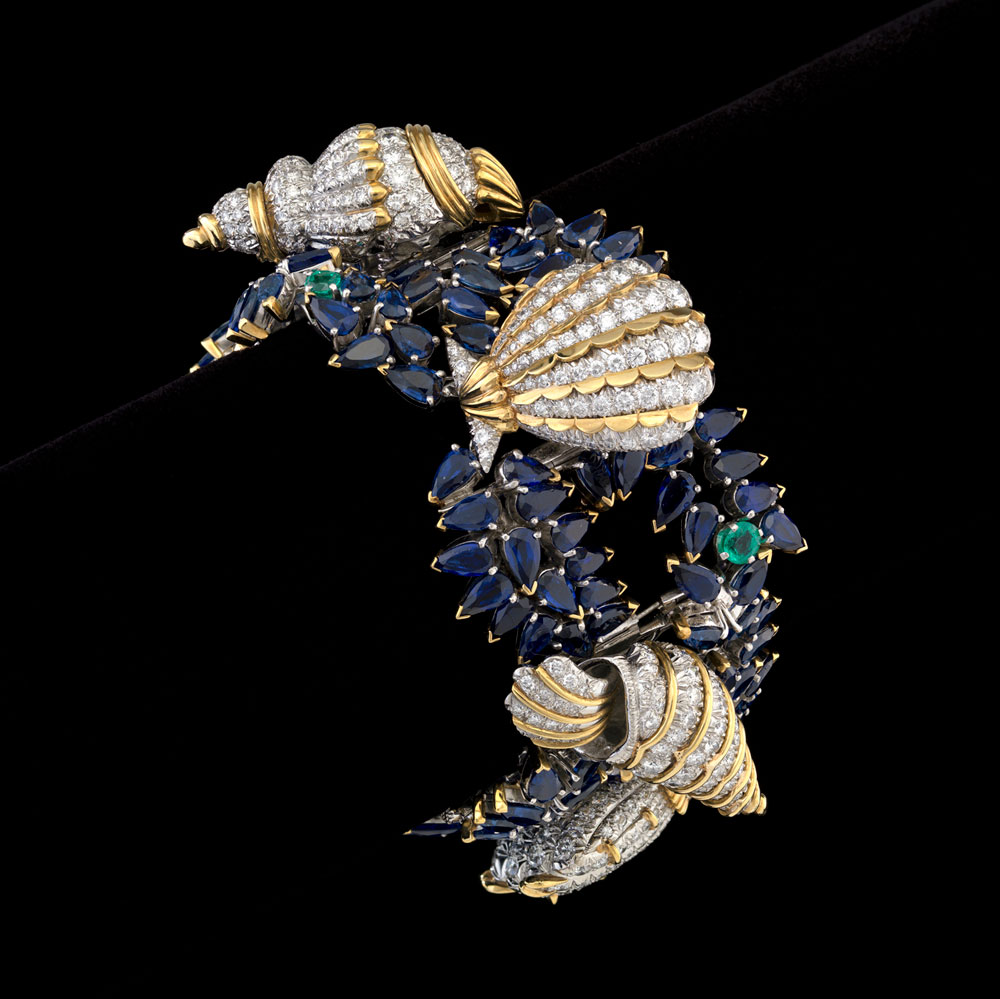
Cordier noted that the Shell Bracelets were another significant highlight of Mellon’s collection. They were celebrated for their three-dimensional form and for their personal connection to Mellon’s life near the sea, as she spent considerable time in Cape Cod and later in Antigua. He explained that the piece is especially meaningful because it reflects the era’s fascination with tropical motifs and illustrates how deeply the sea inspired Mellon.
The Flower Pot (1960)
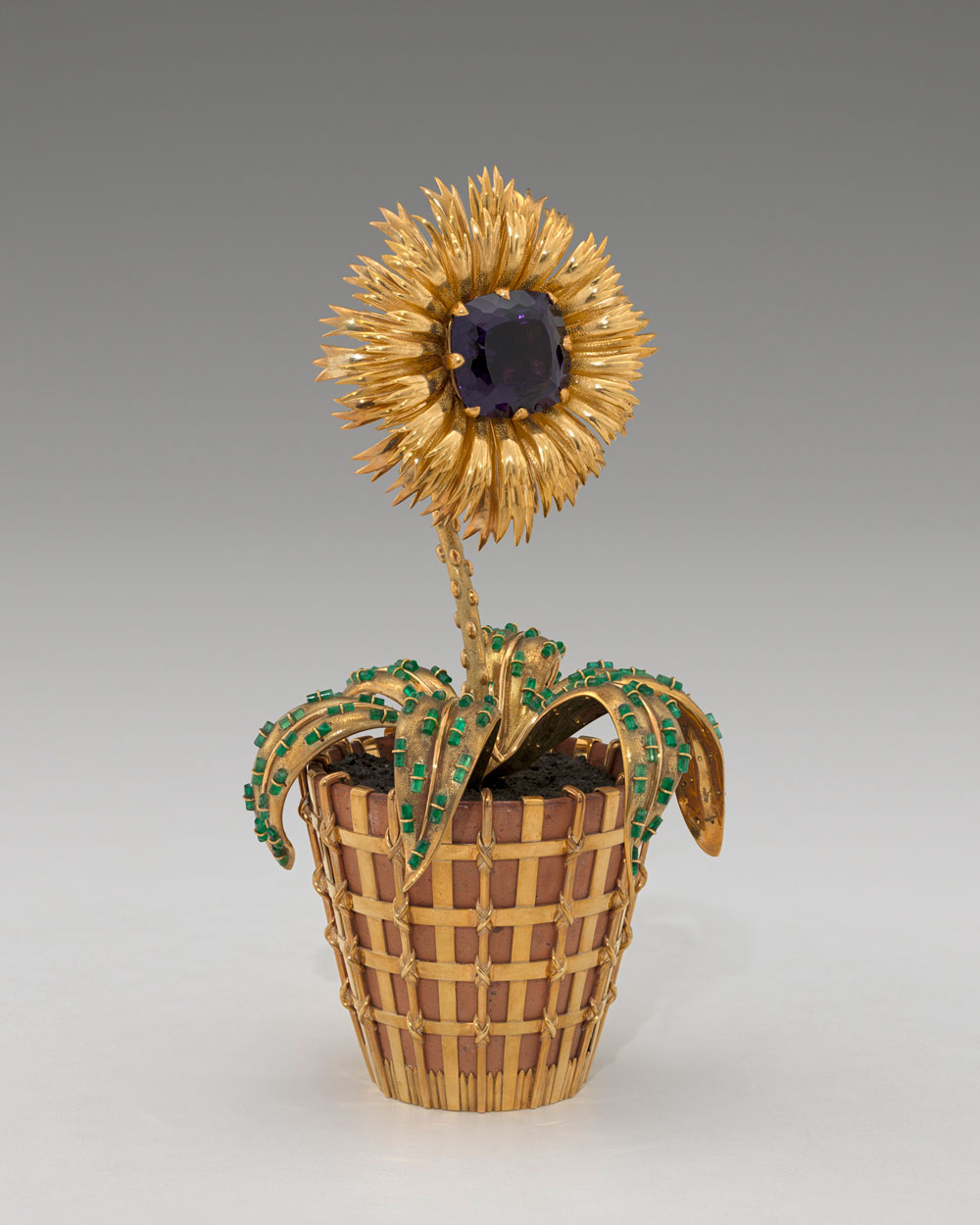
Though this unique creation is often categorized as jewelry, it is really more of a sculptural object. “There’s a piece that just is such an extraordinary statement about high jewelry by going beyond wearable jewelry,” said Cordier. Mellon, who could arguably be credited with originating the quiet luxury movement, was not known for wearing large, showy jewels and had been hesitant to wear such a substantial stone.
What Schlumberger envisioned captured Mellon’s essence so completely that it felt like pure perfection. As Cordier explained, “He knows that she has created that world around her Oak Spring Farm, but also in Cape Cod and soon in Antigua. She’s a very private person, and for her the premise of the fence around her garden is completely central, and so turning it into an object that she doesn’t need to wear, but that will associate and pay tribute to her activity as a botanist, as an object sculpture, is so well expressed.”
Cordier also noted that the Flower Pot is especially significant because it reflects Schlumberger’s surrealist playfulness. The designer’s early training in surrealism while working for fashion visionary Elsa Schiaparelli had a profound influence on him, and that sense of imaginative freedom comes through strongly in this piece. It is particularly evident in his bespoke collaborations with Mellon, who deeply appreciated his whimsical, unconventional approach.
The Jasmine Necklace (1962)
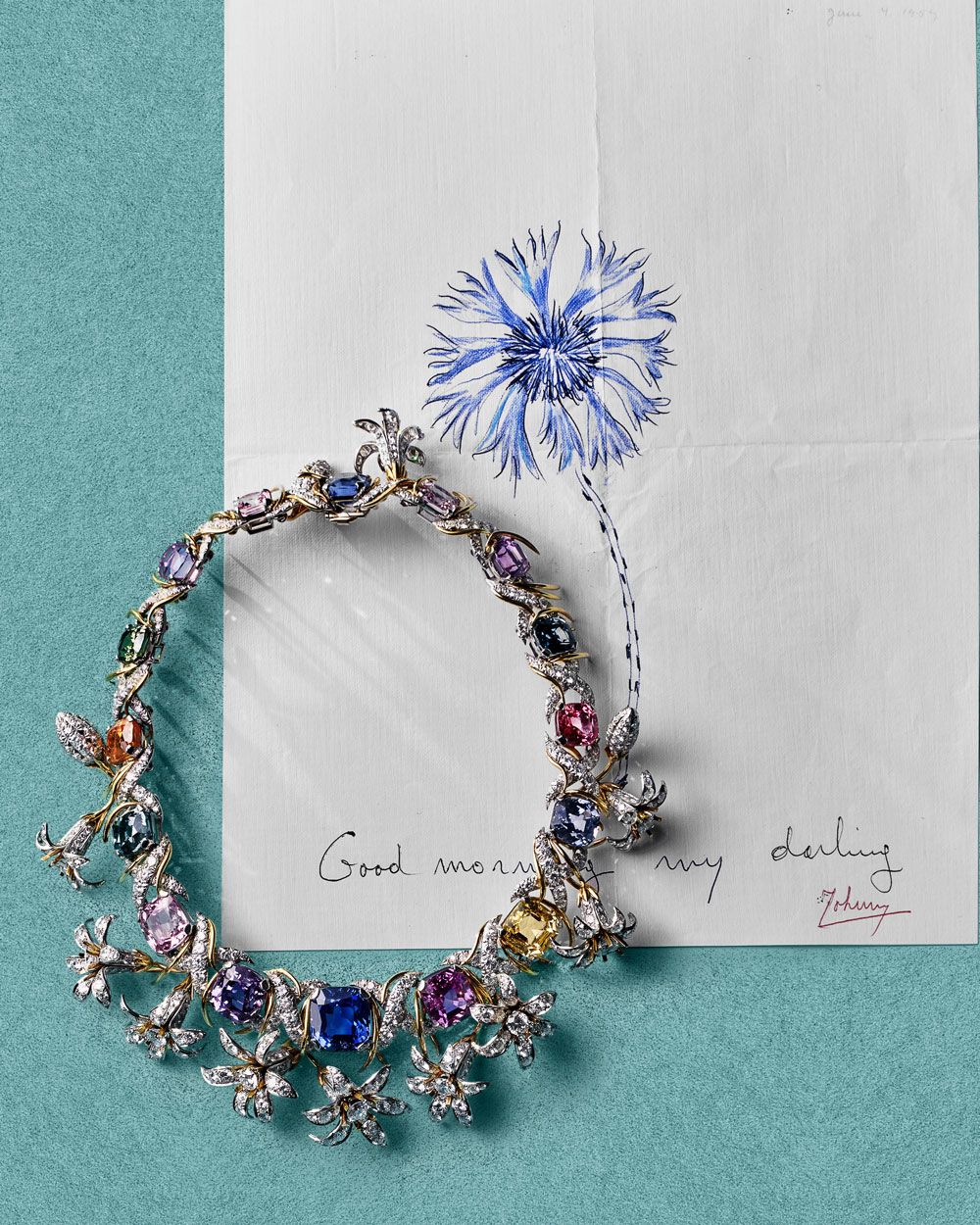
Cordier believes the Jasmine Necklace is an essential part of Mellon’s collection not only because it is visually stunning, but because it perfectly demonstrates Schlumberger’s playful disregard for convention when designing diamond pieces. In the Jasmine Necklace, the jewels themselves are extraordinary, yet Schlumberger deliberately refused to let them dominate the overall composition.
According to Cordier, the necklace was created from an extraordinary cache of 16,000 Meredith sapphires that had taken Tiffany between 20 and 30 years to assemble. By 1962, when the retailer finally completed the collection, Schlumberger’s solution for using these remarkable stones was almost subversive: he chose to partially conceal them within the design of the necklace.
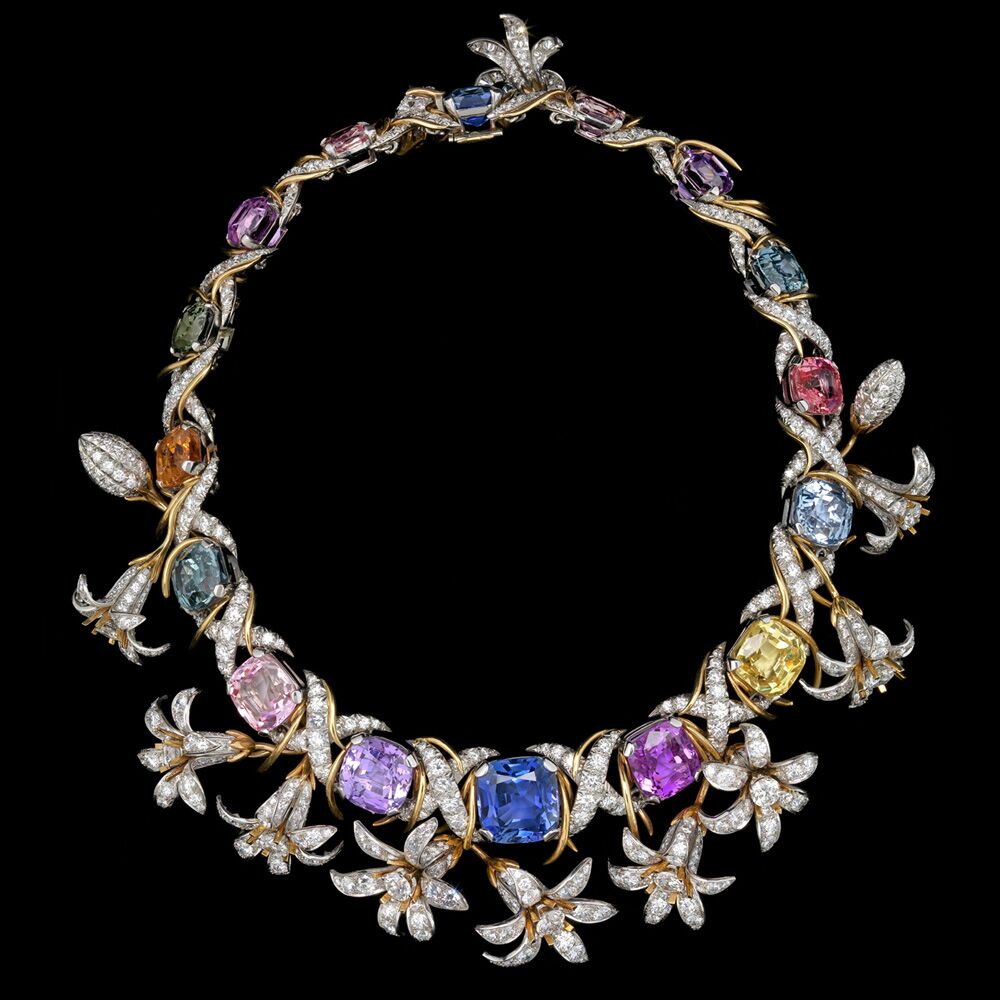
Cordier explained that “when you look at it, the first glance you have of it is the flowers.” Mellon later dubbed the piece the “Breath of Spring” Necklace, and although she typically favored more understated jewelry, she wore this statement necklace publicly several times later in life. The multicolor sapphire and diamond design features nine full, blossoming diamond flowers encircling an inner layer of sapphires.
Cordier argues that Schlumberger understood the rarity of the stones yet continued to express his signature sense of play. “If you want to collect a Schlumberger piece, you have to own up to being playful with that idea of what it’s actually worth and the most valuable aspect of jewelry creativity, and that is something I find really fascinating about him to always try to guess where that playfulness lies,” he says.
The “Bird on a Rock” Clip (1965)
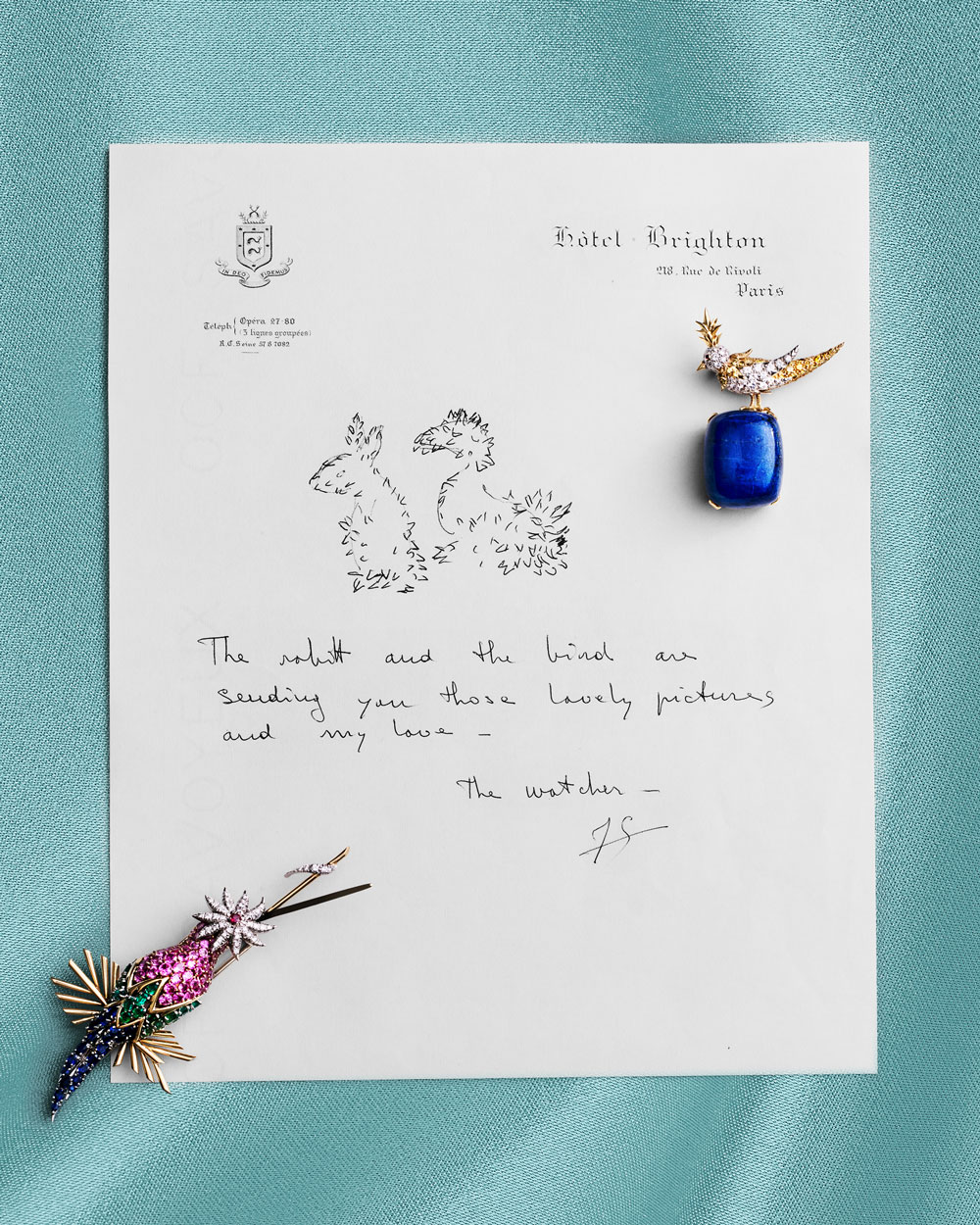
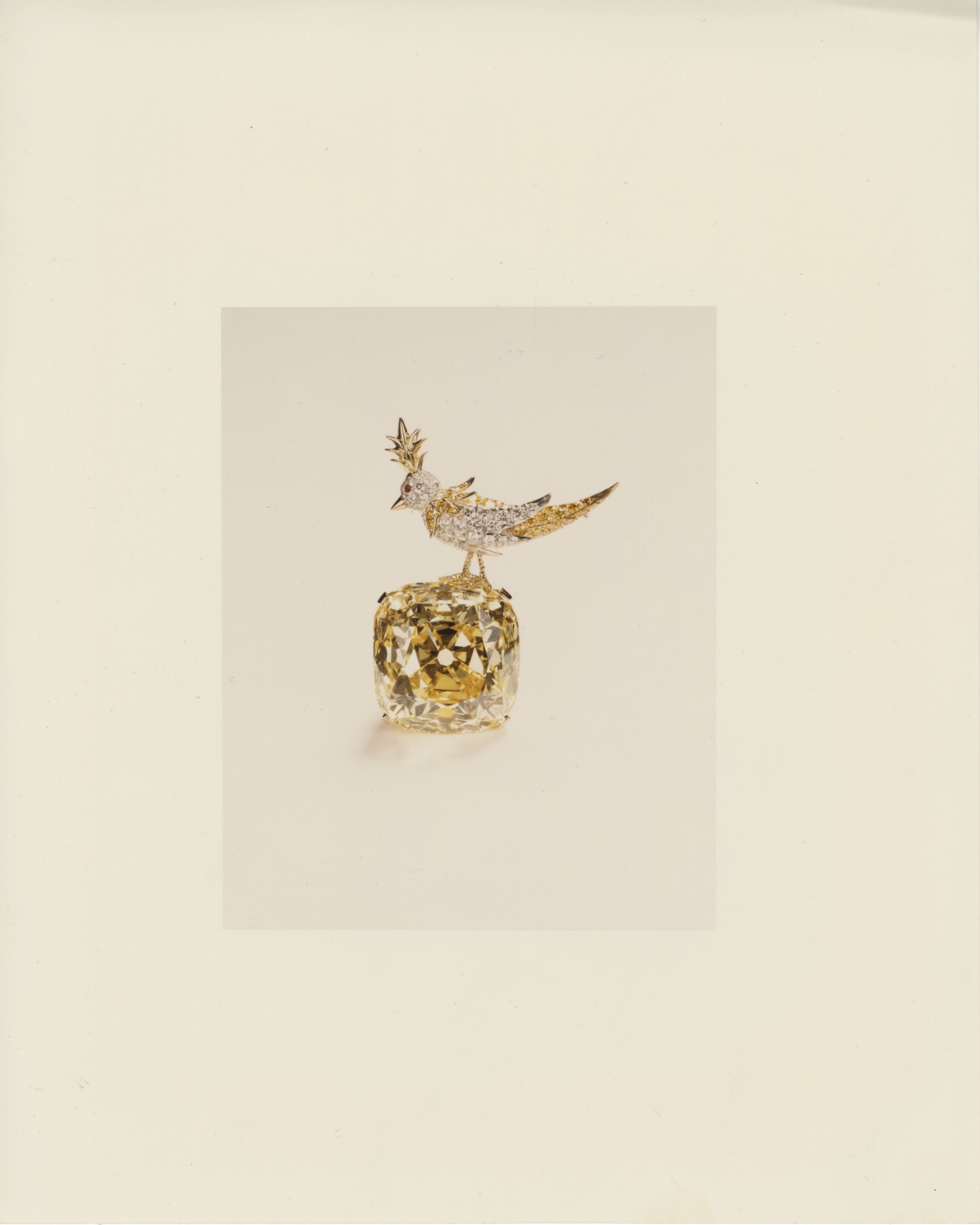
You cannot discuss Schlumberger without mentioning The Bird on a Rock clip and the intricate role Mellon played in the creation of what would become one of Tiffany’s most seminal pieces and a defining achievement in his career. Created nine years into his tenure at Tiffany’s, the design reflected his deep fascination with nature, especially small animals and what they reveal about their environments. Influenced by the flora and fauna he encountered during his travels through Bali, Asia, and the Caribbean, Schlumberger conceived an exquisite and whimsical vision: a tiny canary delicately perched atop a gemstone rock. The bird’s feathers were rendered in pavé diamonds, its eyes in sapphires, and its stance balanced on a large, gleaming stone.

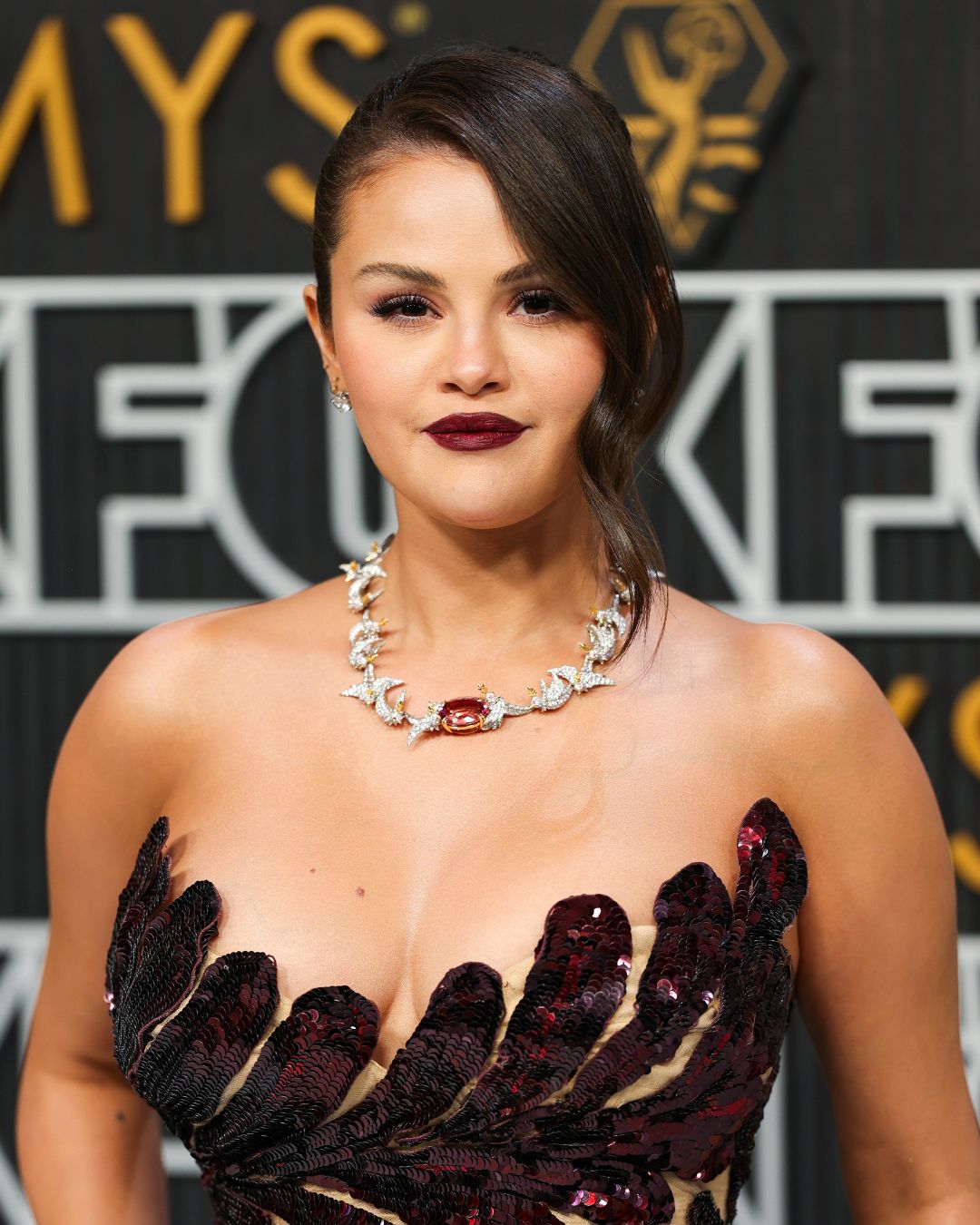

Mellon acquired one of the earliest iterations of The Bird on a Rock, featuring an emerald-eyed canary composed of white and yellow diamonds perched on a cabochon lapis lazuli. As Cordier explained, “You know, she comes first. And he definitely had her in mind. It’s impossible for him not to have her in mind, because she was sharing that passion for those animals populating the garden. And whether the garden is a tropical one, like what she has in Antigua, or hummingbirds like the one in Oak Springs.”
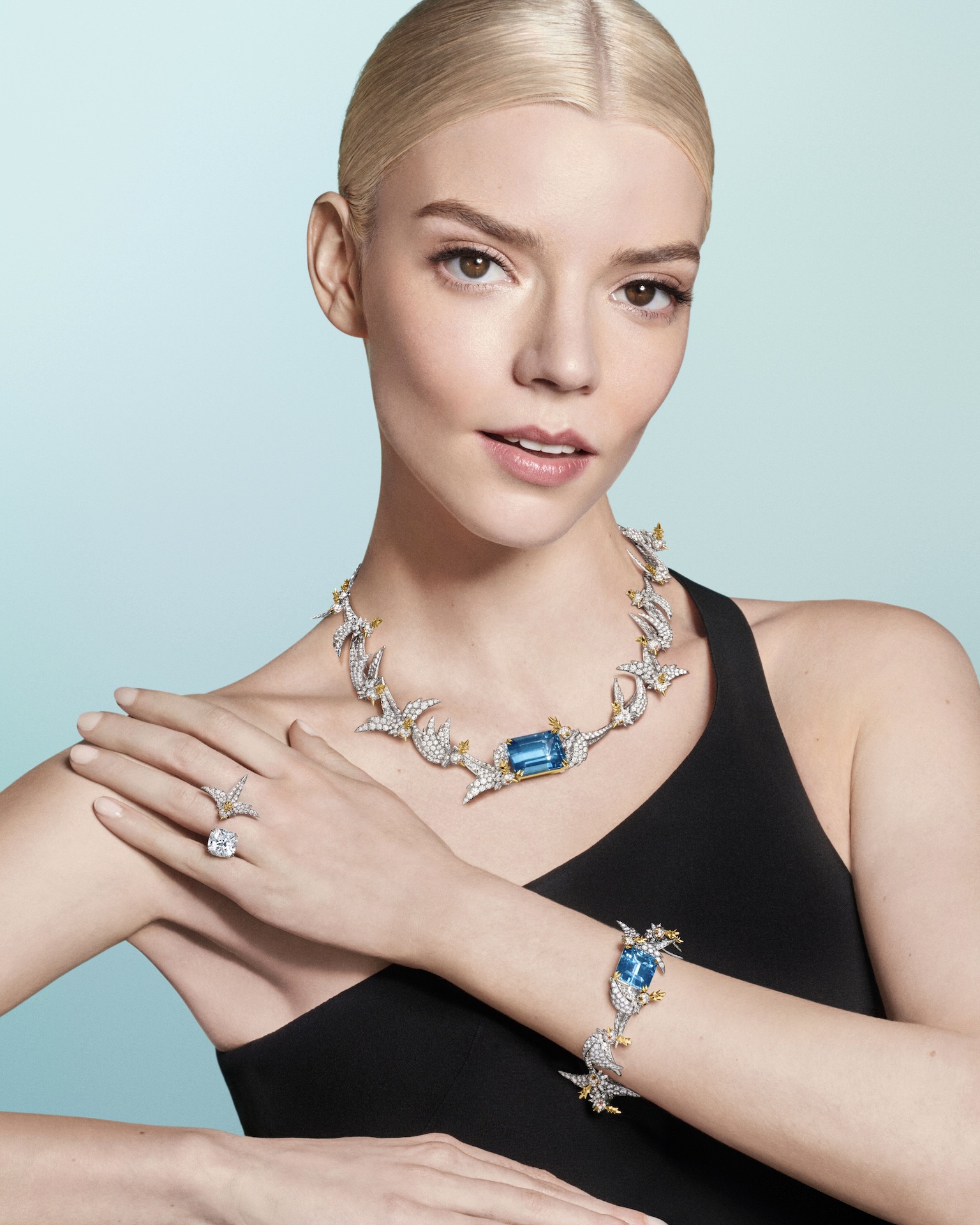
The Bird on a Rock motif has continued to soar under Schlumberger’s successors, evolving into pendants, rings, earrings, necklaces, and more. Iterations of the clip have become a beloved red-carpet staple and an enduring symbol of Tiffany’s creative brilliance.
The Mellon Blue Diamond: Bunny Mellon’s Most Important Non-Schlumberger Jewel
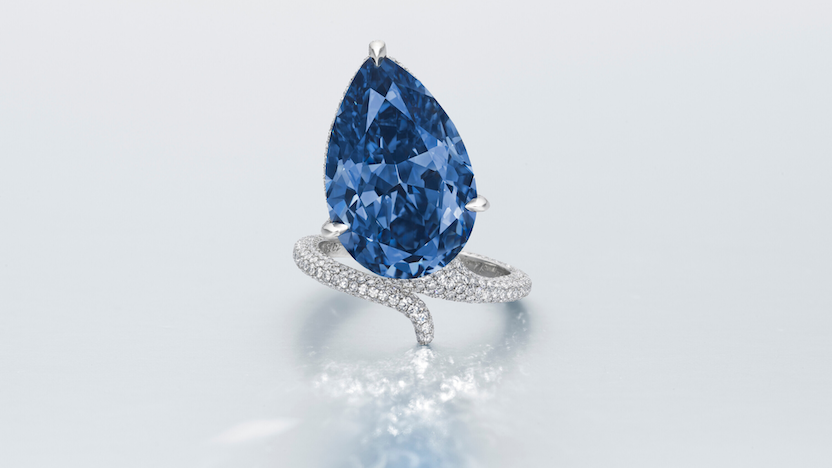
We’d be remiss to discuss Bunny Mellon’s jewels and not mention the Mellon Blue Diamond—Schlumberger creation or not. Considered one of the rarest diamonds in the world, the Mellon Blue takes its name from Mellon, its one-time owner. Beyond its provenance, the diamond itself is extraordinary: a 9.51-carat Fancy Vivid Blue, the highest color grade a blue diamond can achieve and a classification reserved for stones with remarkable saturation, purity of hue, and inner fire. Fancy Vivid Blues of this size are virtually unheard of, and the diamond’s even color distribution and exceptional clarity place it among the most elite gemstones ever unearthed.
Cordier wonders whether its acquisition was driven more by her husband Paul, whose passion for collecting extraordinary objects was well known. Blue diamonds represent fewer than 0.02 percent of all diamonds, and only a fraction of those exhibit the vivid saturation seen in this stone. Their mesmerizing color is derived from trace amounts of boron locked within the crystal lattice at the time of formation, a geological rarity that only occurs under extremely specific conditions deep within the Earth.
As Cordier explained, “I see Paul more as a collector of extraordinary items and Bunny being interested in how her friend, Jean Schlumberger, reacts to extraordinary gemstones.” For Schlumberger, the Mellon Blue would have been a once-in-a-lifetime canvas: a stone whose rarity and brilliance challenged him to create a setting worthy of its stature.
The Mellon Diamond returned to the spotlight this past fall when it went to auction at Christie’s, where it achieved an extraordinary price of $25 million, reaffirming its status as one of the most significant blue diamonds ever to appear on the market.
What She Actually Wore: Bunny Mellon’s Quiet Aesthetic

Unlike some of her close friends and other women of this society at the time, Mellon was considered to have a quieter, less showy style. Despite owning spectacular pieces, Mellon preferred understated elegance. She would break out her grand items for major occasions, and she was seen in the Jasmine Necklace in the 1980s and 1990s, but for everyday, she preferred pearl necklaces that Schlumberger created for her.
Mellon, an accomplished horticulturalist, was happiest in the garden. She spent countless hours tending to the grounds at Oak Spring in Virginia and later at her home in Antigua, a property now owned by Tory Burch. She also famously advised her close friend Jackie Kennedy on the redesign of the White House Garden in 1962, and it was Mellon who introduced Kennedy to Schlumberger.
Her preference for quiet refinement extended into her approach to interior design. Mellon worked meticulously to ensure her homes conveyed a lived-in yet impeccably chic informality, whether by allowing weeds to grow naturally between the cracks of her patio or by subtly trimming the corners of upholstery. Her guiding mantra was, “nothing should be noticed.” Even in the garden, if you were wearing Balenciaga and a stack of “Jackie bangles”—the enamel bracelets Schlumberger gifted to Kennedy—the effect, in Mellon’s world, should always feel understated.
Why Bunny Mellon’s Collection Matters Today
Unlike many notable 20th-century jewelry collections, Mellon’s has remained remarkably intact. Upon her death in 2014 at the age of 103, she bequeathed the entire assemblage to the Virginia Museum of Fine Arts. Cordier noted that this makes her jewelry legacy “a graspable, unified body of work from one creator and one collector,” a rarity unmatched by the fragmented estates of figures like Barbara Hutton or Elizabeth Taylor.
Although Mellon did commission pieces from other esteemed houses, including Van Cleef & Arpels and Cartier, it was her singular patronage of Schlumberger that set her collection apart. The true foundation of its brilliance lies in the relationship she shared with him. As Cordier explained, “Bunny Mellon has a relationship with a man that she regards as a true artist, not as a brand, even though he works for Tiffany, but that’s not what she’s interested in. She really regards him as an artist whose mode of expression is jewelry. She’s convinced that he is a genius. I think that makes it very, absolutely special in terms of patronage.”

Get the Newsletter
Sign up for the latest diamond news, delivered directly to your inbox.


